Meet Linden Lab’s new board of directors

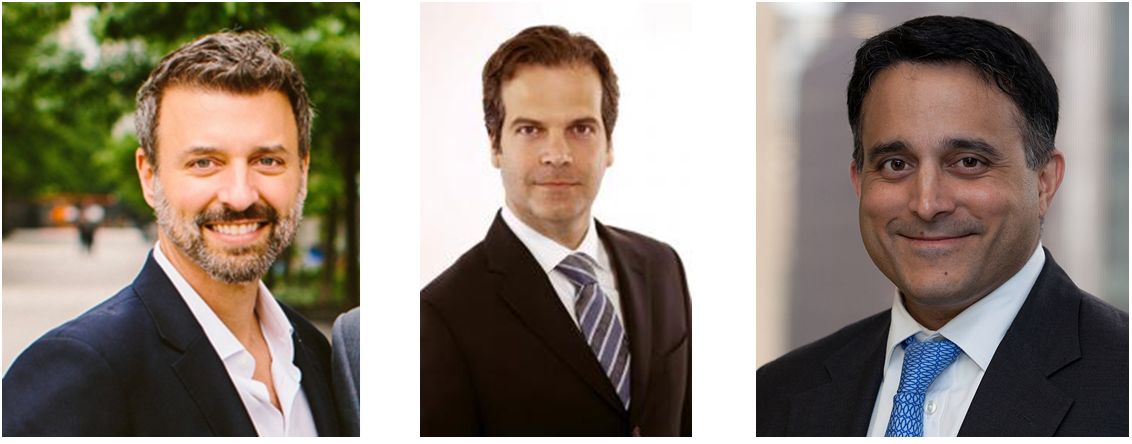
Linden Lab’s new board of directors (l to r): Brad Oberwager, J. Randall Waterfield and Raj Date

Following confirmation early this month that the the acquisition of Linden Research Inc., (to give Linden Lab its formal name) has been completed (see the second half of 2021 Update: Life in the Cloud from the Lab and also my own Linden Lab gives cloud migration update & new ownership announcement (updated)), the Lab has updated the Board of Directors section of the About page on the official Linden Research website.

The acquisition, sees three new board members replacing Jed Smith, Bill Gurley, Dina L. Evan and Bing Gordon. Two of them have been previously mentioned: Brad Oberwager and J. Randall (Randy) Waterfield (you can read my own notes on these two gentleman here: Linden Lab announces it is to be acquired). However, what may come as news is that there is a third member of the Lab’s new board: Raj Date.

The following are the biographies for all three as found on the Lab’s About web page:

Brad Oberwager

Brad Oberwager has spent his entire career in technology and consumer focused companies as an entrepreneur and board member.
Currently, he sits on the board of two public companies, Asure Software (NASDAQ: ASUR) and Better World (NASDAQ: BWACU). He is the chairman of two companies he founded, Jyve and Sundia and is also on the board of TEGSCO (aka AutoReturn). He owned Bare Snacks, acquired by PepsiCo in 2018.
Brad was Vice-chair of YPO International, a global organization of 25,000 CEOs.
Brad received his BS from Georgetown University, his MBA from the Wharton School and lives in San Francisco. 

J. Randall (Randy) Waterfield

Mr. J. Randall (Randy) Waterfield, is the Chairman of Waterfield Holdings, which traces its origins to 1928. After selling the largest private mortgage company in the US and largest Indiana based bank in 2006 and 2007 respectively, he diversified into technology, manufacturing and other industries.
Randy holds the Chartered Financial Analyst designation and is a graduate of Harvard University. He currently serves on the Board of Directors of Red Oak Partners, Waterfield Technologies, Linden Research, Inc. and has previously served on the boards of YPO (and was the 2017-2018 Chairman of YPO), Asure Software ( NASDAQ: ASUR), SMTC Corporation (NASDAQ: SMTX), RF Industries (NASDAQ: RFIL), among others. He is also the Co-Chairman of Missouri Cobalt, LLC, the largest cobalt mine in North America.
Randy supports various education, environmental and community development charitable causes through the nonprofit Waterfield Foundation and J. Randall Waterfield Foundation.

Raj Date

Raj Date was the first-ever Deputy Director of the U.S. Consumer Financial Protection Bureau (CFPB). As the Bureau’s second-ranking official, he helped steward the CFPB’s strategy, its operations, and its policy agenda. He also served on the senior staff committee of the Financial Stability Oversight Council, and as a statutory deputy to the FDIC Board.
Before being appointed Deputy Director, Raj acted as the interim leader of the new agency, serving as the Special Advisor to the Secretary of the Treasury. He led the CFPB for most of the first six months after its launch.
Currently, Raj is the Managing Partner of Fenway Summer, an advisory and investment firm focused on financial services and financial technology. In that capacity, he chairs the investment committee of Fenway Summer Ventures, a fintech venture capital fund, and works with clients of FS Vector, the fintech advisory firm. He also serves as a Director for a number of innovative firms in financial services: Prosper, the marketplace lender; Green Dot, the bank holding company; Circle, the digital asset firm; Grasshopper, a de novo bank; and College Ave, a private student lender.
He is a graduate of the College of Engineering at the University of California at Berkeley (highest honors) and the Harvard Law School (magna cum laude).

Without wishing to take anything away from Mr. Oberwager and Mr. Waterfield, Raj Date’s credentials are especially impressive for a relatively small company like Linden Research; having joined the CFPB in February 2011, on what he thought would be a 2-3 month tenure, he was asked by Elizabeth Warren, who oversaw the establishment of the CFPB as a Special Advisor to the Secretary of the Treasury, to lead “the guts of the policy apparatus” within the Bureau. When Warren sought to (successfully) run for the U.S. Senate later in 2011,  Date was nominated to succeed her as the CFPB’s Special Advisor to Treasury, and (as the Lab notes), its first Deputy Director, under Richard Cordray.

His background with consumer affairs, finances, and his post-CFPB founding of Fenway Summer would appear to help lend significant weight to Linden Lab’s wholly-owned subsidiary, Tilia inc; while he is not currently listed as a member of Tilia’s board, his background and expertise could be used in an advisory capability, and his name certainly brings a further level of gravitas to Tilia.

Thus far, the acquisition and arrival of the new board has been handled in a relatively low-key manner. While some might be tempted to see the negative in this, it’s likely more a case of the Lab wishing to demonstrate that, from their perspective and that of the incoming board, things are very much “business as usual” rather than being indicative of any kind of radical change.

Linden Lab gives cloud migration update & new ownership announcement (updated)

The former co-location cage used to operate Second Life and its services. Credit: Linden Lab

Update: since this post was published, Linden Lab have clarified the fact that the acquisition process is in fact complete, revising their comment on the acquisition process.  I have therefore revised the end of this post to reflect the updated comment on  the acquisition. See also: Meet Linden Lab’s new board of directors.

On Tuesday, January 5th, Linden Lab provided a short update on the cloud migration work and on the current situation regarding the company’s acquisition.

The physical move to AWS services was completed at the end of 2020, and the blog post expands on some tweets made by April and Soft Linden over the Christmas period.

In her December 23rd tweet, April Linden confirmed that the last of the Lab’s services had been migrated to AWS services, and that the remaining systems within the Lab’s (now former) co-location facility in Arizona had been powered off.

April Linden confirming the migration of the last of the SL services to AWS

In discussing the fate of the data held on the old hardware in late 2020, Oz Linden had indicated that Linden Lab had arranged for all of the hard drives from  the co-location facility would be shredded – and on December 31st, 2020, Soft  Linden tweeted that the work had been completed by a professional data destruction company, with a total of 10,588  hard drives and solid state drives that had been contained within the Lab’s old hardware had indeed been shredded.

Soft Linden on the shredding of the Lab’s old disk drives

The January 5th blog post builds on both of these tweets by providing a photograph of the cleared-out cage at the Lab’s former co-location facility, and a short video of drives being shredded, both of which I’ve included here.

Linden Research Acquisition Complete

Turning to the July announcement that an agreement in principle had been reached with an investment group led by Randy Waterfield and Brad Oberwager to acquire Linden Research Inc., (as Linden Lab is formally known), the blog post confirmed the acquisition process has been completed, and Linden Lab is now under new ownership:

Another noteworthy development for the new year is that Linden Lab has new owners! As announced in mid-2020, an investment group led by Randy Waterfield and Brad Oberwager signed an agreement to acquire the company subject to regulatory approval by financial regulators in the U.S. related to Tilia Inc.’s status as a licensed money transmitter as well as other customary closing conditions. We are pleased to share that the regulatory review has been completed and Linden Lab is now under new ownership.

At the time of writing, the official About Linden Lab page had yet to show any changes in the board structure to reflect the acquisition completion – I expect that will come in due course.

Read the official blog post for more.

Related Links

Lab Gab November 6th: Cloud Uplift update

via Linden Lab

On Friday November 6th, 2020 Lab Gab, the live streamed chat show hosted by Strawberry Linden on all things Second Life returned to the the subject of the work to transition all Second Life services to Amazon Web Services (AWS) and away from running on the Labs’ proprietary hardware and infrastructure.

The session came some 7 months after the last Lab Gab to focus on this work in April 2020 with Oz Linden and April Linden (see Lab Gab 20 summary: Second Life cloud uplift & more), and this time, Oz Linden sat in the hot seat alongside Mazidox Linden.

The official video of the segment is available via You Tube, and is embedded at the end of this article. The following is a summary of the key topics discussed and responses to questions asked.

Mazidox Linden is a relative newcomer to the Linden Lab team, having joined the company in 2017 – although like many Lab staff, he’s been a Second Life resident for considerably longer, having first signed-up in 2005.

Table of Contents

He is the lead QA engineer for everything simulator related, which means his work not only encompasses the simulator and simhost code itself, but also touches on almost all of the back-end services the simulator software communicates with. For the last year he has been specifically focused on QA work related to transitioning the simulator code to AWS services. He  took his name from the Mazidox pesticide and combined it with the idea of a bug spray to create is avatar, to visualise the idea of QA work being about finding and removing bugs.

Oz Linden joined the company in 2010 specifically to take on the role of managing the open-source aspects of the Second Life viewer and managing the relationship with third-party viewers, a role that fully engaged him during the first two years of his time at the Lab. His role then started expanding to encompass more and more of the engineering side of Second Life, leading to his currently senior position within the company.

“The Bugspray” Mazidox Linden (l) and Oz Linden joined Strawberry Linden for the Friday, November 6th segment of Lab Gab to discuss the cloud migration work

What is the “Cloud Uplift”?

[3:25-5:55]

  • Cloud Uplift is the term Linden Lab use for transitioning all of Second Life’s server-based operations and services from their own proprietary systems and services housed within a single co-location data centre to  commercial cloud services.
  • The work involves not only the visible aspects of SL – the simulators and web pages, etc., but also all the many back-end services operated as a part of the overall Second Life product,  not all of which may be known to users.
  • The process of moving individual services to the cloud is called “lift and shift” – take each element of software, making the required adjustments so it can run within a cloud computing environment, then relocate it to AWS infrastructure and hardware in a manner that allows it to keep running exactly as it did prior to the transfer, while avoiding disruptions that may impact users.
  • The current plan is to have all of the transitional work completed before the end of 2020.
  • However, this doe not mean all the the work related to operating SL in the cloud will have been completed: there will be further work on things like optimising how the various services run on AWS, etc.,

Why is it Important?

[5:56-12:12]

  • It allows Second Life to run on hardware that is a lot more recent than the servers the Lab operates, and allows the Lab to evolve SL to run on newer and newer hardware as it becomes available a lot faster than is currently the case.
    • In particular, up until now, the route to upgrading hardware has involved the Lab reviewing, testing and selecting hardware options, then making a large capital expenditure to procure  the hardware, implement it, test it, then port their services over to the hardware and test, then implement – all of which could take up to 18 months to achieve.
    • By leveraging AWS services, all of the initial heavy lifting of reviewing, testing, selecting and implementing new server types is managed entirely by Amazon, leaving the Lab with just the software testing / implementation work.
  • A further benefit is that when SL was built, the capabilities to manage large-scale distributed systems at scale didn’t exist, so LL had to create their own. Today, such tools and services are a core part of product offerings alike AWS, allowing the Lab to leverage them and move away from having to run (and manage / update) dedicated software.
  • Two practical benefits of the move are:
    • Regions running on AWS can run more scripts / script events in the same amount of time than can be achieved on non-AWS regions.
    • The way in which simulators are now managed mean that LL can more directly obtain logs for a specific region, filter logs by criteria to find information, etc., and the entire process is far less manually intensive.

How Secure is SL User Data on AWS?

[12:20-15:43]

  • It has always been LL’s policy when dealing with third-party vendors (which is what AWS is) not to expose SL user data to those vendors, beyond what is absolutely necessary for the Lab to make use of the vendor’s service(s).
  • This means that while SL user data is stored on AWS machines,it it not stored in a manner Amazon could read, and is further safeguarded by strict contractual requirements that deny a company like Amazon the right to use any of the information, even if they were to be able to read it.
  • In fact, in most cases, user-sensitive data is effectively “hidden” from Amazon.
  • LL  is, and always has been, very sensitive to the need to protect user data,even from internal prying.
  • In terms of the simulators, a core part of testing by Mazidox’s team is to ensure that where user data is being handled (e.g. account / payment information, etc.), it cannot even be reached internally by the lab, as certainly not through things like scripted enquiries, malicious intent or prying on the part of third-party vendors.
  • [54:30-55:18] Taken as a whole, SL on AWS will be more secure, as Amazon provide additional protection against hacking, and these have been combined with significant changes LL have made to their services in the interest of security.

Why is Uplift Taking So Long?

[15:48-19:20]

  • The biggest challenge has been continuing to offer SL as a 24/7 service to users without taking it down, or at least with minimal impact on users.
    • This generally requires a lot of internal testing beforehand to reach a point of confidence to transition a service, then make the transition and then step back and wait to see if anything goes dramatically wrong, or users perceive a degraded service, etc.
    • An example of this is extensive study, testing, etc., allowed LL to switch over inventory management from their own systems to being provisioned via AWS relatively early on in the process, and with no announcement it had been done – and users never noticed the difference.
  • Another major challenge has been to investigate the AWS service offerings and determine how they might best be leveraged by SL services.
  • As many of the SL services are overlapping one another (e.g. simulators utilise the inventory service, the group services, the IM services, etc.), a further element has been determining a methodical manner in which services can be transitioned without impacts users or interrupting dependencies on them that may exist elsewhere.
  • The technology underpinning Second Life is a lot more advanced and recent within the AWS environment, and this means LL have a had to change how they go about certain aspects of managing SL. This has in turn required experimentation, perhaps the deployment of new tools and / or the update / replacement of code, etc..

Will Running on AWS Lower Operating Costs?

[19:33-23:00]

  • During the transitional period it has been “significantly” more expensive to operate SL, inasmuch as LL is paying to continue to operate its proprietary systems and services within their co-lo facility and pay for running services via AWS.
  • Even after the need to continue paying for operating the co-lo facility has ended, it is unlikely that the shift to AWS will start to immediately reduce costs.
  • However, the belief is that moving to AWS will,  in the longer term, reduce operating costs.
  • Whether reduced operating costs lead to reduced costs to users, or whether the savings will be re-invested in making further improvements to the service lay outside of this discussion.
  • Right now the focus is not on driving down costs or making service significantly better, but is solely the work of getting everything transitioned. Lowering costs, making more efficient use of the underpinning capabilities provided by AWS will come after the migration work has been completed.

What Happens to the Old Hardware / Facility, Post-Uplift?

[23:09-25:15]

  • Several years ago, LL consolidated all of their hardware and infrastructure into a single co-location data centre in Arizona.
  • Most of the hardware in that facility is now so old it has depreciated in value to a point where it is pretty much worthless.
  • A specialist company has therefore been contracted to clear-out the Lab’s cage(s) at the co-lo facility and dispose of the hardware.
    • As a demonstration of LL’s drive to protect user data, all drives on the servers will be removed under inspection and physically destroyed via grinding them up on-site.

Continue reading “Lab Gab November 6th: Cloud Uplift update”

Linden Lab’s acquisition: sundry thoughts & speculation

via lawdonut.co.uk

It’s been a week since the news broken that Linden Lab is in the process of being acquired by new owners (see Linden Lab announces it is to be acquired, July 9th, 2020). Since then there has been a lot of comments and speculation ranging from the entirely positive to the inevitable “we’re doomed! / the sky is falling!”

Some have raised concerns that neither J. Randall Waterfield nor Brad Oberwager have experience with running games companies. However, having hands-on experience in running the type of company in which you’re investing isn’t actually a prerequisite for funding / representing / guiding it. Rather, what’s important is having the ability to understand the company, appreciate its value proposition and being able to contribute to its continued growth; and both Mr. Oberwager and Mr. Waterfield appear to have these abilities. In particular, J. Randall Waterfield, as CEO of the Waterfield Group, comes from an environment where long-term investment in companies to ensure their growth is very much the raison d’etre.

Waterfield buys and builds well-run American businesses.
We prefer basic businesses with a few years of proven, conservative growth. We avoid companies that are growing too fast. We believe slow and steady makes the race… We strive to be a good partner to existing management, are passive with regards to general managerial issues, and work hard to help our CEOs and their families’ realize their vision.
Waterfield’s investment timeframe is forever. We work to grow book value at a reasonable pace with no exit in mind.

– from the About / Investment Criteria page of Waterfield

Now, to be clear, it’s not the Waterfield Group that is investing in Linden Research, but rather a venture between Mr. Waterfield and Mr. Oberwager; but given Mr. Waterfield’s pedigree with long-term investment, is hard not to see him taking the same approach in his other ventures.

Nor should the fact that Mr. Oberwager has sold off three of the businesses he’s built be seen as a negative. Building a company from the ground up is a different matter to investing in an established, profitable entity, and selling the former in order to repeat the cycle isn’t automatically indicative of a intent to buy-in to an existing company simply to sell it on without a longer-term commitment.

Which is not to say a buy-out like this isn’t without risk; with the best will in the world on the part of incoming investors to a company, things don’t always go as planned or turn out as hoped – but planning for failure isn’t generally how investors set about acquiring profitable companies.

A further point to remember is that acquiring a company isn’t something that happens overnight; it can actually take multiple months or even years to progress from an initial decision to sell, through reaching an agreement in principle, to that final closure.

Due Diligence means investors are rarely unaware of the business they are about to invest in

One big part of this process is due diligence, a process designed to make potential investors precisely aware of what they are getting themselves into – things that might alter the deal, such as revealing unwanted risks or unwelcome financial exposure that they might wish to see properly mitigated prior to proceeding further. This means that incoming investors are rarely coming into a company flying blind or are suddenly going to find themselves facing an unwelcome wake-up call that might leave them re-evaluating their desire to retain the company.

On a more interesting – to me at least – level is that given the length of time an acquisition can take – even if measured over months, rather than years – is how closely the decision to sell Sansar might have been tied to the decision to offer Linden Research up for acquisition.

Simply put and despite the effort already put into Sansar, it still has a long way to go before it is likely to establish a sold income-generating business model, and therefore represents a significant revenue sink hole of unknown depth. As such, it would make sense for the Lab to divest itself of Sansar prior to putting itself up for acquisition; doing to removes the uncertainty around that platform whilst leaving the company with a demonstratively profitable product (Second Life) and a second that is just starting to show its potential (Tilia Inc.). Depending on the time frames of the two events, the sale of Sansar might even have been a pre-requisite put in place by the new investors to limit potential risk raised through the due diligence process.

Following the acquisition announcement, there were questions asked through the forums, etc., on why would a profitable company be put up for sale, and statements (such as can be seen in comments on this blog) that you “don’t sell a profitable company”.

Well the fact is that profitable private companies are routinely sold for a variety of reasons, and none of them are “bad” or “negative”. For example, and leaving aside the point that the fact a company is profitable obviously makes it more attractive, a sale can be because the current owners wish to exit the company entirely to pursue other opportunities; or they may simply want reduce their overall holdings in the company as part of a general change in lifestyle, whilst leaving the company with the ability to continue operating successfully (and in the case of the latter, still have their experience / expertise available, should it be needed).

I’m not about to try to second guess what reasoning is at work in the case of Linden Research, but  I am curious as to the shape of the board once the acquisition has been finalised. Will it be just the two new investors (which seems likely), or will one or two of the remaining board remain?

Obviously, how things pan out will only become clear over time, but overall (and such is my nature as a “glass half full” person) I lean towards the feeling that the coming change for Linden Research will prove to be positive.

Linden Lab announces it is to be acquired

© and ®Linden Lab

On Tuesday, July 9th, 2020, linden Lab announced it is to be acquired by “an investment group led by Randy Waterfield and Brad Oberwager”.

The acquisition is currently pending approval by financial regulators in the U.S., due to the Lab’s subsidiary, Tilia Inc., which forms part and parcel of the acquisition.

The full statement on the matter, which can be read on the Lab’s corporate website, includes a statement from Linden Lab CEO, Ebbe Altberg:

We’re excited for this new chapter to begin. We see this as an opportunity to continue growth and expansion for Second Life and our money services business Tilia. We’re grateful for the ongoing support from our community, business partners and investors. Now more than ever, there is increased recognition of the value and utility of virtual worlds to bring people together for safe, shared, and social on-line experiences.

Once the acquisition is finalised, both Mr. Waterfield  and Mr. Oberwager will join the Lab’s Board of directors.

Bradford Oberwager has founded and/or run five tech/CPG companies—Jyve, Bare Snacks (acquired by PepsiCo), True & Good! Snacks, Acumins/more.com (acquired by HealthCentral), and Blue Tiger/Open Webs (acquired by CarParts).

J. Randall Waterfield is Chairman of The Board & Chief Executive Officer of Waterfield Group, one of the largest private financial organisations in the United State, and occupies board positions on a number of other companies and organisations.

J. Randall Waterfield (l) and Bradford Oberwager (via Waterfield.com and LinkedIn)

Also commenting on the acquisition, Brad Oberwager states:

Both the company and its virtual world community have a unique culture and creative energy that remain important to the long-term success of Second Life. There’s a bright future for both Second Life and Tilia and we’re excited to help fuel these growth opportunities.

With the news breaking on Twitter, Altberg responded to questions on what it means for Second Life with a simple “Continued Greatness!”

I reached out to linden Lab on finding out the news, but was informed the company has no further comment on the acquisition beyond the press release.

However, given that the acquisition will see Mr. Waterfield and Mr. Oberwager joining the board, I would anticipate that – given the nature of acquisitions – it is unlikely there will be any immediate visible changes to Linden Lab, Second Life or Tilia Inc., and, and the company will likely to continue to operate in a “business as usual” mode with regards to both Second Life operations and the community for the immediate future. That said, there will likely be a lot of speculation as to the future of SL, together with concerns / fears as to what the longer-term future might be.

While it is purely speculative on my part, I would hazard a guess that the acquisition will take into consideration the increased interest Second life has witnessed over the last year(ish), and particularly as a result of the SARS-CoV-2 pandemic, and will see in inflow of cash for the company that will allow it to (hopefully) meet its immediate goals with both Second Life and Tilia Inc., and allow both platforms to continue to be developed.

This is certainly the belief held by Linden Lab’s co-founder, Philip Rosedale, who now heads-up High Fidelity Inc. Also quoted in the press release, he states:

Since its inception 17 years ago, Second Life has been a pioneer in the concepts of virtual societies, land and economies. I’ve known Brad [Oberwager] for 14 years personally and professionally, and I’m confident he will bring his passion and proven strategies to help Linden Lab achieve new heights in distribution, scale, and quality while remaining true to the original vision, creativity, and community that makes Second Life unique and special.

Source:  Linden Research, Inc. to Be Acquired, Thursday, July 9th, 2020.

With thanks to Whirly Fizzle for the pointer.

SL17B: Meet the Moles of Second Life

via Linden Lab
On Friday, June 26th, 2020 at the SL17B celebrations, the final of five Meet the Lindens sessions was held, this one featuring Patch Linden and the Moles of the Linden Department of Public Works (LDPW).

Unlike previous summaries in this series, this does not provide a breakdown of all topics covered. Instead it is structured follows:

Core information about the LDPW and the Moles is given below – who they are, what they do, how to apply to become a Mole, etc.

  • This information is drawn from both the session previous interview with the Moles and information from the SL wiki.
  • This information is supported by the Links to the Video section of the table of contents, right.
Table of Contents

This is followed by a short summary of the question (and their answers) likely to be of interest to readers. These are supported by the links under General Audience Questions section of the table of contents, right. For all of the questions asked in the session, please refer to the official video, embedded at the end of this article.

The Moles

Who or What are the Moles?

  • Officially called the Linden Department of Public Works (LDPW)
  • They are residents from all over the world hired by Linden Lab as independent contractors to undertake specific tasks.
  • The core element of work they undertake is specifically geared towards enhancing the Mainland, as noted in the official LDPW wiki page, although they actually do a lot more than this.
  • The LDPW initially formed in 2008, and so is now in its twelfth year. They are managed by Derrick Linden, the Product Operations Manager for Second Life, together with a team of Linden Lab staffers including Guy Linden, Madori Linden and Kona Linden.
  • Notable major projects carried out by the Moles include:
    • The infrastructure within Nautilus City.
    • The development of Bay City.
    • The Linden Homes continent of Bellisseria (including all topography, flora, infrastructure and housing).
    • The facilities for events like Shop & Hop, SL16B and SL17B, ton hall events, the turn-key regions available for businesses, starter avatars, etc.
    • The Lab provided games such as Linden Realms, Paleoquest, Horizons and the grid-wide Tyrah and the Curse of the Magical Glytches – all accessible via the Portal Parks.
  • They also provide support / input for / to technical projects (e.g. Project Bento and the avatar skeleton extension), and work with marketing, QA and other LL teams.
  • In keeping with their name, Moles were originally given a mole avatar, complete with hard hat. However, over the years, most have moved to having a more individual and personal look.
  • As well as being paid for the work they do, Moles also receive and allowance from the Lab, which is primarily intended to go towards the cost of uploads (texture, animations, mesh objects, etc)., but which can also be put towards developing their individual looks.
  • [Video: 29:58-33:54] Current project focus comprises:
    • Bellisseria / Linden Homes – including four more Homes themes, and next two of which will be “a bit of a departure” from what has so far been seen.
    • SL17B / LL-led events for 2020.
    • A Halloween refresh.
    • End-of-year events.
    • A number of “big media events”.
  • [Video: 39:49-40:52] Due to the Linden Homes work, the LDPW has expanded from 20 to 30.

How to Become a Mole

  • Positions in the LDPW are open to application by residents who believe they are qualified to work in the team, and the team may also approach specific residents and ask if they would consider joining them.
  • Applications are made by dropping a résumé (note card or email) of qualifications / experience (including links SLurls, Flickr, You Tube, etc.) to Derrick Linden (derrick.linden-at-lindenlab.com) or to Patch Linden (patch.linden-at-lindenlab.com).
  • Applicants have to go through a former interview process.
  • Successful applicants get to pretty much choose their hours of work – providing agreed tasks are completed on time.
  • As they are from around the world, this can allow some projects to move forward on almost a round-the-clock basis.
  • Those who are more fully-rounded in skill sets  – content creation, scripting, etc., – are encouraged to apply, but LL will also take on specialists.
  • Motivated, outgoing, communicative people with a passion for SL and willing to self-teach themselves new skill sets are particularly considered.

Selected Questions and Answers

Please use the links to the video in the table of contents to hear full responses to them.

  • Will the SSPE areas around the Log Homes ever be completed?  – Already working on it.
  • Will water regions connect all the continents? – Not all, but where in makes sense, hopefully.
  • Will the Bellisseria railway extend into the “older” region in the continent? – No. the tracks need to be part of the infrastructure built into region, they are not suited to being retro-fitted.
  • Could the trees in Bellisseria be swapped for trees with lower LI, and the LI given to residents? – No, because a) the content the Moles build is in accordance with best practices for things like LOD, etc., and b) Land Impact really doesn’t work is a way that the question implies.
  • Will there be commercial areas in Bellisseria? – It had been intended too release Victorian Commercial as well as the Victorian themed homes (e.g. Millbank, intended to be an open market space), but this was de-prioritised in favour of more homes.
  • Why not convert abandoned Mainland for use with Linden Homes? – The way the Linden Homes regions are set-up doesn’t easily lend itself to use on the Mainland.
  • What about an underground Bellisseria theme? – has been considered along with other ideas. However, there are technical complexities to this – creating the terrain, dealing with the physics, etc., – which are considered to be currently prohibitive.
  • Will there be Trailers and Campers on 1024 sq m parcels, as once stated? Unlikely. The 512m parcels for Trailers and Campers were selected to give Premium members who had already used some of their free tier on a Mainland parcel the option of also trying a Linden Home. Also, the Campers and Trailers don’t scale well on 1024 sq m.

Catch the rest of the session in the video below.