Logos representative only and should not be seen as an endorsement / preference / recommendation
Updates from the week through to Sunday, March 9th, 2025
This summary is generally published every Monday, and is a list of SL viewer / client releases (official and TPV) made during the previous week. When reading it, please note:
It is based on my Current Viewer Releases Page, a list of all Second Life viewers and clients that are in popular use (and of which I am aware), and which are recognised as adhering to the TPV Policy. This page includes comprehensive links to download pages, blog notes, release notes, etc., as well as links to any / all reviews of specific viewers / clients made within this blog.
By its nature, this summary presented here will always be in arrears, please refer to the Current Viewer Release Page for more up-to-date information.
Note that for purposes of length, TPV test viewers, preview / beta viewers / nightly builds are generally not recorded in these summaries.
Official LL Viewers
Default viewer: 7.1.12.13550888671, formerly the ForeverFPS, dated March 1, 2025, promoted March 5th – NEW.
Numerous crash and performance fixes.
Water exclusion surfaces.
Water improvements.
Project viewer:
Second Life Project Lua Editor Alpha, version 7.1.12.13526902562, March 3rd, 2025 – NEW.
Will only work on Aditi, within the following regions: [Luau Yardang], [Luau Tombolo], [Luau Mesa] and [Luau Tideland].
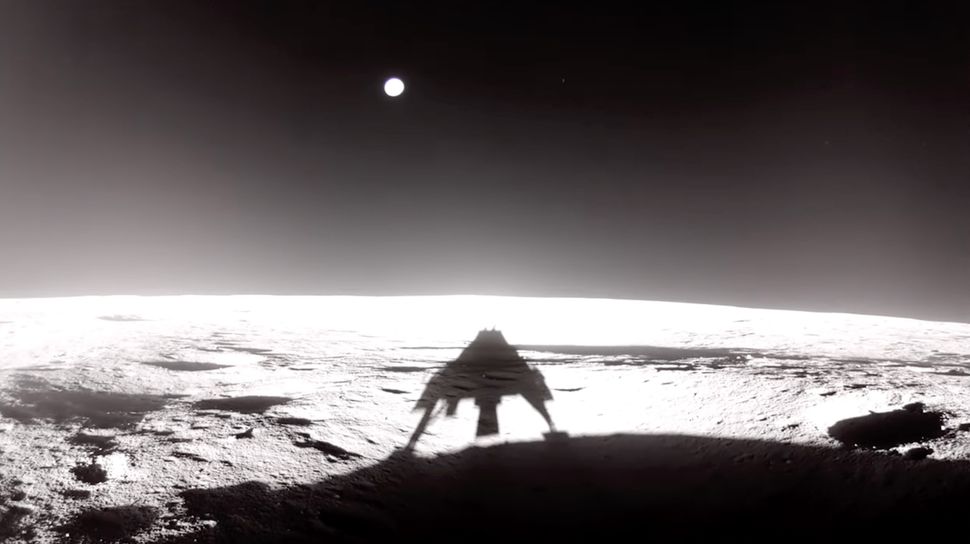
The Earth, brightly reflecting sunlight, sits above the horizon over Mare Crisium, the shadow of Firefly Aerospace’s Blue Ghost capturing the fact the lander was on the Moon. Credit: Firefly Aerospace
I’ve covered the US-led Project Artemis quite a lot in recent Space Sunday pieces, largely as a result of all the speculation about NASA’s Space Launch System (SLS) and Orion vehicle facing potential cancellation (for the tl;dr folk, whilst SLS is perceived as being “too expensive” the practicalities are that, like it or not, there is no launch capability available which could be easily “slotted-in” to Artemis to replace it any time soon). However, another reason for doing so, is the support work and missions related to Artemis are busily ramping up.
Back in January, Firefly Aerospace saw the launch of their Blue Ghost lunar lander on a shared ride to the Moon atop a SpaceX Falcon 9 rocket, its companion being the Japanese private-venture Hakuto-R Mission 2 lander Resilience. Whilst built and operated by Firefly Aerospace, Blue Ghost Mission 1 – which also has the mission title Ghost Riders in the Sky, named for the 1948 song of the same name – has been developed under NASA’s Commercial Lunar Payload Services (CLPS) programme, and thus has the official NASA designation (just to confuse things further) of CLPS TO 19D.
After a gentle cruise out to the Moon by steadily increasing its orbit distance from Earth until it could transfer to a distant lunar orbit and then slowly close on the Moon from there – thus requiring minimal propellant payload – the Blue Ghost vehicle touched-down on the Moon on March 2nd, 2025, becoming the first commercial lunar lander to reach the surface of the Moon and commence operations.
Another image from the Blue Ghose Lander, again showing the Earth above the horizon and reflected in the surface of one of the lander’s solar arrays. Credit: Blue Ghost
The vehicle is intended to have an operational lifespan of 14 days (one lunar day), and carries 10 experiments which utilise the lander’s solar power generation system. Roughly the size of a small car, the vehicle landed not in the southern polar regions of the Moon – the target area for Artemis missions – but within Mare Crisium, a 556 km basin to the north-east of Mare Tranquillitatis, the region in which Apollo 11 landed in 1969.
Despite this more northerly landing location, the mission’s objectives remain in line with Artemis, being intended to gather additional data on the properties of lunar regolith, together with its geophysical characteristics, as well as measuring the interactions between Earth magnetic field and the solar wind – all of which will help in the preparations for the long-term human exploration of the Moon and “routine” travel between Earth and cislunar space.
The location of Mare Crisium on the Moon, to the north-east of Mare Tranquillitatis where Apollo 11 landed in 1969. Credit: NASA
And if you’re wondering about Blue Ghost’s companion during the launch for Earth, Japan’s Resilience, which also carries a lunar rover, is taking the “scenic” route to the Moon, arriving there in early June 2025, at which point I’ll hopefully have an update on that mission.
However, Blue Ghost was not intended to be the only US lander reaching the Moon in early 2025. Also a part of NASA’s CLPS programme, the Athena lander, built and operated by Intuitive Machines, had been slated to arrive on the Moon and commence operations on March 6th, having also been launched on its way to the Moon atop a SpaceX Falcon 9 on February 27th, 2025.
Officially designated IM-2 / CLPS-3, the lander – christened Athena and classified by the company as a Nova-C lander – was the second lunar lander mission undertaken within the CLPS programme by Intuitive Machines, their first having been launched to, and reaching, the Moon in February 2024. However, that lander, called Odysseus, toppled over on landing (see: Space Sunday: Lunar topples, space drugs and wooden satellites), effectively ending that mission.
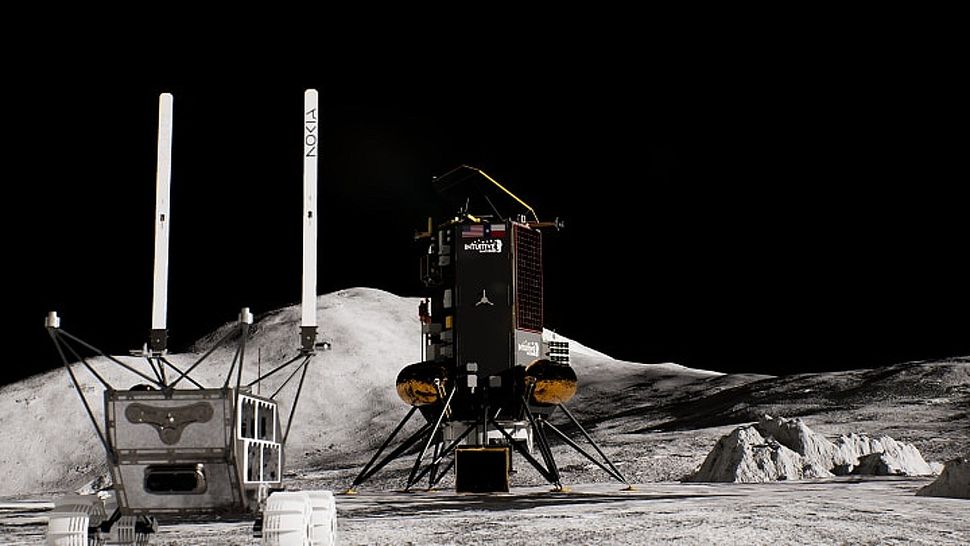
A artist’s impression of the MAPP rover driving away from the Athena lander. Credit: Intuitive Machines / Lunar Outpost
Like Odysseus, the IM-2 mission was targeting the Lunar South Polar Region for a landing, in this case the tallest mountain on the Moon to be given its own name (in 2022): Mons Mouton, named for Melba Roy Mouton, a pioneering African-American mathematician at NASA during the 1960s, the peak having previously been regarded as part of the broader Leibnitz plateau. In addition to its own science mission, the lander also carried a trio on small-scale landers – Grace, a hopper-style mini-rover also made by Intuitive Machines and massing just 1 kg; the Mobile Autonomous Prospecting Platform (MAPP), a 5-10 kg rover with a 15 kg payload built and operated by a consortium; and AstroAnt, a matchbox-size micro rover from MIT, which would have trundled around the back of MAPP using magnetic wheels taking measurements on the amount of heat absorption and heat radiation to help determine the thermal regulation requirements on future rovers operating within the temperature regimes of the lunar South Polar Region.
Both Athena and Odysseus share the same overall design, being very tall, slim vehicles with elevated centres of mass. With Odysseus, this appeared to combine with a horizontal drift of the vehicle during its landing attempt (the vehicle’s telemetry indicated it was crabbing sideways at around 3.2 km/h at touch-down, rather than descending vertically), to cause it to topple over.
An AstroAnt “swarm rover” as developed by MIT. Credit: MIT
On March 6th, 2025, Athena appeared to suffer a similar fate: as the vehicle neared the surface of Mons Mouton, its motors kicked-up a plume of dust which prevented the vehicle’s lasers and rangefinders from guiding the spacecraft. While data was received to indicate Athena had landed, it also indicated the loss of one of the lander’s two communications antennas and that power was being generated by the vehicle’s solar arrays well below nominal levels.
Subsequent to the landing, the mission team placed Athena into a “safe” mode to conserve power. However, images taken by both the lander and from NASA’s Lunar Reconnaissance Orbiter (LRO) as it passed over the landing site confirmed Athena had toppled over on touch-down and to be laying in a small, shallow crater, either as a result of sideways drift in the final phase of landing or as a result of one of more landing legs overhanging the edge of the crater at touch-down.
An image returned by Intuitive Machine’s Athena lander, showing it lying on its side on the Moon following its March 6th, 2025 attempted landing. Credit: Intuitive Machines
Despite the fall, Intuitive Machines regard the mission as a “success” inasmuch as the vehicle returned data all the way up to the point of landing, and was able to briefly power-up some of the on-board instruments despite falling into the crater. However, given this is the second incident wherein a tall, slim lander with a high centre of mass has toppled over when landing in what is acknowledged to be one of the toughest and mostly unknown regions of the Moon to reach, it could call into question the suitability of the SpaceX 50-metre tall human landing system (HLS) to successfully make similar landings within the environment.
X-37B Returns Home
Released in February 2025, this image from the USSF’s X-37B spaceplane was captured in October 2024, during the 7th mission of the OTV programme. Credit: United States Space Force
The US Space Force’s highly-secretive X-37B space plane returned to Earth on Friday, March 7th (UTC), marking the end of a 434-day mission in orbit. The 9-metre long automated vehicle – one of two currently operated by the USSF – originally lifted-off from Kennedy Space Centre’s Lunch Complex 39A (LC-39A) atop a SpaceX Falcon Heavy booster in December 2023, on the seventh overall flight of the Orbital Test Vehicle mission (OTV-7).
As with the previous six missions in the programme, much of OTV-7 was completed in a blanket of secrecy; however, unlike them, the mission did not continue to push the envelope of flight duration. Whereas the 2nd through 6th OTV flights repeatedly increased the number of days one of the vehicles could spend in orbit (from 224 days in the case of the first mission to just under 3 hours shy of 909 days in the case of OTV-6), this seventh flight was the second shortest to date.
Which is not so say it was without precedent; whilst the previous missions had been confined to the sphere of low-Earth orbit operations, OTV-7 saw the spacecraft placed into a highly elliptical orbit (HEO0, with a perigee of just 323 km, and an apogee of 38,838 km. This orbit not only illustrated the vehicle’s ability to operate at significant distances from Earth, but also allowed it to demonstrate its ability to using aerobraking – dipping into the upper reaches of Earth’s denser atmosphere as a means to both decelerate a space vehicle and / or to alter its orbit. Whilst often used by robotic missions to Mars and Venus, the aerobraking by OTV-7 marked a first for a US winged space vehicle, giving the X-37B an additional operational capability, such as detection avoidance by altering both orbital inclination and altitude during such a manoeuvre, a capability which could be extended to future generations of US military satellites.
In another departure from previous missions, in February 2025, the US Department of Defense (DoD) released images taken from the X-37B while in space – the first time any such pictures of the vehicle on-orbit have entered the public domain.
Following a de-orbit burn of its main propulsion system, the X-37B vehicle successfully re-entered the Earth’s atmosphere and glided to a landing on Vandenberg Runway 12, wheels touching down at 07:22 UTVC on Friday, March 7th, 2025. There is obviously no word on when one of the vehicles might next be placed into orbit.
Starship Blows It – Again
On March 6th, 2025, and less than two months after their previous attempt, SpaceX tried to deliver one of their Starship vehicles onto a sub-orbital flight. Called Integrated Flight Test 8 (IFT-8), the flight was intended to be something of a repeat of January’s IFT-7 – and it turned to be almost a direct carbon copy of that flight in more ways than intended.
The primary goals of the mission were to:
Launch the combined vehicle and recover the booster at the launch site.
Deliver a Starship “block 2” vehicle incorporating numerous design changes into a sub-orbital track and deploy a series of dummy Starlink satellites & carry out an on-orbit re-light of some of the vehicle’s engines to simulate a de-orbit burn.
Starship re-entry and possible splashdown, testing new thermal projection system tiles and the function of the redesigned forward aerodynamic flaps.
What was not on the cards was an almost to-the-minute loss of the Starship vehicle in what appears to have been very similar circumstances to the last flight – and with an initially similar aftermath.
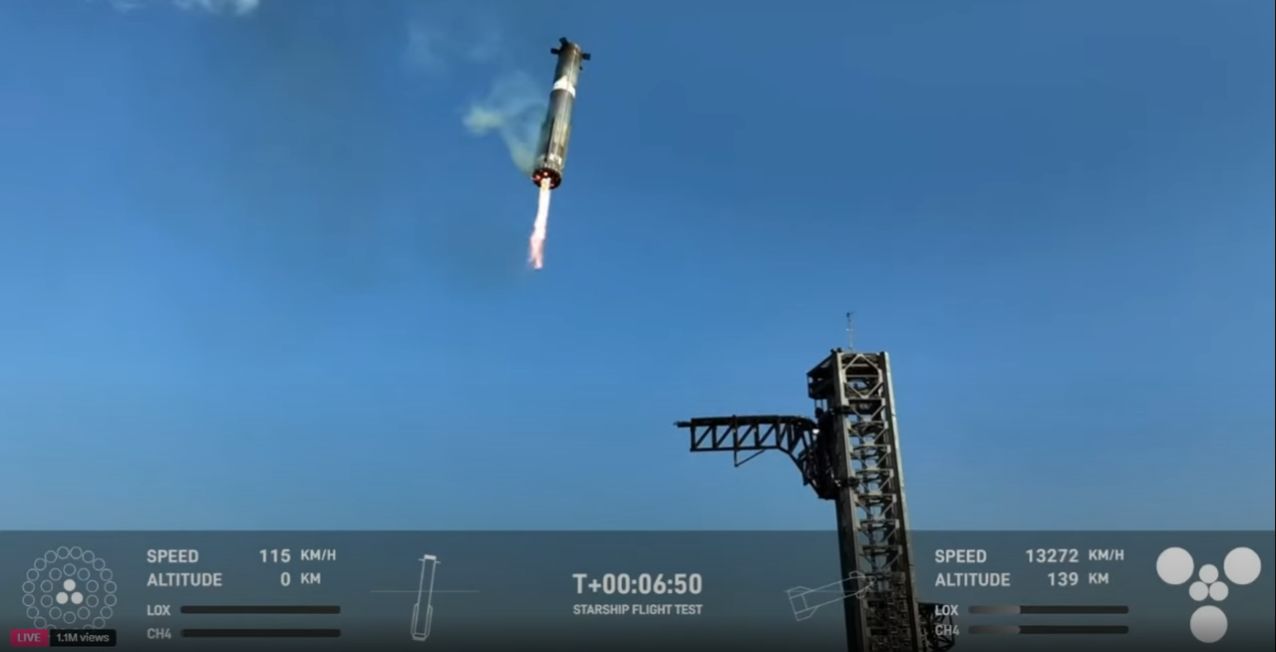
The catcher is ready: the Super Heavy booster used in IFT-8 decelerates on three engines as it closes on the launch tower at Boca Chica in readiness for a perfect “catch”. Credit: SpaceX
The first goal of the mission was carried out successfully: the 123-metre tall stack of Super Heavy vehicle and Starship vehicle departed the launch facility at Boca Chica, Texas, at 23:30 UTC, with the booster pushing the Starship up to the assigned “hot staging” altitude. At this point, the vehicles separated, and the booster completed the necessary “boost back” operations to return to the launch site and be “caught” by the “chopstick” arms on the launch tower 7 minutes and one second after its initial departure.
However, and echoing the events of January’s IFT-7, the Starship vehicle encountered what appear to again be engine / engine bay related issues. At 7 minutes 45 seconds into the flight, images from inside the vehicle’s engine skirt showed both clouds of propellant gases streaming around the exhaust bells of the inner three sea-level Raptor engines, together with signs of some form of burn-through on the engine bell of one of the outer large vacuum Raptor engines (referred to as “Rvacs”). The images were followed at 8:04 into the flight by the premature shut-down of an Rvac motor, followed in rapid succession by all three sea-level engines.
First indications: on the left, signs of a fire burning through part of an Rvac exhaust bell can be seen circled, while right-of centre, a plume of propellant gas can be seen passing over one of the three sea-level engine bells prior to entering the exhaust flow. Credit: SpaceX
With just two fixed Rvac motors running, the vehicle entered an uncontrolled tumble and likely started to break-up somewhere between 9:19 and 9:30 into the flight. Shortly after this, observers in parts of the Caribbean, from the Dominican Republic to the Bahamas, and as far north as Florida’s Space Coast, reported seeing the vehicle explode and debris falling. As a result, and as with IFT-7, the FAA implemented a number of debris response areas along the vehicle’s flight path over the Greater Antilles, closing off airspace. This resulted in some flights either being placed in holding patterns outside the threat areas, or being diverted to other airports or being held on the ground.
Following the loss of the vehicle, the FAA once again suspended the Starship launch license and announced a mishap investigation to be led by SpaceX. This is common practice – the operator leading the investigation into the loss of their vehicle, with FAA having oversight and a final say in allowing the resumption of flights. However, what is far from usual is that the launch operator takes it upon itself to unilaterally declare the issues surrounding the vehicle loss had been investigated and resolved, and launches would therefore be resuming. However, this is precisely what happened in the case of IFT-7 on February 24th, 2025, with the FAA (now very much under the thumb of the SpaceX CEO in his “special appointment” role within the Trump administration) releasing the license to allow Starship operations to resume whilst leaving their investigation open.
As such, there are significant question to be asked in relation to both what actually happened following IFT-7 in terms of issue rectification, whether the loss of IFT-8 might indicate a significant design flaw in the Starship “block 2” vehicle, and whether or not the FAA’s ability to properly manage oversight of commercial space companies – or at least SpaceX – may have been compromised given the SpaceX CEO’s new position of authority within the Trump administration (although getting an answer to this question is highly unlikely).
Maison de L’amitie, March 2025 – click any image for full size
Maison de L’amitie (home/house/companion of friendship) is a Homestead region held by Corina Wonder I’ve been prone to dropping into on an irregular basis over the last several years. Throughout most of those visits, the region’s design has been the work of Corina herself, and has always presented photogenic setting, sometimes inspired by physical world locations (such as her 20219 recreation Bolivia’s Salar de Uyuni, which I covered here).
However, in dropping in to it at the start of March 2025, I was interested to note that while Corina still holds the region, the setting it presented is the work of LuaneMeo (holder and co-creator of Luane’s World, an oft-featured setting in these pages) and her frequent region design partner, Gorba McMahon. However, given the time since my last visit, I’m not sure if this is a new arrangement or one that has been going on for a while; not that it i important – the region remains as engaging as it every has been.
Maison de L’amitie, March 2025
With spring starting to make its presence felt in many parts of the northern hemisphere, Maison de L’amitie presents a setting in keeping with the season – and one potential suitable for summer as well. The landscape is split into three: a large, main island and two smaller off-shoots looking as if they might have once been connected to one another and the main island, but which now sit just of the coast, low grassy / sandy humps just peeping above the waves enough to entice people to visit.
And visit they can; along the beach of the southern coast of the main island are a couple of wooden decks extending out over the blue waters (one so low in fact that it looks like its might be considering going for a swim!).
Maison de L’amitie, March 2025
The larger of the two decks offers a little wooden boat with outboard motor to putter across the bay to either of the little islands, whilst the smaller of the two has an inflatable boat rezzer disguised as a life ring. Copies of the latter can be found on both of the smaller islands, thus allowing visitors to make their way back to the larger after explorations of the little isles has left them sans their original transport.
These two smaller islands are very individual in their looks. One is little more than a sandbar valiantly fighting the erosion of time and tide as they slowly but inevitably lays claim to its sands. An old adobe walled shack sits on the back of the island, now converted into a surfing shack and carrying various nautical-theme decorations within itself, a surfboard / paddle board propped again an outside wall together with a couple of paddles – the latter presumably waiting for someone to grab one of them and use with the board, the waters perhaps being far too peaceful for any actual surfing.
Maison de L’amitie, March 2025
The second of these smaller islands is a little more substantial, a good portion of it formed by a grassy-haired table of flat rock sitting with an crescent of sand around one side. Trees have gathered around the remnants of a building here which, from the main island, might have the appearance of an old chapel long ago fallen into disuse and collapse. Within its shell someone has built a little lean-to as a shelter and both it and the chapel-like window opening high on the wall offer places to sit.
The main island sits much higher above the water and is almost completely hemmed by a ribbon of beach running around its edge, the sands flattening and flaring out at the island’s southern extent to form a beachy promontory, its southern tip curling slightly towards the sandbar and its shack, as if trying to reconnect to them.
Maison de L’amitie, March 2025
It’s fairly clear from the compressed and sedimented layers of the exposed sandstone behind the southern arc of the beach, that this island has faced its share of inclement weather down the years sufficient enough to leave its mark in the exposed rock. However, this has not prevented the island becoming an attractive home and place for tourists to appreciate; the gentle rise and curl of its grass-covered back is home to a rich variety of trees and, around them, the vibrant colours of flowers in full bloom. This flowers seem to ebb and flow across the island’s middle saddle as it separates a large and beflowered stone house on the western uplands from the Tuscan-style villa to the east, the latter perfectly sited to look out over the beach’s broad headland.
The villa forms both the region’s Landing Point and a little café with both an outdoor terrace and upper balcony / rooftop seating area. The house across the island, meanwhile, offers a cosy, furnished retreat in which friendly conversation can be had in the conservatory or a game of backgammon enjoyed in the lounge, while upstairs a photographer’s studio awaits the return of its owner.
Maison de L’amitie, March 2025
It is on the main island that the rich detail – evident throughout the setting – really comes into its own, Luane and Gorba having worked hard to imbue the island with a rich sense of life with details large and small. Signs of human habitation can be found all around the beach, as well as at the house and café (and the latter’s nearby neighbour); there are multiple places to sit and pass the time from deck chairs under parasols to lounger behind windbreaks to a touch of Californian surfin’ sixties, courtesy of an old VW camper offering a little beach-top surf retreat with a waiting picnic (and not the only picnic spot awaiting discovery at that!). Further around the sands to the north sits a tuk-tuk van both continuing the surf theme and offering a cosy retreat of its own.
Up on the island’s back, meanwhile, sheep peacefully graze, birds sing and pose on boughs as if awaiting their close-ups, butterflies add their own splashes of colour among the flowers, while swings, hammocks and canopied loungers offer places to set and contemplate the view and the setting. Overhead, an eagle circles on the updraughts created by the passage of wind up and over the island’s spine, aloof from the cawing and crying of the gulls over and on the beach.
Maison de L’amitie, March 2025
Visually appealing, rich in colour, details and ambient sounds, Maison de L’amitie remains a thoroughly engaging visit.
The following notes were taken from my audio recording and chat log of the Content Creation User Group (CCUG) meeting of Thursday, March 6th, 2025.Please note that this is not a full transcript, but a summary of key topics .
Meeting Purpose
The CCUG meeting is for discussion of work related to content creation in Second Life, including current and upcoming LL projects, and encompasses requests or comments from the community, together with related viewer development work.
Linden Water improvements – water should now appear much as it did “pre-PBR” (note: this viewer does have known Linden Water issues, for which fixes are already going into to the next viewer update).
Support for 20 Picks in the viewer’s Profile floater (requires simulator release 2025-02-14 or later).
Project viewers:
Second Life Project Lua Editor Alpha, version 7.1.12.13526902562, March 3rd, 2025 – NEW.
Will only work on Aditi, within the following regions: [Luau Yardang], [Luau Tombolo], [Luau Mesa] and [Luau Tideland].
Release Cadence and Numbering Changes
The Lab has been undertaking work to further streamline viewer development and the release cycle.
These changes specifically mean:
Official viewer updates will be moving to a planned monthly release cadence.
The viewer version numbering will be changed to reflect the year / month of release, so 2025.03 (March 2025) will be the next viewer in the pipe, followed by 2025.04 (April 2025).
It is presently unclear if these number system will include additional number to indicate individual updates as a viewer moves through its own update cycle prior to being promoted to de-facto release status.
Within this cadence, individual updates will be incorporated into each upcoming release on an “as needed” basis – so presumably high-priority fixes will be fast-tracked into releases as they occur.
This also means the old Develop Github branch is now archived (archive/develop in the LL viewer Github repo), and updates / changes within it will be pulled across to active viewer repos as decisions are made as to what updates are to be implemented in which viewer in the new release cycle.
A key reason for altering the viewer release cadence is that LL is trying to move away from implementing large-scale projects (involving both the viewer and the simulator / back-end services) which can take months / years to deploy, towards implementing smaller, more manageable projects which can be implemented / integrated more easily and iterated upon faster, in order to deliver improvements to the platform as a whole.
Upcoming Viewers
The 2025.03 release is being looked at as a maintenance release, which will incorporate (among other things):
The Linden Water fixes referenced above.
Improvements for VRAM handling, including a new VRAM divisor specifically for texture usage (by default will try to use half of the available VRAM available to the viewer for textures, with the ability to manually adjust the amount used as needed).
Monty Linden’s improvements to avatar loading.
The large volume of work which had been classified as a “Maintenance B” viewer update prior to releases being overtaken by the need to focus on performance fixes (DeltaFPS, ExtraFPS and ForeverFPS) might be incorporated in to 2025.03 release, but could be held over until the following 2025.04 release.
Linux Support
It is hoped that the new approach to releases, coupled with the number of Linux-focused updates pushed towards the “Maintenance B” stockpile will help with Linux viewer development and support.
This does not mean LL will be guaranteeing a broader, more holistic support of Linux going forward, but rather it will put the Lab in a position to better address the question of on-going Linux support.
The above noted, Linux support is described as becoming “more and more of a forefront priority” in terms of how the Lab might more forward in supporting it, particularly as there are some internal (to the Lab) dependencies on supporting it.
Open Source Programme Revamp
In line with all of the above, Geenz Linden has put forward a proposal for revamping the open source programme and making it more responsive, inviting input from TPV and open source developers.
One aspect of this is the Lab will be clearly flagging areas in which they would specifically benefit from open source developer assistance.
A developing list of areas where such help / code contributions would be welcome can be found here.
Any open source developers who have not seen the proposal are directed to it.
Beta Testing New Features and Capabilities
As has been previously stated, one aspect of feature development and implementation will be adding features and capabilities to the viewer and then guarding them against use via flags controlled on the server-side.
This will allow features and capabilities to the viewer which might be back-end support requirements, and have the viewer completely ignore them until such time as the server-side flag is set so that they can be used.
It is hoped that this will again allow for a faster implementation and deployment of features and capabilities.
Given this, Aditi (the Beta grid) will remain as the place for general new feature testing and bug-hunting.
Water Exclusion Surfaces – Re-cap
Now available in the Forever FPS release, and all third-party viewers merging with that code base are Water Exclusion Surfaces (WES).
These in a similar manner to the old invisiprims:
When seen from above will “hide” Linden Water -thus allowing water to be excluded from inside boat hulls, dry docks, etc.
If looked at from directly below, it will cull the underwater plane but leave the water fogging.
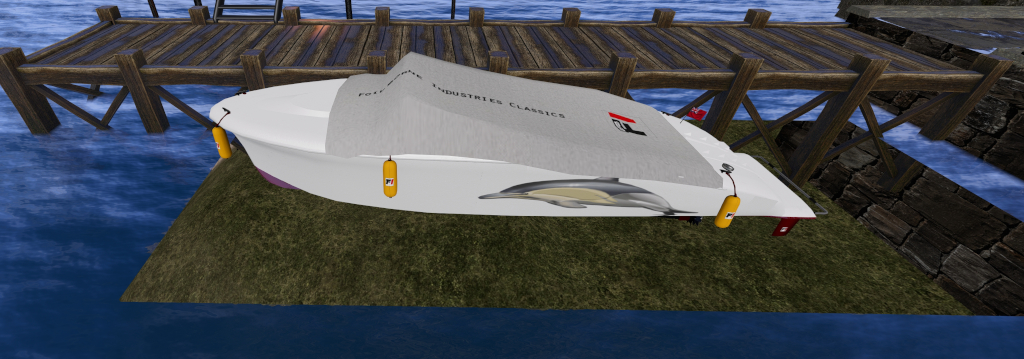
A very(, very) basic example of a Water Exclusion Surface hiding Linden Water
Currently, all invisiprims fitting the above use-case should now work, together the with scripts for converting prims into invisiprims.
A new UI element for more easily creating WES items will be added to the viewer in a future release – possibly 2025.04.
WES will work on any prim or mash face except rigged mesh or with attachments by intent due to performance issues.
Rigged meshes will likely be rendered black.
Attachment will render, but the exclusion surface will be ignored and will not hide Water or rigged mesh (the rigged mesh will likely be rendered black.
Additionally, WES will not work with the system avatar.
Water Exclusion Surfaces will not provide volumetric water exclusion (e.g. “hiding” water from the rooms of underwater buildings).
Mesh Import Formats – glTF Mesh Support
The removal of support for the COLLADA mesh file format from Blender under Linux has raised concerns about the longevity of the format in general in regards to Second Life.
LL are looking to implement glTF mesh imports for Second Life – something which has been promised since work started on moving Second Life towards compliance with the glTF specification.
However, the overall scope of the project has changed. Rather than being the overarching project with scene imports, etc., the work is now being focused on “just glTF mesh”. See this planned implementation feature for details.
The idea is to have the glTF mesh import to work in the same manner as the current COLLADA .DAE import floater, and this work should be surfacing in a viewer in the near future.
This revised approach does not mean the rest of glTF import is “going away”; it is more a re-prioritisation of work and breaking things down into smaller deliverables, in keeping with LL’s desire to implement and iteration projects and work faster than might be achieved through single grand “omnibus” projects.
Along with this, two requests were asked of LL:
The ability to select which part of a mesh model are to be uploaded (e.g. via check box), rather than defaulting to the entire model.
The ability to select at upload which attachment point rigged meshes should attach to, so as to encourage creators to do this, rather than leaving them defaulting to the the right hand position and letting the rigging take care of appearance.
Both of these ideas were seen as beneficial – with the caveat that they would require additional UI design and testing / iteration, adding further complexity to the work, delaying the initial release. As such, they are unlikely to be a part of the initial release of the glTF mesh uploader, but could potentially be looked at as future additions to it.
LL is not currently working on a means for automatic LOD generation on in-world objects.
In Brief
There are continuing reports of people who are on-line reporting as off-line once again. Canny reports if encountered, included where the issue occurred.
There are plans in-hand for LL to hold a Town Hall in which the product development roadmap for Second Life will be discussed. Details are currently TBA.
Alpha gamma work:
In order for PBR lighting to render anywhere close to correctly, alpha blending had to be switched from SRGB to linear colour space.
This caused some older content using Blinn-Phong, to look either more opaque or more transparent than in did pre-PBR.
The fix for this giving people the ability to adjust the alpha/gamma on per texture entry for the object (including no mod items).
However, the work was targeted via the old viewer development branch, and needs to be re-targeted for implementation as a part of the new viewer release cycle, and this has yet to be done.
Puppetry project:
There are currently no plans to re-start the Puppetry project.
There are some significant technical hurdles LL believe need to be understood and addressed (such as a joint transmission between viewers), which the project as a whole needs to be reviewed in terms of requirements and priorities in order for it to be more easily addressed.
Terrain painting (summarised here) remains on hold due to other priorities.
The following notes cover the key points from the Web User Group (WUG) meeting, held on Wednesday March 5th, 2025. These notes form a summary of the items discussed and is not intended to be a full transcript.
A video of the meeting, recorded by Pantera Północy, is embedded at the end of this summary, with sections of this summary times stamped to the relevant points in the video for those wishing to refer to the audio. My thanks as always to Pantera for recording it and making it available.
The Web User Group exists to provide an opportunity for discussion on Second Life web properties and their related functionalities / features. This includes, but is not limited to: the Marketplace, pages surfaced through the secondlife.com dashboard; the available portals (land, support, etc), and the forums.
As a rule, these meetings are conducted:
On the first Wednesday of the month and 14:00 SLT.
Meetings are open to anyone with a concern / interest in the above topics, and form one of a series of regular / semi-regular User Group meetings conducted by Linden Lab.
Dates and times of all current meetings can be found on the Second Life Public Calendar, and descriptions of meetings are defined on the SL wiki.
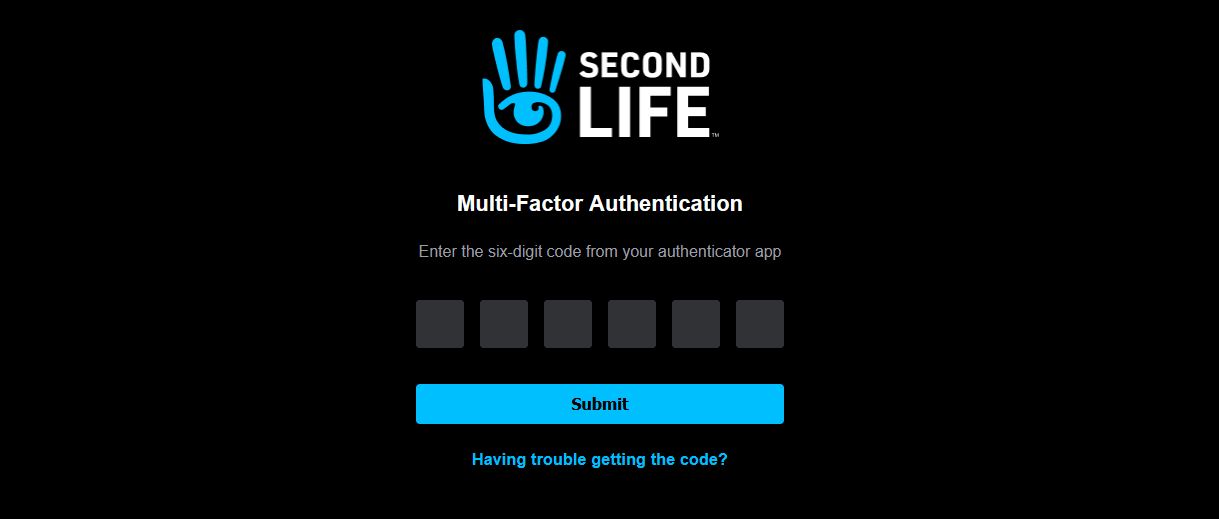
Those with MFA logging-in to the majority of SL web properties (e.g. the dashboard, Marketplace, Project Zero, the Destination Guide, etc.,), will be asked to supply a token from an appropriate authenticator the next time their current token expires.
As with the viewer, tokens will generally be valid for 30 days, the exception being should you clear cookies from your browser, in which case you will also have to supply a new token on logging in.
Those with MFA enabled on their account will now see an MFA token request when logging in to the majority of SL web properties (which includes Project Zero) for the first time OR after clearing browser cookies will be asked to present a authentication token – which should now remain valid for the 30-day period / until the site cookies are cleared (whichever comes first)
This work should harmonise logging-in across most of the popular SL websites.
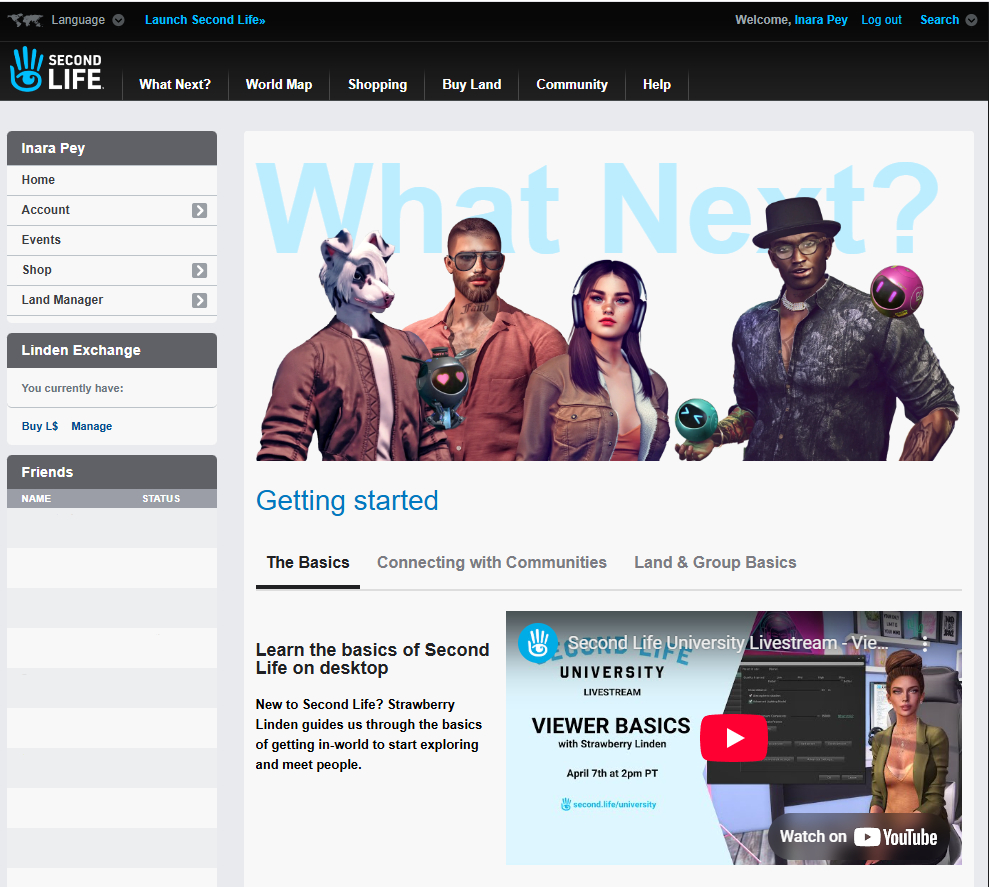
The What Next page, accessible via the Dashboard menu has been refreshed.
The new look include new tabbed sections, more relevant video, and the style in keeping with the overall web properties style refresh.
However: at the time of writing, the Destination Guide – present under the drop-down previously available when hovering the mouse over the What Next? menu option – is absent from the page.
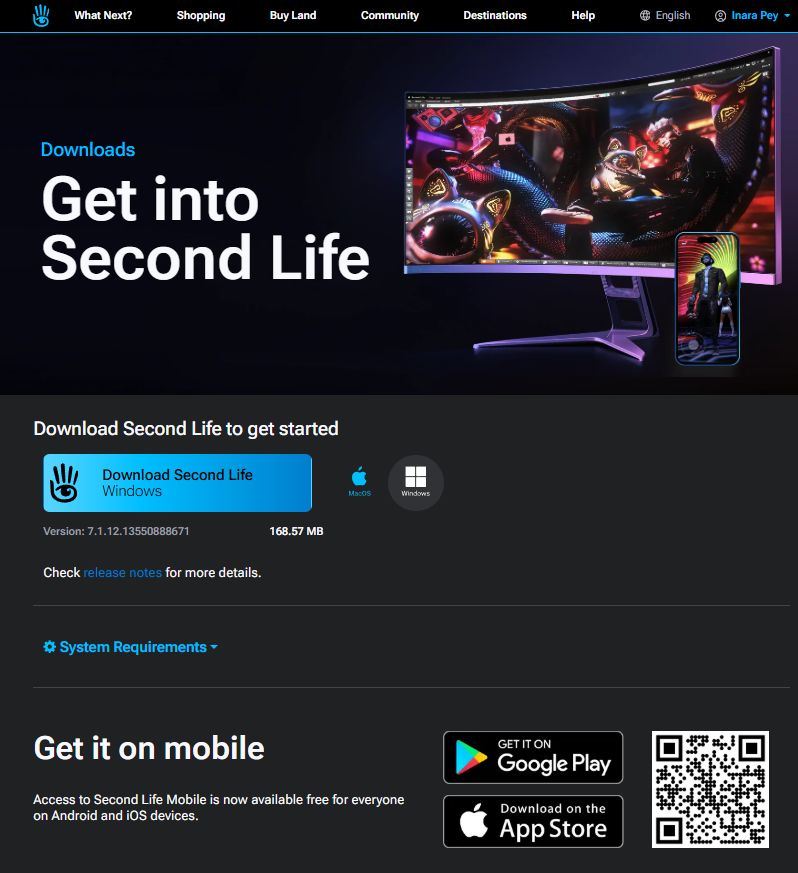
The viewer download page has been updated to the new Dark Theme, and includes a refreshed look which now includes links to the SL Mobile viewer pages on the Apple Store and Google play.
Responsive product listing pages were enabled on Wednesday, March 5th, 2025.
This should mean product listings should be displayed in a responsive manner, depending on whether you are viewing them on a large monitor or Tablet / Mobile device.
Not all of the Marketplace is responsive as yet, so expect this to be an iterative implementation.
The Marketplace legacy pay-out page has been “put back”, and work has been carried out some optimisations to the Account History page, with more to come.
Coming Soon: Improvements to the Mobile / Tablet versions of MP Search, which are “pretty stripped down” at present.
This is being actively worked on, and the iteration of further responsive MP pages will come after this work has been completed.
The approach is to start making “small, incremental improvements to your Marketplace lives.”
Numbers able to access the service are still limited, with the priority (for want of a better term) being given to users signing-up to Second Life over existing users.
If the service is running at capacity, the “endlessly spinning” loading circle should now eventually time-out and display the message below.
The number of existing users able to access Project Zero is limited in favour of users signing-up to SL, so the above message might be frequently encountered.
Whilst the number of concurrent users able to use Zero is low, when combined with the session limit and the fact the service s available 24/7 it should still mean that “several thousand” users per day are be able to access it.
The ratio of slots for existing users and those for new users is also subject to adjustment up and down.
LL are curious as to why existing people are using the viewer in a browser and the type of device being used. Those at the meeting responded in terms of:
Curiosity, better performance than on their own machines, testing (including trying it on different devices), logging-in via a tablet device to offer support to customers.
Devices used ranged from desktop PC through laptops to tablets + mobile devices(!).
Feedback on experience varied in feedback: avatar loading was seen as better; region crossings / teleports (and associated failures) were seen as about the same for some, improved in terms of success for others.
The fact that many appear to be using Zero from a tablet seems to have surprised LL, with Sntax Linden (project lead) curious as to how people were managing sans and UI overlay (in my case, multi-channel wireless keyboard and trackball both switched to BT mode and linked to tablet).
Feedback was also taken on whether people would prefer using Project Zero over the Desktop experience (screen resolution, etc., adjusted). Responses were varied.
SL Mobile
The Lobby function has been extended to Premium Plus subscribers and to (some? iterative deployment?) Premium members.
Lobby appears to be included with iOS version 0.1.534 and Android version 2025.2.543.
Requests have been made to be able to simultaneously log-in to SL Mobile whilst also being logged-in to the viewer (and vice-versa).
This is something for which LL has an awareness, and the Lobby function is seen as a possible first step towards it by allowing communications ,etc., to occur prior to the world loading-in.
However, overall, making it possible to be logged-in from both Mobile and the viewer simultaneously does have some significant technical challenges, due to the way client / simulator interactions are managed. For example, a client must have an avatar physically present in SL in order for chat, IMs, etc., to work, and the system doesn’t support having an avatar effectively in-world twice.
Philip Rosedale asked for people’s preferences for SL Mobile, if they are only given a binary choice, either:
Have SL Mobile fully render the 3D world and use it to interact with the world through it much as they would with the viewer? Or:
Have it as a “communications companion” with chat, IMs, Groups, etc., prioritised and without the associated world rendering etc (e.g. pretty much as the iOS Mobile project had originally been initiated under Oz Linden)?
Those at the meeting, while a small sample, leaned towards the latter (rather ironically, given that during the development of the iOS Mobile option, there were multiple calls for it to offer world rendering as a priority in order to be useful).
As an extension to the above conversation, some at the meeting indicated they’d actually prefer some means of chatting / responding to IMs via their account dashboard.
As per the notes regarding being simultaneously logged-in via Mobile and the viewer, whilst the Lab are aware of the desire for a web-to-in-world chat capability, it would require a substantial re-engineering effort given chat + IM communications are predicated on the avatar being logged-in to a location in SL.
In Brief
Please refer to the video for details on the following.
Styles is the ability to list multiple versions of a single items in a single Marketplace Listing (e.g. different colour versions of the same sweater, together with a demo and any fatpack (if offered)).
As I’ve previously noted, this was reported as something planned for deployment at that start of 2023, but has since seemingly fallen off the table.
Kali Linden indicated that the Web Team still want to implement Styles, but the work essentially lost its management sponsor before it could be seen as completely ready for deployment.
Threfore more the subject is mentioned, the more likely it is to receive the necessary management support – this being the case: Brad, Grumpity, whomever! give us Styles on the MP! 😀 .
[Video: 15:42-20:20] A general discussion on on things like style cards, lists of items, etc., new starters can get to assist them in customising / clothing their avatars.
This included the idea of the Lab providing a “Starter Pack” that could include things like a basic AO, leading to a broader discussion on the use of AO, their availability and importance to news users, the weakness of the Senra wearable AO system, building the AO system into the viewer, etc.
No conclusions drawn.
[Video: 20:34-25:56] General discussion on web properties and issues / possible updates, including:
(Again) aligning maps.secondlife.com functionality with that seen within the in-viewer World map.
Giving the dashboard page (and associated pages – transaction history, etc.) a broader facelift. Kali indicated this requires the input of two teams, and will likely be a longer-term top-to-toe redesign.
Reducing the amount of sub-menu nesting evident in some web properties.
The last 15-ish minutes of the meeting (approx: 47:00 onwards) formed a more general conversation on MP reviews (particularly “bad” reviews), dashboard chat capabilities and what else might be possible, such as making notecards viewable without being logged-in – which led to mention of having Inventory accessible through the web), search the MP via date ranges, etc.
Kali notes that a feature request to add the date listed (/updated) added to an item’s listing has been accepted, and will likely be implemented (see also the Chrome Marketplace Enhancer extension).
Adding a tab to listing where creators can drop their log files / update notes into a listing.
Cherishville – Spring, March 2025 – click any image for full size
It was off back to Lam Erin’s Cherishville for me (in between growling at the PC, which decided to start playing up on me), to see what had come forth for the coming of spring.
The work of Lam and his SL partner, Azaria (AmariahRenee), the setting once again contains some echoes from past setting there, helping to give that sense of continuity, whilst also presenting something entire new and – as usual – photogenic.
Cherishville – Spring, March 2025
That sense of familiarity is felt immediately on arrival: once again, the Landing Point for the setting sits at one end of a road running before a row of houses, a road which form a T-junction at the one end and which turns sharply right at the other; only this street is cobbled, rather than paved, giving it something of a rural feel, something further trees and flowers facing the houses.
A further hint that this iteration of the region represents an earlier time that what has come before can be found in the saloon car parked at the end of the street, just before the road makes its right turn to the south.
Cherishville – Spring, March 2025
Behind the row of houses sits a large lake, which takes up the middle are of the region. Rather than gardens or yards, the houses share a common terrace reaching out to the water, complete with docks for rowing boats and kayaks.
Whilst plentiful in number, these water craft appear to be for décor and sitting rather than taking out on the lake – which is fortunate, as the waters are the home to swans, with some of them nesting (together with ducks to one side of the lake).
Cherishville – Spring, March 2025
Aside form the road passing around the lake on its west side, much of the land surround the lake continues the rural, almost pastoral theme; sheep graze, trees and flower bloom, streams and brooks bubble.
Winding through a good part of the scene, the road provides access to houses and cottages on the southern side of the lake, which they can look across from a slightly elevated position, one of them offered s a farmhouse with pigs, goats and chicken.
Cherishville – Spring, March 2025
There’s no indication as to where in the world this iteration of Cherishville might be – not that this is important – but the large semi-fortified house on the east side of the region and again overlooking the lake did, for whatever reason, suggest Scotland to me – possibly helped by the off-region mountainous surrounds. This large house is a new(ish) release from Marcthur Goosson, and appears to combine elements of some of his previous designs (notably the MA MAISON Medieval Cottage and the Castle Gate Tower BARREZ, medieval style building) to present a large and engaging structure.
Whilst the fortified house is unfurnished, most of the rest are complete with furniture and décor, offering opportunities to peek inside them and perhaps take a seat as an alternative to the seats, boats and benches found outside.
Cherishville – Spring, March 2025
Cherishville always tends to be be attractive – if with the occasion niggle with floating elements – but this iteration has the feeling of going beyond in the way the palette of colours from sky to scenery to buildings has be brought together as a whole. In this the use of PBR helps as well, the materials providing a sense of added depth to things like the exposed rock alongside the shoreline of the lake.
The simplicity of the setting, coupled with its natural beauty means that detailed descriptions really are not required; the region speaks clearly for itself. With this in mind, I’m going to shut up here and encourage you to go see for yourself!











 Inara Pey: Living in a Modemworld