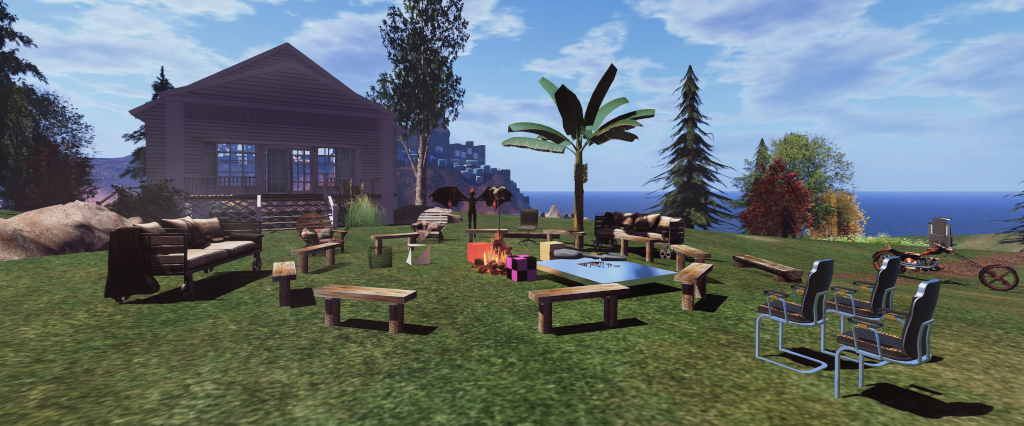
The following notes were taken from:
|
Table of Contents |
Please note that this is not a full transcript of either meeting but a summary of key topics.
Meeting Purpose
- The CCUG meeting is for discussion of work related to content creation in Second Life, including current and upcoming LL projects, and encompasses requests or comments from the community, together with related viewer development work.
- This meeting is generally held on alternate Thursdays at Hippotropolis and is held in a mix of Voice and text chat.
- The OSD meeting is a combining of the former Third Party Viewer Developer meeting and the Open Source Development meetings. It is open discussion of Second Life development, including but not limited to open source contributions, third-party viewer development and policy, and current open source programs.
- This meeting is generally held twice a month on a Friday, at 13:00 SLT at the Hippotropolis Theatre and is generally text chat only.
- Dates and times of meetings are recorded in the SL Public Calendar.
Official Viewer Status
- Default viewer 2025.08 – 7.2.3.19375695301 – maintenance update with bug fixes and quality of life improvements – December 2 – No Change.
- Notable addition: new VHACD-based convex decomposition library for mesh uploads.
- Second Life Project Lua Editor Alpha version 7.2.3.19911032641, December 5 – No Change.
- Second Life Project Voice Moderation viewer 26.1.0.20139269477, December 12 – No Change.
- Second Life Project One Click Install viewer 26.1.0.21295806042, January 26, 2026 – one-click viewer installation.
Upcoming Viewers
Viewer 2026.01 – One-click Installer / Updater
- Now available as an alpha viewer (above).
- As the name suggests, triggers a one-click install / viewer update process.
- Is still being worked on, with a focus on ironing out some kinks in the one click install, including an uninstaller for old non-velopack viewers that can be triggered when required, the usual registry stuff for Windows, and so on.
- Also includes improved monitoring / logging of viewer freezes and crashes, etc.
Viewer 2026.02 – “Flat” UI, Font Changes
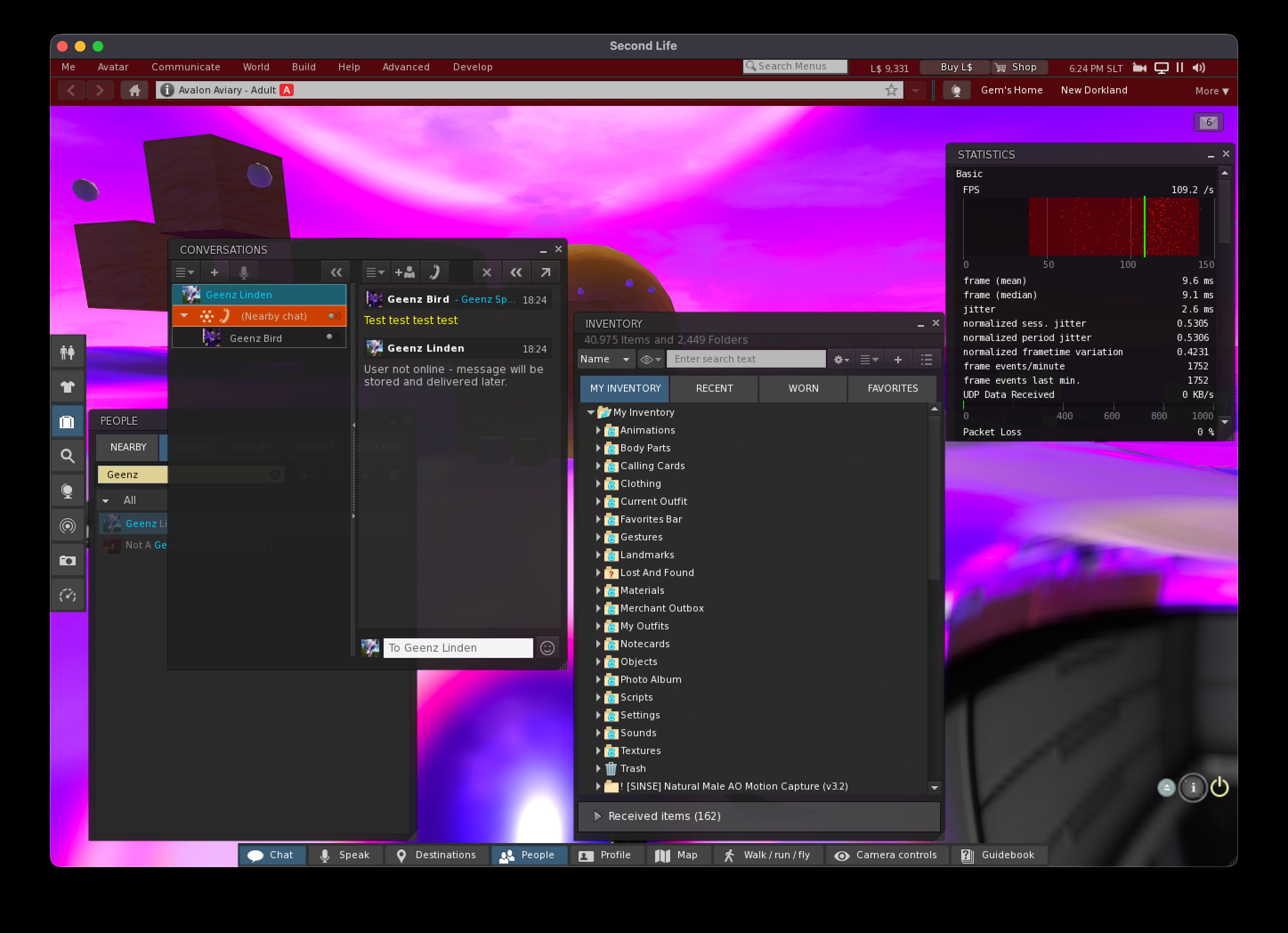
- This viewer is to be part of the Lab’s “first impressions” push to make SL resonate more with incoming new users and hopefully encourage them to keep logging in.
- Will include a new “flat” UI (as seen in the Project Zero (viewer in a browser) version) which comprises things like a font change, a colour scheme change, and generally giving the viewer a more “modern” look and feel. This is not a major UI overhaul in terms of overall look and feel, more an aesthetic one.
- Font changes within this viewer are currently described as “experimental”.
- Also looking like it will include a log-in landing refresh.
General Viewer Notes
- Work on clearing viewer bugs and implementing smaller feature requests into the viewer is continuing, so users can expect more of this, allowing for other priorities in viewer work.
- On the viewer development side:
- There should be some vcpkg movement in the near future. A Pull Request for this work via a third-party developer is apparently in progress, but will not be shipped immediately on approval. Rather, it will be allowed “soak time” so other developers can assess impact on their build pipelines downstream and the like.
- There will also be some CMake project changes, although these appear to be more of a “modernization” push, to bring CMake in the viewer into line current CMake project norms.
- LL is contemplating bringing back viewer maintenance releases to try to encourage some TPVs to pick-up bug fixes and incorporate them faster into their viewers (rather than waiting for a major viewer update which includes bug fixes to get to release status and then merging them).
- If this is done, the maintenance releases will be “much smaller in scope” than past maintenance updates (so a kind of taking bug fixes that are flowing into upcoming major viewer releases, cherry picking them and then QA’ing and releasing them as a small update to the viewer.
- Those TPVs at the meeting indicated this could either add to their workload or that they would not alter their existing workflow due to overheads, but instead will continue to cherry-pick upstream fixes as a part of their own release cycles.
- In response to questions on whether Kitty Barnett’s RLVa code contributions will be included in the official viewer (and which are currently pending fixes she has submitted for RLVa avatar appearance fixes anyway), Geenz Linden stated:
If we did, it’d likely be a very progressive and targeted thing that we do. And hopefully not in a way that significantly makes downstream more difficult to maintain. It’s a longer discussion that needs to be had basically.
-
- This led to concerns that LL could end up implementing a variant of RLVa that is at odds with the current RLV/RLVa API, and effectively end up being ignored for being incompatible. In response, Geenz further noted:
I’d prefer one that everyone can participate in if we do go that route so we can be more targeted with others helping to guide that. Last thing we want to do is make it take 7 months to ship a TPV just because we made a change to RLVa. We also have to consider overall content compatibility and such.
“First Impressions” Context
- This work is focused on trying to ease that first experience for a lot of new residents to try and drive up retention numbers.
- The work is seen more-or-less as experimentation at this point in time, but the goal is to drive up first day engagement among incoming new users to encourage them to continue to log-in to SL.
- Work on this is on multiple fronts, and more will be shared on it in due course.
Grid-Wide WebRTC Deployment
- The Lab is currently looking at a March deployment of WebRTC voice across the grid, but this is subject to possible change.
- The viewer server is currently in a beta soak test (see: WebRTC Voice Open Beta is Expanding).
- The last major server crash has been fixed, and there have been none since that fix went in.
- There is an upcoming fix – see Pull Request #5322 (included in viewer 2026.01) – to address some of the issues with voice dropping. The recommendation is for TPVs to get this into their viewers for a good user experience.
- An upcoming server-side update will hopefully address some of the issues with WebRTC spatialisation (e.g. voice volume varying greatly with even small camera position movements on the part of a listener).
- Additional connection tweaks for WebRTC have been made to the 2026.01 viewer to help improve voice performance (e.g. to improve auto-reconnect).
- Feedback on people’s experiences with WebRTC is still being sought (notably via the beta testing).
SLua Update
- An update to the SLua project viewer is forthcoming.
- As noted above, this will bring with it support for Linux
- Still no confirmation as to when SLua will go live across SL
General Discussion
OSD Meeting
- SSR and PBR water real time reflections and shadows: Geenz indicated that work is progressing on this and that when available, it will be given “a proper” alpha/beta/Release Candidate process.
- The was noted that whilst improvements on SSR and PBR water reflections are being made, they will never 100% match pre-PBR views without a lot of work being put into optimisation, what would likely still result in mixed feedback without any significant win.
- This led to a general discussion on addressing water reflections and shadows.
CCUG Meeting
- PBR lighting: still on the list of potential updates, but requires “quite a few” server-side changes in order for it to happen.
- The existing SL lighting system has a range of constraints dating back 20+ years, and so would require significant modification in order to enable PBR lighting support.
- As such, this is currently viewed as being on the back burner for the foreseeable future, while other things are worked on.
- A question was asked on whether it would be possible for an Animesh using only ten bones in total to have a lower Land Impact / rendering cost than one rigged to 10 out of the 110 bones of the default skeleton. Short answer: no, not without custom rigs.
- Custom rigs themselves are acknowledged as something SL should have, but the work involved in enabling them is extensive and touches on multiple areas (e.g. re-targeting bones for clothing fits; re-targeting animations – and even a couple overhaul of the animation system -, etc.). There is also work to be carried out elsewhere that would yield benefits for things like quality of life which are of a higher priority. As such, custom rigs are not something currently on the roadmap.
- In-world mesh creation tools: unlikely to be a thing, as the implementation would be costly in time and effort, and likely would not measure up to the capabilities of external tools like Blender.
- It was asked if the import route for rigged meshes could be “streamlined” without the need for AvatarStar / MayaStar. Neither of these tool are actually a requirement for rigged mesh import / export, rather they are tools that can help with the process of rigging from within SL. Meshes that have been correctly rigged and weighted using external tools should import correctly through the current import mechanisms (COLLADA or glTF).
- Overhauling the mesh import file format / process through the support of something like OpenUSD is an idea that is being mulled over within the Lab. However, a) this is not something that is likely to be prioritised in the next 12 months; b) it is something that would require a lot more in the way of discussion before moving towards it; c) there is still work to be done in improving the import / export of currently supported formats before trying to add to them / replace them.
- Materials import for meshes: this is something the Lab wanted to implement for glTF mesh import (rather than having to import materials separately).
- However, due to the way in which asset uploads to SL work, it proved to be more a complex issue than first thought.
- The hope is that the work can be returned to in the future, possibly using a new import flow that is more in line with other platforms and tools, but this is not something on the current roadmap.
- PBR specular support: this is still something Geenz would personally like to get done, but it is currently sitting behind various other items which need to be completed / implemented in order to clear time for working on it. Also, this work does have impacts on things like the glTF upload validator, scripting, simulator support, managing glTF overrides (which are currently not well handled) etc., all of which would have to be factored into the work and which are outside of Geenz’s immediate responsibilities.
- In terms of extending glTF support in general (PBR specular, IoR, etc.), the preference at the moment is to fix more of the existing issues / bugs within the existing PBR capabilities before adding further options.
- The meeting was somewhat sidetracked by talk on the use of bots, ToS bot violations, Tiny Empires, etc., the majority of which are more of a Governance issue.
Next Meetings
- CCUG: 13:00 SLT, Thursday, February 12th, 2026, at the Hippotropolis Campsite.
- OSUG: 13:00 SLT, Friday, February 13th, 2026, at the Hippotropolis Theatre.







 Inara Pey: Living in a Modemworld