As an artist, Blip Mumfuzz is generally an improvisor; her images tend to come about as a direct result of her general interaction with the environment she is in, rather than conscious pre-planning of pieces. Initially becoming involved in SL photography as a means of cataloguing her grid-wide travels, she started to drift away from the more conventional angles and camera positioning common to such photography, her eye and camera becoming freer, allowing her to look not so much at any given focal point within her field of view and any object therein, but more towards the physical relationships of objects, one to one another.
This gave rise to a more spontaneous, visually engaging style of photography, one coupled with a lean towards finding subjects that feature bright and / or contrasting colours, which images often presenting their subjects – objects, landscapes, settings and avatars, from unique angles or unexpected perspectives. This is turn feeds into exhibitions of Blip’s art being wonderfully free-form and rarely bound by a single idea of theme or narrative.

Which is why, when Hermes Kondor approached her about mounting an exhibition of her more urban / industrial art, Blip was somewhat sceptical, feeling that focusing on a single theme would be too confining, limiting her to archival pieces and forcing her to avoid other themes and ideas often present within her work. However, Hermes persisted, and with the assistance of Naru Darkwatch, Blip accepted his request – and the result is both unique and remarkable.
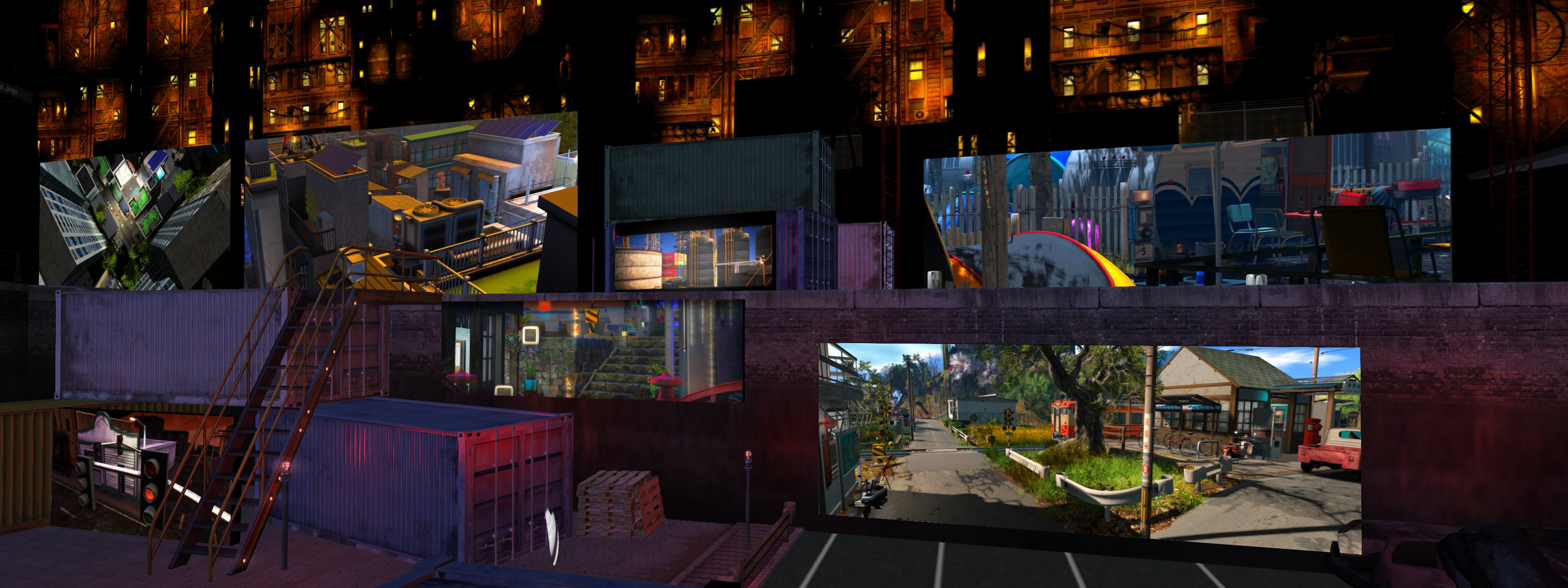
Urban and Industrial Images isn’t just an exhibition of Blips’ art, it is something of an immersive engagement with her work. Rather than merely hanging her images on the walls of a gallery space, she had the idea of presenting her work within a setting that reflects its nature. The result is an environment brought together by Naru as an industrial setting, split into two levels: an upper “street” level, where stand shipping containers, an office space and a backdrop of illuminated buildings suggestive of a larger town or city. The lower sits as a canal intended to bring barges and materiel to the city, and perhaps carry the detritus of industrial activities away – as with the barge sitting on the water.

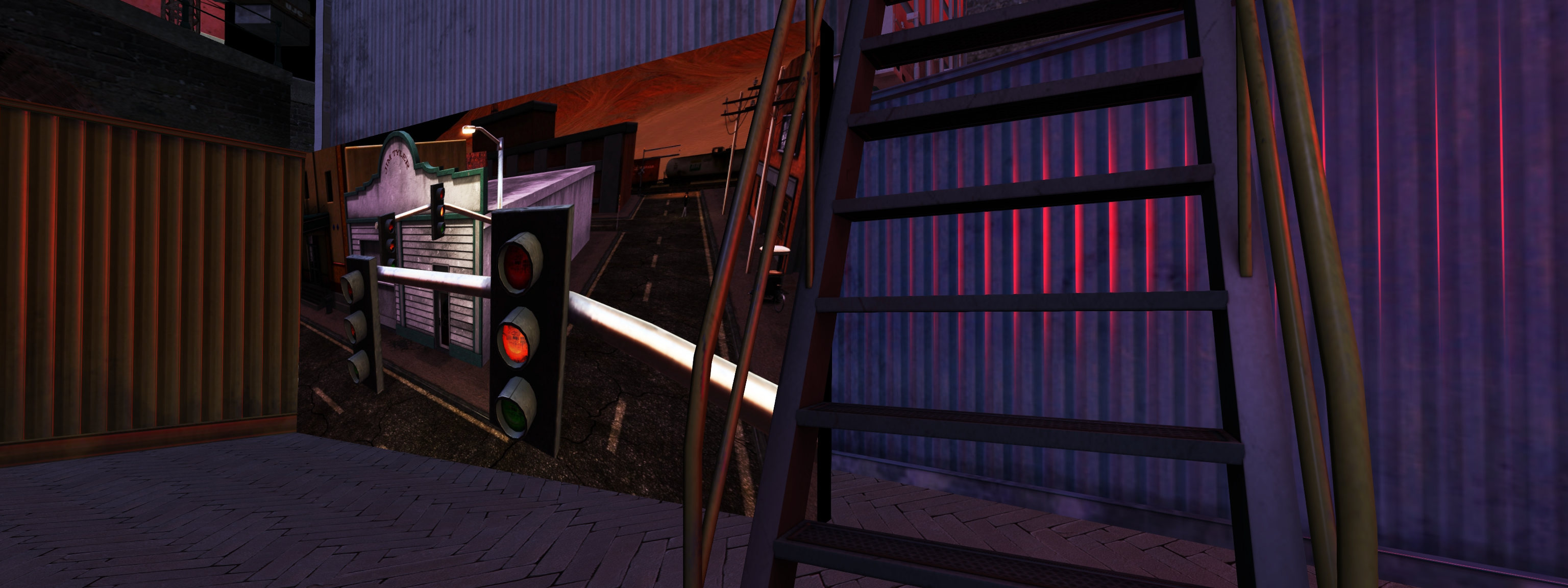
From the lower level, for example, a view of Tonarino is set beyond the arch of a bridge, the later curtailing our view, framing it to present it as a moment of motion rather than a photograph. Above it, meanwhile, the rooftops of Kekeland sit beyond the arm and jib of a crane as it raises a girder, forcing us to consider the spatial relationship between image and crane – just as Blip does in observing the places she explores and the objects within them – as does the placement of images within the old office space at one end of the setting.
An engaging, engrossing exhibition, Urban and Industrial Images is an engrossing examination of the photographer’s art.
SLurl Details
- Urban and Industrial Images, Kondor Art Centre (Waka, rated Moderate)

 Inara Pey: Living in a Modemworld