2018 SL UG updates 46/1: Simulator User Group

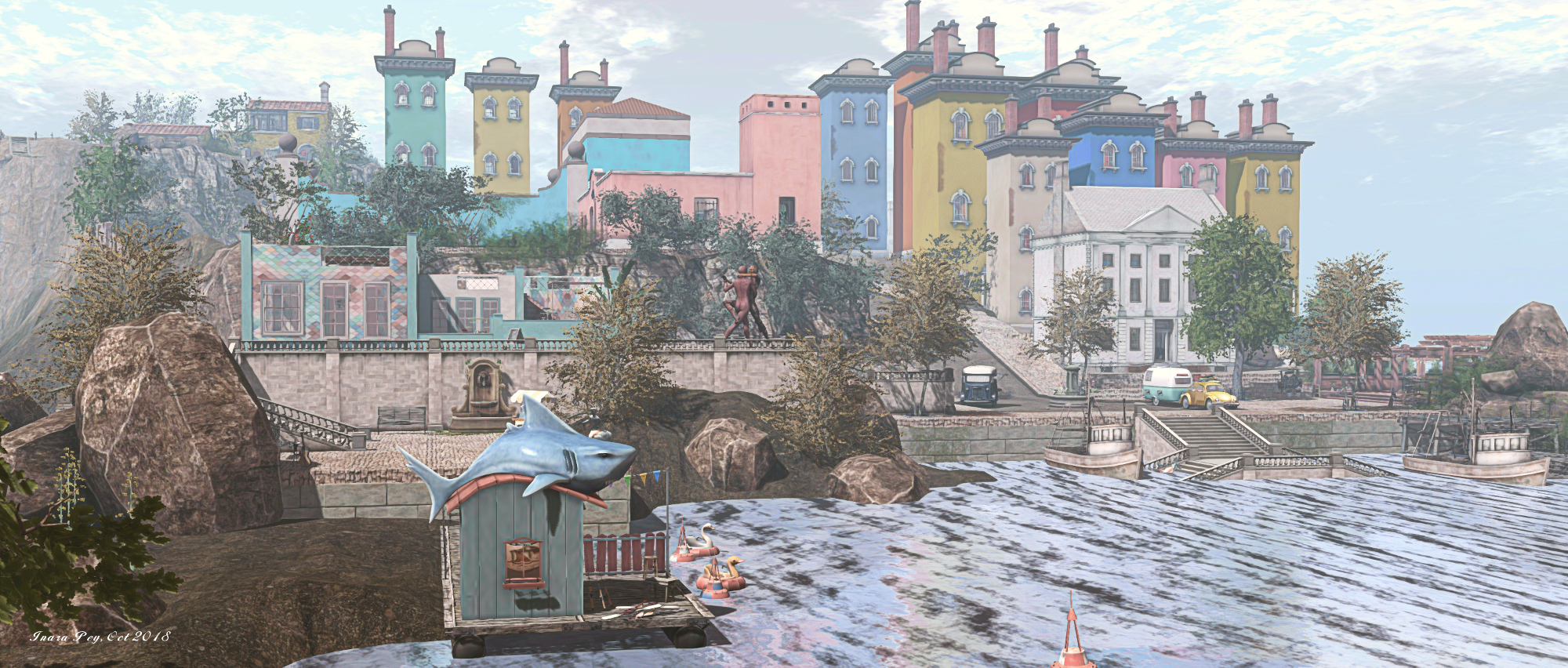
Malaika Park; Inara Pey, October 2018, on FlickrMalaika Parkblog post

Server Deployment Plans

As always, please refer to the server deployment thread for the latest news and updates.

  • On Tuesday, November 13th, the SLS (Main) channel was updated with server release 18#18.11.01.521329, previously deployed to the Magnum RC, and comprising a fix for Animesh land impact calculations – see below – and also internal logging fixes.
  • On Wednesday, November 14th, 2018, the three main RC channels should be updated with the same server update, 18#18.11.09.521593, comprising internal fixes.
  • There is no planned simulator update for EEP.

Land Impact Calculation Revision

The Land Impact update deployed to the SLS channel this week (and to the RC channels in week #45) is to correct an error in the Animesh code. In short, if an Animesh object has a conventional prim as its root, the required 15 LI for the Animesh skeleton is not applied.

This 15 LI is an aggregate value for Animesh arrived at during testing Animesh performance across a range of systems. It has also been subject to some alarmist blog posts about unexpected prim returns, but given Animesh products are not generally available as yet, this is unlikely.

SL Server

On Tuesday, November 13th:

All other viewers remain as per the end of week #45:

  • Current Release version 5.1.9.519298, dated September 5, promoted September 26. Formerly the Rakomelo Maintenance RC viewer – No change.
  • Release channel cohorts:
    • Animesh RC viewer, version 6.0.0.520636, dated October 18th.
    • Estate Access Management (EAM) RC viewer, version 5.2.0.520057, dated September 28th.
    • BugSplat RC viewer, version 5.1.9.519462, dated September 10th. This viewer is functionally identical to the current release viewer, but uses BugSplat for crash reporting, rather than the Lab’s own Breakpad based crash reporting tools.
  • Project viewers:
    • Environmental Enhancement Project (EEP) viewer, version 5.1.10.521312,  dated November 2nd.
    • Bakes on Mesh project viewer, version 5.1.10.520711, dated October 29th.
    • 360 snapshot viewer, version 5.1.6.515934, dated June 6th.
  • Linux Spur viewer, version 5.0.9.329906, dated November 17, 2017 and promoted to release status 29th November, 2017 – offered pending a Linux version of the Alex Ivy viewer code.
  • Obsolete platform viewer, version 3.7.28.300847, May 8th, 2015 – provided for users on Windows XP and OS X versions below 10.7.

Recalling Viewer 2.0

There is one thing I’d like to mention, and that today is the anniversary of a very special moment in Second Life history. November 13th is V2 Day. Nine years ago we released version 2 of the viewer, which many people mark as the beginning of the end of Second Life.

– Simon Linden, Simulator User Group

While I’d possibly dispute the date – I have blog posts from March 2010 marking the release of Viewer 2.0 as the “default” viewer available from the Lab, prior to that it was a Beta viewer (remember those?) – so perhaps “first issued” might have been a better term, it is nevertheless true that viewer 2.0 was subject to a lot of sturm und drang; I wasn’t a great fan when it arrived, although as it developed and improved, I did become something of a convert over time, and I also agree with Simon’s summation of the early work:

I know the intentions of V2 were good … the old SL viewer UI was a crazy mess of things patched on by engineers with no overall design. But personally I think they made the mistake of trying to meet a schedule date and not waiting until it was right.

And again, as Simon notes, at the end of the day and despite all the pronouncements of Viewer 2.0 heralding the end of SL, here we are, nine years later, still SL-ing!

Fake Firestorm Website

There are in-world IMs / notices, doing the rounds pointing to a fake Firestorm website. for details, please refer to my blog post here.


Firestorm: fake website and downloads warning

There are always certain risks involved in on-line living. With Second Life, we’ve all likely seen or heard of various scams and attempts to either data-scrape or gain people’s account details through phishing and other means.

Another area of risk is using viewers from untrusted sources, making a careful checking of linking to TPV sites mandatory (e.g. by checking them through the Third Party Viewer Directory page on the SL wiki) – particularly when they appear in note cards or pop-up in group chat sessions, and so on.

I raise this because Firestorm has been the subject of fake accounts posting links to a completely fake Firestorm viewer website.

Group and individual IMs have been circulating from fake “Firestorm” accounts, pointing to a fake Firestorm website & viewer downloads – with the Windows download link infected

The website – note the addresses arrowed above – is a scam site that is particularly nasty, as the Windows download link is infected – see virustotal.com – and so should not be used.

For clarity, Firestorm’s actual web address is: http://www.firestormviewer.org/ – no “pro” or anything else in the URL. Furthermore, outside of their own support and test groups, Firestorm do not spam other groups or individuals with links for downloading their viewer.

Currently, the Firestorm team is trying to get the false site taken down, and Linden Lab are working with them to ban the fake accounts.

However, if you do receive an IM similar to the one shown above, fielding fake website URLs, or see a similar message in a Group IM or notice, please don’t simply dismiss it. Linden Lab have requested those in receipt on such messages / notices should file an Abuse Report.

When filing a report, make sure you take a screen shot showing the message / notice displayed in your viewer – the abuse report screen shot feature will automatically capture open IM windows, etc. Reports can be filed under the Harassment category.

If you need assistance with raising an Abuse Report, please refer to my Abuse Reports tutorial, written with the assistance of Linden Lab’s Governance team.

Exploring Dagger Bay in Second Life

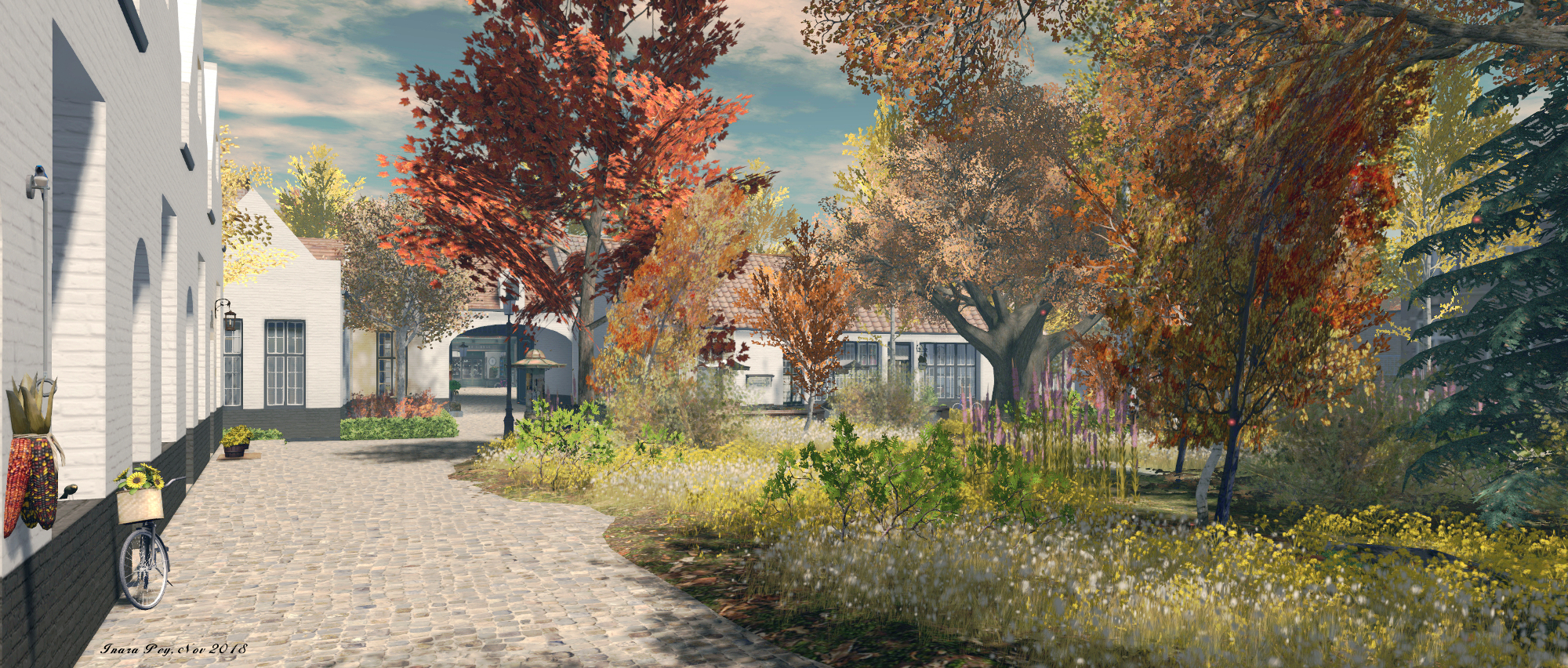
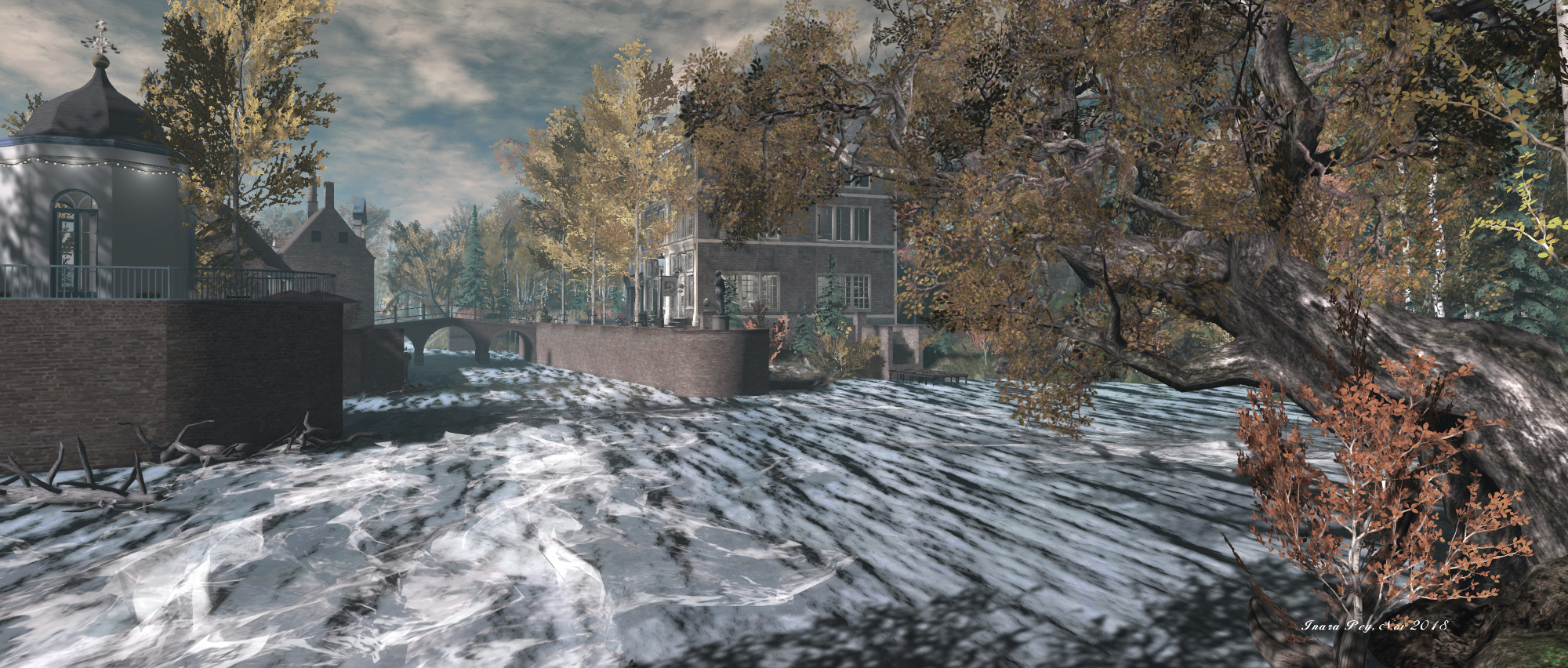
Dagger Bay; Inara Pey, November 2018, on FlickrDagger Bay – click any image for full size

Dagger Bay offers visitors a taste of Bruges and the Flemmish region of Belgium. A full region using the full 30K LI allowance, it has been designed as something of a team effort, led by region holder  Jaysun Dagger,  and it is a joy to visit and see.

We invite you to visit the beautiful Village of the Beguinage of Bruges and surrounding countryside. Please enjoy a walk on the forest path or relax in the coffee-house along the canal with a snack or something to drink.

– Dagger Bay About Land

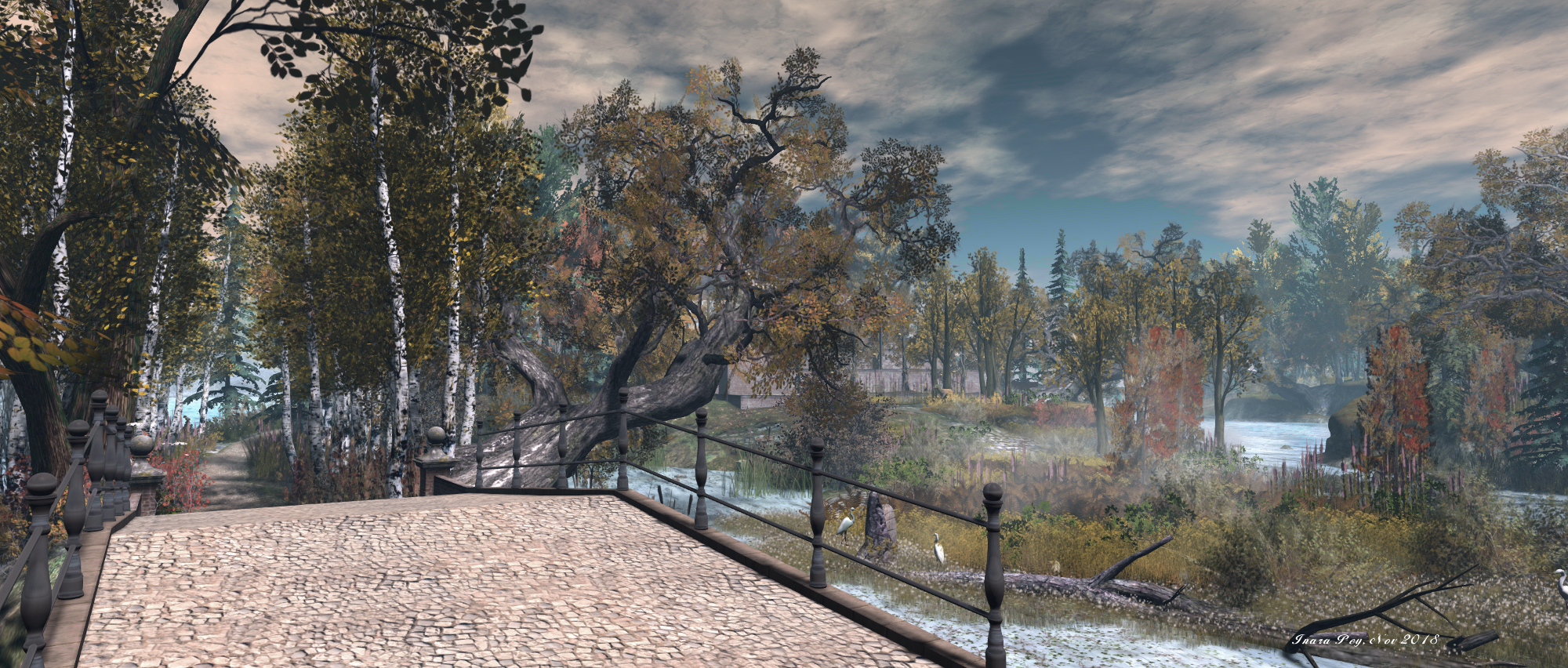
Dagger Bay; Inara Pey, November 2018, on FlickrDagger Bay

A visit begins on the north side of the region, close to a bridge linking it with South Haven Bay, a Homestead region that appears to be an extension of Dagger Bay. As it also appears to be the location of private homes, exploring it should be taken with care to avoid trespass.

A second bridge spans one of the canals mentioned in the region’s About Land description, leading the way via grand gateway possibly once belonging to a manor house, to a gardened courtyard. What were once most likely outhouses lining two sides of the courtyard have been converted into places of business: a museum, a tea house, a studio, together with a cosy apartment, some of which have large modern windows cut into walls to offer views out over the water between the regions. Facing the gateway across the courtyard with its free-growing flowers and grasses, lies the manor house, now a residence on its own, but with the family chapel still adjoining it.

Dagger Bay; Inara Pey, November 2018, on FlickrDagger Bay

The grounds of this white-walled house and its outbuildings is neatly proscribed by more canals, along  which stand the tall, high gabled town houses of the kind anyone who has visited Bruges will recognise. The grandest of these suggest they were once the homes of wealthy merchants who kept goods in the cellars under them, wooden doors just above the canal waters providing a means of them to be easily moved between storage and barge.

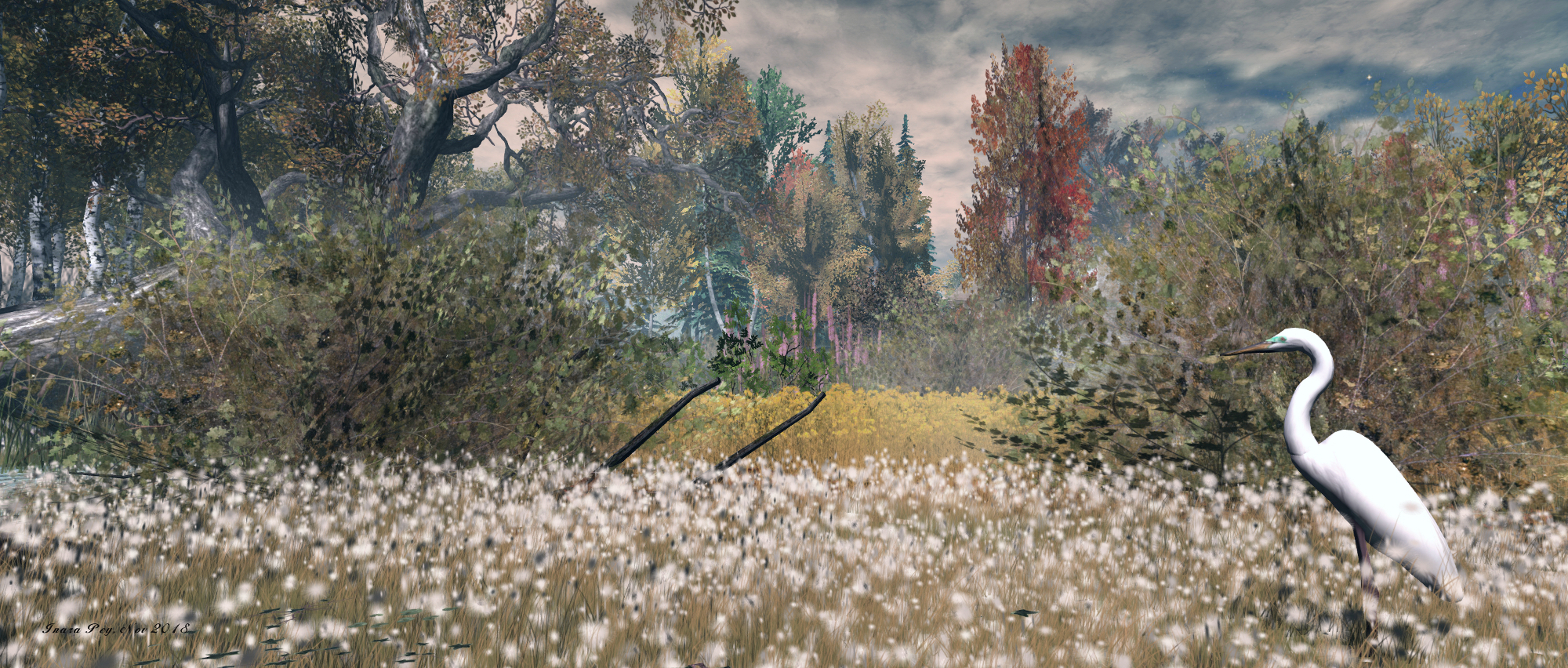
Beyond the town houses to the south, the land opens out. Broad waterways run through the middle of the region, the water breaking over weirs between low-lying islands. Wild looking, and rich in autumn’s colours at the time of our visit, these central islands can be reached via footbridge or a ford (do take note of the warning on the fallen sign alongside the ford!). Reaching these islands demand an exploration of the rest of the lands.

Dagger Bay; Inara Pey, November 2018, on FlickrDagger Bay

This can be down by heading east from the landing point, along the shoreline separating the two regions. A cobbled path leads the way around a rocky hill that itself offers a look-out point across the region. It converts to a gravel path running between tall trees to where another brick bridge that carries it over another water channel.

From here, explorers have a choice: continue to follow the path to the imposing house occupying the south-east corner of the region, or take a right turn where the wooden fence marking one side of the path end, and thus find the way through the middle of the region, hopping from island to island.

Dagger Bay; Inara Pey, November 2018, on FlickrDagger Bay

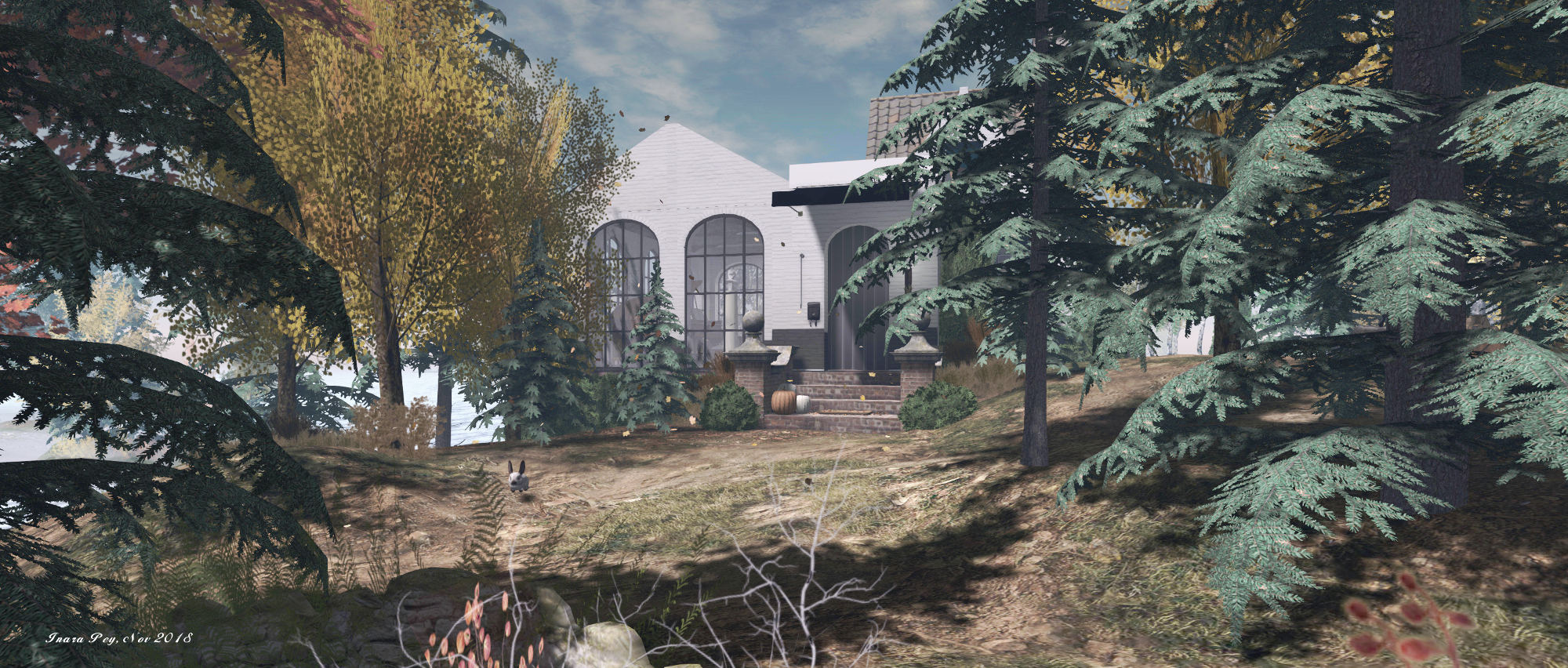
The big house doesn’t appear to be private property – there were no visible warnings as we approached it – but care should probably be taken in case it is. Certain its name – The Cloister – has a suggestion of quietness and privacy about it.

For those not wishing to risk trespassing, the path passes around the south side of the house, below the hight brick walls, to meet with a pair of bridges spanning the widest water channel cutting into the region. These lead the way to an imposing pavilion, screened by trees and with sheep and horses grazing peacefully around it. Furnished in an 18th century style, it has the feel of a refined summer-house offering a place to sit and appreciate the region, perhaps over a little tea.

Dagger Bay; Inara Pey, November 2018, on FlickrDagger Bay

Fabulously designed and laid-out, albeit it with a couple of rough edges that could be smoothed out, Dagger Island is a joy to visit; a marvellous palette of colour and design to explore, photograph and enjoy.

SLurl Details

2018 viewer release summaries, week #45

Logos representative only and should not be seen as an endorsement / preference / recommendation

Updates for the week ending Sunday, November 11th

This summary is generally published on every Monday, and is a list of SL viewer / client releases (official and TPV) made during the previous week. When reading it, please note:

  • It is based on my Current Viewer Releases Page, a list of all Second Life viewers and clients that are in popular use (and of which I am aware), and which are recognised as adhering to the TPV Policy. This page includes comprehensive links to download pages, blog notes, release notes, etc., as well as links to any / all reviews of specific viewers / clients made within this blog.
  • By its nature, this summary presented here will always be in arrears, please refer to the Current Viewer Release Page for more up-to-date information.
  • Note that test viewers, preview / beta viewers / nightly builds are not recorded in these summaries.

Official LL Viewers

  • Current Release version 5.1.9.519298, dated September 5th, promoted September 26th. Formerly the Rakomelo Maintenance RC viewer – No Change.
  • Release channel cohorts (please see my notes on manually installing RC viewer versions if you wish to install any release candidate(s) yourself):
  • Project viewers:
    • No updates.

LL Viewer Resources

Third-party Viewers

V5-style

  • No updates.

V1-style

  • No updates.

Mobile / Other Clients

  • No updates.

Additional TPV Resources

Related Links

Space Sunday: ‘Oumuamua, BFS and Tianhe-1

An artist’s impression of 1I/2017 U1 (or `Oumuamua), which was first seen by the Pan-STARRS 1 telescope in Hawaii on October 19th, 2017, and subsequently studied by a number of telescopes around the wrold, including the VLT of the European Southern Observatory (ESO) Credit: ESO / M. Kornmesser

On October 19th, 2017, the Panoramic Survey Telescope and Rapid Response System-1 (Pan-STARRS-1) in Hawaii announced the first-ever detection of an interstellar asteroid, named 1I/2017 U1 (aka. ‘Oumuamua).

In the months that followed, multiple additional observations were conducted that allowed astronomers to get a better idea of its size and shape, revealing it to be strangely cigar-shaped, roughly 400 metres (1312 ft) in length and approximately 40-50 metres (130-162.5 ft) in height and width, tumbling through space. These observations also showed it may be composed of dense metal-rich rock, and that it had the characteristics of both a comet and an asteroid.

However, the report on ‘Oumuamua (roughly translated as “scout”, ou being Hawaiian for “reach out for” and mua meaning “first, in advance of” – which is repeated for emphasis) that captured public imagination is the idea that the object may have been an interstellar probe.

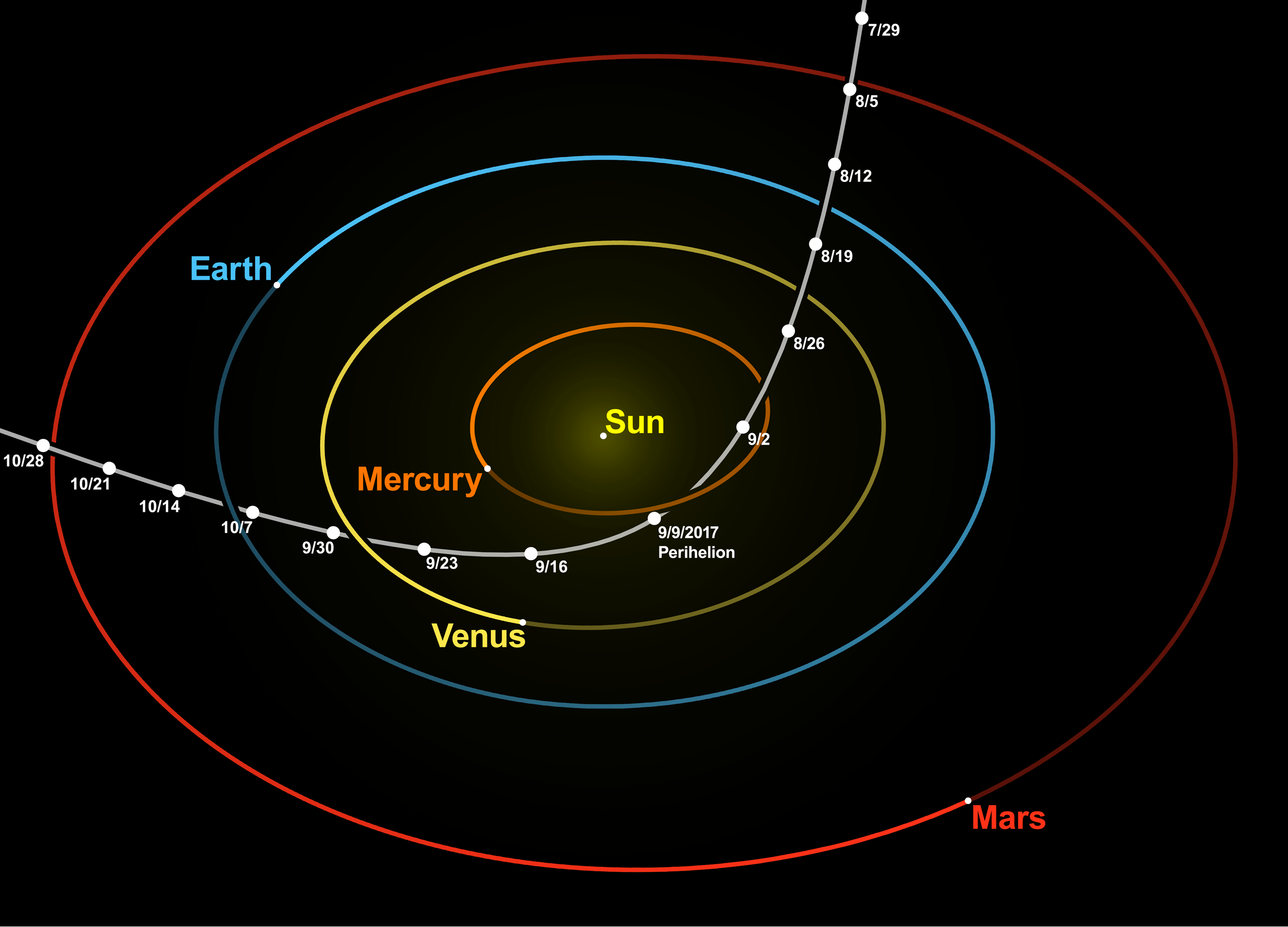
At the heart of this idea is the fact that ‘Oumuamua accelerated away from the Sun faster than would have been the case of it receiving a “gravity assist” in swinging around our star. Initially, it was suggested that the additional acceleration was the result of the off-gassing of volatiles  – frozen water, etc., that had been heated during ‘Oumuamua’s close swing around the Sun. However, no such off-gassing had been observed when the object was closer to the Sun, which would have been expected.

‘Oumuamua’s passage around the Sun in 2017. Credit: Tom Ruen, via wikipedia

In June 2018, an alternative explanation for the acceleration was posited: that it was the result of solar pressure being exerted on the object.

However, at the end of October 2018, Shmuel Bialy, a post-doctoral researcher at the CfA’s Institute for Theory and Computation (ITC) and Prof. Abraham Loeb, the Frank B. Baird Jr. Professor of Science at Harvard University, went one stage further. They proposed that while ‘Oumuamua might well be natural in origin – it could also be the object is in fact an alien probe, intentionally sent to our solar system and which uses a light sail (or what we’d call a solar sail were it to be used with a probe sent from Earth to explore out solar system) for propulsion.

Currently there is an unexplained phenomena, namely, the excess acceleration of ‘Oumuamua, which we show may be explained by the force of radiation pressure from the Sun. We explain the excess acceleration of `Oumuamua away from the Sun as the result of the force that the Sunlight exerts on its surface. For this force to explain measured excess acceleration, the object needs to be extremely thin, of order a fraction of a millimetre in thickness but tens of meters in size. This makes the object lightweight for its surface area and allows it to act as a light-sail. Its origin could be either natural (in the interstellar medium or proto-planetary disks) or artificial (as a probe sent for a reconnaissance mission into the inner region of the Solar System).

– E-mail from Baily and Loeb on their paper concerning ‘Oumuamua

Their views were circulated to various news outlets via e-mail and cause something of a stir in the first week or so of November.

Loeb has actually been an advocate of ‘Oumuamua being of intelligent origin since it was first discovered. He was one of the first to call for radio telescopes to listen to it across a range of frequencies for any signs of transmissions from it. When the SETI Institute‘s Allen Telescope Array did so without success, he pushed for the Green Bank Telescope in West Virginia to listen for radio emissions – which it did for a 6-day period December 2017, again without success

As no signals were found to be emanating from the object, rather than drop the idea of it being artificial, Loeb has put forward the ideas that it has either malfunctioned, or it is active, and we simply can’t detect the fact that it is. He’s even suggested that given Pan-STARS only managed to spot the object after it has passed perihelion, could mean that it is only “one of many” such probes sent our way, and we’ve missed the others.

Bialy has been a little more cautious with things, pointing out the paper is “high speculative”. But the fact is, the paper does come across more of an attempt to substantiate a belief (that ‘Oumuamua is of artificial origin) than anything else, and in doing so, it does ignore certain data and makes some sweeping assumptions.

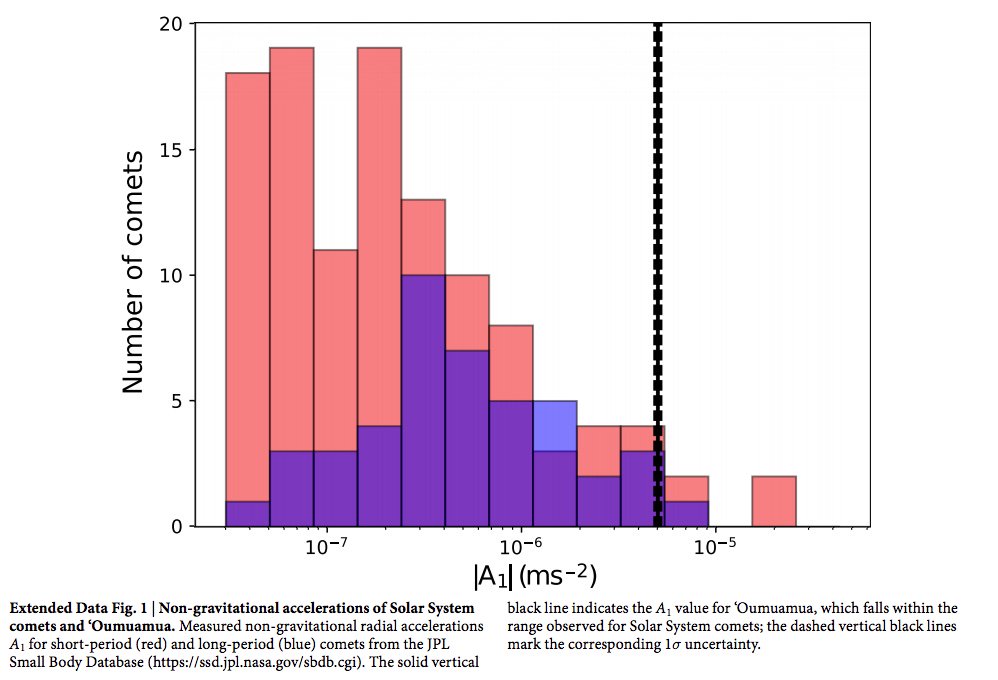
For example, the paper tends to dismiss the idea that ‘Oumuamua’s unexpected acceleration was consistent with a push from solar radiation pressure. However, Michele Bannister, a planetary astronomer from New Zealand and one of many to push back against the “ET probe” idea via Twitter, used a graphic that shows the acceleration exhibited by ‘Oumuamua’s is entirely in keeping with similar non-gravitational accelerations seen with comets within the solar system.

via Michele Bannister

Continue reading “Space Sunday: ‘Oumuamua, BFS and Tianhe-1”

Dropping into Sisi’s gallery in Second Life

Sisi Biedermann

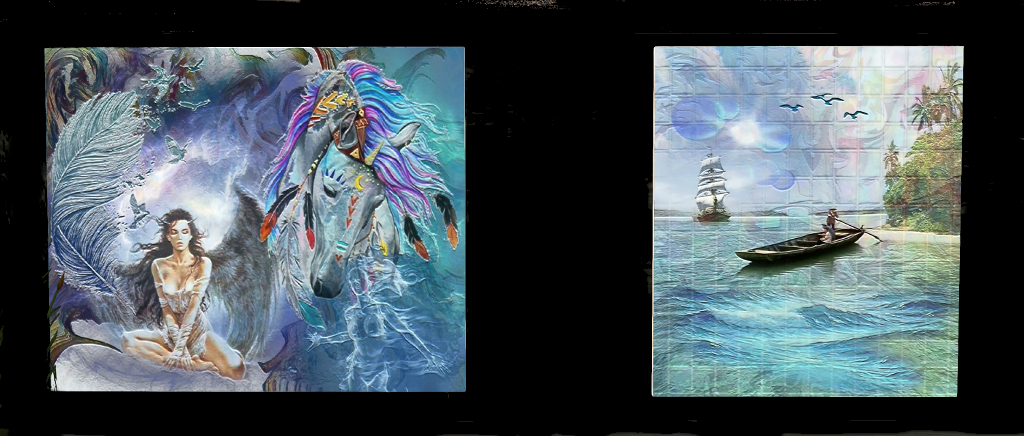
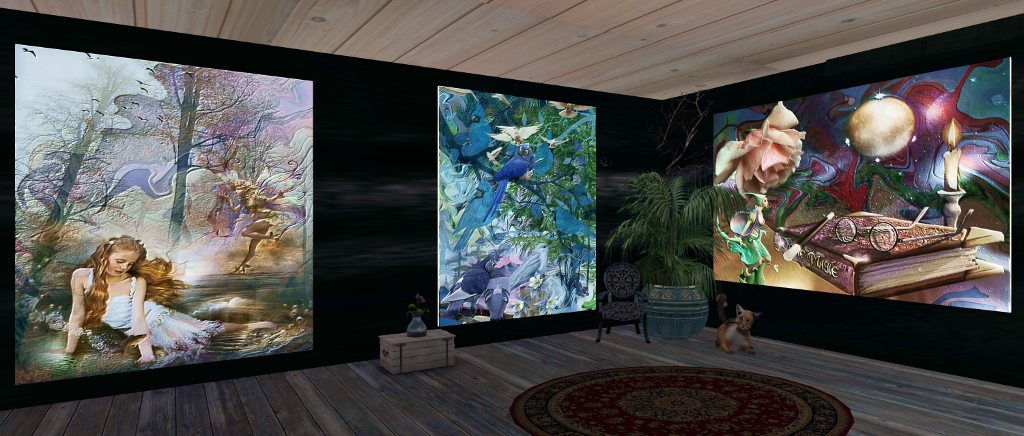
Sisi Biedermann is a prolific and exceptionally talented artist. Her work is quite unlike art produced within Second Life or uploaded and exhibited in-world. In a sense, thanks to Sisi’s imagination, style, and rich use of colour and ideas, to me it straddles the two. So many of her pieces could depict settings and situations waiting to be created in-world, whilst all offer doorways into fantastical worlds that come to life as virtual places within our imaginations.

As I’ve noted before, Sisi’s work is broad-ranging and so skilfully executed, it is possible to become lost in her techniques (which, I’d hazard a guess mix both traditional and digital approaches), so I was delighted when Caitlyn and I had the opportunity to visit Sisi’s gallery in-world to view some of her most recent work, which went on display at the start of November 2018.

Sisi Biedermann

Sisi notes her art and her time in Second Life are closely intertwined, and not just because of the numerous exhibitions in which she participates:

I joined Second Life in 2007, and back then I never realized how much this would mean to me. I started taking photos in Second Life in 2008, and have developed my style ever since.

Back then I had just started painting with acrylics after a very long break where I raised my children and looked after my family and my work. Today, I have painted several hundred paintings, and I still get a lot of inspiration from nature, second Life and northern islands such as Faroe Islands and Iceland.

All this brings me to where I am today and I hope you will enjoy my pictures.

– Sisi Biedermann on her art.

Sisi Biedermann

On offer at the gallery are around 50 of Sisi’s paintings, each one of them stunning in their colours, composition and presentation. Where a number of her recent exhibition have perhaps leaned towards her animal and wildlife images, this collection focuses more on her fantasy work and human studies, touched with elements of the mystic and science fiction in places.

Every single piece on offer is testament to Sisi’s skill; each one unique and captivating. So much so, that picking out a single piece from this collection is unfair; but I admit there is one piece in particular that completely took away my breath.

Perfectly placed on the upper floor stairwell, and passing unseen until visitors make their return journey to the lower levels, is The Evil Wizard, and it is quite the most stunning painting of the late Heath Ledger in what was perhaps his most remembered role: that of The Joker in The Dark Knight. The positioning of this piece means that you cannot fail to immediately be mesmerised by such a captivating image of Ledger as The Joker.

Sisi Biedermann

A truly striking gallery, and not one to be missed.

SLurl Details