Space Sunday: seven minutes of terror and a round-up

Virgin Orbit
An artist’s impression of InSight on Mars. Credit: ETH Zurich

Mars is actually the most-studied planet in the solar system after Earth. In the last two decades alone, it has been under constant observation and study, yet we know very little about the Red Planet’s interior.

That should change from Monday, November 26th, 2018, when NASA’s latest mission to Mars, the Interior Exploration using Seismic Investigations, Geodesy and Heat Transport (InSight) lander touches down on Elysium Planitia.

The aim of the mission is to carry out a detailed examination of the Red Planet’s interior – its crust, mantle and core. Doing so can answer key questions about the early formation of the rocky planets in our inner solar system – Mercury, Venus, Earth, and Mars – more than 4 billion years ago. In addition, the data gathered may also help us to understand how rocky exoplanets orbiting other stars in our galaxy may have formed.

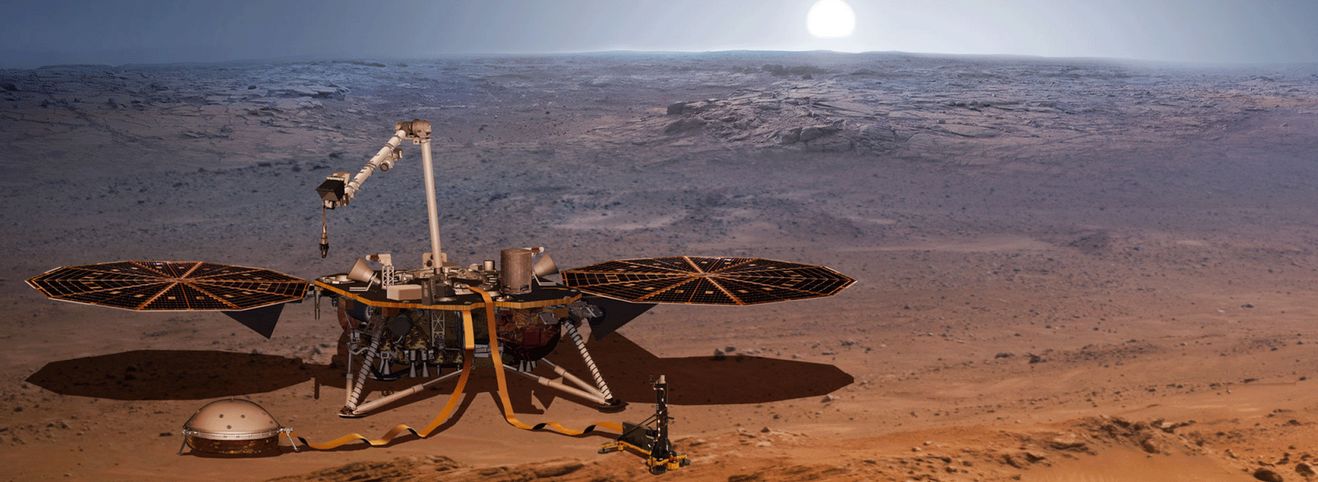
An artist’s impression of InSight on Mars, showing the SEIS package deployed. Credit: NASA / JPL

I’ve covered some of the more unique aspects of the mission in previous Space Sunday articles (see Insight on InSight, May 2018 and Mars Roundup, October 29th), including the use of two unique surface instruments, the Seismic Experiment for Interior Structure (SEIS) and HP3, the Heat Flow and Physical Properties Package to probe the planet’s interior. However, in order for the lander to use these, and its other instruments, it must conclude its 6-month journey to Mars with the Entry, Descent and Lander (EDL) phase – or as NASA mission engineers are calling it, 7 minutes of terror.

So-called since the 2012 landing of the Curiosity rover on Mars, it is known as such because by the time mission control receives the initial signals indicating the start of EDL, the Lander will be on the surface of Mars – in one piece or otherwise. These crucial seven minutes comprise (in the anticipated Earth Receive Time, when the signals are expected to reach NASA’s Jet Propulsion Laboratory):

  • 19:47 GMT: encased in its aeroshell, InSight will enter the upper reaches of Mars’ discernible atmosphere 114 km (77 mi) above the surface of planet at 19,800 km/h (12,300 mph) at a critical 12-degree angle of attack. Any less than this, and it could bounce back into space, any greater and the heat generated by atmospheric entry could overwhelm the heat protection (designed to withstand temperature up to 1,500oC / 2,700oF, which is reached  2 minutes into the entry sequence), and burn-up the lander.
  • 19:51 GMT: having been slowed to 1,400 km/h (860 mph) and at an altitude of 11 km (7 mi), the primary parachute is deployed. 15 seconds after this, the lower heat shield is jettisoned, and 10 second after that, the three landing legs are deployed.
  • 19:52 GMT: ground sensing radar activates to measure the distance to the ground.
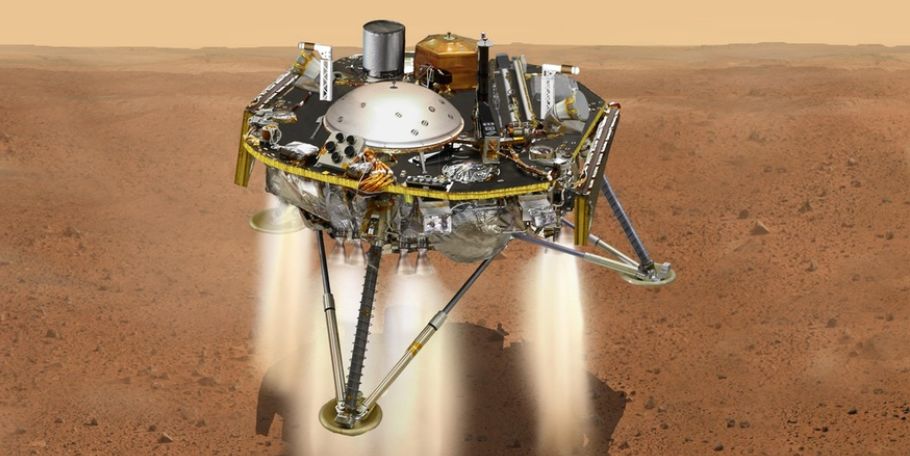
  • 19:53:25 GMT: the lander separates from it aeroshell and parachute and the landing motors start firing as the lander orients itself for touchdown.
  • 19:53:47 GMT: the motors reduce velocity from 27 km/h to 8 km/h (17 mph to 5 mph).
  • 19:54 GMT: InSight touches down, with the motors immediately shutting down to avoid “bouncing” or toppling.
Virgin Orbit
An artist’s impression of InSight touching-down on Mars under propulsive power. Credit: NASA

Depending on how systems check-out, the first image from InSight could be received by mission control about 8-10 minutes after landing – although equally, it could be received any time in the first 24 hours after landing. The Mars Odyssey orbiter should overfly the landing area at around 01:30 GMT on November 27th, and will hopefully be able to image InSight on the surface of Mars with its large, circular solar panels fully deployed – these will initially remain in their stowed  configuration for around 20 minutes following landing to allow the dust thrown up by the lander’s motors to disperse and settle so that it doesn’t interfere with their operation.

Once settled on Mars, the primary mission, designed to run for a full Martian year, will commence – although it will be one that could take time to unfold.

InSight is kind of a laid-back, slow-motion mission. It’s going to take us probably two to three months, at least, to get our instruments down, and it could be early next spring before our principal instruments started returning data.

– InSight principal investigator Bruce Banerdt

As well as direct transmissions during EDL, NASA hopes to get real-time telemetry of the landing from a pair of cubesats, called Mars Cube One (MarCO), that launched as secondary payloads with InSight in May, and which will fly past Mars during the landing.

For those who wish to follow it, the InSight landing will be broadcast on a number of NASA on-line resources available.

Continue reading “Space Sunday: seven minutes of terror and a round-up”

Kimeu Korg: a return to DiXmiX in Second Life

DiXmiX Gallery: Kimeu Korg

Saturday, November 24th saw the opening of a new exhibition at DiXmiX Gallery, curated by Dixmix Source. Osmosis De Un Sueño: The Return sees Kimeu Korg return for the second part of an exhibition first witnessed in June 2018 (read here for more), moving to the White Gallery at DiXmiX this time around.

Kimeu is perhaps Second Life’s artist most rooted in surrealism in the presentation of his work, which can easily equal the likes of Max Ernst and René Magritte. Sometimes blending in-world images with elements from the physical world, for this part of Osmosis De Un Sueño, he presents pieces firmly produced in-world, several of which include his sense of whimsy, others of which present a more pointed expression.

DiXmiX Gallery: Kimeu Korg

This part of the exhibition offers a baker’s dozen of images to b appreciated. I don’t usually ascribe an order in which to view an exhibition unless the artist has indicated one, but with Osmosis De Un Sueño: The Return, I would recommend starting a visit by taking the steps closest to the gallery’s main entrance up to the mezzanine level White Gallery.

Doing so will take you past Look and Retrato Equestre (Equestrian Portrait) into the core of Kimeu’s exhibition, allowing the full richest of his surrealist approach come to the fore, peppered in places with his sense of humour – and his ability to question norms, as with the subtle Prisoner, beautifully layered in potential meaning as it is, despite Kimeu’s disarming claim about his work.

DiXmiX Gallery: Kimeu Korg

Given the preponderance of skeletons in the pieces, one might think there is a little touch of post-Halloween in the exhibit, but to me these are in some way a lead up to what I consider to be the last piece in the exhibition – or at least, the one I would recommend coming to last of all, sitting above the entrance to the gallery’s events venue, The Atom.

Entitled Blind Obedience, it is a sobering piece, one which in the toxic political environment prevalent in parts of the world today, perhaps bears a special meaning and / or warning. Such is the imagery used, it sits well apart from the rest as it makes an extraordinarily strong statement, one given added impact by viewing it last of all (and the reason I’m not reproducing it here – it should be seen first-hand).

DiXmiX Gallery: Kimeu Korg

Another remarkable exhibition by one of Second Life’s most remarkable artists, and one that should not be missed as it remains open through until at least late December 2018.

SLurl Details


Steampunk, Victorian role-play and waffles

Seanchai Library

It’s time to highlight another week of storytelling in Voice by the staff and volunteers at the Seanchai Library. As always, all times SLT, and events are held at the Library’s home at Holly Kai Park, unless otherwise indicated.

Sunday, November 25th, 18:00 Magicland Storytime

With Caledonia Skytower at the Golden Horseshoe.

Monday, November 26th 19:00: The Legend of the Engineer

Industralia is a country some might recognise – a mix of Victorian England and the American Midwest thrown in, with just a touch of Australia. It’s a place where steam power is the modern wonder, while the mode of dress is, like the setting, decidedly Victorian – not that the locals call it thus. 

What is decidedly not Victorian, however, is the common use of mechanical human-shaped creations, called tikkerbots, to complete most menial tasks, or the airships that regularly pass overhead while mail is delivered by a pneumatic postal systems. It is a place we in this world would call “Steampunk”.

On the coast of Industralia lies the city port of Steamkettle Bay. It is home to Letitica and Gerard Liddle. Gerard is a talented inventor who has achieved a modest level of success with his practical yet whimsical household inventions. His wife Letitica is a very short, energetic woman who has a habit of mixing up her words. Together with their neighbours, the Liddles are preparing to celebrate the incoming new year – 1883. Why not join them?

Tuesday, November 27th

19:00: Urchin Preview Day – The Dickens Project

The Dickens Project once again opens its doors on Friday, November 30th. Ahead of that, on Tuesday, November 27th, visitors can gain a preview of this year’s event – through the eyes, a Victorian street urchin.

This HUD-based game combines elements of a hunt with free form (and optional) role play, together with an invitation to create (and share) your story. An urchin avatar is not required to play, but definitely encouraged. When you pick the game HUD within The Dickens Project, you’ll receive  suggestions on how to set up a low cost urchin “outfit.”

The Dickens Project 2018

As a poor urchin, you need food and money. The grocers, the bakers, the butchers all have food. Can you buy some? Maybe steal some? You might see the gleam of coins on the street. Can you pick those up?  If you ring a shop bell, the owner might have a job for you. Maybe down on the mudflats, treasure might be hiding.

Read the game play page for more. As an urchin, players are encouraged to interact with others in character, if they respond in kind, then role-play as you wish – see the role-play page for help and ideas. Afterwards, you can have the opportunity to write about your experience through a story that can be shared in a special reading event in Second Life.

Aoife Lorefield will be available at The Dickens Project throughout the day (North American daylight hours) to show interested urchin-ages around, answer questions, and share information concerning the event and The Dickens Project.

19:00: Everything on a Waffle

In the small Canadian town of Coal Harbour, in a quaint restaurant called The Girl on the Red Swing, everything comes on a waffle–lasagna, fish, you name it. Even waffles!

Eleven-year-old Primrose Squarp loves this homey place.She a young girl who could use a little extra attention; her parents were lost at sea and believed to be dead, and while her Uncle Jack tries his best to care for her, doesn’t have a lot of free time, and the guardian he hires to look out for Primose is so old, child welfare isn’t foremost on her mind. Similarly, the school councillor is far more interested in listing her own concerns and telling her own tales to actually listen. All-in-all Nobody knows what exactly to think of young Primrose, and Primrose doesn’t quite know what to make of her small community, either.

So Kate Bowzer, the owner of The Girl on the Red Swing takes Primrose under her wing. She teaches  her how to cook, doesn’t patronise or chastise her, even when she puts her guinea pig too close to the oven and it catches fire. And so Primrose, in her own perceptive way, develops wisdom beyond her years and a belief system we could all do well to adopt – including the idea that hope is not crazy.

Join Faerie Maven-Pralou as she reads Polly Horvath’s 2002 Newbery Honor winner.

Wednesday, November 28th 19:00: The Quilters

With Caledonia Skytower.

Thursday, November 29th

19:00: Leiningen vs The Ants

Shandon Loring reads Carl Stephenson‘s short story about a stubborn coffee plantation owner in Brazil who refuses to evacuate his family and staff when faced with a vicious, deadly army of ants – regarded as “an act of God”, as they ravage and destroy everything before them – and the plantation lies directly in their path. Also presented in Kitely (hop://grid.kitely.com:8002/Seanchai/144/129/29).

21:00: Seanchai Late Night

Contemporary science fiction and fantasy with Finn Zeddmore.

Friday, November 30th 21:00: The Dickens Project Opens

Idle Rogue Productions presents: Guerilla Burlesque – pre-show seating at 21:00, music and dancing after the performance from 23:00.

I’ll be previewing this year’s Dickens Project closer to the opening.


Please check with the Seanchai Library’s blog for updates and for additions or changes to the week’s schedule.

A winter’s return for the Isle of May in Second Life

Isle of May; Inara Pey, September 2018, on FlickrIsle of May – click any image for full size

Serene Footman and Jade Koltai specialise in designing regions based on real locations around the world. Each of them has always been popular among visitors and bloggers, perhaps none more so than Isle of May, which opened its doors in May 2018 for a month before closing once more.

As someone who certainly appreciated the original version of Isle of May, I was delighted to learn – by way of the ever-vigilant Shakespeare – that Isle of May re-opened on November 23rd, 2018, albeit it in a new location.

When we closed the Isle of May in June we promised ourselves that we would try designing a winter version later on in the year to see how it turned out. Having worked on the sim for a couple of weeks, we rather like it.

– Serene Footman, discussing the return of Isle of May

Isle of May; Inara Pey, September 2018, on FlickrIsle of May

The actual Isle of May is located on the north side of the outer Firth of Forth. It’s a small island – less than 2 kilometres long and under half a kilometre wide – sitting 8 km off the Scottish coast. It forms a rugged finger-like uplift of basalt, home to over 285 bird species, including puffins, kittiwake, guillemots, razorbills, shags and fulmars. It is managed by Scottish Natural Heritage as a National Nature Reserve, and from October through Easter, is a home for seal pups.

The name of the island is subject to some dispute, but it is thought to be either of Old Norse origin, meaning “island of seagulls”, or from the Gaelic Magh meaning a “plain”. It is uninhabited outside of its wildlife, but open to day trippers between March / April through until October, and makes for and intriguing place to re-create.

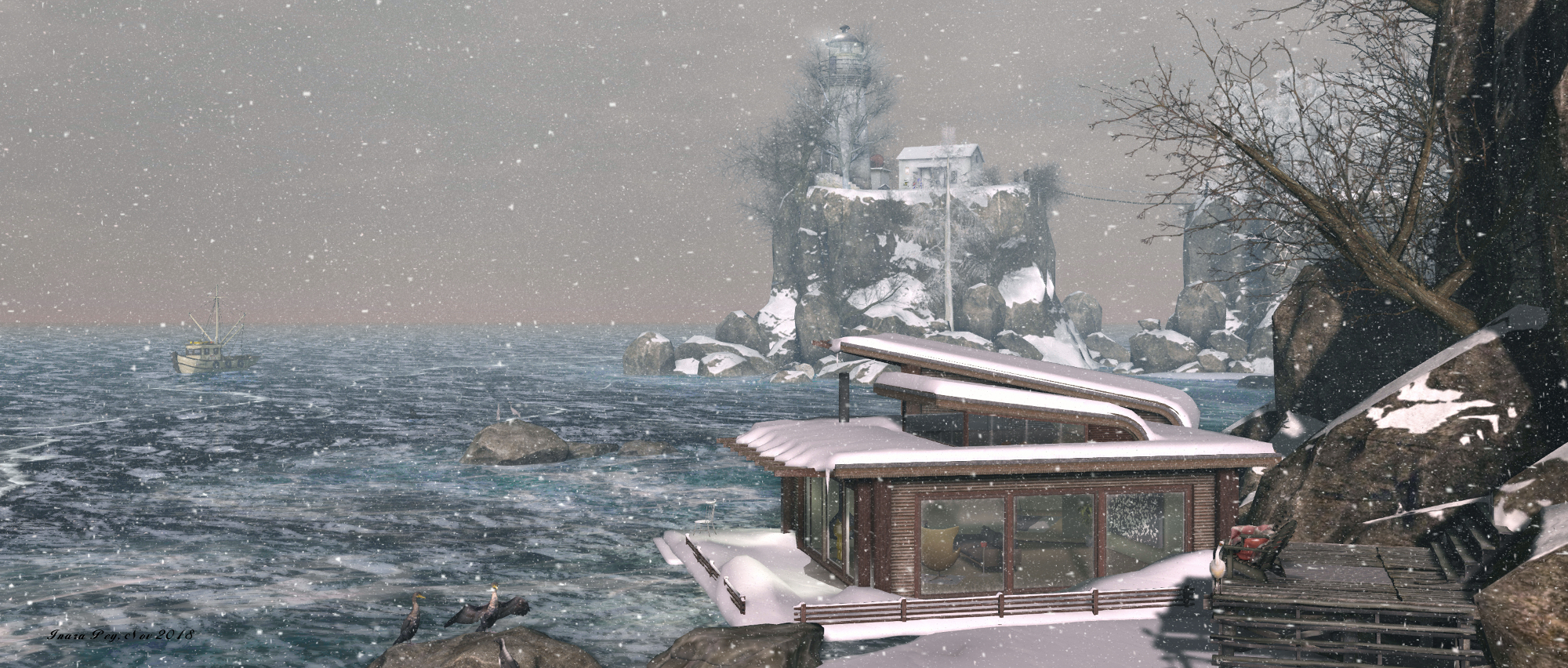
What we were hoping to create is something wild and untamed: less desolate and abandoned than Khodovarikha, or even Furillen, but still a place where you’d feel the wind and snow hurting your face, and the cold gnawing away at your insides. We imagined a roaring sea, with north-easterly gales blasting onto isolated beaches.

– Serene Footman, discussing the return of Isle of May

Isle of May; Inara Pey, September 2018, on FlickrIsle of May

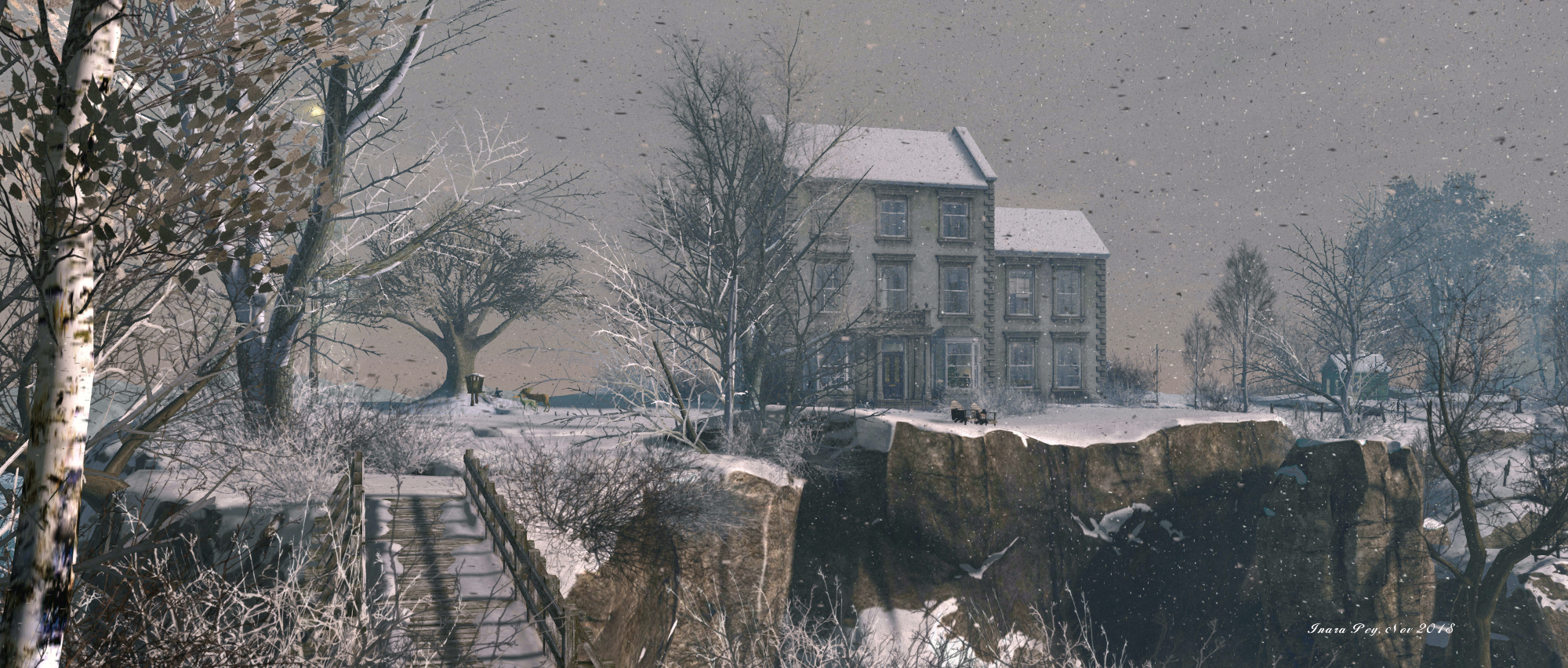
Jade and Serene have certainly succeeded in creating a winter’s scene, and one that is not uncommon to the rugged Scottish coastline. Those familiar with the original Isle of May from earlier in 2018 will also recognise this design, which retains the core look and layout of the original – hardly surprising, given it is based on a real location. However, there are some subtle changes as well they go beyond the weather.

For example, this design appears to offer a broader path down to the beach from the landing point, while the greenhouse that once sat on those shingles has been moved a north-side beach, reached by a similar twisting path down from the island’s plateau. This northern beach runs around the north-west coast, to the east offering a walk between the greenhouse and an A-frame cabin, while to west it offers a way to a lonely stone cottage.

Isle of May; Inara Pey, September 2018, on FlickrIsle of May

Such abodes are in keeping with the look and feel of many of the Scottish isles, and while Isle of May may not have permanent human residents, it has a long history of occupation that encompasses both the Vikings and the site of one of the earliest Christian churches in Scotland. So the cottage isn’t that out-of-place, while the religious history is reflected this time not only by ancient ruins, but also the presence of a small chapel on the north-east headland. Another path switchbacks down from this headland, providing access to one of my favourite Second Life house designs: the Skye Luxury Forest Cabin, by Alex Bader. Facing this across the southern bay is the peninsula mindful of the real Isle of May’s Rona headland.

This build also expands on the rich diversity of Isle of May’s wildlife. As well as the birds, the region includes otters, goats and wild rabbits, together with orca and dolphin out in the waters. The latter might be hard to see through the snow, but all are fully in keeping with the real island’s creatures. A couple of liberties have been taken, however, as Serene notes:

We introduced a small wolf pack. Surely there are no wolves in Scotland? Correct – not since the eighteenth century, it would seem – but we placed this group on the sim as a hat tip to a landowner called Paul Lister, who wants to reintroduce wolves – safely behind fences, I hasten to add – to the Scottish highlands. You’ll also see an Arctic fox flitting in and out of its den. Why? Because this beautiful animal once thrived in Scotland.

– Serene Footman, discussing the return of Isle of May

Isle of May; Inara Pey, September 2018, on FlickrIsle of May

As always with Serene and Jade’s design, the region is rounded-out by a superb sound scape, one that should not be missed during a visit, as great care has been taken to incorporate he sounds of the actual wildlife found on the island (as well as mixing in the plaintive cries of both orca and wolves).

Rounded-out by off-sim islands, and a now moving fishing boat, the new Isle of May is a masterpiece of design – but I would add a small comment of my own: it is a very busy region, both in terms of visitors during this, its opening week, and as a result of things like the heavy snow falling. As such, it can take a toll on systems when visiting – so do be patient, and if you’re used to running with shadows enabled, you might want to turn them off except when taking photos – which can be shared through the region’s Flickr group.

Isle of May; Inara Pey, September 2018, on FlickrIsle of May

SLurl Details

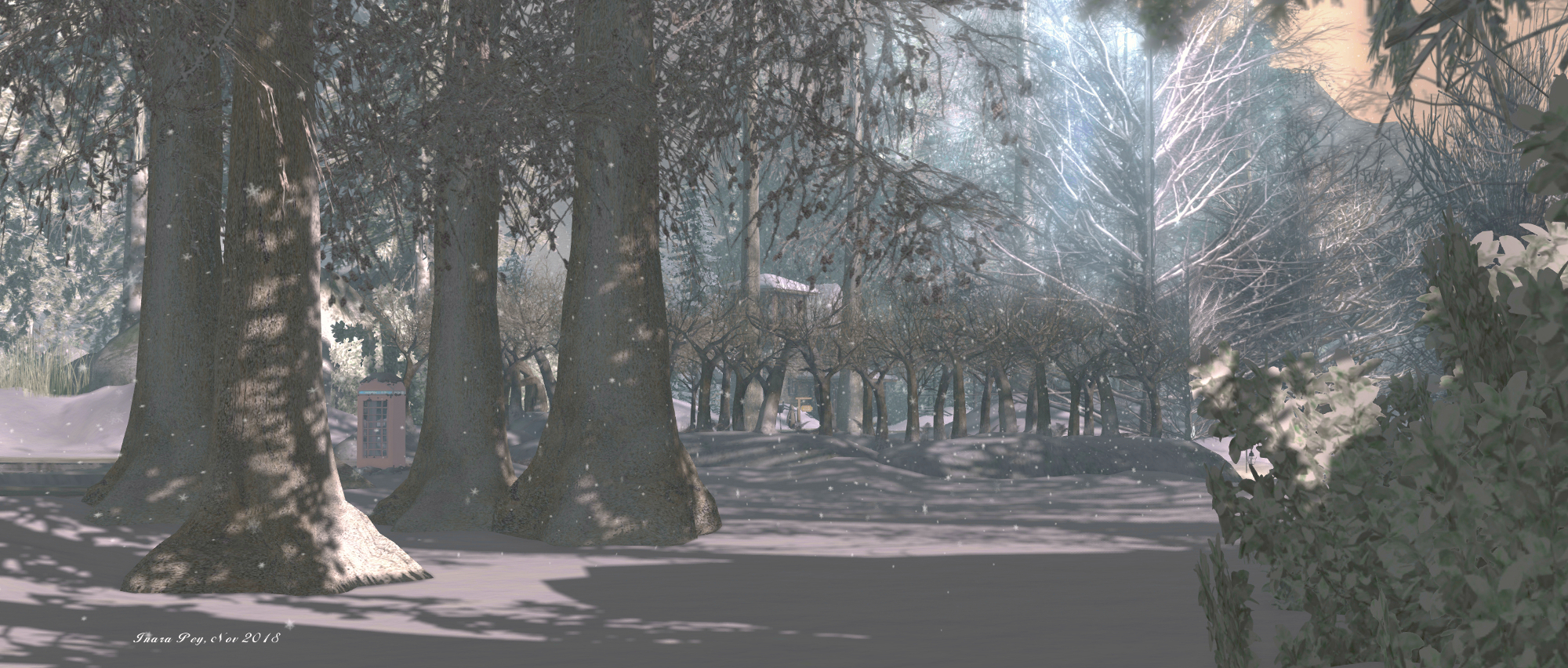
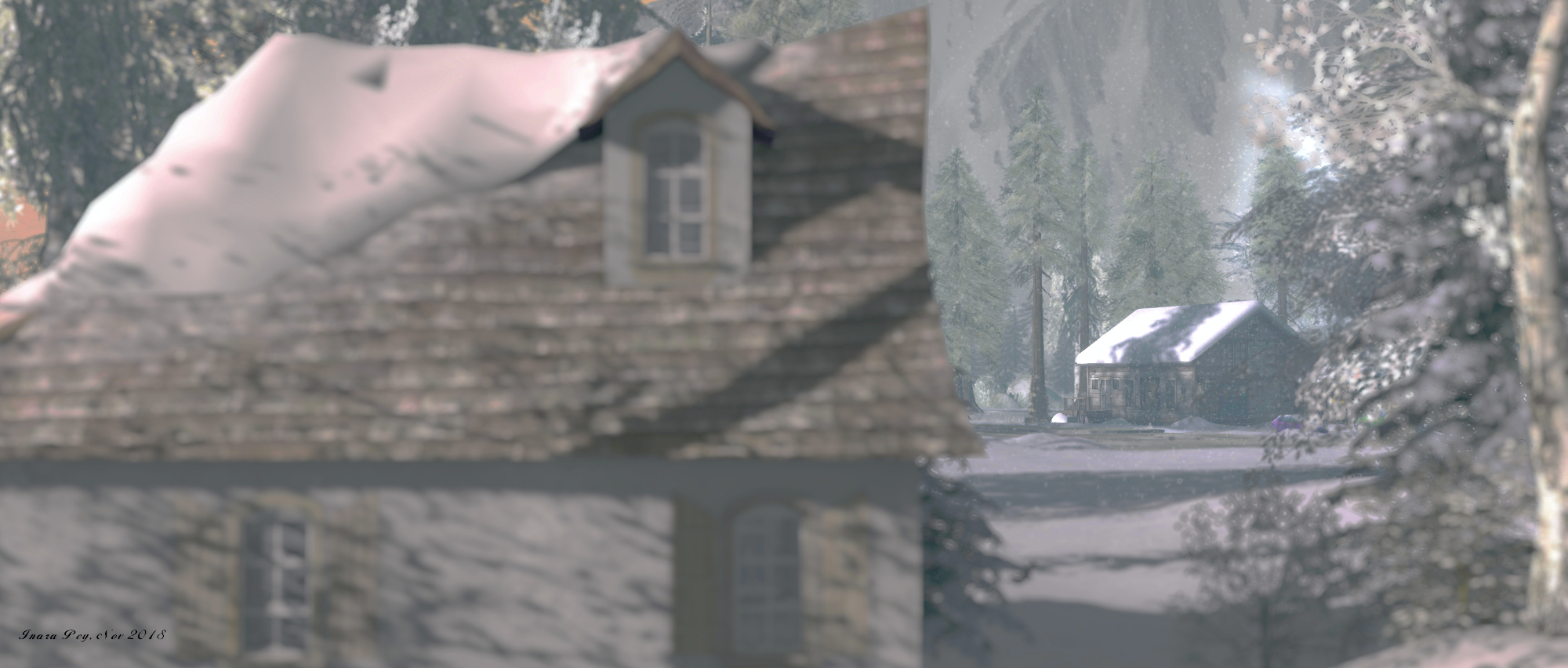
A Winter’s Hollow in Second Life

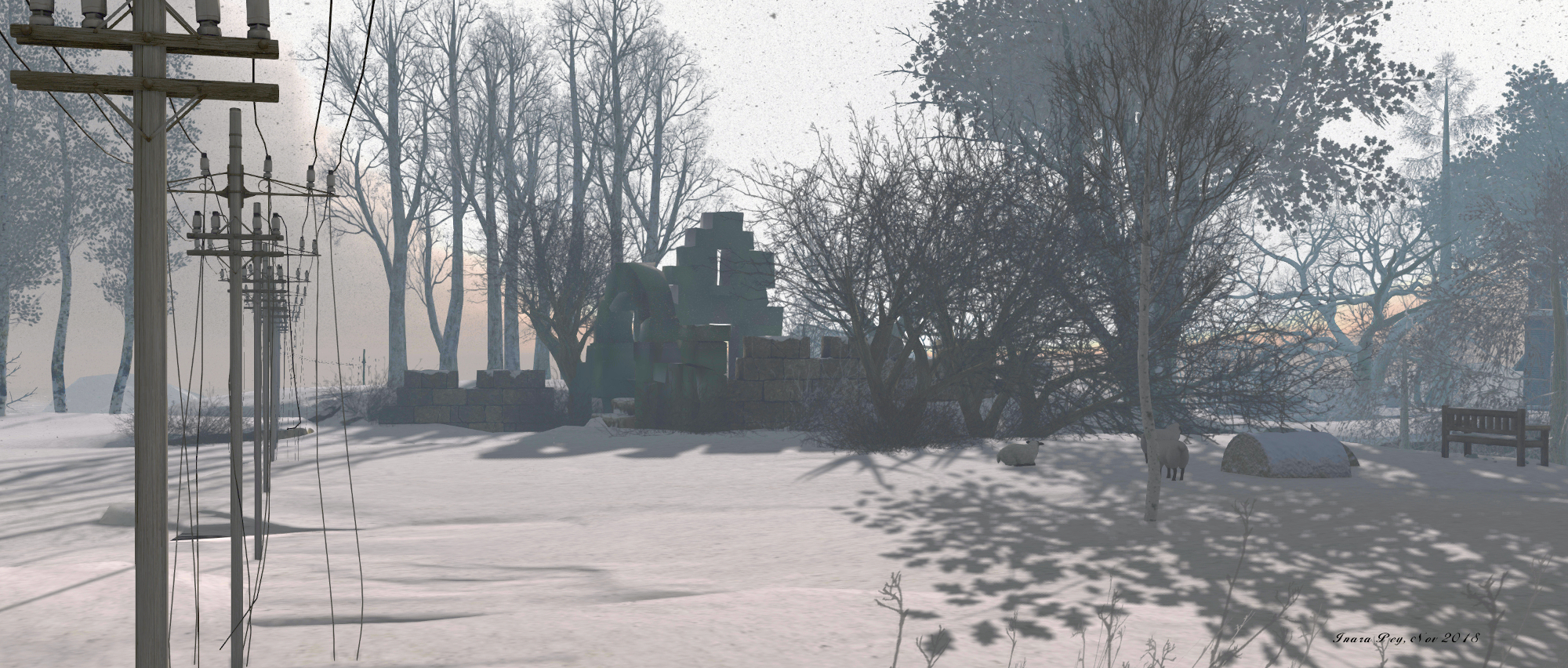
Winter's Hollow; Inara Pey, September 2018, on FlickrWinter’s Hollow – click any image for full size

In September, I wrote about Frog Hollow, a parcel designed by Stella Mahogany. Since then, Stella has moved on, and now offers a Homestead region for people to visit and enjoy. Called Winter’s Hollow, it is, as the About Land description notes:

Welcome to the winter version of ‘Frog Hollow’ Please enjoy your stay, take photos, ice skate or sit a while in the coffee shop but please pick up your items when you are done. Private residences are out-of-bounds.

Winter's Hollow; Inara Pey, September 2018, on FlickrWinter’s Hollow – click any image for full size

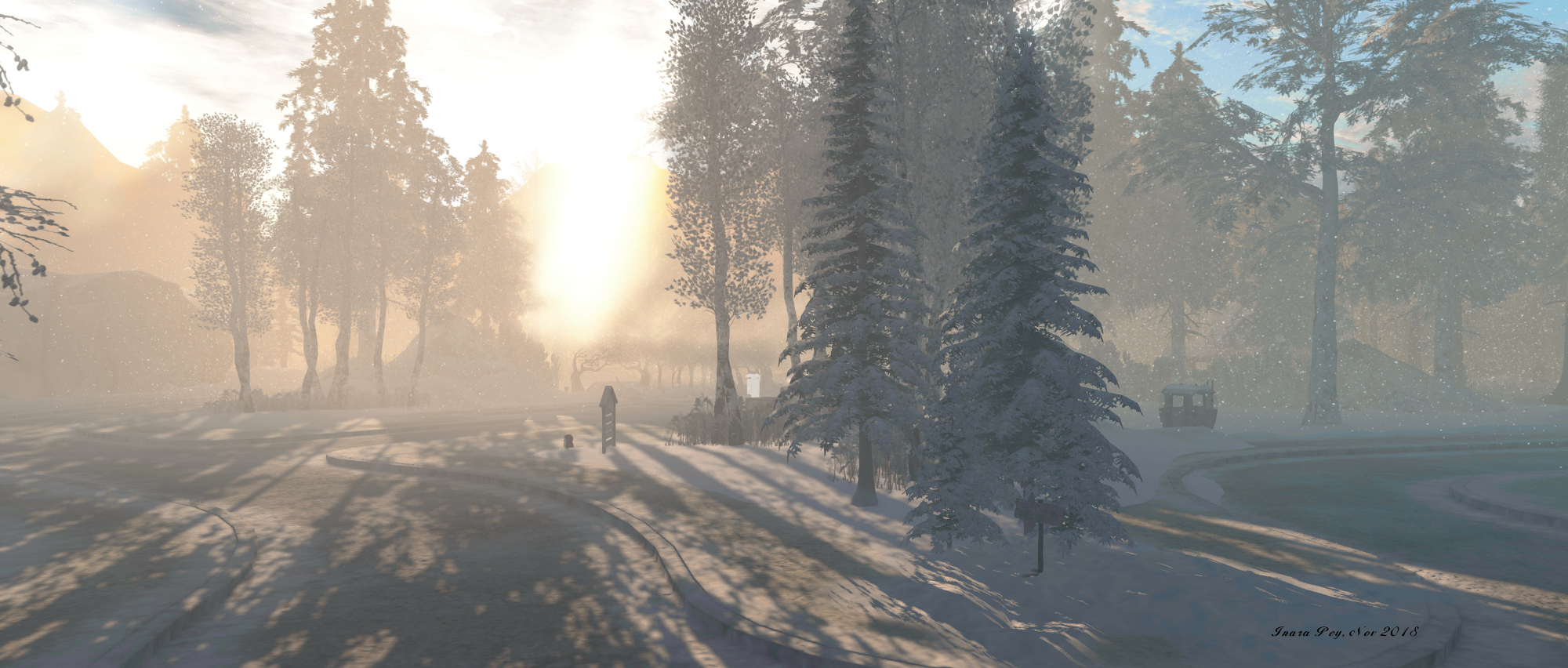
Given the title, it should come as no surprise that this is a snowy, winter’s setting. As the description notes, there are some private residences on the region, but on the whole, it is open to exploration, and offers places for photography, but it is perhaps a little low on places to simply sit and cuddle and enjoy passing the time.

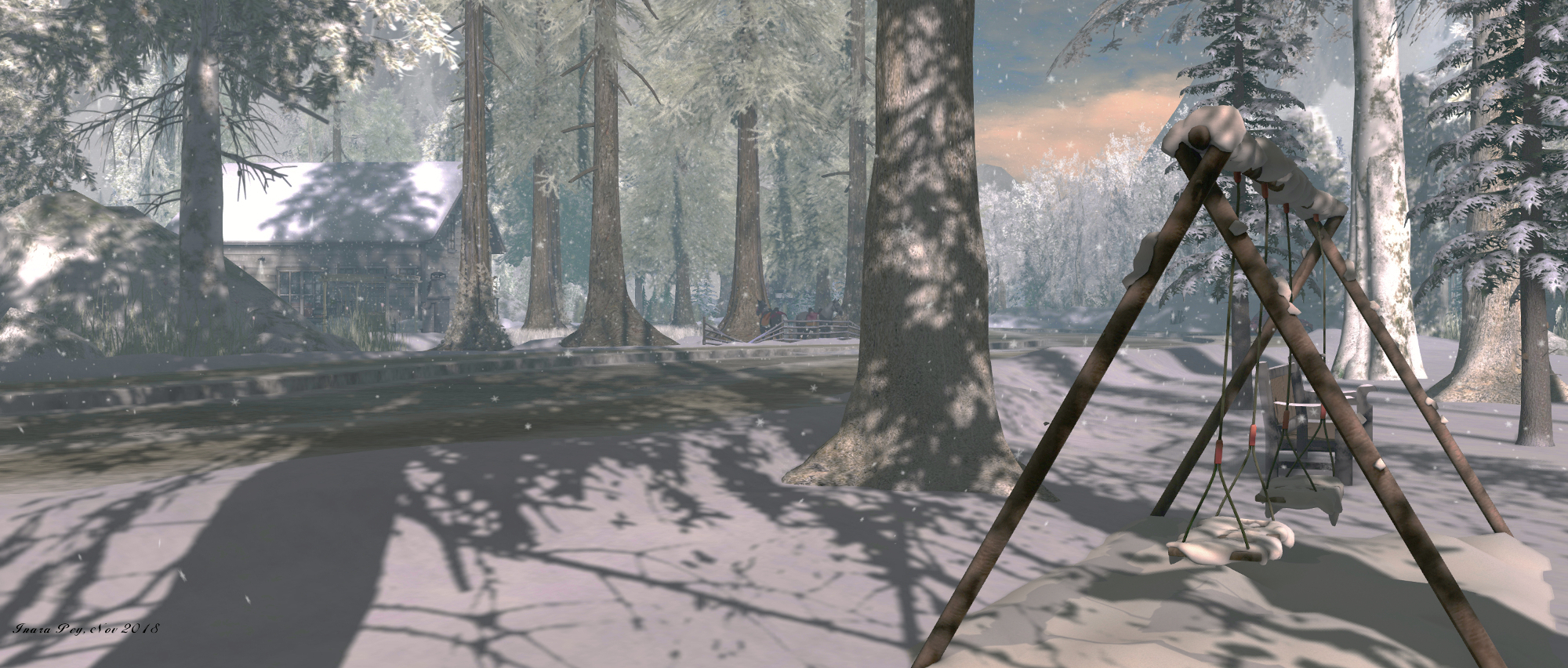
Which is not to say it is unpleasant – quite the reverse. Skating, dancing and sledging can be enjoyed, and the region does offer a highly picturesque setting, particularly as rezzing is open to props, etc.

Winter's Hollow; Inara Pey, September 2018, on FlickrWinter’s Hollow – click any image for full size

The coffee shop mentioned in the description sits in the north-west. Seating is available inside and out, although the latter has largely been claimed by the local squirrels. A road lies close by, running along the north side and down the west, each branch leading the way to one of the private residences on the region – so do take care approaching them.

The western road also turns to run along the south side of the region a short distance, ending alongside a cabin. However, it was not clear at the time of my visit whether or not this is also private or public.

Winter's Hollow; Inara Pey, September 2018, on FlickrWinter’s Hollow – click any image for full size

The promised ice skating can be found inland, a little to the north of the region’s centre – just look for the penguins having a little fun. Couples wishing to enjoy something a little less strenuous, a pavilion on the south side of the region offers dancing. Cuddle spots can be found in the form of a couple of old cable cars, long since removed from their lines. One offers sheltered views back across the region, while the second sits just off the loop of one of the roads, a place where a couple can be watched as they let their young son play on the local swings.

Winter’s Hollow makes for a pleasant visit, one where care has been taken not to overload the scene with too much scenery, an important factor given the use of mesh snow. Nevertheless and as mentioned, the opportunities for photography can be found throughout.

Winter's Hollow; Inara Pey, September 2018, on FlickrWinter’s Hollow – click any image for full size

If you enjoy your visit, keep an eye out for the little fat penguin, who will gladly accept donations towards the region’s continued upkeep.

SLurl Detail

Pfaffenthal 1867 – from Second Life to Sansar

Fort Thüngen, part of the Pfaffenthal 1867 estate

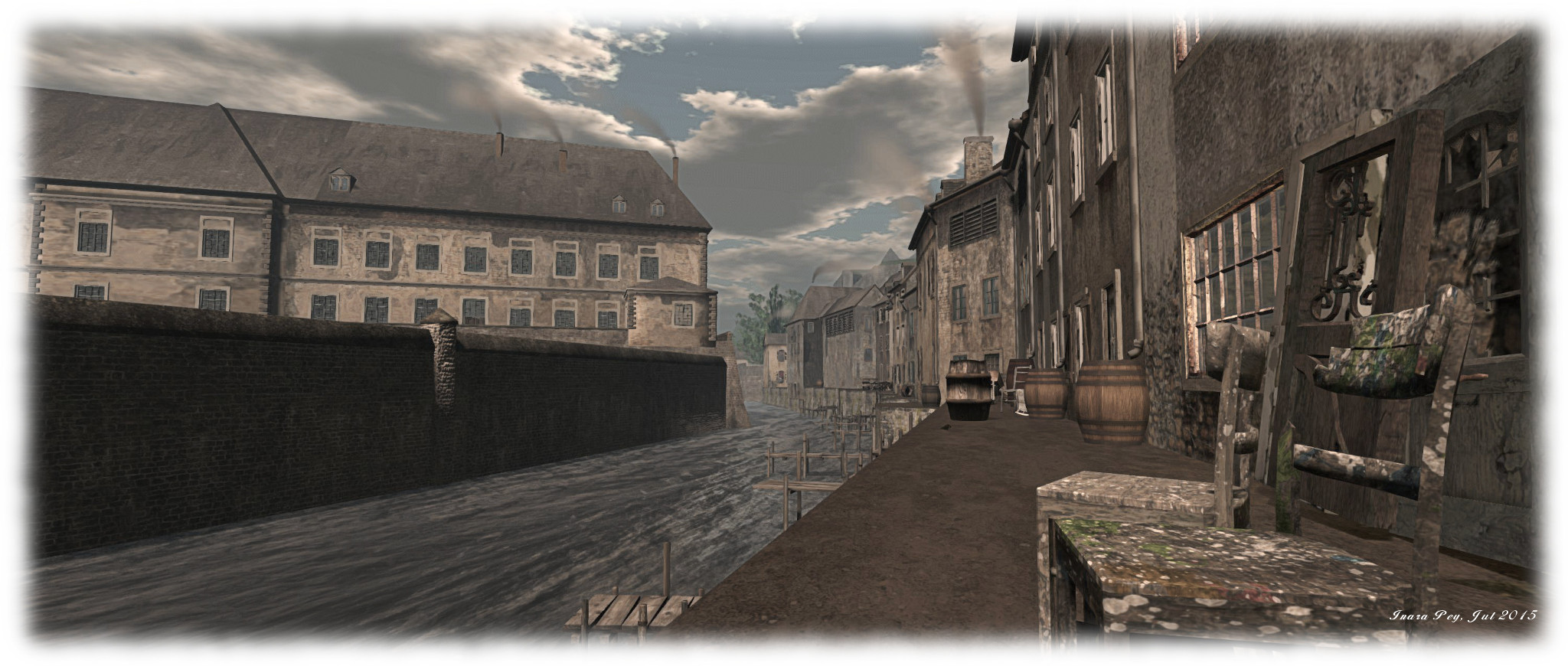
In July 2015, I wrote at length about Pfaffenthal 1867, a 5-region role-play environment and historical project accurately recreating the City of Luxembourg, circa 1867, and founded by Second Life resident Hauptmann Weydert (Weydert), also known as Pit Vinandy in the physical world.

At the time of my 2015 article, Weydert / Pit and his team were very much focused on the immersive opportunities presented by their environment. Thanks to the fledging work Linden Lab carried out in trying to bring Oculus Rift compatibility to Second Life, Pfaffenthal 1867 was at that time featured as an exhibit hosted by the Luxembourg City History Museum, which gave visitors the opportunity to visit and explore the virtual recreation of Luxembourg using the Oculus Rift or via desktop.

Pfaffenthal 1867, July 2015

In this, the exhibition was part of a broader outreach by the group, with Pit also hosting workshops on virtual environments involving the general public and schools, in association with the Fortress Museum in Luxembourg and the Luxembourg National Museum of History and Art.

I mention all of this because at the start of November, 2018, I dropped into a new experience in Sansar. Called  simply 1867, it is the work of Pit and his team, working under the VR Creative banner, presenting both the next step in Pfaffenthal 1867’s development and an opportunity to renew and further the work in presenting immersive, educational historical recreations to the public.

It’s an ambitious project – possibly the most ambitious experience yet attempted on Sansar. The aim  is to make full use of Sansar’s massive 4km on a side virtual space and offer a fully immersive historical environment for both social and educational use, with high-resolution topographical maps being used to build-out the experience in stages.

1867 in Sansar – a work in progress

Despite being in the early stages of development – many of the buildings that have been placed are little more than blocks awaiting surface detail (or complete replacement) – 1867 is already being promoted to the people of Luxembourg.

Since the start of November, for example, the project has been the focus of a series of weekday sessions at the Forum Geesseknäppchen, a campus occupied by a number of academic institutions in Luxembourg City. As reported by one of the city’s daily newspapers, the Lëtzebuerger Journal, the sessions are intended to encourage local interest in, and potential involvement with, the project, and will continue through until December 14th, 2018.

“We clearly see this as a collaborative project that is about to gradually create this world of 1867,” Vinandy emphasises. Therefore, he expects a strong participation as soon as the project is publicly available. In addition, he hopes for a lively participation of home owners and companies who want to see their part of the city represented.

Virtual Time Travel, Lëtzebuerger Journal, November 2nd, 2018

1867 in Sansar – a work in progress

In this, 1867 doesn’t sound that different from the public outreach undertaken with Pfaffenthal 1867, however, the opportunity to present richer, more immersive educational opportunities as well as a social VR experience is very much the driving force behind the Sansar development, again as the  Lëtzebuerger Journal notes:

Vinandy sees particular interest for students, students and historians who can fully immerse themselves in the past “For example, we want to specifically invite teaching staff to take their school classes on a journey through time,” he says.

Virtual Time Travel, Lëtzebuerger Journal, November 2nd, 2018

1867 in Sansar – a work in progress

In order to focus on the project – and as revealed by Jo Yardley in a tweet while I was working on an earlier draft of this article (one pending an opportunity to chat directly with Pit about both 1867 in Sansar and the wider work of VR Creative) – Pfaffenthal 1867 is to be shut down in its entirety from Monday, November 26th, 2018.

This news has been greeted with some surprise, given that Sansar itself has yet to gain lot of capabilities needed for it to become a more rounded immersive experience – such as richly interactive non-player characters or working forms of transport such as trains, horses that can be ridden and boats, all of which would certainly enrich a setting like 1867.  However, these will come in time, and it is going to take time to properly build-out 1867. As such, I doubt the lack of such capabilities or the lack of period clothing are really issues for the project’s development – although the lack of them could initially discourage Second Life users who have engaged in Pfaffenthal 1867 from dipping more than a toe into Sansar and 1867.

What might be of greater concern is how well such a vast setting loads at the client end as it starts to be fleshed-out to the level of detail found in Pfaffenthal 1867 in Second Life. With some quite modest experiences in Sansar already being quite hefty in download size and load time, something on the scale of 4km on a side could prove to be a significant challenge unless Linden Lab have some clever means of more pro-active steaming and loading / caching still to come.

The Virtual Pfaffenthal; Inara Pey, July 2015, on Flickr
Pfaffenthal 1867, July 2015

But, time will tell on that. In the meantime, if you have enjoyed previous visits to Pfaffenthal 1867 and would like to say farewell before it vanishes, can do so between now and Monday, November 26th, 2018. For those in the Second Life 1867 group, and who missed the in-world announcement, there will be a farewell party on Saturday, November 24th, starting at 10:00 SLT, at Café Neuen.

I’ll also hopefully have more on the 1867 project in Sansar as the work progresses, including the outcome of that conversation with Pit.

SLurls and Additional Links