Space Sunday: Earth’s ice and Soyuz leaks

ICESat-2. Credit: NASA

In its final mission, the United Launch Alliance Delta II launch vehicle lifted NASA’s ICESat-2 (Ice, Cloud, and land Elevation Satellite 2) up into orbit. Designed to measure ice sheet elevation and sea ice freeboard, as well as land topography and vegetation characteristics, the mission is a follow-on to the ICESat mission of 2003 to 2010.

The launch vehicle lifted-off from Space Launch Complex 2 at Vandenberg Air Force Base in California at 06:02 local time (9:02 EDT; 14:02 BST). The satellite separated from the second stage about 53 minutes after lift-off, followed by four cubesat secondary payloads some 20 minutes later.

The half-tonne satellite, about the size of a small car, carries a single instrument: a laser altimeter called the Advanced Topographic Laser Altimeter System (ATLAS). It is designed to fire 10,000 laser pulses a second to obtain elevation data with an accuracy of half a centimetre, and will primarily be used to measure the elevation of ice sheets and changes in their size, but will also measure the height of vegetation on land.

The last ever Delta II lifts-off carrying the ICESat-2 mission to orbit, September 15th, 2018. Credit: NASA/Bill Ingalls

Originally, ICESat-2 had been due to launch in 2015 as a follow-up to the original mission. However, the complexity of ATLAS meant that the mission hit delays and overran its original budget, both of which left NASA facing an either / or situation: either divert funds from other Earth resources missions (such as the Pre-Aerosol, Clouds, and Ocean Ecosystem (PACE) satellite) and cancel them, or cancel ICESat-2.

The first ICESat revealed that sea ice was thinning, and ice cover was disappearing from coastal areas in Greenland and Antarctica. Due to the delays in developing and launching ICESat-2, NASA has relied on an aircraft mission, Operation IceBridge, to monitor ice elevation and gathering other data on ice changes in both the Arctic and Antarctic.

While there are those who like to believe human-made global warming doesn’t exist, and that the unprecedented increases in temperature Earth has experienced in the last 100 or so years is simply a matter of solar cycles (a view that actually does not stand up to objective scrutiny), global average temperatures are climbing year after year (four of the hottest years in modern times all taking place from 2014-2017), largely as a result of humanity’s constant reliance on fossil fuels for energy. This warming is contributing to the shrinking ice cover in the Arctic and Greenland and adding to sea level rises that threaten hundreds of millions of people living in coastal regions around the world, as well as contributing to further weather and climate changes.

An artist’s impression of ICESat-2’s ATLAS laser in operation. ATLAS is capable of firing 10,000 per second and will take measurements every 0.7 m (2.3 ft) along the satellite’s path. It will gather enough data to estimate the annual elevation change in the Greenland and Antarctic ice sheets even if it’s as slight as four millimetres. Credit: NASA

ICESat-2 should help scientists understand just how much melting the ice sheets are contributing to this sea level rise, with ATLAS being fired-up for the first time in orbit in around a week’s time.

The launch was the 155th and final flight of the Delta II, which first entered service in 1989. Once a mainstay of both government and commercial customers, the vehicle has seen decreasing use in favour of vehicles like the Delta IV and Atlas launchers and, more recently, SpaceX. In 2007, it was announced ULA would phase out the Delta II – although it has enough parts to build around half-a-dozen complete versions of the rocket. With NASA the only user for the vehicle, it has taken time to use these remaining vehicles, and the final vehicle will be used as a museum piece.

The Delta II occupies a unique place in history: it is the only rocket ever to recorded to have debris strike a human. In 1996, the US Ballistic Missile Defense Organisation (BMDO) launched the Midcourse Space Experiment (MSX) atop a Delta II. Ten months later, on January 22nd, 1997, the upper stage of the launcher re-entered the atmosphere and broke apart, the greater part of it burning up in a fireball over the mid-west United States.

Lottie Williams hold the debris from a Delta II upper stage, which struck her on the shoulder in January 1997. Credit: unknown

Witnessing the fireball while exercising in a park in Tulsa, Oklahoma, was Lottie Williams. Thirty minutes later, she was struck on the shoulder by a charred piece of metal about 15 cm (6 in) across and weighing about the same as an empty soda can. She was uninjured by the strike, and analysis of the object confirmed it originated from the Delta’s upper stage.

Continue reading “Space Sunday: Earth’s ice and Soyuz leaks”

The Art of Lu in Second Life

Holly Kai Gallery: Art of Lu: Fantasy and Nature

Now open at Holly Kai Gallery, in the first exhibition of our new season, is The Art of Lu: Fantasy and Nature, featuring the art of Lu Anne Anatine (LeeLu Anatine). It’s an exhibition I am absolutely delighted about, as I’ve been enthralled by Lu Anne’s art since I first encountered it at an exhibition at Diomita Plaza Gallery / R&D Gallery (read here for more).

A professional illustrator and digital artist in the physical world, Lu Anne produces some of the most stunning art I’ve had the privilege to see in Second Life. Her work is deeply nuanced; each image stands on its own as an incredible work of art, while many of them suggest that are actually a frame of a much broader story or tale we are invited to let our imaginations weave.

Holly Kai Gallery: The Art of Lu

This is particularly evident in the fantasy images. They offer us glimpses into other worlds, some of which may be from fiction, as with the marvellous Alice, other of which might be born straight from Lu’s own imagination and which feature elven folk and merfolk and more.

The use of birds and flowers within these images links them directly to the selection of nature art Lu has provided for the exhibition – and I was delighted to see Colours of Winter among the latter: this hangs in our lounge at home. It’s a piece that ably illustrates Lu’s use of colour – even when used almost minimally or in muted tones  – as a means of giving a generous depth to her work.

Holly Kai Gallery: The Art of Lu

Throughout all of her art, Lu offers a wonderful mix: these are richly digital images, and yet each one is alive; as alive as it might have been if the subject had been captured in real life via a photograph. It’s not hard to image the coal tit of Colours of Winter flittering rapidly away from its perch a moment after its image had been captured, or to have the merman reach out a hand to help guide you in Swimming Lesson. This breath of life is achieved through Lu’s compositional technique with her work.

The materials I use are a traditional and digital mix of mediums. I will render in graphite the line work for the paintings then scan them into Photoshop so then I can paint digitally. I use a Wacom Cintiq to paint and the programs I use cross between Photoshop and Corel Painter. I may even use other traditional mediums like water-colour as an under painting that gets scanned as well the possibilities are endless …

– Lu Anne Anatine on creating her art

Holly Kai Gallery: The Art of Lu

It’s an honour to have Lu Anne with us at holly Kai Park, and The Art of Lu will be open through until October 13th, 2018, and I invite you all to come along to Holly Kai Gallery and witness her work first hand – you will not be disappointed!

SLurl Details

Ashemi: an Oriental reprise in Second Life

Ashemi Reprise; Inara Pey, September 2018, August 2018, on FlickrAshemi Reprise – click any image for full size

Almost two years ago, we visited Ashemi, the second Oriental-themed region we’d explored that has been designed by the team of Ime Poplin and Jay Poplin (Jayshamime) and Shaman Nitely. Along with Imesha, it offered a gorgeous setting which quite captivated me on visiting both. Sadly, Ashemi disappeared from the grid a while ago – so when I heard via Shakespeare and Max it is now back, we had to jump over and take a look.

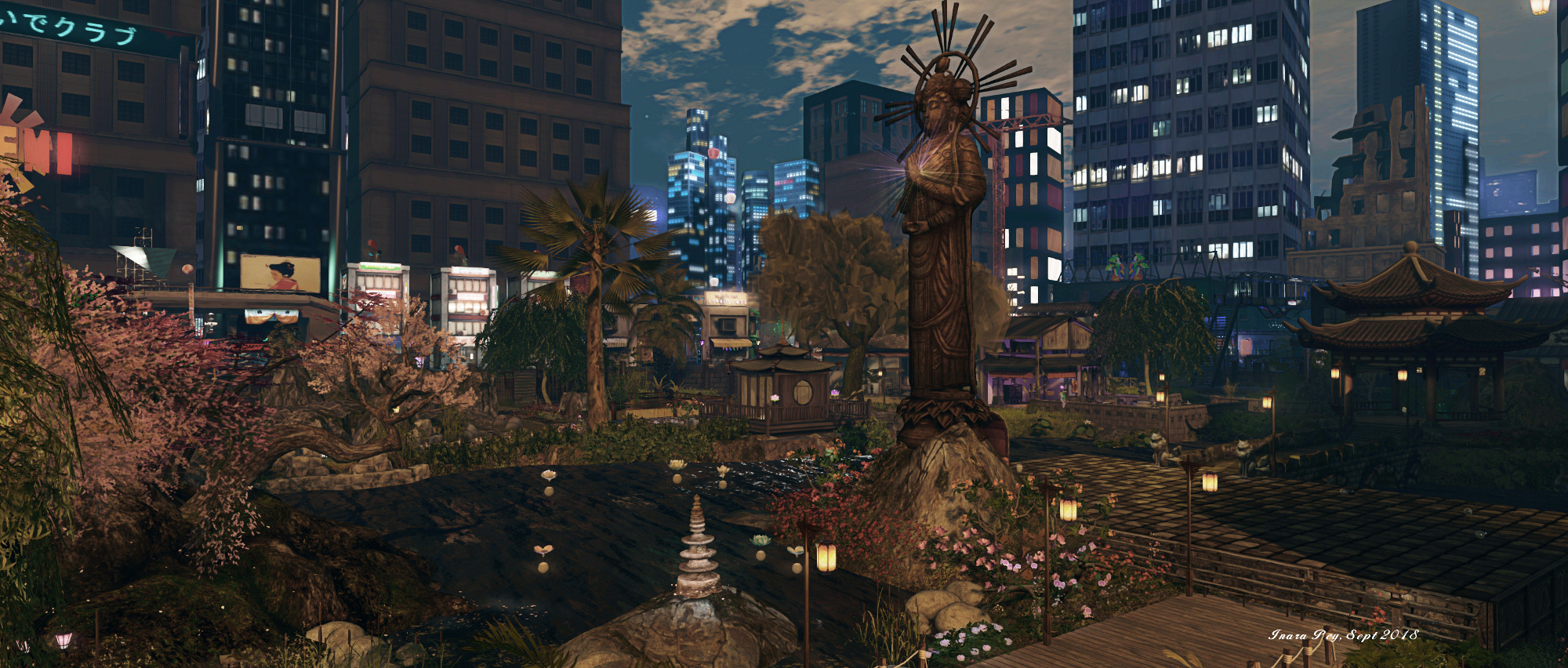
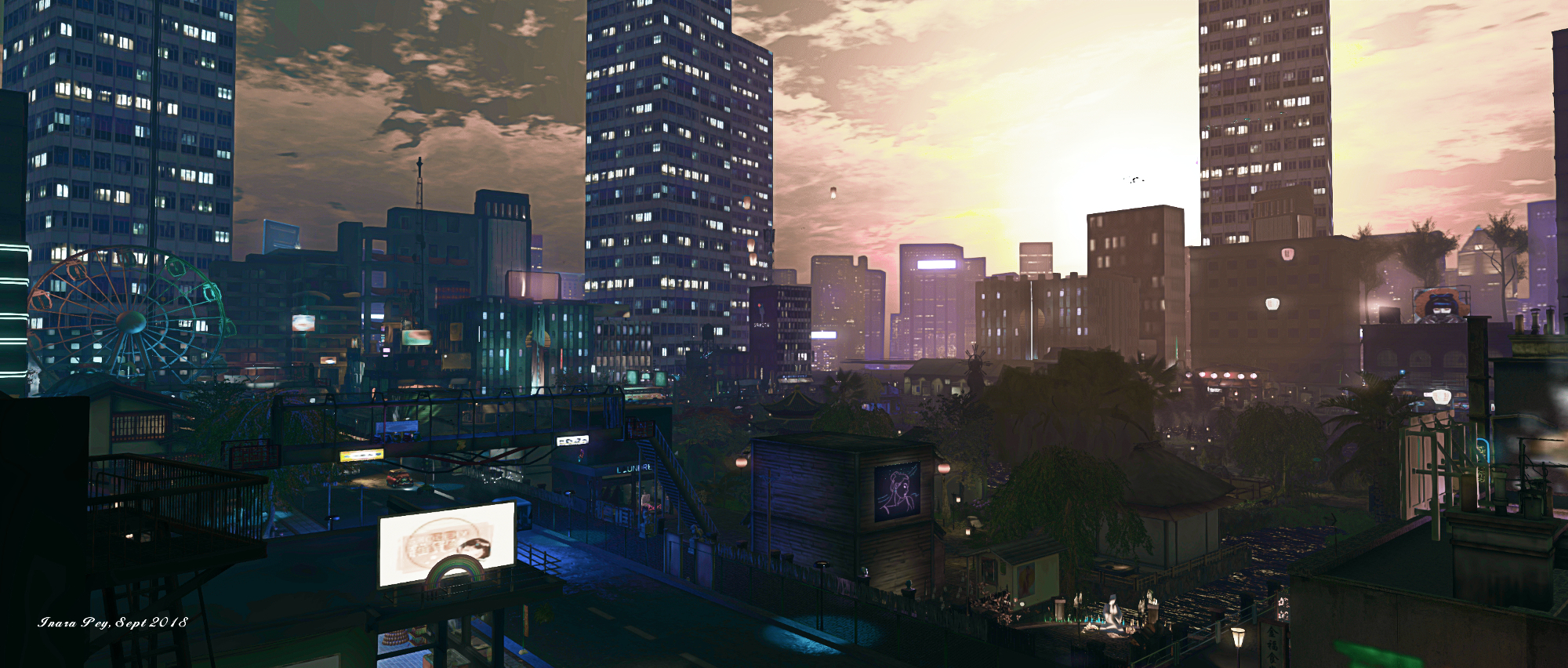
Now located on a full region and taking the form of Ashemi Reprise, this cityscape environment is once again an absolute delight to witness. As with Ashemi (which you can read about here), the new region – open just four days at the time of our visit, presents a dusk setting (although given the Sun is in the east, it could be early morning, depending on your preference). I did opt to go with a late afternoon windlight setting for some of the images here, just to offer a little contrast, but I do recommend seeing the region under its default, as a lot of effort has gone into creating an atmospheric experience. Good use is made of projected lighting, so having Advanced Lighting Model (Preferences > Graphics) enabled is an essential part of a visit.

Ashemi Reprise; Inara Pey, September 2018, August 2018, on FlickrAshemi Reprise

Several motifs from Ashemi’s previous incarnation are apparent in the build: the use of water in a central open area, the smooth merging of region with its surrounding backdrop, some of the statues and decoration, the placement of quiet little places, and the attention to detail. But make no mistake, this is a new design, offering a lot of extra detail and a rich mix of settings, the design sufficiently different to the original that it is easy to imagine that this is another district within the same city as the original Ashemi.

Broadly Japanese in its overall styling, Ashemi Repise includes touches from all over the orient and Asia. Those who remember the original will instantly recognise the tall Indonesian style statue watching over the central park / water area, while in the south-east corner, Ganesh sits in a smaller park, while tuk-tuks are to be found throughout.

We’re not afraid of mixing things. I think that makes it a bit more personal. Some small items scattered around that you wouldn’t expect.

– Ime Poplin, discussing Ashemi Reprise

Ashemi Reprise; Inara Pey, September 2018, August 2018, on FlickrAshemi Reprise

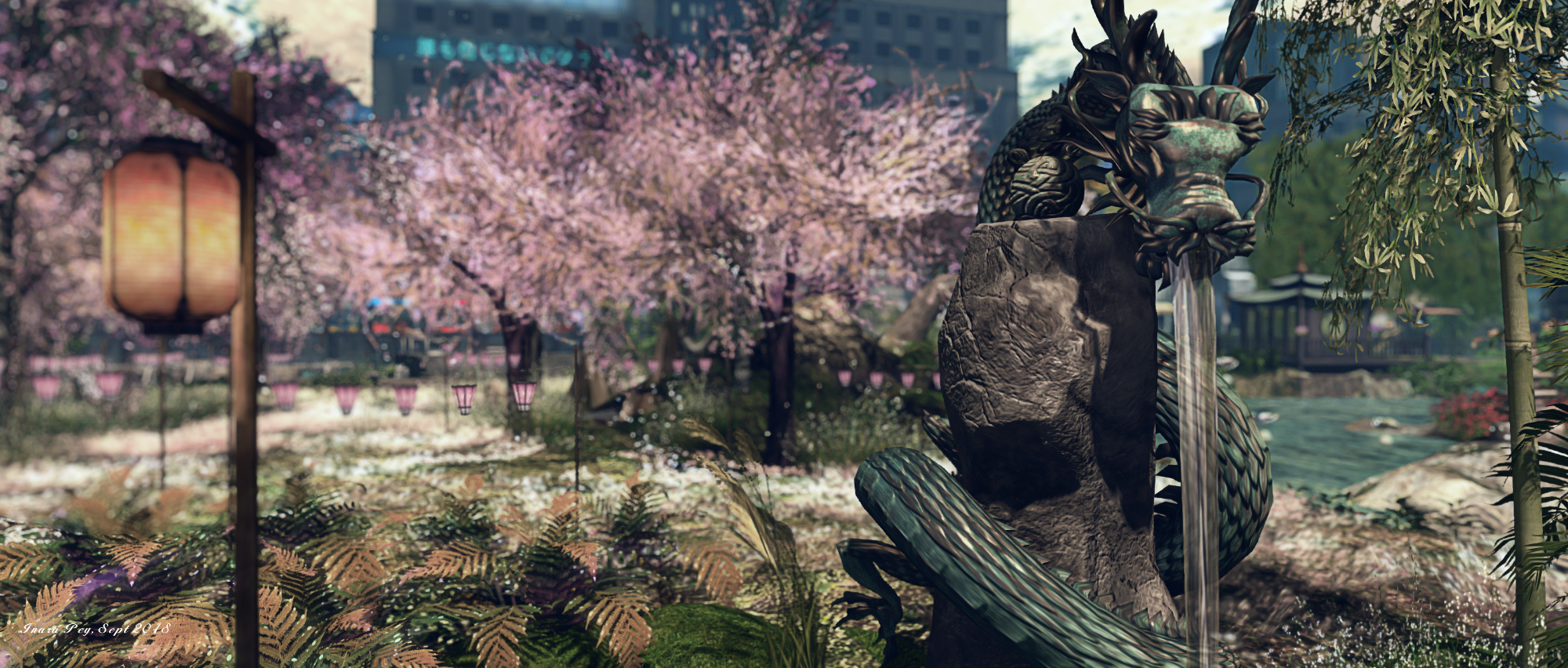
From the landing point, a wooden deck just off the centre of the region in the parkland / open water area, visitors are immediately faced with a choice of routes: explore the park and water front and work out to the surrounding streets, or follow the multiple paths through the park and over the water to see what they might find? Personally, I suggest the latter, as this – to me – shows the depth of the region’s design, and allows the details to become more apparent. Dragons guard a Torii gate marking the way from the landing point to the park – and thence to the rest of the region.

To the south, a grassy route under trees rich in blossom leads to the water’s edge where a small pavilion sits at the end of the wooden walkway, candle-lit lanterns floating on the water around it. Another path points west, to where a series of small traditionally styled Japanese houses sit with little gardens, before connecting with the western side of the region. Also to the west, and connected to the houses and their gardens, is a larger pavilion, reached by a stone bridge. But really, to describe all of this area would be to spoil it: this is a place deserving of eyes-on exploration, following the paths and bridges and discovering all seating areas, platforms, shrines little market stalls and more, broken up into little islets under trees and edged by rocks.

Ashemi Reprise; Inara Pey, September 2018, August 2018, on FlickrAshemi Reprise

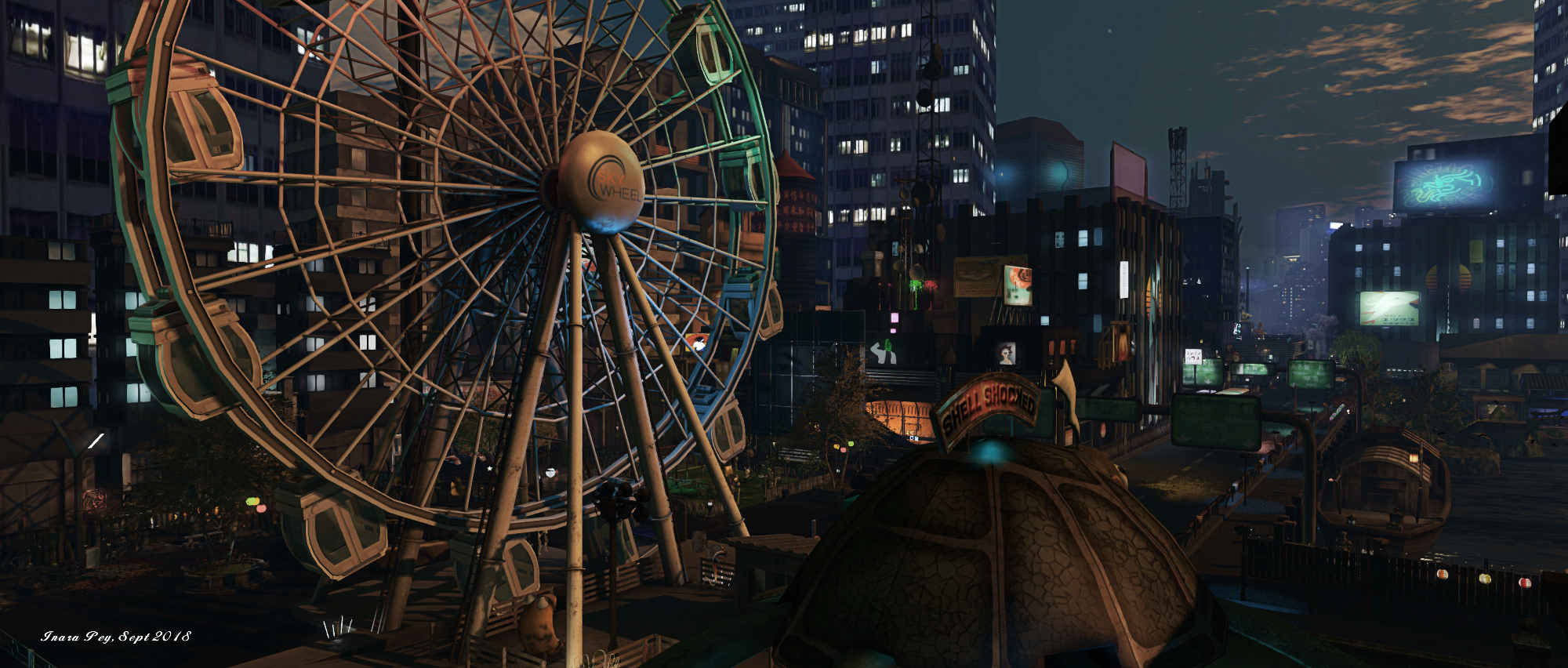
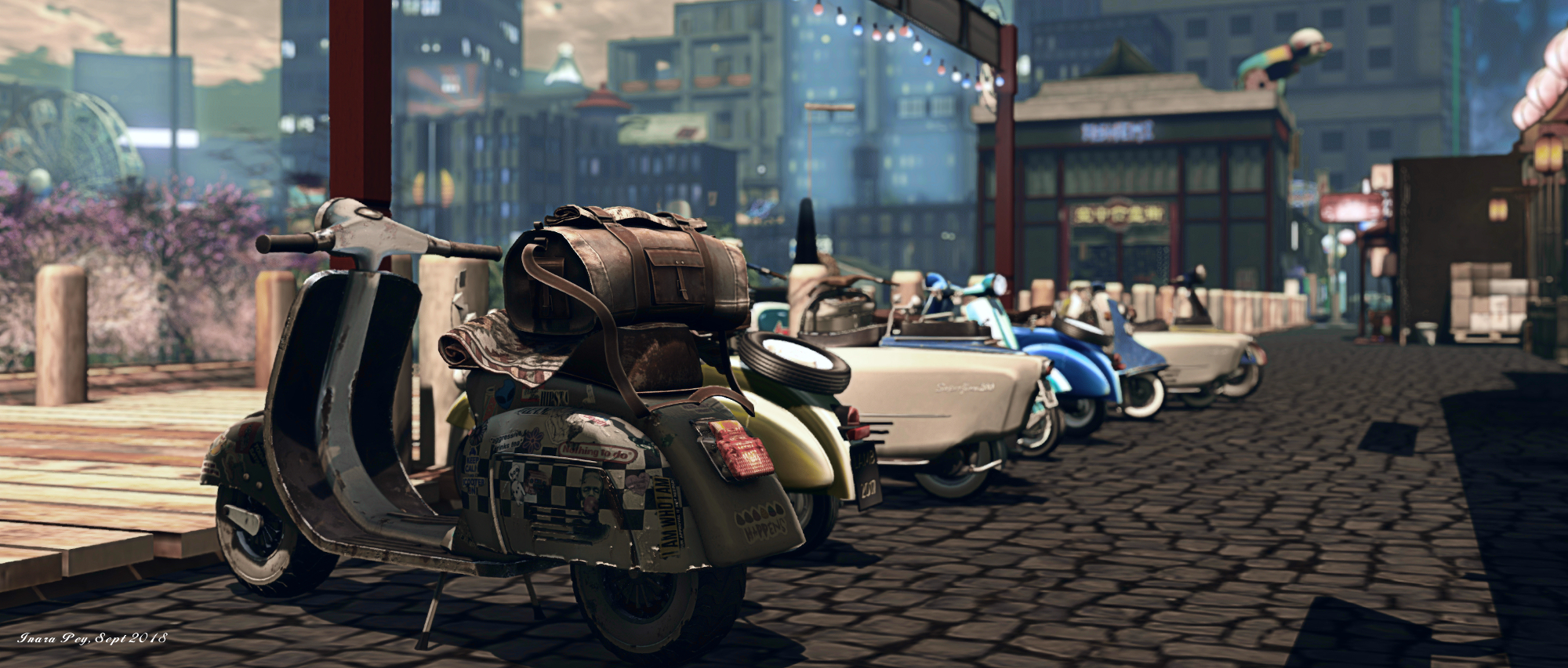
Surrounding the central space is a square of roads mixed with low-rise buildings whose looks are suggestive of age, giving the setting a feeling of being an outlying, older district of a city, perhaps almost forgotten by the more distant skyscrapers and high-rise blocks, with their glowing windows and promise of big city life. The fact that this is a careworn place, lacking in attention is perhaps indicated on the southern side of the region, where a partially collapsed overpass can be found. Possibly the result of an earthquake, it has remained without repair long enough for an open-air theatre company to set themselves up amidst the remnants of the elevated road, which itself has become a place for advertising hoardings.

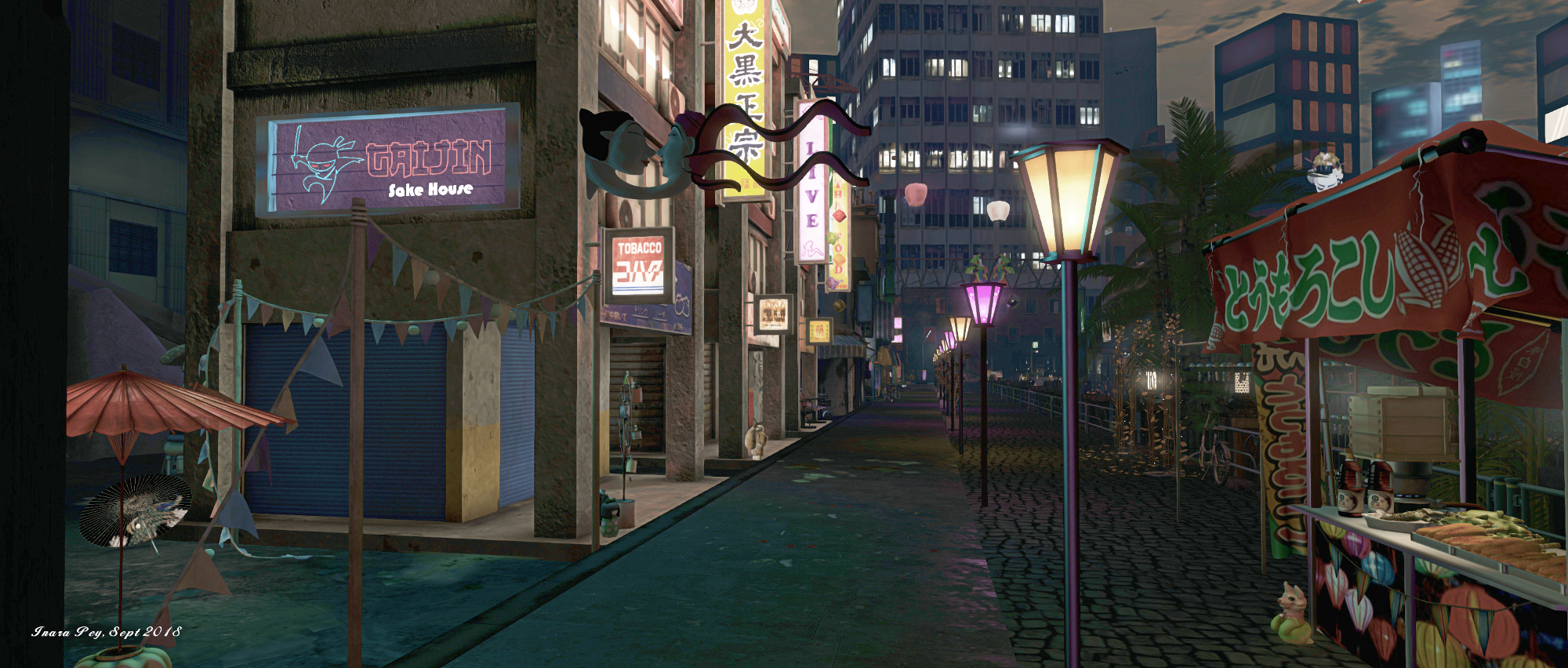
A market environment curls around the east and south sides of the region, sitting between water and the tired buildings lining the streets. It passes Ganesh in his little park, passing from under the flashing sign for China’s famous Tsingtao beer (fun fact: the Tsingtao brewery was founded by a group of German brewers in 1903, whilst under the ownership The Anglo-German Brewery Co. Ltd, but passed to Japanese ownership in 1916 before becoming wholly owned by the Chinese), to a construction site over on the west side, where a broad road points a straight finer to the fun fair that has shouldered its way into the setting.

Ashemi Reprise; Inara Pey, September 2018, August 2018, on FlickrAshemi Reprise

The attention to detail in several forms, not just visually (although do keep an eye out for the fat little Kermit taking a break in his explorations to a café, for example 🙂 ); extraordinary care has been taken with local sounds. In the market place are the sounds of commerce, for example, and around the warehouses are the sounds of people at work; while music plays in the fun fair and, if you pass a caravan on the back streets you might hear Jan Hammer’s Crocket’s Theme fade in and out as you walk by.

These back streets and alleys are another reason for the region’s sheer depth. They allow the seamless blending with off-sim buildings and scenes which in turn help blend the setting with the sim surround. So well done is this blending, it is very easy to find yourself bouncing off the region boundary and you explore, as the off-region areas look so natural.

Ashemi Reprise; Inara Pey, September 2018, August 2018, on FlickrAshemi Reprise

It is a delight to see Ashemi return to Second Life and take advantage of a full region, complete with the additional 10K LI. Due to appear in the Destination Guide soon, this is definitely not a region to be missed – and I strongly recommend allowing a good amount of time to explore it fully. Should you appreciate your visit, do please consider offering a donation towards Ashemi Reprise continued presence in Second Life.

SLurl Details

Detectives, wish trees, pirates and vacations in Second Life

Seanchai Library

It’s time to highlight another week of storytelling in Voice by the staff and volunteers at the Seanchai Library. As always, all times SLT, and events are held at the Library’s home at Holly Kai Park, unless otherwise indicated.

Sunday, September 16th 13:30: Tea-time at Baker Street

The third full-length novel written about Sherlock Holmes, The Hound of the Baskervilles is likely to be the one Holmesian story which – at least in outline – known to most, whether or not they have actually read any of Holmes’ adventures.

But how many of us know the story as it was originally written? Over the decades it has been adapted for film and television more than 20 times, starting as early as 1914/15 with the 4-part series, Der Hund von Baskerville, and continuing on through to Paul McGuigan’s The Hounds of Baskerville, featured in the BBC’s brilliant Sherlock series.

All of these adaptations have offered their own take on the tale. Some – such as McGuigan’s, have simply taken the title of the story and used it to weave a unique tale of their own; others have stayed true to the basics of the story whilst also adding their own twists and turns quite outside of Conan Doyle’s plot in order to keep their offering fresh and exciting to an audience.

So why not join Cale, David, Corwyn and Kayden as they read from the 1902 original, and discover just how Sir Arthur Conan Doyle unfolded this apparently supernatural tale of giant hounds and murder, and the pivotal role played by John Watson himself?

Monday, September 17th 19:00: Murder is Bliss

Gyro Muggins reads the first volume in the Jasper Stone series by Ellen Anthony.

In the year 2179, police lieutenant Jasper Stone finds himself called upon to solve the high-profile murder of Elizabeth West. The case appears to revolve around a valuable house – and the leading suspect is West’s disabled son.

But then the son is murdered – and the evidence points towards West’s grand-daughter, Jewell. Only she appears to have a rock-solid alibi for West’s murder. So is there more than one crime, or will Jewell be the next victim?

The more he investigates, the more Stone finds himself entangled in a complicated web of motives and a situation involving not just murder, but drug smuggling and blackmail. And the more he investigates, the more he might just be protecting the woman behind it all.

Tuesday, September 18th 28th 19:00: Wishtree

Trees can’t tell jokes, but they can certainly tell stories. . . .

Red is an oak tree who is many rings old. Red is the neighbourhood “wishtree” – people write their wishes on pieces of cloth and tie them to Red’s branches. Along with her crow friend Bongo and other animals who seek refuge in Red’s hollows, this “wishtree” watches over the neighbourhood.

You might say Red has seen it all. Until a new family moves in. Not everyone is welcoming, and Red’s experiences as a wishtree are more important than ever.

A contemporary tale for the times we are witnessing, told with sensitivity and humour. The protagonist (and in may ways the victim of prejudice as unsought as that received by the family in question) may well be a tree, but she has a lesson to teach all of us about tolerance and understanding and a need to heal.

Join Faerie Maven-Pralou as she reads Newbery Award winner Katherine Applegate’s 2017 story.

Wednesday, September 19th, 19:00: International Talk Like A Pirate Day!

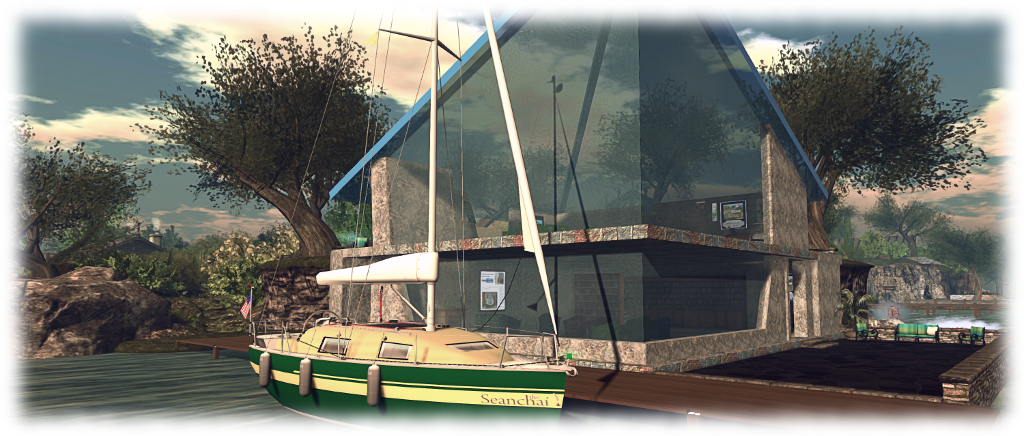
Come along and celebrate with all the scurvy dogs on the good ship “Seanchai”. Possible celebratory cruise to follow for those brave enough to endure one of Captain Cale’s sailing expeditions!

Thursday, September 20th, 19:00: Don’t Make Me Pull Over!

In the days before cheap air travel, families in America didn’t so much take vacations as survive them. Between home and destination lay hundreds – perhaps thousands of miles of road, and dozens of annoyances.

During his childhood, Richard Ratay experienced all of them; from being crowded into the back seat with noogie-happy older brothers, to picking out a souvenir only to find that a better one might have been had at the next attraction, to dealing with a dad who didn’t believe in bathroom breaks.

Now, decades later, Ratay offers a paean to what was lost, showing how family togetherness in America was eventually sacrificed to electronic distractions and the urge to “get there now.” Through his words he paints large what once made Great American Family Road Trip so great, from twenty-foot “land yachts” to oasis-like Holiday Inn “Holidomes” and Smokey-spotting Fuzzbusters to the thrill of finding a “good buddy” on the CB radio …


Please check with the Seanchai Library’s blog for updates and for additions or changes to the week’s schedule.

The current charity is Feed a Smile.

Les Fest 2018 in Second Life

Les Fest 2018

Now open through until 22:00 SLT on Sunday, September 16th, is Les Fest, a 2-day, region-wide festival that celebrates lesbian, bisexual, pansexual and transexual women in Second Life.

The event features lives singers, DJs, spoken word artists, a pageant, fantasy grand ball, talks, games, movies, a boxing tournament and shopping!

Les Fest 2018

For 2018, Les Fest is raising money for Immigration Equality, the leading LGBTQ immigrant rights organization in the US. They represent and advocate for people from around the world fleeing violence, abuse, and persecution because of their sexual orientation, gender identity, or HIV status.

Full details of event activities can be found on the Les Fest website – check the performances, key events and fun activities pages for the major goings-on through the weekend. The video below provides more information on the event’s adopted charity.

Event SLurl

September 2018 Town Hall with Ebbe Altberg: transcript with audio

Ebbe is still into his T-1000 look. But then, he does keep to his promises to “be back” (and take people’s questions and offer thoughts and insight into the Lab, SL and Sansar) 😉
On Thursday, September 13th, Linden Lab hosted a further Town Hall meeting at which questions were put to the Lab’s CEO, Ebbe Altberg.

Those wishing to ask questions were asked to submit them via the forum thread September 2018 – A Conversation with Linden Lab CEO Ebbe Altberg, a thread that is now locked from having further questions added, but remains available for viewing.

As many of the questions require a technical response, the decision was made to have the Lab’s subject matter experts address them directly through the forum thread itself after the Town Hall meeting, a process which may take several days to complete. So if you did ask a technical question that wasn’t raised at during the event, be sure to check the thread to see if an answer in provided there.

The following is a summary of the answers to questions asked during the Town Hall session, audio extracts and video time stamps provided as reference. The video is embedded at the end of the article.

Please note that this is not a full transcript of the event. Producing a word-for-word transcript takes a lot of time. Instead, I have attempted to bullet-point the replies offered, and have included an audio extract and a time line to the relevant point in the video.

Also note that:

Table of Contents

  • These notes don’t necessarily follow the chronological flow of the session, as I’ve attempted to group subjects by topic for more concise reference.
  • There is a degree of choppiness in Ebbe’s audio (present on the videos as well). This is down to Voice issues in SL. Because of this break-up, some of the audio clips are edited to remove elements where the break-up is particularly bad, but hopefully without losing the actual context of what was being said.
  • Video timestamps will open the official video in a separate browser tab at the start of the specified time period, allowing readers the choice of listening to the audio extract, or the video recording.
  • Due to the brevity of some answers, not all replies given below have an audio extract – but they all have links to the official video.

Opening Comments

  • Exciting year for Linden Lab – 15 years in the business, lot of investment in SL going on + growing the SL team. There’s a lot going on that has the Lab optimistic about the future, and looking forward to being on the journey for a long, long time to come.
  • In March LL announced a very aggressive roadmap, possibly more than could be achieved within 2018, but goals have been pursued and people hired to help meet them.
  • Perhaps most noticeable work has been the re-balancing the economy: reducing the price of land and finding other means by which the Lab can generate revenue that are fairer for everyone – users and the Lab.
    • This means some things get cheaper [e.g. land], and other may get more expensive [e.g. transaction fees] for people as things are adjusted.
    • Overall response has been positive – particularly the lower Mainland costs – increased “free” tier, which is still keeping the land team busy in handling purchase requests.
  • Roadmap also noted new games and experiences, and the next one is “not far away”.
  • Themed learning islands were mentioned, for more vertical acquisition of new users, and tests have been run.
  • Marketplace improvements are starting to come in, with more on the way, helped by a new hired in the commerce team.
  • New land auction process was deployed, but has had issues, so user-to-user Mainland land auctions still to come.
  • There have also been performance improvements.
  • Animesh is very close to release, and the Environment Enhancement Project (EEP) is close to public testing. Bakes on Mesh is following behind them.
  • More value for premium members is coming, but no announcements to make during the town hall.
  • Return of last names may not roll-out before the end of 2018; there’s still a lot of work to be done.
  • Grid-wide experience operation for users also may not be deployed before the end of 2018.
  • Work is continuing on Linden Home improvements, but not clear if this will be deployed all at once or in stages. The hope is to start releasing some of them before the end of 2018.
  • Moving SL to a cloud infrastructure will not be completed until “well into” 2019. Work is progressing on a server-by-service basis.
  • He is personally every excited with all that is happening, the SL team is dedicated to the work and is growing, and Lab is very pleased with the positive responses from users to the changes and improvements being made.

Video: 4:05-12:54

Audio:


Back to top

Ebbe and Xiola at the September 13th Town Hall.

Q&A Session

Land and Pricing

What was the rationale the up-front higher fees for grandfathered regions?

  • The 2016 buy-down offer was to encourage people who knew they were going to keep land for at least 6 months to obtain lower tier.
  • The structure meant that the up-front cost (US $600) could be recouped in 6 months, allowing the land holder to continue to enjoy a much reduced monthly tier.
  • The transfer fee of US $600 for grandfathered / bought-down regions (compared to the US $100 for “retail” prices regions) is intended to operate the same way: to encourage those who wish to obtain grandfathered land and will hold on to it for a period of 6 months or more to do so, and so continue to enjoy the lower monthly tier.
    • The US $100 transfer fee can still be applied to grandfathered regions, but they will revert to the full monthly tier rate, so the US $600 isn’t necessarily a barrier to selling the land.
  • Currently no plans to make further changes to tier rates – Lab still absorbing the data from the June private region pricing restructure.
  • However, there is still a commitment from the Lab to do more where land is concerned, once with economic situation resulting from the June 2018 change can be fully understood.
  • Personally has a belief that those who commit to holding land for a period of time should be able to benefit from doing so.
    • This may again involve a higher up-front cost that is recouped over a period of time.
    • Does mean that tier pricing differences (e.g. grandfathered to retail) could vary over time – just as the June reduction narrowed the gap between grandfathered and retail monthly tier.
  • But even with the June retail price reduction, those who used the buy-down offer are still enjoying a lower tier than those who buy at retail.

Video: 18:42-23:15

Audio:


Back to top

Will there be further land pricing reductions / increases in land capacity (prim allowance)?

  • Both are things the Lab wants to do.
  • Land price reductions depend on the Lab being able to generate revenue and remain healthy as a business via other means – increased transaction fees, increased check-out fees, increased and broader Premium subscription options, etc., all of which are constantly being looked at.
  • Increasing the land capacity is a matter of performance and hardware improvements. If these continue to be made, then further increases to land capacity might be possible.

Video: 23:28-24:54

Audio:


Back to top

Continue reading “September 2018 Town Hall with Ebbe Altberg: transcript with audio”