2018 SL UG updates #7/2: CCUG and Project Arctan

Queen of Dragons? Surrounded by Animesh dragons by Wanders Nowhere and used by Lucia Nightfire as Animesh test models

The following notes are primarily taken from the Content Creation User Group meeting, held on  Thursday, February 15th, 2018 at 13:00 SLT. For the purposes of Animesh testing, the meetings have relocated to the Animesh4 region on Aditi, the beta grid – look for the seating area towards the middle of the region. The meeting is chaired by Vir Linden, and agenda notes, etc, are usually available on the Content Creation User Group wiki page.

Medhue Simoni streamed the meeting, and his video is appended to the end of this update. Timestamps in the text will open the video in a separate browser tab at the relevant point in the meeting. As always, these notes cover the core points of discussion, and my thanks to Medhue for recording it.

Bakes on Mesh

Project Summary

Extending the current avatar baking service to allow wearable textures (skins, tattoos, clothing) to be applied directly to mesh bodies as well as system avatars. This involves server-side changes, including updating the baking service to support 1024×1024 textures, and may in time lead to a reduction in the complexity of mesh avatar bodies and heads. The project is in two phases:

  • The current work to update the baking service to support 1024×1024 textures on avatar meshes.
  • An intended follow-on project to actually support baking textures onto avatar mesh surfaces (and potentially other mesh objects as well). This has yet to fully defined in terms of implementation and when it might be slotted into SL development time frames.

This work does not include normal or specular map support, as these are not part of the existing baking service.

Current Status

    • A reminder that this will not initially include Animesh as the Baking Service requires an avatar shape, which Animesh currently does not support.
    • There is a lot of confusion about this project and what it will do, so an overview document has been suggested.
      • One example of some confusion: Anchor linden mentions being able to “upload 1024 textures” – this is actually a reference to the Baking Service supporting 1024×1024 textures, not to users uploading 1024 textures (because they are already supported).
    • [5:21] The target date for completing this first phase of this work is the end of March 2018.
    • [12:09-22:15] Alpha layer and Alpha masking discussion:
      • [12:09-13:55] A means to hide the system avatar has yet to be determined, but Anchor hopes to focus on this in the course of the next week.
      • [13:06-15:44] One suggestion for this is to have a new “avatar” alpha mask which would allow specific parts of the system avatar to be hidden in a similar manner to how it is currently handled (e.g. to allow the body to be hidden when using a mesh body, but the head exposed, for those not using a mesh head).
      • [13:55-15:44] These updates should allow elements of a mesh body to be hidden much as can be done with the system avatar, possibly eliminating the need to break the avatar into multiple faces which can be individually masked. However, this has yet to be tested.
      • [19:05-22:15] Repeat that alpha layering via the Baking Service (e.g. make-up / tattoo layers), and full alpha masking (e.g. hiding an entire body / body part) should work with mesh avatars exactly the same was as for system avatars at present (again, as per above, without the need for the mesh itself to have multiple faces which can be individually masked).
    • [22:56-24:46] Clothing layers when applied to a mesh body should hopefully work as per the system avatar (e.g. “jacket” layers are applied over “shirt” layer, which are applied over “underwear” layers, with the last worn item in each layer being uppermost and the most visible.
  • [25:56-27:37] Discussion on wearable layers for specific mesh models, branding and creator / user understanding.

Project ARCTan

[3:55-5:03] This is the code-name for the project to re-evaluate object and avatar rendering costs. It also now falls under Graham Linden’s leadership as a part of the overall rendering system work.

[32:02-34:06] Oz explains the function of the project, and the fact that originally, the weightings (land impact / avatar complexity) applied to avatars and in-world objects, were somewhat biased to allow for the simulator having to handle a lot of texture, etc., transfers to the viewer (so for example, avatar complexity include texture counts, LI doesn’t). As all of this data now goes via the CDNs, rather than the simulators, this bias can be removed, and the actual costs of rendering complex objects made (hopefully) a lot more accurate and thus promote better content creation.

[34:48-35:48] There are currently no details of how LI / avatar complexity values may change, as the Lab is still gathering data at this point in time in order to make informed decisions on how best to revised the calculations.

[35:51-37:04] For Animesh this means the project will be released with an initial land impact calculation assigned to it for objects. However, as with the rest of SL, these may be subject to change as a result of the work on Project Arctan. See this Animesh forum comment from Vir for more.

  • [39:59-43:30] In brief: the value for Animesh will primarily be based on tri count based on the high detail LOD version of the mesh, with Medium,, Low and Lowest having less of an impact in pushing up the overall LI. This will be added to a basic cost component for driving an avatar skeleton (uniform across all Animesh objects). Again, no precise values are available as yet, as LL are still performance testing.

[37:07-39:40] Land Impact: obviously, Land Impact changes are potentially disruptive. To ease this, the Lab plan to add code to the simulator and the viewer to calculate the new LI values but not enforce them. Instead the data on LI using the new calculations will be gathered with data on the existing values, and the Lab will then assess how many parcels they might push over their LI capacity (and thus force object returns) and by how much, were the new values to be enforced. Depending on the overall impact, they will look at increasing region land capacity to compensate to some degree.

So, for example, if the new calculations so parcels will on average go over their LI limit by 10% under the new calculations, region LI might be increased by 15% to compensate. Then, for those who still exceed their limit, there will be a period of grace when then can consolidate and bring their LI use within the limit of the revised calculations before the latter are enforced.

Overall, the Lab is extremely aware of the risks in altering LI values, and will be approaching this work carefully to try to avoid it having a major negative impact with object returns, etc.

Animesh Updates

  • Some of the Animesh test regions on Aditi (animesh1 through Animesh4, Animesh Adult and Animesh XL, have become more sandbox than testing areas (including being used for non-Animesh items). To prevent this, the regions are to start being cleaned-up, auto-return made a little more aggressive and warnings that they are only for Animesh are to be added to the About Land descriptions.
  • [50:52-51:50] Worn Animesh Limit:  there shouldn’t be an LI cap on worn Animesh, although the limit of only wearing one Animesh at a time remains in place pending performance testing results.

Other Items

Rendering Improvements and Fixes

[2:10-3:50] The Lab recently split work on the viewer’s rendering pipe into a separate viewer development branch (Project Render, with a project viewer – version 5.1.1.512446, dated February 9th at the time of writing – currently available).  Graham Linden, a long-time Linden, will be working on rendering updates more-or-less full-time going forward. He’ll be looking at things like increasing rendering stability, fixing bugs, and potentially other aspects of the rendering system.

A Little Sanctuary in Second Life

Sanctuary; Inara Pey, February 2018, on FlickrSanctuary – click any image for full size

I don’t often get the chance to write about the mainland – a fault that is mine; so I was delighted when we had the opportunity to explore Sanctuary, a beautifully presented stretch of coastline in the continent of Satori, designed by Roxi Firanelli with help from her best friend (and Second Life photographer),  Darth Kline (ropedick). Spanning a stretch of land across two regions –  Afanasyev and Rideau – it is a photographer’s delight and a place rich in detail for explorers.

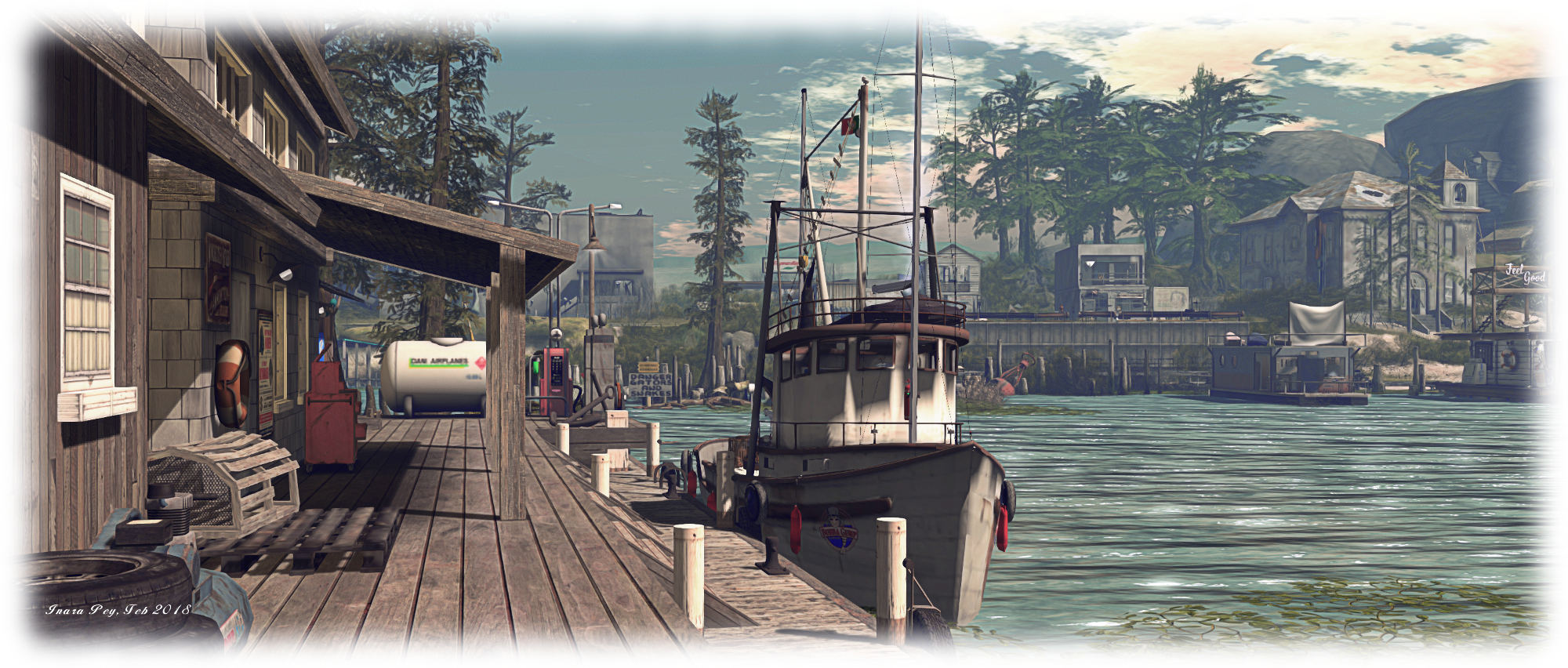
In looks, a good portion of Sanctuary has the feel of a careworn coastal town, possibly along America’s gulf coast. The buildings are old, slightly run-down, the roads unpaved and overlooking a bay dotted with sandbanks, one of which has the wreck of a coaster aground on it; a wreck so old, nature is gradually having its way.

Sanctuary; Inara Pey, February 2018, on FlickrSanctuary

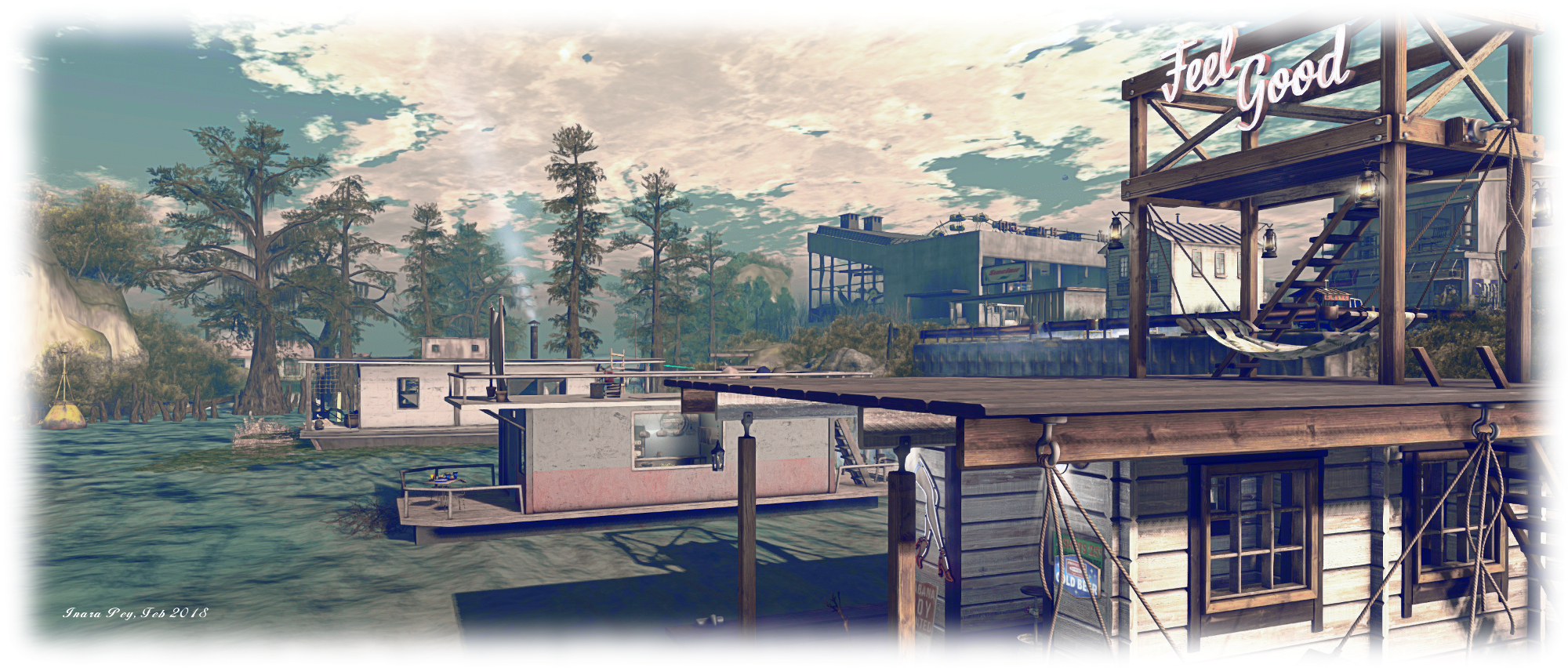
There’s no set landing point for visitors, so I’ve arbitrarily selected the parking lot above the bay. From here, visitors can look down on an old board walk which has clearly seen better days and is home to three old houseboats, one of which has been converted to a eatery, and another is now home to a bar.  Across the road from the parking lot sit a little huddle a businesses, all of which have seen better days, the largest of which is a used car lot and auto repair centre.

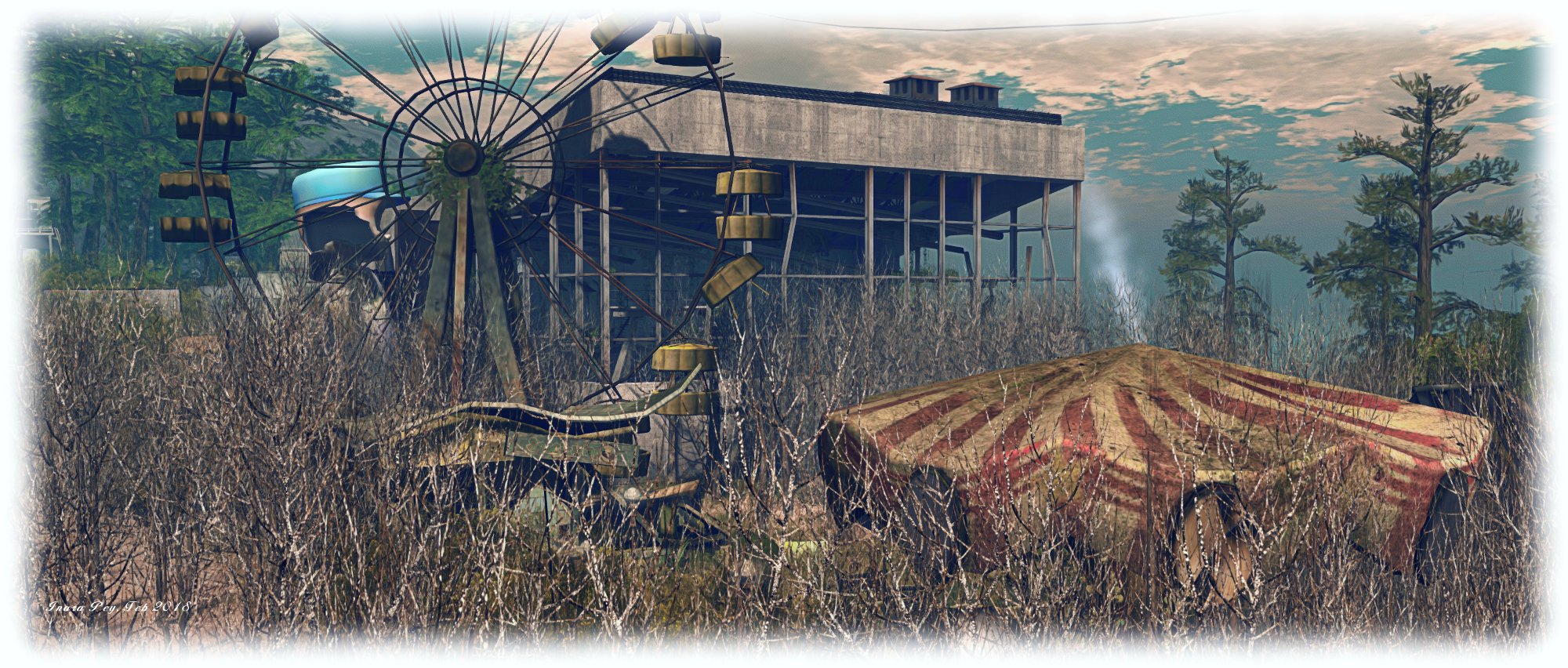
These businesses are filled with detail which help to further bring sanctuary to life. Going by the car being repaired at the auto centre and bicycles outside the cafe, they still seem to be drawing in business as well.  However, they are bookended – if not overshadowed – by the two structures which perhaps best encompass  the broader status of this little corner of the world: a boarded-up motel, and a tumble-down, overgrown funfair and public swimming pool. These clearly speak to the place which has perhaps seen better times.

Sanctuary; Inara Pey, February 2018, on FlickrSanctuary

Across the water sits a small, rugged island, home to a working dock and wharf on its north and island-facing side (the southern side of the island appear to be privately owned) with trawlers tied-up alongside. The channel running between the island and the mainland looks to have once been swampland; there’s evidence of old tree having been cut down to clear the water, although some swamp cypress still grow on either side of the slowly-passing water while signs give notice of snakes and alligators. For the most part, these may not be easy to spot – with one exception: a cheerful (and whimsical) ‘gator is more content with standing on an ageing wooden pier playing a banjo than with floating log-like in the water. If you spot him, do consider leaving him a tip for his efforts!

Follow the old road up towards the abandoned motel and you’ll find a choice of routes to take: a grassy track down between the motel and its sign, leading to where the board walk below the rod comes to an end; or you can stick to the old road and following it as it switchbacks inland, offering an walk that eventually loops back towards to the coast; or you can turn off the road just past the old motel and take the aged stone steps climbing up into the hills behind Sanctuary’s southern waterfront.

Sanctuary; Inara Pey, February 2018, on FlickrSanctuary

All three route can bring you by turn, gorge and bridge to an abandoned farm sitting above the motel, buildings long deserted, equipment left behind, unwanted. However, take the grassy trail down from the road to where the broad walk ends, and as well as the path leading up to the farm, you’ll discover a stony trail curled past the old, converted machinery house sitting on its own pontoon. This trail will- for the keen-eyed – offer a way to where a set of steps are cut into the rock which offer a path north into Sanctuary’s northern end, in the region or Rideau.

“Roxi decided we needed a change there,” Darth informed me during our visit. “So please excuse the untidiness!”

In turn, the rebuilding work barely intrudes on a visit – but it was worthwhile knowing it was going on, as it definitely marked Sanctuary as a place to be revisited soon. As it is, the northern half of the build couldn’t be be more different to the southern end. Climb up through the rocks and follow the path through the narrow clefts and you’ll be brought to a place which – for me at least – brought out strong memories of Sri Lanka.

Sanctuary; Inara Pey, February 2018, on FlickrSanctuary

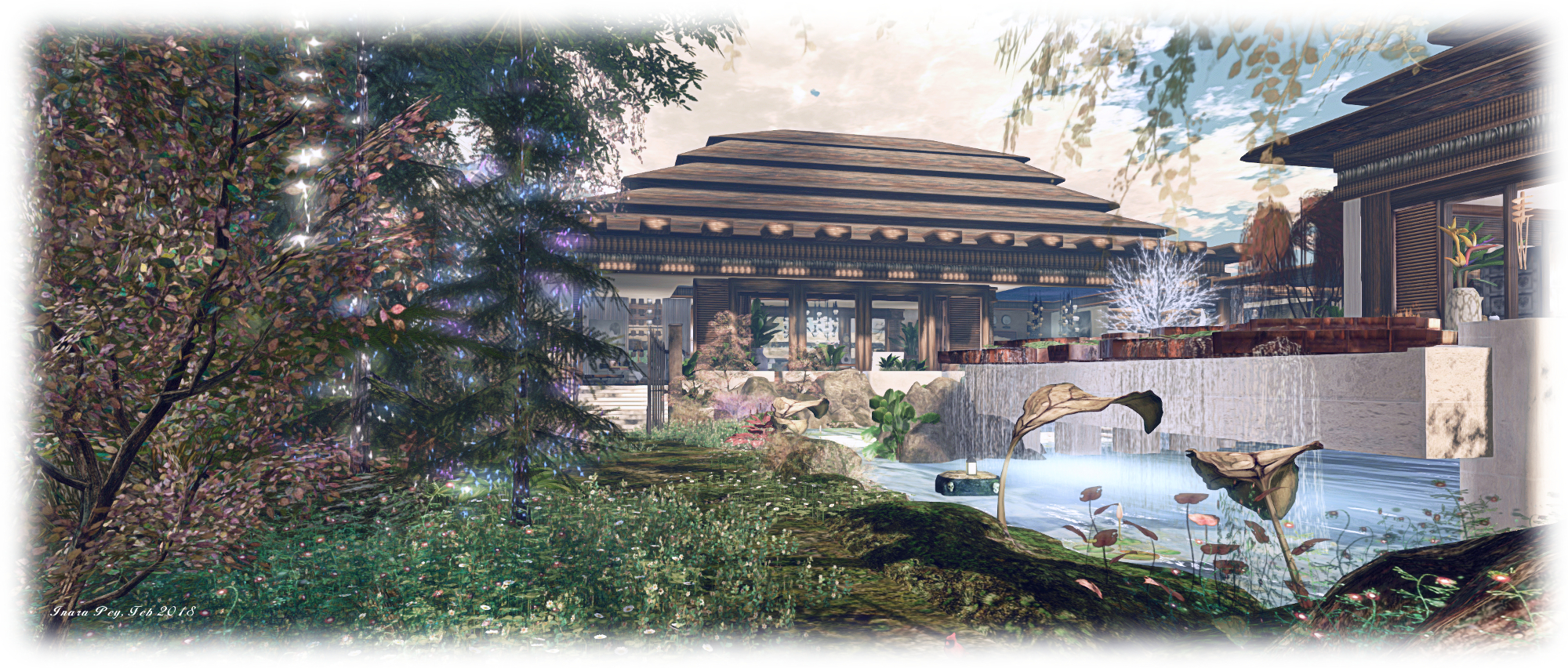
Down on the waterfront sits a copy of Eliza Wierwright’s Patron house: a open-sided villa which powerfully echoes Sri Lankan resorts designs in look and layout. Up the hill, behind this villa, tiered walls hide stairs that lead up into the high rocks, to where more clefts and steps cut and climb – the entire walk up from the beach putting me in mind of the Boulder Garden Hotel, Kalawana, Sri Lanka. The upper end of this walk is were work is being carried out, so I’m not going to reference more of it here – but will be back to see what Roxi and Darth produce there.

I genuinely cannot praise Sanctuary enough; it’s an outstanding design, rich in detail and full of contrasts, with the southern end of the landscape suggestive of America’s gulf coastal regions, as noted, but also containing little twists and touches  – such as the tuk-tuk vans – which might place it elsewhere. The tuk-tuks also provide a nice hook to the more tropical / Indo-Asian feel of the northern end of the land.

Sanctuary; Inara Pey, February 2018, on FlickrSanctuary

Undoubtedly well worth visiting and taking the time to explore carefully. My thanks to both Roxi and Darth for taking the time to chat, as well. Do keep an eye out for the more … unusual .. details of setting as well, which I’ve pointed not mentioned here, but which add a little edge to the scene.

SLurl Details

Commerce in High Fidelity

It’s been a while since I last looked at High Fidelity, however, there have been a number of developments on Philip Rosedale’s VR platform over the last several months, specifically related to the last HF subject I blogged about: currency and IP protection.

In August 2017, Rosedale wrote two blog posts on the company’s currency and IP protection roadmap, setting out plans to use a blockchain-based crypto-currency – the High Fidelity Coin (HFC). Since then, they’ve issued a series of blog posts tracking their ideas and developments towards building a blockchain centric currency / IP management capability.

For those unfamiliar with the concept, the attraction of blockchain systems is both their “openness” and their security. In short and simply put, a blockchain can be thought of as a completely decentralised database duplicated across the Internet, with the information held on it both immediately shared and reconciled across all instances of the database after any transaction, anywhere, any time. It is almost entirely self-managed, with nodes on the network of databases acting as “administrators” of the entire system.

All of this makes a blockchain environment transparent and exceptionally difficult to hack; it has no single point of data which can be corrupted, nor is it reliant on a single point of management for its continued existence. Thus, blockchain networks are considered both highly robust and very secure.

Following these initial posts, High Fidelity issued two further blog posts charting their steps towards building a blockchain based commerce system using the HFC as its crypto-currency, and which can provide a means of authenticating and a chain of ownership for valid digital goods (assets) within High Fidelity domains. These were:

  • A First Look at High Fidelity Commerce in Action, published in October 2018, demonstrating how their proposed approach, as a decentralised, independent service, would integrate into the shopping experience for people within High Fidelity domains.

  • An examination of their approach to handling worn assets (clothing / accessories), published at the start of November 2017. This included how worn assets would be technically managed (including allowing in-world / in-store demonstration / trial versions), and how the blockchain mechanism will not only handle the purchase of goods in HFCs, but provide certification of validly purchased goods which can be reviewed by any other user when examining the purchased item itself.

Then, in December 2017, the company launched a closed beta of Avatar Island, a shopping domain offering more than 300 avatar clothing and accessories from designers around the world for High Fidelity users to try in-world and, if they wish, purchase them. first environment within High Fidelity which starts to weave all of the threads from those earlier blog posts together into a whole.

Avatar Island is impressive on a number of levels, including the real-time, interactive ability to try on different items; the ability to resize accessories to fit, to share the shopping experience with a friend, etc. The items offered for sale within it are the first digital goods (assets) certified by HF’s Digital Asset Registry (DAR), a decentralised, publicly auditable blockchain ledger.

The DAR serves a number of functions: it uniquely identifies every digital asset on the system; it enables such goods to be  purchased with the High Fidelity Coin; and it serves as a record of transactions made by High Fidelity users. At its heart is the use of Proof of Provenance (PoP), which documents an asset’s chain of ownership, its characteristics, and its entire history, from certification onward. It’s a record which cannot be altered, deleted or denied, establishing an asset’s chain of ownership — its sale and resale — that sits entirely in the hands of the asset’s owner.

Furthermore, PoP can be used to authenticate digital assets in any High Fidelity domain – and even allow domain owners regulate the objects allowed into their virtual spaces (e.g. a restriction could be placed to only allow items in keeping with the theme of a space into it, or only allow items from approved vendors, etc.). Thus, DAR / PoP is potentially a powerful way of managing asset ownership, identification, purchase and use across High Fidelity’s distributed environment.

Since the start of February 2018, High Fidelity offers a means for users to pay one another in HFCs. Credit: High Fidelity

At the start of February 2018, the company announced they were launching the ability for users to pay one another directly in HFCs (so tips can be given to performers, etc.). To kick-start this, early adopters of High Fidelity (e.g. those who had signed-up and been involved in High Fidelity over the course of the last couple of years) have been awarded a range of HFC grants, made available through a server called the “BankofHighFidelity”.

Together, the HFC, DAR, PoP and the “BankofHighFidelity” provide a solid foundation for commerce within HF domains. Currently, there is no means to cash-out HFCs for fiat money, but given that High Fidelity is well aware of the powerful attraction of being able to do so (and allowing for regulatory adherence), it’s hard to imagine this would not be a part of the company’s plans.

As it is, the company has stated it plans to operate “BankofHighFidelity” as an exchange where HFCs can be exchanged for other crypto-currencies (I assume the likes of Ethereum and Gloebit) – a quite ambitious move in itself.

High Fidelity, approaching the second anniversary of its open beta, had laid down and impressive commerce roadmap for their environment with some impressive technical capabilities for “in-world” transactions and shopping. It’s not entirely clear how this approach might work a supply chain approach to commerce, something Linden Lab is attempting to build into Sansar, or even if High Fidelity is thinking along those lines.

Given these developments within High Fidelity and the fact that linden Lab are hoping to have their own approach to commerce in Sansar more firmly established later in 2018, – and allowing for the key differences between the two environments, it’ll be interesting to compare and contrast how each tackles commerce, digital rights, asset provenance, etc., down the road.

2018 UG updates #7/1: server, viewer

Thor's Land; Inara Pey, January 2018, on Flickr Thor’s Landblog post

Server Deployments

As usual, please refer to the server deployment thread for the latest updates.

  • There was no deployment to the Main (SLS) channel on Tuesday, February 13th, leaving it running on simulator version  18#18.01.17.511913. However, in keeping with the Lab’s policy of running channel restarts every 2 weeks, regardless of whether there was a deployment or not, the channel was restarted.
  • There will be no deployment to the RC channels on Wednesday, February 14th, and no restarts. All three will also remain on simulator version 18#18.01.17.511913.

SL Viewer

The Project Render project viewer was updated to version 5.1.1.512446 on Friday, February 9th, 2018. Otherwise, there have thus far been no changes to the SL viewer pipelines, leaving the current list as follows:

  • Current Release version  5.1.1.512121, dated January 26, promoted February 7 – formerly the Voice Maintenance RC – NEW.
  • Release channel cohorts:
    • Nalewka Maintenance viewer version 5.1.1.512226, January 31, 2018.
    • Media Update RC viewer version 5.1.1.512264,released January 30, 2018.
    • Voice RC viewer, version 5.1.1.512121, January 26
  • Project viewers:
  • Linux Spur viewer, version 5.0.9.329906, dated November 17, 2017 and promoted to release status 29 November – offered pending a Linux version of the Alex Ivy viewer code.
  • Obsolete platform viewer version 3.7.28.300847, May 8, 2015 – provided for users on Windows XP and OS X versions below 10.7.

Other Items

Region Restarts Causing Disconnects?

When a region is being shut-down / restarted, a 5-minute warning is given to encourage people to leave (or they’d be disconnected on shut-down). If everyone leaves ahead of the actual shut-down time, the region will wait for about 15 seconds and then go ahead and restart. However, there has been an issue some have experienced whereby if they are the last to leave a region that is shutting-down, they can teleport away, arrive at another location – but as soon as the original region is shut-down for restart, they are logged off (see BUG-5034). Linden Lab had thought this issue to have been resolved, so a new JIRA has been requested to allow for further investigations.

Region Crossings

Joe Magarac (animats) has been doing his best to investigate some region crossing issues, documenting his work via a forum thread. He’s now produced a basic document on his findings. Most of his work is around “patching” things – using a viewer-based RLV (or a permissioned base) approach to forcing an avatar resit on a vehicle post-crossing, if unseated, for example. The Lab’s view is that they would rather work more comprehensively as improving vehicle-related crossings than trying to patch things. The problem here is that region crossings are something of a 3-corner protocol issue (the viewer, the region an avatar / vehicle is departing, and the region the avatar / vehicle is entering), making improvements more difficult to achieve, as it is likely code on all three will at some point need to be revised.

One Billion Rising in Second Life 2018

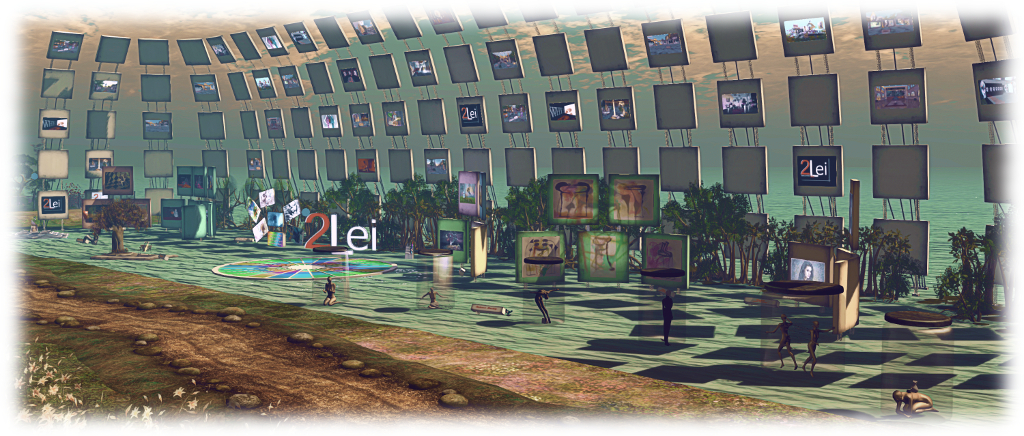
One Billion Rising – 2LEI

One Billion Rising in Second Life will once again be taking place in Second Life on Wednesday, February 14th, 2018. Over the last couple of weeks, work has been progressing on putting the event and its regions together – and having had the good fortune to be able to tour the event’s four regions, this year promises to be stunning in the range of art on offer, together with a beautiful setting in which people can come together.

When launched on Valentine’s Day 2012, One Billion Rising (OBR) was the biggest mass action in human history; a call to action based on the staggering statistic that 1 in 3 women on the planet will be beaten or raped during her lifetime. With the world population at 7 billion, this adds up to more than one billion women and girls who are at risk. OBR aims to bring people together, raise greater awareness of the plight of those at risk the world over, and bring about a fundamental change in how vulnerable and defenceless women and girls are treated.

One Billion Rising – Terra Merhyem and TheDove Rhode

Starting at midnight (00:00) SLT on the 13th/14th February, OBR in Second Life will run a full 24-hours throughout  February 14th, closing at 23:59pm SLT on Wednesday night. Throughout that time there will music and dancing at the central main stage area, with poetry, dance performance and live performers also part of the overall event. There will also be the art displays across the four regions and two special activities, the #MeToo Forest and the White Rose Challenge.

The #MeToo Forest

The MeToo Forest is a collaborative art piece both honouring the MeToo hashtag which has allowed so many women around the world to share their stories. There is a standing invitation for Second Life residents to share their stories, messages and poems. These will be attached to the trees so that visitors to the forest can witness the stories and messages of others as they explore this quiet and beautiful space.

One Billion Rising 2018 – #MeToo Forest

The White Rose Challenge

The White Rose Pin by Kilik Lekvoda

Time’s Up is a unified call for change from women in entertainment for women everywhere. Founded on January 1, 2018 by Hollywood celebrities in response to the Weinstein effect and #MeToo, it is symbolised by the wearing of white.

For OBR 2018 in Second Life, a special white rose pin, beautifully made by Kilik Lekvoda, has been commissioned to show support for Time’s Up.

Unique to the event, the pin can be obtained by travelling around the One Billion Rising regions and counting the number of white rose bushes (kindly provided by Lilith Heart of Heart Botanicals) which are scattered between the art installations, in the corner parks and the #MeToo Forest.

When you think you have the number (of bushes, remember – not individual flowers). Go t one of the four OBR landing zones and use the mail box there to post your total – your name will be automatically recorded with your total.

Event Schedule and Artist Details

The full OBR event scheduled, and information on participating artists can be found via the following links:

For special background information on the OBR 2018 dance performances, please read R. Crap Mariner’s Who Puts the Dance Into One Billion Rising, published in these pages.

One Billion Rising – 2D Gallery

Why Dance?

A critique sometimes levelled at OBR / OBR in SL is that the issues it raises cannot be solved by dance. Well, that’s absolutely true, just as marching through the streets carrying placards and banners is unlikely to have a lasting impact on whatever it is people might be marching about.

However, like marches and protests, dance and music does serve to draw attention to matters. It provides a means by which people are encouraged to stop and think, and for information and ideas disseminated. What’s also important is that it’s a lot harder to see dancing as a threat than might be the case with an organised march or protest – something to take into consideration with countries in which the right to march or protest freely does not exist.

One Billion Rising

Related Links

From the Worlds to the World in Second Life

From Worlds to the World – Giovanna Cerise

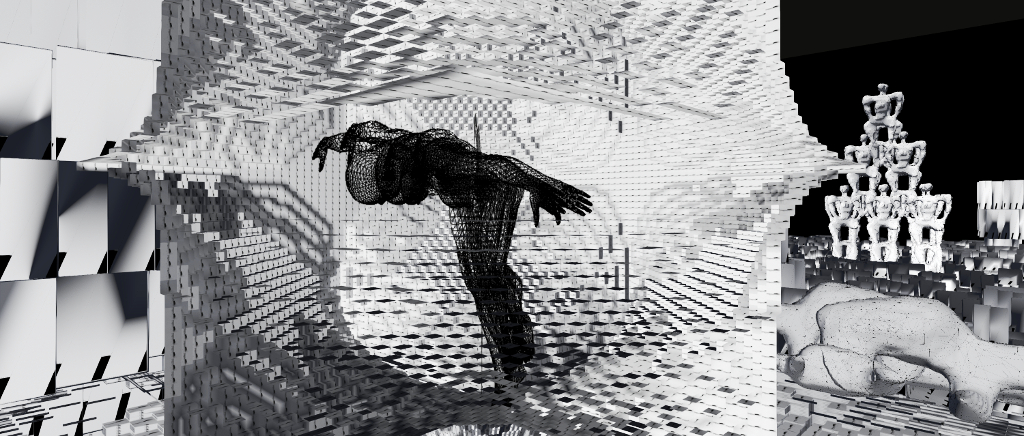
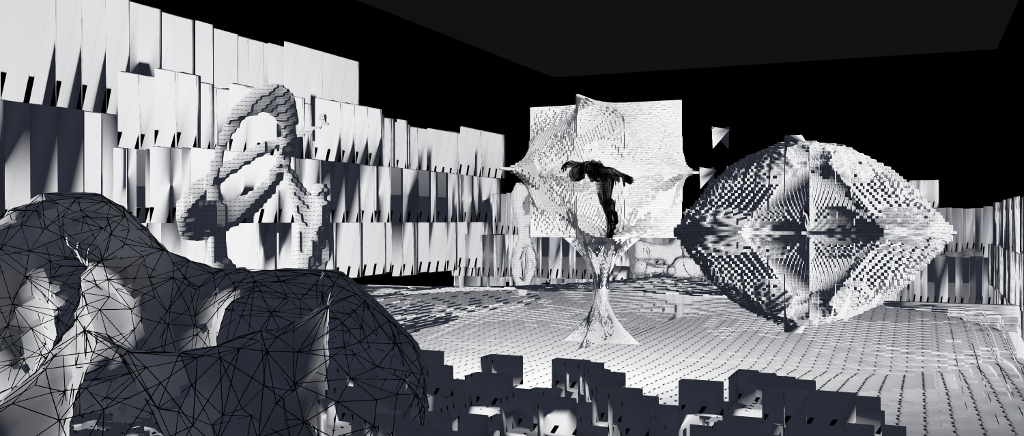
From the Worlds to the World is a new installation by Giovanna Cerise at the R&D Gallery, Diotima, in Second Life. Occupying the entire gallery space, this is a complex installation to unravel, incorporating as it does elements of post-modernism, philosophy, logical progression, nature, geometry – whilst also, perhaps, promoting a discussion on what is the role of past and present in influencing the future.

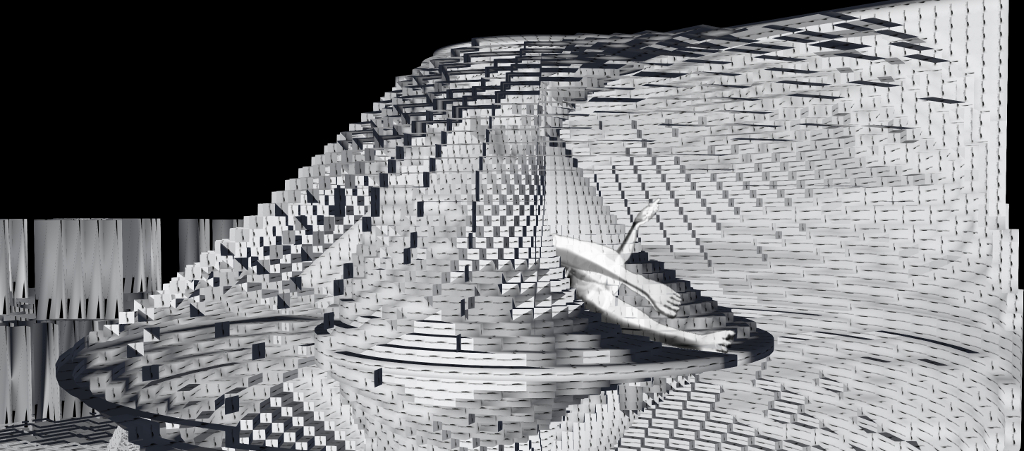
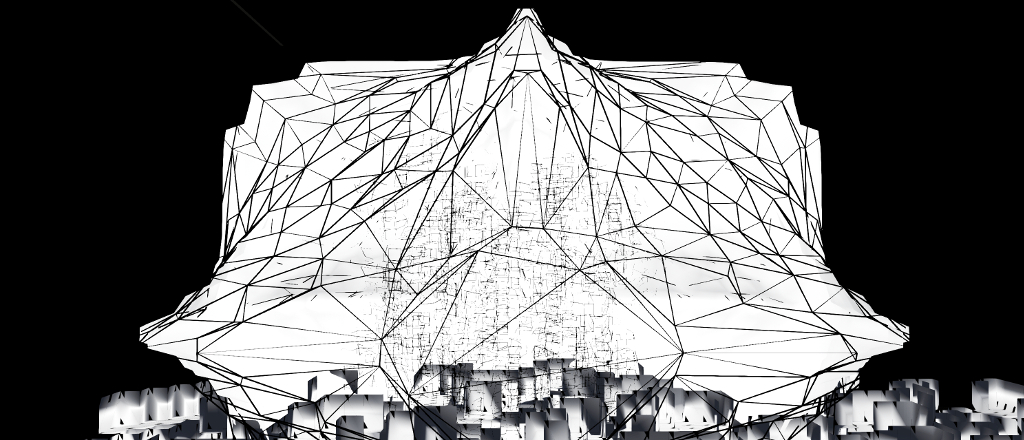
Produced entirely in black-and-white, this is perhaps a stark piece, but there is a natural symmetry to it. Set against a black surround, the white forms within the installation are made up of geometric elements denoted by fine black lines – geometry being both a basic expression of both nature and intelligence. In all, the installation comprises three parts, perhaps analogous to the concepts of past, present and future, and which represent the evolution of intelligence.

From the Worlds to the World – Giovanna Cerise

“The first part of the installation can be seen as an archetype of nature, now incorporated and reduced to its geometries,” Giovanna states in introducing the work. Given the overall framework of the installation, I’d venture the opinion that in this instance archetype is being used to reference Jungian archetypes – universal, archaic patterns and images from the collective unconscious which form inherited potentials, which are transformed once they enter consciousness and are given particular expression by individuals and their cultures – and the idea that as universal patterns within the collective unconscious, they exist as a kind of primordial suspension, without individual structure and form.

Thus, in this first second of the installation, we are confronted with a chaotic form, uneven, broken, but with its geometry holding the promise of potential, of becoming individually / culturally and collectivity more.

From the Worlds to the World – Giovanna Cerise

From this the installation progresses through and initial shape and patterns in which human forms can be seen – a reference, it would seem to the rise of intelligence and self. A time when we shape and drive the world around us, while being both apart from it (humanity over nature?), yet wholly constrained by it – as evidenced by the shapes rising and folding out of, so to speak, the same geometric forms as seen in the initial part of the installation.

Beyond these lies the future: a place where individually no longer exists per se, and the identical reigns. A point at which intelligence has homogenised, There is no need for bodies nor the baser needs of humanity. Life has again become unified, archetypes woven together through their universality. A time has been reached where individuality or culture are no longer required. Nor is there need for dialectical discussion or reasoning; all that is required is uniformity and experiential growth and perfection of the whole.

From the Worlds to the World – Giovanna Cerise

As a representation discussion of the evolution of intelligence, From the Worlds to the World (“worlds” and “world” perhaps again a reference from separate cultural environments and attitudes to the single, homogeneous “whole”) is – as noted – a complex piece. While it may well point to a time where dialectical discourse is no longer required, it nevertheless encourages it, just as it also promotes more philosophical consideration of our own development and growth. Are we really to rise from the “primordial” homogeneity of initial instinctual intelligence to a point where the potential of the individual (be it person or cultural) is to be only a span of time before we are once again absorbed into a single whole once again, uniform of thought and goal?

These latter elements: the opportunity for considered thought and discussion make  – for those willing to dwell on interpreting the installation – From the Worlds to the World an ideal opportunity for a shared visit.