Space Sunday: water, spaceplanes and clockwork rovers

TRAPPIST-1 compared in size to our own Sun. Credit: NASA.

Since the February 2017 announcement on the discovery of seven rocky planets orbiting the nearby red dwarf star TRAPPIST-1, multiple studies have been conducted to ascertain whether any of the planets might harbour conditions suitable for life. The nature of their parent star would suggest this to be unlikely. However, an international team utilising the Hubble Space Telescope (HST) to study the TRAPPIST-1 system believe they’ve found evidence that some of the planets have the right conditions to allow liquid water to exist.

Vincent Bourrier, from the Observatoire de l’Université de Genève in Switzerland, and his team used the  Space Telescope Imaging Spectrograph (STIS) to study the amount of ultraviolet radiation each of the TRAPPIST-1 planets receives. If there were too much UV light, no water could survive on the surface because the water molecules would break up and escape through the top of the atmosphere as hydrogen and oxygen gas.

The team found that the inner planets in the system – TRAPPIST-1b and 1c – receive so much UV radiation from their sun, they may have lost more than 20 Earth-oceans worth of water in the course of their history, estimated to be between 5.4 and 9.8 billion years old. Thus, they are almost certainly devoid of water, and their surfaces are likely sterile. However, the findings also suggest the outer planets in the system – including the three within TRAPPIST-1’s habitable zone, may have lost less than three Earth-oceans’ worth of water throughout their history, and could possibly still possess liquid water, making them more amenable for life to rise.

As well as suggesting some of the TRAPPIST-1 planets may have liquid water present, the study has broader implications for the potential of other exoplanets harbouring life. Up to 70% of the stars in the Milky Way are believed to by M-class red dwarfs – and the majority of rocky exoplanets thus far found are orbiting such stars. So this study might indicate that many more of the exoplanets orbiting such stars could support liquid water and, perhaps, conditions suitable for life. However Bourrier and his colleagues emphasise that the study is not conclusive, and further research is needed to determine if any of the TRAPPIST-1 planets are actually watery.

SNC Prepares Dream Chaser for Glide Flight Testing and UN Mission

Sierra Nevada Corporation (SNC) carried out a “captive / carry” test of a Dreamer Chaser Cargo vehicle test article on August 31st, 2017. The flight, with the vehicle slung beneath a helicopter forms the first step towards the Dream Chaser Cargo carrying out glide flights and landings.

During the test, SNC collected data on the vehicle’s performance in flight, including operation of radar altimeters, air data probes and other systems that cannot be fully tested on the ground. The captive /  carry test followed a series of ground tests where the vehicle was towed behind a truck down a runway at speeds of up to 100 kph to ascertain its ground handling on landing.

The Dream Chaser Cargo test article is lifted aloft by helicopter in a captive/carry test. Credit: Sierra Nevada Corporation

SNC developed Dream Chaser to transport astronauts to and from the ISS. However, NASA selected capsule designs by SpaceX and Boeing. After a protest over the decision, filed with the U.S. Government Accountability Office, failed, SNC turned their attention to other potential uses for Dream Chaser.

One of these has been the development of a cargo variant to service the International Space Station (ISS) alongside existing resupply contractors,  Orbital ATK and SpaceX, and in 2016, NASA confirmed Dream Chaser Cargo has been selected to fly resupply missions to the ISS between 2019 and 2024.

On July 19th, 2017, it was announced that SNC had signed a contract with United Launch Alliance for the first two launches of these resupply missions, using the Atlas 5 552 launch vehicle. The first launch is scheduled for 2020 and the second in 2021, although NASA has yet to formally order any Dream Chaser flights.

A Dream Chaser Cargo vehicle will also be used in 2021 to launch the first United Nations mission into space. The United Nations Office of Outer Space Affairs (UNOOSA) said an agreement between them and SNC to fly the dedicated Dream Chaser mission is part of a broader effort by the office to increase access to space to emerging nations.

The mission will be open to all nations, but with a particular emphasis on those that don’t have the capabilities to fly their own experiments in space. UNOOSA are in the process of soliciting payload proposals with a goal of selecting payloads by early 2018 so that the winning countries have time to build them for a 2021 launch.

Unlike the majority of Dream Chaser Cargo missions, which will focused on ISS resupply work, the UNOOSA flight will see the vehicle placed in orbit around the Earth, and SNC have indicated the vehicle will be capable of operating freely in orbit for extended periods of time, should the UN desire a longer mission.

While billed as the UN’s first space mission, the Dream Chaser flight is part of UNOOSA’s Human Space Technology Initiative, launched in 2010 with the goal of providing developing countries the possibility to access space in microgravity conditions. Currently, the initiative includes two other major projects. The first is a cooperative project with the Japan Aerospace Exploration Agency (JAXA), designed to give developing nations the opportunity to launch cubesats from the ISS. Another programme, to be operated in cooperation with China’s space programme, will allow UN-backed missions to be flown aboard China’s space station, when it becomes operational in 2020.

Continue reading “Space Sunday: water, spaceplanes and clockwork rovers”
A Brand New Colony in Second Life

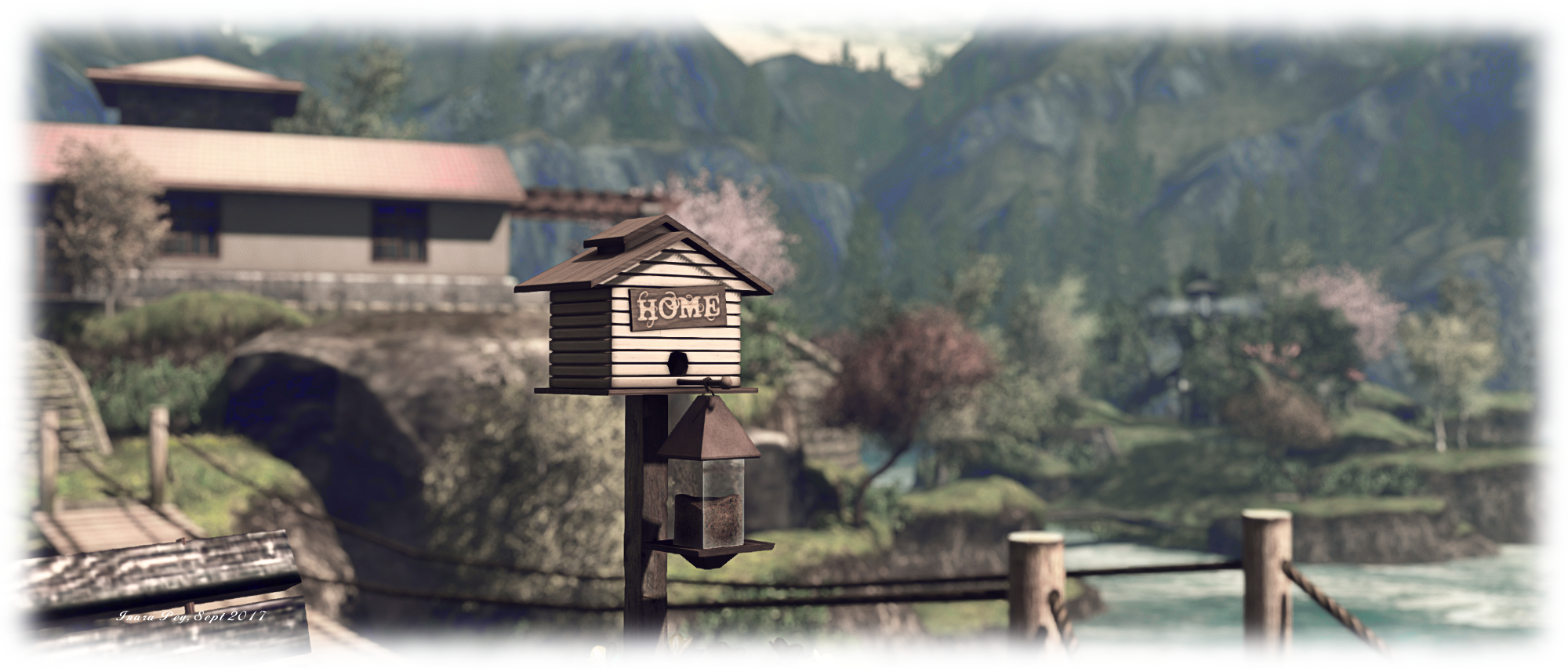
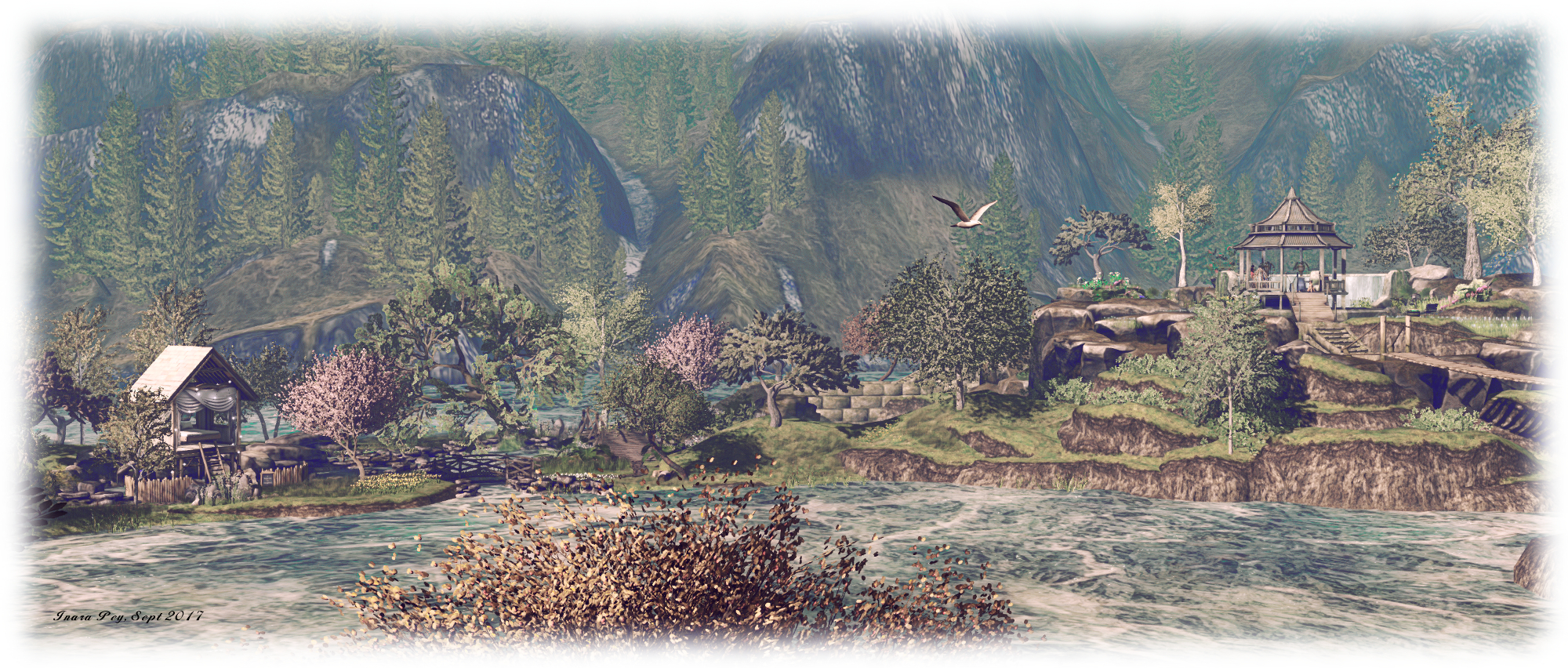
Brand New Colony; Inara Pey, September 2017, on FlickrBrand New Colony – click any image for full size

Update, January 1st 2018: Brand New Colony has relocated. The SLurls given here have been updated to reflect the new location, and a tour of the new build is available here.

Brand New Colony is an Adult-rated homestead region designed by Bunny Blessed (Svelte Blessed) and Mimara Blessed (Mimara) which is open to visitors to explore and enjoy – and it is a wonderfully picturesque setting in which to spend time.

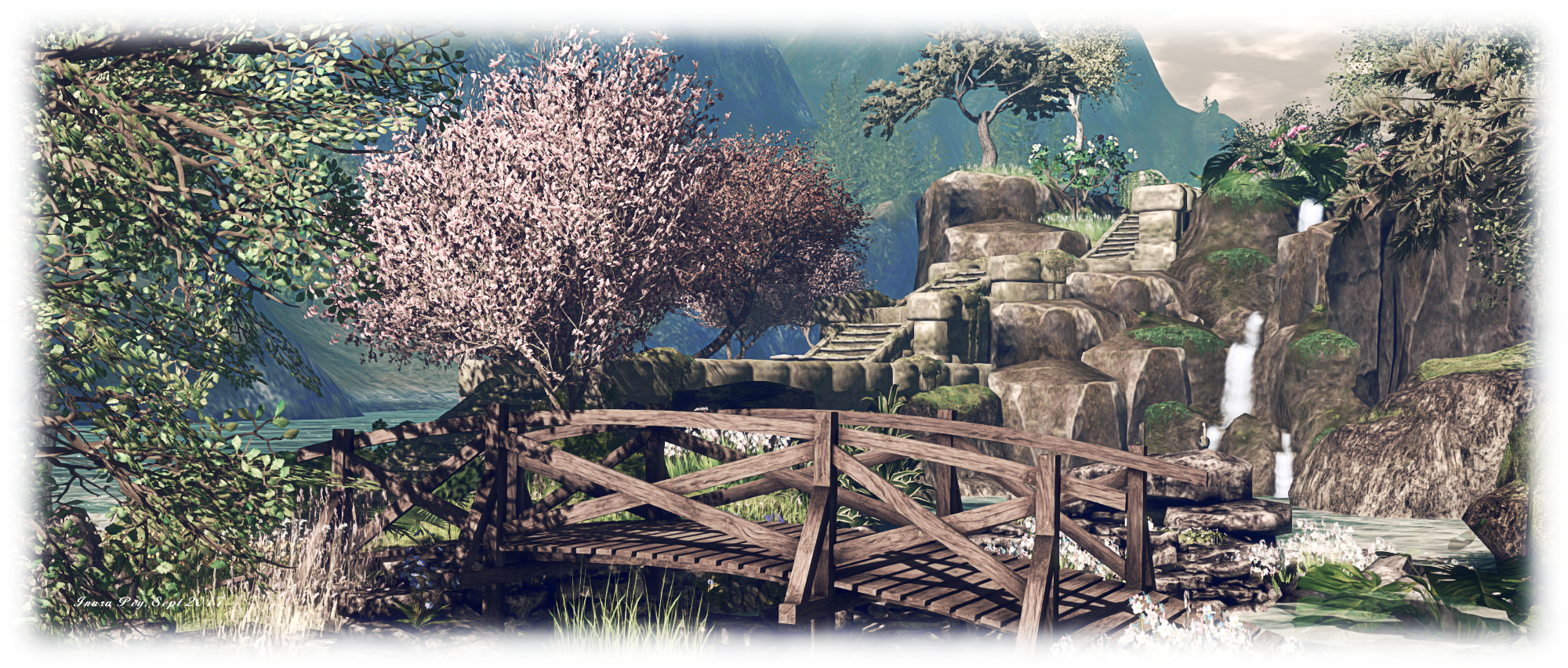
Divided into three islands linked by bridges and surrounded by surf, the region sits in a broad channel of water sitting between two rugged mountain ranges rich with fir trees on their flanks. A visit begins on the plateau of the northernmost island, which extends a slender finger westwards, stone steps offering the way down from the gazebo in which visitors arrive. This sits above a large pool of water feed by an arc of waterfalls. Bridges span the water to the gazebo, which is also carried away by falls which drop down the side of the plateau to feed a large pool and a stream below.

Brand New Colony; Inara Pey, September 2017, on FlickrBrand New Colony

Footpaths run either side of the stream, bridges connecting them one to the other, both offering ways to explore the island, and  to reach the summer-house sitting on wooden legs above the stream. Rich with flowers and the shade of trees, with benches and swings to be found along the paths overlooking the water feature, the island on its own offers a picturesque setting in which to spend time. However, there is more to be found in the region.

Just down from the arrival gazebo is a wooden bridge spanning the channel between this island and the larger of the two to the south.

Brand New Colony; Inara Pey, September 2017, on FlickrBrand New Colony

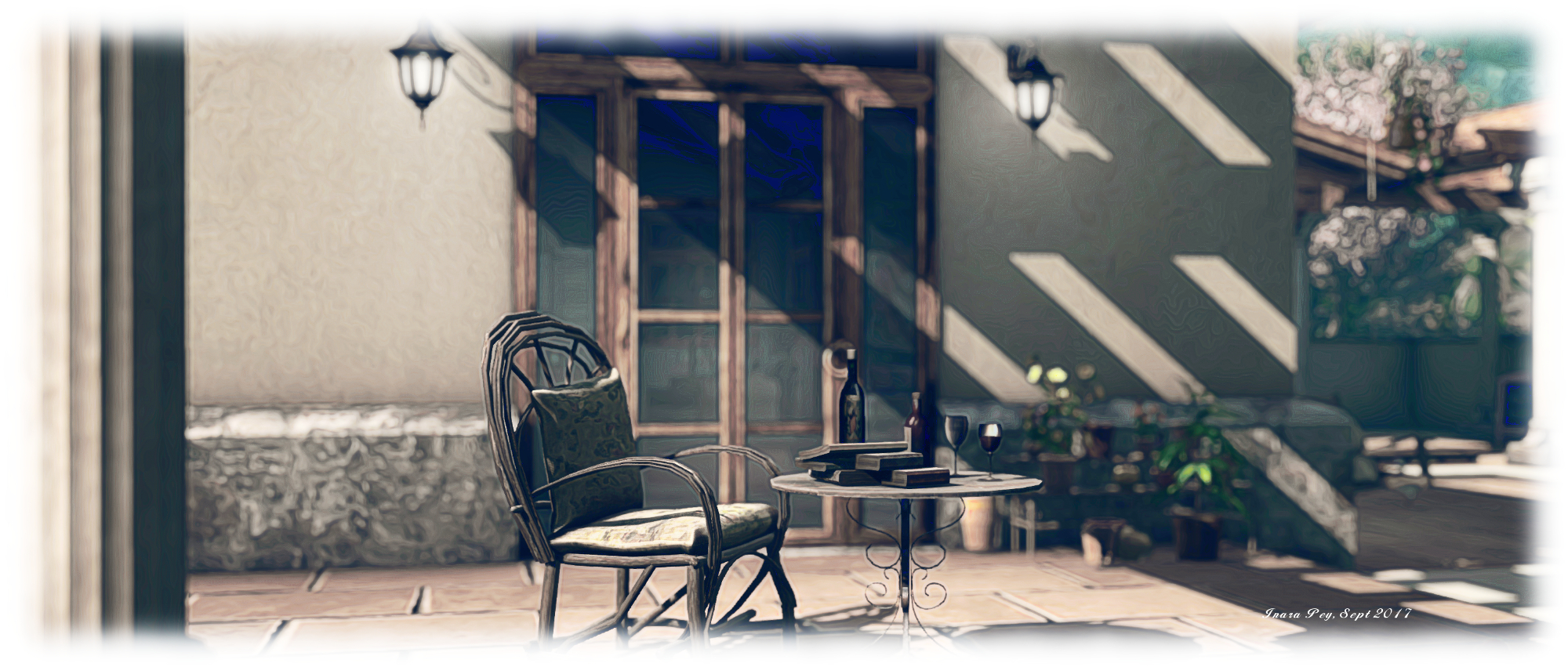
A villa with whitewashed walls and a red-tiled roof sits on the plateau forming the central peak of this second island, steps near the bridge offering a way up to it. Sitting beneath the villa and visible from the arrival point is a sandy beach, complete with a tiled pool set back against the rocks of the plateau,  reached by a grassy path sloping down from the villa’s hilltop location.

Two further sets of stone stairs curl their way down the west face of the plateau, allowing explorers reach a stone bridge offering a way to the smallest of the three islands. This is home to the adult aspect of the region: an old (but functioning) lighthouse has been converted into an adult club – so, for those not fond of such things, proceed with care.

Brand New Colony; Inara Pey, September 2017, on FlickrBrand New Colony

There are many points of beauty within this region. The three island have been designed with care, and their rocky nature is entirely natural in look and feel, as are the many water features. Trees and plants are used with equal care and finesse to present a setting which is not just picturesque, but also serene. This is a place to be explored and enjoyed at leisure, with plenty of places to sit and relax – or cuddle. It’s also a place which demands photography.

As noted, Brand New Colony is adult rated, and a part of it does have an adult theme; but this doesn’t in any way detract from the sheer allure of the region.  All-in-all, a delightful visit.

Brand New Colony; Inara Pey, September 2017, on FlickrBrand New Colony

SLurl Details

Sansar product meetings 2017: week #35

People gather for the Sansar Product Meeting, Friday, September 1st

The following notes are taken from the Sansar Product Meetings held on Friday, September 1st. These meetings are held every Friday at 9:30am PDT and 4:00pm PDT, and are open to all. There is no set agenda (currently), and the meetings are a mix of voice and text. Venues change on a weekly basis, and are announced in the Meet-up Announcements. The September 1st meeting took place at Maxwell Graf’s Rune, which is one of five parts of his Rustica “grand experience”. The official meeting notes published the week following each pair of meetings.

The meetings are chaired by Jenn (aka Xiola Linden) from the Community Team, and feature various members of the Sansar teams.

August / September Release

The next release was pushed back from August 31st as a result of a couple of last-minute issues which required fixing. The release is now being targeted of Wednesday, September 6th.  This is in keeping with the Lab’s approach to making major (feature) updates at the end / start of a month, with smaller interim releases focused on bug fixes and patches being rolled out as required between these major releases.

Highlights of the upcoming release include:

  • Terrain Editor (first pass): ability to edit the current terrain options; the ability to upload custom textures to follow.
  • Scripting Updates and Improvements, including:

  • Ambient Occlusion (AO): allowing things like indirect lighting shadows. This should not require creators to re-visit and update the Global Illumination (GI) bakes for their experiences, as the AO will be a real-time effect.
  • Avatar updates, including:
    • Selling Avatar Attachments: creators will be able to upload and sell their own avatar props (attachments) through the Sansar Store – more on this below.
    • Having been removed from Sansar due to speed issues when seen in VR mode, the ability for avatars to run will be returning in the next release.
    • Further improvements to avatar customisation, e.g. adding nail colours.
  • Ability to upload multi-part objects: there will be some limitations placed on this, which will be specified in the release notes.
  • Object Animations: animated objects created in Maya, 3D Studio Max, or Blender can be imported them into Sansar.
  • Media updates, including:
    • Support for custom music and live streaming via Shoutcast, Icecast and similar services. OGG should be supported via web links, although AAC will not be supported with this release.
    • The ability to play back s£ movies within experiences.
  • Bug fixes.

Some of these features may yet be subject to final testing by the Lab, so please refer to the release notes once the update has been made for details and links to supporting documentation. The release notes will form an e-mail to Sansar users and be available in the Release Notes section of the knowledge base.

When the release is rolled out, it will mean down time for the platform, and this will be announced through the forums and on the log-in screen, etc.

Sansar Product Meeting, Friday, September 1st

Avatar Attachments

As noted above, creators will be able to make, upload and sell avatar attachments in Second Life through the Sansar Store with the next platform release. However, because the initial provision of attachment points on the avatar lead to some outsized (non-resellable) props being made, there will be a number of initial limitations placed on the props which can be uploaded and sold, including:

  • Uploaded props will not initially be allowed to exceed a 1m x 1m x 1m size.
    • Existing props which are larger than this can continue to be used, but creators will not be able to sell them.
  • Attachments will be limited in terms of total triangles they can contain.

Full details of the limits and upload requirements will be documented in the Avatar Attachments knowledge base article once the release is public. Some of the limitations may be relaxed over time.

Contest Announcements

Partially to mark creators being able to upload and sell avatar props through the Sansar Store with the next release, and because Halloween in approaching, Linden Lab has launched two Sansar contests. On offer are five prize packages featuring Oculus Rift + Touch bundles. In addition, the Halloween themed contest includes a US $10,000 grand prize. Details can be found on the official Sansar blog, and on my blog.

HUDs and Web Support in Sansar

Second Life users are all familiar with the concept of HUDs to enhance users’ abilities to interaction with other scripted objects (usually attached to an avatar) and / or interact with external web services. Specific scripting support for HUD objects (and the ability to attach them to the Sansar UI) isn’t at present being worked on by the Lab.

Some broader web support, is being developed. This includes the ability to display web pages and media on objects in an experience (again, in SL parlance, the equivalent of media on a prim). There will also be some form of web browser capability within the Sansar UI, but there is currently no time frame on when this is likely to appear or what it will look like.

Request have been made to provide Sansar with a similar scripted functionality to LLHTTPRequest to enable more complex interactions between Sansar and external web services. Provision of such a capability has not – as yet – been discussed  for Sansar.

Avatar Sitting

The ability for avatars to sit on objects within and experience is not the roadmap, but will not be part of the next release, and may yet be further down the road, possibly as much as six months hence – although this needs confirmation from the Lab.

Continue reading “Sansar product meetings 2017: week #35”

Detectives, super humans, Indians and summers

Seanchai Library, Holly Kai Park

It’s time to kick-off another week of storytelling in Voice by the staff and volunteers at the Seanchai Library. As always, all times SLT, and events are held at the Library’s home at Holly Kai Park, unless otherwise indicated.

Sunday, September 3rd 13:30: Tea Time at Baker Street

Caledonia Skytower, Corwyn Allen and Kayden Oconnell once again open the pages of The Casebook of Sherlock Holmes, the final set of twelve Sherlock Holmes short stories first published in the Strand Magazine between October 1921 and April 1927.

This week: The Problem of Thor Bridge.

“The faculty of deduction is certainly contagious, Watson,” Holmes informs his good friend one October morning after Watson had arrived for breakfast expecting to find Holmes in a depressed mood, wanting for a good, solid case, but finding him instead practically full of the joys of spring.

The comment comes in response to Watson’s observation that such a good mood could only mean that Holmes did indeed have a case. Even so, it is not until after breakfast that the Great Detective reveals the situation.

“You have heard of Neil Gibson, the Gold King?” he said.

“You mean the American Senator?”

“Well, he was once Senator for some Western state, but is better known as the greatest gold-mining magnate in the world.”

“Yes, I know of him. He has surely lived in England for some time. His name is very familiar.”

“Yes, he bought a considerable estate in Hampshire some five years ago. Possibly you have already heard of the tragic end of his wife?”

“Of course. I remember it now. That is why the name is familiar. But I really know nothing of the details.

The details are that the wife of the aforementioned J. Neil Gibson had been most cruelly murdered by none other than the family’s governess, Grace Dunbar. The evidence in the case couldn’t be more clear, nor Miss Dunbar’s guilt more sure.

So the letter Holmes has received protesting her innocence despite all the evidence indicating otherwise, sets the Great detective a pretty riddle. Particularly as it has been written by none other than J. Neil Gibson himself …

Monday, September 4th 19:00: More Than Human

Gyro Muggins reads Theodore Sturgeon’s genre-bending 1953 novel which brings together three of her earlier works   to weave a story about people with extraordinary abilities which can be combined – “bleshed” (itself a blending of “blend” and “mesh”) to make them even more extraordinary.

Take, for example, Lone, the simpleton who can hear other people’s thoughts and make a man blow his brains out just by looking at him; or Janie, who moves things without touching them. Then there are the teleporting twins, who can travel ten feet or ten miles, and Baby, who invented an anti-gravity engine while still in the cradle, and Gerry, who has everything it takes to run the world except for a conscience.

Six people struggling to find who they are and whether they are meant to help humanity, destroy it, or represent the next step in evolution, the final chapter in the history of the human race. Through them, Theodore Sturgeon explores questions of power and morality, individuality and belonging, with suspense, pathos, and a lyricism rarely seen in science fiction.

Tuesday, September 5th 19:00: One Summer, America 1927

The summer of 1927 was, for the United States, a signature period of the 20th Century. On May 21st, Charles Lindbergh became the first man to make a non-stop crossing of the Atlantic in an aeroplane when The Spirit of St Louis arrived at Le Bourget airfield, near Paris.

Through that summer, Babe Ruth was setting his record for the number of home runs in baseball, while one of the most infamous murder trials in New York’s history took place: that of  Ruth Snyder and her married lover, Henry Judd Gray. They stood accused – and were eventually found guilty of – garrotting of Snyder’s husband in what was a tabloid sensation case.

Meanwhile, in the south the Mississippi burst its banks, leading to widespread flooding and a huge human disaster. Far to the north, Al Capone continued his reign of criminal terror in Chicago, while on the west coast, history was being made with the filming of the world’s first “talking picture” in the form of Al Jolson’s The Jazz Singer, released in October 1927.

All of this  and more is charted by Bill Bryson, in a book written with his characteristic eye for telling detail, and delicious humour. 1927 was the year America stepped out onto the world stage as the main event, and One Summer transforms it all into narrative non-fiction of the highest order. Join Kayden Oconnell for a trip through history as seen by Bryson.

Wednesday, September 6th 19:00: Calahan’s Crosstime Saloon

Corwyn Allen reads Spider Robinson’s 1999 anthology.

callahansThe titular saloon is a haven for lost souls; a place where the patrons come for one drink and a chance for a second – but only if they offer an unburdening toast at the fireplace. Mike Callahan, the owner, never judges but sometimes advises in as few words as possible.

In the first story in the collection, Callahan thinks he’s heard it all until one day, The Guy With The Eyes comes in.

He spends an hour nursing his first drink, then steps up to the fireplace and unburdens himself with the news that he’s an alien, a harbinger of doom for Earth, who will be returning home in just a couple of hours. But when he does, his masters will destroy the planet, convinced human kind is a cancer. Only he’s no longer convinced that this is true, and no longer wants to see the world destroyed…

Also presented in Kitely (hop://grid.kitely.com:8002/Seanchai/108/609/1528).

Thursday, September 7th:

19:00 The Last of the Mohicans

The wild rush of action in this classic frontier adventure story has made The Last of the Mohicans the most popular of James Fenimore Cooper’s Leatherstocking Tales.

Deep in the forests of upper New York State, the brave woodsman Hawkeye (Natty Bumppo) and his loyal Mohican friends Chingachgook and Uncas become embroiled in the bloody battles of the French and Indian War.

The abduction of the beautiful Munro sisters by hostile savages, the treachery of the renegade brave Magua, the ambush of innocent settlers, and the thrilling events that lead to the final tragic confrontation between rival war parties create an unforgettable, spine-tingling picture of life on the frontier. And as the idyllic wilderness gives way to the forces of civilization, the novel presents a moving portrayal of a vanishing race and the end of its way of life in the great American forests.

With Shandon Loring. Also presented in Kitely (hop://grid.kitely.com:8002/Seanchai/108/609/1528).

21:00 Seanchai Late Night

Finn Zeddmore presents contemporary Sci-fi & fantasy!


Please check with the Seanchai Library’s blog for updates and for additions or changes to the week’s schedule.

The featured charity for August and September is Little Kids Rock, transforming lives by restoring, expanding, and innovating music education in schools.

SL project updates week 35/2: Content Creation UG

Content Creation User Group Meeting, Hippotropolis Camp Fire Circle

The following notes are taken from the Content Creation User Group meeting, held on  Thursday, August 31st, 2017 at 13:00 SLT at the the Hippotropolis Camp Fire Circle. The meeting is chaired by Vir Linden, and agenda notes, etc, are usually available on the Content Creation User Group wiki page.

Medhue Simoni live steamed the meeting to You Tube, and his video is embedded at the end of this article. These notes present the meeting in terms of topics discussed, rather than a chronological breakdown of the meeting, so the provided time stamps may appear to be out of sequence in places. All time stamps are provided as links which will open the video in a separate browser tab, allowing the discussion to be heard in full.

Animated Mesh (Animesh)

Project Summary

The goal of this project is to provide a means of animating rigged mesh objects using the avatar skeleton, in whole or in part, to provide things like independently moveable pets / creatures, and animated scenery features via scripted animation.

  • Animated objects can be any rigged / skinned mesh which is correctly flagged as an animated object (so it has a skeleton associated with it), and contains the necessary animations and controlling scripts in its own inventory  (Contents tab of the Build floater) required for it to animate itself.
  • The capability will most likely include a new flag added to an existing rigged object type in order for the object to be given its own skeleton.
  • At this point in time, this is not about adding fully functional, avatar-like non-player characters (NPCs) to Second Life.
  • Animated objects will not (initially):
    • Have an avatar shape associated with them
    • Make use of an avatar-like inventory (although individual parts can contain their own inventory such as animations and scripts)
    • Make use of the server-side locomotion graph for walking, etc., and so will not use an AO
    • Use the avatar baking service
  • The project may be extended in the future.
  • It will involve both back-end and viewer-side changes, likely to encompass new LSL commands to trigger and stop animations (held in the object’s contents).

LSL Animation Functions

[1:18-3:04] The LSL functions needed for animating mesh objects are being tested. These comprise:

The first two commands are fairly straightforward in terms of use. The GetObjectAnimationNames function is intended to stop all animations currently playing in an animated object, or to check whether a particular animation whether an animated object is currently playing (the animations and scripts being stored in the object’s Contents tab inventory).

The documentation for these commands is still in progress, so the information on the wiki pages is subject to update. Also, keep in mind these commands will not work until a public animesh project viewer is available.

[10:12-11:16] These commands could, in theory, be used with a scripted HUD to provide some degree of control over animated objects by their owner. An example HUD may or may not be provided in the test content the Lab may supply (see below).

Test Content

[3:23-4:43] Test content for animesh has been a request at past meetings, the idea being to have models available in the Library people can use to familiarise themselves with created animated mesh objects and using the associated scripting controls. The Moles are now looking at adding some content for the Library in preparation for animesh becoming more widely available.

[41:26-45:12] A more general discussion on promoting animesh (when available), test content, and making people aware of animesh.

General Performance

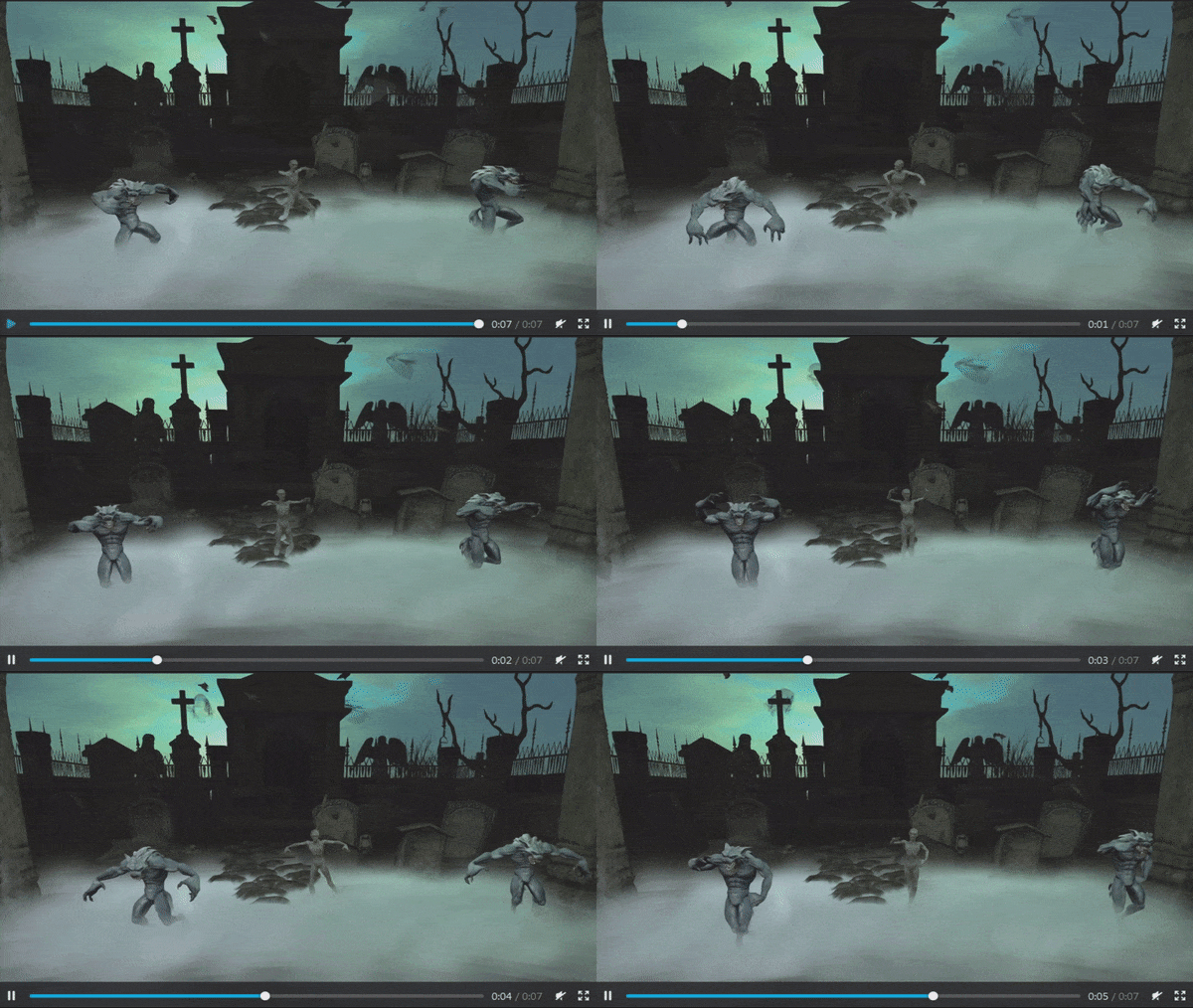
Alexa Linden has been converting existing mesh content  into animesh objects. She’s been using the mesh werewolf starter avatar originally released in 2014, and which is already available in the Library, for this work, and produced a short video of the result, presented as an animated GIF, below.

Alexa’s test use of the Lab’s mesh werewolf avatar as an animated mesh object

Again, note that these are not actual avatars connected to the simulator via individual viewers; they are purely in-world objects being animated by scripts they contain driving a set of animations also contained within them.

[8:00-9:04] More work is also required on the general controls / limits on animated mesh objects: how many are going to be allowed in a scene, the numbered of animated attachments an avatar can wear, calculating their rendering impact, etc. These will not be final when a public viewer appears, but will be used as a baseline which can then be tweaked one way or another once more intensive testing gets started.

[22:05-24:29] In her initial tests with dancing werewolves, Alexa managed to get over 300 dancing together, each using 6 dance animations and a control script. She didn’t notice much in the way of a frame rate impact whilst also moving her avatar around. However, she did notice some update issues with the Interest List (which controls how things are rendered in the viewer as you move your avatar / camera) when zooming in / out of the scene.

The test was by no means definitive. For example, it was using multiple copies of the same basic mesh model and animations, and this may have boosted performance somewhat than might have been the case with 300 different mesh models running in a scene, each with its own unique animations. She also carried out her tests on a region that doesn’t have a lot of other content on it.

[25:24-26:36] Comparing Alexa’s tests with avatar capacity / performance (e.g. 40 avatar in a region) isn’t easy as avatars can be a lot more individually complex. There are also various aspects of managing avatars which don’t necessarily apply to animated objects. For example, animesh items should really only have a limited number of updates associated with them, whereas avatars tend to have a lot more going on (interactions, messaging, etc.,), all of which increases the volume of traffic the simulator and viewers must handle.

Project Viewer

[6:47-7:58] Still no date for when a project viewer will appear, other than the Lab will release it “as soon as we can”.

Right now the biggest piece of work within the viewer is defining  how the skeleton get positioned relative to the object with which it is associated. This currently various depending on the model being used, and currently can result in things “jumping” as they start to animate.

This problem also has an impact when trying to use an animated object as an attachment (e.g. when holding and animated pet), with the result the object can be “floating” around the avatar, rather than obviously attached to it, and does not rotate / move appropriately as the attachment point moves relative to the avatar.

[11:55-12:30] Vir doesn’t believe this is a huge problem to solve, it just requires work on the transform matrix, and this shouldn’t add a significant delay in any project viewer appearing.

[21:05-21:45] However, should fixing it prove to be more complicated than anticipated, it may have to be taken into account in terms of lead times, particularly as having the ability to wear / carry animated pets is seen as one of the more popular user-cases for animesh.

Finally, internal testing of the viewer by the Lab has resulted in some suggestions being made which may also be incorporated into the viewer prior to a public project version appearing, in order to ensure that what does appear offers a solid foundation on which to build, and gives creators an opportunity to give feedback.

Tracking Complexities

[15:03-15:56] As animated objects will be manipulating avatar skeleton bones whether they are attached to an avatar or operating as in-world objects, it will require more tracking of such movements than is currently the case to ensure they are correctly represented by viewers able to see them.

Size Limitations

[16:00-18:12] Animated objects will likely be limited in terms of both their physical size and their poly / tri count. Limits for both have yet to be determined; however, high poly count objects will likely in part be limited by the impact they have on performance. The physical size of animated objects, unless  special limits are set, will likely be defined by the same rules as currently exist for avatar skeleton.

[24:31-25:22] The Interest List / animation issues Alexa encountered (e.g objects some distance from the camera position moving much faster than the should be, and then slowing down to a “normal” speed when zoomed at) are not unique to animated objects. These are issues which the Lab is liable to look at in more detail, but are not seen as something which will necessarily delay progress on animesh, simply because the issue has been around for some time (it can be seen when zoomed out from a group of dancing avatars, for example).

Continue reading “SL project updates week 35/2: Content Creation UG”

Sansar competitions launched: US $10K and Oculus bundle prizes

(courtesy of Linden Lab)

On Friday, September 1st, Linden Lab launched two new Sansar contests with Oculus Rift prize bundles and – for one of them – US $10,000 as part of the grand prize.

Sansar’s Scariest Experiences

Creators are asked to create a scary / Halloween immersive (VR) experience and list it in the Sansar Atlas no later than 17:00 PDT Sunday, October 15th, 2017. This can either be a brand new experience or an existing experience updated to fit the scary / Halloween theme.  In addition, entrants should also e-mail creatorchallenge@sansar.com with:

  • “Creator Contest – Scary Experience” as the subject line.
  • A link to the experience.
  • Their Sansar user name.

A panel of judges comprising Sansar staff and “special guests” will award the grand prize on the basis of the environment that they regard as the best, most frightening, and fun to explore. The grand prize itself comprises:

  • US $10,000 (USD)
  • An Oculus Rift + Touch bundle
  • A one year Sansar Super Creator Subscription.

Time allowing, the grand prize winner will also be the venue for a special Sansar meet-up between Lab staff and Sansar users.

There will also be three Honourable Mentions in this competition, who will each receive a one year Sansar Creator Subscription.. The full rules for the contest can be found at: Sansar Build Challenge – Sansar’s Scariest.

Asylum (Darkness Edition)

Sansar’s Top Avatar Props

The second contest is linked to the upcoming Sansar release (now planned for Wednesday, September 6th), which will see creators able to sell avatar props (attachments) in the Sansar store.

To enter, creators are invited develop avatar props in the following four categories:

  • Most Innovative.
  • Best Halloween Costume.
  • Funniest.
  • Most Fashionable.

Entries must be listed on the Sansar Store with a price of not more than 500 Sansar Dollars no later than 17:00 PDT on Sunday, October 1st. In addition, entrants should also e-mail creatorchallenge@sansar.com with:

  • “Creator Contest – Avatar Prop” as the subject line.
  • A link to the Item.
  • The Entry Category/ies the item has been submit for.
  • Their Sansar user name.

A panel of judges comprising Sansar staff and “special guests” will select one winner from each category. Each will receive:

  • An Oculus Rift + Touch bundle.
  • A one year Sansar Super Creator Subscription.

The full rules for this contest can be found at: Sansar Build Challenge – Sansar’s Top Avatar Props.