SL project updates week 19/1: server, group chat

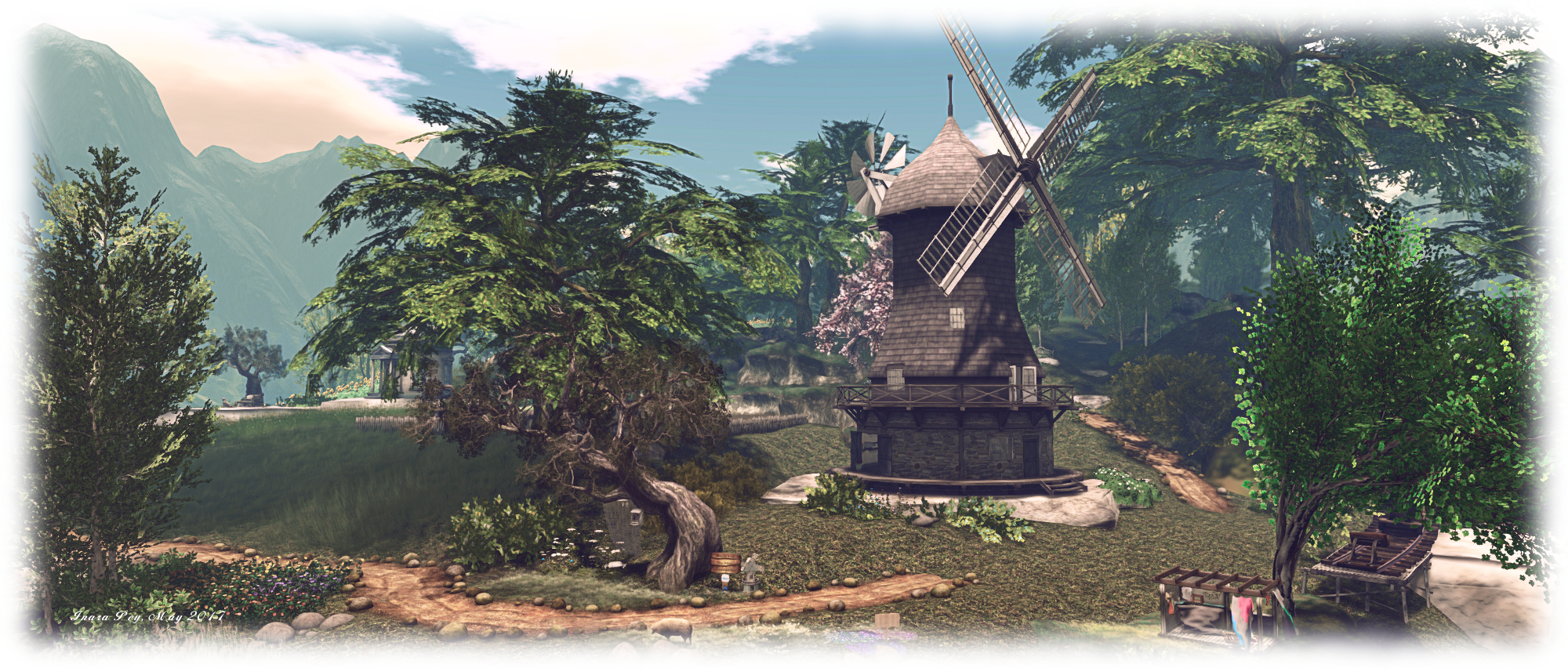
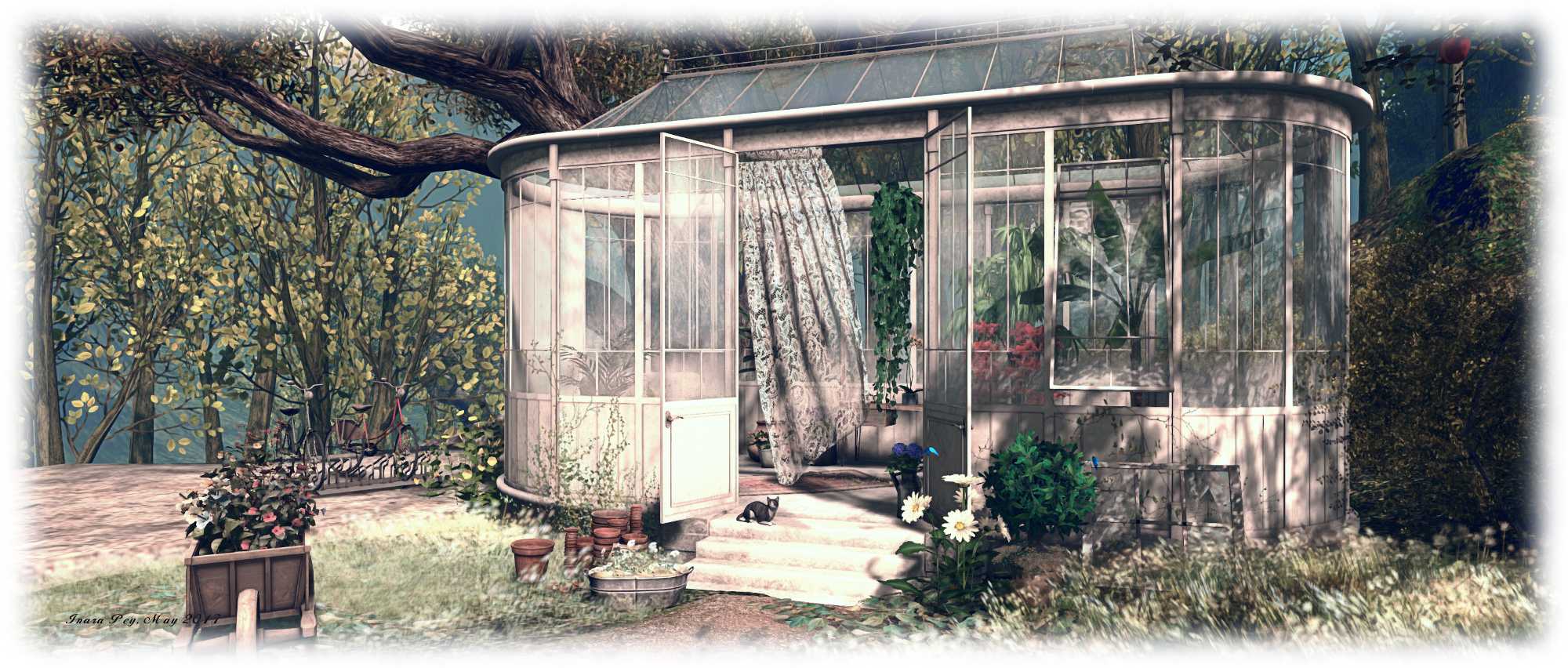
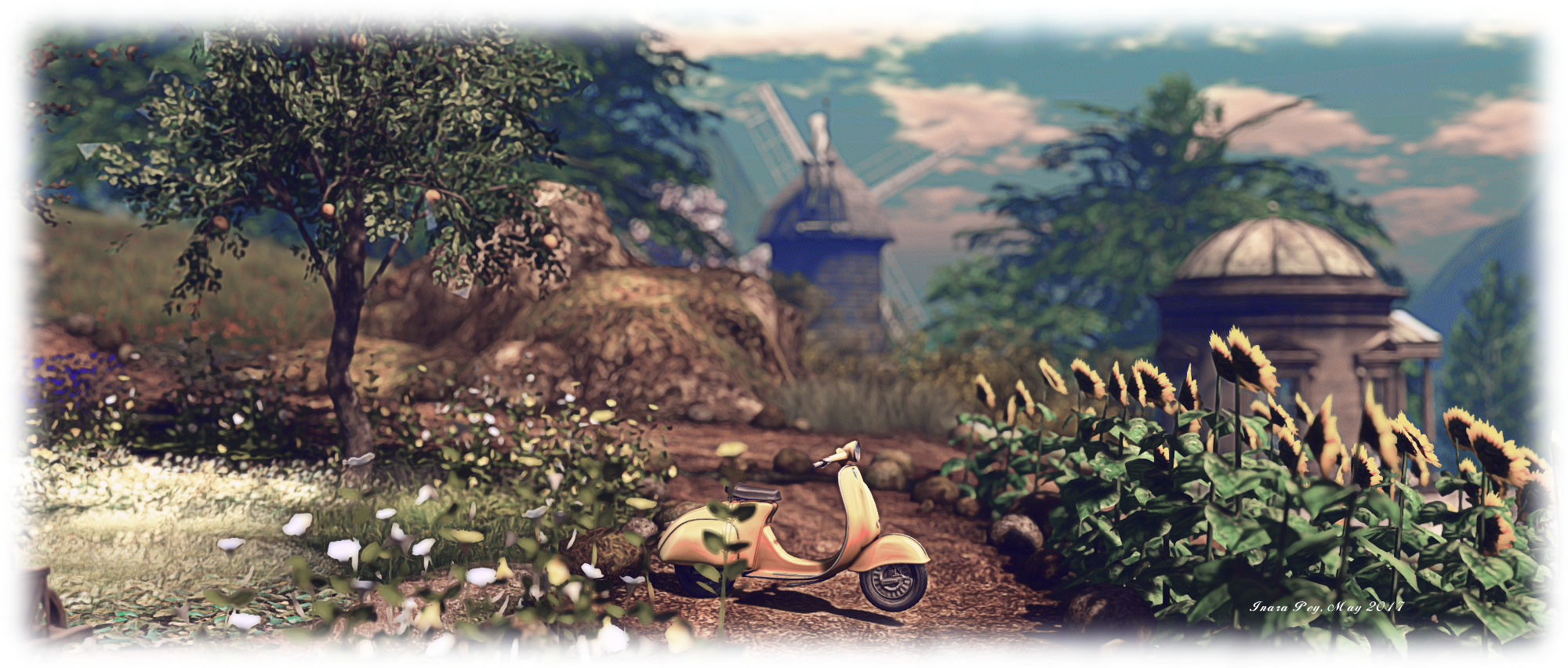
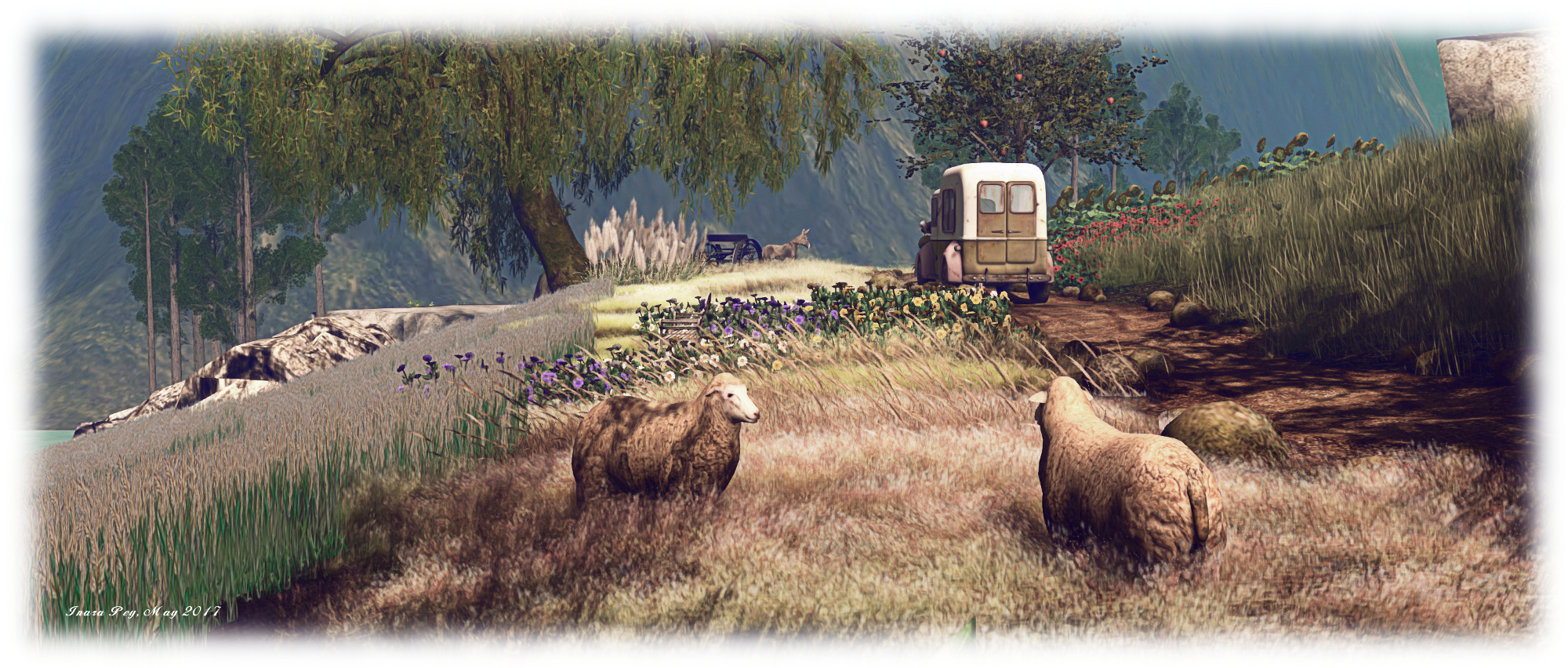
The Mill, Pale Moonlight; Inara Pey, May 2017, on Flickr The Mill, Pale Moonlight blog post

Server Deployments

As always, please refer to the server deployment thread for the latest updates and news.

On Tuesday, May 9th, the Main (SLS) server channel was updated with the server maintenance package previously deployed to the LeTigre RC channel, containing sim logging improvements.

On Wednesday, May 10th, the RC channels should be updated as follows:

  • BlueSteel and Magnum should receive a server maintenance package with “internal updates”
  • LeTigre should receive a server update comprising a new version of the simulator code built using a newer version of Linux. This has previously been on test both on Aditi and the Cake micro-channel. In the words of the Lab, it sees pretty much everything change.

Commenting on the current underpinning server updates the Lab are carrying out, Simon Lab said, at the Simulator User Group meeting on Tuesday, May 9th:

We have some internal projects that are pretty big that will occupy us for months at this point.  They’re needed and will help set up SL for a long-term life … it really is investing in the future … Imagine what our back-end systems look like. The design is ancient, it’s been added-on and adjusted for 14+ years. Sometimes we have to stop and do overhauls.

SL Viewer

A Maintenance RC viewer is anticipated this week. However, at the time of writing there have been no updates since the end of week #19, leaving the viewer pipelines as follows:

  • Current Release version: 5.0.4.325124, dated April 3rd, April 19th – formerly the Maintenance RC viewer overview
  • Release channel cohorts:
    • Voice RC viewer, version 5.0.5.325998, dated Friday, May 5
    • Project AssetHttp project viewer, version 5.0.5.325940, dated May 4th
  • Project viewers:
  • Obsolete platform viewer version 3.7.28.300847, dated May 8th, 2015 – provided for users on Windows XP and OS X versions below 10.7.

Group Chat Issues

Group chat on some of the larger groups again seems to be acting up – messages being dropped, people unable to send messages, etc.

Should you encounter repeated  / severe issues with group chat, the recommendation is to file a support ticket with a request in the format of: “group XX is suffering excessive chat lag, please check its server”, where XX is the name of the group itself. All such requests should be passed on to Operations, who will take a look at the server responsible for managing that particular group’s chat sessions.
Summer’s colours and sensual moods in Second Life

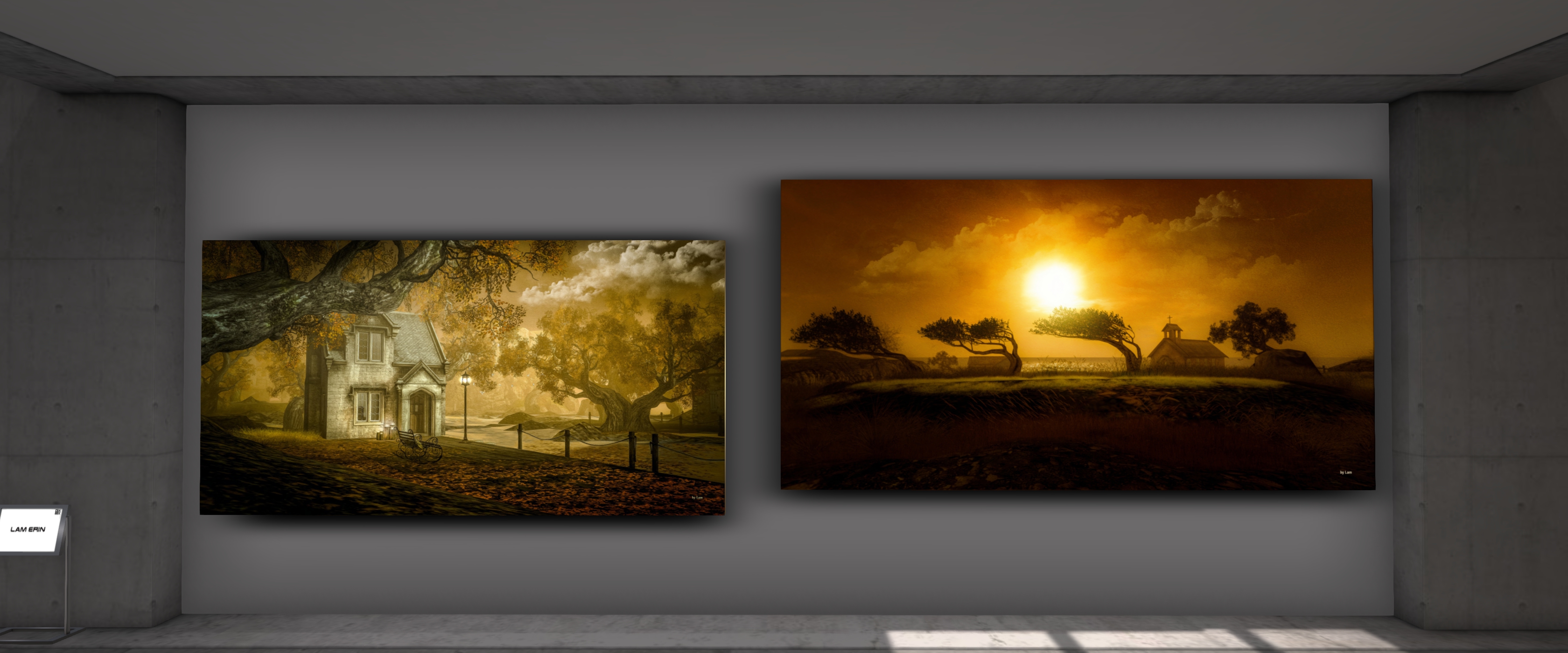
DiXmiX Gallery: Lam Erin – Colours of the Summer

Now open at DixMix Gallery are two new exhibitions which, although not in any way intentionally paired, offer studies in the two most popular forms of Second Life photography: landscapes and avatar studies. Between them, they feature the work of Lam Erin and Tintin Tuxing.

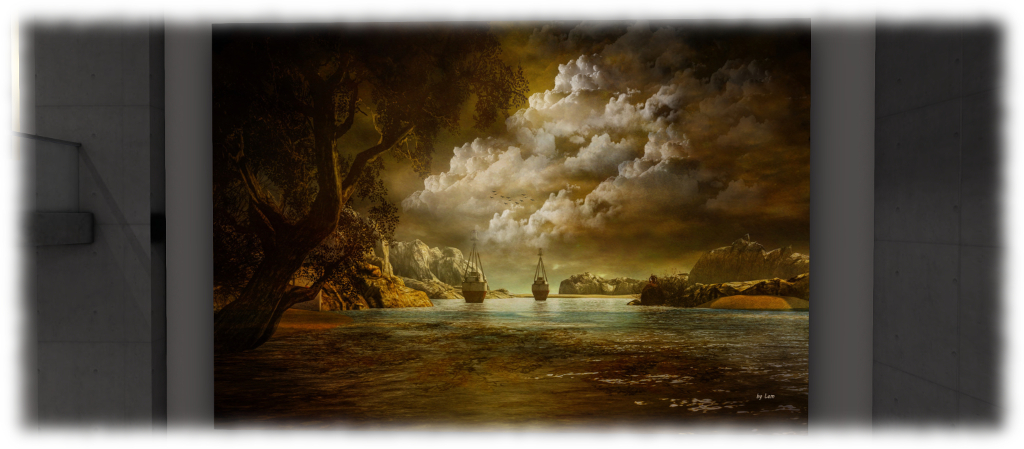
For Colours of the Summer, Lam Erin presents ten images of landscapes within Second Life, the majority of which have been tinted / enhanced with colours associated with summer – notably gold, yellow and green – but which should not be taken to be simple photographs of summer scenes. Rather, these are studied pieces, carefully processed to present a range of responses and perhaps suggest certain ideas for narratives behind them.

DiXmiX Gallery: Lam Erin – Colours of the Summer

In particular, each of the pieces is marked by a broiling, active cloudscape; a dramatic, even foreboding, cast to the skies which even in the more restful images among the ten (such as Autumn Trace and Italian Countryside) adds an edge to the picture. They serve to make us reconsider each image after we’ve first cast our eyes over them, drawing us into the narrative behind the scene presented. Sometimes this can be direct – such as the brooding sense of a rising storm in Neverfar, through to a more subtle reminder that the ship lying calmly at anchor in Bal Harbour can have a capricious mistress with the seas on which she sails.

All told, a marvellously evocative set.

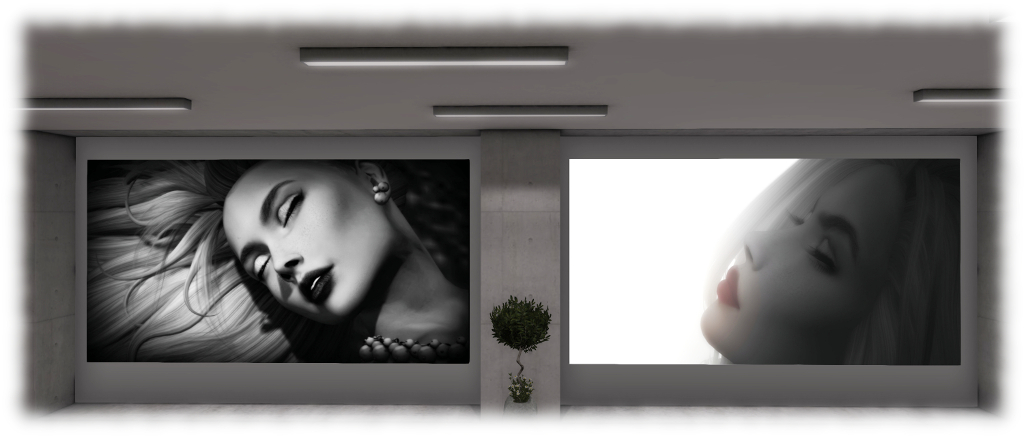
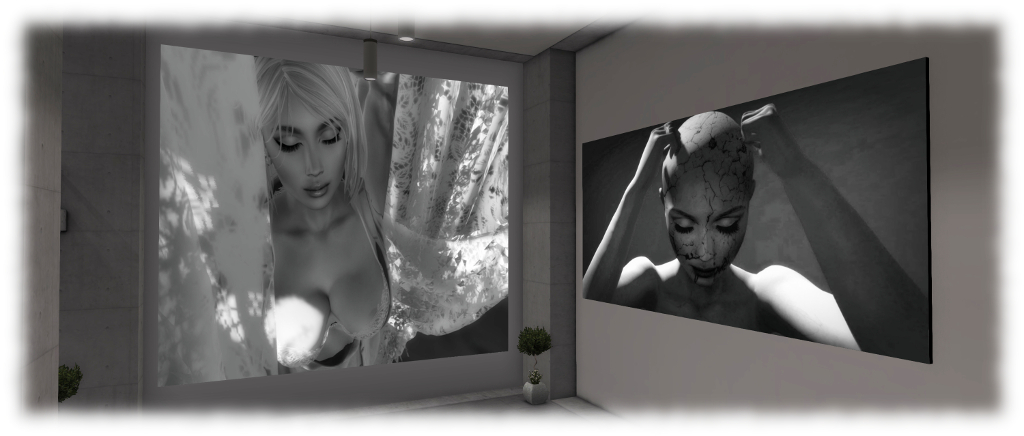
DiXmiX Gallery: Tintin Tuxing – Sensual Moods

In the nine images she presents for Senusual Moods, Tintin Tuxing (Alexandrea Barbosa) takes visitors in another direction entirely: towards that of the sensuous and sensual.  Beautifully presented in monochrome (for the most part), these pictures draw us into a personal world of sensuality edged with a touch of the erotic in places.

The majority of the pieces focus on a single subject, and are both evocatively titled and posed. Six of the nine powerfully convey mood through the model’s expression alone, with one using a simple splash of colour to give draw us closer to it. These are marvellous studies which captivate the eye. Of the remaining three, I confess to finding one seemingly slightly out-of-place in that it features a couple and is posed such that a bicycle in the foreground draws and hold the attention more than the scene being played out. Perhaps intentional, it did for me break the mood evoked by the rest of the pieces. In difference to it, The Lonely Cello drew me the other way; the only one of the pieces fully  – if mutedly – in colour, it is a captivating study.

DiXmiX Gallery: Tintin Tuxing – Sensual Moods

Both Colours of The Summer and Sensual Moods are Small exhibitions in turns of the number of images displayed, but each is an engrossing display. My only grumble, which is towards the gallery, not the artists, is once again, no liner notes / biographical information is provided on the artists – or a means for them to offer their own information / thoughts on the works they are presenting.  Such notes may not be vital to an appreciation of the art on display, but can help present a clearer picture of the artists, and – as I’ve mentioned before – are hardly difficult to produce / have produced for presentation to interested visitors to the gallery.

SLurl Details

A return to The Mill in Second Life

The Mill, Pale Moonlight; Inara Pey, May 2017, on Flickr The Mill, Pale Moonlight – click any image for full size

Just as in the physical world, there are certain places in Second Life we’re drawn back to again and again. This might be because the place has special significance, or because it is held by friends or offers a opportunities or photography or simple enjoyment, or because it is like the seasons – constantly changing and renewing.

For me, The Mill encompasses all of the things, and so is a natural choice for semi-regular revisits. Designed by friends Max (Maxie Daviau) and Shakespeare (SkinnyNilla), it is an ever-evolving place, always marvellously landscaped and presented, beautifully photogenic and delightfully restful.

The Mill, Pale Moonlight; Inara Pey, May 2017, on Flickr The Mill, Pale Moonlight

Celebrating spring and summer, this version of The Mill takes us to what might be the Apennine Mountains – perhaps, going on the style of buildings here, the Tuscan–Emilian Apennines. Surrounded by tall, rugged peaks, the rocky dome of a hill (or if you prefer, an island) rises from the waters of (again, depending on your point of view) either a lake within the mountains, or the confluences of rivers running through them.

The majority of this island hill is given over to a farm where grapes and sunflowers are being cultivated. The farmhouse sits at the top of the hill, surrounded by woodland trees, wild grass and the nearest field of sunflowers. It is reached by a meandering track that slowly winds its way up the hill, passing further rows of regimented sunflowers and flat-topped outcrops of rock, content in taking its time to reach the farm, its wandering course encouraging visitors to do the same.

The Mill, Pale Moonlight; Inara Pey, May 2017, on Flickr The Mill, Pale Moonlight

Few of the rocky tables pushing their way clear of the hill’s slope and grass are bare, Instead, each offers a point of interest – a folly, an artist’s studio, a swing beneath an aged, bent tree exerting a tenacious grip on the rock under it. Thus, each becomes a destination in its own right, filled with detail, enticing people to tarry, rather than hurrying onwards.

The track, which runs alongside the landing point, offers a fork which leads around the east shoulder of the hill to a steep slope falling away to the waters below. Here tall beech trees watch over a parade of vines already heavy with ripening grapes while a small summer-house sits close by, atop another outcrop and offering views both inland and out over the water.  On the north side of the land, the grassy slopes roll gently down towards the water’s edge, pointing to a café sitting atop a square promontory. Bracketing this and forming the shoreline, is a sandy beach to one side, and a grassy, gravelled bank on the other, connected to the track above by a terraced board walk.

The Mill, Pale Moonlight; Inara Pey, May 2017, on Flickr The Mill, Pale Moonlight

One of the things that repeatedly attracts me to The Mill is the way the landscapes designed by Shakespeare and Max are always beautifully natural. In this design, the blending of grassy slopes, woodland copses, the mix of gentle slopes and rocky outcrops and the way in which the natural contours of the hill are used for buildings and tracks, etc., is a perfect reflection of how such a place would appear in the physical world. Fenced grazing for horses is provided in a natural step in the hill, sheep wander the slopes as they wish; everything is as nature (and human needs) would intend.

There is also an attention to detail here that is exquisite, be it the inclusion of livestock and wildlife, or little touches such as the shaded beehives, the sprinkler feeding the sunflowers and all the little signs of habitation that bring the farm to life, and the little knick-knacks to be found inside the studio, folly and so on. All of this further brings The Mill wonderfully to life.

The Mill, Pale Moonlight; Inara Pey, May 2017, on Flickr The Mill, Pale Moonlight

With plenty of opportunities to simply sit and admire the landscape and enjoy the accompanying sound scape, or to wander through the long grass and between the trunks of beech, oak, pine and birch, The Mill continues to offer something for every lover of nature and much to please the eye and lens of any photographer.

SLurl Details

  • The Mill (Pale Moonlight, rated Moderate)

2017 Viewer release summaries week 18

Logos representative only and should not be seen as an endorsement or preference / recommendation

Updates for the week ending Sunday, May 7th

This summary is published every Monday, and is a list of SL viewer / client releases (official and TPV) made during the previous week. When reading it, please note:

  • It is based on my Current Viewer Releases Page, a list of all Second Life viewers and clients that are in popular use (and of which I am aware), and which are recognised as adhering to the TPV Policy. This page includes comprehensive links to download pages, blog notes, release notes, etc., as well as links to any / all reviews of specific viewers / clients made within this blog
  • By its nature, this summary presented here will always be in arrears, please refer to the Current Viewer Release Page for more up-to-date information.

Official LL Viewers

LL Viewer Resources

Third-party Viewers

V5-style

  • No updates.

V1-style

Mobile / Other Clients

  • No updates.

Additional TPV Resources

Related Links

Dathúil: Me_You – Moon Edenbaum

Moon Edenbaum, Me_You – Dathúil Gallery

Open now at Dathúil Gallery, curated and operated by Max Butoh and Lυcy (LucyDiam0nd), is Me_You, the first in a two-part exhibition by Moon Edenbaum and Hillany Scofield.

The focus of the two exhibitions is the relationship between a man and woman, whose story arc runs from initial meeting through getting to know one another and intimacy, to separation. In this part of the exhibition, Moon Edenbaum presents his / the man’s perspective on the relationship through 13 large format pieces.

Moon Edenbaum, Me_You – Dathúil Gallery

These broadly encapsulate the core elements of the story, some with obvious clarity, others are more subtle in their approach, suggesting, rather than informing. Take the two images against the ground floor wall to the left of the gallery entrance, for example. These clearly portray an early meeting between the couple towards the start of their affair. However, the image placed in front of them offers a beautifully subtle view of their eventual separation, the cropping that cuts through her face and the complete obscuring of his speaking to them being a couple unknown to one another.

To me, what is interesting in this entire tableau is the use of language within the narrative and how the is reflected in the images. Nowhere is it stated the couple actually fall in love, rather “they become lovers”. The distinction here is important, suggesting as it does their relationship is born of little more than a physical attraction. Hence, perhaps, why the more intimate moments between them are shown purely in sexual terms.

Moon Edenbaum, Me_You – Dathúil Gallery

On the one hand, this lifts the images to an almost tragic level: the unfolding story of a relationship doomed from the outset, the players within it unable to avoid their eventual fate of separation. But on the other, it brings forth questions of perception within the relationship.  This is, after all, the relationship seen through the male eyes; so could they indicate an unwillingness on his part to engage beyond the physical? But what of the image of her with another woman? Might this indicate that it is she  – regardless of who suggested / initiated the encounter –  who is less engaged as he, and this scene has served to open his eyes to this fact?

Depending on how one views things, this particular image lifts the lid on a plethora of questions which range well beyond the simple narrative given as the exposition of the exhibit. It feeds directly into how we might interpret some of the other images in the set. For example: those of her in a white jumper, apparently trying to once again attract his attention. Are they because she earnestly wants to recover whatever intimacy they once had in the hope of taking it deeper? Or is it an attempt to overcome the growing gulf between them for what he sees as her “betrayal”?

Moon Edenbaum, Me_You – Dathúil Gallery

It will be interesting to see how the lines of thinking play out when Hillany presents her take on the relationship. This will be in June, with Moon’s interpretation of the story remaining on show through until the end of May.

SLurl Details

Space Sunday: solar systems, flying telescopes, and spaceplanes

An artist’s impression of the Epsilon Eridani system, which might be very similar to our own. Credit: NASA/JPL

To Babylon 5 fans, Epsilon Eridani is (will be?) the home to our “last, best hope for peace”. To some loosely versed in Star Trek lore, it is credited as being the star orbited by the planet Vulcan (although somewhat more officially, Vulcan is placed in the 40 Eridani star system). To astronomers, it is a very Sun-like star some 10.5 light years away, which may be the home of two (or more) planets. And now it appears it is something of a younger version of our own solar system.

The star has long been of interest to astronomers as  the possible location of exoplanets, and in 1987, it appeared as if a Jupiter-sized planet had been discovered orbiting Epsilon Eridani at roughly seven times the distance of the Earth from the Sun, and with an orbital period of some 7 terrestrial years. Initially called Epsilon Eridani b, the planet has been strongly contested over the decades for assorted reasons – even though in 2016 it was granted a formal name: AEgir (sic).

Observations of the system also revealed that the star appears to be surrounded by a cometary ring, somewhat akin to out own Kuiper Belt, and in 2008, the Spitzer Space Telescope revealed that the Epsilon Eridani system may have two major asteroid belts. the first of which correlates to the position of the asteroid belt in our own system, and the second, much broader and denser belt lying roughly at the same distance from the star as orbit of Uranus around the Sun.

The Epsilon Eridani system compared to our own. Credit: NASA/JPL

Like Epsilon Eridani’s planets, the existence of the debris material surrounding the star as two distinct asteroid belts has been contested.Because the Spitzer data failed to indicate a clearly defined band of “warm material” of gas and dust within each of the rings, it has been hypothesised that rather than being two individual belts, they might actually mark the inner and outer boundaries of a single accretion disk.

The difference here is important. If the debris exists as to separate rings of material, it raises the prospect that there are planetary bodies orbiting Epsilon Eridani which may have both helped order the rings and remove debris from the space between them. If there is only one extended accretion disk around the star, it reduces the potential for planets having formed. Now the results of a 2-year study, published in the April edition of Astronomical Journal, sheds new light not only on the asteroid belts, but on the Epislon Eridani system as a whole.

The study, led by Kate Su, an Associate Astronomer with the Steward Observatory at the University of Arizona, used data gathered during a 2015 observation of Epsilon Eridani by the remarkable Stratospheric Observatory For Infrared Astronomy (SOFIA) observation platform developed by NASA and the German Aerospace Centre, DLR. This is a specially modified 747 jet aircraft designed to carry out extended studies of celestial targets.

The Stratospheric Observatory for Infrared Astronomy (SOFIA) observation platform developed by NASA and the German Aerospace Centre, showing the open observation bay at the 2.5 optical telescope. Credit: NASA

Operating at almost 14 kilometres (45,000 ft) altitude, SOFIA flies well above the major distorting effects of Earth’s atmosphere, allowing it to use a 2.5 metre optical telescope with 3 times the resolution power of Spitzer, together with an ultra-sensitive infra-red imaging system called FORCAST, the Faint Object infraRed CAmera for the SOFIA Telescope, to observe targets.

Su and her team used the data gathered by SOFIA’s 2015 observations of Epsilon Eridani, coupled with the Spitzer data and the results of other ground-based observations of the star to build a series of computer models of the system. The results of the models tend to very much confirm that Epsilon Eridani does have two asteroid belts, each with its own distinct “warm band”, and that there could be at least three Jupiter-sized planets within the system helping to organise the rings.

Inside SOFIA. Credit: USRA / NASA / DLR

Not only that, but the study suggest that the Epsilon Eiridani system might be directly comparable to our own as it was not long after the inner planets formed.  If this is the case, the study of Epsilon Eridani could help astronomers gain greater insights into the history of our own Solar System.

Continue reading “Space Sunday: solar systems, flying telescopes, and spaceplanes”