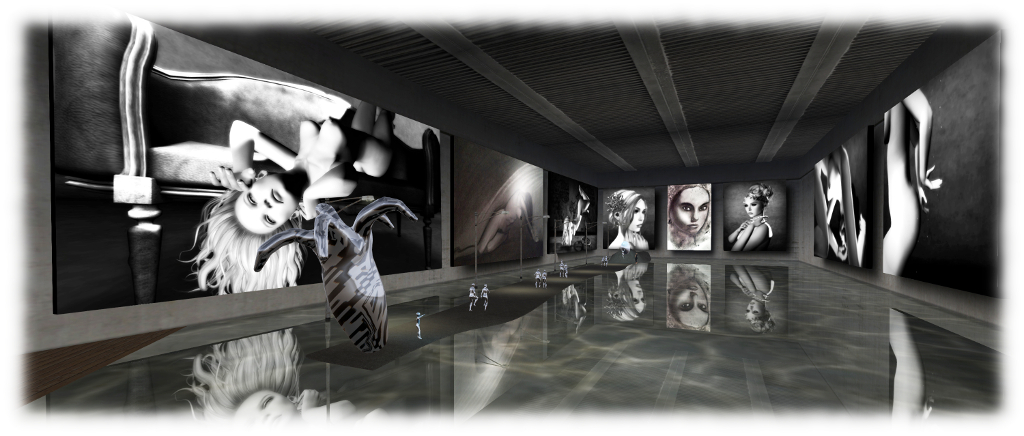
Shadows of a Dream is the title of the latest exhibition at Nitroglobus Hall, curated by Dido Haas, which has a soft opening on Friday, February 19th, and a formal opening on Sunday, February 21st at 12:30 SLT.
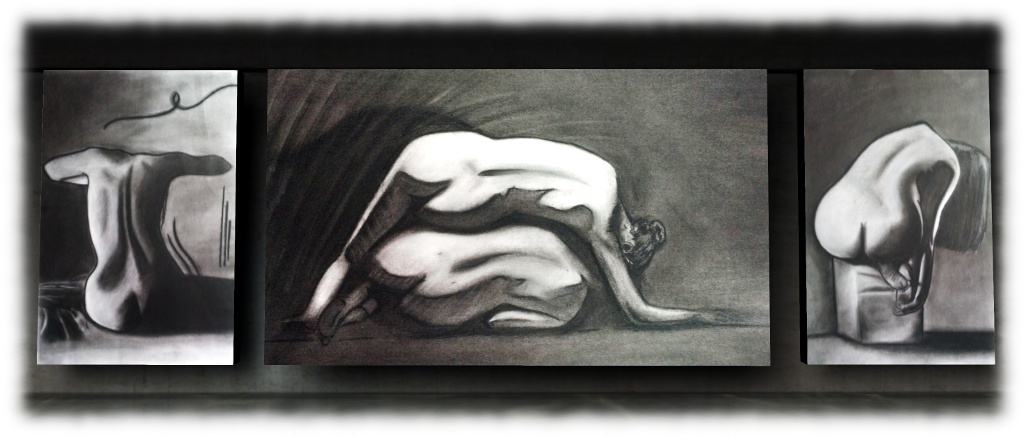
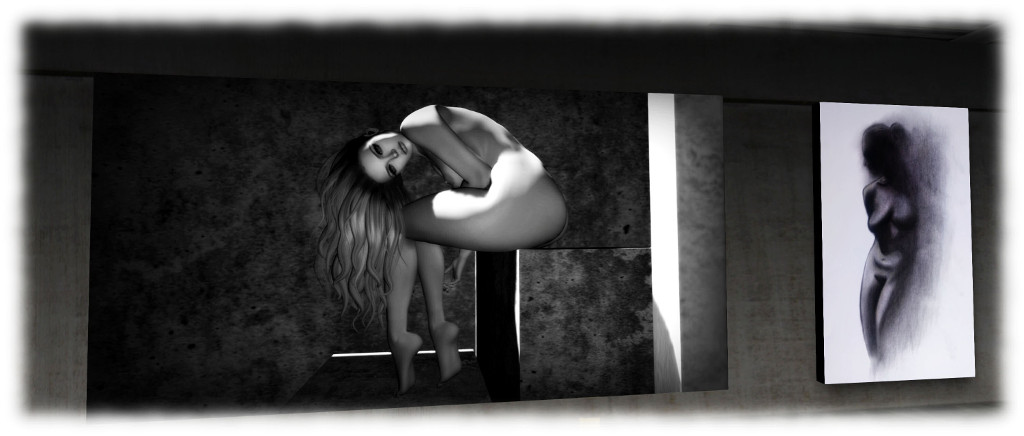
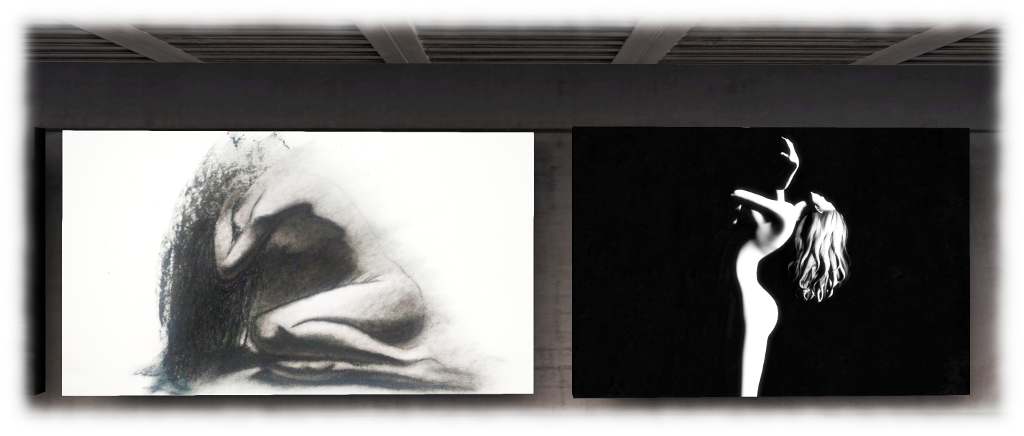
The exhibition features the work of two artists, Angelika Corral and SheldonBr, who together present a series of mostly nude, black-and-white avatar studies. These are offered in two contrasting styles, charcoal sketches (by Sheldonbr) and digital images (by Angelika), all of which are presented the very large format familiar to Nitroglobus exhibitions.
“Charcoal drawings can be seen in the earliest primitive caves of early humans. Digital images are a clear sign of the evolution of the species – the use of computers,” the artists note of the exhibition. They continue, “However, art remains the same; an idea, an attitude; the vital expression of oneself and art isn’t dependent on a specific medium.”
The result is a stunning sequence of images around the walls of the hall which invite the observer, “to question the value of the arts in its more pure essence; the art of representation, using only light and dark,” as they embark on “a poetic journey through the depiction of the figure gesture. It is a representation of the duality between real life and the digital world (the artists prefer this term instead of second life), and the contrast between light and shadow.”
To try to describe the images with dry words is something of a futile effort; they all speak eloquently and clearly for themselves. Each one, whether charcoal or digital, has its own vital essence which is best experienced first-hand.
The gallery space itself also adds significantly to the pieces, further encouraging the need to see them first-hand. Divided in to two distinct spaces by a translucent awash in an animated mist or smoke, the gallery space allows the images on display to be “reflected” in the floor by the use of duplicate images mounted in the space below. This, coupled with the presence of sculptures by the late Nitro Fireguard which are not similarly “reflected” in the floor, adds to the dream-like aspect of the exhibit in keeping with its title.
Shadows of a Dream is a superb offering from two talented artists, and an exhibition not to be missed. Should you wish to attend the formal opening, please be advised that attendees are asked to wear something black and/or white, in keeping with the theme of the exhibition.
Update, February 19th, 22:40 GMT: the SLS channel restarts have been completed and the Lab has issued a blog post on why they were required, which I’ve also blogged about.
Update, February 19th: the deployment of the update referred to below will commence at 15:00 SLT.
On Thursday, February 18th, there was an unscheduled server deployment to all three RC channels, which at the time of deployment was described as an, “Update on the simhosts. Nothing is changing Second Life functionality wise.”
Speaking at the Server Beta User Group meeting following the deployment, Steven Linden had this to say:
We had an unscheduled RC deploy earlier today. It’s for a security vulnerability that was released, and we discovered that Second Life regions were vulnerable. A full public post-mortem will be coming after we deploy to the rest of the main grid. I can’t say until it goes out to the rest of Agni; I can say that it was related to region availability only…. I honestly can’t say a great deal, other than we have a fix, and that it’s coming very soon to the rest of Agni.
All Steven could say about the issue was that a) it was related to region availability; b) it could only be exploited from within Second Life; c) there has been no evidence the issue is being actively exploited on Agni.
However, given the apparent urgency of the situation, it is likely that the update deployed to the RC channels will be also be rolled to the Main (SLS) channel well ahead of Tuesday, the normal day for Main channel deployments and restarts.
I’ll have more on this following the post-mortem release from the Lab.
Scheduled Updates
Details are scant at the moment, but Wednesday, February 24th should see a new server maintenance package which includes some code clean up around the area of parcel bans. There’s no new functionality being added, and the changes shouldn’t break anything. More details when the update notes are published.
SL Viewer
The Quick Graphics RC viewer updated on Wednesday, February 17th to version 4.0.2.311103. This sees the addition of the following resolved issues:
MAINT-5613: Complexity readings vary greatly for each avatar using the QuickGraphics viewer
MAINT-5620: Clicking on Graphics Preset title triggers favourite
MAINT-5681: Particles still render when complexity threshold is reached
MAINT-5682: Some avatars are invisible
MAINT-5685: Light still renders when complexity threshold is reached
MAINT-5690: Viewer crash when zooming out
MAINT-6070: Add detailed logging for how Avatar Rendering Complexity is computed.
The updates also sees the removal of SL-217: Document Avatar Complexity, from the list of resolved issues, presumably because the documentation is still a work-in-progress.
Other Items
Aditi Intellectual Property Tutorial
As mesh content creators are aware, in order to be able to upload mesh content to Second Life, you must a) have payment information on file, and b) complete the Intellectual Property Tutorial. The same is also true for Aditi; however, a problem with the Aditi services has meant that some people have been unable to complete the tutorial there (accessed when you log-in to your Aditi dashboard), due to the test page failing to load / failing to display all the questions.
If you wish to use Aditi to upload test models of your mesh content, but have encountered issues in trying to complete the tutorial, the interim workaround is to try refreshing the page to force it to load, as there appears to be a load balancing issue in the Aditi back-end services. However, the issue is expected to be resolved for next week.
3. Words matter. So does how you use and share them
Every time you begin considering promoting anything you will need what is loosely referred to in the trade as “collateral.” Promotional collateral comes in two primary forms: words and images. You need both to successfully draw people to support your efforts. You them for a number of reasons, the primary one being that people are different and respond to different informational stimuli. (see post #1 – “Blasting the Myths”). So you want to attract people’s attention by using both appealing images and impactful words.
Think about the advertising you see everyday: “the promise”, “be curious”, “experience live…”. Those are just a few that I saw easily from my computer screen just now. You need words, phrases, even whole paragraphs that help people understand what you are doing and where they might fit into your scheme of things. It is important to think of these words as variations on a central theme, and one that you command. You need to be consistent: use concise phrases for social media posts or group IMs, those same phrases should be reflective in larger communications. The shorter words are relatively easy. This post is focusing on what people trip up on most: the larger words.
In our respective positions as former columnist and present blogger, Inara and I have discussed many times how people will organise something and expect that (because they know you) somehow you know what their plans are and should cover it. They genuinely get upset when you don’t dig up all their details and whip up a mighty mess of journalistic prose to fulfil their dreams of effective press coverage. In fact, when I started writing for the SL Enquirer back in 2010 I made it a point of letting anyone I knew in the virtual arts know that I was writing, and asking to send me information about what they were doing. Crickets – that’s what I got. The sound of crickets. In over a year of writing that column, only once did anyone ever contact me about what they were doing. That person was not even someone I knew!
NEWS BLAST: bloggers, reporters, etc only report on information provide for them. Otherwise, it is far to time consuming to sift through all the possible “what if’s” for news. It goes farther than that, you also need to make your news easy and interesting to cover. You need to make your news newsworthy.
“That’s cheating!” you say, “they are supposed to be the journalists. They are supposed to delve into the truths of our time.” WRONG! Release the 1950s television illusion of the hard-boiled investigative reporter. Most contemporary writers and bloggers are just trying to sift through all the dreck that pretends to be news trying to figure out what is really worth the time and coverage. That is a full-time job itself.
Like the family pet, nothing gets the affection of the media more than showing you care for them
Several years ago I went to a workshop a colleague was hosting for small theatre companies which included several speakers on a number of subjects. One of them was a member of the local press – an arts reporter, in fact. He was the first presenter and he came in wearing a full dog costume (not unlike what I am wearing in the photo, sans spiked heels) and sat himself comfortable in an overstuffed chair that had been provided for him, took a big sip of his coffee and set it down before crossing his arms (paws?) and saying, ” If you want me to behave the in way you’d like, you need to take good care of me.” He went on to enumerate press release formats, timing, the need for images, etc. His opening comment has never left me.
Your objective is to make the job publishing your information as easy as possible. Don’t think of it as enticing reporters to write about you; think about it as writing the article for them. The ease and accessibility of your information increases your likelihood of getting the release picked up. If someone has the time to delve farther, they will. If not, your information/message still stands a chance of getting out there and in the very form you designed. 85% of the virtual press coverage I get for the things I do are direct reposts of my press release. The other 15% liberally mine information, quotes, links from what I provide.
Look at where people are looking for information – blogs, virtual media, information and special interest groups. I resuscitated my press list a few years ago when a fairly well attended artistic project posted a list of the press they had gotten for that project. It was big! I grabbed it, researched it with the help of a friend, and it became the basis of the list that I use now (it’s not about stealing, it’s about recognizing what is worth stealing – that group made it public!). I update the list every time I send out a release, and you should too because these contacts change rapidly and contacts can become stale faster than you think. We’ll talk more about building networks and relationships in a later post.
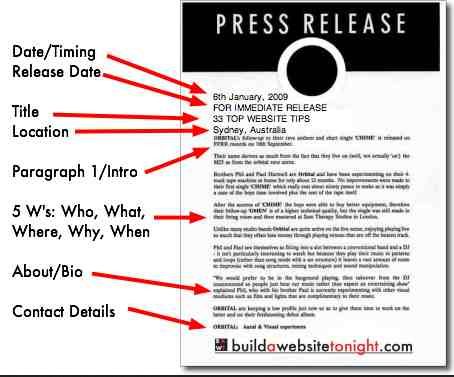
No matter how you choose to communicate your information, whether you choose to adopt a more traditional press release format or not, whatever you send should have this basic information at the very top:
Issue date – when it was sent
Release date – when it is okay to post it
End date – when is it no longer news
Who to contact, the sponsoring organization, an email contact (the last is optional, but I assure you that you increase the possibility of additional coverage if you have a contact that is outside of missed IMs and lost note cards)
A headline or title … your “What”
“{Region or estate where this is happening}, Second Life”
Getting a consistent, easily understood format for your press release, together with providing the information within it, can go a long way towards getting your news reported
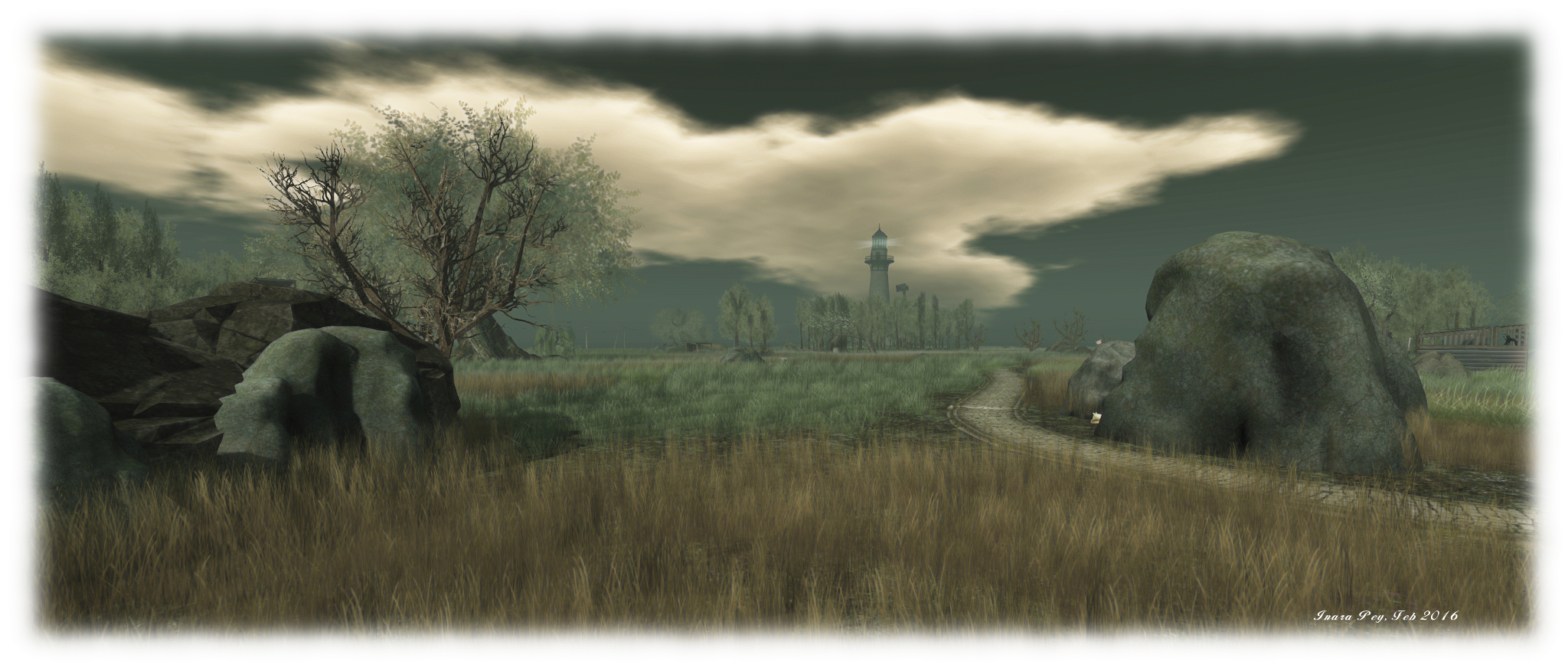
It’s no secret I’m from the UK. In fact, while I now reside in the southern half of the country, my family has its roots in the north, and I have an abiding love of Northumberland and a deep affection for North Yorkshire. So it was with interest that I heard PinkRayne had modelled the region on which her store is located after The Yorkshire Moors.
Now, I’ll be honest here. The Yorkshire moors have always been set in my mind as the rugged, rolling countryside with short, tough grass and oceans of summer heather one passes through en route to Pickering or Whitby in the summer months. A landscape split by meandering streams and dry stone walls and over which stone built farms outhouses are scattered. As such, I was a little surprised by the overall flatness of the region; I had expected to see something perhaps a little more undulating.
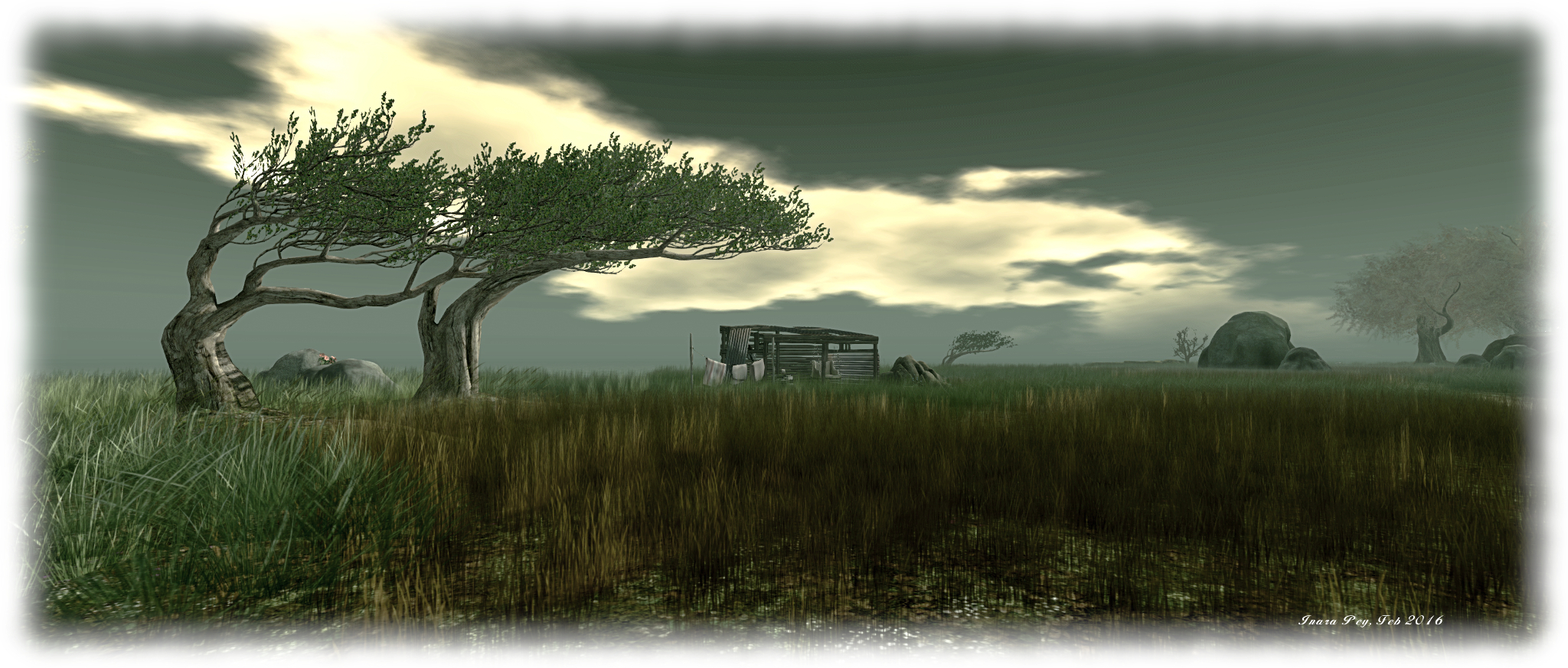
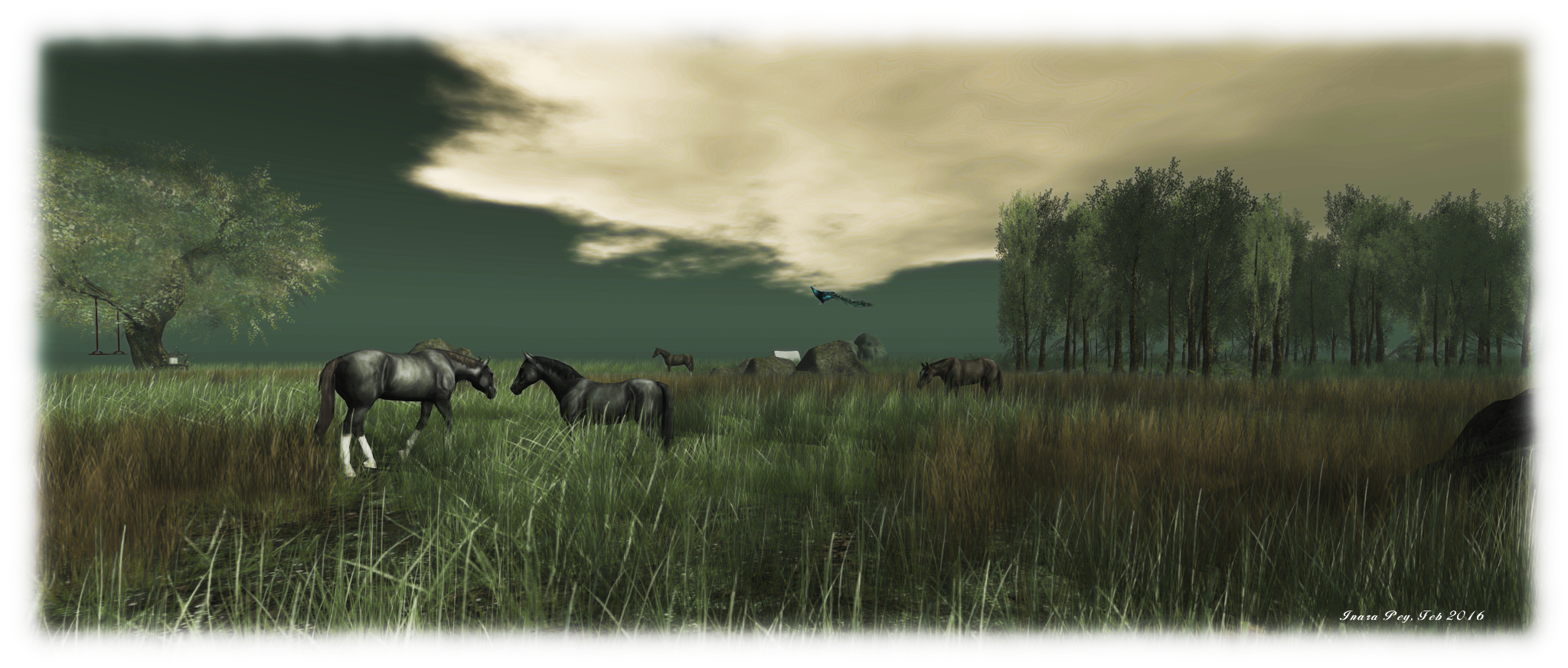
Which is not to say the region does reflect the open countryside of Yorkshire; as you enter the region, Pink’s store behind you, there is no mistaking the parallels. The grass here is tough and tufted, many of the trees bend their backs to the wind, while the landscape is cut by dry stone walls behind which sheep and horses graze.
Towards the south-east corner of the region stands a single lighthouse, it’s Cyclopean light roving over land then sea, back to land again, reminiscent of the Flamborough Head lighthouse. Between it and the store, a meandering stream opens into an area of flooded land which offer a nod towards the North Cave Wetlands.
A single path winds through the landscape from the store in the north-east, looping southwards and then back to the north before eventually arriving at a little rocky cove on the west side of the region. A rowing boat sits on the water here, offering a place to sit for individuals or couples; one of several places people can sit and enjoy one another’s company or look out across the beautifully bleak and windswept landscape, the view uninterrupted by hill or rise, bringing the flatness of the region into its own.
With the ambient sounds matched to the landscape, the windlight suggesting a late autumnal evening, The Yorkshire Moors makes for an atmospheric visit, offering excellent opportunities for photography. And for those looking to add to their wardrobe, there’s also Pink’s store for a little after-visit shopping.
The map in Second Life is seen as a powerful metaphor for the grid being a contiguous whole, even where private regions may be remote or physically isolated from their immediate neighbours
Just how important a metaphor is the concept of a “world map” to Project Sansar? Given it has been a topic of discussion in both the first and second instalments of LabChat, and has been given by some as a reason for not wanting to be involved at all in Project Sansar, one might say “very important”; and there is no denying it does have its uses. But is it really as intrinsic to our use of Second Life as has been portrayed, and because it may not exist within Project Sansar in the manner we’re accustomed to seeing in SL, is it really a reason to proclaim we’ve no interest in the Lab’s new platform?
Within LabChat, the discussions on the Map have revolved around two ideas: that without the map, there will be “no sense of community”, and that it gives Second Life a greater sense of presence and of being a place when we’re within it.
I admit that in terms of the map being somehow central to the ideal of community, I find myself in agreement with Ebbe Altberg; that when all is said and done, the world map (and mini-map) don’t hugely contribute to a genuine sense of “community”. Yes, they help us find busy places we might want to visit (or avoid!), or see how busy a venue or store is, etc. But really, this doesn’t add to any feeling of “community” within SL. That comes from the people we meet within those spaces and how they interact with one another and us; how we in turn relate to them; what is going on within those spaces in terms of activities and events, etc. These are the things which are going to bring us into a community, and in that regard, the map really places no larger a role than search; it is simply a means to an end.
Is it really the map which gives SL its sense of community – or is it the people themselves? I’d tend to go with the latter (image: Richard Finkelstein (Leko Littlebird), SLCC 2011)
However, the idea that the world map presents Second Life as a place, adding to our sense of presence, is harder to deny. In fact, given that Second Life is intended to be a single world of (largely) interconnected spaces, its representation via a map can be a vital aspect of reinforcing this view. In other words, the map is, for many – but not necessarily all of us – an intrinsic part of how we see Second Life as a connected whole, a place.
When it comes to Project Sansar, however, things are slightly more complicated. For one thing, it is not designed to be a single “world” in the same manner as Second Life. It’s a platform for hosting multiple “worlds” (“experiences”, “spaces”, “environments”, call them what you will), many of which may well have nothing whatsoever in common with one another – and certainly no way of moving directly from one to another in-world as we can in Second Life. Thus, presenting a single, all-encompassing map of “Sansar spaces” actually makes a lot less sense that it does with Second Life.
While having some kind of over-arching map of all Project Sansar experiences might not be either practical or useful, providing the means by which experience creators can represent their spaces in a map which can be accessed by their users / clients / visitors remains both a useful tool and a powerful means of adding to the sense of presence within a space
Which is not to say the map is entirely redundant for Project Sansar. While some kind of all-encompassing map of “every” Sansar experience might not hold much value, the fact remains that as noted, maps do assist in giving one a greater sense of presence in an environment (as well as being useful for things like navigation!). As such, providing the means for experience creators to provide maps of their environments, and those to which they connect, would appear to be something Project Sansar should provide. In fairness, this isn’t something the Lab has ruled out, as Ebbe Altberg noted in the first Lab Chat:
So, that’s where we’ll start, and then it could be that maybe people create continents, or whatever you want to call it, even worlds, and maybe over time we’ll think about ways in which those can figure out how to have a map of that experience, and those could be vast.
The only caveat I’d have here is the idea that “over time” consideration will be given to enabling people to graphically represent their spaces. As noted, a map does provide a powerful metaphor for giving the environment you’re in a sense of greater presence. It’s also often the best means of showing people what is where, allowing them to see what might be of interest to them, and – most basically – how to navigate from A to B to C.
Given this, and the fact that there may often be circumstances within Project Sansar where direct “in-world” transfer from one experience to another may not be possible, I’d say that having some kind of all-encompassing “world map” of every available experience within Sansar actually isn’t that important or something we should perhaps get too hung up about. Certainly, it doesn’t seem to be as important as perhaps encouraging the Lab to fully appreciate how useful a tool a map can be to visitors within a specific experience (or connected group of experiences), and thus provide the means by which experience creators can easily create such maps sooner rather than later.
There are no server deployments planned for this week, and no planned restarts for any of the channels.
There is an RC deployment planned for week #8 (week commencing Monday, February 22nd), details of which are still TBA.
As there have not been any rolling restarts, and won’t be any across the entire grid until around week #9, the advice is that if your region is behaving abnormally, file a support ticket to have it restarted. The Lab’s support team are aware that there are no scheduled restarts at present, so they should process requests OK.
SL Viewer
With Monday having been a holiday in the United States (Presidents’ Day), there was no meeting at the Lab to discuss viewer promotions. This leaves the current list of Lab viewer unchanged from the end of week #6:
Current Release version: 4.0.1.310054, January 15 – formerly the Maintenance RC viewer download page, release notes
RC viewers:
HTTP updates and Vivox RC viewer updated to version 4.0.2.310660 on February 4 – combines the Project Azumarill RC and Vivox Voice RC updates into a single viewer (download and release notes)
Maintenance RC viewer version 4.0.2.310545 released on February 2 – 38 updates. fixes and tweaks for memory leaks; viewer crashes; UI, permissions and mesh uploader bugs; visual muting issues, autopilot issues and duplicated calling cards (download and release notes)
Quick Graphics RC viewer updated to version 4.0.2.310127 on January 20 – provides the new Avatar Complexity options and the new graphics preset capabilities for setting, saving and restoring graphic settings for use in difference environments / circumstances (download and release notes)
Project viewers:
Project Bento (avatar skeleton extensions) version 5.0.0.310099 released on January 20 – adds 90+ bones to the existing avatar skeleton (download and release notes)
Oculus Rift project viewer updated to version 3.7.18.295296 on October 13, 2015 – Oculus Rift DK2 support (download and release notes)
Obsolete platform viewer version 3.7.28.300847 dated May 8, 2015 – provided for users on Windows XP and OS X versions below 10.7 (download and release notes).
As noted in my recent TPVD meeting report, further updates are expected to the HTTP / Vivox RC viewer and the Quick Graphics RC viewer, but these may not appear this week.
Region Crossings – Grey Box Issue
There have been increasing reports of region crossing issues, including the return of the “grey box” attachment issue which was originally seen in 2013 when crossing from a BlueSteel RC to any other region. This would see any passenger(s) sitting on a vehicle surrounded by (or even replaced by) a grey prim, and left with no choice but to relog, leaving the prim behind, attached to the vehicle.
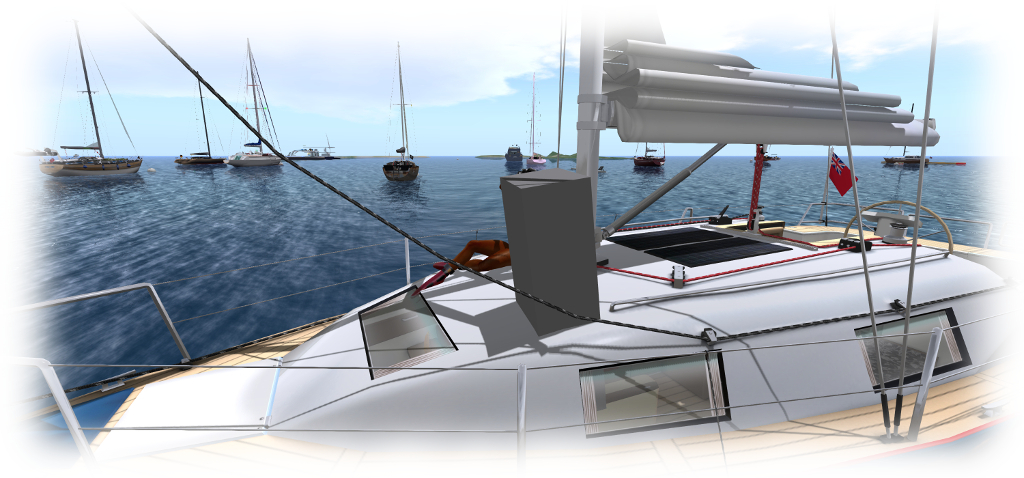
Caitlyn recently got caught by the “grey box” issue as we were sailing on the north side of Blake Sea. If you encounter the problem, please file a JIRA with as much information as possible (see below)
At the time of the problem first appearing, Kelly Linden described it thus:
Every agent has a ‘task’ representation on the server that is the same as a prim. The bug is in sending the linked set w/ avatars to the other region: avatars after the first are losing the special avatar treatment and getting passed as a regular linked prim. So that prim is what the server thinks all avatars look like.
Simon then added:
The region crossing code basically un-sits avatars from an object, sends both the avatars and object to the next region [as separate sets of data], which puts them back together. In this case, the 2nd avatar doesn’t get detached properly and things go south from there. So the 2nd avatar gets sent over bundled up with the object … which it’s not designed to do.
It had been thought this issue had been dealt with via a fix for (non-public) BUG-3547. However, if it is resurfacing, the problem now is to pin it down in a reproducible manner, if indeed it is returning. Should you encounter it, please make sure you file a JIRA providing as much information as possible, including your viewer log files, the regions you were crossing between when it happened yo you (or your passengers), the date and time, details of the vehicle you were using, etc.





 Inara Pey: Living in a Modemworld