2016 viewer release summaries: week 35

Updates for the week ending Sunday, September 4th

This summary is published every Monday, and is a list of SL viewer / client releases (official and TPV) made during the previous week. When reading it, please note:

  • It is based on my Current Viewer Releases Page, a list of all Second Life viewers and clients that are in popular use (and of which I am aware), and which are recognised as adhering to the TPV Policy. This page includes comprehensive links to download pages, blog notes, release notes, etc., as well as links to any / all reviews of specific viewers / clients made within this blog
  • By its nature, this summary presented here will always be in arrears, please refer to the Current Viewer Release Page for more up-to-date information.

Official LL Viewers

  • Current Release version: 4.0.7.318301 (dated dated August 8), promoted August 11 – formerly the Maintenance RC viewer download page, release notes
  • Release channel cohorts (See my notes on manually installing RC viewer versions if you wish to install any release candidate(s) yourself):
    • Visual Outfit Browser viewer updated to version 4.0.8.319143 on August 30th – ability to preview images of outfits in the Appearance floater (download and release notes)
  • Project viewers:
    • No updates.

LL Viewer Resources

Third-party Viewers

V4-style

  • Restrained Love Viewer updated to version version 2.9.20 on September 5th – parity with RLVa (release notes)

V1-style

  • Cool VL viewer Stable branch updated to version 1.26.18.22 and the Experimental branch updated to version 1.26.19.24, both on September 3rd (release notes)

Mobile / Other Clients

  • No updates.

Additional TPV Resources

Related Links

Space Sunday: Jupiter’s poles, signals from space, exploding rockets

Captured at a distance of 78,000 km (48,000 mi) from Jupiter by JunoCam, this image reveals the pale bluish region of Jupiter's north polar region, speckled by hurricane-like cloud formations
Captured at a distance of 78,000 km (48,000 mi) from Jupiter by JunoCam, this image reveals the pale bluish region of Jupiter’s north polar region, speckled by hurricane-like cloud formations. Credit: NASA/JPL / SwRI / MSSS

NASA’s Juno spacecraft has continued to return data and images from its second pass around Jupiter on August 27th, 2016. Images in visible and infra-red light have been received as a part of the data – together with the sound of Jupiter’s “voice”.

Of particular interest are the images of Jupiter’s north pole – which has never been seen by human eyes, and is revealed as being vastly different to the rest of the planet, together with detailed images of the planet’s south pole, only previously briefly seen by the Cassini mission in 2008, whilst en route to Saturn.

“First glimpse of Jupiter’s north pole, and it looks like nothing we have seen or imagined before,” said the Juno mission’s principal investigator Scott Bolton on the release of the most recently received images and data on Friday, September 2nd.

An enhanced view of the north polar hurricane-like clouds images by Juno on August 27th, 2016
An enhanced view of the north polar hurricane-like clouds images by Juno on August 27th, 2016, together with the blue tingle of the polar atmosphere. Credit: NASA/JPL / SwRI / MSSS

“It’s bluer in colour up there than other parts of the planet, and there are a lot of storms. There is no sign of the latitudinal bands or zone and belts that we are used to—this image is hardly recognisable as Jupiter. We’re seeing signs that the clouds have shadows, possibly indicating that the clouds are at a higher altitude than other features.”

All of Juno’s science instruments were active during the flyby,gathering some 6 Mb of data, images and sounds, which was transmitted back to Earth over a period of a day and a half once the space vehicle had moved away from Jupiter once more. Among this data were images from the Italian-built Jovian Infra-red Auroral Mapper (JIRAM), which returned the first ever close-up infra-red images of Jupiter’s massive aurora.

A mosaic of three infra-red images of Jupiter's southern aurora taken some 4 hours after the closest point of the flyby. The images were captured by the Jovian Infra-red Auroral Mapper (JIRAM) camera aboard Juno at wavelengths ranging from 3.3 to 3.6 microns -- the wavelengths of light emitted by excited hydrogen ions
A mosaic of three infra-red images of Jupiter’s southern aurora taken some 4 hours after the closest point of the flyby. The images were captured by the Jovian Infra-red Auroral Mapper (JIRAM) camera aboard Juno
at wavelengths ranging from 3.3 to 3.6 microns — the wavelengths of light emitted by excited hydrogen ions. Credit: NASA/JPL / SwRI / IAPS

“JIRAM is getting under Jupiter’s skin, giving us our first infra-red close-ups of the planet,” said Alberto Adriani, JIRAM co-investigator from Istituto di Astrofisica e Planetologia Spaziali, Rome. “These views of Jupiter’s north and south poles are revealing warm and hot spots that have never been seen before.

“No other instruments, both from Earth or space, have been able to see the southern aurora,” he continued. “Now, with JIRAM, we see that it appears to be very bright and well-structured. The high level of detail in the images will tell us more about the aurora’s morphology and dynamics.”

Juno doesn’t only have eyes, it has ears as well. We’ve known for a long time that Jupiter can be quite “vocal”, and the flyby allowed Juno’s Radio/Plasma Wave Experiment (WAVE) to capture the sound of the planet’s aurorae.

“Jupiter is talking to us in a way only gas-giant worlds can,” said Bill Kurth, co-investigator for WAVE. “We detected the signature emissions of the energetic particles that generate the massive auroras which encircle Jupiter’s north pole. These emissions are the strongest in the solar system. Now we are going to try to figure out where the electrons come from that are generating them.”

Juno is now heading back away from Jupiter on the second of its “long” orbits of the planet. On October 19th, the spacecraft will once again skim over Jupiter’s cloud tops, where it will perform a further braking manoeuvre to reduce its orbital period around the planet to just 14 days.

Did ET Call Us? Mostly Likely Not

The end of August saw  various media outlets a-buzz with news about Russian scientists having detected a “strong” radio signal from deep space, with muttering and speculations about aliens, despite cautionary notes from assorted space-related outlets and organisations.

The signal was actually detected in May 2015 by the RATAN-600 radio telescope in Zelenchukskaya, south-western Russia. At the time, the telescope was conducting a survey of astronomical objects in the framework of the SETI (Search for Extraterrestrial Intelligence) programme. It seemed to come from the general direction of the star HD 164595, a star around 95 light years away which is very similar to our own Sun but about 1.5 billion years older, and known to have at least one planet – a gas giant roughly the mass of Neptune – orbiting it.

News about it reached a wider audience in August when a member of the team behind the survey decided to e-mail data on it to colleagues asking for thoughts on what it might be, and suggesting the region of the sky containing HD 164595 should be monitored for further indications of the signal and possible causes.

The RATAN-600 radio telescope. Credit: Russian Academy of Sciences

This request was picked up by science and technology writer Paul Gilster, who blogged about it on his website Centauri Dreams.  While Gilster clearly stated there was no evidence of the signal being the work of an extra-terrestrial civilisation, he did couch his post in terms of the power requirements and possible technological status of such a civilisation were the signal to prove to be artificial in nature.

The information was also received by the SETI Institute in California. Their senior astronomer, Seth Shostak, estimated that if transmitting  in all directions, the signal would require energy on the order of 10^20 watts – or more energy than the Earth receives from the Sun – making the originating species a Type II civilisation on the Kardashev scale. If directed solely towards Earth,  Shostak estimated the energy requirement would “only” be around 10^13 watts – roughly equivalent to all of the energy used by humanity here on Earth, putting the aliens at a Type I civilisation on the Kardashev scale – that is, equal to or slightly more advanced than we are.

Continue reading “Space Sunday: Jupiter’s poles, signals from space, exploding rockets”

Sansar: what’s in a name?

The new Sansar logo (courtesy of Linden Lab)

In the first half of 2015, speculation circulated that the name of the Lab’s new virtual experiences platform might be “Sansar” or “Project Sansar”, after two trademark registrations were spotted. When asked, the Lab would only comment than “Project Sansar” was a temporary name, and that a number of options were being considered (and there was at least one other trademark filing at the same time which seemed to support this statement).

However, on August 31st, in a press release marking the distribution of the first invitations for people to join the platform’s Creator Preview, Linden Lab indirectly confirmed the official name of their new virtual experiences / social VR platform is indeed Sansar.

As the news of the name circulated, there were various group chat comments questioning the meaning and relevance of the name. While there is no reason for any product’s name to have a definitive meaning, in this instance, there do seem to be likely connotations.

Sansar Screen Shot, Linden Lab, August 2016, on Flickr Sansar (TM) Screen Shot, Linden Lab, August 2016, on Flickr

Back when the Lab was poking at possible names for Second Life, one option they considered was “Sansara” (later used as the name of the first mainland continent). This was said to be a variation on the Sanskrit word Samsāra, meaning “wandering” or “world”, associated with cyclic, circuitous change.

The interesting point here is that the Maxgyan dictionary  / lexicon offers sansar (also sansaar in Jainism) as an alternative for Samsāra, and defines its potential meanings as “earth”, “world” or “universe” (with “cosmos” cited as a possible alternative to the latter), depending on the context.

Given that  Sansar is intended to host many different virtual spaces, “universe” might be taken as a good “fit” when looking for a meaning in the platform’s name. Similarly, the idea of cyclical, circuitous change appears to be reflected in the platform’s logo, with its three segments suggestive of movement (/change).

Sansar Screen Shot, Linden Lab, August 2016, on Flickr Sansar (TM) Screen Shot, Linden Lab, August 2016, on Flickr

Of course, other meanings of “sansar” could be offered (such as an”icy Iranian wind”, for example), but it seems reasonable to look no further than those derived from Hinduism / Jainism. There is a certain “fit”, as noted above, and the Lab has turned to Hindu nomenclature before. As most of us are aware, the Lab’s two publicly accessible SL grids are named for Rigvedic deities – Agni, god of fire, and Aditi, the mother of gods.

But even accepting this as a possible derivation for the platform’s name, it might be argued that the Lab should have gone for something more “obvious”. Well, possibly. But then again, it is fair to say that at this point in time, those being drawn to Sansar are doing so by way of the Lab or through media reports on it, and so already have some idea of what it is about. This will also likely be true when Sansar opens it doors to the public (although by that time, the website will hopefully be a lot more dynamic and informative as well). Thus, having a name which “reflects” the platform’s intent perhaps isn’t so major a consideration.

For my part, if the platform’s name is intended to have a meaning, I admit to being drawn to it being “universe”. As noted above, it, fits the idea of an environment hosting many, many virtual spaces of many different sizes, some of which exist independently of the rest, others of which are “stitched together” to form – dare I say – “constellations” of linked spaces. Of course, being a “space fan”, I could also be a tad biased 🙂 .

Family curses, tales of time, magic, and the old west

It’s time to kick-off a week of story-telling in voice, brought to our virtual lives by the staff and volunteers at the Seanchai Library. As always, all times SLT, and events are held at the Library’s Second Life home at Bradley University, unless otherwise indicated.

Sunday, September 4th, 13:30: Tea Time at Baker Street

Tea-time at Baker Street returns for the summer, featuring a new location – 221B Baker Street at the University of Washington iSchool in Second Life. Caledonia Skytower, John Morland and Kayden Oconnell invite you to join them as they return to what is quite possibly the most famous of Sir Arthur Conan Doyle’s works, and present their fourth reading from The Hound of the Baskervilles.

Baskervilles-1902The third full-length novel written about Sherlock Holmes, this is likely to be the one Holmesian story which – at least in outline – known to most, whether or not they have actually read any of Holmes’ adventures.

But how many of us know the story as it was originally written? Over the decades it has been adapted for film and television more than 20 times, starting as early as 1914/15 with the 4-part series, Der Hund von Baskerville, and continuing on through to Paul McGuigan’s The Hounds of Baskerville, featured in the BBC’s brilliant Sherlock series.

All of these adaptations have offered their own take on the tale. Some – such as McGuigan’s, have simply taken the title of the story and used it to weave a unique tale of their own; others have stayed true to the basics of the story whilst also adding their own twists and turns quite outside of Conan Doyle’s plot in order to keep their offering fresh and exciting to an audience.

So why not join Cale, John and Kayden as they read from the 1902 original, and discover just how Sir Arthur Conan Doyle unfolded this apparently supernatural tale of giant hounds and murder, and the pivotal role played by John Watson himself?

Monday September 5th, 19:00: The Crucible of Time

crucibleGyro Muggin’s takes his audience into the fix-up by John Brunner. First published as two-part story which appeared in Isaac Asimov’s Science Fiction Magazine, it’s an ambitious tale of alien intelligence which grew to a series of six linked tales pushed as a single novel in 1983.

Far off in space is an alien race which is so much like us, yet so un-alike. From the birth of their earliest civilisation through to their attainment of star flight as their star system passes through the galaxy, we follow their development through the ages.

Aquatic by nature, this race presents some significant challenges well outside the realms of anything encountered by humanity. But they are also driven by all too familiar hopes, fears, desires, needs, wants, prejudices, impact of religious ideologies, and the quest for knowledge we have experienced in the growth of our own civilisation.

Charting six periods of time, each a thousand years after the previous, the six stories focus on the efforts of a group of individuals in each era as they face one or more challenges, their success in overcoming these challenges inevitably leading them towards a greater understanding of their planet’s plight, and ultimately, the ability to deal with that plight and the survival of their civilisation.

Tuesday September 6th, 19:00: The Old Country

The Old Country“So this is what it’s like to have fingers,” the girl laughed, and pointed the bow at Gisella. “How does the world look from the other side of the crossbow?”

And so it is that Gisella  learns the truth in the warning never look too long into the eyes of a fox, as she finds herself trapped in the fox’s body, as the fox makes off with her own. But such is the way of things in the Old Country, where “all the fairy tales come from, where there was magic – and there was war.”

Now she must cross a country torn by war, encountering magic, bloodshed and more as she seeks to find her own body and stare once again into the eyes of the fox possessing it, and so reclaim it. But such are her experiences in crossing the ravaged land, that once she finds her body, she faces a surprising  revelation and choice about her own nature.

Join Faerie Maven-Pralou as she takes her audience through the enchanting pages of Mordecai Gerstein‘s 2005 novel.

Wednesday September 7th, 19:00: A Monstrous Regiment of Women (Mary Russell #2)

MonstrousReturn to 221B Baker Street at the University of Washington’s iSchool, Second Life, for the latter-day adventures of Mr. Sherlock Holmes (retired) and his young orphaned protégé, Mary Russell, originally from the United States, as written by Laurie R. King.

Taking a trip to London, Mary encounters Veronica Beaconsfield, a friend from Oxford, who in turn introduces her to the charismatic and enigmatic Margery Childe, leader of something called “The New Temple of God.”

Sect-like, and seemingly involved with the suffrage movement, the New Temple and its leader offer both curiosity and intrigue for Mary, who is not convinced either are entirely above-board.

Her suspicions appear to be correct when several of the Temple’s wealthy young female volunteers and financial contributors are murdered. With Holmes keeping a watchful eye in the background, Mary turns her curiosity into an investigation; in doing so, she faces her greatest danger yet.

Thursday, September 8th

19:00: A Gent from Bear Creek

Gent from Bear CreekRobert E. Howard is perhaps best known as the creator of Conan the Barbarian and Solomon Kane. However, in A Gent from Bear Creek, he presents a series of western stories narrated by Breckenridge “Breck” Elkins, his protagonist.

A native of the fictional Bear Creek in Nevada, Elkins is “mighty in stature, small in brain” – that is, a man given to brawn over brain. He is known throughout the west, together with his equally ferocious horse, Cap’n Kidd, for having something of a temper and for being extremely skilled with his fists.

Each of the stories in the book is self-contained, all told through the character of Elkins in the manner of “top rail” bullshippin’, and some in the west referred to very tall tales (so tall, they required the narrator sit on the top rail of the bull pen fence).

A Gent from Bear Creek actually formed Howard’s longest running series. They were initially strung together in an attempt to form a novel but Howard and his publisher, John Kline, shortly before Howard’s death in 1936. While the novel did gain publication in 1937 in the United Kingdom, it didn’t reach print in the United States until 1966, leaving first editions of the original UK publication highly sought-after by collectors.

Shandon Loring dons the character of “Breck” Elkins in both Second Life and Kitely (check Seanchai Library’s Kitely event announcements for specific grid location details).

21:00: Seanchai Late Night

With Gyro Muggins.


Please check with the Seanchai Library SL’s blog for updates and for additions or changes to the week’s schedule.

The featured charity for September-October is TBA.

Additional Links

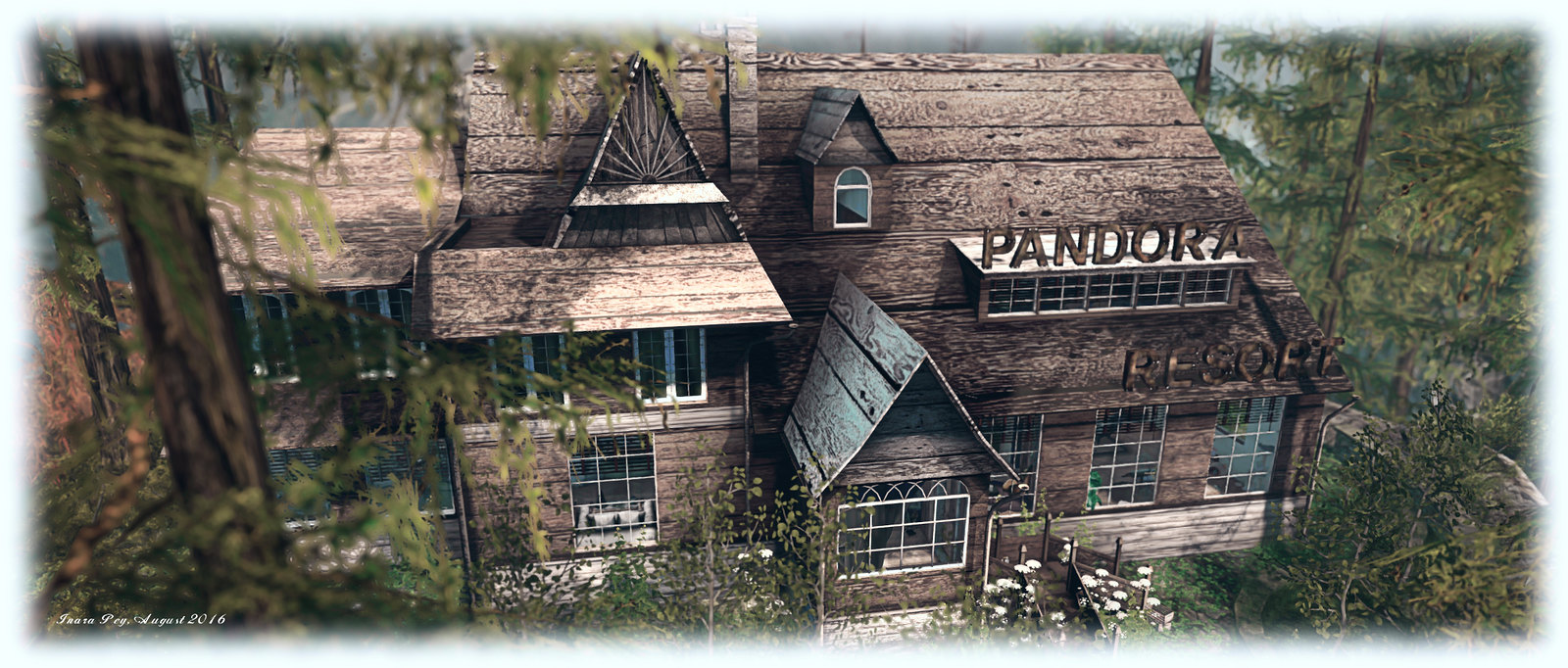
Previewing Pandora Resort in Second Life

Pandora Resort; Inara Pey, August 2016, on Flickr Opening September 16th, 2016: Pandora Resort – click any image for full size

Note: this vision of Pandora Box of Dreams has closed.

I’ve admired the region designs by Lokhe Angel Verlack (Jackson Verlack) ever since first encountering Pandora’s Box of Dreams, an evolving series of designs he created, intended to encourage visitors to relax, free their minds, and simply dream. Towards the end of 2015, I was invited by Lokhe’s partner, Miza, to preview their role-playing environment Château Village, which drew inspiration from the World of Darkness universe.

On September 16th, Lokhe and Miza will be opening their latest venture in Second Life called Pandora Resort, which they’ve been working on for the past few months. In their preparations for this, Miza kindly extended another invitation for Caitlyn and I to pay a visit in the run up to the doors opening – and I can honestly say that what we found completely blew us away, presenting visitors with one of the most exquisitely designed regions in Second Life. So much so, that I’ve hopped back daily ever since.

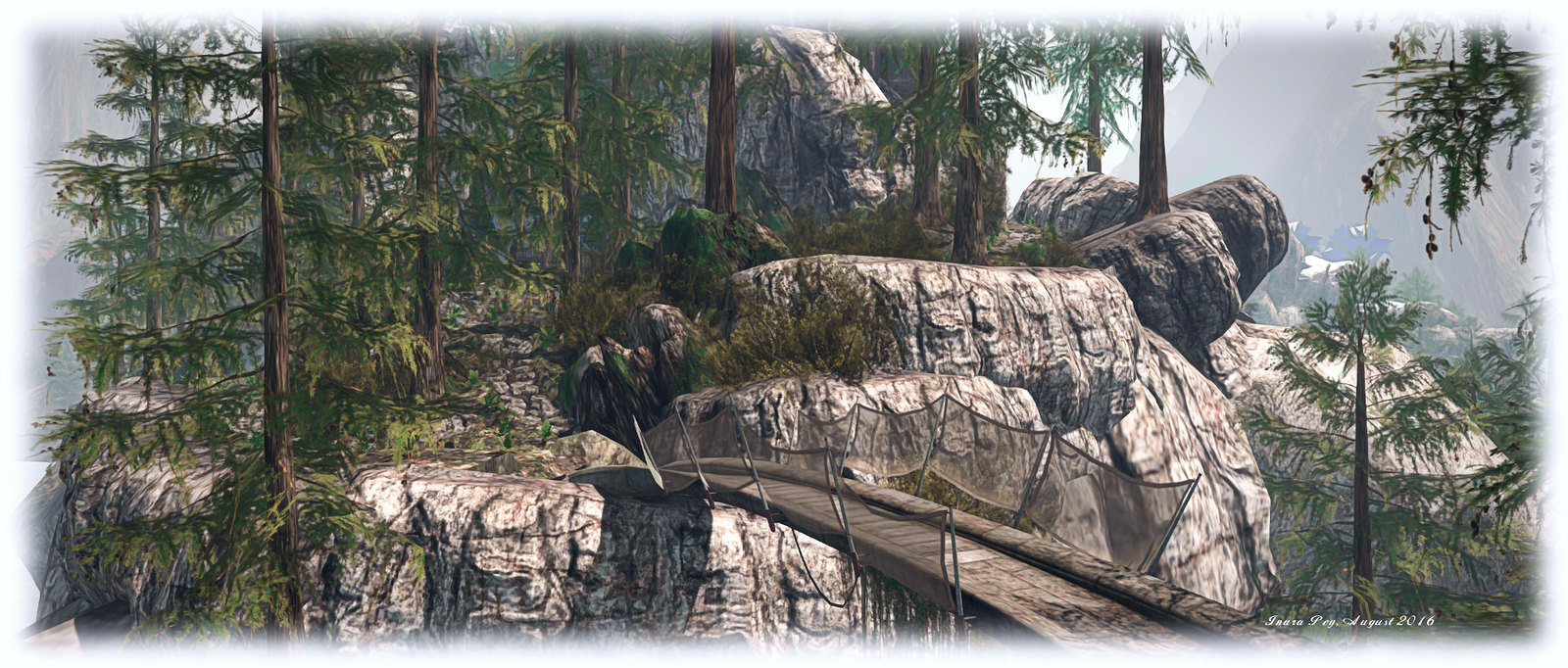
Pandora Resort; Inara Pey, August 2016, on Flickr Opening September 16th, 2016: Pandora Resort

As the region won’t be open to everyone until mid-month, I’m not going to offer an in-depth look here, as that would pre-empt things too much. Instead, I’ll leave my more usual travelogue post for around the time the gates are opened for everyone, and use this article – with Miza’s and Lokhe’s permission – as something of a sneak peek of Pandora Resort, which I hope will whet appetites.

“We really wanted to create something different. Well mostly Lokhe! He really got a wide scope of ideas,” Miza said to me during one of my visits. “He really went out of his way this time to bring something unique.”

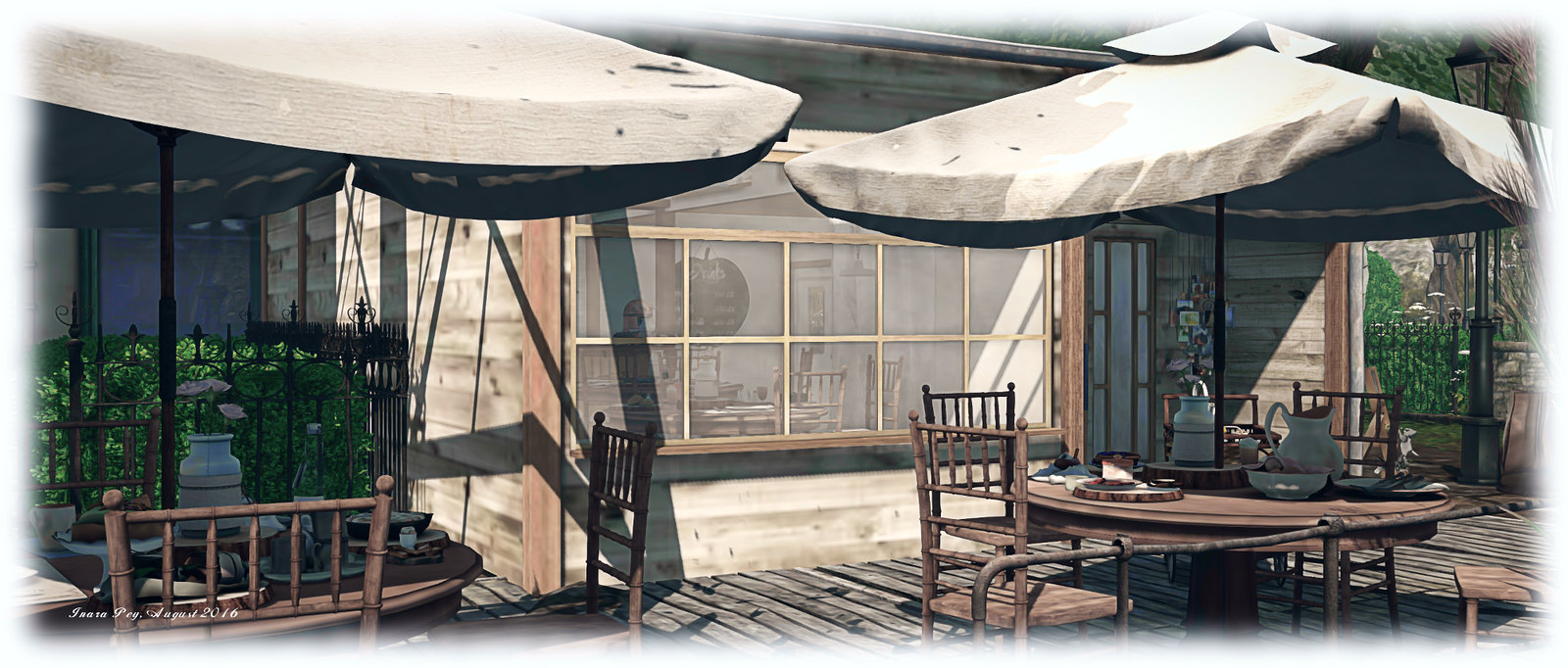
Pandora Resort; Inara Pey, August 2016, on Flickr Opening September 16th, 2016: Pandora Resort

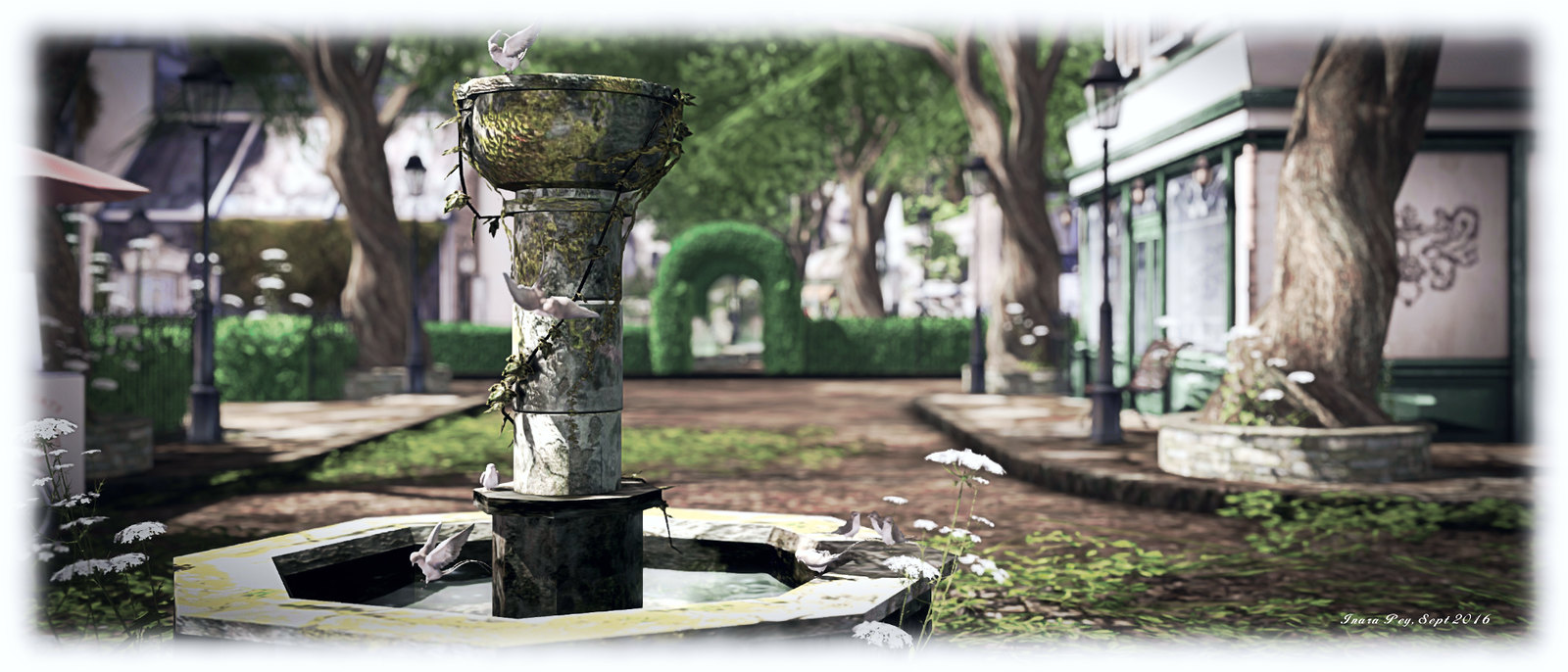
“Unique” is certainly a fitting adjective for Pandora Resort, as is “stunning”,  the word which immediately entered my head as I first flycammed around the region. I can say without any exaggeration that over the years I’ve visited many regions in my Exploring Second Life series, and Pandora Resort offers one of the most impressive landscapes and use of ground space, both horizontally and vertically, I’ve ever witnessed. As your explorations take you from paved streets with boutique shops, public gardens and café seating, to rugged paths passing  through clefts and alongside deep gorges, it is genuinely hard to believe everything is contained within the space of a single region.

Pordora Resort is, to use a final adjective, breathtaking. So do make a note in your diaries / calendars for the weekend of Friday, September 16th, and get yourself ready to take a trip and see for yourself? You will not be disappointed.

Pandora Resort; Inara Pey, August 2016, on Flickr Opening September 16th, 2016: Pandora Resort

For those interested, my articles on Pandora’s Box of Dreams can be found here, here and here, and my review of Château Village can be found here.

A Surreal Cube lands in Second Life

Surreal Cube - Molly Bloom
Surreal Cube – Molly Bloom

Surreal Cube is a complex art installation conceived by art archivist Art Blue, known for his celebrations of virtual world art and artists, including The Surreal Tower (of which Surreal Cube could be considered a direct descendent), Art Walk on the Moon (which you can read about here) and A Room for Ferrisquito (which you can read about here).

As with many of Art’s installations, Surreal Cube is enmeshed within a lengthy narrative (provided in note card form at the landing point), involving an attempt to save Earth’s art heritage (in this case, works by Molly Bloom) by building a gigantic space ship – the Surreal Cube – in which the art should be preserved. Those familiar with science-fiction and / or Art’s previous works and activities elsewhere may recognise some of the references within the story, such as Vulcanicus and the passing mention of billionaire SR Hadden – who featured in the late Carl Sagan’s seminal (and only) science-fiction novel, Contact.

Surreal Cube - Mistero Hifeng (with the Cube by Gem Preiz as the backdrop)
Surreal Cube – Mistero Hifeng (with the Cube by Gem Preiz as the backdrop)

While the central focus of the exhibit is Moll’s work, the installation includes contributions by Juliette SurrealDreaming (who is also the exhibit curator), Hyde Hackl, Mistero Hifeng, Gem Preiz, and Moewe Winkler., some of which are placed one inside the next, matryoshka doll style. Mistero’s  sculptures are to be found around the perimeter of the region – perhaps those who came together to witness the landing of the great cube ship before it was frozen in time by Dr. Kawoom, who can be found in one corner of the sculpture parade.

The ship itself sits slightly canted over the dark waters of the region, caught in the moment of landing by Dr. Kawoom when it was realised it was too big for it’s intended landing space. The surface of this vehicle, designed by Gem Preiz, features his trademark fractal designs, which periodically change across the cube’s faces.

Surrel Cube - The Cube: Gem Preiz
Surreal Cube – The Cube: Gem Preiz

Within the vessel lies an aquatic environment designed by Moewe Winkler, occupied by alien life forms and over which a ghostly pirate ship stands-to. Here, also, is a short story by Juliette SurrealDreaming, and an LM giver to visit the Second Life Surreal Tower exhibit. At the very centre of the cube lies an enormous egg designed by Hyde Hackl, within which lies a garden and the gallery of some two dozen pieces of Molly’s art (part of which can be seen in the banner image at the top of this article).

If all this sounds a little confusing, visitors are offered a choice of ways to find their way around. The first is to take the Meta Harper chair, available at the landing point. This takes control of your camera, carrying you a visual tour through the exhibit. The second is to use the network of teleport discs found throughout the installation and which offers the best way to examine each element of the exhibit in turn. In addition, there are various interactive elements – poses, a ridable flying horse – to be found and enjoyed.

Surreal Cube - The Egg: Hyde Hackl (with ghost ship in the foreground, added by Juliette SurrealDreaming)
Surreal Cube – The Egg: Hyde Hackl (with ghost ship in the foreground, added by Juliette SurrealDreaming)

The Surreal Cube has a twin available in OpenSim, and the installation will also feature at the Santorini Biennale, running from September 1st through to October 15th, through a video of the exhibit filmed by Wizardoz Chrome. After October 15th, the core of the Surreal Cube will be cleared away, remaining only in OpenSim, and the cube in Second Life used to house further installations curated by Juliette SurrealDreaming.

SLurl Details