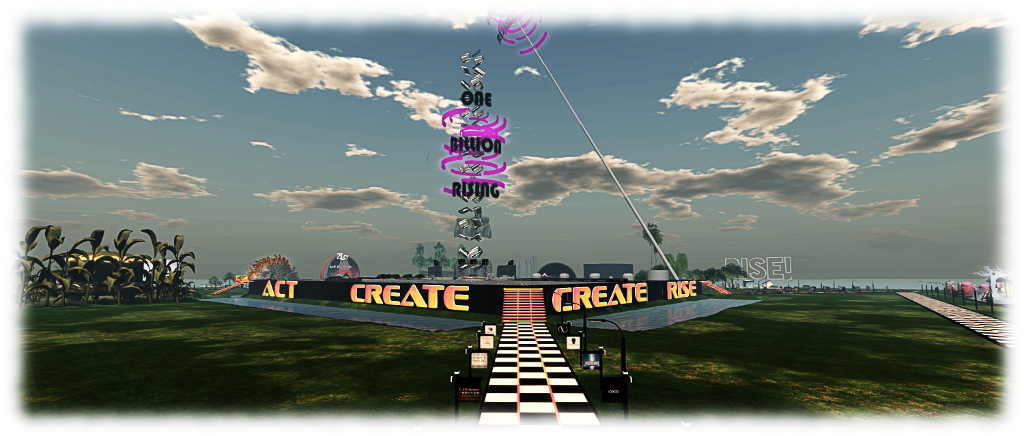
One Billion Rising (OBR) will once again be taking place in Second Life on Sunday, February 14th, 2016, with the theme of Rise For Revolution.
When launched on Valentine’s Day 2012, One Billion Rising was the biggest mass action in human history; a call to action based on the staggering statistic that 1 in 3 women on the planet will be beaten or raped during her lifetime. With the world population at 7 billion, this adds up to more than one billion women and girls who are at risk. OBR aims to bring people together, raise greater awareness of the plight of those at risk the world over, and bring about a fundamental change in how vulnerable and defenceless women and girls are treated.
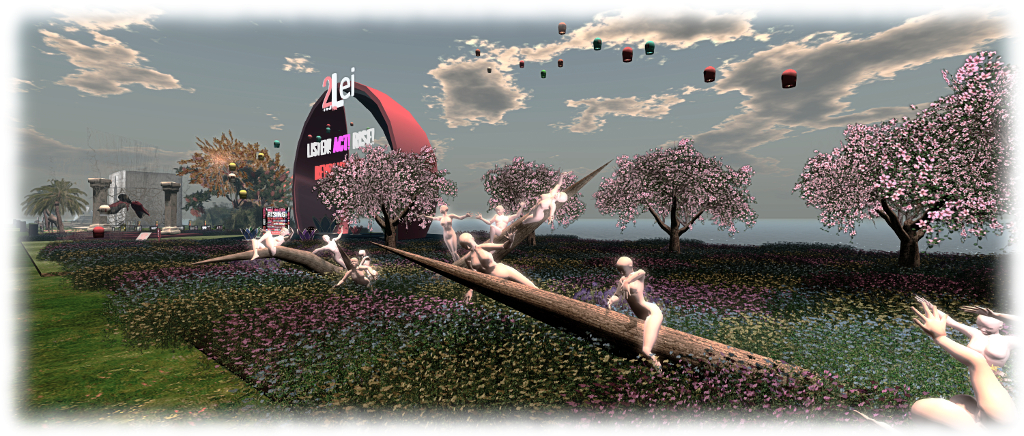
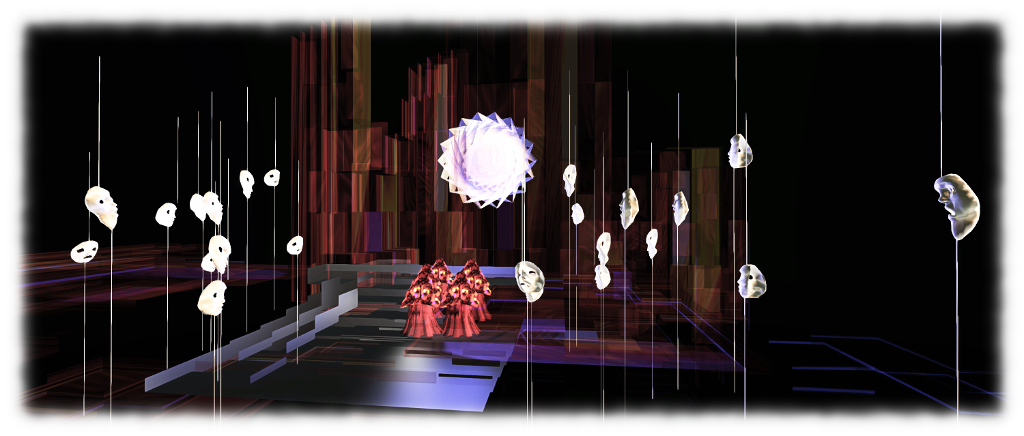
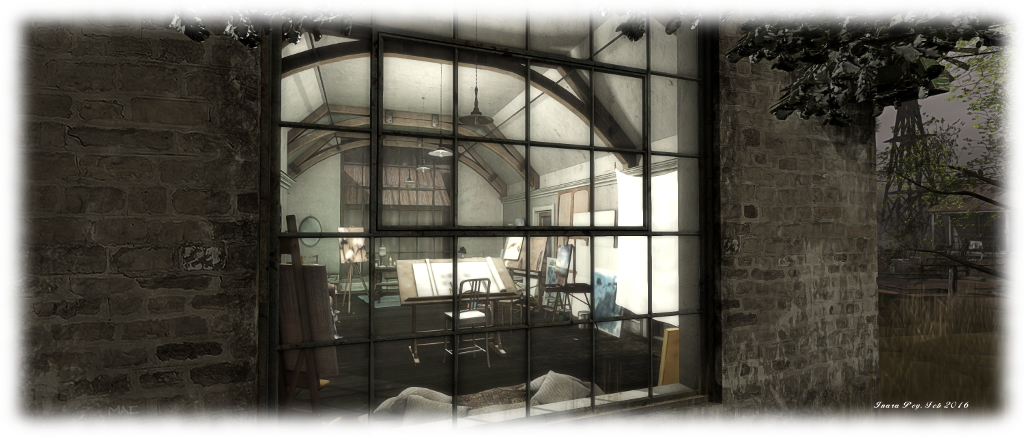
Art at OBR 2016: 2Lei
OBR in 2016 builds on preceding years, and issues a call “to focus on marginalised women and to bring national and international focus to their issues; to bring in new artistic energy; to amplify Revolution as a call for system change to end violence against women and girls; to call on people to rise for others, and not just for ourselves.”
Activities in Second Life commence at 00:00 SLT on the morning of February 14th, and will continue through a full 24 hours across the four OBR regions of Listen, Rise, Create and Act. Around the central stage area located at the four adjoining corners of these regions, are art displays and information areas where people can learn about organisations around the world working to end violence against women.
A critique sometimes levelled at OBR / OBR in SL is that the issues it raises cannot be solved by dance. Well, that’s absolutely true, just as marching through the streets carrying placards and banners is unlikely to have a lasting impact on whatever it is people might be marching about.
BUT like marches and protests, dance and music does serve to draw attention to matters; it provides a means by which people are encouraged to stop and think for information and ideas disseminated.
More importantly, in countries where the right to march or protest freely does not exist, dance and music are both far less confrontational and antagonistic, and perhaps provide the only means of making a public statement. Isn’t that worth considering before critiquing the movement?
It’s time to kick-off a week of story-telling in voice, brought to our virtual lives by the staff and volunteers at the Seanchai Library. As always, all times SLT, and events are held at the Library’s Second Life home at Bradley University, unless otherwise indicated.
Holmes and Watson find themselves drawn into The Adventure of the Norwood Builder after they are visited by a young lawyer, John Hector McFarlane, who is being sought by the police for the murder of builder Jonas Oldacre.
McFarlane explains that Oldacre, a client of his, had surprised him the previous day by visiting McFarlane’s office requesting the young lawyer draw-up his will in which McFarlane himself was named sole beneficiary and heir to a considerable bequest. Oldacre explained his reasons as being due to a lack of heirs and a previous relationship with McFarlane’s mother.
In order to complete the work as requested, McFarlane returned with Oldacre to the builder’s home in Norwood in order to study some legal papers there. As it took him a while to complete his review of the documents, McFarlane opted to stay at a local inn overnight. Catching the train the next morning, he was horrified to read of Oldacre’s murder and that the police believed him to be responsible, thus prompting him to come to the Great Detective’s office and petition his assistance.
Join Caledonia Skytower, Corwyn Allen, Kayden OConnell ain the living room of 221B Baker Street on Seanchai’s Crazy Eights installation, as they continue reading the collected adventures of Holmes and Watson, first published in the Stand Magazine in 1903-04, and gathered into the single volume, The Return of Sherlock Holmes, published in 1905.
18:00 Magicland Park: From the Mixed-Up Files of Mrs. Basil E. Frankweiler
When running away, it’s always handy to have some idea of where to run to. In Claudia Kincaid’s case, the ideal place is the New York Metropolitan Museum of Art. As her younger brother has money, Claudia decides he should come with her to help on the finances front.
The museum proves an interesting place to settle into, but when the museum purchases what appears to be an early work by Michelangelo, a statue of an angel, for the unbelievable price of $225, Claudia and Jamie, her brother, find themselves taking on the role of investigators.
Is the statue genuine? Has the museum bought itself a bargain, or is the statue something else? Digging into the matter, Claudia and Jamie are led to the remarkable Mrs. Basil E. Frankweiler, former owner of the statue and the owner of some remarkable files which promise to led Claudia into some discoveries about herself.
Join Caledonia Skytower at Magicland Park as she reads from E.L. Konigsburg’s engaging story.
Monday February 15th 19:00: Peter Robinson
Gyro Muggins concludes a tale from the universe of Larry Niven’s Man-Kzin Wars.
The Kzinti, are a warlike race Niven first introduced to the world in his 1966 story The Warriors. They permeated many of his stories set in the Known Space series, and well as appearing in his Nebula and Hugo award-winning Ringworld. In his stories, Niven references a series of conflicts between Kzinti and humans, but did not write about the wars himself. Such was the demand for more information on the wars, however, he allowed the Man-Kzin wars to become a shared universe series, with the majority of the stories written by other science-fiction authors such as Hal Codebatch, Poul Anderson, Dean Ing, Jerry Pournelle, S.M. Stirling, Greg Bear and others.
Peter Robinson is a short story written by Australian author Hal Colebatch, and forms one of 18 stories he has written for the series. It first appears in Man Kzin X: The Wunder War, and is one of four stories, all by Codebatch, which make up the volume.
In it, an expedition by the Institute of Knowledge on Jinx, funded by the Puppeteers sets of to explore a recently detected slaver stasis box, an artefact of the ancient Thrintun (Slaver) Empire. Arriving at their target, the team of mixed races, including human and Kzinti, discover that it is nine miles in diameter, the largest box ever discovered.
Tuesday February 16th, 19:00: Poetry This Year
Caledonia shares some of the poems chosen by students in her state from the 900 available in the Poetry Out Loud on-line anthology.
Wednesday February 17th 19:00: More Silence of the Loons
While writers from the southern American states turn to tales of crime, inevitably the broiling heat of humid summer days is an ever-present backdrop. But when the stories of criminals and their ways are moved northwards to Minnesota, it is the brutal cold of hard winters which offers a frame for many of the tales.
In this collection, 13 of the state’s top crime writers present a series of tales of mystery, all of which are linked by the same 8 clues, which lead the reader through their dark twists.
Join Kayden Oconnell as he reads from this fascinating anthology.
Shandon Loring and Caledonia Skytower, continue reading the February choice for Seanchai Library’s Crazy Eight’s Featured books reading, On The Island by Tracey Garvis Graves.
Anna Emerson, a 30-year-old English teacher accepts s position as private tutor to 17-year-old T.J. Callahan, a young man who has been undergoing treatment for cancer. For Anna, it is a plum assignment, requiring as it does travelling to the Callahan Family’s summer rental in the Maldives with the teenager. T.J., however, is less than happy; with his cancer in remission, he’d rather stay at home with friends, and not carted off half-way around the world with the dead weight of lessons to catch-up on.
Crazy Eights Featured Book area: join Shandon and Caledonia in tropical surroundings as they continue reading On the Island
Before they can reach their destination however, the pilot of the charter plane taking them to the Maldives suffers a heart attack, the ‘plane ditching in the Indian Ocean. Making it to a deserted island well off the beaten track, Anna and T.J. must work together to survive as days turn to weeks, and weeks to months without sign of rescue. As the time passes, Anna realises that her biggest challenge may not be caring for T.J. should his cancer return – but the fact he is growing into a young man.
Note: On the Island is also to be presented at Seanchai InWorldz. Check Seanchai session posts during the week for specific grid locations).
21:00: Seanchai Late Night
With Finn Zeddmore.
—–
Please check with the Seanchai Library SL’s blog for updates and for additions or changes to the week’s schedule.
The featured charity for January / February is Heifer International, working with communities to end world hunger and poverty and to care for the Earth.
The following notes are primarily taken from the TPV Developer (TPVD) meeting held on Friday, February 12th, 2016. A video of the meeting is embedded at the end of this report, and time stamps in the text relate to that recording. My thanks as always to North for supplying the video.
Server Deployments – Recap
There were no server deployments for week #6, as the majority of staff at the Lab directly involved in developing and enhancing the platform were meeting to discuss plans for further enhancements and improvement to Second Life.
This more than likely means the next deployment will take place Wednesday, February 17th, 2016, to at least one of the RC channels.
SL Viewers
[00:19] The current version of the HTTP / Vivox viewer (4.0.2.310660) has HTTP pipelining disabled as a result of bug within it which was causing the viewer to crash. The Lab is now looking to fix the underlying cause of the issue.
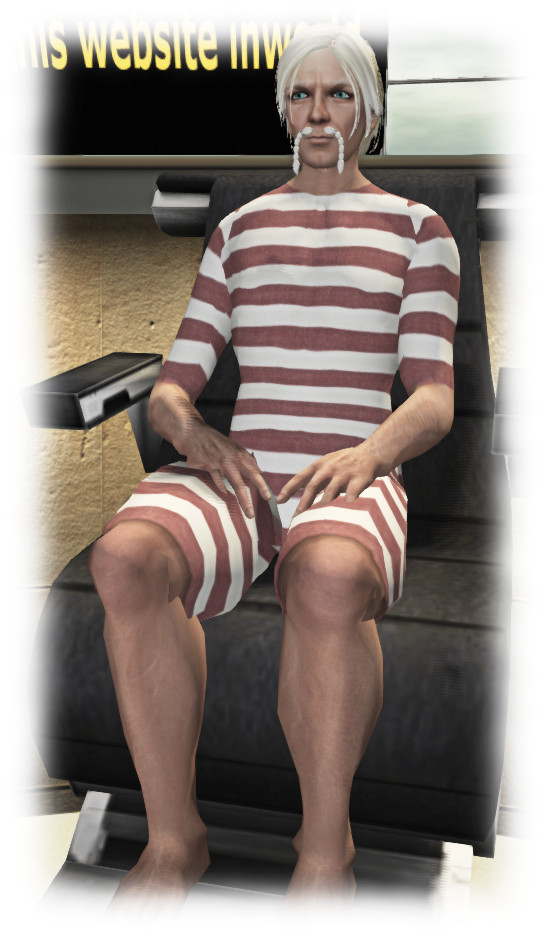
Oz arrived at the TPVD meeting suitably attired for the dunk-a-Linden fest at Isle of View, which also took place on Friday, February 12th
[00:55] The Quick Graphics viewer is undergoing a further round of changes to refine how it performs the avatar complexity calculations.
[02:40] It is thought that all of the remaining issues in this regard (such as blocked avatars not rendering correctly, elevated costs involved when using alpha masking instead of alpha blending and materials are not being accounted for correctly.
[03:22} Further changes to the viewer mean that from the next release it will no longer use a LOD of 3 on which to base avatar complexity calculations, but will be more responsive to the different LODs set within a mesh, depending on which you are seeing
So, for example, this means if you are close enough for the high poly version of the mesh to be rendered, the Avatar complexity calculation will be based on that; if you are further away, and a lower polycount version is rendered, then the LOD for that will be used in calculating the Avatar complexity.
Once all of these updates have been incorporated into the viewer, which should be in the next week or two, an updated RC will be issued, paving the way for this viewer to be promoted as the de facto release viewer sometime in the not too distant future after that.
An interesting point with this Quick Graphics viewer is that those using the RC version are tending to run longer log-in sessions which are “significantly longer” than with those users running the current release viewer.
The Oculus Rift project viewer is still anticipated as appearing “soon”, and will lift this viewer to being compatible with the latest SDK from Oculus VR, but will be for Windows only, given the Oculus SDK currently doesn’t support Mac.
64-Bit Viewer Versions
[05:00] The viewer team continue to pursue 64-bit versions of the official viewer, but it will still be a while before any initial versions are visible and available for people to try. It is likely that any project viewer will not be appearing for a “few weeks”. Once project viewers are released into the wild, it a likely the Lab will make available 64-bit versions of the pre-built Havoc extensions libraries to TPVs with the licence as well. The release of the 64-bit viewers will also see the Lab cease support for 32-bit versions of OS X, something which should hardly affect any Mac users.
Project Bento
[01:20] With the Bento Bones survey closed and feedback also gathered through meetings, it is hoped that the skeleton changes can be finalised relatively soon, allowing the Lab to focus on issues of bug fixing within the viewer and readying it for a release (project or C) on the main (Agni) grid. This will also see the server-side support for Bento enabled on Agni, having been deployed last year as a part of the routine server releases (week #48 2015 for the Main (SLS) channel and originally to the RC channels in week #46 of 2015).
[06:46] The Lab, with content creators, is continuing to experiment with reconfiguring the bones, and also to look into the issues of joints getting out of position. As noted in my Bento Project reports, there are a number of different circumstances where this can occur, some of which have yet to be fully diagnosed, and others of which could be caused by race conditions between the viewer and the server when it comes to message handling, or which may even be due to message packets being lost for those on poorer network connections.
A further issue is to do with the default human T-pose attempting to load between animations, which can cause quadruped avatars appear to try to cross their forelegs, depending on the bones used in rigging them. For a details discussion on all these issues, see my Project Bento update #4, with audio.
Other Items
CEF, and Firestorm and Anti-Virus software
[14:08] One of the significant factors in delaying the next Firestorm release is the merge with the Chrome embedded Framework (CEF) code which is now used for media handing, etc., within the viewer. A set of fixes for CEF are already available in the current Maintenance RC viewer (version 4.0.2.310545 at the time of writing), with further updates expected in the next Maintenance RC thereafter – although none of these are considered major issues.
[15:43] There have been reports that one or two anti-virus packages (one of them being Webroot) don’t play nice with CEF versions of the viewer. There’s not a lot the Lab can do about this, and users experiencing problems may want to look into the AV software and see if the viewer requires whitelisting, etc.
There’s been a lot of reaction to recent images release via Twitter of scenes from Project Sansar. The images, one of the surface of Mars, and another an almost alien-looking beach scene, were Tweeted by Ebbe Altberg.
The first came on February 4th, and prompted several Tweets in reply, the second on February 10th. Both were picked-up by various media outlets such as Tom’s Hardware and VR Focus. Each of the images reveal very little, and this has led to a certain amount of negative feedback and potentially incorrect comparisons to Second Life, with some of the criticism reading as attempts to write-off Project Sansar before people have been given the opportunity to look inside it.
Some of those critiquing the images point to similar work being possible in Second Life. On the surface, this is a fair comment – such environments are possible in SL; however, they also seem to miss the point.
While Project Sansar isn’t exclusively VR HMD oriented, when discussing its initial use, Ebbe Altberg has made it clear that the Lab is firstly looking to those market verticals which are already demonstrating interest in getting involved with immersive environments through to use of (relatively, when compared to the “traditional” costs of such systems) low-cost era of HMDs and their peripherals. Verticals such as education, training, simulation, healthcare, design, architecture and business have all been mentioned time and again. Hence why, for example and as I’ve previously pointed out, it was no accident that the first public demonstration for Project Sansar came during month-long Architecture and the City Festival in San Francisco, held in September 2015.
The hard reality here is that for the most part, these are sectors which have little or no interest in delving into Second Life to achieve their aims; it is simply too costly and / or too complex to do so (even were it capable of supporting HMDs at things like the recommended frame rates, etc). Thus, comparisons with what is shown in the images and what can be created in Second Life is really irrelevant.
Of course, by the same standard, aiming for specific verticals and opportunities and actually gathering a sufficient audience from those vertical to help grow the platform more broadly isn’t an automatic given. That in itself is a worthwhile debate, but it is one far beyond determining Sansar’s worth based on a couple of in-world snapshots.
Others have critiqued the images on the basis that they are leveraging pre-built models and thus the comment that Sansar environments can be built in “a few hours” is misleading. But is this really the case?
The reality is that in this regard, Project Sansar isn’t that different to Second Life, where we leverage existing assets and content, purchased in-world or through the Marketplace, every day to create our environments.
What Project Sansar aims to do is take things further by offering those who wish to simply acquire and use assets up to and including dedicated experiences, the means to do so. This can then be coupled to a much easier means of direct access to those environments, possibly hooked directly into their own user authentication systems (see the 3rd bullet point here), to provide a direct means of immediate access to that environment for their staff / students / users / clients, thus entirely bypassing the stress of user access which is so much a part of Second Life.
As such, the use of pre-existing content in the Tweeted images isn’t misleading or “cheating” when placed alongside the “few hours” statement of build time. Rather, it’s a reflection of one of the ways the Lab envisages Project Sansar being used.
There is a lot about Project Sansar that has yet to be revealed and / or understood. There’s also much about it that would seem to be a gamble on the part of the Lab. As such, there is a lot worthy of debate about it and platforms like it – High Fidelity, Sinwave.space, AltspaceVR, et al, their potential for success, how they fit with the VR ecosystem, how that ecosystem will fair over time when faced with things like emerging AR capabilities and potential, and so on and so forth. But to dismiss Project Sansar purely on the basis of a handful of screen shot seems, at least to me, a tad bit premature.
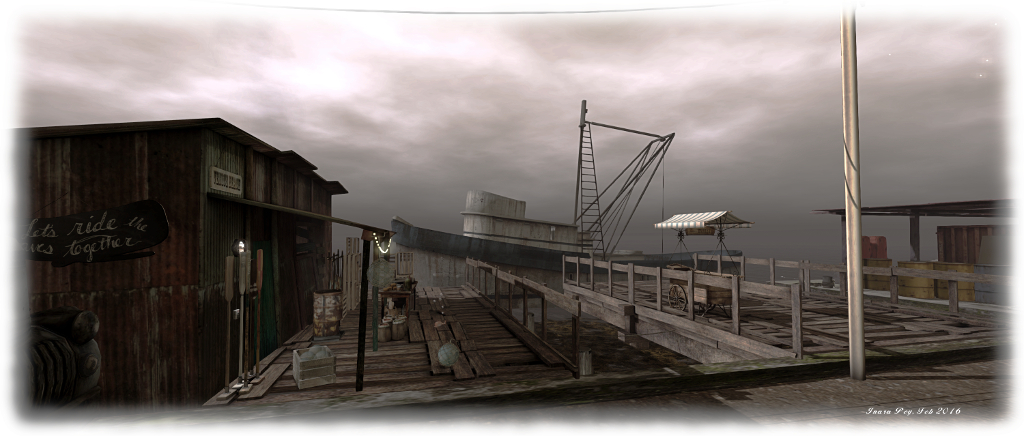
Pearl Grey drew me towards The Village & BarDeco after she blogged about it in January. A quarter region in size, it is described as, “a small village on the water where you can stroll beside the sea in a Zen atmosphere and relaxed – a drink and listen to the music of the best DJs in SL at BarDeco.”
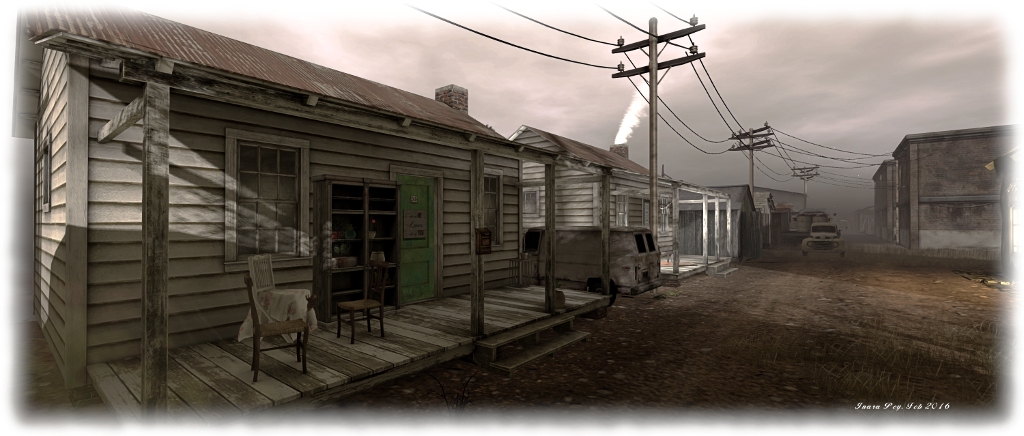
The club sits at the far end of the The Village relative to the SLurl I’ve given above; those available through Search may well drop visitors a lot closer, but I’ve opted for this approach so that you can wander the length of The Village and take in the full atmosphere, which right now is one of a mist-shrouded evening or morning, mindful of late autumn / early winter.
The road leading into The Village is a foretaste of things to come. Unpaved, it is rutted and perhaps not in the bast of condition. It also splits at the SLurl I’ve given above, to provide two parallel routes into the hamlet, which run wither side of a large rocky outcrop.
Follow one arm of the road and you’ll travel past an old farm, while taking the other will take you alongside an old railway spur line which presumably once served The Village. Those days are now long gone; the tracks are overgrown, and nature is slowly laying claim to the carcases of two old boxcars which appear to have been derailed in some past accident. A mist is drifting in from the sea the other side of the old railway tracks, making this second route into The Village somewhat more atmospheric (and, if you’re on a lower-end system, perhaps a little challenging as well).
Like the roads leading to it, The Village looks to be past its prime; all of the building look tired, paint fading in the salty air, tin roofs rusting, wood panels in need of repair. Even the vehicles here have seen better days, although the single trawler moored and the little docks looks to be in better condition than the nearby road vehicles, suggesting it is cared for and still plying the seas.
BarDeco sits within what might have once been a warehouse, a place as careworn and suffering from the passing of the years as the rest of The Village. Sans roof, canvas awnings strung from the rafters provide a measure of protection for those on the dance floor when inclement weather comes visiting. Nevertheless, going on the numbers there when Caitlyn and I visited, BarDeco clearly offers a worm welcome together with good music.
Nor is the music restricted to the club; there is a live performance stage facing the church, and one of the largest stores is a record shop. Other artists have settled here as well, as peek through the brightly lit windows of an old factory outbuilding will reveal.
All told, this is an atmospheric place (make sure you have local sounds on to catch the ambient sound scape as well), one which again demonstrates you don’t have to have an entire region just to build something special to share with others. For the SL traveller, it offers an interesting destination to explore, with plenty of photographic opportunities. Add to that BarDeco and the music, and The Village makes for an interesting visit. It even has what could be thought of as an indirect hat-tip to a certain other Village of television history sitting in the town square!
Every so often it happens: you’re hunting for something specific on the Marketplace or in-world, when something else grabs your attention. It’s not what you’re looking for and it may even be something you’re not sure you want – but it’s there and it gets your attention just enough for you to think, “why not?”
Such is the case with the all mesh Hovercraft 1.0 by Kaliska (Yetius), which I happened across on the MP whilst looking for mooring buoys. Despite being into my tenth year in Second Life, I’ve not really seen that many hovercraft around, so the idea of a little single-seater (and which is offered free to boot) proved to be a little too distracting.
… and over water …
Kaliska describes the vehicle thus:
I recently discovered the dinkie avatar (a mesh tiny sized avatar), and just had to do something about the total non-existence of dinkie-friendly vehicles.
So this is primarily a diminutive hovercraft for dinkies. It’s loosely modelled on pictures of single seat racers and personal/leisure/small utility craft, but based on nothing in particular.
By “dinkie”, I think Kaliska means “petites”; however, and as she notes, this is not a vehicle aimed at a single small market; there is a version included in the package suitable for tinies and one for “normal” sized human avatars (if you’re 7+ feet tall, some adjustment to the sitting pose may be required).
Everything bar the engine script is supplied Mod, offering plenty of opportunities for playing around with the vehicle and texturing / colouring it to suit personal tastes – maps are supplied to assist with both, and can be found in the instructions note card. For the purposes of testing, I simply recoloured parts of mine from white to red. I could well end up playing more extensively with it at some point 🙂 .
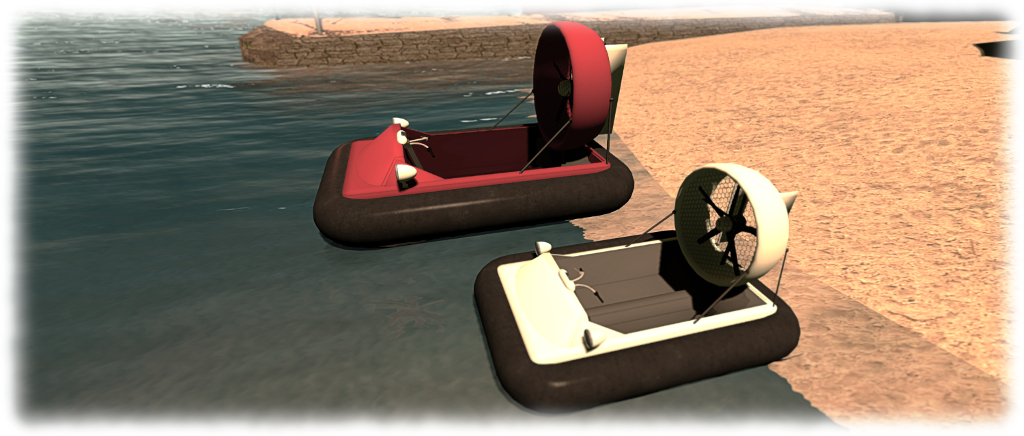
The full-size Hovercraft (red) and the “dinkie” / tiny version
At just 12 LI for the human version and 8 LI for the “dinkie” / tiny version, this is a little craft which can easily fit within most land budgets. It is also, I have to say, A lot of fun once the controls are mastered – and these are not exactly taxing. Sitting in the vehicle and typing “start” in chat enables the engine, lifting the vehicle slightly as dust (is on land) our spray (on water) is blown out from under the skirt.
From here, movement is simple: the UP and DOWN arrows are your throttle (faster and slower respectively), LEFT and RIGHT turn you. If you prefer, WASD achieves the same). PAGE DOWN / C acts as quick stop, bringing you immediately to a standing hover. A couple of things to note is steering is only possible when in forward motion, and doesn’t work at all in reverse, which is accessed by coming to a standing hover and then pressing and holding the DOWN key.
In addition to the above, PAGE UP / E will toggle the headlamps on/off – note that these use projected lighting, so ALM needs to be enabled to see them decently. Finally, typing “HUD” in text shows / hides the vehicle’s hovertext info, and typing “stop” shuts down the engine.
The default pose for “normal” sized human avatars is pretty spot-on in terms of handlebar placement
Overall, the hovercraft handles very well; a quick few taps on the UP key and you’ll be zipping along; both water and terrain are handled well, and mesh terrain doesn’t prove a major challenge. I zapped from home across the waters and to Holly Kai Park in next no time and traversed from mesh beach to water and back to beach with ease at both ends of the ride.
I’d actually be happy paying for this little vehicle, and perhaps see it with group driving were it offered for sale, as it’s the kind of thing that’s fun to rez when friends visit, and then scooting around the sea together. Setting a nominal fee for it would allow it to be gifted, which is something I’d like to do with a few close friends as well, rather than nagging them to go grab it as a freebie.
But these are really minor point.As a freebie, there is absolutely no faulting it – and it really be worth paying for it were it to be offered at a reasonable price. As it is, if you’re looking for a little vehicle to mess around with on land and water, this could certainly be just the ticket. Now, if you’ll just excuse me, I’m off for a little more fun…










 Inara Pey: Living in a Modemworld