
Spirit, one of NASA’s two solar-powered Mars Exploration Rover (MER) missions, may have ceased communications with Earth on March 22nd, 2010 and the mission declared over on May 24th, 2011, but its science legacy lives on.
Originally designed with a 90-day primary mission duration, Spirit massively exceeded this, ranging across Mars for a distance of 7.73 kilometres (4.8 mi) over 1,944 days of mobile operations before becoming bogged down in a sand trap on May 1st, 2009, almost 5.5 years after it had arrived on Mars, after which it operated as a stationary research programme for a further 751 days.
During its mobile period, Spirit explored a small rocky plateau dubbed “Home Plate” in 2007 / 2008. Whilst exploring the rock, the rover imaged several peculiar small rock formations resembling cauliflower or coral. Analysis by the rover’s Mini-Thermal Emission Spectrometer (Mini-TES) revealed the formations to be almost pure silica (SiO2), a mineral associated with volcanic environments.
Silica is formed when water (rain or snow) seeps underground and comes into contact with rocks heated from below by magma. Itself super-heated by the rocks, the water is vaporised and rises back through the ground, dissolving silica and other minerals as it does so, which it deposits around the vents or fumaroles it uses to escape back into the atmosphere.

Warm, rich in silica and minerals, on Earth these fumaroles and vents become havens for bacterial life which is known for creating curious bulbous and branching shapes in silica formations here on Earth which are strikingly similar to those imaged by Spirit. Such is the similarity, that planetary geologist Steven Ruff and geology professor Jack Farmer, both from Arizona State University, have been carrying out detailed studies in the high Atacama Desert, regarded as the most arid non-polar region on Earth, harbouring conditions thought to be very similar to those of ancient Mars.
In particular, they have been investigating the remote geyser fields of El Tatio, some 4.3 km above mean sea level in an environment which has much in common with the Gusev Crater region of Mars, where “Home Plate” resides. This includes being exposed to high levels of ultraviolet light from the sun and extreme temperatures. Their investigations revealed forms they call “micro-digitate silica structures” which are both remarkably similar to the formations on Mars, and to those found around fumaroles and vents at lower altitudes here on Earth which are formed by bacteria.

While the pair have yet to come up with definitive evidence that the El Tatio formations are the result of microbial activity, they believe the objects may be “micro-stromatolites”. Nornally of a much larger size, stromatolites are formed by bacteria “cementing” mineral grains together to form a thin layer. Over time, these layers accumulate one over the last, forming a laminar mound or rock. The oldest stromatolites on Earth are estimated to be some 3.5 billion years old, a time when both Earth an Mars may have shared much closer atmospheric and geological similarities. So, if the formations found at El Tatio do prove to be the result of bacterial activity, then it offers a hypothesis that the formations on Mars may also have been the result of bacterial activity.
Dream Chaser: the Dream is Alive
In January, I wrote about NASA’s surprise decision to award an extended contract for uncrewed resupply missions to the International Space Station to both of the existing contract holders, SpaceX and Orbital ATK, and to Sierra Nevada Corporation, who will use an uncrewed variant of their Dream Chaser space plane. At the time I wrote that update, reader Devin Vaughn indicated an interest in learning more about Dream Chaser, which has an interesting heritage.
As I noted at the time, the vehicle had been one of four private sector contenders to fulfil the role of “space taxi”, ferrying up to 6 at a time from US soil to the ISS. The idea being that by spinning-out the ISS crewed flights to the private sector (with financial support from NASA), the US agency could focus its manned space flight development programme solely on the Orion / SLS programme, which is intended to form the nucleus of US (and possibly international) crewed mission ventures well beyond Earth orbit.

Dream Chaser ultimately wasn’t selected for the crewed mission contract – which caused some friction between Sierra Nevada Corporation and NASA when it was announced in 2014 – but the US space agency continued to work with SNC to help develop the vehicle, with the Dream Chaser Cargo variant being the result – although SNC has not given up on developed the crewed version of the vehicle.
Dream Chaser Cargo is designed to fly up to 5 tonnes of cargo to / from orbit. This can be both pressurised and unpressurised material, and the vehicle includes the ability for unpressurised cargo to be directly transferred from its cargo module to the exterior of the space station should this be required. As with the original crewed variant, Dream Chaser Cargo will launch atop a rocket, but return to earth to make a conventional runway landing, the latter greatly speeding up the transfer of returned cargo (e.g. science experiments material, etc.) from the vehicle to its intended destination.
Dream Chaser’s history is actually a fascinating one, involving as it does elements of both US and Soviet-era space flight development technologies. At it heart, it is a direct descendant of the NASA lifting body programmes which were developed in the 1960s / 1970s to test various space plane related concepts. Two of these in particular might be thought of as the “grandparents” of Dream Chaser: the M2-F2 (the crash of which on May 10th, 1967, later found world-wide fame when clips were used in the opening credits of the television series The Six Million Dollar Man), and the HL-10.
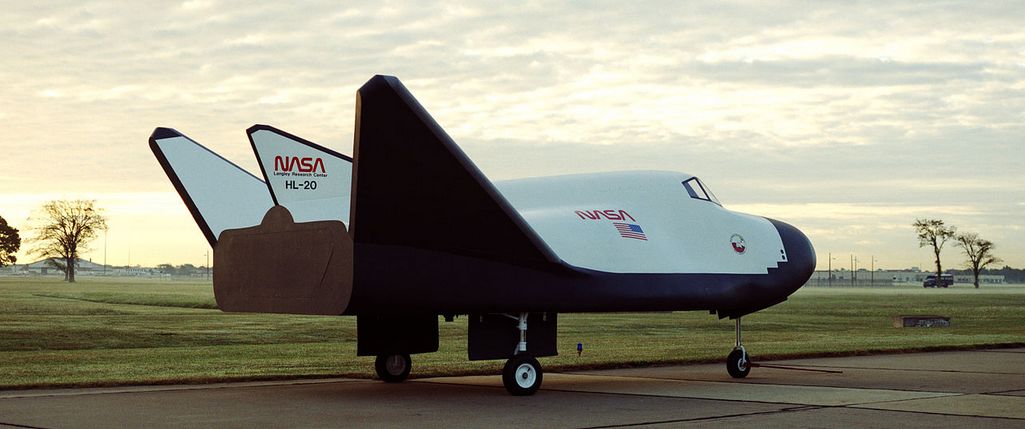
Both the M2-F2 and HL-10 were built to test lifting body shapes which might be used in vehicles capable of carrying up to 12 people at a time to some future space station. Both of them, together with an uncrewed Soviet-era vehicle, the BOR-4, used to test technologies for the Soviet Buran-class shuttle programme, resulted in NASA’s Langley Research Centre proposing the HL-20 PLS in the 1990s (“HL” standing for “horizontal landing”, and “PLS” for “personnel launch system”).
While it was never built or flown (only a full-scale mock-up was made), it is this vehicle which is the precise progenitor of Dream Chaser. SpaceDev, the company which originally developed the Dream Chaser concept in the early 2000s (and which was acquired by Sierra Nevada Corporation in 2008), actually licensed the HL-20 design from NASA Langley in order to speed the development of their vehicle, and Langley has remained something of a partner in the vehicle’s development.
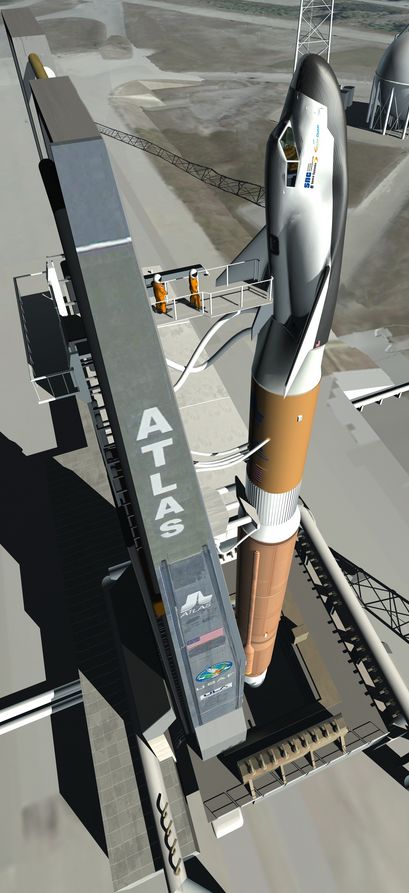
As originally conceived, the crewed version of Dream Chaser would be launched atop the veritable Atlas V launch vehicle, mounted to the rocket via an adaptor, but otherwise sans any fairings. For the cargo variant, a fairing is required, so the vehicle is being redesigned to include folding wings which are deployed after orbital insertion has occurred. This redesign also offers the potential for the cargo vehicle to be launched atop of Europe’s Ariane launcher as well.
Dream Chaser Cargo is of interest in Europe as an automated orbital laboratory, with ESA already signed to provide the craft with the International Berthing and Docking Mechanism (IBDM), which is being developed as a multi-purpose adapter capable of pairing different types of space vehicle when in orbit. The IBDM will form a part of Dream Chaser Cargo’s disposable cargo module attached to the rear of the space plane during launch and on-orbit operations.
Some European nations – notably Germany – are also interested in the crewed version of Dream Chaser, which SNC have scaled down by some 25% in order to allow it a wider range of launch options, one of them again being atop a European launcher. In this configuration, Europe, which has long-held aspirations for its own space plane, would use Dream Chaser for missions such as microgravity science, satellite servicing and active debris removal (ADR).
One of the more unique aspects of Dream Chaser is that it uses entirely non-toxic propellants. This means that while the launch is limited to highly specialised facilities, it can land and almost any paved runway without the need for specialised support and fuel decontamination vehicles, potentially making is a flexible launch and recovery system.
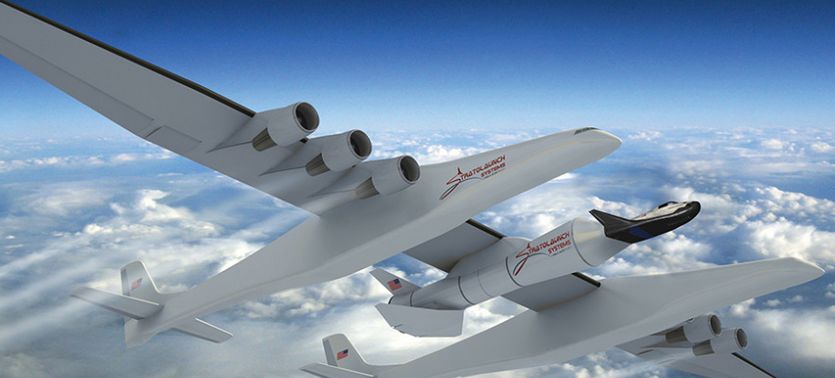
The reduction in size of the crewed vehicle was undertaken primarily to allow it to be launched by the ambitious Stratolaunch system currently under development. This is an air launch system which will use a special carrier aircraft designed by Scaled Composites founder Burt Rutan (who designed the White Knight launch aircraft for Virgin Galactic), capable of lifting a booster rocket and its cargo to high altitude. Once there, the rocket would be released, and its motors ignited, carrying its cargo up to orbit. Such a system dramatically reduces the amount of fuel the rocket requires, allowing smaller, more cost-effective boosters to be used to lift the same payloads into space.
Under the Stratolaunch / SNC development programme, Dream Chaser would have been mated to an Orbital ATK Pegasus II booster, which is currently in development, and carried aloft by the Stratolaunch carrier for onward flight to orbit. However, the Pagasus II programme was shelved in May 2015, and Stratolaunch are currently “re-evaluating” launch vehicle options.
However, for the time being, the focus is very much on the uncrewed Dream Chaser Cargo. While no mission contracts have yet been awarded to SNC, the vehicle must be ready for operations by 2019, and so the next stage in development is resumption of unpowered drop tests using the Engineering Test Article (ETA) vehicle Eagle. These tests will continue through 2016, paving the way for the first orbital test flight, using the Flight Test Article (FTA) Ascension, possibly in early November 2016.
Planet Nine Search Narrows
Also in January I wrote about the mysterious Planet Nine (also referred to as George, Jehoshaphat, and Planet of the Apes), which has been theorised as being around 10 times the mass of the Earth and orbiting the Sun at a distance of some 200 AU (one AU, or astronomical unit, being the average distance separating the Earth from the Sun) and at a highly eccentric angle relative to the plane of the ecliptic.
While there have long been theories that there may yet be another large planet orbiting the Sun at a great distance, the hypthesis that Planet Nine may be it, and really does exist, is a direct result of computer simulations developed by Mike Brown, a leading planetary astronomer at the California Institute of Technology (Caltech), and his colleague Konstantin Batygin, who are themselves building on the 2014 work of astronomers Chad Trujillo and Scott Sheppard.
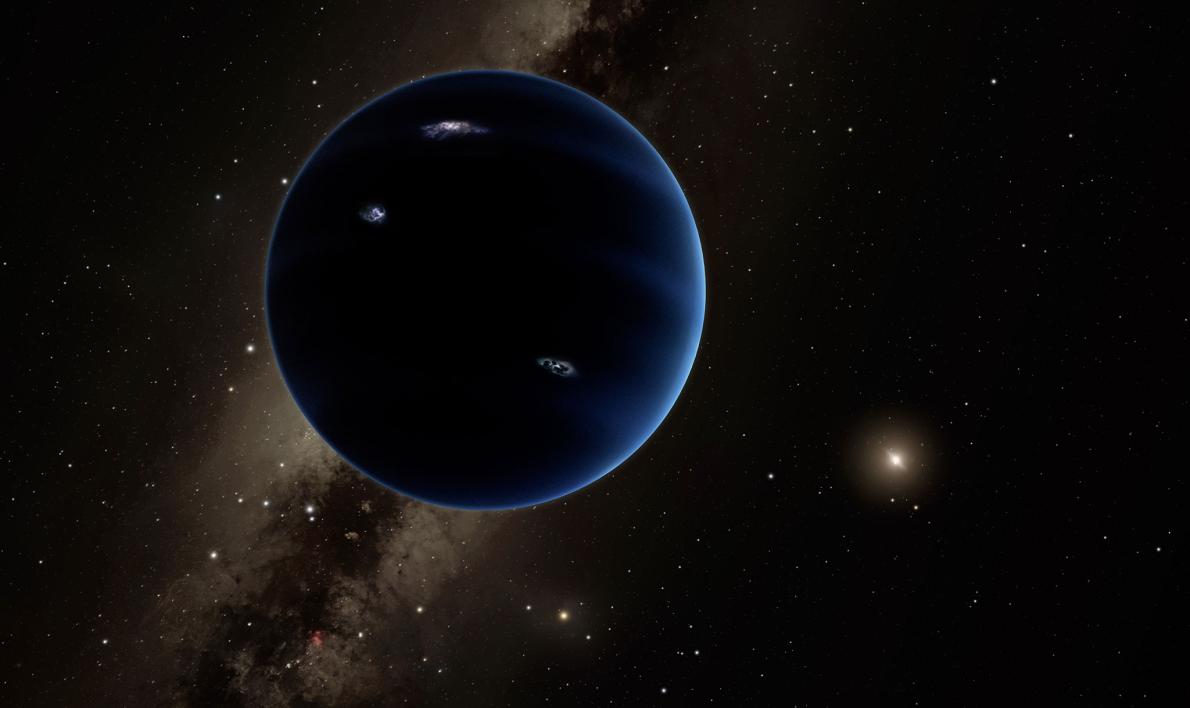
Essentially, as I reported last time, the model used by Brown and Batygin is built around the very eccentric orbits of a number of minor bodies such as Sedna (which itself was discovered by a group of astronomers including Brown and Trujillo in 2003), in what is called the scattered disk, a sparsely populated region of space between 30 100 AU from the sun, and which overlaps with the Kuiper belt. Not only did the model demonstrate that a large planetary body could be the cause of these eccentric orbits among the minor planets, it also potentially accounted for the strange orbits of a number of large Kuiper belt objects as well.
Since Brown and (an initially dubious) Batygin released their findings, astronomers have been working to more readily identify precisely where Planet Nine might be within its anticipated orbit. In particular, a group of French astronomers have been using data from the Cassini mission to Saturn to examine “residuals” in Saturn’s orbit: the difference between the planet’s calculated position versus what was actually observed.

This technique is the one used to calculate Neptune’s position in the night sky 150 years ago, using perturbations in the orbit of Uranus. However, with Planet Nine, the distance are so vast that an influence it is having on the other massive planets in the solar system is liable to be very small and barely detectable from Earth. The data from Cassini, however, compensates for this nicely, providing an on-the-spot record of anything which is affecting Saturn’s orbit.
As a result of their study, the French team have identified two arcs in the sky where it is highly unlikely Planet Nine will be found at this time, ,and can thus be excluded from any sky search, together with one arc of the sky where they believe a search has a high probability of finding the distant world.
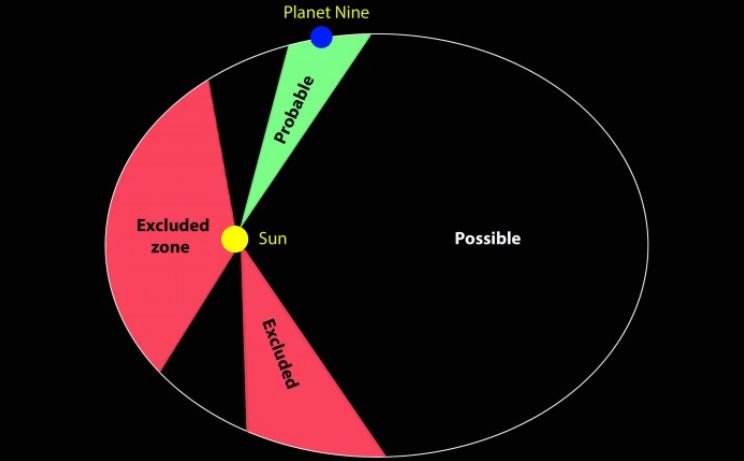
It is certainly not a definitive result – mush of the rest of the sky through which Planet Nine would appear to travel offers a good possibility it might actually be there – somewhere. However, the French data does give a reasonable starting point for a search to commence.

 Inara Pey: Living in a Modemworld
absolutely mind boggling!! You are such a great explorer of the solar system Inara!! I’m just reading the fictional “The Martian” at this time. And oh the zen of the cosmos! As for distant worlds- everything is like a dance isn’t it!!
LikeLike