Second Life new user experience now with Experience Keys

Experience Keys are being used as a part of the new user experience
Experience Keys are being used as a part of the new user experience – click for full size (note viewer UI is intentionally turned off)

update, April 2016: The Lab is apparently A/B testing the use of Experience Keys with task-oriented learning at a set the Social Islands. See my article on this for further details.

As a part of my periodic poking at things in Second Life, I recently logged-in using the avatar I keep “parked” at one of the Learning Islands which are the initial arrival points for new users, and  noticed that the Lab has added Experience Keys capabilities to the first-time log-in experience for new users as part of continuing efforts to improve the experience new arrivals have when arriving in-world for the first time.

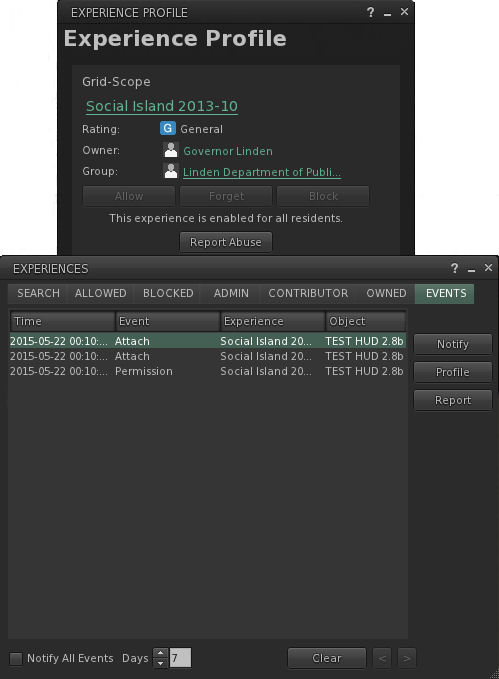
For those not already in the know, and keeping things to their briefest, Experience Key (also referred to as Experience Tools) are a relatively new (and at the time of writing, yet to be fully deployed) feature that allow users to opt-in to an “experience”  – which could be a game, a tour, an educational activity, and so on – just once, rather than having to repeatedly grant specific permission each time something wants to act upon their avatar – such as a teleport offer, attaching an object, etc.  This means that the experience can be enjoyed much more fluidly and without the distraction of multiple dialogue boxes constantly popping-up. when the user leaves the experience area, their status in the experience is saved (e.g. their progress and items collected), all permissions are revoked, and all attachments removed.
Experience Keys in use as a part of the New User Experience

Within the first-time log-in environment, Experience Keys are being used to help guide new users through the basic steps of using the viewer. The focus (at least at the time when i noticed the use of Experience Keys) is specifically on avatar movement. However, there is no reason why the approach couldn’t be expanded in the future to cover other aspects of viewer use, and other aspects of gaining familiarity with SL.

A key difference between the use of Experience Keys in the new user experience is that the HUD system is attached seamlessly when logging-in for the first time; there’s no initial pop-up dialogue box for the users to accept as they log in.

This is a good idea, as it avoids potential concern which might otherwise occur for a new user in having a potentially confusing / worrying dialogue box displayed as soon as they log-in, stating it wants to take control of this and that. Instead, the HUD attaches, and a couple of seconds later, the first pop-up displayed, providing a brief, basic overview of walking and turning.

In all, there are four pop-up hints given as the user progresses around Social island, each one appearing at an appropriate point in their travels. The hint on flying, for example, comes just ahead of the user reaching a broken bridge which should otherwise span a chasm.

The four pop-up helpers which appear as a part of the experience as the new user progresses around Social Island
The four pop-up helpers which appear as a part of the experience as the new user progresses around Learning Island – click for full size

The process stops when the user passes through the portal leading to one of the Social Islands, with the experience HUD detaching automatically as they do. Once at the latter, things become more of the familiar mix (to those of us familiar with the new user experience, at least!) of potential confusion, wandering and poking at things in order to work out what to do, even with the help from established users, who have for a while now been able to access the Social Islands (and some of whom can themselves be somewhat unhelpful, and do act as an illustration of the Lab’s misgivings on this area).

However, to stick with the use of Experience Keys, the current deployment is pretty basic, but it does offer a rough foundation on which more might be built. As such, I asked Peter Gray, the Lab’s Director of Global Communications about the use of the Experience Keys capability, and whether it might be extended within the new user experience.

“We’ve been using Experience Keys for some time with the new user experience,” Peter confirmed, before continuing, “We plan to continue to test and improve the new user experience, but at this time, we’re not able to share a pipeline for planned changes.”

The How To guide provide a range of information on movement, communications and other basic aspects of using the viewer - yet seems oddly overlooked; it is not opened by default on a first time log-in, nor are new users directed to it
The How To guide provide a range of information on movement, communications and other basic aspects of using the viewer – yet seems oddly overlooked; it is not opened by default on a first time log-in, nor are new users directed to it

How this might be done is a matter of speculation; Experience Keys certainly offer a raft of opportunities for easy learning activities along the lines of the old Orientation Islands of yesteryear, but with a potentially greater level of engagement and interaction.

As it is, the viewer does have a reasonably good introduction to the basics of using the viewer in the form of the How To guide (which has never seemed to really form a part of the various attempts to tweak the on-boarding process). It would be interesting to see the information this contains put to far better use, possibly as part and parcel of a more immersive, interactive means of guiding new users through the basics of the viewer utilising Experience Keys.

Getting to grips with the viewer is, of course, only one aspect of bringing new users into SL and getting them to stick – and it is one perhaps we focus on a little too much. The key to getting people to stay is to get them engaged in the platform – and that comes through positive interaction with others, preferably by helping them to find people within environments and activities which interest the incoming users.

This is perhaps a harder aspect of the problem to solve. However, as write Beau Hindman demonstrates in his recent video on the new user experience; there are options which might be considered. One in particular could be to direct incoming users more towards Experience Keys-led activities within SL, as more and more come on-stream, as it is likely these will tend to be something of a focus of established users as well, thus providing a potential mix of activity and interaction with others. It also fits with the Lab’s vision for on-boarding people in their Next Generation Platform.

As noted above, what is currently employed at the Leaning Islands is rudimentary; but it is also a start. Experience Keys will hopefully be fully deployed across the grid in the near future. Once that’s the case, it’ll also be interesting to see how the various mentor groups might leverage them to help new users as well.

UKanDo goes VMM with a beta update

logoThe UKanDo viewer, maintained by Connor Monaron updated to version 3.7.28.34230 on May 11th.

As the version number suggests, this brings the viewer to parity with the Lab’s 3.7.28 code base, and specifically with the Viewer-Managed Marketplace (VMM) functionality.

For those who may not recognise VMM, and keeping things relatively brief, the aim of the project is to enable merchants to manage the creation and management of Marketplace product listing through the viewer, bypassing the need to use the Merchant Outbox (and have copies of items stored on the Marketplace inventory servers) or using Magic Boxes.

It does this by adding a new Marketplace Listing panel to to viewer, which will eventually replace the Merchant Outbox entirely, and by adding additional back-end and web functionality which allows merchants to carry out a number of tasks associated with their Marketplace listings from within the viewer, and by enabling products to be delivered to customers directly from the Lab’s asset servers, rather than having to store them as separate inventory on the Marketplace servers.

Rather than go into a detailed explanation of all the functionality here, if you haven’t come across VMM before, please read my notes from the initial testing in 2014.

The Merchant Listing Panel for VMM, as see in the UKanDo beta, with some of my migrated items
The Merchant Listing panel for VMM, as see in the UKanDo beta, with some of my migrated items

The key point here is that, at the time of writing, VMM is still very much undergoing beta testing, and the viewer-side code has yet to reach a release candidate status in the official viewer, so the 3.7.28 release of UKanDo is slightly ahead of the curve – the Lab prefer that TPVs don’t release code which the Lab themselves have not issues in release candidate form.

To this end, Connor has clearly indicated this 3.7.28 release is a beta version of UKanDo, and the earlier 3.7.27 update remains available as the full release.

It’s also worth pointing out that initially, the current VMM beta was by invitation, so if you want to try the functionality either using the UKanDo beta or the Lab’s own project viewer, you’ll have to apply to join the beta via the link towards the bottom of your Merchant Home Page on the Marketplace.

All that said, I’ve been driving the VMM version of UKanDo over the last couple of days, using it to gradually convert my own modest store on the Marketplace from Direct Delivery to VMM (as shown in the image above right, taken as I got started), and have found absolutely no issues with it – not that I was actually expecting any.  Everything works smoothly, and updates made via UKanDo are accurately reflected when checked in the official VMM project viewer.

For Merchants who prefer using UKanDo over the official viewer, and who would like to try-out VMM as the Lab moves it gradually towards full deployment (which could occur in June 2015), the 3.7.28 presents an opportunity to do so.

Note that as a VMM beta release, the 3.7.28 update does not contain any other functional or other updates compared to the UKanDo 3.7.27 release.

VMM allows merchants to carry out some Marketplace listing related tasks from within the viewer (subject to how they have web browsing set-up) - here I'm editing a listing associated with an item in my Merchant Listing Panel
VMM allows merchants to carry out some Marketplace listing related tasks from within the viewer (subject to how they have web browsing set-up) – here I’m editing a listing associated with an item in my Merchant Listing panel – click for full size, if required

 Related Links

Sail4Life RFL of SL silent art auction

Holly Kai Park Pavilion - will launch and close the Sail4Life art auction in support of Relay for Life and taking place over the weekend of May 22nd through 24th
Holly Kai Park Pavilion – will launch and close the Sail4Life silent art auction in support of Relay for Life and taking place over the weekend of May 22nd through 24th

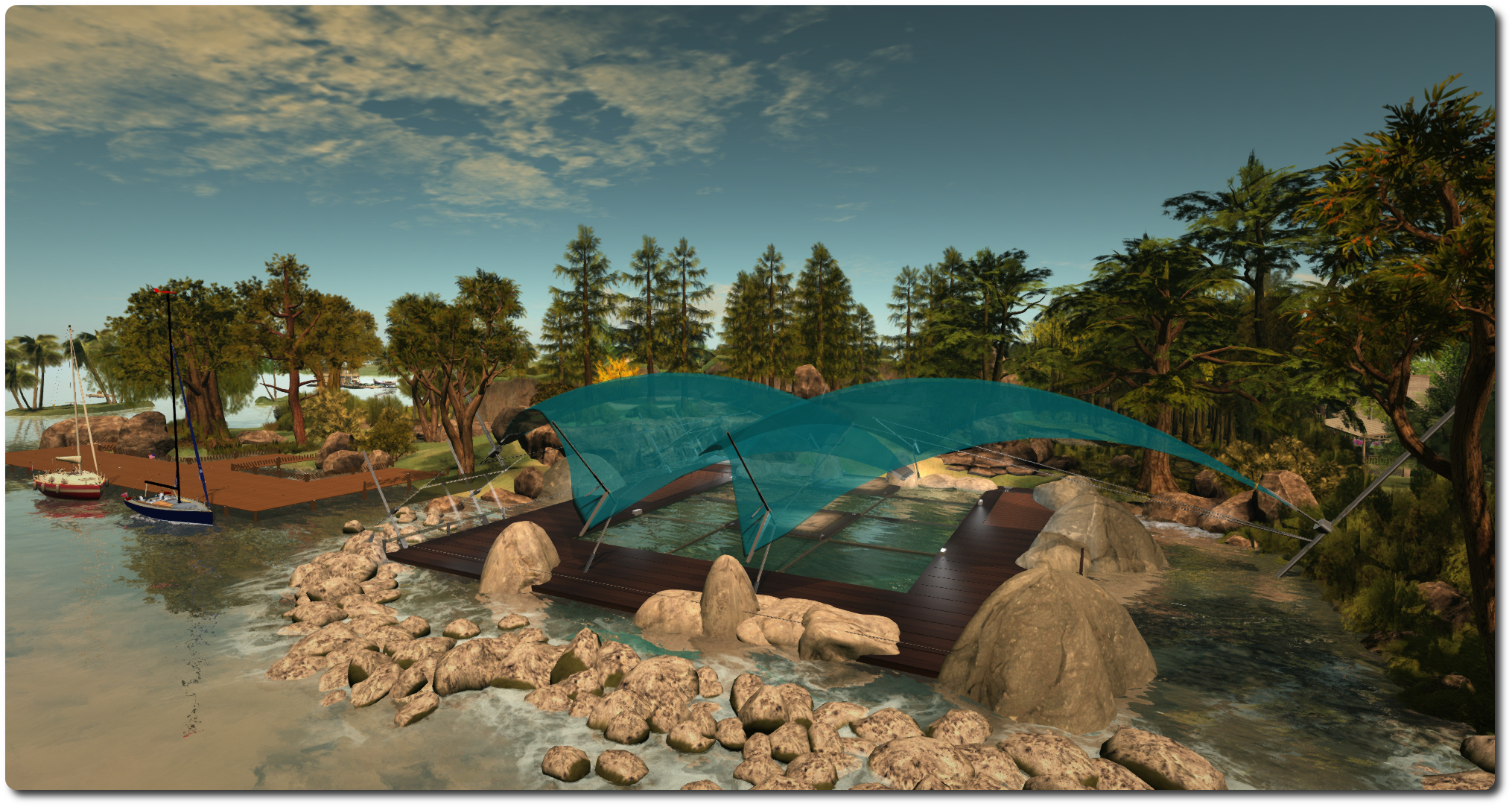
Taking place over the weekend of the 22nd through 24th May is a special silent art auction organised by the Sail4Life team, with all proceeds raised going directly to Relay for Life of Second Life.

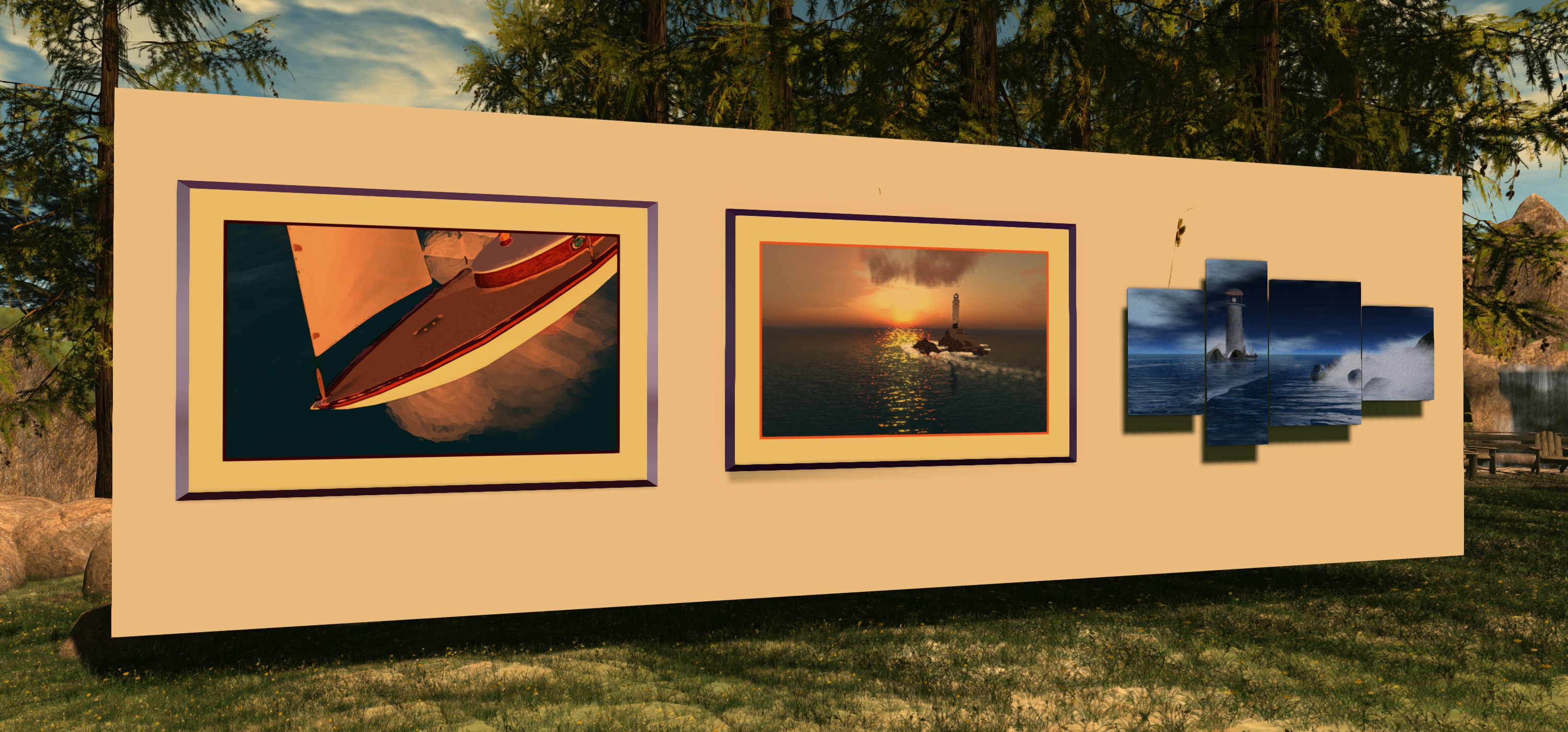
On offer to the highest bidders are a number of original maritime pieces offered by SL artists, all of which can be previewed and bid for on the hills of the beautiful Holy Kai Park on the north side of Blake Sea (you can read my write-up on the opening of the park here).

Sail4Life silent art auction for RFL of SL, May 22nd-24th, 2015

The pieces on offer are all original works, and represent a range of styles and approaches to maritime art that will grace any home in Second Life. What’s more, a donor who wishes to remain anonymous has offered to match the total amount raised through the donation kiosks during the course of the auction.

Things kick-off at 17:00 SLT on Friday, May 22nd, with a special auction launch party at the Holy Kai Park Pavilion, featuring DJ Joy Canadeo. The party will run through until 19:00 SLT on Friday. The auction will run through until Sunday, May 24th, with a further closing party at the Holy Kai Park Pavilion with DJ G Winz, from 15:00 through 17:00 SLT.

Sail4Life silent art auction for RFL of SL, May 22nd-24th, 2015

Further information on the event can be obtained from Winnie Sweetwater, chair, Sail4Life team.


Second Life project updates 21/2: general notes

Living in a Bowl
Living in a Bowl, May 2015 – blog post

Server Deployments, Week 21

As always, please refer to the server deployment thread for the latest updates / news.

On Tuesday, May 19th the Main (SLS) channel received the server maintenance package previously deployed to the three RC channel, comprising Internal server logging changes, back-end system bug fixes and a change to Reply-To e-mail addressing on snapshots. There were no RC deployments on Wednesday, May 20th.

SL Viewer

The Attachments Viewer RC (Project Big Bird) was updated to version 3.7.29.301943 on Thursday May 21st. As noted in part 1 of this week’s report, the initial RC release of this viewer had an elevated crash rate compared to the current release viewer, including a crash-on-exit bug, so this release will hopefully address those issues.

Group Chat

A fix for issues around BUG-9130, where some people were unable to see any posts in some or all of there group chats, including their own posts, while everyone else in the same group could see their posts, has started to be deployed across the chat servers, and should be completed on Friday, May 22nd.

“The chat servers got stuck with bad info about where the sender was, so the messages never reached them,” Simon Linden said at the Server Beta User Group meeting on Thursday, May 21st, reiterating an explanation given at a recent Simulator UG meeting. “And unfortunately it wouldn’t fix with relogging or even a chat server restart.”

“Loading…” Issue with Names in Group Chats

This is a viewer-side problem which causes avatar names to appear as “Loading” under certain circumstances in group chat (see BUG-3829 and STORM-2114). A contribution by Ansariel Hiller is currently with the Lab and is expected to be released as a part of the next Snowstorm contributions viewer, which is expected to appear soon.

Other Items

Region Restart Glitch

There has been something of a rise in reports of regions experiencing issues following recent following restarts – most noticeably caps failures. This is something the Lab is looking into, and Simon commented, “we have a suspicion that after rolls, as that server host starts up regions, it’s doing enough of them at about the same time that things get overloaded.   It’s still a theory but makes some sense why we’d get cap failures like that.”

Roxeter: where the arts meet in Second Life

Roxeter; Inara Pey, May 2015, on Flickr Roxeter (Flickr) – click any image to enlarge

Friend and content creator Vivienne Daguerre tapped me about her new collaborative venture, Roxeter, located on her own region, bearing the same name and which is also still the home to her Black Rose brand.

“Roxeter is intended to be a place supporting and featuring SL artists and live musicians,” Vivienne informed me, “and in future we hope to add writers and theatre performances to the list.”

Having opened in March, Roxeter already offers a number of indoor and outdoor venues for music and live performances, and the theatre is currently under construction, with work progressing well.

Roxeter; Inara Pey, May 2015, on Flickr Roxeter (Flickr)

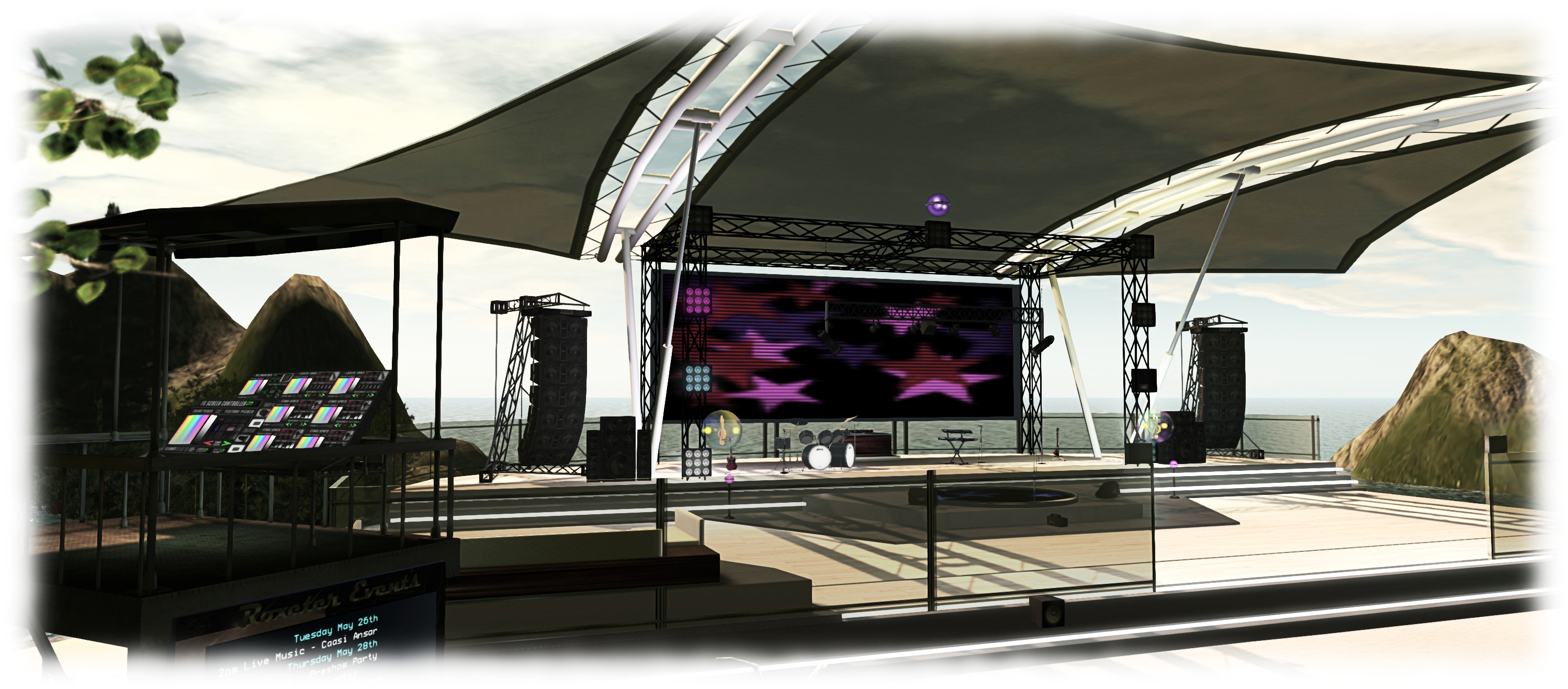
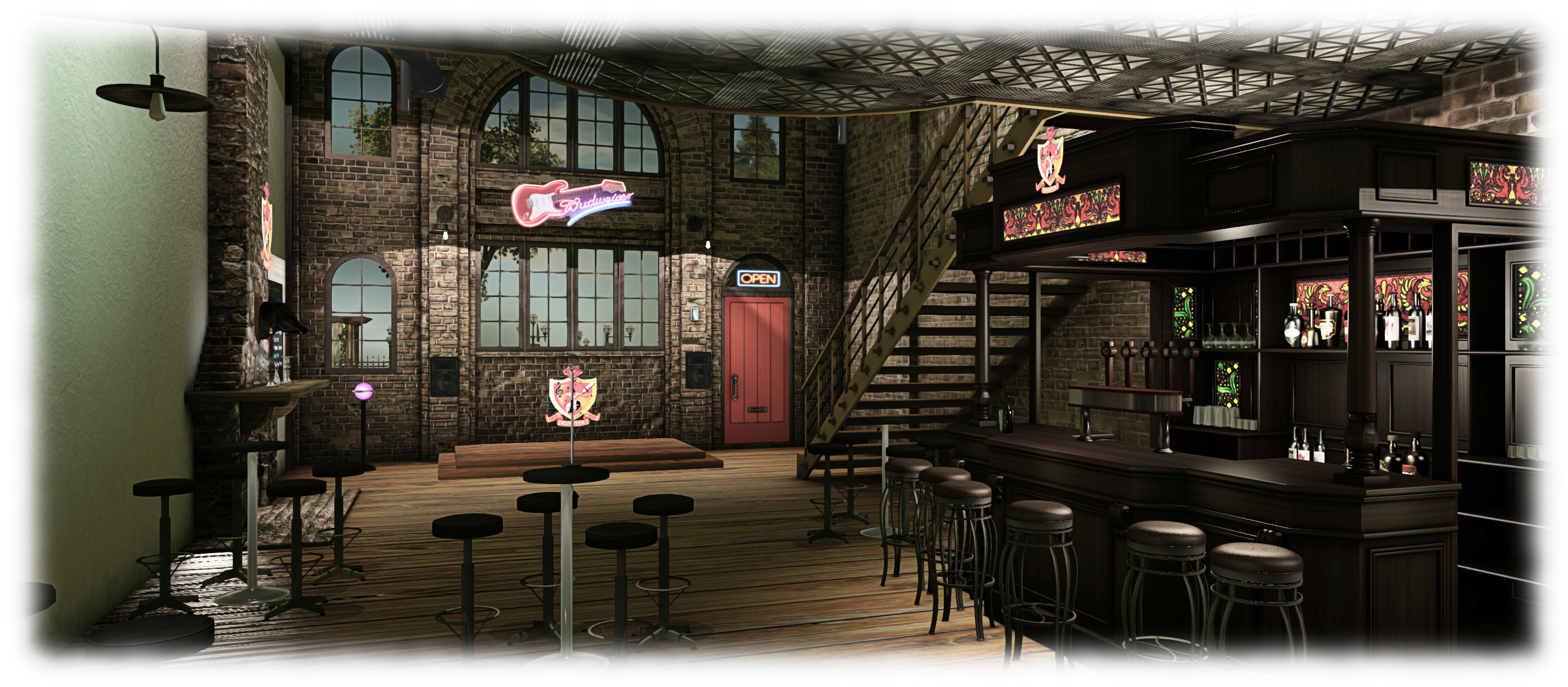
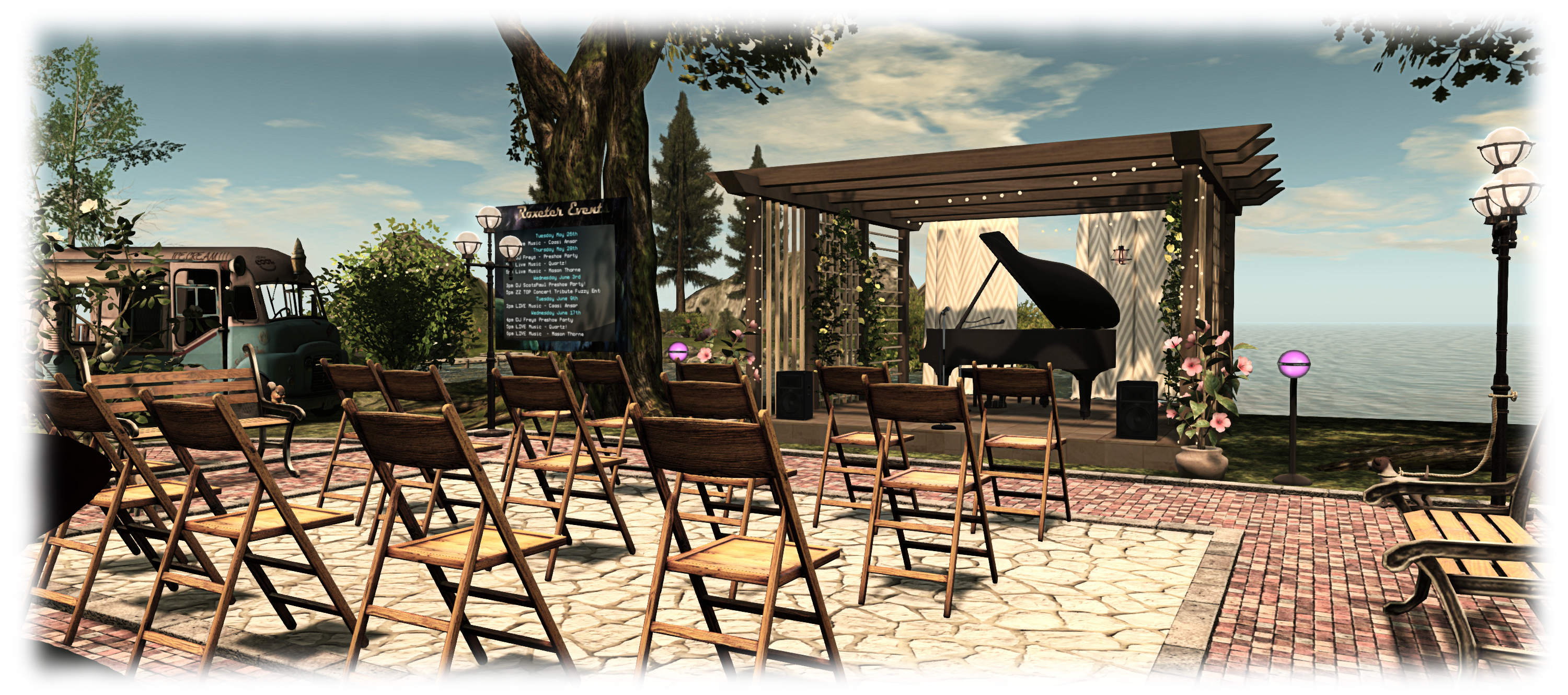
The region itself has something of a New England feel to it, with the core venues built around a small town-like locale centred around two squares. The first of these features an open air café which offers something of a social hub, around which sit a small number of commercial properties, the Roxeter library, and the pub (which offers an indoor venue for music) with the black rose radio station and media centre right next door. Beyond these sits an open-air music venue flanked on the one side by a large events stage built out over a beach, and on the other by the theatre.

The second square, this one with a fountain as its central feature, can be found behind the library building, with the Roxeter Place for the Visual Arts facing the library facade across it. At the time of my visit, Roxeter Place featured small displays of works by Darkyn Dover and John (Johannes1977), both of whom I admire for their exceptional photography, and Altarn Damon Bach – whom I admit is a new name to me, but whose work is equally stunning.

Roxeter; Inara Pey, May 2015, on Flickr Roxeter (Flickr)

Community is very much a part of Vivienne’s focus in Second Life, and this is reflected in the fact that not only offers venues to the arts and music communities, but uphill from the Roxeter Place for the Visual Arts still a number of private houses available for rent to interested parties (please keep in mind some are already occupied); there is a small realtor’s office down in the town offering details of the available lots. Finally, and as no town should be without one, just across a narrow stream sits the local church and manse. The latter is also a private residence, so again, do keep that in mind when visiting, although you might want to look around the church grounds for the entrance to the catacombs below!

From this description, you might think everything sounds a little cramped in the region. Well, not so; considerable time and effort has gone into developing Roxeter and its venues, so the entire region has a feeling of open spaces as well as having something of a small town look. Indeed, with the off-sim islands on one side and craggy peaks on the other, the entire effect is that of being in a coastal town as it looks out over the open sea.

Roxeter; Inara Pey, May 2015, on Flickr Roxeter (Flickr)

A major aspect of Roxeter is that it is entirely non-profit: the region is paid for entire out of the revenue generated by Vivienne’s Black Rose store (which is located high overhead and can be reached by the teleport point inside the little Black Rose shop in the town), with the aim of the venues here being, as Vivienne described, to promote music and the arts in Second Life and provide a means by which artists, musicians, DJ’s the theatre groups can present their music and work.

Obviously, operating a group of venues like this takes time and effort, and Vivienne has brought together a team of talented individuals to help keep Roxeter moving forward.  Freya Lovenkraft is managing the live entertainments, and has started a video series, Behind the SL Music, hosted at Roxeter’s Black Rose Radio, in which she interviews and chats to people from SL’s music industry. Her first interview, with Mason Thorne, is available for viewing.

Artist Shakti Adored curates the Roxeter Place for Visual Arts, while Ercila Robbins manages the library, which had a literary / knowledge focus. Filling out the current team is Trinity Taryn Ansome, who is Roxeter’s Second Life Arts, Music and Culture blogger.

Roxeter; Inara Pey, May 2015, on Flickr Roxeter (Flickr)

All told, Roxeter is quite a superb undertaking with an already very impressive events calendar. There is also an in-world group to keep abreast of news and event notices, while all the latest from the region can also be found on the Roxeter web site.

If you’re looking for a new music / arts / theatre venue, then this is a place you should definitely make a point of visiting.

Related Links


Noble people and beautiful places remembered in Second Life

Nico Vichan: American Nobility - Sabra Art Gallery, May 2015
Nico Vichan: American Nobility – Sabra Art Gallery, May 2015

I’ve long admired and enjoyed the art and photography of both Nino Vichan and WuWai Chun. so given both currently have exhibitions being hosted at the Sabra Art Gallery, operated and curated by Kylie Sabra, I took the opportunity to hop over and tour both.

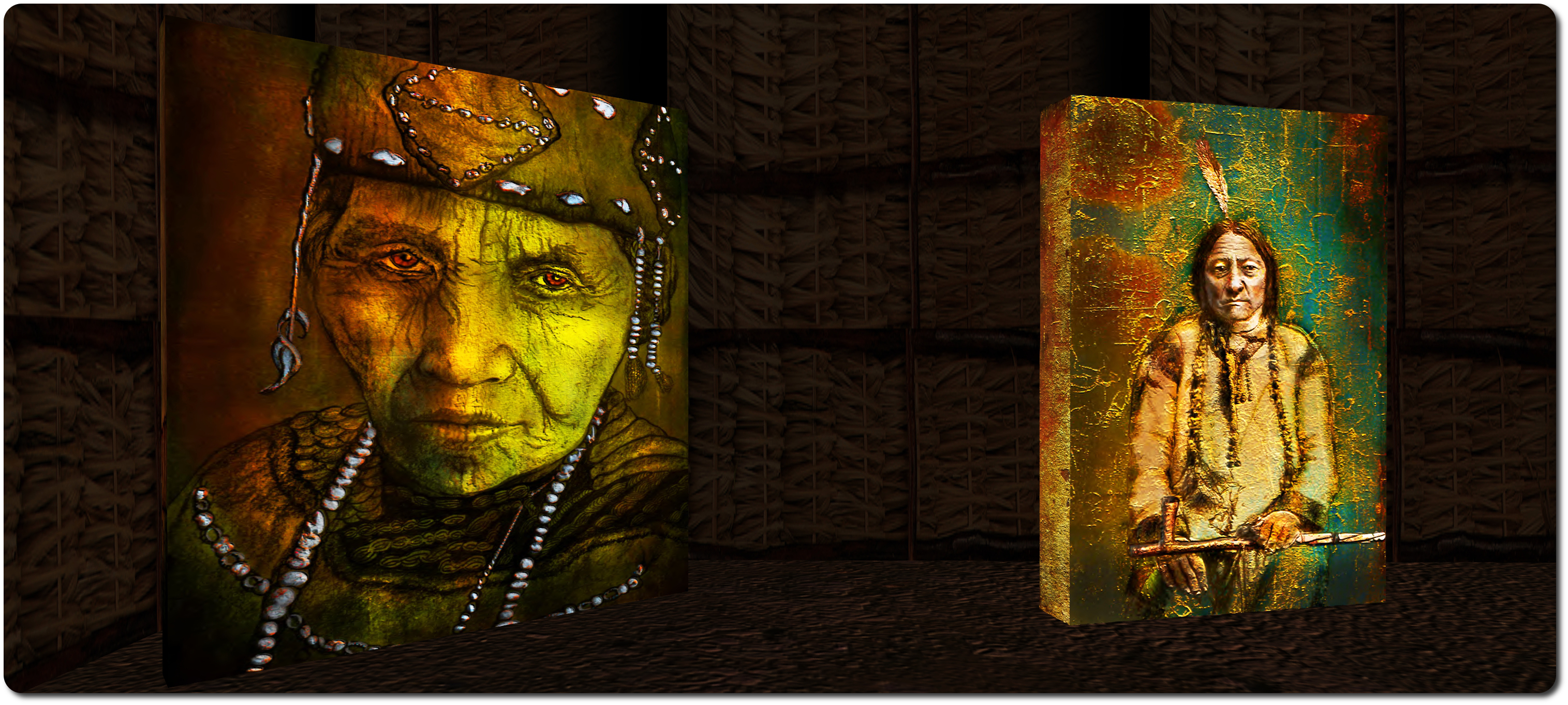
American Nobility, Nino’s exhibit, is a beautiful and powerful series of images of Native Americans, offering both a homage to their history and something of a reminder of their harsh treatment.

Nico Vichan: American Nobility - Sabra Art Gallery, May 2015
Nico Vichan: American Nobility – Sabra Art Gallery, May 2015

Walk through the two chambers displaying Nino’s work, and you’ll meet proud and dignified individuals, previously captured in images from a bygone era, and here given a new lease of life by Nino. Some you may recognise, such as Sitting Bull, in a familiar pose with his peace pipe in one hand. Other may not be so familiar, such as Running Rabbit, immortalised in a 1900 black-and-white postcard for the edification of “civilised” people. All have, however, been captured in images  – mostly monochrome or sepia, and have here been given new life through Nino’s eyes and hands.

“This exhibition,” Nino states, “presents the contrast between the dignity and spirituality of the indigenous people of the North American continent and the genocide of these and other indigenous people throughout the world.”

Nico Vichan: American Nobility - Sabra Art Gallery, May 2015
Nico Vichan: American Nobility – Sabra Art Gallery, May 2015

All of these images are striking in their own way; but the all have one thing very much in common: the look in their eyes.

It is often said the the eyes are the windows of the soul; and in these images, Nino has powerfully captured this There is a deep dignity evident in the eyes of his subjects – very powerfully so. In fact, Nino told him it was the eyes of his subjects, as captured in images by others, which drew him to portray them himself.

Such is the life Nino has breathed into these images that it is almost impossible not to find yourself drawn to the eyes as well; there is very definitely a sense of nobility and wisdom to be found within them. I challenge anyone not to stand before his interpretation of Wife of Madoc Henry – Klamath (seen in the image headlining this article) and not be captivated by her eyes. And when you’ve done so, go back and look again at each of the paintings in turn.

And don’t be surprised if you hear the distant whisperings of the Great Spirit.

WuWai Chun: Places - Sabra Art Gallery, May 2015
WuWai Chun: Places – Sabra Art Gallery, May 2015

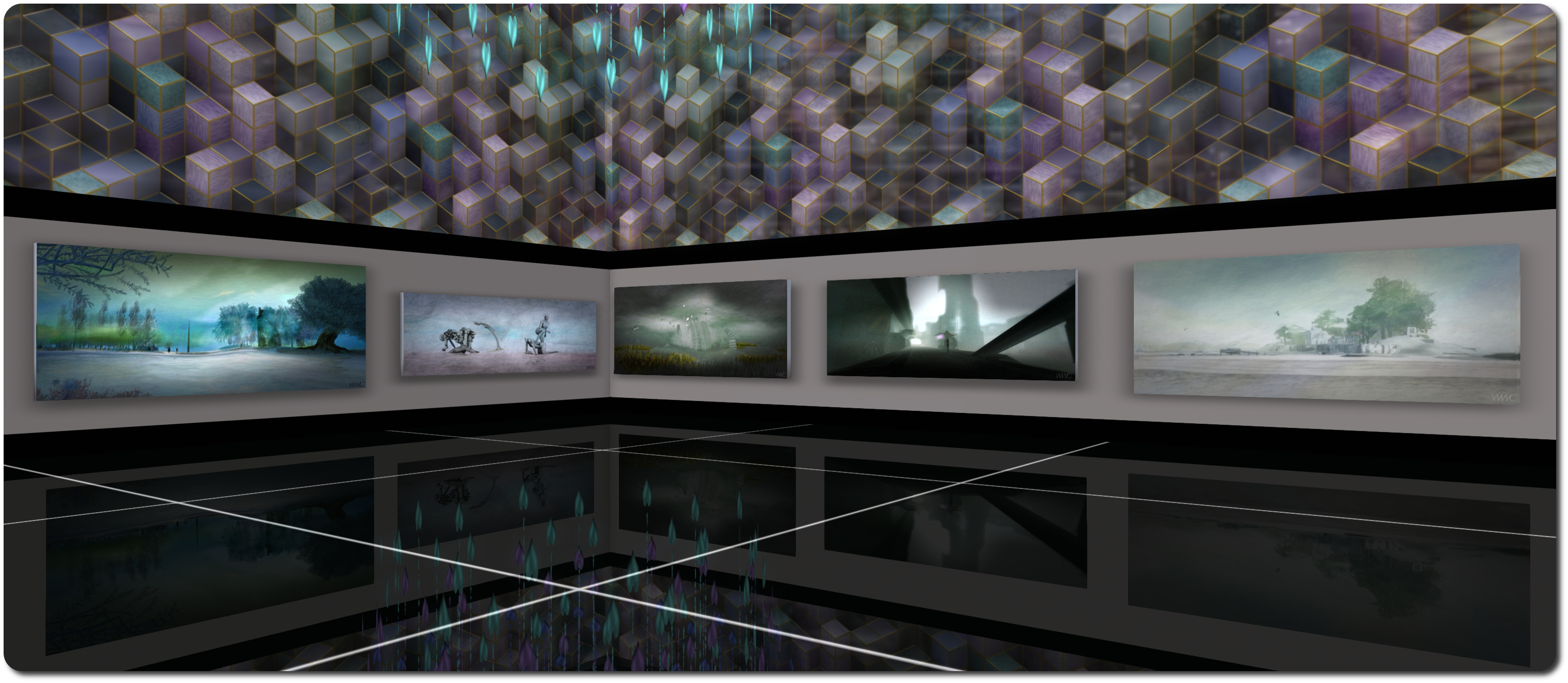
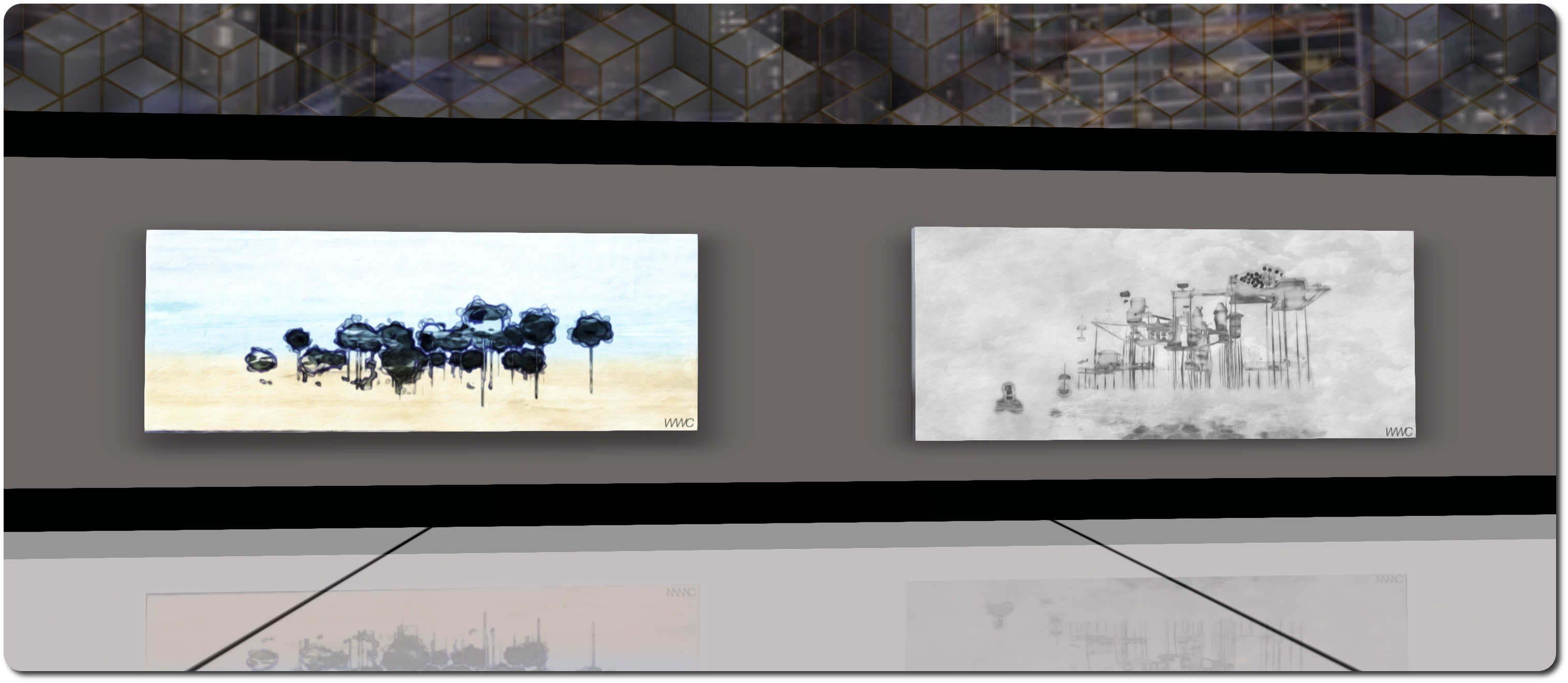
Places is WuWai Chun’s latest collection of images captured from around Second Life and presented in her own unique and utterly captivating style.

“There are many beautiful places in second life,” WuWai says. “Some of the places in the pictures no longer exist, others have changed. The pictures are an expression of my perspective and mood of the places. Just as art is in the eye of the beholder, the creations of the SL-builders can be perceived from a personal and own point of view. I did this with the help of the windlight settings in the Firestorm viewer as well as the possibilities of image processing.”

WuWai Chun: Places - Sabra Art Gallery, May 2015
WuWai Chun: Places – Sabra Art Gallery, May 2015

The result is a beautiful series of images that capture some famous (and perhaps not-so-famous) sites from within Second Life, offered in a remarkable range of styles and finishes – so much so, that one could be forgiven for thinking the exhibit features the work of more than one artist.

These are images that evoke strong feelings of wanting and longing – wanting to visit those we’ve not previously witnessed and are still available, and longing to see again those we have visited in the past, but which are now no more.

Proceeds from the sale of any copies of WuWai’s images will be donated to Feed A Smile, the in-world charity arm of Live and Learn in Kenya (LLK), making this exhibit doubly worthwhile visiting. And don’t forget you can also find WuWai’s work on her Flickr feed.

WuWai Chun: Places - Sabra Art Gallery, May 2015
WuWai Chun: Places – Sabra Art Gallery, May 2015

And while there, do please visit the other sections of the Sabra Art Gallery, all are very worthwhile seeing; and consider making a donation to help towards meeting on-going running costs.

Related Links