Shadow Play: Tales of Urbanization of China

Shadow Play: Tales of Urbanization of China
Shadow Play: Tales of Urbanization of China, Chapter One – please click for full size

Shadow Play: Tales of Urbanization of China is a project by a collective entity known as Lily & Honglei (in fact three artists – Xiying Yang, Honglei Li and He Li, based in Beijing and New York). It spans three distinct mediums – the physical world, the virtual world and augmented reality – and combines modern technology with the ancient art of shadow puppetry to present a unique perspective on the changes people in China have, and are, facing.

“Over the past few decades, China has been undergoing urbanization at an astounding pace. In 2013, the newly inaugurated national leadership raised the process to a new gear when it unveiled its plan of converting 70 percent of the population to a city-oriented lifestyle by 2025,” the Artists note in their introduction to the work.

“Such a significant change would undoubtedly transform the character of a country that has been largely agrarian throughout its millennia of history. One may wonder how, and to what extent, the landscape, culture, and daily being of the nation’s people may be altered. As artists, we are compelled to explore and reflect upon the various phases of this historic undertaking.”

Shadow Play: Tales of Urbanization of China

Commissioned by New Radio and Performing Arts, Inc., and sponsored by funding from the Jerome Foundation, the  virtual reality element of Shadow Play: Tales of Urbanization of China take the form of a 4-chapter story located on land provided by the University of Massachusetts, Boston.

The four chapters, The Land: Death of the Village Head, The Ruins: Lost Children, The City: Into the Void and The Maze: No Exit, unfold across a series of ornate panels designed to evoke the nature and characteristics of shadow play, and mix traditional Chinese artistry with modern photography and drawings to tell an unfolding story. Each chapter is intended illuminate genuine situation that have arisen in China as a result of China’s shifting (and often enforced) face from those of an agrarian society to a highly urbanised society: clashes during land evictions, child abductions, the rise in suicides among migrant workers, and the impact of cultural and environmental degradation.

Shadow Play: Tales of Urbanization of China

To best understand the story, I’m recommend a visit to the Shadow Play website, and in particular to the cast of characters. (this page also provides an overview of the augmented reality element of the work, which can be experienced on iPhones, iPads and Android devices under defined circumstances and using the Layar application).

Once you’ve got a handle on the characters involved, the individual elements of the story are easy to trace.  Each of the panels is quite extraordinary in execution, with some powerful motifs – most noticeably with the faceless forces of the police (who I suspect are representative of the large faceless and remorseless bureaucratic  machine).

The final chapter of the story is in two parts, one on the ground, and the other in the air. The former includes a model of the Great Wall of China in flames. Originally a part of a 2010 installation by the artists called Celebrate, the burning wall stood in that pieces as a statement against the Chinese government’s rigorous enforcement of Internet censorship and filtering. While that message still fits with the narrative presented here, it also further reinforces the narrative of cultural upheaval and separation from past ways of living for so many of China’s population.

Shadow Play: Tales of Urbanization of China

The airborne element of the chapter is equally striking: a single lit candle surrounded by faceless police, high-rise buildings and with blood-red tanks printed on the ground around it, offer a very clear symbolism of its own.

Shadow Play: Tales of Urbanization of China in SL is  a quite striking work; although I can’t help but feel one that is not presented here to its best advantage, and would benefit greatly were it to be displayed within its own dedicated skybox. Also, I cannot help but feel that it doesn’t fully utilise the uniqueness of a 3D environment such as Second Life, and that more interactive elements would greatly enhance its power and appeal. However, these asides don’t detract for the artistry evidence in the pieces, particularly the panels representing the first two chapters. which are beautifully striking.

Related Links

Walking among Monster Dogs

Lives of the Monster Dogs - LEA6
Lives of the Monster Dogs – LEA6

Now open at LEA 6, as a part of the University of Western Australia’s Full Sim Art series, is Lives of the Monster Dogs, an installation by Vilvi Rae.

Located on a set of white platforms that are themselves visually stunning (and something of a tribute to the monumentalism architectural style of Alvar Aalto) which rise from the otherwise flooded region, the exhibit showcases art from furry fandom, the subculture interested in fictional anthropomorphic animal characters with human personalities and characteristics.

Lives of the Monster Dogs - LEA6
Lives of the Monster Dogs – LEA6

“Furries have been part of Second Life right from the beginning (although only part of the fandom inhabits Second Life),” Vilvi notes. “Furry fandom is many things for many different people. Many artists inside the fandom express themselves through art depicting furry characters.”

Vilvi has curated the pieces displayed in the installation, taking time and effort to seek the artists’ permission to reproduce their work in-world. The result is an engaging, informative  display, with over 30 pieces of art from a number of artists on offer to visitors. In addition, one of the platforms includes a small media centre providing links to Vilvi’s own excellent machinima on Vimeo, including the award-winning Sun Dog, which took the 2nd Runner-up prize in the UWA-sponsored Machinima section of the 2014 Screen My Shorts Project Homeless short film challenge.

Lives of the Monster Dogs - LEA6
Lives of the Monster Dogs – LEA6

Everything about this exhibition has been carefully and beautifully executed, including the title itself, which as Vilvi notes, is drawn from the 1997 novel of the same name by Kirsten Bakis. Touch any of the pictures on display and you’ll receive information on the piece and its artist in local chat, while the  minimalist form of the structural components ideally presents the works on display. Finally, the exhibition is topped through the use of Fox Amoore’s music stream.

I confess to not having come across the latter until visiting Lives of the Moster Dogs, but the music is not only fitting given Fox’s links to the furry community, it is in itself outstanding, and my thanks go to Vilvi for introducing me to it – do make sure you have music streaming turned on as you walk through the installation.

Lives of the Monster Dogs - LEA6
Lives of the Monster Dogs – LEA6

All told, a superb exhibit, perfectly showcasing the artistic talent within the furry community;  Lives of the Monster Dogs will remain open through until the end of January 2015.

Related Links


Opening the virtual doors to The Great Gatsby

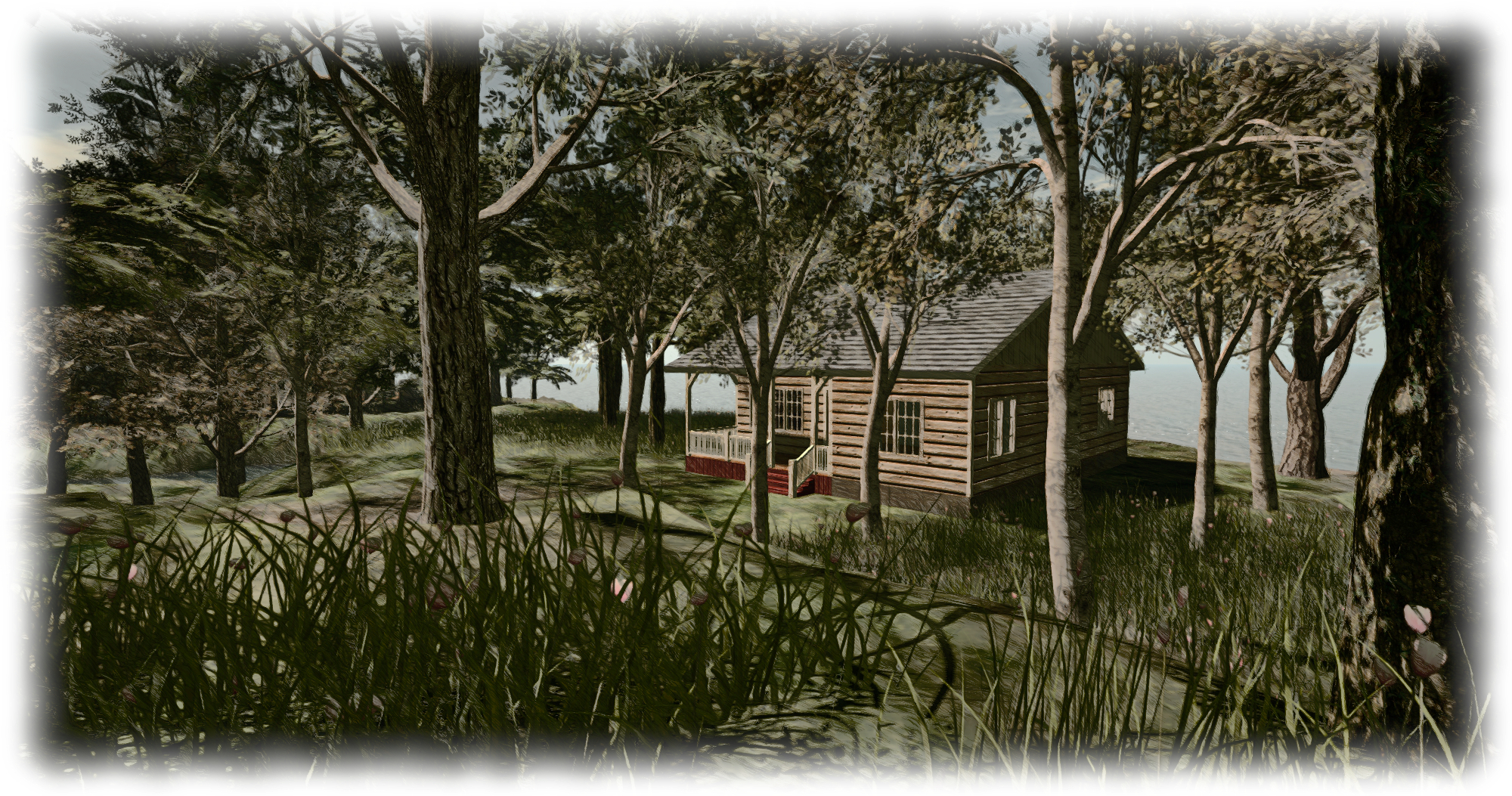
“And so with the sunshine and the great bursts of leaves growing on the trees, just as things grow in fast movies, I had that familiar conviction that life was beginning over again with the summer. ” (The Great Gatsby, Chapter 1) – Nick Caraway’s summer cottage, Explore the Great Gatsby

In December 2014, I wrote about a new venture in educational outreach and public engagement through the use of virtual worlds when I took an early peek at Seanchai Library’s upcoming Explore: The Great Gatsby, the first instalment in their new Explore the Stories Behind the Art series.

Coinciding with a production of Simon Levy’s stage adaptation of The Great Gatsby, which will be in performance from January 23rd through February 8th at the Tacoma Little Theatre (TLT), Tacoma Washington State, Explore the Great Gatsby is a collaborative project undertaken by TLT and Seanchai Library, and forms a part of the latter’s extensive facilities in the virtual world of Kitely.

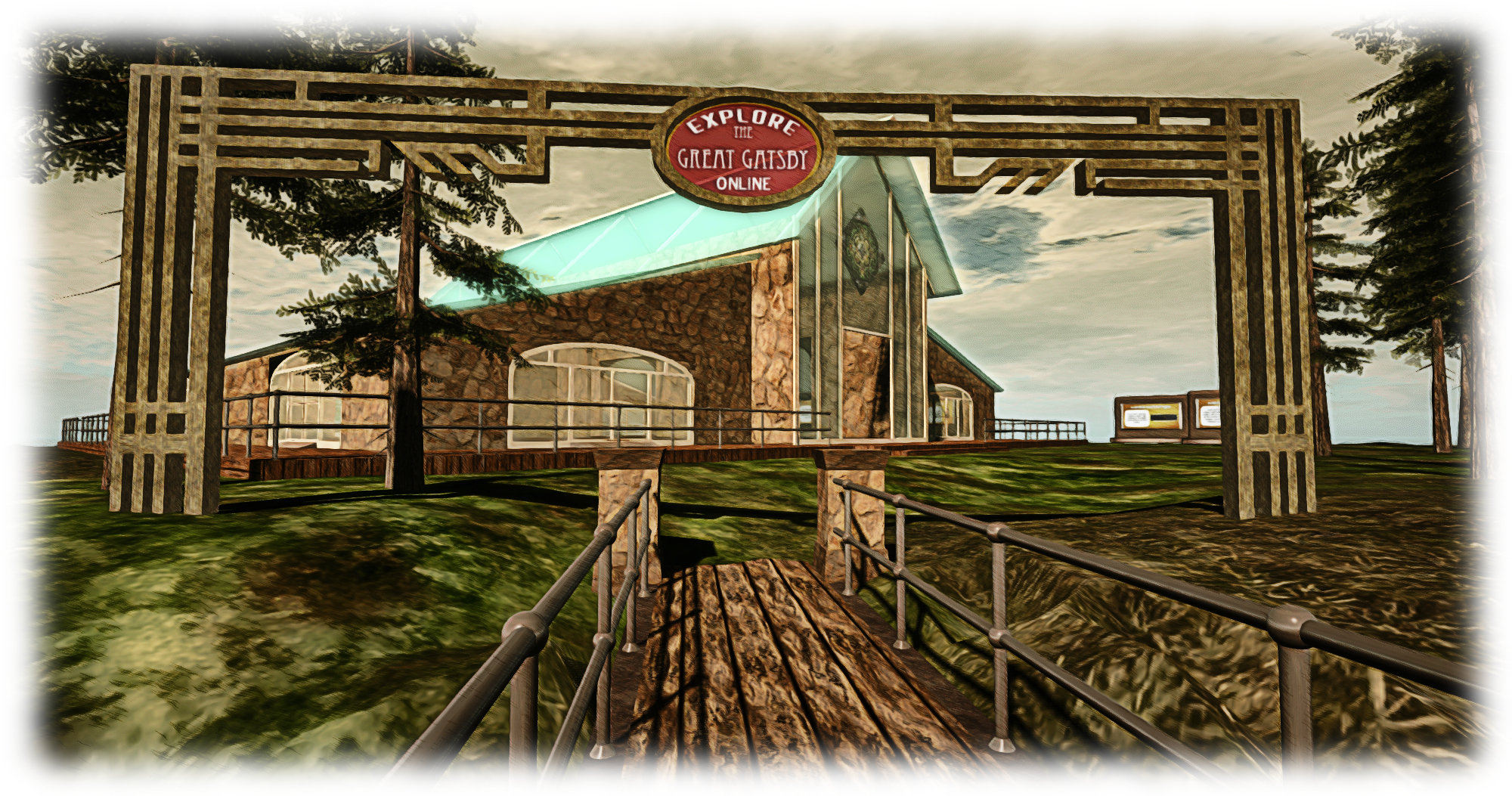
Officially opened on Thursday, January 15th at 12:00 midday, Explore: The Great Gatsby allows visitors the opportunity to visit key locations from the novel and play, and by doing so learn more about the era in which the story is set, explore Fitzgerald’s life and writings, and discover more about the theatre in which the play is being performed. It is open to users of virtual worlds and, as a part of the collaborative nature of the project will be presented to audiences attending performances at TLT as a place they can visit.

"But above the grey land and the spasms of bleak dust which drift endlessly over it, you perceive, after a moment, the eyes of Doctor T. J. Eckleburg" (The Great Gatsby, Chapter 2)- The "Valley of Ashes", an iconic part of the novel and home to the tragic Wilsons (that's their garage you can see being built in the background), forms one of Explore The Great Gatsby locations
“But above the grey land and the spasms of bleak dust which drift endlessly over it, you perceive, after a moment, the eyes of Doctor T. J. Eckleburg” (The Great Gatsby, Chapter 2)- The “Valley of Ashes”, an iconic part of the novel and home to the tragic Wilsons, forms one of Explore: The Great Gatsby locations

“We have information available in our programme and via our website,” TLT’s Managing Artistic Director Chris Serface said in reply to my question about how audience will be made aware of the project. “I will also mention it in my curtain speeches that I give each night,  and in addition local media outlets have been alerted about the project and we will hopefully get some coverage in that respect.”

Chris and Explore: The Great Gatsby’s creative director and powerhouse behind the partnership, Caledonia Skytower, had kindly offered to allow me a preview tour of the in-world facilities ahead of the opening, and while construction was very much still under way. “We’re also producing a short video on Explore,” Cale added, “TLT will be able to show that looped on their lobby screen.”

To assist those unfamiliar with using virtual worlds, the TLT website links to a special Explore website created by Seanchai Library, which provides basic guidance to visitor on downloading and installing a viewer, and a guide to using an avatar.

aaa
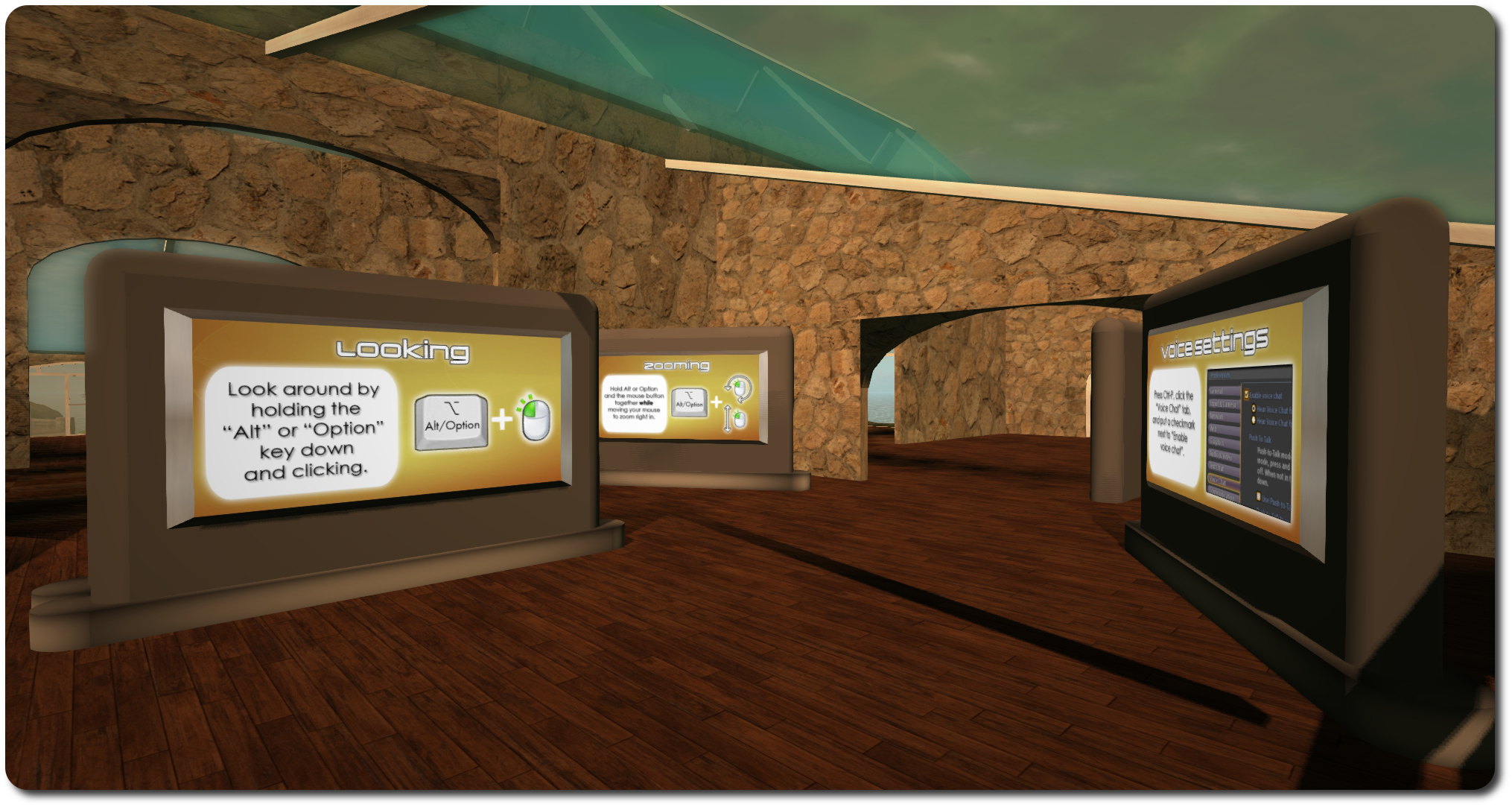
Seanchai Library’s Explore website is supported by the Explore: The Great Gatsby welcome centre,  where users new to virtual worlds can receive guidance on the basic mechanics of in-world activities: walking / navigation, interacting with objects, using media and voice, and so on. The Welcome Centre also acts as a social hub for the Explore experience

As well as providing the opportunity to explore the locations of the novel and learn more about Fitzgerald and his writings on their own, Explore:The Great Gatsby will feature a range of events both before and during the play’s run at Tacoma Little Theatre.

The first of these will launch on Friday, January 16th at 19:00 SLT / PST with the opening reading from the novel, which will take place in a small park specifically created for such readings. Part two will then follow at noon SLT / PST on Saturday January 17th, with the developing schedule of events available at the Explore website.

To encourage repeat visits to the installation, elements will be rolled-out over the course of the the next few weeks, such as the arrival of Jay Gatsby’s mansion. This is likely to initially appear in full party regalia representative of Nick Carraway’s first major encounter with Gatsby; later the mansion will be redressed, again to encourage further re-visits.

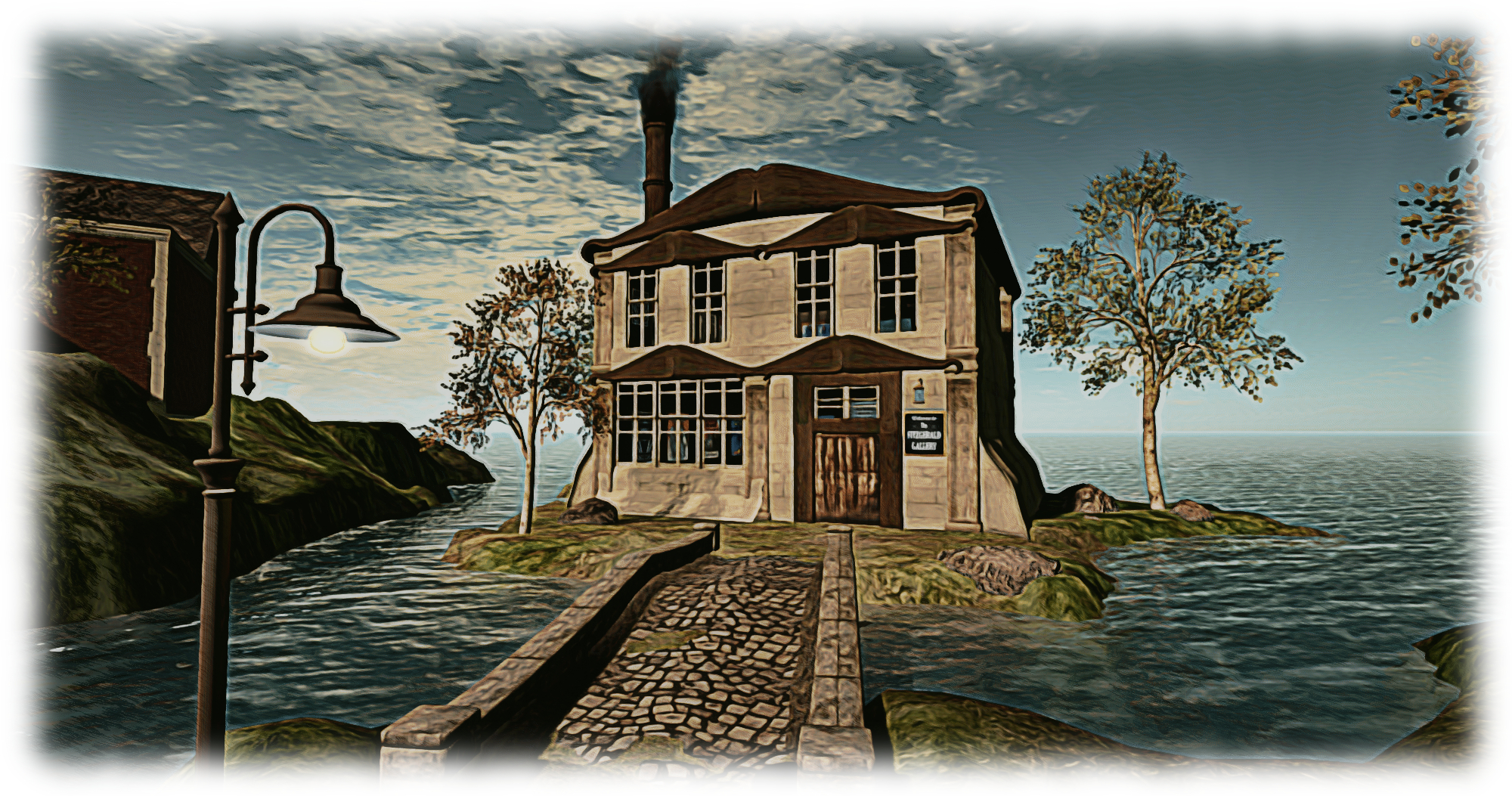
The Fitzgerald Gallery, located close to the facade of the Buchananan's mansion (and which houses a replica of the Tacoma Little Theatre), provides information to vistors on F Scott Fitzgerald's life and times and his writings
The Fitzgerald Gallery, located close to the façade of the Buchanan’s mansion (seen just on the left edge of this sketch. and which houses a replica of the Tacoma Little Theatre), provides information to visitors on F Scott Fitzgerald’s life and times and his writings

As a part of its service to the community in Tacoma, TLT present daytime performances of the plays they stage for local schools to attend. Thus, through the Explore: The Great Gatsby partnership with Seanchai Library TLT is presented with a dramatic – no pun intended – new way to engage with teachers, educators and school children in an immersive manner which links the performance of the play directly with classroom learning opportunities. In preparation for this, Chris Serface has been meeting with local teachers and explaining the environment to them – and has been getting very positive feedback.

Explore: The Great Gatsby is the ideal début for Seanchai Library’s Explore series, being something of a labour of love for Caledonia Skytower, who has been closely involved with the Tacoma Little Theatre both professionally and artistically for a number of years.

A look inside Explore the Great Gatsby's Welcome Centre
A look inside Explore the Great Gatsby’s Welcome Centre

Residents of virtual worlds can visit Explore: The Great Gatsby at any time simply by logging-in to the Seanchai Library homeworld on Kitely, or teleporting / hypergriding to it. Anyone with a love of The Great Gatsby and / or Fitzgerald’s work, or indeed, interested in learning about one of the oldest community theatres in the United States, and the oldest on the U.S. west coast, with a rich heritage going back to 1918, is warmly encouraged to pay Explore the Great Gatsby at least one visit.

Related Links


OSVR: the Swiss Army Knife for VR?

OSVR logo-2January always bring with it the International Consumer Electronics Show (CES). At the time the show was running, I looked at the “public début” (as Brendan Iribe, the Oculus VR CEO called it) of the company’s latest prototype headset, Crescent Bay, and some of the recent news coming out of Oculus VR.

However, while Oculus were getting a lot of air-time at CES, perhaps the most interesting announcement regarding VR came not from Oculus VR, but from gaming equipment manufacturer Razer and high-end VR specialist firm Sensics. who together announced a new development ecosystem for VR: the Open Source Virtual Reality (OSVR).

OSVR aims to create an infrastructure for common VR development work
OSVR aims to create an infrastructure for common VR development work (image: osvr.com)

While many companies are developing VR capabilities – head tracking systems, camera systems, gesture-based and other controllers, games and entertainment packages around the Oculus Rift, the fact is that the consumer market is liable to see a lot of HMDs and peripherals with a VR focus emerging over the next few years, to say nothing of applications and suchlike.

In terms of HMDs Zeiss have already launchedHMDs for various purposes, notably and most recently their sub- US$100 Zeiss VR One for smartphones at the same time Samsung launched their “Oculus inside” Gear VR, both of which I wrote about in December. Sony is working on the Morpheus, Sensics is working on its own consumer-focused headset for the Playstation, while Vrvana and GameFace are working on HMDs while ANTVR used CS to announce their forthcoming headset will be compatible with the PlayStation 4  in addition to PCs, the Xbox 360 and other devices.

With so many different systems on the horizon, the creation of content and peripherals is becoming something of a minefield for developers in terms of ensuring their games, experiences and hardware has the largest possible reach within the new marketplace.

The intention behind OSVR, therefore, is to provide an environment for cross-platform / hardware development for VR, with different development engine plug-ins anyone can use  covering different headset, controller, tracking systems and so on. All of which is aimed at helping developers ensure their game or experience or controller or whatever works with the widest possible choice of VR options.

In this, it’s important to recognise that OSVR is not some kind of rival to Oculus Rift, although the acronym is emblazoned across the front of Razer’s own forthcoming VR headset, previewed as a part of the OSVR announcement, and may have given some the impression that it is; something Razer’s Min-Liang Tan has been keen to clarify.

Razer CEO Min-Liang Tan: leading the OSVR charge. His company is often seen as the Apple of the gaming world, with Min himself as a latter-day Steve Jobs (image: ubergizmo.com)
Razer CEO Min-Liang Tan: leading the OSVR charge (image: ubergizmo.com)

“It’s not a competitor to guys like Oculus,” Tan said in an interview with the International Business Times. “This works with Oculus. The software is completely open-sourced. This is a set of standards. A couple of knee-jerk reactions is that people think this is competing with Oculus. Absolutely not. It’s an open platform.”

In the original OSVR announcement, Sensics CEO Yuval Boger also referenced OSVR being he development environment, saying, “OSVR’s open-platform approach accelerates innovation and provides consumers the freedom of choosing the best combination of hardware and software components. We are excited to partner with Razer and other industry leaders to build OSVR together.”

The list of companies on-board with OSVR is small but growing. In terms of HMD makers, the aforementioned Sensics, Vrnana and GameFace. It is also gaining a lot of support from input device manufacturers including Sixense STEM, Virtuix Omni, PrioVR and Leap Motion.

And what of Oculus VR? When asked about the move by journalist Matthew Terndrup, Oculus VR founder Palmer Luckey referred to it as a “good thing“, pointing to the fact that the Oculus Rift DK1 was also open-source. That’s as maybe, but Oculus VR were the first company to walk away from earlier discussions on VR standards shortly before it was announced they’d be acquired by Facebook. Not that they perhaps need to be directly involved in something like OSVR – as the tech media note, most companies are developing with Oculus in mind already, so it might be argued standards for development are more about allowing everyone else a better slice of the pie.

The OSVR website places great emphasis on games being its primary focus, and Tan himself points to games developer Gearbox Software being one of the founder partners in OSVR. However, the wider potential for VR across vertical markets is perhaps reflected in the fact that “OSVR supporters” are being sought from both from both industry and academia, with no apparent preference towards games development. Successful applicants being offered a prototype Razer Hacker Kit.

The Razer Hacker Development Kit - US$199.00 from June 2015
The Razer Hacker Development Kit – US$199.00 from June 2015 (image: razer.com)

It is this Hacker Development Kit (HDK) that perhaps gave rise to initial confusion about OSVR being a “competitor” to Oculus Rift in some quarters, having been announced at the same time as OSVR.

However, the HDK is actually intended as a low-cost development test rig for VR developers (although it is probable that Razer will eventually market their own HMD), designed to meet current VR standards and to be somewhat modular, offering hardware developers the ability to more readily use it in the development of their own hardware (e.g.tracking systems, cameras, etc.). It will be available from June 2015 at a price of US$199.00.

Developers can already register their interest in the headset (see the HDK link above), and in keeping with the open source nature of the project, the full specifications for the headset, together with a set of schematics for the major components suitable for 3D printing, can also be downloaded from the site for those wishing to DIY their own HMD.

Basic specifications for the HDK (source: razer.com)

In discussing the HDK and OSVR with International business Times, Tan suggested people think of the two like this,”Think about it like Android for VR. It’s not the kit. It’s a platform, completely open-sourced. All the software is on Android, it’s on Apache 2.0. All the hardware, we’ve uploaded it on the Internet, anyone can print it out at home.”

All told, and in terms of it being intended as a development ecosystem, OSVR + the HDK almost sound like consumer focused VR’s very own Swiss Army knife. It’ll be interesting to see how it fares.

Sources

OSVR will be participating in a Reddit Ask Me Anything (AMA) session on Thursday, January 15th, at 15:00 PST URL: reddit.com/r/virtualreality.

Home improvements (again)

Building on the island: revising things to provide room for a new plane and moorings for visitors
Building on the island: revising things to provide room for one of my new planes and moorings for visitors

As a result of expanding my selection of SL aircraft with a Beechcraft C90 and C33, both from DSA (I’ve really got this SL flying bug rather bad!), I decided I wanted to have one or other of them rezzed and ready to go at my little home island; after all, what’s the point of having something like an aeroplane (or a boat – or two for that matter) if you’ve constantly got to pull it out of your purse / suitcase / handbag / attaché case (or however you think of your inventory) to use it, when you have the space to show it off?

Truth be told, I’ve actually had an on-and-off nagging issue with the design of my little island for a while now. As regular readers may know, part of the island has been laid out to provide a stand for my PBY-6A Catalina, with a south-facing ramp to provide access to the water for take-offs. The problem here has been that the ramp led into what is pretty much a main navigation channel, while at the same time made the southern end of the parcel pretty much unusable.

As the island looked before the changes

Given this, I’d been thinking of re-arranging things for a while, but until the arrival of my new toys, I didn’t really have the motivation to get on with it. However, that I had been thinking of things did give me a loose idea of what I wanted to do before I started pulling things apart and gluing them back together.

First off, the Catalina stand and ramp got rotated through 90-degrees. This required a certain amount of fiddling, as the parcel is fairly narrow, so I had to spend time cutting and rotating and generally faffing with a prim to get a ramp that fit within the parcel boundary, didn’t cut too deeply into the land and which wasn’t so ridiculously steep the Catalina wouldn’t be able to climb it without grounding the hull and getting stuck.

The revised east facing ramp for the Catalina and the widened water basin for mooring boats

Once done, this freed-up the southern end of the island so I could make better use of that end of the parcel. As a result, and without dragging this all out, I’ve been able to add moorings for one of the additional ‘planes (which will be the C33  Debonair by default) and a place where visitors can moor their boats without a lot of additional faffing around on my part and hanging things in the air to make space for them. The move gave also me the opportunity to widen the water basin between the north and south sides of the island, providing additional mooring space there, if needed.

An unexpected outcome of this work was a reduction in the overall LI of all the structural elements on the south end of the island; not by a lot, but enough to allow me to add to the garden while still keeping a very decent ceiling of “free” capacity on the land. At the moment I’m thinking of adding a screen of small trees to visibly separate house & gardens from my budding “airport”, to give the former a greater feeling of privacy on those days when flying and boating aren’t that important.

The home changes even provide enough room for the C90 King Air
The home changes even provide enough room for the C90 King Air, if needed

So am I happy with the outcome? Overall, yes. At least until the next time the urge to glue prims together and play with mesh comes over me :).


Art at the End of Time

Orsini Tarantal - EOT Museum of Second Life Art
Orsini Tarantal – EOT Museum of Second Life Art

The End of Time estate, comprising a total of seven regions, is a beautiful haven open to the public which offers plenty to see and do. In particular, the estate offers two main venues for art, as well as featuring art displays through the paths and trails that wind through the estate.

The Museum of Second Life Art at The End of Time is a gallery space feature the work from both the virtual and the physical world by a number of artists with in a rotunda style building which, for me, seems to carry echoes of Frank Lloyd Wright.

Currently on display across the two floors of the gallery are pieces by Consuela Caldwell, Orsini Tarantal (RL: Javier Escudero Cuervas-Mons), JudiLynn India, Kynne Llewellyn and Max Bobair. All represent a rich variety of styles and -as noted – mix images captured in the virtual realm with pieces created in the physical realm, thus offering a highly individual gallery space  / exhibition displayed around a central free-form sculpture by Patty entitled Nude Describing a Staircase.

Kynne Llewellyn  - EOT Museum of Second Life Art
Kynne Llewellyn – EOT Museum of Second Life Art

Meanwhile, the Subway Gallery offers  a very different ambience, with the façade of a run-down quarter of a town somewhere, complete with the backdrop of industrial noises. The Subway’s latest exhibition opens at 14:00 SLT Wednesday, January 14th, features an extraordinary retrospective exhibition of poster art by Dana Pinkerton, and which celebrates the tenth anniversary of her rezday.

Dana Pinkerton - EOT Subway Gallery
Dana Pinkerton – EOT Subway Gallery

On display are some 30-ish posters Dana has created over the years, each featuring other avatars in what is a striking and very individual approach to portraiture. Many of the images on display feature SL DJs (Dana herself is a DJ as well as an artist and club owner), and may be familiar to some from the profile pictures of the subjects. The exhibit space itself has the feeling of being divided into two halves: the first room features posters with a high level of ambient lighting and more muted, natural colours, while those in the back room of the gallery are far more vibrant in colour and have something of an 80’s movie poster look about them.

During the opening event, a limited number of selected works, signed by the artist, will be available for sale, and there is an open invitation for those so interested to attend.

Dana Pinkerton - EOT Subway Gallery
Dana Pinkerton – EOT Subway Gallery

Wander the estate, and you’ll find other art on display – such as the “trash-art” sculptures by ZTAR Magic , a member of the LastPlak Collective. The estate also usually features Feather Boa’s remarkable “Butterflies” exhibit as well, displayed along an open-air walk, but is currently on loan to Art Forest through until the end of January 2015.

ZTAR Magic - EOT Ztar Magic Garden
ZTAR Magic – EOT Ztar Magic Garden

I’ll have more on End of time and my return blogging visit under a separate title; in the meantime, I’ll leave you with the relevant SLurls.

Related Links