This summary is published every Monday and is a list of SL viewer / client releases (official and TPV) made during the previous week. When reading it, please note:
It is based on my Viewer Round-up Page, a list of all Second Life viewers and clients that are in popular use (and of which I am aware) and which are recognised as adhering to the TPV Policy
By its nature, this summary will always be in arrears
The Viewer Round-up Page is updated as soon as I’m aware of any releases / changes to viewers & clients, and should be referred to for more up-to-date information
The Viewer Round-up Page also includes comprehensive links to download pages, blog notes, release notes, etc., as well as links to any / all reviews of specific viewers / clients made within this blog.
Updates for the week ending: October 20th, 2013 (with extras)
Official LL Viewers
Current Release updated on October 16th to version 3.6.8.282367 – core updates: Catalyst RC viewer with a start-up crash on latest AMD Catalyst drivers: 13.9, 13.10, 13.11 (download page, release notes)
Maintenance RC release on October 18th, version3.6.9.282553 – core updates: finer access control for estate/parcel owners; CHUI: toggle expanding Conversations by clicking on icon; GPU table update + more (download and release notes)
“ShareStorm” RC viewer released on October 18th, version 3.6.9.282535 – core updates: combines SLShare functionality (formerly 3.6.8.282036) and Snowstorm contributions (request teleport feature, et al – formerly 3.6.8.281997) – (download and release notes)
Black Dragon updated on October 15th to version 2.3.3 Alpha – core updates: Machinima Sidebar overhaul; greyscale and posterization post processing options (unfinished) – (release notes)
UKanDo viewer updated on October 21st to version 3.6.8.27869 – core updates: AMD Catalyst driver hot fix; RenderVolumeLOD defaults to 4; RLV updated to version 2.8.5.8; numerous fixes and additions (release notes)
Update October 28th: Transcripts from the panel are now available on this blog.
Update: The slides for Agenda’s presentation are now of a much higher quality (with thanks to Agenda in making them available outside of SL), and there is a link to a higher-quality video now included in the Related Links.
On Saturday October 19th, a panel of legal experts – real-life attorneys – sat down at the Rose Theatre, Angel Manor in Second Life to discuss the August 15th changes to the Second Life Terms of Service, address questions on the matter and remove some of the FUD which has built-up around the subject.
In attendance were Agenda Faromet, who in real life is an attorney specialising in privacy and internet law operating out of San Francisco, Tim Faith (SL: Yoss Kamachi), a Maryland attorney with a strong background in IT and who deals with matters related to copyright, IP, trademark, etc., and Juris Amat, a Massachusetts bar member who runs the Virtual Intellectual Property Organisation (VIPO). All three are members of the SL Bar Association, based in-world at Justitia.
In all, the session lasted just under three hours, with initial presentations by Agenda Faromet and Tim Faith (Juris Amat had difficulties attending the first part of the session). Tis was followed by a question-and-answer session moderated by Maxwell Graf, with Kylie Sabra relaying Juris Amat’s replies via voice.
A video of the session is available on-line, and there will be transcripts made available through other channels. What follows here are a series of audio files, which have been broken down from the main meeting for ease of listening, together with accompanying notes.
Agenda Faromet – Presentation (14 minutes)
This slideshow requires JavaScript.
Slideshow created from images courtesy of Agenda Faromet
Tim Faith (26 minutes)
Tim provides an overview of the SL Bar Association, before going on to talk about his own background. He then discusses copyright law and the concept of moral rights, both with regards to the United States and the rest of the world, providing an overview of terms such as “original work” and “exclusive rights” in terms of copyright, some of the general limitations on copyright exclusivity, how creativity itself can generate exclusive rights. He explains some of the natural and unavoidable complications of dealing with copyright in Second Life due to the nature of the platform, where almost every interaction impinges on matters of copyright, and why both Second Life could not exist if exclusive rights were absolute and why exclusive rights are limited through the likes of fair use / natural expiration.
He then covers why most licences used within Internet-based services are two-way, and need to be, and how Second Life might be said to differ from other on-line services such as Facebook, due to the ability of users to conduct user-to-user business. Finally he explains why people need to understand what their rights under copyright are, and to understand what might be being signed-away in accepting any contract; statements like “I clicked without reading” aren’t a defence – the legal system isn’t going to coddle people for not knowing their rights.
Looking at the Law (8 minutes)
Agenda and Tim discuss concerns arising from the Section 2.3 call by Linden Lab to “otherwise exploit in any manner whatsoever, all or any portion of your User Content (and derivative works thereof”, and the concerns that people have that this might allow the Lab to claim rights over such derivative works, whether or not they have been uploaded to Second Life. Includes a discussion unconscionability (procedural and substantive) and contracts of adhesion, and how they might apply to the ToS, together with and overview of changes to Californian law relating to arbitration agreements which may limit legal recourse.
Question and Answer Session
This has been broken into four parts for ease-of-listening. Questions for each part are given in text together with a times stamp for when they are asked / answered. Kylie Sabra substitutes for Juris Amat (who was unable to use voice) during the answers.
The Q&A session is split into four recordings, again for ease-of-listening. Each is given with the questions asked in the recording (and as entered into local chat during the meeting), so that readers can ascertain the order in which they’d like to listen to proceedings, should that have particular questions to which they’d like to hear answers.
Questions – Part 1 (23 minutes)
If the licence to LL stops being perpetual and irrevocable, wouldn’t that break people’s inventories and even content?
Is the ToS an attempt to place all of LL’s services under one document? Is this wise, given Google’s failure to do the same?
Has anyone talked directly to Linden Lab about its desire to expand licensure to other virtual worlds explicitly?
Does this not seem like a preparatory move prior to some kind of large-scale shift, either part of an exit strategy, a selloff or transfer of content (such as from marketplace to Desura)?
Are these current terms not technically illegal from a federal and international perspective, if for no other reason than the agreement was done under a certain amount of duress?
[11:10] Why shouldn’t creators be freaked-out by the “sell / resell”? – Includes discussion of the Visual Artists Rights Act.
[21:12] Does the new TOS apply only to items uploaded after you agreed to it? Or all your items from before also?
It’s time to kick-off another week of fabulous story-telling in Voice, brought to Second Life by the staff and volunteers at the Seanchai Library SL.
As always, all times SLT, and unless otherwise stated, events will be held on the Seanchai Library’s home on Imagination Island.
Sunday October 20th, 13:30: Tea Time at Baker Street
Sherlock Holmes in “The Adventure of the Abbey Grange.” (Sidney Paget / Strand Magazine, 1904)
Caledonia and Corwyn bring us another installment in Sir Arthur Conan Doyle’s volume of stories The Return of Sherlock Holmes.
Inspector Stanley Hopkins, who sought Holmes’ help in The Adventure of the Pince-nez once more appeals to the Great Detective for assistance. Sir Eustace Brackenstall, late of the Abbey Grange near Chislehurst, has been most foully murdered – and Hopkins believes it is the handiwork of the infamous Randall Gang, a family of burglars thought to be responsible for a number of robberies in the area.
Brackenstall had not been the most likeable of individuals in life; prone to heavy drinking and violence – Hopkins reports him as having once poured petroleum onto his wife’s dog and set the poor beast alight. Nevertheless, he has been murdered, and Hopkins would like Holmes’ input on the matter.
Travelling to Abbey Grange withe the Inspector, Homes and Watson meet with Brackenstall’s wife and examine the scene of the crime. Other than the fact the robbers departed with very little, everything appears to be much as Hopkins has told them and Lady Brackenstall described when they interviewed her. Clearly annoyed at being called to attend what appears to be an open-and-shut case, Holmes departs for London with Watson. However, during their journey, Holmes has a change of mind and hauls Watson off the train at a suburban station with the announcement that they are returning to Chislehurst – and thus they delve deeper into The Adventure of the Abbey Grange.
Monday October 21st 19:00: Classics of Science Fiction
With Gyro Muggins.
Tuesday October 22nd, 19:00: Spookable Irving: The Spectre of the Bridegroom and Others
Derry McMahon and Bear Silvershade return once more to deliver-up more tales from the pen of Washington Irving.
In The Sprectre of the Bridegroom, another tale from Irving’s The Sketch Book of Geoffrey Crayon, Gent, and written while he was travelling in Europe, we have a ghost story of sorts, laced with satire and rib-poking at the aristocracy, particularly one Baron Von Landshort, his relatives and – to a point – his daughter and only child, one so accomplished in the arts, Irving notes with tongue firmly in cheek, that she “could sign her own name without missing a letter, and so legibly, that her aunts could read it without spectacles.”
The Baron has arranged for his daughter to be wed to the Count Von Altenburg, whom neither have ever met. The Baron therefore arranges a banquet at his castle for the Count, but on the day on which it is to take place, the Count is mortally wounded in an altercation. Before dying, he beseeches a friend to carry word to the Baron and daughter why he could not keep his promised appointment. So begins a love / ghost story of a most unusual kind and with more than one little twist.
Wednesday October 23rd, 19:00: Doll Bones
Long-time friends Zach, Poppy and Alice like nothing more than playing with their action figure toys, using them to create their own world of fantasy, adventure and heroism. Unfortunately, twelve-year-old Zach’s father is not of the same opinion, and throws out all of his son’s toys, declaring the boy is “too old” for them.
Embarrassed and upset, Zach determines he must stop seeing Poppy and Alice completely. Something, however, has other ideas about this, and one night the two girls pay Zach a visit and tell him of a series of mysterious and frightening occurrences. Between them, the three youngsters are charged with a task they must complete – or face being cursed for all eternity …
Join Caledonia Skytower as she reads from Holly (The Spiderwick Chronicles) Black’s latest novel.
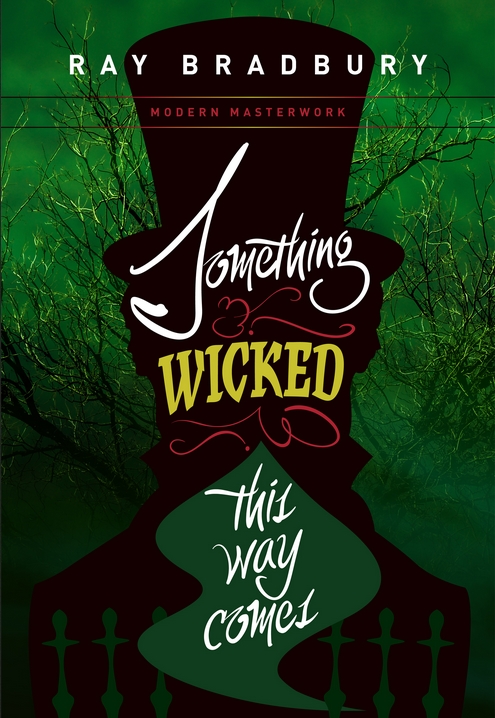
Thursday October 24th, 19:00 Something Wicked This Way Comes
With Halloween almost upon us, Shandon Loring brings us one of the classic modern tales of fantasy and horror, penned by the great Ray Bradbury himself, and inspired by events from Bradbury’s own childhood which spurred him on to become a writer.
At the age of twelve, Bradbury visited a carnival and encountered a magician, “Mr. Electro”, who commanded Bradbury to “live forever” and to embrace life, while also proclaiming him to be the reincarnation of a friend lost in the Great War. Such was the impact of “Mr. Electro” that the young Bradbury started writing “non-stop”.
Then, in 1955, Bradbury suggested to his friend, the actor, dancer and director Gene Kelly, that they collaborate on a film together, with Bradbury writing and Kelly directing.
Bradbury used a 1948 short he’d written about “Mr. Electro”, The Black Ferris and expanded it into a full-length film treatment. When the film idea failed, Bradbury revisited the treatment and developed it into Something Wicked…, with the benign “Mr. Electro” being replaced by the far more sinister “Mr. Dark”, himself inspired by Bradbury’s own earlier creation, The Illustrated Man. Thus a classic was born, one which did go on to grace the silver screen some twenty years after its original publication, adapted by Bradbury himself.
—–
Please check with the Seanchai Library SL’s blog for updates and for additions or changes to the week’s schedule. The featured charity for September and October is Water for People.Have questions? IM or note card Caledonia Skytower.
The following notes are taken from the TPV Developer meeting held on Friday October 18th. A video, courtesy of Northspring, can be found at the end of this report. The numbers in braces after each heading (where given) denote the time stamp at which the topic can be listened-to in the video.
A typical TPV dev meeting gathers (stock)
SL Viewer Release Pipeline Updates
The Catalyst RC viewer (version 3.6.8.282367) was promoted to the de facto release viewer on Wednesday October 16th. This viewer was essentially a “hot fix” to address a start-up crash on viewers using the latest AMD Catalyst drivers (13.9, 13.10, 13.11).
At around the same time, the Maintenance RC viewer RC 3.6.8.282335 noted in part 1 of this report as being released on October 14th was withdrawn. It was subsequently superseded on Friday October 18th by a new build, RC 3.6.9.282553, comprising the same updates: finer access control for estate/parcel owners; CHUI: toggle expanding Conversations by clicking on icon; GPU table update + more.
“ShareStorm” Viewer
Also on Friday October 18th, the SLShare RC (3.6.8.282036) and the Snowstorm contributions RC (3.6.8.281997) were withdrawn and superseded by a new “ShareStorm” RC viewer, version 3.6.9.282535, containing the updates from both.
Viewer Promotions – Time Frame
Due to the volume of work backed-up prior to the implementation of the new viewer release process by the Lab, RC viewers were initially being promoted to a release status on almost a weekly basis. This has slowed a little more recently, with a promotion to release occurring around once every two weeks (with the exception of the Catalyst RC “hot fix” viewer mentioned above). Barring further situations like the Catalyst RC, the plan is to try to promote an RC to release status around every two weeks.
Interest List Viewer
[01:20 – 22:18]
Richard Linden attended the TPV Developer meeting on Friday October 18th to discuss the upcoming viewer-side changes for the interest list project. He started by giving a high-level overview of the work.
The primary focus of this work has been on scene loading – how things are presented to you when you log-in or teleport to a region. Historically, most of the work related to the interest list has been driven by the simulator. This is not the most optimal way of doing things, and could mean, among other things, that when arriving in a region, you’d start to see things far away from you rezzing first before those much closer to you – so if you arrived inside a house, you’d see the buildings and trees outside of the house appear before the walls of the house would pop into view.
Recent work on the interest list has been aimed towards improving scene loading in the viewer
So the first part of the work focused on the server end of things. Most of this has already been deployed to the grid, and the benefits can already be felt. There is more structure in how the server sorts and prioritizes data to be downloaded to the viewer, so that when you arrive in a region, the objects which are closer to you or are bigger than others should render first (e.g. when you arrive in the house mentioned above, the floor, walls and ceiling appear before those things outside of the house).
The upcoming viewer changes take this work a stage further, but in more subtle ways. What is classified as a “cacheable” objects has been changed, for example, allowing the viewer to potentially store more information on objects locally, rather than perhaps depending on the simulator for information relating to them. Additionally, the viewer will be able to retain more overall information relating to a region than is currently the case – fewer “killobject” messages are sent by the simulator telling the viewer to remove objects from cache, allowing them to be re-used rather than the viewer necessarily having to request data on them from the simulator once more.
There are other improvements within the code to assist with better scene loading, such as when you arrive in a region you’ve never visited before (and so have nothing cached). Under the current system, the simulator will send queries to the viewer about every object in the region, because it has no way of knowing if the viewer has data for the region already cached. Under the new code, as the viewer connects to the simulator it will tell the simulator it has no data cached. The simulator can then get on with prioritising the data and getting it downloaded to the viewer, with the result that “several seconds” are shaved from scene loading times.
In other words, to borrow from Richard put it, the updates put the viewer far more in the driving seat with the interest list.
As always, please refer to the week’s forum deployment thread for the latest news and updates.
Tuesday October 15th saw the Main channel updated with the server maintenance project previously on all three RC channels in week 41.
The planned deployment of a new server maintenance project to all three RC channels was threatened at the 11th hour by the discovery of a bug which took time to resolved, and left the package teetering on the edge of whether it would pass QA testing in time to make the deployment cut-off.
Maestro Linden’s disco-themed Server Beta meeting venue (stock)
Speaking at the Server Beta meeting on Thursday October 17th, Maestro Linden expanded on this last-minute bug. He explained that it took the form of objects failing to vanish from a user’s field of view after being de-rezzed, and would instead remain as a ghosted object until touched, because the user’s viewer wouldn’t get the update message that the object had been de-rezzed. The problem for the Lab was that the issue would occur in some places but not in others, and seemed to be dependent on things like camera position and draw distance, making it hard to reproduce consistently.
Andrew Linden finally worked out that the problem would only occur in regions with a neighbour to the east and if the user’s viewer was connected to that region. So depending on the region, the object’s position, your camera position and draw distance, the bug might or might not trigger.
While the issue was successfully addressed and the update package successfully deployed on schedule, the Lab are still uncertain as to why the bug should only occur when there is a neighbouring region to the east; however, it’s fair to say that this is not the first “east related” bug to have been found.
Group Ban List
Baker Linden is continuing with internal testing with the new code, using Maestro and Caleb Linden as his guinea pigs. Apparently, the server-side code is hung-up in LL’s internal QA, possibly awaiting resources there. As such, it has yet to become visible and there are currently no regions available on Aditi which include the server-side updates.
Other Items
A problem has been noted following-on from the recent updates to prevent people from using recursive rezzing to grief regions (see my week 35 and week 37 reports). As a consequence of this, some engaging in combat in Second Life have encountered issues wherein combat vehicles in regions with short auto-return times can have their ordnance immediately returned when a weapon is fired, and any temp vehicles are unable to rez attachments, even when sat upon.
Commenting on the situation, Maestro agreed the use-case is legitimate and that some exemption should be made for sat-upon vehicles / objects in these circumstances. He’s agreed to put the matter to Simon and Andrew Linden for further discussion on the best way to approach and resolve the issue.
Back in May 2013, and courtesy of The Verge, I was able to report on the development of castAR, an Augmented Reality headset, a prototype of which made an appearance at the May 2013 Maker Faire in New York.
The project, initially started by Jeri Ellsworth and colleague Rick Johnson while both were employed by Valve, came about by accident. However, development work in-house at Valve came to an end in February 2013 when both Ellsworth and Johnson were let go by the company. But in a generous move, Gabe Newell, co-founder and Managing Director of Valve, gave them his blessings to take the idea and the associated IP with them.
The castAR glasses
As I reported back in May, convinced the idea had legs, Ellsworth and Johnson founded their own company, Technical Illusions, and have been hard at work developing things further.
The castAR system differs from the likes of Oculus Rift in that in its primary function is augmented reality, rather than immersive virtual reality. It projects images onto a retroreflective projector screen. A camera also built-in to the glasses tracks the exact position of your head so that the software can adjust the 3D perspective in real-time. The result is a holographic-like projection of images and objects from the computer as 3D objects which you can move around and examine.
At the time of the May 2013 Maker Faire, the team had managed to put together a very rough-and-ready prototype of the system, and have since been working to further refine the technology and the idea. In September, they were back in New York for another Maker Faire, where they were awarded blue and red ribbons with a win of Editors and Educators Choice. Buoyed by this, the team set-out to move ahead with their planned Kickstarter project in order to secure funding which would allow the work to continue and would hopefully see the system further refined, including the creation of a software development kit which might in turn help with adoption of the system.
The Kickstarter launched on October 14th, 2103 together with a video expanding on the idea and their plans. They’d hoped to raise $400,000 in a one-month period to November 14th, 2013.
As of October 18th, over $500,000 had been pledged by more than 2,000 people.
The castAR wand
Interaction with the virtual projections can be achieved through both the use of traditional games controllers and joysticks, or via a dedicated “magic wand”. The latter allows for a wide range of interactions, with Sean Hollister of The Verge using it to play a virtual game of Jenga. Other elements, such as an RFID grid and “bases” which can be attached to physical objects allows such objects to be used within the virtual projection, with movement of such objects interactively plotted, etc.
As with Oculus Rift, uses for the system are potentially huge. Not only could castAR be used for computer games and virtual worlds, it might equally be used for playing board games (with players sitting anywhere in the world), or for it to be used in diverse fields as research, data visualisation work, 3D design, virtual worlds and so on.
For those wishing to experience more of an immersive, Occulus-like virtual reality experience, such as when using castAR in a virtual environment like Second Life, Technical Illusions are developing what they call the “AR & VR Clip on”. This allows users to dispense with the retroreflective surfaces and experience images projected onto a pair of screens, the result matching that of the Oculus Rift.




 Inara Pey: Living in a Modemworld