 It’s been a curious week or so where Curiosity is concerned, primarily because of speculation over exactly what SAM may – or may not – have found. In my last update, I covered recent activities with MSL, including the fact that a soil sample had, after weeks of preparation, been delivered to the SAM (Sample Analysis at Mars) suite of instruments. Since then, the media has been agog with rumours that something “earth-shaking” may have been discovered.
But before I get to that, a quick catch-up on activities since my last report.
On the 16th November, the rover’s 100th Sol on Mars, Curiosity finally made a move from the small sand dune it had been studying in an area dubbed Rocknest. It didn’t actually initially go very far – just 1.9 metres (6.2 feet), but it was enough for the rover to be able to deploy its robot arm in what was called a “touch and go” examination of an interesting rock, initially dubbed “Rocknest 3”, using the Alpha Particle X-Ray Spectrometer (APXS) in two 10-minute examinations of the rock in order to gain readings of data about its chemical elements. The rock had previously been the subject of examination by Curiosity when on Sol 57 (October 3rd) the ChemCam laser system and telescope were used to gather initial data.

Afterwards, the arm was stowed and Curiosity travelled a further 25 metres (83 feet) eastward to a further target called “Point Lake”, which overlooks a lower-lying area leading into the area dubbed Glenelg.
“We have done touches before, and we’ve done goes before, but this is our first ‘touch-and-go’ on the same day,” said Curiosity Mission Manager Michael Watkins of NASA’s Jet Propulsion Laboratory, Pasadena, Calif. “It is a good sign that the rover team is getting comfortable with more complex operational planning, which will serve us well in the weeks ahead.”
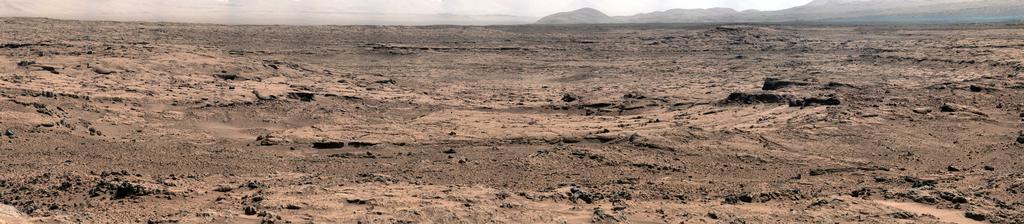
Prior to departing Rocknest, Curiosity took a set of panoramic images of the area ahead of it, including “Point Lake”, where work will commence in finding a suitable target for the rover’s drill mechanism on the robot arm’s turret for the very first time.
Please use the page number below to continue reading this article

 Inara Pey: Living in a Modemworld