SLCC: The Future of Mesh

Speakers

  • Charlar Linden
  • Runitai Linden

Historical context given by Runitai

“So before mesh, the only way to build anything in Second Life was to use prims. If you’re a builder, you’re familiar with the prim system and how difficult it was to cobble together anything that didn’t look like it was made out of Legos.

“To combat that, with as small a platform change as possible, we introduced sculpted prims a few years ago, which sort-of let you use a very loss-y compression mode of making a deformed sphere-mapped mesh. A sculpt is basically a mesh with very little artistic control over what actually goes into it.

“Now, with mesh import, you can actually use any industry-standard 3D modelling tool to create 3D content and import it into Second Life….What this means is anybody who is a classically-trained 3D artist can come in and start using the tools of the trade to make content in-world. You’re not limited by any toolset that we provide; Linden Lab doesn’t have to devote resources trying to compete with companies like Autodesk which makes 3D Studio and Maya, and the creative space, therefore, is not bound by the Second Life platform itself, it’s bound by anything that you can imagine and that create with any external programme available to you.”

Main Presentation – Charlar Linden

  • High-level bullet-points for  mesh defined as the abilities to upload them, see them, interact with them (touch, move rotate, link, texture, etc), there are additional Havok physics attributes and 64m prim sizes
  • Re-stated that PE (Prim equivalency) is a measure of the resource-impact a mesh object has on the land that it is on
  • Prim count, which everyone is familiar with, has no relationship to PE “You can have a tortured torus…that counts one prim, but it really doesn’t. It’s really actually much more expensive [resource-wise] than a little 1 x 1 plywood cube – or, for that matter, a fairly elaborate mesh.”
    • Believes it is up to LL to better inform users as to the real cost of objects on land, and that mesh starts to show this
    • Outlined the major resource weights: network bandwidth (how much information is being transmitted and to how many people), server resources (what the server has to do and run (e.g. scripts)), and physics (the impact on the Havok engine, collision detection, etc.)
  • Commented simply visiting 3rd party websites (used Turbosquid as an example) and uploading objects directly from them, saying that while it can be done, the results will be inefficient and “you’re going to get stuff that look really poor, it’s not going to look very good initially, and as you back away from it, LODs go to crap” because the system cannot determine how things are supposed to look without assistance and, “that’s where you guys come in,” as LODs, etc., need to be worked out in order to import successfully &  efficiently into SL
  • SL currently supports COLLADA  1.4.0, but 1.4.1 being worked on (but may already work)
  • No expectation or desire to see prims rendered useless due to unique capabilities, including the in-world collaborative opportunities for building & are central to the creative aspects of SL
  •  Mesh is viewed as better than sculpties in terms of defining custom UVs, LODs, etc; however,  would like to see focus on “filling in the blanks” to improve mesh where sculpties are currently “better” (presumably in terms of usage)
  • Admitted some work on rigged meshes/ avatar-related features  have been deferred from the initial roll-out in order to ship mesh, but LL acknowledge the requests and that they will be dealt with “later”
    • During final Q&A, stated arbitrary skeletons would be “cool” to have, but is not a “small bit of work” so LL “don’t know yet”
  • Re-iterated that mesh isn’t some kind of “tremor” that is going to come through SL and everything is suddenly going to look better; it is a matter of content reaching the marketplace, etc., and people buying things & create experiences
  • For non-professional content creators, suggested trying Wings3D, and commented LL would like to encourage people to try out 3D content creation whether or not they intend to sell it
  • Technically, LL will continue to work on mesh, and there will be “at least one more non-trivially sized set of improvements”, a combination of feedback from Beta testers, discovered bugs and features LL would like to include, to be “released in the very near future.”
    • Indicated it is likely the uploader UI will be changed to make it easier to use and understand, admitting that some people get poor results with uploads because, “We’ve confused the hell out of them with the uploader”
  • Encouraged people to use the mesh forum for questions, feedback, etc.
  • Demonstrated mesh in-world, showing 48-PE vehicle scripted as driveable & with colour-changing options, etc; a 52-PE house with texturing, floors, rooms, windows, working doors; a 3-PE scripted (with animations)highly-detailed rifle;  a 55-PE tree house as well as work by other creators and artists
  • Indicated that ideas around providing marketing / showcase assistance to demonstrate mesh to non-SL 3D artists / creators have been “floated”, but there is sensitivity about being perceived as helping some SL creators and not others, and that such activities are not something LL do well, but will take into consideration
  • Responding to a question on DAE/COLLADA support, Runitai stated the specification is huge, and LL’s focus in on supporting a subset – how applications like Blender, Maya, Wings 3D, 3D Studio and Zebra., export to COLLADA & ensuring the SL importer works with that subset
    • Indicated that Google Sketchup’s exporter does not create content that is efficient for the SL importer
  • Indicated that the upload fees will be increased, but will not be to the L$150 x PE that was discussed during the beta programme. Fee seen as a means of “throttling” uploads
    • Indicated a DD is available for testing as should be used to avoid being repeatedly charged when testing a model
    • Better previewing mechanism is something LL may come back to, depending on how well the DD mechanism works out.
SLCC: LL Commerce Panel Summary

Speakers

  • Jeff Vogt (Vogt Linden) – Senior Director, Business Product, responsible for strategies, plans, initiatives – economy & platform
  • Brooke Linden – Marketing Team
  • Thor Linden – strategic initiative and “economic aspects of the company”
  • Colossus Linden – Lindex, payment system
  • Delby Linden – Land and partnerships

Session Summary

Sitearm Madonna introduced the session as a discussion of “the visions and practical steps to grow the Second Life economy, enable businesses and service providers to flourish on the Second Life platform.”

  • Vogt Linden: focus for the last six months has been on a progressive approach to “funnel” users through from new joiners to engaged users within the SL community through progressive changes to the new sign-up process, new avatar selections, etc., coupled with usability enhancement (new user experience, improvements to the Viewer, etc.) to get users engaged “early on”
  • Service and performance improvements, for existing users seen as part of the process to encourage user retention to further stimulate the economy, including land acquisitions
  • 2011 Q2 economic figures (released over the conference weekend), describing as showing “some pretty compelling growth statistics in certain areas” which present “A really good story of stability, growth in certain areas and a vibrant in-world economy, if you will.”
    • Sign-ups: upswing in sign-ups following the release of the new sign-up process as a “radical improvement” compared to historical data and re-iterated they are running at an average of 16K per day, and “speaks to the number of new users who are making it all the way through registration, with all the improvements we’ve made, coming in and sampling the service and…based on the usability improvements we’re making…staying.”
    • Averaging monthly users: “An improvement over the last four quarters, with users taken up by a nominal percent, but its directionally a positive trend..that the numbers of users coming in each month are on the uptake.”
    • User hours: “We’re fairly flat to slightly declining by around a percent, a little less than a percent, over the last quarter. This is obviously what we’re trying to solve for us.”; “As we’re making these usability improvement and trying to engage users on the front end, the expectation is that we’re going to start to reverse this trend and folks will stay longer, they’ll interact more and ultimately they’ll transact, and I think that’s what we’re striving for.” 
    • Average monthly economic participants: “Again, this is flat, relative to the last quarter, and this represents all of the L$ that flow between users where they’re either gifting, buying, selling, acquiring, L$…..A flat story; expect that will change as more users come in and participate in the transaction economy.” 
    • Average exchange rate: “I think we’re seen a steady strengthening of the exchange rate over the last year plus, a nominal improvement over the last quarter. This just really speaks to the stability of the Lindex, of the exchange, and the stability of the economy… Its a positive story and we expect this to continue and we’ll continue to report on this quarterly going forward.”
    • L$ supply: “A positive trend over the last five quarters, it grew a little bit over the last three months and it continues to grow in terms of the overall volume of Linden Dollars that are available in the economy and kind-of highlighting the purchasing power of the community.”
    • Lindex volume: “A slight dip from the prior quarter…but that’s more due to seasonality than anything else. If you look back to the second quarter of last year, we’re actually up about 4.4 percent…So generally a good story for year-over-year, with a slight dip for seasonality.” 
    • Web merchandise sales volume: “You see a nice trend over the last year-and-a-half of overall volume of merchandise being sold on the marketplace steadily improving.”
    •  World size: “It’s been relatively flat to slightly down over the past year and that’s just consistent with what we’ve been seeing over the last several quarters.”
  • Brooke Linden: Highlighted that despite issues, there has been market growth:
    • 11% growth in unique economic (i.e. not freebies) sellers
    • 7% growth in unique economic buyers
    • 9% GMV growth overall
  • Linden lab is now “Trying improve some of the things we know are impeding those numbers from growing more quickly.”
  • Direct Delivery: “To streamline the purchase experience for users.” With the goal of making it “A simpler process with a simpler user interface.”
    • Marketplace will support both Magic Boxes and Direct Delivery for a time
    • New, clearer notification interface for users in-world when a delivery occurs & API provided for TPV developers if they wish to use it
    • Capability for “other alerts” will be provided for TPVs that don’t support new interface (toast notifications)
    • Some limitations on merchant’s outbox (e.g. no more than 200 items in a folder)
    •  Marketplace UI being revised to make listing / inventory management easier & provide additional information for merchants
    • “Very close to the end”, but not giving any dates, other than expecting Direct Delivery roll-out to happen in the next 2-3 months; goal is stability first because, “Inventory and money? Those are things we want to be sure we get right!”
  • Thor Linden:
    • Search has moved from a web-based approach to something more tailored to SL (less reliance on page rank / updates, etc., as per traditional GSA approach). Improvements have improved usability; fewer clicks, better results relevancy, etc.
    • Classifieds seen as a tool for everyone in terms of advertising, and keyword capping seen as helping to increase relevancy
    • Advertising Beta discontinued due to limited appeal to niche, large-scale SL businesses and it didn’t provide a real opportunity for people to grow their businesses
    • Premium accounts seen as an important means of getting people into currency transactions, land, etc. LL looking at how Premium Accounts can be attractive from the perspective of both consumers and merchants. Changes to be announced soon
  • Colussus Linden: looking at means to streamline the process by which more people can have access to more money & can purchase things more simply.
    • Reworking the payment system: LL have hit hurdles but still on track to allow more people in countries outside the US to be able to use more local payment methods and allowing people to put money into SL in ways “that are comfortable to them.”
    • Highlighted work being undertaken to simplify the Lindex pages and make them more user-friendly for those not familiar with using them & to ease the process for those just wishing to buy L$
    • Also looking to improve how users can add new payment methods both reducing the number of steps in the process & providing better guidance
    • Viewer the principal means for new users buy L$. LL looking to giver users an experience that “Makes them feel interested, happy, excited, fun about buying L$…We want to make it something where they feel confident they know what they’re getting, how much they need…and really streamline that as well.”
    • Overall goal in streamlining processes in ‘time to L$’, encouraging people to participate in the economy a lot sooner than at present
  • Vogt Linden: summarised:
    • Time spent on front-end improvements in the belief it will drive more people into the economy & increase their participation in the economy
    • Looking towards better enablement – how to bring users to businesses and communities in a more focused and deliberate way
    • Going to be looking at promotional tools, more marketing-type activities, more partnering-type activities
    • Reconsidering some of the core economics of how LL has operated and explore new ways of trying to encourage repeat log-ins not only from the perspective of what people enjoy in SL but also from a commerce perspective
    • As the Marketplace delivery system is cleaned-up, will start to look at in-world transactions

Session Q&A

  • Vogt Linden on land sales: “We know that the land-buying experience is in need of re-visiting. It’s not good…..We’re going back and trying to fix some of the foundational flows so that we can make payment easier and people can purchase land and they can put a payment method on file; all sort-of infrastructure-style improvements that ultimately impact usability. We’re also going to be doing a lot to see if we can re-investigate things that we can do to raise the visibility of certain opportunities, like land sales, like marketplace sales, like our premium offering….so it’s not lost on us that we need some foundational improvement to be made.”
  • Vogt Linden clarifying ‘economic participation’: how many users acquire and spend L$ by putting them in context: why should new users acquire L$, what can be done with them, etc.
  • Colossus Linden of freebies and policy: LL are monitoring through Marketplace search (could not speak for in-world activities around freebies), but the issue is difficult to rule on; there are positives and negatives to the matter, and the commerce community should perhaps consider forming groups to discuss.
  • Vogt Linden on providing detailed data & analytics for developers: aware of the opportunity to package data around usage (incl. at the parcel / sim levels) as a value-add; but becomes an issue of focus. As usability issues are addressed, issues including data-gathering and partnering opportunities will be looked at going forward
  • Vogt Linden on what has been the impact of Linden Homes on user retention & the economy: has been good for retention, but the product has grown stale after initial rush & is being re-visited; would not be drawn on specifics, as still being defined.


Destination: Duché de Coeur

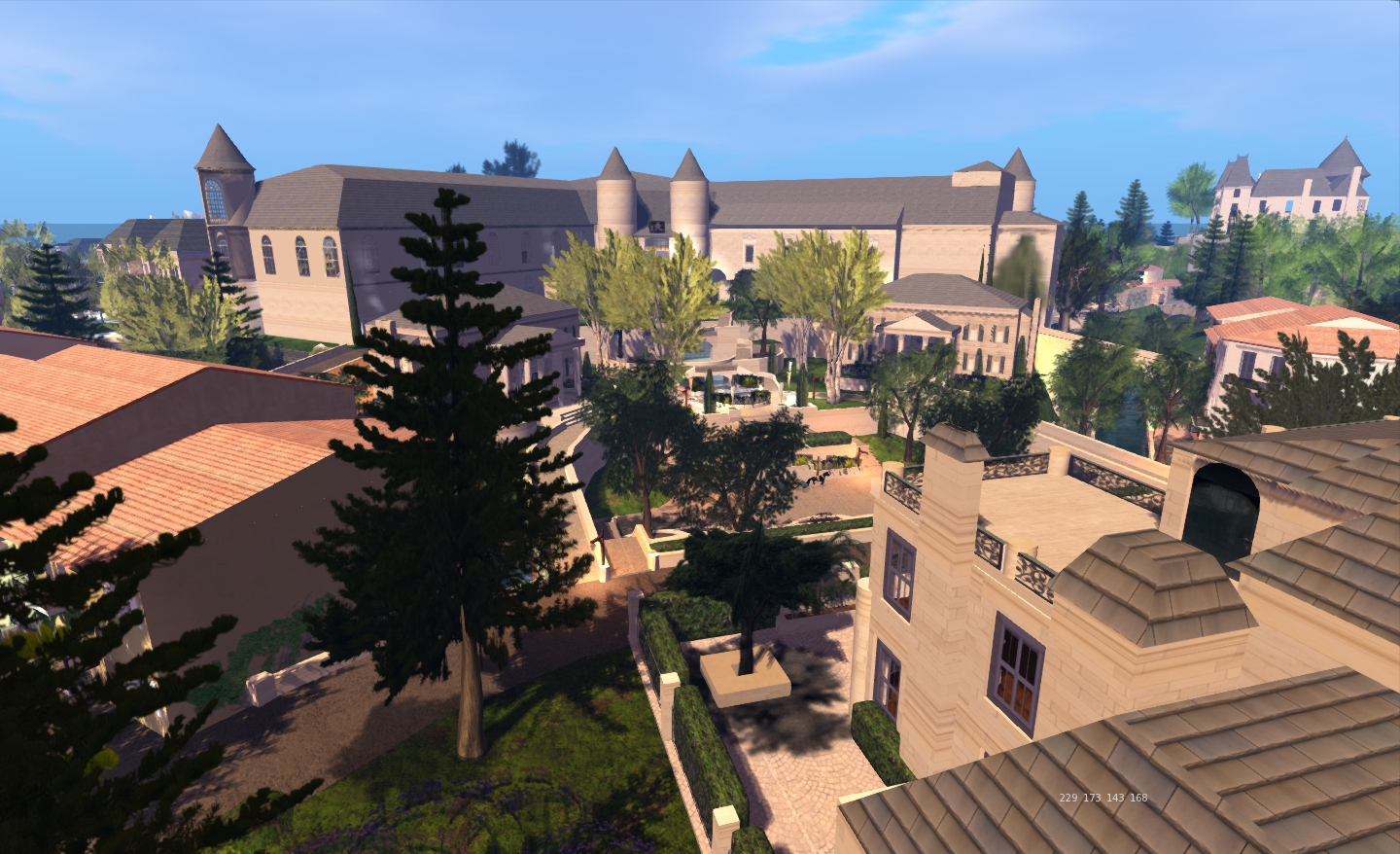
An impressive build: Duché de Coeur, languedoc Coeur

Every once in a while as one travels around Second Life, one comes across a place that is so utterly unexpected, that one cannot help responding to it by thinking, “This is what Second Life is about!”

Duché de Coeur is just such a place. To my shame, I’d never come across it in nigh-on five years of SL wanderings until Pete Linden passed me information on a festival being held there in July. That the festival was a mix of arts and music was intriguing enough; that it was in its second year, even more so. I had to investigate; and I’m glad I did.

Morning reflections

Centred on the Languedoc Coeur region in-world, Duché de Coeur is a Second Life community in the truest sense of the word: a gathering of like-minded people from around the world who have come together to create and develop something in-world that is both reflective of, and an extension to, their real-life interests and passions.

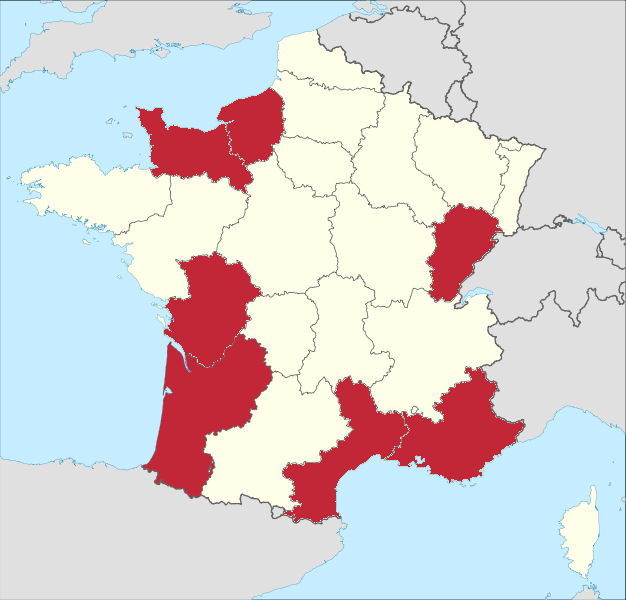
The regions of France that inspire the sims of Duché de Coeur

Comprising 14 sims, The Duchy represents a fictitious area of France that comprises the real life regions of Provence, Languedoc, Aquitaine, Poitou, Normandie, Touraine, and Franche-Comté as they were in the 18th Century – the Age of Enlightenment. It is an openly idealistic take on the Age, combining the period’s advancement of knowledge and value system with romance and chivalry; although that’s not exactly how it started out. When first established, the Duchy was far more focused on romanticism, as founder Bedrich Panacek explained, when I met him and fellow community leaders SkyRider Varriale (his partner) and Baharat Atlas, recently.

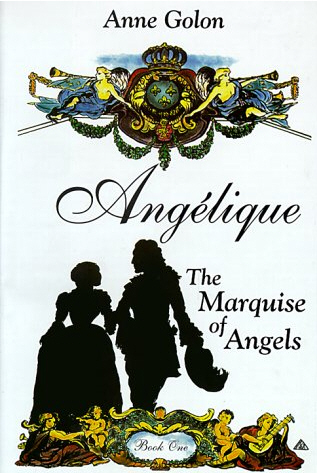
“The Duchy was originally inspired by the book Angélique,” Bedrich said as we sat together in the Green Room at the Duchy’s Opera House. “Gradually it moved forward 100 years with Tatiana and Skye,” he adds, smiling at SkyeRyder Varriale, seated beside him, who takes up the story.

“Bedrich and I met and formed a partnership, both personal and business. We were both interested in France in the 1700’s 1800’s, and I had experience building and landscaping for another game company, while Bedrich is the IT guy, the scripter. Our ideas works together. We also have a third partner, TatianaDokuchic Varriale who has contributed lovely works to the Duchy.”

Angélique, the Marquise of the Angels

The ‘Angélique’ Bedrich refers to is  Angélique, the Marquise of the Angels, the first is a series of novels set in the 17th Century written by French author Anne Golon and her husband (responsible for researching the story), Serge Golon. Published in English under the pseudonym Sergeanne Golon, the book was itself inspired by the life of Suzanne de Rougé du Plessis-Bellière, and grew to a series of 13 novels published between 1956 and 1985, with a fourteenth, Angélique et le Royaume de France, due to be published in November this year, and an as-yet untitled fifteenth volume set to conclude the series.

But why this period in particular?

Bedrich takes the question, “Much of western government and ideals are based on concepts that were discussed by some of the greatest thinkers in England and France in the Age of Enlightenment. Centres of thought including L’Académie Francaise, L’Academie Royale des Sciences, and L’Academie Royale de Musique were some of the most important public institutions that caused people to question established thought. We wanted to try and capture that, bring it to life.”

Education and the arts both play important roles in the Duchy, which hosts an annual Arts and Music Festival, together with a season of events that commences in September; all of which are co-ordinated by Baharat Atlas and Pekel Panacek (no relation to Bedrich). And while there is a degree of role-play among the community members (something I’ll return to in a moment), the more organised quarterly role-play events are primarily aimed at providing insight into the history of France over a 400-year period spanning the 15th to 19th Centuries.

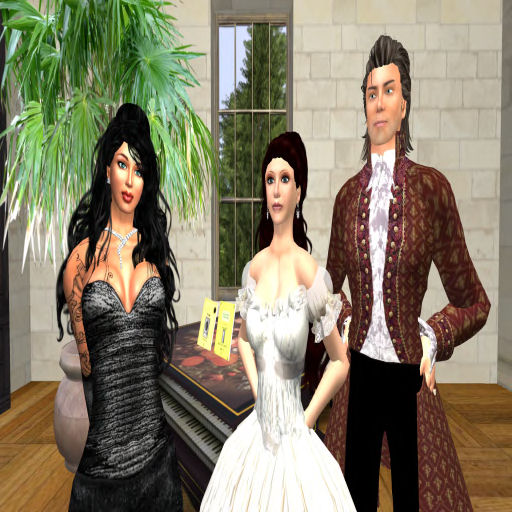
Creative force: Baharat Atlas, SkyeRyder Varriale & Bedrich Panacek

When it comes to the matter of events in the Duchy, both Bedrich and Skye are full of praise for the contirbution Baharat has made, and continues to make, “She understood our desire to make this an open, sophisticated, environment,” Bedrich explains.

“She organised our music program, which has taken off,” Skye agrees, “She has really brought events alive here.”

So what is it that attracted Baharat to the Duchy? “I was first attracted to the beauty [of Languedoc, the original sim],” she explains, “That it had an interesting movement and energy unlike any other sim.”

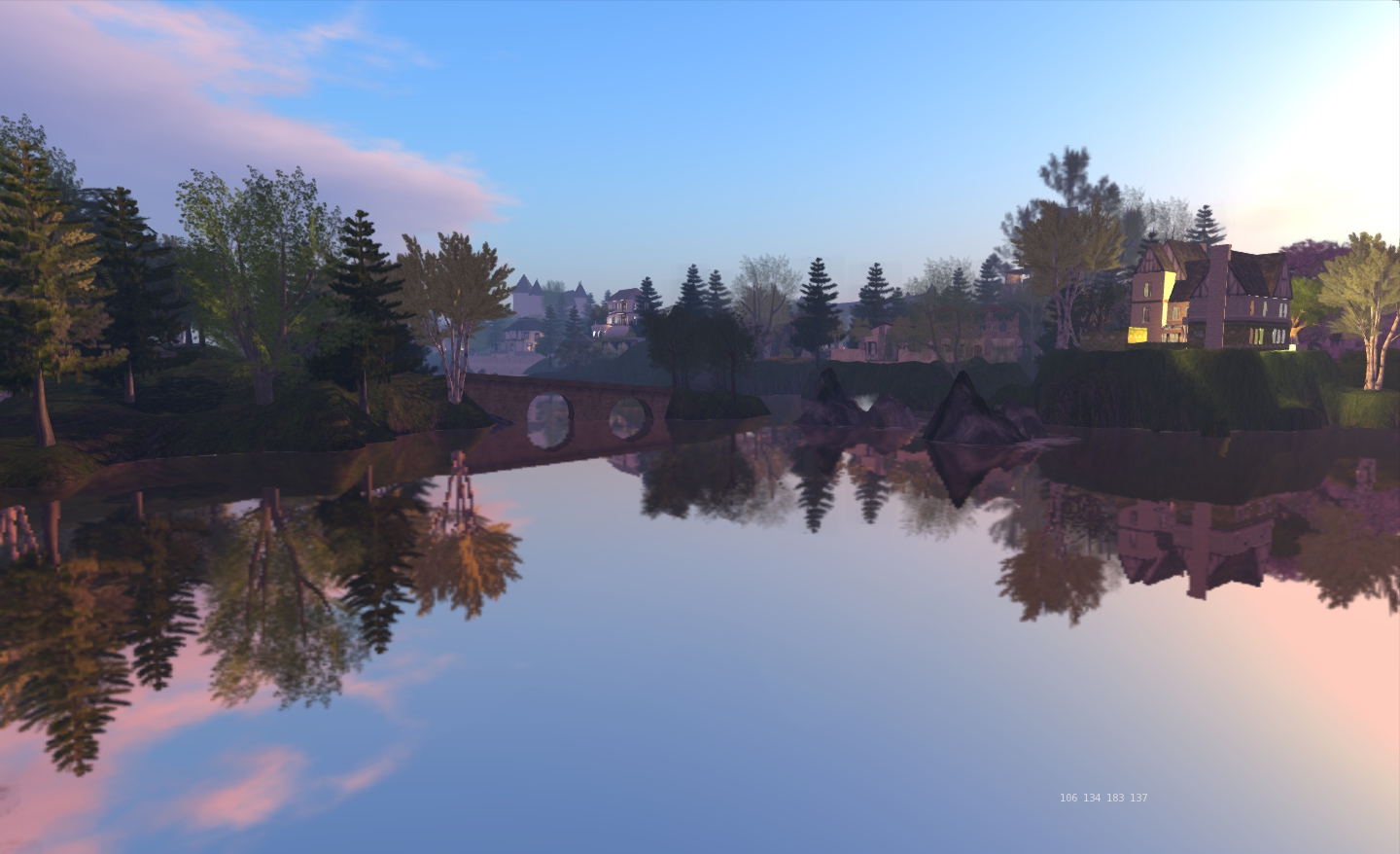
Walking through the avenues and along the footpaths of the Languedoc, it is easy to see what Baharat means; not only are the buildings correct to the period, there is a certain harmony and balance that is clearly apparent. This has been continued throughout the additional sims in the Duchy as they have been added over the years, a subtle mixing of nature and architecture and blending of movement through the use of rivers and canals, that breathe a romantic life into the sims that one rarely comes across elsewhere.

There is also an historical subtlety to the Duchy; all of the builds are either modelled on real life buildings from the period, or they have been carefully crafted to be representative of the the various regions of France included in the Duchy.

The lighthouse

To take the lighthouse overlooking the habour as an example. This is a reproduction of the 75m-tall Phare de Barfleur-Gatteville, built in 1774, and still stands as a museum to lighthouse-keeping today. The Queen’s Hamlet, meanwhile is a reproduction of The Petit Trianon, originally intended for Madame de Pompadour, who died four years prior to its completion. Following her passing, Louis V awarded it to his last Mistress, Madame du Barry, prior to it becoming a country escape for young Queen Marie Antoinette when she need to escape the court of her husband, Louis XVI.

Morning reflections II

Nor does the historical element end with the buildings.

As I mentioned earlier, while role-play is not the primary aim of the Duchy, many of the residents engage in the period life on sim: they adopt roles suited to the age, as well as the style of dress, mannerism and courtesies. Most joining this broader role-play element (which is not a pre-requisite for living in the Duchy) also outfit their houses (all of which are designed and built by Skye) with period furnishings where possible. There are also efforts to establish an economy within the Duchy reflective of the period in order to give added depth and authenticity to living on the sims.

The authenticity extends to transportation as well. While teleporting is permitted, residents often prefer to travel on foot or by one of the scripted means available to them: by boat or by horse-drawn carriage. Both systems are the brainchild of Bedrich, and demonstrate considerable flexibility of use. Resident can, for example, use the carriages to travel between one another’s homes across the Duchy or to reach the notable centres of activity, such as the Académie Royale de Musique. In addition, visitors can also use them to reach public destinations within the Duchy; carriages can be summoned as required by clicking the signs located around the sims. Boats on the canals and waterways perform a similar function, again allowing residents and visitors a natural freedom of movement.

Your carriage awaits….

Nor are you restricted to horse and carriage or boat; given the Duchy presides over the period of the Montgolfier brothers, balloons are also available for people to float serenely over the sims,enjoying the sights and this innovative (for the time!) mode of transportation.

Given the historical context of the Duchy, the focal point for activity is very much centred on the four Academies which have been established. These are:

  • L’Académie Royale des Sciences, which is being developed to help people become familiar with the huge impact of French science on the world. Those with a passion for science and its history are encouraged to become involved with the Academy by recreating experiments and ideas (“laboratories” are available for rent where diagrams, models, etc., can be displayed)
  • L’Académie Royale de Musique at the Versailles Opera House inspired Duché de Coeur Opera House, is the focal point for all music and threatre-related events in the Duchy, supported by a number of other venues across the sims
  •  L’Académie Royale de Peinture et de Sculpture is one of the focal points for the visual arts in the Duchy, supported by a second area at the village docks
  • L’Académie Francaise is intended to host literature readings, ettiquete lessons, French lessons, art exhibits, etc., and offers a venue suitable for discussions and presentations suitable and related to the Age of Enlightenment.
The magnificent entrance to the Opera House at the Duché de Coeur by night

As a venue for events, the Duchy offers many opportunities for artists across Second Life. This year’s Arts and Music Festival saw no fewer than 28 performances across two days, covering a range of musical styles and which also included a dance presentation. September will see the commencement of the new arts and music programmes which I’ll be endeavouring to cover.

As mentioned above, education is an important aspect of the Duchy’s activities. “We have had several different types of groups use the Duchy for their events,” Skye said, “And we would like to do more. We recently conducted a tour for an educational group.”

“The Virtual Pioneers,” Bedrich continued from her with a nod, “We showed them some of the issues that resulted in the French Revolution. [As a result]  they are going to host their annual historical society meeting here in January.”

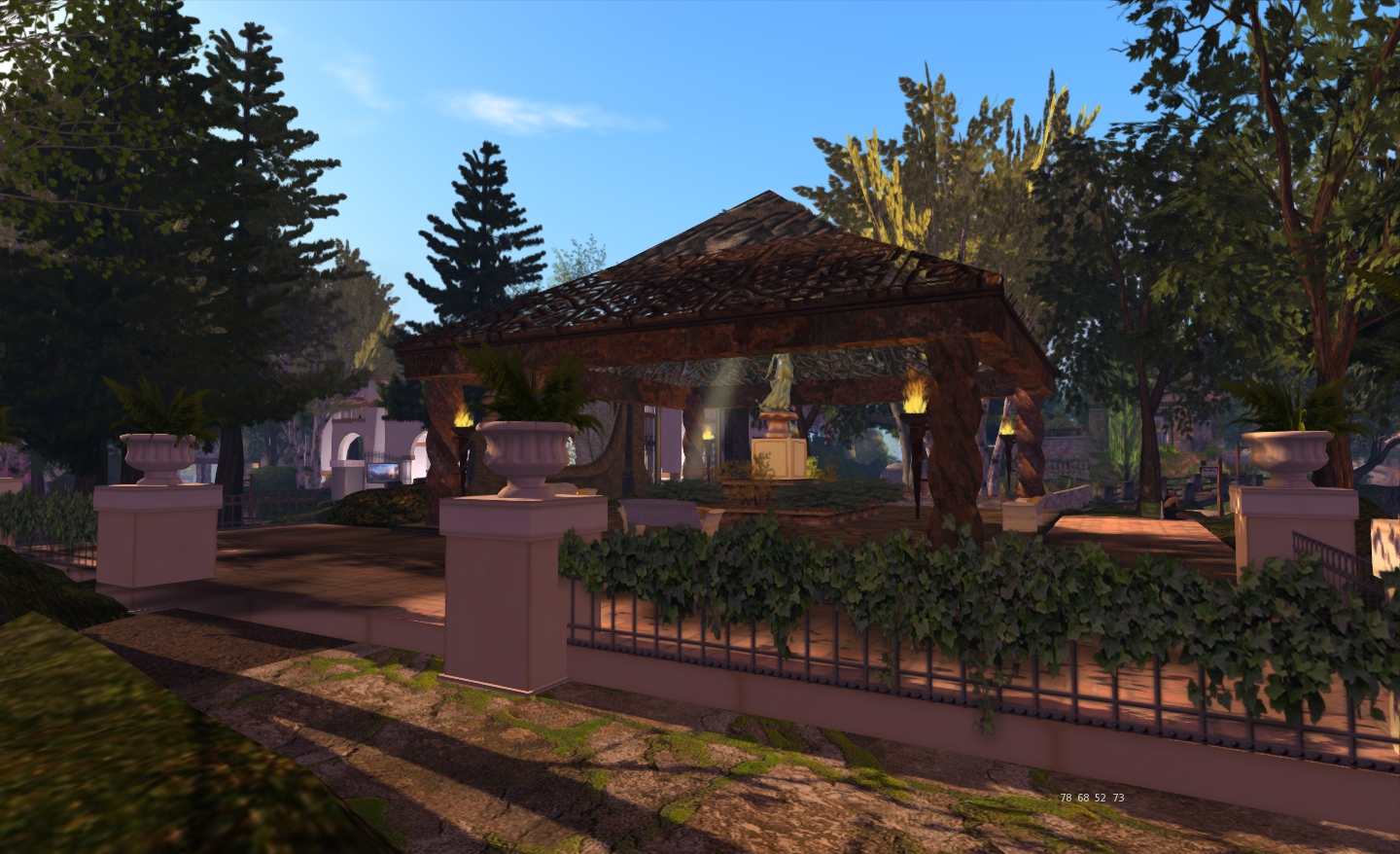
One of the estate’s parks

Given the immense amount of work that has gone into the sims of the Duchy – including seasonal changes to the land and trees, one can understand why; it represents a truly unique window on history, one that is fully embraced by both those who manage it and those who choose to settle there. Indeed, it is a mark of the success of the Duchy that it has grown in response to demand, the sims being added to meet both the needs of those wishing to live there and the growing success of its events calendar. What is equally remarkable is that none of the original charm and romance of the Duchy has been lost over the four years of its development; while the focus of the sims may have broadened from the original setting and embodiment of Angélique, it has gained depth and breadth as a result – and offers residents and visitors alike a lot to share and take-in.

Related Links

(click here view the slideshow full screen)

Addendum

Even with the amount of work that goes into a piece like this, with copy passing back and forth to ensure accuracy of content, it is inevitable errors still slip through on the part of the writer.

As per the comments below, I should have indicated Bedrich Panacek was the co-founder of the Duchy (alongside Skye and Tatiana). As can also be seen from Tatiana’s and Skye’s comments, the division of labour within the Duchy is more complex than the article indicates.


LL diversifying? What does that mean?

LL CEO Rod Humble

Potentially the most interesting comments to come out of Rod Humble’s presentation at SLCC 2011 were related to the fact that Linden Lab may be diversifying. These started early on when he announced:

“You are going to see Linden Lab working on new products as well as Second Life”.

While he refused to delve into specifics, it has led to speculation that he may be referring to what Hamlet Au refers to as a new “SL Light experience” that will utilise “the web and tablets”.

Hamlet was certainly in a position to ask Rod questions on the matter after the presentation, given he’s at SLCC; and so may have a greater insight than I; certainly, there is no denying Rod indicated that Linden Lab is eyeing-up the tablet marker where Second Life is concerned. However, I cannot help but speculate that Linden Lab is going after something a lot broader than just introducing a “light” version of SL when Rod refers to the growing tablet / mobile market.

Look at his comment, quoted above, for example. It clearly differentiates between Second Life and a product and whatever else Linden Lab has planned. This seems an odd statement to make if whatever is coming down the line is simply aimed at enhancing Second Life’s reach. It’s also a differentiation that came up again during the extensive Q&A session. Here’s what he said:

“The other massive opportunity and massive threat to on-line games and everyone in this room is the rise of tablet and mobile devices; and right now we don’t participate on those devices. So you will see us address for Second Life, but also for at least one new product, the area of tablets in particular and some mobile stuff as well.[my emphasis]

Again, if Linden Lab are simply looking towards opportunities to extend Second Life’s reach, it seems odd that he clearly differentiates between Second Life and the “new products” in this comment.

So what else could he be referring to? Here’s where the speculation begins.

A recurring theme during the 45 minutes Rod was on stage was what I’m going to refer to “social involvement”, so much so that it is hard not to link them with his comments relating “new products”.To bullet-point some of the references:

  • He was at pains to emphasis the importance of people being able to define their own persona on-line and to be able to set their own barriers as to how much they reveal about themselves and how they establish divides or barriers between what the reveal / how they interact with others according to the environment / situation they are in
  • He also emphasised twice that Linden Lab believes that customer privacy is paramount, and that they will not do anything that betrays this
  • A number of his comments were around LL’s perception that people’s habits are changing with regards to Second Life, people are spending less time engaged in-world, but more time engaging socially about Second Life through various mediums – the new web profiles, Twitter, etc.

In this last point, he specifically points out, “By the way, I mentioned that Second Life was growing earlier…there’s a really interesting dynamic as well, is that many of the new users of Second Life are a very, er, very younger demographic…sort-of a mid-twenties, college age. And they also…they are generally spending less time in-world but more time socialising within Second Life social circles…and I think that’s really interesting.” He goes on to note that this is common in other on-line games and suggests that the onus for LL is to enhance this capability, “for our customers”.

Wen profiles: precursor to LL’s move towards wider on-line social involvement?

This would all seem to point towards Linden Lab moving more into the realm on on-line social involvement. It’s something they’ve tried, albeit on a very limited basis through the acquisition of Avatars United a couple of years back, which was ultimately discarded – which is not to say they ever gave up on the idea.

In many respects, it makes sense for the company to move into social involvement in a more premeditated manner, as a) this is clearly a growing market; b) through Second Life, they have been developing capabilities and knowledge ideally suited to the environment (i.e. through my.secondlife.com). What’s more, they are willing to step away from the likes of Facebook and Google+ and uphold the principles of pseudonymity and privacy, which could make such a move attractive to a broad audience.

Of course, it would be ridiculous to suggest that Linden Lab could in any way take-on the likes of Google or Facebook in the broadest sense; and I’m certainly not suggesting that.

But then, they don’t have to. By providing a set of social media tools that enable gamers, Second Life users and others to remain connected, to “meet” and discuss their interests, passions, plans, swap ideas, link-up with others and so on, they could potentially tap into a huge market, and offer them the ability to leverage technology and capability already developed that would not necessarily impact on their focus of “fixing” core issues and services within the Second Life platform itself.

There’s also the matter of diversification and revenue. Hamlet himself (rightly or wrongly, depending upon one’s standpoint) makes much of the current revenue stream enjoyed by Linden Lab (the “sale” of SL “land”) as being somewhat unsustainable – and over time, he may well be right. Ergo, it would make sense for LL to look at other opportunities and markets in which to generate new income. Although precisely how this might be achieved is harder to define, and worthy of a separate debated in and of itself.

It’s going to be interesting to see what is announced in the coming months and, equally, how Second Life users respond to whatever comes out of the Lab – particularly if it is seen as “taking effort away” from supporting Second Life. In this latter regard, assuming the new products are divorced from Second Life, LL will doubtless have a fine balancing act to perform where user happiness is concerned.

Rodvik at SLCC 2011 – The gist

LL CEO Rod Humble

Rod Humble gave a polished, if short-term and purely tactical, overview of Second Life for listeners at SLCC 2011.

His talk came just after lunch in Oakland, and he couldn’t resist making a few light-hearted comments, as he opened the talk by commenting on what people told him they wanted to hear.

“People were…before I was doing the talk, were like, ‘we want big news, give us big news!’ I, ah, don’t have any big news….wait a minute…. We’re shutting everything down! Thank you for all of your service, it’s been great!”

This earned him warm laughter and applause and set the tone for a relaxed 40 minutes, during which he talked about Second Life, Linden Lab and took questions.  Here are the highlights.

  • One of the reasons he was attracted to Second Life is the fact that it is still growing, something which sets it aside from other massive multi-player games. As examples of this growth he cited:
    • An average of 16,000 new users are still signing-up per day
    • There is an increase of total monthly uniques
    • User retention appears to be increasing
  • Second Life has longevity because it is a unique creative platform on both the physical level and the social level; that it engenders a sense of ownership whether you are physically creating something in-world or whether you are creating and cultivating friendships and engaging in social interaction
  • He touched on the identity element and the importance of being able to have the freedom to define our own virtual identity, and to put barriers between the different identities we use in much the same way as we create different personas in real life to deal with different aspects of our lives. He sees SL as being very unique in this when compared to other on-line social mediums (which he defined as “intrusive”) and views it as the correct (“traditional”) stance
  • Clearly stated that “customer privacy will always come first.”
  • Hinted that Linden Lab is diversifying, “You are going to see Linden Lab working on other products as well as Second Life,” (my emphasis). He suggested that the new productions would be related to “shared creative spaces” (a term he is fond of using in relation to Second Life itself), which he believes has a potentially large audience
  • Defined his personal ‘first year’ goal at LL as being to be able to give every family member within Linden Lab a Second Life account, for them to be able to send the account to any “intelligent or above average intelligence computer user” for them to be able to use it to get into Second Life, use it and be grateful, and this has effectively drawn a lot of what has been going on regarding the sign-up process, the initial experience for new users and changes to the Viewer (Basic mode, etc.), and issues such as dealing with lag
  • He touched on the recent cycle of rapid development and roll-out of features, etc., which has been followed by almost immediate nips, tucks, updates and revisions, stating that if a company tries to put something big out to the online community, it is going to break, either “spectacularly” or “elegantly”, but it will break. So he prefers to get small features developed and implemented and then “test, polish, test, polish”
  • The rest of this year will be focused on the “polish”, and he again specifically mentioned customer service (such as quality of service), lag and “bugginess”
  • He indicated that one initiative will be aimed towards griefers and that he hopes to make “life unpleasant for griefers”, although no specifics were given
  • A Linden-made, Linden-curated area in-world will go live in the next couple of months. the aim of this area is to both enable Linden Lab to learn how to make tools aimed at the users – he cited an example of being able to go to a role-play area and not having to worry about HUDs – you just press a permission button and, “everything happens”
  • Premium Accounts will be improved, with new features specifically aimed at adding value “at no extra cost to you.”
  • Towards the end of the year / 2012, LL will have a marketing campaign “of significant investment” to drive traffic into Second Life and hopefully towards SL merchants

This brief presentation was followed by almost 30 minutes of Q&A which included the following:

  • He refused to comment on a number of questions relating to pricing, although did indicate that there would be “no radical” change to current pricing mechanisms in place
  • There will be moves from LL to further protect content creator’s IP rights, although he declined to be drawn on specifics. He also linked this with the question of griefing
  • He addressed hardware issues in two ways:
    • Increasing the avatar count per sim
    • The “threat” of tablets and mobile devices – and he stated that LL will be addressing tablets with Second Life and “at least one new product” as well as doing, “some mobile stuff as well”, as the increasing levels of sales of tablet and mobile devices means that LL “needs to be there some way – and we will”
  • Indicated that SL has a new demographic among users: people in their 20s who are spending less time in-world, but more time socialising via message boards, Twitter, their SL profile feeds, etc. Also that more time is being spent socialising about activities as well as doing the activities, and he indicated that LL will be looking to enhance this
  • He doesn’t see it as LL’s place to define where SL goes in terms of technology development / integration in terms of “making” it a “killer app”, but rather sees LL’s role as taking its lead from its users and customers
  • Acknowledged that Viewer 2 has issues around the UI, etc., and while hoping people recognise efforts that have been made to improve it this year, further work is required BUT at the same time, too much new technology is embedded in the Viewer to “just give up on it” Also indicated that “at some point” he would like to see:
    • Removal of the Sidebar from the Viewer
    • In-world communications channels for merchants
    • New creativity tools for in-world creation
    • HOWEVER – emphasis for the present will remain on fixing broader issues
  • Indicated (again) that LL’s “top line” is over $75 million, and that they generate cash every month and are “very profitable”
  • SL is one of the most popular games in Russia and the most popular on-line game in Thailand – both as a result of localisation efforts!


SLCC 2011: underway

SLCC 2011 is getting underway in Oakland, California. Volunteers are gearing-up to open the registration desk, and today will see an in-world mixer event held between 13:00-14:00 PST, with the films Deep Down: A Story from the Heart of Coal Country and When Strangers Click being shown later in the afternoon at the conference centre in Oakland.

Keynote talks and other presentations will be streamed via uStream, both in-world and on the SLCC website, which also has the full conference schedule.

Offical SLCC sim map

Four sims have been established in-world for those wishing to remotely follow / join-in the conference, and which will host the various in-world activities and events that are scheduled alongside the main conference. Note that if you wish to watch any conference presentations in-sim, you will need to use a 2.x-compatible Viewer to receive the streams.

Bradbury Building with Faneuil Hall behind

Those who have a Twitter account can follow latest updates and news by following #slcc.

I’ll be endeavouring to follow events remotely and reporting on various aspects of the conference – as doubt will many others!

Useful landmarks

An Aerial view of the SLCC sims (slick to enlarge)