Space Sunday: Artemis 2 and a Blue Moon lander

An infographic outlining the Artemis 2 mission, during to take place in the first quarter of 2026. Credit: CSA

2026 is set to get off to an impressive start for US-led ambitions for the Moon, with the first three months intended to see the launch and completion of two key missions in the Artemis programme.

In fact, if the principal players in both missions get their way, the missions could be completed before the end of February 2026 and between them signal the opening of the gates that lead directly to the return of US astronauts to the Moon in 2028. Those two missions are the flight of the Blue Origin Pathfinder Mission to the lunar surface, and the first crewed flight to the vicinity of the Moon since the end of the Apollo era: Artemis 2.

Blue Moon Pathfinder

As I’ve previously noted in this column, Blue Moon Pathfinder is intended to fly a prototype of the Blue Moon 1 cargo lander to the Moon’s South Polar Region to demonstrate key elements and capabilities vital to both the Blue Moon Mark 1 and its larger, crew-capable sibling, Blue Moon Mark 2.

These goals include: the firing / re-firing of the BE-7 engine intended for use in both versions of Blue Moon; full use of the planned cryogenic power and propulsion systems; demonstration of the core avionics and automated flight / landing capabilities common to both Blue Moon Mark 1 and Blue Moon Mark 2; evaluate the continuous downlink communications; and  confirm the ability of Blue Moon landers to guide themselves to a targeted landing within 100 metres of a designated lunar touchdown point.

An artist’s rendering of the Blue Moon Mark 1 (foreground) and larger Blue Moon Mark 2 landers on the surface of the Moon. Credit: Blue Origin

Success with the mission could place Blue Origin and Blue Moon in a position where they might take the lead in the provisioning of a human landing system (HLS) to NASA in time for the Artemis 3 mission, currently aiming for a 2028 launch. A similar demonstration flight of Blue Moon Mark 2 is planned for 2027, involving the required Transporter “tug” vehicle needed to get Blue Moon Mark 2 to the Moon. If successful, this could potentially seal the deal for Blue Moon in this regard, given both they and SpaceX must undertake such a demonstration prior to Artemis 3 – and currently, SpaceX has yet to demonstrate the viability of any major component of the HLS design beyond the Super Heavy booster.

Of course, as others have found to their cost in recent years, making an automated landing on the Moon isn’t quite as easy as it may sound, so the above does come with a sizeable “if” hanging over it.

A comparison between the the Apollo Lunar Module, Blue Moon Mark1 and Blue Moon Mark 2. Note that the bulk of the latter comprises the massive Liquid hydrogen (LH2) tank (at the top, with the four large thermal protection / heat dissipation panels needed to help keep the propellant in a liquid form liquid), with the liquid oxygen (LOX) tanks between it and the crew module at the base of the vehicle. Credit: NASA / Blue Origin / David Leonard

The Blue Moon landers are between them intended to provide NASA with a flexible family of landing vehicles, with Blue Moon Mark 1 capable of delivering up to 3 tonnes of materiel to the Moon, and Blue Moon Mark 2 crews of up to four (although 2 will be the initial standard complement) or between 20 tonnes (lander to be re-used) or 30 tonnes (one-way mission) of cargo.

Currently, the Blue Moon Pathfinder flight is scheduled for Q1 2026 – and could potentially take place before the end of January.

Artemis 2: Four People Around the Moon and Back

Artemis 2, meanwhile is targeting a February 5th, 2026 launch. It will see the first crew-carrying Orion Multi-Purpose Crew Vehicle (MPCV) head to cislunar space with three Americans and a Canadian aboard in a 10-11 day mission intended to thoroughly test the vehicle’s crew systems, life support, etc. Despite all the negative (and in part unfair) criticism of the Orion system and its SLS launch vehicle, 21 of the 22 pre-launch milestones have now been met. This leaves only the roll-out of the completed SLS / Orion stack to the launch pad and the full booster propellant tanking testing order for the green light to be given to go ahead with a launch attempt.

An infographic shown by Brad McCain, VP and Programme Manager, Armentum Space Operations Division – a company providing critical support to NASA for SLS ground operations – during a December 15th Webinair on Artemis 2. Note both of the December 2025 items were achieved shortly after the webinair. Credit: Armentum / CDSE

No date has been publicly released for the roll-out, but given the issues experienced with Artemis 1, when helium purge leaks caused problems during the propellant load testing, it is likely that even with the high degree of confidence in the updates made to the propellant loading systems since Artemis 1, NASA will want as much time as possible to carry out the test ahead of the planned launch date.

Whilst Orion did fly to the Moon in 2022, the vehicle being used for Artemis 2 is very different to the one used in Artemis 1. This will be the first time Orion will fly all of the systems required to support a crew of 4 on missions of between 10 and 21 days in space (as is the initial – and possibly only, giving the calls to cancel Orion, despite its inherent flexibility as a crewed vehicle – requirements for the system). As such, Artemis 2 is intended to be a comprehensive test of all of the Orion systems, and particularly the ECLSS – Environmental Control and Life Support System; the vehicle’s Universal Waste Management System (UWMS – or “toilet”, to put it in simpler terms); the food preparation system and the overall crew living space for working, eating, resting and sleeping.

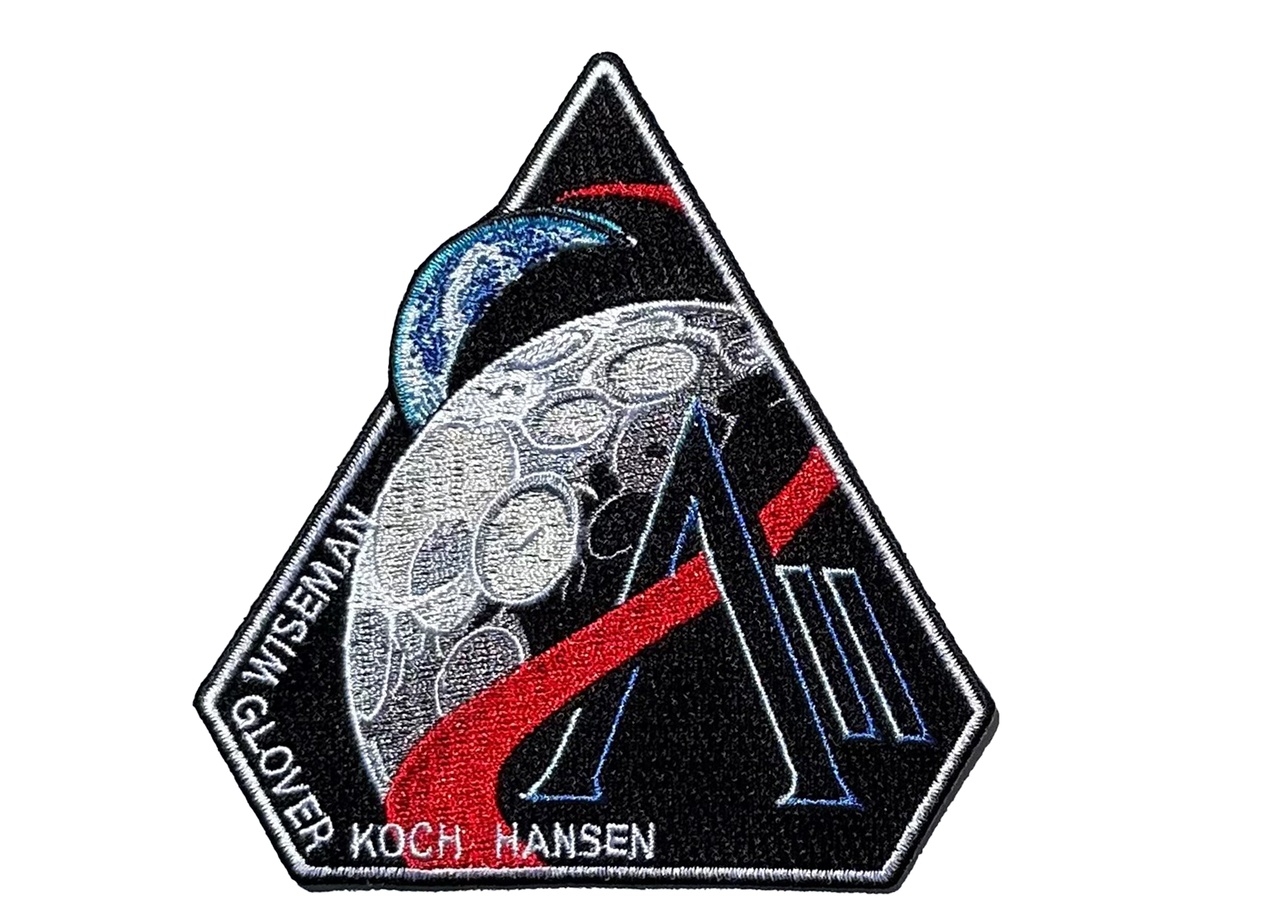
The Artemis 2 crew (l to r: Canadian Space Agency astronaut Jeremy Hansen and NASA astronauts Christina Koch, Victor Glover, and Reid Wiseman) outside the Astronaut Crew Quarters inside the Neil Armstrong Operations and Checkout Building, Kennedy Space Centre, during an integrated ground systems test for the mission, September 20th, 2023. Credit: Kim Shiflett

These tests are part of the reason the mission is set to have a 10-11 day duration compared to the average of 3 days the Apollo missions took to reach, and then return from, the vicinity of the Moon: NASA want to carry out as comprehensive a series of tests as possible on Orion “real” conditions prior to committing to launching the 30-day Artemis 3 mission.

The mission will also be a critical test for Orion’s heat shield. During Artemis 1, the Orion heat shield suffered considerable damage during re-entry into the Earth’s atmosphere, in what was called “char loss” – deep pitting in the heat shield material. Analysis of the damage reviewed the gouges to be the result of “spalling”. In short, in order to shed some of its enormous velocity prior to making a full re-entry into the atmosphere, Orion had been designed to make several “skips” into and out of the atmosphere, allowing it to lose speed without over-stressing the heat shield all at once.

Unfortunately, the method used to manufacture the original heat shields resulted in trace gases being left within the layers of ablative material. When repeatedly exposed to rapid heating as the Artemis 1 Orion vehicle skipped in and out of the upper atmosphere, these gases went through a rapid cycle of expansion, literally blowing out pieces of the heat shield, which were then further exacerbated as the vehicle make its actual re-entry, resulting in the severe char loss.

Two of the official NASA images showing the severe pitting and damage caused to the Orion MPCV heat shield following re-entry into Earth’s atmosphere at 36,000 km/h at the end of the uncrewed Artemis 1 mission, December 11th, 2022. They show the “char loss” pitting caused by “spalling” within the layers of heat shield material. Credit: NASA / NASA OIG

As a result of the Artemis 1 heat shield analysis, those now destined to be used on Artemis 3 onwards will be put through a different layering process to reduce the risk of residual gases becoming trapped in the material. However, because the heat shield for Artemis 2 was already cast, the decision was made to fly it with the mission, but to re-write the Orion’s atmospheric re-entry procedures and software to limit the number of atmospheric skips and the initial thermal stress placed on the heat shield, thus hopefully preventing the spalling.

The Orion vehicle to fly on Artemis 2 is the second fully-completed Orion system – that is, capsule plus European Service Module – and the first vehicle to ne formally named: Integrity. It is functionally identical to the vehicles that will fly on Artemis 3 onwards, with the exception that it is not equipped with the forward docking module the latter vehicles will require to mate with their HLS vehicles and / or the Gateway station.

The SLS booster to be used in the mission is the second in a series of five such boosters being built. Three of these – the vehicle used with Artemis 1 and those for Artemis 2 and 3 are of the initial Block 1 variant, using the Interim Cryogenic Propulsion Stage (ICPS) as their upper stages. This is an evolution of the well-proven – but payload limited – Delta Cryogenic Second Stage (DCSS) developed in the 1990s, and powered by a single RL-10B motor.

Artemis 4 and 5 are intended to be Block 1B versions of SLS, using the purpose-built and more powerful Exploration Upper Stag (EUS), powered by 4 of the uprated RL-10C version of the same engine, enabling them to lift heavier payloads to orbit and the Moon. This means that both Artemis 4 and Artemis 5 will each lift both an Orion MPCV with a crew of 4 and a 10-tonne module intended for the Gateway station intended to be the lunar-orbiting waystation for crews heading to the Moon from Artemis 4 onwards.

A comparison between the SLS ICPS and future EUS. Credit: NASA

However, to return to Artemis 2: as noted, it will be the second SLS rocket to be launched, and like Artemis 1, will fly using the venerable and (up until SLS at least) reusable RS-25 motor developed by Rocketdyne for the US space shuttle vehicles. Sixteen of these engines survived the end of the shuttle programme, and Artemis 2 will see the use of both the most reliable of them ever built. and the only one to be built for the shuttle programme but never used.

Engine 2047 has flown more missions than any other RS-25 – 15 shuttle missions in which it gained a reputation for being the most reliable space shuttle main engine (SSME), consistently out-performing all other motors to come off the original production line. It proved so reliable that not only did it help lift 76 astronauts from the US and around the world into orbit, it was often specifically requested for complex mission such as those involved construction of the International Space Station and servicing the Hubble Space Telescope. By contrast, engine 2062 will be making its first (and last) flight on Artemis 2, being the last of the original RS-25’s off the production line.

The four RS-25 engines to be used on Artemis 2, with 2047 highlighted. Credit: Helen Lewin, RS-25 Launch Support Lead, Aerojet Rocketdyne, via the December 15th, 2025 CDSE webinair

Such is the engineering behind these engines and their control systems that is worth spending a few paragraphs on exactly how they work at launch. While it may seem that all the motors on a multi-engine rocket fire at the same time, this is often not the case because of issues such as the sudden dynamic stress placed on the vehicle’s body and matter of balance, as well as the need to ensure the engines are running correctly.

For the SLS system, for example, engine preparation for launch starts when the propellant tanks are being filled, when some liquid hydrogen is allowed to flow through the engines and vent into the atmosphere in a process called chill down. This cools the critical parts of the engines – notably the high pressure turbopumps – to temperatures where they can handle the full flow of liquid hydrogen or liquid oxygen without suffering potentially damaging thermal shock.

Actual ignition starts at 6.5 seconds prior to lift-off, when the engines fire in sequence – 1, 4, 2, and 3 – a few milliseconds apart (for Artemis 2 engine 2047 is designated flight engine 1 and 2062 flight engine 2, and so these will fire first and second).  Brief though the gap is, it is enough to ensure balance is maintained for the entire vehicle and the four engines can run up to power without creating any damaging harmonics between them.

A diagram of the RS-25 rocket engine used in both the space shuttle system and SLS. Credit: Helen Lewin, RS-25 Launch Support Lead, Aerojet Rocketdyne, via the December 15th, 2025 CDSE webinair

The low and high pressure turbopumps on all four engines then spool up to their operating rates – between 25,000 and 35,000 rpm in the case of the latter – to deliver propellants and oxidiser to the combustion chamber at a pressure of 3,000psi – that’s the equivalent of being some 4 km under the surface of the ocean. During the initial sequence, only sufficient liquid oxygen is delivered to the engines to ignite the flow of liquid hydrogen, causing the exhaust from the engines to burn red. This high pressure exhaust is then directed as thrust through the engine nozzles, meeting the air just beyond the ends of the engine bells.

The counter-pressure of the ambient air pressure is enough to start pushing some of the exhaust gases back up into the engine nozzles, causing what is called a separation layer, visible as a ring of pressure in the exhaust plume. This back pressure, coupled with the thrust of the engines, is enough to start flexing the engine exhaust nozzles, which in turn can cause the exhaust plume on each engine to be deflected by up to 30 centimetres.

Images of a Space Shuttle Main Engine (SSME) ignition sequence showing the formation of the separation rings (arrowed left) and the cleaner-burning half-diamonds (right) as the engines come to full thrust. Credit: NASA

To counter this, the flight control computers initiate a cycle of adjustments throughout each engine, which take place every 20 milliseconds. These adjust the propellant flow rate, turbopump speeds, combustion chamber pressure and the movement of the engines via their gimbal systems in order to ensure all of the engines are firing smoothly and all in a unified direction and pressure, symbolised by a “half diamond” of blue-tinged exhaust (the colour indicating the flow of liquid oxygen) as the separation layer is broken, the thrust of the engines fully overcoming ambient air pressure resistance. All this occurs in less than four seconds, the flight computers able to shut down the engines if anything untoward is monitored. Then, as the countdown reaches zero, the solid rocket boosters (SRBs) ignite and the vehicle launches.

Once underway, Artemis 2 will carry its crew of 4 into Earth orbit for a 24-hour vehicle check-out phase, during which the orbit’s  apogee and perigee are raised. Check-out involves the crew completing a series of tests on the vehicle and its systems, including piloting it, both before and after the ICPS is jettisoned. Completion of this initial check-out phase will conclude with the firing on the ESM’s motor to place Orion on a course for the Moon.

Orion includes the ability for the crew to stow their flight seats flat once in orbit in order to give themselves more room in the capsule. This includes allowing them to rig four shuttle-style sleeping bags in the cabin, each of them positioned in a way that also maximises space for the crew, whilst also positioning them close to the vehicle’s “glass” command and control systems. Credit: NASA

The flight to the Moon will be undertaken using what is called a free return trajectory. That is, a course that will allow the vehicle to loop around the Moon, using its gravity to swing itself back onto a trajectory for Earth without using the main engine to any significant degree. This is to ensure that if the ESM were to suffer a significant issue with its propulsion system, the crew can still be returned to Earth; only the vehicle’s reaction control system (RCS) thrusters will be required for mid-course corrections.

This also means that the mission will only make a single pass around the Moon, not enter orbit. It will pass over the Moon’s far side at a distance of  some 10,300 kilometres and then head back to Earth. On approaching Earth, the Orion capsule will detach from the ESM, perform the revised re-entry flight to hopefully minimise any risk of spalling / char loss, prior to splashing down in the Pacific Ocean off the coast of California.

Orion MPCV 003 Integrity, the vehicle that will carry 4 astronauts on Artemis 2 at Kennedy Space Centre in 2025. The capsule is mated to its ESM, which is in turn mounted on the conical Spacecraft Adapter and awaiting the installation of the three Encapsulated Service Module Panels. Credit: NASA 

I’ll have more on the actual mission and the flight itself as it takes place. In the meantime, my thanks to the Coalition for Deep Space Exploration (CDSE) for hosting a special webinair on Artemis 2 in December 2025, from which portions of this article – particularly some of the graphics – were drawn.

Space Sunday: a look at near-future space stations

An artist’s impression of India’s Bharatiya Antriksh Station (BAS), on-orbit assembly of which is targeted to commence in 2028 

In my previous Space Sunday piece, I covered the appointment of Jared Isaacman as the new NASA Administrator and the fact that on the day of his appointment, he was effectively given a new set of high priority tasks by the White House. Among these was an order to oversee the decommissioning of the International Space Station (ISS) in 2030, and to move US low-Earth orbit space operations over to the private sector.

The Decommissioning of the ISS is not new – in fact, it was originally intended to only be in operation through until 2015, but such is the success of the mission that it has been periodically extended by mutual agreement of the supporting partners – notably the US, the European Space Agency and Canada, all of who form the nucleus of the International section of the station (officially referred to as the US Orbital Segment, or USOS), together with Russia, operating the Russian Orbital Segment (ROS).

Despite this success, Russia actually started planning to depart the ISS in 2009, when it indicated it would separate the ROS from the ISS in 2016(ish) and use the modules to establish the Orbital Piloted Assembly and Experiment Complex (OPSEK), a new station intended to become the “gateway” to Russian crewed missions to the Moon and beyond. But with the agreements reached to extend ISS operations beyond 2015 and then beyond 2020, Russia opt to push the OPSEK idea to one side, seeing more advantage in remaining part of the ISS programme.

This changed in 2021, when negotiations commenced to extend ISS operations beyond 2024. Roscosmos was initially unhappy about any extension beyond 2024, citing concerns that several of their ISS modules would be approaching their end of life. Whilst a semi-agreement was reached by the majority of parties to see the ISS remain operational until at least 2028, Roscosmos would only commit to the agreed 2024 end-date, stating that Russia would exit the programme some time thereafter. This was an ambiguous statement at best, given that departing the ISS agreement “after 2024” could be taken to mean Russia would remain engaged until 2028 or even 2030 – or could simply announce its intention to pull out at any time in between, simply giving the minimum 12-month notice required of the partnership agreement.

Instead of formally agreeing to stay with the ISS through until at least 2028, Roscosmos indicated that from 2022 onwards, it would start to pivot towards its own new space station, Rossiyskaya orbital’naya stantsiya (or ROS – which, in order to avoid confusion with the existing ROS at the International Space Station, is generally referred to as ROSS: the Russian Orbital Service Station). Under the initial plan put forward, ROSS was to be established in a polar, Sun-synchronous orbit (allowing it to observe the entire surface of the Earth), and would comprise an initial two modules Russia had been developing for the ISS – NEM-1 and NEM-2.

A model of Russia’s proposed Russian Orbital Service Station (ROSS), also called Rossiyskaya orbital’naya stantsiya (ROS), as displayed at the 2022 Armiya International Military-Technical Forum. Note the next generation crew vehicle docked with the station (foreground): the design is remarkably similar to that for India’s Gaganyaan crewed vehicle and China’s Mengzhou next generation crew vehicle.

Under this plane, rather than going to the ISS in 2024 and 2025 respectively, the NEM modules would be repurposed, NEM-1 becoming the Universal Node Module (UNM) at the heart of the new station to be launched in 2027. NEM-2 would then become the Base Module (BM) for expanding the station, with a planned launch in 2028. Further brand-new modules would then be added periodically through until 2035.

However, those plans have now changed again. Whilst the repurposing of the former NEM modules continues and their launch dates remain broadly unchanged, on December 17th, 2025, it was announced that Roscosmos plan to detach their ROS modules from the ISS in 2030 and use them to help form the new ROSS facility, which would now occupy a 51.6º orbit (i.e. one on a par with the ISS, as attempting to move the Russian modules into a high inclination orbit isn’t really feasible).

The Russian Orbital Segment (ROS) of the ISS. Credit: Russianspaceweb.com

The announcement – made by Oleg Orlov, Director of the Institute of Biomedical Problems at the Russian Academy of Sciences (RAS) rather than by Roscosmos – is something of a surprise. As noted, several of the Russian ISS modules are either approaching or have surpassed their planned lifespan (what Roscosmos refers to as their “warranty period”).

Of the major modules, Zarya (the first module of the ISS to be launched and the module directly connecting to the USOS segment of the ISS) commenced construction in 1994 with completion in 1998, and thus will hit 30 years in 2028; Zvezda, the functional core of the Russian segment of the ISS is even older, having initially been laid down in 1985 as a part of the never-flown “Mir-2” space station. It has also, since 2019, been subject to on-going air leaks likely the result of failing welds within a part of its structure.

Nauka is similar to Zvezda in that its core frame was laid down in the mid-1980s, only for work to the halted for a time and the resumed in the 1990s when it was re-purposed to be the back-up for Zarya, prior to work halting again. Thus, whilst it is the most recent of the large modules to be added to the Russian segment of ISS (2021), it is in part one of the oldest at 30 years. Only the three smaller modules, Rassvet, Prichal and Poisk will have reasonable lifespans after they separate from the ISS.

A further concern in the “recycling” of the current ROS modules as a part of any new station is that of contamination. Orlov himself raised concerns over the potential health risks for cosmonauts using the ROS modules in 2022, after it was found that bacteria and fungi had successfully made themselves at home within some of the modules and have proven particularly hard to eradicate.

Speculation is that the move back to continuing to use the ROS elements of the ISS within the new Russian space station despite the risks involved has been driven by economic factors – the cost of the invasion of Ukraine, the impact of western sanctions, and diminishing resources. First Deputy Prime Minister Denis Manturov, when indirectly commenting on Russian space ambitions, indicated the decision to move the new station to 51.6º orbit and use the ISS elements was the result of both economic factors and the fact that operating a station at such an inclination would help facilitate co-operative research between ROSS and the upcoming Indian space station which will occupy a similar orbital inclination, making both stations equally accessible to launches from either nation.

Exactly where all this might lead is still open for debate; critique over the proposed re-use of the ROS elements of the ISS is currently garnering as much concern from inside Russia as it is from the wider international community. As such, exactly if and how ROSS will develop remains to be seen.

And yes, India is also getting in on the space station act, despite never having domestically flown anyone to orbit – yet.

A full-scale mock-up of the core module for India’s Bharatiya Antariksh Station, arriving in New Delhi to form a part of the exhibition displays for India’s National Space Day, August 2025. Credit: ISRO via ANI

The Bharatiya Antriksh Station (BAS) forms a core part of an ambitious and aggressive drive by India to become a major space power, with the country developing plans for an expanding presence in space extending out to 2047. Part of this involves engaging in partnerships and agreements with other major space players – notably the European Space Agency (ESA), NASA and Roscosmos.

However, India is also already well advanced in its development of a human-rated launch capability, with its Gaganyaan (“celestial craft”) crew vehicle and service module due to make its first uncrewed orbital flight in January 2026. Two further uncrewed test flights planned for 2026 prior to a first crewed orbital flight in 2027.

Capable of flying a crew of up to 3, Gaganyaan carries certain similarities to both the upcoming Russian next generation crew capsule and that of China’s in-development new crew vehicle. It is highly automated and capable of independent on-orbit operations of up to seven days duration, and it will be used to ferry crews to / from the upcoming BAS.

India’s Gaganyaan crewed vehicle (sans solar arrays) and its HLV3M launch vehicle. The latter is a crew-rated evolution of the country’s medium-lift Launch Vehicle Mark-3 (LVM3), with a 10-tonne to LEO payload capability. Credit: ISRO

On-orbit assembly of BAS is due to commence in 2028 with the launch of the first module, currently referred to as “Phase-1”. Details of the completed station’s design and appearance are scant, but modules will be launched using India’s LVM3 medium-lift launch vehicle, suggesting they will all not exceed 10 tonnes in mass and thus marking them as slightly smaller than the core modules of the international segment of the ISS. What is known indicates that BAS will likely comprise 5 main modules, including a multiple docking facility, and when complete, mass around 50-55 tonnes orbiting in a 51.4º inclination orbit at an altitude of 400-450km. The size of the station at five core modules suggests it will have an overall pressurised volume of about 260m³, of which roughly 105m³ will be habitable space (the rest being taken up by life support and other essential systems). This would make the completed BAS facility slightly smaller than the current size of China’s Tiangong station.

Not that a lack of size accounts for anything – simply constructing, launching, assembling and operating its own independent orbital facility, capable of supporting 3 or 4 people in relative comfort (and 6 at a squeeze for short periods) would be a truly significant achievement for India. One which would further boost the country to the forefront of dedicated international space research.

Which brings us to China and Tiangong.

A rendering of China’s Tiangong space station showing a Shenzhou crew vehicle docked at the Tianhe module (foreground), an next generation Mengzhou crew vehicle attached to the nadir port on the main docking module and on of the massive Tianzhou automated resupply vessels mated to dock adapter’s rear port (relative to the image). Credit: CMSA

With their space station now well established, China is again indicating a potential further expansion to Tiangong. Originally announced in 2023, the expansion now appears to be going ahead, the plan being to add up to three further modules – a new core habitat module (essentially an updated version of the current Tianhe core module with a new multi-port docking module) plus two improved versions of the physically near-identical Wentian and Mengtian science modules.

The new modules will provide increased living and working space allowing for expanded crews on the station, with the science modules including 3D printing capabilities, improved robotic arms and external experiment bays, with crew supported in their work by robot systems.  A new suite of equipment intended for space debris observation, detection and potential collision warning will also be included within the updated core module, underscoring the increasing risk to spacecraft operating in low Earth orbit being exposed to space debris collisions – a lesson the Chinese recently learned with Shenzhou 20.

To further enhance Tiangong’s importance, China has been developing international partnerships to carry out joint research into a range of areas (including human medicine and health) with multiple nations. These cooperative ventures include both Russia and India, and until political and financial tensions ended it, the European Space Agency was forming a collaboration with China that would have seen European astronauts training with Chinese tiakonauts and completing crew rotations on Tiangong.

A computer-generated rendering of the expanded Tiangong space station, showing the existing modules – Tinahe, Mengtian and Wentian with a Tianzhou resupply vehicle docked at the Tianhe module, and the proposed new modules (top of image) as they will likely be attached to the station. Additional solar arrays for power may also be added by means of booms attached to the outer ends of Mengtian and Wentian. Credit: CMSA, annotations by I.Pey.

No time frame has been given as year for the launch of the plan new modules for the Chinese station; the focus right now is in lifting the Xuntian space telescope into orbit.

This state-of-the-art observatory will co-orbit with Tiangong and be capable of periodic automated docking with the station to allow for maintenance and update. Xuntian will have a 2-metre diameter primary mirror (compared to the 2.4 metre diameter primary mirrors on the Hubble Space Telescope and the upcoming Nancy Grace Roman telescope), coupled to a 2.5 gixapixel camera to give it a field of view 300-350 times greater than Hubble and with a higher resolution.

A model of the Xuntian space telescope showing it in launch configuration with its solar panels folded against the main hull and the primary mirror door (at the far end of the model) closed. Visible at the foreground end of the model is the docking adapter that will allow the observatory to attach itself to the Tiangong space station for servicing and repair operations by Tiangong’s crew. Credit: CMSA

Also known as the CSST – Chinese Space Station Telescope – Xuntian is so advanced it has faced several delays in its launch whilst issues were resolved. Originally, it had been planned to lift the observatory to orbit at the end of 2023, this date was first pushed back into 2024 and then to mid-2025. Currently, China is targeting an end-of-2026 launch for Xuntian, after which the focus will switch more to Tiangong’s expansion.

In addition, and further underscoring China’s longer-term intentions in orbit and beyond, 2026 should see the first uncrewed launch of Mengzhou, the country’s next generation crew-carrying vehicle. Capable of carrying up to 6 (or a crew of 3 + a half tonne of supplies), Mengzhou is to form the backbone of Chinese human space activities through the 2020s and 2030s, serving as both a crew transportation vehicle  between Earth and Tiangong and as the principle means of ferrying crews to / from lunar orbit as China seeks to establish a presence there.

Also on the horizon for Tiangong is a new automated resupply vehicle. Called Qingzhou, it is intended to operate alongside China’s existing Tianzhou resupply craft, but provide a lower-cost alternative for delivering small loads (around 2 tonnes) to Tiangong quickly and easily. A focus of this will be in the delivery of food and water supplies for crews on the station, including fresh produce which can be stored in a 300-litre capacity “cold chain” food store. As with Mengzhou, the compact resupply vehicle, roughly 5 metres long and 3 metres in diameter, is expected to make an initial test flight in 2026. Further, once operational, Qingzhou will be offered commercially as a cargo delivery service to other space station facilities including both BAS and ROSS.

A scale model of China’s next generation Mengtian crew vehicle (l) and a full-scale mock-up of the new Qingzhou resupply vehicle. Both are expected to undergo orbital flight tests in 2026. Credit: various

As noted in my previous Space Sunday article, the United States has no plans to operate any fully government-funded space station in Earth orbit once the ISS is decommissioned. Instead, it is looking to the private sector to take up the challenge. While there are several in-development private sector space station proposal in development, all of which are seeking partial US government funding, whether any  / all of them will offer the kind of space-based research facilities as offered by the ISS is questionable. As is the question as to which of them will actually fly.

For example, two of the leading contenders in the race to develop a private sector space station are a consortium led by Blue Origin (Orbital Reef), and a solo venture by Axiom Space (Axiom Station). However, despite chasing further NASA funding under the LEO Destinations Programme, both of these stations would appear to be primarily focused on the (potentially lucrative) space tourism business, boasting facilities such as private suites with views of Earth, high-definition audio systems, “mood enhancing LED lighting throughout”, cosy, soft fabric coverings for interior walls, and other creature-comforts.

Another seeker of NASA funding is Vast, a company trying to establish two facilities in orbit. The first is a single module station called Haven 1, intended to be launched some time in mid-2026. More of a proof-of-concept than practical orbital facility, the company plans to follow Haven 1 with Haven 2, starting in 2028.

This is a far more ambitious undertaking, intended to expand from a single module in 2028 to a total of nine by 2032, new modules being added at roughly 6 month intervals. However, whilst billed as a successor to the ISS and capable of EVAs and other activities, and of providing “10 external payload facilities, allowing scientific research, development, and manufacturing to take place outside the station”, the exact science capabilities for Haven 2 have not been publicly released.

Vast’s proposed Haven 2 space station in it 2032 completed configuration. Credit: Vast

A small-scale technology demonstrator, Haven Demo, intended to test the propulsion, flight computers and navigation software to be used on Haven 1 and Haven 2 was successfully launched by SpaceX (who will provide all launch capabilities for the Vast projects, including crew transportation using Crew Dragon, together with communications via the Starlink network), so it will be interesting to see what data this returns and whether or not Vast can meet their mid-2026 launch target for Haven 1.

One further project I’ll mention here is Starlab, a joint venture between Voyager Technologies in the US and Europe’s Airbus Defence and Space. This potentially has the firmest footing in space research and science, as is intended to comprise two 8 metre by 8 metre modules (that is, twice the diameter of the modules in the international segment of the ISS) in which up to 400 experiments per year can be performed, putting it on a par with the ISS. However, the entire project is currently dependent on the SpaceX Starship vehicle as its launcher. Given the overall status of that project (which is well behind its promised schedule, and apparently solely focused on being a Starlink delivery system if / when it does start proving it can reach orbit carrying a decent payload and be successfully reused) the proposed late-2028 launch target for Starlab could be best defined as “optimistic”.

Thus, on the one side of things, national interests in operating relative large-scale space station facilities  – and offering at least some of them (India, China) for international research opportunities – appears to be one the rise, whilst in the US, the emphasis is on turning LEO capabilities for humans over to the private sector wherein revenue, margins and profit are far more motivating than research. As such, it will be interesting as to which plays out better in terms of on-going space-based R&D – and which facilities actually come to pass.

Space Sunday: Administrators and directions

Jared Isaacman in orbit aboard the Crew Dragon Resilience during his Polaris Dawn mission, 2024. Credit: Polaris Dawn

Billionaire Jared Isaacman was confirmed by the US Senate as NASA’s new Administrator under the Trump administration – more than half a year after his appointment had originally been expected. The delay in the confirmation was the result of Trump himself, who withdrew Isaacman’s nomination virtually on the eve of his initially expected confirmation, possibly as a result of Trump’s public falling-out with the CEO of SpaceX, with whom Isaacman has close ties.

Those ties were a cause of concern back in April 2025, and rose again in the December hearings on Isaacman’s re-nomination, with some within the Senate questioning how unbiased he might be when it comes to making decisions around NASA’s human space efforts – particularly with regards to the Artemis Programme. In particular, questions have been raised over Isaacman’s financial ties to SpaceX – a company he has twice used for private-venture launches which have seen him gain almost 8 days experience in orbit with two crews. Isaacman himself has remained opaque on his precise financial ties with SpaceX, stating NDAs prevent him being more candid, whilst offering – at least prior to his confirmation – to seek release from his obligations by SpaceX to disclose them.

Jared Isaacman’s official portrait as the 15th NASA Administrator. Credit: NASA

Another cause for concern over her appointment lay in the form of the 62-page Project Athena document. Penned by Isaacman and his team earlier in the year, this outlined a radical direction for NASA which many saw as not particularly in the agency’s best interests.  Within it, Isaacman pushes for various aspects of NASA’s research work to be handed over to the private sector whilst also seeking to continue the – contentious, as I’ve noted in these pages in the recent past – work of apparently winding down the many functions and much of the work of the Goddard Space Flight Centre (GSFC) by either transferring them (e.g. to the Johnson Space Centre) or “deleting” them.

Whilst there is nothing wrong with commercialisation where it can be carried out properly and with the right supervision, history has already shown that when it comes to R&D and development, it doesn’t always work out.

Boeing’s Starliner is perhaps the most identifiable case in point here, even allowing for the company having to absorb the majority of the cost over-runs; however, it also overlooks SpaceX, which remains the greatest benefactor of NASA funding with absolutely no return to the American taxpayer. Without NASA’s intervention in the early 2000s, SpaceX would have failed completely with the Falcon 1 rocket, NASA effectively covering the lion’s share of development costs associated with Falcon 9, and with both the Dragon and Crew Dragon vehicles.

For his part, Isaacman has continued to deflect from the Athena document, calling it a set of “ideas” and “thoughts” rather than an actionable plan – this despite the fact that a) it is actually entitled a “strategic plan” for NASA, and b) it lays down a pretty clear roadmap that is heavily biased towards commercialisation, even in areas where it is difficult to see commercial entities being willing to engage unless assured of significant government financing.

However, all of this might now by a side note in terms was to what happens at NASA next, given that on the very day Isaacman took up his new post at NASA, December 18th, 2025, Trump issued an executive order outlining much of NASA’s immediate future priorities – and in places, quite ironically so.

Trump’s New Executive Order for “American Superiority” In Space

Whilst not including anything Earth-shatteringly new, the December 18th executive order focus on four areas:  expanding America’s human exploration of space, but with the focus confined to the Moon and Earth orbit; expanding America’s strategic and national security needs in space; “growing a commercial space economy”; and “developing and deploying” advanced technologies “to enable the next century of space achievements”.

Specifically with regards to NASA, the order calls for:

  • Returning Americans to the Moon by 2028 via Artemis.
  • Establishing the initial elements of a Lunar South Pole outpost by 2030.
  • Enabling the use of nuclear power in Earth orbit and on the surface of the Moon.
  • Further NASA’s reliance on commercial launch vehicles and providers.
  • Streamline NASA’s procurement processes, again with a bias towards buying-in rather than in developing.
  • Offset costs by decommissioning the International Space Station (ISS) in 2030, and moving to private sector space research and orbital facilities.

In addition, the Executive Order requires that in his first 90 days, Isaacman must submit a report on how the above – and other goals impacting NASA, such as financing commercial space activities – are to be achieved.

Both Blue Origin’s Blue Moon Mark 2 HLS (l) and SpaceX’s Starship HLS (r) face some significant challenges if they are to be ready for a 2028 lunar landing. Credits: Blue Origin and SpaceX

The goal of landing humans on the Moon by 2028 remains something of a reach. As was noted by Acting NASA Administrator Sean Duffy – and despite the SpaceX CEO’s protestations otherwise – it is very hard to see the SpaceX Human Landing System – the vehicle needed to get crews from cislunar space to the surface of the Moon and back again – and its many complex requirements being anywhere near ready and fully tested by 2028.And while Blue Origin, with their slightly less complicated Blue Moon Mark 2 HLS apparently well ahead of the curve in terms of development – including active astronaut testing of various elements of the vehicle as well as having a launch vehicle proven to be able to reach Earth orbit with a payload in place – it is not without complexities of its own which could yet impact on its ability to overtake the SpaceX Starship-derived system.

Mid-2025 saw Blue Origin work with NASA to test a mock-up of the airlock section of the Blue Moon Mark 2 HLS with the Neutral Buoyancy Lab (“Wet-F tank”) at Johnson Space Centre to assess its suitability for crew egress and return and crew rescue scenarios. Credit: NASA / Blue Origin

Perhaps the biggest issue facing both of these vehicles is NASA’s own insistence that they use cryogenic propellants. This makes both vehicles massively more complex than the likes of the Apollo Lunar Lander, which used a hypergolic motor system and thus it required no complex turbopumps or other systems in its engines, and the propellants did not require an external ignition source (they would ignite on contact) and could be stored relatively compactly.

Cryogenic propulsion, whilst providing a potentially greater bang, does require more complex engines, an ignition source, and substantial storage as they are bulky. Ergo, for either of the two HLS systems NASA plans to employ, there exists a requirement to be able to “refuel” the HLS vehicle when on-orbit, with the SpaceX HLS requiring substantially more in the way of propellant reloading than Blue Moon.

Further, and as the name suggests, cryogenics propellants require very low temperatures in order to remain in a liquid state (essential for reducing their bulk and enabling their flow). That’s hard enough when on Earth; in space, where either HLS vehicle will spend much of its time in the full blazing heat of the Sun, it’s much harder.

Thus, for both HLS vehicles to work, SpaceX and Blue Origin must be able to develop and test a reliable system to transfer tonnes (hundreds in the case of SpaceX HLS) of propellants between craft, and develop a means to minimise potential boil-off and loss through gaseous venting of side cryogenics. Again, neither company is anywhere near achieving either of these milestones.

Establishing the elements of a lunar outpost by 2030 is at best an ambiguous goal within the executive order, in that no effort is made to expand on whether this means on the surface of the Moon or just in cislunar space, such as by the positioning of initial elements of the Lunar Gateway station.

Gateway is a further questionably element of Artemis, with critics pointing to the fact that it is not actually needed for any return to the Moon by America. And while NASA promotes it as a “command and control centre” for lunar operations and a potential “safe haven” in emergencies, the fact remains that it is anything but.

When deployed, the station will likely occupy a 7-day near-rectilinear halo orbit (NRHO) around the Moon, making its closest passes (1,500 km altitude) over the lunar North Pole, and extending out as far as 70,000 km from the lunar South Pole, the area selected for surface operations, thus limiting its ability to respond to any surface emergency.

That said, the lack of any indicators as to what is meant in terms of a lunar outpost within the executive order does give Isaacman a relatively free hand with his response.

Similarly, the reference to the use of nuclear power is somewhat ambiguous. While there have been studies and proposals on using compact nuclear plants on the surface of the Moon (see: Space Sunday: propulsion, planets and pictures), nothing concrete has been put forward for Artemis, which gives Isaacman some room. However, in terms of propulsion systems (if these are included in the order’s reach), it is interesting to note that the joint DARPA-NASA DRACO project, which would have potentially seen a nuclear propulsion demonstrator flown in 2027, was cancelled earlier in 2025 because – irony – the Trump administration was looking to cancel it anyway under the 2026 budget proposal.

A conceptual rendering the DARPA-NASA DRACO nuclear thermal propulsion (NTP) demonstrator as it might have been. Credit: DARPA

Looking to leverage more commercial launch services is something that fits with Isaacman’s Athena document, as mentioned above. Also as mentioned, there is nothing wrong with this if it s done right, but this is harder to achieve than might otherwise appear to be the case (again, note the comments vis Boeing / Starliner and SpaceX Starship), and too much reliance on commercial entities can led to delays and issues as much as seen with SLS, simply because commercial entitles can have their own goals and requirements which can come at a higher priority.

Again, part – not all, given the fubar over the Artemis space suits – of the fact that Artemis 3 slipped from a 2026 date to 2028 is down to SpaceX consistently failing to prove Starship can do what is promised of it. This includes statements from the company’s CEO that a Starship would fly around the Moon with a crew of 8 in 2023, and the HLS version would make an unscrewed demonstration landing on the Moon in 2024. As such, there is much to be cautious about when it comes to any off-loading of capabilities to commercial entities.

The ISS retirement is easier to rationalise. Like it or not, the entire structure is aging and much of it is passing its planned operational lifespan. Even the most recent large Russian module to join the ISS – Nauka, launched in 2021, started construction in the early 1990s, marking its core structure older than its planned operational lifespan of 30 years. But the Russian modules are not alone, the US Unity module was constructed in the 1990s and launched in 1998, and thus is sitting on top of its 30-year planned lifespan.

The International Space Station, showing the US / International modules “below” the horizontal truss and the Russian modules “above” (to the rear of the US / international elements). Credit: NASA

As such, while there is no reason much of the ISS could continue beyond 2030, it is not without increasing risks and / or rising issues. Thus, decommissioning it does, sadly make a degree of sense.

What does not make sense, however, is the failure to plan for any real replacement for it in Earth orbit and simply relying on “commercial entities” to continue the tradition of research and science established by the ISS. The latter, as a government operation, does not have to generate a return on investment and is ideally suited by its governing articles to be a centre of research and study. Commercial entities, however, will be driven by a need to be profitable – hence why, while there are a number of commercial space stations is development (take Blue Origin’s Orbital Reef as an example, being perhaps the largest), their focus leans far more towards orbital tourism, their operators intending them to become resorts in space for those who can afford a ticket. Using them as a centre of research sits some way behind this, and will not be without a range of its own costs, both in terms of getting to / from a station and in actually spending time aboard it, as well as the time researchers might be permitted to stay.

The Blue Origin / Sierra Space-led Orbital Reef space station design, prioritise space tourism rather than research of the kind performed aboard the ISS. Credit: Blue Origin / Sierra Space / Boeing

Another risk in ending the ISS and not supporting any form of replacement potentially undermines the Trump administration’s desire (and the concerns of Congress and the Senate) to curtail (or at least slow) China’s growing ascendency on the international stage. With the ISS gone, Tiangong will become the only large-scale and potentially expandable orbital research facility – thus it could become the hub of international space-based research.

Which is a long way of saying that Jared Isaacman has come into NASA at a time of potential turmoil and with a possible agenda which could do much to completely alter the agency.  But whether this is to its betterment or not will have to be seen in time.

Space Sunday: updates on launches and Goddard

Shenzhou 22 lifts-off from the Jiuquan Satellite Launch Centre, northwest China, 12:11 Beijing time, November 25th, 2025. Credit: CMSA

A handful of updates for this week covering some previous reports and articles.

Shenzhou 22launches to Tiangong

In my previous Space Sunday article, I covered the unfolding situation aboard the Chinese Tiangong space station, where three tiakonauts – Zhang Lu, Wu Fei and Zhang Hongzhang – “stranded” on the station. This was because their Shenzhou 21 spacecraft had been used to return three other tiakonauts – Chen Dong, Chen Zhongrui and Wang Jie – to Earth after their vehicle was deemed unfit to bring them home following a strike by orbital debris, thus leaving the first three without a return vehicle.

At the time of writing that piece, I noted that China was ramping work on Shenzhou 22, originally due for launch with a crew in 2026, so it could launch to Tiangong in an uncrewed state to provide the three crew on the station with a return vehicle, and that this mission could launch as soon as November 25th.

A camera aboard Shenzhou 22 shows it with solar panels deployed in orbit, November 25th, 2025. Credit CMSA

This is precisely what happened, with the vehicle launched atop a Long March 2F/G rocket from the Jiuquan Satellite Launch Centre in northwest China at 04:11 UTC on November 25th (12:11 Beijing time). The vehicle, flying under automated control, rendezvoused with Tiangong at 07:50 UTC, less than four hours after launch.

As it was flying without a crew, Shenzhou 22 brought with it additional supplies for the space station, including additional fresh fruit and vegetables for the crew, medical supplies, and equipment the crew might be able to use to repair the damaged viewport on Shenzhou 20’s orbital module, which also remains docked at Tiangong.

Shenzhou 22 (on the right) at Tiangong. Credit: CMSA

If this can be done, then Shenzhou 20 is liable to be returned to Earth under automated control; if not the Chinese Manned Spaceflight Agency (CMSA) has indicated it will be abandoned in orbit to free the docking port it currently occupies ready for the arrival of Shenzhou 23 in April 2026.Presumably, if abandoned, and giving the risk of collision, Shenzhou 20 will be commanded to make a controlled re-entry into the upper atmosphere to largely burn-up with any surviving elements targeting Point Nemo in the South Pacific Ocean.

Russia’s Only Active Manned Spacecraft Launch Pad Damaged

On Thursday, November 27th, at just before 09:28 UTC, Soyuz MS-28 lifted-off from the Baikonur Cosmodrome, Kazakhstan. Aboard were the Expedition 73/74 crew bound for the International Space Station (ISS) comprising carrying cosmonauts Sergey Kud-Sverchkov (mission commander) and Sergey Mikayev, and US astronaut Christopher Williams (NASA).

The flight proceeded smoothly, with the Soyuz vehicle achieving orbit and rendezvousing with the ISS a little over three hours after launch, docking with the nadir port on the Rassvet “mini-module” (formerly known as the docking Cargo Module) of the Russian section of the station.

Soyuz MS-28 (foreground), docked against the Rassvet module of the ISS, November 27th, 2025. Credit: Roscosmos

However, during the launch from Site 31/6, damaged was caused to the launch facilities, with the Service Platform apparently collapsing into the pad’s flame trench (used to direct a rocket’s super-heated exhaust away from the vehicle and pad during lift-off).

A three-decked unit, the Service Platform sits under the actual launch pad and Soyuz  the Soyuz rocket when in its upright position when on the pad, supported by three gantries on the pad itself (which open like jaws when the rocket lifts-off). Prior to launch, the service platform provides critical access to the lower portion of the booster as well as providing the mechanism required to support the rocket’s base. Its loss has temporarily rendered Site 31/6 inoperable.

A computer-generated model of the Soyuz Service Platform (aka maintenance cabin) used at Site 31/6 at Baikonur. Credit: unknown

What is particularly significant about this is the Site 31/6, first used in January 1961 and which has seen over 400 launches since then, is that currently, it is the only launch pad at Baikonur available for launching Soyuz and Progress. A second facility – Site 1, which was used as the launch pad for Yuri Gagarin’s historic flight, was decommissioned in 2020 due to lack of funds required for essential updates.

This means that, for the time being, Russia has no means to launch either Progress or Soyuz craft to the ISS. Following the incident, the Russian Space Agency Roscosmos issued a short statement confirming the damage, and stated that all the parts required to affect repairs are available, and repairs will be completed in the “near future”.

Site 31/6 at Baikonur following the launch of Soyuz MS-28 on November 27th, 2025, with the wreckage of the collapsed service platform circled. Credit: Roscomos

Russian spaceflight expert Anatoly Zak, who runs the Russian Space Website, and whom I’ve quoted in the past in these pages, notes that the platform could take up to 2 years to fully repair, but the pad itself could be brought back into use by Roscosmos “borrowing” the necessary hardware from the decommissioned Site 1, which is still standing.

Currently, the next planned launch from Site 31/6 is that of the uncrewed Progress MS-33 mission, due in late December 2025. At the time of writing, Roscosmos had provided no update on the status of that launch in light of the pad damage.

Boeing Starliner Update

NASA and Boeing have announced that the next flight of the latter’s troubled CST-100 Starliner crew vehicle will be an uncrewed flight to the ISS, and that overall, the number of operational crewed flights the vehicle will fly to the ISS will be reduced from 6 to 3 (for a total of four flights overall).

A Boeing CST-100 Starliner with its forward docking hatch open, approaches the International Space Station in preparation for docking during the uncrewed Orbital Flight Test 2 in 2022. Credit: NASA

Starliner has been the subject of numerous articles in these pages, having suffered a series of embarrassing flaws and issues, the most recent being during the vehicle’s first crewed flight test, which saw issues with the vehicle’s thruster systems and resulted in the flight crew of Barry “Butch” Wilmore and Sunita “Suni” Williams remaining on the ISS for a total for 286 days rather than their originally planned 7-14 days.

On Monday, November 24th, NASA announced the next launch of Starliner to the ISS – targeting a possible April 2026 lift-off – will be uncrewed and only carry supplies to the space station. Officially referred to as Starliner-1 and originally intended to be the first operational flight of the vehicle with a crew of 4, the flight is viewed by NASA as a further flight test to confirm Starliner’s suitability to commence crewed flights to the ISS.

Breakdown of Boeing CST-100 Starliner. A: Crew capsule (reusable), comprising: 1. hinged nosecone protecting the docking mechanism. 2: parachute compartment cover. 3: Crew access hatch 4: MR-104J RCS thrusters (25 in total). 5: 6 auto-inflating airbags for landing. 6: Heat shield (ejected during landing). 7: NASA Docking System 8: Parachute compartments (x3) 9: Window (x3) B: Service module (expended) 10: power and consumables umbilical connecting to the capsule. 11: Radiators (x4) 12: “Doghouse” thruster unit (x4 and location of the vehicle’s thruster issues). 13: Propellant tanks. 14: Doghouse roll control RCS thruster. 15: 4 x RS-88 engines for launch escape capability in the event of an abort. 16: Solar panels. Credit: NASA

In the same announcement, NASA indicated that in light of the delays to Starliner operations, they had agreed with Boeing that the number of planned flights using the vehicle will be reduced from the contracted 6 to 4 – including the Starliner-1 mission. This means Starliner will now only be used for three operational crewed flights to the ISS, the remaining two being held as “options” by NASA.

This does raise some questions around the entire CST-100 contract. In 2014, NASA agreed a fixed-price contract of US $4.2 billion for the development of Starliner and six operational crew flights (Starliner-1 through Starliner 6). In 2016, NASA amended the contract to pay Boeing an additional US $287.2 million per launch for the original Starliner-3 through Starliner-6 missions. As such, it is not clear if holding on to what would effectively be the “starliner-5 and “Starliner-6” flights as “options” is to avoid NASA and Boeing getting into an argument over refunds in the original contract.

A completed Boeing CST-100 Starliner vehicle within a clean room at Boeing’s facilities at Kennedy Space Centre, Florida. Credit: NASA

Overall, the Starliner project is now estimated to be some US $2 billion over-budget. While much of the additional cost has been paid for by Boeing, adding to the company’s word on top of the 737 MAX debacle, it is still a major embarrassment to NASA. For its part, Boeing may still hope to salvage its reputation (and generate revenue) by using Starliner in conjunction with the Blue Origin / Sierra Space led Orbital Reef commercial space station, in which Starliner a designated the crew transfer vehicle (a role Sierra Space also hope to fulfil if it can successfully implement the crew-capable  version of their Dream Chaser space vehicle).

Lawmakers Seek to Support Goddard

I’ve covered the disturbing situation at NASA’s Goddard Space Centre a few times in these pages recently (notably: Space Sunday: of budgets and proposed cuts and Space Sunday: more NASA budgets threats and Space Sunday: Goddard fears and comet updates), in which the NASA management appear to be facilitating a shut-down of facilities at the centre in accordance with the unapproved Trump administration budget for 2026, using the “20 year plan” for refurbishing and updating the centre as cover. It now appears that US lawmakers are asking questions as to what exactly is going on – and requesting NASA’s Office of Inspector General (OIG) carry out a full audit to make a proper determination on whether the actions are harming individual projects based at Goddard – or NASA as whole.

The effort is being led by Zoe Lofgren, Ranking Member of the House Science Committee, who has been joined by 15 other lawmakers, including Valerie Foushee Ranking Member on the Subcommittee on Space and Aeronautics. The letter, forwarded to NASA OIG on November 21st, 2025, followed a November 10th letter Lofgren to NASA Acting Administrator Sean Duffy and Goddard centre management stating the closures “must cease” until such time as NASA has submitted the changes for oversight by Congress and OIG.

The concerns from Congress stem from the fact that while initiated prior to the government shutdown, the closures and moves at Goddard were accelerated during the shutdown period, with many staff at NASA being ordered to pack their offices and data whilst technically on furlough and without any of the necessary paperwork required to allow them to work during a shutdown – called federal work exceptions – being submitted by Goddard Centre management.

In particular, it has emerged that pressure has been placed on two of NASA’s flagship science projects – the Dragonfly quadcopter mission to Saturn’s moon Titan (see: Space Sunday: A Dragonfly for a moon) and the Nancy Grace Roman Space Telescope (shortened to RST).

The Dragonfly quadcopter is due to launch to Saturn’s moon Titan in 2028, but has faced upset at Goddard due to staff being forced to relocate. Credit: JHU/APL

Both of these missions are based within Goddard’s Building 11, one of those earmarked for update. Prior to the acceleration of the emptying of facilities under the “20 year plan”, those involved in both projects were assured their work would not be affected, and both would be allowed to continue within Building 11 through until July 2026. However, on November 3rd, both were informed they had just 4 business days to pack-up their work and move out of the building. This was followed by reports that contract movers arrived following the deadline and started to remove highly sensitive equipment from the RST laboratories without proper Office of Safety and Mission Assurance (OSMA) oversight to ensure proper safety protocols were followed, potentially risking equipment to damage. Whilst these moves should not be taken as a sign either mission is at risk of cancellation, the lawmakers note in their letter to NASA’s OIG:

The rushed move introduced completely unnecessary cost, schedule and risk factors for Roman and Dragonfly that could have been avoided or mitigated if the agency had acted with due caution, care and patience … If this is how the agency handles one of its most high-profile flagship missions, how many other missions are in imminent danger of being irrevocably lost?
Building 11 at NASA’s Goddard Space Flight Centre (GSFC). Credit: NASA

A further cause of concern is revelations that equipment including 3D printers, test instruments – even entire laboratories – with a value potentially reaching into the millions of dollars, has been labelled to be either given away or simply disposed of.

In requesting the NASA OIG – which is charged with oversight of NASA’s operations, specifically to prevent and detect crime, fraud, waste, abuse, and mismanagement, as well to promote efficiency, effectiveness, and economy throughout the space agency – the letter requests that the OIG assesses cost impacts of the changes at Goddard, determine how the moves were funded and identify any negative effects on Roman, Dragonfly and other missions based within Goddard’s facilities.

Responding to Lofgren’s initial concerns and the letter to the OIG, Goddard Acting Director Cynthia Simmons and the associate administrator for NASA’s science mission directorate, Nicola Fox have stated what is happening at Goddard is “merely” an implementation of the 20-year plan (which was designed to be a phased approach to renovating / replacing  / closing many of the older facilities at the space centre over a 20-year period between 2017 and 2037), further claiming the current actions will reduce costs at Goddard by US $10 million per year and avoid US $64 million in deferred maintenance costs over the remaining years of the plan.

Rising operations and maintenance costs over a prolonged period have forced NASA to implement efforts to ensure the centre’s long-term viability through more efficiently utilizing available space and consolidating or reconstituting facilities. … All these efforts are in alignment with NASA Science Mission Directorate leadership and are designed to position Goddard for the future and protect ongoing missions, many of which are in pursuit of key decadal priorities and Congressional direction.

– Letter to Congresswoman Zoe Lofgren from Goddard Acting Director Cynthia Simmons and Nicola Fox, associate administrator for NASA’s science mission directorate

Whilst potentially accurate, the response from Simmons and Fox does not explain why the changes at Goddard are being carried out without the proper oversight from OSMA, and apparently without the proper transparency on the part of Goddard’s management or NASA Headquarters.

At the time of writing, George A Scott, NASA’s Acting Inspector General, has yet to respond to the lawmaker’s letter. Whilst OIGs frequently respond to Congressional requests for investigations by doing so, they are independent entities and so not actually obligated to do so. However, Scott is regarded as a capable and unbiased IG, having joined the office in June 2018 as NASA Deputy IG and following a 30 year career within the Government Accountability Office (GAO). He has previously been highly critical in how NASA manages itself and it funds, specifically with regards to contracts around major projects – such as the Space Launch System and its associated hardware – and in demanding better transparency by the space agency.

Space Sunday: space rescue and big boosters

The three “stranded” Shenzhou-20 tiakonauts aboard the Shenzhou-21 vehicle, about to depart the Tiangong space station. Credit: CMSA

“Stranded” runs the risk of becoming one of the most over-wrought terms used by the by western media in regards to on-orbit human space operations. In recent times it has been used on two occasions, both involving US astronauts, when calling on it was for more about creating sensational headlines than reporting the overall situation.

The first came in 2022/23 when Soyuz MS-22, docked at the ISS, was struck by a small meteor in December 22, severely damaging its lift support cooling systems. Following reviews of the impact, it was agreed that the crew of three – Sergey Prokopyev, Dmitry Petelin, and NASA astronaut Francisco Rubio – would remain on the ISS until the next Soyuz vehicle could be launched uncrewed in February 2023 and then serve as the means to return the three to Earth.

However, this decision did not leave the three men “stranded” in orbit. After extensive testing and computer modelling, Roscosmos determined that should an emergency evacuation of the station be required, Soyuz MS-22 could make a return to Earth carrying Prokopyev and Petelin and without broiling them to death. Arrangements were therefore made for Rubio to b3e able to return to Earth alongside the NASA / SpaceX Crew 5 astronauts should the need arise. Ultimately, these contingencies were not required; the uncrewed Soyuz MS-23 arrived at the ISS ahead of the MS-22 vehicle departing, resolving the issue. MS-22 subsequently made an automated return to Earth during which temperatures within the descent module did not exceed the upper safety limits for flying a 2-man crew home.

Video of the Soyuz MS-22 coolant leak, December 14th 2022. Credit: NASA

In 2024 much of the news media positively relished the idea that two US astronauts – Barry Wilmore and Sunita Williams – were “stranded” in space when the Boeing CST-100 Starliner they were testing had issues with its thruster systems. Whilst Boeing were confident the issues did not put the astronauts at risk (and indeed, the vehicle made a successful automated return to Earth in September 2024), the decision was made to keep Wilmore and Williams on the station until the next crewed mission to the station – NASA / SpaceX Crew 9 – could be launched, but only with two crew aboard so as to leave the remaining seats free for Williams and Wilmore.

The Crew 9 vehicle eventually launched in September 2024, after the Starliner vehicle had departed the ISS to make room for it. To ensure Wilmore and Williams were not “stranded” in an event of an emergency during the period between the departure of Starliner and the arrival of Crew 9, contingencies were put in place to enable them to return to Earth with the crew of NASA / SpaceX Crew 8. But again, none of this was required. Wilmore and Williams continued to work alongside their colleagues on the ISS, fulfilling the roles vacated by the two Crew 9 astronauts left on the ground, and came home on that vehicle in March 2025, never once having been truly “stranded”.

The “stranded” Barry “Butch” Wilmore and Sunita “Suni” Williams working aboard the ISS during their longer-than-originally-planned stay in 2024/25. Credit: NASA

In the past couple of weeks “stranded” has again been rolled-out by the media, this time in reference to the Chinese Tiangong space station – and this time it does have an underlying cause for concern.

On October 31st, 2025, Shenzhou 21 arrived at the Chinese space station with three crew aboard – mission commander Zhang Lu, Wu Fei and Zhang Hongzhang. They were due to carry out several days of formal hand-over with their comrades Chen Dong, Chen Zhongrui and Wang Jie, who has been aboard the station since April 2025, prior to the latter three boarding their Shenzhou 20 spacecraft and making a return to Earth.

However, at the start of November, 2025, tiny fragments of debris struck Shenzhou 20, and the homecoming crew’s departure would be delayed until the damage to their vehicle had been fully accessed. This assessment revealed the integrity of a viewport on the vehicle’s orbital module had been compromised, and as a result Shenzhou 20 was deemed unsuitable for returning the crew to Earth. Instead, they came home on Shenzhou 21 on November 21st, thus leaving the crew of that mission, Zhang, Wu and Zhang without a means to evacuate the station in an emergency.

And this is where their situation differs to those of the Boeing Starliner crew and Soyuz MS-22: there are no contingencies available except for CMSA to launch an automated Shenzhou vehicle to Tiangong at the earliest opportunity. Fortunately, CMSA work their manned launch vehicles in pairs so that while launches are 6-months apart, at the time of any given launch the vehicle intended to follow it is in a state where it can be readied for launch in a relatively short time should it be required. In this case, CMSA appear to be targeting November 25th, 2025 as a launch date for Shenzhou 22 – although this has not been officially confirmed.

The Shenzhou 21 crew of Zhang Lu (centre), Zhang Hongzhang (left) and  Wu Fe, now awaiting the automated launch and arrival of Shenzhou 22 to become their ride home at the end of the 6-month stay aboard Tiangong. Credit: CMSA 

This still leaves the Shenzhou 21 crew in an uncomfortable position, and highlights a growing concern about human space operations in low Earth orbit: it’s getting increasingly crowded with junk and debris, and collisions and impacts are growing increasingly likely.     As it is, both the ISS and Tiangong have to make at least 2 significant orbital adjustments a year to avoid debris (with the ISS having to do so five times in 2023), whilst a 2024 European Space Agency study highlighted the fact that there are more than 6,000 items of man-made debris on low Earth orbit of 10 cm or greater in size spanning altitudes of between 375-600 km, marking many of them as potential threats to both the ISS and Tiangong, which orbit between (370-460 km).

Nor does it end there. A study carried out in 2023 revealed that low Earth orbit is seeing debris of 6cm and larger increase at a rate of 2,400 object per year.

A 2023 axonometric view of Earth showing the space debris situation in different kinds of orbits around Earth. Note how the low Earth orbit is seeing an annual net increase in debris estimated at 2,400 items a year (includes objects down to around 6 cm in size). Credit: Pablo Carlos Budassi

As such, the Shenzhou 21 crew situation has given rise to renewed calls for some form of “space rescue” system to be implemented. The problem is – how? There is a degree of commonality in space vehicle design – docking mechanisms for connecting modules to one another and for connecting spacecraft to said modules or, potentially, to one another, are now built to a common standard: the International Docking System Standard (IDSS). However, it’s not entirely clear how closely nations like China adhere to the IDSS. Further, while IDSS may allow rendezvous and docking between craft, it doesn’t specify standards for things like consumable transfers between craft, such as might be required in an emergency (e.g. air, water, propellants).

In addition, the majority of crewed vehicles currently operating aren’t really designed to go pottering around from point-to-point offering assistance. A Soyuz or Crew Dragon from the ISS can’t simply pootle over to Tiangong and offer assistance were its required. The two stations are in very different orbits relative to one another, and the nature of orbital mechanics mean that trying to get from one to the other would likely exhaust a vehicle’s propellant reserves.

This means that in order to be effective, any rescue system need to be both specialised and available on a launch-as-needed basis. But again, this is easier said than done. Who should develop and operate such a system? Who should pay for it? Where should it be based; on the ground, with an entire supporting launch infrastructure with all the complexities that entails, or in orbit – with all the very different complexities that entails? Should the system be crewed, and if so, by whom and on what basis (civilian? military?) or fully automated?

Currently, there are no easy answers – but with commercial activities in Earth orbit about to increase tenfold as companies look towards flying their own orbital research and tourist facilities and their own crew vehicles to link them with Earth, then it is becoming increasingly imperative serious thought is given to try to find answers – and act on them.

Never Tell Me the Odds Comes Home, Blue Origin Reveal Plans

The first stage booster used in Blue Origin’s highly-successful NG-2 mission (see Space Sunday: New Glenn “welds” it on second flight!) has returned to Blue Origin’s facilities at Cape Canaveral Space Force base on November 20th. It will now undergo a examination and refurbishment in readiness for its next flight, which could be as soon as January or February 2026.

The 57.5 metre tall New Glenn first stage Never Tell Me the Odds sits proudly on the deck of the Landing Vessel Jacklyn after the highly successful NG-2 mission of November 13th, 2025. Credit: Blue Origin

The Booster, called Never Tell Me the Odds in a reference to the difficulties involved in bringing a 57.5 metre tall, 7 metre diameter booster back to Earth from the edge of space and landing it smoothly on a vessel 600 km out in the Atlantic – appeared to be in remarkably good condition following its flight as it was delivered to the company’s launch preparation facilities close to Launch Complex 36, from where it had launched on November 13th.

The reason for looking so pristine (particularly in reference to the sooty state of recovered Falcon 9 boosters) is really down to the “clean burn” of the BE-4’s liquid oxygen / liquid methane propellants; it should not be taken as any indication the stage is fit to fly at this point in time. That determination will only come following a complete and careful examination. However, simply seeing it back at CSSF and LC-36 is undeniably a positive further step for Blue Origin.

At around the same time as Never Tell Me the Odds returned to base, Blue Origin revealed its future plans for New Glenn.

New Tell Me the Odds being wheeled into the Blue Origin hanger at Launch Complex 36, Canaveral Space Force Station on November 20th. In the hanger it will undergo extensive inspection and refurbishment in readiness for its next flight. Credit: Blue Origin

In the near-term, the company plan to start operating the vehicle with uprated engines, with the seven BE-4 first stage motors able to generate 4.5 million pound of thrust at lift-off (up from 3.9 million) and the two BE-3U motors of the upper stage increasing their combined thrust from 320,000 pounds to 400,000. Engines of both types capable of handling this increased output have already been tested on the ground, so it might not be too long before they start to be used on New Glenn launches.

In the medium-term, the company also hopes to make the payload fairings recoverable / reusable. Doing so could help support increased flight rates and lower launch costs. However, as SpaceX discovered (albeit by having to go for a complex recovery system of parafoils and high-speed chase boats which looked spectacular but proved impractical), making payload fairings recoverable and actually recovering them in a cost-effective manner might not be that easy.

Most intriguingly and long-term, Blue Origin announced an entirely new variant of New Glenn – the “9×4” – a reference to the fact that it will use 9 BE-4 engines in the first stage (rather than seven) and four in the upper stage (rather than two), whilst maintaining the same overall design and diameter across the two stages (although both will be longer to account for the increased propellant requirements).

This new behemoth is intended to deliver up to 70 tonnes to low Earth orbit, 14 tonnes to geosynchronous orbit and 20 tonnes to the Moon, all with the first stage reusable. In addition the diameter of the payload fairings atop the second stage will be increased from 7 metres to 8.4 metres to handle particularly large payloads (such as space station modules).

A composite image released by Blue Origin CEO David Limp showing the comparative sizes of the current New Glenn (left, mounted against its launch support arm), Saturn V (centre) and the proposed New Glenn 9×4. Credit: Blue Origin

It is because of the latter capability – 20 tonnes to the Moon compared to New Glenn’s 7 tonnes – that some are already suggesting the “9×4” should be given a name of its own: the “New Armstrong”, after Neil Armstrong, the first man to set foot on the Moon. Blue Origin has not responded to these calls as yet.

Exactly how commercially viable such a vehicle would be within the commercial sector is hard to say. The SpaceX Falcon Heavy has already demonstrated that launchers with lifting capabilities of 50 tonnes or more really don’t play much of a role in the commercial launch business, instead primarily relying on government contracts. One potential area of use for the New Glenn “9×4” could be in lifting elements of the in-development Orbital Reef commercial space station, a project being led by Blue Origin and Sierra Space – but such work is liable to be niche, rather than a mainstay of revenue generation.

The GEO capability perhaps has more appeal – a 20-tonne capacity could in theory allow the “9×4” to rideshare communications satellites to orbit, reducing the launch costs to customers, with the company’s Blue Ring orbital “tug” positioning them. However, it is in the government sector and lunar operations theatre that the new behemoth would potentially have a role. A 14-20 payload capacity would be very attractive for military launches and to efforts such as Artemis and in launching deep-space science missions into the solar system.

The increased payload capability for New Glenn 9×4, together with the size increase for payloads its new fairings would enable, could significantly benefit the development of Orbital Reef, the space station facility being developed by Blue Origin in partnership with Sierra Space and the support of Boeing and others. Credit: Blue Origin / Sierra Space

Again, Blue Origin has offered no time frame on when the “9×4” will enter service; however, the degree of commonality it has with New Glenn likely means its development cycle could be relatively brief. In reporting on it, some pundits have suggested the “9×4” could have a maiden launch in 2027, although this does seem a tad ambitious, particularly given Blue Origin’s “soft and gentle” approach. As such, 2030 would seem a more reasonable time frame for “9×4” to start flights.

Some have already suggested that “9×4” could be a viable replacement for NASA’s Space Launch System (SLS) rocket in carrying crews to the Moon. However, and as I’ve noted in these pages, replacing SLS is easier said than done. Whilst New Glenn has been designed from the ground-up to be capable of making crewed launches (something SpaceX’s Starship most definitely is not in its current configuration), there is currently no crewed vehicle it is actually capable of launching. Orion, for example, the only crewed vehicle the US has that is specifically designed to handle carrying crews from Earth to Cislunar space, is currently completely incompatible with New Glenn.

An artist’s rendering of New Glenn 9×4 launching. Credit: Blue Origin

But that said, it is not entirely inconceivable that, given a suitable amount of time (and remember, SLS systems for Artemis 2 through 5 are already well in hand in terms of construction), and with Artemis 5 realistically unlikely to launch before 2031, there is potential for Lockheed Martin and Blue Origin to put their heads together to see if they could develop a means by which Orion could be launched by New Glenn “9×4” to launch Orion. This would still likely require some form on on-orbit propellant resupply – but that would likely only be a single additional launch, so it’s not entirely out of the question (given SpaceX plan to launch around 8-12 Starships for every vehicle it sends to the Moon).

That said, New Glenn being used in crewed lunar missions is not something I’d personally put my money on right now; it just seems so much better suited to rapid cargo delivery to the Moon, again particularly when compared to Starship – even if the latter could in theory carry 5 times more per vehicle to the Moon.

Space Sunday: New Glenn “welds” it on second flight!

Lift-off! With a massive plume of steam and water from the deluge system forced away from the launch pad by the 7 BE-4 engines, Blue Origin’s New Glenn mission 2  featuring the reusable first stage Never Tell Me the Odds, rises from Launch Complex 36 at Cape Canaveral Space Force Station, Florida, November 13th, 2025. Credit: Blue Origin

Thursday, November 13th, 2025 witnessed the second launch of New Glenn, the heavy lift launch vehicle from Blue Origin, marking the system as 2 for 2 in terms of successful launches, with this one having the added bonus of achieving an at-sea recovery for the rocket’s first stage, in the process demonstrating some of New Glenn’s unique capabilities.

In all, the mission had four goals:

  • Launch NASA’s much-delayed ESCAPADE (ESCApe and Plasma Acceleration and Dynamics Explorers) mission on its seemingly indirect (but with good reason) way to Mars.
  • Carry out a demonstration test of a new commercial communications system developed by private company Viasat.
  • Act as a Second National Security Space Launch demonstration, clearing New Glenn to fly military payloads to orbit.
  • Successfully recover the first stage of the rocket – which is designed to be re-used over 25 flights – with an at-sea landing aboard a self-propelled ocean-going landing platform.

Of these four goals, the recovery of the first stage booster was regarded more of an added bonus, were it to occur, rather than an overall criteria of mission success. This was reflected in the name given to that first stage: Never Tell Me the Odds (which sci-fi fans may recognise as a quote from the Star Wars franchise – bonus points if you can name the film, scene and speaker! 😀 ).

The first attempt to launch the rocket – officially designated GS1-SN002 with informal reference of NG-2 – was actually made on Sunday, November 9th, 2025. However, this was scrubbed shortly before launch due to poor weather along the planned ascent path for the vehicle. A second attempt was to have been made on November 12th, but this was called off at NASA’s request because – and slightly ironically, given the aim of the ESCAPADE mission – space weather (a recent solar outburst) posing a potential risk to the electronics on the two ESCAPADE satellites during what would have been their critical power-up period had the launch gone ahead.

Thus, lift-off finally occurred at 20:45 UTC on November 13th, with the 98-metre tall rocket rising into a clear sky from Launch Complex 36 at Cape Canaveral Space Force Station, Florida in what was to be a flawless flight throughout. As with New Glenn’s maiden flight, the vehicle appeared to rise somewhat ponderously into the sky, particularly when compared to the likes of Falcon 9 and Falcon Heavy.

The reason for this is simple: New Glenn is a very big vehicle, closer in size to NASA’s Saturn V than Falcon 9, and carrying over double the propellant load of the latter. So, whilst they are individually far more powerful than Falcon 9’s nine Merlin engines, the seven BE-4 engines powering New Glenn off the pad have a lot more inertia to overcome, hence the “slow” rise. Falcon Heavy, meanwhile has the advantage in that while it can carry a heavier payload (with a caveat I’ll come back to), it also has an additional 18 Merlin engines to get it going.

New Glenn approaching one minute into its flight on November 13th, 2025. Credit: Blue Origin
Anyway, once clear of the tower, the launch proceeded rapidly for the initial 14 minutes of powered ascent, with the highlights being:

  • At 3 minutes 9 seconds after launch, having powered the rocket to an altitude of 77 kilometres, the first stage motors shut down and a few second later the upper stage separated, pushed clear of the first stage by a series of spring-loaded rods, allowing it to ignite its two BE-3U motors without damaging the first stage.
  • Immediately following this, two significant steps in the flight occurred completely autonomously.
    • In the first, the flight control systems on the rocket’s upper stage recognised that the first part of the vehicles ascent had been optimised for first stage recovery, rather than achieving orbit. They therefore commanded a “pitch up” manoeuvre, significantly increasing the upper stage’s angle of ascent, allowing it to reach its intended initial orbit.
    • In the second, the first stage used its reaction control systems (RCS) to enter a “coast” phase, essentially a controlled free-fall back towards Earth, re-orienting itself ready to perform a propulsive breaking manoeuvre.
  • After 50 seconds of continued ascent following separation, the upper stage of the rocket successfully jettisoned its payload fairings, exposing the two small ESCAPADE satellites, to space.
Circled in red: the payload fairing protecting the ESCAPADE and Viasat payload are jettisoned by New Glenn’s upper stage. Credit: Blue Origin / NASA
  • Dropping in free-fall for some four minutes, the rocket’s first stage re-lit three of its BE-4 motors at an altitude of around 66 km, slowing its re-entry into the denser atmosphere.
  • Following the re-entry burn, the motors shut down and the stage used the aerodynamic “strafes” close to its engine exhausts together with the upper guidance fins, to take over “flying” itself down towards the waiting landing vessel.
  • At 8 minutes 33 seconds after launch, the three centre Be-4 motors re-lit again at an altitude of just under 2 km, slowing the stage and bringing it to an upright position in preparation for landing.

It was at this point that New Glenn demonstrated the first of its unique characteristics: it brought itself to a near-hover abeam of the landing vessel prior to deploying its six landing legs. It then gently crabbed sideways until it was over the landing ship before gently lowering itself to a perfect touch-down right in the middle of the landing ring painted on the deck.

Captured from on the the range safety vessels near the Landing Platform Vessel Jacklyn, 600 km off the Florida coast, these three shot show Never Tell Me the Odds apparently overshooting the landing ship, then coming to a hover and translating back over the vessel’s deck to touch-down safely. Credit: Blue Origin

Immediately on touch-down, special pyrotechnic “disks” under the booster’s landing legs fired, effectively welding the stage to the deck of the ship to eliminate any risk of the booster toppling over during the return to port.

Called “energetic welding”, this capability has been developed by Blue Origin specifically for New Glenn landings at sea, but is seen as having potential uses elsewhere when “instant bonding” of this kind is required. Once the booster has been returned to port, the bonding disks can be separated from both ship and booster with no damage to the latter and a minor need to replace some of the deck plating on the former.

Two images captured from a video camera on the Landing Platform Vessel Jacklyn showing two of the “energetic welding” disks under the feet of the New Glenn booster firing to fix the rocket to the deck of the ship. Credit: Blue Origin

New Glenn’s ability to hover is also worth addressing. Some have claimed that this capability detracts from New Glenn as a launch vehicle as it reduces the amount of payload it might otherwise lift to orbit. Such claims are misplaced: not only is the amount of propellant used during a hover quite minimal overall, it clearly allows New Glenn to make much more of a controlled landing than can be achieved by the likes of SpaceX Falcon 9 stages, thus increasingly the booster’ survivability. Also, as experience is gained with further stage recoveries, there is no reason to suppose the ability to hover / translate / land cannot be further refined to use less propellant than may have been the case here.

And this point brings me back to comparative payload capabilities. It is oft pointed out that whilst big, New Glenn is a “less capable” launch vehicle than SpaceX Falcon Heavy on the grounds the latter is able to lift 63 tonnes to low Earth orbit (LEO) and 27.6 tonne to Geostationary Transfer Orbit (GTO), compared to New Glenn “only” being able to manage 45 and 13.6 tonnes respectively.

However, these comparisons miss out an important point: Falcon Heavy can only achieve its numbers when used as a fully expendable launch system, whereas New Glenn’s capabilities are based on the first stage always being recovered. If the same criteria is applied to Falcon Heavy and all three core stages are recovered, its capacity to LEO is reduced to 50 tonnes – just 5 more than New Glenn, whilst its ability to launch to the more lucrative (in terms of launch fees) GTO comes down to 8 tonnes; 5.6 tonnes less than New Glenn (if only the outer two boosters on a Falcon Heavy are recovered, then it can lift some 16 tonnes to GTO; 2.4 tonnes more than New Glenn). Given that reusability is supposedly the name of the game for both SpaceX and Blue Origin, the two launch systems are actually very closely matched.

But to return to the NG-2 flight. While the first stage of the rocket made its way down to a successful landing, the upper stage continued to run its two motors for a further ten minutes before they shut down as the vehicle approached the western coast of the African continent. Still gaining altitude and approaching initial orbital velocity, the upper stage of the rocket “coasted” for 12 minutes as it passed over Africa before the BE-3U motors ignited once again, and the vehicle swung itself onto a trajectory for the Sun-Earth lagrange L2 position, the two ESCAPADE satellites separating from it some 33 minutes after launch.

ESCAPADE: the Long Way to Mars

That New Glenn launched the ESCAPADE mission to the Sun-Earth L2 position rather than on its way to Mars has also been a source for some confusion in various circles. In particular, a common question has been why, if New Glenn is so powerful, could it not lob what is a comparatively small payload – the two ESCAPADE satellites having a combined mass of just over one tonne – directly to Mars.

The answer to this is relatively simple – because that’s what NASA wanted. However, it is also a little more nuanced when explaining why this was the case.

The twin ESCAPADE spacecraft, Blue and Gold (with the mission at that time referred to as EscaPADE) in a clean room at Rocket Lab, the company responsible for building them on behalf of NASA, prior to being shipped to Kennedy Space Centre. Credit: Rocket Lab

Interplanetary mission are generally limited in terms of when they can be optimally launched in order to be at their most efficient in terms of required propellant mass and capability. In the case of missions to Mars, for example, the most efficient launch opportunities for missions occur once every 24-26 months. However, waiting for such launch windows to roll around might not always be for the best; there are times when it might be preferable to launch a mission head of its best transfer time and simply “park” it somewhere to wait until the time is right to send it on its way.

During its development, ESCAPADE – as a low-cost mission intended to be developed and flown for less than US $55 million – had originally been intended to piggyback a ride to Mars aboard NASA’s much bigger Psyche mission. This mission would be heading to asteroid 16 Psyche, but in order to reach that destination, it would have to perform a fly-by gravity assist around Mars. Thus, it became the ideal vehicle on which ESCAPADE could hitch a ride, separating from the Psyche spacecraft as the latter approached Mars in May 2026.

However, Psyche’s  launch was pushed back several times, such that by the time it eventually launched in October 2023, the additional delta-vee it required in order to still make its required fly-by of Mars was so great, there was no way the two ESCAPADE satellites could carry enough propellants to slow themselves into orbit around Mars after Psyche dropped them off. Thus, the mission was removed Psyche’s launch manifest.

Originally, ESCAPADE would have hitched a ride to Mars on NASA’s Psyche mission spacecraft, seen in this artist’s rendering approaching it intended target for study, the asteroid 16 Psyche. However, delays in launching the Psyche mission meant ESCAPADE had to be removed from the mission. Credit: NASA

Instead, NASA sought an alternative means to get the mission to Mars, eventually tapping Blue Origin, who said they could launch ESCAPADE on the maiden flight of their New Glenn vehicle at a cost of US $20 million to NASA, and do so during the 2024 Mars launch window opportunity.

Unfortunately, that maiden flight of New Glenn was in turn pushed back outside of the Mars 2024 launch window (eventually taking place in January 2025), leaving it unable to both launch ESCAPADE towards Mars and achieve its other mission objective of remaining in a medium-Earth orbit to demonstrate a prototype Blue Ring orbital vehicle. And so NASA opted to remove ESCAPADE from that launch and instead opt to test out the theory of using parking orbits for interplanetary missions, rather than leaving them on the ground where they might eventually face cancellation – as was the case with Janus, another mission which was originally to have flown with the Psyche mission, but was also pulled from that launch due to its repeated delays.

Using ESCAPADE to test the theory of parking orbits also made sense because of the mission’s function: studying the Martian magnetosphere and its interaction with the Solar wind. Whilst the Sun-Earth L2 position doesn’t have a magnetosphere, it is subject to the influence of the solar wind. Given just how valuable a piece of space real estate its is proving to be with several mission operating in orbits around it, understanding more about the role the solar wind and plasma plays in the overall stability of the region makes a lot of sense – and ESCAPADE’s science capabilities mean its two satellites can carry out this work whilst they loiter there through 2026.

Currently, both satellites are performing well, having unfolded their solar arrays and charged themselves up. As noted, they will make a fly-by of Earth in late 2026 to slingshot themselves on to Mars, which they will reach in 2027. On their arrival, they will initially share a highly elliptical orbit varying between 8,400 km and 170 km above the surface of the planet, operating in tandem for six months. After this, they will  manoeuvre into different orbits with different periods and extremes, allowing them to both operate independently to one another in their observations and to also carry out comparative studies of the same regions of the Martian magnetosphere from different points in space.

What’s Next for New Glenn?

As of the time of writing, Never Tell Me the Odds remains at sea aboard the landing platform vessel Jacklyn. Following its successful landing, the booster went through an extensive “safing” procedure managed by an automated vehicle, during which propellants and hazardous gasses were removed, and its systems purged with inert helium. Assuming it is in a condition allowing it to be refurbished and reused as planned following its return to dry land, the stage will most likely re-fly in early 2026 as part of an even more ambitious mission.

Never Tell Me the Odds re-lights three of its BE-4 motors, creating an atmosphere shockwave (to the right of the booster) as it drops back into the denser atmosphere ahead of landing. If all goes according to current plans, this stage will be refurbished and used to power New Glenn’s next launch, currently targeting early 2026 with a lunar mission. Credit: Blue Origin via a NASA observation aircraft

GS1-SN002-2, provisionally aiming for a January 2026 launch, is intended to fly the Blue Moon Pathfinder mission to the Moon, where it will attempt a soft landing as part of a demonstration of capabilities required for NASA’s Project Artemis. Blue Moon is the name given to Blue Origin’s family of in-development lunar landing craft, with Blue Moon Mark 1 being a cargo vehicle capable of remote operations and delivering around 3 tonnes of materiel to the surface of the Moon per flight, and Blue Moon Mark 2 being a larger crewed vehicle capable of delivering up to 4 people at a time to the Moon for extended periods.

Both of these craft use common elements: avionics, propulsion systems (the BE-7 cryogenic engine), navigation and precision landing systems, data and communications systems, etc.  Blue Moon Pathfinder is intended to demonstrate all of these systems and capabilities, landing the vehicle on the Moon within 100 metres of a designated landing point. If successful on all counts, GS1-SN002-2 will not only demonstrate / confirm the reusability of the New Glenn first stage, it will provide a very clear and practical demonstration of Blue Origin’s emerging lunar mission capabilities, something which may well justify claims that the company is somewhat ahead of SpaceX in having a lunar landing capability that could meet the 2027/28 launch time frame for Artemis 3, the first crewed mission of the programme intended to land on the Moon.