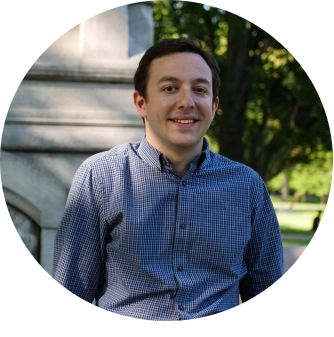
Tom Boellstorff: teaching digital culture in Second Life

Tom Boellstorff and his digital alter ego, Tom Bukowski (image: Steve Zylius / UCI)

Professor Tom Boellstorff is someone I’ve oft written about in these pages. Known as Tom Bukowski  in Second Life, he is a professor of anthropology at the University of California, Irvine (UCI), and has a long association with the platform as he has, and continues, to engage a range of studies both on his own and in collaboration with Donna Davis (Tredi Felisimo in-world), a digital ethnographer at the University of Oregon.

Tom’s involvement with Second Life goes back to 2004, and has carried out numerous studies in-world that have resulted in a range of publications including Coming of Age in Second Life: An Anthropologist Explores the Virtually Human (Princeton University Press, 2008), the result of two years fieldwork in Second Life, living among and observing its residents in exactly the same way anthropologists traditionally have done to learn about cultures and social groups in the so-called real world. He has also co-authored Ethnography and Virtual Worlds: A Handbook of Method (Princeton University Press, 2012) a concise, comprehensive, and practical guide for students, teachers, designers, and scholars interested in using ethnographic methods to study on-line virtual worlds, including both game and non-game environments. Alongside of Donna, he co-curates and operates Ethnographia Island, about which I first wrote in 2016 (see: Exploring disability, new cultures and self in a virtual realm), and which later became the subject of a segment of The Drax Files World Makers video series.

My own contact with Tom started in 2013, as a result of my learning about and covering the story of Fran Swenson (Fran Serenade in Second Life – see: Of Parkinson’s, Second Life and a story worth reading), and with whom both Tom and Donna worked. Since then, I’ve tried to follow Tom’s work – albeit not always successfully, so I’d like to extend my thanks to Luca (lucagrabcr), co-founder of the Virtual Existence Society, for tweeting about Tom’s latest project (so to speak): bringing his classroom and students directly into Second Life as a result of the SARS-CoV-2 pandemic.

Anteater Island: landing point

As reported in the UCI News by Lilibeth Garcia, because social / physical distancing prevents him from teaching in his usual environment – an auditorium located in UCI’s state-of-the-art Anteater Learning Pavilion – Tom has created Anteater Island within Second Life, a place that allows him to continue to teach his course, Digital Cultures (Anthropology 128C), directly to his students without fear or risk of possible infection.

UCI’s digital cultures class is a rare sight these days, with unmasked students sitting together, often shoulder to shoulder, in a large venue and listening attentively as anthropology professor Tom Boellstorff presents a slide show. But the pre-coronavirus-style format isn’t flouting any social distancing guidelines. The class takes place in Second Life – a 3D virtual world that allows users to create communities and interact with each other – and the instructor and students are avatars.

– from Anteater Island, UCI News, June 1st, 2020

Anteater Island: the auditorium

Tom made the move to using Second Life as UCI sought to moving its teaching activities on-line as a result of the pandemic. Thanks to his long association with the platform, and while his colleagues were doubtless looking at potential options for moving their classes entirely on-line, Tom was able to capture the essence of the collaborative working spaces offered within the physical Anteater Pavilion as used by his students and replicate their capabilities within Second Life without having to confine himself to the traditional view of learning spaces as bricks-and-mortar structures.

Within the region, learning spaces are located around the coastline, offering a primary lecture auditorium, meeting areas for each student team, a display area where students will eventually display their work, and an office where he can be reached. Towards the centre of the island lies a social space where students can relax, chat and even dance, while a primary landing point providing an introduction to the island for students, and some basic notes on viewer use.

Given the course is about digital cultures, the approach of using Second Life is not only practical in terms of overcoming the issues of social / physical distancing, it is actually a potential enhancement to the course. After all, how better to get students thinking about digital cultures and how they impact / reflect / alter people’s lives, than by actually placing them within a digital environment where they can experience things first-hand, both through their own involvement in, and reaction to, the environment and through observation of their fellow students.

Anteater Island: central social area

Hence why, perhaps, Tom has also included three fun fair rides – roller coaster, sky drop and bumper cars – for students to try, as well as offering sandbox building space in the sky above the island. All of these allow students to both relax and have fun outside class time, and also experience some of the interactive appeal of virtual environments.

In a time when, thanks to the SARS-CoV-2 pandemic, our relationship with, and use of, on-line capabilities for communication, contact, learning and more, are being subject to so much re-evaluation, Tom notes that virtual spaces are especially deserving of greater understanding and study.

We need to get away from talking about the physical world as the real world. On-line sociality is a set of cultures that can be just as real as what is in the physical world … Virtual space gives you a sense of shared space that you don’t get with a phone call. Zoom fatigue is an interesting aspect, because I find engaging through an avatar less stressful than Zoom. There’s something lost with having an avatar, but there’s also something gained.

– Professor Tom Boellstorff, UCI

Hopefully, this is something we’ll be able to witness, as Tom plans to lead studies himself, with the assistance of a further grant from the National Science Foundation. Certainly, it’s something I hope to be able to report on in the future.

Links to Tom Boellstorff

In the Press: Second Life in Medium and VICE

A couple of media articles looking at Second Life appeared on Friday, May 22nd that made for interesting reading. They came from different perspectives, but both offered a relatively fair view of SL and attempted to probe some of its appeal / capabilities.

Writing for Medium, Doug Antin offers How the Virtual World “Second Life” is a Showcase of the Metaverse. It’s an attempt to explain both Second Life and the concept of “the metaverse” by someone who perhaps hasn’t spent a significant amount of time in SL, writing for an audience that may only have a superficial understanding of either the platform and the idea of “the metaverse”.

It might be tempting to roll the eyes at the idea of a reporter writing about Second Life when he may not be as au fait with the platform as we might like – but in fact, Antin does a good job of providing insight into the platform and the idea of it being a precursor of “the metatverse”, by couching one in terms of the other in what is an easy-to-read article.

Doug Antin

This is a piece that concisely and positively covers why Second Life exerts such lasting appeal on its users, whilst also touching on some the the “deeper” aspects of the platform’s reach  – a quote from Tom Boellstorff’s Coming of Age in Second Life: An Anthropologist Explores the Virtually Human touches on matters of identity, while an observation that Second Life communities tend to show a reduction in the preference falsification characteristic is particularly relevant in a time when western society is becoming increasingly polarised. I will admit to being surprised at seeing an image of Sansar in the article, but as this is pulled from Engadget, I put it down to a small error in research.

What is particularly engaging with the Medium piece is that it is entirely free of “official” quotes. Not that I have anything against interviews with Linden Lab representatives; it’s just that by taking the approach of looking directly at the platform through the eyes of a user, as it were, and focusing on users (including the embedding of one of Luca’s excellent Second Life videos), Antin’s piece cannot be seen as carrying any kind of “corporate spin”.

This approach allows Antin to reach what I’d say is a fair and balanced summation of the platform:

Second Life isn’t a game. It’s a fringe community experimenting with a new way of life. For the people that participate, it’s a chance to escape their regular lives and build a world they want to live in … The Second Life community probably won’t ever achieve mainstream adoption. It’s too fringe and the technology doesn’t support easy access to a casual user. But it does represent an incubator for what the Metaverse can become.

 –  Doug Antin, Medium, May 22nd

Writing for VICE, Shamani Joshi offers Virtual Reality Is Going to Change Live Events Culture Forever, an examination of how virtual spaces might revolutionise how we view / attend live events in the wake of the SARS-CoV-2 pandemic. However, rather than looking down the VR headset route, the article instead focuses on three long-running virtual environments: Minecraft, IMVU and Second Life.

In terms of Second Life, this article is a curious mix. As readable as the Medium article, it take the route of direct quotes from Lab CEO, Ebbe Altberg and offers an upbeat view of Second Life’s appeal  – the power given to user to develop, promote and execute their own events is reasonably covered, as is the benefit of having a virtual economy, the ability to fund-raise, and even the ability for environments like SL to assist in matter of health (in this instance, dealing with anxiety – again a condition that is relatable to the current situation vis SARS-CoV-2).

The oddities, for me, come in a few places. Early on, the articles refers to the current pandemic having helped both IMVU and SL to “level up their users by more than 75 percent”. While the active user count for SL has increased, I would doubt it is by 75% (“levelling up” to me implying overall user base growth).

Similarly, the closing observations struck me as a little off; I’d actually argue that mobile-phone inspired text speak has done more damage to the art of conversation than the use of a traditional keyboard has ever done. Similarly, given the freedom of interaction and expression offered by a platform like SL, coupled with the rich mix of users it presents actually increases a person’s ability to freely think and behave, particularly when compared with social media platforms, which so often encourage a narrowing of personal outlook to only those views and opinions that conform with, rather than challenge, our own.

But grumbles aside, the VICE article fairly explores the potential of virtual environments and their ability to offer spaces for live events and activities that offer interaction, and without jumping down the VR headset rabbit hole. Like the Medium article, it also casts s solid, positive light on Second Life, and both make for an interesting read if you haven’t already done so.

VAT & GST on Lab products & services for Norway & Australia

In case you missed it, on Thursday, May 21st, Linden Lab announced that value added tax (VAT) and Goods and Services Tax (GST), as mandated by the governments of Norway and Australia, will be applied to to services and products sold by Linden Lab to residents of those countries, as from Monday, May 26th, 2020.

For further information on this change, please use the following links:

You can also read the Lab’s own post on these changes here.

Out with the green, in with the blue

via Linden Lab

On Friday, May 22nd, Linden Life formally introduced the new Second Life logo with a brief blog post – see A New Look for Second Life.

The new logo retains the familiar eye-in-hand design familiar to all, but sees the colour switch from green to blue, while the typeface used for “Second Life” has been updated to a crisper, cleaner black typeface.

Some may have noticed the new logo in the blog post Tilia Pay to Power USD Transactions in Second Life Beginning May 26, which included the new logo (I did myself, but avoided commenting to see if there would be an official announcement.

The blog post introducing the change explains the reason for its introduction thus:

Second Life has seen a surge of interest from people new to SL, long-standing residents, and groups and businesses seeking a uniquely interactive place for gatherings and special events. With this renewed attention we decided it was time to update a key part of how we tell the world what SL is all about. Second Life is still going strong, with a devoted and energetic resident community, and we want everyone to know that.

The post also notes that it will take time for the new logo to completely replace the old logo in every place where it appears, as the company doesn’t want to pull staff from other work just to make logo updates, particularly given the sheer volume of web pages where the logo is used.


Second Life: Tilia Pay to handle all USD-related transactions

via Linden Lab

In July 2019, Tilia Incorporated, a wholly owned subsidiary of Linden Lab, officially took over the management of activities such as processing credit out of second Life (that is, withdrawing funds as US dollar balances the platform), and and US dollar balances held by Second Life users (see: Tilia has officially launched operations with Second Life*, August 2019).

Now, in an expansion of Tilia’s role with Second Life, Linden Lab has announced that as from Monday, May 26th, Tilia Inc, via its Tilia Pay service, will be managing all US dollar transactions related to Second Life, including those involving conversion of funds to other currencies.

This means that, as from Monday, May 26th, anyone:

  • Making a payment through one of their indicated payment methods – credit card, debit card, PayPal, or Skrill (as indicated on their Second Life account), such as purchasing Linden dollars.
  • Adding a new payment method to their Second Life account.

Will be consenting to the Tilia Terms of Service and Privacy Policy.

The change is being driven to both comply with regulatory requirements across a number of U.S. states and to leverage he enhanced fraud and money laundering safeguards that Tilia Pay provides.

The important things to note here are:

  • All Second Life users should be familiar with the Tilia Terms of Service (and Not just those who have either a US dollar balance associated with their account and / or cash-out money from SL).
  • Users will not be explicitly asked to confirm their agreement with the Tilia ToS / Privacy Policy. Rather, when paying with a payment method (e.g. credit card) or adding a new payment method to an account, a users will see text stating that by proceeding with the transaction, they are agreeing to both the ToS and Privacy Policy.
  • This move does not:
    • Introduce any new fees.
    • Require users to submit any additional information to Tilia Incorporated or Linden Lab.
    • Change how L$ transactions are conducted in the Viewer or in the Marketplace.

Readers are asked to read the Lab’s official blog post on the change for further information relating to it. In addition, questions or concerns should be directed to the forum thread on the matter – questions cannot be officially answered through this blog.

Related Links

Pending the cloud migration, LL report limited availability of new regions

On Thursday, May 14th, Linden Lab reported something that may be a little unexpected: they’ve “run out” of land – or more correctly, they are at the maximum capacity of simulator servers they can host within their current co-location facility in Arizona. This means that for the short-term future, there is only limited availability of “new” regions directly from the Lab.

The primary reason for this is, according to LL, an unexpected increase in demand for “new” regions – possibly as a result of the result of former users and increased interest with / involvement in Second Life as a result of the current pandemic situation.

While the Lab could overcome the issue through the purchase of new hardware and previsioning it through a suitable data centre, this would still require a significant amount of expenditure and work. Given that we’re potentially mid-way through the work to migrate all of the Second Life services to AWS / Google cloud infrastructure (with the migration of simulators still to come), this is time, effort and money the Lab would – understandably – avoid, as it would only be for a relatively limited period of time.

With regards to both the cloud migration and this situation, the Lab notes:

As we’ve discussed previously, Second Life is in the process of migrating from our existing dedicated servers to a cloud hosting service. That migration has already moved a number of the most important services and databases, but we are not quite ready to host simulators in the cloud. We have a crack team working on that and are making lots of progress, but there are significant changes needed to make sure that we can provide the performance, stability, and security required. When that process is complete we will have a nearly unlimited region capacity, but until then we are constrained by the size of our existing server fleet.

While our migration project has been underway for some time, even our most optimistic business projections did not anticipate a surge of the magnitude we have seen in recent weeks for additional regions. While we planned for growth driven by improvements to Second Life and other factors, we didn’t expect demand to be created by a global pandemic.

As a result, we are in the unfortunate position of hitting the maximum capacity of our “old” servers until the “new” cloud servers are fully operational.

– Linden Lab, Limited Availability of New Second Life Regions, May 14th, 2020

The availability of new regions directly from the Lab will, for the time being be dependent upon the number of regions returned to them, and is likely to remain so until such time as the cloud uplift work has been completed – which the Lab estimates will be in early autumn 2020.

Note that this situation shouldn’t immediately impact things like parcels currently available for sale / auction on the mainland, or the sale / rental of parcel available on private regions already in-world, although it may come to do so if the demand for land (rather than entire regions, Full or Homestead), runs at a similarly high rate through the next few months. Elsewhere, it is liable to impact on any expansion plans private estates may have, and possibly result in a slow down in any growth of Bellisseria.

You can find out more about options for obtaining land during this shortage of new regions by reading the Lab’s blog post in full. There’s also a forum thread available for those wanting to discuss the matter and hear back from the Lab.