September 2020 WUG summary: uplift and SL Mobile

The Web User Group meeting venue, Denby

The following notes are taken from my recording of the Web User Group (WUG) meeting, held on Wednesday, September 2nd, 2020. These meetings are held monthly, generally on the first Wednesdays of the month, with dates and details of the meetings available via the Web User Group wiki page.

When reading these notes, please keep in mind:

  • This is not intended as a chronological transcript of the meeting. Items are drawn together by topic, although they may have been discussed at different points in the meeting.
  • Similarly, and if included, any audio extracts appearing in these summaries are presented by topic heading, rather than any chronological order in which they may have been raised during the meeting (e.g. if “topic X” is mentioned early in a meeting and then again half-way through a meeting, any audio comments related to that topic that might be included in these reports will be concatenated into a single audio extract).

Web Properties Updates

The primary focus for the web teams remains the transitioning of services from the Lab’s own servers to AWS servers as a part of the Uplift project, although non-uplift web properties work is being carried out where possible, as noted below.

Uplift Work

  • Place Pages and the land store pages are all now running in the cloud.
  • Various support tools as used by the Lab have also been transitioned to running in the cloud.

Non-Uplift Web Properties Updates

  • The Second Life Jira has been updated, although this caused some issues for users who had not used  the Jira for some time, but who had used the Name Changes capability to change their avatar (user) name. This has now been fixed.
  • A  similar update is required for the SL wiki (for those able to edit pages). This will be implemented after the cloud uplift work has been completed.
  • The Marketplace has received a number of fixes / updates, including:
    • A fix for some users being unable to create stores on the MP.
    • A fix for some of the merchant reports hanging when run.
  • The SL web properties (including the viewer’s web search) now have a Cookies Acceptance banner, as required under Californian law.

Premium Plus

  • Currently “shelved” due to cloud uplift work,
  • It is still “on the [road] map, but just not a target right now.”
  • Will be looked at again some time after the uplift work has been completed.

Mobile Client

  • Issues arose during the QA testing of the last iOS update, these are currently being worked  on.
  • The current plan is now:
    • A further QA testing on the iOS version of the app.
    • If  this version passes QA successfully, make it available to the current closed alpha testers AND submit it to Apple for their testing / review.
  • While LL will *not* be offering the ability for using to purchase L$ or make transactions in the initial releases of the app, they are watching the escalating Epic (Fortnite) / Apple + Google situation (see: Epic suing Apple and Google over Fortnite bans: Everything you need to know) to see how this affects fees levied by both Apple and Google regarding L$ transactions, once they become available through the SL mobile app.
  • As per last month, the Android version of the apps remain some way behind the iOS version.
  • General reminder: in its initial iterations, the app will be primarily focused on communications. It will not have a full range of capabilities when initially made available to users, but will be iterated upon; this includes the app not having any world rendering capability, although this may be added in the future.
  • General updates on the app can be found in my periodic SL Mobile updates.

Next Meeting

Wednesday, October 7th, 14:00 SLT.

2020 Simulator User Group week #31 summary & the Blake Sea Cloud challenge

Auld Lang Syne, June 2020 – blog post

The following notes were taken during the Simulator User Group meeting of Tuesday, July 28th, 2020.

Simulator Deployments

Please refer to the server deployment thread for news and updates:

  • There was no deployment to the core SLS channel regions on Tuesday, July 28th, leaving the majority of the grid running on server maintenance update 544832, designed to resolve issues with some internal service updates, chat range improvements and capability improvements.
  • On Wednesday, July 29th, there should be a deployment to two of the RC channels (LeTigre and BlueSteel), primarily related to internal changes related to the cloud uplift.

SL Viewer

  • After being rolled back to RC status, the Tools Update viewer version 6.4.5.544639 was removed from the available viewer list on Monday, July 27th.
  • The Mesh uploader was promoted to RC status with the release of version 6.4.5.544027 on Monday, July 27th.

The remaining official viewer pipelines remain as follows:

  • Current release viewer version 6.4.4.543157, dated June 11th, promoted June 23rd, formerly the CEF RC viewer – ROLL BACK.
  • Release channel cohorts:
    • Arrack Maintenance RC viewer, version 6.4.5.544465, July 6th.
    • Love Me Render RC viewer, version 6.4.5.544028, June 30th.
  • Project viewers:
    • Custom Key Mappings project viewer, version 6.4.5.544079, June 30th.
    • Copy / Paste viewer, version 6.3.5.533365, December 9th, 2019.
    • Project Muscadine (Animesh follow-on) project viewer, version 6.4.0.532999, November 22nd, 2019.
    • Legacy Profiles viewer, version 6.3.2.530836, September 17th, 2019. Covers the re-integration of Viewer Profiles.
    • 360 Snapshot project viewer, version 6.2.4.529111, July 16th, 2019.

Blake Sea Cloud Challenge (Aditi)

As I was the first to report on July 21st, the Blake Sea regions have been cloned to the Aditi, the beta grid, and are running on AWS servers in the cloud (see: Blake Sea in the cloud on ADITI). At that time, region crossings for the regions were  – to say the least – unstable.

Since then, those regions (some 46 in total) have been further updated (Monday, July 27th), and to help with gathering data on cloud-based region crossings, Simon Linden has defined the Blake Sea Challenge:

We just did some updates this morning (Monday July 27th) that fixes a bunch of the region connectivity issues.    I just did a tour and didn’t hit any invisible walls.
Along those lines, I made a quick “Blake Sea Challenge”   Go to secondlife://Aditi/secondlife/Morris/200/207/34  on the BETA aditi grid, and click on the red egg-shaped thing to try it out.   It will give you the “Blake Sea Challenge”  … wear it and touch, and it’ll get you going.   Follow the instructions to sail / fly / motor around 46 regions without doubling back and see if you make it.   Have fun and keep letting us know how it goes!

– Simon Linden, Simulator User Group

Blake Sea is now on Aditi and running in the cloud for those wishing to test vehicle region crossings. If interested, try taking Simon’s challenge (above)

In Brief

  • There are renewed reports of delays to scripted object rezzing across many regions. see: BUG-228939 “on_rez action delayed for 2 to 3 seconds in many regions”.

SL17B Meet Oz Linden – a summary with video and audio

via Linden Lab
On Wednesday, June 24th, 2020 at the SL17B celebrations, the third of five Meet the Lindens sessions was held, featuring Oz Linden, the Lab’s Vice President of Engineering.

The following is a summary of the session covering the core topics raised, with selected audio extracts. The notes provided have been taken directly from the official video of the session, which is embedded at the end of this article. Time stamps to the video are also provided for ease of reference.

Note that this is a summary, not a full transcript, and items have been grouped by topic, so may not be presented chronologically when compared to the video.

Table of Contents

Audio extracts, where included, have been cleaned-up and balanced to remove pauses, repetitions, etc.

In places, information that is supplementary to Oz’s comments is provided in square braces (.i.e. [ and ]) are used in the body text below to indicate where this is the case.

About Oz

  • Oz Linden

    Joined the company in 2010 specifically to take on the role of managing the open-source aspects of the Second Life viewer and managing the relationship with third-party viewers.

  • He came to Linden Lab out of a desire to do something “fun” after working in the telecommunication arena, notably with voice over IP systems (VOIP), which he defines as being “really interesting technology with some really fascinating challenge”, but in terms of it being fun, it really didn’t do what I wanted it to do.”
  • For the first two years of his time at the Lab, he was primarily focused on the open-source viewer work and in refining the overall viewer maintenance process, before his role started expanding to encompass more and more of the engineering side of Second Life.
  • When work on Sansar started in earnest, he pro-actively campaigned within the Lab for the role of  Technical Director for Second Life, working to build a team of technical staff around him who all shared a passion for Second Life.
  • In 2019 he was promoted to Vice President, Second Life Engineering (Vice President of Engineering following the sale of Sansar in early 2020), and joined the Lab’s management team alongside Grumpity and Patch Linden (see: Linden Lab’s management team expands: congrats to Grumpity, Patch and Oz).
  • Together with Grumpity and Patch, he forms what Grumpity calls the “troika” overseeing Second Life’s continued development.
  • Classifies his attraction to working with Second Life as perhaps falling into three core areas:
    • The open-source nature of the viewer and being directly involved with how SL users are using the viewer and what they do with it – which can often times take the Lab entirely by surprise.
    • The challenge of trying to implement new technologies alongside of (rather than simply replacing) older technologies.
    • Working with the operations team and others to ensure SL constantly evolves without (as far as is possible) breaking anything – a process he refers to and rebuilding the railway from a moving train.
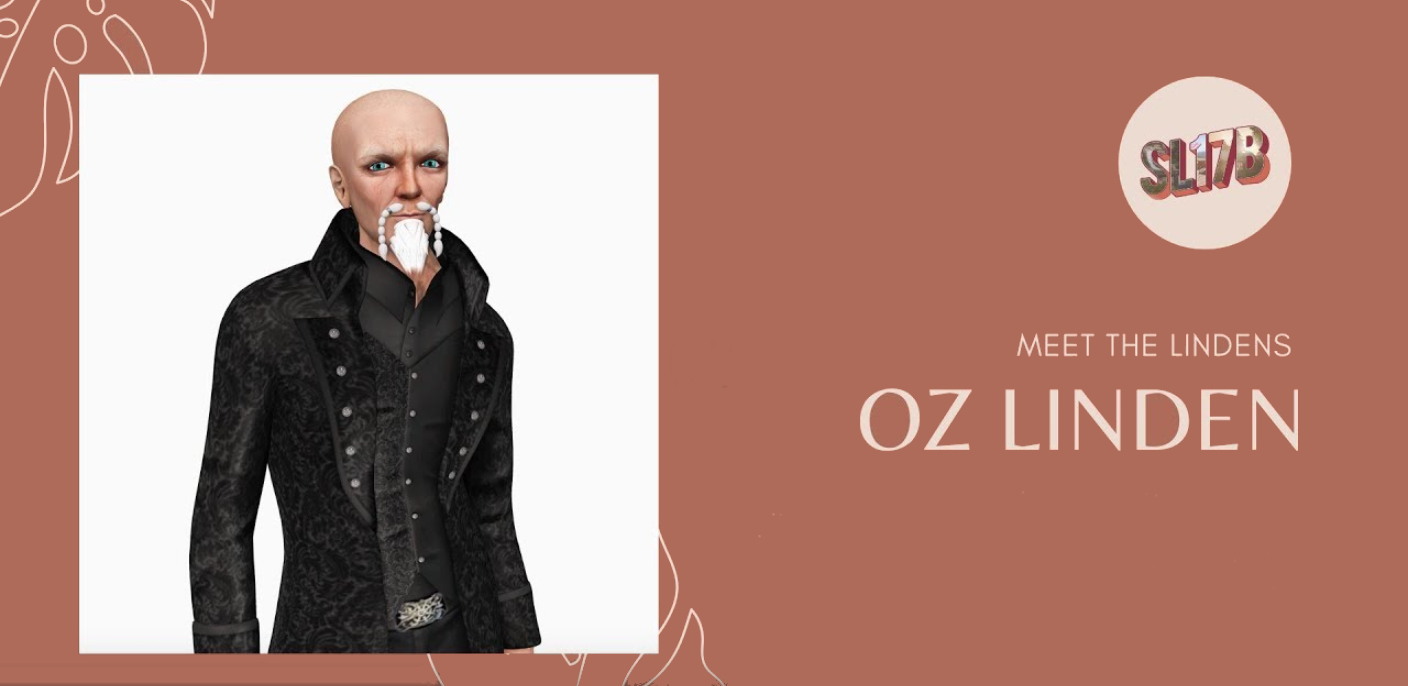
  • Note that his avatar appears bald in the Meet the Lindens publicity shot at the top of this article, as he and his team participated in the 2020 Bid a Linden Bald event to raise money for RFL of SL, and has the team raising the least, that had to spend a month in-world sans hair.

Back to top

His Team

Has it Expanded Since the Sale of Sansar?

[Video: 4:47-5:48]

  • He did persuade a number of people to move back from Sansar to Second Life [those known to have moved back at the time were Runitai Linden (graphics) and Maestro Linden and Monty Linden (engineering), although they obviously may not be the only people to move / move back to work on Second Life].
  • Hiring of new staff has also continued [notable within this are Ptolemy Linden and Euclid Linden (graphics) and at least one Android development specialist].
  • At the time of the event, also looking to hire a further systems engineer working on the back-end Linux systems.

What Impact has the Pandemic Had?

[Video: 6:02-8:07]

  • “Pretty minimal”
  • The Engineering and Operations teams and his developers were already “pretty distributed”, with some of the teams working out of three of the Lab’s offices – Seattle, San Francisco and Boston – but around one-third to half of the total staff reporting to him (Oz included) have generally worked from home as “Moon Labbers” [the “Moon Lab” being LL’s term for remote working].
  • So teams already very familiar with remote working, operating across time zones and holding meetings in SL, as well as tools like video chat, and the transition for the rest has been “pretty much” seamless.
  • Probably the biggest impact is that the team isn’t getting together for their summer meet-up where they socialise and lay plans for future work on SL.

Back to top

Cloud Uplift

Why Is It Being Done?

[Video: 9:00-13:01]

  • Historically, Linden Lab has operated its systems and services the “traditional” way: dedicated hardware, and infrastructure running in dedicated facilities [at one time three data centres, but for the last several years a single co-location (co-lo) centre in Arizona].
  • Actually had to develop a lot of the methodologies the company now uses to manage all of the SL services simply as a result of the speed at which the platform initially grew, building capabilities for which there were no “standard” solutions.
  • Time has moved on, and Amazon and others have developed the means for systems and services to be run / provisioned through the cloud. These services allow Linden Lab to leverage a range of options and capabilities in a number of ways.
  • A particular aspect of the move is that LL no longer has to invest time, effort and money into hardware and infrastructure, but can essentially hand these off to AWS, allowing them to concentrate on SL’s operations and development.
  • With hardware in particular, it has been a number of years since the Lab upgraded their servers, so transitioning to the cloud avoids an expensive capital expenditure in new hardware, and similar expenditures in the future.  For example:
    • In the current environment, if the Bake Service [a collection of servers use by the Lab to generate and manage avatar appearances and ensure they are consistent across viewers] needed upgrading to more powerful servers, LL would have to acquire, test and implement that hardware, and then transition the Bake Service to it.
    • Running via the cloud means picking the required hardware from a catalogue provided by Amazon, who then take care of the heavy lifting to ensure the Bake Service works as required on the selected hardware.
  • Overall, the priority of the work is such that the three goals Oz has set himself : Uplift, Uplift, Uplift.

How is the Uplift Progressing?

[Video: 16:46-19:05]

  • It’s stressful but going well.
  • All of the inventory databases were successfully moved several months ago – twice, in fact: first to the cloud, then to a different type of cloud server. This work was completed so successfully, users were not even aware of any change.
  • The intermediary service sitting between the inventory database and the viewer was also successfully transitioned to AWS. It has also been running for “some time now”, again without users noting any difference.
  • A lot of the back-end services that users never directly interact with have also been successful transitioned
  • There is still a lot of work to do, but the plan is to have Second Life “out of the co-lo by the end of the year”.

Continue reading “SL17B Meet Oz Linden – a summary with video and audio”

SL17B Meet Ebbe Altberg- a summary with video and audio

via Linden Lab
On Monday, June 22nd, 2020 at the SL17B celebrations, the first of five Meet the Lindens sessions was held, featuring the Lab’s CEO, Ebbe Altberg, aka Ebbe Linden.

The following is a summary of the session covering the core topics raised, with  audio extracts where relevant. The notes provided have been taken directly from the official video of the session, which is embedded at the end of the article. Time stamps to the video are also provided for ease of reference. In addition, audio extracts are provided in places that may be of particular interest to readers.

Table of Contents

When reading this article, please note:

  • It is not a full transcript:
    • Discussion points have been grouped by topic, and not necessarily in the order raised during the session.
    • I have focused on those topics liable to be of the most interest to readers / generated the most informative answers, so this is not a summary of all comments, feedback, etc.
    • Topics are given as bullet-point highlights for ease of reference.
  • In places, information that is supplementary to Ebbe’s comments is provided, and square braces (.i.e. [ and ]) are used in the body text below to indicate where this is the case.
  • Audio extracts have been cleaned-up to remove repetition or pauses, etc.

About Ebbe

[Video: 3:44-6:21]

Note: the following is taken from both Ebbe’s comments and my own research into his background, carried out when he joined Linden Lab in 2014, and which also included input from Ebbe.

  • Swedish by birth and still by nationality – he is still working in the US on a green card.
  • Graduated from Tärnaby Skidhem in 1983. He had hoped to be a ski racer – with eyes on the Swedish national team and the world cup – but was prevented from pursuing this career due to a back injury.
  • Instead went to the USA to study at Middlebury College, Vermont, USA, where he spent a lot of time in the art studio and the computer lab in an extreme left brain / right brain type of education”, before graduating with a degree in Fine Arts and a concentration in Computer Applications.
Ebbe Linden, aka Ebbe Altberg. Credit: Strawberry Linden
    • He  “slipped into Microsoft on a random banana peel”, where he spent twelve years. He was particularly involved with the Office products (Word, Mac Office, etc.), and although he wasn’t directly responsible for Clippy! – he did oversee it being ported to Mac Office 98.
  • In 2000, he joined Ingenio, a company that created marketplaces for people to buy and sell information over the phone. As well as managing the engineering, program management, operations, and quality teams, he also served as both the company’s interim CEO its Chief Product Officer. He also “racked up quite a few patents there.”
  • Joined Yahoo! in 2008, filling out a number of senior roles, working in both Europe and the US.As the Senior Vice President for Media Engineering based in the USA, but with global responsibly for Media Engineering, managing  an organisation of more than 600 engineers, architects, program managers and quality engineering staff, and with dotted-line oversight of some 150 product managers and designers.
Linden Lab’s chairman of the Board, Jed Smith, is a long-time friend of Ebbe Altberg, and had previously tried to get Ebbe to join the company prior to his appointment as CEO in 2014. (image: Owl Ventures)
  • Moved from Yahoo! to San Francisco based BranchOut, a small company that had, prior to his joining built a 25 million user base for its professional networking app before seeing that number shrink to just 3 million. He was specifically responsible for pivoting the company to a new workplace messaging application called Talk.co, launched in October 2013.
  • Has had a long exposure with SL indirectly through his son Aleks, who initially joined the Teen Grid before moving to establish his own in-world business.
  • Has also been long-term friends with LL board Chair, Jed Smith, through whom he met Philip Rosedale. Smith had asked Ebbe to consider the LL CEO position previously to 2013/14, but “things “didn’t line up” .
  • Is immensely proud of the all that the company has achieved and continues to be drawn by both the rewards and challenges involved in running a platform that is so technically and socially diverse.


Back to top

Working at the Lab

Rewards and Challenges Working with SL

[Video: 6:23-10:20]

  • Loves the technical / product aspects of the platform and the diversity of potential use cases it can meet. Also loves the rich diversity of ways users make use of SL creatively, socially, etc., that mean the platform constantly offers unique opportunities and challenges.
  • Enjoys the fact that SL makes it possible to meet people from around the world and from all walks of life who find value in the platform for so many different reasons.
  • These aspects also, for him, present the challenges of working with SL: putting all the different technologies that make SL work together such that they can form a virtual world where people can create, socialise, earn income, etc.
  • There’s also the challenge of talking to a customer base that is not of a single mind in using the platform, but rather is a range of user communities, each of which has nuanced needs and requirements that need to be met.
  • Also likes the challenge of trying to extend and build a product set that no-one else has managed to develop to the same degree – such as with SL’s economic model and the development of Tilia Pay.
  • The strength with SL that he loves is the sheer diversity within the technology required or SL and the people that use is – which is also the platform’s most engaging challenge.

SARS-Cov-2 Impact

[10:22-12:04; 12:30-18:53]

  • Is appreciative of the power that SL has in bringing people together during the SARS-CoV-2 pandemic and providing a safe space for continued interaction, and that it can continue to help furnish those using it to generate an income to continue to do so.
  • From a business perspective, SL has seen significant increases in demand. However, this has been somewhat impacted by the “land shortage” [see The Cloud Uplift, below for more on this].
  • This increase is not just from “social” users; here has been “a lot” of demand from businesses wanting to host meetings through the platform, education institutions wanting to hold lessons, etc.
  • Company has been very fortunate in its operations because, while it does have offices in San Francisco, Seattle, Boston and Atlanta, many of the staff have always worked from home, so there has always been the assumption of remote working [even the Operations Team works remotely from LL’s co-location data centre in Arizona]. So, moving to that model of operations was less stressful than it might have been.
  • The real hamper in the move has been more the “knock-on” effect caused by the isolation – having children at home whilst trying to work, seeing to their needs, etc.
  • Overall is very pleased with how the company has been able to continue to manage SL and move ahead in plans and development.
  • Pandemic has also caused the media to re-examine SL, and Marketing has been via busy dealing the increased interest in how the platform and how it can be of use to people / organisations during the pandemic.
  • What has been particularly pleasing is the more positive view the media has of the platform, and the recognition of its maturity as a platform.
  • Like to point out to reporters that Second Life isn’t “old”, it is “mature”, which is not necessary a bad thing when talking about a platform.

Back to top

The Cloud Uplift

[Note: Cloud uplift is the term used for the project to transition all of the Second Life services from hosting in a single co-location data centre used by Linden Lab and using their own hardware, to provision it all via Amazon AWS cloud services.]

[Video: 19:51-23:25]

  • Likely to be around 3-4 months before new regions are once again available, although it is understandably hard to put a definite date on things.
  • The shortfall is due to LL wanting to cease any expenditure in hardware and supporting infrastructure for SL during the cloud transition, believing they had sufficient reserves to offer during the uplift period – but the SARS-CoV-2 pandemic resulted in an unexpected burn through of that reserve.
  • Provisioning and testing new hardware and infrastructure is being avoided, as this would effectively be “lost” capital expenditure.
  • The uplift work is the primary focus of the product, engineering and operations teams at the Lab, with many services have actually already been transitioned to AWS.
  • Details of which systems these might be are not generally given out by LL due to the fact users often make false assumptions on things like issues when aware of such information.
  • Region servers [aka simhosts] make up the majority of the Lab’s hardware, and the Lab now has a test region server successfully running within AWS, but there is still “quiet a bit more work to do” in terms of security and other elements before the Lab will be in a position to offer a region product running in AWS.

Back to top

Continue reading “SL17B Meet Ebbe Altberg- a summary with video and audio”

Pending the cloud migration, LL report limited availability of new regions

On Thursday, May 14th, Linden Lab reported something that may be a little unexpected: they’ve “run out” of land – or more correctly, they are at the maximum capacity of simulator servers they can host within their current co-location facility in Arizona. This means that for the short-term future, there is only limited availability of “new” regions directly from the Lab.

The primary reason for this is, according to LL, an unexpected increase in demand for “new” regions – possibly as a result of the result of former users and increased interest with / involvement in Second Life as a result of the current pandemic situation.

While the Lab could overcome the issue through the purchase of new hardware and previsioning it through a suitable data centre, this would still require a significant amount of expenditure and work. Given that we’re potentially mid-way through the work to migrate all of the Second Life services to AWS / Google cloud infrastructure (with the migration of simulators still to come), this is time, effort and money the Lab would – understandably – avoid, as it would only be for a relatively limited period of time.

With regards to both the cloud migration and this situation, the Lab notes:

As we’ve discussed previously, Second Life is in the process of migrating from our existing dedicated servers to a cloud hosting service. That migration has already moved a number of the most important services and databases, but we are not quite ready to host simulators in the cloud. We have a crack team working on that and are making lots of progress, but there are significant changes needed to make sure that we can provide the performance, stability, and security required. When that process is complete we will have a nearly unlimited region capacity, but until then we are constrained by the size of our existing server fleet.

While our migration project has been underway for some time, even our most optimistic business projections did not anticipate a surge of the magnitude we have seen in recent weeks for additional regions. While we planned for growth driven by improvements to Second Life and other factors, we didn’t expect demand to be created by a global pandemic.

As a result, we are in the unfortunate position of hitting the maximum capacity of our “old” servers until the “new” cloud servers are fully operational.

– Linden Lab, Limited Availability of New Second Life Regions, May 14th, 2020

The availability of new regions directly from the Lab will, for the time being be dependent upon the number of regions returned to them, and is likely to remain so until such time as the cloud uplift work has been completed – which the Lab estimates will be in early autumn 2020.

Note that this situation shouldn’t immediately impact things like parcels currently available for sale / auction on the mainland, or the sale / rental of parcel available on private regions already in-world, although it may come to do so if the demand for land (rather than entire regions, Full or Homestead), runs at a similarly high rate through the next few months. Elsewhere, it is liable to impact on any expansion plans private estates may have, and possibly result in a slow down in any growth of Bellisseria.

You can find out more about options for obtaining land during this shortage of new regions by reading the Lab’s blog post in full. There’s also a forum thread available for those wanting to discuss the matter and hear back from the Lab.

Lab Gab 20 summary: Second Life cloud uplift & more

via Linden Lab

The 20th edition of Lab Gab live streamed on Friday, April 3rd, featuring Oz Linden, the Lab’s Vice President of Engineering and a member of the company’s management team, and April Linden, the Lab’s Systems Engineering Manager. They were appearing to primarily discuss the work in transitioning Second Life to commercial cloud environments. Ekim Linden had also been scheduled to appear, but was unable to do so.

The official video of the segment is available via You Tube, and is embedded at the end of this article. The following is a summary of the key topics discussed and responses to questions asked. Note that the first half of the video is related to the cloud uplift, and the second half to broader engineering-related questions.

April Linden has some 20 years of experience in systems engineering, and is genuinely passionate about Second Life. She first became involved in the platform in 2006 as a resident (and is still extremely active as a resident). She joined the Lab in 2013. She worked within the systems engineering team, and was promoted to her current position of Systems Engineering Manager, Operations, some 18 months ago. For her, the great attraction of the platform has been, and remains, the empowerment it gives people to express themselves positively.

Oz Linden joined the company in 2010 specifically to take on the role of managing the open-source aspects of the Second Life viewer and managing the relationship with third-party viewers, a role that fully engaged him during the first two years of his time at the Lab. His role then started expanding to encompass more and more of the engineering side of Second Life, leading to his currently senior position within the company.

Both are genuinely passionate and enthusiastic about Second Life and its users.

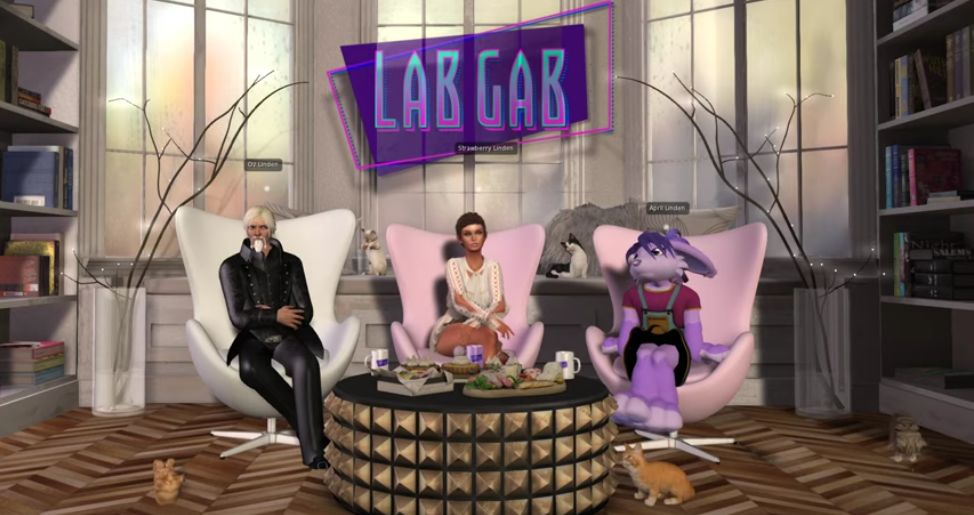
The bunny and the wizard who bring us Second Life: April Linden (Systems Engineering Manager, Operations) and Oz Linden (Vice President, Second Life Engineering)

The Cloud Uplift

What is It?

[5:40-9:45]

  • Cloud Uplift is the term Linden Lab use for transitioning all of Second Life’s server-based operations and services from their own proprietary systems and services housed within a single co-location data centre in Tucson, Arizona, to  commercial cloud services provided by Amazon Web Services (AWS) and Google.
  • The process of moving individual services to the cloud is called “lift and shift” – take each element of software, making the required adjustments so it can run within a cloud computing environment, then relocate it to cloud infrastructure and hardware in a manner that allows it to keep running and avoids disruptions that may impact users, and continues to run exactly as it did prior to the transfer.
  • The current plan is to have all of this work – up to an including moving all of the SL region simulators – to cloud services by the end of 2020.
  • Numerous services have been transitioned to date.
    • The Lab generally prefers not to discussion which specific services have been moved, to prevent users seeing the move as a placebo reason for issues they may be encountering, thus biasing their bug reports.
    • However, one service that is known to have moved is the inventory (asset) database, so that all users’ inventories are obtained via the cloud, and not from a dedicated asset cluster within the Lab’s co-lo facility.
  • With the services that have moved, the Lab has seen noticeable improvements in performance, partially as a result of cloud services using more recently / more powerful hardware configurations than the Lab can run without making a major new capital expenditure in equipment (which the uplift is intended to avoid).
  • A practical advantage of cloud operations is the ability for LL to scale services to meet demand.  The recent increase in users logging-in to SL, for example, placed a strain on the services that feed the CDNs that in turn deliver the majority of asset data to users (mesh data, textures, sounds, gestures, clothing, etc.). These services we then able to dynamically scale to an increased number of nodes to handle the load, something LL would not have been able to do without first sourcing, installing ans configuring the required hardware.
Oz and April with Strawberry Linden (c)

What Improvements Might Users See from the Uplift?

[9:48-14:42]

  • Between now and the end of 2020, no appreciable different should be observable to users.
  • The move is initially being made to a single AWS centre, so things like ping times to regions (once they are moved) shouldn’t change.
  • In terms of reducing simulator-side lag, the answer is unclear, as simulators have yet to be tested – this is due to start with simulators internal to the Lab Soon™. This will enable the Lab to begin to get real numbers in terms of simulator performance.
    • It is believed that simply moving simulators to the more recent, more powerful hardware used by cloud services should on its own result in a modest improvement in simulator performance.
    • That said, the outcome of performance adjustments in distributed environments is “really, really hard to predict”.
  • Longer-term, as the Lab is able to start exploiting the advantages of being in the cloud, there is confidence performance will improved in various areas.
    • For example, if simulators can be distributed in accordance with the geographical locations of their primary audiences (e.g. simulators that tend to get the majority of their audience from South America being located in South America), then this could reduce network time in connecting to them for those audiences, and so help boost performance as seen by those users.
    • While this is a longer-term goal for the cloud migration (it’s not going to be there from “day 1”), it is a part of the motivation to make the transition.

How will the Lab Handle Costs?

[14:45-18:40]

Sidebar note: cloud services typically bill based on demand and usage. This has given rise in some quarters to concerns / beliefs that LL could find themselves facing unexpected large bills for hosting.

  • Two answers: the first is nothing is ever certain.
  • The second is, the Lab, with April and Ekim in particular leading the effort, put a lot of work into modelling their likely operations and costs when using cloud services and infrastructure.
    • This work involved a lot of assumptions on how LL anticipated their costs would look based on how the planned to operate SL in a the cloud.
    • This model was then put to both AWS and to an independent, outside consultancy with expertise in advising clients on the use of cloud-base service provisioning, both of who gave positive feedback on the approach the Lab would be taking and the likely costs involved.
  • Further, the fact that SL isn’t a service that dynamically expands under use. All of its services are operating 24/7, so the costs can be readily calculated and pretty much consistent, therefore, the dynamic surges that can lead to high service bills don’t actually apply.
  • While there are some back-end services that can leverage dynamic hardware use in times of heavy load, these are in the minority (all of SL’s back-end services account for only 15% of its server fleet), so again, dynamic increases in hardware use for those services that can leverage it, are not going to be massively excessive.
  • As such, and allowing for answer (1), the Lab isn’t overly concerned about costs spiralling.

Will There Be Cost Saving that Can Be Passed to Users?

[18:41-19:54]

  • Unfortunately, the engineering teams are not responsible for determining fees charged to users.
  • More practically, it is not going to be possible to make any informed judgements on costs to users until the Lab has had the opportunity to see how actual operating costs compare with their predicted costs model.
  • Further, it is not anticipated that any cost savings will be made in the first 1-2 years of cloud uplift, so any decisions on if and where to reduce costs to users won’t be made for a a while to come, and those involved in making such decisions are not in the engineering teams.