Update 17th December: The video of the meeting is available on You Tube (and embedded below). Links have also been added to the official announcement and a transscript of Jessica’s presentation given at the start of the meeting.
Jessica Lyon and members of the Phoenix Firestorm Team hosted an in-world / streamed meeting on Saturday 15th December, 2012 to discuss the future of Phoenix.
As expected, the core of the news was the Phoenix has essentially come to its end of line. As from December 31st, all official support provided by the Phoenix / Firestorm team will cease.
There are many reasons as to why this step is finally being taken, but they all have their roots in the fact that in late 2010, the decision was taken that to ensure future ease-of-development and enhancement of the viewer, it would be more in the Phoenix Team’s interest to develop a viewer which could more easily keep pace with LL’s development curve, rather than attempting to continually backport new code and features into a viewer that would be based on what would become an increasingly outdated code base. Thus, Firestorm was born. Whether one agrees with this decision or not is actually moot. It was a decision the Phoenix Team were entitled to make.
Jessica Lyon (stock image)
The major reason as to why the team has opted to formally announce the end of line for Phoenix now is because Linden Lab have notified TPVs of the forthcoming roll-out of server-side avatar baking in 2013.
As I’ve explained in a recent blog post, server-side avatar baking is a significant change in the way Second Life operates and which should see an end to the major issue of avatar bake fail. However, it brings with it not only changes to the server-side of Second Life, but very major changes to the viewer itself.
Such is the complexity of these viewer changes that Linden Lab has sought to provide TPVs with an eight week window in which to implement and test them. Given the overall status of Phoenix, it simply is not possible for the Phoenix Firestorm team to implement the changes in Firestorm and backport and integrate them into Phoenix (together with all the other changes required to get Phoenix back on a par with LL’s viewer development) in that time frame. The reason why it is vital for all TPVs incorporate the new code is because without it, avatars will fail to render correctly – so if Phoenix does not have the code, it simply “won’t work” when the new service is deployed.
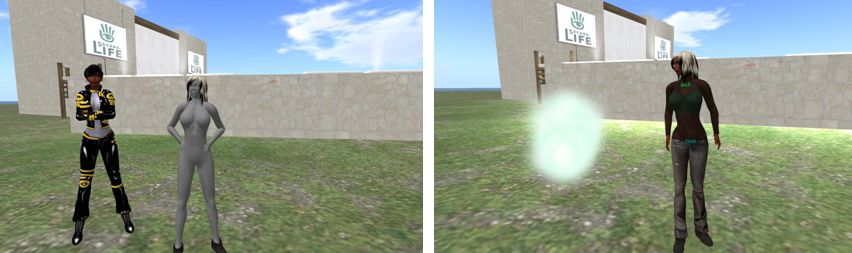
Avatar baking 2013 and Phoenix in brief: These images show the impact of the new avatar baking service on a viewer which is not updated to the new code. (l) as I appear on a viewer without the code, and someone on another viewer (regardless of the code it is using) looks to me – a “grey ghost”. On the right, someone running the new code, and how I look to them – a never-rezzing cloud.
Please use the page numbers below to continue reading this article
Ciaran Laval (once again!) lead me to an article on The Register concerning “Ten technology … FAILS” by one Tony Smith. Some of the entries will doubtless raise a smile or two or have some pundits nodding sagely and muttering, “Yep, said it would never work at the time…”
However, on page four of the item comes … Second Life, which is given a dismissive paragraph concluding, “And then, of course, they all realised that living one, real life was busy enough. And social networking was born…”.
Thus, Mr. Smith joins a growing clique of journalists all eager to proclaim that SL has not only failed, it is in fact like the proverbial parrot famed of Monty Python, “No more”. Not only is his view demonstrably wrong (to sum up what follows, “We’re still here, aren’t we?”), in pointing to Second Life, he again, like many who cite its “failure”, reveal a complete lack of awareness of the platform.
Ciaran asks why attitudes such as this prevail in journalistic circles. He points to an article on The Ancient Game Noob, which also attempts to address the question. Both raise fair points. However, there is really only one answer that matters where views such as those expressed in The Register are concerned, and it can be summed up in two words.
Lazy journalism.
Birth of the Myth
Anshe Chung and Business Week – success and hype
For a time, SL was undoubtedly the darling of the media – whether it be bold predictions of a new kind of “virtual entrepreneur” being the wave of the future. The hype, as I’ve covered elsewhere, began in late 2005, in an article which appeared on CNNMoney and which essentially catapulted Anshe Chung onto the cover of Business Week.
This saw the birth of a story which ran and ran, across more than a year through 2006 and 2007, when the media couldn’t get enough of SL – and nor, for a time, could big business – for reasons neither could fully understand (and nor, in fairness, could LL). All that was apparent, was that the bandwagon was passing by, and it was time to jump on or risk missing out – even though “jumping on” and “missing out” were never actually quantified.
And when it comes to media we’re not just talking the “traditional” forms of media, real or digital print; leave us not forget that CBS jumped aboard in 2007, working with Electronic Sheep to bring us a CSI immersive environment, and the appearance of Second Life (albeit rather badly) on a two-parter of CSI:NY. Other shows also jumped in as well, and even pop stars around the world got in on the act, with Duran Duran (2006) perhaps being the most notable (and still very present), while Italian singer Irene Grandi released her 2007 hit Bruci la città (“Burn the City”) with a video produced in part in Second Life, featuring an avatar based upon her.
Height has always been an issue within Second Life. Not only are default avatars unusually tall compared to the rest of the in-world scaling (most top-out in the 7-8ft range), the camera is offset at a difficult – if not unnatural – angle – which forces people to build oversized structures in order to be able to accommodate it.
I’ve been solving the camera issue for the last couple of years using Penny Patton’s excellent camera offsets, which she first kindly allowed me to reproduce on this blog almost two years ago. Penny has also written extensively on getting a decently scaled avatar, and on the benefits of having realistically sized avatars in-world.
Avatar height issues have long been compounded by the fact that the height display in the viewer’s appearance editor does not accurately reflect the avatar’s height when compared to in-world scaling, with the avatar being around 15 cm (6 inches) taller in-world than is reported by the edit shape height display. This means that even when someone is trying to scale their avatar more realistically using the shape editing tools, they will, at the very least, invariably end up taller than they intend.
The good news here is that there is a good chance that the edit shape height issue may be addressed as a part of the avatar baking project. Nyx Linden will be “diving into” the code for the appearance editor as a part of that project, and may have time to do something about the inaccuracies in the height reporting. Assuming this does happen, it will still leave the problem of starter avatars still being abnormally tall / large, but it’ll certainly be a step in the right direction for those who do wish to size and proportion their avatars more realistically (something which is growing in popularity within SL).
I’ve actually been working on adjusting my own avatar since altering my overall appearance back in August 2010, gradually reducing my height to get down to something which might be regarded as relatively “normal”. Of late, however, I’ve noticed that even with my own downsizing, I’m starting to stand a good head or more taller than friends, and that at a touch over 2 metres in height in bare feet, I’m not always comfortable with my avatar’s height.
The problem is, how does one correctly scale one’s avatar, given the fact the editing tools are so very rough-and ready? Even allowing for the inaccurate height reporting noted above, the sliders are entirely abstract in meaning and at best relate only to an arbitrary start point. The abstraction is made worse by the fact that changes to one slider can impact the proportions controlled by several other sliders, reducing everything to a series of guessimates if using the sliders alone to define your shape.
Penny Patton again comes to the rescue here, providing a superb guide to defining a properly portioned avatar of almost any height and size, which in valuable whether you’re trying to get your avatar sized to realistic proportions or whether you wish to have an abnormally tall or short avatar that is properly proportioned of itself (such as a role-play giant or dwarf, for example). I’ve been meaning to try her tutorial out for a while, but after tripping over a couple of friends recently, thought it was about time I did so :).
I like to think my avatar wasn’t abnormally sized to start with – but I have to admit, the results did startle me, and I’ve yet to see how things stack-up as I wander in-world.
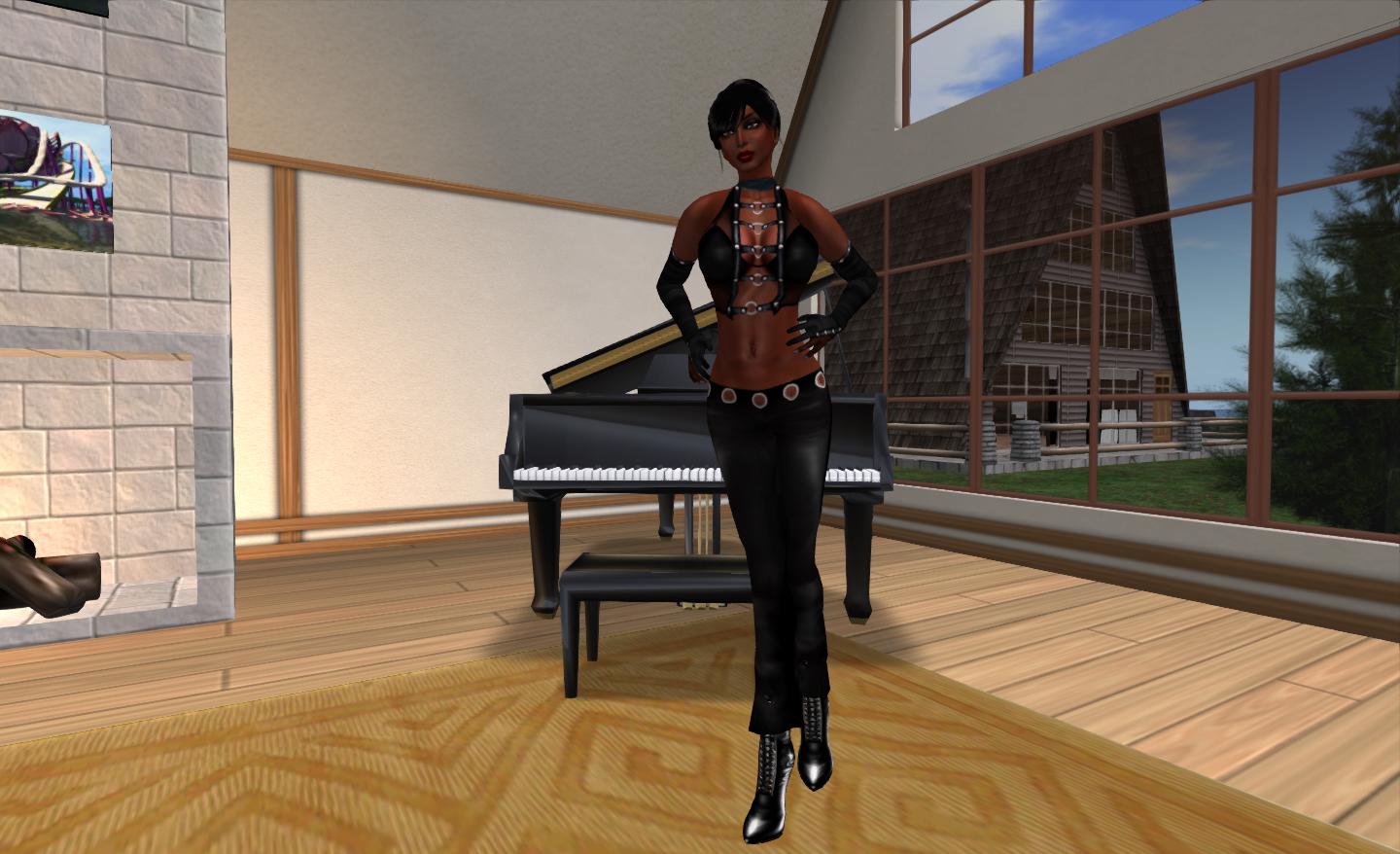
My “usual” height has been just over the 6-foot mark (6 ft 3in, in fact), as mentioned above, and has been that way for a while. This is actually quite moderate in SL terms – or has been – a height which mostly leaves me looking reasonably-well proportioned against many in-world objects.
Me at 6ft 3in (+ heels…)
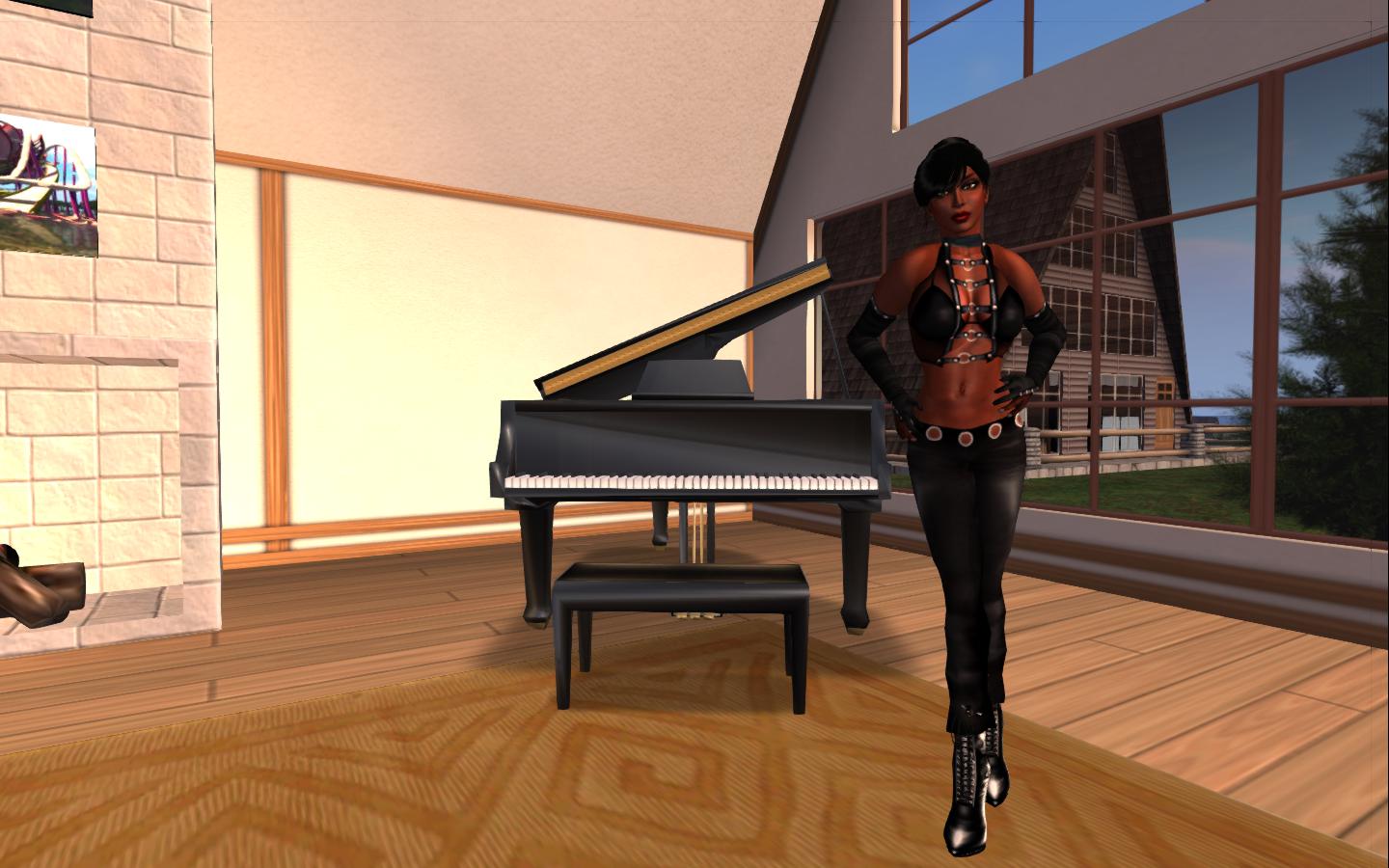
Using Penny’s tutorial I opted to scale my avatar to something approaching my real-world height and size (I’m 5ft 8in in real life, so a little bit on the tall side here as well :)). If I’m honest I did have a small problem with one section of the instructions, which I found a tad confusing to read (but then, put three shovels against a wall then ask me to take my pick, and I’m confused; so the fault is as likely to be mine as much as anything else), but, with a little trial and error, I ended up looking like this…
Me at 5ft 8in
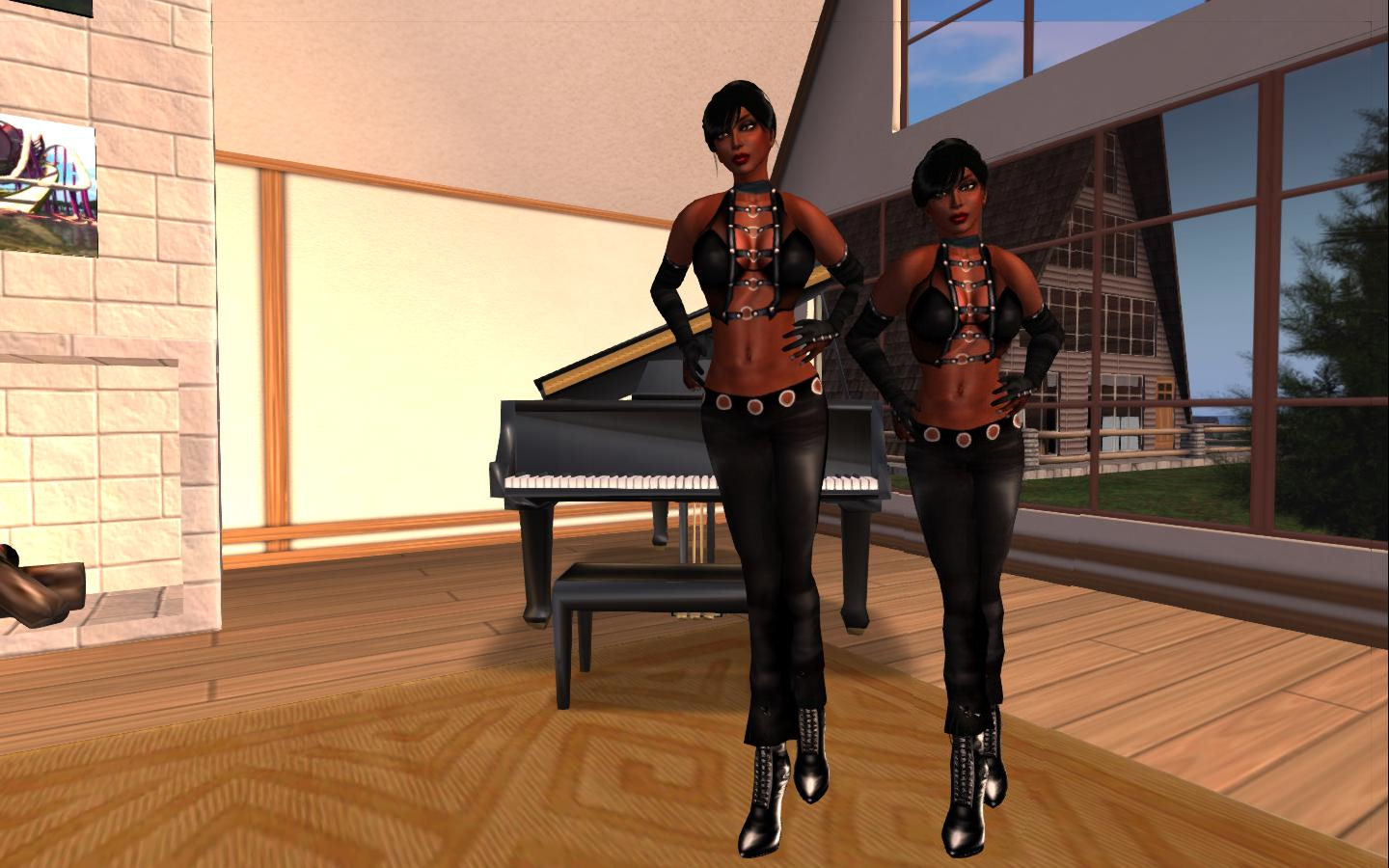
The difference is perhaps a little hard to see, until one compares the two side-by-side (and allows for a slight perspective issue which does actually exaggerate the difference somewhat).
Me at 6ft 3 and me at 5ft 8 (there is a slight perspective exaggeration in the two photos when combined like this)
The finished result, if I’m honest, has me leaning two ways at once. On the one hand, and combined with Penny’s camera defaults, It does give a much better perspective of things in general, and does have major benefits building-wise; were we all properly scaled in-world, we wouldn’t need houses the size of the Royal Albert Hall in which to live. Even my Linden Home now has church-sized proportions about it from my new perspective!
However, on the other, realistic avatar heights open up a world of issues of their own. Take no mod furnishings, etc., for a moment. Adjust your avatar height and proportions and it’s easy to find you have a bed you need a car and a guide-book in order to find your way across from one side to the other. That said, I do more naturally “fit” my piano now, and my feet don’t vanish into the floor when seated…
I’m still adjusting to my new height, and confess to having my “old” shape sitting ready for recall. Even at 6ft+, it still works with Penny’s camera offsets; but I’m going to see how things go with the new economy-sized me for a while – and see how people react as I let her be seen more in-world.
From my POV, while I am glad I made the effort to shift from Phoenix to Firestorm, I would say there is an argument here which is missing their main point.
Just what is wrong with the Linden Viewer UI?
What spoiled it for me was the jump from V1 to V2. Linden V1 has a range of colour schemes. V2 appeared in Beta with a rather dull set of colours, which I found difficult to use. I set out my reasons for wanting to see the same sort of choices that V1 had, and when that sort of choice appeared, I found I had to rely on a third-party developer, who had to repeat and test the work every time the Viewer was upgraded by Linden Labs.
Now they’re on V3, but I’ve never bothered to try it out. The Firestorm crew do a good job, and you can find these guys in-world. They’re people who take the trouble to use their Avatars. There are Lindens like that but, to be honest, I wouldn’t want Torley to be responsible for colour choices in the UI.Might not be the UI design… Maybe the question is, why don’t we feel safe with the Linden Viewer?
I’m not sure I share the contention that people don’t “feel safe” with the official viewer (not liking it is not the same as not feeling safe with it), although I do agree that people may well have a trust issue around LL (something I’ll to come back to). However, Wolf’s question in interesting, as it actually touches on elements of the Lab / user dynamic that go beyond the viewer itself – or at least it set me off thinking in that direction, as well as a number of others; so much so that as I attempted to reply to his comment with my thoughts, I found them growing to essay length proportions. Rather then end up with a huge splurge in the comments section of a blog post, I decided it might be better to give my thoughts a post of their own.
It’s About the Options
Whatever its flavour, the official viewer has always been regarded by many SL users as a poor offering. Back in the days of Viewer 1.x, for example, we had Nicholaz’ Viewer, the RLV .EXE for the official viewer, Cool Viewer and Rainbow Viewer. Of course, we also had the infamous Emerald Viewer. Of them all, the latter probably lead to an explosion in TPV use, with people opting for the huge spread of options and innovative approaches to the UI that made their in-world experience easier and more informative. It also, it’s fair to say, paved the way for Phoenix’s huge success when shenanigans from within brought an end to Emerald in Second Life.
Even today, the major reason for the adoption of TPVs has little to do with the UI presentation and issues therein or with any matters of trust where LL is concerned. It comes down to a simple matter of the range of additional options and capabilities presented to the user in a TPV when compared to the official viewer.
The Failure of Viewer 2.0
The real problems for LL’s own viewer really began with Viewer 2.0 and broader matters occurring before and during the launch period, as summarised below.
Poor UI Implementation
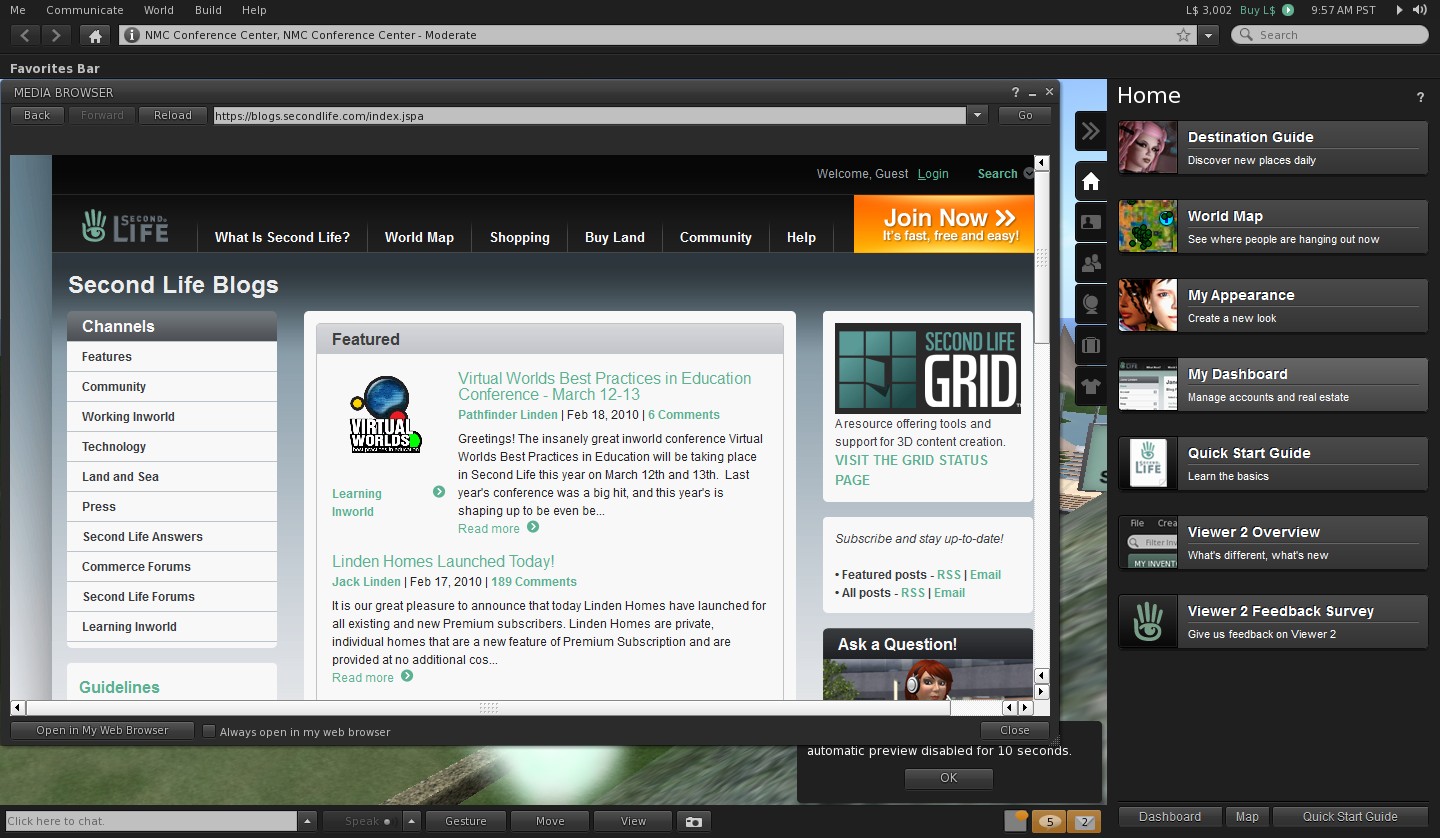
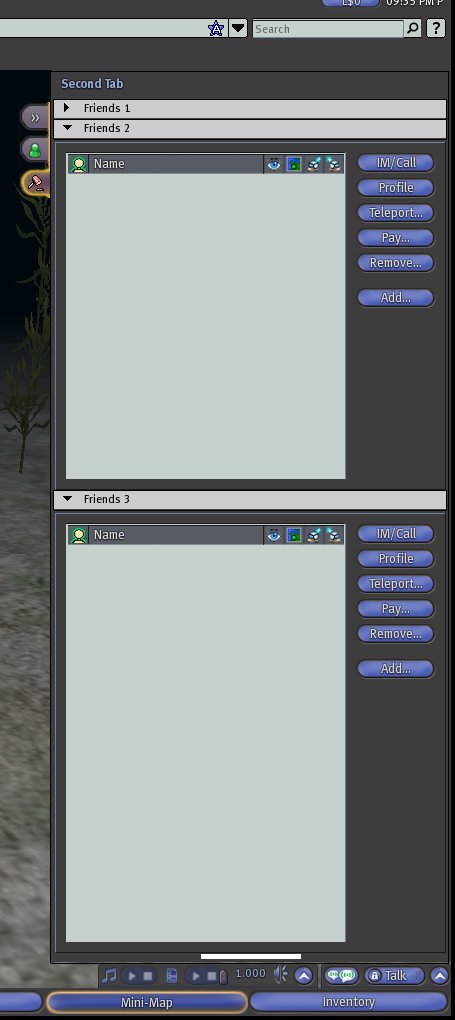
Viewer 2.0: usability issues galore
The UI design was bad, period. Not only were there issues with the colour scheme and issues with the font style (which many with eyesight problems reported as being hard to read), and in the use of toasties / chiklets, etc., – it was simply horribly unsettling to use.
The most obvious examples of this were the original sidebar, which rudely shunted the world-view off to the left rather than functioning as an overlay, what far too large and intrusive and included a series of eye-distracting side tabs jutting into the right side of the screen, and the bizarre decision to split up the camera controls into mutually exclusive panes on the same floater. Neither of these were destined to find favour with established users, and LL were to prove equally unwilling to accept this.
Setting False Expectations
An image from Massively’s sneak peek at “SL 2.0” (credit: Massively / Tateru Nino) – click to enlarge
Prior to V2.0 appearing, a lot of false expectations were set as to what it would be. Not all of these were LL’s fault, in fairness. Some, however, were. In late 2009, LL allowed Massively a sneak peek at various elements of the “new” viewer, which largely received positive feedback from users.
Such was the buzz about the new approach, LL actually issued what amounted to a warning statement shortly after Massively published the piece, stating: “What we ship later this year will be very different from what appeared in that post. We’ll share a sneak peek of the “real” Viewer 2009 later in the year, with plenty of time to receive and incorporate feedback before the final iteration ships.
Not only did the Massively sneak peek present a UI that was reasonably familiar – and comforting – to users, it also offered insight into new and useful functionality which ended up being tossed aside prior to the release of the “finished product”.
Thus, and despite issuing their cautionary response to the Massively article, LL had managed to tweak people’s expectations: we were going to get a viewer that looked something like V1; it was going to have cool additional features we’ve been looking for. What’s more, and as shown in the Massively article, there was even going to be a fairly simply UI skin that would potentially be easier on the eye for those with vision impairments.
Use the page numbers below left to continue reading
Main Channel: Sever release 12.07.24.262437 – Tuesday 31st July
This should see a further roll-out of the LSL functions related to the Advanced Creator Tools. This release will see the addition of three new LSL functions:
These new LSL functions work with the current runtime permissions system, and are precursor to future work with experience permissions. More information about the runtime permission is here:PERMISSION_TELEPORT.
This is a roll-out of the code deployed to LeTigre and BlueSteel last week. As with both of those channels last week, the code will be enabled on the main channel regions following the deploy (although LL retain the capability to disable it).
Magnum RC: Further Pathfinding Roll-out – Wednesday August 1st
Roll-out due to commence: 07:00 SLT
A further roll-out of the server-side pathfinding code, with fixes. Currently the wiki notes for this channel appear to be stalled on the 12.07.24.262484 release.
Note that the viewer-side pathfinding tools are now available in the latest Development Viewer.
BlueSteel RC – Wednesday August 1st
Re-start due to commence: 08:30 SLT
There are no changes to this channel. It will have the same code as the main channel.
LeTigre RC: Infrastructure Project update – Wednesday August 1st
Roll-out due to commence: 09:30 SLT
Oskar comments: “This channel will have an infrastructure project that has no intentional changes to existing behaviour. There are perhaps unintentional changes to existing behaviour. If you find some please let us know!”
There’s been something of an ongoing discussion over the ever-excellent Metareality concerning the viability / attractiveness of a “new” Second Life – that is, a platform wherein Linden Lab starts over to present something new and overcomes the shortcomings of the SL grid as we know it today.
It’s an interesting – and entirely hypothetical – discussion point. Just how viable would a new Second Life be (if we assume the money was there to develop such a beast), both in terms of Linden Lab’s development of the platform and in people’s acceptance and use of it?
Well, some of the benefits that might come from such a product would be technical; doubtless things like the creaking mass of the asset server infrastructure could be addressed and made a lot more robust / scalable. Potentially the region / sim code could be completely overhauled to both improve stability and remove much of the “band aid” code that has, due to the nature of the platform, had to be applied to deal with various issues and bugs over the years rather than LL being able to dig deep and resolve them at source.
A new Second Life grid could also, I assume, be better geared towards handling the likes of mesh and other capabilities. Similarly, the Viewer could be revamped – and while this may draw boos and hisses – be kept closed, or perhaps licensed, to better control the growth of features and to ensure Viewer and server code remain better integrated.
There might also be the opportunity to directly address issues of accessibility through other means – tablets, web pages and mobile devices.
Would an “SL 2.0” allow the mobile / tablet markets to be better leveraged? (image: Lumiya for Second Life running on a Samsung Galaxy S2)
Social aspects might also be better integrated into the platform as well, for those who wish to use them. These are no to everyone’s cup-of tea, but that’s no reason to exclude such extensions / capabilities.
All of this could be massively to the good; but what about those of us already engaged in Second Life? Are we likely to leap onto the bandwagon of a “new” Second Life? Some undoubtedly would; but many of us probably wouldn’t for much the same reason as we don’t take a deep plunge into existing SL alternatives: we have an awful lot of what amounts to personal investment in our inventories, and if we can’t take it with us, the likelihood is, we aren’t going to go – not unless forced out of SL itself (which might easily see us giving LL the one-fingered salute and disappearing somewhere else entirely).
Of course, losing the current user base (or a good proportion thereof) might be seen as part and parcel of the risks involved in developing an updated platform – after all, with 16K-a-day sign-ups for the current platform, there is opportunity for LL to address initial retention head-on and harness a good percentage of that 16K and so not actually miss those of us who stay behind.
On the other hand, offering a migratory path from “SL 1.0” to “SL 2.0” would obviously be one way of alleviating issues around existing users, allowing LL to retain them and their loyalty while also avoiding initial issues of growing a new user base.
SL 2.0: The potential for better avatars?
However, offering such a path might itself create issues. One of the biggest potential benefits in an “SL 2.0” would be the ability to incorporate the infamous “avatar 2.0”, which has been the subject of speculation on-and-off since around mid-2007. This is something that is unlikely to happen within Second Life as it is because of a myriad of dependencies means a dramatic overhaul of the avatar could break things. As such, developing a new avatar form for “SL 2.0” could end up breaking compatibility with “SL 1.0” and render migration either problematic or (worse case) pointless.
Perhaps the biggest issue with any “SL 2.0” though, is not technical, but physical (so to speak). At the end of the day – and as Qarl comments in a recent Metareality podcast – a lot of issues relating to SL are actually centred on the relationship between users and Linden Lab itself. These take a variety of forms, some are justified (such as people feeling the company could be more forthcoming within consistent and more open communications and dialogue with the user base), others are completely unjustified (such as claims that LL are out to “kill” aspects of Second Life or that they act “maliciously” towards users).
Regardless of how justified or otherwise claims and arguments about LL are, the fact is that whatever the platform LL provides, the issues and arguments will likely continue. As such, there is a risk that any “new” SL could be taken to be “same s***, different shovel” by both sides of the relationship; users will continue to bemoan LL and LL will continue to feel they are in an uphill battle facing the same criticisms and complaints they face at the moment. This in turn could lead to both sides asking the question, “Why even bother?”
Over all of this, however, lies the biggest question of all: what, exactly, would LL achieve by taking such a route? It’s unlikely that “SL 2.0” would achieve any grater success than the current Second Life has achieved or has the potential to achieve, allowing for all the new capabilities being developed. Thus, any new variant of the platform is liable to end up occupying precisely the same niche as the current product, with more-or-less the same attractiveness to users and possibly the same grumbles and gripes – and this renders any idea of an SL 2.0 developed by LL pretty much moot. Far better that they focus efforts on improving and enhancing the current platform and in maintaining / increasing its relevancy.
Nevertheless, the idea is still an interesting discussion-point – well, for me, at least!
 Jessica Lyon and members of the Phoenix Firestorm Team hosted an in-world / streamed meeting on Saturday 15th December, 2012 to discuss the future of Phoenix.


 Inara Pey: Living in a Modemworld