In the Press: discussing Sansar and Second Life with TNW

Second Life: "almost as diverse as the physical world we live in" - Ebbe Altberg
Second Life: “almost as diverse as the physical world we live in” – Ebbe Altberg

Martin Bryant, Editor-at-Large at The Next Web caught up with Linden Lab’s CEO, Ebbe Altberg, in Dublin at the start of November, where they had both been attending the 2015 Web summit conference.

During a 10-minute audio interview, Mr. Bryant offers a series of questions which, while they may not reveal anything new to those engaged in Second Life or following the unfolding news about “Project Sansar”, nevertheless cover interesting ground and offer food for thought on a number of fronts.

Martin Bryant, Editor-at-large for The Next Web, discusses SL and "Project Sansar" with Ebbe Altberg
Martin Bryant, Editor-at-large for The Next Web

The recording is prefaced with a series of useful bullet points under the title Think Second Life died? It has a higher GDP than some countries, itself is an eye-catching title, which help put some perspective on just what Second Life has actually managed to achieve over 12 years, and sets the stage for the broader discussion.

The interview starts from the position that the media have tended to get Second Life wrong, noting that far from having failed or gone away, it is still operating, still engaged some 900,000 active users every month, just 200,000 a month down from when it hit a peak of around 1.1 million 7+ years ago. Not only do these figures tend to highlight Second Life’s (albeit very niche) ability to attract and hold an audience, they also put oft-repeated claims that people are somehow leaving Second Life en masse into perspective. The outward trickle of active users is there, but it’s hardly a the deluge all too often portrayed. And those who remain are still capable of powering an economy with a GDP of some US $500 million.

From here, the conversations travels by way of the kind of virtual goods on offer inside Second Life to arrive at a question about the “typical” Second Life user, which generates a well-rounded reply.

Well, it’s a huge variety … there’s no typical about it. It’s like asking, “what’s a typical person from Ireland?” There are educators, there are students, there are health professionals, there are patients, there are fashion fashionistas, there’s partiers, gamers, role-players. People just socialise around pretty much anything you can think of. It’s almost as diverse as the physical world we live in.

Further into the conversation, there is a re-emphasis that even with “Project Sansar” coming along, there are no plans on the part of the Lab to discontinue Second Life, with Ebbe again demonstrating a pragmatic view on the amount of investment users of Second Life have made in the platform.

Second Life will continue. We have no plans to shut down Second life or forcibly migrate users from one to the other. So users can ultimate choose where they want to spend their time. And there are probably so users that have spent so much time creating incredible communities around all kinds of interesting subject matter that might just fine it too much effort to do it all over again on a new platform. so they can stay in Second Life, that’s fine.

Obviously, if the vast majority of users in Second Life opt to make a full transition to “Project Sansar”, then it will call into question how long SL can remain a commercially viable platform – but is this likely to happen overnight? Probably not  (which is not to say it won’t, at some point happen) over time). The transition is liable to be gradual, simply because it is going to take “Project Sansar” to grow to a level of sophistication offered by SL: as the Lab has made clear throughout 2015, everything isn’t simply going to be in place when the open alpha commences in early 2016 – that’s why they’re calling it an “alpha”.

An image from the Project Sansar: looking to the future of VR

The more detailed discussion of  “Project Sansar” starts with a reiteration that it is being specifically – but not exclusively – developed to operate with coming plethora of VR HMDs and other devices, and that it will be “consumable” (i.e. accessed via) computers (initially PCs) and mobile devices. It is here that mention is made of something that may have been missed in broader discussions about the new platform: there will be no “one-size-fits all” client / viewer.

Instead, client functionality will be determined by client device capability. If you’re on a PC platform, you’ll have access to the full range of capabilities to both “consume” (that is, access, use and participate in) “Project Sansar” experiences and you’ll have access to the tools to enable the creation of those experiences. If you’re using a mobile device, you’ll be able to “consume” experiences, but not the tools to build them. Which makes sense.
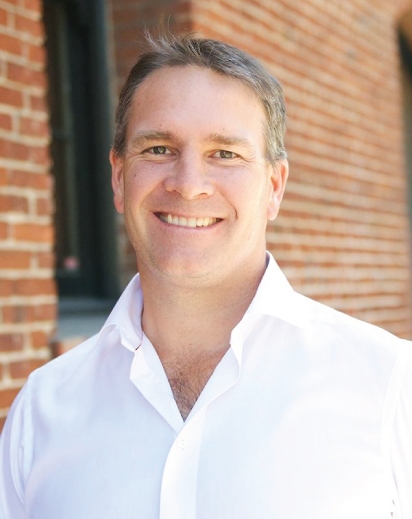
Ebbe Altberg: talking Second Life, "Project Sansar" and virtual currency compliance with TNW's Martin Bryant
Ebbe Altberg: offering a good perspective on LL, SL and “Project Sansar” for TNW readers / listeners

In discussing the likely impact of VR, Ebbe takes the pragmatic view that things aren’t going to happen overnight, just because the first generation of high-end headsets are going to appear in a few months; it’s going to take time for the market to grow, and there is still much more to be sorted out.

This is a view I hold myself, so no argument from me. However, where I do perhaps hold a differing view on things is to just how important avatar based virtual experiences are actually going to be outside of some very niche environments.

Even if VR isn’t overhauled by AR in terms of practical ease-of-use, widespread practical applications, convenience, and appeal, I also cannot help but feel consumer-focused VR might offer such incredible opportunities for immersion, entertainment, training, etc., that it will see the use of avatar focused virtual environments remain somewhat marginalised in terms of acceptance with the greater VR community, just as Second Life has been marginalised with the greater on-line social community.

Continue reading “In the Press: discussing Sansar and Second Life with TNW”

Project Sansar: in the news and marketplace thoughts

“Project Sansar” has been getting noticed again. In Dublin, at the 2015 Web Summit, Ebbe Altberg, the Lab’s CEO gave a presentation about  the new platform, the end of which included short video of the platform, which was captured by attendee Janne Juntunen. Following this, at least a couple of articles have appeared in on-line media outlets, with my colleague Ben Lang offering a brief write-up in Road to VR, while Fortune On-line, to which I was directed by Ciaran Laval, also carried a piece.

The Fortune article offers an enticing headline, How ‘Second Life’ Developer Hopes To Deliver The ‘YouTube For VR’, drawing on the Lab’s YouTube / WordPress analogy they’ve used in talking to the media over the last few months, but neither – beyond offering an image captured from “Project Sansar” and which can be seen on the Lab’s redesigned corporate website, has much that is new to those of us following “project Sansar” as closely we can.

An image from the Lab's redesigned corporate web site showing the Golden Gate Bridge model from "Project Sansar", complete with glying vehicles moving around it - a moving versions of which was show at the Dublin Web Summit 2015
An image from the Lab’s redesigned corporate website showing the Golden Gate Bridge model from “Project Sansar”, complete with flying vehicles moving around it – a moving versions of which was show at the Dublin Web Summit 2015

The YouTube  / WordPress analogy is fitting, given that “Project Sansar” is designed to be pretty much a white label environment where clients and customers can come into the platform, develop their virtual spaces and then market them to their users under a brand of their own choosing, complete with dedicated access from the web.

Given most of the statements made in both articles will be familiar to those following Sansar, I was drawn to one statement in particular made by Ebbe Altberg:

We want to make it less expensive and less difficult for creators to get started with Project Sansar, while at the same time enabling them to create higher quality, larger, and more immersive experiences, reach larger audiences,and create much larger business opportunities—whether selling virtual items or monetizing entire experiences. In addition to supporting our community of creators we’ll give them tools to create and support their own communities and serve their customers and audiences. [Emphasis mine.]

The first part of this comment again doesn’t really reveal anything new; however, I’ve highlighted the last past of it because it presents another opportunity for some speculation.

A further image from the Lindenlab.com home page showing a scene which formed a part of the Lab's Dublin Web Summit video
A further image from the Lindenlab.com home page showing a scene which formed a part of the Lab’s Dublin Web Summit video

Yesterday, and thanks to a huge amount of legwork by Vick Forcella, I wrote about the Lab’s subsidiary Tilia Inc, and the filing of a trademark for Tilia, a payment processing system.  Seeing Altberg’s comments about providing “project Sansar” customers / clients tools to … serve their customer and audiences”, I find myself wondering if “Tilia” might be intended to provide “Project Sansar” customers with a further white label environment in which they can build and brand their own marketplace presence and control the goods and services presented to their customers.

Thus, rather than sending their users to a generic “Project Sansar” marketplace where they might be confronted with a plethora of goods, including those from competitors or which might otherwise be unsuitable to their target audience, customers using Sansar could present their users with exactly the virtual good they wish them to see and use, a level of control which could be extremely attractive to the core vertical markets towards which “Project Sansar” seems to be being steered (e.g. education, training, simulation, architecture and business).

Ebbe Altberg presents a short video featuring footage shot from inside "Project Sansar" at the Dublin Web Summit 2015 (image via )
Ebbe Altberg presents a short video featuring footage shot from inside “Project Sansar” at the Dublin Web Summit 2015 (image via Janne Juntunen on Twitter)

In his Road to VR piece, Ben Lang focuses more on the technical aspects of the new platform, pointing-out that style and looks can be an integral part of a game or platform’s longevity, and that in his estimation  of these initial screen shots, “Project Sansar” is hitting the nail pretty much on the head.

It is in the Road to VR piece that we do get an interesting insight. It has been previously indicated that “Project Sansar” will offer ways and means to optimise content to improve performance, rather than just shoving everything down the pipe and little the viewer try to handle it all. In discussing things with Ben Lang, Ebbe Altberg gives some indicators as to how this will be achieved.

We’ll do a lot of things to help users understand how to create performant content. There’s a lot of work yet to do, but we have plans for things like automatic optimization of content, polygon reduction of content that preserves quality at the same time, including showing users that create content some sort of visual indication of how performant their content is going to be across various platforms [i.e. clients].

Both articles offer good light reading on “Project Sansar”, even if they don’t offer anything especially new, with the Fortune articles also underlining a few facts, good and bad, about Second Life.

I remain intrigued by the direction the Lab is taking with their new platform. While it is early days, and given the fact I  still tend to feel “Project Sansar” will end up  niche product  – albeit it a much larger niche than filled by the likes of Second Life and OpenSim today – I also tend to think that the Lab is far more one the right track in their thinking than those behind some of the other platforms currently in development out there.

Related Links

P.S. Ben, if you do read this, please check the e-mails, still awaiting a reply vis our discussions!)

Geek Dad discusses “Project Sansar”

Obligatory Sansar promo shot via Linden Lab (pretty please, can we have something new, LL?)

Taking a peek today at the Lab’s press page on the web, I saw that Geek Dad has an article by Derrick Schneider in which he discusses the Lab’s in-development “Project Sansar” virtual experiences platform with Linden Lab CEO Ebbe Altberg.

The article, Project Sansar: Giving Virtual Reality a Second Life, doesn’t give out much that is new about “Sansar” for those who have been following whatever news has been made available, but it does tend to further clarify a few things, while re-stating others.

For me, the more interesting part of the discussion revolves around the concept of the “creator”.

Ebbe Altberg: talking Sansar to Geek Dad

Within Second Life, and while it can have a fairly broad generic application, the term is most readily identified with the role of the model-maker; those people who actually create models and objects, whether in mesh or prims.

However, in broader terms, anyone who creates a region or a parcel, be it for their own use or to be shared with others, is equally a “creator”, even if they purchase the items they use either in-world or through the Marketplace.

For “Sansar”, it appears the Lab is using “creator” in this latter context, rather than identifying a specific group of skilled model makers. That is, people who can bring together models and content into a single experience and present it for use by their intended audience.

Obviously, those who build the models are an important subset of this creative group; hence why the Lab has engaged with modellers and “content partners” (itself an interesting term)” during the current closed alpha for “Sansar”. But the model makers aren’t perhaps the central focus of the Lab’s endeavours in building Sansar as some may have taken the term “creators” to mean.

Alleged / supposed / actual (take your pick)
“Project Sansar” log-in screen (?)

This leads us, by way of a discussion about instancing experiences, to matters of revenue generation, which I also found to be of speculative interest. In an almost throwaway comment, Schneider demonstrates just how different “Sansar” will be from Second Life, and offers a glimpse of some intriguing new possibilities for revenue generation which may not have been readily considered thus far, once the platform’s audience and use grows:

If you make a great experience in Sansar … you can resell that experience… which you really can’t do today in Second Life.

Picture, for example, a group such as MadPea Games, able to create and licence / sell entire game / hunt experiences to clients in the physical world, completely packaged and ready to go, branded for their client. but with full credit to MadPea Games. That the experience is actually running on the “Sansar” servers operated by the Lab is neither here nor there as far as the client is concerned, so long as they can use whatever mechanism they’ve chosen to engage their desired audience in the experience.

Equally, this also raises some potential questions around content, licensing and permissions, particularly given the earlier statements around those building an experience not necessarily being those would actually build all the models, etc., within that experience.  For example, how do you cater for the model maker who doesn’t want their creations to be re-packaged and sold on to or licensed out to third parties? Or how do you ensure that models and content remain “affordable” to the majority whilst allowing the maker to generate sufficient revenue to make it worth their while in allowing they models to be “sold on”?

Again, it will be interesting to see how questions like this are addressed – or if they are even an actual concern as “Sansar” becomes more accessible.

Sine Wave Entertainment are also looking at the concept of a
Sine Wave Entertainment are also looking at the concept of a “white label” platform – sinewave.space (which I wrote about here). These also encompass some of their own product offerings, such as Wet.fm, complete with direct discoverability through the web

Discoverability is also again touched upon, with Schneider nicely encompassing the approach being taken with “Sansar”:

Imagine going to a web page that goes in-depth on a given topic — Mayan temples, say — and then says, “here’s a VR experience that gives you another view” in the same way you might see an embedded video today. There will also be ways to find other experiences once you’re inside the ecosystem.

Alongside of this there are the by now familiar references to the likes of WordPress and YouTube, which initially appeared back in June and July. These comments have, to me, tended to confirm my own view (held since I first started reading what was being said about  the platform in places such as the 2015 VWBPE conference) that  Sansar, conceptually at least, is somewhat analogous to the idea of  a platform as a service (PaaS) providing a “white label” environment to potential users. I’ve been promising for a while to expand on this, and rather than sidetrack things here, I really will make an effort to re-organise my thoughts on this and other speculations I have about “Sansar” and get them in print in this blog, hopefully within the next week.

Overall, while (again) not revealing anything that is really startlingly new, the Geek Dad article does make for interesting reading, simply because it does perhaps clarify certain things at least a little bit, and because of the possible questions which might yet be applied to the platform as more is revealed.

Related Links

“Created Reality”- possible contender for Project Sansar’s name?

Is Porject Sansar to be called Created Reality?
Is there a Link between Project Sansar and “Created Reality”?

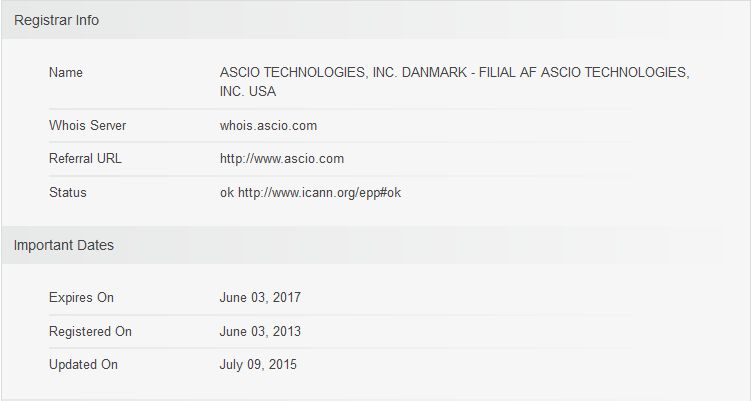
Ciaran Laval and I have been using Twitter to further ponder a domain registration in the name of “createdreality.com”. It was originally taken out in June 2013, which under the usual two-year registration policy means it possibly expired around June 3rd, 2015. However, on July 9th, 2015, it was renewed through Ascio Technologies, the company used to register the projectsansar.com domain.

The domain registration renewal followed a trademark registration submitted to the USPTO by the Lab for the name “Created Reality”. This occurred on May 22nd and is summarised here.

The timing of both is possibly interesting, given the domain name had been allowed to lapse (although this could simply have been admin oversight), and the trademark filing came 2 weeks after Lab had confirmed “Project Sansar” to be the new platform’s code-name, thus ruling out “Created Reality” as simply being an alternative code-name for the platform.

The domain createdreality.com was registered through the same servie used to register the projectsansar.com domain
The domain createdreality.com was registered through the same service used to register the projectsansar.com domain

The trademark application also contains pretty much the same descriptive wording as used within the “Project Sansar” and “Sansar” filings made in April 2015.

So, does this mean “Created Reality” is the new name for the Lab’s Next Generation platform? Well, maybe – but maybe not.

On the one hand, it is interesting that the Trademark filing came after the code-name for the platform had been decided. However, this isn’t necessarily indicative of anything; the Lab could simply be covering the bases as they consider various names for the new platform.

More to the point, while the name “Created Reality” may doubtless describe the platform’s function in presenting spaces where people can create their own virtual realities, it does actually read rather, well, bland.

The createdreality.com domain administrator: Linden Research (Linden Lab)

Countering this, however, is the idea that the new platform is apparently geared towards being a “white label” service in which in which creators can build their own branded spaces, and then promote  / market them directly to their potential audience, complete with sign-up portal, etc.

As such, the users of the environments created on the platform are perhaps more likely to know the environments by their various names, rather than collectively by the name of the platform on which they run. Thus, the platform’s name might be less front-and-centre than is the case with something like Second Life. Although that said, I’d personally like to see something a little more dynamic by which to know the platform.

Right now, the Lab is saying little on the subject of “Sansar” or “Created Reality”, with Peter Gray only informing me that the platform’s name is still “being determined”.

However, if we place the “Created Reality” trademark alongside the one for “Sansar”  – the latter being quite distinct from the trademark filed for “Project Sansar” – it would seem we have a couple of the names the Lab have been ruminating on for the platform’s eventual title. Could there be more lurking out there in the form of trademarks and / or domain names?

Lab announces Sansar’s closed alpha officially under-way

Th obligatory Sansar promo image :) (please can we have some new ones?) - Linden Lab
Th obligatory Sansar promo image 🙂 (please can we have some new ones?) – Linden Lab

On Tuesday, August 18th, and running a couple of weeks behind schedule – such is the way with new projects – the Lab has officially announced they’ve invited a small number of content creators to try-out their Next Generation Platform for virtual experiences, currently code-named Project Sansar.

The announcement, which appears a press release on the Lab’s corporate pages, reads in part:

Slated for general availability in 2016, Project Sansar will democratize virtual reality as a creative medium. It will empower people to easily create, share, and monetize their own multi-user, interactive virtual experiences, without requiring engineering resources. The platform will enable professional-level quality and performance with exceptional visual fidelity, 3D audio, and physics simulation. Experiences created with Project Sansar will be optimized for VR headsets like the Oculus Rift, but also accessible via PCs and (at consumer launch) mobile devices. Users can explore and socialize within Project Sansar experiences through advanced expressive avatars, using text and voice chat.

Drawing on more than 12 years of unique experience running Second Life, the largest-ever user-created virtual world, Linden Lab will make it fun and easy for Project Sansar users to create social VR experiences, eliminating the complicated challenges that today limit the medium to professional developers with significant resources. Project Sansar will allow creators at all levels to focus on realizing their creative visions, without having to worry about issues such as hosting and distribution, multi-user access and communication systems, virtual currency and regulatory compliance, and other challenges associated with creating, sharing, and monetizing virtual experiences today.

As has been widely reported, the initial testing will be focused on Autodesk’s Maya® software for content creation and upload to Sansar, although the Lab have also announced that they intend the platform to operate with a wide range of content creation tools such as such as 3D Max, Sketchup, and Blender, with file format support for OBJ and FBX, and others.

Sansar alpha testing is focused exclusively on Maya - however, the Lab intend the platform to support a wide range of 3D content creation tools as work progresses
Sansar alpha testing is focused exclusively on Maya – however, the Lab intend the platform to support a wide range of 3D content creation tools as work progresses

During the alpha, the invited creators will be encouraged to “use each other’s games and other invented environments, trade feedback, and tweak their own work.” They’ll also have to be patient, with Ebbe Altberg having previously warned they may face having content deleted, removed or otherwise altered as the Lab continued to adjust, change, tweak (and bash?) what is still a very new platform that has a good way to go before it reaches something ready to have a lot of people pile on to it and play with it.

That said, if all goes according to plan, the alpha will slowly be opened out over time to include more creators, the Lab’s own announce noting:

In the coming months, Linden Lab will welcome additional creators and content partners to Project Sansar as new features are added to the platform and testing expands.

The emphasis on “content partners” is mine, as I do wonder precisely what it means for the direction Sansar will be taking, particularly given the differentiation given the term from “creators”.  More thoughts on that to come.

In the meantime, The Verge has been quick off the press in following-up on the Lab’s announcement, with a short piece entitled The VR successor to Second Life is inviting its first testers, which is in some ways an unfortunate title, as it does carry a certain implication that Second Life is perhaps no more. This view is perhaps further enhanced by the use of the past tense when referring to the platform, even though there is a nod to the fact that Sansar will run “alongside” SL.

VentureBeat, to name one other following-up on the Lab’s press release, has a similarly brief article in its GamesBeat section, Second Life creator Linden Lab starts testing its virtual-reality world: Project Sansar, which focuses on the core points of the press release.

For those wishing to catch-up on what I believe to be the core statements and information around Sansar, as gathered from cited sources, please refer to my July Sansar Summary.

Also, be sure to take a look at uploadVR’s very excellent conversation between Nick Ochoa and Ebbe Altberg on Sansar, which I reviewed at the start of August, and am embedding here again for reference.


Ebbe’s fireside chat: Sansar, Second Life and VR

Nick Ochoa and Ebbe Altberg talk Sansar, SL and virtual spaces (image courtesy of UploadVR)

On August 3rd, Upload VR posted a video chat to YouTube which features a cosy fireside chat between Nick Ochoa and Linden Lab CEO Ebbe Altberg, which examines Sansar and virtual environments – touching on Second Life in some places.

The 30-minute  conversation is very relaxed and approachable; Ebbe is clearly at ease (possibly helped by the glass of red wine!) and Nick is a very competent host in his ability to keep a conversational flow going. The camera is a tad wobbly in places, suggesting whoever was holding it may have been enjoying a sip or six of the wine / beer (!), but not excessively so. A lot of ground is covered in the time, and while it may be frustrating that some items are passed on rather than followed-up, keep in mind that this is more a conversation than in-depth interview / QA, serving to offer a non-SL audience a flavour of what that Lab is up to.

In terms of Sansar, we do get to learn that times are running very slightly behind schedule, in that we’re still a “couple of weeks” away from the start of initial closed alpha testing under NDA, but everything else remains pretty much as stated: NDA Alpha ramp-up through 2015 into 2016 and a more public beta in 2016.

(image courtesy of UploadVR)

We do get to learn a little more about how the closed alpha will run: those invited to join will be able to install and application with hooks into Maya, the tool of choice for initial testing. They build their “scenes” (“experiences”)  in Maya and push a button in the application to “publish” the results on Sansar and obtain links they can share with others involved in the testing. Given Ebbe’s previous comments about “optimising” content for delivery across Sansar, I wonder if this approach will be how things are handled when Sansar is broadened to encompass other external content creation tools.

Beyond this, we get more on the Sansar / WordPress.com analogy, which first came to the fore in an article published by Variety online. This whole aspect of Sansar is a fascinating point of speculation to me, in that it suggests the platform is conceptually analogous to the concept of a Platform as a Service (PaaS), something which I think stands to make Sansar potentially far more powerful and flexible than people perhaps credit. However, as this is only speculation on my part, I’ll leave that to one side for now – but promise I will explore it further in a future article.

Within the UploadVR discussion, Ebbe’s focus on the WordPress.com analogy is tightly focused on the aspect  of “discoverability”. The idea that right now and with SL, people have to join the platform in order to discover the experience, whereas Sansar should be more like WordPress – where people discover the blogs and don’t necessarily care about the platform on which the blogs are run.

A clearly relaxed Ebbe gets into talking avatar dancing
A clearly relaxed Ebbe gets into talking avatar dancing (image courtesy of UploadVR)

Sansar’s revenue model gets a little more clarification, with the “sales tax” aspect clearly being applied to the platform’s GDP as a whole – which is Second Life’s case is an estimated half billion US dollars a year. Previously, there had been some confusion as to precisely where the “sale tax” might fall, particularly following an article in Xconomy.com, so the further clarification is welcome.

A direct parallel is drawn to on-line retail sites where up to 30% might be charged in commission. However, I wouldn’t take this to mean that’s necessarily what the Lab is looking to charge; Ebbe is making comparisons, not stating policy.

A more meaningful question to ask here is to how rapidly can Sansar realistically grow in user numbers order for such a model to be able to push the platform into the black? Unless there is some immediate and large influx of users, it could take a while for the Sansar economy to really get rolling; so conceivably, and depending on the associated overheads in providing the platform, the Lab could be operating Sansar as something of a loss leader for a time after it is “launched” to the world at large.

From here, the conversation broadens out to discuss the virtual opportunities that already exist in Second Life, from content creation through activities to monetization for users, to an overview of the many different communities present in-world, all of which almost seamlessly blends into more of a general chat on the potential and perils of VR which in turn bounces across health, the work of Jeremy Bailenson at Stanford University, and more besides. This actually makes for the interview’s most entertaining 10 minutes, as Ochoa and Altberg, obviously at ease, forget the presence of the camera as they chat.

Overall, this is a comfortable and pleasing discussion – not revelatory or packed with news, but one which is nevertheless interesting and within its own personal richness – not the least is the rapport which is clearly present between Altberg and Ochoa.