The 100th segment of The Drax Files Radio Hour went out on Christmas Day 2015, the last new podcast for the show for the year.
To make it special, the show was a live recording featuring members of the Firestorm Team and MadPea, discussing the Firestorm Gateway and the Lab’s trial gateway programme, and Oz and Vir Linden talking Project Bento.
The first part of the show focuses on the Firestorm gateway regions. These from a part of the Lab’s new gateway programme, which in a nutshell is a revamp of he community gateway programme which was operated up until September 2010. The idea is to allow groups and communities to build their own in-world and web presence, which they can use to bring new users into Second Life (including taking them through the account sign-up process), and then when they are in-world, help them with gaining familiarity with the viewer and accessing guidance and support from established users, etc.
The re-vamped programme is currently running on a trail basis, involving a number of communities and groups beside Firestorm, although they are perhaps the most visible. Their offering is quite expansive, folding-in their existing new user orientation island and their in-world support presence, both of which have been on-line since 2012, as well as providing a range of activities typical of those newcomers can find in SL, and free-to-play games, all designed to engage the new user and encourage them to return to Second Life and explore the grid as a whole.
Drax talks gateways with (l-to-r) Kiana Writer and Kess Crystal from MadPea and Jessica Lyon and Ed Merryman from Firestorm
Marketing such gateways isn’t easy; it requires a budget, and that’s something most communities don’t have. Firestorm is trying to address this by leveraging their existing user base and getting them to promote Second Life to family and friends. There is actually nothing wrote with this approach – I’ve frequently said myself that are no better ambassadors for the platform than those of us actively engaged within it. However, there are potential limits to how effective this can be over the longer periods of time, so broader-based approaches may be required down the road, but it is a good place to start.
That said, one particular advantage in leveraging existing users is that it might help further boost retention rates simply because it could led to some of those coming into SL receiving the direct support of family and friends already using the platform (although I would perhaps suggest they wait on the other side of the orientation island, and let people complete this under their own steam).
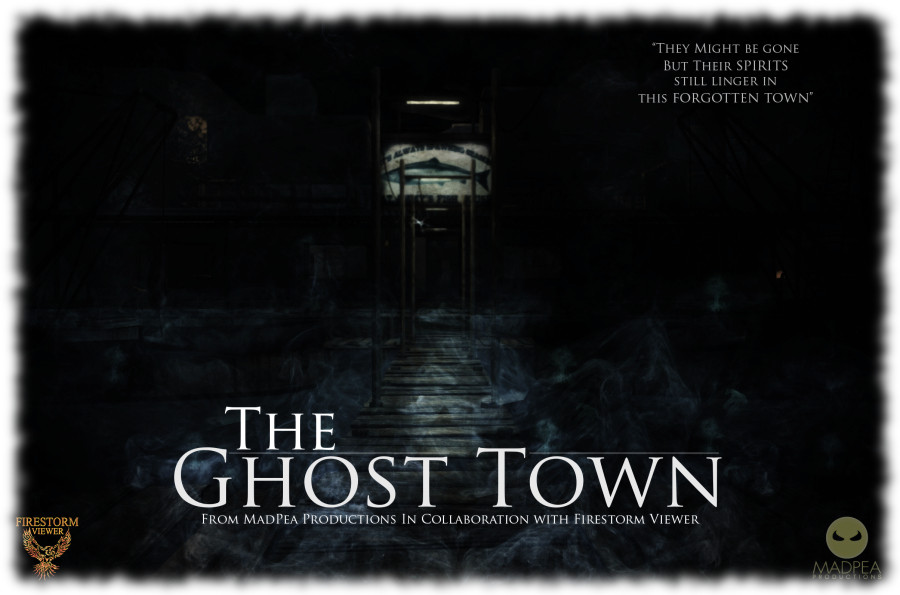
Kiana and Kess from MadPea provide a good overview of The Ghost Town, the first in a series of free-to-play games provided by MadPea expressly for the Firstorm Gateway and intended to further orient new users in using the viewer and HUDs, etc., while demonstrating some of what they might find by way of activities in SL – and reward them for doing so
A crucial part in assessing the project will be the data that demonstrates things like throughput rates and, more importantly, retention levels; particularly when compared to the Lab’s own new user experience. The Lab, via Oz Linden, indicates this is the kind of data they’ll be presenting to gateway operators. Oz also indicates there have been some technical elements to be fully ironed-out, particularly in matters of compliance and data security, which might not have been so prevalent during the time of the “old” gateway programme.
On Tuesday, December 22nd, the Main (SLS) channel received the same server maintenance project previously deployed to the three RC channels. This comprises crash and internal simulator fixes; LSL HTTP requests accessing data sources that require non-text Accept headers (such as the Destination Guide); and updates to group member counts to help deal with recent group database issues.
SL Viewer
With the no change window now in effect, no updates are anticipated with any of the current crop of official viewers until after Monday, January 4th, 2016. These are:
Release viewer, version: 4.0.0.309247, dated December 17th – formerly the Chromium Embedded Framework RC viewer – release notes
Project Azumarill (HTTP updates) RC viewer, version 3.8.7.308134 dated November 25th – release notes
Vivox (voice fixes) RC viewer, version 3.8.7.307744, dated November 17th – release notes
Quick Graphics (Avatar Complexity and graphics presets) RC viewer, version 3.8.7.306758, dated November 12th – release notes
Maintenance RC viewer, version 3.8.7.308556, dated December 3rd – release notes
Project Bento (avatar skeleton enhancement) viewer, version 5.0.0.309171, dated December 17th – release notes
Oculus Rift project viewer, version 3.7.18.295296, dated October 13th – release notes
Obsolete platform viewer (for users of Windows XP and OS X versions below 10.7), version 3.7.28.300847 dated May 8th – release notes
It is anticipated the HTTP RC viewer and the Vivox RC viewer will be released as a single RC viewer very early in 2016.
Project Bento
Abramelin Wolfe of Abranimations fame has issued a viewer demonstrating the enhanced Project Bento skeleton using mocap finger data – watch the avatar’s fingers!
Commenting on the video at the last Simulator User Group meeting for 2015, Simon Linden said, “that video is cool :)”!
Bone Translation and Rotation
As reported in my week 51 project updates, I reported how the Lab was asking for more detailed feedback on specific requirements animators and creators felt they might need with the Bento skeleton. The comment, made by Oz Linden, came after Vir Linden responded to feedback relating to bone translation through animations, rather than relying purely on rotation with the facial bones (as is currently the case).
These comments have led to more comprehensive feedback through the Bento discussion forum thread, including two videos by Raz Welles, and animated GIF examples from others, demonstrating the need for translation as well as rotation to achieve various results with facial expressions. However, the Lab would still prefer specific examples to be reported in detail (e.g. on the JIRA), with the appropriate files supplied, as Oz Linden again notes on the forum. He goes on to point out as well, that it isn’t just “new stuff” the Lab is looking to offer through Bento:
I’ve seen a number of posts here that include some variation on “we have always had to do XYZ this way because of the SOMETHING bug, and so we can’t do SO-AND-SO” (for example, joint offsets not loading correctly). If there are existing issues that are directly related to Bento (like joint offsets not loading correctly), we’d like to get them fixed so that we can get some of these obstacles out of the way. So, if you’ve got one, please describe it (see previous paragraph – concrete examples we can experiment with) by filing a BUG in JIRA (put [Bento] in the Summary). References to long-standing issues are ok; we’re not only trying to do new things, we’re trying fix at least some old ones too.
Some attending the Simulator User Group meetings have expressed a hope that Bento might offer (or pave the way for) animated objects which could use the skeleton. This would provide a means to provide NPCs and creatures which are not necessarily reliant on bots (see SH-2642 as a rough example of this kind of suggestion as well). responding to this at the Simulator User Group meeting on Tuesday, December 22nd, Oz said:
Skeletons for non-avatar objects are out of scope for this round. It’s an obvious improvement that would be good to do someday; whether and when is not currently knowable.
Asked if filing a feature request would be appropriate, he added, “I’m pretty sure we’ve got several variations on that request, but one more certainly won’t hurt.”
Overall the Bento discussion is healthy, although how it all translates into actionable items with regards to the new avatar skeleton extensions remains to be seen. As the Lab has indicated, hopefully there will still be plenty of opportunity to put forward and test further ideas, examples and suggestions during the first part of the New Year to help improve what is currently being offered.
Object_Rezzer_Key
Object_Rezzer_Key is a new parameter which is to be added to llGetObjectDetails() early in the New Year. It will allow a rezzed object to find the key of its parent rezzer, then use llRegionSayTo() to chat back to that parent. It’s an option which has come up for discussion at User Group meetings a number of times, and at the meeting on Tuesday, December 22nd, Simon Linden indicated that it is something he is currently working on.
The parameter will only work with new objects within a region (existing objects will return a null_key when queried), but it should work after restarts and region crossings (incl. teleports), and with objects which are initially attached and then dropped. Full details will be available when the parameter is officially added to llGetObjectDetails() – Simon offered this news at the User Group meeting by way of being a small gift to those who have been requesting it.
Further Scripting Options for Experiences?
Another set of requests frequently put forward is for further scripted capabilities to be added to Experiences – such as more permissions, camera function additions / fixes further attach / detach / switch object options and an increase in memory for compiling Experience scripts. On these, Simon would only say that he has been looking into increasing script memory for Experience, “and ran into a really sticky problem … how to deal with it when the object goes outside the experience… how it should behave when you go outside the experience area.”
Oz Linden also stated, “Without trying to guess which changes we might make (because I have no idea yet), it has been noted that Experiences gives us some more latitude to provide script capabilities we would not have before because of griefing potential.”
So, it will be interesting to see what might lie in store for Experiences once the Lab are willing to reveal more about what they have planned, and what actually made it into those plans.
Vir Linden (foreground) and Matrice Laville, Rider Linden and Flea Bussy (right) at a Bento project meeting
On Wednesday, December 16th, the Lab issues the Project Bento viewer, version 5.0.0.309171. This viewer introduces extensions to the standard Second Life avatar skeleton providing dozens of new bones to support both rigging and animation, and accompanying new attachment points. It is fully backwards-compatible with existing avatars, rigging and animation. The skeleton extensions include:
11 extra limb bones for wings, which could also be used for additional arms, or extra legs.
6 tail bones
30 bones in the hands
30 bones for facial expressions
2 other new bones in the head for animating ears or antennae
13 new attachment points associated with the new bones
Read the official announcement for more (my report is here). I’ll be providing more updates and background notes to the project in due course.
There has already been some detailed discussion on the Bento forum, including some concerns raised about the nature of the initial work being a “closed beta”. This is something of a misconception, as the project has been an iterative and shared process between the Lab and the content creators invited to participate in defining how the avatar skeleton could best be improved, what needed to be considered for backwards compatibility, etc., As such, it is only now that any beta can be considered to have been initiated – as Oz Linden explains in the forum, with Vir Linden also noting:
Nothing is final until we go to the main grid. The purpose of the testing period on Aditi is to identify and if possible fix any issues with the proposed skeleton. It’s possible we will add, remove or change bones as a result of feedback from the project viewer – so bone suggestions or bug reports are both very much fair game.
Project Bento also came in for significant discussion at the TPV Developer meeting on Thursday, December 18th, as noted below (see also the meeting video).
Potential Non-Bento Viewer Crashes
Concerns have been raised over avatars using Bento updates potentially crashing viewers which do not yet have the updates. however, the Lab has indicated that uploads using the new Bento skeleton will remain blocked on the main grid until the viewer code reaches RC status (see below), which should limit the risk of issues.
In addition, the Lab indicates it has pro-actively incorporated a range of bug fixes into recent versions of their viewer, up to and including the 4.0.0 CEF release, which are intended to handle a number of situations where a crash might result from a viewer without the Bento updates encountering an avatar using the Bento skeleton. It is hoped that by the time the Bento viewer does reach RC status, these fixes will have propagated out to TPVs, and will help prevent any potential clashes between viewers lacking the Bento updates and avatars using the new skeleton until such time as all viewers and release versions with the Bento code.
An avatar using the Bento skeleton, as modelled by Matrice Laville
Bone Translation as Well as Rotation
One concern / suggestion already raised is on the matter of providing bone translation rather than just rotation in order to better handle facial expressions (see BUG-1090, “[Bento] A formal method of bone-translating animations is vital for the creation of proper facial expressions”). This bug was raised at the TPV Developer meeting, with Vir Linden commenting:
This is obviously a very complicated and controversial topic; there’s been a lot of feedback about it in the forums. Where we are right now is, animating positions is not something we ever supported on purpose, which means that our code for it … it doesn’t work particularly well in the viewer. And our hope is, with adding the new joints, that workaround would no longer be needed to do interesting, alternate avatar shapes.
So the plan, and the way I believe it is currently configured is that on Aditi, uploads of animations that alter positions shouldn’t be allowed. And the intent there is to make sure we’re exercising the alternative pathway and making sure we actually can create the kinds of avatar people want to create using the new Bento skeleton without positions.
That’s where we are right now, but obviously, we’re in the very early stages of testing Bento, and we don’t really know for sure yet whether there are cases where this is required or not until people have actually exercised it. So that’s the kind of feedback we’re hoping to get: people trying different things and letting us know what can and can’t be done in this alternate paradigm which we think is a bit better supported.
As to the specific proposal to have translations for facial expressions, I’m really curious to how that would work. We talked about it when we were putting together the skeleton, and it seemed like it would be kind-of incompatible with the notion of any kind of avatar scaling. If you make the head bigger, or the whole avatar bigger, your translation-based facial animation, it seems like, is not going to scale up with the size of the head. So I’m not sure how well that would work. In any case, I’ll take a look at the report in more detail, and may want to respond to specifics in there, but that’s where we are overall with position animations right now.
It is just disabled on Aditi … for testing Bento, and nothing is final until we go to the main grid. But our hope is that this is just a temporary work-around that you’re not going to have to have, since it doesn’t work particularly well currently.
To this, Oz Linden added:
I think it will help inform that, and any other discussion of how the new skeleton extensions and restrictions work, [is] to try to make everything very concrete. That is, the assertion that “A” cannot be done, or that given the current restrictions, “A” cannot be done well, I think would be well-informed by having people share, publish what exactly they tried to do and exactly what the results are, and share the animation files and the meshes and the rigging and all that; so that everyone can see very, very specifically, what’s going on.
And it may be that there are different ways to do what people are trying to do, and that they can accomplish a satisfactory result in a different way, and we can all learn what that is, or collectively discover that they can’t, and we need to make some adjustments.
But the assertion that XYZ can never be done, in general and with no specific example, doesn’t really help us to make good decisions.
Potential Timeline for Bento
Uploading of content designed to use the Bento skeleton to Agni (the main gird) will remain blocked until such time as the Bento viewer reaches release candidate status.
This is unlikely to be much before the end of February 2016, partially because of the Christmas / New Year break, but also to give plenty of time for testing on Aditi and to provide feedback which may help the Lab in making further changes if needed, as per the comments above. It is also hoped the long lead-in time will give everyone the confidence that Bento is going to be something content creators are able to effectively use.
On Wednesday, December 16th Linden Lab officially announced Project Bento which brings a range of avatar skeleton enhancements to Second Life.
The project has been in progress for the last several months, with the Lab working in collaboration with a number of noted Second Life content creators who specialise in avatar shapes, bodies, and animations. I’ve been fortunate enough to be very peripherally involved in the project myself, with the aim of documenting some of the process involved – and I’ll be providing more on that in an upcoming article.
The blog post announcing Project Bento explains the reason and focus of the work thus:
We know how much work, value, personalization and emotional investment goes into a Second Life avatar, so we have always been careful when considering avatar changes. While we want to make improvements, we also want to maximize backward compatibility. Get ready for the biggest thing that’s happened to avatars in years …
Ever wish you could incorporate a tail, wings, or second set of arms into your avatar? How about having animations for facial expressions and finger movements? Yes, we know that there are some incredibly creative workarounds that give you some of these, but they can’t leverage skeletal animation, so they have been very complex, often fragile, and very expensive in performance and resources both in your Viewer and the Simulator.
We are introducing extensions to the standard Second Life Avatar Skeleton that give you dozens of new bones to support both rigging and animation, and accompanying new attachment points! This extended skeleton, which is fully backward compatible with existing avatars, rigging and animation, gives creators the power to build more sophisticated avatars than ever before.
Project Bento has involved staff from Linden Lab, notably Troy Linden, Oz Linden and Vir Linden, together with assistance from Alexa Linden, Simon Linden, Rider Linden, Aura Linden and others. It has also involved SL content creators including (but not limited to) the folk from Avastar, Cathy Foil, Toady Nakamura, Siddean Munro, Tyr Rozenblum, and Flea Bussy
In particular, Bento sees the introduction of the following Skeleton extensions:
11 extra limb bones for wings, additional arms, or extra legs.
6 tail bones
30 bones in the hands (all 10 fingers!)
30 bones for facial expressions
2 other new bones in the head for animating ears or antennae
13 new attachment points associated with the new bones
The changes involve both simulator updates and changes to the viewer. The former have already been deployed to the grid, being the “secret” update made in week #48, alongside the need validation enforcements for attachment point IDs and to prevent the upload of animations and meshes weighted to invalid attachment points; however, they are not yet active.
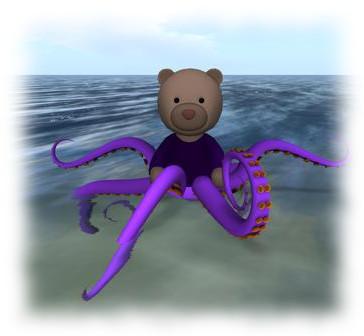
To mark Project Bento, Alexa Linden has updated her Linden Bear, now available on the Marketplace
This is because the Bento work is still in project status – the announcement is intended to inform people about the work and seek feedback from more creators / animators. This can be given via the Project Bento forum thread, with specific bugs bugs or issues reported by the Project Bento JIRA class.
To try out the new skeleton updates, you will need the Bento project viewer (which sees the viewer iterate to version 5.0), and because the project is still a work in progress, you’ll need to upload any content using the new skeleton extensions to the Aditi (beta) grid – most regions on Aditi should allow this, although some may be in use for other testing and not yet have these updates. Additional documentation is also available, together with notes on testing.
Commenting on the launch of the project, Oz Linden had this to say (from 37,000 ft whilst flying across America!), in recognition of the extensive input made to the project by content creators, which has included modelling and testing the skeletal changes, advising on viewer updates, putting forwards ideas for possible future extensions to the project, and a whole lot more.
Thank you Thank you Thank you .. we could not have done it without you
Draxtor Despres and I will be covering more of the background story on Project Bento in the near future, including a Drax Files World Makers special on the project in January. Keep your eyes peeled!
With thanks to Matrice Laville and Gaia Clary for the video.
 The 100th segment of The Drax Files Radio Hour went out on Christmas Day 2015, the last new podcast for the show for the year.





 Inara Pey: Living in a Modemworld