Linden Lab: images, logos and IP

Image via lawdonut.co.uk

Update, December 14th, 10:07 UT: Linden Lab has issued an apology on the specific situation involving Strawberry. Included in the blog post is a broader statement concerning the use of their trademarks and the guidelines thereto, and how the Lab will be revising things somewhat for the future. 

The apology and statement are both welcome (not the least by Berry herself!), and kudos is offered to the Lab for openly admitting the error both reasonably quickly and positively.


As I was heading for bed last night, I caught a blog post by Strawberry Singh concerning  a trademark complaint she has received from Linden Lab.

Specifically, Berry was informed that a video tutorial she had produced a year ago had been found to be in violation of the Lab’s Trademark Guidelines. These guideline specify how terms like Second Life®, Blocksworld®, SL™ , InSL™, and the eye-in-hand logo might be used.

The guidelines are reasonably clear, and even include a point that journalists and media outlets have special permission to use these marks in articles, vis:

License for Press Use of the Second Life Eye-in-Hand Logo. We’ve given journalists and media outlets special permission to use the Second Life Eye-in-Hand Logo in published articles, blog entries, and news programs specifically about the Second Life virtual world, subject to our Guidelines and Terms and Conditions

Berry, as a blogger / vlogger, thought she was in compliance with the above requirement. The replies she’s had from the Lab – both through Tia Linden, the Lab’s IP Specialist, and other Lab personnel indicate this is not the case.

One possible way of looking at this issue – and according Linden Lab due fairness in their possible concerns – is that YouTube is a platform with a reach that goes well beyond that of a Second Life audience. As such there could be concerns about the use of the various logos and trademarks, etc., being seen as some form of “official” production  – or, were they to be used with other content related to Second Life – as an implied “endorsement” of products, activities, etc. However, were this the case, the matter could perhaps have been dealt with through a request for a suitable disclaimer to the start / end of the video and to its YouTube description.

Admittedly, this doesn’t cover concerns around licensing / monetisation which some might see as being a possible cause behind the notice being issued. But then, this doesn’t appear to be the Lab’s primary concern. Rather, as indicated in Tia’s e-mail – and underscored by the updates Berry has provided since I first read and responded to her post – is over the use of images from specific Second Life web properties and the use of a logo which had – according to the trademark guideline quoted above – previously been allowed. To quote from Tia’s e-mail response to Berry:

More specifically, we do not allow images of our avatar building page, home pages or Second Life Eye In Hand Logo to be used in any capacity. Please do not use images of any Second Life web pages or logos ( with the exception of our inSL logo noted at http://secondlife.com/corporate/brand/insl/#) in your video or any other work. You may provide a link to our website or registration page in your video if you wish.

Note the bold emphasis is mine, to underscore the specific issue: the statement that certain images and logos now cannot be use in any capacity.

If this is now the case, it is worrying for many of us who routinely blog about Second Life and have used such images and logos. I  have, for example, used the eye-in-hand logo in what I have believed to be in accordance with the trademark and branding requirements. Where do we now stand if we are now seeing a shift in position from Linden Lab? Are we now in violation of a new prohibition on image use? Are the various guidelines on trademark and brand use about to be revised? If so, how do such chances sit with conception such as Fair Use?

Of course it could come down to poor wording within an e-mail, and the underpinning reasons for the notice don’t extend beyond the one specific video. But if this is the case, then we should still be given further clarification on the use of images and logos.

I’ve written to Linden Lab raising these broader questions on the use of logos and images. Hopefully, I’ll receive a reply and will follow-up with a post should this be the case.

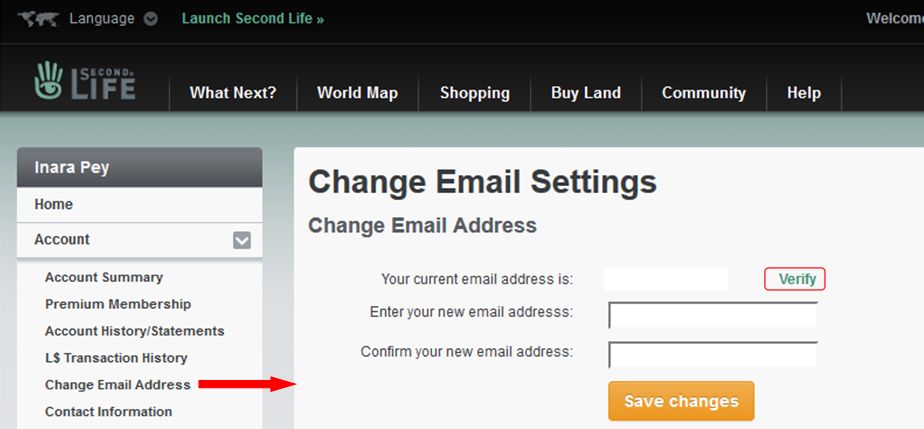
Linden Lab advises: verify your e-mail

Back at the end of January, I posted instructions on how to verify your e-mail address. I did so, because the Lab was indicating that in future, outgoing e-mails (including IMs-to-e-mail, Merchant and information from the Marketplace) will only be sent to those e-mail addressed that have been verified by the owners. So, failure to verify would mean no more off-line IMs delivered to you (among other things).

While it’s taken slightly longer to get officially announced that anticipated at the time I wrote that report, on Wednesday, April 19th, the Lab did finally post notice of the upcoming change see Making Email From Second Life (More) Reliable) explaining the reason behind it pretty much as I did back at the end of January:

One of the most important reasons mail doesn’t get through is that many Second Life accounts have bad email addresses – when something in Second Life sends to one of those bad addresses, it generates errors. The number of those errors causes many network providers and spam detectors to block even perfectly good email if it comes from Second Life. To fix that, we need to cut down on the bad addresses, so…  over the next few months we will be converting all the sources of email in Second Life to not even try to send to an address that has not been verified.

The official post provides an outline on how to verify your e-mail address. If you require more step-by-step instructions (although the process isn’t hard), please refer to my January 28th, 2017 post, Important: verifying your e-mail address with Second life.

Makes sure your e-mail is verified if you want to continue receiving off-line IMs to your e-mail

Wareable examines Project Sansar

"Project Sansar" promotional image via linden Lab
Project Sansar promotional image via Linden Lab

In Virtual worlds reborn: Can Second Life’s second life democratise VR? Sophie Charara, features editor at Wareable, examines Project Sansar, using in part Ebbe’s comments from an on-stage discussion they had, together with Ken Bretschneider of The Void during the December 2015 Web Summit. I’ve embedded the video of that discussion at the end of this article.

While the piece in Wearable doesn’t offer much that’s new to those who have been following the Lab’s conversations to the press and SL users about their hopes for the new platform, the article does offer some interesting insights to what the Lab is doing and some of their thinking behind Sansar.

Sophie Charara
Sophie Charara

Starting out with what we already know – the Lab is pitching the platform as “WordPress for VR”: an environment where people can come in and create virtual environments without the need to be a software engineer, coder, etc. – the article covers a lot of ground, with comparisons to Second Life, references to other pioneers in VR (Chris Milk, Nonny de la Pena and Jeremy Bailenson) and a further look at hoped-for time frames with “Sansar”.

The Lab has, on numerous occasions, indicated that initially, Sansar is being targeted at some very specific verticals where immersive VR has practical application. Education, healthcare, simulation, business, design and architecture have all be very specifically mentioned in this regard. So a point of interest for me was reading the specific example cited by Ebbe as to how Sansar is already been used, albeit on a test basis, by an architect:

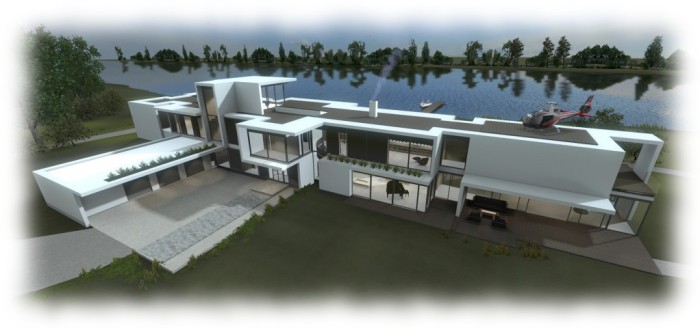
An architect named Diego, who works for a big firm that is completing a major medical centre project, built the entire building in Sansar as an experiment.

“When he experienced it in virtual reality for the first time, he walked into the lobby and said ‘Damn, it’s too big,'” said Altberg. “It took him one second to realise that something was off and he’d been working on this project for a long time. That had value instantly.”

In this instance, the power of virtual realisation is clear, and having a platform which allows companies and individuals easily leverage this kind of visualisation, connect with other and have them shared in such visualisations / experiences / models is clear. In the example above, it is only a short step from Diego witnessing the flaws in his design (and being able to correct them as a result) to him being able to invite his clients into the model, so they can witness first-hand what his company’s vision for the project is. It also potentially allows his company to retain the model as a part of a virtual portfolio of projects they can showcase to future clients.

That the Lab had identified architecture as a suitable environment where Sansar could offer significant value for clients can also be ssen in the fact that the first public demonstration of the new platform took place San Francisco’s month-long Architecture and the City Festival in September 2015.

VR capabilities have a huge potential for various vertical markets, such as architecture and design, and these are markets the Lab have indicated they are targeting (image archvertical.com)
In 2014, Jon Brouchoud demonstrated the potential of architectural visualisation using the Oculus Rift and Unity 3D (image archvertical.com)

Hence why “Sansar” could, potentially, be a very powerful platform with the sectors the Lab has identified, particularly if it really does allow clients the freedom to create environments which can be standalone or interconnected, and / or which can be accessed directly through a closed Intranet, or open to all via direct web portal, according to individual needs.

Picture, for example, a university using Sansar to build a virtual teaching environment, access through its own Intranet and using it’s exiting log-in and authentication process so students and staff can seamlessly move into and out of the virtual space. They could then open a public portal to elements of that space, and / or link-up with other education institutions, enabling students to share in their virtual learning spaces, building-up their own “world” of connected experiences.

Second Life has proven itself and the value of virtual environments in education. "Project Sansar" could present opportunities to significantly build on the foundations laid by SL
Second Life has proven itself and the value of virtual environments in education. “Project Sansar” could present opportunities to significantly build on the foundations laid by SL

Not that Sansar is purely about these niche environments. The potential social power of virtual spaces and virtual opportunities has long been established by Second Life, and the article does make it clear that as things progress, the Lab does see Sansar as potentially being able to replicate a lot of what Second Life can already do and offering it to an audience as a much more accessible medium.

This obviously is something of a worry for those of us deeply rooted in Second Life – much has already been made of the potential for the “cannibalisation effect” Sansar might have on the current Second Life user base. It’s actually a valid concern, and something we should perhaps be prepared for at some point down the road, if Sansar proves to be a success and starts to pull SL users away from this platform. But frankly, it’s not something which should be held up as a reason for the Lab not to press ahead with Project Sansar.

Continue reading “Wareable examines Project Sansar”

Lab offers a review of their Second Life year

The end of the year always brings with it reviews of what’s happened during the unfolding 12 months. Some can be lengthy (*coughs at her own 3-part series of late), others brief.

The Lab is no exception to the rule, and in Second Life 2015 Mix – A Greatest Hits Compilation, they offer a thumbnail sketch of some of the more positive developments and events within SL which have marked the year.

Starting with the Project Bento announcement (a project I’ve been able to observe and will be bringing more background on in the future as well as tracking developments through regular project updates), the post provides a grab bag of technical changes to the platform.

These include the arrival of the Viewer-Managed Marketplace, which had its initial main grid beta launch back in April, following a long lead-in over 2014 / early 2015,  with full migration starting in July, in one of the more successful Marketplace updates Second Life has seen. Also getting a mention are the arrival of Chromium Embedded Framework, through the CEF viewer, the notifications updates, and Hover Height, both of which were viewer updates suggested by users. Mention is also made of the 28 simulator updates made through the year,

Away from the technical updates, The blog post refers to the new “Classic” starter avatars, which were introduced in November.

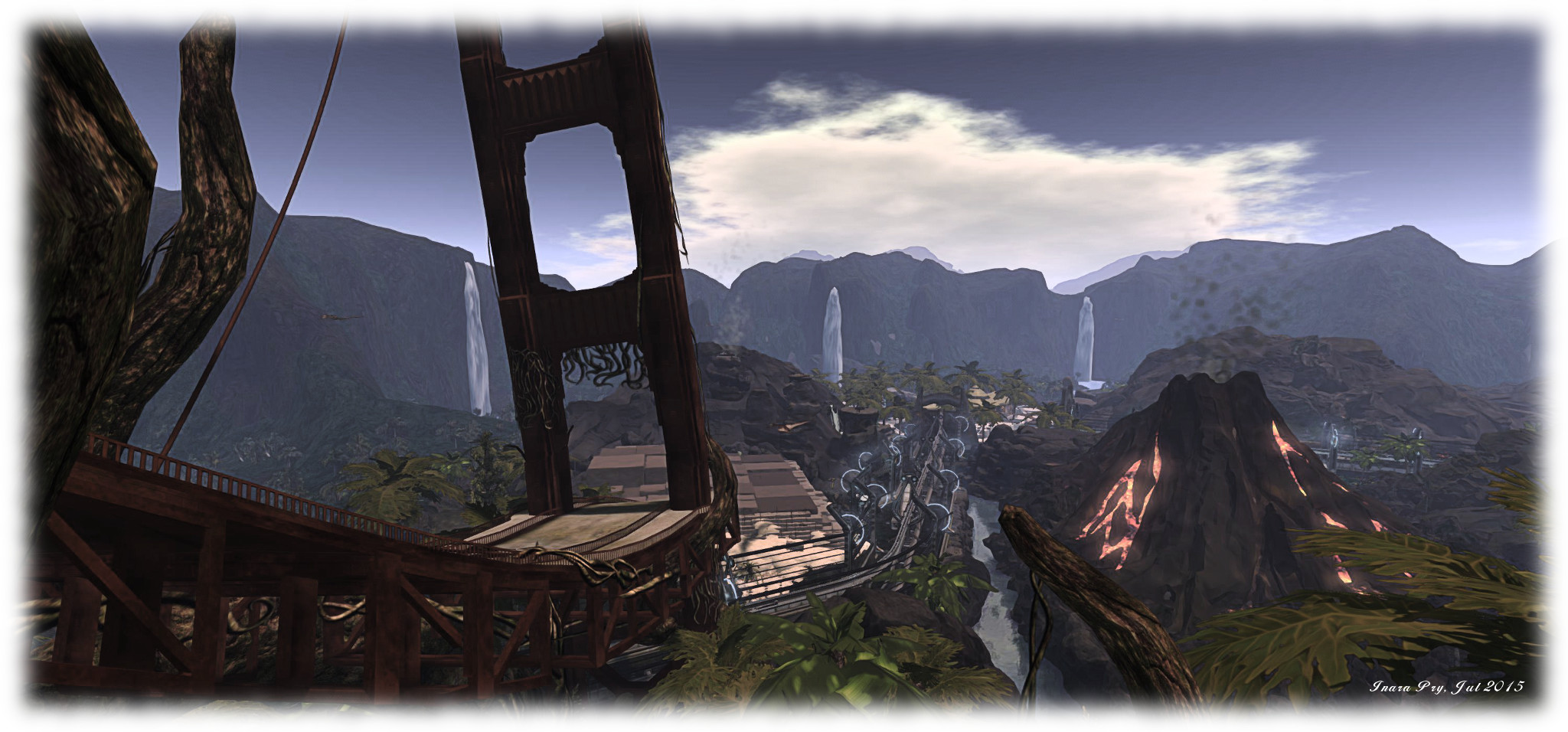
PaleoQuest; Inara Pey, July 2015, on FlickrPaleoQuest, the Lab’s dino-ish adventure game gets a mention in the official look back at the year, which i admit to rather enjoying

2015 saw a change in Premium membership perks, as they gradually turned away from the usual (and often basic) gifts and more towards more practical offerings, as the Lab’s blog post mentions. These have included things like the increase in the group membership allowance, and the removal of VAT on membership fees, which gave rise to speculation on what was going on to allow it.

Also getting a mention are the recent changes in land set-up and transfer fees, although how effective this will be is perhaps debatable, as I commented at the time, and also – with regards to grandfathered fees, seemed to have a slight edge of giving with one hand, taking back with the other.

Ending with a look at the Lab’s on-going engagement with the community through in-world meet-ups and other events, and giving a mention to forthcoming capabilities designed to help improve the user experience, such as Avatar Complexity, this may seem a lightweight look back at the year; however, it does constitute a fair round-up of the positives SL has seen internally through 2015.  In the meantime, I’ll be offering my own more extensive review of things – SL, Sansar, VR, et al, as reported through these pages through the year, over the Christmas and New Year period.

Announcing Lab Chat – a new Q&A show in Second Life

Lab Chat LogoOn Tuesday, November 10th, the Lab announced the forthcoming launch of Lab Chat,  “an opportunity for you to ask Lindens your questions during a live taping that will be recorded and archived for everyone to view.”

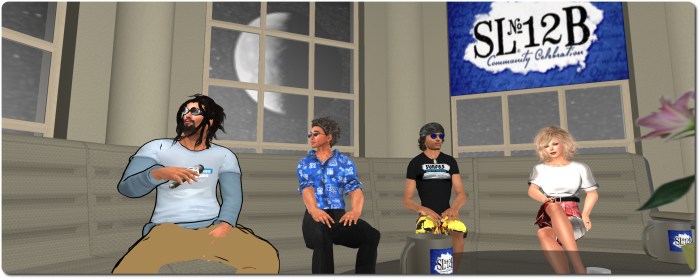
The new show has been in planning ever since SL12B and the successful Meet the Linden chat sessions hosted by Prim Perfect and which featured opportunities to meet Linden Lab staff such as Pete Linden (Peter Gray), the Lab’s Director of Global Communications; Xiola Linden from the Community Team; Patch and Keira Linden; Product Manager Troy Linden and Senior Director of Product, Virtual Worlds, Danger Linden (Don Laabs), and which featured a Q&A session with CEO Ebbe Linden (Ebbe Altberg).

Draxtor Despres, Danger Linden, Troy Linden and Saffia Widdershin at the Meet the Lindens at SL12B, the series which acted as a precursor to Lab Chat

The blog post announcing the new series, reads in part:

The first Lab Chat will be Thursday, November 19th, at 10:30am SLT at the Linden Endowment for the Arts Theatre – with guest Ebbe Altberg, CEO of Linden Lab.

Residents from the Lab Chat production team – Draxtor Despres, Gentle Heron, Elrik Merlin, Petlove Petshop, Inara Pey, Aisling Sinclair, Devin Vaughan, Saffia Widdershins, and Jo Yardley – will pick questions to ask Ebbe from this forum thread  – so be sure to get your questions into the thread no later than Friday November 13th, 2015. Authors of selected questions will be invited to ask their question live at the in-world show. Time permitting – additional questions from the audience will be answered.

If you are unable to attend the live show, a recording will be available shortly after the first Lab Chat wraps, so no one will miss out!

We’ll see you on November 19th at 10:30am SLT. Don’t forget to add your questions to the forum thread and mark your calendars to join us!

My own role in this series is relatively minor – I’ll be producing transcripts of each Lab Chat session, which will be available, possibly with audio extracts, on these pages most likely on a forthcoming Lab Chat website.

If all goes well, it is hoped that Lab Chat will go on to become a monthly series. So if you do have questions you’d like the opportunity to perhaps ask your questions directly to Ebbe Altberg, hop over to the forum thread and leave them there, as noted in the Lab’s announcement.

Linden Lab and Tilia Inc. – speculations on the Lab’s new subsidiary

Logos © and ™ Linden Lab and Tilia Inc.

Friend and fellow blogger, Vick Forcella contacted me at the end of October concerning some interesting items related to Linden Lab he’d uncovered in digging around a few places.

The first comes in the form of documents relating to a relatively new Linden Lab subsidiary company, and the second in a partially filed trademark.

The subsidiary company is called Tilia Inc., and at first glance it seems to be completely unrelated to the Lab, being referred to as being involved with ” Packaging Machinery”. However, an examination of the company’s papers will reveal it is registered at 945 Battery Street – the Lab’s headquarters, as a check on Buzzfile confirmed to me.

Tilia Inc appears to be a defunct corporate entity, first registered in 2002, which has been acquired by the Lab. This, and the further registrations of the name across several US states  as a “foreign” entity (meaning the filing is by an existing corporate entity registered in another US state), tended to suggest the Lab might be using the company to leverage certain tax advantages – a common practice among corporations around the world. Further support for this appeared to come from the names of the directors: the Lab’s CFO, Malcolm Dunne, their Legal Counsel, Kelly Conway and, from outside of the Lab, Benjamin Duranske, founder of PayCom Consulting, and LeAnne Hoang, the Lab’s former Chief Compliance and AML Officer.

Companies registered at 945 Battery Street, the Lab's HQ, via Buzzfile. Note Philip Rosedale's "Coffee and Power" sitting in the middle - and its associated industry description!
Companies registered at 945 Battery Street, the Lab’s HQ, via Buzzfile. Note Philip Rosedale’s “Coffee and Power” sitting in the middle – and its associated industry description!

Obviously one way to get more of a clue was to ask the Lab directly. So I did.

Tilia is a subsidiary of Linden Lab, focused on payments and the compliance work associated with operating virtual economies, and it will provide services for both Second Life and Project Sansar.

Peter Gray, Director of Global Communications, Linden Lab

Following my initial enquiry (which is not to say it is related to it), the list of senior personal at Tilia Inc., dramatically increased. The additional appointees  comprise: Bjorn Laurin (Bjorn Linden), Vice President of Product (Blocksworld, Second Life and Sansar), Landon McDowell (Brandon Linden), Vice President of Operations and Platform Engineering, Jeff Peterson (Bagman Linden), Vice President of Engineering, Pam Beyazit, Senior Director of HR, and Peter Gray.

"Tailia" and Tilia Inc appear to be geared to providing virtual currency and related services to both "Project Sansar" and Second Life
Tilia Inc is said by the Lab to be focused on the compliance work associated with operating virtual economies, and will provide services to “Project Sansar” and Second Life

The trademark, USTPO document 86374264, originally filed on August 22nd 2014, relates to the name of “Tilia”, which is described as, “Computer software, namely, electronic financial platform that accommodates multiple types of payment and debit transactions and the transfer of funds to and from others, in an integrated mobile phone, PDA, and web-based environment.” A further document located by Vick pertaining to the trademark application reveals even more information, and makes for interesting reading on its own.

What this all adds up to is still hard to determine. “Tilia” and Tilia Inc., might be totally coincidental; as such what follows might be pure unfounded speculation; then again, a lot of it also seems to hang together. complaince quote

As indicated in June 2015 by Ebbe Altberg, the Lab has been focused on four areas of activity, one of which has been that of compliance (see the quote on the right).

This work appears to have been overseen by LeAnne Hoang, prior to her departure from the Lab in July 2015. More recently, the Lab has also transitioned to a new payment processor for credit and debit card payments, which may be related to this work.

Again the two – the compliance work and the new payment processor – could be entirely unrelated. However, given that “Project Sansar” and SL will both operate virtual economies possibly based on the same virtual currency, it would make sense for the Lab to develop a central transaction and payment system capable of supporting both. Doing so could reduce the complexities of managing two payment / transaction systems (or any least manage any exchange mechanisms between two separate currencies) and in managing updates to match evolving compliance and anti-fraud regulations and requirements. If so, could “Tilia” be the proposed name for this new service? But why run it under a separate entity? Why not simply run it under the “Linden Lab” umbrella? Is it a matter of compliance, as stated be Peter Gray in his response to my initial questions? Perhaps so.

Another option might be that the Lab be considering making the Linden Dollar and all its attendant services a pre-packaged solution / service they can offer to other companies wishing to operate a virtual currency, with Tilia Inc., as the nominal operating company for that service. After all, they have made much of their leadership in matters of virtual economies and compliance, so spinning it out and offering it to others might be a means of generating additional revenue, although admittedly, given the complexities potentially involved, this might be seen as a bit of a stretch.

As a believer in Occam’s Razor, and moving away from idle speculation, I can’t entirely let go of the idea that Tilia Inc., might be wrapped in matters of compliance and potentially a means of leveraging tax advantages.

After all, The Lab have made it clear that “Project Sansar” in particular will rely on generating  the majority of its revenue through the sales of virtual goods and services. So, spinning out the systems and services that make this possible into a subsidiary registered in states with advantageous tax regulations might be a way for the Lab to reduce its tax exposure on those revenues.

The "Project Sansar" log-in screen: said to use

Following Peter Gray’s reply to my original enquiry of a week ago, I have placed follow-up questions with the Lab, but have yet to receive a response. Updates will be forthcoming if a reply is received or should the Lab reveal more themselves.

And why “Tilia”? I would guess it’s to do with the fact that tilia is genus of trees also referred to as linden trees.

My thanks to Vick Forcella for doing much of the digging into Tilia Inc and “Tilia”, for passing the information to me, trusting me to blog about it, and for his patience as I chased down various information myself, sought answers to questions. Thanks also to Johannes1997 Resident for his input on US corporate tax activities.