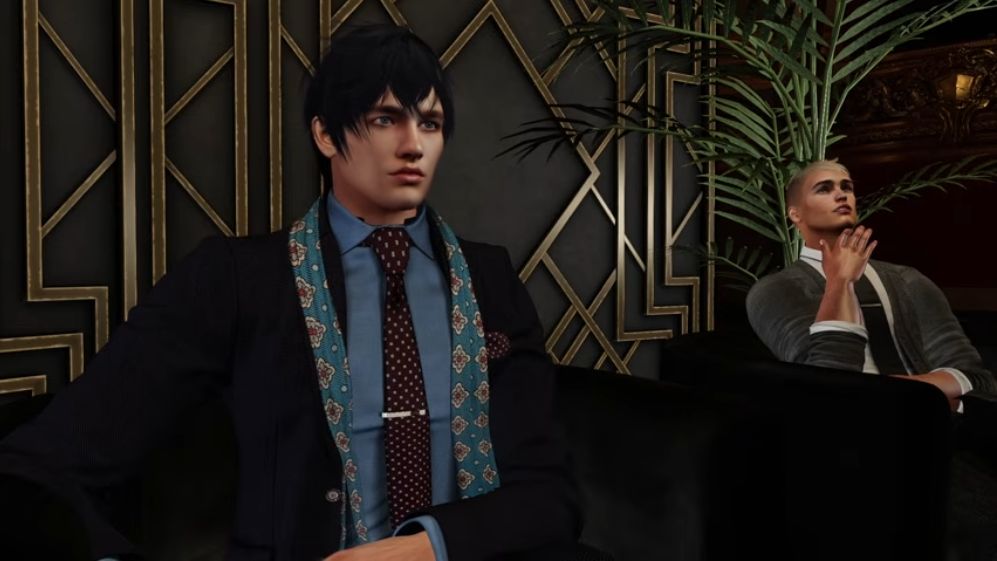
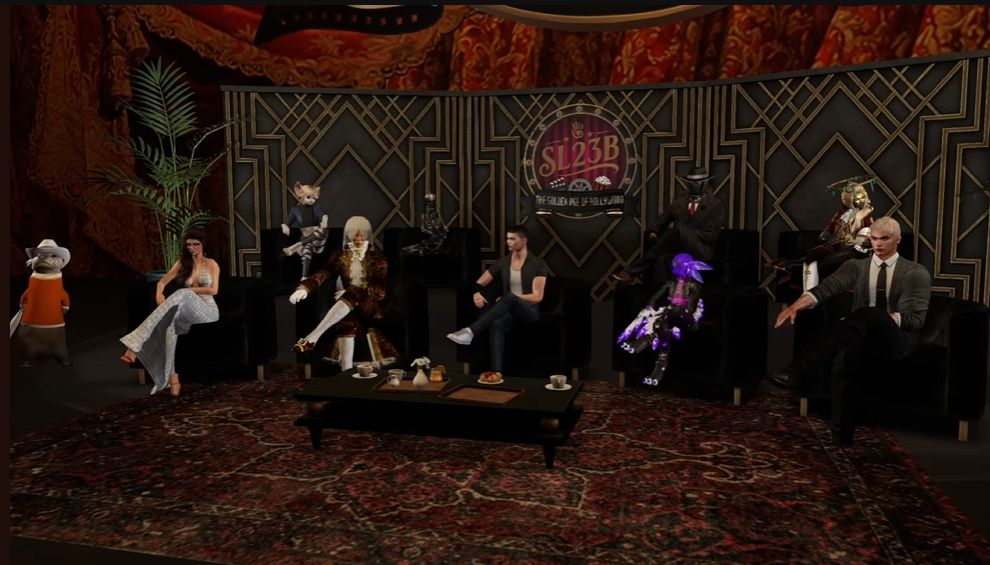
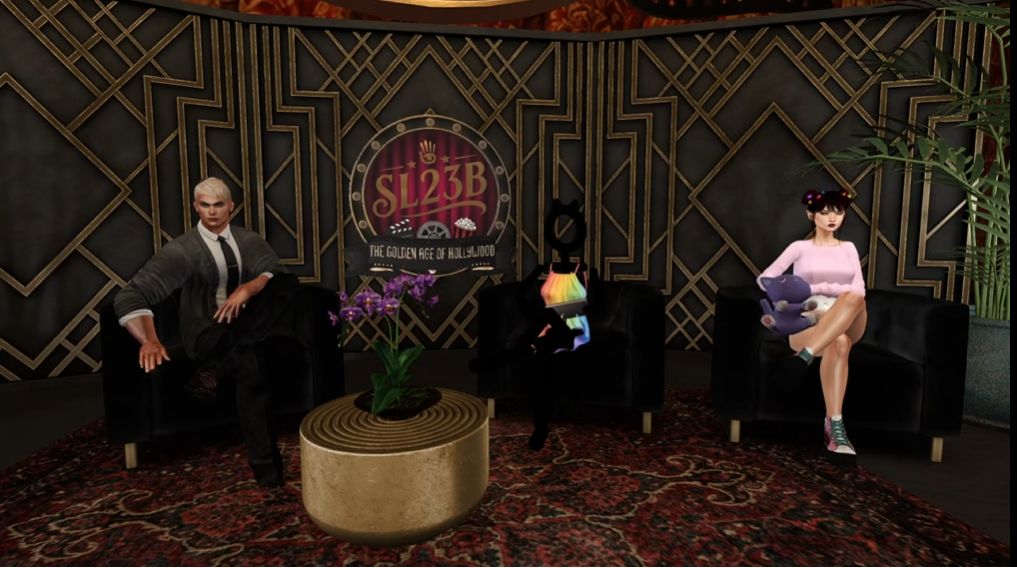
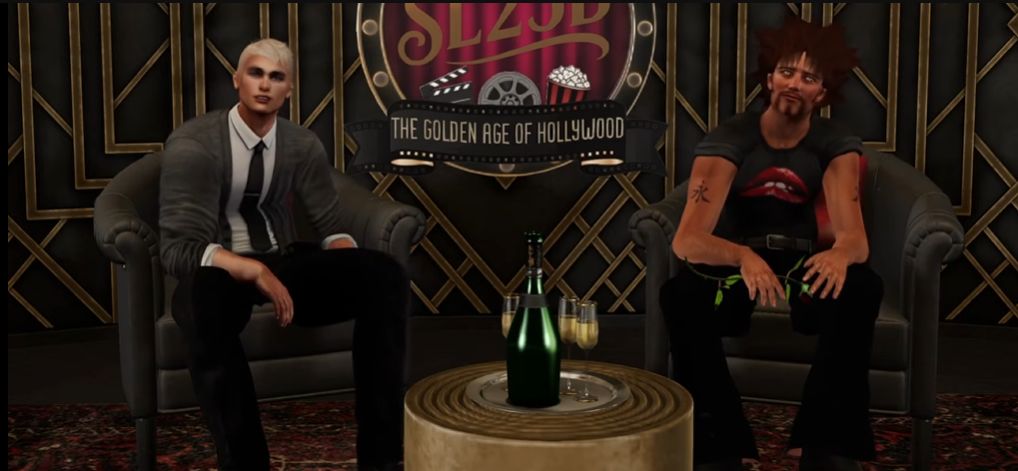
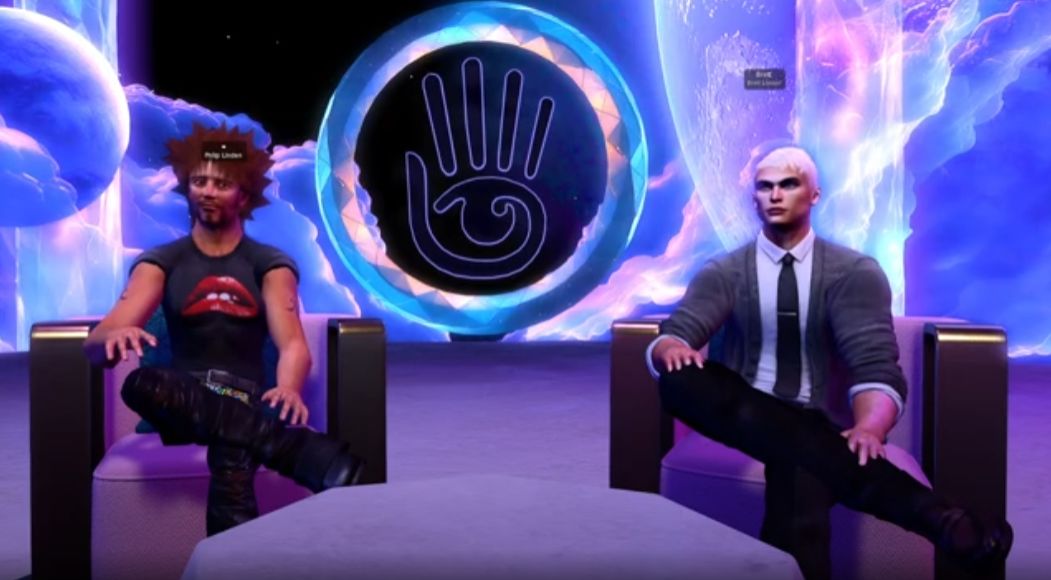
On Friday, June 26th 2026, Linden Lab held the last of the SL23B Meet the Lindens events, featuring Second Life Studios and its work.
Unlike previous articles in this series, this is not a summary of the full discussion. Instead, topics thought to be of the widest interest to reader have been annotated.
Because of this, the full content of the session can be obtained via the official video of the event, which is also embedded at the end of this article.
Also, please note:
Because of the format selected, topics and questions are not necessarily in chronological order compared to the video, but have been grouped by subject.
Timestamps to the relevant point in the video have been included for all questions for ease of reference.
Participants
SL23B Meet the Lindens: Second Life Studios
There was a large contingent of Moles at the session alongside LL staff, with those actively participating in the discussions comprising:
Brett Linden, Vice President of Marketing Second Life
Derek Linden, Senior Manager of Product Operations.
Izzy Linden, Creative Producer for Second Life Studios.
Second Life Studios has actually been around for a while operating in the background but not generally advertised [although many will be familiar with the LPDW and the Moles].
Regards it as the “heart of collaboration between Linden Lab and our residents”, whether working with the Moles to create infrastructure or collaborating with resident creators in developing experiences, etc.
Brett Linden – Context
Second Life Studios came out of a need to have better coordination with growth and marketing in bringing people into SL and what happens once they arrive inside the world. So Marketing the SL Studios are somewhat combined to better drive new user acquisition and engagement.
Who Are the Moles?
The Moles were formed in 2008 as the Linden Department of Public Works (LDPW) and a Second Life residents around the world hired by Linden Lab as independent contractors to undertake specific tasks. They are managed by Derrick Linden.
Their work was originally focused on the Mainland, adding the infrastructure – roads, bridges, etc., and the landscaping, but has grown beyond this.
Notable major projects carried out by the Moles include: the infrastructure within Nautilus City; the development of Bay City; the Linden Homes continent of Bellisseria; facilities for events like Shop & Hop, SLB, etc; the turn-key regions available for businesses, starter avatars, etc; LL-provided experiences and the games accessible via the Portal Parks).
The Moles have also been involved in technical projects like Project Bento and the avatar skeleton extension, and work with marketing, QA and other LL teams, and the framework of Second Life Studios.
In keeping with their name, Moles were originally given a mole avatar, complete with hard hat. However, over the years, most have moved to having a more individual and personal look.
Positions in the LDPW are open to application by residents. Résumés (note card or email) of qualifications/experience (incl. links SLurls, Flickr, You Tube, etc.) to be sent to Derrick Linden (derrick.linden-at-lindenlab.com).
Some of this was discussed in the Marketing and Growth Meet the Lindens session in which the marketing and user acquisition work was discussed, together with the existing and upcoming marketing channels LL will be using and the creative partnerships being developed with residents.
All of this work is being coordinated with a new Strategic Insights Team – a team of data experts at LL helping guide the company towards achieving its goals.
SL Studios fits into this because no matter how much is spent on advertising and promotion, it will all fall down if that first exposure to SL just doesn’t work to retain users.
SL Studios is also part of the New User Experience Working Group, which also involves resident creators, sharing information, learning about what works and does not work in creating experiences for new users – with the Mobile Learning Centre built by the Studios team proving to be the strongest performer in testing.
And it is not just new users: SL Studios is a key part in land operations and maintenance, Linden Homes, community events and so on.
The spaceship themed Mobile Learning Centre by Second Life Studios
Brett Linden – Broader Notes:
The future will see better synergy with marketing and acquisition efforts including partnerships with creators in some cases.
Lua scripting is coming to SL, and there will be a showcase experience for that, which can be seen as an example of a partnership.
LL wants to continue working with all types of creators, the Moles, external partners, etc., to bring Second Life and make it better, especially for newcomers during that precious first minute or so of what people uh are they’re forming their opinions of whether this is for them or not.
On Working with Creators
[61:00:01-1:01:38] In terms of partnerships, what qualities do you look for in potential collaborations? And what have you learned from working so closely with creators across the community?
Brett Linden:
There are a lot of uh opportunities for collaboration, and much of this was covered in the Marketing and Growth session.
However, LL really is trying to take in feedback and look at the data and the numbers to assess what sort of changes should be made in the future [which affects what is being sought by way of collaboration].
Izzy Linden:
Has greatly enjoyed working with creators. Some bring amazing ideas which might be a concept being thought of, other times a way to accomplish something LL hadn’t thought of.
The important part is that this isn’t a competition; together LL and residents build a stronger community, and that’s always better for everyone in Second Life.
Taking a Second Life Studios Project from Conception to Release
The first stage is to define the overall scope of a project. How long will it take? How many resources are needed? Once this is defined, “mood boards” are developed to build a collective view of what’s possible.
The “mood boards” are used to focus things down to a cohesive concept, which is in turn used to develop road map of the work to be done: what will it look like? What will the creators need to build? What supporting will be needed? And so on.
As the project is built, so it involves other elements as well, such as animation, scripting, lighting, sounds, which are worked on as the project is built out. Then there is also quality control and project release.
Brett Linden:
Just to expand on this: there is also the open formCreator Partnership Programme, which has received 700+ pitches. The projects that are taken up can involve Second Life Studios working alongside resident creators.
[35:03-36:16] How do you balance nostalgia and innovation when designing for a platform with more than 20 years of history?
Izzy Linden:
This is always in the forefront of thinking. Whilst striving to innovate and bring new and interesting options to Second Life, there is a need to honour history and traditions.
Believe some of this is accomplished through innovations and themes like Linden Homes which bring new and exciting homes to our users but also balance Mainland and communities like Bay City together with the total freedom found in having a private island, and giving residents the freedom to choose / move between options.
[Side note: during the discussion individuals were asked for what may have at some point inspired them in terms of region designs. Answers notably included Paul Cutter’s (Xtreme Paule) Mother Road [which I last visited – at Paul’s invitation – in 2017, and have an update on how it has expanded waiting in the wings] and Fantasy Faire, SLB and the art installation such as found in SLEA. ]
Mainland Notes
[39:37-42:25] What role does Mainland play in the future of Second Life? Are there plans for broader improvements such as terrain texture updates, infrastructure upgrades, road expansions, or other modernisation efforts?
This work is not isolated, and there are plans in development – not yet in a position to be discussed –which will hopefully excite residents.
So yes, Mainland is getting more of an intentional focus, and that includes goals of terrain texture updates, environment settings and the general look and feel of the world.
LL is always looking for opportunities to expand / improve the Mainland infrastructure – roads, waterways. The approach here is deliberate: suggestions are taken when submitted as feedback or a pro-active look is taken for areas where that infrastructure is genuinely lacking and there is the available land to actually do something meaningful, and target it.
Brett Linden:
Yes, Mainland is important and the upcoming “community priorities programme” [intended to give the community a stronger voice in weighing in on where they want attention focused in-world] in progress. There is going to be more opportunities for people to weigh-in on matters.
Izzy Linden:
Mainland is a critical part of the tradition of Second Life. It’s a place where residents are only limited by their creativity. It’s going away anytime soon.
There is a lot LL can do to assist in the process with additional infrastructure and such like as Derek notes, and so is excited for the future of Mainland.
[42:34-44:41] Many mainland residents have neighbouring parcels that have been abandoned for years by owners who haven’t logged in for a decade or more. Can you explain how LL approaches these situations and whether there are any discussions about addressing long-term inactive land ownership?
Derek Linden:
A frequent topic, which is more nuanced than might appear to be the case. These parcels are not necessarily Abandoned Land, in virtually all of these cases the parcel holder is paying tier, even if their accounts appear to be inactive.
This creates a real obligation for LL. When someone steps away from Second Life, for whatever period of time, they have a reasonable expectation that when they come back, their land is going to be exactly as they left it. That trust has to be taken seriously.
While understanding some people may be frustrated with dealing with a neighbouring eyesore or neglected parcel; LL has to be really thoughtful about balancing that against the rights of the person who is still a paying customer uh for all intents and purposes.
Won’t pretend that this is problem with a potential solution, but it deserves on-going conversation. LL wants the mainland to feel vibrant and alive and long-term vacancy does work against that, so the company will continue to consider and think about that.
[26:06-30:55] If you could redesign one area of Mainland from scratch, what would you choose and why?
Alotta Mole: redesign the Second Life Railroad (SLRR) system and Mainland roads to better reflect how SL is used and provide more opportunities along them for discovery.
Itsa Mole: wouldn’t really want to change anything about Mainland because it is a part of the Second Life experience.
Abnor Mole: extending the road system or add coastlines to those areas lacking them so that people could sail / boat around them.
Izzy Linden: more collaboration with Mainland residents, so small communities like “mini Bay city”, planting the seeds and then allowing the resident to grow things.
Brett Linden: would point to the upcoming “community priorities programme” [see above] as a way for Mainland residents to suggest Mainland improvements, preservation efforts, infrastructure projects they would like to see.
[1:10:51-1:12:06] As since Zindra is getting some attention, could we get water regions or protected waterways added northeast of the continent to facilitate sailing all around it?
Derek Linden:
Sailable water around Zindra is a frequent and not unreasonable request given the size of the sailing community.
Nothing to currently announce, but as thought is given to what comes next for Zindra, water access is part of that conversation. LL is aware of the gaps being described and wants to be thought about thoughtful about what can be done with that space as opportunities arise.
Linden Homes Notes
LL will continue to rotate existing Linden Home themes availability
[36:35-37:36] Many residents would like to see more Premium Plus homes made available. Are there plans for this?
Izzy Linden:
LL is always adding Premium Plus homes to the available join flow, but would rather avoid creating multiple regions which are not occupied. So there are attempt to balance things.
So things are rotated. One theme might get rolled out and receive a pick-up, and when that peters out, then a switch is made to another theme.
[37:39-38:18] Residents in Bellisseria are curious about the long- awaited completion of the Mediterranean continent. Can you share any updates on those plans?
Izzy Linden:
As noted, LL expand existing areas based on use and need; as all the available homes for a theme are acquired, more can be added.
At the same time, LL does not want to finish an entire area that then has a whole bunch of partially empty regions with a fiscal cost shared by everybody. So again, it’s a balance.
[38:38-39:36] Copperfield Heights has proven extremely popular. Are there plans for additional regions and might we see more 2048 parcels offered in future releases?
Izzy Linden:
There is an attempt to keep some Copperfield Heights available as it is the most recent Linden Homes theme, but there are other themes as mentioned, so things will rotate.
Personally loves Copperfield Height as it does mix Plus, Premium and Premium Plus together.
[1:03:34-1:04:08] Has the team ever considered a short-term vacation rental system that would allow residents to temporarily experience different Linden home themes without permanently giving up their existing home?
Izzy Linden:
An interesting idea, but will need some significant thought into it so as not to compete with those residents already offering vacation options. Would just say it’s not outside of the realm of possibility.
[1:13:55-1:14:51] Are there any plans to revamp the older Linden home area textures to PBR?
Izzy Linden:
Yes, but care must be taken with PBR because it affects so many different things that it might require a complete rebuild of themes – which is not out of the realm of possibility.
Currently LL is making some additional builds for some of the existing homes that aren’t just more of the same; they are kind-of thematically compatible but have additional options.
Updating older Linden Home themes to match the likes of Aspen Ridge (shown) is not necessarily straightforward. Further, at the present time LL is focused on offering additional options to selected older themes, rather than directly updating to PDR or offering brand new themes.
[1:14:56-1:15:45] Are there any new themes on the horizon for Linden Homes?
Izzy Linden:
While not currently working on any completely new themes, thought is always being given to what any new themes might be.
Right now the focus is on additions to some existing themes a little like the recent updates to the Log Homes theme, except they’re compatible with the selected existing themes but not exactly more of the same.
Misc Questions
[1:12:25-1:13:20] Education: Is there is there someone who looks into the needs of small non-profit educational projects in Second Life?
Derek Linden:
LL does have a non-profit and educational programme that does offer discounts for the needs for those individuals, and there are a number of contacts associated with it.
There are some requirements around the programme, but support tickets requesting assistance from the Land Operations team can be filed, so conversations can be had on available options and where LL can help.
[1:01:54-1:02:58] The Cornfield: The Cornfield remains one of Second Life’s most legendary locations. Is there any chance residents might see it return in some form someday?
Derek Linden:
The cornfield holds a really special place in Second Life’s history, but currently there are no concrete plans around it right now. But it has not been forgotten about, either; its legacy and meaning for many in the community is understood.
If there is a “right” opportunity for bringing it back, it would be considered. It’s more a case of if it is revisited it is done so in a way that honours what makes it special rather than just dusting it off for the sake of it.
On Thursday, June 25th 2026, Linden Lab held the fourth of the SL23B Meet the Lindens events, featuring Brett Linden, Vice President of Marketing Second Life and Fausto Linden, Senior Growth Marketing Manager, discussing Second Life marketing & growth. The session was live and featured a mix of pre-submitted questions, and those asked during the session.
Notes:
This is a summary (not a full transcript) of the majority of topics discussed at the session, and the official video of the session is embedded at the end of this article, not a full transcript.
Timestamps are provided to the relative points within the video where specific topics are discussed, allowing readers who prefer to listen to the comments directly to be able to do so.
SL23B Meet the Lindens: Marketing and Growth – Fausto Linden and Brett Linden
Second Life Audience
[7:31-11:59] Who is Second Life for? What is SL’s audience and identity? Is the goal to primarily serve existing residents, attract younger users, grow the creator economy, position Second Life as a social platform, or something else that we haven’t even thought of?
Brett Linden:
Doesn’t think there is a single audience that defines Second Life and in some ways hopes there never is. It is diverse, encompassing creators, role players, musicians, educators, and so on, all of whom reinforce each other. Creators do need customers, customers need places to explore, communities need creators that build experiences.
LL certainly sees opportunities to grow and to win back lapsed users. The goal is not to replace one audience with another but grow the ecosystem to make it easier for people to discover whatever it is in Second Life that’s meaningful to them because it is different person to person in many ways.
This means LL will continue to invest in the residents who built this world, such as leaning in to creators for partnerships and that sort of thing.
Bringing in new audiences is also important, whether via Mobile, whether it’s more creators, etc. One thing research has consistently shown is that the long-term success isn’t just about fitting into one very tightly defined demographic; it’s about helping find people to connect to those communities, those social experiences, and or creative opportunities that give them a reason to come back.
Fausto Linden:
Second Life is for any adult seeking deeper social connection, creativity, and self-expression. It provides a persistent virtual world where people can build communities, create identities, and participate in thriving economies, and live in immersive experience alongside others.
Growth has to be about nurturing existing users and do outreach to people who are looking for deeper social connection, creativity, and self-expression.
To answer the question “Who is Second Life for?” I think it’s for everybody. Second Life offers something for everyone.
[13:21-15:36] How do envision SL being of value to everybody? Do you think it could ever be something like the Internet that that everybody could find a use for a given time, like 5 or 10 years from now? Could we ever get to what Philip had originally envisioned for a virtual world?
Brett Linden:
Philip has a very specific perspective as the founder of Second Life, as was heard at his Meet the Lindens event.
Having been involved in SL for over 20 years, 19 of them as a Linden agrees that it is true that Second Life is for everybody, but would add nuance to that:
There is a specific kind of person that really resonates and connects with Second Life, who finds a utility in Second Life, a meaningful way of engaging that is not just entertainment.
Some people do use SL in passing, but the majority see it as an extension of their identity; it is something where people have their tribe, their community, their family. Those are deep and meaningful things for people.
SL also fulfils a purpose for those who have something which limits their physical world life, where cultural issues or limitations prevent them from expressing their true identity in the physical form. So it is really important for LL to really make sure that the platform does right by people that have not yet discovered SL and who benefit from it.
[17:06-20:02] When the marketing team develops campaigns and advertising, who are the primary audiences you’re trying to reach today? Have those target audiences changed over the last few years? What is the primary audience that you’re trying to reach out to?
Fausto Linden:
So, the primary audience in terms of demographics is adults 25 to 55 plus who value things like community, identity expression, creativity, role play, social connection, and digital lifestyles.
Targeting these people is often based on the creative remake: expressing the wonderful communities and groups that exist in Second Life. This includes using videos showing the multiple ways people can express their truest self.
There are also market segments being looked into to see if SL can acquire users that’ll stick based on some of those niche experiences.
So it’s a case of reaching out to people where they are; highlighting content creation to creators, music for those looking to socialise, and segments like anime, fantasy, furry, gore, Goth, sci-fi, as there are so many of these communities thriving SL that just need to be discovered by people with like-minded interests.
[20:18-22:33] If the primary audience being focused on is 25 to 55 plus, how are you thinking about introducing SL to younger generations, those who spend time on like Roblox and 5M, VR Chat, IMVU, Discord based communities? Do you think there’s a chance for us to introduce them to SL without changing / losing what makes it unique?
Fausto Linden:
LL does see competitors as huge opportunities because those users are already into some type of 3D world, some type of avatar lifestyle.
LL has tested campaigns targeting users from VR chat, IMVU, and The Sims with encouraging results. These positioned SL as the 3D world with the best avatars.
Believes there is a huge opportunity with Roblox, and potentially creating campaigns targeting ex-Roblox users to graduate from that platform to SL as an almost natural next step.
Younger audiences can be tough due to shorter attention spans, but opportunities are there and will continue to be investigated. However, the primary target demographic for now is 25 and up.
Growth, Strategy, User Acquisition and Retention
Growth and Strategy
[22:58-27:40] How does LL envision growing Second Life? What are seen as the greatest opportunities – former residents returning or entirely new users discovering Second Life for the first time? Creator-driven growth, Mobile users, international markets, or a combination?
Fausto Linden:
Growth will be a combination of new user outreach, existing user engagement, and winning back of lapsed users with almost equal importance.
For the foreseeable future, will be focused on driving a percentage of new users, bringing back users that have left for whatever reason and making things more accessible for the for the existing users to be able to encourage potential new users to engage with them.
The only way to gain wins is to work on all three areas.
Brett Linden:
Adds that the question is complex because there are many dependencies on what needs to be done, not just on marketing. Even in the local chat people are acknowledging product issues with SL as it currently stands, good and bad.
The reality is that there needs to be some changes with Second Life itself in order to break through the current stagnant growth. People like Fausto and Jerome Linden (Senior VP of Engineering) bring experience that can help with this. Making sure the product is where it needs to be is really important.
Bringing former residents back is a huge opportunity because millions of people who’ve experienced Second Life over the years; some stayed, others just popped in and popped out real quickly, and would like to see them to come back
Mobile is definitely an important opportunity. There is still work to be done, it doesn’t replace the Desktop experience but it certainly has the opportunity to expand the audience of Second Life if done correctly.
SL’s creator community is always really important for helping to drive growth and finding ways to partner with them. There been a lot of things done in this last year that are new in terms of partnerships with the community. Check the Second Life You Tube channel, you’ll see the sheer volume of content created by the community.
So rather than just pick one lane, it’s thinking about the entire life cycle, the dependencies with the product and engineering things that need to be done together to attract new people and get these returning users back as well.
[28:05-29:11] Are there plans to invest more heavily in international marketing efforts including countries like the United Kingdom and other regions outside of North America?
Fausto Linden:
In terms of global markets, these take two forms: what the Marketing Teams calls Tier One English markets – the United States, the United Kingdom, Canada, Australia and New Zealand. These have provided good data and users from those countries retain and stay for a long time, so these are the primary English countries.
In terms of non-English countries, the focus for the foreseeable future is going to be Germany, France, Italy, Brazil, and Mexico.
[29:13-33:22] Some residents that feel recent advertising campaigns are targeting a relatively narrow audience. How do you balance appealing to Second Life’s existing community while also reaching entirely new audiences who have never heard of virtual worlds before?
Fausto Linden:
Keep the two somewhat separate; new users require on-boarding, support, encouragement, etc., which is different to the needs of existing users. It’s also not possible to speak to all users with a single ad.
So different ads speak to different people: friendship and belonging videos for users seeking connection; ads that highlight creativity and expression for people searching for creativity and expression; role-play ads for users that are looking for role play. So those are all form attracting new users.
For existing users, the plan is to make things just more accessible: how do we surface groups other users are seeking; how do we connect uh users with similar kind of interests? How do we connect users to the products they’re looking for? That is the direction taken.
Brett Linden:
People probably have strong opinions about the good, the bad, and the ugly of what’s been done in marketing and ads. Historically, LL hasn’t done a lot of paid ads; it’s usually been organic and word-of-mouth where a lot of the growth and ads come from.
There has been a lot of feedback on past ads, some suggesting we should turn more to the community for certain ads, other expressing support, others expressing dislike. This is all good, as not very ad is going to hit the right note, and feedback has enabled collaboration.
LL will continue to look at the data on which ones that successfully bring in and keeping new users. Some will perform better than others, but lessons are being learned and the Team is moving quickly.
There have been times when it has taken a long time to put together campaigns , now the Team can iterate quickly and it’s great to see the wallet or purse opening again to actually start experimenting and testing. And Fausto has rich experience in that space.
Brett’s team does a lot of the communication to existing community, maintaining a thriving posting cadence with a lot of good features and announcements. These generate a comments and suggestions and ideas and what the community feels.
Brett Linden:
It’s great to get feedback, obviously, good or bad. What is in action is when people respond with ideas, do step up and show us, because right now, many of the current ads were through resident involvement.
So that’s something for people to think about; if you’ve got a connection to that part of the community or you are a machinima artist, there might be an opportunity for you to kind of participate.
So you’re very open to machinima makers and photographers, etc., volunteering to help?
Brett Linden:
If people have ideas or want to show us their work, reach out through editor@lindenlab.com.
Use of AI in Advertising
[38:15-42:45] Are you planning to use AI in advertising? Some say that it is ruining art and it’s ruining the creator community and the more it’s allowed to take a foothold in SL the more it risks people turning away from the platform. What are your thoughts about using AI within marketing?
Fausto Linden:
The ads we use must be created in-world and with no AI visuals or smoothers being used.
One creator did use an AI smoother to make the motions look more natural, which was not well received by the community, so no AI smoothers was added as a requirement.
There is an exception for AI voice-overs because some creators either do not speak English or do not want to have their voice recognised. In a future time we hope to hire someone talent to provide voice-overs, but not at this time.
Brett Linden:
It is a hot topic, and there is understandable frustration / hostility given this is a user-generated world and community.
LL is showcasing the real Second Life in terms of the video footage that’s captured in world that focuses on resident created content not AI generated imagery for those videos.
Broadly recognise that creators have strong feelings when it comes to things like generative AI, because Second Life exists because of human creativity, and resident creators are the reason the platform has endured for two decades.
Would view himself as neutral to the topic, as there are some uses where it can be very efficient – but not in ads and for Second Life specifically, where it is important to celebrate the human-created component of SL, which is quite special.
If something does slip by within creator-made videos and LL is alerted, as Fausto noted, action will be taken.
Referral Programmes and Rewards
[43:25-47:21] Platforms like Fortnite and Roblox use creator referral programs to incentivize creators, streamers, and influencers to bring in new users. Has LL explored similar programmes to reward creators and community leaders in helping grow Second Life?
Fausto Linden:
LL recently surveyed subscribers asking if they would recommend SL on a rating from 1 to 10 (extremely likely to recommend). 75% of the respondents gave 6 or above.
As a result, LL is investigating the idea of a referral programme to reward both the referrer and referee – although this is still in its early days.
Brett Linden:
Is excited to see where the idea might go, and believes existing users are great ambassadors for SL
Personally stayed with SL as a user because someone else befriended and mentored him.
Does believe it is more than just a sign-up referral, however; it’s about those in the community creating destinations for users, those who volunteer as mentors, etc., all of whom help with bringing new users into SL. Believes it is true that people will stick with SL a lot more when they quickly find and connect to a community or experience that resonates with them.
Everyone can play a role in both attracting new users and helping to make them feel they have a place in SL. There are been situations where incoming users have been met with welcoming energy and other times when the reception has been hostile
There is a role for LL to play in preventing the latter – but the community also plays a role. Just being kinder to a new user can help them feel settled.
Lab-Developed On-Boarding Experiences and Activities
Partnerships with creators have helped with the creation on user on-boarding experiences
[47:25-50:16] A lot of residents remember a more structured on-boarding experience. Um are there plans to provide more Linden Lab created activities, guided experiences, or community programs that help new residents discover what makes Second Life special?
Brett Linden:
This has been a major focus over this past year. Rather than trying to redesign the New User Experience internally, LL partnered directly with multiple Second Life creator communities to create the New User Experience Working Group.
This sit in addition to the on-going Community Gateway Programme, and is a collaboration with some of the top creators across SL meeting with the SL Studios team weekly over months to build and test new user experiences for both Mobile and desktop.
Testing included sharing raw data on what was being seen. Sometimes the data was surprising: what was thought to be a slam dunk success wasn’t reflected in the data. So this equal level of working will continue to be an experiment.
Going forward there will likely be more working hand-in-hand with those in the community who know Second Life very, very well. So it’s not some new user experience that’s just done and finished. Partnerships will be iterated upon.
The goal is not just to teach someone how to use the viewer, it’s more nuanced; it’s about getting people connected and understanding why Second Life is meaningful for them and making them feel welcomed and why SL is worth coming back to.
The Role of Creators in Growing SL
[1:01:26-1:03:34] How important are creators to Linden Lab’s overall growth strategy, and what role do you see creators playing in attracting and retaining future generations of residents?
Brett Linden:
Creators are at the heart of everything, including things that are important for showcasing what’s great about Second Life and the growth strategy – destinations, communities, experiences, events – all give an opportunity to put the spotlight on what’s really happening in Second Life.
99% of the time, while SL Studios put together good stuff, the majority of SL comes organically from the community. So LL’s job is to help more people discover what’s already being built out there in the community.
In terms of attracting the next generation of residents, it is how does LL help more people discover the incredible creativity that the community has put out there; that’s where creators play such an important role.
Fausto Linden:
Creators are the backbone of Second Life’s growth strategy. LL works with creators to test on-boarding destinations, test new user avatar customisation, etc. Creators as ambassadors of Second Life, and LL will continue collaborating with them to make Second Life more accessible to new users.
In-world Discoverability, and Social Interaction & Community Building
In-World Discoverability
[50:20-54:21] One common challenge is that there are a lot of interesting locations to explore in-world but they struggle to attract visitors and then disappear. Are there plans to improve the discovery tools um or provide better promotional opportunities for destinations and communities so that you can connect new users and older residents with places that are worth visiting?
Fausto Linden:
One idea being investigated is that of a recommendation engine that would help pair users to groups, destinations, products, and other users. It’s in the very early stages of thinking, but the idea it is to connect new users to the things that they want to do, and the places that they want to see.
Brett Linden:
Believes this is one of the biggest opportunities we have, and there are internal conversations happening on what this “personalisation engine” will look like.
Notes that from his experience at Amazon, personalisation was game-changer in terms of e-commerce; having large data sets where patterns of what is liked or not can be very effective.
With SL, there is a special responsibility in Second Life that this is done correctly, taking into consideration people’s desire for privacy, etc. So if implemented, it will be done with care.
However, the idea is an interesting opportunity to do better at serving people recommendations that are context-appropriate and sensitive to their interests. The Destination Guide has thousands of [semi-]curated entries which could be leverged.
[54:24-58:22] Some residents feel that social interaction and community building have also become more difficult over time. Are there initiatives being explored to encourage stronger community engagement, meaningful connections, and positive resident experience?
Fausto Linden:
LL is again in the planning stages of ways to better surface SL communities as a part of the “personalisation engine”; using it to help facilitate people find the right groups.
Brett Linden:
One of the biggest priorities is working with the community, not just building for the community. There’s kind of a fine, you know, line between, you know, where it’s appropriate for one or the other.
In the year since it was initiated, over 700 proposals have been submitted, signifying there is a desire for people wanting to help and work with LL in terms of working with the community.
Obviously, LL cannot partner with everybody, so some proposals / ideas do not get taken up, but some fantastic collaborations have emerged, and more are expected.
Does think it’s important to strengthen how LL works with the community with is not top-down, but in partnership.
As a tease: as well as the “personalisation engine”, LL is also looking at putting together something along the lines of a “community priorities programme” (not the official name) to help LL work closely with the community and give the community a stronger voice in weighing in on where they want attention focused – such as improvements and preservation efforts and infrastructure projects and community spaces – anything that makes Second Life better.
Really wants to make sure that there’s a voice and a process for that voice to be heard so that LL can hear that and take action, and there will be more on this programme as it develops.
Supporting Resident-Led Marketing of Communities and Events
[59:01-1:00:47] Many creators, venue owners, and community organizers struggle to promote projects and events. What opportunities do you see for Linden Lab to better support resident-led marketing and promotion?
Fausto Linden:
Believes LL could be open to co-promoting items on social media.
Brett Linden:
There is also the Destination Guide which is open submission and fuels a lot of things like social posts and the e-mails that go out.
There is an Events e-mail that goes out to users who have opted-in, which go out on Fridays. There is also What’s Hot in Second Life.
If people have a specific pitch, there is the creator partnership uh programme form already mentioned.
Miscellaneous Questions on Marketing and Growth
Premium Rewards and Retention
[1:03:56-1:07:01] Some residents really appreciate the various Premium rewards and gifts but they feel they could be more meaningful or aspirational. How does the team evaluate premium exclusive promotions, gifts, events when designing retention programs?
Brett Linden:
There is a lot of different interests in Second Life, so what one person sees and values might be different from the next; so there is no single aspect of the subscription tiers that’s going to appeal to everybody. But that said, there is obviously a unifying interest in subscriptions.
Would clarify that subscription rewards enjoyed by members over the years in terms of the gifts specifically; rather they have been expanded through the use of gifts.
Gifts have been offered in the past through the work of the Moles / the in-house Second Life Studios team. What is different now is that LL has started to partner to augment and supplement those with additional gifts just as an add-on extra.
These additional gifts cycle in and cycle out. Seraphim supplied some, right now it is both Essential Inventory and the Collide Circle.
With that volume of gifts, some are going to resonate with people and some won’t, and this will be tested and changes will be cycled on based on this.
Will also continue to iterate on the subscription plans where again people like different things – Linden Home or increased Group limits, fee savings on uploads. There is a suite of perks to
Feedback is listened to, and there will be changes in time as what works and what does not work is better understood. But the goal isn’t to create one single aspect of the perk that it that everyone loves; it is designed to be a membership programme where the overall value continues to grow with benefits offering broad appeal.
In term of resident feedback and the influence it has on marketing decisions, are there some examples of where resident feedback has directly influenced campaigns, messages, or growth initiatives?
Fausto Linden:
On joining LL, oversaw the production of videos focusing on friendship and connection, which lead to suggestions of other topics to cover – creativity, the economy. Content creation – these formed a list for a series of videos.
Also focused on role-play, and the feedback has been requests for SLurls to the places shown – so that is now happening.
Recalling Torley Linden
[1:10:34-1:13:47] Torley Linden is well remembered by long-time residents who for his contributions to community communications and tutorials. Looking back, what role do personalities like Torley play in helping residents connect with Linden Lab and the broader community?
Brett Linden:
Torley is missed personally. He was very visible in Second Life, did amazing job on many tutorials and did great on behalf of Second Life. There’s just never going to be another Torley. He had a really unique and great ability to educate, inspire, and connect with community. And he was authentic; he was saying it from his heart. And that passion and that authenticity just came through.
Moving forward, would love to see a situation where there is no one public face representing LL, but there are a lot of different viewpoints of people coming from Linden Lab and sharing and interacting with the community and frankly, educating people about what’s going on at the Lab. There’s just a lot of great people engineering, product support across the board. And so there’s more than just one person that can really tell that story.
The Meeting the Lindens Engineering Team session did that – 10 people on stage including Jerome, the new Senior VP of Engineering; you don’t see that many Lindens in a Town Hall style event. It gave diverse viewpoints and a from the trenches perspective of what’s going on at Linden Lab.
Wants to see more opportunities for these Q&A style events, space for authentic conversations .Is appreciative of Fausto’s energy and positivity in his responses, his excitement at the chance to bring change to SL and make a difference. Hopes there will be more Linden voices interacting with the community.
The many faces of Torley Linden
Achieving and Measuring Success
[1:14:29-1:16:10] Imagine it is a year hence, it’s SL24B. What growth metrics or community milestones would make both of you feel that Second Life is heading in the right direction?
Fausto Linden:
Short and sweet: because focus is on growth and performance marketing: success would be to see the count of active daily users increase by 10%.
That means acquiring new users and retaining them, acquiring lapsed users and retaining them, and engaging with current users and getting them to be in-world more often.
Brett Linden:
Supports Faust and likes that he gave a figure to attain. Everyone loves SL, but it is also a business and needs to grow. And people get frustrated if they perceive this is not the case, so it’s good to have a hard number to try to achieve.
[1:16:28-1:18:59] Is there something that users can do that would help grow Second Life? Promoting the community is something the Lab is very eager to do. But is there anything users can do to help make Second Life successful?
Fausto Linden:
A striking thing is when visiting the Welcome Areas, they can be a little empty. So going to a Welcome Area and befriending people that are new is something people could do. Like a buddy system type of thing.
Brett Linden:
LL bears a lot of responsibility for user safety, but as a community, everyone has a duty of care to be kind and good to people.
The current age makes it hard to get a place to escape where there’s nice, kind people, good conversation, fun, crazy – but coming in-world and somebody throws hate or negativity or clicky energy at you, that’s not going to be very welcoming.
So, while acknowledging the Lab has a lot of responsibility for creating a safe environment, the community putting its Kind Hat on would help when it comes to welcoming new people.
[1:19:52-1:22:30] After more than two decades what gives the marketing and growth team the most confidence that Second Life can continue attracting new residents and thriving into the future?
Brett Linden:
The confidence that I have comes from the community itself. Has been here for 20 years, has seen the great and not so great things done on LL’s side. So thinks the steady force has been the community that has kind of held things together and made SL able to survive where so many others have failed.
Notes there are some competitors that are actually giving SL a good run for the money and offer lessons to be learned. But that said, has confidence in the fact that the community continues to surprise and evolve and do really great things with this platform well above anything LL might do.
Fausto Linden:
Agree that the community provides a lot of confidence for the future, as does the data.
This data focuses on behavioural patterns that guide decision making. There is a sophisticated data science team to help validate some assumptions and put a numbers against tests.
Audience Question
[1:23:0-1:24:25]Has the Marketing Team ever considered Discord Orbs for advertising SL, given that platform is popular with SL residents?
Fausto Linden:
A survey showed that around 40% or so of those SL users asked are on Discord, and there were around 26% on Reddit. So both platforms are being considered for SL advertising.
[Note: there was a final question on whether LL “is looking for people who can create art with AI?”, but it was considered too vague to be able to formulate an answer.]
On Wednesday, June 24th 2026, Linden Lab held the third of the SL23B Meet the Lindens events, featuring members of the Product team.
Notes:
This is a summary (not a full transcript) of the majority of topics discussed at the session, and the official video of the session is embedded at the end of this article, not a full transcript.
Timestamps are provided to the relative points within the video where specific topics are discussed, allowing readers who prefer to listen to the comments directly to be able to do so.
Not all subjects are in chronological order compared to the video. I have attempted to group them by subject / responder. So for example, some audience questions on things like the viewer are placed within the related section of the text, but are given their own timestamp for reference.
SL23B Meeting the Lindens: Engineering Team (from left): Leviathan, Roxie, Soft (back), Monty, Juniper (back), Jerome, Rider (back), Geenz, Radix (back) and Brett Linden
Participants
Jerome Linden, Senior Vice President of Engineering – see panel, right.
Geenz Linden, Viewer Development Lead.
Juniper Linden, Web Properties Team.
Leivathan Linden (formerly the Linden known as Andrew, the first LL employee), Second Life Server Team.
Monty Linden, Second Life Server Team, currently focusing on TP / region crossings.
Radix Linden, SL Mobile Team.
Rider Linden, Second Life Server Team.
Roxie Linden, WebRTC and Project Zero.
Soft Linden, InfoSec Director.
Jerome Despret (Jerome Linden)
Jerome Despret / Jerome Linden
Joined LL in March 2026, bringing more than 25 years of experience in the gaming industry to the role of Senior Vice President of Engineering. He has deep expertise in massively multiplayer platforms, live service games, and large-scale engineering organisations. Companies he has worked for include Maxis / Electronic Arts (deeply involved in The Sims Online and in taking The Sims 4 from development through to a full product); Zynga (overseeing Zynga Poker one of the company’s highest-grossing live service titles).
His career has involved leading teams to deliver complex projects from early development through global launch across PC, mobile, and cloud-based platforms. In his new role at Linden Lab, he will focus on strengthening the company’s engineering organization and supporting the continued growth and technical evolution of Second Life.
PBR, Graphics, Performance
PBR Roll-out and Optimisations
[6:06-8:02] Since the introduction of PBR, some users have reported performance issues, whilst others have raised concerns about accessibility (e.g. photosensitivity and epilepsy triggers due to reflective surfaces, etc.). Looking back on the roll out, what lessons have the engineering team learned, and what improvements can residents expect in future PBR optimisations?
Geenz Linden:
Lessons: most important one would be getting people testing sooner and getting a larger cohort of people testing. A lot of the problems with PBR stemmed from this.
This is actually one of the bigger challenges faced by viewer updates and new features in general, both in identifying the right time for testing and the right people to help test them.
Improvements: LL is continuing to improve performance with PBR and is always looking at um new issues that people are reporting, from things like the skies not looking quite right on legacy content through to some of the accessibility concerns mentioned.
PBR is here to stay, so the improvements will continue.
Viewer Performance
[8:08-9:35] Many residents are running modern gaming hardware, but still experience performance problems that may seem out of proportion compared to contemporary games. What are the biggest technical bottlenecks that limit Second Life’s performance today and what progress can residents realistically expect over the next few years?
Geenz Linden:
Probably some of the biggest bottlenecks are going to be multi-threading. A lot of modern computers have a lot of processor cores allowing them to do a lot of things at once. The viewer hasn’t really caught up with hasn’t really caught up with that yet, and doing so would definitely help with overall viewer performance.
Also going to inevitably hit a ceiling with how much performance can be squeezed out of [the now deprecated in most cases] OpenGL. So discussions are going on about how to migrate to something faster and more performant across a range of hardware.
Graphic APIs and Improvements, and “Future Proofing” SL
[18:56-21:10] With PBR increasing the rendering demands and modern technologies like DLSS and FSR becoming increasingly important is there a long-term plan to move beyond OpenGL towards modern graphics APIs (e.g. Vulkan DirectX12, WebGPU). If so, what challenges make that transition difficult?
Geenz Linden
Geenz Linden:
There is active discussion around how to go through and move away from OpenGL. Second Life is “a beast of a platform” to try and render; there’s a lot of content density in every single frame the viewer tries to draw. So Vulkan, etc., isn’t exactly a turnkey silver bullet sort of solution.
Also need to be able to meet our current performance or better. This is also not as straightforward as just flip a switch and you’re on the new thing that’s magically faster. A lot of work goes into some of these newer pipelines to be able to get to that point.
At the same time, there is making sure that the general look and feel of SL is maintained. SL has 23 years worth of content. So care has to be taken not to break things as much as possible when changing the rendering engine.
There is also the wide range of hardware used to access SL. This can mean just because an API is supported across different hardware, it doesn’t mean it’s supported the same way across that hardware.
All of this requires consideration and testing of options to make sure nothing is being broken along the way.
[53:52-54:36] LL very well aware of where the industry is going with broader OpenGL support, plus the current version used in SL doesn’t have much performance headroom left. So, preliminary steps are being taken to make a move easier.
[21:25-23:08 ] From an engineering perspective, how much of Second Life can realistically be modernised while also preserving compatibility with the platform that has evolved for more than two decades?
Geenz Linden:
When adding more modern rendering features, as noted, care has to be taken to avoid things like content breakage; people want to see things in SL the way the saw them on first joining the platform.
This isn’t always possible so care must be taken when it comes down to updating the platform: to add / update, or replace?
For example, the 2011-2012 work to add the original Materials (Blinn-Phong) to SL was purely an additive feature which didn’t disrupt existing feature sets; things looked about the same.
EEP and Bento are other examples of things that added to SL rather than replacing or modifying existing features which also worked.
Region Crossings
[9:38-12:29] Vehicle users, role players, and explorers have long struggled with inconsistent region crossings. How difficult is this problem from an engineering standpoint? Are there any meaningful improvements on the horizon?
Monty Linden
Monty Linden:
On the technical load, has described this as a bug finding problem. Teleports and region crossings – and to an extent logging- in – touch almost every system, both in the viewer and server-side, involving something on the order of 100,000 lines of code get involved in the entire process.
Given the complexity of the process, it is probably plagued by something on the order of several hundred bugs, some small, some innocuous, some unreachable, and a few of them extremely significant. Some exist architecturally; some are protocol definition problems and reliability problems.
LL is very aware of the issues of teleporting and region crossings, and has significant projects in development to address some of the problems. So people will start seeing small incremental changes to fix the big ones, get the reliability better, a reduction in viewer disconnects, etc.
This won’t be an overnight thing, and at times LL will ask for feedback, as this is a process that relies on people reporting specific and interesting problems that they are encountering; the team need to see a bigger spread of the bad experiences people are having. So please file bug reports.
WebRTC and Voice Updates
[12:32-16:14] What have been the biggest challenges with the new voice system and what improvements are currently being worked on?
Roxie Linden
Roxie Linden:
Biggest challenges: the variety of audio devices and operating systems used in SL, not of all which can be tested in all combinations. So, if people are experiencing issues with Voice, please file a bug report.
Voice is also a significant system with a lot of moving parts; a lot of servers, the simulators, the various viewers (and their release cycles in picking up code and fixes), etc., and orchestrating them all is a complex task when dealing with the size of something like SL, hence the slow and steady development and deployment.
Issues: region crossing disconnects can still occur with peer-to-peer Voice communications. There are probably other issues, so again, bug reports are requested.
However, WebRTC is entirely in-house rather than being supplied by a third-party, which means fixes can be implemented faster.
Technical Initiatives
Current Projects
[16:30-18:41] What are the most impactful technical projects that are currently underway that could significantly improve the Second Life experience?
Jerome Linden
Jerome Linden:
Due to SL being around for a long time, a lot of the work being carried out is maintenance focused, but the work is not solely There are a number of big projects in progress. These include:
WebRTC, as mentioned above, and which could include voice-to-text transcription, and this is being experimented with and a project with it could start very soon.
Lua scripting: this is another major project which should hopefully ship in 2026. It is currently available in some regions for testing. A benefit with Lua is that it is a known language so creators from outside SL should be more comfortable with it then Mono or LSL.
There is SL Mobile, which is continuing to develop and allow the sharing of experiences between devices.
These are the big projects which will be / become visible over the next 6-12 months, with others in the pipe.
There are also smaller project in progress – optimising graphics quality and performance. There is also work going on with the viewer UI.
Linux Support and Scripting Support
[26:19-26:40] Is there any possibility of an official Linux viewer returning in the future or will Linux support continue to rely primarily on third-party viewers?
Geenz Linden:
Linux support will be returning, and will debut with the release of the Lua scripting viewer.
[26:53-28:23] Can you share any updates on the Lua scripting project status, timeline, and the long-term vision for modernizing scripting within Second Life?
Rider Linden
Rider Linden:
Not going to commit to a timeline, but as mentioned, it’s actually looking really good for Lua to be deployed later in 2026.
Those who are interested, Lua is discussed at the Simulator User Group held every other Tuesday [meeting summaries here].v These meeting offer a lot of feedback that is helping to shape Lua.
[28:33-30:14] What is LL’s long-term vision for improving creator tools, documentation, education, and collaboration opportunities for builders and scripters?
Rider Linden:
The Lua viewer will have quite a number of uh of improvements: tighter integration with external editors for easier coding, for example.
There is also a VS code plug-in which has some fairly tight integration with SL, helping to keep function definitions up to date, etc.
[30:47-32:03] Many of Second Life’s core systems, things like inventory management, profiles, landmarks, and content organisation have changed very little over the years. Are there plans to modernise these and make them easier to manage?
Jerome Linden:
Short answer: no plans yet, but it is heavily discussed.
A focus right now is to make entering Second Life easier and a more pleasant experience. Part of this making systems like inventory more accessible, easier to use and more modern. So there are discussions, but currently, there is not an exact plan in place.
Will say that he is expecting changes and modernisation around the system in the next 6 to 24 months.
We have a question about modifiable content transparency. Would it be possible to provide clear information about what parts of a purchase product are actually modifiable so that residents can make more informed purchase decisions before buying?
[32:09-33:20] Would it be possible to provide clear information about what parts of a purchase product are actually modifiable so that residents can make more informed purchase decisions before buying?
Jerome Linden:
By transparency here, is reading people want to know what they’re buying before they buy it.
In terms of the specifics of clarifying what can be edited, etc., in-world, there are currently no plans.
In terms of the Marketplace, there are plans being discussed with the Product Team, but these are not ready for discussion. The short answer is that LL wants to make the Marketplace experience and buying experience better and easier, which also goes back to the new user experience and making it easier for them to engage in the economy.
Simulator and Server Infrastructure
[33:30-35:39] When will users see noticeable reductions in lag? What areas of server infrastructure are currently receiving the most engineering attention?
Monty Linden:
Lag comes in three varieties: the user’s side [their hardware, Internet connection], network [the routing from the user’s Internet connection to the AWS servers used by LL] and server side [what is going on within the simulator / server that can cause lag]. Can only really talk about server-side and network.
Unlike the viewer, server-side frame rates don’t have as direct a correlation to the experience.
There has been work to improve a number of areas within the server-side over the past few years, such as “fairness”: when one avatar would undertake something like entering a region, for example, the simulator would focus on them as a priority and impact the experience of everyone already in the region. Nowadays, the person entering the region suffers a little more in terms of delay, but those in the region suffer less.
More of this kind of work is being done so over time the server will get better.
Hacked accounts and fraudulent Marketplace links continue to circulate through groups and chat channels. What tools or engineering solutions are being developed to help residents identify, report and avoid these scams more effectively?
Soft Linden
Soft Linden:
Phishing has always been an issue in Second Life, but attackers have recently adapting their tactics. Historically, resident reports have always been the most important factor in helping us identify campaigns and respond to them.
This is not ideal as completing the Abuse Report is manually intensive. So for links, the ability to right-click a suspect link and auto-generate a report has been prototyped and might be deployed.
It is hoped that such an approach will increase the number of reports on phishing attempts and allow LL to respond far more quickly.
LL has also prototyped some changes that’ll give a clear signals when someone is about to visit a site that doesn’t match their personal browsing habits. This will be something that’s tracked locally in the viewer so as not to compromise people’s privacy or alter whatever browser privacy protection they might have in place.
There is other work that’s intentionally less visible and aren’t for discussion as revealing them could offer bad actors a way around them.
Overall, LL is aware these problems have increased and the goal is to make scams harder to succeed whilst making reporting easier, and finding ways to more effectively respond when uh campaigns do appear.
Some residents have suggested tighter restrictions around external links uh within the viewer to reduce fishing and social engineering attacks. So the question is how does Linden Lab evaluate the balance between security and usability in this area?
Soft Linden:
There is always a trade-off. You don’t want the Wild West where everybody is left to judge everywhere alone; but you also don’t want to create a completely locked down experience that kind of breaks Second Life for everyday use.
The overall goal has to be to avoid making all of you personally responsible for every risk, although this is not always fully possible, but it’s the right place to start.
So when evaluating changes around security controls generally, LL starts with the questions is this actually making safer behaviour the easier behaviour? Are we making attacks less effective? Are we improving our own ability to respond when attacks do happen? Are we avoiding changes that make Second Life harder to use in ways that are going to frustrate you and drive you toward unsafe workarounds?
Second Life has an incredibly complex surface. So there is not one universal rule for every context. So the approach is to add friction where the risk is higher and improve signals when something looks a little weird, and improve reporting response.
Additional Technical Topics
AI Use and Long-Term Vision
[23:25-25:20] Beyond generative AI, are there opportunities to use AI technologies to improve asset optimisation, performance, content creation workflows or other engineering challenges within Second Life?
Jerome Linden:
To be clear, because AI is used for many things, LL has no plans to use generative AI to create content or anything like that for Second Life.
AI tools are used within various workflows where appropriate – security challenges, code audits, team workflows, customer support workflows, etc.
For features that would be a little bit more uh resident facing, AI would only be used where it makes sense. For example, it is hard to optimise assets using AI, because assets are all user-designed, and people do a lot of things with their content.
But there are areas of optimisation where AI can be used, such as helping to monitor the Marketplace and make sure the listing are tagged correctly and in the right category and perhaps analyse if there are things that should be unlisted from the Marketplace.
AI will also assist with the Voice-to-text transcription already mentioned.
So, no plans to use AI generated content in-world, but a considered use of AI tools where appropriate.
[42:15-45:19] It is becoming increasingly difficult to distinguish authentic products from misleading Marketplace listings using AI generated images. What steps is LL considering to improve transparency, trust and discoverability on marketplace?
Juniper Linden
Juniper Linden:
The Marketplace Team is very aware of this, although it is also a Product question as well and Engineering.
The real question is: yes there are AI-generated images and things like that, but what is the limit of what we consider AI in terms of assisting things? So LL is moving slowly on this so as to fully consider what controls, etc., are implemented.
Companies have rolled-out AI moderation in a way that can be really aggressive and demeaning, such as mis-flagging AI-generated content, which would potentially upset SL content creators.
If there is an opt-in process, how do creators know the level of AI use requires self-reporting?
So there isn’t currently a single answer, because it is something LL is trying to figure out as the AI ecosystem changes and people experiment with it more. However, it is being monitored, and thought is going into how AI generated tools might help with some content moderation [as noted by Jerome], but full-on content moderation, this needs careful consideration.
General Marketplace Usability / Moderation
[45:33-47:36] Residents have expressed concerns about Marketplace usability (e.g. mis-labelled demos, listing moderation issues, vague rejection messages). Are there plans to improve the Marketplace experience for both shoppers and creators? For example, when are drop-down sizes coming or rollover images, etc., to make the MP resemble a more modern marketplace website.
Juniper Linden:
There is currently a clean-up on listings [de-listing items with no sales over 2 years and where the creator has not logged-in to SL for some time]; together with work to modernise the MP.
Given the age of the application, a lot of this work is from the ground-up, requiring a lot of internal work to break things down to be more manageable and easier for LL’s internal tooling.
The hope is to revamp the MP as much as possible, but things are quiet right now as the foundational work gets underway in order to start tackling more of the technical debt within Marketplace.
Once this work is done, then things like better error messaging and more persistence on jobs and retries can be put into place.
Creating a “Second Life 2.0”
[25:29-26:15] With Unity and Unreal moving towards interoperability in the coming years, has LL ever considered the idea of archiving the current Second Life and creating a new modern successor?
Jerome Linden:
Short answer: No. There are no plans to do this.
The issue is not really engineering but business: it will be very difficult to ask the entire resident population to switch ecosystems. And if you don’t then you have the complexity of trying to support two ecosystems [which LL has tried with SL and Sansar].
OpenSimulator Interoperability
[35:49-36:57] Is there any possibility of renewed interoperability or collaboration with OpenSimulator or have those platforms diverge just too far technically to make that practical?
Jerome Linden:
There are no plans to engage with OpenSimulator.
Whilst LL is very engaged with the open source community with the viewer, any involvement with OpenSimulator would require opening-up the Second Life simulator code base, which is not something LL plans to do.
Keep the simulator code base private helps a lot in term of possible attacks and things like that.
Second Life 2-3 Years Hence
[47:43-49:15] If we were to look ahead five years, what do you think will be the most noticeable engineering improvements that residents will experience in Second Life?
Jerome Linden:
Five years is a long time; better to answer in the 2-3 year time frame.
As noted, currently the focus is on make SL more accessible to new users and grow the platform.
This involves modernising the platform, as already mentioned: inventory improvements, marketplace improvements; there’s also Lua coming out, Voice-to-text transcription, plus avatar customisation.
Believes that in the next two to three years there will be a lot of features and updates emerging. This will also provide opportunities to potentially rewrite some of the software that has been aging for 20 years.
Magic Wand Time
[49:18-52:55]If you could wave a magic wand and solve one longstanding technical challenge in Second Life tomorrow, what would it be and why?
Leviathan Linden: I would vote for region crossings.
Geenz Linden: content interoperability; the ability to bring content from other places into Second Life.
Roxie Linden: communications – Voice-to-text; translation; text-to-speech; improving the ways in which people can communicate with one another.
Rider Linden: would have said teleporting, but will go with more scripting improvements and capabilities.
Soft Linden: less latency when it comes to playing games in-world, and form people around the world using SL.
Monty Linden: more collaborative building opportunities; it’s one of the things that makes SL unique, and while necessary, some changes to SL have diminished it.
SL Mobile is still considered beta and is definitely a work in progress.
There are a lot of changes coming down the pipe still and things are going to change in significant ways. But no specific promises; just more to come!
[Side note: see also this section of the Product Team Meet the Lindens session.]
Audience Questions
[54:48-55:22] Is there any work on a fix for memory leaks inside Second Life?
Geenz: There is work reduce the memory footprint that the viewer takes due to the volume of content it has to process in real time. But it is a complex problem.
[55:32-56:08] Is there an official recommendation or just any insights you could offer people looking at trying to get the best laptop for SL?
Geenz: Lots of VRAM will help you, together with a powerful CPU. SL doesn’t necessarily eat a ton of your GPU, but it will eat a lot of RAM and it does need a good CPU.[See Also: SL System Requirements.]
[56:43-57:20] How come that after rolling restarts on the Mainland, content can be lost and not be retrieved?
Leviathan: There are some known ways that a region being taken down would fail to save its sim state; these may cause the majority of the cases of lost content. There are some fixes for these issues in the current simulator release.
[57:25-58:13] Could someone provide an update on using game controllers with the viewer?
Leviathan: The game control project was started a couple of years ago with an original focus on exposing game control inputs to in-world scripts. Currently, the focus is on just making the viewer work with a game controller so that you can move around and configure your game controllers to do what you want. It’s a work in progress.
[58:16-59:09] Is PBR Bakes on Mesh going to be available soon?
Geenz: short answer: it would be nice to add it. Longer answer: there are some steps which have to be completed first. There is an upcoming viewer, the Graphic Care Package viewer, lays some foundational work to get that going, e.g. the upcoming uh PBR specular extension support.
[59:25-1:00:34] Are there any plans to modernize the chat experience more broadly?
Jerome Linden: There is no specific plan around chat right now outside of making IM chat histories persist across platforms. There are the already-mentioned chat related projects (transcription, etc.), but no plan to improve specific areas of chat, but like every feature, we’re trying to modernize it and make it easier to use.
[1:01:55-1:02:41] I have a question about the alpha glitch when multiple objects with alpha textures on them are on screen and behind and in front of each other. Is there any attempt still being made to permanently fix this?
Geenz: LL is aware of various different solutions to tackle this issue, but a lot of these solutions would end up costing performance people who are on lower-end hardware. Graphic APIs like Metal and Vulkan would also definitely help out with this a lot – so updating the rendering API would probably have to be the first tasks to complete before trying to attack this in earnest.
[1:02:59-1:03:43] Do older accounts that never log in anymore that have a lot of things in their inventory, do they contribute to the bulk of information the servers have to hold on to, which may negatively affect how well they run? What impact does that have?
Jerome: Does not think the impact is major, right? We are talking of us storing data in some databases. So it’s not a main contributor to performance issues. >> Great. Thank you.
On Tuesday, June 23rd 2026, Linden Lab held the second of the SL23B Meet the Lindens events, featuring members of the Product team:
Grumpity Linden, Senior Vice President of Product.
Keira Linden, Manager of Customer Success and Trust & Safety.
Notes:
This is a summary (not a full transcript) of the majority of topics discussed at the session, and the official video of the session is embedded at the end of this article, not a full transcript.
Timestamps are provided to the relative points within the video where specific topics are discussed, allowing readers who prefer to listen to the comments directly to be able to do so.
Not all subjects are in chronological order compared to the video. I have attempted to group them by subject / respondee.
Sees the past year of one of continued change and growth for the better, both within SL and the Lab.
Is particularly happy about Jerome Linden joining LL (see panel, right), with whom she works closely. Feels that bringing-in new staff is an important part of the company’s growth as it helps in thinking about the platform is different ways.
Notes that much of the focus at the Lab over the past year & continuing into the future is looking at ways to grow the platform and bring new users into SL to keep it vibrant and help grow the economy.
The latter has taken the form of a lot of experimentation, making changes, evolving ideas, and using all that has been learn in the planning process for the future.
Jerome Despret (Jerome Linden)
Jerome Despret / Jerome Linden
Joined LL in March 2026, bringing more than 25 years of experience in the gaming industry to the role of Senior Vice President of Engineering. He has deep expertise in massively multiplayer platforms, live service games, and large-scale engineering organisations. Companies he has worked for include Maxis / Electronic Arts (deeply involved in The Sims Online and in taking The Sims 4 from development through to a full product); Riot Games (leading the engineering and operations function) and Zynga (overseeing Zynga Poker one of the company’s highest-grossing live service titles).
His career has involved leading teams to deliver complex projects from early development through global launch across PC, mobile, and cloud-based platforms. In his new role at Linden Lab, he will focus on strengthening the company’s engineering organization and supporting the continued growth and technical evolution of Second Life.
Questions to Grumpity
Pricing and Affordability
[5:50-9:54] LL recently reduced the monthly tier on certain Private region types [see here], and has done so several times in the past. Whilst appreciated, there are some concerns about the overall pricing strategy. So, looking ahead, are there plans to further reduce the barriers to land ownership (e.g. lower set-up costs; lower monthly tier; new subscription models; unbinding Homestead ownership from Full region ownership)?
Every day, things are getting more expensive – including the costs of running SL, and not just in the current economic climate.
LL has always tried to approach pricing changes by weighing how to keep Second Life healthy and how best to invest in growing the platform.
A major complaint for a long time was “the rent is too damned high!”, and LL has consistently tried to lower the barrier to entry for land ownership and for people to be able to participate in kind of in the land economy. Since 2017, LL has lowered land prices across both Private regions and Mainland.
At the same time, LL has tried to keep the overall cost of participating in the SL economy down, including the cost of subscriptions, etc.
However, it is a balancing act; LL needs to invest in SL so this can lead to prices being lowered in one area and other fees being increased – although SL is unique in this; has not seen any other company raise prices for one service and lower them for another.
Given this, for land pricing, everything is on the table. LL reviews land pricing and the structures for entering land economy every year or so and considers all suggestions. So further changes are definitely possible.
[10:06-11:52] Private region fees have been reduced while Mainland costs remain largely unchanged. So what is the long-term vision for mainland? And are there plans to make mainland ownership more attractive or affordable?
Mainland is a core component of the Second Life experience.
The cost of Mainland has been reduced in the past [see here and here] and LL has also looked at possibly increasing the Mainland Land Capacity (Land Impact allowance [see here]), and LL has looked at how to make Mainland pricing and billing more sensible.
LL is looking at ways to reinvigorate Mainland whilst keeping its free spirit alive, and hopes to iterate on all of this.
Long-term vision is difficult express, in part because Mainland is still more “wild west” than [a covenanted] private estate. So it’s a case of trying to balance the open, free spirit experience and the continuity of it at the same time as making it reasonably affordable.
[12:04-13:57] There is a feeling among some long-term landowners that the recent private region pricing changes have reduced the value of the grandfathered or discounted rates that they’ve had for years. How do you balance making land more affordable for everybody while also rewarding these long-standing land owners?
On the one hand, LL absolutely recognises the commitment that people have had to SL by holding grandfathered regions for so long. On the other, it’s an investment which has brought considerable returns: a buy down 10 years ago has paid for itself possibly a thousand times over.
For LL to make land more affordable for everyone, they cannot continuously favour those who were able to participate in grandfathered option at the time when it was available. This amounts to newer people entering the land economy essentially subsidising the grandfathered regions, and thus potentially discourage them getting involved in the economy.
So it’s a question of how does LL maintain a healthy world, and structuring land prices as has been done appears to be the best way LL can.
Membership Subscriptions
[14:18-16:15] Many residents understand the need to invest in SL’s future, but some were surprised by recent Premium subscription price increases. What factors drove that decision, and how do you measure whether residents are receiving enough value in return?
The only people who can measure whether they’re receiving enough value are the residents. If you receive the value that is meaningful for you to continue to subscribe, you continue to subscribe.
That said, LL has looked at many ways to approach this. One was to look across the industry at what is a typical annual discount versus monthly price. And what LL offers is still find that the annual discount for a subscription is more generous than seen across many other products.
Another consideration was while there was a need to increase prices, subscriptions needed to remain accessible. Thus, Plus fees did not increase so as not to raise the barrier to entry.
Similarly, Premium Plus No Stipend was not increased as that already lacks a major benefit.
Suggests those on Premium /Premium wishing to keep all of their benefits can switch to Premium Plus No Stipend annual for the same price / for less than the equivalent annual or quarterly plan.
Note that this is not to try to claim prices haven’t increased; but rather the direction LL opted to take.
[16:15-18:24] Can people expect future changes with subscriptions?
LL is always looking at ways to improve subscription benefits.
In 2017, Grumpity made a presentation on how to improve Premium subscriptions at a time when the numbers of subscribers were falling. Since then there has been continued investment in the benefits offered.
In addition, LL has attempted to make subscriptions more appealing to different use-cases, and this will continue to be reviewed.
There is also the new partnership programme with creators [the first part of which was announced in May] offering a new range of gifts to subscribers.
There is also evaluation of benefits which might go into a subscription where there’s additional value to be offered. The subscription programme is not staying static.
While opportunities for extending the value of memberships is discussed, would not bet on SecondLifeTime memberships returning.
However, if they did, then the No Stipend option would likely be considered.
[38:27-39:33] The Premium Plus No Stipend option has been arguably well received. Has LL considered expanding this model to Premium as a lower cost alternative?
Is thrilled that the No Stipend membership has worked so well for residents, and considers it phenomenal value.
LL did consider whether every subscription level should have a no stipend option, and it is still a possibility but not something being actively worked. Again, no promises.
[39:34-41:39] Some residents feel that the Premium Plus benefits currently favour merchants more than non-merchants. Are there plans to expand Premium Plus benefits particularly when it comes to things like Linden Homes and land options so that they uh all Premium Plus members can receive comparable value?
Thinks this question refers to the roll-out of commercial parcels for merchant with Premium Plus accounts, which was an example of LL thinking about how subscription value can be grown, as is something of a pilot programme.
Feels it is unlikely that LL will “keep throwing out free land”, but will continue iterating on how to give value to all subscribers.
When looking at the current benefits, which group of users benefited from the last updates is considered, as is trying to do something specific for another type of user, together with benefits which might find favour across the broadest possible swath of residents.
As such, LL is open to suggestions on benefits – just not necessary free money or land.
[42:15-43:34] Linden Homes are a core value proposition for those considering / paying subscriptions, but Premium Plus members often mention that they have difficulty finding available homes. Are there plans to increase premium plus housing inventory?
The Linden Homes team is constantly evaluating what is available, what are the occupancy rates on different themes.
The phasing-out of the “old” Linden Homes required a lot of handholding with those moving from the old homes to the current offerings.
Fully expects that there will be more Premium Plus inventory rolling out in the future, particularly given the uptake on Premium Plus No Stipend.
Availability of Premium Plus Linden Homes will improve
International Payment Options
[18:33-21:22] There have been broader questions on the economy. Are there any plans to make the Second Life economy more accessible and flexible for residents around the world?
When looking at the SL economy, thinking has to be along the lines of the platform operating a currency exchange, the LindeX inside Second Life, which is both a core value in the platform and which evidence shows can be confusing for people coming in.
So there is a need to make participation in this currency exchange less confusing for people.
In terms of international payment options, LL is constantly looking for ways to extend these to more fully support everyone wishing to participate in the economy.
No promises as to when these might surface, but they will hopefully be available for discussion as plans develop.
Product Vision and Future Development
[21:58-23:41] Can you share insights into the decision to closeProject Zero [viewer-in-a-browser]; the technical or business reasons behind the decision, and what was learned through it?
Project Zero work well, especially when used with events like SLB. However, it was really expensive.
LL spent a lot of time for ways to make it less expensive and validate whether or not it could pay for itself. However, the decision to cancel it was based on two factors:
The hoped-for conversion of incoming users via Project Zero to returning / established users did not materialise.
The means by which it could pay for itself did not materialise.
LL were not looking to make money off of Project Zero, but rather come out neutral in terms trying to provide the service through AWS.
This wasn’t really possible without having to raise costs elsewhere, which was not deemed as being fair to users.
[23:42-25:12] There is some interest in browser-based access; so although that Project Zero has ended, do you still see a future where browser access could return in some third-party form? Or were there fundamental technical limitations that made a web-based SL impractical today?
It could be possible for browser-based access to return. The issue is cost / monetisation. Project Zero was costing US $2 per hour with the pricing fully optimised with AWS.
Prices can be lowered through lower-quality streaming, so that might be an option.
However, given the time people spend in SL daily [and the use of poorer quality graphics being a deterrent] , there are probably not that may willing to pay for the service.
There are no technical limitations to streaming SL; and LL would probably be happy to share what was learned through Project Zero if someone wanted to pick that up.
[25:24-28:41] What major features are next on the road map for SL Mobile, particularly around things like inventory management and deeper parity with the desktop experience?
Actually attending the event via SL Mobile on a “not particularly fancy” cellphone, and is able to read chat and participate. As such, it’s clear the Mobile development has come a long way.
Currently, the focus for the Mobile team is to have more predictable performance when running the App. This is being done through an optimisation of how Mobile is built.
LL is not necessarily approaching Mobile development in terms of feature parity with the Desktop viewer.
The approach is more how to build out a mobile experience that is complementary to the viewer.
For example: Mobile is not going to be the means to go about content creation and asset uploads. But it is likely to be the means by which people can stay in touch with friend, etc., when away from their viewer.
A lot of thinking is going into avatar customisation so both new and established users can go shopping, change their looks, etc., via SL Mobile. In fact this is something LL are looking to make more accessible through both Mobile and the Desktop.
[28:57-31:42] What major areas of innovation are you most excited about today and what kinds of quality of life, graphics, or avatar improvements can residents realistically expect over the next few years?
Spends a lot of time with Jerome discussing technological innovation that is available to LL in terms of performance and quality of life, so will leave those to the Engineering team’s session.
Notes again that avatar customisation is going to be a focus in terms of accessibility for new users. This is not a matter of “dumbing down” capabilities, but revising the customisation flow um to make it possible for a new person coming in to understand how to “not wear seven jackets”, etc.
WebRTC Voice has been a major benefit whilst being a slow process to fully implement, particularly because of the need to ensure WebRTC could support all of the functionality seen with Vivox.
[31:49-33:14] VR support can be a polarising topic. Some people like it, some don’t. But is VR support something that Linen Lab would like to revisit in the future even if it’s not currently on the road map?
It has not been ruled out; there is the potential for VR to be on the roadmap, however:
Although there is no huge technical limitation in adding VR to SL, there are multiple smaller issues that would have to be addressed – such as optimising content and performance – which are not necessary easy to complete.
Globally, the VR market has shrunk [so potentially a lot of work for a minimal return].
Is not saying “never” to VR in the future.
[33:17-34:27] Are there plans to bring SL to platforms like Steam, game consoles, or other emerging devices in the future?
Were other platforms to be considered, Steam would probably be more likely than gaming consoles.
HOWEVER, running on such platforms is not just a matter of a technology change. It involves negotiations and contracts and revenue sharing arrangement (and raising prices to pay for the revenue sharing).
Being totally transparent, all of these decisions have to be considered in terms of the world and the cost to users. If prices have to increase by 30% for SL to be present on a different platform, would that be good or bad? Hard to say.
[59:23-1:02:22] What opportunities do you see for better serving residents that are outside of North America? This could be through events, payments, localisation, support or community initiatives.
One of the ways that to serve international residents is just by making their experience better using localisation tools that will extend beyond just the UI.
WebRTC, for example offers automated transcription and translation options for people using Voice. And it would support those with additional accessibility needs.
Another way is to expand both payment and pay out methods, and making sure existing creators and those coming to SL are supported.
There is the potential [under AWS] to perhaps locate servers closer to the communities they serve, reducing latency.
One of the easiest ways to international communities is through those communities. Brazil is a success story like no other in this, because Brazilians are so actively involved in SL that more and more people come into SL. SO LL just tries to support that community in its work.
[1:02:28-1:03:34] So a lot of users are continuing to hit their group membership limits. Is increasing group limits or even rethinking group capacity something that LL is actively exploring?
It would be nice to have a magic wand to solve problems like overloaded group limits, but unfortunately, this isn’t the case.
All LL can do is try to improve the infrastructure supporting these capabilities and so increase limits. It is something that gets looked at all the time.
Questions to Keira
[Video: 34:38-37:14] Residents continue to raise concerns about traffic bots and scripted agents affecting discovery and search. What progress is being made to address bot related issues across the grid?
Hears a lot of feedback through both Trust and Safety and Support regarding bots / scripted agents, and so understands that this is a topic which matters to a lot of folks, so wants to be straightforward
Right now, LL is not looking to address any bot activity on a broad basis; it is not a focus right now.
Obviously, all the feedback and reports that come in on bots are reviewed, and how bots are being used within SL and interacting with users and whether the interactions are harmful, or do they serve a purpose?
If you are considering running bots, make sure you are familiar with the above.
If you are witnessing bot engaging in activity you believe to be contravening the SL Terms of Service, community standards or any SL policy, file an Abuse Report so that the matter can be investigated.
[43:41-46:41] Last Names is one of the most popular features. As such, are there plans to release new names more frequently or bringing back legacy last names or expanding custom names, or just revisiting how last names are offered in general?
New Last Names are usually made available around major events or special occasions, and carry a theme related to the event / occasion.
It is possible to suggest potential Last Names, and this had led to an “enormous” spreadsheet of suggestions. Some of these are interesting and can get rotated into update if they fit; others might be harder, as they are nationality-based with possible limited appeal.
In terms of you know bringing back legacy names and expanding custom name options, these are not things actively being considered; there are other projects sitting ahead of such considerations.
Legacy names are difficult, as many older users feel highly proprietary towards their legacy name. However, many would like the option of having legacy names available when Partnering.
[46:54-49:29] Residents want to better understand how LL handles reports involving doxing and real world harassment. What improvements have been made or are being considered to better protect residents and improve communication around these cases?
If you are experiencing harassment affecting you real life, please contact your local authorities. LL fully cooperates with law enforcement agencies who investigate those situations, and any official requests can be directed to LL’s legal department.
If there is harassment that you’re experiencing that are on other platforms, please use their reporting systems. LL can only act on the information that they have through Second Life.
If you’re experiencing doxing harassment within Second Life, please file an Abuse Report Provide as much information as possible.
All Abuse Reports are reviewed by Trust and Safety who will take appropriate action based on investigations. All such reports are treated extremely seriously.
Account security is under internal discussion and high on her agenda.
LL has been taking a look at the current system and what is currently being used by other companies and what is proving effective for those companies.
So initiatives are underway, but will not discuss specifics, other than account security is an active project.
In terms of general security, user should: make sure they have a strong, unique account password; enable SL MFA; keep the record of the e-mail account used with SL current
Don’t reuse password between different accounts (SL or between applications).
From Grumpity:
The preference is to have support for every possible way to have MFA.
The fastest additional option that can be made available is MFA via e-mail. This should be coming shortly.
This will require the e-mail address recorded against you account details to be valid and verified.
Remember: off-line IMs can only be sent to a verified e-mail address; having a verified e-mail address is required for account recovery.
Those who have not verified thee-mail account associated with their SL account will start seeing prompts for them to do so, on their account pages.
[53:52-56:11] Spam sent through disposable Groups and self-destructing objects does remain a frustration for many residents. What is LL exploring to give residents better protection against these types of abuse?
LL is looking at ways to address this issue, but does not have anything to share with the meeting. Once information is available it will be communicated.
Baseline advice if encountering the situation is to file an Abuse Report. Reporting spam incidents helps the trust and safety team identify patterns.
Used the opportunity to talk about phishing attacks and the need for caution in clicking on links contained within messages, etc., particularly when received unexpectedly and / or from a non-friend.
If a link takes you to a website requesting your SL log-in credentials, check the URL carefully for things like misspellings of words [e.g. “Marketpllace” or similar]. If the URL is masked by text, hover the mouse over it as it appears in the message to reveal the actual URL.
[Side notes: if you are using the latest Firestorm, enable the option to Disable URL Masking; and remember, Linden Lab will never request you enter your log-in details anyway via an in-world IM or similar message containing a URL, or via a viewer dialogue box.]
[56:16-57:36] As Second Life continues to grow, how is Linden Lab thinking about age assurance and protecting minors from accessing adult content while maintaining the openness that residents value?
This is also something LL considers carefully. However, Second Life is ultimately designed for adults and that tends to shape the decisions made across the business, from how the platform is advertised, where it is advertised, hoe matters of compliance and regulatory needs are addressed as they evolve, etc.
There is no interest at the Lab in making SL a platform for minors, and is broadly encouraged by some of the emerging frameworks that allow platforms to rely on operating system level age signals – the device or operating system itself carries verified age information um that the apps can read. These are seen as a reliable mechanism & a meaningful step forward.
[57:40-59:04] There is also a question about second chances for banned users: has LL ever considered a formal “second chance” or account reinstatement program for those that have been permanently banned but who may have changed or rehabilitated over time?
LL does actually operate an appeals process for those who feel they have been unfairly suspended or had their account terminated.
The process can be initiated via a Support ticket, and appeals will be reviewed by someone other than who recommended the suspension / termination. Such appeals have resulted in decisions being reversed as a result of additional information or similar.
That said, there are certain violations where reinstatement is not possible.
[1:03:53-1:06:33] How is the support team structured and how does resident feedback influence recognition and rewards for the staff?
The support organisation is made up of three teams. Two of them are managed by Keira and focused on a distinct area of the resident experience: Customer Success and Trust and Safety. There is also the Land Team, a part of Product Operations.
This structure enables support to have people who specialise in those three areas, allowing users to get the help they need.
In terms of resident feedback, surveys are sent out (a little randomly) after a support interaction. The responses received are looked at on a rolling basis, and both the good and the bad is taken notice of, with the positive feedback being recognised as part of that agent’s performance review.
If the feedback is less than positive, then the reasons why this is the case are looked and and treated as a learning opportunity, with an honest look at where things wen wrong and why.
In addition, the feedback is looked at from the perspective of what was particularly good / bad about it, what are the broader lessons to be learned as a whole for support.
The support teams are genuinely committed to getting support right, so feedback helps move things in the right direction. It really does help shape the teams and how support interacts with users.
Audience Questions
[1:06:53-1:08:21] Have you thought about changing the tier calculation for Mainland away from powers of two and more towards being able to just pay for the exact square footage?
Grumpity:
There’s no direct answer. Has it been thought about? Yes, and there is evaluation going on about land offerings overall and Mainland pricing.
Would personally love to move away from the current Mainland payment system that we have for Mainland. I mean, we charge in powers of two by however much you owned at any point during the month, with billing is in arrears and LL can’t bill ahead.
But, there is a lot of complexity in how to unwind something that had been done for so long and changing it in a way that benefits current land holders as well as anyone entering Mainland ownership.
[1:08:29-1:11:11] There seems to be a growing sentiment among creators that it is growing increasingly less worthwhile to create for SL in the face of the growing use of AI to generate low-quality items, AI generated ads, etc. Is this issue on LL’s radar? Is there a plan to keep existing creators and artists on this platform rather than having them jump ship?
Grumpity:
A facetious response would be to point out that every platform [with user-generated content] faces the same problem, and the faster they grow, the more they face it.
It’s not a problem LL can solve on its own; but the company is looking at what tools are available, and more importantly effective, outside of the SL ecosystem so lessons can be learned to improve the SL ecosystem.
At the same time, a significant differentiator with SL is how much can be earned through the platform compared to others. LL consistently tries to ensure creators get to keep as much of their earnings as possible, even allowing for fee increases.
LL is also trying to grow the number of people coming into Second Life and engaging in the economy and becoming consumers. Part of this is discoverability. So LL does want to find ways to help people find good, fun, interesting content but without putting a foot on the scales too much.
[1:12:00-1:14:13] Today I bought the minimum amount of Linden Dollars for the equivalent US $2.50. Until some time ago it was L$512 for that amount of money, now it’s L$490. Has there been a re-evaluation of the Linden Dollar against the US dollar?
Grumpity:
There has been a lowering of the minimum fee applied to Linden Dollar purchases [from US $1.49 to US $0.49 – see here for more].
When you buy L$ in the viewer, there is a complex process on the back-end where an API that checks what the market rate is on the LindeX for the amount you are buying, and then there is the fee. As the minimum fee is now lower (and allowing for exchange rate fluctuations), then you can appear to get a larger amount.
However, that the exchange rate does fluctuate means the process is complex when it shouldn’t be, so LL is looking for ways to simplify the mechanism and actually let people know exactly how much they will get when buying L$.
There is nothing specific to report on this work as yet, but the aim is to make buying L$ more accessible / understandable.
[1:14:14-1:15:45] Are there any plans for Premium Plus homesteads [which do not require holding of a Full region to obtain] to have a larger Land Capacity that the current 5K – maybe closer to 10K. The current limiting is off-putting.
Grumpity:
Neither a yes or no answer. The existing land offerings are being evaluated to try to balance value and cost, and Homestead are a part of this – but no promises.
Understands the interest in being able to own land with greater capabilities for less, which is what LL has been trying to do over multiple pricing and capability changes.
Private region tier has come down, and the 30K Land Capacity bonus is cheaper than ever. So maybe at some point uh it will become accessible enough for people to consider that instead of a homestead.
[1:15:48-1:16:51] What does LL plan to do to really support small non-profit educational projects in Second Life.
Grumpity:
Difficult to answer without specifics. LL does monitor ideas and suggestions offered through the feedback portal.
Educational organisations also receive a 50% discount on land ownership, so then US $99 tier should make it a lot easier to achieve.
Will there be the possibility of adding a creator subscription. I’m subscribed for the free uploads, but don’t require the gifts or stipend, etc. What are your thoughts about that?
Grumpity:
Premium Plus was created as a creator subscription level as well as providing a way to offer more of everything – and giving free uploads did extend it.
Still open to suggestions and ideas to extend subscription benefits and open, among other to ways of extending benefits to people who own private estates, for example, or who rent land on a private estate.
Provide suggestions via the feedback portal for what you’d specifically want.
[1:18:37-1:23:28] I would like to have a general update on some of the projects LL has been testing over the last year or so. What has worked and what hasn’t worked?
Grumpity:
Gaining new users:
As already mentioned, tested various ways to bring new users into Second Life, both different styles of campaign and different physical channels – Desktop, Mobile and (before it was halted) Project Zero
Actually found that Desktop did better than expected in getting new users into SL, so a lot of focus is on how to improve that experience for new users.
Also experimented with creator-built experiences as a way to engage new users and found out that some work better than others.
Confirmed that having someone support and guide new users makes a difference.
Also looking at ways to improve actually bringing users into SL and better understanding where they might be lost in the process. There have been some huge gains via SL Mobile in this, as so LL is trying to bring those lessons to Desktop.
Project Zero and the UI:
P0 enabled changes to be made to the UI that a new user sees by hiding a lot of the complexity, with A/B testing confirming there was an improvement in early retention for people who saw the minimal.
These lessons are being applied to a new user-specific viewer experience, so users will get a client they can work with, revealing the complexity in layers.
Looking at how avatar customisation can be improved for someone coming into SL. It’s complex in the viewer but not impossible via Mobile, so the work is to address both.
On Monday, June 22nd 2026, Linden Lab held the first of the SL23B Meet the Lindens events, featuring Second Life and company founder, Philip Rosedale, in conversation with Brett Linden. The session was live and featured a mix of pre-submitted questions, and those asked during the session.
This is a summary (not a full transcript) of the majority of topics discussed at the session, and the official video of the session is embedded at the end of this article, not a full transcript.
Timestamps are provided to the relative points within the video where specific topics are discussed, allowing readers who prefer to listen to the comments directly to be able to do so.
The session did not address a lot of technical / product-related questions, due to the fact that these would likely be addressed by the representatives of the relevant teams attending other SL23B Meet the Lindens sessions.
Some of the questions addressed were answered only in part or somewhat differently to how they were phrased. Where this is the case, the bullet points obviously reflect the answers given.
SL23B Meet the Lindens: Philip Rosedale, with Brett Linden (l)
[2:38-5:00] When you first imagined Second Life, what was the most important thing you hoped people would do there; and what have residents done that has surprised you the most?
As first imagined, Second Life was more of an artificial life simulator than it was a virtual world.
It was going to have a much more complex / stripped set of physics laws and a lot of emergent behaviour within it, up to and including the evolution of artificial life-forms in addition to having a human presence within the world.
In this respect, the original vision might be seen as somewhat closer to Minecraft, where there are rules to be negotiated, with “all of the magic” coming out of human interactions with those rules.
However, in development, SL became far more focused on a combination of the ability of the individual to be artistically and creatively expressive together with the development of avatars.
At the time Second Life was developing, the concept of the avatar was largely undetermined.
In the very early days, there weren’t human avatars, but little spaceship-like creations with “a Cylon-like eye”, and “a giant eyeball”.
[5:02-6:57] Looking back after more than 20 years, which of your beliefs about virtual worlds turned out to be right and which turned out to be completely wrong?
This has multiple possible answers, so the focus will be on just one.
As SL started to take off with mass media coverage [around 2006], his belief was that everyone in the world would use an avatar “at least a little” (e.g. people would not fly from coast to coat for business meetings, but would all meet as avatars).
In this respect he believed that Second Life will be more like the Internet has become [supporting on-line meetings and presentations, etc.] in that respect.
It turned out that while most people were not willing to use avatars even for work, a much smaller portion of people would be willing to use avatars as a primary means of personal expression.
Feels that the use of avatars remains one of the mysteries and challenges about Second Life and virtual worlds in general.
[6:58-9:26] You’ve often described SL as a place which gives people “freedom”. Why do you think freedom remains a powerful ingredient in virtual worlds when many modern platforms are moving towards more controlled experiences?
It is interesting to look back and note that too much freedom can be overwhelming. Just standing in-world for the first time with an empty space before you and all of SL’s creation / building tools and options at your disposal can be both powerful and overwhelming, and people opt out of it.
However, if there is too little freedom, such as the limited means by which to give personal expression in a video game, then people also opt out of it.
The ideal balance is obviously somewhere in the middle of these extremes, even if Second Life is biased towards too much freedom.
[9:27-12:01] If you were inventing SL for the first time in 2026, what would you build differently, and what would you keep the same?
Again, multiple possible answers, but will focus on two things: in-world building and the avatar.
In-world building:
The ability to build something in front of someone or work collaboratively on building something is “electrifying”, and the ability to both edit the world at the same time as using it is “critical”. As such, would “double-down” on this.
The decision to fully implement mesh support was a practical decision because creators wanted the detail and additional abilities inherent in creating mesh models.
In this, while it might have been something of a “trade-off”, allowing the import of model build “off-line” was absolutely the right decision at the time. However, in today’s world if SL was just starting, he would insist on having the necessary mesh toolsets in-world, with no off-line creation.
The avatar:
If SL were just starting in 2026, he would look to have the avatars “made of [/by?] the same stuff as prims”.
Feels that something was missed in having the avatar toolset separate and distinct from the content creation tools (“building model”), and so would want to re-examine that.
Was never his intention to have such a division between world-building and avatar building – hence the use of Primitars in LindenWorld.
[Note that you can obtain a “modern” take on the Pirmitar for free on the Marketplace.]
In 2026, it should be possible to build avatars using the same materials and capabilities as used in building the world.
In general for content creation if building SL in 2026, would also look at capabilities such as 3D Gaussian splatting, again for both world-building activities and avatar-building.
[12:01-14:07] What do you think makes a virtual world feel truly “alive”? Is it the technology, the economy, the creators, the social connections, or is it something else entirely?
To him, the two things that made Second Life “real” in the early days were:
It had a sufficient set of live building tools to enable people to be genuinely and personally expressive.
There was an economy which allowed people to share / trade / help each other [e.g. those who found in-world building difficult / confusing could still purchase houses, etc., and share in the world].
In addition to the above, to ensure the world can continue, there needs to be a real density of diverse people using it – a lesson he feels other virtual worlds that have come along have failed to grasp.
Virtual worlds with no people in them are not really virtual worlds. It’s all about the world being a space between us.
– Philip Rosedale
[14:12-17:45] What has Second Life taught you about human nature which you don’t think you could have learned in any other way?
Feels that one of the things he has been privileged with throughout his long association with Second Life is what it has taught him about human nature.
One of these lessons is that SL demonstrates people want to help one another far more than they want to fight or compete.
Much of the physical world is predicated on competition with others rather than cooperation; SL shows that people would much rather cooperate and help one another.
Example: early in SL history, he heard someone was “giving away” land, leading to concerns of a scam / ponzi scheme. But investigations revealed they were buying parcels and giving them to people at no charge to take over and use [and presumably pay tier on], just to help them get started in SL.
SL has also demonstrated it can take away physical danger from people by offering them a place they can share and participate which does not have the means to inflict physical violence on them.
[17:49:20:46] What lessons from SL do you wish today’s social media platforms had learned?
Simple answer: ads are evil; micro transactions are a lot better.
One of the questions for the early Internet corporate users was how to pay for it. Two schools of thinking emerged: to either just place ads on everything; or to figure out how to charge very small amounts of money for things.
Obviously, the former won, but Second life is perhaps the richest exploration of the potential of the latter, and has proven it to be a better and most honest direction to take.
Acknowledges that this is a simplistic view, given what micro transactions actually cover and the form they take, but very much believes having a direct economy is much better.
Second Life also initially [before the advent of the Basic account] also provided an income [stipend] as well as an economy.
This approach has proven its value in terms of how little personal information LL gathers on its users, allowing them to remain relatively anonymous; something which is increasing important in the “surveillance economy” of ad-based revenue generation.
[20:56-23:14] SL pioneered the creator economy long before the term existed. What do you think modern creator platforms still get wrong?
One thing modern platforms get wrong is that their fees are not low enough, particularly on transactions.
SL has a variety of different fees for a variety of different things, but:
There remain no fees for in-world purchases of goods and services from others.
Where fees are charged for things like Marketplace transactions, they remain single-digit percentages.
By contrast, many other platforms with “creator economies” have revenue splits between themselves and the creators in high double-digit percentages [and other charge “commission fees” in the double-digit realm – e.g. at least 15% on creator sales].
[23:40-25:38] What creator-made experience in Second Life left the strongest impression on you?
Cubey Terra’s [now defunct, sadly] Abbot’s Aerodrome with its skydiving experience.
AM Radio’s The Far Away – which is still in Second Life and curated by Ziki Questi.
Robbie Dingo’s Watch the World video [which remains one of my all-time favourite SL videos, and has been featured in these pages].
[33:16-34:03] What aspect of Second Life are you most proud of, regardless of business success or technology?
The positive impact on people.
Feels this is truer today than previously given the way technology is doing so much to damage human relationships.
[36:56-37:20] If you could instantly grant every resident one new ability tomorrow, what would it be? [Answered in fun.]
The ability to fly in the physical world the same way as we can fly in SL.
[25:52-28:23] Do you think AI-generated characters will eventually become meaningful members of on-line communities or will human-created communities always remain fundamentally different?
Believes the answer is yes, AI-generated character will become meaningful members of on-line communities, but not the AI systems that currently exist.
The current AI systems are neither “alive” nor as compelling as prospective friends and neighbours in a virtual environment when compared to humans.
Developing more compelling AI systems is part of the work being carried out at the California Institute of Machine Consciousness, where he both spends some of his time working and fulfilling an oversight role as treasurer and board director.
CIMC’s work is focused on the development the development of neural networks which learn and “grow-up” via direct interactions with humans, rather than depending on large language models (LLMs) as with the current crop of AI systems. They will hopefully have deeper and more compelling “personalities”.
[28:32-33:14] What technological breakthrough do you think will most dramatically improve virtual worlds today?
Believes the ability to convey non-verbal cues when communicating in virtual world is one of the most vital components in making them more broadly compelling.
The biggest thing missing is emotional non-verbal communication; body language, expression, eye movement, etc., which can communicate far more than words, and help us to determine whether a personal can be trusted or not.
Obviously, those in SL have learned to operate and interact without these non-verbal cues, but it is a skill to be learned over time and not having such cues is a tremendous impediment for platform growth.
Believe that the ability for convenient body, expression and emotion tracking is coming, and that AI can help with the detection of all three.
SL obviously has avatars that can be expressive, all that is lacking is the ability for them to directly convey the expression, emotion, etc., of the people using them.
Does not believe technologies used by the likes of VR Chat and similar do not do a good enough job in this respect.
Couches the idea as the “spouse test”: if body language, etc., could be accurately transmitted by a person’s avatar, could that person’s spouse recognise them purely on the basis of the avatar’s movement and expression and without voice or similar?
[34:22-36:45] What problem are you most interested in solving today, which you weren’t interested in 20 years ago?
Is working on Fair Share [via his In Reality Lab based out of the Linden Lab office complex], a project to investigate how the design of Second Life’s currency systems might be used to create better forms of physical world local community currencies they are able to produce, based on mutual trust (rather than artificial scarcity) and funded by a simple transaction tax.
In this, has a similar conviction with the idea as he did with Second Life 20+ years ago (in this case, people will “stop using dollars” in favour of local currencies).
Emphasised this is not a Bitcoin, Etherium or other high-end crypto currency.
[37:49-41:23] do you think that virtual worlds still have an under-developed role to play in serious adult learning? Are the blockers technological, institutional or cultural.
Absolutely virtual worlds have an underdeveloped role to play in adult learning .
The learning process is complicated, relying much more on interpersonal interactions – meeting friends outside of the classroom, chatting, sitting together, etc., than had at one time been thought.
When done correctly, virtual worlds like Second Life can present the whole campus experience – from moving to classes to meeting people, thus enhancing the learning process..
The challenge, however, goes back to the lack of non-verbal communications already mentioned. In this case, how people are responding to a lesson, who is looking where or at whom, etc., which remains a blocker to many learning experiences.
As such, sees the major blocker to widespread use of virtual worlds for learning as being more technological than not; and alongside the current lack of non-verbal communications, also sees things like voice, video and screen sharing having to work at high fidelity as intrinsic to the virtual learning process as well.
[44:06-46:48] Can you address the future of Second Life, where you believe it’s headed? For example, user growth and retention. How much future proofing is really possible?
Believes that the development of non-verbal communications is key to the platform as a whole, as it will help people feel far more comfortable around the use of avatars.
Believe small steps can be taken in attracting new users, such as the work in improving the overall marketing of the platform, which is starting to bear fruit.
Recognises that there is a degree of challenge in both meeting the needs of established users and attracting new users to the platform; particularly when many have known SL as their virtual home for up to 20 years. These challenges can result in trade-offs.
Is personally comfortable if the platform doesn’t grow as fast as it might otherwise, and with the trade-offs the company has made in keeping its users engaged and in attracting new users. As such, he doesn’t have a given answer as to the one thing that might make it suddenly grow “explosively”.
[46:54-48:39] As a lover of SL history, are the builds like those mentioned being preserved?
One of the problems with region preservation is that of cost; every region cost money whether running or stored. With SL representing 2.8 petabytes of data, that’s a lot.
However, the status of SLRPS is unknown following the May 2026 reorganisation at Linden Lab.
Another issue is that of copyright [when someone removes a region from SL, if it is entirely their own work, they may not want it preserved].
Certain regions / builds of historical interest might not actually work correctly if available now.
Some environment were historic builds could be preserved via a rezzing system might be possible, but again would require space, engineering support, etc.
[48:32-50:16] During the “boom” period (2006-2008) dozens of companies joined Second Life, and there was an expectation of company meetings and workshops occurring in-world. This didn’t materialize. Do you have regrets on that, or are you happy with how things have actually turned out?
Is less a big business person and more of a community content and community, so is happy with how it turned out.
Again believes the lack of non-verbal communications tracking makes it hard for SL to be a viable business / marketing tool.
Also doesn’t think it makes particular sense for really big consumer brands to come to SL as a marketplace (e.g. because of geographic issues compared to the global nature of SL’s user base), so is happy with the way things are.
[50:19-52:49] Could SL develop programmes in theatre, art, sports, leadership, and other areas that allow the moles, creators, and the community to participation? Could these be a kind of scholarship to help defray costs for those developing programmes and events?
The Positive side of supporting the arts say separate from supporting commercial activates is that it provides the opportunity to uh grow art in the world. So at a high-level, funding for the arts makes a lot of sense.
However, such a top-down curated approach can become difficult for LL to manage [e.g. claims of FICs, favouritism, etc.]. Further, such an approach can lead to people focusing more on predicting “what the powers want” than on producing the art they wish to produce.
As such, he is OK with the Lab not being too closely involved in the support of such endeavours and would prefer the baseline experience to open for people to offer what they’d like others to experience.
[Note: this is why LL provide the regions for the Second Life Endowment for the Arts, but not involve itself in select the art and installations displayed within the SLEA regions.]
[53:01-55:06] What are some things we can do to help keep this place around even if we don’t have money?
Personally on-boarding people into Second Life and helping them get started (or “adopting a noob”), then providing LL really specific actionable feedback on what exactly happened and what in particular could be done to directly improve the new user’s experience.
What is not really required in opinions on things like Welcome Hubs, etc., as these are generally highly subject and when taken together, often run contrary to one another. Plus, many ideas that get suggested have been tried in the past and tended not to work.
For those unfamiliar with the Cornfield, it was the punitive region to which people exhibiting bad behaviour would be sent and would have to log-in there and remain there for a certain amount of time.
It was literally a cornfield with televisions strewn across it giving out public information messages.
Believes it is one of the reasons SL is so positive, as it demonstrated there were consequences to bad behaviour – although some might argue there are not enough consequences for bad behaviours.
Thinks that people understanding that their membership in their community and the norms that they should follow are very much a product of everyone’s involvement in the platform is part of the magic of Second Life.
Would like to see LL make incremental changes that further enable local communities in SL better restrict, control, normalise their own behaviours and memberships, rather than it being managed top-down.
[59:53-1:01:55] Any thoughts about ways the community’s collective expertise might be leveraged for the betterment of Second Life?
Is open to ideas on this. If people have specific ideas (rather than generalities / subjective observations), they can be e-mailed to him.
Would also appreciate suggestions on how to actually bring together such a broad-based coalition and then manage it in a format where actionable ideas which can be carried out by a relatively small team might be brought forward. So those with ideas on how to select and organise such a group, examples of processes by which they might work, etc., would also be welcome.
Also noted that he’s personally had a lot of conversations around ideas and suggestions from “old hands”, but the solutions, the engineering costs, etc., have tended to be complicated.
SL22B Meet the Lindens: Philip Rosedale, with Brett Linden (r)
On Wednesday, June 25th, 2025, Linden Lab held the second of the SL22B Meet the Lindens events, featuring Second Life and company founder, Philip Rosedale, in conversation with Brett Linden. The session was live and featured a mix of pre-submitted questions, and those asked during the session.
This is a summary of the majority of topics discussed at the session, and the official video of the session is embedded at the end of this article.
Fore ease of reference:
Timestamps are provided to the relative points within the video where specific topics are discussed, allowing readers who prefer to listen to the comments directly to be able to do so.
In the hopes of better continuity, questions asked during the open Q&A session which related back to comments made earlier in the session have been incorporated within the topic section itself under the heading “From the Live Q&A Session”.
Note this is not intended to be a full transcript, but rather covers those items discussed which are liable to be of the most interest.
Has been back working on Second Life full-time for some seven months. Prior to that, was sharing office space with LL, but was not working on SL day-to-day (that work was with In Reality Lab (IRL415).
Obviously, for the first 10 years, was the CEO of Linden Lab.
Recognises the company has 25 years of history and SL has changed a lot, but is delighted that overall, the technology LL has created / brought together is good, positive and humane for people, when as a whole within the industry, the overall impact of technology can be uncertain – or even negative (as with social media).
Would say is he is not proud of anything he has created – but is proud of what people have created in SL.
From the start, was always most interested to see what people would create in SL, and started out more from a physics perspective than a creator perspective: making various physics laws and then seeing what people created using those laws.
Points specifically to:
The volume of art produced within Second Life, and how it is exponentially larger than any single art museum.
The number of teaching / learning spaces and all the various ways they are used.
All the communities that have grown in SL – particularly their support for diversity.
Is “super, super proud” of the positive feedback he receives from people about how SL has helped and changed them.
Thinks Second Life has so many hidden gems. Second Life could be compared to Los Angeles, but has for more to discover within it than can be found in LA, so picking on a particular thing as a “hidden Gem” feels “goofy”.
That said, would say that one thing he would like to see more of is the “sandbox experience”: people building and sharing together in sandboxes, becoming friends learning from one another, teaching one another.
Does not believe LL has intentionally changed this, but the nature of the platform has simply drifted away from it. So while not a “hidden gem”, would like to see a move back towards it more.
From the Live Q&A Session
[Video: 52:41-54:54] In response to a comment that while he mention in-world building, Second Life has become more about building content outside of the platform and then “showcasing” it in-world, rather than fostering the arts of in-world creation, and asking if SL will “again” get tools to encourage the latter?
Believes SL has always been a place for content creation, and believe it should remain so, but recognises a need to provide more tools for content creation.
Notes that earliest content creation was prims, and most users learned to build using them. However, mesh is a more sophisticated means of content creation, which necessitated leaning on external building tools and then import the results.
Were it possible, he would have some form on in-world mesh editing capability, but providing such would be difficult because of the complexities and capabilities of the toolsets involved (e.g. blender).
Suggests that if SL is not supporting enough of the features of something like Blender in-world, then perhaps the Lab might need to figure out how to correct that.
[Video: 58:58-1:01:07] What is the one thing you would change in Second Life if you could?
While there are lots of things he would like to change, the first thing that came to mind was better support for democracy and Groups.
A lot of good work has been done with Groups, but when SL was started, Groups weren’t considered, nor were things like social media, as SL was supposed to be a place.
Groups were one of the things that came out of SL that he didn’t really expect, and it has given him pause for thought on how self-governance tends to be done through Group membership.
So sees making Groups stronger in terms of governance, democracy, identity and reputation, etc., as important, and as such, would liked to have considered Groups from the outset as a “kind of a fundamental all primitive in Second Life”.
Second Life can do something really special – preserve diversity in an increasingly homogenous world.
A lot of what is going on in the physical world – social media, AI, the geopolitical situation in many countries (notably, but not exclusively the United States) – is trying to make everyone in the world more similar and repressing differences between people.
So in thinking about a “vision” for Second Lie, tends not to focus on a specific feature or reason for the platform, but the opportunities SL has to stand as a place that preserves diversity and differences, and the ways in which it can deliver on that.
On Expanding the User Base: Non-Verbal Communication Cues
Find it amazing that SL has been around for 20+ years, and still represents probably the largest gathering of “grown-ups” in a virtual world.
Recognises that SL is not for everybody and only a tiny fraction of a single percent of people are using it, whereas social media is used by a majority of people worldwide.
Personally believes that to make SL more accessible to the majority is to get people comfortable with using SL through better transmission of nonverbal cues.
Right now, an SL avatar is non-expressive in terms of what a person is expressing by way of hand-gestures, facial expression, etc.
Such no-verbal cues are critical to communications, and in order to gain millions (or more) users, SL needs to be able to someday express them.
Believes this is a particular reason why VR Chat has been so successful, because VR headsets allow more non-verbal cues on communication to be expressed.
Obviously recognises there are other technical aspects of SL which need to be addressed: the complexity of the viewer UI, avatar dressing, etc., but to grow the user base, SL needs to get everyone more comfortable talking to people they don’t know by transmitting these non-verbal cues.
From the Live Q&A Session
[Video: 35:07-37:23] In response to a comment on the benefits of the asynchronicity of text chat, which many users prefer:
Didn’t mean to dismiss other means of communication in Second Life such as text chat, avatar actions, etc., and totally values these means of communication.
Rather, he meant that if two complete strangers are put together with Second Life, unable to physically see one another and their avatars their only means of communication / interaction, most will express discomfort at conversing with a stranger without the benefit of body language and non-verbal cues as to what the other person is thinking.
So while the more “advanced” means of communications within Second Life are valuable, there are table stakes around getting people comfortable when they are conversing with strangers through non-verbal cues.
Bringing native VR headset support to SL is something the Lab is “always” thinking about. However, there are no current plans to do so.
Has a deep respect for VR Chat in the way it has demonstrated how to build an experience like SL entirely for VR headsets – something he tried to do with High Fidelity, and recognises there are “amazing” experiences to be opened up by VR headsets.
However, also recognises that VR headsets are not for everyone and they’re may not be particularly with people to whom something like Second Life appeals.
As such feels the overlap between VR headsets and virtual worlds is not clear, but is by no means a 100% overlap.
But again, does feel there are capabilities SL has which VR could “completely open up” (e.g. the already mentioned non-verbal communication cues).
Also notes that some of this could possibly be achieved without the need for a VR headset, such as using a combination of AI tools and a webcam (or webcams) as a means of conveying non-verbal cues and controlling an avatar, without the need to put on a “face toaster”.
So, does think VR support for SL is interesting, it’s just not something the Lab has any announcements about at this time.
As a sophisticated technologist, and is very involved in AI, and is on the board of the California Institute for Machine Consciousness (AI), and so is doing a lot of work on AI outside of Second Life.
Within Second Life, believes the Lab has been very cautious with regards to AI, and has tried to be respectful as to the risks and the debate about how to use AI.
The Lab hasn’t “done anything broad” as yet with AI outside of a few experiments.
Stated that any use of AI within Second Life “has got to end up by enhancing human contact not reducing it”, by helping people to connect to one another, and must do this “well”.
If AI can help with that, I’m all for it; if it hurts that, we shouldn’t do it. And as long as I’m here, I’m going to think I maintain precisely that position.
– Philip Rosedale on AI
Outside of Second Life, thinks that AI offers “big possibilities, but also even more enormous risks”, and is going to cause some “necessary existential risk” which will cause “profound change” in the whole human population, and believes this will include:
Forcing us as a planet-girdling species to change how we work together and do things.
As someone who programs a lot with AI, and as an engineer, is both shocked and excited about the potential impact of AI in the world whilst still trying to make sense of it.
Returning to SL, believes the Lab is being “super cautious” and respectful of the risks that people have been raising.
From the Live Q&A Session
[Video: 41:31-47:10] On the use of AI Tools in Content Creation & managing the influx of copyrighted and potentially copyright-derived material produced using AI being upload to SL / the Marketplace.
Notes that there are many different types of AI content, and that the general thinking among experts is that there is little hope of using AI tools to detect AI generated content.
Given this, it would not be technically possible to add a “no AI” filter to the SL upload mechanisms; the technology is simply moving too fast, and would outstrip any such capability.
That said, LL does respect the conversation going on around whether and to what extent and what should be the proper approach for AI should be.
Believes that the wider global discussions on the use of AI are appropriate to be considered.
Also feels that a lot of AI generated 3D content is so bad he doesn’t believe it would gain much of a foothold in SL compared to the content people are making, and that given the overall state of AI 3D content tools, doesn’t feel that at this point in time, it is not a major concern – although this could change.
Points to his essay Ultravalletic Catastrophe and the potential for AI to completely overwhelm social media messaging due to its ability to impersonate people, which he sees as a major issue, and notes that this could result in fake AI “people” creating Second Life accounts, and we’re not even going to know it; so we’re all going to have to deal with the problem, and there’s not an easy way to just put a there’s not an easy way to put an AI filter on Second Life, even if everyone wanted one.
Believes that with his background and LL’s geographic positioning, the company will probably figure out what to do “right” with AI.
Is particularly looking forward to the full deployment of the WebRTC (Real Time Communication) Voice service to replace Vivox.
As well is improving Voice quality, this will allow:
Speech-to-text and text-to-speech.
Language translations.
Thinks this can all be done later in 2025, with captioning (speech-to-text) and text-to-speech being the “number one” accessibility request of which he is aware.
Notes that between Project Zero (the SL viewer in a browser) and SL Mobile, the Lab has been able to get 10 times as many people from the sign-up page and into SL compared to having to download and install the viewer.
This looks to have doubled the number of people returning to SL after the first couple of times they initially log-in.
Regards this as an important metric in allowing LL to further grow Second Life.
Following-on from this, the focus is shifting towards
The experience new users have after coming into Second Life.
The whole dressing an avatar / changing an avatar’s appearance.
Some of the latter has been initiated through the Avatar Welcome Packs, and will be expanded into the complexities of actually customising an avatar, with the aim of simplifying it – or at least making it “modestly difficult rather than almost impossibly difficult.”
His own experiences in trying to create an avatar / look (see the videos here and here) have helped inform a design direction for the Lab to take, and so updates should be coming Soon to Welcome Areas.
From the Q&A Session: Project Zero
[Video: 37:24-38:51] Will Project Zero ever be free to those on lightweight hardware?
The hope is to make it free at some point; currently, it is expansive to stream the viewer to a browser by the hour.
So yes, longer term the hope is there, but right now, LL cannot offer it for free, and are focusing on offering it more to incoming new users rather than existing users – hence why some have not been unable to access it.
Is optimistic about being able to offer it potentially for free because the rapid advances in AI are driving the price of GPUs down very fast, so there will be a crossover point which, once reached, will make more sense to offer Project Zero free to everybody, but things are not yet at that point.
On Creativity and Messaging / Policies and Supporting Creativity
Agrees that maybe there are ways LL could do a better job to about what should be compelling to you as you’re coming to Second Life as a creator.
Outside of for the “table stakes” of content creation: keeping fees low, the GDP stable, the ability to make money through content creation, etc., believes that adding creative features and capabilities is a mechanism for supporting creators.
Support for glTF mesh import, which is currently available (at the time of writing) within an initial release candidate viewer.
Notes that support of glTF is important a) because it is a recognised standard and makes it easier to import from content creation tools into SL; b) support for the current mesh import format (COLLADA.DAE) is being increasingly deprecated within content creation tools.
These are projected aimed for this year, and more broadly, notes the Lab needs to keep adding new (and modern) capabilities to support content creation.
There are often questions concerning how LL prioritises work, e.g. bug fixes vs. Stability vs. implementing new features. Part of this is because it’s a little harder to see what goes on behind the scenes.
Feels that since his return full-time to SL, for any release and at any given time, around 75% of development time is toward infrastructure maintenance performance improvements and bug crashes and fixes, including (but not limited to): DDOS attacks; upgrading the platform on Amazon services. etc.
So for the 50-ish strong development team, 75% at any time are working on “keeping the wheels on the car” and some 25% are working on “new shiny” features.
[Video: 34:05-34:55] It is hard to keep Second Life running, but everyone at the Lab is doing good work, and there are not a lot of things the teams could just stop doing, which drives the 75%/25% split.
SL has been fortunate as the mechanisms put in place (e.g. land fees) allowed the company to become profitable very early on – breaking even in around 2006.
Since then, the company has been able to increase its profitability “a bit beyond that”. So yes, the company is “comfortably profitable”.
This means the company will continue to be able to do what it has always done: set its own course. There is no critical market fit or monetisation problem requiring further funding from investors.
As such, the company is able to sustain profitability and choose where it wants to take things next without having to worry about additional capital inflow.
In theory should be relatively easy to move those servers which are most heavily used by a geographic region, but is not sure how much this has been looked into.
Also notes the same is true for Project Zero – the servers running the viewer instances could be located in multiple Amazon centres. This is something that the Lab “should definitely do” as Project Zero starts to open up to more users.
On Users Helping Spread the Word about SL / Helping Improve the New User Experience
With the company able to bring-in more people (via Project Zero / SL mobile, for example), the Lab needs help in figuring out how to make a newcomer’s experience in their first few minutes in SL “10 times better”.
Is not sure exactly how users and communities can help LL to do this, but one way might be to experiment with different ideas and bring them to the Lab (e.g. develop an experience that would be comprehensible, compelling and interesting to a new user who has just arrived in SL).
There are a couple of on-going programmes built around the new user experience, and those interested in helping are encouraged to join with those programmes.
Has also ready noted the design challenge of helping people to more easily dress and customise their avatar, making it fun while also exposing them to SL content. To be effective, this work must involve changes to the software and to in-world content so a new user can more easily create an avatar that speaks to their needs.
Spatial audio can be a pain in the posterior is that Bluetooth devices (including Apple) do not support stereo when the microphone is on. This means that spatial audio cannot be presented to the ears when the microphone is on.
This has been one of the contributing factors as to why spatial audio hasn’t been more directly pursued within SL despite the environment being “amazing” for its use.
Does believe that this issue will get fixed “in the next year or two”, and Bluetooth will support spatial audio correctly when microphones are on. When this happens, SL will definitely embrace everything that you can do with spatial audio; and you have to have spatial audio for group conversations to be comfortable.
Thinks it would be “wonderful” to have LindenWorld (the precursor to Second Life) in-world.
Suggests that perhaps the “easiest” way to do this would be to have an intern who can focus on the project. However, the challenge would be to just get LindenWorld running again, as it did involve a different approach and a lot of user-generated content.
Believes LL have created a strong asset with SL Mobile, which has Unity under the hood, giving LL access to the Unity renderer which could be used on the desktop and be a potential stepping-stone towards VR support and offers “solid base that we can use for a lot of stuff.”
Understands that in the coming quarters there will be further improvements.
Everybody here, all of us, should be proud to have been part of what is now more than 20 years of an experiment in demonstrating that online experiences, something you do online on your computer with other people can actually bring people together and make them happier and healthier. As opposed to making them lonelier and angrier, which sadly seems to be what we’ve done with most of our technological product time in the last decade or so…
And the hope that that gives to the world is something we all need right now … The whole world needs to see that you can use technology to bring us together; it is not just a force for evil. And so I think everybody here should be incredibly proud of having been part of that experiment and hopefully continuing to be a part of it indefinitely as we as we carry on so thank you.