Space Sunday: starships, volcanoes and Voyagers

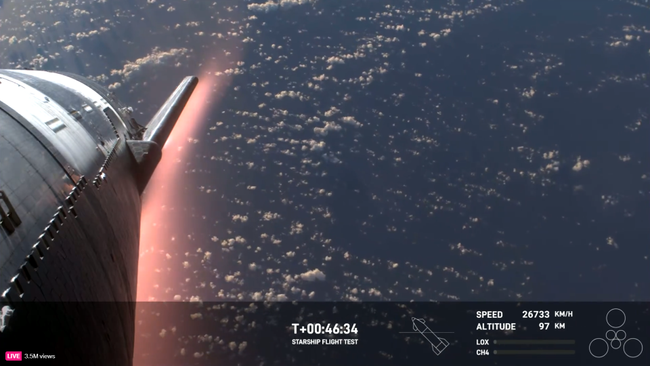
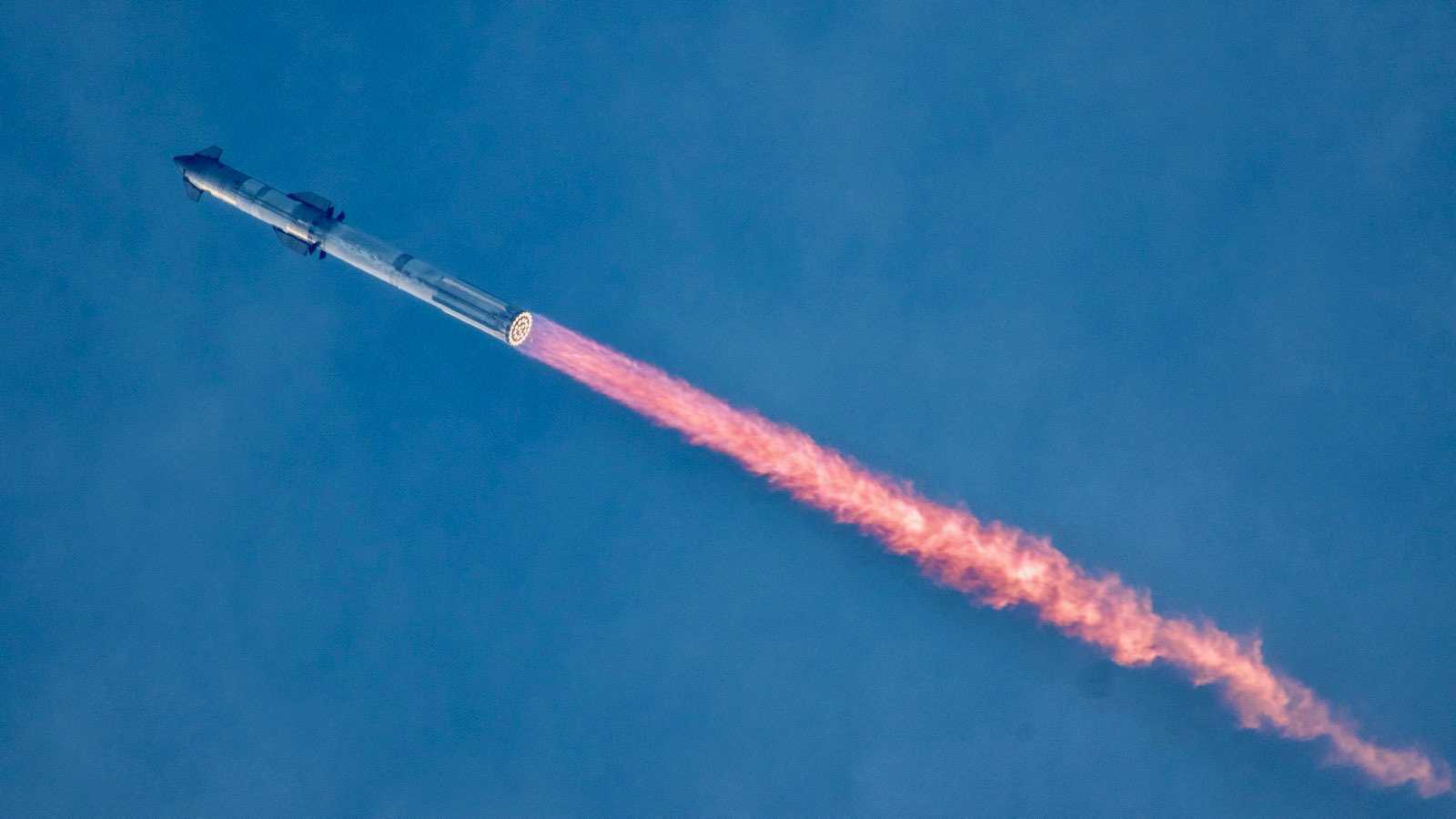
Plasma starts to form around the Starship’s thermal protection system as the vehicle starts to re-enter the denser part of Earth’s atmosphere, March 14th, 2024. Credit: SpaceX

Thursday, March 14th, 2024 saw SpaceX attempt the third Integrated Flight Test (IFT-3) of its massive Starship / Super Heavy launch system after the Federal Aviation Administration (FAA) granted a limited launch license to the company on March 13th.

Despite SpaceX and its followers hailing the first two launch attempts as “successes”, the short-order loss of both vehicles within 4 minutes of the launch of IFT-1 and which either vehicle achieving its core milestones in IFT-2, meant that both of those flights were extremely limited in their “success”. As a result of both, SpaceX spent considerable time reviewing the launch profile for the vehicles and making changes and improvement to both the Starship craft and Super Heavy. These resulted in IFT-3 being a broadly successful – although the loss of both vehicles at different points in the flight meant it was not an unqualified success.

Following lift-off at 13:25 UTC, with an initially perfect firing of all 33 Raptor engines on the booster, the stack of rocket and starship passed through Max-Q, the period where both experience maximum mechanical stresses as they ascend through the atmosphere, within the first minute of flight.

A clean burn: all 33 Raptors are at work as the IFT Starship / Super Heavy combination move towards Main Engine Cuto-Off (MECO). Credit: SpaceX

Even so, at 2:42 into the flight, the engines on the booster shut down and two seconds later, the starship upper stage ignited all six of its engines in a “hot staging” manoeuvre, separating from the booster after the engines had fired. This went a lot smoother than evidenced in the second launch attempt in November 2023, and the booster was this time able to change direction and execute an successful “boost back” burn – using the motors to kill its ascent velocity and push it back towards the launch site.

However, it was during the boost-back that possible hints of engine issues appeared: several of those recording and reporting on the launch noted that some of the engine exhaust plumes were tinged green, indicative of one or more engines consuming itself (green indicates the copper used in the engines is being consumed), a long-term issue with the Raptor 2. Nevertheless, the booster successfully re-oriented itself and started a planned engine-first descent towards the Gulf of Mexico and a splashdown.

For this to happen, the booster needed to slow itself by a further re-lighting several engines in a braking manoeuvre roughly a kilometres above the water. Whilst three engines did ignite, two immediately failed, and the vehicle was destroyed less than 500 metres above the Gulf – although it is not clear if the flight termination system was triggered or the booster blew itself apart. At the time of destruction, it was travelling with sufficient velocity to hit the water at 1,112 km/h.

A successful hot staging: with the super Heavy booster engines still glowing brightly, the Starship vehicle separates and moves away, the shockwaves of its exhaust ringing both vehicles after a successful engine start-up while still attached to the booster. Credit: SpaceX

Starship went on to achieve orbit, on course for a splashdown in the Indian Ocean. Travelling at around 240 km above the Earth, the vehicle carried out a test of the “Pez dispenser” payload bay door – a slot in the vehicle’s hull at the base of the payload bay and specifically designed to eject Starlink satellites (these being almost the only payload for Starship at present). Also tested was a so-called “propellant transfer” test, shunting a small amount of liquid oxygen between the vehicles’ main and header tanks.

However, SpaceX cancelled the vehicle’s planned de-orbit burn with one of its Raptor engines and instead allowed the vehicle to “go long”, continuing along its orbital track until gravity until drag caused it to re-enter the  denser part of the atmosphere for a hoped-for splashdown. In the event, and following an initially very successful re-entry, the vehicle broke apart at an altitude of around 65 km.

The orbital flight segment of the test was impressive whilst also raising questions as to Starship’s future orbital flight dynamics. Notably, throughout its half orbit of the Earth, the Starship was in a state of continuous “bbq roll”, that is, spinning around its longitudinal axis (and making it seem like the Earth was constantly looping around it on videos). Such rolls are not uncommon on space vehicles when in sunlight, as they help spread the thermal load of the Sun’s heat over the vehicle’s outer skin, preventing uneven heating (or overheating).

In the first few seconds of flight: not the white ice enveloping the Super Heavy booster and the back of Starship -the result of the hulls of both forming the outer walls of their cryogenic tanks and being so cold frost ice forms on the metal, indicative of its poor thermal regulation. Credit: SpaceX

In this respect, Starship is especially vulnerable to such thermal stresses: it is completely reliant on cryogenic propellants which tend to revert to a gaseous state (and require venting to prevent tanks being over-stressed), and it is made of stainless steel, and extremely poor thermal insulator. This is compounded by the fact that the hull of the vehicle is also the the outer surface of the propellant tanks, so outside of the thermal protection system (TPS) tiles coating one side of the vehicle and designed to protect it during re-entry in to Earth’s atmosphere, there is next to no thermal insultation between the vehicle’s propellant reserved and the Sun, thus leaving rolling the vehicle as the simplest means of regulating internal temperatures.

Even so, the rate of roll, combined with its continuous does raise questions: was the rolling seen on this flight simply an overly precautious desire to limit thermal blooming inside the vehicle, or will it be part of starship SOP in the future. If the latter, then there are going to be some significant issues to address (how are to starships supposed to pump propellants being them in they have to roll like this once mated and the fuel to be transferred from one to the other is being exposed to a severe Coriolis effect as a result of the spin? Was the spin in this instance the cause of the planned de-orbit burn being cancelled because a smooth flow of propellants to the motor to be fired could not be guaranteed?

That said, the vehicle did perform its own mini “propellant transfer”, pumping a small amount of liquid oxygen between its own tanks. However, the overall value of this test is perhaps not as significant as some SpaceX fans have stated, given it is a long way short of the 100+ tonnes of propellants at a time that will need to be transferred between vehicles when it comes to sending the proposed Starship lunar lander to the Moon .

But leaving such thoughts aside, the one undoubted spectacular element in the flight were the initial phases of re-entry into the denser atmosphere, when cameras mounted on the vehicle’s control surfaces were able to video the build-up of super-heated plasma around the craft as it slammed into the atmosphere. While this has been filmed from within various space vehicles (Apollo, shuttle, etc.), this is the first time (I believe) it has ever been recorded from outside the vehicle going through re-entry.

Another unique element of the vehicle demonstrated prior to re-entry was the use of vented gas as a means of controlling the vehicle’s orientation. As noted above, cryogenic fuels tend to “boil off” and turn gaseous unless kept perfectly chilled. This gas must then be vented in order to prevent it becoming too voluminous and rupturing its containment tank (hence why rockets using cryogenic fuels are constantly venting gasses prior to launch following propellant loading & then having to be constantly “topped off”). However, rather than just letting go of this gas in space as they do on the ground, SpaceX channel it through a series of “cold thrusters” around the starship vehicle, enabling them to use the vented gas to “steer” the vehicle, avoiding the need for more traditional (and mass-using) thrusters systems requiring their own tanks of hypergolic propellants or gas.

While overall successful, the loss of both vehicles does mean a mishap investigation overseen by the FAA has been triggered, which may delay the planned launch of another test flight originally targeted for just a few weeks time. Even so, SpaceX are to be congratulated with the results overall, carrying the company as they do a modest step forward in the system’s development.

Continue reading “Space Sunday: starships, volcanoes and Voyagers”

Space Sunday: Earth and Moons

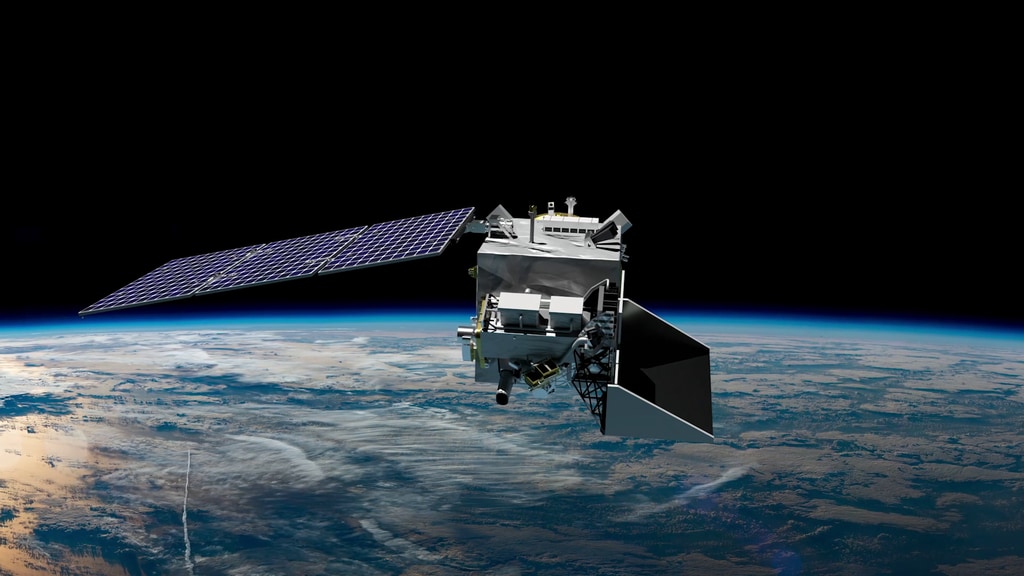
An artist’s rendering of the PACE Earth observation platform in orbit. Credit: NASA

On Thursday, February 10th, 2024, NASA launched a critical Earth observation satellite intended to study the world’s oceans and atmosphere in the face of increasing climate change.

PACE – the Plankton, Aerosol, Cloud, ocean Ecosystem remote sensing platform – is designed to operate in a geocentric, near-polar Sun-synchronous orbit, allowing it to observe all of Earth’s atmosphere and oceans over time. In doing so, it will study how the ocean and atmosphere exchange carbon dioxide and how microscopic particles (aerosols) in our atmosphere might fuel phytoplankton growth in the ocean. The data it accumulates will be used to identify the extent and duration of harmful algae blooms and extend NASA’s long-term observations of our changing climate.

Referred to as autotrophic (self-feeding), phytoplankton are present in both oceanic and freshwater ecosystems and play a key role in sustaining them – and in managing the planet’s carbon dioxide absorption and oxygen production. With the former, phytoplankton absorb carbon dioxide from the atmosphere and convert it into their cellular material, serving as the base of the global aquatic food web, a critical resource for countless species – including humans. In terms of the latter, phytoplankton are responsible for around half the planet’s natural oxygen production despite being around just 1% of the global plant biomass.

Phytoplankton can be imaged in a range of wavelengths (visible light, infra-red, ultraviolet, etc.), allowing colours to be used to assess their bloom size, drift, health, etc. In this 2016 image captured by the Visible Infrared Imaging Radiometer Suite (VIIRS) on the Suomi NPP satellite, the Southern Ocean phytoplankton bloom extending outwards from either side of the South American continent and down to the Antarctic Peninsula is clearly visible. Credit: NASA

Occupying the photic zone of oceans, where photosynthesis is possible, phytoplankton are crucially dependent on large quantities of nutrients, including nitrate, phosphate or silicic acid, iron, and also large amount of vitamin B. The availability of these nutrients is governed by a range of factors: the so-called ocean carbon biological pump; nutrients delivered into the photic zone via freshwater sources emptying into the oceans, natural organic decay, etc.

Both anthropogenic global warming and pollution are particularly harmful to phytoplankton; the former can lead to both changes in the vertical stratification of the water column and the supply of nutrients vital to phytoplankton. Similarly, increased acidity within ocean waters and currents can also adversely affect phytoplankton, up to an including causing biochemical and physical changes. In this, the colour changes exhibited by phytoplankton are considered important indicators of estuarine and coastal ecological condition and health.

Thus, the study of the global distribution and health of phytoplankton communities could profoundly advance our knowledge of the ocean’s role in the climate cycle, whilst at the same time providing real-time data on the negative effects of coastal and deep-water pollution and the impact of climate change and increasing temperatures on the world’s aquatic ecosystem.

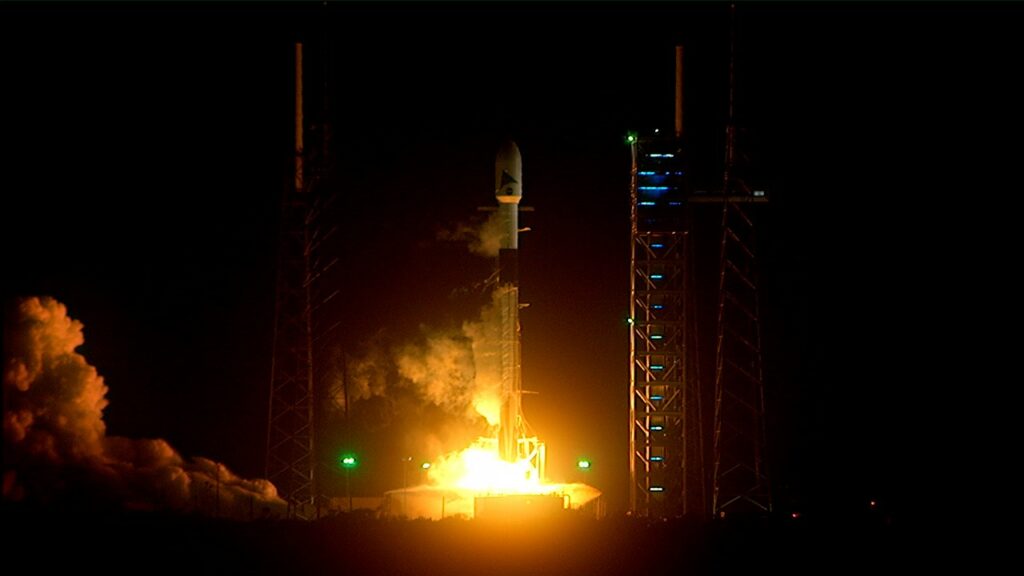
A SpaceX Falcon 9 rocket lifts-off from Cape Canaveral Space Force Station, Florida, carrying NASA’ PACE platform up to orbit. Credit: SpaceX

In this, PACE will operate in unison with the French-American Surface Water and Ocean Topography (SWOT) mission. Launched in 2022, SWOT is designed to make the first global survey of the Earth’s surface water, to observe the fine details of the ocean surface topography, and to measure how terrestrial surface water bodies change over time to allow a more complete picture of the impact of anthropogenic global warming and pollution on the planet’s aquatic biodiversity and life-giving water cycle.

“Death Star” Moon’s Underground Ocean

We’re becoming increasingly familiar with the solar system being potentially full of so-called “water worlds” – bodies that may be home to vast subsurface oceans. Jupiter’s Europa and Saturn’s Enceladus are perhaps the most well-known, with both showing visible signs of water vapour escaping in geyser plumes through cracks in their surfaces. However, there are other bodies scattered around the solar system where water could be present beneath their surfaces, if not in liquid form, then at least in either a semi-liquid icy slush or solid ice.

Now a team of French-led scientists believe they have another candidate for holding a sub-surface ocean: Saturn’s moon Mimas.

Mimas, moon of Saturn, compared roughly to scale to the original Death Star and from a similar viewing angle, helping to show why it is often compared to the fictional battle station. Credit: Jason Major

This tiny moon – officially designated Saturn I – is the smallest astronomical body yet found in our solar system known to be roughly rounded in shape due to its own gravity. However, Mimas – with a mean diameter of 396.4 km – is perhaps most famous for resembling the fictional Death Stars of the Star Wars franchise.  This is because one face of the moon is dominated by a huge, shallow impact crater 139 kilometres across, which has an almost sinister resemblance to the depression housing the primary weapon found on the fictional doomsday space vehicle.

Discovered in 1789 by William Herschel – after whom the distinctive crater is named – Mimas is responsible for one of the largest gaps in Saturn’s complex ring system, the Cassini Division, and had long be thought to be primarily made up of water ice rather than rock, simply because of its relatively low density (1.15 g/cm³).

However, the research team, using data gathered by the NASA / ESA Cassini mission which studied Saturn and its complex system of moons and rings between July 1st, 2004 and September 15th, 2017 (Space Sunday: Cassini – a journey’s end), believe that Mimas most likely has a watery ocean which exists at around the freezing point of water where it is closest to the moon’s surface, whilst potentially being several degrees warmer at the sea floor.

“That’s no moon… No, wait – yes it is!” – Mimas (lower left) shown to scale with the Moon (upper left) and Earth. Credit: unknown.

Building models to account for the moon’s mass and motion, and which also incorporate data on potential core warming and tidal flexing due to the influence of Saturn and other bodies orbiting the planet, the research team concluded that it is likely the ocean on Mimas accounts for around 50% of its total volume, and reach up to around 30 or 20 km below the moon’s crust. This would put the total amount of water within the moon at around 1.2%-1.4% that of all the Earth’s oceans; a not inconsiderable volume, given Mimas’ tiny size.

What has excited planetary astronomers the most, though, is the suggestion that this ocean might only be around 15 million years old – too young to have influenced the moon’s surface, but old enough that – assuming the conditions within it were right – it might actually be home to basic life still in the earliest stages of development; not that actually studying that life would be in any way easy (if at all possible). Even so, Mimas has possibly revealed that even the tiniest bodies in our solar system, if given the right circumstances, could be home to bodies of liquid water and perhaps to the basics of life.

Second CLPS Lunar Mission Set for Valentine’s Day Launch

The second private mission to fly to the Moon under NASA’s Commercial Lunar Payload Services (CLPS) programme is set to launch on February 14th, 2024.

The 675 kg IM-1 lander, also known as a Nova-C lander and christened Odysseus by its makers, has been built by Intuitive Machines, a Texas-based start-up. It had originally been scheduled to be the first lunar lander to be launched under the CLPS programme, in October 2021. However, a series of slippages – one of which one of the losing parties (Deep Space Systems) for the CLPS contract unsuccessfully challenging the US $77 million award – led to the mission being pushed back several times, enabling the recent Astrobotic Peregrine Mission One to claim the title of the first successful CLPS mission launch (January 8th, 2024 and the maiden flight of the ULA Vulcan Centaur rocket).

Intuitive Machines’ IM-1 lunar lander Odysseus undergoing testing. The vehicle is due to launch on February 14t, 2024. Credit: Intuitive Machines

Intuitive machines, who will be using a SpaceX Falcon 9 rocket as their launch vehicle, are hoping for a better result than that of Astrobotic – as I reported at the time, whilst the launch of the latter mission was successful, the lander suffered a malfunction and never reached the Moon, instead eventually re-entering Earth’s atmosphere and burning up.

Odysseus will be carrying 12 payloads to the Moon – six provided by NASA and 6 privately-funded. Included in the latter are sculptures by artist Jeff Koons entitled Moon Phases, and are tied to his first foray into the rabbit hole of NFTs (and in the process potentially furthering his critics’ view that his work could be considered little more than cynical self-merchandising). However, its sculptures will form the first set of sculptures to reach the Moon since 1971, when Apollo 15 astronaut David Scott placed the 9-cm tall Fallen Astronaut by Belgian artist Paul Van Hoeydonck on the Moon alongside a plaque commemorating the astronauts and cosmonauts who have lost their lives in space missions up until that time.

Also aboard the lander is a system called EagleCAM, a camera system designed to gain the first ever “third-person” images of a vehicle landing on the Moon. It will attempt to achieve this by being ejected from the lander when it is 30 metres above the lunar surface. Falling ahead of the lander, it is hoped EagleCAM will arrive on the Moon in such a way that one of his lens will be pointing at the landing site, allowing it to record Odysseus’ arrival. Any images it does capture will be transmitted to the lander via a wi-fi connection for transfer to Earth.

Thew utterly unassuming EagleCAM by Embry-Riddle University. Credit: ERU

The NASA instruments include a laser retro-reflector array (LRA), designed to provide precise measurements of the distance between the Earth and the Moon using lasers fired from Earth. Six LRAs were left on the Moon by the Apollo missions, and three more have been placed by the two Soviet Lunokhod rover missions of the 1970s, and one by the Indian Vikram lander in 2023.

The lander also carries the Lunar Node-1 (LN-1) prototype for a radio navigation system NASA hopes to utilise on the Moon for precise geolocation (or should that be selenolocation?) and navigation. The idea is that every unit on the Moon – base camps, rovers, astronauts, landers – and incoming vehicles – will have such beacons, and will be able to use the signals from multiple beacons to precisely confirm their position relative to one another. In theory, such a system would allow an automated lander make a precise landing wherever it was required, or allow two rovers to rendezvous with one another without the need for mission controller Earthside to direct them. LN-1 would therefore provide a local radio navigation system, one of several options for surface vehicle and lander navigation being investigated by NASA.

Following its launch at 05:57 UTC on February 14th, Odysseus will make a 5-day cruise to the Moon and has a provisional landing date of February 19th, 2024. It is due to land at Malapert A, an impact crater near the southern limb of the Moon and once on the surface, it is expected to operate for some 14 days – as long as the Sun is above the horizon to provide it with energy.

The total cost of the mission to NASA has been US $118 million, including some US $40 million towards launch and operation costs associated with the Falcon 9 rocket.

Welcome to Volcano Central: A Stunning View of Io

On December 30th, 2023, the NASA Juno spacecraft (of the mission of the same name), which has been orbiting Jupiter since July 2016, returning a huge amount of data and images of the solar system’s largest planet and its retinue of moons, made its closest approach to Io, the most volcanically active place in the solar system.

At that time, the orbiter passed over the north hemisphere of Io at a distance of 1,500 km. In February 2024, the spacecraft made a second pass over Io, this time over the moon’s southern hemisphere, and these two passes have allowed the production of the sharpest images of the moon ever seen to date.

At the innermost of the four large Galilean Moons of Jupiter, Io is very slightly larger than our Moon, and has the highest density of any moon in the solar system. With some 400 active volcanoes being recorded on its surface, it is not only the most volcanically active place in the solar system – it is the most geologically active, courtesy of its surface being almost constantly re-shaped by volcanic outflows.

The cause on all this volcanism is primarily because Io is constantly being tidally flexed: on the one side, it has massive Jupiter pulling away at it and its molten core. On the other, it has the three other Galilean moons, each of which exerts its own pull on Io, and all of which periodically combine their forces to counter Jupiter. In addition, Io sits well inside Jupiter’s immensely powerful magnetic field, which also imposes tidal forces on the moon’s core, further causing it to flex and generate heat and energy.

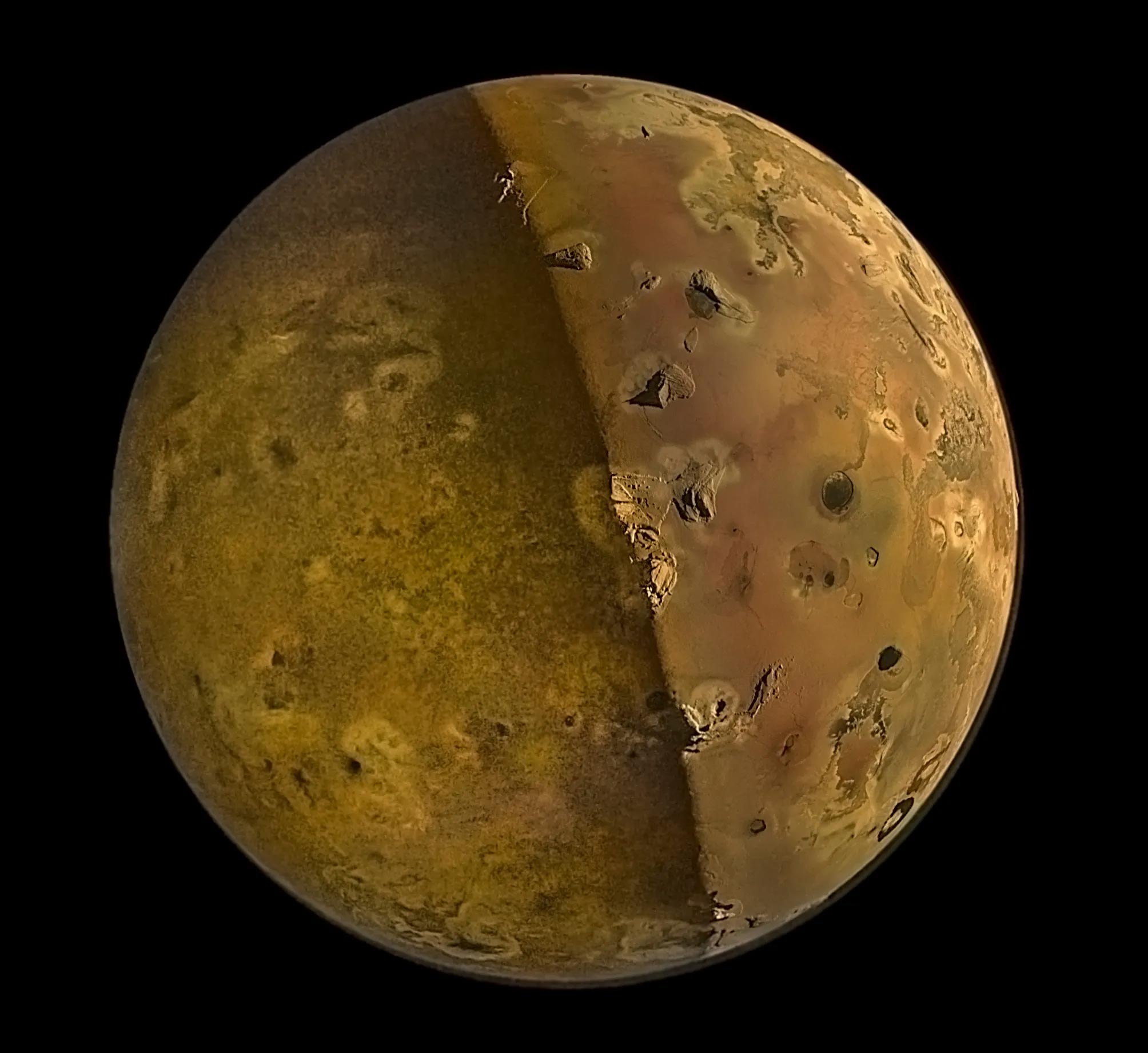
Jupiter’s moon Io, its night side (left) illuminated by reflected sunlight from Jupiter, or “Jupitershine.” Credits: original image data via NASA/JPL / MSSS. Image processing and image production: Emma Wälimäki

The images from the two recent passes over Io by Juno have been combined into a single true-colour mosaic, with the moon almost equally lit on two sides by direct sunlight and sunlight reflected onto it by Jupiter’s nearby bulk. The result is an image stunning in its clarity and depth of detail.

Many of Io’s volcanoes are visible, with at least one puffing out a plume of ejecta. On the sunward side of the moon (to the right) the light of the Sun is sufficient to reveal the moon’s hazy, mineral-rich atmosphere, whilst large parts of the surface appear bland and smooth due to the outflow of lava from multiple eruptions, and upon which volcanic island appear to be dotted.

A further impressive aspect of this image is that it was not created by NASA or anyone at Malin Space Science Systems (MSSS), who made and manage the mission’s JunoCAM imager. Instead, it was pieced together and processed by citizen-scientist Emma Wälimäki, using raw Juno images presented by NASA for public consumption, as a part of her involvement in the NASA citizen-science programme.

Space Sunday: looking at 2024

A computer-generated image of NASA’s Artemis 2 mission about to depart Earth orbit for its loop about the Moon – one of the major space missions targeting 2024. Credit: NASA / Liam Yanulis

With the ending of a year comes the start of another and with it an opportunity to take a look at some of what I consider to be the notable space events of 2024.

Space Missions

India

2024 is scheduled to get off the pad with the January 1st launch of the India Space Research Organisation’s (ISRO)  X-ray Polarimeter Satellite (XPoSat), another ambitious mission designed to further demonstrate India’s ability to stand alongside the likes of the United States, China an the European Space Agency at the forefront of space science.

ISRO’s XPoSat with solar panels furled, undergoing ground-based systems testing. Credit: ISRO

XPoSat’s 5-year primary mission lifespan of 5 years is to study cosmic ray polarisation by observing the 50 brightest known sources in the universe, including pulsarsblack hole X-ray binariesactive galactic nucleineutron stars and non-thermal supernova remnants using its two primary instruments. Studying how radiation is polarised gives away the nature of its source, including the strength and distribution of its magnetic fields and the nature of other radiation around it.

January 7th should see India’s Aditya-L1 solar observatory, launched in September 2023, enter its operational halo orbit at the L1 Lagrange Point, located between the Earth and Sun at some 1.5 million kilometres from Earth. Once in place, it will spend an initial 5 years carrying out continuous observations of the solar atmosphere and study solar magnetic storms as they develop, together with their impact on the environment around the Earth.

In February, the most expensive Earth observation satellite should launch. The NASA-ISRO Synthetic Aperture Radar (NISAR) is intended to observe and understand natural processes on Earth, and will be able to observe both of the planet’s hemispheres over a period of at least 3 years. Intended to measure some of the planet’s most complex natural processes, including ecosystem disturbances, ice-sheet collapse, and natural hazards such as earthquakes, tsunamis, volcanoes and landslides, NISAR data will be made globally available within days of it being gathered – or in near-real time should it detect any natural disaster, so that agencies and organisations responsible for disaster relief might use the information in their planning and operations.

Also scheduled for the first quarter of 2024 is the first uncrewed test flight of India’s Gaganyaan space vehicle. Designed to carry crews of two or three into orbit, the capsule and its service / propulsion module, will be capable of spending up to 7 days at a time in orbit, and is the formative part of an ambitious programme to establish a national space station in orbit and send crews to the lunar surface.

A screen capture of Vyommitra, obtained during a telecon organised by ISRO featuring the robot responding to prompts. Credit: ISRO

Depending upon its outcome, the fully automated, 2-day Gaganyaan-1 mission could be followed before the end of the year by two further test flights, at least one (if not both) will include Vyommitra (from Sanskrit: vyoma, “space” and mitra, “friend”), a complex robot in the form of a female human upper body.

Initially intended to assess the effects of g-forces and weightlessness on humans flying in Gaganyaan, Vyommitra could in fact play an active role in crewed flights as well in place of a third person. It is not only programmed to speak Hindi and English, recognise various humans and respond to them, it can perform multiple mission-related tasks, including environment control and life support systems functions, handle switch panel operations, and give environmental air pressure change warnings.

Once the 3 uncrewed flights have been completed, the first crewed flight of Gaganyaan is set to occur in 2025, and if successful will mark India as only the fourth nation in the world to independently fly crews to orbit after Russia, the United States and China.

Finally (for this article that is – India has a number of other missions planned for 2024), at the end of the year, ISRO should launch their Venus Orbiter Mission, unofficially known as Shukrayaan (from the Sanskrit for Venus, “Shukra”, and yāna, craft”/ “vehicle”). Intended to study the atmosphere and surface of Venus, the mission will include an “aerobot” balloon it will release into the Venusian atmosphere.

United States – NASA

NASA obviously has a lot going on all the time, so the following really is an abbreviated “highlights” list.

In February, the remarkable Juno vehicle will complete the second of 2 extremely close approaches (both to 1,500 km) to Jupiter’s innermost Galilean moon, Io. These very close flybys (the first having occurred on December 30th, 2023) allow the probe to observe the most volcanically active place in the solar system in extraordinary detail, with the February flyby also allowing the spacecraft to reduce its orbital period around Jupiter and its moons to just 33 days.

Another mission to Jupiter will commence in 2024, with the October launch of NASA’s Europa Clipper at the start of a 5.5 year cruise out from Earth to Jupiter, with assistance from Mars and Earth (in that order) to get there. Once in orbit about Jupiter in 2030, the mission will commence a 4-year primary study of the icy moon of Europa to help scientists better characterise the moon, including the potential for it have an extensive liquid water ocean under its icy crust.

A rendering of the Europa Clipper vehicle. Credit: NASA/JPL

In terms of NASA’s human spaceflight operations and ambitions, 2024 should see three landmark flights:

  • April 2024 should see the first test flight of Dream Chaser Cargo to the International Space Station (ISS). An automated space plane which is launched via rocket (generally the ULA Vulcan Centaur) but lands like a conventional aircraft, Dream Chaser is intended to deliver up to 5.5 tonnes of cargo (pressurised and unpressurised) to the ISS, although for this first flight, the Dream chaser Tenacity will be limited to 3.5 tonnes. The flight will be the first of at least six the Dream Chaser system will make in support of ISS operations through until 2030, carrying both supplies to, and equipment and experiments from, the space station.
  • April 2024 should also see the long-overdue Crewed Flight Test (CFT) of Boeing’s CST-100 Starliner to the ISS. The eight-day mission is due to see test pilots Butch Wilmore and Suni Williams fly the reusable capsule to a rendezvous and docking with the space station. If successful, the mission will clear the way for operational flights of the Starliner vehicles carrying around 4 people at a time to the ISS from 2025 onwards.
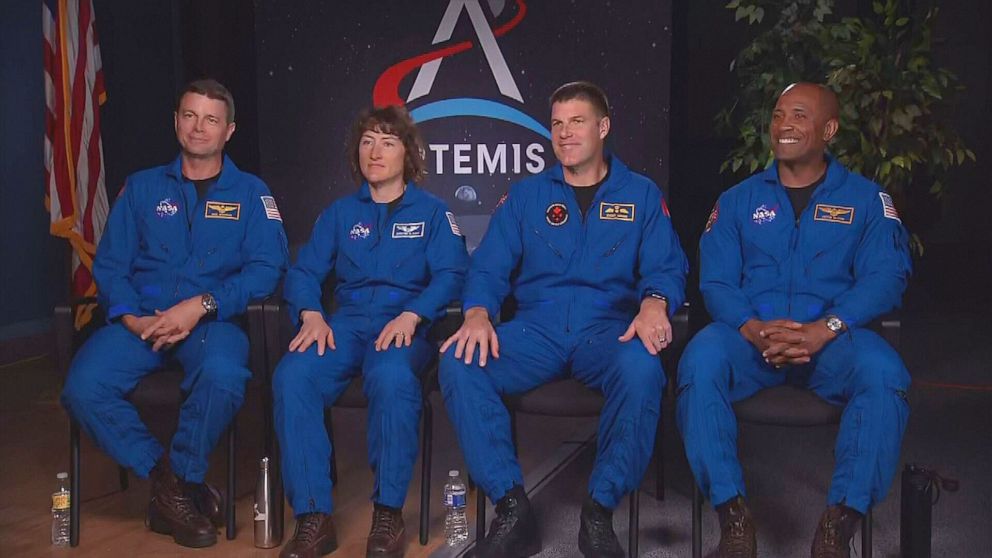
  • Artemis-2 . Targeting an end-of-year launch, this mission – officially referred to Artemis Exploration Mission 2 (EM-2) will return humans to the vicinity of the Moon for the first time since 1972 and Apollo 17. Utilising the third Orion Multi-Purpose Crew Vehicle (MPCV), Orion CM-003, the 10-day mission will see the four-person crew of Americans Reid Wiseman, Victor Glover, Christina Koch and Canadian Jeremy Hansen launched on a flight that will loop them around the Moon, with Glover and Koch respectively becoming the first person of colour and first woman to fly in space beyond low Earth orbit. The focus of the mission is to carry out multiple tests of the vehicle in preparation for the commencement of missions to return humans to the surface of the Moon with Artemis 3, officially targeting at end of 2025 launch date, but more realistically slated to fly no earlier than early-to-mid 2026.
The Artemis EM-2 crew (l to r): Commander Reid Wiseman (USA); Mission Specialist 1 Christina Koch (USA); Orion Capsule Pilot Victor Glover USA); Mission Specialist 2 Jeremy Hansen (Canada). Credit: ABC News

The US, with the largest share of the commercial spaceflight market will also see numerous private venture missions – some in support of NASA’s lunar exploration ambitions – take place. For me, the most notable commercial flights taking place in 2024 are:

  • January 8th, 2024: the maiden flight of the Vulcan Centaur rocket. The new workhorse launch vehicle for United Launch Alliance (ULA), this first flight will hopefully see the much-delayed launcher send the Peregrine Lander to the Moon. Also a private development (by Astrobiotic Technologies) the Peregrine Mission One has been funded under NASA’s Commercial Lunar Payload services (CLPS) programme to deliver science and technology payloads to the Moon. If successful, the launch should be the first of 7 Vulcan Centaur launches for the year on behalf of NASA, the US military and commercial customers.
  • August 2024: the maiden flight of Blue Origin’s heavy lift launcher, New Glenn. With a first stage designed to be reused up to 10 times, New Glenn is intended to be Blue Origin’s entry into commercial and government-funded space launch operations, capable of delivering large payloads to a range of orbits around Earth and sending them into deep space. For its first flight, New Glenn will be responsible for sending NASA’s EscaPADE (Escape and Plasma Acceleration and Dynamics Explorers) orbiters to Mars.
  • Starship IFT-3: the third attempt by SpaceX to achieve a semi-orbit around Earth with their controversial-come-questionable Starship / Super Heavy launches combination. The exact date for the attempt is unknown given the on-going investigation into the failure of the second integrated flight test and the further loss of both vehicles.
  • Polaris Dawn: the first in a trio of privately-funded crewed orbital missions utilising the tried and trusted SpaceX Crew Dragon. Spearheaded by billionaire Jared Isaacman (who funded and flew the Inspiration4 flight in September 2021), the mission will feature Isaacman and three others – form USAF fighter pilot Scott “Kidd” Poteet and SpaceX employees Sarah Gillis and Anna Menon – none of whom are professional astronauts. As will as carrying out a range of experiments and raising money for St. Jude’s Children’s Research Hospital in Memphis, Tennessee, the mission will attempt to set to records: become the highest Earth-orbiting crewed spaceflight to date (1,400 km above the Earth) and perform the first ever commercial spacewalks, utilising EVA suits designed and developed by SpaceX.

European Space Agency

The European Space Agency hopes to finally launch its Ariane 6 booster on its maiden flight around the middle of the year. Another launcher development programme that has had its share of issues, Ariane 6 is intended to replace the already retired Ariane 5 as ESA’s workhorse medium-to-heavy lift carrier, capable of achieving all of the common Earth orbits with payloads of up to 21.6 tonnes (LEO) and able to lob up to 8.6 tonnes into a lunar transfer orbit (LTO). The maiden flight will see the vehicle hopefully deliver an international mix of government and private missions to LEO in a rideshare arrangement, and will be followed by a French space agency / defence agency mission before the end of the year.

An artist’s impression of ESA’s Hera spacecraft studying the 170-metre across Dimophos asteroid, with its two cubesats called Milani and Juventas on their way to attempt soft landings on the asteroid. Credit: ESA

Later in 2024, ESA will utilise a SpaceX Falcon 9 booster to send its Hera spacecraft to rendezvous with the binary asteroids Didymos and Dimorphos, which it is scheduled to do in December 2026, 26 months after launch. Once there, Hera’s primary focus of study will Dimorphos, the target of NASA’s DART Impactor mission, which slammed into it in September 2022 in an attempt to assess the theory of kinetic impact as a means to deflect an asteroid on a collision course with Earth. As well as examining the physical aftermath of DART’s impact on Dimorphos, Hera will attempt to characterise both asteroids in detail, land two cubesats – Milani and Juventas on Dimorphos before itself attempting a landing on Didymos at the end of its mission.

2024 will also see the launch of the joint ESA-JAXA (Japan Aerospace Exploration Agency) EarthCARE (Cloud, Aerosol and Radiation Explorer) mission, designed to investigate the role that clouds and aerosols play in reflecting incident solar radiation back into space and trapping the infrared radiation emitted from Earth’s surface to better understand the evolution of Earth’s temperature.

Continue reading “Space Sunday: looking at 2024”

Space Sunday: cat videos from space and images of a cold world

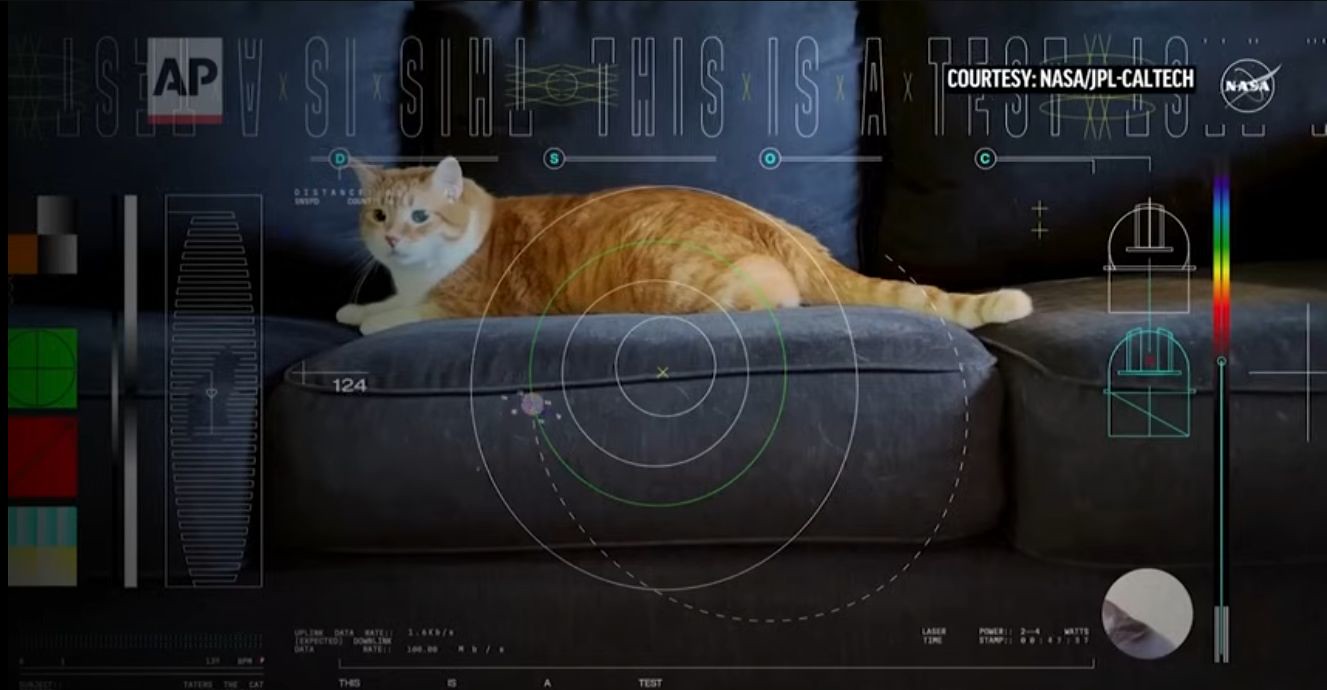
Credit: NASA/JPL via Associated Press

For 60 years, NASA’s Deep Space Network (DSN) has been the means by which the agency has maintained contact with every mission it has sent beyond Earth’s orbit. As missions have become more and more sophisticated, so has the amount of data flowing to and from the DSN’s three major ground stations – one in California, one in Spain, and one in Australia, and so positioned so that between them they provide a full 360O coverage of space around Earth – has increased.

While the DSN does work in cooperation with similar facilities operated by other nations – notably the Japanese Deep Space Network and EASTRACK , the European Space Agency’s network – NASA has been facing practical limits on how much data the DSN can send and receive – even allowing for past moves to higher bandwidth radio transmissions to increase data flow volumes – without increasing the number, size and power of the radio dishes the network has at its disposal; something which would be a long and costly process to put in place.

So instead, the agency is now moving to laser-based optical communications. some of these have been trialled with communications between Earth and orbiting satellites and the International Space Station, but a new system currently in development called DSOC (“dee-sock”), for Deep Space Optical Communications, now promises to revolutionise NASA’s deep space communications.

I first mentioned DSOC back in October 2023 when covering the launch of the Psyche mission to send a robotic vehicle to study the asteroid 16 Psyche (see: Space Sunday: Psyche and an eclipse). As I noted in that piece, the mission spacecraft – also called Psyche, carries a proof-of-concept DSOC system for communicating with Earth, and that system would be tested during – and possibly well beyond – the first twelve month’s of the vehicle’s outward flight from Earth.

Optical communications are of extreme importance for deep space missions for a number of reasons. First and foremost, that allow for the use of much greater bandwidths, allowing a greater volume of data to be transmitted in the same time as used for conventional radio transmissions. Secondly, the tight focus of optical transmissions removes a lot of the signal attenuation experienced by radio frequency transmissions, whilst also increasing overall signal strength and security. Finally, optical systems don’t require large receiving dishes, etc., and so can be far more compact and lighter than radio systems, allowing spacecraft mass to be reduced.

The Psyche mission’s route to asteroid 16-Psyche, going by way of a Mars gravity assist (2026). The dotted lines show the two main periods for testing DSOC. Credit: NASA

Testing of the Pysche mission’s DSOC proof-of-concept system recently started, and on December 22nd, 2023, it achieved a significant milestone by transmitting a pre-recorded 15-second high-definition video from the spacecraft to the Hale Telescope operated by the Palomar Observatory. On receipt, Palomar transmitted the video to to NASA’s Jet Propulsion Laboratory, Pasadena, where it was played in real time on the Internet. Transmitted across a distance of 31 million kilometres, the video was sent at a rate of 267 Mbps and took 101 seconds to reach Earth in its entirety.

And of course, being a video destined to be seen on the Internet, its subject was that of a cat; specifically a tabby called Taters, who was being entertained with a laser pointer toy.

Despite the light-hearted nature of the test, it underscores the potential for DSOC capabilities in future space missions. It shows that not only does the laser-based system transmit and receive far more data than can be achieved through conventional radio link in the same time period, it has the potential to bring “real time” (allowing for the  inevitable lag on transmission times) video to things like rover missions on Mars, allowing mission planners and vehicle drivers to see terrain, etc., with greater continuity and clarity and faster than can be achieved through the recording, transmission, receipt and stitching together of multiple still images.

When it comes to human missions into deep space, capabilities like DSOC could become invaluable in helping crews on Mars (for example) maintain a sense of grater connection to family and friends on Earth simply because of the ability to see and record personal messages in high-definition video. To both these ends, the DSOC tests using the Psyche spacecraft could be extended all the way out to its rendezvous with Mars, allowing engineers to gather precise data on the capabilities and options for enhancing optical communications systems for use with robotic and crewed missions.

JWST Reveals a Dynamic Uranus

Learning aside the prepubescent titters mention of its name tends to give rise two in some quarters, Uranus is one of the most enigmatic planets within our solar system. A gas giant, Uranus is smaller than Saturn, but slightly larger than Neptune. It has mean diameter four times that of Earth, with a mass some 14.5 time greater than that of Earth.

Orbiting the Sun at an average distance of 20AU – 20 times that of the Earth’s average distance from the Sun – Uranus takes 84 terrestrial years to complete a single circuit around our star. To put this in context, it has not even completed three orbits since William Herschel first observed it in 1781 and was able to determine it to be a planet (or possibly – as he originally thought – a comet) rather than dismissing it as just another star, as those before him all the way back as far as Hipparchus had done.

Earth and Uranus to scale. Credit: NASA

But what makes Uranus curious is the fact that it is the only major planet (that is, excluding Pluto and the other dwarf planets) to have an extreme axial tilt – some 82.23º. The exact cause for this isn’t known for certain, but the most common theory is that very early in its history, Uranus was dealt a blow from a body of rock larger than Earth, knocking it over whilst causing the impacting body to break apart.

The upshot of this is a very – by our standards at least – unusual set of circumstances for the planet. These include the fact that in each 84-Earth-year orbit around the Sun, each of Uranus’ poles receives around 42 years of continuous sunlight, followed by 42 years of continuous darkness, and it is during the dozen(ish) terrestrial years of the equinoxes, when the Sun is facing the equator of Uranus, that the planet’s mid-latitudes experience  a period of day–night cycles similar to those seen on most of the other planets. However, despite this – and because of a still-to-be-understand mechanism, the planet’s equatorial regions experience higher temperatures than are seen at its poles.

This mystery is deepened by the fact that Uranus is markedly colder than the other gas giants, but it has a low thermal flux, radiating little to no excess heat. Again, why this should by is unknown. One theory is that that force of the impact – if it was an impact – which tipped the planet over may have cause Uranus’ core to shed all of its primordial heat; another theory is that there may by one or more compositionally different layers within the planet’s mantle which cause convection flows which carry heat so far up towards the outer mantel and its boundary with the atmosphere before pushing the heat back down towards the core before it can be properly expelled.

The most widely-accepted view of the interior of Uranus. Credit: Frederik Beuk

Uranus, with its ring system and 27 known moons, all tilted in the same manner as the planet, has only ever been visited once by a vehicle from Earth, and that was Voyager 2, which came to within 81,500 km of the upper reaches of the planet’s atmosphere on January 24th, 1986 as it swung by the planet en-route to Neptune. At that time, Uranus appeared surprising bland and uninteresting, despite the fact is rotates around its axis once every 17 hours; in fact, the spacecraft only noted 10 features visible in the planet’s atmosphere as it passed, a marked contrast with the likes of Neptune, Saturn and Jupiter.

Since then, Uranus has been observed by the Hubble Space Telescope (HST), which allowed astronomers their first close-up glimpse of the planet’s north polar latitudes. HST’s imaging, largely in the visible and ultra-violet wavelengths did help to reveal a more dynamic thrust to Uranus’ atmospheric mechanisms, whilst further observations in the infra-red suggested that Uranus is every bit as dynamic as its gas giant siblings.

These latter findings have now been added to by the James Webb Space Telescope (JWST), which earlier in 2023 was commanded to turn its huge eye towards Uranus and have a good look. In doing so, JWST was able to image the planet’s slender series of rings – so dark they are hard to discern in the visible spectrum when images by telescopes – and several of the tiny moons which orbit Uranus and help shepherd those rings.

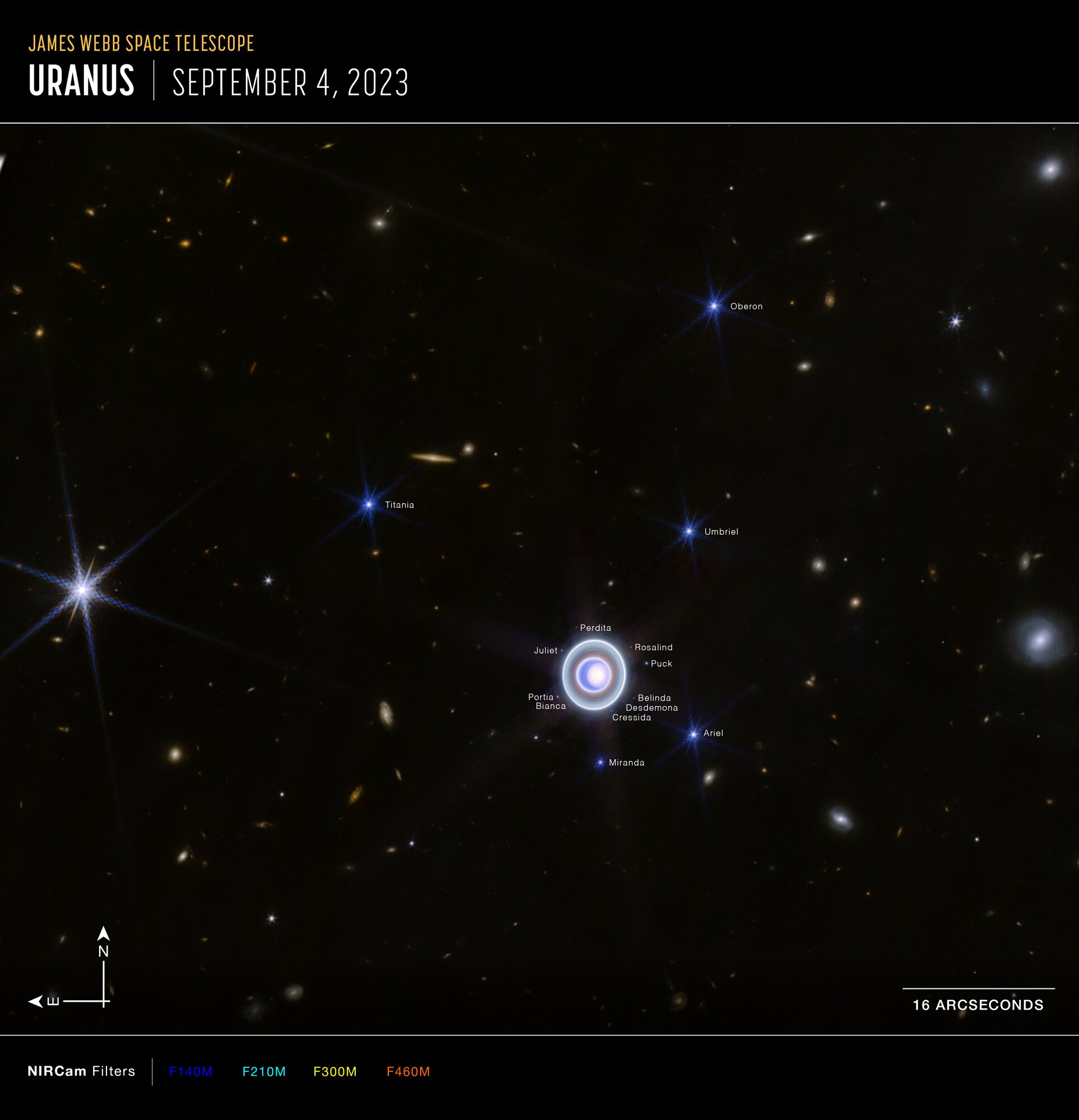
An enlarged image in the infra-red spectrum, as taken by the James Webb Space Telescope, shown the northern hemisphere of Uranus, complete with its ring system and several of its 27 moons (the blue-white dots around the planet and its rings), some of which help “shepherd” the rings and keep them in their position around the planet. These nine moons are (starting upper right, in the 2 o’clock position and progressing clockwise): Rosalind, Puck, Belinda, Desdemona, Cressida, Bianca, Portia, Juliet, and Perdita. Credit: NASA / ESA / CSA / STSci

In particular, Webb was able to capture the elusive Zeta Ring, the closest to the planet and so diffuse it has proven hard to image with any clarity. In addition, JWST caught multiple atmospheric formations, including the planet’s “polar cap”.

This cap – a collection of high-altitude weather formations rather than any ice cap of the type with which we’re familiar – tends to form during the solstices, when one or other the Uranus’ poles is pointing more-or-less directly towards the Sun – in this case, the summer solstice, which reaches its peak in 2028. Observing the development of this cap, as JWST has and will continue to do over the next few years, may help unlock some of the mysteries surrounding the dynamics of the planet’s atmosphere and weather. Beyond the bright disc of the polar region, JWST also imaged cloud formations suggesting both developing and on-going storms, the understanding of which might inform astronomers as to the planet’s heat flow mechanisms.

A wider-field view of Uranus, as captured by JWST in September 2023, with more of the planet’s moons annotated, and several galaxies far beyond our own also visible. Credit: NASA / ESA / CSA / STSci

Gaining a clearer view of the planet’s ring system is important for those who want to send a mission to study the planet and its moons at some point in the future. Interest in doing this is actually fairly high in some quarters, with no fewer than five orbital missions being proposed in just the last 15 years alone. However, having a clearer understanding of the composition and disposition of the Urainian ring system, particularly the inner rings like the Zeta Ring, is seen as vital to the success of any orbital mission.

Thus, Webb’s unparalleled infrared resolution and sensitivity is allowing astronomers to see Uranus its system with unparalleled clarity, helping them to better understand the planet, the challenges any future missions their might face and – perhaps most intriguingly of all – helping them understand how exoplanets which show similarities with Uranus and Neptune may have formed and how they work.

Space Sunday: ISS reaches 25; HST resumes mission

Image of the ISS taken by SpaceX Crew-2 mission on November 8th, 2021 after it successfully undocked from the ISS Harmony module. Credit: NASA

The International Space Station celebrated its 25th anniversary on December 6th, 2023 – the date marking the orbital mating of the first two modules forming the station in 1998.

This operation was undertaken by the US space shuttle Endeavour, commanded by astronaut Robert Cabana. Launched on December 4th, 1998 from Launch Complex 39A at Kennedy Space Centre on STS-88, Endeavour carried the US- built Unity module in its cargo bay. Once in orbit, it started a series of manoeuvres to rendezvous with the 19.3 tonne Zarya Functional Cargo Block (referred to as the FGB, this being the Russian funktsionalno-gruzovoy blok), which had been launched out of Baikonur Cosmodrome Site 81 in Kazakhstan on November 20th, 1998.

As Endeavour approached the Russian module, the shuttle’s robot arm lifted the 11.6 tonne Unity node from its cavernous cargo bay and rotating it so that one of the module’s two Pressurized Mating Adapters (PMA) could be attached to the Orbiter Docking System also located in the shuttle’s cargo bay and connected to the shuttle’s airlock.

On reaching Zarya, Cabana then slowly eased Endeavour so it was paralleling Zarya’s orbital track whilst “below” the Russian module. He then gently manoeuvred the shuttle to within 10 metres of Zarya – close enough for Mission specialist Nancy J. Currie, who had mated Unity to the shuttle’s Docking System, to use the shuttle’s robot arm to “grab” the Russian module and gently mate it with the second PMA on the far end of Unity.

December 6th, 1998. Operated by NASA astronaut Nancy Currie uses the robot arm on the space shuttle Endeavour to gently position the Russian Zarya module over the USS Unity module, anchored against the Shuttle Docking System, in readiness to mate the two. Credit: NASA

EVAs were then conducted by Mission Specialists Jerry Ross and James Newman to connect power and data services between the two modules, and on December 10th, 1998 Cabana and Russian Cosmonaut Sergei Krikalev opened the hatch between the shuttle and the Unity module and entered the latter together as a symbol of US-Russian cooperation, after which members of the shuttle’s crew completed bringing the station’s power and communications systems on-line.

Whilst this marked the first time humans entered the nascent space station, it would not be until November 2001 that the first official crew – Expedition 1 – arrived at the ISS that the station’s “operational” phase would begin, the period between STS-88 and Expedition 1 being regarded as a “construction” period. However, given the latter actually continued well beyond the arrival of Expedition 1, the mating of Unity and Zarya has come to be regarded as the official anniversary of the ISS.

Excluding the astronauts who visited the ISS as a part of STS-88 and those missions ahead of Expedition 1, the space station ISS has hosted 273 individuals from 21 countries around the world. Together they have conducted over 2,500 short- and long-term science experiments and studies involving researchers from 108 countries and multiple disciplines including Earth and space science, educational activities, human research and healthcare, physical science, and technology.

To mark the 25th anniversary, NASA held a special event with the current ISS crew of Expedition 70 – who themselves represent the international nature of the project, as shown below – and special guest Robert Cabana, commander of STS-88.

The official Expedition 70 crew portrait with (top row from left) Roscosmos cosmonauts Nikolai Chub, Konstantin Borisov, and Oleg Kononenko; JAXA (Japan Aerospace Exploration Agency) astronaut Satoshi Furukawa; and NASA astronaut Loral O’Hara. In the front row are, ESA (European Space Agency) astronaut and Expedition 70 Commander Andreas Mogensen and NASA astronaut Jasmin Moghbeli. Credit: NASA

For Cabana, the event was something of a triple celebration. Not only did it mark space station’s anniversary, but also the 25th anniversary of his 4th and final space mission with STS-88, and the fact that at the age of 74, he is now retiring from NASA. Throughout his later career at the agency, he remained close to the ISS project, joining the Operations team in 1999 to head-up its international aspect, working with other national space agencies. From here he went to work in Russia, heading up NASA’s ISS team there, before becoming the deputy head of the entire ISS project in the US for a two-year period through to 2004. After this he served as the Director of Flight Crew Operations, all the while maintaining his “active” flight status as an astronaut. In May 2021, after stints managing various NASA facilities – including Kennedy Space Centre -, Cabana was promoted to NASA Deputy Administrator, one of 16 former US astronauts holding senior management roles in the agency, the post from which he will now be retiring.

The event itself was a little dry, but also fascinating in the way to shone a light on the astronauts themselves in terms of their thoughts on living and working in space and what captivates them.

The celebration of the space station’s 25th anniversary came alongside the news that NASA is revising contract options and timings for the station’s “retirement”. This is due to come in late 2030 or early 2031, when the ISS will be de-orbited in a controlled manner so that it will break-up on entering the upper atmosphere, with any large elements falling into the South Pacific.

Originally, it had been planned to announce the contract for building the de-orbit vehicle at the end of 2023. However, this has now been pushed back until February 2024, the additional time to allow prospective bidders for the contract to review its updated options, which have been altered from a fixed-price basis to something a little more flexible.

This new contract calls for the de-orbit vehicle to be ready for launch no later than mid-2029, so that it can be launched to dock with the ISS where it will remain until called upon to de-orbit the station. Whilst planned for the end of 2030 / start of 2031, the new contract requires the vehicle must have “dwell in place” capability, allowing it to remain docked at the station but capable of performing its task for a period beyond 2031 so as to provide increased flexibility in the time frame for the decommissioning and de-orbit of the station.

Blue Origin to Purchase ULA?

United Launch Alliance (ULA) is something of the “granddaddy” of US government launch system providers. A joint venture between Lockheed Martin Space and Boeing Defense, Space & Security, it was formed in 2006 with its primary customers being the US Department of Defense (DoD) and NASA, proving them with the expendable Delta IV Heavy and Atlas V boosters and which will soon be replaced by ULA’s new Vulcan Centaur rocket.

However, at the end of October 2023, ULA’s current CEO Tory Bruno indicated the entire company could available for purchase by anyone willing to obtain it as a going concern, rather than breaking it up, stating the overall structure of the company – answerable in equal portions to the two parent companies – has prevented the company from flourishing as well as it could if under single ownership.

Prior to Bruno’s announcement it had been rumoured that either Boeing or Lockheed would buy the other out, but neither appeared willing to do so, each pursuing its own space contracts. As a result, and at the end of November 29th, 2023, it appeared that three bidders had expressed an interest in taking over ULA – although one has yet to be confirmed.

Th “possible” bidder has been referred to as a “well-capitalized aerospace firm that is interested in increasing its space portfolio” but which “does not have a large amount of space business presently”. Meanwhile the two “known” organisations interested in ULA are said to be a private equity fund – and Blue Origin, the privately-owned company founded (and largely funded) by billionaire Jeff Bezos.

The idea of Blue Origin gobbling up ULA might seem inconceivable, but there is actually a lot of synergy between the two already: Blue Origin has worked closely with ULA in the development of the company’s BE-4 engine which will be used to power ULA’s Vulcan Centaur and upgraded Atlas V (as well as Blue Origin’s own New Glenn).

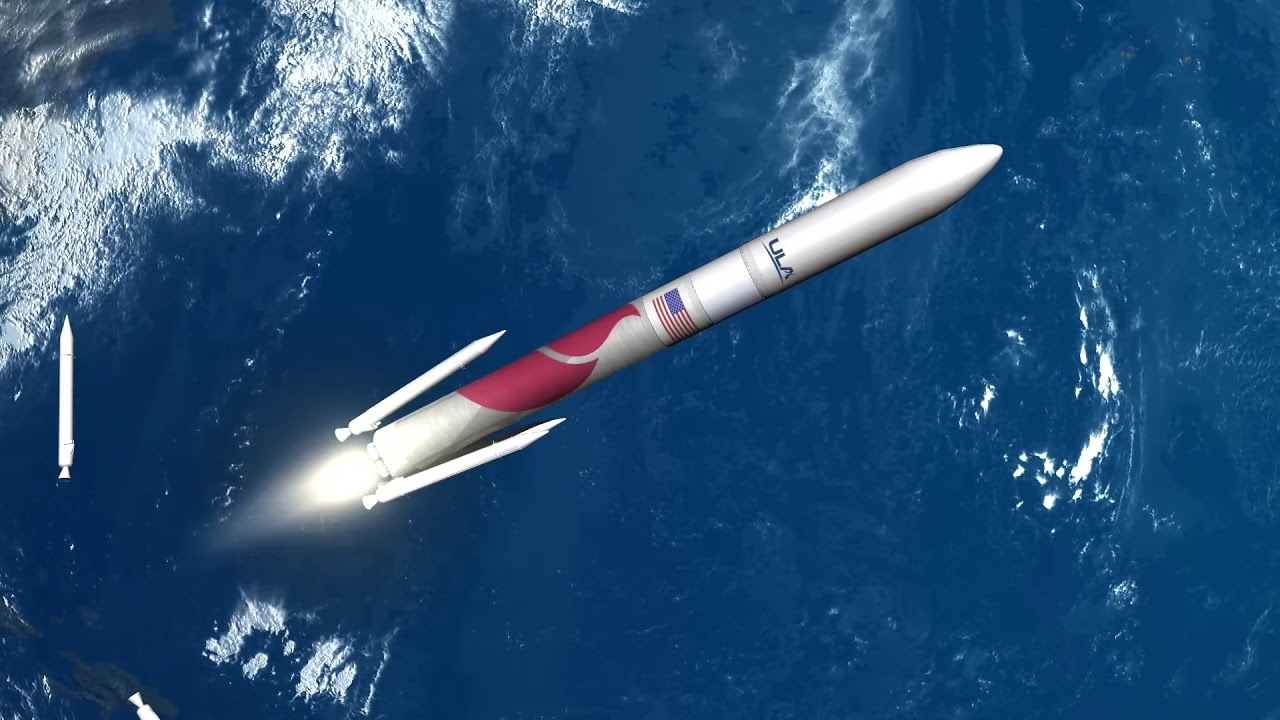
An artist’s impression of the Vulcan Centaur rocket – designed by ULA and with a core stage powered by the Blue Origin BE-4 engine. Credit: ULA

Further, Vulcan Centaur’s capabilities overlap nicely with those of New Glenn, offering Blue Origin with a broad range of launch capabilities. ULA has also sought to eventually make Vulcan Centaur semi-reusable, the engine module being detached from the rocket’s first stage and recovered after splashdown, allowing it to be refurbished and re-used. Such a capability would both dramatically reduce operating costs with Vulcan Centaur – and also match Blue Origin’s desire to develop semi-reusable launch systems, as with its New Glenn. So again, there is a synergy here.

Perhaps most beneficial to Blue Origin is that an acquisition of ULA is the fact that the latter is already an establish provider of launch vehicles to the lucrative US defence market, which Blue Origin could then capitalise upon. In addition, ULA’s Atlas V and the Vulcan Centaur launches are designed to carry humans into space via the Boeing CST-100 Starliner capsule. Thus, Blue Origin gain the means to fly crews into space in partnership with Boeing – potentially vital to its space station plans.

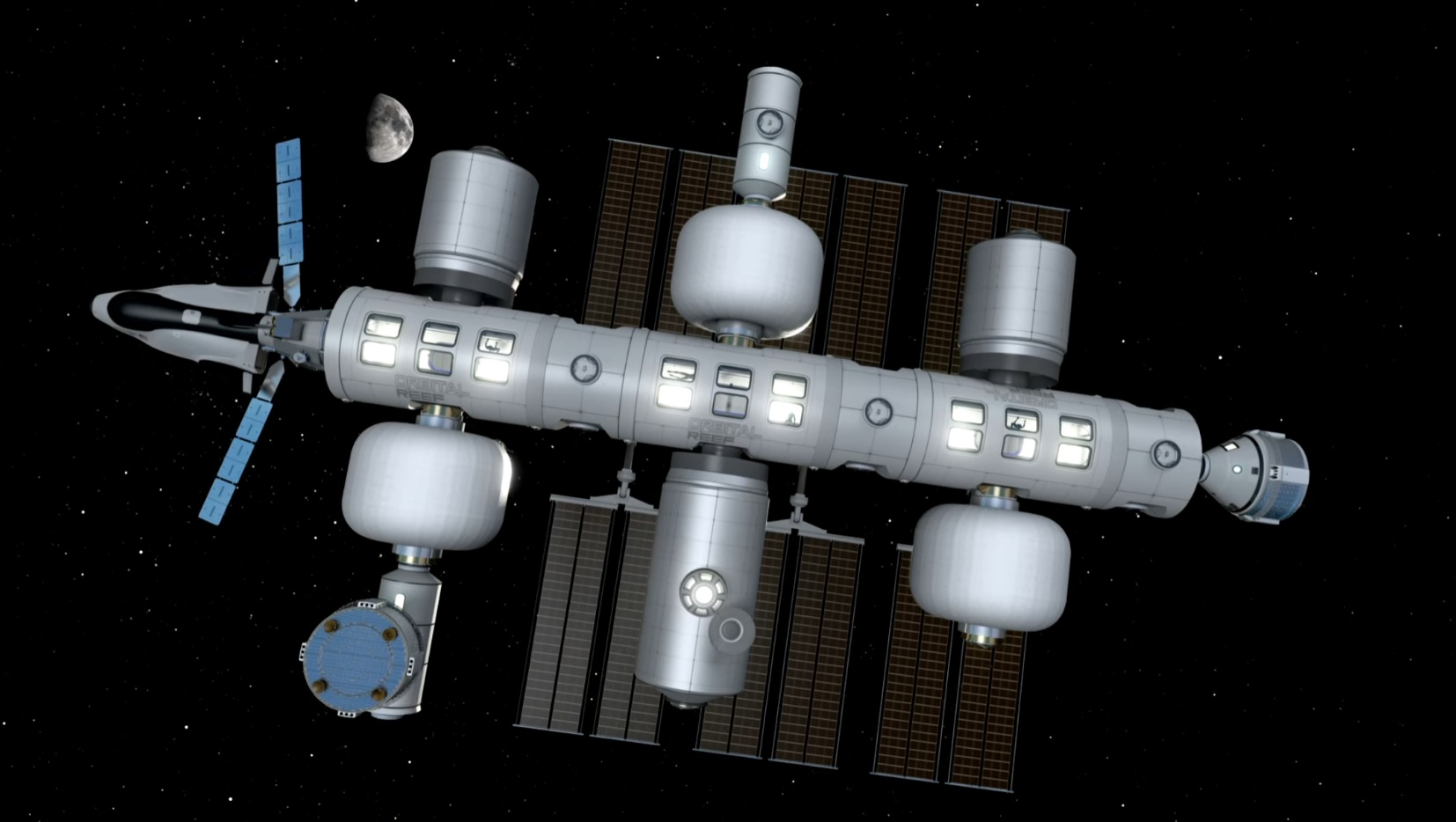
An artist’s concept of the Orbital Reef facility proposed by Blue Origin and Sierra Space, showing the core modules (to be built by Blue Origin) with a Sierra Space Dream Chaser (l) and Boeing CST-100 (r) docked against them, with smaller inflatable and rigid modules mated to either side, with another CST-100 approaching. Credit: Blue Origin / Sierra Space

In 2021, Blue Origin and Sierra Space announced plans for an orbital facility called Orbital Reef, designed to provide facilities for up to 10 people at a time. Under current plans, Blue Origin would provide the station’s large-diameter modules and the launch vehicle (New Glenn), Sierra Space the smaller modules and cargo support via their Dream Chaser vehicle, and Boeing / ULA crew launch capabilities via Starliner / ULA launchers. If Blue Origin obtained ULA, it would further streamline Orbital Reef development / operations.  Plus, being able to fly the CST-100 via the Atlas and Vulcan Centaur allows Blue Origin to access a share of NASA’s crewed launch requirements to service the ISS, again through Boeing.

Thus far, neither Boeing nor Lockheed have either confirmed or denied whether ULA is in fact up for sale – but industry insiders believe an announcement on the state of play with ULA – including any winning bid – will be made in early 2024. However, exactly how long any acquisition might take to complete is also unclear, requiring as it would the approval via the US Federal Trade Commission.

Continue reading “Space Sunday: ISS reaches 25; HST resumes mission”

Space Sunday: lunar delays and planetary dances

The Peregrine Mission One lander on the surface of the Moon, as imaged by Astrobotic Technology, the company responsible for the lander’s design and construction. Credit: Astrobotic Technology

America’s return to the surface Moon as a part of government-funded activities will start in earnest over Christmas 2023, with the launch of the NASA-supported Peregrine Mission One and the Peregrine lander, built by Astrobotic Technology, which will take to the sky on December 24th, 2023 atop a Vulcan Centaur rocket out of Cape Canaveral Space Force Base, Florida.

Originally a private mission, Mission One qualified for NASA funding under the agency’s Commercial Lunar Payload Services (CLPS) in 2018, effectively making it the first lander programme funded by NASA under the broader umbrella of the Artemis programme. In this capacity, the mission will fly 14 NASA-funded science payloads in addition to the original 14 private payloads planned for the mission.

The mission will be the inaugural payload carrying flight for the Vulcan Centaur, with the lander arriving in lunar orbit after just a few days flight – but will not land until January 25th, 2024, the delay due to the need to await the having to wait for the right lighting conditions at the landing site.

I’ll have more on this mission closer to the launch date, but in the meantime, as the Peregrine Mission One launch date is getting closer, the date for America’s return to the Moon with a crewed mission is slipping further away.

The Peregrine Lander (r) will mark the first flight of United Launch Alliance’s (ULA) new Vulcan Centaur launch vehicle (l). Credits: ULA and Astrobotic Technology

In terms of the Artemis crewed programmed, there have been a number of flags raised around the stated time-frame for Artemis 3, the mission slated to deliver the first such crew to the surface of the Moon in 2025, over the past few years. These have notably come from NASA’s own Office of Inspector General (OIG), but similar concerns have also started to be more openly voiced from within NASA.

These concerns largely focus on whether or not SpaceX can provide NASA with its promised lunar lander and its supporting infrastructure in anything like a timely manner, given that SpaceX has yet to actually successfully fly a Starship vehicle. In this, the awarding of the lander vehicle – called the Human Landing System (HLS) in NASA parlance – to SpaceX, who propose using a specialised version of the Starship vehicle, was always controversial. For one thing, Starship HLS will be incapable of being launched directly to lunar orbit. Instead, it will have to initially go to low Earth orbit and reload itself with propellants – which will also have to be carried to orbit by other Starship vehicles.

Infographic produced by Blue Origin highlighting the likely launch requirements for a Starship HLS. Credit: Blue Origin

At the time the contract for HLS was awarded (2021), competing bidders Blue Origin noted that according to SpaceX’s own data for Starship, a HLS variant of the vehicle would require the launch of fifteen other starship vehicles just to get it to the Moon. The first of these would be another modified Starship designed to be an “orbiting fuel depot”. It would then be followed by 14 further “tanker” Starship flights, which would transfer up to 100 tonnes of propellant per flight for transfer to the “fuel depot”. Only after these flights had been performed, would the Starship HLS be launched – and it would have to rendezvous with the “fuel depot” and transfer the majority of propellants (approx. 1,200 tonnes) from the depot to its own tanks in order to be able to boost itself to the Moon and then brake itself into lunar orbit.

Despite such claims being made on the basis of SpaceX’s own figures, SpaceX CEO Elon Musk pooh-poohed  them, claiming all such refuelling could be done in around 4-8 flights, not 16. Despite their own OIG and the US Government Accountability Office (GOA) agreeing with the 16-flight estimation, NASA nevertheless opted to accept Musk’s claim of 4-8 launches, going so far is to use it in their own mission graphics.

A NASA infographic showing the Artemis 3 mission infrastructure. Note the (optimistic)  6 Starship launches required to get the SpaceX Starship HLS to lunar orbit. Credit: NASA/SpaceX

However, the agency appeared to step back from this on November 17th, 2023, when Lakiesha Hawkins, assistant deputy associate administrator in NASA’s Moon to Mars Programme Office, confirmed that SpaceX will need “almost 20” Starship launches in order to get their HLS vehicle to the Moon, with launches at a relatively high cadence to avoid issues of boil-off occurring when storing propellant in orbit.

Now the US Government Accountability Office (GOA) has re-joined the debate, underlining the belief that SpaceX is far from being in any position to make good on its promises regarding the available of HLS. In particular the report highlights SpaceX is still a good way from demonstrating it can successfully orbit (and re-fly) a Starship vehicle, and it has not even started to demonstrate it has the means to store upwards of 1,000 tonnes of propellants in orbit, or the means by which volumes of propellants well above what has thus far been achieved can be safely and efficiently be transferred between space vehicles, and it has yet to produce a even a prototype design for the vehicle.

Nor does the report end there; it is also highly critical of the manner in which NASA has managed the equally important element of space suit design, firstly in awarding the initial contract for the Artemis lunar space suits to Axiom Space – a company with no practical experience in spacesuit design and development –  rather than a company like ILC Dover, which has produced all of NASA’s space suits since Apollo; then secondly in failing to provide Axiom with all the criteria for the suits, necessitating Axiom redesigning various elements of their suit to meet safety / emergency life support needs.

As a result, the GAO concludes that it is likely Artemis 3 will be in a position to go ahead much before 2027; there is just too much to do and too much to successfully develop for the mission to go ahead any sooner. In this, there is a certain irony. When Artemis was originally roadmapped, it was for a first crewed landing in 2028; however, the entire programme was unduly accelerated in 2019 by the Trump Administration, which wanted the first crewed mission to take place no later than December 2024, so as to fall within what they believed would be their second term in office. Had NASA been able to stick with the original plan of 2028, there is a good chance that right now, it would be considered as being “on target”, rather than being seen as “failing” to meet time frames.

Hubble Hits Further Gyro Issues

On November 29th, 2023, NASA announced that the ageing Hubble Space Telescope (HST) had entered a “safe” mode for an indefinite period due to further troubles with the system of gyroscopes used to point the observatory and hold it steady during imaging.

In all, HST has six gyroscopes (comprising 3 pairs – a primary and a back-up),with one of each pair required for normal operations. To help increase the telescope’s operational life, all three pairs of gyros were replaced in the last shuttle mission to service Hubble in 2009, and software was uploaded to the observatory to allow it to function on two gyros – or even one (with greatly reduced science capacity)  should it become necessary.

Today, only 3 of those gyros remain operational, the other three having simply worn out, and on November 19th, one of those remaining 3 started producing incorrect data, causing the telescope to enter a safe mode, stopping all science operations. Engineers investigating the issue were able to get the gyro operating correctly in short order, allowing Hubble to resume operations – only for the gyro to glitch again on November 21st and again on November 23rd, leading to the decision to leave the telescope in its safe mode until the issue can be more fully assessed.

The Hubble Space Telescope. Credit: NASA

The news of the problems immediately led to renewed calls for either a crewed servicing mission to Hubble or some form of automated servicing mission – either of which might also be used to boost HST’s declining orbit. However, such missions are far more easily said than done: currently, there isn’t any robotic craft capable of servicing Hubble (not the hardware or software to make one possible). When it comes to crewed missions, it needs to be remembered that Hubble was designed to be serviced by the space shuttle, which could carry a special adaptor in its cargo bay to which Hubble could be attached, providing a stable platform from which work could be conducted, with the shuttle’s robot arm also making a range of tasks possible, whilst the bulk of the shuttle itself made raising Hubble’s orbit much more straightforward.

Currently, the only US crewed vehicle capable of servicing HST is the SpaceX Crew Dragon – and it is far from ideal, having none of the advantages or capabilities offered by the space shuttle, despite the gung-ho attitude of many Space X supporters. In fact, it is not unfair to say that having such a vehicle free-flying in such close proximity to Hubble, together with astronauts floating around on tethers could do more harm than good.

A further issue with any servicing mission is that of financing. Right now, the money isn’t in the pot in terms of any funding NASA might make available for a servicing mission – and its science budget is liable to get a lot tighter in 2024, which could see Hubble’s overall budget cut.

Continue reading “Space Sunday: lunar delays and planetary dances”