Space Sunday: Curiosity, Dragon, Juno and James Webb

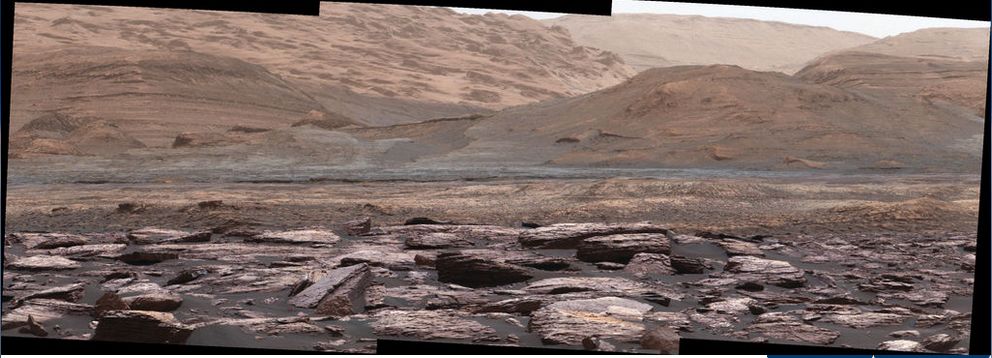
A mosaic of Mastcam images captured by NASA's Curiosity rover on November 10th, 2016 (Sol 1,516), showing the lower slopes of "Mount Sharp". Variations in the rocks colour hint at the diversity of their composition. The purple tone of the foreground rocks has been seen in other rocks where hematite has been detected. Winds and windblown sand help to keep rocks relatively free of dust which would otherwise obscure their colour differentiation. These images have been white balanced, so the scene appears as it would under typical Earth daylight conditions
A mosaic of Mastcam images captured by NASA’s Curiosity rover on November 10th, 2016 (Sol 1,516), showing the lower slopes of “Mount Sharp”. Variations in the rocks colour hint at the diversity of their composition. The purple tone of the foreground rocks has been seen in other rocks where hematite has been detected. Winds and windblown sand help to keep rocks relatively free of dust which would otherwise obscure their colour differentiation. These images have been white balanced, so the scene appears as it would under typical Earth daylight conditions. Credit: NASA/JPL / MSSS

For more than a year now, NASA’s Mars Science Laboratory rover, Curiosity, has been slowly climbing the lower slopes of “Mount Sharp” – more formally called Aeolis Mons, the 5 kilometre (3 mi) high layered deposit extending off of the central peak of Gale Crater. Whilst still on the lower slopes of the mound, the rover has already found minerals absent from lower levels within the crater, and these, together with the ample evidence for water once having existed in the crater, further point to Mars perhaps having once been habitable.

Details of the latest findings from Curiosity were presented at a meeting of the American Geophysical Union (AGU), which commenced on Monday, December 12th, in San Francisco. Making the presentation were members of the current MSL science team and its former principal investigator, John Grotzinger, – the Fletcher Jones Professor of Geology at Caltech.

Mineral veins are an important way to study the movements of water within a location, as they are result of cracks in layered rock being filled with chemicals that are dissolved in water. This alters the chemistry and composition of rock formations, providing vital clues on the prevailing conditions around the time they were deposited.
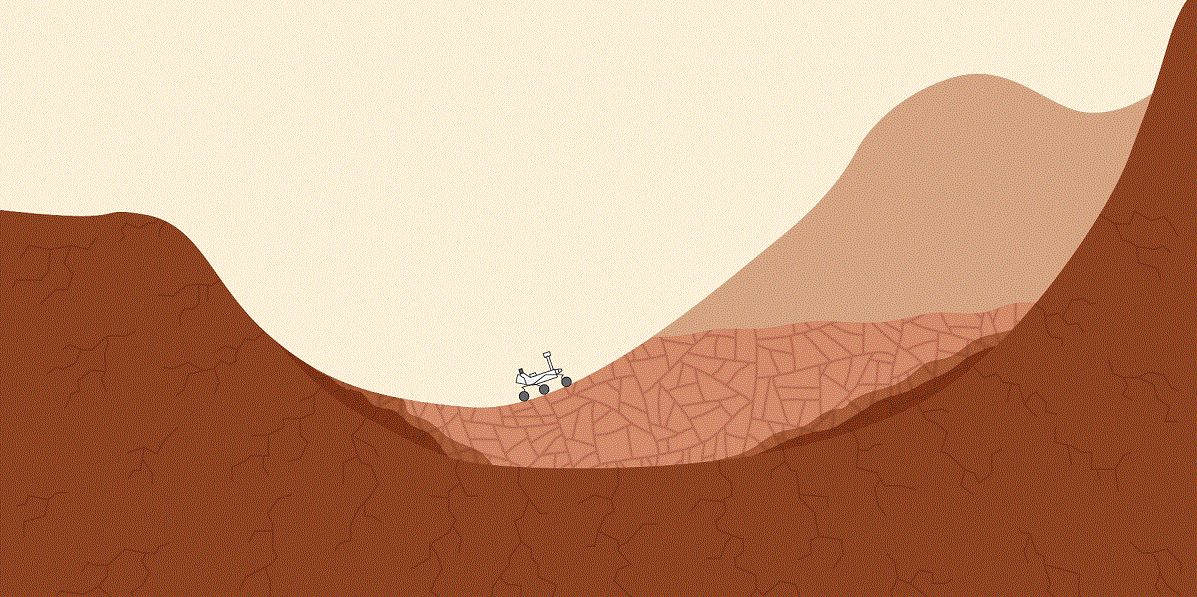
An illustration shown Gale Crater today, with the crater rim (l) and the central impact peak (r), against which "Mount Sharp" rises, which Curiosity climbing its lower slope (obviously not to scale). Credit: NASA/JPL
An illustration shown Gale Crater today, with the crater rim (l) and the central impact peak (r), against which “Mount Sharp” rises, which Curiosity climbing its lower slope (obviously not to scale). Credit: NASA/JPL

In the case of the slopes most recently examined by Curiosity, the science team have found that hematite, clay minerals and boron are more abundant than has been found in the lower, older layers. These point to a complex environment where groundwater interactions led to clay-bearing sediments and diverse minerals being deposited over time, effectively creating a “chemical reactor” which, although no actual evidence for Martian microbes having existed within the minerals has been found, still creates an environment which may have been beneficial life.

“There is so much variability in the composition at different elevations, we’ve hit a jackpot,” Grotzinger said during the presentation. “A sedimentary basin such as this is a chemical reactor. Elements get rearranged. New minerals form and old ones dissolve. Electrons get redistributed. On Earth, these reactions support life.”

As Gale Crater might have looked billions of years ago, showing how the circulation of groundwater led to chemical changes and mineral deposits. Credit: NASA/JPL

The increasing presence of hematite found by the rover as it continues up “Mount Sharp” suggests both warmer conditions and more interaction with the atmosphere at higher levels. In addition, the increasing concentrations of hematite, relative to magnetite at lower levels further suggests that iron oxidisation increased over time, creating the “chemical reactor” Grotzinger referenced: the loss of electrons through the oxidisation process can provide the energy necessary for life to sustain itself.

Another ingredient increasing in recent measurements by Curiosity is the element boron, which the rover’s laser-shooting Chemistry and Camera (ChemCam) instrument has been detecting within calcium sulphate mineral veins. Boron is famously associated with arid sites where much water has evaporated away. However, the amounts found so far are so minor, they make it much harder to determine the environmental implications of their presence.

Currently the team is considering at least two possibilities. In the first, the evaporation of the lake thought to have once existed within Gale Crater formed a boron-containing deposit in an overlying layer, not yet reached by Curiosity, then water later re-dissolved the boron and carried it down through a fracture network into the layers the rover is currently investigating, where it accumulated along with fracture-filling vein minerals. In the second, changes in the chemistry of clay-bearing deposits, such as evidenced by the increased hematite, affected how groundwater picked up and dropped off boron within the local sediments.
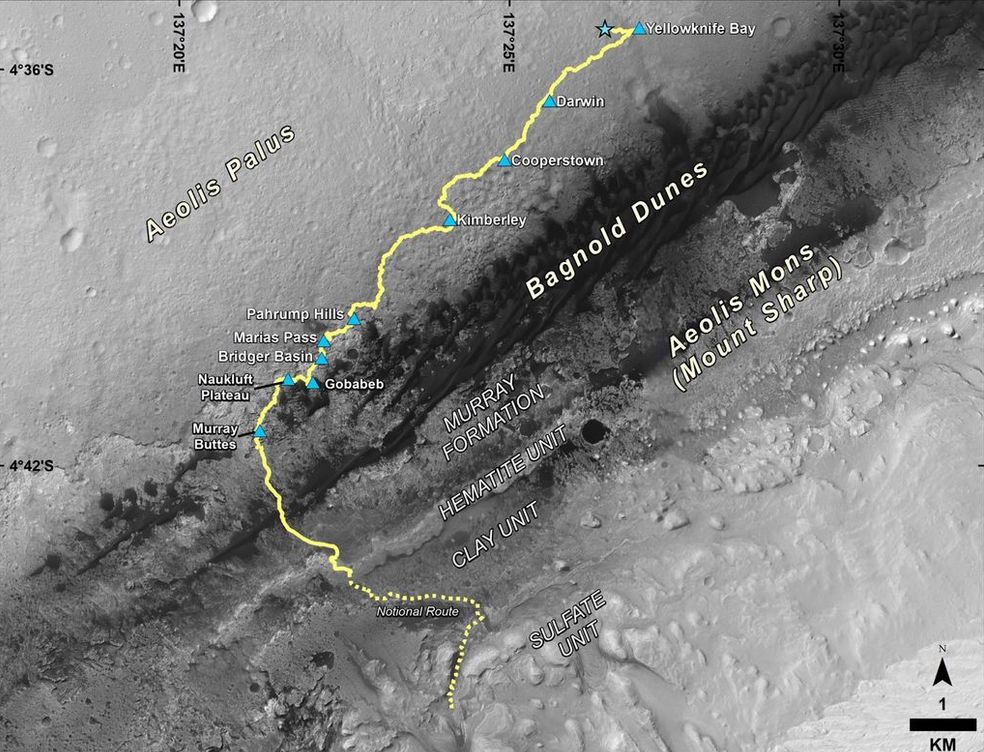
Curiosity's 4-year, 10 kilometre (6.2 mi) Trek from its landing sight (the blue star), through the Yellowknife Ridge area, keep to early findings by the rover, then down along the foothills of "Mount Sharp" to the climb up the mound's lower slopes. The blue triangles denote way-points on the route, where science work was carried out
Curiosity’s 4-year, 10 kilometre (6.2 mi) Trek from its landing site (the blue star), through the Yellowknife Ridge area, key to early findings by the rover, then down along the foothills of “Mount Sharp” to the climb up the mound’s lower slopes. The blue triangles denote way-points on the route, where science work was carried out. The images of Gale Crater and “Mount Sharp” are composed of high-resolution images obtained by the HiRISE camera aboard the Mars Reconnaissance Orbiter. Credit: NASA/JPL / MSSS

Continue reading “Space Sunday: Curiosity, Dragon, Juno and James Webb”
Space Sunday: ring grazing and exoplanet gazing

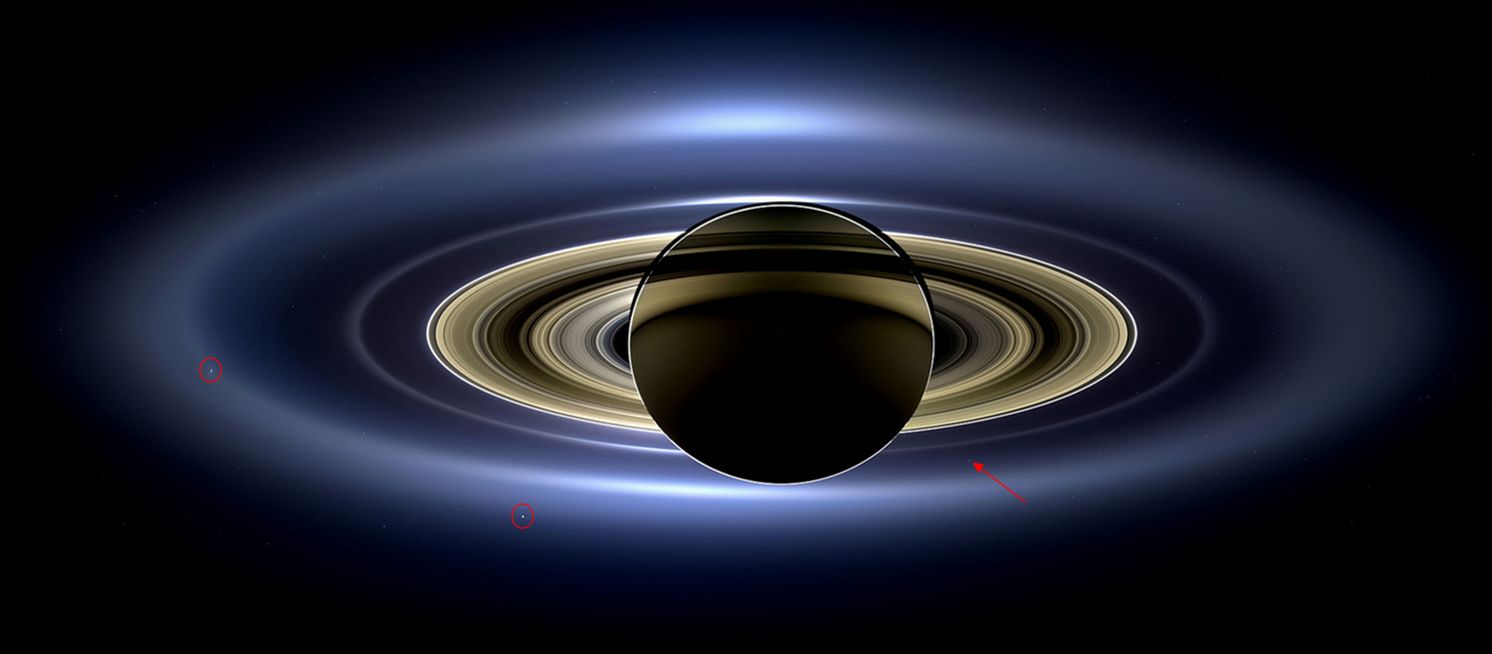
On July 19th, 2013, Cassini captured this remarkable shot of Saturn and its entire ring system as they eclipsed the Sun. captured at a distance of 1.2 million km (746,000 mi) from the planet. It spans a distance of 651,591 km (404,880 mi) across and uses 141 wide-angle shots collected over a 4-hour period, and shows the haze of Saturns's outer most "E" ring and, inward of it, the "G" ring, with Earth a tiny dot (arrowed) sitting between them. The more discrete ring system from the "F" ring through to the innermost "D" ring are visible, together with seven of Saturn's moons, of which two are ringed: Enceladus, on the left (see below) and Tethys, lower left). The colours seen are true, and have not been artificially enhanced Credit: NASA/JPL / Space Science Institute
On July 19th, 2013, Cassini captured this remarkable shot of Saturn and its entire ring system as they eclipsed the Sun. Taken from a distance of 1.2 million km (746,000 mi) from the planet, it spans a distance of 651,591 km (404,880 mi) across and uses 141 wide-angle shots collected over a 4-hour period. In it can be seen the haze of Saturn’s outermost “E” ring and, inward of it, the “G” ring, with Earth a tiny dot (arrowed) sitting between them. The more visible rings, “F” ring through to the innermost “D” are visible, together with seven of Saturn’s moons, of which two are ringed: Enceladus, on the left and Tethys, lower left – click for full size to see clearly. The colours seen are true, and have not been artificially enhanced. Credit: NASA/JPL / Space Science Institute

In 2005, along with friends, I attended a dinner at which a UK scientist, John Zarnecki, was honoured. His name might not be familiar to some, but Professor Zarnecki, currently serving as the Director of the International Space Science Institute in Berne, Switzerland, has been involved in a number of high-profile space missions, including the Hubble Space Telescope, the Giotto probe that visited Halley’s Comet, and UK’s Beagle 2 mission to Mars. He is currently leading the European ExoMars rover mission, scheduled for 2020.

However, it is probably with the NASA / ESA Cassini-Huygens mission that he has the deepest association. At the time of the dinner, Professor Zarnecki had already been involved in that programme for fifteen years. His primary responsibility was the Huygens probe, which became the first vehicle to land there in January, 2005, and still holds the record for the furthest landing from Earth a spacecraft has so far made.

I mention this, because while the Titan surface mission effectively came to an end 90 minutes after the lander arrived there, the Cassini vehicle has remained in operation around Saturn and its moons, gathering a huge amount of data in the process. However, its own mission is now coming to an end after almost 20 years. In September 2017, Cassini will complete its last full orbit of Saturn and then fall to is destruction.

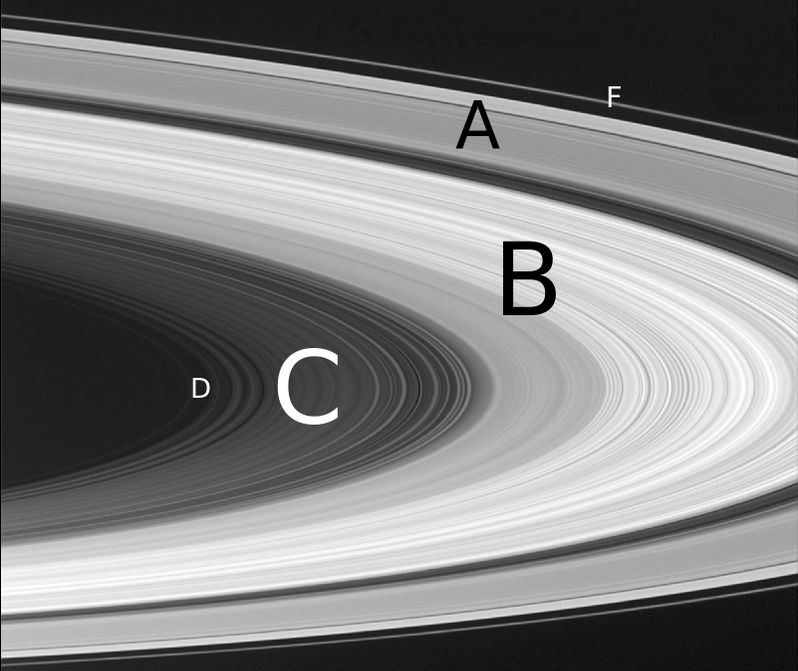
Saturn's complex ring system, the gaps between them crated by a mixture of so-called "shepherd moons" in orbits between the rings and stablising and destabilizing orbital resonances caused by Saturn's larger moons.
Saturn’s complex ring system, the gaps between them crated by a mixture of so-called “shepherd moons” in orbits between the rings and stabilising and destabilizing orbital resonances caused by Saturn’s larger moons.

Before then, however, and starting on November 30th, 2016, the orbiter will commence the penultimate phase of its mission. Having gradually shifted itself into a more polar orbit around Saturn Cassini will commence a series of “ring-grazing orbits”, coming to within 7,800 km (4,850 mi) of what is regarded as the outer edge of Saturn’s major series of rings, the F-ring.

These orbits, which will extend through April 22nd, 2017, will see the spacecraft dive through the more diffuse G-ring once every seven days for a total of 20 times in what will be the first attempt to directly sample the icy particles and gas molecules which are located at the edge of the rings and also image the tiny moons of Atlas, Pan, Daphnis and Pandora, which play a role in “shepherding” the rings around Saturn.

Over time it will slowly close on the outer edge of the denser F-ring, until in March and April 2017, it is passing through the outer reaches of that ring, some 140,180km (87,612.5 mi) from the centre of Saturn. The F-ring is regarded as perhaps the most active ring in the Solar System, with features changing on a timescale of hours.

A 2007 artist impression of the aggregates of icy particles that form the 'solid' portions of Saturn's rings. These elongated clumps are continually forming and dispersing. The largest particles are a few metres across. Credit: NASA/JPL / University of Colorado
A 2007 artist impression of the aggregates of icy particles that form the ‘solid’ portions of Saturn’s rings. These elongated clumps are continually forming and dispersing. The largest particles are a few metres across. Credit: NASA/JPL / University of Colorado

Exactly how the majority of Saturn’s rings formed is still unknown;, with ideas focused on one of two theories. In the first, the material in the rings is the original material “left over” from the formation of Saturn and its larger moons, pulled into a disc around the planet by gravitational tides. In the second, the material is all that remains of a form er – called Veritas after the Roman goddess –  which either crossed the Roche limit to be pulled apart by gravitation forces or was destroyed by the impact with another body such as a large comet or asteroid.

However, in both of these cases it is not unreasonable to assume that the material making up the rings would be of a mixed nature: dust, ices, rocky matter, etc. However the majority of the ring matter is icy particles, with little else. This has given rise to a variation on the destroyed moon theory: that the particles are all that remains of the icy mantle of a much larger, Titan-sized moon, stripped away as it spiralled into Saturn during the planet’s formation.

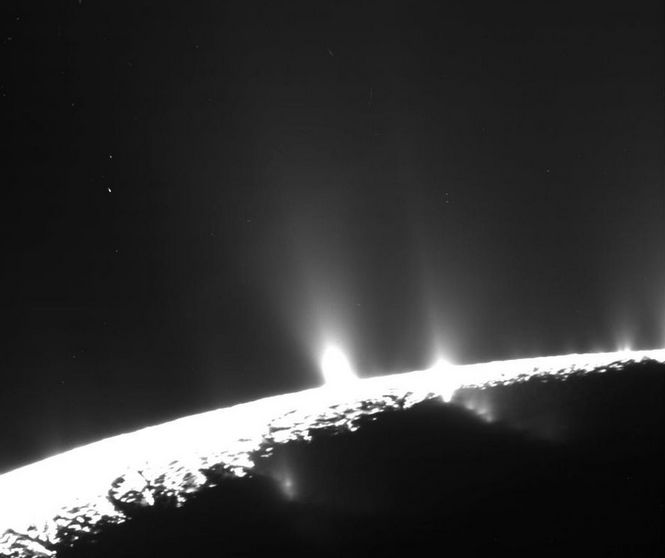
Geyser on Enceladus, orbiting within the E-ring through vast amount of ice particles into space, replenishing and supporting the E-ring. Credit: NASA/JPL / Space Science Institute
Geyser on Enceladus, orbiting within the E-ring, throw vast amounts of ice particles into space, replenishing and supporting the E-ring. Credit: NASA/JPL / Space Science Institute

Continue reading “Space Sunday: ring grazing and exoplanet gazing”

Space Sunday: from Earth orbit to Pluto, via Mars

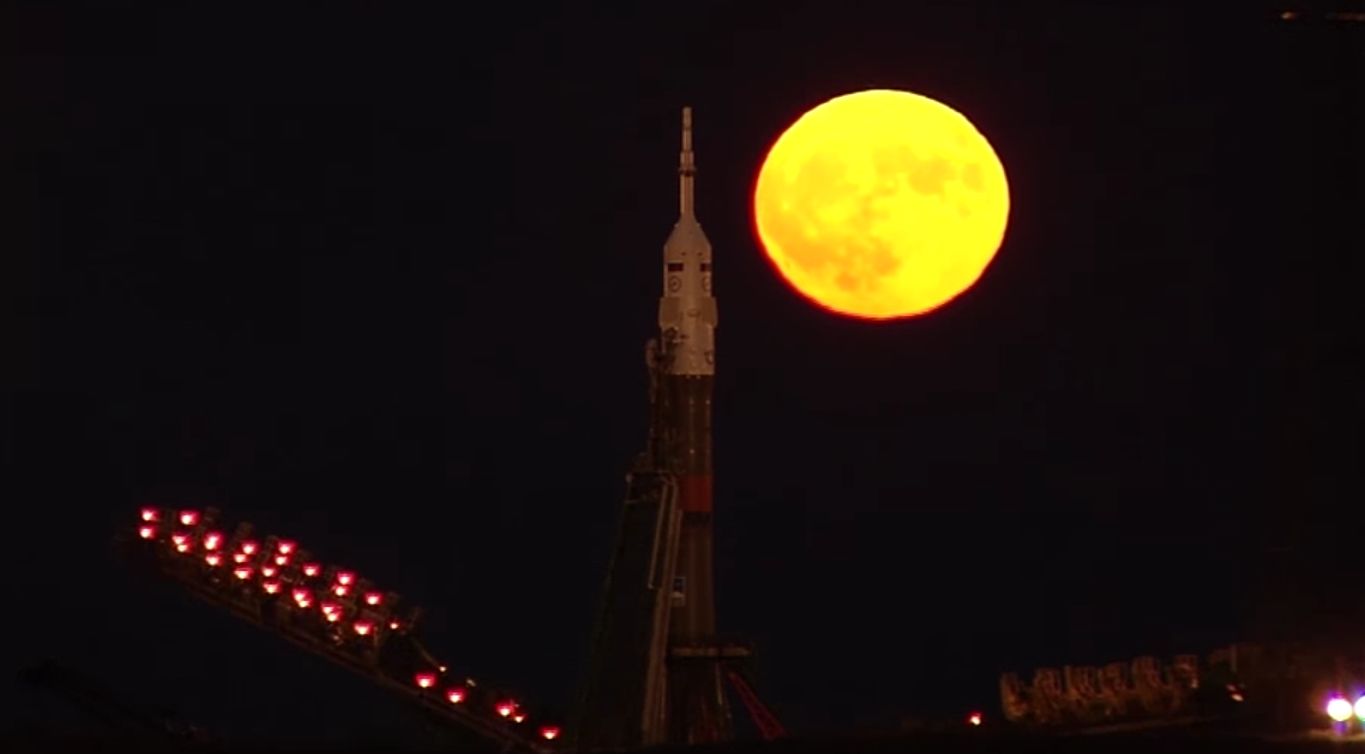
The "supermoon" of November 14th rises over the MS-03 spacecraft the Baikonur Cosmodrome in Kazakhstan, where it was being prepared for launch to the International Space Station
The “supermoon” of November 14th rises over the Soyuz MS-03 spacecraft the Baikonur Cosmodrome in Kazakhstan, where it was being prepared for launch to the International Space Station. Credit: NASA

The second of the three so-called “supermoons” which see out 2016 produced some dramatic photographs and video from around the world. Perhaps one of the most stunning  came from cameras at the Baikonur Cosmodrome in Kazakhstan, monitoring Soyuz MS-03 as it stood on the pad at Launch Complex 1.

As I noted in my last Space Sunday Report, a “supermoon” occurs when the Moon is both full and at perigee – the point in its orbit when it is closest to the Earth as it travels around our planet in an elliptical orbit. Such events occur around every 14 months, and can see the Moon appear to be 14% bigger than its average size in our sky, particularly when seen low on the horizon.

The “supermoon” of November 14th was special because the Moon was about at its closest point to Earth in its orbit – “just” 356,509 kilometres (221,524 miles) from us and the Earth / Moon system is approaching the time of year when it is closest to the Sun (which will occur on January 4th, 2017), thus making the full Moon “extra” bright for those who were able to see it. The next time this will occur will be in 2034. However, December 14th will see another “supermoon”, albeit one at a slightly greater distance away from the Earth, so those who missed November’s – weather permitting – may still get to see one before the year is out. In the meantime, here’s NASA’s footage from Baikonaur  – the film obviously speeded-up 🙂 .

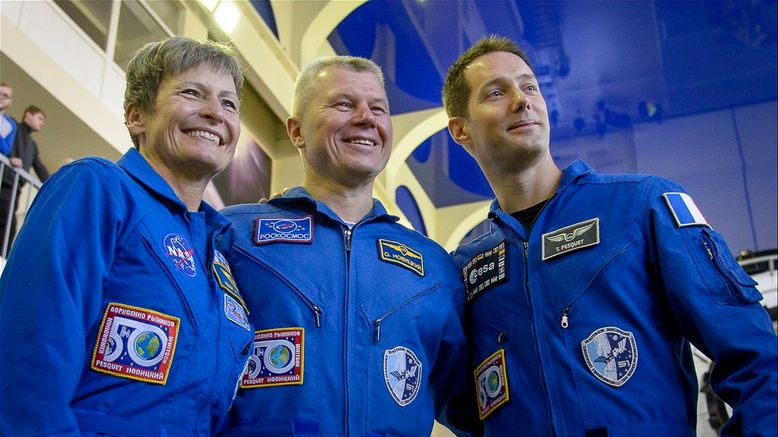
Soyuz MS-03 lifted-off from Baikonur on Friday, November 18th, carrying aloft Russian cosmonaut Oleg Novitskiy, American astronaut  Peggy Whitson and rookie French astronaut Thomas Pesquet. It successfully docked with the International Space Station on Saturday, November 19th, marking the start of the Expedition 50/51 mission aboard the station, the crew sharing space with the Expedition 49/50 crew of mission commander Shane Kimbrough of NASA and Russian cosmonauts Sergey Ryzhikov and Andrei Borisenko, who have been aboard the station since October and who are due to return to Earth in February 2017.

For Whitson, this is a double first: she is the oldest woman to ever fly to the ISS – she will celebrate her 57th birthday in orbit – and, come February, she will be the first woman to command the space station for a second time in its 16-year operational history, having already become the very first woman to take command during Expedition 16 in 2007. She is also NASA’s most experienced female astronaut, with nearly 377 days logged in space, including six space walks totalling 39 hours 46 minutes. By the time she returns to Earth, she will have spent more time in space than any other US astronaut, surpassing the 534-day record set by Jeff Williams in September 2016.

Peggy Witson with Oleg Novitsky and Thomas Pesquet posing for photographs prior to launch. Via: Peggy Whitson
Peggy Witson with Oleg Novitskiy and Thomas Pesquet posing for photographs prior to launch. Via: Peggy Whitson

During their time aboard the station, Whitson, Novitskiy and Pesquest will conduct hundreds of experiments and studies in biology, biotechnology, physical science and Earth science. A particular focus will be recording how lighting impacts the overall health and well-being of station crew members, and how the microgravity environment in orbit affects tissue regeneration in humans and the genetic properties of space-grown plants.

The crew carry with them some special meal time treats as well. Taking a leaf from British astronaut Tim Peake’s book, Pesquest requested fellow countrymen and renowned chefs Alain Ducasse and Thierry Marx develop a special menu for the crew. Highlights include beef tongue with truffled foie gras and duck breast confit.

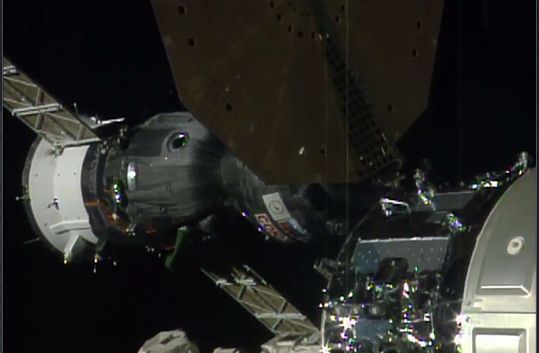
Soyuz MS-03, piloted by Oleg Novitsky, closes for a docking with the Russian-built Rassvet module on Saturday, November 19th. In the foreground is the Cygnus resupply vehicle which recently arrived at the space station, together with one of its circular solar power arrays
Soyuz MS-03, piloted by commander Oleg Novitskiy, closes for a docking with the Russian-built Rassvet module on Saturday, November 19th. In the foreground is the Cygnus resupply vehicle which recently arrived at the space station, one of its circular solar power arrays partially blocking the view of the incoming Soyuz. Credit: NASA

“We have food for the big feasts: for Christmas, New Year’s and birthdays. We’ll have two birthdays, mine and Peggy’s,” the Frenchman said at the astronauts’ last press conference before the launch.

Pesquest,  a former commercial airline pilot with Air France, is also set to offer some entertainment for the crew: a keen musician, he’s taken his saxophone to the ISS. As part of his work on the station, he has special responsibility for the Proxima research programme of 50 experiments developed by the European Space Agency and the French national space agency, CNES. The programme’s name was suggested by 13-year old Samuel Planas from Toulouse, France, following a nationwide competition among school children. It is taken from Proxima Centauri, with the X in the name both representing the unknown, and the fact that Pesquest is the tenth French astronaut to fly in space.

Oleg Novitskiy, a 45-year-old lieutenant colonel in the Russian Air Force, is also on his second mission aboard the ISS, having previously served as the Soyuz TMA-06M commander during the flight to the ISS, and as the station’s flight engineer during Expedition 33/34. He has spent 143 days 16 hours and 15 minutes in space.

Continue reading “Space Sunday: from Earth orbit to Pluto, via Mars”

Space Sunday: “super Earth”, “supermoon”, and Orion’s future

An artist's impression of a "super Earth" type planet in orbit around a red dwarf star. Credit: NASA / Dana Berry.
An artist’s impression of a “super Earth” type planet in orbit around a red dwarf star. Credit: NASA / Dana Berry.

In a couple of recent Space Sunday reports, I covered the discovery of an Earth-size planet orbiting  our nearest stellar neighbour, the red dwarf Proxima Centuari (see here and here). Red dwarfs  are a class of star which has proven rich ground for planet hunters  –  and this has once again proved the case.

The European Southern Observatory ESO), one of the leading hunters of exoplanets, has  reported the discovery of a “super Earth”, a sold planetary body with roughly five times the mass of Earth. It is orbiting GJ 536, an M-class red dwarf star some 32.7 light years from the Sun. The planet is orbiting its parent once every 8.7 days, at a distance of 0.06661 AU.

The planet was discovered using a pair of instruments operated by ESO: the High Accuracy Radial velocity Planet Searcher (HARPS), mounted on ESO’s 3.6 metre telescope at the La Silla Observatory in Chile, and its sister instrument, HARPS-N, at the La Palma Observatory in Spain. The findings from these instruments were combined with photometric data from the All Sky Automated Survey (ASAS), which has observatories in Chile and Maui, to confirm the existence of the planet.

Red dwarf stars are entirely convective in nature, making them extremely volatile in nature, and subject to massive stellar flares. Credit: NASA/CXC/M.Weiss

However, its was no rapid-fire discovery. In all, data from over eight years of observations of the star went into confirming the presence of the planet. Such is the extended period of observations, that the science team were able to gather a huge amount of spectroscopic data on the star. This has revealed it has a rotational period of about 44 days, and magnetic cycle that lasts less than three years. By comparison, the Sun has a rotational period of 25 days and a magnetic cycle of 11 years.

This indicates that GJ536 is, in keeping with most red dwarf stars, exceptional volatile. Such stars are so small, all activity within them is entirely convective in nature, which gives rise to massive stellar flares. So while the new planet may well have “earth” in its description, it is unlikely to be “Earth like”, particularly given its relatively close proximity to its parent star.

Not much more is known about the planet at this point, but this is liable to change over time, and in the meantime, the survey team will continue to gather data on GJ 536 to see if it is home to other planets, such as gas giants further away from it.

November’s Supermoon

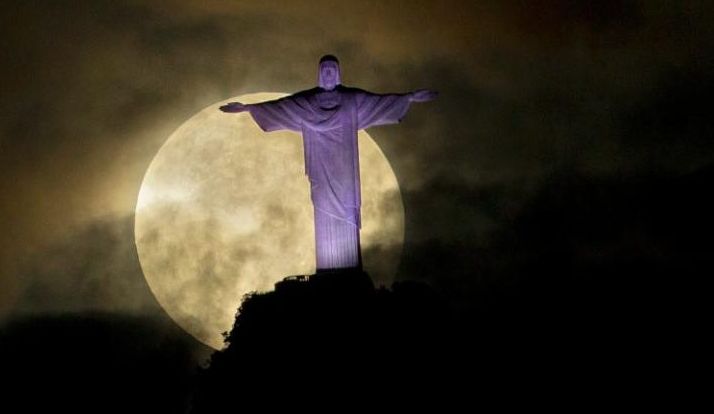
A dramatic supermoon is seen behind the Christ the Redeemer statue in Rio de Janeiro, in May 2012. Credit: AP Photo/Victor R. Caivano

The last three months of 2016 are marked by three so-called “supermoons”, and the biggest will be in the night skies on Monday 14th November 2016.

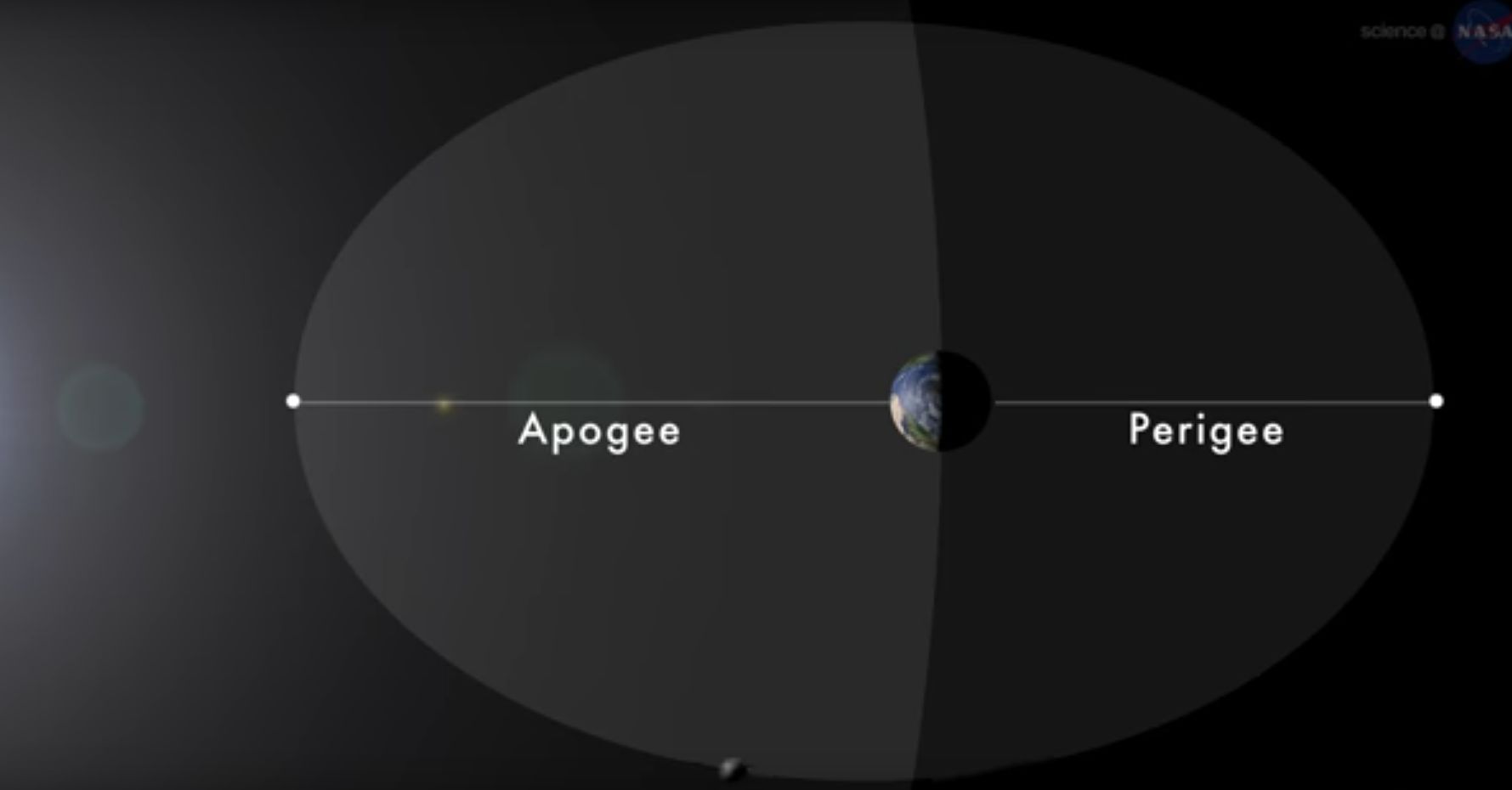
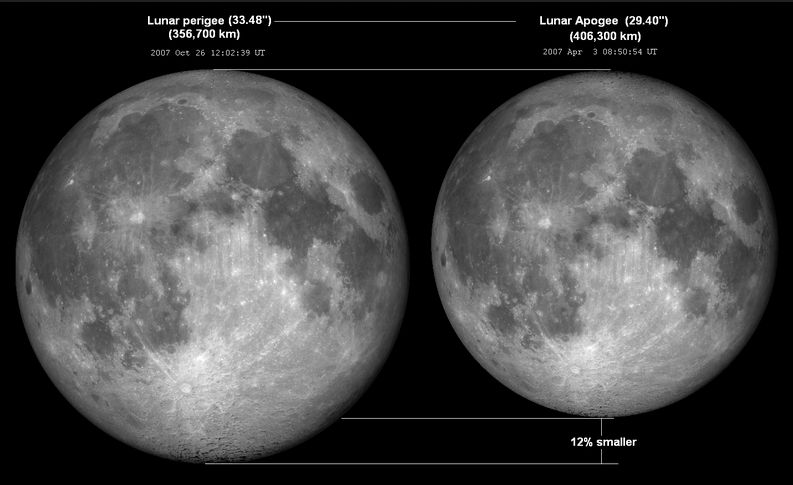
The Moon is in an elliptical orbit around the Earth, at apogee, the point furthest from the Earth, it is between 404,000–406,700 km (252,500-254,187 mi) from Earth. At perigee, the point closest to the Earth, the Moon is between 356,400–370,400 km (222,500-231,500 mi) away. A “supermoon” occurs when the Moon is both full and at perigee, when it can appear up to 14% large in diameter than “normal” full moons.

Apogee and preigee in the Moon's orbit around Earth. Credit: NASA
Apogee and perigee in the Moon’s orbit around Earth. Credit: NASA

“Supermoons” aren’t actually rare events; they take to occur once every 14 months on average.  However, the supermoon on November 14th, scores double. Not only will be “just” 356,509 kilometres (221,524 miles) from Earth, pushing it to that 14% increase in apparent size, but also because the Earth/Moon system is approaching the time of year when it is closest to the Sun (which will occur on January 4th, 2017). Therefore, the Moon will be receiving more sunlight than average, further boosting its apparent brightness.

Together, these two events mean that the Moon will be at its “largest” and brightest in the sky since 1948. The next comparable event will not occur again until 2034 – although there will be a further “supermoon” on December 14th, when the Moon again reaches its full phase, but it will be slightly further away from the Earth in its orbit at that time, so not quite as “super”.

How the Moon can appear to differ i size at apogee (the point furthest from Earth in its orbit) and perigee (the point in its orbit closest to Earth). Credit: Catalin Paduraru
How the Moon can appear to differ in size at apogee (the point furthest from Earth in its orbit) and perigee (the point in its orbit closest to Earth). Credit: Catalin Paduraru

Continue reading “Space Sunday: “super Earth”, “supermoon”, and Orion’s future”

Space Sunday: of moons, storms and rockets

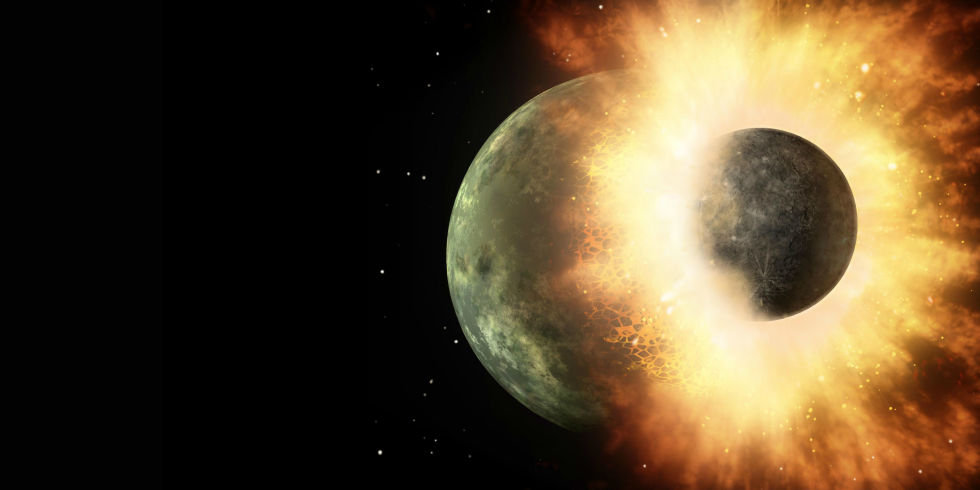
A joint Belgian-French-Japanese study has provided the strongest evidence yet for the Martian moons being the result of a massive collision between the planet and other object very early in the solar system's history
The traditional theory of the Moon’s formation is that a Mars-sized body grazed the young Earth, throwing of a cloud of material which  eventually condensed into the Moon. Credit: NASA

We’re all familiar with the Moon, Earth’s cosmic companion. So familiar with it in fact, that we probably all think we know the theory behind how it got to be where it is – the result of a “giant impact” far back in Earth’s early history. However, a new study, published on October 31st in Nature, suggests what actually led to the creation of the Moon was possibly a lot  more elegant than previously realised.

The Moon is actually quite unique among the solar system’s satellites. It’s relatively large when compared to its parent planet, and it is a made of pretty much the same stuff, minus some more volatile compounds that evaporated long ago. Other moons tend to be a lot more chemically diverse when compared to one another and their parent worlds.

The accepted theory of lunar formation has it that not long after primordial Earth formed, a Mars-sized object grazed it, throwing off a mass of material from which the Moon subsequently condensed. This impact set the angular momentum for the Earth-moon system, and gave the early Earth a five-hour day. Then, over the aeons, the Moon slowly receded from the Earth (as it continues to do so to this day), and Earth’s rotation has slowed to our current 24-hour day.

The Moon is is an elliptical orbit around the Earth which varies from 364,397 km at its closest, to 406,731 km at its most distant. When it’s full and at its closest point to Earth (perigee), the Moon can look over 10% bigger, and 30% brighter than when it’s at a more distant point in its orbit (apogee). However, such is the momentum of the Moon's oribt, it is actually slowly moving further and further away from Earth, as it has been throughout its history
The Moon is in an elliptical orbit around the Earth which varies from 364,397 km at its closest, to 406,731 km at its most distant. When it’s full and at its closest point to Earth (perigee), the Moon can look over 10% bigger, and 30% brighter than when it’s at a more distant point in its orbit (apogee). However, such is the momentum of the Moon’s orbit, it is actually slowly moving further and further away from Earth, as it has been throughout its history. Credit: Wikipedia

It’s a theory all worked out be a combination on mathematics based on the moon’s current orbit, the angular momentum of the Earth-Moon system, the influence of various tidal forces, a little bit of guesswork, etc.  However, it does have a couple of holes in it.

The first is that if the Moon was formed as a result of material set free during a slight collision between Earth and another body, then that material should have been a mix of debris from both Earth and the other body, giving rise to a lunar composition that should be at least somewhat different to that of Earth. The second is that if the Moon condensed from a disk of material rotating around Earth’s equator, it should be in orbit over the equator – but instead, its orbit is tilted 5 degrees off the equator.

Both of these issues have previously been explained in terms of “intervening steps” between what we see today and the original  “giant impact”. However, a team of scientists led by Sarah Stewart, professor of earth and planetary sciences at the University of California, have posited an alternative explanation, which requires no “intervening steps”, but always natural mechanics to explain everything.

In their model, the “giant impact” still occurs –  but it completely destroys the nascent Earth and whatever hit it, leaving a mass of vaporised and molten material  orbiting the Sun, which eventually condenses to form a “new” Earth and the Moon – thus giving them similar chemical compositions. Initially, the Earth would have likely been tipped so its axis was pointing towards the Sun while spinning in a two-hour day.

Then, as angular momentum was dissipated through tidal forces, the Moon started receding from Earth, eventually reaching a point called the “LaPlace plane transition”. At this point the forces from the Earth on the Moon became less important than gravitational forces from the sun, resulting in some of the angular momentum of the Earth-Moon system transferring to the Earth-Sun system, causing the Earth to tip “upright”, while leaving the Moon in a very highly inclined orbit relative to Earth’s equator. However, as the Moon continued to slowly and naturally recede from the Earth, it eventually reached the Cassini transition, gradually reducing the Moon’s angle of inclination relative to the Earth’s equator, bringing it to the five-degree offset we see today.

Thus, with this model, no exotic intermediary steps are required to account for the Moon’s composition or why it is where it is today; everything can be explained through the application of mathematics and planetary mechanics, offering a compelling alternative to the accepted theory of lunar evolution.

China Launches the Long March 5 Heavy Lifter

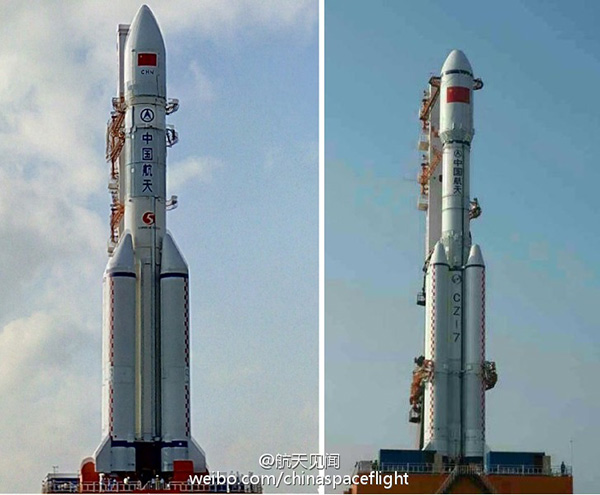
China's Long March 5 (l) and Long March 7 (r) next generation launch vehicles
China’s Long March 5 heavy lift launch vehicle (l) is the centrepiece of China’s long-term space ambitions alongside the medium lift Long March 7 (r), which entered service earlier in 2016. Credit: CCTV

China’s newest and biggest heavy-lift rocket, the Long March 5 (Chang Zheng-5) lifted-off from the Wenchang launch centre on Hainan Island, off China’s southern coast, at 12:43:14 UT or 20:43 Beijing time on Thursday, November 3rd, carrying an experimental satellite designed to test electric-propulsion technology.

With a 25 tonne low Earth orbit payload capacity, the Long March 5 stands on a par with the current crop of heavy lift launch vehicles in operation around the world. The product of two decades of research and development, it is destined to become a centrepiece of China’s growing space ambitions.

Among its may missions, the Long March 5 will play a leading role in the construction of China’s upcoming space station, starting with the launch of the core Tianhe (“Harmony of the Heavens”) module in 2018. When completed in 2022, the 60-tonne station will comprise the core module supported by the Wentian (“Quest for the Heavens”) and Mengtian (“Dreaming of the Heavens”) pressurised experiments modules, all of which will be linked by a multi-port adaptor / EVA airlock.

Continue reading “Space Sunday: of moons, storms and rockets”

Space Update: Planet Nine, “signalling” stars and a quick round-up

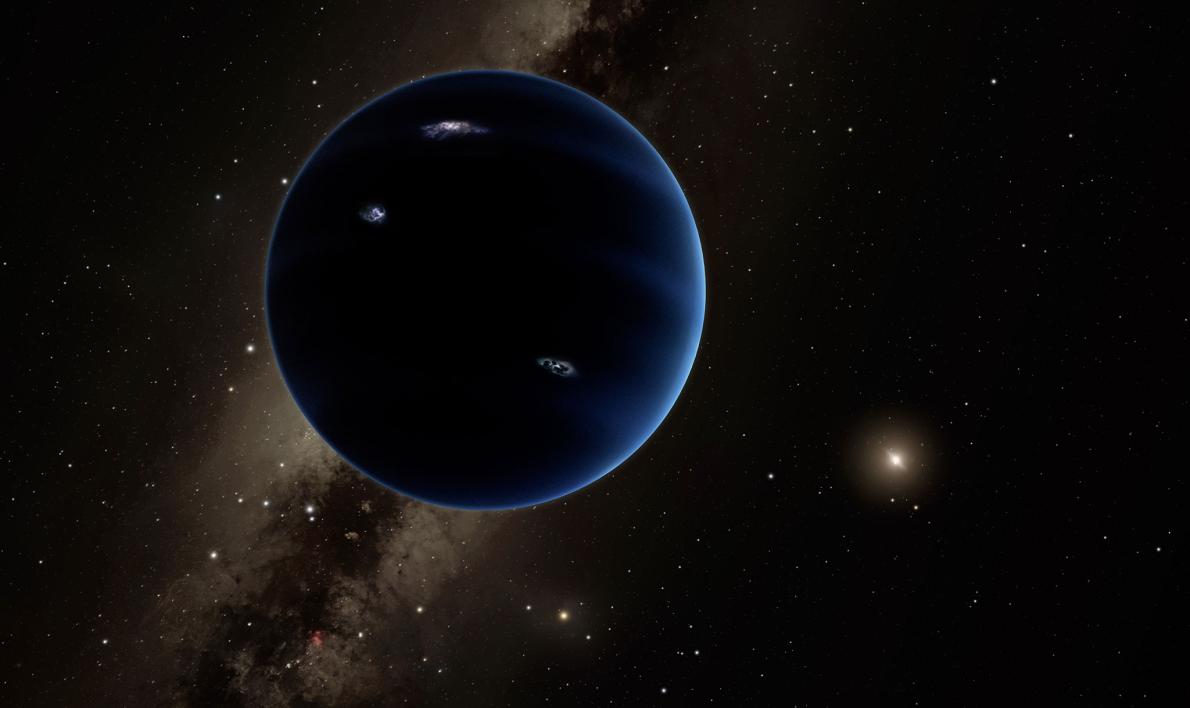
Planet Nine, if it exists,could equal Neptune in size, and orbits the Sun 200 times further away than Earth. Credit: Caltech / R. Hurt
Planet Nine, if it exists,could equal Neptune in size, and orbit the Sun 200 times further away than Earth. Credit: Caltech / R. Hurt

In January and February 2016, I wrote about Planet Nine (or Planet X, George, Jehoshaphat, or Planet of the Apes, depending  your preference), the Neptune-sized world believed to be orbiting the sun on the very edge of the solar system in a highly eccentric orbit. Since then, the search for this mysterious world has continued, and while it has yet to be located, evidence that it exists has been mounting. Not only that, but astronomers now believe it might explain why the solar system is “tipped”.

The Hunt started after Mike Brown, a leading planetary astronomer at the California Institute of Technology (Caltech), and his colleague Konstantin Batygin developed a computer model which showed that the very eccentric orbits of six Trans-Neptunian Objects (TNOs) located in what is called the scattered disk,  a sparsely populated region of space between 30 100 AU from the sun, overlapping with the Kuiper belt, could have been due to the influence of a massive, distant planet. At the time, they noted that if the model was correct, other TNOs would likely  occupy equally distinct orbits.

A planet averaging about 10 times as massive as Earth, called Planet Nine could explain the paths of six distant objects in the solar system with mysterious orbits
A planet averaging about 10 times as massive as Earth, called Planet Nine could explain the paths of six distant objects in the solar system with mysterious orbits. Credit: Caltech / R Hurt

At the joint European Planetary Science Congress (EPSC) and American Astronomical Society’s Division for Planetary Sciences (DPS) in October, it was revealed more TNOs fitting the model have been discovered over the past several months. Two of them,  2013 FT28 and 2014 SR349, precisely fit the same type of orbit seen the original six objects used by Brown and Batygin model. Five more have been found in orbits which are effective perpendicular to Planet Nine’s believed orbit around the Sun, something predicted by the computer model.

All of this is helping to narrow down Planet Nine’s potential orbit around the Sun, and the arc of that orbit where it might be found. So much so that Batygin, Brown have teamed with original proponents for Planet Nine Chad Trujillo and Scott Sheppard to use the 8-metre Subaru Telescope atop Mauna Kea in Hawaii to carry out a  search of the night sky. Sheppard and Trujillo are also using two telescopes in Chile to search the possible sweep of the planet through the southern hemisphere’s night sky. And they are not alone.

The Brown / Batygin model for Planet Nine indicated the planet would cause some TNOs to ine in orbits perpendicular to the planet's own eccentric orbit around the Sun - and five such object have now been discovered (shown in teal, with the original TNOs possibly influenced shown in magenta. Credit: Caltech
The Brown / Batygin model for Planet Nine indicated the planet would cause some TNOs to lie in orbits perpendicular to the planet’s own eccentric orbit around the Sun – and five such object have now been discovered (shown in teal, with the original TNOs possibly influenced shown in magenta. Credit: Caltech

Also at the planetary conference, graduate student Elizabeth Bailey, using Brown and Batygin’s data presented a paper proposing how the odd tilt to the solar system’s major planets relative to the Sun might be due to Planet Nine.

With the exceptional of Mercury, all the major planets in the solar system orbit along a plane tilted by about six degrees from the Sun’s equator. This suggests either the Sun was somehow tipped on its axis in the past, or the planets have been pulled from their original alignment along the Sun’s equatorial plane. Of these two ideas, the preferred option has been for exotic interactions between the early Sun’s magnetic field and the primordial disk of gas surrounding it, inclining the latter, which then formed the planets. However, Bailey’s simulations suggest that a large body occupying Planet Nine’s predicted orbit could have had sufficient influence on the Sun over some 4 billion years to have slowly tipped it over by six degrees. Bailey’s hypothesis was supported by a  Brazilian team of astronomers, who used a different analytical method while working independently from her, and reached the same conclusion.

As it might be: estimates concerning Planet Nine's possible size, mass, etc., should it exist. Credit: Space.com / Karl Tate
As it might be: estimates concerning Planet Nine’s possible size, mass, etc., should it exist. Credit: Space.com / Karl Tate

Even so, some remain sceptical that the mysterious world exists. “I give it about a 1% chance of turning out to be real,” says astronomer JJ Kavelaars, of the Dominion Astrophysical Observatory in Victoria, Canada. Interestingly, his fellow researcher and collaborator Cory Shankman,  has created models with the exact orbits of the original six TNOs used by Brown and Batygin, and found that a massive planet would not maintain their tell-tale clustering for long periods.

Thus, the search for the solar system’s mysterious Planet Nine, continues.

ETs Phone Home?

Are aliens sending signals using their own stars? That’s what might be happening, according to astrophysicists Ermanno Borra and Eric Trottier, from Laval University in Quebec; although they admit it’s only one possible explanation for what they appear to have discovered.

It was in 2012 that Borra predicted intelligent aliens might use the light from their own stars to signal their existence to the cosmos. Using data from the Sloan Digital Sky Survey, Borra and Trottier analysed the spectra of 2.5 million stars to see if this might be the case – and found 234  which seem to be broadcasting a signal of the kind predicted by Borra.

The “signals” are pulses in the stars’ light, separated by a constant time interval. What’s more, all 234 stars are predominantly in the F2 to K1 spectral range, which is the small range of stars centred on the spectrum of our own life-supporting Sun, and thus the broad group of stars thought might support life on planets orbiting them.

The Sloan Digital Sky Survey telescope, New Mexico. Credit: SDSS / Fermilab Visual Media Services / NASA

However, as Borra and Trottier note in their paper – which has yet to be comprehensively peer-reviewed – the pulses could be the result of natural factors such as rotational transitions in molecules or the Fourier transform of spectral lines. It might even be due to rapid pulsations in the stars themselves. Nevertheless Borra and Trottier have tended to dismiss rotational transitions on the grounds that such behaviour isn’t common to these types of star. They also think it unlikely a Fourier transform is responsible.

Instead, they lead towards either the “signals”  being an artefact produced by data reduction on the part of the Sloan instrument, or the work of ET, with a slight emphasis towards the ET side of their thinking.  Others, having read their paper, are far more sceptical.

“It seems unlikely that 234 separate alien societies would be sending out such similar signals more or less simultaneously” Seth Shostak, a senior astronomer at the SETI (Search for Extraterrestrial Intelligence) Institute in Mountain View, California said. “It would be like expecting us to send the same signals as the Abyssinians — it doesn’t make a whole lot of sense.” Instead, Shostak leans towards the data reduction explanation; as does Occam’s Razor.

But a further possible explanation has been suggested: that the signals are due to highly peculiar chemical compositions in a small fraction of galactic halo stars which has  never been previously encountered. While not as exotic as aliens using their stars as signalling devices, should this prove to be the case, it would still be a remarkable new discovery.

Continue reading “Space Update: Planet Nine, “signalling” stars and a quick round-up”