Space Sunday: catching a rocket in a net; the dangers of dust

Smoking pouring from it upper end, possibly as a result of a non-critical fire in the interconnect bay, the first Long March 10B to fly a mission to orbit settles towards “net” capture aboard the recovery vessel LingHang Zhe, July 10, 2026. Credit: CCTV

A lot of people laughed when China announced it planned to develop a launch vehicle with a reusable first stage that would, on its return to Earth, be caught by a net. Well, they’re not laughing any more.

On Friday, July 10th, a Long March 10B (CZ-10B) medium lift launch vehicle (MLLV) lifted-off from the Wenchang Commercial Space Launch Site, China’s first commercial spaceport on the type’s maiden flight. Roughly in the same class of vehicle as the SpaceX Falcon 9, the CZ-10B has a 16-total maximum payload capacity and is a derivative of the the CZ-10 design, specifically developed for the commercial space sector and for its first stage to be recovered.

This maiden flight not only tested the system for recovering the rocket’s first stage but confirmed the rocket’s ability to deliver payloads to orbit, which it did so successfully. The vehicle lifted-off at 04:14 UTC, climbing up through Max Q and to upper stage release altitude. Following separation, the booster stage then continued on an upwards ballistic trajectory before starting a fall back towards Earth, deploying a set of grid fins to maintain its vertical orientation and providing steering during the passive descent for an at-sea recovery.

The Long March 10B recovery ship LingHang Zhe without the capture gantry mounted on her deck (although the groups of raised fitting plates can be seen). Credit: China in Space

Following a powered re-entry into the denser atmosphere – lessening the dynamic stresses on the booster – it dropped in an unpowered state to just over 1 km altitude, when the 7 YF-100K motors were relit and, under automated control, the booster steered towards the recovery vessel LingHang Zhe (“Navigator”) with its huge recovery gantry. Under the guidance of four LIDAR systems mounted on the gantry, the booster positioned itself over the middle of the gantry, and began a slow final descent, deploying four hooks on its upper end.

At the same time, the LIDAR system guided four arresting cables along the gantry so they enclosed the booster which was then commanded to shut down its engines. Doing so, it gently dropped the last couple of metres, the hooks catching the arresting cables, which acted alike shock absorbers, bringing the booster to a gentle stop before tensioning. Whilst not seen in the videos released of the landing, the gantry includes a circular restraining mount which can be rotated out, allowing the booster to be placed within it by the arresting cables, securing it for the voyage back to port.

A camera on the side of the CZ-10B provides a view down as the booster positions itself over the capture gantry aboard LingHang Zhe. Credit: CCTV

Incidentally, if you’re wondering about the thick black smoke pouring out of the top of the booster as seen in the video below, it is believed that dumping excess RCS propellants out through valves in the top of the booster (designed to minimise shipboard crew exposure to toxic hypergolic propellants) resulted in a small fire in the booster’s interconnect bay.

If this all sounds mind-bogglingly crazy compared to putting landing legs on the booster and allowing it to land directly on the ship a-la SpaceX / Blue Origin, it actually isn’t. A direct landing system requires landing legs, shock absorbers, a deployment mechanism, etc., whilst the booster itself requires strengthening against the shocks and stress of landing. All of this makes the booster heavier, more complex and thus less payload-capable. It also means the structure of the booster has to be extensively checked for micro fractures, etc., and multiple landings take their toll. None of this is the case when the booster a captured like this. As a result, the booster can be simpler, lighter and lift heavier payloads. Hence why SpaceX discarded landing legs for Starship / Super Heavy.

Following the CZ-10B success some critiqued the Chinese system because any collision between a descending booster and the gantry / capture system could destroy the latter. However, the same is true for Starship / Super Heavy, only more so: it is easier to replace a damaged gantry system when the ship returns to port (or on land, if the Chinese also go on to use land-based captures) than have to completely rebuild an entire launch / return site).

One other interesting offshoot of this is that the CZ-10B first stage is nigh-on identical to the CZ-10 first stage (other than the latter not being reusable). Three of the CZ-10 first stages are to be used to initially power the full CZ-10 which it commences operations – much as three Falcon 9 first stages power the Falcon Heavy. Therefore, it is possible that has experience is gained with capture operations, the Chinese might also launch the CZ-10 using one or more recoverable CZ-10B first stages, thus lowering CZ-10 lunch costs somewhat.

 Asteroids, Collisions and Dust

The subject of asteroid impacts on Earth has come up numerous times in this column. While the risk of such an impact is – relatively speaking – small, it is far from non-existent. The 2013 Chelyabinsk meteor at 18 metres across, for example is in the size category of asteroids liable to strike Earth once every decade (ish). Then there is the Tunguska event of 1908. That’s thought to have been caused by a stony asteroid 50-60 metres across and devastated 2,150 square kilometres of forest. This kind of impact is believed to happen once every 1,000 years.

An artist’s impression of a small (approx 60m) asteroid air burst disintegration over a city. Credit: Igor Zh./Shutterstock

Both of these were air-burst events, the Chelyabinsk object exploding at an altitude of some 30km, and the Tunguska object at around 7km.

The latter came apart with an energy yield of 22.79 megatons. If such a blast were to occur over a city like New York, the thermal radius (the distance at which people exposed to the blast would receive at least third-degree burns) would be 112 km, whilst the 20psi blast radius (enough to demolish buildings and cause 100% fatalities among those caught by the shockwave) would be 21 km.

A simulation of the effects of a Tunguska-sized asteroid fragment exploring some 7 km above Central Park, New York. Credit: NASA Meteor Impact Simulator

However, if the Tunguska object had been an iron-nickel asteroid rather than stony, things get a lot worse because the asteroid would be solid enough to impact Earth, causing a crater some 2.5 km in diameter. The energy yield from the impact would be around 59 megatons; the 20psi blast radius some 24.2 km; and the thermal radius 220 km, while estimated immediate fatalities would be in the 1-3 million range.

This is why decades have been devoted to identifying and tracking near-Earth asteroids in order to assess the threat of one striking Earth at some point in the future. Thus far, over 32,500 such objects have been catalogued, ranging in size from a few metres in diameter to over 1 km across (853), with over 10,500 around three times the size of the Tunguska object. While none has been identified as presenting a real threat of hitting Earth, they represent less than half of the estimated total number of potentially threatening NEAs.

With the map at the same scale, a simulation of a iron-based, Tunguska-sized asteroid fragment impacting Central Park, New York City. Credit: NASA Meteor Impact Simulator

Hence why, as well, the news that China is planning on joining the hunt to find more potentially dangerous NEAs has been welcomed. The announcement was made on June 30th, International Asteroid Day and was a little lean on details. However, based on recently-published papers coming out of China, it appears the broad plan is to establish a combined ground / space effort to hunt and track NEAs and add gathered the information to the growing international database on the subject.

The ground-based effort is to be a chain of large-aperture optical telescopes placed at advantageous high-altitude locations around the world where they can scan the skies continuously at night. In space, China is looking to launch an observatory to the Sun-Earth Lagrange L1 position where it has the Sun behind it and so can much more effectively scan for NEAs both visually and in the infrared – the latter being the route the European Space Agency is taking with its planned NEOMIR (Near-Earth Object Mission in the Infrared), due to launch in the 2030s.

This point in space is important because many NEAs come at us “out of the Sun”, so we’re unable to see them until they are literally right on top of us – or worse, have zipped by without being seen, and we only spot them as they head off back around the Sun – so if one of that had hit Earth, we’d only have known about it after the bang (if at all).

An artist’s impression of NEOMIR occupying the Sun-Earth L1 position as it observe the space around Earth for potential near-Earth asteroids which may pose a threat. Credit: ESA

In addition to the Sun-Earth Lagrange L1 position, China has indicated it may also place an observatory in orbit around Venus and another in what is called a distant retrograde orbit around the Moon. Both of these positions would again allow near-continuous observation of the space around the Earth-Moon system.

Of course, identifying a potential threat is one thing; what to do about it is quite another – which is not to say we don’t have any ideas. If the threat is identified whilst it is far enough away (or when its current orbit will not result in a collision), then the solution could be to give it a short, sharp nudge so its trajectory and orbit changes sufficiently such that it will no longer strike Earth. This is the concept put to test in NASA’s 2021/2022 Double Asteroid Redirection Test (DART), which deflected one asteroid orbiting another by slamming a spacecraft into is at a precise angle and velocity.

Moment of impact: the DART spacecraft impacts the 160-metre across asteroid Dimorphos (top) as it orbits the 780-metre diameter Didymos. The event was captured by a camera on the LICIACube satellite which piggyback to Didymos on DART before separating. Credit: Italian Space Agency

For larger objects, a proximity blast from a nuclear warhead could achieve the same by vaporising a portion of the object’s surface and generating the thrust needed to divert it. If the object cannot be deflected, it could potentially be vaporised using a combination of kinetic impactor and nuclear warhead – the impactor driving the warhead deep into the object prior to detonation, leaving a cloud of dust and debris small enough none of it would survive re-entry into the atmosphere.

Or that has been the perceived thinking until now. Also at the International Asteroid Day astronomers from the University of Edinburgh presented a paper demonstrating how dust from an impact with an NEA – and more particularly “space dust” in general – is now posing a very real threat to our ever-increasing orbital infrastructure and our reliance upon it; a threat that has not really been considered until now.

As we’re all aware, the space around Earth is getting very crowded. The number of satellites in orbit, for example has risen from 1,500 just under 10 years ago to over 12,000 today – and that number is steadily increasing. On top of this, there are literally tonnes of human-made junk in orbit – decommissioned or failed satellites, parts of launch vehicles, debris from anti-satellite missile tests, even bits of equipment lost during spacewalks. All of this has given rise to fears of a Kessler Syndrome event: a single collision between, say, a lump of junk and a satellite starting a cascade of collisions between debris and satellites until much of that orbital infrastructure (potentially including the space stations) becomes a massive orbital cloud of debris that renders large part of the space above us unusable.

Hence why there are increasing efforts to try to clean-up the “junk”.  Unfortunately, most of these rely on shunting dead satellites and other large objects into the atmosphere to burn up – which leads to a whole other problem of atmospheric pollution I’ve previously covered (see here and here for example) and outside the scope of this piece.

Some of the existing and potential future threats of dust and natural debris might generate for our growing on-orbit infrastructure. Credit: Murphy & Cannon / University of Edinburgh

However, in their paper the Edinburgh team points out that the dust created by something like an asteroid impact mission, or those that give rise to the annual series of meteor showers we witness each year  – such as the Perseids every July / August (the result of our passage through a cloud of debris left by the passage of comet Swift-Tuttle around the Sun once every 133 years), or the Geminids (the result of trails of dust almost constantly being thrown off by the asteroid 3200 Phaethon as it zips around the Sun) – is travelling at tens of kilometres per second. Just a single impact from one piece of this dust could be catastrophic for a satellite or space craft.

This certainly happened in 1993, when particles later identified as being from the dust cloud causing the Geminids struck Europe’s $1.2 billion Olympus 1 communications satellite, resulting in its loss. It is also possible (but unconfirmed) that the dust responsible for 2022’s coolant leak aboard Soyuz MS-22 may have come from the dust that generates the Geminids meteor shower.

The point here is, as the paper notes, that while many clouds of dust and particles are known, how we pass through them is variable; most of the time Earth tends to whisk through the outer limits of such clouds. But once every 2-3 decades orbital mechanics dictate that we pass far deeper through several of them over the course of a few years, experiencing far more spectacular meteor showers in our night skies.

One of those periods is due to start in 2028 and run through until 2034. It will be the first one we’ve experienced since the “orbital boom” in satellites in low and medium Earth orbit began – and right at the time we’re trying to get back to the Moon and when activities in orbit will be expanding with new commercial space stations, etc. The University of Edinburgh study suggests that just a 5% uptick in the volume of dust encountered during this period could be enough to trigger on or more Kessler Syndrome events sufficient to cause major damage to most communications, defence data, relay, GPS, and other satellites in relatively short order – and could even impact activities on the Moon or cislunar space. Or it may not; the point is, we simply don’t know.

Another problem here as well is that dust cannot be deflected, so we need spacecraft and satellites better able to deal with it. Thus, the Edinburgh study calls for the formation of two international bodies: the International Commission on Space Infrastructure Resilience (ICSIR), and WARDEN (Warning-network for Asset Resilience from Dusts, Ejecta, and NEOs).

ICSIR, an independent group of experts would investigate the aforementioned risks, and work to integrate our space-based infrastructure into planetary defence systems and methodologies, and establish a managing framework to deal with the treat in cooperation with other planetary defence initiatives.

The ICSIR roadmap. Credit: Murphy & Cannon / University of Edinburgh

WARDEN, meanwhile, would use ICSIR’s finding to work with spacecraft and satellite manufacturers to try to mitigate as many of these threats as possible through improved engineering and hardware resilience.

It’s not clear if the recommendations of the report will be taken up directly, but it does offer a startling reality check on the continuing efforts to just lob everything into orbit to solve whatever the problem of the day might be (yes, I’m looking at you, “space data centre” enthusiasts).

Space Sunday: Starliner, a rover and a rebuild

Starliner Calypso closes on the ISS for docking during the Crew Flight Test, June 6th, 2024. Credit: NASA

Following on from my previous piece on recent NASA Office of Inspector General (OIG) reports about NASA’s launch infrastructure and the costs associated with Artemis / SLS, Thursday June 30th, 2026 saw the release of the OIG’s latest audit of the NASA Commercial Crew Programme (CCP) which gave rise to the SpaceX Crew Dragon and Boeing Starliner vehicles.

As those with an interest in space exploration are aware, one of these vehicles – SpaceX Crew Dragon – has been providing a successful service in ferrying astronauts to and from the International Space Station (ISS), whilst the other – Starliner -, despite two uncrewed and one crewed flight test has, yet to enter service. Unsurprisingly, the OIG audit report does not pull any punches where the Boeing system is concerned. However, its target is not so much Boeing as it is NASA itself.

The report starts by noting that whilst both Crew Dragon and Starliner where technically challenging developments, NASA opted to focus primarily on the SpaceX project in terms of management oversight and intervention, despite the fact Crew Dragon was proceeding from a vehicle already in operation: the Cargo Dragon. Meanwhile, Boeing, despite designing a brand new vehicle from the ground up, was subject to far less NASA oversight and management.

A further complication with Starliner was identified as the use of the United Launch Alliance Atlas V; this effectively split vehicle development between two companies, where SpaceX were responsible for both Crew Dragon and the modifications required to its Falcon 9 launch vehicle. Credit: NASA OIG

Instead, NASA management opted to put their faith in Boeing’s “heritage” procedures and workflows, allowing the company to develop Starliner with minimal intervention. This resulted in programmatic and development issues escaping NASA’s attention where a more hand-on approach would likely have seen them spotted and measures put in place to rectify them long before they became issues deeply embedded in the vehicle’s design.

Nor is the report limited to the development path with Starliner; it is deeply critical of NASA management following the 2024 Crew Flight Test (CFT). This should have been an 8-day test of Starliner liner under crewed control, including time docked at the International Space Station (ISS). However, the vehicle suffered issues remarkably similar to those experienced during the second automated test flight, so it returned to Earth without its crew of Barry “Butch” Wilmore and Sunita “Suni” Williams, who remained on the ISS for a further 278 days before returning to Earth on a Crew Dragon vehicle.

Cutaway of Starliner showing major elements, including the “doghouse” thruster blocks which have been the cause of the vehicle’s major ills. Credit: Boeing via BBC

Under NASA’s own requirements, the CFT should have been classified a Type A mishap, prompting an immediate, NASA-led multi-disciplinary investigation into the flight and Starliner, with full root cause analysis, culminating in the development of a complete plan to remediate issues identified and bring Starliner back to operational readiness. Instead, NASA management labelled the flight a “partial success” and maintained their hands-off attitude to addressing Starliner’s issues.

It was not until Jared Isaacman took over at NASA that the CFT was reclassified a Type A mishap, meaning that for 21 months following the flight, Boeing management left to their own devices at a time when the company was known to be experiencing considerable managerial and programmatic issues across a range of its projects and programmes.

The irony here, as the report also notes, is that while this necessary reclassification has now occurred, more recent staff restructurings at both NASA and Boeing mean that neither organisation is in a position to properly drive the Starliner programme, with the result that the OIG casts doubt as to whether the craft will transition to an operational status ahead of the ISS being shut down in the latter half of 2030. As it stands, Starliner is supposed to complete four crew transfers to the ISS between 2026 and 2029, with perhaps only the 2028 and 2029 flights actually happening as planned.

Worse, the report notes that manage has under planned CCP requirements: even if the four Starliner mission do go ahead, they and the three SpaceX missions planned for the same period are insufficient to maintain a US presence on the ISS through until August 2028.  Therefore, NASA is likely to have no choice but to order further transfer flights, with SpaceX liable to be the recipient of the contracts.

In closing, the report notes that CCP was supposed to provide NASA with two crew-carrying vehicles capable of being operated cooperatively but somewhat competitively with one another, rolling contracts for missions being awarded on the basis of reliability and cost-effectiveness. This has not been the case; Starliner’s issues have meant that SpaceX has been the only game in town for crewed launches from US soil – as as such, they’ve had some degree of unilateral freedom to set the costs of flights sans competition. Meanwhile, and despite Boeing effectively having its original contrast reduce by US $500 million and covering much of the extra costs involved in trying to fix Starliner in the wake of the second uncrewed flight, the entire programme has become a shambolic mess.

NASA to Send Mars OPTIMISM to the Moon as a PROMISE?

On June 30th NASA hosted its second monthly Moon Base Update to provide information on Artemis and plans to establish a human presence at the Lunar South Pole. During the event it was confirmed that three private companies – Astrobotic, Firefly Aerospace and Intuitive Machines – have received further contracts under NASA’s Commercial Lunar Payload Services (CLPS) programme to deliver payload to the Moon in support of Artemis. However, the surprising aspect of the update was the announcement of plans to send a Mars rover to the Moon.

Formally called OPTIMISM (Operational Perseverance Twin for Integration of Mechanisms and Instruments Sent to Mars), the vehicle in question is a full-sized, almost fully-equipped version of the Curiosity and Perseverance rovers (just minus the radioisotope thermoelectric generators (RTGs) which power the latter), the vehicle has been an essential tool for both rover missions, allowing engineers to trouble-shoot software, electrical and mechanical issues the two rovers have experienced in their travels on Mars.

NASA’s OPTIMISM test vehicle (now PROMISE) show with its rear to the right. The two angled brackets are designed to hold a nuclear RTG “battery” and its protective casing / shielding on its operational siblings, Curiosity and Perseverance. Credit: NASA

Under the lunar plans, the vehicle is to be renamed PROMISE (Polar Rover for Observation, Mapping, and In-Situ Exploration –  someone at NASA gets to stay up very late dreaming up acronyms!), and would be delivered to the Moon where it could operate largely autonomously. If the vehicle could be readied and flown in time, it could act as a valuable survey scout and mobile lab, gathering data and carrying out experiments that could greatly help in characterising the Lunar South Polar Region ahead of human landings. However, there are some issues around the idea:

  • Loss of an engineering and software test-bed for the on-going Curiosity and Perseverance missions on Mars, potentially impacting their longevity should a significant issue with either develop in the future.
  • The rover will likely require the development of a suitable lander system for delivering to the Moon, assuming the “skycrane” approach cannot be modified for use in lunar deployments. This will take time – potentially years.
  • As a nuclear powered vehicle, it will require an RTG. These are no longer manufactured and in short supply. Use of one with PROMISE means denying its use on a deep-space mission.
  • The rover will face a far wider range of surface temperatures on the Moon than its systems were designed for when operating on Mars. This means it will require substantially more in the way of heating in order for delicate systems to withstand the cold lunar nights and, conversely, a cooling system so those same systems don’t overheat during the heat of the lunar daytime.

As such, there are considerable pros and cons to the idea, so exactly where this idea goes will be worth following.

Updates

Blue Origin Updates and Unveils

Blue Origin has provided an update on efforts to get Launch Complex 36 at Cape Canaveral Space Force Station back to an operational status following the catastrophic explosion of the NG-4 vehicle in May 2026 which wiped out the main launch pad and caused considerable surrounding damage, including to the vehicle and payload integration building, shown below.

The vehicle and payload integration building at lunch complex 36, Cape Canaveral Space Force Station, home of the New Glenn rocket. Note the blast damage to the large pad-facing roller doors. Credit: Blue Origin

As a part of this update, the company provided a video animation revealing how they plan to both equip the rebuilt launch facilities and prepare their New Glenn rockets – both the existing 7×2 vehicle and the in-development 9×4 (the numbers refer to the count of first and second stage engines on each version) – for launch.

Prior to the NG-4 static fire test explosion, Blue Origin utilised a 1,800 tonne Transporter Erector (TE) and a series of hydraulic actuators on the pad in order to get New Glenn to the pad and ready for launch. These were all completely destroyed in the May explosion. The TE would deliver the rocket to the pad horizontally, the actuators connected and then both rocket and TE would be raised to the vertical, the base of the TE becoming the rocket’s launch platform and the TE’s strongback its “launch tower”.

Under the new plans, a New Glenn will be moved to the launch pad by a simplified transporter and without the payload attached. A mobile crane will then raise it the the vertical and lift it onto a new permanent launch platform on the pad, with a new tower supporting the rocket through until launch.

The latter will actually be the lightning conducting tower which survived the NG-4 explosion, completely repurposed and expanded to fulfil the role of launch tower. It will include two halves of a rotating service platform designed to fit around the upper part of the rocket, allowing the payload within its fairings to be lifted into position by crane, with the necessary connections between it and the rocket then being made.

The overall plan is daring in scope and still ambitious, given that Blue Origin is sticking to their bullish view New Glenn will return to flight before the end of 2026.

This week also saw Blue Origin unveil their planned lunar Power Tower system for use on the Moon.

Whilst the preferred means of powering a lunar base is nuclear, there are some significant challenges to overcome to make this a reality. In the interim, solar power remains an option – at least to a limited degree, given nights on the Moon last 14 terrestrial days making any sole reliance on solar impossible. However, even when the Sun is above the horizon, it remains at a relative low angle in the sky, and this can limit the ability of ground-based solar arrays in gathering sunlight, as they can easily end up stuck in shadows for long periods of the lunar day.

The Blue Origin Power Tower, which can be delivered to the Moon on specialised Blue Moon MK1 landers – offers a possible means of continuous solar power during the lunar day by suspending “sails” of solar arrays from a 20+ metre tall deployable boom system, thus lifting them clear of areas of shadows, etc.

Exactly how effective such a system might be is open to debate, but the system could potentially help power smaller outposts and stations during lunar daylight hours and which are both beyond the reach of having power routed to them from nuclear reactors and do not need to be in constant use.

Swift Rescue Mission Launches

Following my previous Space Sunday report, the mission to rescue NASA’s Neil Gehrels Swift Observatory finally launched on Friday, July 3rd after weather and a software issue conspired to delay the mission for three days.

The launch was flown out of the Ronald Reagan Space and Missile Test Range located on the Marshall Islands in the South Pacific, the Pegasus XL rocket – the last one scheduled to be used – carried to an altitude of 12,000 metres by As I noted last time, the mission was air launched utilising a Pegasus XL rocket (the last mission the rocket will actually fly) carried aloft by Northrop Grumman’s modified Lockheed L-1011 aircraft Stargazer. At 08:36 UTC on July 3rd, the aircraft passed through the designated drop zone for the mission and the Pegasus XL was released, allowing it to fall safely clear of Stargazer before its rocket engine ignited sending it into low Earth orbit in just under 10 minutes.

A set of an artist’s renderings of LINK in space and rendezvousing with Neil Gehrels Swift Observatory, ready to gently push it up to a safe operating altitude before atmospheric drag causes it to re-enter the atmosphere and burn up. Credit: Katalyst Space

Following deployment from Pegasus, the 4.9 metre long LINK deployed its solar arrays for power and is currently going through an initial systems check-out. Once this has been completed, the craft will fire its ion thrusters to gradually close on the Swift observatory. Once within range, LINK enter a 2-3 week observation of Swift, flying around it so that engineers can confirm the best point for LINK to attach itself itself to the observatory to commence the operation to raise Swift’s orbit and save it from burning-up in the upper atmosphere.

The lifting manoeuvre will last several months, boosting Swift from its present 300 km altitude to around 600 km, adding at least another 5 years to Swift’s mission in the process. Not bad for a mission that cost US $250 million and was supposed to last just 2 years when it commenced 22 years ago, and a rescue mission which has cost just US $30 million and was put together in just nine months.  

Space Sunday: NASA – a rescue attempt, costs & infrastructure

Northrop Grumman’s Lockheed L-1011 Tristar Stargazer lifting a Pegasus XL air-launched vehicle to altitude ready for deployment. Credit: USSF

A daring rescue attempt in space is due to commence at 10:23 UTC on June 30th. It will cost NASA some US $30 million, but if successful it will be priceless.

The mission is to rescue the Swift Observatory, a three telescope observatory operating in low Earth orbit for primarily studying gamma ray bursts (GRBs). Smaller than the famous Hubble Space Telescope, Swift – and that’s a name, not an acronym – has been in operational since 2004. It’s a partnership programme between NASA Goddard, the UK and Italy, and was in part intended to take over the work of the Compton Gamma Ray Observatory, which ceased operations in 2000, only with far greater sensitivity.

Originally intended to have a primary nominal mission of just 2 years, Swift has continued to operate almost flawlessly and its science mission has expanded so it ow functions as a general-purpose multi-wavelength observatory, particularly for the rapid follow-up and characterization of astrophysical transients of all types. It was given its name because of the speed with which it can move between targets of interest. Where Hubble can take up to 2 days to re-orient itself to observe different targets, Swift can do so in minutes, allowing it to carry out up to 70 individual observations a day.

The Neil Gehrels Swift Observatory Observatory. Credit: NASA

This speed is important and the phenomena it is observing can be relative transient – particularly GRBs. What’s more it can re-orient itself complete autonomously; when its Burst Alert Telescope (BAT) picks up on a target, it can rapidly slew itself to observe the event without ground-based intervention. Afterwards, it will also automatically re-orient itself to resume whatever other observations it was carrying out beforehand.

Now officially called the Neil Gehrels Swift Observatory in honour of the mission’s first Principal investigator, who passed away in 2017, Swift has been in trouble over the course of the last 18 months as increased solar activity during the current Solar Maximum cycle has caused an expansion in Earth’s atmosphere (as commonly happens) which has exacerbated the observatory’s rate of orbital decay. If not corrected, Swift’s altitude will fall below 300 km, and shortly thereafter it will start to tumble and re-enter the atmosphere.

To the rescue: Katalyst Space’s LINK. Credit; Katalyst Space

Given its science value and relative low cost (US $250 million), the decision was taken to try to boost Swift’s altitude using a custom-build satellite designed and built by Katalyst Space in just nine months. Called LINK, the relative small, solar-powered vehicle is due to be air launched aboard a Northrop Grumman Pegasus XL vehicle carried aloft by a modified Lockheed L-1011 aircraft called Stargazer.

Taking off from the Ronald Reagan Space and Missile Test Range located on the Marshall Islands in the South Pacific, Stargazer will carry the Pegasus XL to altitude before releasing it to allow its rocket motor to ignite and carry it to orbit were the nose-mounted payload can be deployed.

The plan calls for LINK to spend a number of weeks undergoing its own commissioning tests prior to it rendezvous with Swift and use three small robot arms to connect to the observatory and then use its ion thrusters to gently push Swift into a higher orbit – up to its original 600km orbit – before detaching to allow the observatory to continue operations for at least another five years.

LINK mounted on a Pegasus XL air launch rocket with the payload farings about to be fitted around it. Credit: Northrop Grumman

If LINK is successful, it will be a remarkable success – and a major gain for Katalyst, which plans to start offering satellite reboosting services to customers and already has a contract with the United States Space Force. This involves the company’s larger Nexus vehicle, with the first flight due in 2027 with LINK being very much a proof of concept flight for Nexus.

NASA’s OIG Reveals Out-of-Control Nature of Artemis Expenditure

The US Space Launch System (SLS) rocket has frequently been criticised on the basis of its huge launch cost – around US $2.5 billion, which the US government’s own Office of Management Budget (OMB) indicated would likely rise to US $4 billion per launch. However, given it is the only vehicle currently able to launch America’s only deep space capable crew vehicle in the form of Orion, it is not easily replaced.

Hence why in February 2026, rather than cancelling SLS outright as some pundits had been demanding, NASA Administrator Jared Isaacman announced significant changes to the Artemis programme to return humans to the moon (see: Space Sunday: major Artemis updates and a rollback), which included cancelling just the Block 1B and Block 2 enhancements of SLS whilst extending the capabilities of the current Block 1 version to meet launch requirements until such time as alternative vehicle capable of launching Orion – most likely a modified version of the Vulcan-Centaur from United Launch Alliance – become available.

The original planned evolution of SLS, from the current Block 1 version for crewed launches through a cargo variant of the same vehicle to the Block 1B version utilising the EUS in both crewed and cargo versions, through the evolved Block 2 design with more powerful solid rocket boosters. Under the new plan, NASA will replace the Block 1B version with a “near Block 1” enhanced variant. Credit: NASA

Now, a memo made public on June 24th, 2026, NASA’s Office of Inspector General (OIG) reveals just how badly costs were getting out of control for the SLS enhancements and part of Gateway Station.

Core to the Block 1B and Block 2 versions of SLS were the Exploration Upper Stage (EUS) and the Universal Stage Adapter (USA). Ordered in 2017 from Boeing as a prime SLS contractor, EUS was supposed to be a more powerful upper stage for SLS Block 1B and Block 2, allowing SLS (together with more powerful versions of the vehicle’s solid rocket boosters (SRBs)) SLS to lift up to 130 tonnes to orbit and deliver up to 46 tonnes to lunar orbit.

A rendering of the EUS in action (engine unit, orange segment). The Tapered cone is the USA, shown connected to the Orion’s European Service Module after the fairings protecting the latter have been jettisoned post-launch and ascent. Credit: NASA

Because Boeing stated EUS development could be folded-in to their current SLS workflow, the cost for its development was put at US $962 million with initial delivery to be in 2021. By 2026 and its cancellation, some US $2 billion had been spent on EUS, with a further US $1.7 billion likely required to get it to a position where the first units could be delivered to NASA – in 2028.

The USA contract was awarded to Dynetics Inc., in 2017. It called for the development of a conical unit massing some 2.7 tonnes designed to mate the Orion space vehicle to the EUS on Block 1B and Block 2 SLS vehicles, with Orion. At 10 metres in length, 8.5 metres across where it connected to the EUS and 5.4 metres across where it connected to the Orion, USA was to carry electrical and communication paths between the two and provide environmental control to payloads during ground operations and launch and ascent.

A test article of the USA within the Vehicle Assembly Building at NASA’s Kennedy Space Centres. Credit: NASA

The original contract was put at US $131 million with initial delivery to be in 2022. By the end of February 2026 and USA’s cancellation, the cost had risen to US $497 million, with initial delivery pushed back to 2030.

Finally, for SLS at least, was the Mobile Launcher 2 (ML-2), a new version of the platforms and towers used to support SLS vehicles on their journey to the launch pad and then support them throughout launch operations. In particular, ML-2 was supposed to support Block1B and Block 2 SLS launches.

The woefully behind schedule ML-2 under construction at Kennedy Space Centre earlier in 2026. The building to the left is the Launch Control Complex for NASA launches from LC-39B (launches from LC-39A now being exclusively SpaceX). Credit: Jeff Faust

The contract went to Bechtel National, Inc., in 2019 at a cost of US $383 million and an expected delivery in 2023. By its cancellation in April 2026, the cost had risen to some US $1.6 billion with delivery pushed back to the end of 2026, earliest and it would then require some two years of validation and testing at a further cost of US $2 billion.

It addition to this, the memo highlights the Habitation and Logistics Outpost (HALO) module, indicating a reason why the planned lunar Gateway Station was cancelled beyond its sheer pointlessness.

HALO, as built by Thales Alenia Space in Europe (responsible for the International Space Station modules Harmony, Tranquillity and Columbus and the observation Cupola) under contract to Northrop Grumman, is  essentially a modified version of the pressurised module used in Northrop Grumman’s Cygnus resupply vehicle, also manufactured by Thales. HALO was contracted at 1.3 billion, with that cost rising to US $1.9 billion by the time the basic module had been delivered to Northrop Grumman ready for completion, with OIG estimating this would further increase the overall cost by the time it was ready for delivery to NASA in 2031, several years late.

The HALO pressurised module revealed as the upper section of its shipping unit is lifted clear following its delivery to Northrop Grumman in the USA from Thales Alenia in Europe. Credit: Northrop Grumman
The HALO pressurised module intended for Gateway revealed as the upper section of its shipping unit is lifted clear following its delivery to Northrop Grumman in the USA from Thales Alenia in Europe. Credit: Northrop Grumman

OIG highlighted that some of the rising costs could be laid at the feet of the contractors, with all three responsible for delays and failures, and Bechtel National being particularly highlighted for refusal to work with NASA in the planning for ML-2 construction and then ignoring NASA’s expertise in developing the original Mobile launchers. However, it also notes there have been many failures at NASA in properly managing and controlling projects and in putting contracts in place which failed to allow for full fiscal control.
Responding to the memo, Isaacman’s office indicated they were a core part of why the Artemis programme was redirected in February and also why the agency was undertaking a broader overhaul of its methods and processes related to costing and contractual management in order to reduce the risks of such major over-runs in future projects.

NASA Needs US $1 Billion in Launch Facilities Infrastructure Investment

Ahead of the OIG’s memo, the Inspector General published a report into the state of NASA’s launch infrastructure at both Kennedy Space Centre (KSC) and Wallops Island, Virginia, and the ability of both meeting the needs of Artemis and commercial launch operations. It does not make for happy reading, with KSC alone requiring around US $1 billion for essential support infrastructure updates.

In short, whilst several of the actual launch complexes at both receive lease payments from the companies using them – SpaceX, Blue Origin, Rocket Lab, United Launch Alliance, etc., – NASA is responsible for all of the underpinning infrastructure required to support such launch operations at both Wallops and KSC (with the responsibilities at the latter extending into the commercial launch facilities in the neighbouring Cape Canaveral Space Force Station (CCSFS) in what is called the “common infrastructure agreement”).

The launch facilities at Kennedy Space Centre (KSC) and Cape Canaveral Space Force Station for which NASA is responsible for all supporting infrastructure – road, power, on-site consumable supplies, communications lines, etc. Credit: NASA OIG

This infrastructure includes, but is not limited to, the roadways linking various parts of the space centres; the critical electrical power grids serving all launches facilities; the neutral gas supply systems serving them; fuelling capabilities; communications and data capabilities; flight hardware transportation – even elements such as security support and occupational and environmental health services.

The problem here is that many of these physical infrastructure elements – the roads, electric and gas systems, etc., have not been updated in a long time – in KSC’s case, not since the centre was being built in the 1960s. The result is that many are now in danger of breakage or complete collapse.

The report highlights this with just a single example: the electrical supply feeder system at KSC’s Launch Complex 39. Laid in the 1960s, this runs from the C5 substation near the Vehicle Assembly Building along underground conduits to a switch station and from there to LC-39A and LC-39B. However:

  • The loads placed on these cables are reaching the limits of their capability.
  • The conduits through which they run are a decade beyond their lifespan and literally disintegrating.
  • There is therefore a real risk of overload or short circuit which could completely remove electrical power from one or both launch pads, and there is no back-up.
  • Further, the transformers at the C5 substation are at the end of their plan lifespan and are suffering degraded performance and severe corrosion.
All electrical power supplied to LC-39A and LC-39B run through a single set of underground electrical feeders now a decade past their end of life. There are no independent back-up feeds, and even the main power transformers at the C4 substation are at the intended end of their operational lifespan. Credit NASA OIG

Elsewhere, the infrastructure is simply being over-stretched and is in need of comprehensive surveys to assess their condition and ability to meet the continued growth in demand. This is a problem exacerbated by the rapid growth of launches in the last 5.5 years. The combined launch facilities at KSC and the neighbouring Cape Canaveral Space Force Station (CCSFS) have, for example, seen their overall annual launch cadence increase by 352%.

This means that the volume of heavy refrigerated transporter carrying liquid propellants into the tank farm at KSC / CCSFS has risen from fewer than 2,000 annually in 2017 to over 8,700 in 2025 – on roads never designed to take such mass or see such volume of use.

Nor does it end there. The report indicates that with the state of the current support infrastructure at KSC / CCSFS, NASA will be over capacity in terms of the launches it can handle by 2029 unless serious work commences now – and will be unable to meet the demand for launches required to support Artemis (such as the high-cadence, 16 short-period launches required by SpaceX to send each of its HLS vehicle to the Moon (depending on how many of these are actually used)).

The 64 km of underground pipelines supplying gaseous nitrogen and helium, both vital to launch operations at KSC and commercial facilities at CCSFS are also NASA’s responsibility and rapidly approaching the point where they cannot adequately support launch operations across multiple sites. Credit: NASA OIG

The irony here is that NASA did actually make an attempt to deal with the crisis well ahead of time: in 2016, it sought Congressional approval to implement the Infrastructure Investment Fund. This would have allowed the agency to accept contributions from non-federal sources for long-term, large-scale shared infrastructure projects. Congress refused, and continued to refuse each time NASA raised the idea in various forms through until 2022.

Whilst the situation is not exactly rosy at Wallops, the approach to leasing agreements and responsibilities for infrastructure maintenance are a little different, which has the potential to help alleviate some of the concerns – which is not to say action is not required. The report duly notes that Wallops has seen launch cadence increase from 3 to 17 a year in the past 5 years, and this will increase to 43 in the next couple of years, and so elements of infrastructure there do need improving.

The report outlines a step-by-step plan for addressing the most significant infrastructure issues NASA faces at both Wallops and KSC/CCSFS. It also notes that unless Congress significantly re-evaluate infrastructure funding for NASA, under the current annual funding levels for support infrastructure, it will take NASA 260 years to complete all the required updates and modernisation.

Space Sunday: listening to the Sun and Zvezda worries

The Sun launched this coronal mass ejection at some 1,500 km/s on August 31st 2012. The Earth is included to give an impression of the scale of the CME. Credit: NASA

Most of us are probably aware of the Sun’s magnetic cycle, rising and falling through a period of some 11 years. When this cycle is at its peak – or solar maximum – the surface of the Sun literally broils with sunspots which can sit on their own or as clusters. These sunspots range in size, with the largest thus far recorded measuring over 299,000 kilometres across – large enough to swallow two Jupiter-sized planets side-by-side! The sunspots are accompanied by an increase in solar flares and coronal mass ejections (CMEs) bursting away from the Sun and its corona.

At their most violent, flares and CMEs are fully capable of knocking out satellite systems, completely overwhelming critical GPS and direct communications systems and even bring down power grids if we happen to be in the path of one. Such periods of solar maximum can also see the Sun’s magnetic field flip entirely, before returning to “normal” after two further cycles (referred to as the Hale Cycle). By contrast, periods of solar minimum saw the Sun far quieter and less prone to fits of stormy anger.

Because of the Sun’s ability to be so disruptive, understanding how it behaves and learning to understand what we are seeing as a solar cycle progresses is becoming increasingly critical to maintaining our civilisation’s ability to function. Take GPS systems for instance. Whilst the help guide us when travelling, the signals they output play a critical role in things like the operation of power grids and oil rigs – and even financial systems and services. So a CME overwhelming a system like Galileo or GPS could do far more than just inconveniencing a trip to granny’s new house…

Thus, observations of the Sun from the surface of the Earth, of local orbit and from deep space – including fairly up close and personal to the Sun with missions such as the Parker Solar Probe – has become an essential element in maintaining much of the technology on which we depend. However, we’re not just observing the Sun visually: for the last 40 years we’ve been listening to it as well; in doing so scientists have found that something quite unexpected is going on inside the Sun.

The Parker Solar Probe orbits the Sun at a distance of a few million kilometres. Rendering Credit: NASA

Since 1987 a team of scientists based out of the University of Birmingham in the UK have been operating a series of specialist observatories located in the Americas (California and Chile), Europe (Spain), South Africa and Australia (Western Australia and New South Wales). Across 40 years, the network – called BiSON (Birmingham Solar Oscillations Network) – has been listening to the Sun’s “heartbeat”, oscillations within the Sun caused by sounds generated inside the Sun’s churning innards and which bounce around through the various layers. These oscillations can actually reveal much about what is going on within the Sun in a science called helioseismology. And what BiSON has discovered is twofold.

The first has been that, contrary to expectations, the period of solar minimum in a cycle is significantly different to the last, and that far from being a calm interregnum between the more violent peaks of the Sun’s cycles, each period of solar minimum carries within it indicators of just how violent the next period of solar maximum is likely to be – at least, to a point.

The second finding is more confusing. The majority of the Sun’s magnetic activity occurs within a layer below its surface – and throughout the period of listening by BiSON, this layer has been growing increasingly shallow, effectively squeezing the Sun’s magnetic activity into a smaller and smaller area. In theory, this squeezing should result in the Sun’s magnetic activity becoming more energetic and the periods of solar maximum more violent; but that’s not the case. Instead, two things are happening.

The BiSON observatory at Las Campanas, Chile. Credit: University of Birmingham, UK

The first is that the most recent periods of solar maximum have been exactly as the preceding periods of solar minimum indicated: cycle 24 was a lot calmer than either cycle 23 and cycle 22. Likewise the period of solar minimum between cycle 24 and cycle 25 indicated the latter would be mild as well – and by-and-large it has been. However, in contrast to this, the BiSON data reveals the subsurface magnetic activity and its associated oscillations within the Sun’s layers during the solar maximums for cycles 24 and 25 have been every bit as powerful as recorded for cycles 22 and 23. Thus, it is like the Sun is seething with rage inside itself – but is showing no outward sign of that rage other than a handful of extremely power outbursts (which, as note, are to be expected during periods of solar maximum).

No-one is sure why either the squeezing of the magnetic activity layer within the Sun is occurring or why the measurements of the Sun’s oscillations appear to be so at odds with the levels of behaviour seen during the recent periods of solar maximum. Potentially, it might simply be we’re catching sight of a much longer cycle in the Sun’s behaviour in which the area of magnetic activity is periodically squeezed before gradually being allowed to “expand” again. However, it might also signify a much deeper change in the Sun’s behaviour which could result in a much greater shift in its fundamental character which could come to have a significant impact on our reliance on space-based technologies simply because such a shift could undo much of what we’ve learned about the Sun and make it harder to predict its future behaviour.

At the same time as the BiSON released its findings, another study published its review on a solar event which might  possibly indicate other changes might be taking place in and around the Sun – although in this particular instance it is far to early to draw any definitive conclusion.

As well as giving rise to solar flares and CMEs, periods of solar maximum tend to see an increase in large-scale radio bursts from the Sun. These come in a variety of types, one of the more powerful of which is the Type IV. These radio bursts have a broader spectrum band compared to other types, crossing multiple MHz and GHz frequencies. They can also last for longer – from several hours to a few days and can be a precursor warning for a CME. In August 2025, as cycle 25 was well on its way to the peak of its solar maximum period, the Sun let go of a type IV radio burst that lasted not for hours or a few days – but for almost three weeks. That’s four times longer than any other Type IV burst from the Sun ever recorded.

Such was its duration, the burst was recorded repeatedly by four separate space observatories watching the Sun from different locations. These comprised NASA’s STEREO-A, occupying a heliocentric orbit just inside that of Earth’s own orbit around the Sun; the Parker Solar Probe, also in orbit around the Sun, but practically right up in the Sun’s face; the Global Geospace Science Wind mission sitting in the Sun-Earth L1 Lagrange point; and Europe’s Solar Orbiter mission, which is also gets up close and with the Sun, but in a higher inclination orbit.

Analysis of the data supplied by these observatories reveal that the burst came from a large magnetic structure in the Sun’s outer atmosphere called a helmet (or coronal) streamer. These are distinctive V-shaped loops of matter rising away from regions on the Sun’s surface which have the opposite magnetic polarity to the surrounding areas and the corona. They can rise up to 1.5 solar radii before lopping back to the surface, with the solar wind often pushing the uppermost material even further from the Sun in the form of tapering spears or stalks. These spears can occur at any time in the Sun’s 11-year cycle, but during periods of solar minimum then tend to form around the heliographic equator and are far less prominent.

However, during periods of solar maximum, they tend to be more symmetrically distributed around the Sun, and like the Type IV radio bursts, can be portents of a CME, as the latter can often start at the base of such a streamer, with the “cavity” in the streamer’s loop becoming the conduit through which the core of the CME then rises and is ejected from the Sun.

A coronagraph image of the Sun taken by High Altitude Observatory, of Boulder, Colorado during solar maximum in 1980. The disk of the Sun is covered, revealing numbers helmet streamers radiating away from the Sun, indicative of magnetic activity. Credit: National Centre for Atmospheric Research (NCAR)

In the case of the August 2025 radio burst, the data gathered by the four probes revealed that no fewer than three CMEs had originated in rapid succession from the base of the one streamer – which in itself is unusual. Lead to also three CMEs becoming one massively supercharged event which fortunately did not intercept Earth in its orbit, but which did feed a huge amount of energy into the radio burst, leading to its longevity.

What is not understood is why these three CMEs occurred in pretty much overlapping proximity. Where they a freak occurrence, or a further sign the Sun is experiencing changes in its behaviour? If the latter, then is it something that is related to the squeezing of the layer in which the majority of the Sun’s magnetic activity occurs, or something else entirely? Will it become more expected during periods of solar maximum, and if so, what does it mean for our space-based systems?

Right now, the answers are far from clear – but the findings of both BiSON and the recording of this massive radio burst and recognition of its underlying cause reveal that the more we learn about our Sun, he more we have yet to understand about its complex nature.

Zevzda Leak: NASA and Roscosmos Again at Odds

An animation of the ISS core assembly process (1998-2011). Zvezda was the third module to be launched (2000). Credit: NASA

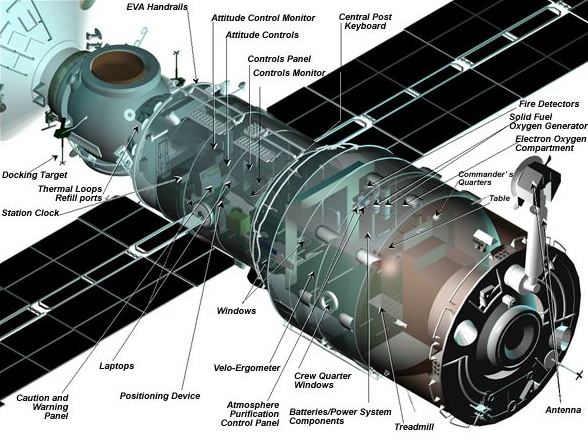
I’ve written about the long-standing atmosphere leak aboard the International Space Station (ISS) on several occasions – the last being in 2024. An issue for some seven years now, the leak lies within the aft airlock of the Russian Zvezda (aka PrK) module. Several attempts have been made to fix the issue down the years and none have succeeded.

At the time I last wrote about the situation, NASA and Roscosmos had once again figuratively butted heads on the issue and its possible cause. In 2024, the Russian space agency was adamant the slow leaks were the result of thermal contraction and expansion as the ISS orbited the Earth, passing in and out of sunlight and thus experiencing large swings in temperature across its structure.

NASA, however, was of the opinion that the leaks are indicative that the airlock itself was at risk of failure, the result of the massive stresses periodically placed on it.

A Progress resupply vehicle docked at the rear end of the Zvezda Module. NASA believes the cracks causing the atmospheric leaks inside the module are in part the result of stresses induced on the module by Progress operations related to periodically boosting the station’s orbit. This image was captured during a station “flyaround” by the shuttle Discovery during STS-102, March 2001. Credit: NASA

To explain: the airlock at the aft end of the Zvezda module is aligned to the station’s centreline, making it one of the main ports used to carry out periodic and necessary “reboosts” to raise the station’s orbit as the tenuous drag of Earth’s upper atmosphere causes it to slowly descend. Whilst there are other ports on the station which can perform such reboosts, it is the Zvezda port which has commonly been used for boosting operations as Russian Progress resupply vehicles are well suited to the task. NASA has therefore been – and remains – of the opinion that these operations over the years have placed enormous stress on the airlock structure, resulting in the micro-cracks and the atmosphere leaks.

Because of this, NASA and the European Space Agency have long called for use of the Zvezda module to be discontinued, and the hatch linking it to the rest of the ISS permanently closed. Russia has disagreed, mainly because the docking element in question houses the connectors required to bring propellants for the station’s stations manoeuvring thrusters located in the Russian section of the station and the delivery of water supplies for the crew. Thus, losing the use of the docking port limits the station’s ability to carry out the kind of minor orbital adjustments it needs to avoid space debris, etc., and also potentially limits crew activities within the Russian section of the station.

As a compromise, it was agreed that as there was not an imminent risk of explosive decompression (or anything remotely violent), the hatch linking Zvezda should remain closed unless the module was in use – and that use would be largely limited to off-loading Progress craft. And there the matter has largely rested – until the late April 2026.

The Russian Zvezda Module (also called the PrK module), seen from its aft end, with the Progress dock post visible. The airlock tunnel where the leaks are occurring is the cream-white cylinder just inside the module’s main structure, surrounding the docking port. Credit: NASA

That was when Progress MS-34 docked with Zvezda with supplies for the station. Almost immediately after the vehicle’s arrival, the atmosphere loss within the module increased; not enough to endanger the station, but enough to be noticed. After monitoring the situation for a month, Roscosmos decided to take action  – by ordering the cosmonauts on the station to drill into the module’s structure and then cut away part of a structural support.

This didn’t exactly go down well at NASA and ESA. Objections were lodged, exchanges became heated – and Roscosmos stop responding to the other agencies, declaring the operation would go ahead on June 5th. In response, NASA and ESA declared an emergency and ordered the three US and one French astronaut into the docked Crew Dragon under shelter in place / safe heaven rules, meaning they should be ready for immediate departure should anything happen.

This caused Roscosmos to reconsider their idea and ultimately call it off. Several further days of discussions were held and a compromise was eventually reached. This will see Zvezda sealed and depressurised so it is no longer directly used. However, Progress resupply missions carrying propellants and / or water will dock with the module for the purpose of transferring these items (which can be done automatically). Otherwise, Progress dockings (including those bringing propellants / water to the station alongside of other supplies) will occur at other docking ports in the Russian section of the station to facilitate the transfer of supplies.

Space Sunday: Radiation and propulsion, interstellar asteroids and, yes, Artemis

Lockheed Martin is one of several organisations which has drawn up plans and renderings for a possible humans to Mars mission. The Mars Base Camp interplanetary craft utilises the Orion spacecraft as the command and control facility, with a cryogenic propulsion system somewhat similar to the (now cancelled) ULA Interim Cryogenic Propulsion stage (ICPS) used with current SLS rockets, together with both habitat and laboratory modules for crew space, and two additional Orion vehicles for use as orbital excursion craft whilst in Mars orbit. Such spacecraft and mission face a wealth of issues before they can become a reality. from crew mental health through to technical issues such as radiation shielding and propulsion systems. Credit: Lockheed Martin.

I’ve written on numerous occasions about the various challenges facing any human mission to Mars. Perhaps chief among these challenges are the matters of radiation exposure and transit time. As I’ve noted in past articles (such as this one) on this topic, crews going to Mars face multiple risks, just two of which are radiation (both solar radiation and Galactic Cosmic Rays (GCRs)) and transit times.

The former is particularly deadly in that solar storms can deliver lethal doses of radiation exposure over a matter of a few hours (or less). However, they can be mitigated through the use of careful mission planning (avoiding, where possible, launch windows when solar activity is at or near its peak); and providing on-board radiation shelters which use a dozen centimetres or so of a suitable material (such as water) which can be used should a storm threaten.

By contrast, GCRs are less “immediate” in the risk they present, but they are constant and all-pervasive. They are also far more high energy than solar radiation, making shielding against them a more complex issue. requiring a lot more in the way of shielding. For example, gamma radiation from a typical solar storm requires around 13-15cm of water to mitigate much of its threat; GCRs require at least two metres of water (at one tonne per cubic centimetre) to reduce the threat by 50%. And while they might not be immediately deadly, GCRs can cumulatively have a major impact on health, such as reactivating cancer-giving strains of the herpes virus normally dormant in the human body, such as the highly contagious Epstein–Barr virus (EBV).

Ergo, crewed Mars vehicle require more wide-ranging and effective shielding in order to reduce the long-term impact of GCRs on Mars-bound (or Earth-returning) crews. Currently, two such shielding materials exist: Kevlar and high-density polyethylene (HDPE). Both are very effective in absorbing GCRs – just 5 cm of either will do the same job as 2 metres of water. However, while both could be incorporated into the structure of a crewed Mars vehicle, they would need to offer protection right across all crewed areas, not just a relatively complex shelter. As both have a mass in the same orbit as water (1 gram per cubic centimetre for the latter; 980 grams per cubic centimetre for HDPE and up to 1.44 grams for Kevlar), this means that both could come with a significant mass penalty.

As such, more lightweight – and preferably more efficient – shielding materials are required. One of the most promising is that of carbon nanotubes, some of which are very efficient in dealing with various forms of radiation. Single-walled carbon nanotubes (SWCNTs) can reflect up to 99.9% of solar electromagnetic radiation striking them, whilst boron nitride nanotubes (BNNTs) can absorb some 72% of neutrons (common to GCRs) in just a thin layer – more than can be achieved by using 5 cm of HDPE or Kevlar. In fact, NASA’s Langley research centre has in the past experimented with trying to “weave” BNNTs into structure that could be used within habitat units of spacecraft.

NASA Langley is working on using “GCR-proof” BNNTs within structures such as habitat units, space vehicle elements – and even as a flexible lining in space suits. Credit: NASA

The problem here is that nanotubes are both expensive to manufacture and difficult to manipulate / use. Hence why, in the 35 years since serious nanotube production started, less than 10,000 tonnes have been produced world-wide. However, a team of researchers at the Korea Institute of Science and Technology (KIST), have been looking at the potential for nanotubes in a range of applications  – including their use as a shielding material – and have developed a means of potentially overcoming the issue of using nanotubes to create materials the application of 3D printing.

In particular they have developed a means to combine both SWCNTs and BNNTs into “mats” of material which can be “woven” together as a part of the printing process to fulfil a number of roles. Most particularly, in terms of space applications, these “mats” remain all of the radiation shielding capabilities common to both SWCTs and BNNTs. Thus, single layers of a “mat” could be used to provide individual protection for circuitry and chips forming the electronics on robot spacecraft, or be layered to produce very lightweight, efficient and very flexible material for shielding all the habitable areas of a crewed spaceship. What’s more, the material can withstand massive temperature swings (from -196ºC to +250ºC), potentially allowing it to be used both internally and externally on space vehicles.

This material represents a completely new concept in shielding technology-it is as thin as tape and as flexible as rubber yet simultaneously blocks both electromagnetic waves and neutron radiation.

– Dr. Joo Youngho, principal investigator, Ultrathin, Stretchable, and 3D-Printable Complementary Nanotubes–Polymer Composites for Multimodal Radiation Shielding in Extreme Environments

The research still requires a lot more work before this approach can be thought of as truly viable, but the implications of such a shielding capability for something like crewed missions to Mars would be enormous.

Potential uses of the new 3D printed nanotube “mat” developed by the Korea Institute of Science and Technology (KIST) including full spacecraft radiation shielding (A), to individual protection for electronic components (B) to creating more rigid forms (G, H, J) and the ability of the fibre to shield against radiation (D, E). Credit: KIST

Currently, it takes between 6 and 9 months to travel between Earth and Mars (or vice versa) when launching at the most energy-efficient times (approximately once every 26 months). This could put significant strain on a crew, limited as they would be to just a small circle of people with whom they could communicate in real-time and the limited amount of space available within their spacecraft in which they might fine solitude and peace keeping their own company.

However, if we had a more efficient propulsion system, one that could use a lot less fuel far more efficiently and for longer, then it would be possible to break out of the current 26-month, 6-9 month transit flight constraints to a greater or lesser degree. This would help reduce the stresses that might otherwise build-up in such a restricted environment, and also help reduce (to a degree) the crew’s deep-space radiation exposure risks.

One way to achieve this would be through the use of Nuclear Thermal Propulsion (NTP). However, such a system has yet to be developed and brings with it the need for shielding for the crew against the nuclear reaction, with all the added mass and complexity that brings.

Another alternative is that of electric propulsion. This is not as powerful as NTP and cannot even match the specific impulse that can be generated by chemical motors. However, it is a) highly efficient, b) already in use and c) unlike chemical rockets, it can maintain its thrust more-or-less continuously for comparatively little fuel mass. Take NASA’s mission to the asteroid 16 Pysche, for example. This uses Hall-effect thrusters which, while relatively low-power have maintained a steady thrust since the mission launched 2.5 years ago, accelerating the spacecraft from a few tens of thousand km/h as it departed Earth orbit to more than 135,000 km/h today – and it is still accelerating for the time being; all for just 1.6 tonnes of propellant.

A small-scale Hall-effect thrust producing thrust (left) and shut down (r). Credit: unknown

However, the Psyche spacecraft masses just 2,6 tonnes overall. A crewed Mars vehicle, with its habitat units, control centre, solar arrays for electrical power, life support systems and so on, is going to mass tens of tonnes (a minimum of 45 tonnes has been estimated for just a basic habitat/lander craft). As such, if electric propulsion is to be used, then much more powerful thruster systems will be required.

This is exactly what NASA’s Jet Propulsion Laboratory (JPL) has been working on: a “next generation” nuclear-electric motor called the magnetoplasmadynamic (MPD) thruster. Rather then just relying on electric power to drive the thruster, the MPD introduces a magnetic field into the drive process, making the thruster far more efficient and with a greater output. It also utilises lithium as a the propellant rather than the more usual xenon or krypton, for an increased energy output. As a result, a test article of the MPD has already proven itself to be able to operate for relatively long periods (albeit days rather than months or years), producing a steady 120 kilowatts of thrust, more than 25 times that produced by the hall-effect thrusters on the 16 psyche mission.

This is an impressive start, but to power a crewed spaceship of the kind currently being considered for human Mars missions, the propulsion system would have to be capable of consistently generating up to four megawatts of energy, both to accelerate the vehicle during the first half of its voyage out from Earth (or Mars) and then as a braking system to reduce its velocity to a point where it can enter orbit around its destination. However, the JPL team are reasonably confident that with time and experimentation, they could likely iterate the MPD to a point were it is consistently generating around a megawatt of power, thus allowing multiple engines (4-6, allowing for reserve engines being carried to deal with any failures) to be used to propel a potential Earth-Mars-Earth vehicle, all of which would require far less fuel than any chemical propulsion system, and would not require refuelling at Mars.

There are a few wrinkles in this approach that need to be addressed, however. For example, to produce such a level of power output, the MHD would also produce a lot of heat – around a constant 2,800ºC. Thus, the materials used in the thruster system would have to be capable of running continuously in the face of this temperature for thousands of hours of use. As such, much more in the way of development and testing is required before the MPD thruster would be ready for practical use – which will take years or possibly decades. But once developed and tested, it could offer a means to either shorten the transit times between Earth and Mars by virtue of its constant thrust, or deliver heavier payload to Mars over roughly similar time-frames as the current Hohmann orbits, and with none of the angst people have around nuclear thermal systems.

3I/Atlas

On July 1st, 2025, 3I/ATLAS was confirmed as the third known interstellar object (ISO) to be passing through the solar system. It also became the third such object to ignite daft claims that such objects are of alien manufacture sent to spy on us, despite the evidence it is lactually a comet. By the end of October 2025, it was passing around the Sun at the start of its way out of the solar system, and by April 2026 it was once again passing beyond the orbit of Jupiter.

Images of 3I/ATLAS acquired by the Moons and Jupiter Imaging Spectrometer (MAJIS) instrument aboard the ESA’s Juice mission, using different colour filters to reveal more about the comet’s coma. Credit: ESA

However, between July 2025 and April 2025, 3I/Atlas was the subject of intense study by observatories on the ground and in space, with some interesting discoveries being made along the way. The James Webb Space Telescope (JWST), for example, revealed the comet’s coma (the cloud of dust and material formed when a comet approaches the Sun and its ices sublimate, releasing material) to be composed primarily of carbon dioxide in an 8:1 ratio compared to water, much higher that with solar comets, which typically have a 4:1 ratio; indicating the comet likely formed in a very different environment compared to our own solar system.

This view was further enhanced following observations of the comet made by the Atacama Large Millimetre/sub-millimetre Array (ALMA) located high in the Chilean Andes. These revealed 3I/ATLAS is made of an astonishingly high ratio of semi-heavy water (HDO, also known as deuterated water, on account of one of the hydrogen atoms being replaced by a deuterium atom) relative to water.

On Earth, approximately 1 in 3,200 water molecules are HDO (with one in 41 million being heavy water (D2O), with which semi-heavy water should not be confused). On 3I/Atlas, the abundance of HDO is around 40 times higher than the abundance of semi-heavy water on Earth. Not only does this point to the comet being formed in a much colder – likely around -243ºC – environment than found within our solar system, it was also subject to very little in the way of stellar radiation, suggesting it formed at the very outer edge of its originating star system.

Further, as it passed around the Sun and was at its most active, the comet started outgassing more and more methane. This led to the theory that in its passage towards the Sun and the initial formation of its coma and tail, 3I/Atlas had shed the last of its cosmic ray irradiated outer shell, allowing its more “pristine” (i.e. preserved from the days of its formation) inner layers to be exposed to sublimation. In particular the abundance of methane being released further underlined the idea that the comet had formed in an extremely cold environment.

This is important because it directly impacts our understanding of the formation of stellar systems. These generally hold that star systems are born of relatively “hot”, compressed clouds of dust and gas, the majority of which collapses under gravity to form the central star, with any planets, asteroid, comets and such like forming in the immediate aftermath of the star igniting, when the “left over” material is still relatively dense – and warm – as it surrounds the newly-born star. Thus, 3I/Atlas potentially hints at an alternative path of stellar evolution we have yet to identify and understand.

Artemis Update

Following-on from my previous Space Sunday piece, the core stage of the Space Launch System (SLS) rocket that will be used in 2027’s Artemis 3 mission, completed its 1,450 kilometre journey by canal, river and sea from NASA’s Michoud Assembly Facility in New Orleans to the turn basin at Kennedy Space Centre’s (KSC) Complex 39 on April 27th, 2026.

The stage, lacking its four RS-25 engine units, which will installed as vehicle stacking starts within Kennedy’s Vehicle Assembly Building (VAB) reach the wharf in the basin safely aboard the Pegasus transport barge. Following its arrival, on April 28th, the stage was transferred by road from the basin to the VAB in readiness for vehicle stacking to commence.

The NASA transport barge Pegasus is manoeuvred by its tug in readiness for mooring at the Complex 39 wharf at Kennedy Space Centre. Within it sits the core stage of the SLS booster to be used on the Artemis 3 mission scheduled for 2027. Credit: NASA

At the same time as the stage was arriving at KSC, it was confirmed that Artemis 3 – planned as a crewed test of the available lunar lander vehicles required for missions to the surface of the Moon – has been pushed back from mid-2027 to an October-November 2027 time frame. This is apparently to allow both SpaceX and Blue Origin, the two contractors charged with supplying NASA with crew-capable lunar landers, with more time to have their first vehicles ready for testing in Earth orbit.

Whilst NASA is playing down the pushback, there is already mounting feeling in some circles that the mission will ultimately be pushed back until early to mid 2028, simply because there will not be any lander vehicle ready for Earth-orbit testing by a crew by late 2027.

On April 28th, 2026 NASA also released the first image of the heat shield used on the Artemis 2 mission to project the Orion capsule from the searing heat of re-entry into Earth’s atmosphere at the end of the mission.

As regular readers will know, there was considerable concern surrounding the heat shield after an identical unit used on the uncrewed Artemis 1 mission in December 2022 showed unexpectedly high levels of damage. Investigations revealed the worst of this damage – deep pits and holes within the ablative material of the heat shield were the results of gasses trapped in the layer being super-heated as the spacecraft “skipped” through the atmosphere before fully re-entering, resulting in them “blowing out” sections of the heat shield’s layers as they violently expanded.

As a result of this, the heat shields to be used from Artemis 3 mission onwards were put through a redesign prior to fabrication, but the shield for Artemis 2 had already been manufactured and installed – so the re-entry profile for the mission was changed in order to reduce the risk of outgassing and damage to the heat shield. Even so, fears remained as to the shield’s fitness for purpose.

Clearly it was up to the task as evidenced by the successful return to Earth by Artemis 2 crew, and within the image released by NASA on April 28th, it is clear that the heat shield more then withstood the stresses of the revised re-entry profile – even if the image is itself a most unusual one.

The Artemis 2 heat shield – scorched and lightly scored but in far better shape that the heat shield from Artemis 1 – as seen from underwater as the Orion capsule to which it is attached awaits recovery following its splashdown in the Pacific Ocean after a successful mission. Credit: US Navy

So keen were NASA engineers to see the state of the heat shield, that even as the Orion capsule floated in the Pacific Ocean off the Californian coast, and the crew were being recovered, a camera-equipped US Navy diver was tasked with swimming under the capsule and photographing the heat shield from below. The result is a somewhat eerie, almost sci-fi like underwater image of the heat shield, streaked with burn and ablation marks across its entire surface – as would be expected – but without any of the deep chadding and pitting seen on the Artemis 1 heat shield.

Obviously, the heat shield, recovered with the rest of the capsule and now back with NASA, will be examined more thoroughly, but this initial picture finally put to rest concerns that the Orion heat shield might be somehow, and potentially fatally, flawed.

Space Sunday: of Vera C. Rubin, pollution and a question of life

The Vera C. Rubin Observatory is a facility I’ve covered numerous times in Space Sunday as it has been constructed and outfitted. Perched atop Cerro Pachón in Chile, at an altitude of 2.67 kilometres, the Vera C. Rubin promises – with a caveat – to totally alter the way we see the cosmos around us.

This is because the telescope is to carry out a 10-year survey to probe the deepest reaches of our universe to reveal its secrets. Called the Legacy Survey of Space and Time, or LSST (“legacy” here referring to the fact that the observations and images the telescope makes will be of interstellar objects as they appeared hundreds of thousands through hundreds of millions of years ago), the survey will be the most comprehensive of its kind to date, and involve astronomers from around the world.

The secret weapon the observatory uses in this survey is the largest telescope-camera system ever built. The primary lens of this behemoth is 8 metres across, with the entire camera weighing some 3 tonnes. Its construction took a decade, after which it had to be carefully packaged and shipped to Chile and up to the observatory, where it was installed into the facility as the core part of the Simonyi Survey Telescope (named for the private donors who sponsored the telescope, Charles and Lisa Simonyi).

A rendering of Vera C. Rubin’s Simonyi Survey Telescope with the camera system and lenes at its centre. Credit: Rubin Observatory project office.

Overall, the telescope is a 6.5m class optical telescope, with a 3.2 gigapixel charge coupled device (CCD) for imaging. Over the course of the LSST, the observatory is expected to reveal and catalogue a wide range of objects, including some 5 million Sun-orbiting asteroids (including around 100,000 near-Earth asteroids at least 300 metres across, some of which might present the risk of colliding with our planet at some point in the future); imaging around 20 billion galaxies, 17 billion stars and up to 6 million planetary systems orbiting other stars.

In addition, it is hoped the observatory will be able to catalogue “primitive” objects in the Kuiper belt (i.e. those thought to have existed at the time of the birth of our Sun), observe thousands of novae and supernovae to help astronomers to further understand the nature of the galaxy

The telescope had is “first light” – the first practical use of a telescope after it has been constructed, calibrated and commissioned – took place in June 2025. These took the form of “teaser” images as to what the telescope would be capable of, featuring the  Trifid and Lagoon nebulae and extracts from a wide-field view of galaxies in the Virgo Cluster.

More recently, the images of the Virgo Cluster have been further cleaned-up and re-annotated, revealing the sheer power and depth of observations Vera C. Rubin can make. The image below covers a 3.5 degree diameter field-of view and reveals over 100 galaxies and numerous stars (particularly those within the constellation of Virgo) within our own galaxy, presenting a stunning insight into just how vast our universe is.

An annotated version of the Vrgo Cluster showing some of the 10 million galaxies captured in the observatory’s first light images. (Image credit: RubinObs/NOIRLab/SLAC/NSF/DOE/AURA) – click for full size & then zoom for detail

The telescope is designed to take multiple pictures during each observation period, the main camera taking a 30-decond exposure for each image, with an active optics system with wavefront sensors within the telescope keeping the mirrors precisely configured, aligned and focus for the clearest possible images.

However, whilst images from the telescope are stunning an informative, they also come with a problem, albeit not one of the observatory’s own making. That problem is satellite pollution. In short, megaconstellations like SpaceX Starlink and China’s Guowang are lobbing thousands of low-Earth orbiting satellites into the space around us. These satellites inevitably reflect the Sun’s light as they travel across the sky, and in time-lapse images, this reflected light appears as narrow streaks across an image – and not just one or two, but potentially dozens at a time. All of which has to be painstakingly cleaned-up in order for the full value of images to be obtained.

The issue here is that removing satellite steaks is not just a case of pulling up Photoshop and then editing – the very act of trying to clean up images to remove the streaks can introduce its own errors which might prove impossible to account for and which risk misinterpretations of what is being seen being made.

A time-lapse image of Comet C/2023 A3 (Tsuchinshan–ATLAS) taken from Italy on August 1st, 2024, demonstrating the issue of satellite pollution – the lines crossing the image are caused by the passage of satellites (predominantly Starlink) Credit: Rolando Ligustri)

Nor do the problems end there. A relatively new company, Reflect Orbital has grand designs of orbiting a 50,000-strong megaconstellation of satellites which can deploy large Sun-reflecting mirrors. The aim? To provide “responsive lighting after dark and to increase the effective hours of solar energy production”.

Currently, the company plans to launch a proof-of concept satellite called Eärendil-1 (which likely has Tolkien spinning in his grave) capable of deploying and 18m by 18m Mylar mirror utilising the same material as used to reflect sunlight off of space vehicles, sometime in 2026. This project has drawn such condemnation from astronomers and others (additional concerns about directing sunlight onto specific parts of the Earth and turning “night into day” are that it could have a serious negative impact on the circadian cycles of animals and humans), that Reflect Orbital has promised to work to minimise the broader impact of their idea. Time will tell on whether this offer is genuine or not.

Both the International Astronautical Union (IAU) and the US National Science Foundation have called on companies launching satellite constellations to be more aware of their negative impact and to reduce the reflectivity of their satellites – the IAU recommending that all satellites should appear no brighter than magnitude 7 objects.

Multiple companies have agrees to try to reach this goal, but thus far few have shown any real movements towards it. SpaceX, for example, gave assurances that it would work to reduce the reflectivity of its version 2 Starlink satellites compared to its version 1.x units. However, whilst effects were made, they fell far short of the level requested by the IAU, and efforts to further reduce reflectivity appear to have ceased. Others, such as  Texas-based AST SpaceMobile raised a middle finger to the IAU’s recommendation by launching its Bluewalker 3 satellite with a reflectivity some 400 times greater than magnitude 7. Currently, that company plans to launch some 60 even larger and more reflective Bluebird Block 2 satellites into LEO during 2026/27.

The Vera C. Rubin Observatory imaged in 2022 during the final construction phase, seen against the backdrop of the Milky Way galaxy. time-lapse views of the night sky like this – and those captured by observatories like the Vera C. Rubin, are under increasing threat from low earth orbiting satellite clusters like Starlink and  Guowang. Credit: Rubin Observatory/NSF/AURA/B. Quint

What is evident from this is that formalised regulation is required to try to minimise the impact the over-use of the low-to-medium Earth orbit regime, lest our ability to learn about our planet, solar system and the cosmos around us be otherwise degraded to an unconscionable level.

“Life Here Began Out There”

Battlestar Galactica fans will likely recognised this quote, being some of the opening words of the original series (as spoken by Patrick “John Steed” Macnee!), and a refrain which popped up in Ronald D. Moore’s largely excellent reimagining of the Galactica tale. It’s also a phrase which has taken on a certain nuance in recent times.

ALH84001 on display at the Smithsonian Museum of Natural History, Washington DC

It has long been known that – particularly in the very early history of the solar system – asteroid and other impacts on Mars could carry enough force to send chunks of Martian rock clean off the planet and into space, with some of them eventually coming under the influence of Earth’s gravity and falling down on our planet. One of the most famous pieces of evidence for this is the notorious Allen Hills fragment ALH84001. This was a fragment of rock shown to be consistent with the rocks of Mars discovered in the Allen Hills region of Antarctica in 1984,and which went on to cause a stir when it was announced the rock apparently contained evidence of fossilised Martian life (spoiler alert: it likely didn’t).

ALH84001 is not the sole example – Antarctica is actually a popular (but not the singular) place for asteroid fragment hunting, as the charred and discoloured can often be found close to the surface of the ice and snow fields, where they send out starkly to the human eye. Multiple expeditions have found lumps of asteroid and rocks which have later proven to have arrived here from the Moon or Mars.

Whilst the investigations around ALH84001 may have been flawed, they did help kick-start a debate as to whether life here on Earth might have originated elsewhere – such as on Mars – or might have been kick-started not by Earthly processes alone, but with the assistance of organics-bearing asteroid fragments plummeting through our atmosphere to arrive here.  The idea even as a name: lithopanspermia.

Now, a new study suggests that, if not the actual case, either scenario is actually possible. Published in the journal PNAS Nexus, the study demonstrates how bacterium can survive the massive forces of an asteroid impact blasting the rock containing them into space, the extremes of interplanetary space and their fiery arrival on another world possibly altered, but otherwise largely unharmed.

In particular, the study shows that Deinococcus radiodurans, a particularly hardy bacterium known for its thick outer shell and an ability to repair its own DNA, as well as being tolerance of the kinds of radiation it might be exposed to in interplanetary space, could indeed survive all the trials and tribulations of being blown off of somewhere like Mars and landing here on Earth. In fact, so hardy is D. radiodurans that it has for some time had the nickname, “Conan the Bacterium”.

Most intriguingly, the bacterium has been found within rocks in the highlands of Chile and other regions were asteroid fragment hunting is popular.

To simulate the forces involved in an asteroid impact, the researchers sandwiched samples of D. radiodurans between two steel plates. Using a gas-powered gun, they fired a projectile at roughly480 km/h), subjecting the microbes to pressures between 1 and 3 gigapascals. That’s around 10 times greater than the maximum pressure which can be experienced here on Earth (and at the bottom of the Mariana Trench): 0.1 gigapascals.

At the low-to-mid-ranges of impact (1 to 2.4 gigapascals), D. radiodurans showed either no sign of damage or varying degrees of cell rupturing. At the higher pressure, damage was more extensive, but in both the mid-to-high level ranges, the team behind the study witnessed the bacterium’s self-repair mechanisms go into action, repairing damaged DNA and renewing damaged cell membranes.

Researchers exposed the bacterium Deinococcus radiodurans to the pressures experienced during an asteroid strike. The microbe survived, suggesting that impacts could spread life from planet to planet. Credit: Lisa Orye/Johns Hopkins University
We expected it to be dead at that first pressure. We started shooting it faster and faster. We kept trying to kill it, but it was really hard to kill.

– Lily Zhao, study lead, John Hopkins University

In fact, so hardy did the bacterium prove, the experiment was halted not because the team eventually killed it – but because the steel plates sandwiching the samples started giving out under the pressure of the gas gun impacts!

Of course, this doesn’t prove that life – or the ingredients of life – came to Earth from Mars or from asteroids. For one thing, we have yet to discover any solid evidence for Mars having once harboured basic life-forms, despite all the evidence it once have the conditions to do so, and they this formed in advance of Earth. There’s also currently no evidence for organics on asteroid having been able to form more complex structures.

However, and on a broad level, it does demonstrate that basic life forms such as bacteria are certainly hardly enough to travel from one place to another – and that if the conditions are just right in the place where they arrive, they might it turn go on to help kick-start more complex life there (assuming the place they arrive doesn’t already harbour some form of basic life which regards them as an invader to be wiped out).

Rockets and Satellites: Proof of Pollution

I’ve written about the growing problem of upper atmosphere pollution resulting from the increasing number of commercial launches around the world, and the potential impact it might be having or come to have on the stratosphere’s weather systems and in damaging things like the ozone layer (in particular, see: Space Sunday: space debris and atmospheric damage + some updates).

Now a team of researchers at the Leibniz Institute for Atmospheric Physics have published the first direct correlation between space vehicle debris re-entering the atmosphere and an increase in atmospheric pollutants – namely lithium.

In February 2025, Spaces launched a Falcon 9 to deliver 22 Starlink satellites to low Earth orbit (LEO). Whilst the upper stage of the rocket successfully delivered its payload to orbit, it suffered a malfunction during a planned de-orbit engine burn which should have lead to its controlled entry into the atmosphere and eventually destruction as it burned-up. As a result, the stage remained orbiting the Earth for 18 day before starting an uncontrolled re-entry some 100 km west of Ireland and proceeding over populated Europe to the point of kindly dropping debris on Poland.

During the event, atmospheric researchers at the Leibniz Institute, Germany, were surveying the upper atmosphere composition using a highly sensitive resonance fluorescence Lidar system when the noticed a sudden and rising spike in upper atmosphere lithium. Normally, lithium exists within the atmosphere to the tune of around 3 atoms per cubic centimetre, but the researchers at Leibniz saw levels climb to some 31 atoms per cubic centimetre at altitudes between 96.8 km and 94.5 km – the range in which Falcon 9 upper stages start to break-up and the risk of pollutant spillage is greatest.

The spike in upper atmosphere lithium (in red) as seen by the researchers at Leibniz Institute, showing its intensity and altitude – the latter of which matches the break-up of a Falcon 9 upper stage. Credit: Robin Wing et al

Intrigued, the atmospheric researchers continued to monitor the rising levels of lithium whilst also running some 8,000 simulations of backward wind paths from the Lidar station to the skies over Ireland. What they found, after eliminating any other potential causes for the spike they could think of, was that it commenced almost exactly at the time the Falcon 9 upper stage entered the Earth’s atmosphere west of Ireland and almost exactly tracked the stage’s passage over Ireland and the UK as it reached its point of initial break-up and fell through to around 94 km altitude, very much tying the plume to the stage’s demise – the upper stage of Falcon 9 rockets using lithium extensively in their components.

Whilst this is the first definitive time a significant increase in atmospheric pollutants has been directly tied to a re-entry event, but doesn’t supply all of the answers. For example, no-one actually knows how such concentrated dumps of lithium – which occur following every Falcon 9 launch and every re-entry of a Starlink satellite (which SpaceX have been disposing an accelerated rate in order to “get rid” of their version 1.x satellites in favour of the v2 unit) – will have on high-altitude weather systems or on other aspects of the atmosphere as they disperse and descend.

An images showing a backtracking of wind paths over Europe at the time of the Falcon 9 upper stage re-entry. Not how the initial track closely follows the track of the upper stage, including the period of maximal lithium dispersion as the vehicle breaks-up between 97 and 94 km altitude. Credit: Robin Wing et al   

However, it is indicative that the commercial launch sector as a whole has a major question to answer in terms of what they should be doing to minimise the potential for damage to our atmosphere they are creating