The Raglan Shire Artwalk is one of the staples of the SL art calendar, and for 2019, the 14th Artwalk will take place between Sunday, May 12th and Sunday, June 16th, inclusive.
Every year over 100 artists and residents in Second Life display 2D and 3D art across a number of exhibition spaces across all the regions of the Raglan Shire cluster. 2D art is displayed on hedgerows in and around the regions, offering visitors the chance to view pieces as they explore the Shire, while sculptures and 3D art is displayed in a number of designated areas across the regions.
Those wishing to exhibit their work at the 2019 Artwalk are invited to complete the Artist Registration Form, which should be submitted for inclusion no later than 21:00 SLT on Sunday May 5th, 2019.
Artists can display more than one piece if they wish.
2D (“flat” art pieces will be awarded a maximum of 15 LI, and individual pictures should be 1 prim, including the frame.
3D art (sculptures, etc.), will be awarded a maximum of 500 LI for up to three pieces of work. Artists are requested to state the LI per piece in their application.
Sales of art are allowed.
Types of art supported by the show are: representations of RL photography, painting, drawing, printmaking, collage, and digital fine art that can be displayed on a prim; and SL photography, manipulated SL photography and SL sculpture.
Pictures of RL crafts, such as beadwork, leatherwork, etc., are not part of the show’s definition
All the above art forms are welcome, but should be rated PG / G – so no nudity, please!
Group membership will be required in order to display work
Questions and enquiries should be forwarded via note card to Artwalk Director Karmagirl Avro, or Artwalk Assistants Kayak Kuu, Linn Darkwatch, maggi696 or RaglanShireArtwalk Resident.
Raglan Shaire Artwalk 2018: Bear Silvershade
Details on set-up will be sent to participating artists on Tuesday, May 7th, 2019. Step-up commences at 09:00 SLT on Friday, May 10th and runs through Saturday, May 11th. Note that space along the hedgerows in Raglan Shire for 2D art is NOT assigned, but can be taken on the basis of first come first serve. Certain areas of Heron Shire will be designated for sculpture set up and available locations set with a marker.
Key Dates
Sunday, May 5th: applications close at 21:00 SLT.
Tuesday, May 7th: Notification of exhibit space location issued to 3D artists.
Friday, May 10th / Saturday May 11th: Artist set-up days.
Sunday, May 12th: ARTWALK OPENS.
Sunday, June 16th: Artwalk closes.
Sunday, June 16th (after 2100 SLT) through Tuesday, June 18th: Takedown of works.
On Monday, April 15th, Linden Lab launched their new Linden Homes for Premium subscribers. These new Homes, each located on a 1024 sq metre parcel, are located in a dedicated new continent – which, as I revealed in my March preview, is called Bellisseria – situated between Sansara and Jeogeot.
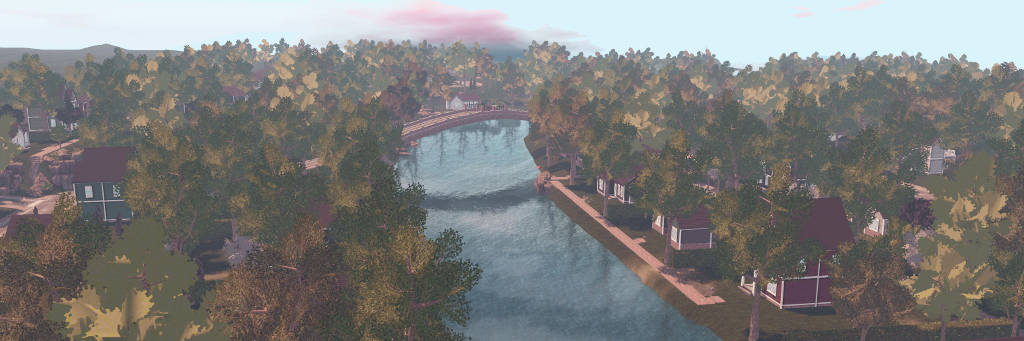
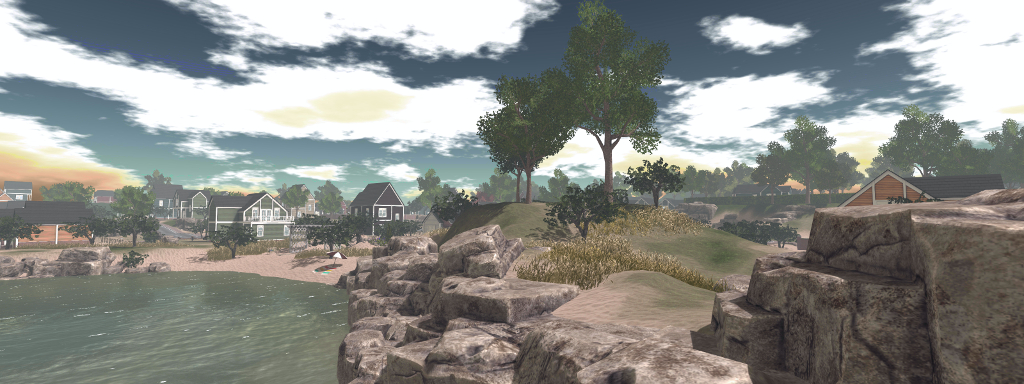
The continent itself – like the homes on offer – is a significant step up from the original Linden Homes and lands first introduced in 2010. Landscaped, and offering a degree of infrastructure: roads, rivers, paths, coastal regions with beaches, offshore-lighthouses, and so on. All of which offers an environment that is pleasing to the eye and make for a pleasant environment in which to live.
Bellisseria – New Linden Homes
For the initial release, two types of house are available: traditional suburban houses and houseboats, each of which comes in a total of four styles apiece. These four styles offer a varied set of looks that is enough to ensure neighbourhoods have a mix for looks. All come with a land impact of 351 LI, offering a lot of opportunity for furnishing.
It’s important to note that the houses / houseboats are not 1024 sq m in size; this is the size of the parcel on which they sit: and all have been designed to provide a degree of garden / yard space or waterside moorings for boats. The roads within the continent are driveable (although houses are not supplied with a driveway to link to the roads), while the waters are navigable in many places and a channels links the continent with Joegeot and Sansara.
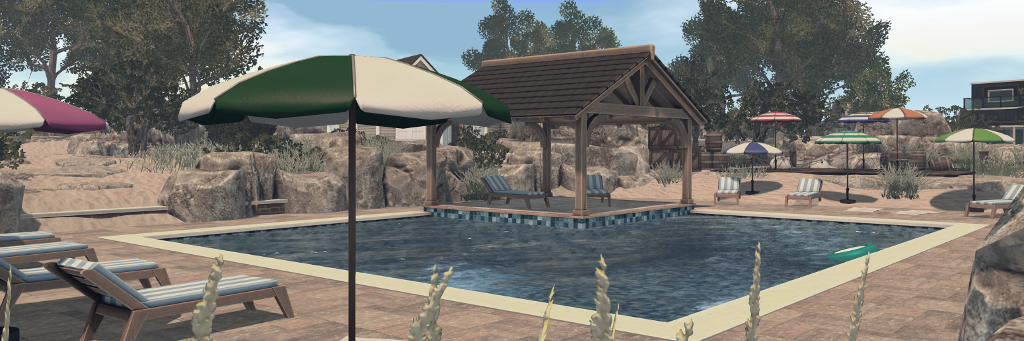
Bellisseria – New Linden Homes: coastal community space
Unlike the older Linden Homes, these have controls built-in via a panel on the interior walls close to the front door. So, no going to a website to change the decorative style, set the window shutters, etc., everything can be done directly from the control panel – including getting a pack of extra fixtures, should you want to use them, and a box of textures that can be used so that any additional elements – room dividers, walls, etc., – you might want to add can match with the overall décor.
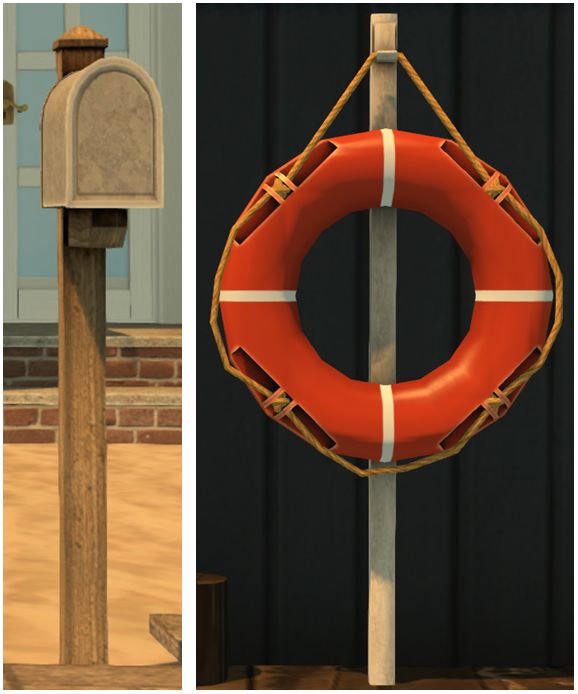
Individual style of house and houseboat are selected from the outside mailbox / life buoy. An interior control panel can be use for the window blinds, door control, etc.
To say these new Linden Homes are a major step up from the originals isn’t really saying a lot; the old Linden Homes – as noted – are around 9 years old, and a lot has moved on in Second Life since then. However, the attempt to create a sense of community within the new continent is impressive and potentially goes some way towards reversing the “build and forget” approach to Linden Homes seen in the past – although how well it succeeds in terms of getting people not just to take the houses and engage within the develop to create local neighbourhoods / communities remains to be seen; and the matter really is up to those of us who take up the houses.
For my part, I like the approach, and several of the designs. Yes, the use of rooms in some can make them feel a little cramped, and some of the houseboat designs might not strike the right of aesthetic note, but there is no escaping the fact these are properties with potential, and if you are a Premium subscriber, they may well be worth taking a look at, even if you already hold land.
Applying for a Home
Note: for full details on the new Linden Homes – prerequisites for obtaining one, the application process, and so on, please refer to the Linden Homes wiki page.
If you have not used your default allocation of free tier – (1024 sq m), then a new Linden Home is yours without any additional payment. Otherwise, the standard Premium tier rates apply.
As with the original Linden Homes, the new homes are obtained through the Linden Homes registration page – which, at the time of writing still includes options for the existing Linden Homes, although these are to be gradually phased out. However, unlike the “old” homes, you only select with you want a house or a houseboat, not the actual style of the house / houseboat you prefer; these are selected in-world, via a mailbox for the houses or a life buoy for the houseboats. These controllers also let you change the style of your house / houseboat at any time, presenting another flexible option not available with the old Linden Homes.
The new Linden Homes are available through the existing Linden Homes registration page – just make sure Bellisseria is selected in the Theme drop-down (arrowed) and select your choice of house or houseboat by clicking on the buttons shown in the red square
The selection process is straightforward, and you’ll be required to accept the Linden Lab Terms and Conditions prior to being able to receive the details of your new home. These are presented on the web page – just click the Go To Your Home button.
(Unsurprisingly) I’ve already claimed my new Linden Home. Being an aviator and sailor, I went for a houseboat, selecting what I personally think is the roomiest of the options, the Windlass. Split-level it offers a good feeling of space, with a rooftop deck, and good opportunities for customisation. Sitting on one of the numerous sandbars surrounding the coast of the new continent, it opens out onto a nice community beach on one side, and presents plenty of mooring space on the other.
My new Linden Home houseboat with one of my motorboats moored alongside. Note that the water in front of the houseboat is also part of the parcel, offering more mooring space, but the wooden piers are not part of the individual properties.
Using a houseboat means I also have room for boats and planes on the water – particularly through the use of a rezzing system that allows me to select which vehicle I have rezzed (up to the land capacity, obviously). For those interested, I’ve previously covered this approach to having vehicles available without using up all your land capacity in Adding a little vehicle space with a rezzing system.
Overall, a nicely done new environment. It will be interesting to see how things grow here – and how it might affect rentals among private estates for Premium members, given the overall attractiveness of this new continent. It’ll also be interesting to see how LL handle the retirement of the “old” Linden Homes, including any possible relocation among Premium subscribers who opt not to move voluntarily.
The launch was accompanied by a new video from the Lab, which I’ve embedded below.
Logos representative only and should not be seen as an endorsement / preference / recommendation
Updates for the week ending Sunday, April 14th
This summary is generally published every Monday, and is a list of SL viewer / client releases (official and TPV) made during the previous week. When reading it, please note:
It is based on my Current Viewer Releases Page, a list of all Second Life viewers and clients that are in popular use (and of which I am aware), and which are recognised as adhering to the TPV Policy. This page includes comprehensive links to download pages, blog notes, release notes, etc., as well as links to any / all reviews of specific viewers / clients made within this blog.
By its nature, this summary presented here will always be in arrears, please refer to the Current Viewer Release Page for more up-to-date information.
Note that for purposes of length, TPV test viewers, preview / beta viewers / nightly builds are generally not recorded in these summaries.
Official LL Viewers
Current Release version 6.1.1.525446, formerly the Love Me Render RC viewer, dated March 26th, promoted April 2nd No Change.
Release channel cohorts:
Estate Access Management RC viewer updated to version 6.2.0.526190 on April 12th.
EEP RC viewer updated to version on 6.2.0.526104 on April 11th.
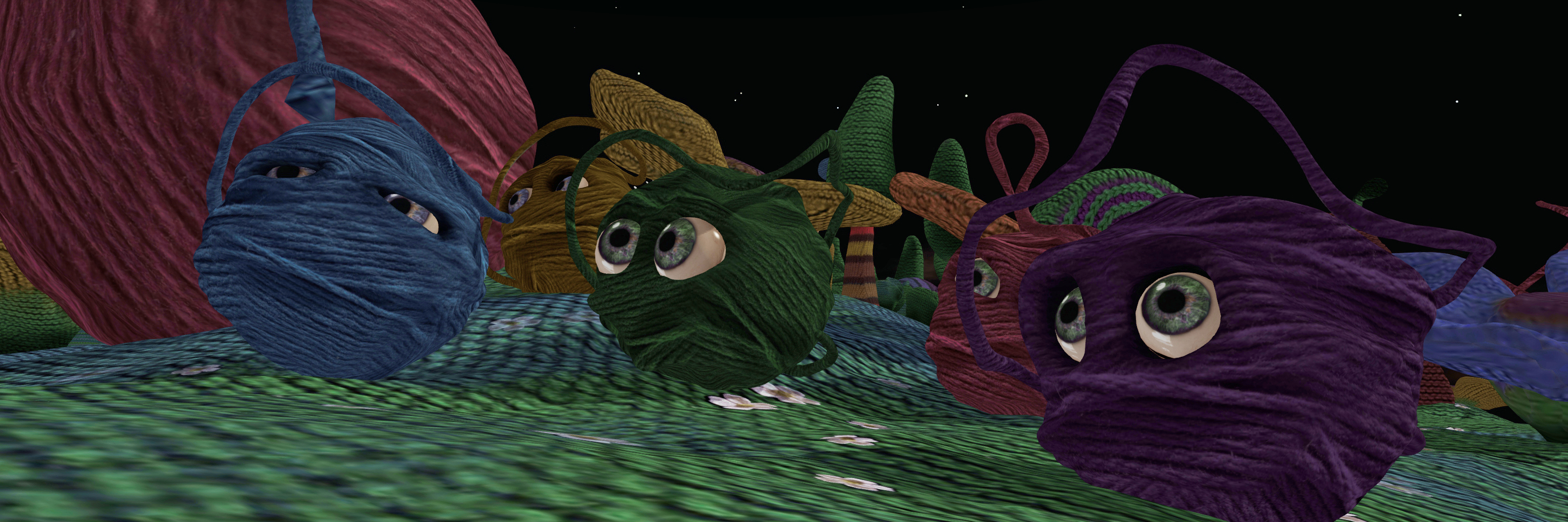
Sometimes I get sad… but then I think about yarn and everything is fine.
With these words, Cica Ghost introduces her latest installation Knitland – and it is one of the most imaginative and whimsical pieces she has yet produced. A wonderful landscape that could only be born of a rich imagine and taste for the fantastic, wrapped in a warm sense of fun and humour.
As the name suggests, this is a world that has been knitted together – quite literally. The ground is a quit of green and teal squares, some dotted with little flowers, undulating gently as if loosely thrown across a bed. From the landing point, a green knitted “road” – for all the world looking like a scarf tossed carelessly atop the quilt – offers an path of exploration through the setting.
But it is the inhabitants that occupy thee land that captivate: birds, cats, snails, mules, chickens – even a gloriously knitted elephant. These all look out across the land, the spaces between them dotted by knitted trees, flowers and berries. Here and there, balls of yarn bounce up and down as they watch passers-by (and visitors can, if they like, pick up balls of yarn avatars from the giver near the landing point, and wear them during their visit). Here and there among the trees, flowers and animals sit quaint little knitted houses, sometimes with one or two handles attached, giving them the appearance of crocheted handbags.
Follow the scarf-road far enough, passing over balls of yarn and the back of a cat and between trees and houses, and it will eventually bring you to the girl who is perhaps responsible for the wonders herein, as she sits and continues to knit the scarf, a whimsical smile on her face.
As one might expect, scattered through the installation are numerous places to sit and / or dance, while strands of wool twist and turn through the air to form trails as if left by the passage of happy-go-lucky bees through the air. Climb the curving ladder that climbs the side of a large green pot, and you’re likely to have another surprise.
But writing about an installation like this really doesn’t do it justice; this is yet another piece by Cica that should be seen first-hand to be properly appreciated and enjoyed. And if you are feeling a little low, then perhaps it will – as Cica’s words suggest – lift you mood and raise the corners of your mouth into a smile.
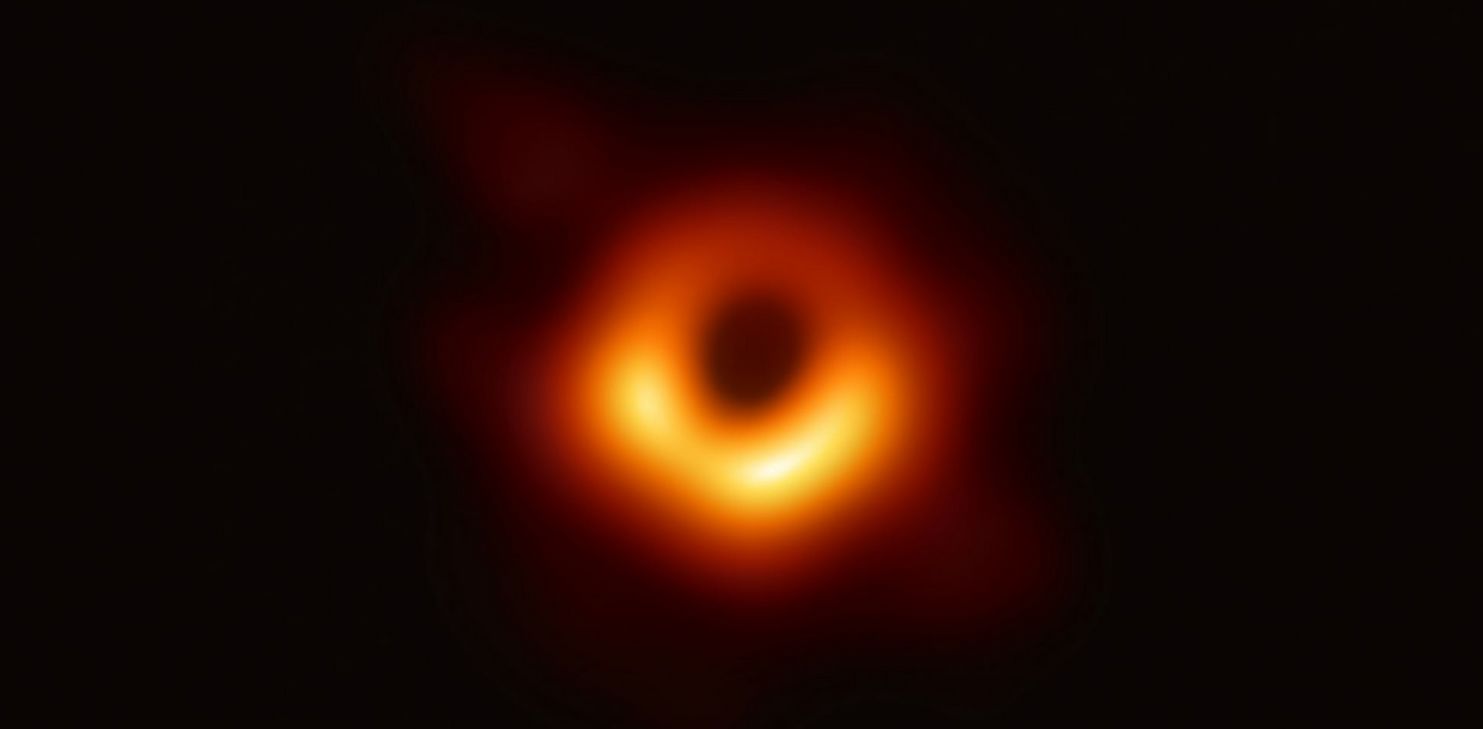
The first ever direct image of a black hole: M87* at the heart of the galaxy M87, 55 million light years from Earth, released on April 10th, 2019. Credit: the EHT Collaboration
The black hole in the above image resides at the centre of Messier 87 (M87), around 16.4 million parsecs (53 million light-years) from Earth, and part of the Virgo galactic cluster of about 12,000 galaxies. It marks the first time we have directly imaged a black hole – and it is a remarkable achievement for a number of reasons.
Thanks to Hollywood, we’re all very probably familiar with the idea of black holes: a point is space where matter is so compressed that it creates a gravity field from which not even light can escape. However, black holes come in a variety of forms, of which the most unusual might well be those that exist at the centre of many galaxies – including our own. Referred to as “supermassive black holes” on account of their extreme mass, they on a scale many times larger than your typical stellar black hole (which, despite being referred to as “massive” – a reference to their gravitational attraction.
Left: M87 in the Virgo cluster of galaxies, as imaged by the European Southern Observatory’s Very Large Telescope. Note the 5,000 light year-long jet of gas (arrowed) rising from the galaxy. Right: a closer view of M87 and the gas jet captures by the Hubble Space Telescope. Extending well beyond the galaxy, and move at relativistic speeds, the jet is believed to be generated by the black hole at the heart of the galaxy. Credits: ESO (l); J. A. Biretta et al., (STScI /AURA), NASA
We don’t actually understand how galactic black holes like the one at the heart of M87 – and called M87*) formed, but being able to examine them directly could answer some fundamental questions about the nature of the universe and physics, as well as helping us to understand the role they play in the evolution of galaxies. The problem is, actually directly imaging any black hole is actually very hard simply because they are – well, black, and thus not the easiest of things to see against the blackness of space.
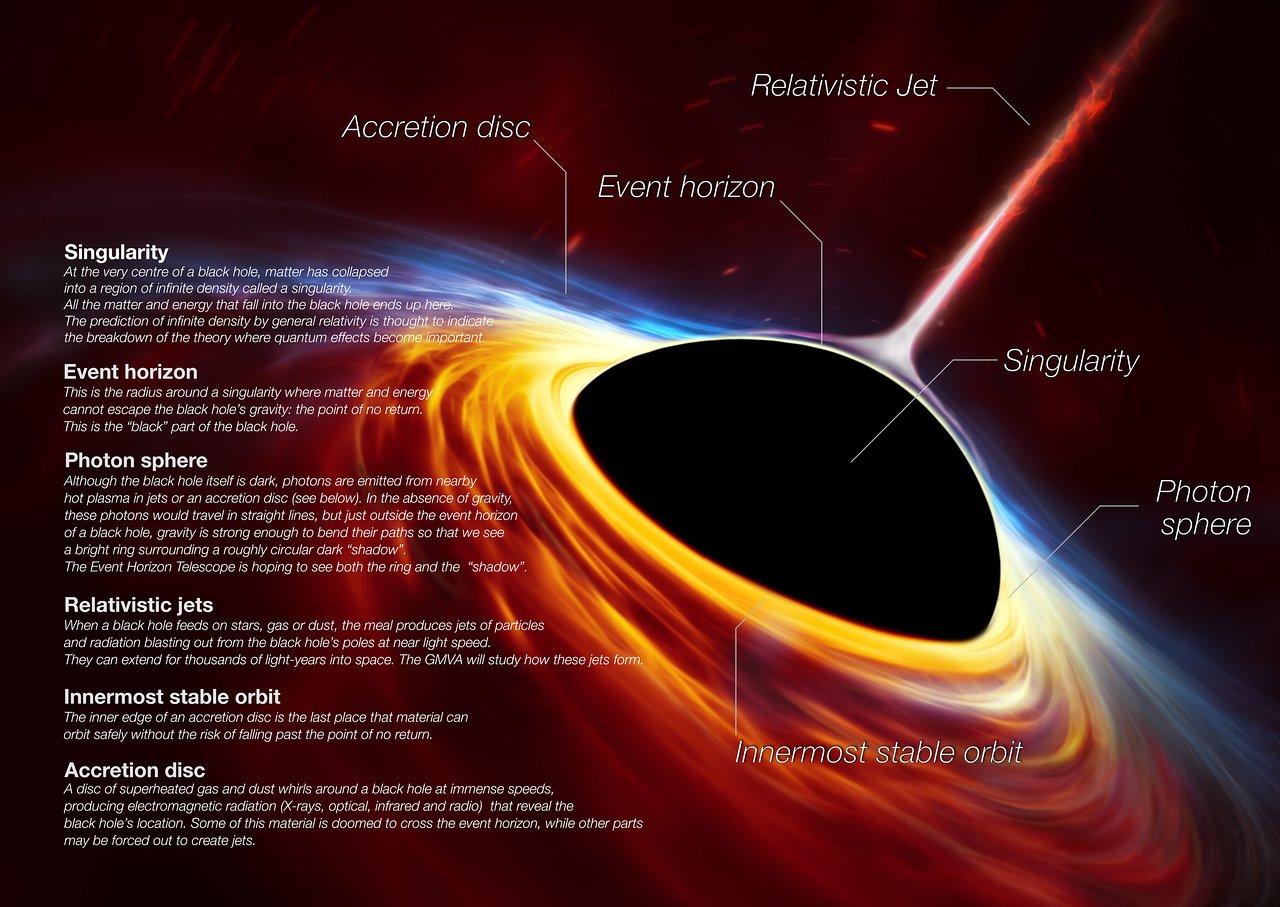
Fortunately, there is a way around this problem: black holes are not alone. Their massive gravity means they attract dust and gas, which forms an accretion disk around the black hole, spinning around them at enormous speeds and producing radiation in a range of wavelengths including radio, optical and infra-red. Given given the right capabilities, we can image a black hole against the radiation from this accretion disk.
The composition of a black hole. Credit: ESO, ESA/Hubble, M. Kornmesser/N. Bartmann
But even with an accretion disk to shed light around a galactic black hole has its own set of issues. To image the one at the centre of our own galaxy, for example, is the equivalent of trying to stand in New York’s Times Square and being able to count the dimples on a golf ball 4,000 km (2,450 mi) away; and this despite the fact that the black hole at the centre of our galaxy is thought to be at least 60 million kilometres across.
Nor is trying to image them optically particularly helpful. They need to be imaged across a range of wavelengths – the problem here being that to do so, you need a radio telescope effectively the size of the Earth.
To achieve this, and following an idea first put forward 26 years ago by German radio-astronomer Heino Falcke, the idea of the Event Horizon Telescope (EHT) was developed. This involves linking numerous radio telescopes together so they can jointly examine a single target and gather data on it.
To image M87*, eight of the world’s most powerful radio telescopes and telescope arrays were linked together. Over a period of about a week in 2017, they were used to gather 4 petabytes of data about the light from M87* in the millimetre wavelength. The drives containing this data were then physically shipped from the observatories to the Haystack Observatory and the Max Planck Institute for Radio Astronomy, where they were plugged into a grid computer made from about 800 CPUs linked through a 40 Gbit/s network, with the data processed by four independent teams using a series of tested algorithms to ascertain the reliability of the results. The final processing run was completed using the two most established algorithms to produce the image seen here.
This is in fact only the first galactic black hole image to b released. As well as studying M87*, the global EHT array has also gathered data on the black hole at the centre of our galaxy (and called Sagittarius A*), and at least two other supermassive black holes. However, imaging our own galactic black hole proved much harder, and delays in getting the physical hardware containing the data captured by the South Pole Telescope shipped from Antarctica to the Haystack Observatory has meant that processing the data is still in progress.
According to theoretical physics – such as Einstein’s theory of relativity – scientists already knew what the image should look like: the aforementioned glowing accretion disk and the shadow of the black hole at its centre (so beloved of sci-fi films that feature black holes). However, simply seeing an image that matches what we believe we should be theoretically seeing helps further confirm Einstein’s theories about the nature of the universe around us.
Theoretical physics, such as Einstein’s general theory of relativity, had given scientists a means of simulating what an image of a black hole might look like, as with the above picture of M87*, released by the EHT team in April 2017 as they were about to commence their data gathering. Credit: Bronzwaer/Davelaar/Moscibrodzka/Falcke, Radboud University
From the actual image on M87*, scientists have already been able to confirm Einstein’s general theory of relativity under extreme conditions – notably the prediction of a dark shadow-like region, caused by gravitational bending and capture of light. They have also confirmed the shadow is consistent with expectations for that of a spinning Kerr black hole, which Einstein again predicted. Further, by combining the asymmetric nature of the accretion disk with the angle of the relativistic plasma jet created by M87* (not actually visible in the black hole image), astronomers believe M87* is spinning in a clockwise direction.
Further, the image has refined estimates of M87*’s size – 40 billion km across the event horizon (that’s 270 AU or 0.0042 light years; roughly 2.5 times smaller than the shadow circle shown in the image) – and its mass, estimated at 6.5 billion solar masses (± 0.7 billion).
We have taken the first picture of a black hole. This is an extraordinary scientific feat accomplished by a team of more than 200 researchers.
– Sheperd S. Doeleman, EHT project director
The image itself is shown in false colour to indicate the intensity of the emissions from the accretion disk. Yellow represents the most intense emissions, dropping to red as the lower intensity emissions, and black for little or no emissions. Were we able to see M87* with the naked eye, the colours would lightly be white, perhaps slightly tainted with blue or red. And while it has yet to be 100% confirmed, the colour bias towards yellow on the southern arc of the ring, together with its asymmetry, is thought to be the result of the gases in that region moving more in our general direction.
While this image has already revealed much, there are numerous questions we have yet to fathom. We may now know the nature of M87*, but we still don’t know how it was formed, or why so many galaxies have black holes at their centres. Nor do we as yet understand why some (like M87*) produce the great plumes of relativistic gas while others, such as the black hole at the centre of our galaxy do not. So expect more to come as a result of studies arising from the work of EHT.
It’s time to highlight another week of storytelling in Voice by the staff and volunteers at the Seanchai Library. As always, all times SLT, and events are held at the Library’s home at Holly Kai Park, unless otherwise indicated.
Sunday, April 14th:
13:30 Tea-Time with Sherlock Holmes’ Greatest Hits
Illustration by Sidney Paget, in The Strand Magazine
As voted for by Seanchai fans, followers and listeners. This week: The Adventure of the Empty Room, first published in The Strand magazine, and later the 13 stories from The Return of Sherlock Holmes.
Three years after the Death of Sherlock Holmes during his fight with Professor Moriarty at Reichenbach Falls, John Watson investigates the death of Ronald Adair. The young gentleman had been found shot to death in a closed room at his home in Park Lane, with no possible exit through the windows. A quiet young man, Adair’s only hobby was playing cards, and he had just had won £240 with his new partner, one Colonel Sebastian Moran.
As he examines the area around Adair’s house, Watson encounters an old man who eventually follows him to his office – and reveals himself to be Holmes himself. Explaining how he survived his encounter with Moriarty to a shocked Watson, he further reveals that Adair’s card partner, Sebastian Moran is – or was – actually Moriarity’s lieutenant. He further reveals that Moran is aware of Holmes’ survival, and plans to kill him.
But knowing of Moran’s plan, Holmes has one of his own. Not only does he plan to survive the attempt on his life, he plans to thwart Moran and bring him to justice.
With Da5id Abbot, Corwyn Allen, Savanah Blindside, and Kayden Oconnell in the Library’s Fireside Room.
Have you heard? Willie Wonka is releasing five golden tickets in candy bars! Charlie Bucket may have a chance to find one as Caledonia Skytower continues Roald Dahl’s classic.
Monday, April 15th 19:00: The World’s Best Science Fiction 1969
Gyro Muggins read from this anthology of science fiction short stories, edited by Donald A. Wollheim, featuring nineteen authors, including such names as Brian Aldiss, Poul Anderson, Samuel R. Delany, Fritz Leiber, Robert Silverberg, and Kurt Vonnegut, Jr.
This week, Dance of the Changer by Terry Carr. Are the aliens crazy or just alien? Is there a difference? ; and Fear Hound by Katherine MacLean. A detective novel, but this time it isn’t “elementary” it’s “psychic.”
Tuesday, April 16th 19:00: Kaleidoscope
When a brilliant young violinist dies in a horrific accident, Madame Karitska has only to hold the victim’s instrument in her hands to perceive the shocking truth. But when an insecure wife asks whether her husband will abandon her to join a sinister cult, Madame Karitska–as wise as she is lovely–chooses not to reveal all that she foresees. And when an attaché case is suddenly dropped into her lap by a man fleeing a crowded subway, she knows it’s time to consult her good friend Detective-Lieutenant Pruden.
A nine-year-old accused of murder, a man dying a slow death by witchcraft– for the hunted and the haunted, Madame Karitska’s shabby downtown apartment becomes a haven, where brilliant patterns of violence, greed, passion, and strange obsessions mix and disintegrate with stunning, kaleidoscopic beauty.
With Caledonia Skytower.
Wednesday, April 17th 19:00: TBA
Check the Seanchai Library website for information nearer the day.
Thursday, April 18th
19:00: Rogue One: A Star Wars Story Part 2
With Shandon Loring. (Also in Kitely grid.kitely.com:8002:SEANCHAI).












 Inara Pey: Living in a Modemworld