This is the first of two pieces on Tonarino, a Full region we originally visited just over a year ago in December 2019 (see: Tonarino: an oriental curio in Second Life). At that time, the region was a ground-level build, the work of 秋元のん (n0rik0), offering a Japanese urban design theme that was photogenic and fun to explore.
However, not long after our initial visit, n0rik0 extended the region design with the inclusion of a sky platform – Nekomachi Street – which we actually managed to miss at the time it was available. So, when I noted by way of Annie Brightstar’s Scoop-it pages that Nekomachi Street was back, I knew it was time for a return visit to Tonarino, starting with the sky platform lest it only be available for a limited time, and then progressing to the ground to see what has changed there.
Nekomachi Street, Tonarino
The clue to the theme of the sky platform, if the preceding shots above haven’t actually given it away, is in the name – neko, as in cat, so “Nekomachi” could be taken literally as “cat town” or “cat city”, with the setting itself being precisely that: a street scene featuring cats. However, these are not your average domesticated cats, as clever as they may be. These are cats that are completely anthropomorphic and who have overcome the limitations of not having an opposable thumb, in order to create a very human-like life for themselves in what is a delightful continuation of the overall Japanese theme for the region.
For those who visited the location in its past iteration, I understand that outside of the restaurant specialising in crab delicacies, not much has changed between this iteration of Nekomachi Street and the last. Which doesn’t mean it shouldn’t be re-visited; quite the reverse, I’d say: the entire setting is utterly adorable, whether or not you have seen it before.
Nekomachi Street, Tonarino
These feline characters – from sets by 丸角の人 (shiro0822), and sold under their Maru Kado brand (just search for “cats” to list the three sets) – are going about their daily lives just as we humans might. In this, n0rik0 has sown considerable creativity in how the various cats are presented and what they are doing.
Take the crab restaurant, which I’ve arbitrarily selected as a landing point for the article (the setting does have a more “formal” point of arrival / departure, but I’ll come to that later). Here, a kimono-wearing cat is clearly being tempted by the window display as she walks by – and is about to be further tempted by the platter (of samples?) a member of staff is holding by the entrance, whilst inside customers are happily eyeing their meals of fresh crab and supping beer.
Nekomachi Street, Tonarino
Further down the road from the restaurant, another cat is on his pizza delivery round, skilfully managing his bicycle while holding aloft a veritable tower of boxed pizzas, meals the group of cats and kittens putting on their own show outside the local cinema might actually enjoy, although they seem quite wrapped up in their dancing. Around a corner, meanwhile, another cat has stopped his little van above the local river to appreciate the view. A few metres away, another cat peruses the outdoor racks of the local bookshop while inside, the shop owner stands engrossed in one of his tomes.
Throughout the setting, around every corner and within many of the little shops and stores, similar scenes unfold, from the mechanic taking a break from work to enjoy and garden lunch and a read of a newspaper, to the baker and the happy-go-lucky delivery cats with their cart. Unsurprisingly, food does play a considerable role in daily life here – but name me a cat that doesn’t consider every minute of the day to be approximately half-past dinner time and therefore ideal for a snack?
Nekpmachi Street, Tonarino
However, the most endearing little scene awaits discovery along the eastern street.
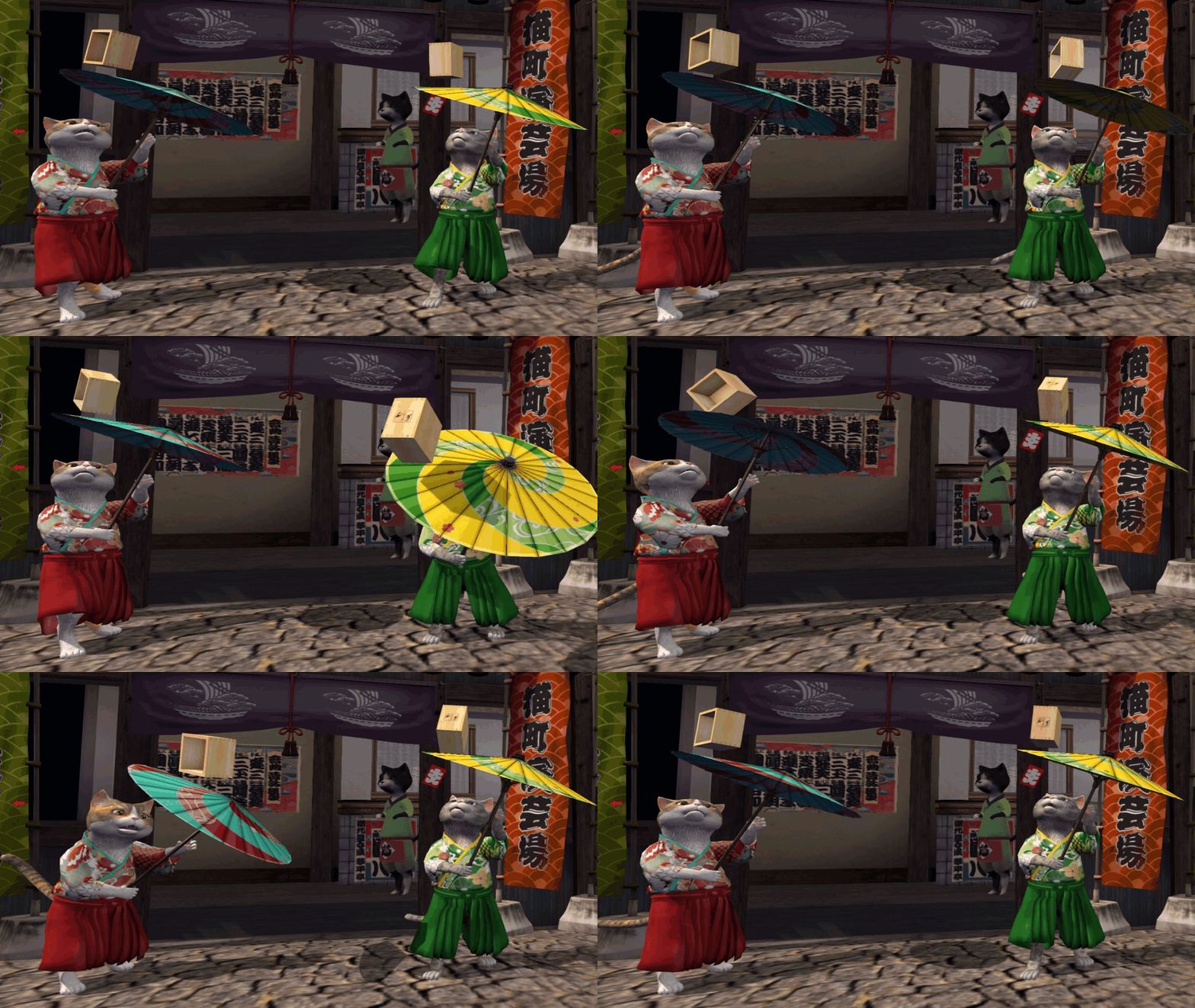
Here, outside the local theatre and before a growing crowd, two highly skilled jugglers put on a show intended to entice people into the theatre – and their use of parasols and little boxes is a delight to watch. Animesh in nature, these are part of a gacha set by shiro0822, items of which can be obtained from the Maru Kado in-world store.
Juggling Cats
Just across the road from the theatre is a little alley linking the street with another, and which is notable for the little work cat climbing out of the manhole there. However, more than just working, he offers the way down to the ground level, and forms the “official” landing point for Nekomachi Street – touching his head will deliver you to the ground-level town, but I’ll be covering that in the follow-up to this article in due course.
Logos representative only and should not be seen as an endorsement / preference / recommendation
Updates for the week ending Sunday, January 31st
This summary is generally published every Monday, and is a list of SL viewer / client releases (official and TPV) made during the previous week. When reading it, please note:
It is based on my Current Viewer Releases Page, a list of all Second Life viewers and clients that are in popular use (and of which I am aware), and which are recognised as adhering to the TPV Policy. This page includes comprehensive links to download pages, blog notes, release notes, etc., as well as links to any / all reviews of specific viewers / clients made within this blog.
By its nature, this summary presented here will always be in arrears, please refer to the Current Viewer Release Page for more up-to-date information.
Note that for purposes of length, TPV test viewers, preview / beta viewers / nightly builds are generally not recorded in these summaries.
Official LL Viewers
Current release viewer version 6.4.11.551711, formerly Cachaça Maintenance RC viewer promoted on November 12th – No Change.
Release channel cohorts:
Dawa Maintenance RC Viewer updated to version 6.4.12.555248 on January 25th, 2021.
Panorama of the Apollo 14 landing site taken in 1971. Credit; NASA
Fifty years ago today, January 31st, 2021, America’s Apollo lunar missions resumed – and came perilously close to a second aborted mission.
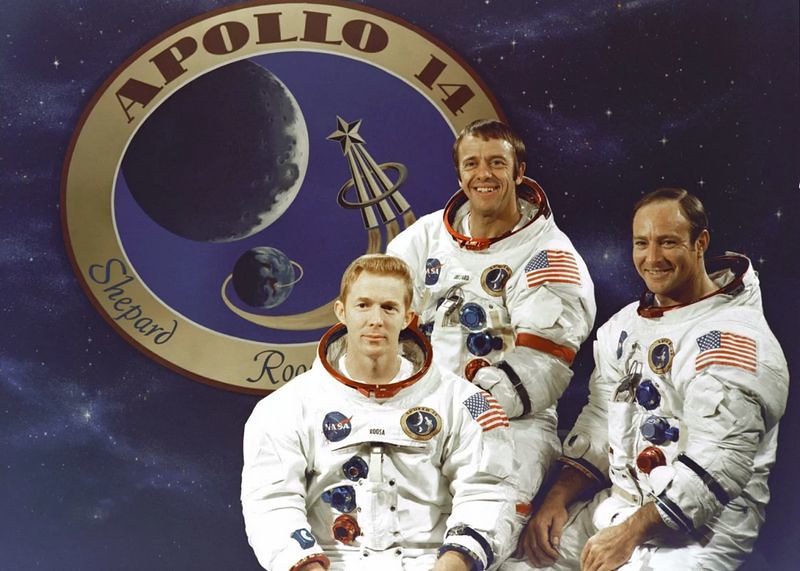
Originally scheduled to take place in July 1970, Apollo 14 was delayed following the Apollo 13 crisis (see: Space Sunday: Apollo 13, 50 years on), to both allow time for recommendations resulting from the investigations into the Apollo 13 mishap to be implemented. This not only led to a hiatus in lunar landings, it also meant that the Apollo 14 crew of Mercury 7 veteran Alan B. Shepard Jr. (Commander), Stuart A. Roosa (Command Module Pilot) and Edgar D. Mitchell (Lunar Module Pilot) eventually spent more time training together than any other Apollo crew to that point: a total of 19 months.
In the immediate aftermath of Apollo 13, NASA Administrator Thomas O. Paine indicated the agency would ideally like to launch the mission before the end of 1970; however, the recommendations for changes to be made to the Command and Service Module (CSM) combination meant that the earliest the agency could realistically schedule a launch for the mission was at the end of January 1971 – with much of the work in supervising the necessary changes being loaded directly onto the shoulders of Shepherd and Roosa.
We realised that if our mission failed—if we had to turn back—that was probably the end of the Apollo program. There was no way NASA could stand two failures in a row. We figured there was a heavy mantle on our shoulders to make sure we got it right
– Edgar D. Mitchell, discussing Apollo 14 preparations, speaking in 2011
A further complication for the mission was that following Apollo 13, the original landing site for the Apollo 14 crew at Littrow crater, in Mare Serenitatis was abandoned in favour of sending the mission to Fra Mauro, the intended landing site for Apollo 13, and which was seen as having greater scientific relevance, requiring Shepherd and Mitchell to revisit their lunar surface and geology training – Littrow had required a high degree of training in volcanic geology; Fra Mauro was an impact crater site.
Official Apollo 14 crew photo: Stuart Roosa, Alan Shepard (centre) and Edgar Mitchell. Credit: NASA
The key changes to the CSM combination were around the oxygen tanks that had exploded on Apollo 13. These includes a complete redesign of the tanks and the circuitry within them, while a third tank was add on the opposite side of the SM that could act as a back-up in case of issues with the first two. Other changes included incorporating a 5 US gallon tank of “emergency” drinking water and an additional battery to help maintain electrical power to the Command Module in event of the main power buses failing. Alterations were also made to the connections between the Command and Lunar modules for easier and faster transfer of power and control between the two.
Outside of the need to overhaul the CSM combination in the wake of Apollo 13, the Lunar Module for the mission – the last of the “short term” H-class missions – underwent changes that included anti-slosh baffles in the descent engine fuel tanks intended to prevent incorrect low fuel warnings to be triggered – an issue that plagued both Apollo 11 and Apollo 12 – and the installation of additional equipment hard-points for the surface science mission, which would be the most intensive yet for an Apollo lunar mission.
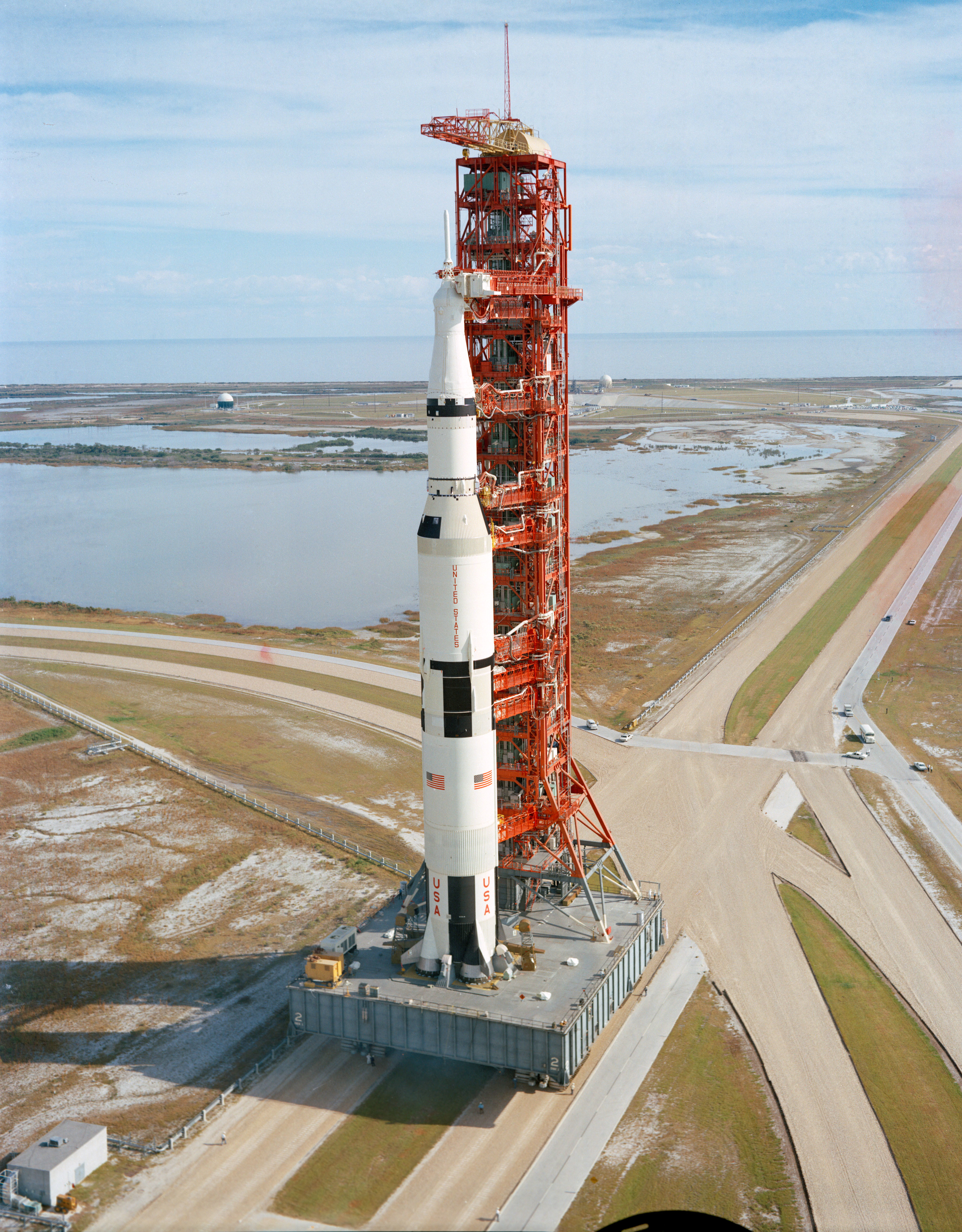
Aside from these changes, the mission was to be the first to fly an altered Saturn V rocket. Whilst ostensibly the same externally as all the previous Saturn Vs that had flown, SA-509 had a series of internal changes made to its fuel system to prevent pogo oscillations – a self-excited vibration in liquid-propellant rocket engines caused by combustion instability that can, if unchecked, result in an engine exploding. On Apollo 13, such oscillations had meant the centre J2 engine of the rocket’s upper stage had to be prematurely shut down.
Saturn V SA-509, topped by the Apollo 14 spacecraft, rolls out from the Vertical Assembly Building (now the Vehicle Assembly Building) on its way to launch pad 39-A. Credit: NASA
Of the crew, Shepard was the only one to have previously flown in space as the first American to complete a sub-orbital hop aboard Mercury Freedom 7 in May 1961.
Born in 1923, Shepard attended the US Navy Academy at Annapolis from 1941 to 1944 (the normal 4-year training course having been cut by 12 months due to World War 2). He initially served aboard the destroyer USS Cogswell – it then being a requirement that Navy aviators serve shipboard time prior to starting flying training -, rising to the rank of Air Gunnery Officer, responsible for the ship’s anti-aircraft guns and crews, a position he held while the Cogswell served critical roles in the Battle of Okinawa and off the coast of Japan.
In November 1945 he transferred to flight training school, and after almost washing out as a pupil, went on to gain 3,600 flying hours with more than 1,700 in jets, eventually rising to the position of Aircraft Readiness Officer on the staff of the Commander-in-Chief, Atlantic Fleet.
After his Mercury flight, In 1963 Shepard was grounded due to Ménière’s disease, an inner-ear ailment that caused episodes of extreme dizziness and nausea.This precluded him from flight involvement in the Gemini programme, although from 1963 through 1969 he was NASA’s Chief of the Astronaut Office with overall responsibility for astronaut training and mission selection.
In 1969, Shepard underwent successful surgery to correct his ear issue, and was returned to active flight status. He immediately lobbied his successor as Chief of the Astronaut Office, Donald “Deke” Slayton for a position on Apollo, and was initially earmarked to command Apollo 13. However, his “inexperience” in having missed the entire Gemini programme, and that of his crew as a whole, saw them “bumped” to Apollo 14 to allow them a greater amount of training.
Both Stuart Roosa and Edgar Mitchell were rookies, with Apollo 14 their first and only flight into space. Roosa had previously been a “smokejumper” with the US Forest Service, parachuting into remote area to combat forest fires, prior to transferring to the United States Air Force and training to be both a fighter pilot and an experimental test pilot. On joining NASA in 1966, he was the capsule communicator (CAPCOM) for the tragic Apollo 1 fire, and also served on the support team for Apollo 9, working closely with Edgar Mitchell.
Mitchell was another Naval aviator, having entered the service in 1952 with a degree in industrial management. During during his military flying career he gained a second bachelor’s degree in aeronautics and a doctorate in in aeronautics and astronautics. He also clocked an impressive 5,000 flying hours as both a front-line fighter pilot and a test pilot, 2,000 of those hours gained in jets.
Mitchell’s involvement with space activities actually started before he joined NASA, when in 1964 he was assigned to the US Air Force Manned Orbiting Laboratory (MOL), serving as Chief, Project Management Division of the Navy Field Office that was liaising with the Air Force, and also as an instructor in advanced mathematics and navigation theory for MOL astronaut candidates. When MOL was cancelled, he applied to NASA, and was accepted as a part of the fifth astronaut intake alongside Stuart Roosa.
Given it was the first mission to follow Apollo 13, there was a lot of media and political attention on Apollo 14, including pressure for it to launch on schedule. As it was, weather intervened on the launch day, causing the countdown to be paused for some 40 minutes – the first time such a delay had occurred with and Apollo mission. Launch eventually took place at 21:03:02 UTC on January 31st, 1971.
The pre-launch delay wasn’t considered to be a significant issue, as the mission was to take a faster trajectory to the Moon than previous launches, so the delay effectively left it running precisely “on time” compared to earlier missions. Following a require time in Earth orbit, the S-IVB third stage engines were-lit, pushing the mission on its way to the Moon.
Once en-route, the CSM – christened Kitty Hawk by the crew in honour of the Wright Brothers – had to separate from the S-IVB, then turn through 180º to dock with the now-exposed Lunar Module (called Antares after the star Shepard and Mitchell were due to use as reference point when orienting their craft for its lunar landing) and then gently pull it clear of the rocket stage, which would then gently divert away from the Apollo vehicles flight path.
Roosa, as Command Module Pilot, hoped to set the record for competing this manoeuvre using the least amount of fuel. However, the extended docking mechanism in the nose of the Command Module had other ideas – it refused to latch onto the lunar module firmly enough to trigger the release of the pin holding the LM in place on the S-IVB. Over two hours Roosa repeatedly attempted to make an initial “soft dock” with the LM, but was repeatedly thwarted, leaving the crew and mission control agitated: if the LM could not be extracted by the CM, then the mission was over – and two mission failures in succession, even without any loss of life, would likely spell the end of Apollo.
In December 2020 I visited Path to Oneself Reflection, an immersive and semi-interactive art installation by the SL Random Art Crew led by RoxkSie (Roxie Logan) that sought to offer a look back at 2020 with its pandemic and divisions, and offer nudges for our thinking and outlook, and consider the ways in which the past years has both separated and united. It was an impressive and complex installation as I noted in A path of reflection in Second Life; in that piece, I also noted that the story of 2020 and its impact was far from over.
Thus is it that, officially opening on Monday, February 1st – although it has been available for the public to visit for that last couple of weeks – is what might be called the sequel to The Path, entitled Inner Self Awareness.
That it follows on from the Path is perhaps most clearly demonstrated by the fact Inner Self Awareness has a setting that is very much in keeping with its predecessor, although the actual focus of the installation is very different: whereas The Path encouraged us to look back over the past 12 months and consider how they have affected us both on an individual and societal level, Inner Self Awareness asks us to consider, what, as we emerge into a new year, we may have learnt from the past twelve months and how we might, as individuals, seek to move into the future and the changes (if any – change is not a subject everyone is comfortable with, as the installation duly notes in places) we might make in order to better embrace that future. To quote RoxkSie directly:
We have lost so much that is fundamental to what we call our normal lives. We are going to learn what our new normal is very shortly. This will mean a lot of different things to everyone individually. The year that has passed us has shown more than ever that at times out thoughts are not united; however, there is a lot of good that can be obtained from this. Different mindsets build a diverse society.
Inner Self Awareness
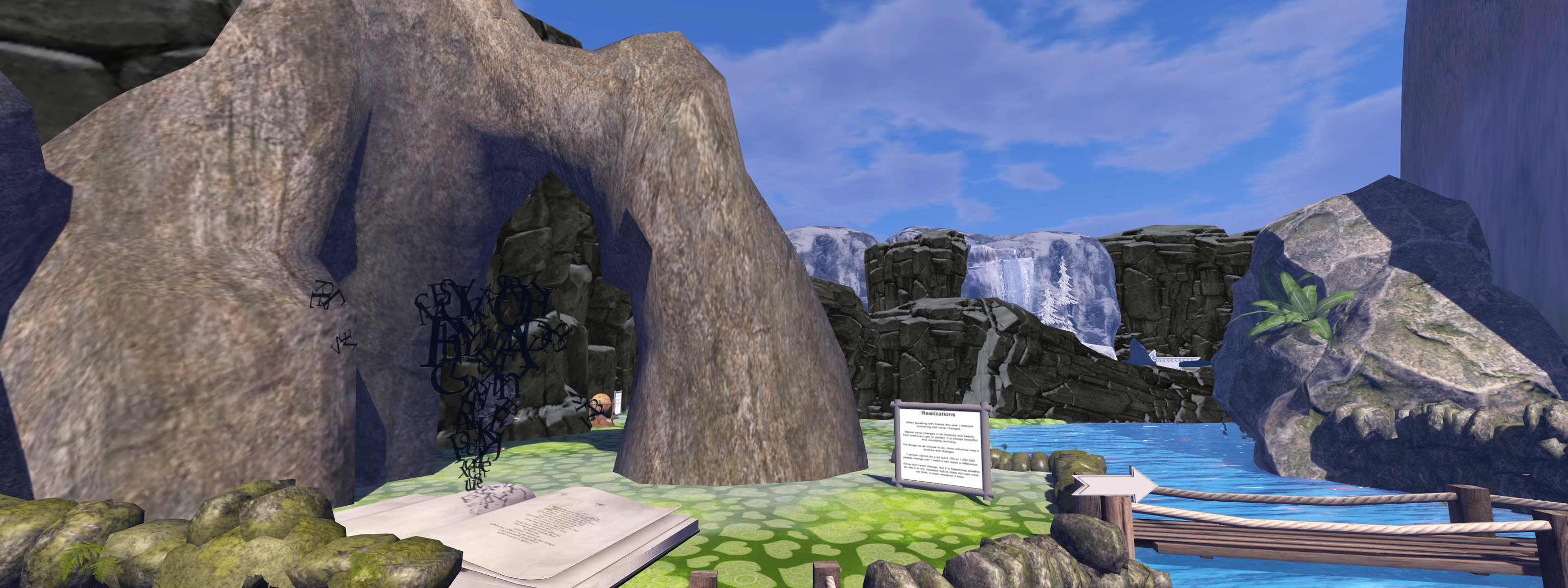
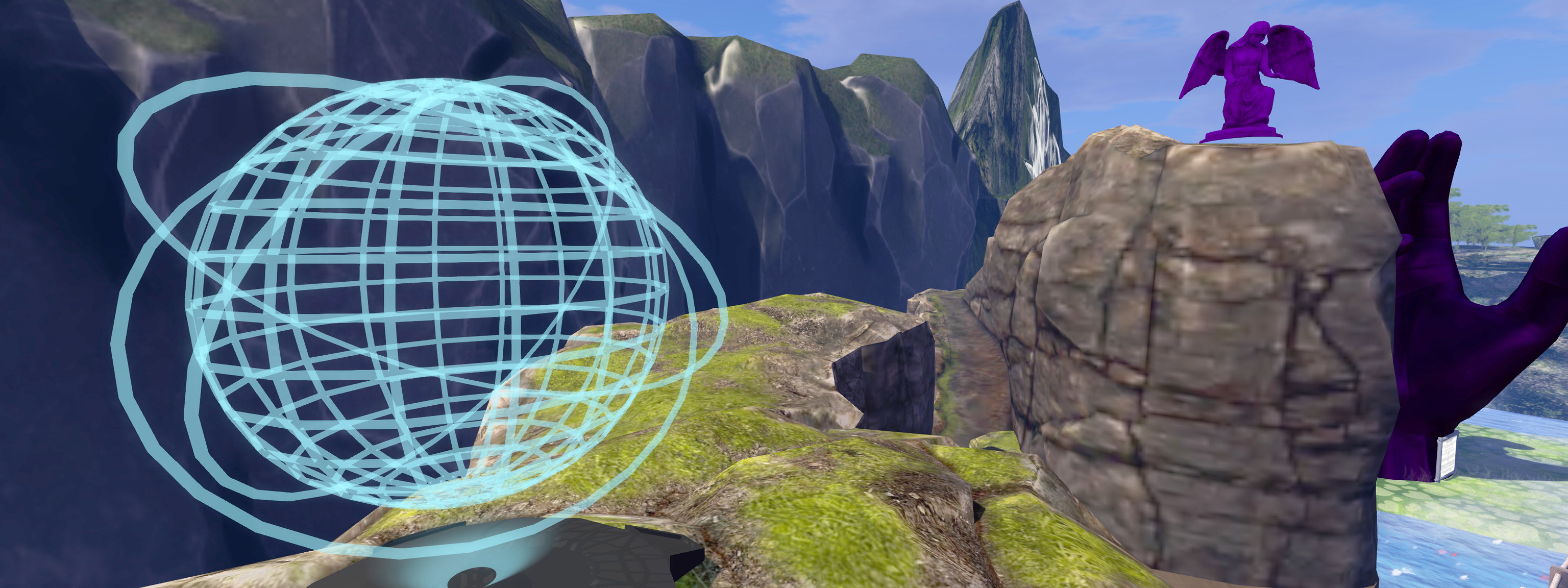
As with The Path, this is an installation that encourages us to walk through a rugged landscape; one in which walls of rock, mountains and hills break the lowlands into a series of areas encircling a central body of water and high peak topped by a massive hand reaching upwards in what might be an attempt to reach beyond what we are and become the promise of what be might be.
In following the path and bridges through the landscape, we’re asked to consider a number of topics and how they might impact us, and we them: the nature of diversity, the ideals of choice and change, the challenge of acceptance and willingness to change, how we might better face the future as individuals and in the benefit of humanity as a whole. Within these topics are couched responsibilities that affect us all, from dealing with the pandemic through to touching upon matters such as climate change.
All of makes Inner Self Awareness as very personal experience, one that is extremely difficult to transfer into words, simply because it does require each of us to invest a fair degree of introspection in it – and the very fact that we all have different perspectives means that the installation is going to resonate differently, depending upon just how much time and thought we are prepared to give to the subjects RockSie prompts us to consider – and the changes we are willing to make in order to help bring about a more desirable future.
Inner Self Awareness
For me, these thoughts all coalesced around ideas of a greater need for tolerance and understanding on the part of all of us as individuals; we have become far, far too intolerant of any ideas or thoughts that are not in absolute lockstep with our own. Simply put, far too many of us have become entrenched in our various beliefs and leanings, that we’re unwilling to accept the views of others.
Whatever the cause – and it is hard not to blame social media platforms such as Twitter, it has been increasingly easy for any of us to retreat into (or create) hollow echo-chambers of so-called “like minds” which, whilst seemingly harmless, only serve to negatively amplify a sense of self-righteousness of outlook, to the point where anyone who expresses a point of view that is not 100% in accord with our own is somehow “against us” and thus to be ostracised and / or vilified for daring to offer an alternate viewpoint.
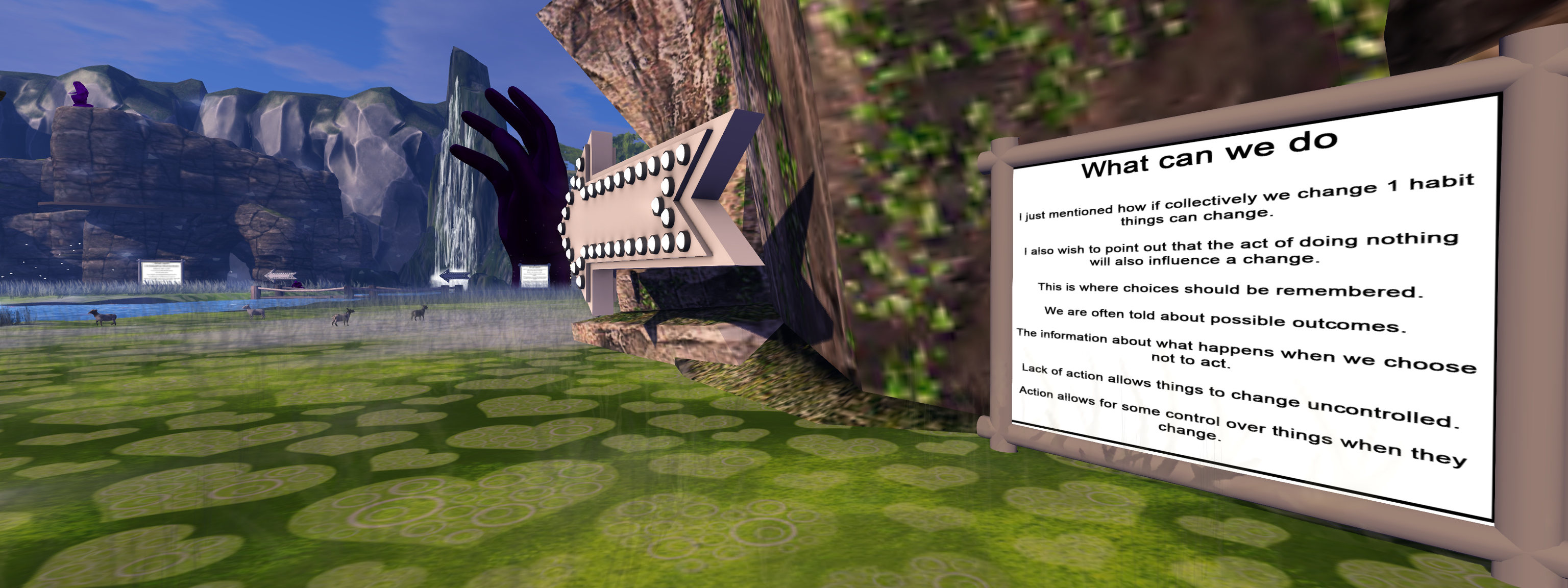
These are attitudes that require intentional act on our part to change, as this installation attempts to point out through the encouragement of introspection. However, the fact that it does require introspections and an acknowledgement of a need to change, it is easy to brush the need aside because “one person cannot make a difference”, or because there are those who simply will not change. However, neither of these are valid arguments, because the fact is that, while it might feel that “its only me”, numbers do matter and can have an impact, as RoxkSie notes – couching her observation in a frame of reference that appears to encompasses the subject of climate change:
Nature never changes in its diversity and beauty. From aesthetically ugly to perfect, it is always beautiful and constantly evolving. The things we choose to do, do influence how it evolves and changes.
One person cannot do a lot, but if 100 or 1,000,000 people change just one habit, it can make a difference.
Some don’t want change, but it is happening whether we like it or not. Because nature does not care what we think.
Inner Self Awareness
Challenging and potentially discomfiting for some, Inner Self Awareness is an interesting successor to The Path, presenting as it does considerable food for thought – far more in fact, than I’ve thought in here, as there is a veritable treatise to be found within it, and I’ve forcibly restrained my commentary here so ad not to blanket the experience other may have with my own subjective thinking. When visiting, do be sure to have local sounds enabled (not the audio stream).
Back in October 2020, I was invited to visit the Wythburn Art Walk, a exhibition at Wythburn Village specifically in aid of Making Strides Against Breast Cancer (MSABC). At the time (see: Wythburn Art Walk in Second Life) some two-dozen artists were participating in the region-wide event, which also offered the opportunity for visitors to explore Wythburn and the surrounding region.
The Art Walk / Artists for Life event in support of RFL in SL will be back in 2021 (I understand it is currently scheduled for around April 2021). However, and in the meantime Artistic director at Wythburn, Star Finesmith (MorningStar Finesmith), invited me back to the Village, which is now a burgeoning arts community and centre for arts in Second Life, with two core centres of interest: the village itself and the Raven Craig Art Centre.
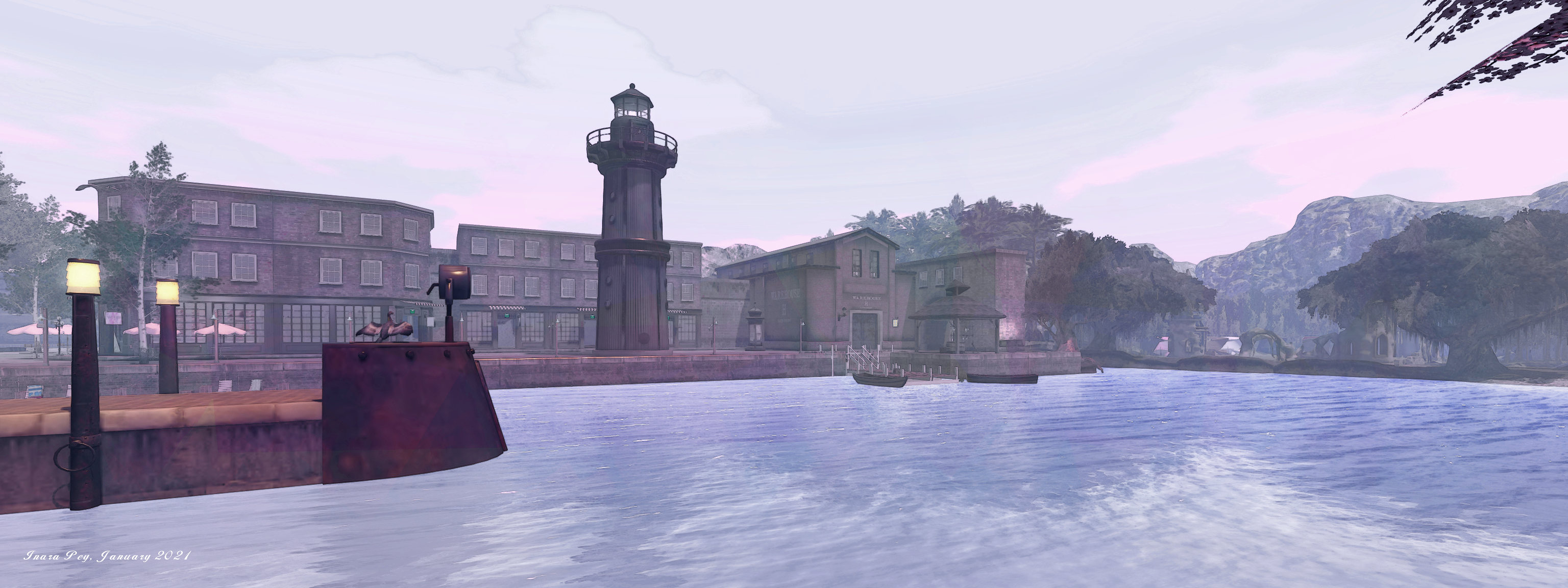
Raven Craig Art Centre, WythburnBoth the village and the Art Centre are located on the shoreline of Wythburn Lake, a ribbon of water that cuts across the land from the rugged uplands to the south-west, denoted by their waterfalls and the tall, blocky form of a Scottish-style castle, to run north and east to where the Art Centre and the village face one another across the water before being linked by a cobbled warehouse area and rutted track that extends from it, marking the lake’s easternmost extent.
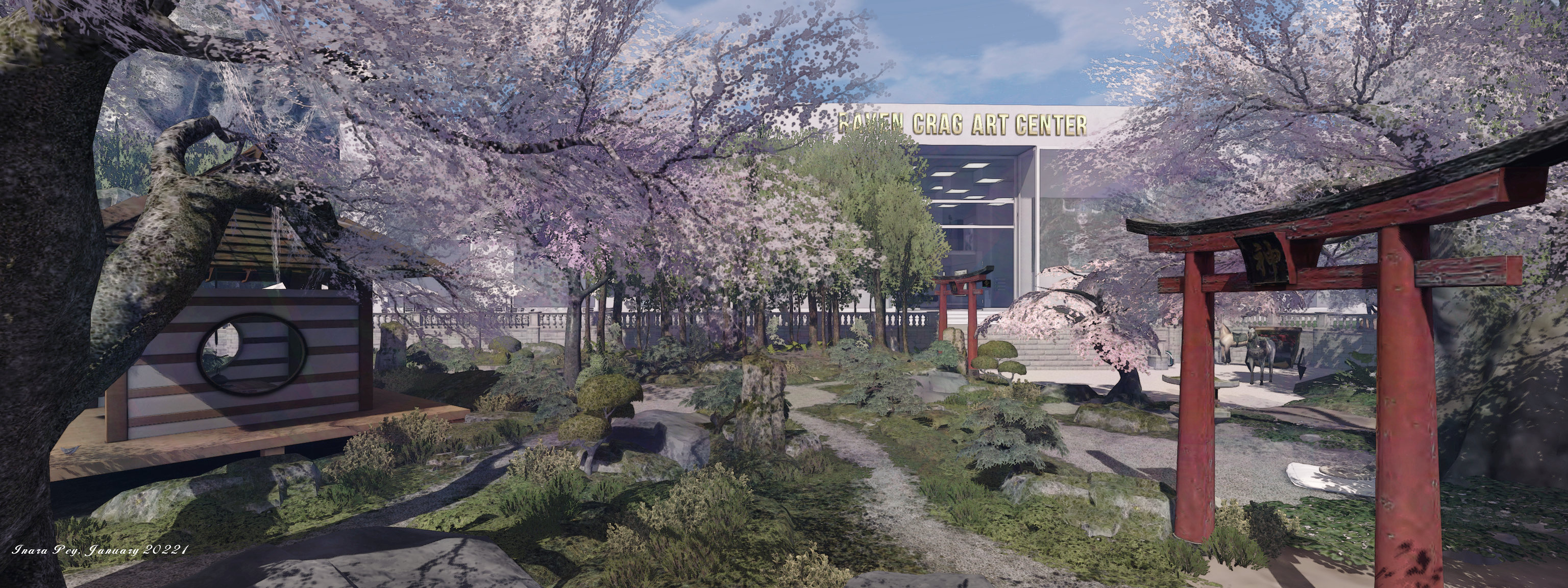
The Art Centre, fronted by a garden space offering a strong Japanese / Zen setting complete with a small tea house and Torii gates, is the home of rotating exhibitions of art curated by Star and Sethos and which are intended to feature both established and up-and-coming Second Life Artists. In addition, the Centre is also intended to “freely educate in the history, practice, and methods of the arts in Second Life.”
Raven Craig Art Centre
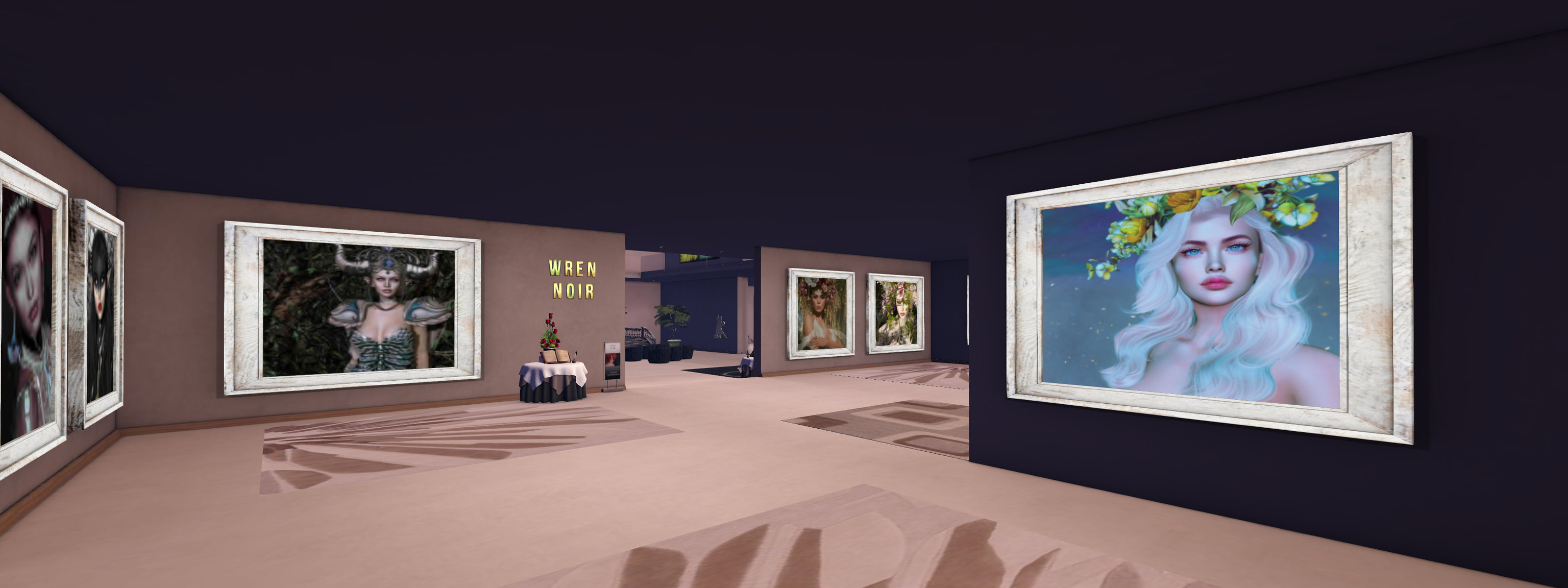
An impressive building in size, with numerous large, airy halls on two levels, Raven Craig offers a rich opportunity for ensemble exhibitions, some of which could conceivably overlap with one another, encouraging repeat visits. It had yet to be fully occupied at the time I dropped in, with the displays that are available focused on avatar studies by Caly Applewhyte (Calypso Applewhyte), Wren Noir (Wrennoir Cerise), Max (Max Seagate) and star herself, with a mixed selection of avatar studies and landscapes presented in the upper floor rooms by a number of artists including, but not limited to Jaz (Jessamine2108), Akim (Akim Alonzo), Freyja (Freyja Merryman), Janine Portal, Pavel Stransky, and 3D pieces by Harry Cover (impossibleisnotfrench).
Also to be found on the upper level, but not officially open at the time of my visit, is a forthcoming exhibition of Second life landscape art by AriaRose Canningham (AriaRose Kiyori).
Wythburn Village and Arts Community
A short walk along the track from the Centre are the docks and village of Wythburn. Home to the Wythburn Arts Community, the village offers studio spaces of varying sizes to artists interested in renting them. Many have already been taken, thus providing visitors with a further opportunity to see (and purchase, if they wish) a range of art by artists and photographers from across Second Life, although there were a number of the smaller studios still available at the time of my visit, costing a very reasonable L$100 per week for 100 LI.
Beyond the village, through the arch at its southern extent, the lakeside landscape is also open to exploration. Here, over a bridge that spans further falls that feed the lake, lies a hidden henge sitting within surrounding oak and birch trees and curtain walls of rock. Just westward of this, along the path that might take you eventually around the lake and up to the high castle, is what appears to be a small market area sitting within its own ruins and carrying with it something of a medieval feel.
Wythburn Village and surroundings
What the function of this market-like setting might be, I have no idea; but it also sits close to a further set of ruins which, despite their classical columns, are of a distinctly more modern time frame. Sitting directly on the shore of the lake, they offer good views back towards the village and the Art Centre, as well as up to the castle, whilst also revealing the shore of the lake, rugged as it is, might also be circumnavigated.
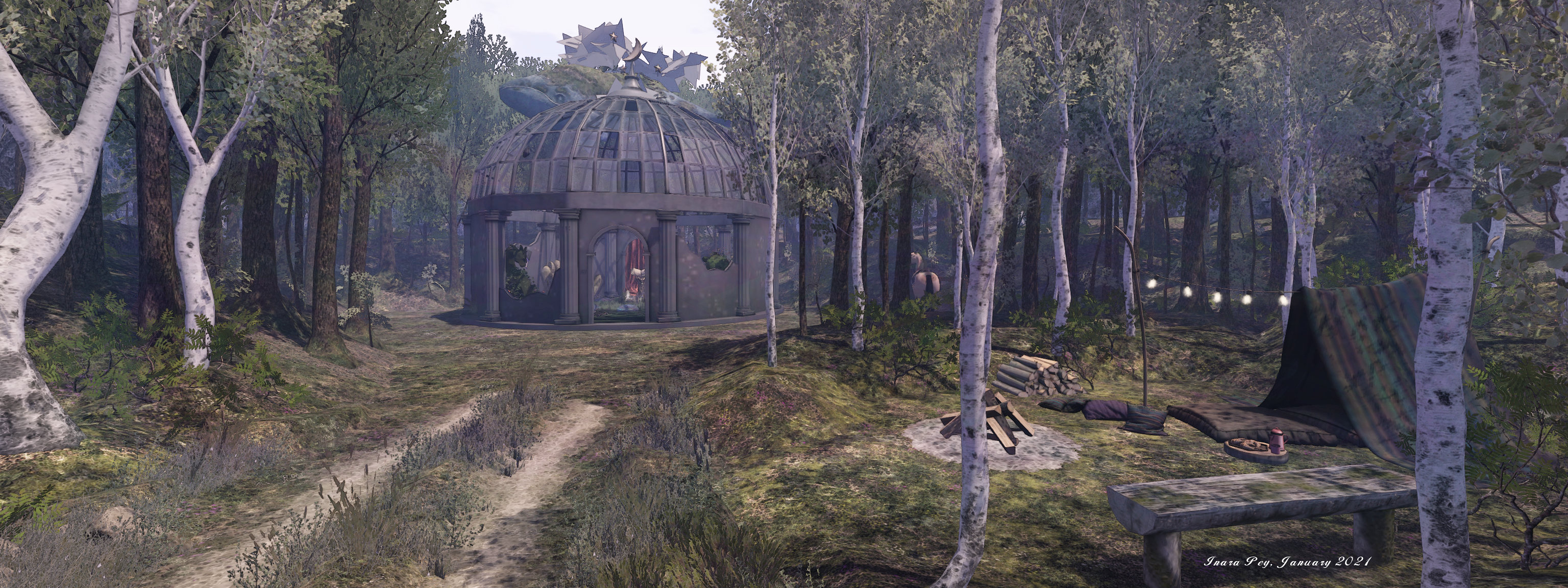
Nor is that all. Also to be found within the setting are places with a decided lean towards fantasy, be it via the fae-guarded rotunda sitting within its own glade at the end of a grassy path, or the Game of Thrones-ish Hall of Faces that lies within a network of tunnels that also hide caverns with the most otherworldly of gardens. I’m not going to say where any of these might lie, suffice it to say, keen eyes and willing feet will find the way to them with reasonable ease – and that finding them is part of the fun of exploring this setting.
Wythburn Village and Arts Community
From art exhibition centre to arts community to a richly diverse landscape ripe for exploration and photography, and with opportunities for exploration on foot or horseback (rezzers available or wear your own), Wythburn and Raven Craig offer a lot to see and appreciate. And should the idea of tromping around on your pedal extremities feel off-putting, keep an eye out for the horse and carriage combinations both in the village square and outside the Art Centre; they’ll take you to one of a number of destinations by way of a gentle ride through and around the village.
When a region’s title includes “Handmaiden” (albeit without the apostrophe and ess), one might be forgiven if the mind jumps immediately to speculation on whether it might have something to do with Margaret Atwood‘s dystopian novel or the television that arose from it.
However, The Handmaiden Estate, designed by StephiDreamEverMore Doune (stephidreamevermore.doune) and Bella Cavanaugh (Bellacatorina McKeenan) on behalf of region holder Takao Kishijoten (Takao Kiyori), looks a lot further east the the totalitarian state of Gilead, drawing as it does primarily on Japan and other Asian elements for its inspiration.
The Handmaiden Estate
The region’s description notes that it is a place for “both lust and relaxation”, with the region rating further hinting that it can be a place where adult activities might be found – as does some of the décor with the main houses. However, to classify The Handmaiden Estate as being solely about adult pursuits would be unfair and inaccurate.
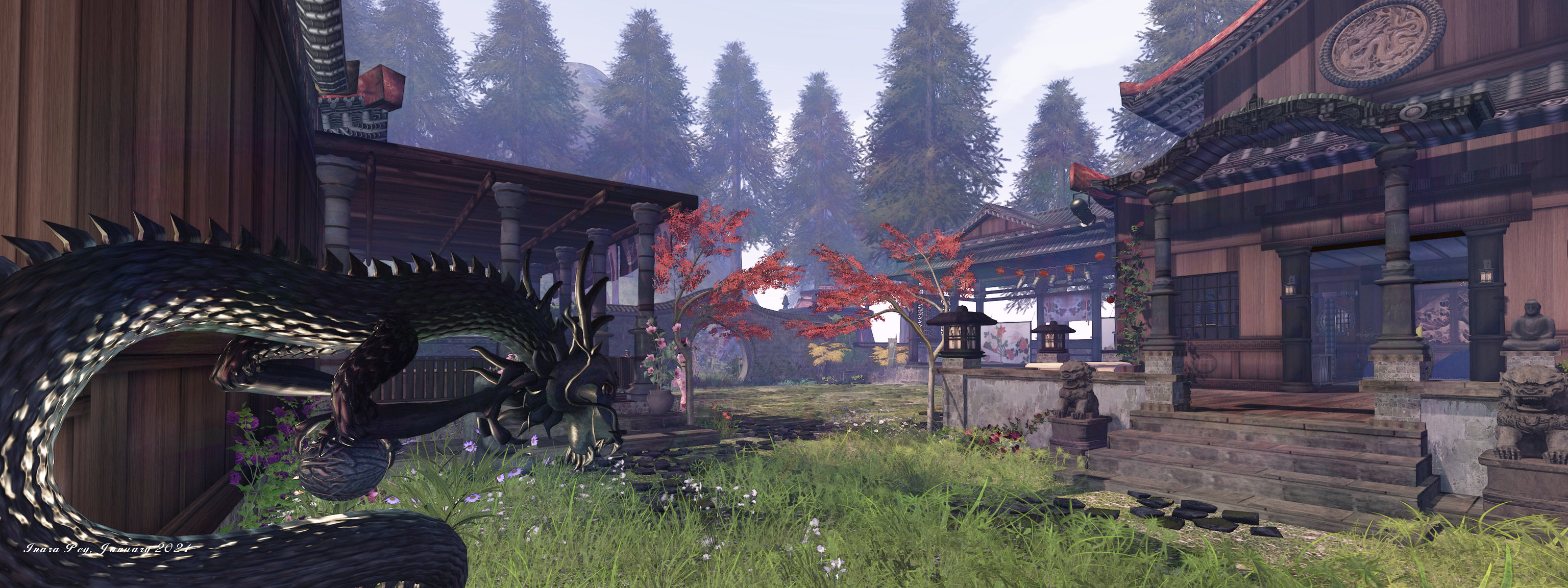
The landing point sits within the gardens of the main houses, both of which are imposing wood and slate structures of neo-classical Japanese design. One has a more direct reference to adult – or more precisely, BDSM – pursuits, whilst the other has furniture – including modern hot tubs – that perhaps leans more towards the occidental than oriental, making for an interesting mix.
The Handmaiden Estate
The gardens between the houses sits as a continuation of the landscape the beyond the houses and their walls, featuring grass and free-growing flowers and blossoms, which is again a step away from the more stereotypical representation of an oriental environment, where gardens can so often be more formally laid out.
Beyond the main houses the landscape is a further interesting mix. To one side, a canal-like channel splits the landscape, a bath house occupying the far bank. This looks like it could be the home of an onsen, but within, the bath room is more mundane. A large pools sits behind the bathhouse, its unheated water fed by four carved koi, towels and oils neatly laid out along one side for the use of patrons. Shaded by blossoms and lit by paper lamps, I found this pool to be perhaps the most enticing location within the setting in which to spend time.
The Handmaiden Estate
Outside of the bath house’s walls to the west, sits a natural pool fed by water tumbling from a rocky hill. It is the home to pedestal Shoji lanterns and water lilies, a stone bench under a Torii gate presenting it as a place to sit and perhaps meditate. A short walk away, stone steps rise to a higher peak, one topped by a further house. Guarded by a Buddha at the foot of the steps and stone lions at the top, I’m not entirely sure if this house is intended to be for public use or not, although there were no overt signs that it is reserved as a private setting or residence.
East of the bathhouse lies a small grassy bay, home to a pagoda style pavilion where tea might be taken and offering a view across the bay to where a small island is occupied by an Indonesian statue protected by the dome of a smaller pavilion whilst watched over by a sampan styled boat.
The Handmaiden Estate
With hints of formal gardens that never quite mature along a north-south path running beside the walls of the large houses, a statue of an emperor that perhaps leans more towards Sino origins than Japanese, and the aforementioned occidental furnishings, the Handmaiden Estate offers and interesting fusion of ideas and elements that, whilst perhaps eclectic, actually come together very well to present an interesting setting.
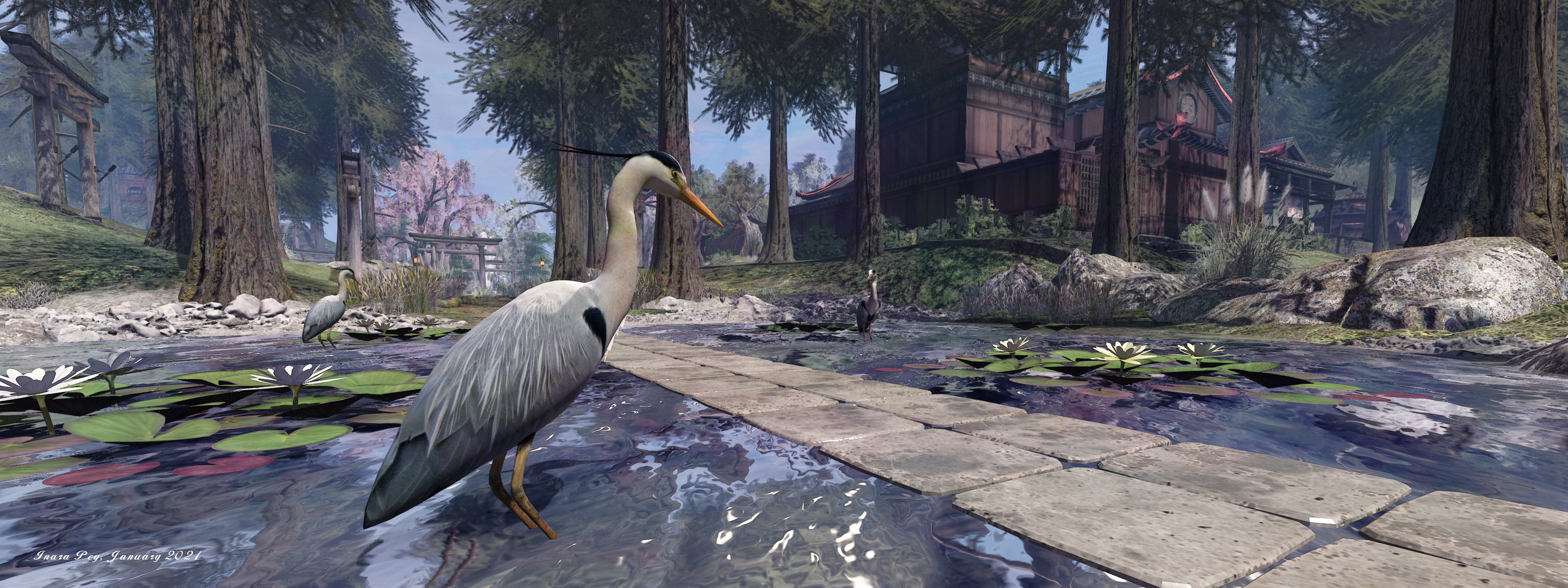
There are definitely some particular gems to be found when exploring. The aforementioned outdoor pool, for example, and / or the circular pond to the south-west, home to heron and guarding a further pavilion that looks in part to be a sitting area and in part a small shrine. However, I confess I did find the region to be a little let down by the default environment settings, which tender to render it a little flat. As such, I’d recommend dialling the environment over to one of your preferred environments for better ambient lighting. I found doing so really mad aspects of the region really pop, as I hope the images here demonstrate, making it ideal for photography and appreciation.
The Handmaiden Estate
With thanks to Morganacarter for the note card and LM.









 Inara Pey: Living in a Modemworld