On Tuesday, December 6th, the Main (SLS) channel was updated with the same server maintenance package deployed to the three RC channels, comprising internal simulator changes.
On Wednesday, December 7th, the three RC channels will received the same new server maintenance package, which includes the following feature requests:
BUG-6377 – llGetObjectDetails(id,[OBJECT_ATTACHED_SLOTS_AVAILABLE]) – Returns a value that is number of attachment slots allowed by the server minus the number of attachments worn by avatar. Returns 0 if avatar is not in the same region or if UUID is not an agent.
BUG-40871 – llGetEnv() constant “region_object_bonus” – returns the object bonus set for a region.
SL Viewer
On Monday, December 5th, the Project Bento viewer, version 5.0.0.321958, was promoted to de facto release status. See the official blog post here and my post here.
This leaves the current viewer pipelines looking as follows:
RC viewers:
Maintenance RC viewer, version 4.1.3.321792, dated November 30th – some 42 fixes and improvements
Project viewers:
360-degree snapshot viewer, version 4.1.3.321712 dated November 23rd – ability to take 360-degree panoramic images – hands-on review
Obsolete platform viewer, version 3.7.28.300847, dated May 8, 2015 – provided for users on Windows XP and OS X versions below 10.7.
Other Items
Mesh and Texture Rezzing
People have been noticing increased delays in object mesh and texture rezzing, with fingers being pointed at the Lab’s CDN supplier(s). Raised at the Simulator User Group meeting, it prompted Simon Linden to comment it could be a CDN issue, and re request was passed for the Lab to have a poke around at things.
Duplicated No Copy Items
Raised a couple of weeks ago, this is an issue where region crashes are being exploited to create duplicates of No Copy items (i.e. the duplication is happening server-side, rather than the objects simply being copied using a viewer, making them indistinguishable from the original), with the duplicated item – mostly obtained through gachas – then being put up for sale on the Marketplace.
The Lab is continuing to look at the problem, but as yet, no answer / solution has been identified.
Bento: extending the avatar skeleton – now officially live on the grid!
On Monday, December 5th, Linden Lab announced that Project Bento is now “live” on the main grid following the promotion of the Bento Release Candidate viewer to de factorelease status.
Project Bento is – as I’m sure everyone is only too aware – the project to enhance the avatar skeleton for use in mesh models, human and non-human (please note the new bones cannot be used with the system avatar).
It’s a project I’ve covered extensively in this blog, having been a part of both the closed and open beta phases of the work. However, just in case you have missed it. Bento adds a range of new bones the Second Life avatar skeleton, all of which can be rigged and weighted in mesh avatar models, and many can be used for a wide variety of purposes: limbs, wings, ears, tails and more. In particular, Bento adds over 30 bones to the avatar’s hands and avatar’s face, allowing mesh creators to design hands with movable fingers and faces which can be far more expressive. The Lab’s promotional video released as Bento entered a main grid beta phase is embedded below.
As many of the bones are tied to the Second Life appearance sliders, it also means that – subject to caveats from individual creators – avatar meshes can be customised easier by users. So, for example, avatar heads can be tweaked to give a more personal look when compared to the “off-the-shelf” version of the same head.
For non-human avatars, Bento brings a host of new possibilities and easier ways of doing things. Animal and humanoid avatars can be made which are more life-like, make better use of resources and offer fascinating new opportunities for wearable avatars, pets and more.
A GIF of Medhue Simoni’s elephant avatar enjoying a little bit of the Bee Gees via Staying’ Alive. Medue is one of the creators / animators who has been at the forefront of Bento development – check his video for more on the elephant and his You Tube channel for Bento information in general. Credit: Medhue Simoni, via Linden Lab.
To aid in Bento content creation, the project has heavily engaged the talents of Cathy Foil and the Machninimatix team to ensure that MayaStar, Cathy’s SL plug-in for Maya, and Avastar, the Blender add-on from Gaia and Matrice are fully Bento compliant – and all three have been instrumental in moving Bento forward.
There are a couple of additional options which are included in the viewer called Reset Skeleton and Reset Skeleton And Animations, and can be found on the right-click avatar context menu. They have been included because sometimes, when changing between one mesh avatar and another, the basic SL avatar can become deformed, resulting in it looking squished, stretched, caught between two looks, or something else.
The problem is generally the result of race conditions when the avatar’s appearance is being updated, and both of these buttons are intended to correct the problem – the option to reset animations as well is intended to fix deformations which may be due to animations also kicking-in incorrectly / at the wrong time.
The reset skeleton options (right-click context menu in the official viewer) should “fix other avatars which appear distorted in your view after changing their form (left menu) or your own avatar if the same happens to you (right menu) – note both options only affect your view of the avatar in question. Obviously, the location of these options may vary as TPV release Bento ready viewers
An important thing to not with both these option is they only fix the avatar in question (your own or someone else in your view. They do not affect how other people are seeing the same avatar.
As stated above, content creators have been engaged in the project, and so some Bento content is already available in-world and via the SL Marketplace – and doubtless more will be appearing in time. However, you do need a Bento capable viewer to render Bento content correctly. Hopefully, it will not be long before TPVs also release Bento capable updates as well (some already have Bento updates available as experimental versions, or undergoing closed user group testing).
In the meantime, I’ll leave you with a list of additional Bento and related resources and information.
This summary is published every Monday, and is a list of SL viewer / client releases (official and TPV) made during the previous week. When reading it, please note:
It is based on my Current Viewer Releases Page, a list of all Second Life viewers and clients that are in popular use (and of which I am aware), and which are recognised as adhering to the TPV Policy. This page includes comprehensive links to download pages, blog notes, release notes, etc., as well as links to any / all reviews of specific viewers / clients made within this blog
By its nature, this summary presented here will always be in arrears, please refer to the Current Viewer Release Page for more up-to-date information.
Official LL Viewers
Current Release version: 4.1.2.321518, dated November 10, promoted November 15 – formerly the Maintenance RC viewer download page, release notes.
Project Bento RC (avatar skeleton extensions), updated to version 5.0.0.321958 on December 1 – primarily as a further fix for a rendering bug related to bad skin weights in some mesh avatars. (download and release notes)
Maintenance RC viewer, version 4.1.3.321792 released on November 30– some 42 fixes and improvements (download and release notes)
Cool VL viewer Stable branch updated to version 1.26.18.35 and the Experimental branch updated to version 1.26.19.37, both on December 3rd (release notes).
Mobile / Other Clients
Radegast updated to version 2.20 on November 30th – featuring a new voice installer linking to most recent SL Voice repository. Note that as there is currently no access to the Radegast website, this update is not listed there (blog post, download link, source code link).
The majority of the notes in this update are taken from the abbreviated TPV Developer meeting held on Friday, December 2nd. The video of that meeting is embedded at the end of this update. My thanks as always to North for recording and providing it.
There was no deployment of a server maintenance package to the Main (SLS) channel on Tuesday, November 29th, leaving it running on the same build as week #47 – 16#16.11.02.321369. However, the channel did undergo a rolling restart in order to update all private regions on it to the new land impact allowances – see my expanded report for more.
On Wednesday, November 30th, all three RC channels received a new server maintenance package, comprising internal simulator changes. This deployment also saw all private regions on the three RC channels updated with the new land impact allowances.
No Change Window
[01:51] The Christmas and New Year 2016/17 No Change window has been confirmed as running from Friday, December 16th 2016 through to Monday, January 2nd, 2017. There will be no planned server deployments or major viewer releases during this time frame.
SL Viewer
Project Bento RC
[00:23] On Thursday, December 1st, the Bento RC viewer updated to version 5.0.0.321958, which primarily includes a further fix for a rendering bug related to bad skin weights in some mesh avatars, which hadn’t been entirely fixed with the last update.
Unless something completely unexpected crops up in the next few days, and providing the RC performs well, this viewer could be promoted to release status early in week #49 (week commencing Monday, December 5th). Should this happen, it is likely that Firestorm will issue their own Bento update roughly a week later.
Maintenance RC
[09:46] A new Maintenance RC arrived in the release channel on Tuesday, November 30th. Version 4.1.3.321792 includes some 42 fixes and improvements including the following:
Abuse Reporting:
When you’re trying to file an abuse report and you crash – the floater will stay open and all information we were able to save will persist.
There is a new toolbar button: “Report Abuse”
Appearance:
Appearance floater will now remember your last selected tab across logins. You like your Outfit Gallery? Enjoy! You don’t like it? Enjoy something you prefer …
Pay floater:
You can now add an optional payment message when you send money, and it accepts UTF8 (via Ansariel Hiller).
360 Snapshot Project Viewer
[29:07] Issues have emerged with the latest version of the 360 snapshot project viewer (4.1.3.321712, dated November 23rd) and the back-end web viewer, with people reporting:
Images captured using the latest version of the viewer will not load into older versions of the web viewer (pages remain suck on the gear cogs).
Images captured using any version of the viewer will not load into the latest version of the web viewer (which also uses a different folder hierarchy for the location of ZIP files).
The Lab indicates that some of these issues can be corrected by adjusting the image resolution in the snapshot floater to take pictures at a lower resolution.
[13:27] Right now, effort is being directed towards the 64-bit viewer’s media handling, it is therefore unlikely further work will be carried out on the snapshots viewer until 2017.
64-bit Viewer
[10:35] The Lab has successfully built 64-bit versions of the viewer that launch, but is “wrestling” with assorted issues in the new build pipeline. Discussions on the build process are largely taking place on the open-source development e-mail list, but the related wiki information will be updated to reflect the updates, and the use of a new configuration repository for setting all the correct build switches, etc., once the Lab is more confident with the build process. The target for a project viewer remains Real Soon NowTM.
[12:50] The 64-bit viewer will also include the changes to the viewer update process and how the process is managed. These will appear in the 64-bit version after the initial release has been made.
Viewer Release Notes
[10:09] A relatively new feature introduced to the official viewer, and which is now finding its way into version 4.x TPVs is that when opening a newly installed version of the viewer for the first time, the release notes are displayed in a pop-up, to help encourage users read about what has changed.
Voice Updates
[12:40] There are still bugs to be addressed in the next set of SL Voice updates, and the Lab wants to have these addressed before the updates are released at a project viewer.
SVC-7532 Roll-Back
[14:03] After all the investigations into the recent llTakeControl issues, include the “Horizons gun issue“, which was recently fixed, the Lab has looked more closely at the overall issue of weapons breakage in general, which was introduced as a result of SVC-7532. The conclusion drawn is that the “fix” for the issue should not have been implemented, and the issue as reported in that JIRA should have been marked as “expected behaviour”.
As a result, the Lab will be reverting the change. This means that TPVs should not need to offer a menu / preference toggle to allow users to switch between behaviour modes when using weapons depending upon how the weapon has been scripted. However, this does mean that touching things in Mouselook may not work if you are under the control of an attachment using llTakeControl.
The change to revert SVC-7532 will most likely go into an update yo the new Maintenance RC viewer.
Other Items
Proprietary Licensing
[18:30] There is an issue with proprietary licensing, apparently related to music and MP3 decoding and issues around it successor, AAC, and possible patent infringement. The discussion has been going on elsewhere, and I’m currently not au fait with the problems.
Community Gateways
[22:34] The updated registration API for new users, which features the latest avatars, etc., was made available to those in the Community Gateway programme in August / September (London City was one of the first in the programme to implement the updated API). Firestorm is dealing with some issues in updating their own landing pages to point to the new API.
Last 2016 TPV Developer Meeting
This was apparently the last TPV Developer meeting for 2016 – although one has been appearing on the calendar for December 16th.
Radegast client is the leading lightweight client for many users with disabilities
Earlier in November 2016, I invited Beq Janus to write about recent issues which have come to light for people trying to use SL Voice with the Radegast client. In short, it was recently noticed that Radegast would no longer install SL Voice on a new or clean (for those who had previously used it) installation. The problem lay with the Voice package being used no longer being available, compounded by the fact that since the sad passing of Radegast’s developer, Latif Khalifa, no-one is actively maintaining the client.
At the end of the article, Beq put out a plea for someone with the necessary coding expertise to consider stepping forward, and – if not take over maintenance of Radegast – at least update the installer to ensure it can use the correct Voice package going forward.
Well, that plea has been answered.
Cinder Roxley, a TPV developer and open-source contributor to Linden Lab, has stepped forward and updated Radegast to work with the current SL Voice, and provider a new installer package. The links are as follows:
Radegast 2.20 installer (with updated Voice – users wishing to install Radegast with Voice should use this link)
There was no deployment of a server maintenance package to the Main (SLS) channel on Tuesday, November 29th, leaving it running on the same build as week #47 – 16#16.11.02.321369. However, the channel did undergo a rolling restart in order to update all private regions on it to the new land impact allowances – see my expanded report for more.
On Wednesday, November 30th, all three RC channels should receive a new server maintenance package, comprising internal simulator changes. This deployment should also see all private regions on the three RC channels also updated with the new land impact allowances.
SL Viewer
On November 23rd, the Project Bento (avatar skeleton extensions) RC viewer updated to version 5.0.0.321760. This primarily comprised a fix for SL-534, a continuously growing bone error (aka “the Viagra bug”), and to bring the viewer to parity with the current release version.
Also on November 23rd, the 360-degree snapshot viewer updated to version 4.1.3.321712, maintaining parity with the current release viewer.
Grid Status Changes
The new Grid Status page is now in operation, complete with new RSS feeds and subscription options – see my expanded report for more.
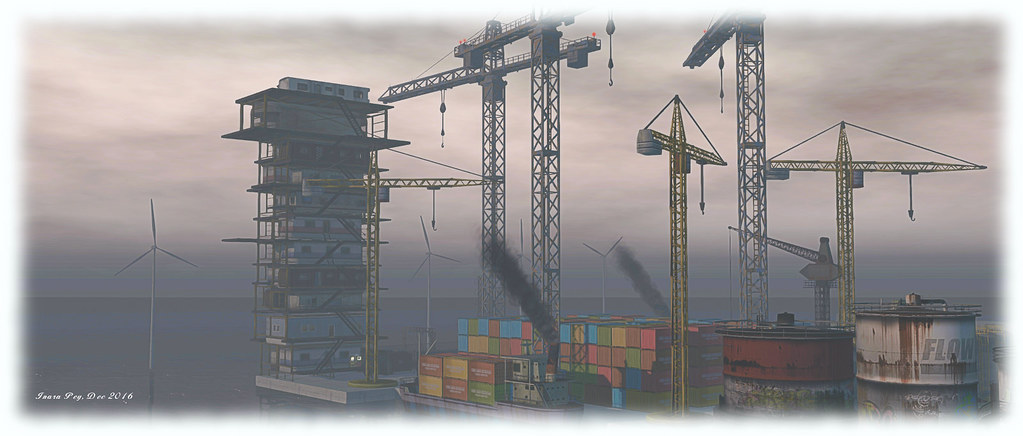 La Digue du Braek, Muppets Island – blog post