Further art entires have been received in the UWA’s Transcending Borders combined Art and Machinima Challenge, on which I’m privileged to sit as a member of the judging panel. The challenge is open to entries through until midnight, SLT on October 31st, 2014, and offers a combined prize pool of some L$1,030,000 for entrants, plus L$240,000 in audience participation prizes.
Android Ascension by Sheba Blitz is an abstract piece of pyramidal sections within which sits a rotating sphere displaying images of figures climbing an endless spiral stair
Entrants are invited to interpret the challenge theme, Transcending Borders, in any way they please. It might refer to transcending borders between space and time, or the past and present or the present and future, the divisions between dimensions, the borders separating nations or cultures or languages, or any one of the many borders we encounter as we navigate our physical and virtual lives.
Submissions may be either a piece of art (one item per entrant) or a short film preferably no longer than 4 minutes and 30 seconds (as many films as entrants wish to submit, as long as they have been filmed specifically for the challenge). All submissions should allow casual viewers to interpret how the theme is represented, or provide a means by which the piece can be understood in the context of the challenge theme.
Dusty Canning presents The Yellow House, which converts van Gogh’s famous painting of the house he rented in Aries, France, back into a 3D model visitors can walk around
The most recent entries in the art section of the challenge are shown here, and comprise pieces by Sheba Blitz, Dusty Canning, Ginger Lorakeet and Spiral Silverstar.
The challenge is sponsored by Tom Papas & SciFi Film Festival; LaPiscean Liberty & SL Artists; AviewTV, Taralyn Gravois and Arts Castle Gallery; TheDoveRhode and Peace is a Choice and S&S Gallery of Fine SL Art; Jon Stubbs & UWA Student Services; and the UWA Virtual Worlds Project.
Ginger Lorakeet’s whimsical 3D diorama “In a dream somewhere between real life & second life”
Art entries for the challenge are on display in the Transcending Bordersgallery area above the UWA’s home regions. Machinima entires will be listed on the SLArtist website as they are received.
Full details on the challenge, including all rules and details on how to submit entries can be found on the UWA blog.
I finally made it to Sarawak, the home region of outstanding SL photographer Ermandalee. I’d actually been intending to visit since around the end of July, but time and tide have been keeping me away; as did the fact that many of SL photographers and bloggers have visited; I scarcely feel any pictures I take do justice to the region compared to their work.
But, time smiled favourably upon me, and with an hour or so on my hands I jumped across for a visit, and I have to say I’m glad I did. Given Ermandalee’s eye for detail and expression, which can clearly been seen throughout her Flickr steam, it will come as no surprise that Sarawak is beautifully conceived and presented; the camera can scarcely be turned without a picture being framed.
Predominantly rural in nature, Sarawak presents what might be a coastal scene, a flat headland with mountains rearing beyond and cut through by water to form a small series of islands linked by bridges, both stone and wooden. A house is built out over the waters of one of the inlets, a sign welcoming visitors to Ermandalee’s home, which doubles as a small gallery presenting some of her photographs. Just across the water are signs of a farm or small holding: a barn where horses can be found, bales of hay and the rounded form of a stone windmill. The soil here is obviously rich, as a scarecrow stands guard over a field of yellow flowers.
The pastoral feel to Sarawak continues through the wildlife to be found across the region. Ducks swim in some of the inlets or waddle on the shorelines, geese rise from one of the smaller islands, gulls circle overhead while deer roam the grasslands, birds sing against the backdrop of flowing water and the gentle ringing of chimes caught in the breeze.
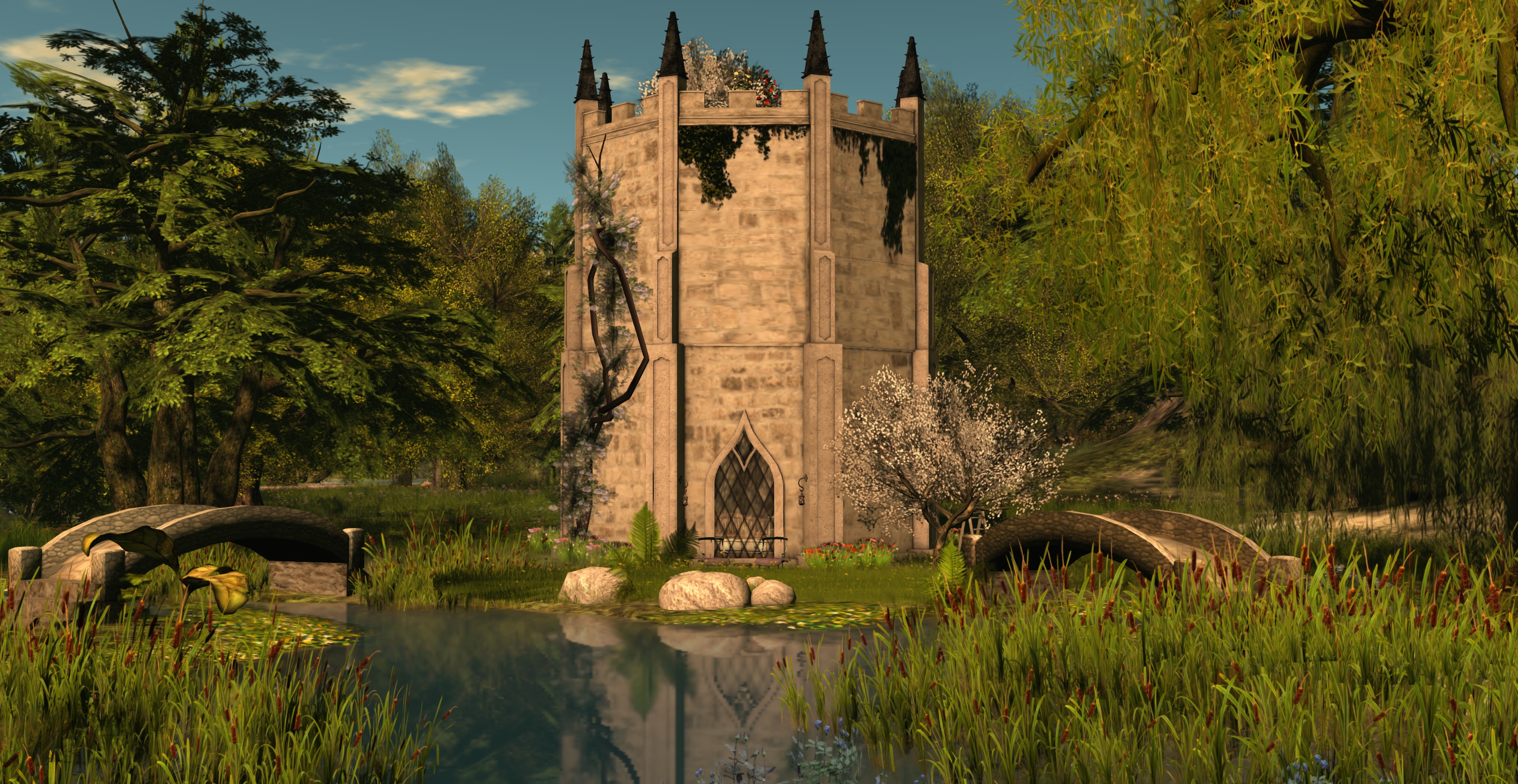
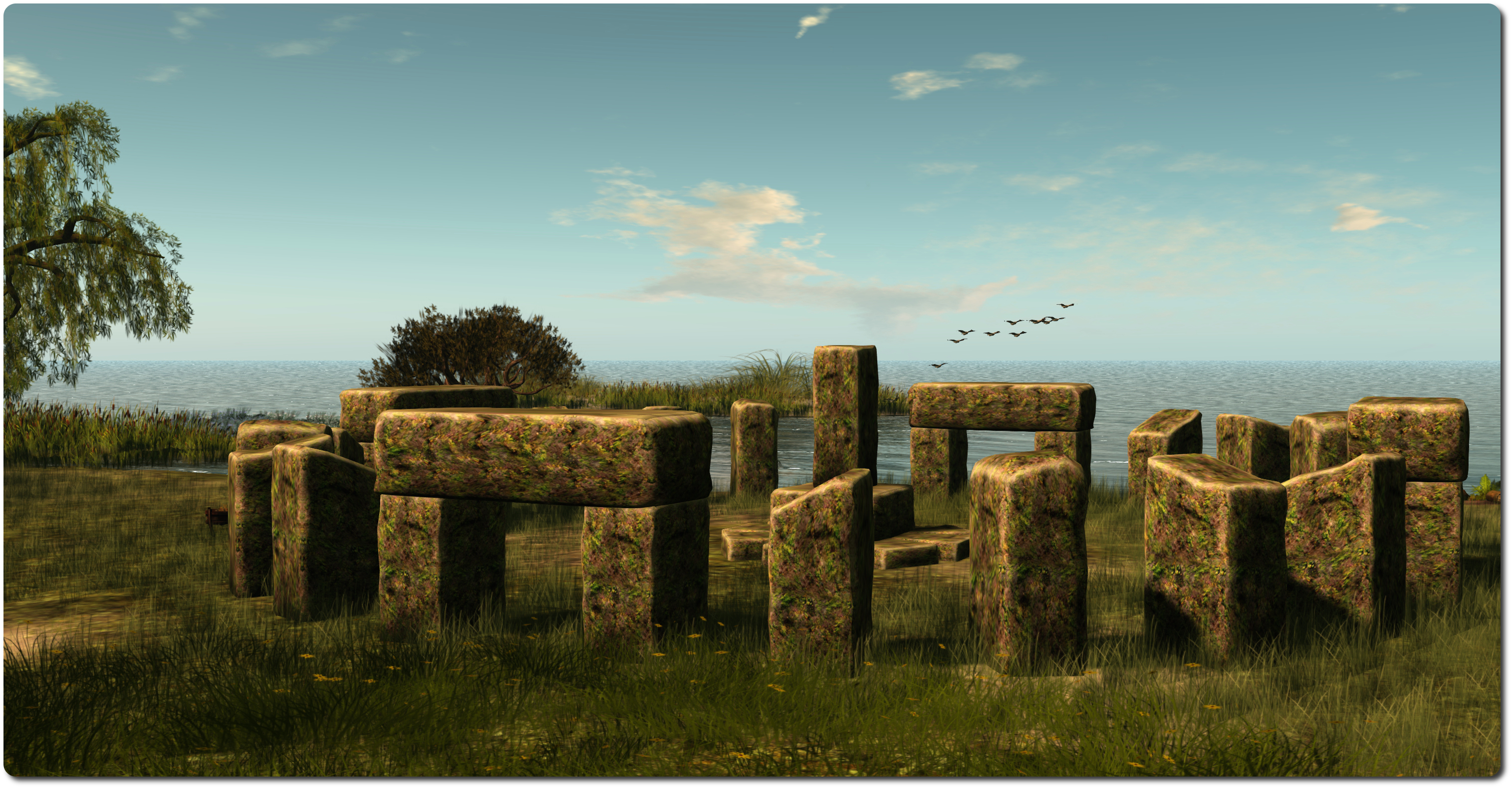
But there is more here than a simple country scene; I understand that Ermandalee originally had it in mind to build something more towards the fantasy side of things. Eechoes of this can be found as one wanders the region, mixed with a touch of ancient mysticism. A tall tower stands to one side of the region; close to a set of falls stands a statue and pavilion of distinctly elven look and feel, while on the shoreline sits a circle of mossy standing stones.
The combination of elements within Sarawak is enticing; inviting one to try to define where it the world it might reside. To me, parts of it suggest the great outdoors of Canada (or at least, how I imagine them to be): lakeshore cabins, rich forests, tall mountains. At the same time Sarawak speaks of being more European in nature, while the fjord-like channel to the north-east suggests something slightly Scandinavian.
However you see Sarawak, and whether you witness it in the default windlight setting, suggestive of a cool late summer evening (or perhaps early morning, depending on your mood), or whether you opt for one of your own (as I did), it is a beautiful place to visit and explore. With its many offerings of places to sit, down on the ground and up in the trees, it offers an open invitation to visitors to stop and rest a while.
Given the serenity one feels when wandering through the region, it is an invitation easily accepted.
The Sea of Cubic Dreams is a new installation by the ALEGRIA Studio team. It is an intriguing piece, a preview, perhaps, of a much larger work which will be opening in the same region in due course, entitled Theatre Night’s Dream.
This prelude piece presents the visitor with a rich blue environment – it’s really best appreciated with the default windlight – penned on two sides by tall blue mural-like walls, the remaining two sides open to the surrounding sea.
floating on, under, or over the waters here are a series of differently sized black, blue and teal cubes which make good use of materials on their surfaces. They come in several different sizes, and if you get close enough to one (trying standing on the really big ones) you can sit down, give it a shove, and you’ll set off floating across the region until you opt to change direction with another shove, slow to a halt, or collide with another cube. The latter can, depending on the size of the cube you are sat upon, send you tumbling around (and up into the air or underwater), allowing you a bounce around the space.
Some of the cubes you collide with will also react, sliding off on their own or rolling over gently, depending on their size. Controlling your direction takes a little practice, and a set of three transparent region-wide prims stop you from colliding with the region boundaries or flying up off up too high. and it has to be said that bouncing around when someone else is using the cubes can be fun!
Theatre Night’s Dream is apparently being developed higher up in the air and sounds as intriguing as Cubic Sea of Dreams appears. “This is going to be the new ALEGRIA’s adventure,” the team say of the piece. “A surrealistic CG New Media Art installation inspired in the theatre and fantasy culture, the role of the hero in modern video games era, the Cloud Atlas film and Shakespeare’s A Midsummer Night’s Dream.
“Theatre Night’s Dream opens the gate between the real and fictional sides of its characters, all members of the cast of a theater production, as short stories where their real lives merges with their roles in the play during its release. Two worlds that blend into a night dream where they will have to face their tragedies and fears to become sublime.”
There’s currently no opening date for Theatre Night’s Dream, but doubtless one will be announced through ALEGRIA’s website and via the LEA blog when the productions starts. In the meantime, visitors are free to enjoy Cubic Sea of Dreams, and Ultraviolet Alter will be performing for the official opening at 14:00 SLT on Saturday August 16th.
The Colder Water, located on the homestead region of Daydreams, is without a doubt one of the most atmospheric and evocative regions I’ve visited. Both minimalist in one direction, yet rich in content and imagery in another, Jordan Giant’s design has an immersive attractiveness that is quite breathtaking.
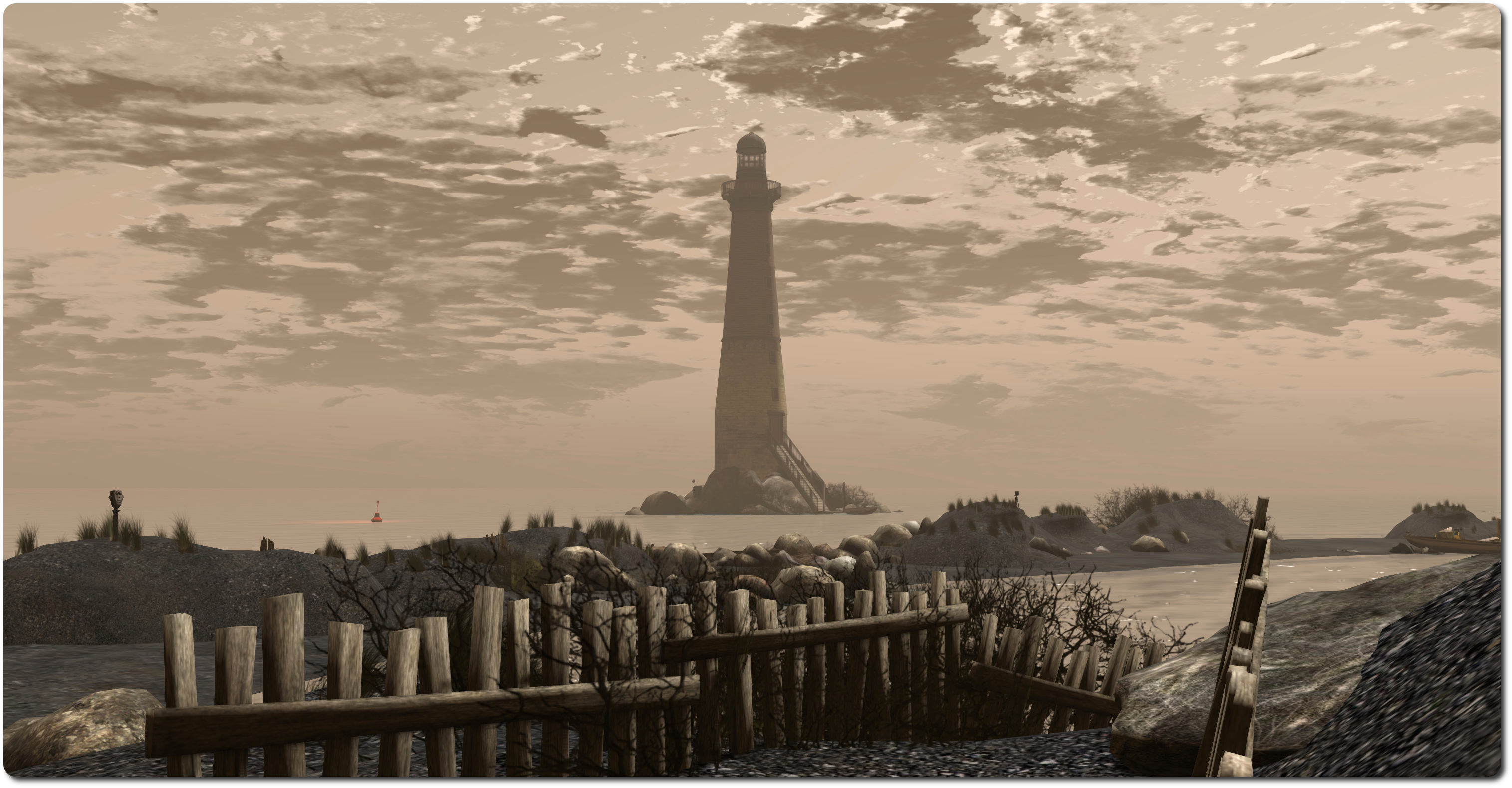
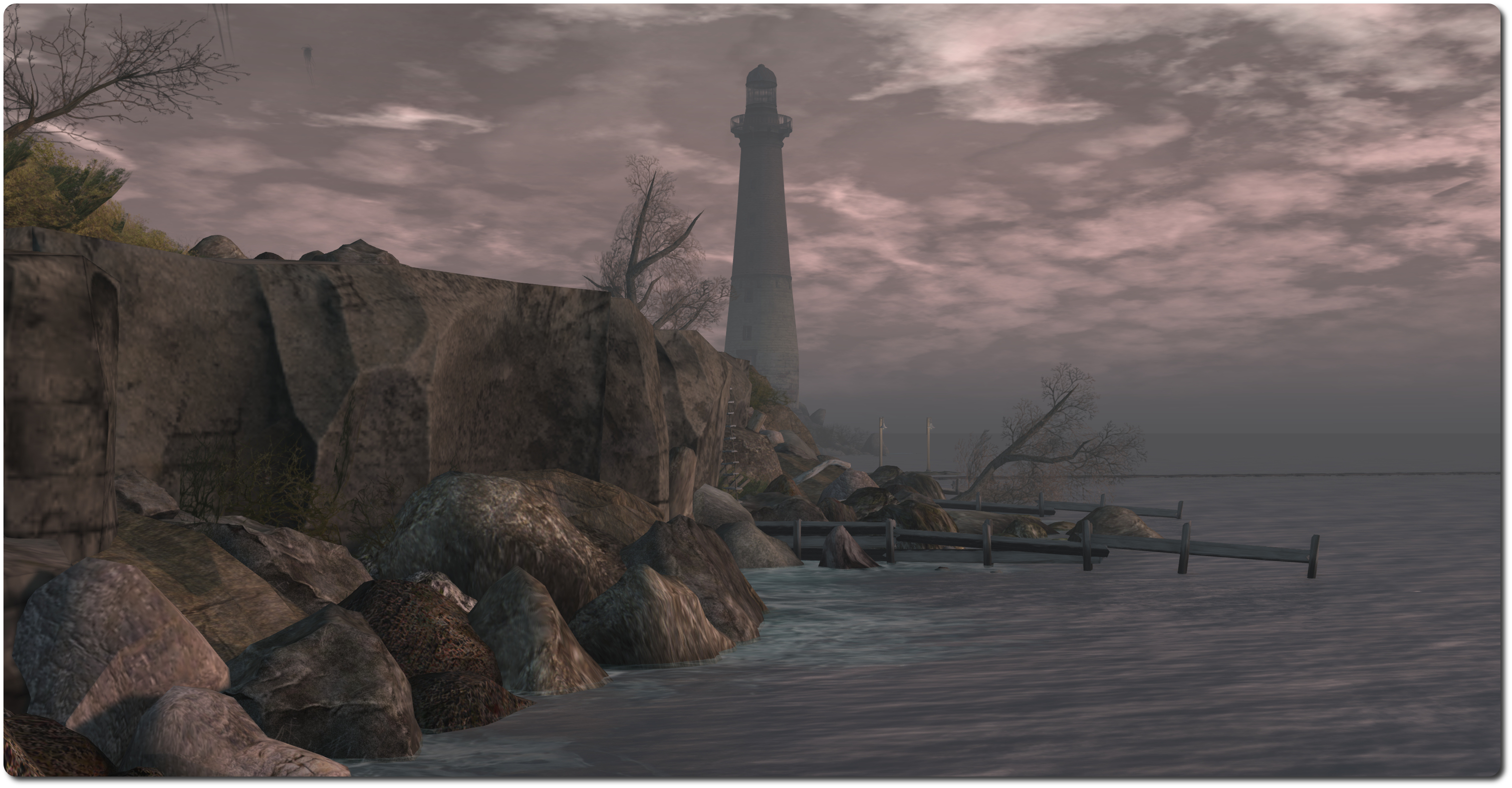
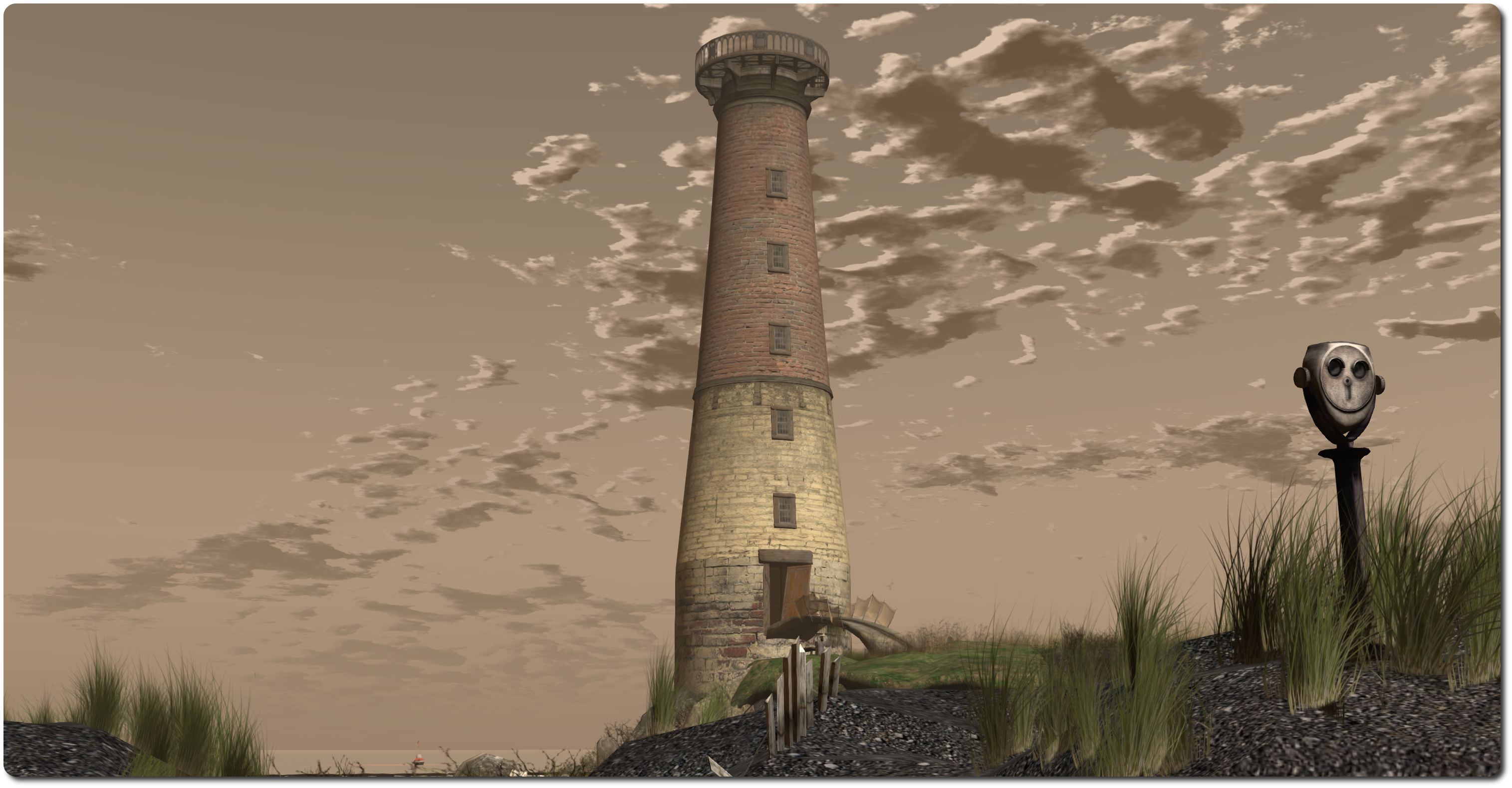
A curved island, what might be all that’s left of a long-extinct and drowned volcano, sits low in the sea, black gravel beach curving gently between two uprisings, each with its own lighthouse. The slender form of a third rises from rocks a little offshore, forming a triumvirate of silent watchers.
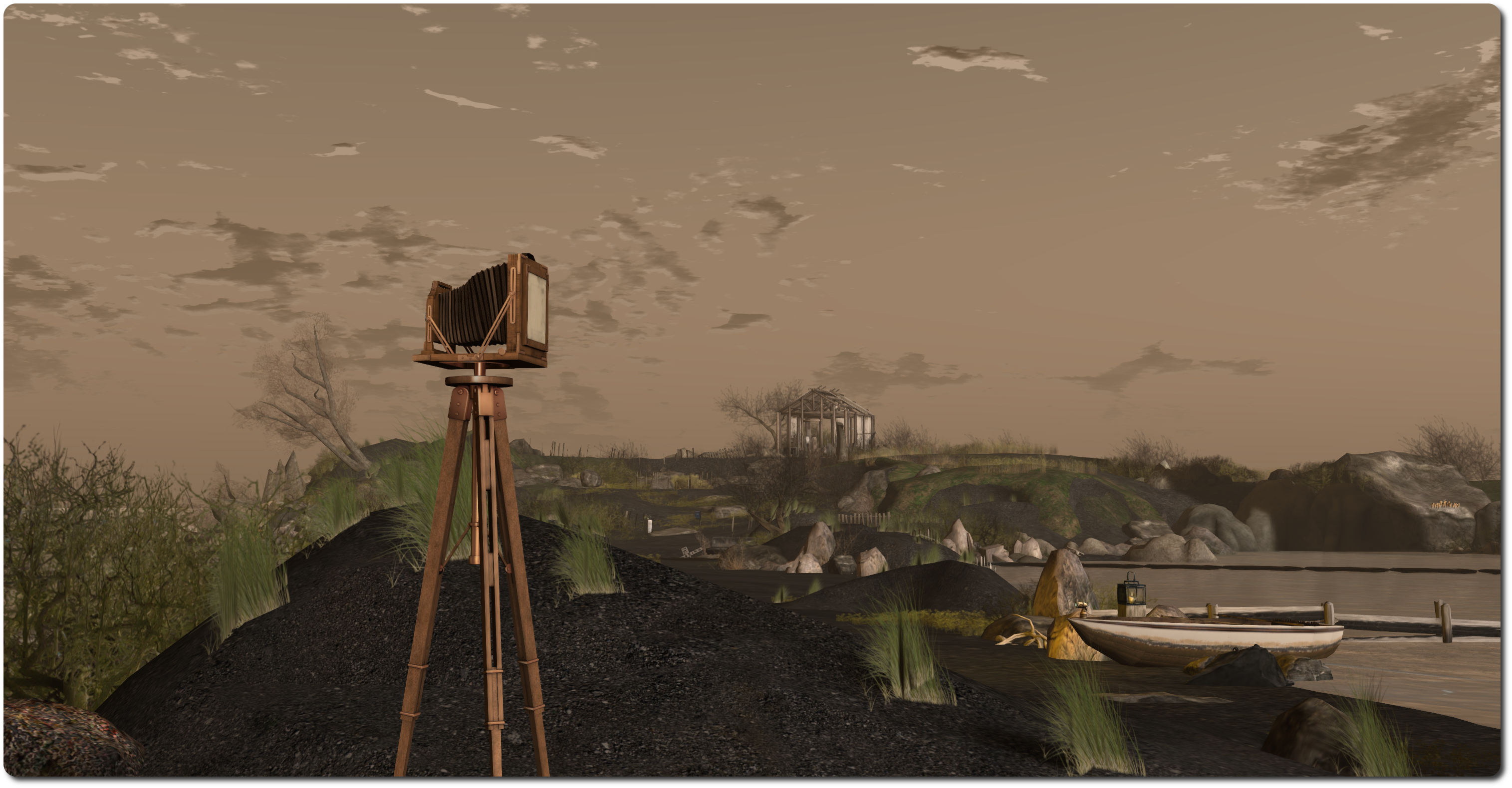
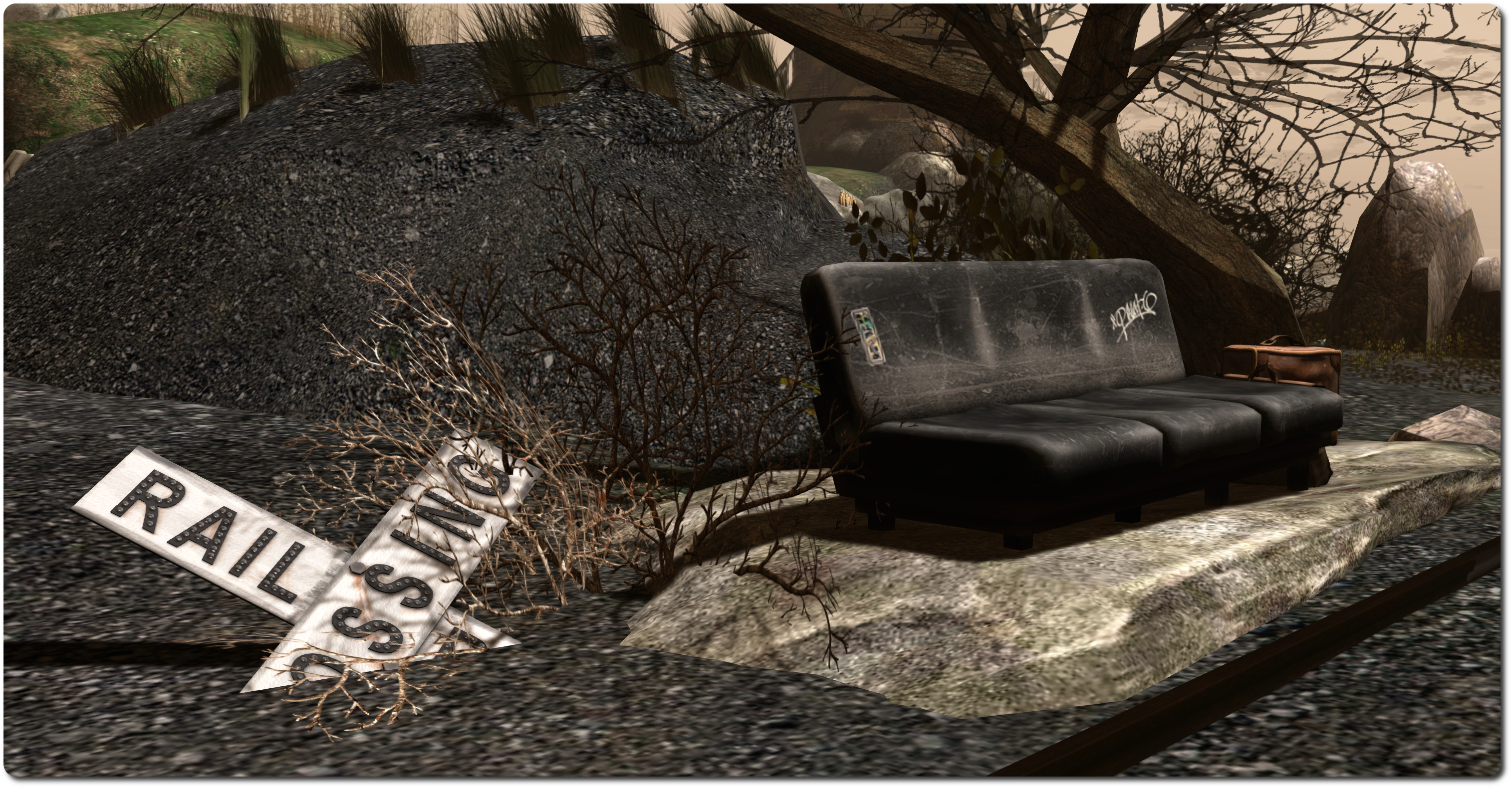
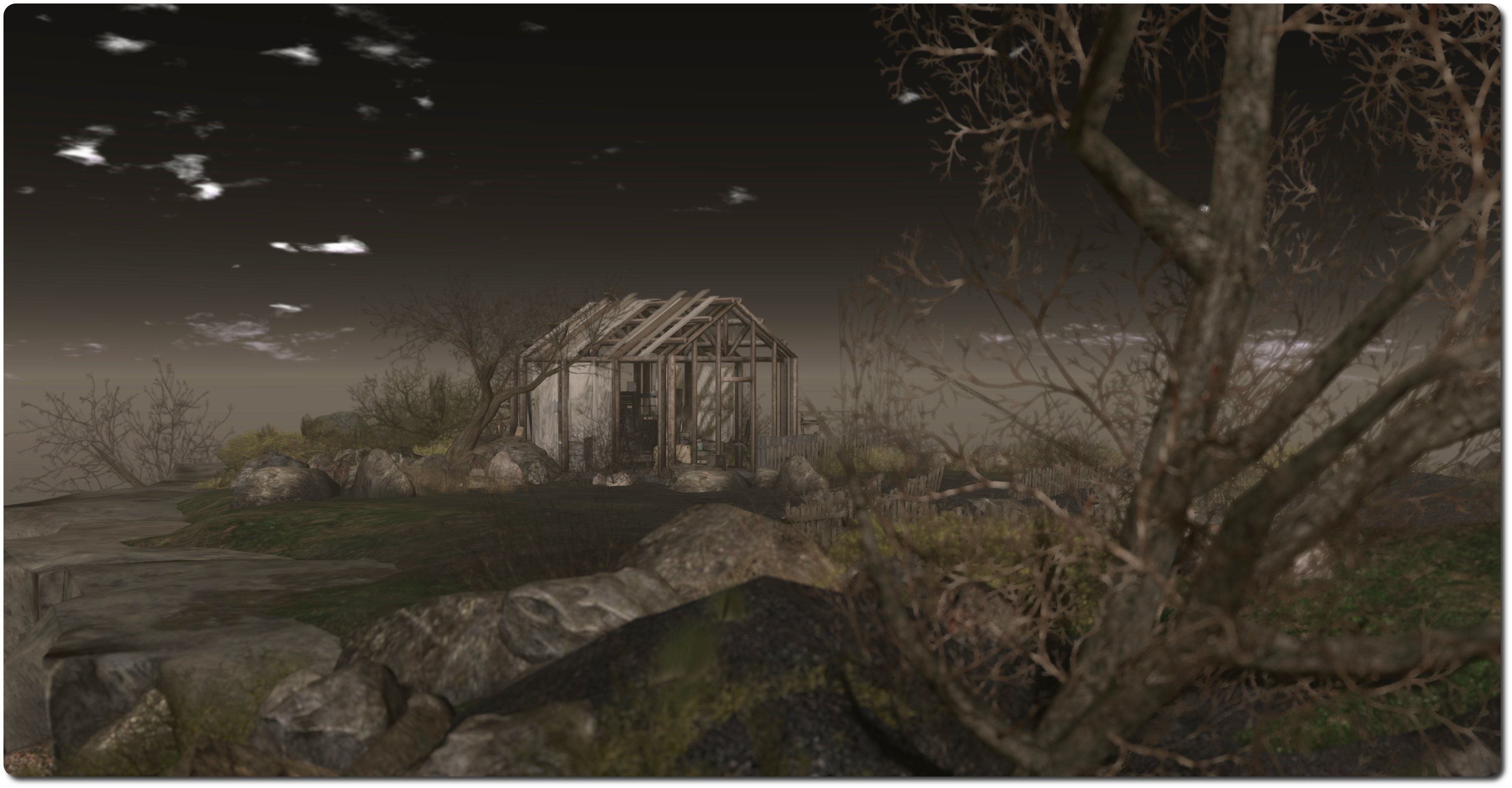
The island, largely bare of foliage other than moss, tough grass and skeletal trees, shows odd signs of former habitation. A railway track cuts across the narrow neck beneath the western uplands, running out into the shallows on either side. A path from here leads up through lines of old fencing to an old shed or wood-framed house sitting in disrepair on a low rocky plateau, the rounded flank of a lighthouse nearby.
There is a feeling of quiet age here; the lighthouses all stand deserted, two with lights extinguished and the third rudely decapitated, iron dome almost lost amidst the rocks at its feet. In the grey waters, buoys flash a warning in place of the sweeping lights from the brick-built towers, and even these appear to be uncared for; one has broken from its anchor chain to be carried among the rocks by the flow of the tide.
There is a haunting beauty to this island that seeps into the mind; a quiet voice encouraging the visitor to say, or those who have departed to return once more. There is an enigmatic feel to this place as well; the volcanic shores suggestive of an otherworldy place, a sensation enhanced by the jellyfish floating overhead.
But above all, this is a place which speaks of tranquility within its suggestion of age and distance. As it speaks to the mind, encouraging one to to stay, so to does it soothe the soul. The balance here is perfect, and further enhanced by the selected tracks of the audio stream, which is an absolute must listen for visitors. Also – make sure you view the region with the default windlight (I’ve used alternatives in some of the images on this page).
On Saturday August 2nd, 2014, Agenda Faromet, an attorney specialising in privacy and Internet law operating out of San Francisco, and a member of the SL Bar Association, gave a dual presentation on the recent (July 2014) changes to Section 2.3 of Linden Lab’s Terms of Service and on the changes to the Lab’s policy on Skill Gaming in Second Life, which are due to come into effect from September 1st.
In all, the session ran to over an hour and a half, with Agenda initially covering the ToS Section 2.3 updates and dealing with questions relating to that, before moving on to the changes to the Skill gaming policy, and then addressing questions arising from that.
The following is a transcript of the core of the presentation, split into two parts for ease of reference. Audio recordings are provided, and there will hopefully be a video of proceedings in due course. With reference to the audio recordings provided here, please note:
The audio has been edited to remove pauses. repetition or asides, in order to better match the text transcript and allow those who wish to listen as they read
There has been no intentional altering of anything said during the presentation and Q&A session, nor has the context of the presentation or answers been altered in any way, other than questions asked in text being the placed within the transcript at the point where they are answered (when compared to chat logs of the event), again for better context
Only those questions asked in text which were directly addressed by Agenda have been included in the transcript in order to maintain context with the audio recordings.
The two parts of the transcript, with their associated audio recordings, can be found as follows:
The Rift is highly anticipated by the gaming community, and there’s a lot of interest from developers in building for this platform. We’re going to focus on helping Oculus build out their product and develop partnerships to support more games. Oculus will continue operating independently within Facebook to achieve this.
But this is just the start. After games, we’re going to make Oculus a platform for many other experiences. Imagine enjoying a court side seat at a game …..
Also sprach Zuckerberg (sorry, couldn’t resist; blame the evening wine) on March 25th, the day on which Facebook acquired Oculus VR amidst much wailing and gashing of teeth. At the time, it seemed his vision of this VR utopia of court side seats for all at Wimbledon and all these other fine things was perhaps a decade away. Indeed, given some of the areas where technology still needs time to mature, it may well still prove to be up to a decade away; but that hasn’t stopped the BBC from seeing how it all might work.
As many from the Commonwealth nations will likely know, we’ve just seen Scotland host the XX Commonwealth Games (for those who don’t know, and keeping it to a nutshell, think Olympics with fewer nations, and you’ll get the idea). The BBC were the primary broadcaster for the Games, and they used the opportunity to make Zuckerberg’s vision a reality, if only on an experimental scale, by transmitting elements of the gymnastics events at the Games in real-time as a VR experience – the very first time anywhere in the world that such a feat has been undertaken. The results of this effort were recently reported by the BBC’s digital magazine programme, Click, broadcast on the BBC News channel, and from which this article is largely drawn.
The experiment comprised three parts. First, a 360-degree, 7-lens video camera pod (6 lenses to record the view around the pod, the 7th to capture the overhead view) and a spatial microphone were set-up in front of the SSE Hydro Arena seats, the camera positioned at the same eye-level as spectators.
The 360-degree cameras (l) were installed at the same eye-level as people sitting in the arena seats
The video from all seven cameras and audio from the microphone was fed directly to the second element of the experiment, a computer system running software designed to stitch all seven video elements into a seamless whole, overlaid with the sounds from within the arena captured by the microphone. The finished film was then streamed to the third element in the experiment: a booth within the Glasgow Science Centre where members of the public could don an Oculus headset and a set of earphones and find themselves immersed in the Hydro Arena, watching the gymnastics as they happened.
The results were predictable astonishment as most of those trying the system were exposed to immersive VR for the first time. “That’s amazing! … You can see everything!” was the reaction of one gentleman, a bright smile visible below the goggled-eyed goggles as he turned slowly around, taking-in the entire arena. A young boy referred to it as both “cool” and “weird!”, while an older lady found herself responding to the roar of the spectators and looking around in surprise to see what had just happened.
“That’s amazing!” was one man’s verdict as he found himself sitting inside the SSE Hydro Arena witnessing the Commonwealth Games gymnastics event as it happened – while actually located half-a-mile from the arena
As noted, this effort was very much an early experiment by the BBC’s R&D people into what might be possible with VR. While the film was only transmitted to a single location just half-a-mile from the Hydro Arena, it could have just as easily been transmitted anywhere given a fast enough and stable enough internet connection. The distance in this case was simply a matter of convenience, the VR experiment being just one of a number of potential new broadcasting technologies the “Beeb” is investigating as a part of its multi-platform approach to television and which were being showcased alongside the Games. In particular, the BBC wanted to poke at potential issues this type of streaming will have to overcome if it is to become practical in the future.
One of the problems they hit was quality of processing versus speed of delivery. In order to try to keep the transmission as close to real-time as possible (remembering that the same events were being simultaneously broadcast via “traditional” methods as well as via other technologies being showcased at the Science Centre), BBC wanted to avoid undue lag occurring in the VR feed when compared to other mediums on display. This meant that the video / audio processing needed to produce the finished film for streaming had to be kept to around three or four seconds in order to achieve a smooth, continuous stream to the headset.
To achieve this, engineers had to downgrade the video quality being received by the processing software in order to reduce the amount of data the software had to handle in stitching the 7 elements of film together. This resulted in a loss of image definition which was noticeable when wearing the Oculus headset, as the video appeared somewhat grainy to the eye. The hope is that an increase in processing power may allow faster processing at a higher definition in the future. Obviously, had the “real-time” aspect of the experiment been removed from the equation, then the video could have been processed at its full quality for later streaming.
in order to stitch the video elements and the audio all together and continuously stream it smoothly as a live event, the BBC found they had to reduce video quality being received by the processing software, resulting in a vision loss of resolution in the finished VR stream. So heftier processing power is going to be required if events are to be streamed in real-time like this in the future
Another issue the BBC found was that if they positioned the camera pod so that it was effectively looking down on the arena floor at an angle, rather than looking directly out at it at eye level, or if they placed the camera in the middle of the floor so that the action was going on all around the observer, people reported increased bouts of dizziness, something which didn’t seem to occur with the cameras positioned at a natural eye-level.
Certainly, it’s an interesting experiment, and this kind of use of VR which may well prove far more attractive to a mainstream, mass audience than video games and virtual world style environments. After all, who wouldn’t want to have a (reasonably priced) seat at their favourite sporting event or concert or something like it, without all that tedious mucking about in cars or trains in order to get to a venue and then dealing with the crowds, etc., – and can even pause the show / event to refresh their beverages, etc?
For those able to access it, the entire Click programme featuring the use of VR at the Commonwealth Games can be seen on the BBC iPlayer. This is worth watching not only for the coverage of the VR streaming experiment, but because it also features the work of Nonny dela Penna, whose work was featured in the Drax Files Radio Hour #24 (and which I somehow managed to miss reviewing at the time).