I received a notice about a new exhibition by WuWai Chun which opened on Sunday August 3rd at the Rose Theatre & Art Gallery. I didn’t make it to the opening, sadly, due to other commitments, but managed to pop along as soon as time allowed.
The exhibition is in support of Feed A Smile, a project run by Live and Learn in Kenya (LLK), to provide nutritious warm lunches for over 400 children every day, paid for entirely from donations to the project (see my article on Feed A Smile written to accompany Draxtor’s excellent World Makers video on the work).
Called Somewhere in Second Life, the display features selected images from WuWai’s travels across Second Life, which also appear in her Flickr photostream of the same name and which she describes as a personal destination guide. However, the pictures on display are not simply snapshots of in-world locations.
WuWai’s passion is to turn her pictures into paintings. Having taught herself the sometimes arcane art of post-processing, she labours over her scenic snapshots to give them the look and texture of watercolour or oil paintings. The results are images that are quite stunning in appearance, with many of them having an ethereal look to them which quite captivates the eye, drawing you into it.
These are pictures which really do immerse you in the sensation of visiting a gallery and slowly walking through the halls. There are no Constables or Browns or Balmers among the pictures hanging on the walls between WuWai’s pictures but frankly, had I come across one or two, I wouldn’t have been the least bit surprised,her work is that evocative.
As the exhibition is in support of Feed A Smile, the pictures are available to buy – simply right-click on any that take your fancy.
In February 2014, Mac Kanashimi unveiled Dragon Curves at LEA26. A stunning 3D piece of fractal art which quite captivated those who visited – including myself.
Now, as a part of the Artist In Residence (AIR) round 7 series, Mac is back at LEA26, this time with Pinwheels, which he invited me over to see on Saturday August 2nd, not long after he’d set it up in the region. Pinwheels is another remarkable mathematical structure with something of a fractal bent, and which uses Charles Radin’s pinwheel tilings, themselves based on the Conway triangles, to tremendous visual and artistic effect.
To explain this requires delving into a little bit of maths and geometry, but bear with me. A Conway triangle is a right-angle triangle with sides of 1, 2 and . which can be divided into five isometric copies of itself by the dilation factor of 1/ (see the image below), and when suitably rescaled and translated / rotated, can produce an infinite growing pattern of isometric copies of the original.
A Conway triangle divided into 5 isometric copies of itself (via wikipedia)
A pinwheel tiling is essentially a pattern of these isometric triangles where one tile may only intersect another either on a whole side or on half the 2 side (which actually makes the Conway triangle itself a pinwheel tiling – again, look at the image on the right and see how the five smaller triangles are positioned relative to one another). There’s actually more to the math than this, but I’ll let wikipedia explain the rest.
Like Dragon Curves, Mac’s Pinwheels is a huge piece, measuring 256 x 256m, but this time is confined vertically to a height of 256 metres as well, so to get the full measure of the piece – and to appreciate the overall complexity and beauty of the piece, you’ll need to ramp-up your draw distance to at least 600 metres, and cam out.
When you do so, the patterns of pinwheels and triangles and triangles within triangles becomes apparent. Each Conway triangle forms an individual segment made up of five prim isometric triangles of a similar shade (blues, greens, reds, etc, sometimes mixed with whites), which helps the eye to define individual groupings. These segments in turn are arranged to form pinwheels among themselves – although you’ll need to cam overhead to see them clearly.
Nor is it static; sections of the design rise and fall, creating an ever-changing landscape of colour and form, with only the arrival point, which is itself quite fascinating to watch. However, this motion isn’t in any way random; the triangles making up a particular pinwheel pattern all move together, and in doing so, they communicate their height and position to one another and to the surrounding segments.
The result of all this is that as the landscape changes and triangles and patterns rise and fall, paths can be found running through the entire construct, allowing the visitor to walk through it starting at the landing point (itself a static platform of 5 Conway triangles), with the individual prim triangles within each larger Conway triangle suitably adjusted so that they form steps for you to follow.
Just how artful this is requires you to walk through the piece. In this way you get to experience how the motion of segments works – no matter how the triangles on which you stand rise or fall relative to one another or to the surrounding patterns, no matter how high the plateau on which you find yourself lifted, or how far down into the depths of the piece you are carried, a footpath can always be found before you and behind you, leading you through the piece without ever necessarily reaching an end.
Pinwheels is another mathematical masterpiece from Mac, and will remain open through until the end of December. If you enjoyed Dragon Curves or if you’re into maths-based art, it’s a recommended visit.
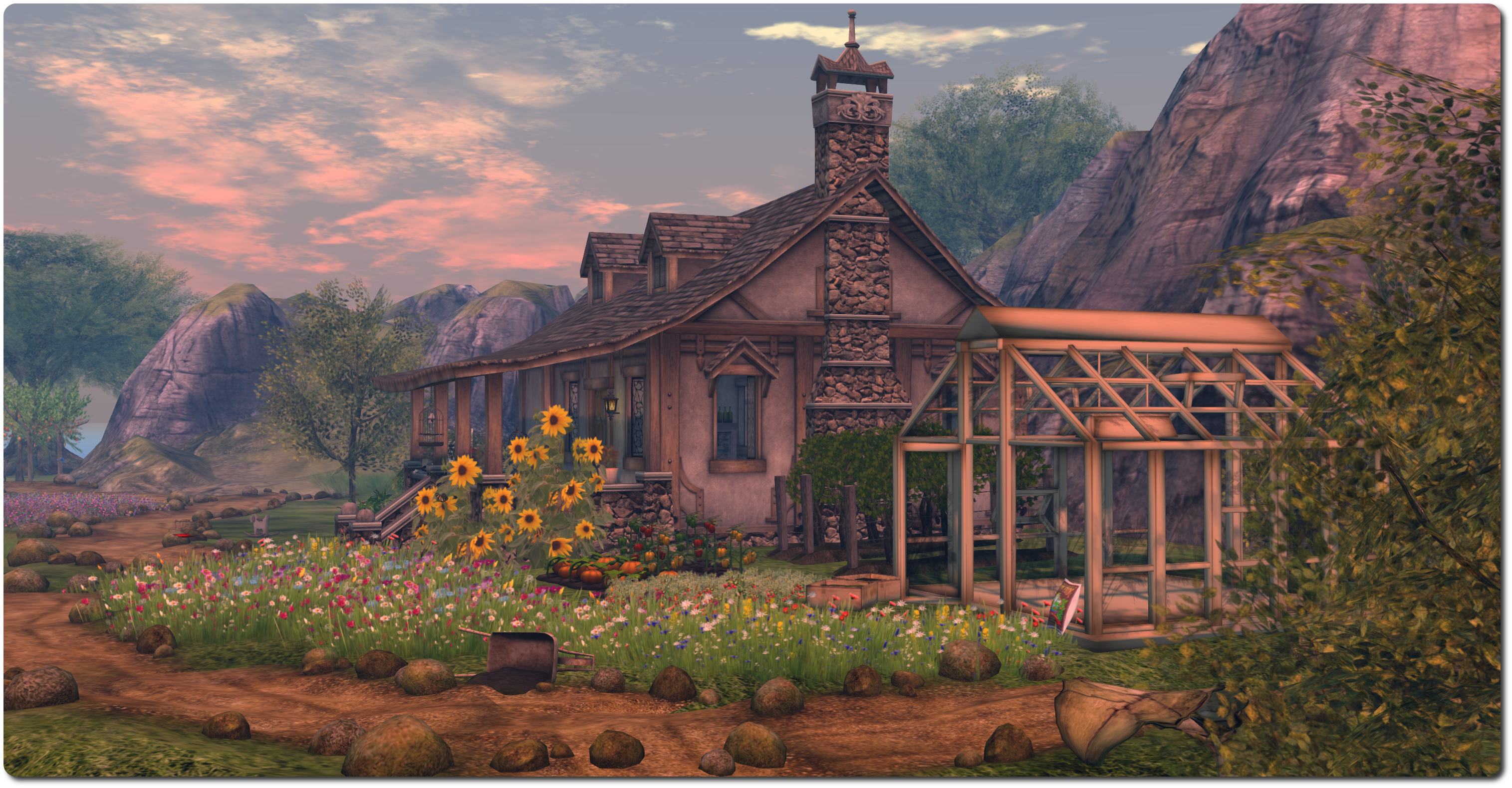
My first visit to Dawn of Radiance, Silvermoon Fairey’s marvellous homestead region, was back in November 2013. Back then, the region was in the grip of winter. Roll forward eight months, and the region is not only basking in summer colours, it has once again been beautifully remodelled, and from the high rocky buffs to the riverside grasslands, it offers a veritable smörgåsbord of visual delights for those who visit.
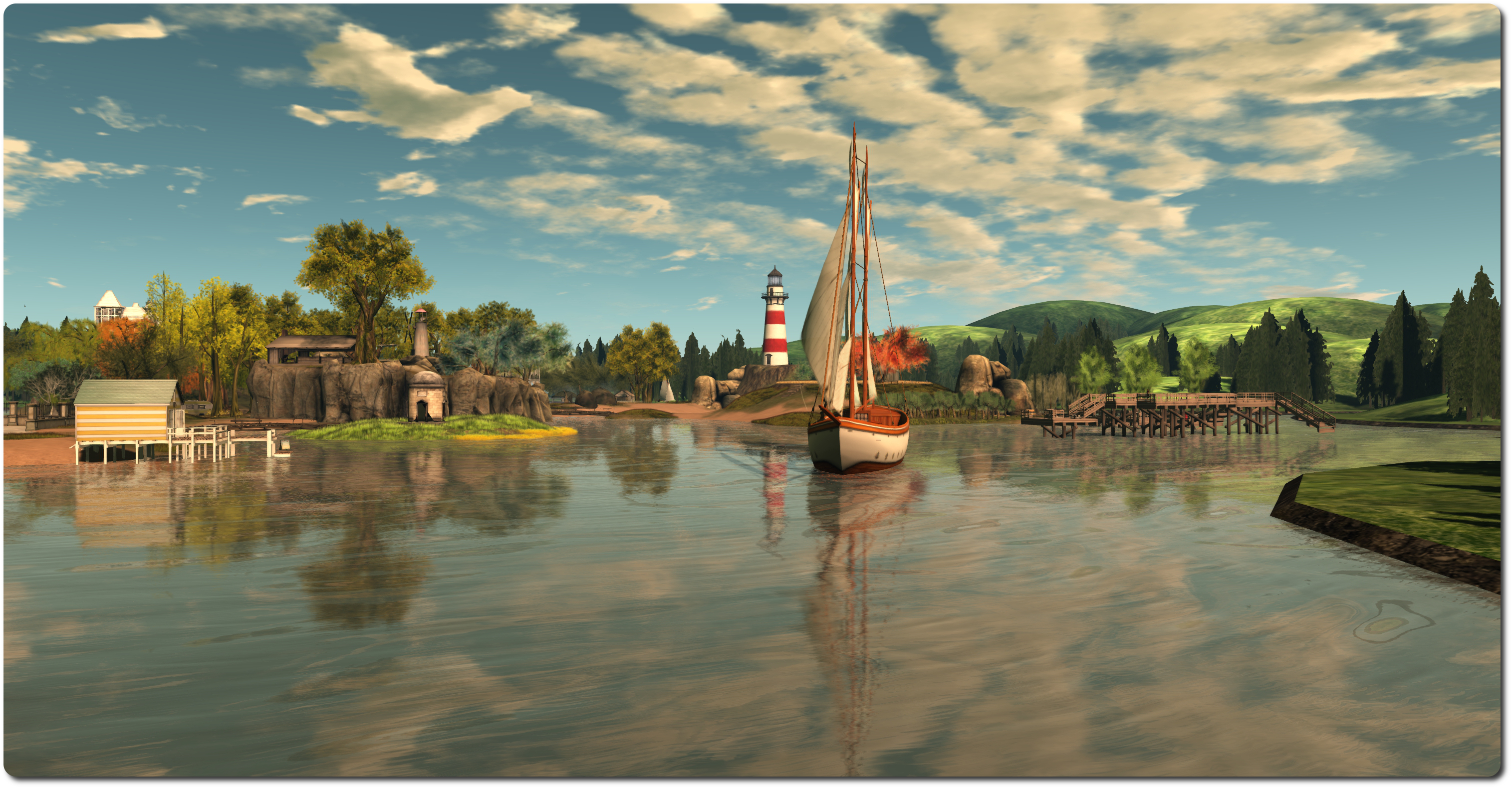
A rocky cove in the south-east corner of the region forms the arrival point, a narrow shingle beach between waves and cliffs; with a tall brick lighthouse casting its eye out to sea nearby as a fishing boat rides the breakers a short distance offshore. The little beach offers places to sit, but walk along it and you’ll come to a slope leading you up between the cliffs where eagles have nested, and on to a grassy meadow, which in one direction leads you down to a farm where horses graze.
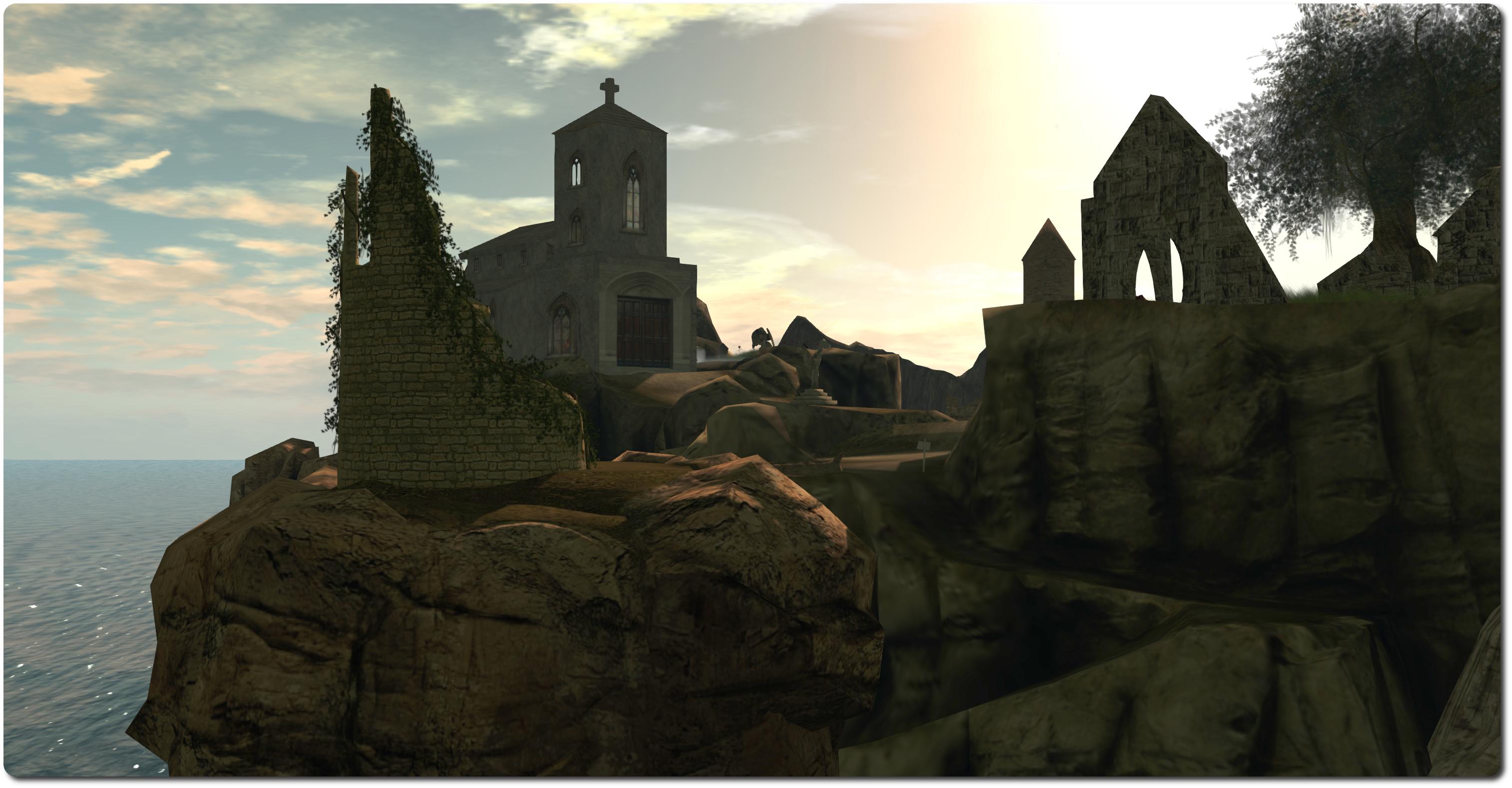
If you go in the other direction from the first meadow, you can make your way up to a rocky plateau dominated by the angular form of a church amidst the ruins of what might be an old castle. A switch back path hugs the cliffs here, the single link between ruins and another sheltered beach below.
Wander through the farm and you have a choice: you can follow the track leading out to the big windmill standing sentinel-like on the headland; or you can take the bridge over the river and explore the grasslands on the far side and walk up to another meadow where more horses graze; or you can follow the track inland.
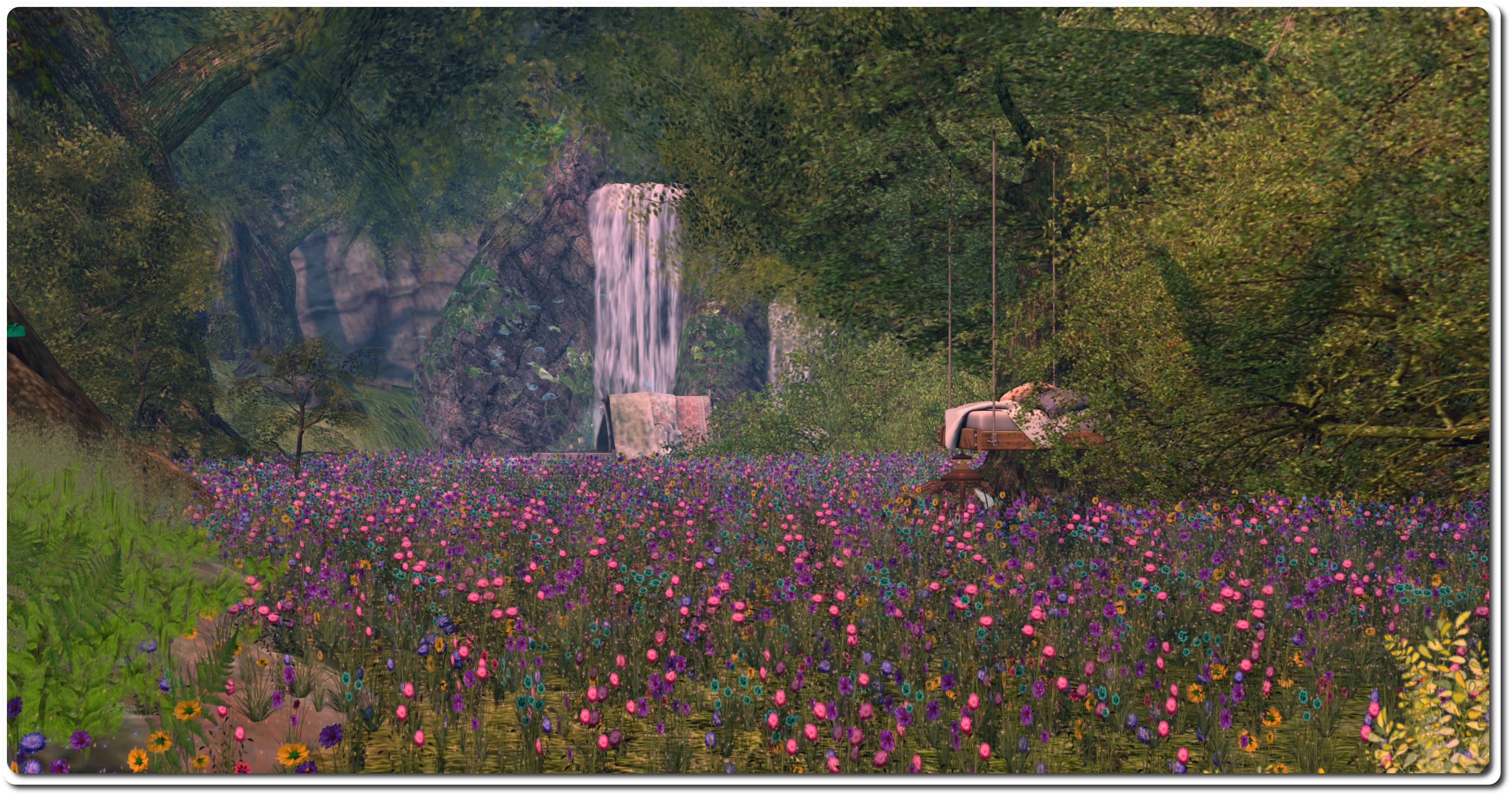
The latter route may take you through a rain shower and some undergrowth, but trust me when I say it’s very much worth taking, whether you turn right and cross the river over the little wooden bridge, or continue onwards, further in the heart of the island; both routes will lead you to places of whimsy and fantasy. Keep an eye out, as well, for another route up to the church and ruins …
Nor is that all; the north side of the island hides another beach, while up on the hills and down between their shoulders lie places to sit, either alone or with a close friend, and simply watch the world go by – or forget about it completely.
Such is the design of the region that exploring it feels like you’re on an island that is bigger than an individual region, and providing you don’t set-out to discover everything all at once, it presents a series of delights; just when you think that you’ve seen it all, you turn a corner or pass around a bush and trees, only to find something new and quite unexpected. Hence why I’ve not described some aspects of the island here (although admittedly, one photo is perhaps a bit of a giveaway to what you might come across!); I don’t want to spoil the pleasure of discovery too much.
There is a marvellous blending of elements here as well, which encourages you to feel as if you’re walking through a more expansive landscape; the use of elevation not only physically sets apart the farm from the church with its surrounding ruins; it gives an added sense of distance to your explorations as you find your way up to the heights, climbing above the tree-line and grasslands and into the rocky preserve of an ancient site.
The same can be said of the use of hills and woodland to enfold the heart of the island and separate it from farm and ruins; following path or river into the interior not only again heightens a sense of exploration and discovery, it encourages a feeling of stepping into another, hidden realm – the digital equivalent of stepping through the wardrobe.
With its regional windlight set to the first light of dawn, much in keeping with the region’s name, it almost goes without saying that Dawn of Radiance is a photographer’s delight, and lends itself to a wide range of windlights and sky settings. If you do pop over to take photos, I believe I’m right in saying that joining the group via the board at the landing point will give you rezzing rights for props, and there is a 30-minutes auto-return limit.
For episode 21 of The Drax Files: World Makers, Drax turns his lens towards perhaps one of the most iconic names in Second Life design and publishing: Editorial Clarity, owner and operator of Love to Decorate (LTD) magazine and website.
LTD is the go-to magazine on home and garden design, and has a deserved reputation for high quality articles and images focusing on the very best in SL design, and Editorial himself has a perfect eye for design and decorating, something which is stunningly reflected in his SL home designs (he admits to changing house fairly frequently just for the joy of decorating it and creating an ambience around it!).
Editorial holds up a coffee table version of LTD magazine as Drax looks on (inset)
However, this isn’t a segment focusing solely on Editorial’s work in Second Life. While this acts as a springboard for the film, providing insight into the publication and the work that goes into it, this is very much a personal piece, focused on the way in which the digital and the physical can intertwine and lead to relationships which, while started in the digital, can cross the invisible divide into the physical and flourish in both.
“In 2010, I met my partner, Rico,” Editorial says, half-way into the segment, “who lives in the United states now, he was originally born in the Philippines. He’s very artistic and does express that with his avatar; he would come up with these crazy outfits with flowers all over the place and top hats. They are the clothes that he would like to get away with in real life…”
Since meeting, the two have gently and naturally extended their relationship, through an in-world wedding, to Skyping by voice to Skyping with video, right up to crossing back and forth over the Atlantic to spend time together in the physical world. Throughout it all, their shared passion for Second Life and design has furnished them with the foundations upon which they have been able to build a strong, trusting relationship, with both environments allowing them to fully and freely express themselves to one another.
That Second Life can lead to lasting relationships in the physical world isn’t exactly unknown; just recently, television production company Back2back in the UK were still seeking couples who had first met on-line through communities such as Second Life for a Sky Living documentary, Happily Ever After. However, Editorial’s open description of his relationship with Rico demonstrates an a very simple, no-fuss way just how long distance relationships can not only be enjoyed more easily thanks to the use of technology, but can actually be as immersive and as engaging as anything shared in the physical world, allowing memories to be gained and shared of events and times together – as the images of their wedding so clearly demonstrate.
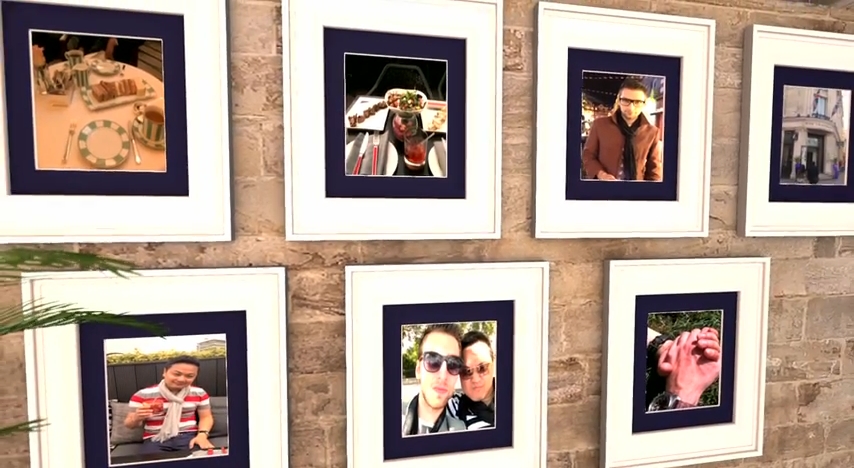
In this there is something of a feedback loops as well – not only does the digital relationship help build and reinforce the relationship in the real world, the latter can also enrich the former. Witness the photos of Rico’s and Editorial’s time together in London, all beautifully framed on the wall of their in-world home; allowing them to again share in the memories – and look ahead to future visits together.
Not only can memories of times shared in the virtual strengthen a long-distance physical relationship, times together in the physical world can be brought into SL and shared, helping to strengthen both the virtual and “real world” relationship
Returning to LTD magazine for a moment, and taking a slight digression from the video. At the start of the segment, Editorial holds up a physical coffee-table edition of the magazine, and in doing so demonstrates the potential Second Life offers someone looking to expand or change their physical-world career. For example, LTD may be something of a labour of love, but in bringing it together, Editorial demonstrates so major skills which clearly have value in the physical world: graphics design, layout, editorial management, fiscal management, project management, and so on, and he has a finished, high-quality item which could – were he so minded – be presented to potential employer as proof positive of a strong track record in publishing.
Obviously, not all businesses in SL are quite so portable when it comes to demonstrating talents and abilities in reference to careers and work in the physical world, but nevertheless, the skills we acquire through this virtual medium should never really be discounted, and if it is possible to develop a portfolio of achievements in SL with reference to a career or job opportunity, then it is something to be seriously considered and worked upon, and we shouldn’t necessarily be put off the idea of doing so on account of SL’s “poor” reputation.
Editorial and Rico
Leaving such diversions aside, and returning to the video, Editorial himself comments on another power of Second Life which, while it’s likely to have been the subject of studies and research, may not be something that’s really commented upon in day-to-day discussions about the platform – and is likely not even considered in media coverage; and that is its power to help us grow as individuals.
“I had issues with confidence,” he says towards the end of piece, “And with SL, it helped me to discover what I’m good at or what I’m not good at, or what I’d like to pursue. I’m still not the life of the party, but it made me realise that I don’t really have to be. It taught me that I can be who I am, no matter what.”
And when it comes to understanding oneself, and facing the world openly, there can perhaps be no greater testament to the positive impact second Life can have on a person’s life than that.
The LEA Gateway – venue for LEA Office Hours, every Friday
Following the success of the first Linden Endowment for the Arts (LEA) Office Hours, which took place on Friday 25th July, 2014, Honour McMillan, writing in the LEA blog, has announced that the event is now to be a weekly affair.
The meetings will retain the 10:30-11:30 SLT time slot (that’s AM, as I use the 24-hour notation), and will take place at the LEA Gateway every Friday, commencing on Friday August 1st. Meetings are open to anyone interested in art in SL and the work of the LEA, and committee members will be on-hand to answer questions on LEA grants, procedures, future plans, use of the LEA sandbox and anything else of relevance to the LEA and its work. So if you are curious the work / purpose / structure of the LEA, why not pop along to a meeting? conversation is warmly encouraged!
I’ve been an admirer of Asa Vordun’s work ever since I happened across her Caprice and Easy A, which I first wrote about in November 2013. As Caprice Village, I returned there in April 2014, again dawn by Asa’s creative eye. So when I saw some beautiful pictures taken by Hans Inshan of a new design by Asa, I had to hop over and take a peek.
When I initially arrived at L’Arc-en-Ciel, it was clearly a work-in-progress, although Asa wasn’t around at the time. So I grabbed a couple of quick shots before scampering off, promising myself I’d pop back for more. I did so a couple of more times, bumping into Ziki Questi on one occasion, and did catch a few changes and additions since my initial drop-in. Indeed, even with the visit which preceded this blog post, Asa was still adding some final touches!
Just as the rainbow from which the region takes its name is defined by its bands of colours, so L’Arc-en-Ciel is defined by the multiple islands which make up its whole. There are five in all, bordered by an off-sim surround of rolling hills and pine trees.
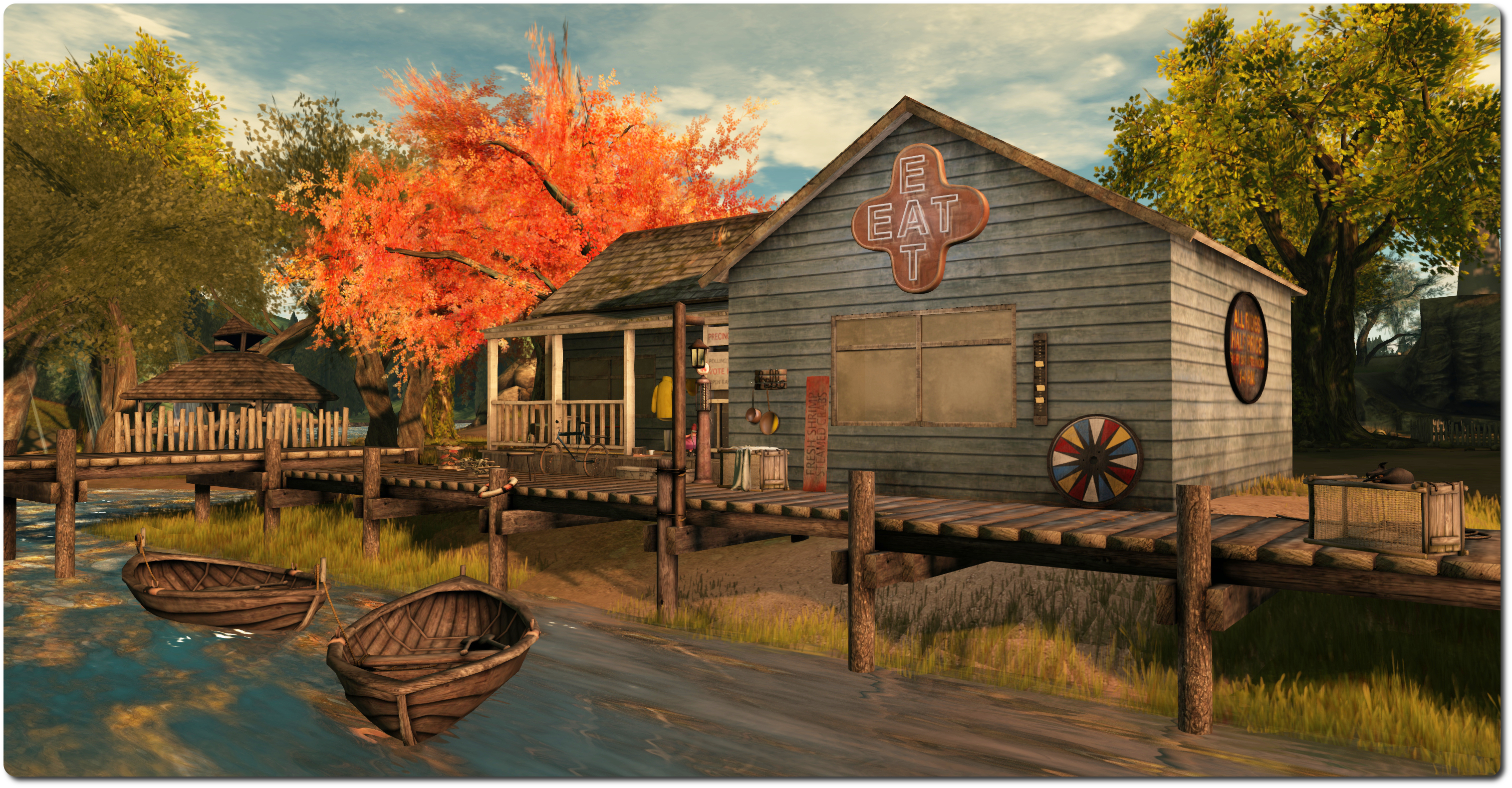
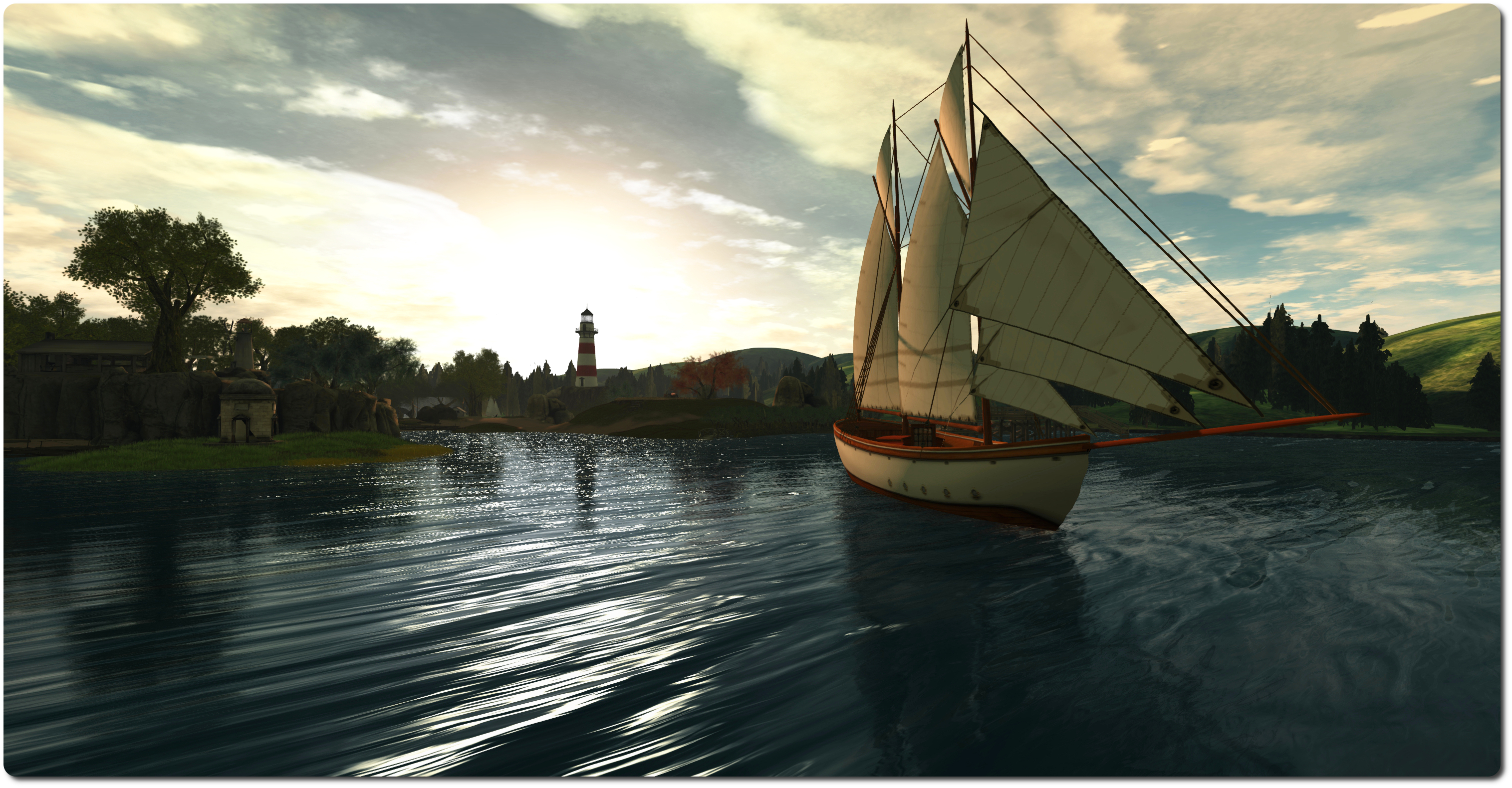
Each of the islands might be a chapter in a book, or possibly a standalone short story, as each has a little tale of its own to tell. walk along the wooden pier which forms the arrival point to the region and descend the steps, and you’ll find a discarded dress and shoes, as if their owner has decided to take a little skinny dip … but look closer, and the journal lying beside the dress, the nearby suitcases and the little Jack Russell staring out at the departing schooner might suggest another story … perhaps that of runaway lovers….
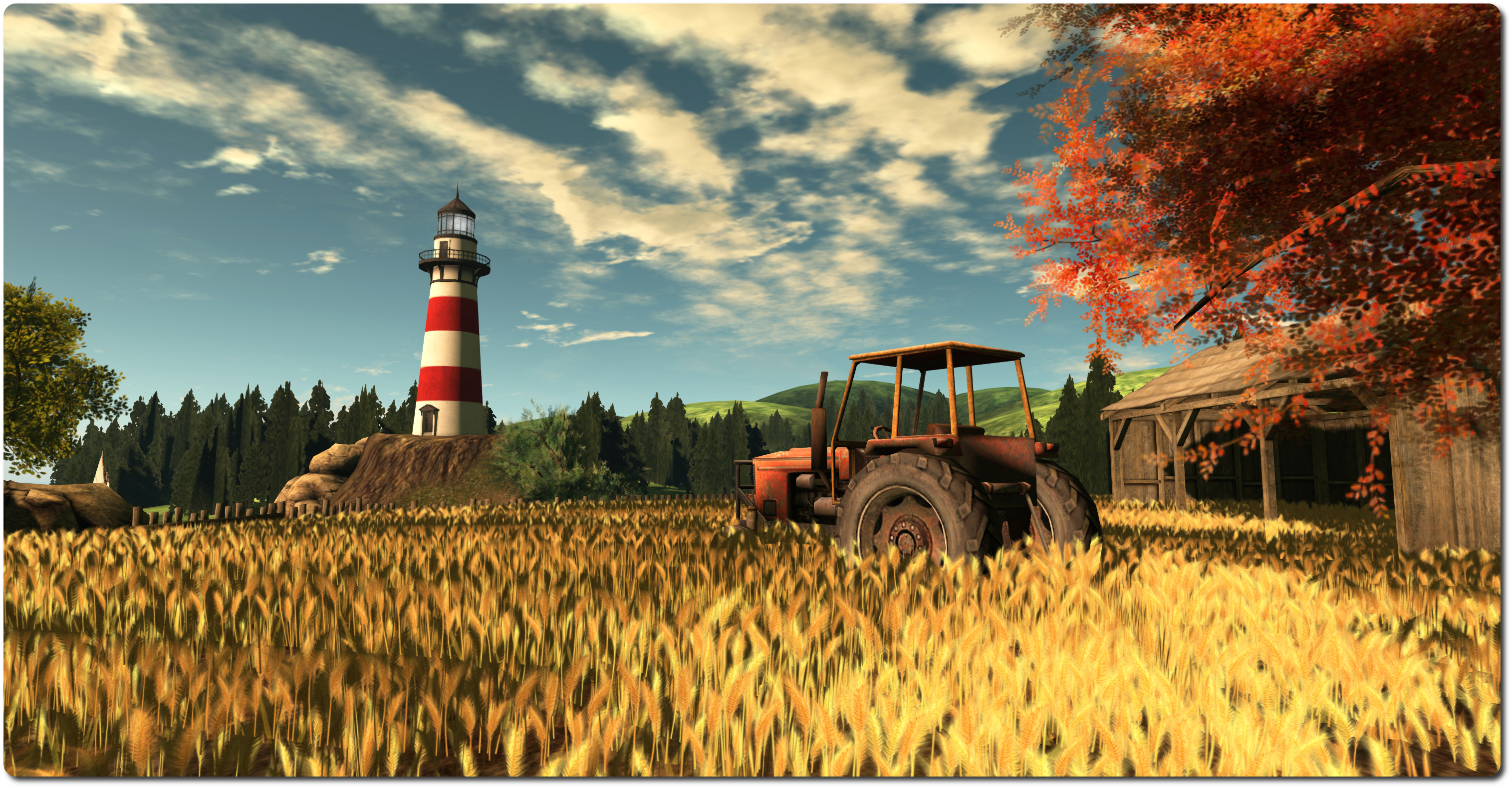
Follow the pier in the other direction, and it’ll lead you to one of the islands, this one with a distinct agricultural feel, with wheat growing across the hilltop and horsed grazing on the far side. A bridge from here leads to the largest of the islands, which offers several points of exploration both at ground level and up on the rocky outcrops which rise from its grassy-sandy base.
Here are many stories awaiting their chance to suggest themselves to the observant visitor. Just who is the tin man, apparently camped on the shore and looking somewhat dejected before his painting? What of the house at the end of the track? Are the people there just back from vacation, packing to go on vacation, or are they holiday-makers, newly arrived…? And what of the white house on the rocky headland?
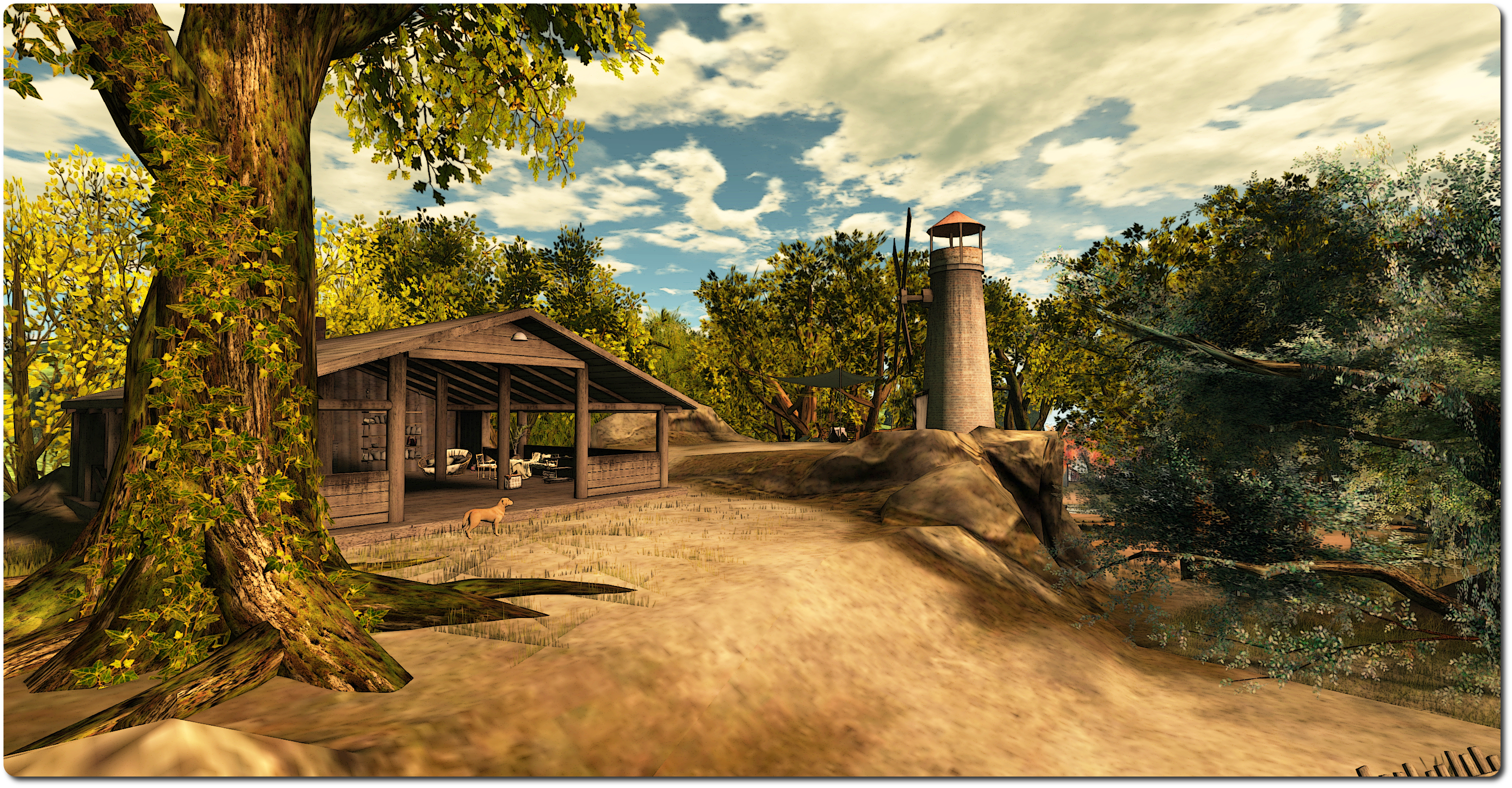
Two more bridges provide links to two much smaller island. On one stands a lighthouse and on the other a small folly. The final island is reached by crossing a shallow band of water. On it, the rain of a summer shower beats on the roof is a run-down cafe which, despite its decrepit state, still appears to be offering someone a home – but who?
Perhaps the key to the stories here lies in the dedication for the region, borrowed from The Story of Life by Jim Hendrix:
The story of life is quicker than the blink of an eye, the story of love is hello, goodbye.
I found the Hendrix connection somewhat appropriate; wandering the island put me in mind of Catch the Rainbow by Rainbow, a song in part inspired by Hendrix’s Little Wing. This being the case, it seems only right that I should leave you with a video featuring that song. Given some of the imagery within the region, maybe it’ll help you cast your own stories amidst the beauty of Asa’s delightful L’Arc-en-Ciel.


 . which can be divided into five isometric copies of itself by the dilation factor of 1/