Kosmic algorithms

Project Algorithm: "observabalh" by Nino Vichon
Project Algorithm: “Observatorim” by Nino Vichon

In November, I wrote about Giovanna Cerise’s latest full region installation, Chaos, Kosmos, currently open on LEA21 as a part of the 7th round of LEA artist In Residence grants.

the initial installation has been extended with three airborne platforms offering pieces by three artists Giovanna invited to participate in her work. Together, all three are referred to as “Project Algorithm”, and each appears to be designed to carry forward something of the original theme of Chaos. Kosmos – examining the relationship between two seemingly opposite elements which may actually be two sides of the same coin. In the case of the original piece, this involves examining the relationship between the ordered cosmos and its chaotic origins (which it still, despite its own order, also echoes).

The three new pieces on offer are reached via the spherical teleport at the Chaos, Kosmos landing point.  As they are all independent works, the order in which they are visited doesn’t appear to be important. As such, I’m tackling them here on the basis of height above ground – from the lowest to the highest.

Project Algorithm: "Live and Die" by Pol Jarhead
Project Algorithm: “Live and Die” by Pol Jarvinan

So the first piece is Live and Die, by Pol Jarvinan, which appears to examine the relationship between life and death; neither of which can exist without the other, and yet both are opposed to one another. The relationship is presented, to my eyes at least, on a number of levels.

The major part of the piece, when cammed around, can give an impression of a graveyard, the black and white shapes frequently forming crosses as the camera moves – the field of death. In the centre of this is a small region of colour – life. Yet even this colour exhibits something of an ebb and flow: the word LIVE is green / healthy; the word DIE is pale / sickly. between them lie a series of geometric shapes in a rusted hue; suggestive of ageing. Throughout the piece are black-and-white circles which, as the camera moves, can appear to be individual or overlapping, perhaps again symbolic of the relationship the exists between being and not being.

Project Algorithm: "observatorim" by Nino Vichon
Project Algorithm: “observatorim” by Nino Vichon

Nino Vichon opts to examine the algorithm – or relationship – between fantasy and prediction through his piece, Observatorium. Here, he sets out the view while appearing separate, fantasy and prediction are perhaps intertwined.  Neither requires linear steps in understanding, and both can be based upon creative or intuitive leaps of the imagination as much as anything else. As such, they are not mutually exclusive in application; rather they are complimentary.  He illustrates this through the examples of chemistry and its relationship with alchemy (from which it grew), and astronomy and its relationship with astrology (ditto).

The uppermost platform is home to Daco Monday’s Chaos, perhaps the most involved and perplexing of the three pieces. It is defined as “the Algorithm of history”, although quite how it should be interpreted is difficult to discern.

There is a quote within the piece, “la luce diurna e razionalista della storia moderna si va spegnendo il suo astro declina avanza il crepuscolo e ci avviciniamo alla notte” – which, I think is a reference to Novoe srednevekov’e (“The End of Our Time”, also known as “The New Middle Ages”) by the religious and political philosopher / Christian universalist Nikolai Berdyaev.

Project Algorithm: Chaos by Daco Monday

As I have no idea if I’m barking up the wrong philosophical tree here or not, I’m loathe to plumb this piece further in writing (although I’ve been mentally scratching my head over it during the course of the last 24 hours…). Therefore, should you wish yo know more, I can only suggest you go take a peek for yourself.

Project Algorithm will remain open, along with Chaos, Kosmos, until the end of December 2014.

Related Links

  • Chaos, Kosmos SLurl (Rated: General) – use the teleport sphere at the landing point to reach the platforms.
Let it snow!

Let it snow! Isles of Lyonesse; Inara Pey, December 2014, on FlickrLet it Snow! Isles of Lyonesse (Flickr)

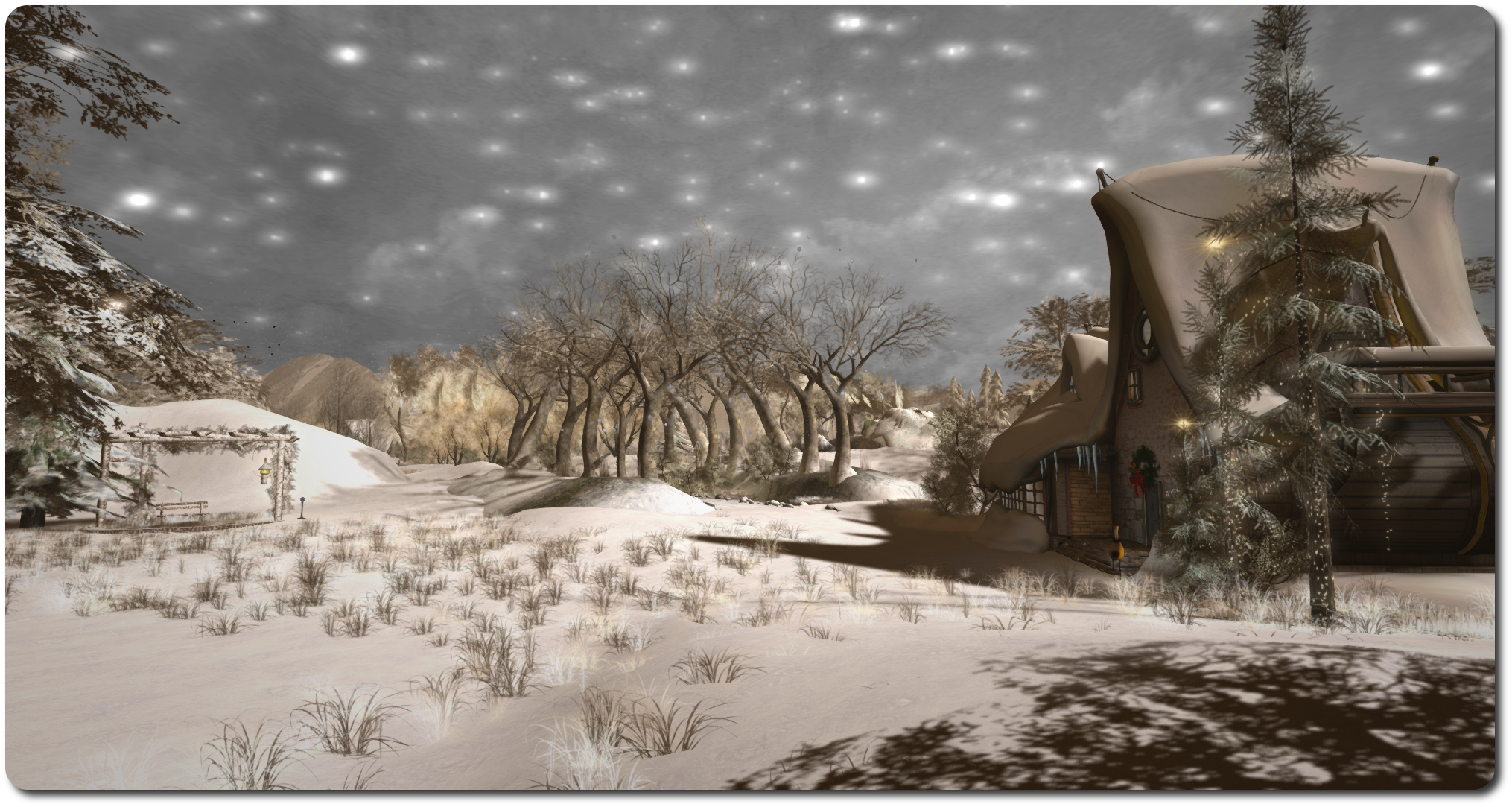
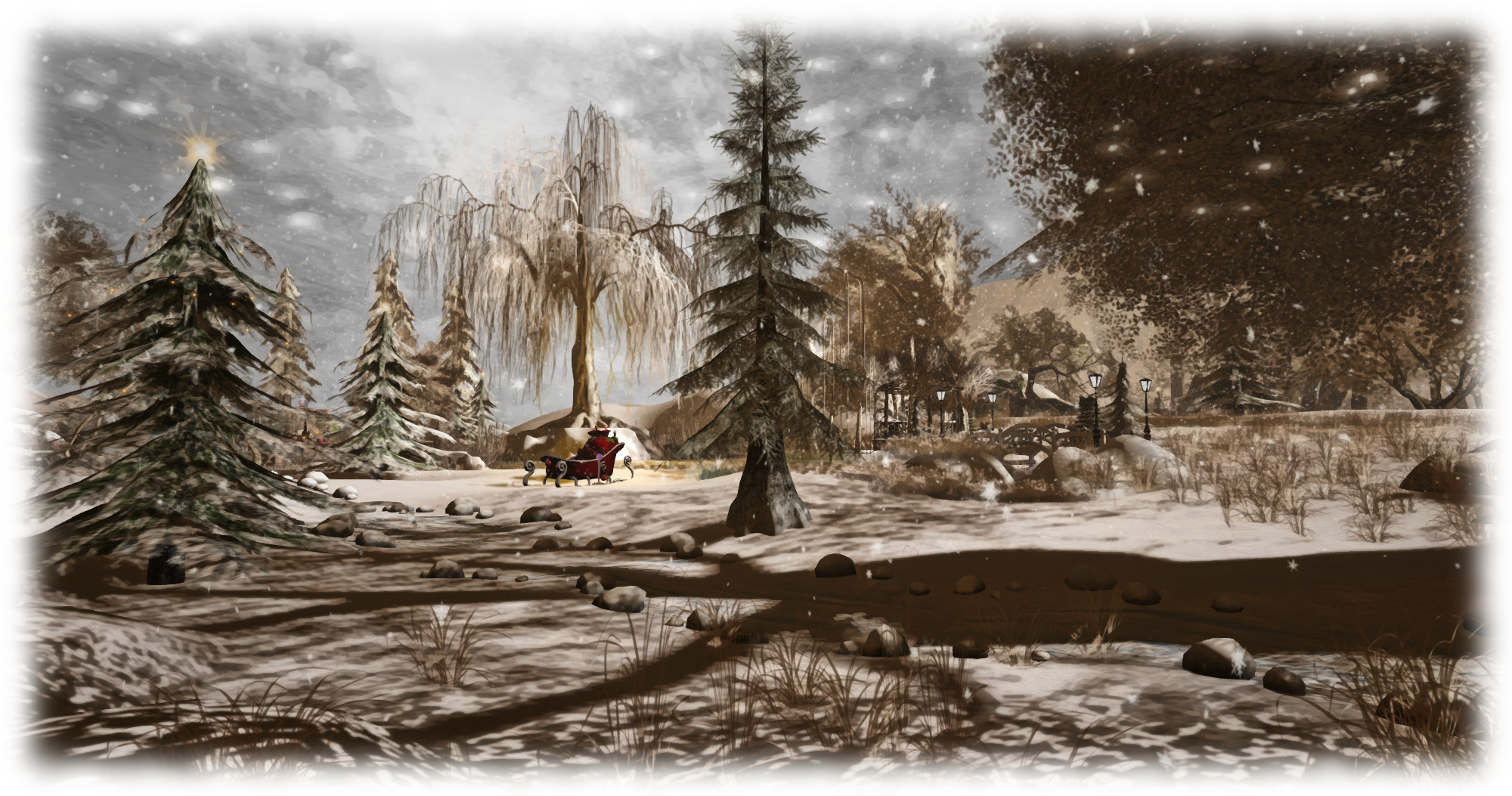
I was drawn to Let It Snow! after Xiola Linden tweeted about it and I the region’s description in the Destination guide Entry:

The fire is slowly dying, and my dear, we’re still goodbye-ing. But as long as you love me so, let it snow, let it snow, let it snow! At Let It Snow, enjoy dancing, romancing, exploring, meeting, ice-skating, snow and winter cheer. Merry Christmas.

As any music lover will know, the first line of this description is from Sammy Cahn and Julie Styne’s seasonal classic, Let it Snow! Let it Snow! Let it Snow! For me, as someone who enjoys the Great American Songbook, it’s an added reason for going exploring. And I have to say, Let it Snow! is more than worth a visit.

Let it snow! Isles of Lyonesse; Inara Pey, December 2014, on FlickrLet it Snow! Isles of Lyonesse (Flickr)

Owned and designed by well-known SL artist, Milly Sharple, the region is a seasonal delight, offering precisely what the description on the label promises: dancing, romancing, exploring, meeting, ice-skating and winter cheer.  Intan dance systems are available right from the landing point, an open-air dance floor complete with a musical sextet,  and across the region, indoors and out.

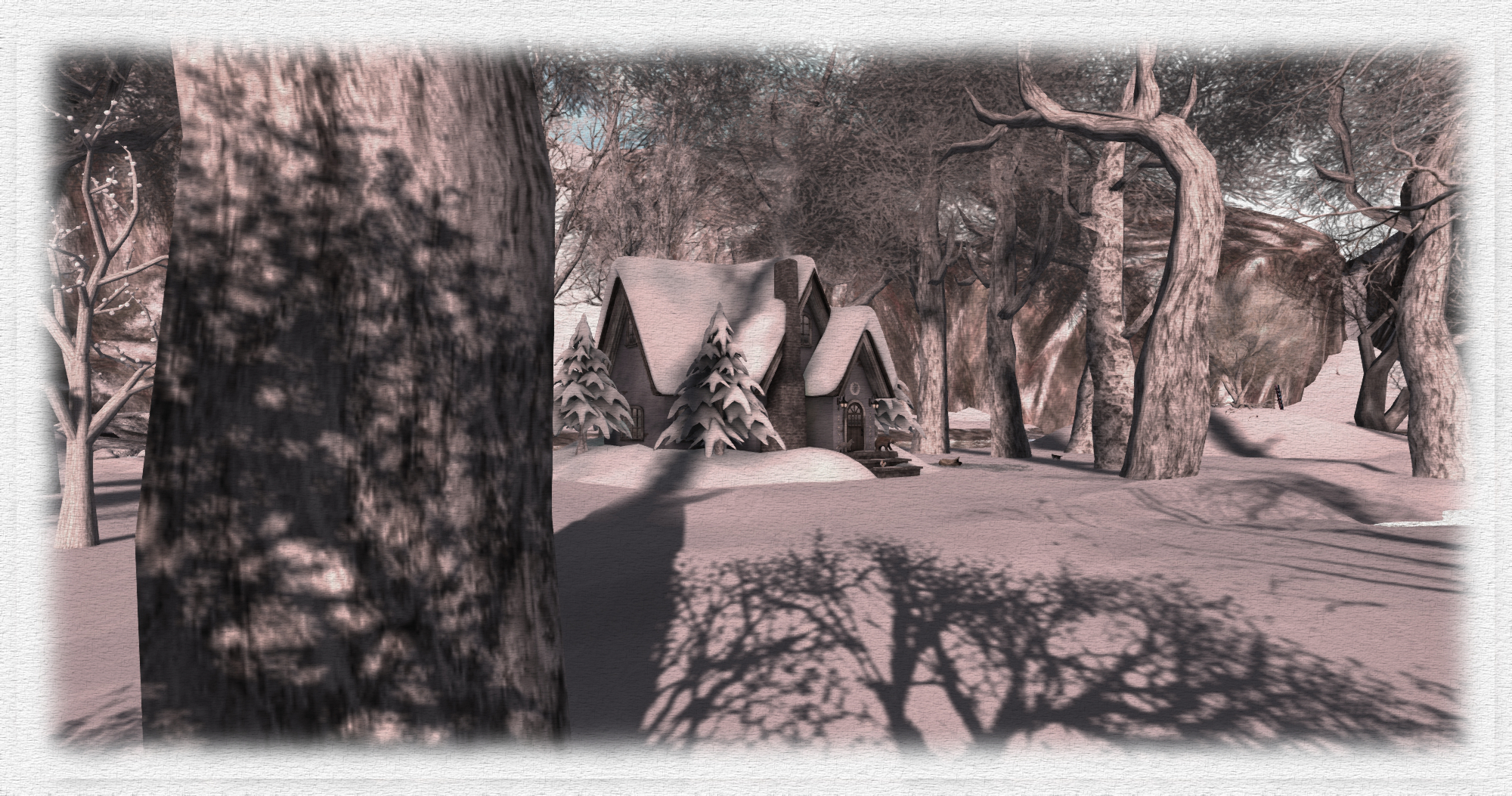
Given the region’s name, the fact that snaow is falling across most of it should come as no surprise; everything is covered in a deep, white  blanket. A handful of cottages are scattered across the land, the largest of which offers cosy hideaway with Christmas tree and roaring fire to toast toes. Other cosy spots can be found around the island for those looking for snuggles, and skating can be enjoyed in a couple of places.

Let it snow! Isles of Lyonesse; Inara Pey, December 2014, on FlickrLet it Snow! Isles of Lyonesse (Flickr)

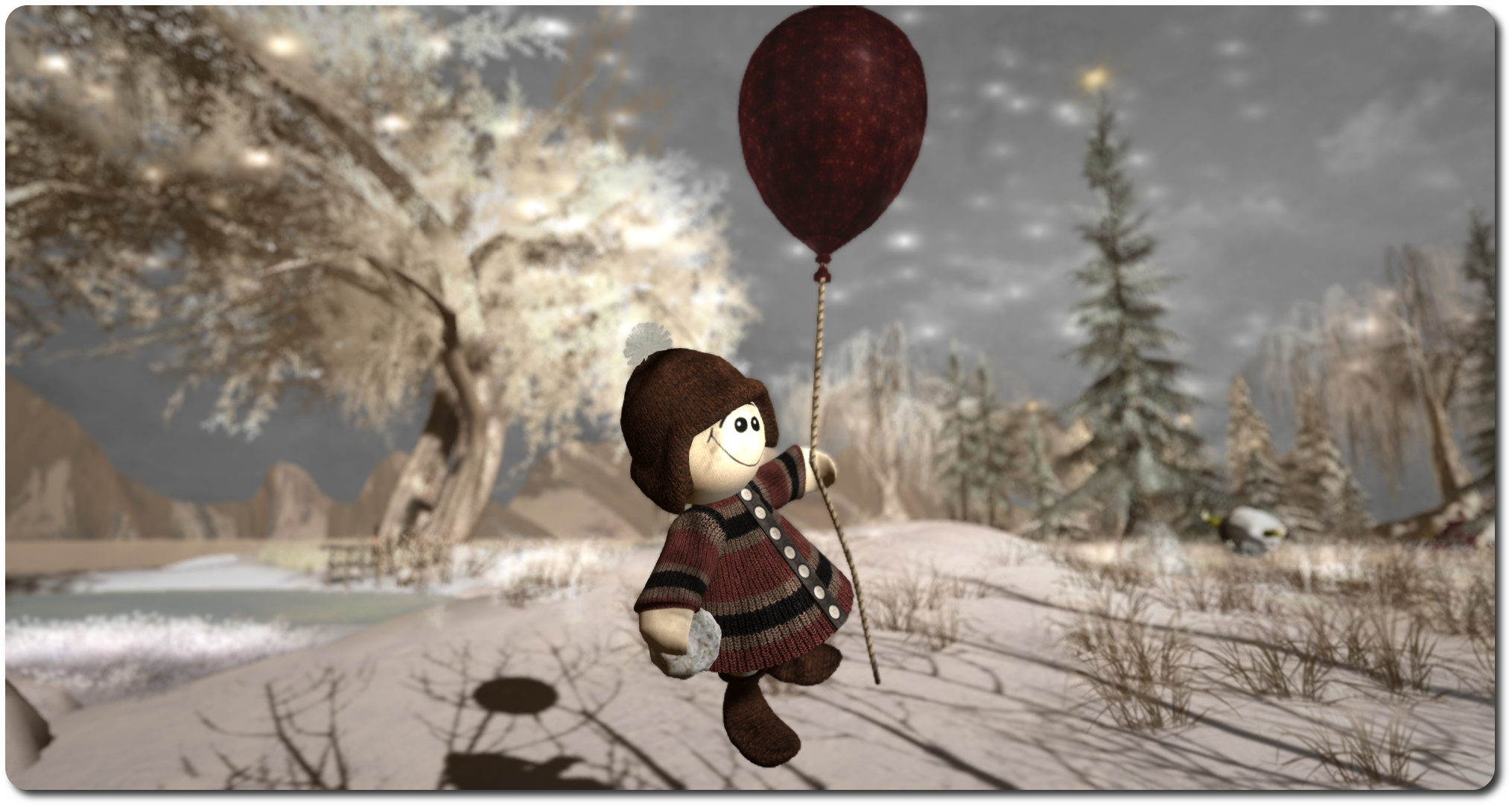
There are some lovely little touches that should bring a smile to every face – particularly the snow children playing outside one of the cottages, having a snowball fight, floating on a balloon or getting quite caught-up in making a snowman of their own.

I could wax lyrical about Let it Snow, but given the name is taken from a set of lyrics, I thought why not simply let the region tell its own story? So here are some of the pictures I took while visiting (some of which have been post-processed to (hopefully) give a painted “Christmas card” look), set to the one and only Dean Martin singing the song. Enjoy!

(As I’ve been a tad naughty and used copyrighted material in the video, it may be blocked in some countries. If so, I offer my Flickr album for the region for those interested!)

Related Links

Qualia: looking through the eyes of Mary*

Qualia: The Sentience of Being

I’ve become something of a fan of Frankx Lefarve’s work over the last couple of years, and always look forward to his installations. They are invariably thought-provoking and beautiful in both design and execution.

This month, he is once more back at LEA18, the location for his last LEA piece, Insidious: the Spread of Ideas, which I reviewed here. Now, and open through until the end of the year, he brings us Qualia: The Sentience of Being, which takes as its basis Frank Jackson’s thought experiment, Mary’s Room.

Jackson, a philosopher best known for his primary focus of studying philosophy of mind, epistemology, metaphysics, and meta-ethics, offered Mary’s Room as a philosophical illustration of his argument against physicalism, the thesis that the universe is entirely “physical” in nature, consisting only of the kind of entities postulated by physics.

Qualia: The Sentience of Being

In Jackson’s experiment, Mary is a brilliant scientist forced to investigate the world from a black-and-white room. and via a black-and-white monitor. However, she is able to  acquire all the physical information she needs to understand the concepts of colour, and  the ability to comprehend the wavelength combinations from the sky which stimulate the eye and, in doing so, lead to the various nervous interactions which result in our uttering the phrase, “the sky is blue”, and so on. Thus, she has all the physical knowledge to understand the world beyond her monochromatic room, and to acknowledge the physical interactions that go on within it.  But is this really the sum total of the universe beyond her room, and in acquiring the physical knowledge, has she reached the fullest extent of her learning? Thus, Jackson asks:

What will happen when Mary is released from her black and white room or is given a colour television monitor? Will she learn anything or not? It seems just obvious that she will learn something about the world and our visual experience of it. But then is it inescapable that her previous knowledge was incomplete. But she had all the physical information. Ergo there is more to have than that, and Physicalism is false.

Qualia: The Sentience of Being

With Frankx’s piece, the visitor initially arrives in Mary’s room, beyond which lies a world of colour and movement, accessed by approaching one of four walls in the room, which will open automatically. Which wall you opt to open first is up to you; they are marked with various items: Buddha (which you face on arrival), clock, mosaic and lightning, but the order in which they are taken is not necessarily important. Be aware that the walls may be a tad slow in responding as you approach them.

Outside of each wall, set against the backdrop of the universe, are walkways, each of which leads to spaces, guarded by what might be called star gates through which you must pass to fully see see beyond them. In certain ways, these might be said to echo the discoveries Mary might have made following her exit from her observation space. Four example, in one, there are elements of red, perhaps signifying the ripening tomato Jackson mentions and, more subliminally in shape and colour, the heart, our engine of life; in others we see flashes of blues and yellows as we step into them, suggestive of the sky, and so on.

This is a deceptively complex piece, one slightly Bowman-esque in its leanings (Bowman as in, “My God, it’s full of stars!”) if handled correctly. The simplest route through the work is to travel back and forth from the black-and-white room, visiting each of the main segments in turn. However, there is another way, pointed-to in the introductory note card, and which I recommend.

Qualia: The Sentience of Being

There is a transparent path connecting each of the four main segments which leads one through the intervening geometric forms spaced in a circle between them. You may need to use CTRL-ALT-T at times to see the path (I recommend toggling on and off when needed; otherwise the red interferes with the installation). This will take you on an unfolding journey through the installation which may well lead to an entirely different perspective.

I have no idea if echoes of David Bowman’s journey through the star gate of 2001: A Space Odyssey is intentional or simply a case of my own projection onto the piece. However, it seemed to resonate with the overall theme of the work; that there is more to our universe than can be adequately explained by our understanding of the physical. Indeed, to go further, that our discovery of such other things – up to and including intelligences far superior to our own – might actually redefine our understanding of the “physical”,  just as in Jackson’s thought experiment, Mary’s experiences in the world of colour may have reshaped her perceptions.

Qualia: The Sentience of Being

Related Links

* With apologies to the Sutherland Brothers for the reworking of their lyric!

A Calas Galadhon Noel

Calas Galadhon Noel 2014

Ty Tenk and Truck Meredith not only run the Calas Galadhon parklands, every Halloween and Christmas they set-up a special region, reflecting the theme of each period respectively.

This year, they gave us the Darkwood for Halloween, a darkly Tolkien-esque place offering orcs, elven boat rides, trolls, dragons, eagles and barrel trips. Now, with December opening its doors, they bring us the Calas Galadhon Noel, the region beautifully made over into a festive wonderland, with sleigh rides, magic reindeer flights, cuddle spots, ice skating and a whole lot more.

However, rather than me wibble on about it at length, I thought I’d cut to the quick and bring you a short video which I hope will encourage you to visit.

Calas Galadhon Noel is now open to the public through until the end of the month – and if you previously visited the Darkwood, I hope you’ll watch the video right to the very end :-).

To fully appreciate the region, do make sure you have local sounds enabled and have region’s music stream active – Ty has put together a very special selection of music to accompany your visit.

Related Links

A Kitten’s winterland

Kittens Heaven, Demented Love; Inara Pey, November 2014, on FlickrKittens Heaven, Demented Love (Flickr)

The end of another year draws ever nearer, and in the northern hemisphere this means thoughts turn to those of winter landscapes and cold, crisp mornings, something which tends to be carried into Second Life as well. Many regions are estates have already welcomed the soft cover of snow and winter scenes are starting to appear appear the blogsphere.

With December on our doorstep, I decided to head away to Kitten’s Heaven, Isabelli Anatine Hak’s homestead region, which offers a place for people to visit and relax and enjoy a spot of photography if they wish. Freshly remodelled for the winter months, Isabelli was putting the finishing touches to the region in its new look when I arrived, as she completed furnishing the main house.

Kittens Heaven, Demented Love; Inara Pey, November 2014, on FlickrKittens Heaven, Demented Love (Flickr)

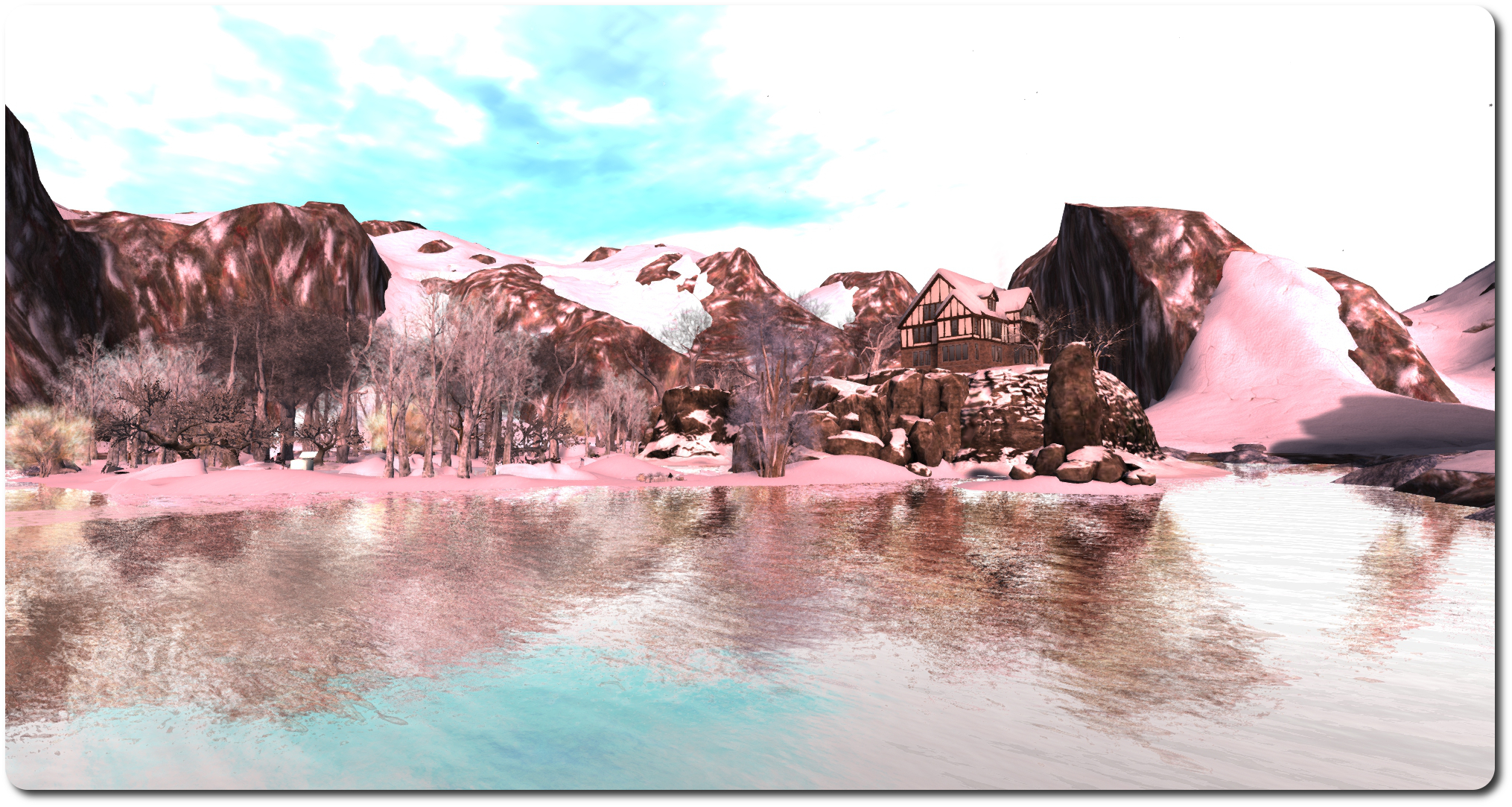
Surrounded by icy waters which are in turn surrounded by snow-capped and dusted craggy cliffs and peaks, Kitten’s Heaven offers a picturesque scene of frost coated trees raising bare branches to the sky, under which can be found reindeer, bears, foxes – and even a penguin or two. There are skis available for those feeling active (snowboards may also be added), and a large frozen lake offers plenty of space for skating – but do mind the cats as they enjoy their own little bit of ice boarding!

A sliver of unfrozen water separates the lake from two rocky outcrops. Upon one of these sits the main house, a large Tudor-style building, reached by a rocky, snow-covered path. Here visitors will find refreshments to fortify them against the cold, and fully furnished rooms upstairs to explore. A snow-covered span of  rock bridges the gap to the second plateau, where an outdoor café offers hot soup and mulled wine to those of a hardy disposition who enjoy the bracing outdoor air.

Kittens Heaven, Demented Love; Inara Pey, November 2014, on Flickr“Wot’s going on over there, then?” Kittens Heaven, Demented Love (Flickr)

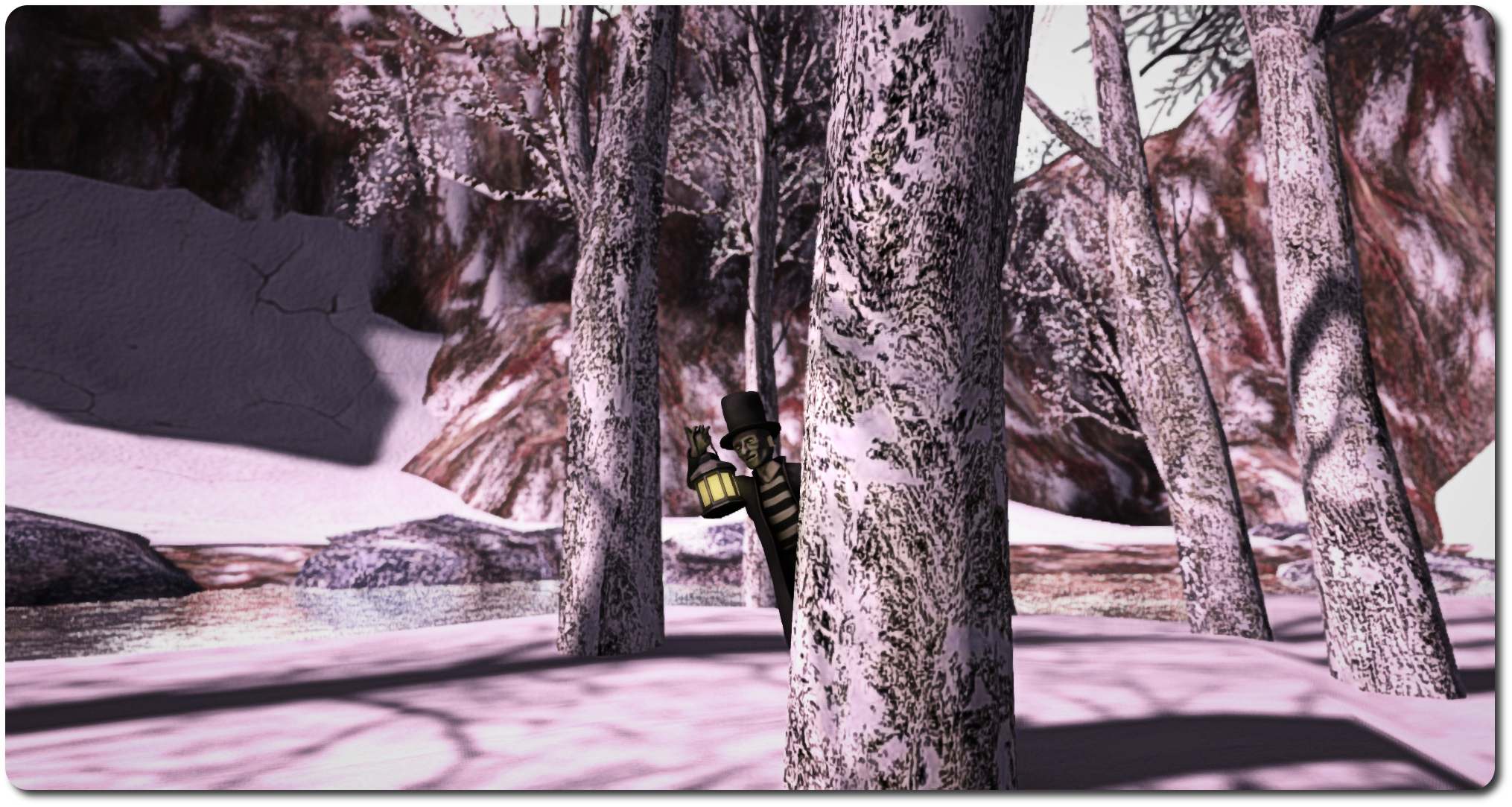
There are numerous places to sit down and enjoy the surroundings, be in on a sleigh or next to a blazing camp fire  or in the little cottage where more of Isabelli’s love of cats can be found. As noted above, wildlife abounds, and there is also a mysterious little man with his lantern taking a peek at what’s going on – but I doubt he means any mischief!

Kitten’s Heaven always offers an eye-catching and warm welcome to visitors, and even though snow may lay heavy on the ground right now, that hasn’t changed with this make-over. So why not hop over and take a look for yourself?

Kittens Heaven, Demented Love; Inara Pey, November 2014, on FlickrKittens Heaven, Demented Love (Flickr)

Related Links


Water, through a photographer’s eyes

H2O - Walt Ireton (Jay Evers)
H2O – Walt Ireton (Jay Evers)

Sometime in the early years of our planet, billions of years ago, two gases allied themselves – hydrogen and oxygen. They became a liquidity, which enabled the emergence of life on earth. Water – the basic element – the element of constant change. It all began with water and water is inside anything living. Water – the element of constant change.

Thus reads the introduction to H2O, a photographic exhibition by Walt Ireton – known in the physical world as Jay Evers – at his Sominiem Art Gallery in Tabula Rasa. Based in Hamburg, Germany and Enschede in The Netherlands, Walt’s business is creative wedding documentary and event photography. However, his passion lies within the fields of natural, street, and macro photography.

H2O - Walt Ireton (Jay Evers)
H2O – Walt Ireton (Jay Evers)

These three aspects of his photography are combined H2O, which, as the introduction and title suggest, focuses on the subject of water. On display are some 37 images taken from the physical world (four of them stunning photo montages of a single image divided into three or four parts), split across two levels of the gallery space which Walt also designed.  And believe me when I say, they are simply stunning.

“Water is very good in showing us how restricted our visual perception actually is,” Walt says of the exhibition. “Our eyes can see only a small part of the existing light [and] all information that our eyes do see, is filtered in various ways before it reaches the conscious part of our brain.

“Another aspect of water is, that it is moving most all of the time,” he adds. “A camera is capable of de-accelerated perception, which with longer exposure times makes moving water look like diffused veils or misty clouds. A vision of the primeval ocean suggests itself.”

H2O - Walt Ireton (Jay Evers)
H2O – Walt Ireton (Jay Evers)

All of which leads him to conclude that while a photograph does not really show an absolute and objective moment in time, it can nevertheless, and almost literally in the case of the natural flow and motion of water, freeze a moments in time which then themselves become timeless, literally.

And “timeless” is precisely the adjective to apply to many of the images here, from the foamed water roiling around rocks so suggestive of that primeval ocean Walt notes through to the amazing sight of the very top of a fountain plume caught in that 1/6000th of a second as it arches and twists at the start of its gravity-induced fall back towards the ground, with so many more in between – such as the reflection of a building caught in a street-side puddle, something unlikely ever to be captured in the same way ever again.

H2O - Walt Ireton (Jay Evers)
H2O – Walt Ireton (Jay Evers)

As well as the H2O exhibit, the upper levels of the gallery space (reached via the Anywhere Door on the ground level) also play host to two further exhibitions. The first is Impresiones de La Gomera, presents real life images of the island of La Gomera capture by Walt and his parter, Seoreh Voight, The second is Working Under Pressure, presents the comic book artistry of Martin Scarborough as large-format pieces.

As a final note, not only are the images displayed in H2O and Impresiones for sale at the gallery, those living it Europe can avail themselves of Walt’s website if they so wish and order copies to grace the walls of their physical world home. And when visiting Tabula Rasa, why not avail yourself of the other galleries and exhibitions in the region – including Walt’s own City Windows?

Related Links