Following Giovanna’s Line

Line: Giovanna Cerise

Wednesday, April 1st saw the opening on Giovanna Cerise’s installation Line, located on Franz Markstein’s region of Otium. A full sim installation Line is a symbiotic piece within the region, offering a means to appreciate Giovanna’s art in an original setting, whilst also – if you’ve not done so previously – exploring the beautiful setting of Otium itself.

Line presents numerous elements of Giovanna’s art in both 2D and 3D, at least one of which is interactive. These are located both indoors and outside, where you’ll encounter them along footpaths, in doorways, on terraces and further out from Otium’s charming village, along the beach or over the water.

Line: Giovanna Cerise

The focus of the exhibit is an exploration of the concept of the line, perhaps the simplest  expression of artistic intent; one which, as it is drawn, painted or created, might lead anywhere. As Giovanna notes in her introduction to the installation, there is a depth and freedom hidden within the line, whether it is expressed in two or three dimensions – and, in the case of some of the works on display here, through a melding of 2D images to create a 3D piece.

All of the pieces found throughout the village and the region are available for purchase, and those familiar with Giovanna’s work may find some of them familiar, having been featured in previous exhibitions she has presented in Second Life. Their presence here helps to lend a sense of familiarity to the village for those who have not previously visited, as corners are turned or buildings entered, and pieces come into view which are recognised, and so offer a welcome.

Line: Giovanna Cerise

What I particularly like about this exhibit is the manner in which the pieces on display within the village blend with their surroundings. They are placed against  walls, lie across the cobbles of footpaths and terraces, and so on. Thus on the one hand, there is a distinctly street art feel to them, and on the other they present the feeling that the artist has stolen through the village unseen, leaving these drawings behind to tantalize the locals and attract visitors’ attention, with both of these feelings drawing one onwards through the village to discover what else might be waiting around the next corner, under the next arch or against the next wall.

A number of LMs are supplied with the introductory notes, which can be obtained on arrival via the note card giver. These can help you find some of the pieces on display more easily. However, rather than leaping around the region, I do recommend taking the time to explore on foot (although do keep in mind there are some private homes within the village and off-shore); that way you can not only discover and appreciate Giovanna’s work as you wander, you can also fully experience Otium’s own Mediterranean beauty.

Line: Giovanna Cerise

Related Links


What dreams might come when you visit Pandora’s Box?

Pandora's Box of Dreams, Diamond Bay; Inara Pey, April 2015, on Flickr Pandora Box of Dreams, Diamond Bay (Flickr) – click any image for full size

Note: this vision of Pandora Box of Dreams is closed.

Dreams are our mind’s creations, places where  mind takes us to relax, to enjoy and to ease from rest of the world. Come dreamer, let the slumber take you, close your eyes and just focus on the weight of body easing away with each breath you take, and with each breath you become less here and more in our dreams…

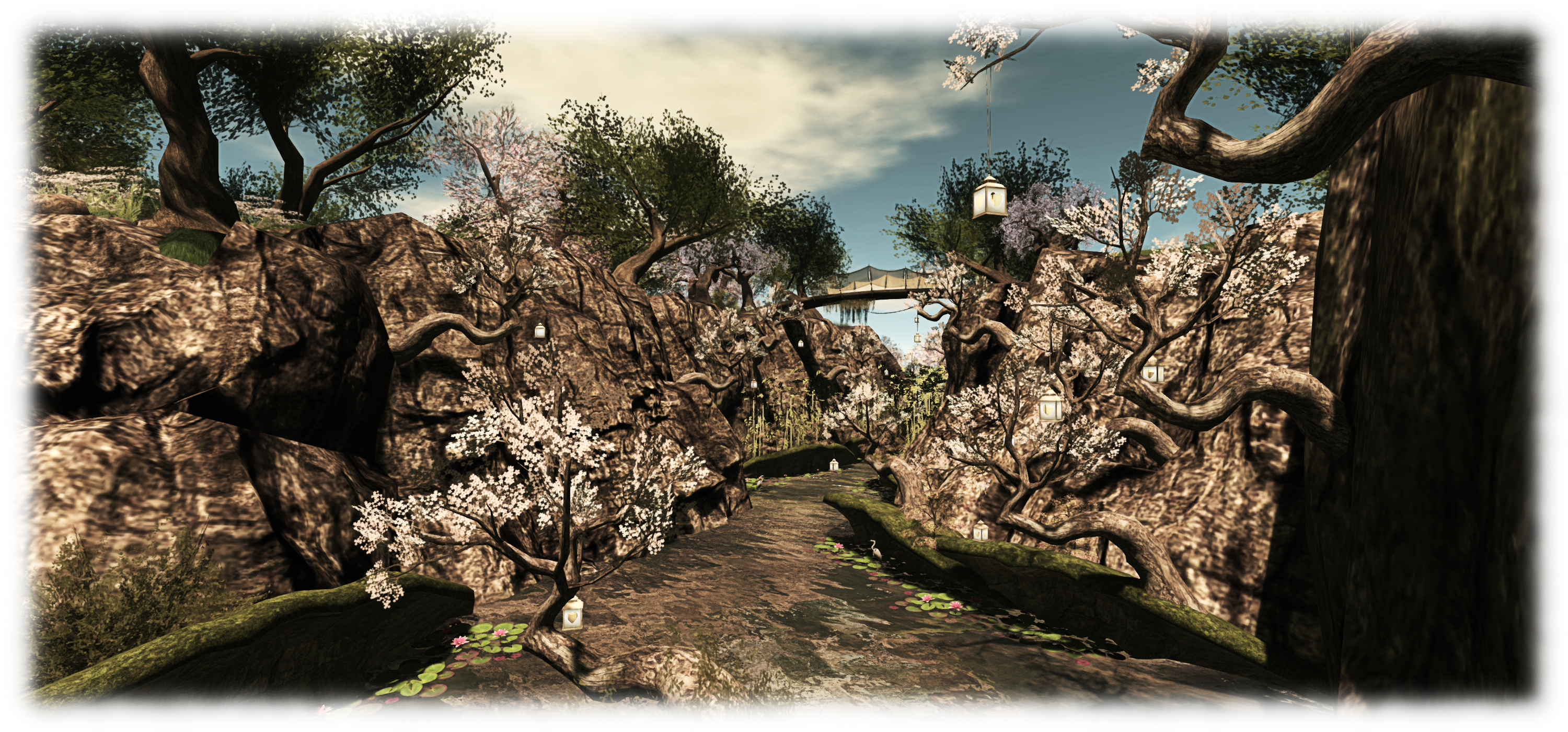
So, in part, reads the welcome which is ethereally whispered to those arriving at Pandora Box of Dreams, in the Homestead region of Diamond Bay. Designed by Lokhe Angel Verlack (Jackson Verlack), this is a place where, as the introduction suggests, Dreams are encouraged. The greeting is given at the arrival point, high in the air over the region, as you pass through a series of veils to come to a bed located among shrubs heavy with leaves of green and red and gold, and among them, slender boughs bearing white sakura blossoms. Climb on to the bed, let your dreams take you, and you’ll be transported to a land rich in colour and filled with the sounds of nature. Pandora's Box of Dreams, Diamond Bay; Inara Pey, April 2015, on Flickr Pandora Box of Dreams, Diamond Bay (Flickr)

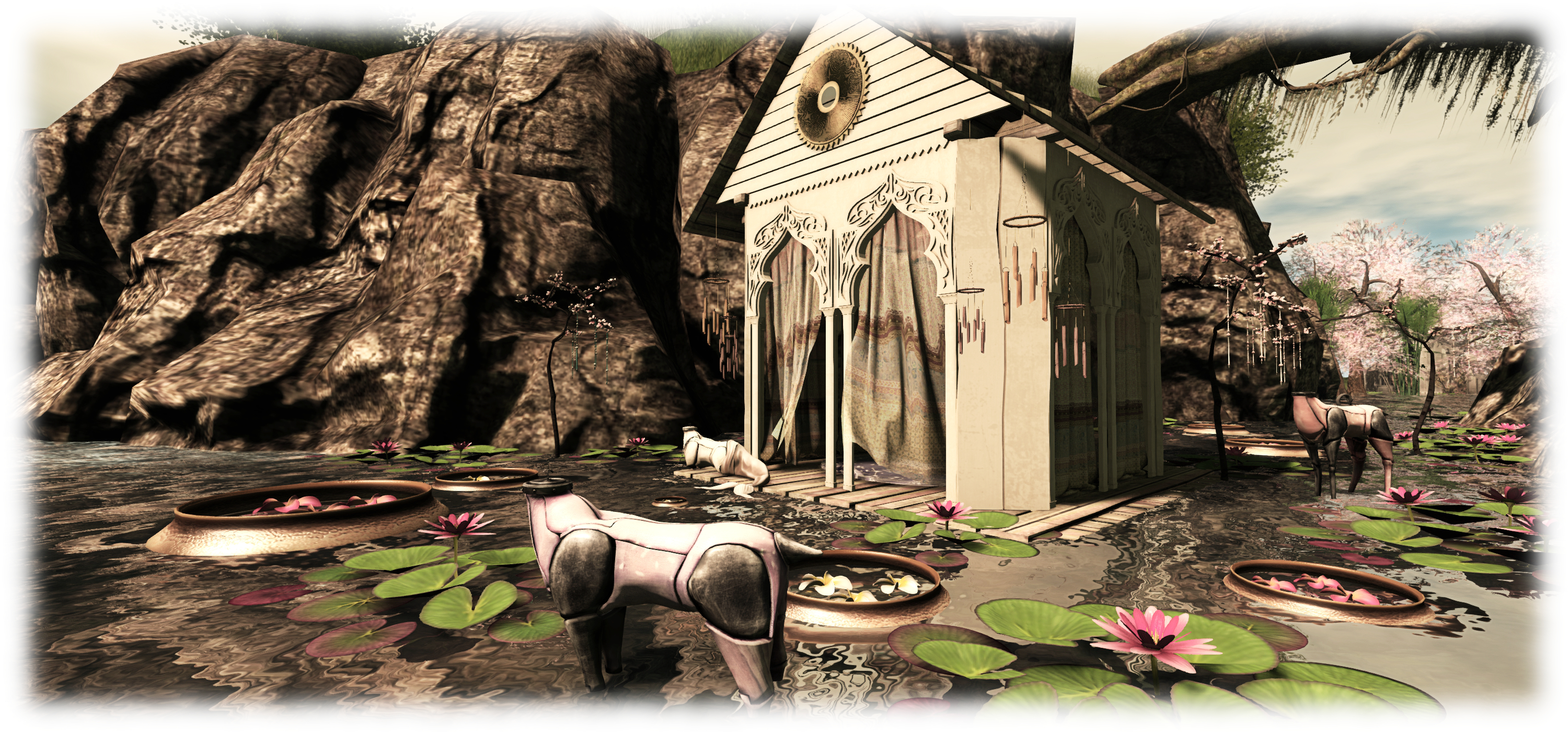
Your journey through this land – a series of beautifully sculpted islands rising on rugged cliffs and rocks from the waters below –  starts within a modest Japanese bath house. Do make sure you have local sounds enabled prior to leaving it; if you don’t you’ll be missing out on the full ambience of these tranquil isles.

For the first part of your exploration, you’ll need to follow the steps up under the Torii gates, as this is the route to access the rest of the islands or, if you prefer, make an initial descent to the water’s edge deep within one of the gorges separating the islands. Once you have passed the gates on the far side of this path, however, where you roam is up to you; just as our dreams are free to lead us where they will, so to are visitors free to wander wherever their feet might take them. Pandora's Box of Dreams, Diamond Bay; Inara Pey, April 2015, on Flickr Pandora Box of Dreams, Diamond Bay (Flickr)

Perhaps you’ll make your way down to the waters of the deep gorges separating the islands one from another; or perhaps you’ll take the bridges spanning them to explore the other grass-covered isles and make your way to the little open house made from converted railway carriages and rest awhile.

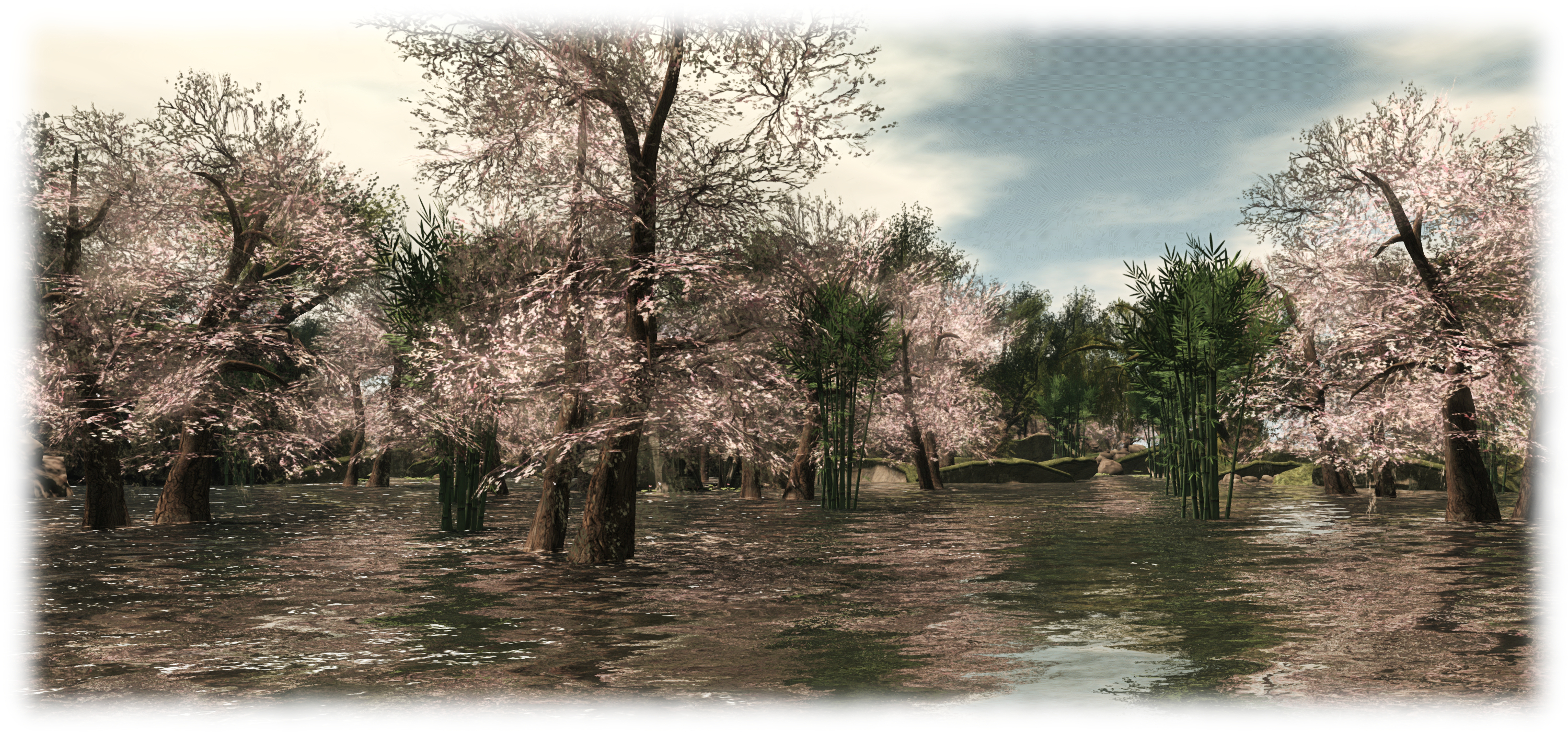
Maybe you’ll travel further, and make your way down to the water’s edge by way of tree-lined steps and past a wooden platform where Japanese delicacies await and a great stone harp stands, and thus come to the flooded cherry blossom garden. If you’re wise, you’ll give yourself time to do all of these, and discover everything else the islands have to offer, and allow them to wrap their magic around you like a comforting blanket. For those taking photographs, and there is a lot here to photograph, don’t forget you are invited to share them in the Pandora Box of Dreams Flickr group. Pandora's Box of Dreams, Diamond Bay; Inara Pey, April 2015, on Flickr Pandora Box of Dreams, Diamond Bay (Flickr)

Such is the design of the region that when it comes to photography, experimenting with windlight settings and the time of day slider is an absolute must; this is a place which lends itself naturally to a wide range of lighting, making it a wonderful subject for pictures. As with many places in SL, moving between windlights can cause a particular scene to magically and quite unexpectedly transform itself before your eyes. But here, the sensation when it does, is like slipping from one part of a dream into another, a feeling which enhances the overall theme of the region.

Do note as well that if you want to rez props for photography, you can join the local group – there is a nominal fee of L$50 for doing so, and an invite should be sent to you on your initial arrival in the region. All told, Pandora’s Box of Dreams is a visual delight; a place guaranteed to soothe the soul and / or get the camera clicking. The design is simple yet elegant, uncluttered and serene, and harmonious in its presentation. Highly recommended.

Bryn Oh’s Lobby Cam

Lobby Cam - click any image for full size
Lobby Cam – click any image for full size

Bryn Oh’s latest installation on her home region of Immersiva opened on Sunday, March 29th. Entitled Lobby Cam, it is, in keeping with her previous works there, a full region installation; albeit one which, on the surface at least, seems a lot less complex than pieces such as Imogen and The Pigeons or the more recent The Singularity of Kumiko. But as we know with Bryn, all is not always as it may first appear to be.

Bryn has always embraced the so-called digital divide, and by doing so remove it somewhat from people’s view. Her virtual work has often incorporated elements of her physical world artistry, while her work in the physical world has frequently encapsulated her virtual art. Lobby Cam takes this a stage further, as it places a number of Bryn’s paintings front-and-centre within the installation, which itself appears to have its origins painting possibly inspired by a trip to  Sasakatoon and the surrounding region of Saskatchewan in Bryn’s native Canada.

Lobby Cam
Lobby Cam

The artwork is on display in a lobby-like gallery to one side of the region – although this is not the lobby to which the title of the piece refers. Here visitors can obtain a HUD (free of charge) which presents the wearer with a journal forming the hub of an unfolding story.  From here, the visitor can progress through the gallery space, reaching a wall on which is mounted a copy of the painting on which a good part of the installation is based. As this is approached, the wall breaks apart, allowing access to the rest of the region.

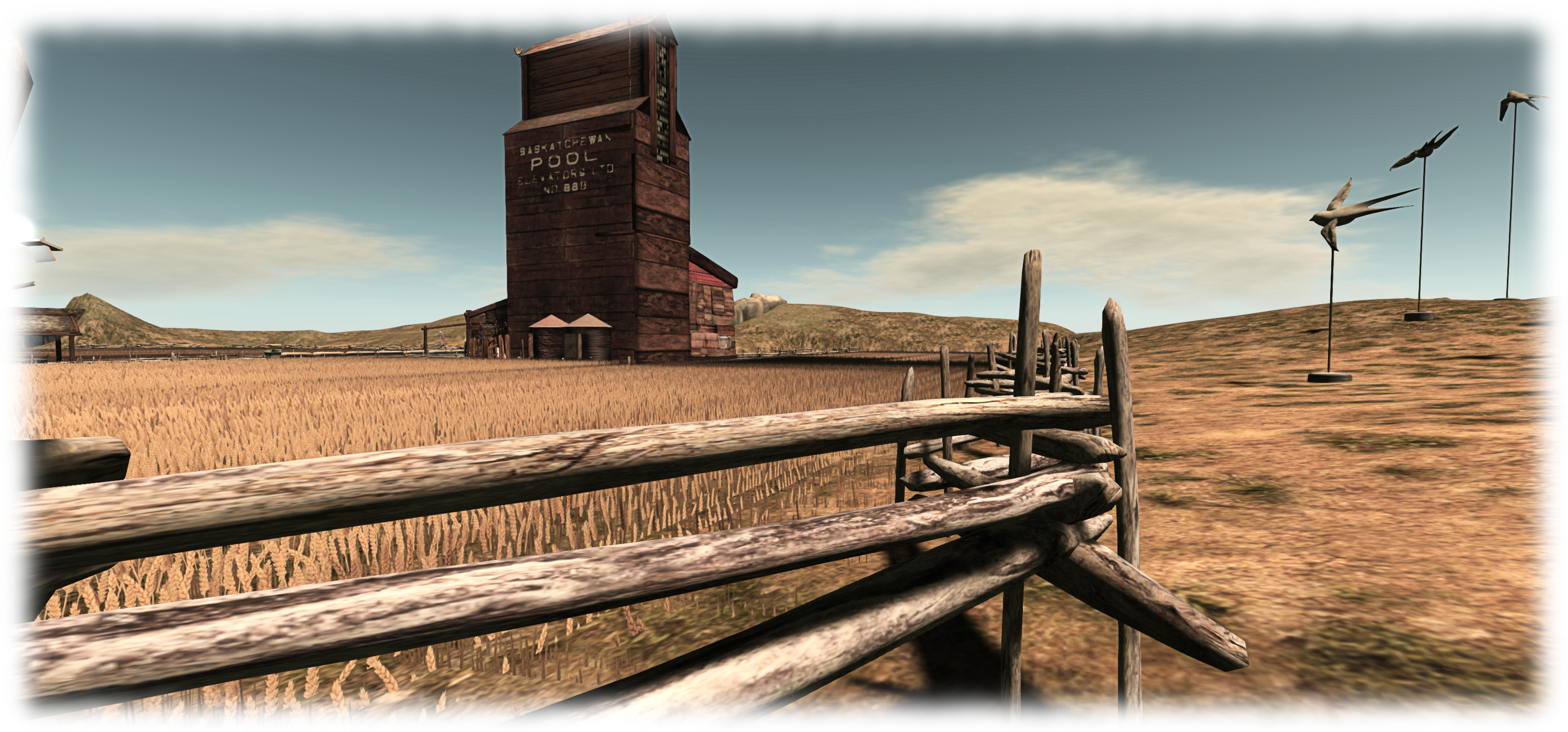
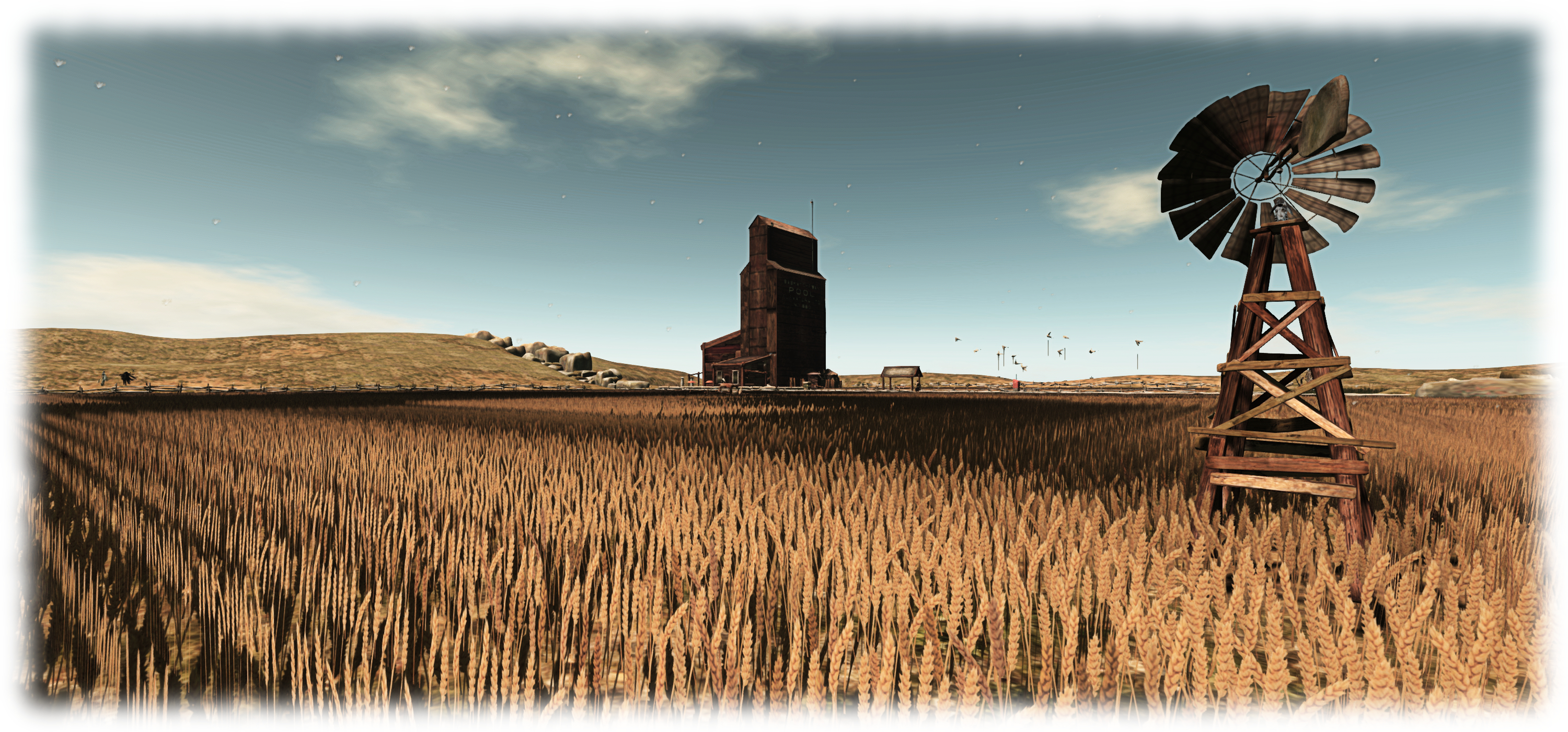
Most of this is given over to fields of wheat which stretch off to the horizon, and from the midst of which a huge wooden grain elevator rises bluntly into the sky. This is not just any grain elevator, however; it is No. 888, originally built in Keatley, Saskatchewan in the late 1920s as a part of the Saskatchewan Wheat Pool, but which was moved in the 1980s to North Battleford, some 137 kilometres (86.5 miles) north-west of Saskatoon, where it was restored as a museum.

Lobby Cam
Lobby Cam

Such grain elevators where once widespread across the prairies, and early photographs of Saskatoon itself show just such an elevator located alongside the railway tracks on the edge of the town, forming something of a focal point. Within Lobby Cam, the elevator sits as a focal point within a broad spread of wheat, like some tall ship riding the sea, the rippling wheat, which moves to the SL wind, the waves beneath its prow.

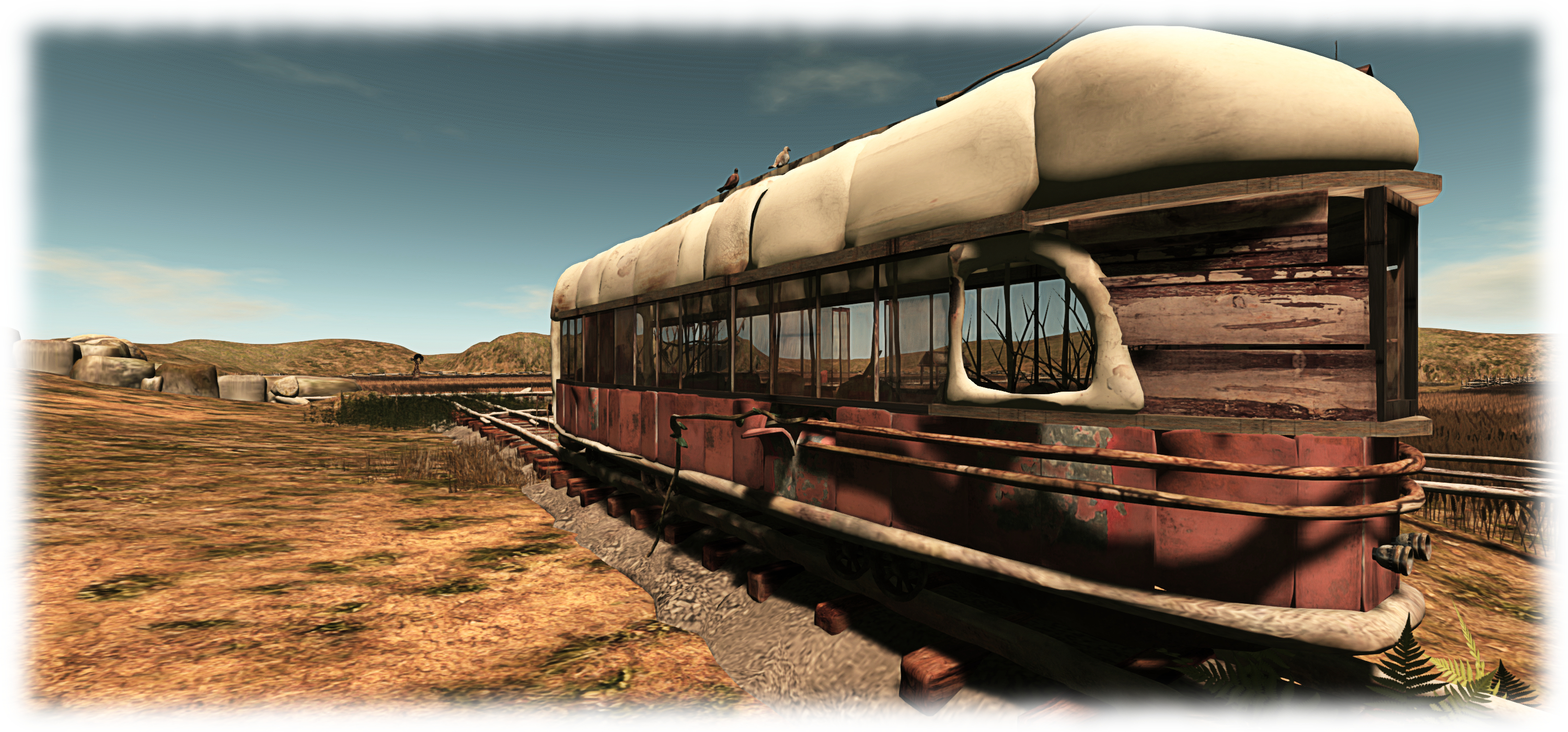
Given its size, the elevator is a natural destination, and there are several floors within it to be explored, including the upper floor which links back to the HUD-based story, which I’ll get to in a moment.  Further across the fields, towards the south-east corner, sits the battered bulk of an old Toronto streetcar, doors and windows broken, a part of it boarded-up as vines wind their way through it. Elsewhere amidst the wheat visitors will also find the rusting hulk of a old pick-up truck, sitting like a raft in the middle of a yellow ocean.

All of these pieces are perhaps emblematic; a commentary on the passage of time and the changing of ways. They also help to attract one’s attention to elements of the unfolding story. As mentioned above, the HUD obtained at the start reveals a journal. Initially, only the first few pages can be read but, explore the region and you’ll come across more, which are automatically added to the journal as you do so, allowing more of it to be read. I’ll not say too much more on this, other than you should take a little time in your explorations, as there are pages and more to be found.

Lobby Cam
Lobby Cam

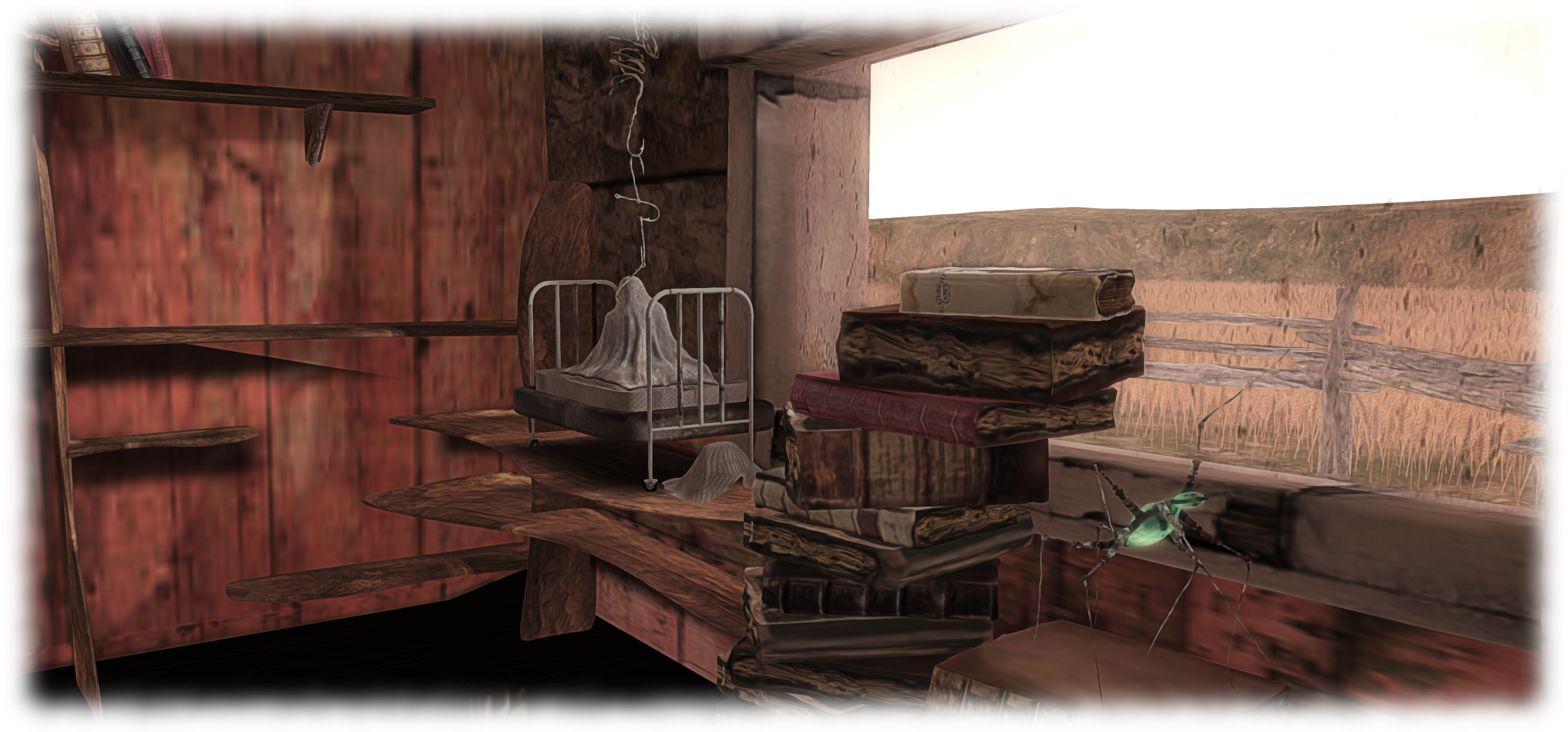
Throughout the build, there are many references to some of Bryn’s other works, some obvious, some perhaps less so. Such motifs are not uncommon to her work, and they add both depth and familiarity to her pieces.

In the default windlight (I’ve taken the liberty of using a different windlight in the images here), the entire installation has something of a “rough” look to it colours in places – such as on parts of the grain elevator – can look a tad odd to the eye, which the old Toronto streetcar might at first look like a badly-made model. However,  this is entirely intentional.

As already noted, the entire installation is essentially the recreation of a painting; thus, the colours and rough uneven surfaces and (in places) blocky finish to various elements in the installation are all redolent of the colours and textures found in the original painting.

Bryn’s work can often be taxing for some computers, and Lobby Cam is no exception, although Bryn has once again put considerable effort into minimising any loss of performance that might be experienced. She also offers some notes on how to lessen the potential impact and improve your experience – including trying SL Go (Bryn has no affiliation with the service, but recognises it as a means by which those on lower-end systems can perhaps better enjoy the installation). These notes can be read directly in-world at the HUD dispenser, or obtained via note card by clicking the information board above the HUD dispenser, or via Bryn’s blog, which includes the introductory trailer video I recommend you watch, if you haven’t already.

Lobby Cam offers-up another intriguing piece from Bryn, which as noted at the top of this article may initially appear less complex than some of her other work, but which is actually beautifully layered.

Lobby Cam
Lobby Cam

Related Links

The Drax Files 28: art and SL as cathartic renewal

“You know, when you first asked me to do the Drax Files, I said no,” Whiskey Monday states at the start of segment #28 of The Drax Files World Makers. I doubt anyone watching the show regrets her decision to actually go ahead and appear on the show.

Whiskey is well known throughout Second Life for her incredible artwork, which started with her single frame stories. Her work is thought-provoking, intelligent, evocative, mischievous, fun, pointed, and more – and all of it is certainly some of the finest expressions of art as a medium for social and general commentary I’ve ever seen. It’s also deeply personal, much of it reflecting on Whiskey’s real life; usually in a frank, honest way free from pathos while laying bare her mindset and emotions.

Whiskey Monday at work

It is on this latter aspect of her work that the show primarily focuses on, in what is once again one of the most compelling pieces of video journalism I’ve seen in a long while, with Drax almost completely absent from the piece and leaving Whiskey to tell her story in her own words. As such, what is delivered is an incredible journey through Whiskey’s lives (plural intentional) which allows us to witness first-hand how Second Life can be a platform for emotional release, self-expression and cathartic renewal in our lives, as well as a place where creative investment brings additional rewards which help spur us on.

“I have been going through a really difficult personal life the past few years,” Whiskey says just after he opening comment on the video. “And I have used Second Life as a medium to express my frustration with the real world; depression; my issues with my mother; my issues with my sister. It helped me get through those times, Drax. and I couldn’t do that as my physical identity.”

Whiskey's work is intensely personal, but also strikes many assorted chords for those who see it
Whiskey’s work is intensely personal, but also strikes many assorted chords for those who see it

This is an incredibly powerful, open, and honest statement to make; a baring of the soul that requires a huge amount of honesty and trust. That Whiskey is prepared to speak so freely  about matters is itself testament to the degree to which her creativity through Second Life has been cathartic for her.

Through the video, we get to share in Whiskey’s creative process, travelling with her from an initial idea, through to the completed image, with Whiskey describing each step of the journey in creating what are highly personal images. It’s a remarkable and painstaking process, as she honestly admits she’s not that comfortable with Photoshop, and so strives very hard to achieve as much of the finished piece in-world as she possibly can – something which itself speaks to the incredible creative power found within SL, either directly through the tools provided by the viewer, or via scripted tools and systems provided by other users.

Whiskey's most recent exhibition, entitled  Recently, was the debut exhibition for the new– Dathúil gallery run by Max Butoh (see my review here)
Whiskey’s most recent exhibition, entitled Recently, was the debut exhibition for the new Dathúil gallery run by Max Butoh (see my review here)

Framing her images so precisely obviously requires the execution of a high level of control in terms of the subject matter and how the observer sees it. It’s a level of control Whiskey is very aware of; it’s also something that, given the context of her art, might be too easily dismissed as manipulating the audience.

Yet Whiskey makes no apology for this – and nor should she. She certainly isn’t the first artist to manipulate the environment (virtual or real) to focus the audience’s attention and direct their emotional responses; artists do it all the time be it through the initial framing of their shot or via cropping and editing after the fact, or through extensive post-processing. In fact, I’d argue that Whiskey is entirely right in the level of control she exercises – although I’d perhaps refer to it as compositional direction. At the end of the day, these images are her stories, and as the narrator, she has the right to shape the manner in which they are told.

What’s more, it makes her work all the more striking to those who witness it, as it more than likely strikes a far more personal chord within us than might otherwise be the case; hence why Whiskey also tries to leave the images as open-ended in interpretation as possible.

Continue reading “The Drax Files 28: art and SL as cathartic renewal” →

Returning to a picturesque Hideout

Piony Hideout, Lions Hill; Inara Pey, March 2015, on Flickr Piony Hideout, Lions Hill (Flickr) – click any image for full size

I first visited Pinoy Hideout, the full region designed by Neva Crystall for Kate Gavin, in November 2014, and found it to be a peaceful setting with much to see and enjoy.  The region has now been redesigned, again by Neva, to become somewhat more cosmopolitan in places whilst also retaining a rural feel as well.

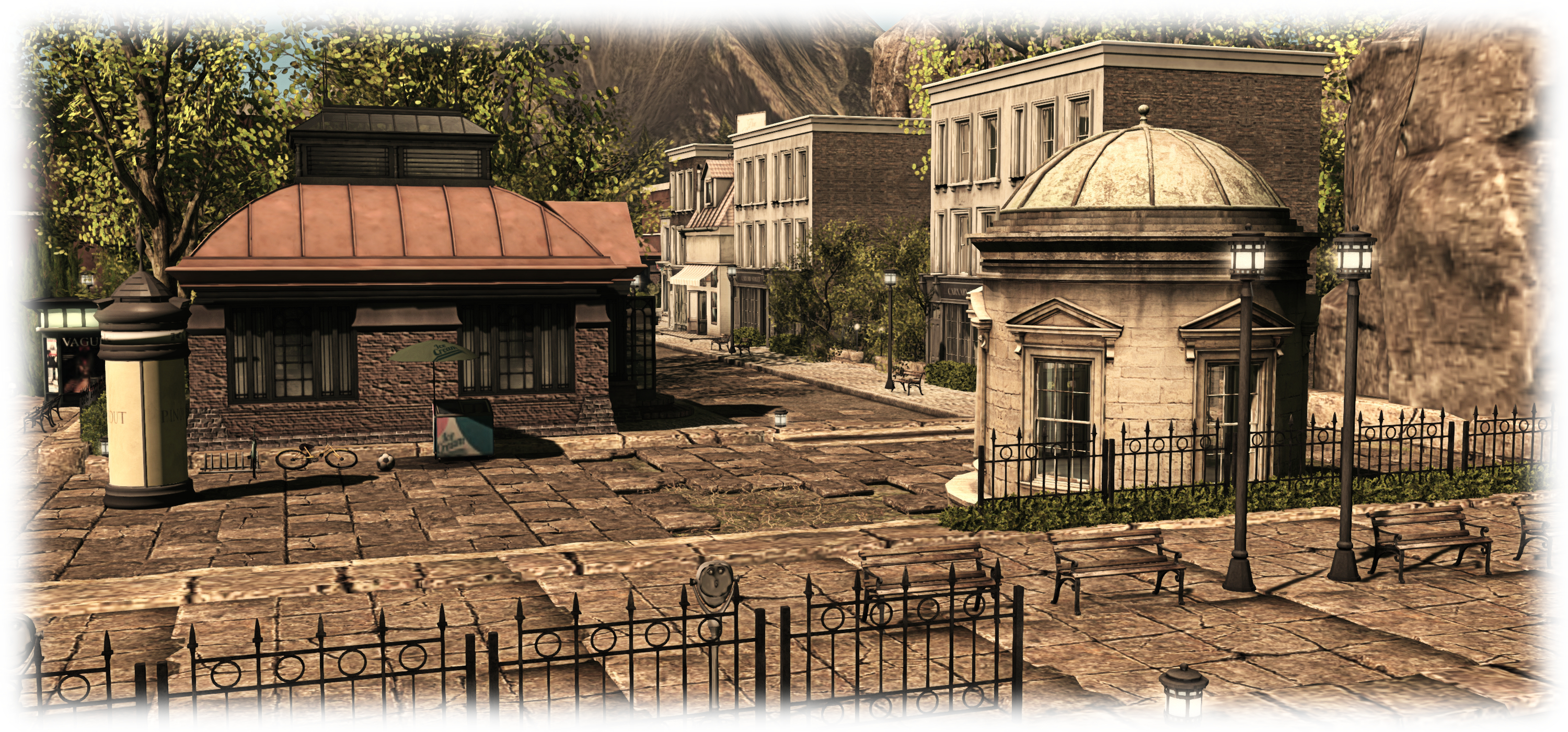
The urban section of the new design looks to be leaning towards a retail venue, many of the building appearing to offer ideal space for stores. The buildings themselves present an interesting mix of styles, giving the streets a curious and engaging feel that small parts of London, Paris and Naples have been lifted up, mixed together, and then put back down in an eye-catching bend of looks and feel.

Piony Hideout, Lions Hill; Inara Pey, March 2015, on Flickr Piony Hideout, Lions Hill (Flickr)

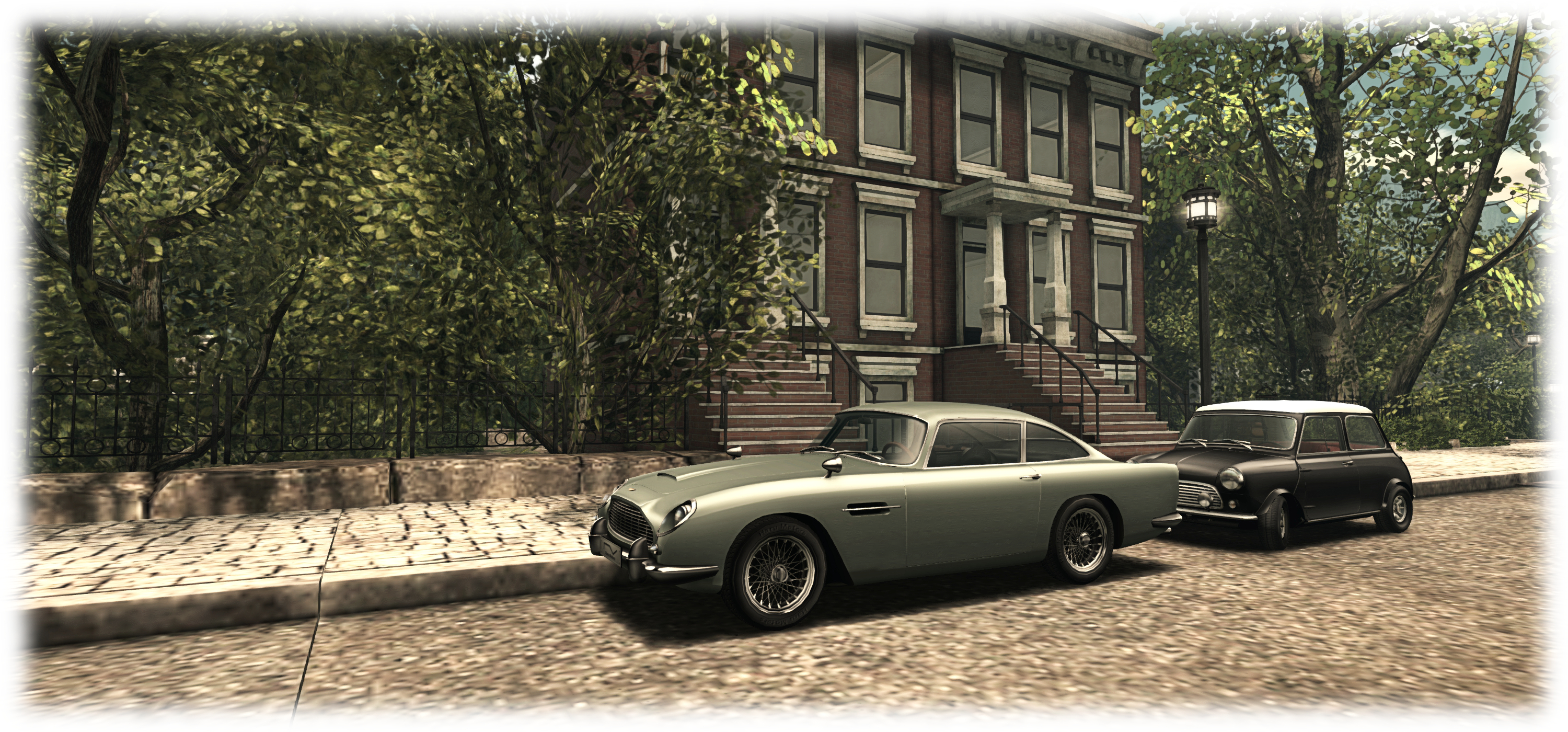
Walk down the main west / east street for example, and you might be strolling along a street in North London, with square-fronted Victorian / Georgian style houses rising from the footpath, against which are parked a little Mini Cooper and an Aston Martin, suggesting (yes, OK, colours allowing!) Charlie Croker and James Bond are in town.

Turn a couple of corners, however and you are walking a little street with a far more European look and feel, complete with Parisian newspaper / magazine kiosk, a little Vespa scooter parked alongside. Crossing the east end of the region sits a waterfront area, with stone pier complete with moored sailing boats, giving Pinoy Hideout a touch of a Mediterranean feel.

Piony Hideout, Lions Hill; Inara Pey, March 2015, on Flickr Piony Hideout, Lions Hill (Flickr)

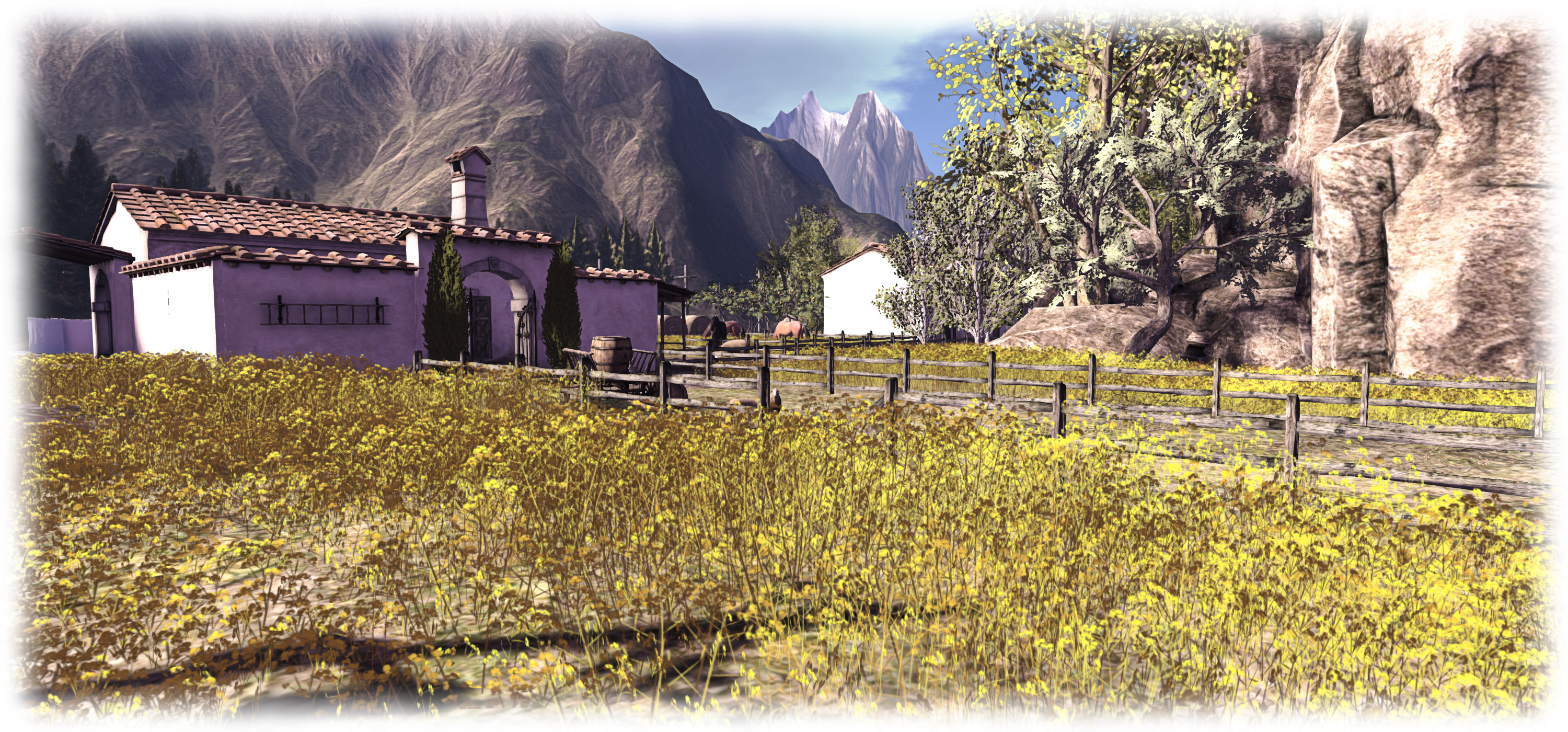
To the north and south of the region are more open spaces, rural to north, complete with farm and country church, and more park-like to the south, where sits a large wooden events barn, paved footpaths and a gazebo-shaded seating area.

Exploring the region offers up many opportunities for photography, as well as for simply sitting down and enjoying time with friends. As well as the gazebo mentioned above, there’s an outdoor cafe, park benches and assorted cuddle spots awaiting discovery, as are little paths cutting between building and the rocky plateaus which help to naturally break-up the landscape.

Piony Hideout, Lions Hill; Inara Pey, March 2015, on Flickr Piony Hideout, Lions Hill (Flickr)

I enjoyed my original visit to Pinoy Hideout back in November, it offered an interest mix of settings as well as presenting people with a lot to do. The new design retains all of the latter; but to my eye at least, presents a much more integrated look as one travels around it; there is far more of a feel of continuity of style and theme evident than perhaps was offered in the original design. This alone makes a re-visit more than worthwhile, and it’ll be interesting to see if designers and stores do take-up residence in the offered spaces, assuming they will be made available for rent, and to see what events might take place in the barn on the south side of the region.

Piony Hideout, Lions Hill; Inara Pey, March 2015, on Flickr Piony Hideout, Lions Hill (Flickr)

Related Links

Matoluta: spring 2015

Matoluta Sanctuary, Sartre; Inara Pey, March 2015, on Flickr Matoluta Sanctuary (Flickr) – click any image for full size

Mz Marville sent me a note card recently, announcing that Matoluta Sanctuary had re-opened with a new look. As regular readers will know,  the Matoluta estate has appeared a number of times in this blog, starting with its original opening back in July 2014. The focus of the estate and the community behind it is to raise awareness of the plight of the Colonial Spanish Horse on the North American continent.

These horses, perhaps more familiarly known as Spanish Mustang by some although there are in fact several strains and sub-strains, are  descendants of the original Iberian horse stock brought to America from Spain, and are one of only a very few genetically unique horse breeds worldwide.

Matoluta Sanctuary, Sartre; Inara Pey, March 2015, on Flickr Matoluta Sanctuary (Flickr) – click any image for full size

Covering the regions of Sarte and Hudhufushi, the Sanctuary has always presented visitors with an open landscape, rich is scenery and wildlife, and offering plenty of space for equine role-play. The new design, which I know Mz Marville had been putting a good many hours work into prior to the re-opening, still offers some wide open spaces for enjoying nature; however, these have been joined by a horse ranch / farm as well, presenting even more of a mix of environments and landscaping.

From the landing point, located close to the boundary of the two regions, visitors can set out to explore on foot or, if they prefer, on horseback, using the rezzer system located alongside the barn straddling both regions, and which offers a venue for live events. Of the two regions, Sartre continues to offer open spaces where horses and other animals can roam, while Hudhufushi offers the ranch / farm environment. Here can be found a large stables, which form a part of a new project Mz is working on, which I’ll likely be covering come April.

Follow the track beyond this, and you’ll come to a field where tractors are ploughing, crops are growing and, across the furrows, another barn stands, offering shelter for pigs and cattle. Above this, atop a low plateau, sits an orchard where apples are waiting to be picked.

Matoluta Sanctuary, Sartre; Inara Pey, March 2015, on Flickr Matoluta Sanctuary (Flickr) – click any image for full size

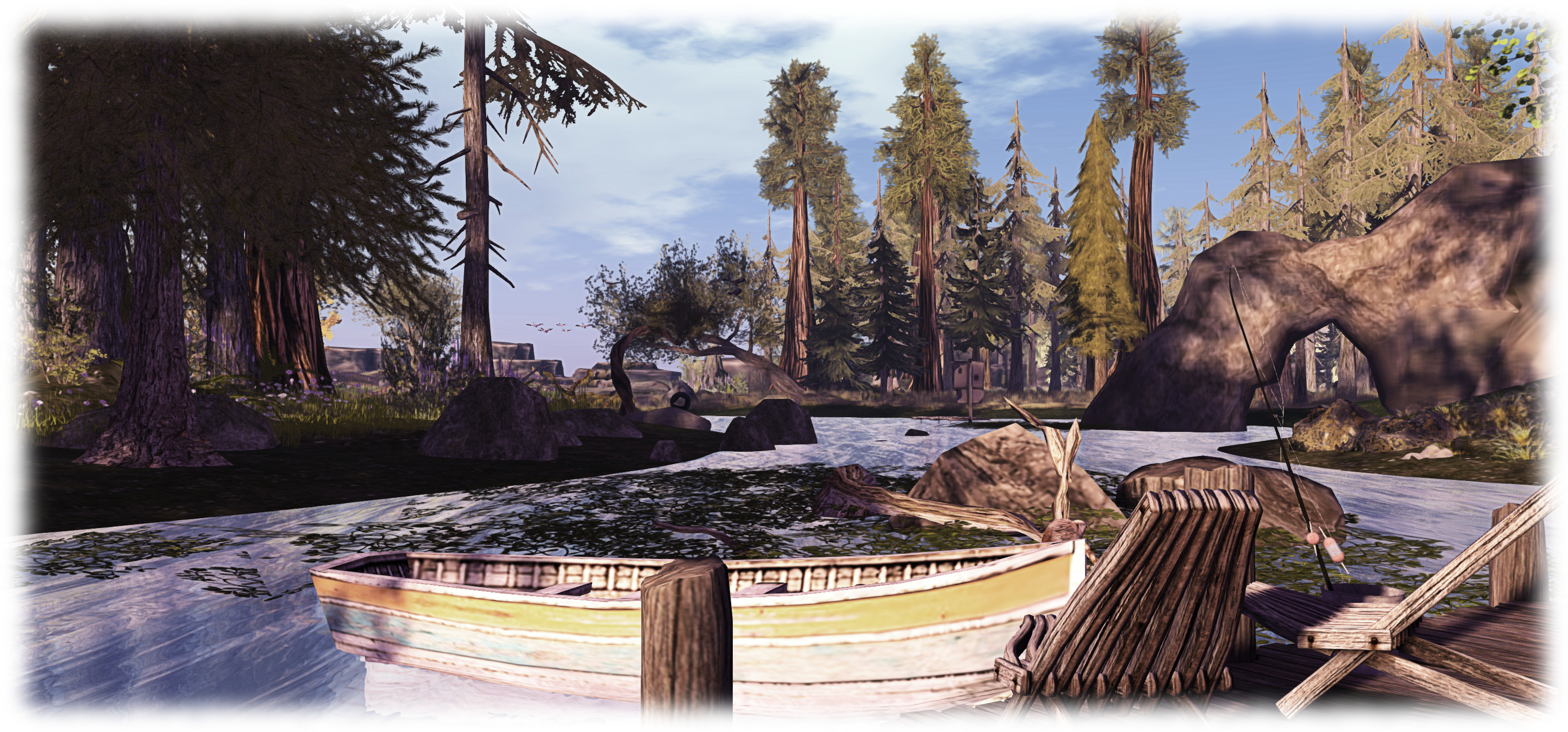
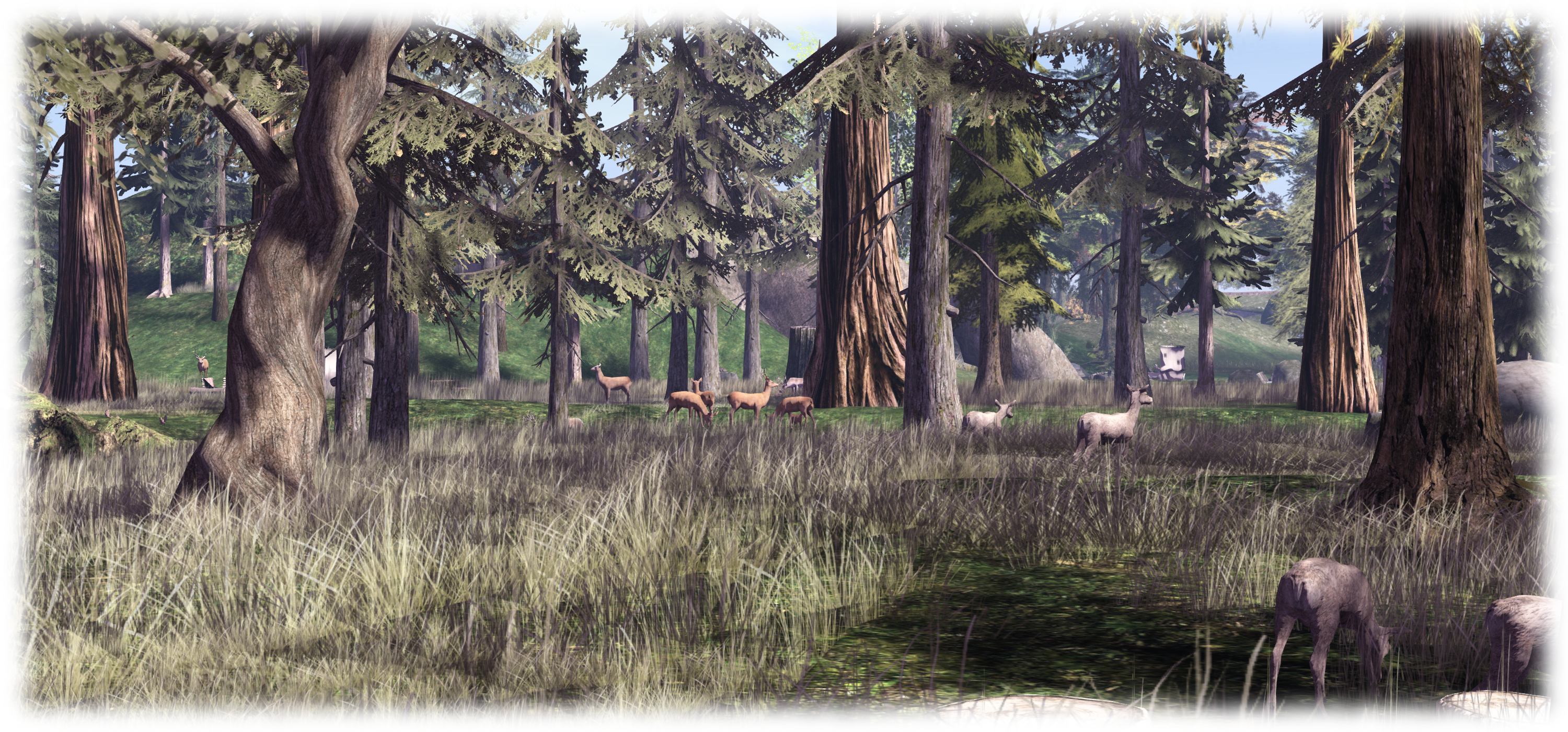
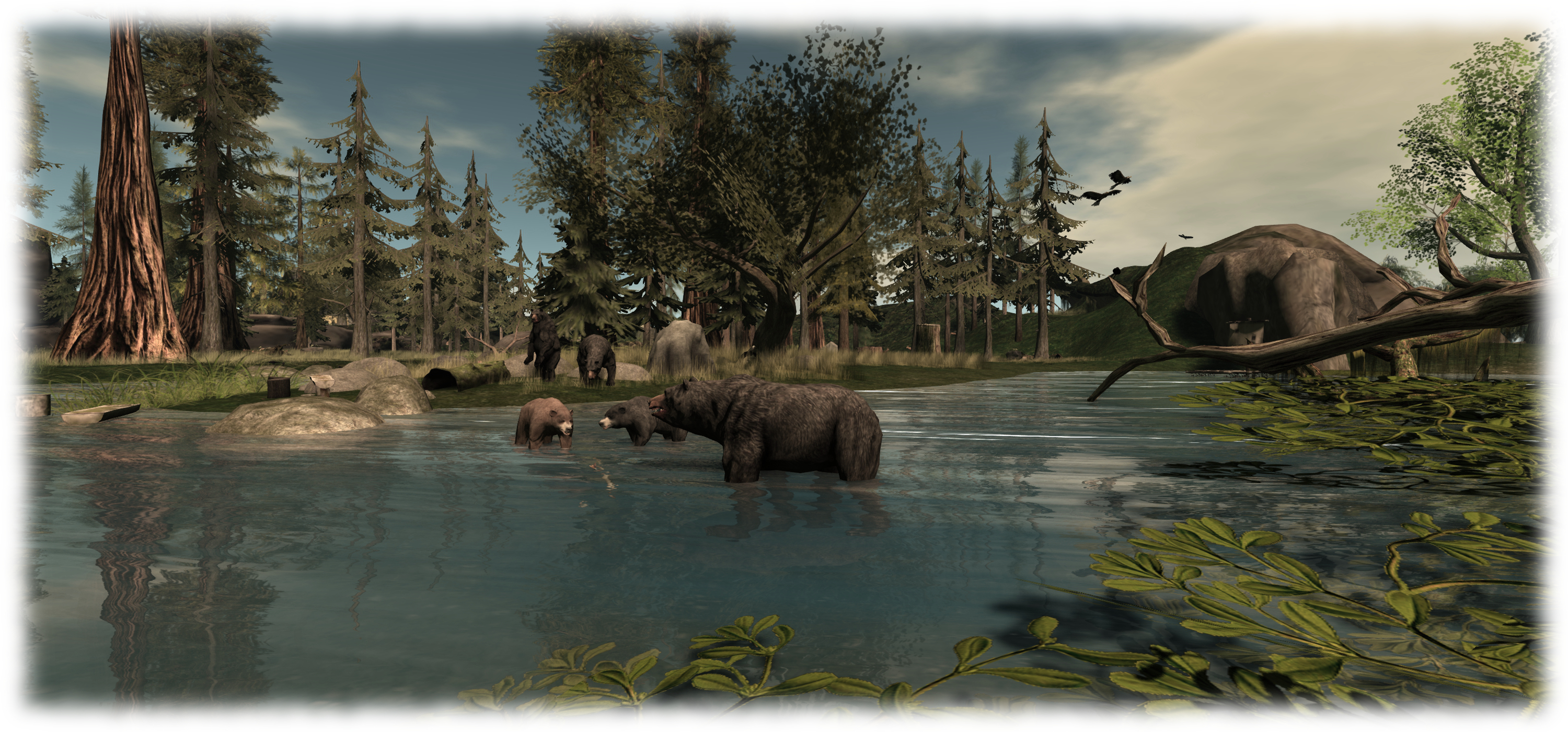
Around to the north-east of Hudhufushi, the land become wilder, blending into Sartre’s landscape of grasslands, winding rivers, tall trees and rugged, rocky outcrops; a place where deer roam, sheep graze, bears fish and eagles soar; thus many of Matoluta’s familiar motifs can be found, but located in a new environment. There is a private home located in the south-east corner of Sartre, but otherwise the entire region is, like Hudhufushi, free to roam.

Throughout both regions there as numerous places to sit and relax – camp sites, tree houses, and so on, and plenty of opportunities for photography, including posed selfies in a hot air balloon or astride a pack-laden horse. Those who aren’t so keen on getting around on horseback can find a bicycle rezzer at the edge of the track in Hudhufushi, and can thus pedal their way around places.

Matoluta Sanctuary, Sartre; Inara Pey, March 2015, on Flickr Matoluta Sanctuary (Flickr) – click any image for full size

To mark Matoluta’s re-opening, a photo contest is once again being run, although time is growing short for entries – all of which must have been received by April 1st.  On offer are three prizes of L$750 apiece. Thus wishing to enter should submit up to two photos of the Matoluta regions to the Matoluta Flickr group. The photos must have the region SLurl in their descriptions, but that’s the only requirement. Pictures can be landscape or portraits, although entrants are encouraged to display a love for nature and focus on awareness for the preservation of wild horses.

Related Links