Return to a City Inside Out in Second Life

City Inside Out Phase II: "Stories"
City Inside Out Phase II: “Stories” – LEA 20

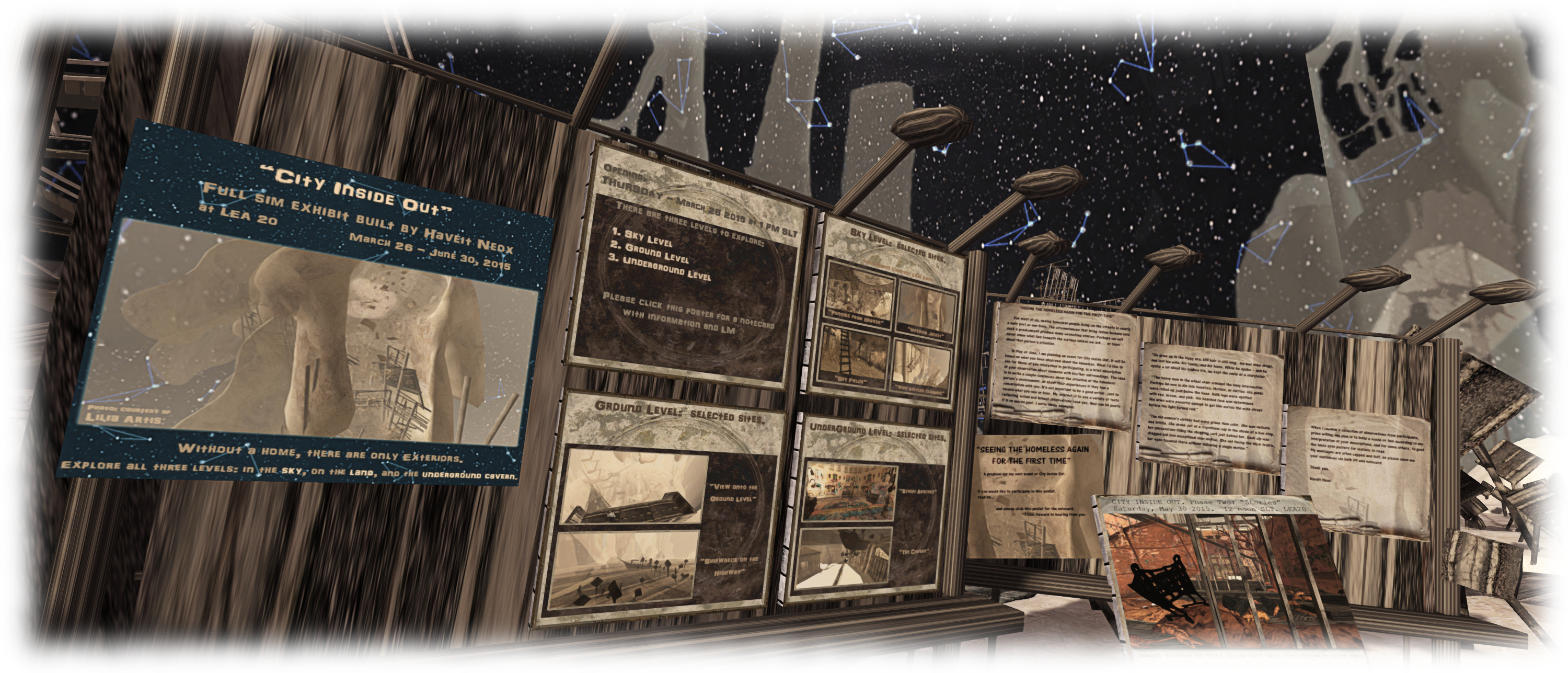
In March I wrote about Haveit Neox’s visually stunning City Inside Out, a full-region installation at LEA 20, which is displayed as a part of the 8th round of the Artist In Residence series.

On Saturday, May 30th, a new element in the installation, City Inside Out Phase II: “Stories” opened, and takes the visitor down under Haveit’s remarkable cityscape, where stories await.
City Inside Out Phase II: "Stories"
City Inside Out Phase II: “Stories” – LEA 20

To briefly recap on the original build, as per my initial post about it:

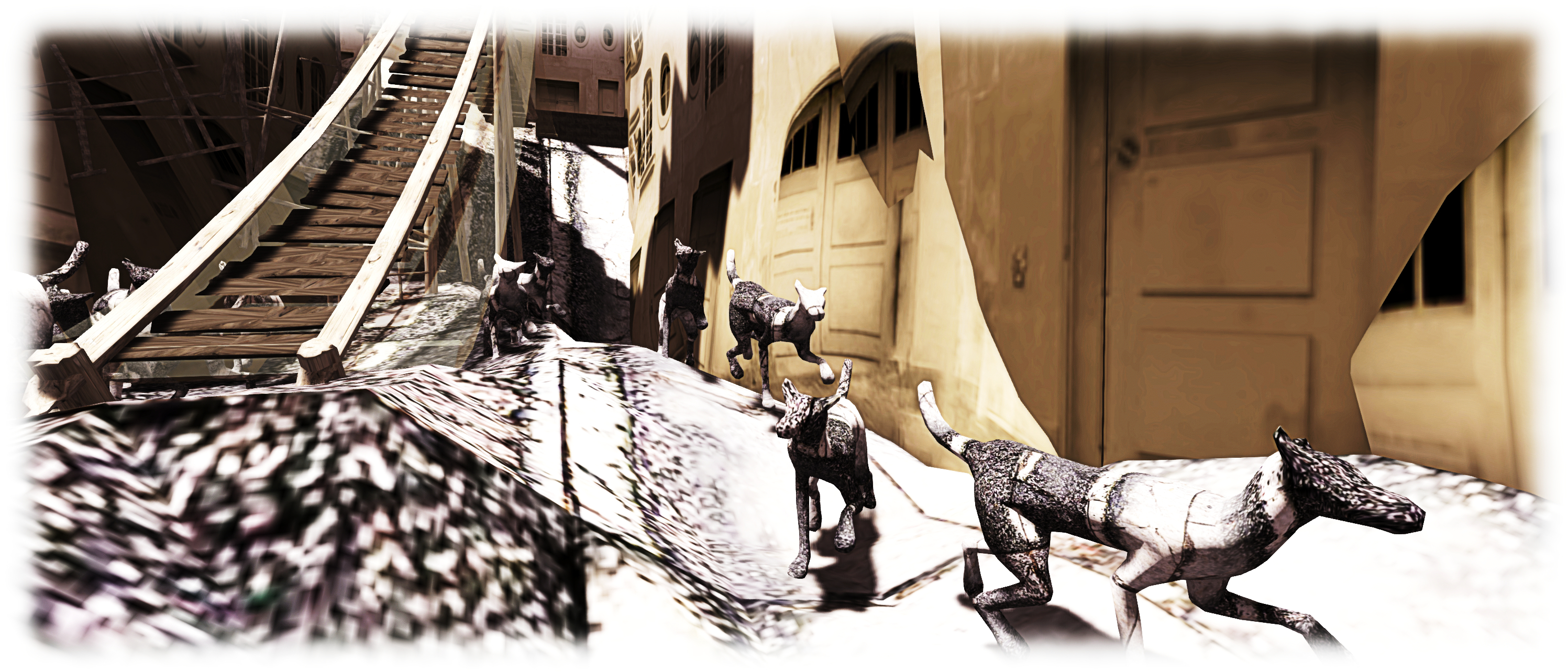
This is a city we’re asked to see through the eyes of the homeless, the dispossessed; those who have nowhere to be, nowhere to go. For these people, the city is a very different place to the one we know. It’s a place where everything is strange, alien, and threatening. A place bad enough in daylight, but as Haevit further explains, becomes much, much worse at night…

As I noted at the time, this premise of seeing a city somewhat in reverse, as a homeless person, makes for a remarkable  – and is some places uncomfortable – place, where nothing is quite as it seems, be it the had offering money or the man walking his dog; threats real or imagined and spurred by fears and a sense of separation, can be found everywhere…

City Inside Out Phase II: "Stories"
City Inside Out Phase II: “Stories” – LEA 20

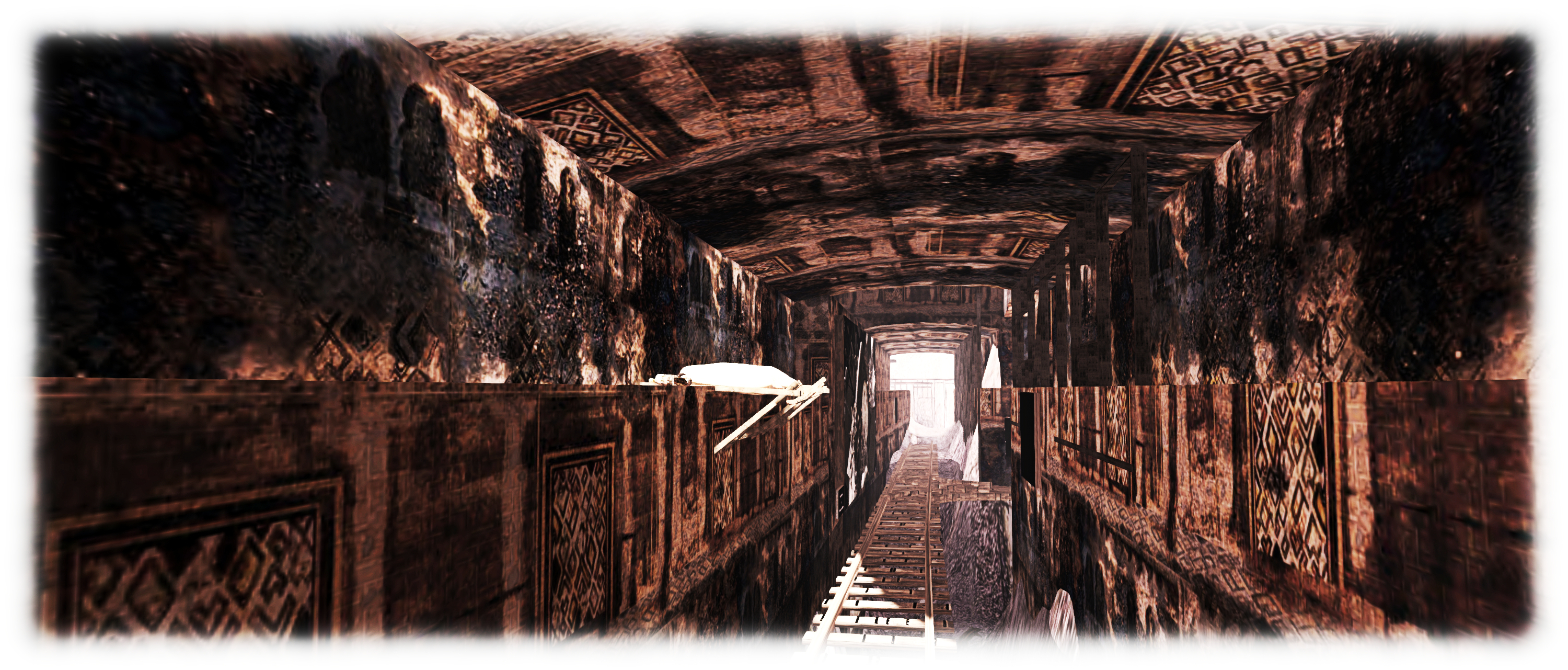
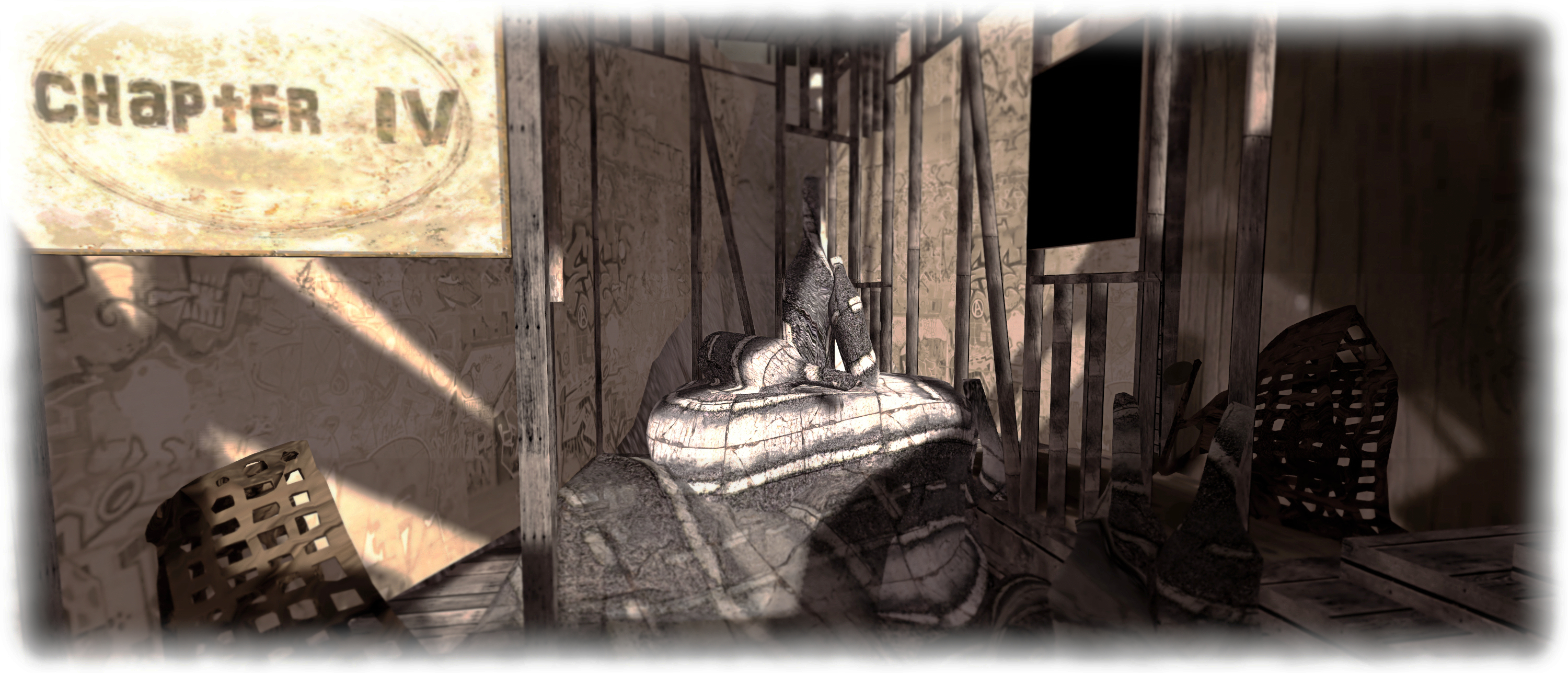
With Phase 2 of the build Haveit incorporates a series of short stories written by other Second Life residents on the subject of homelessness in the physical world as they perceive it. These  are laid-out in an underground labyrinth sitting beneath the lowest level of the main build, and are arranged as a series of seven chapters reached by following subterranean paths.

There are a number of different entry points to these paths – simply walk onto one of the moving roadways and follow it, and you will drop into the underground world. However, to follow the chapters roughly in order, the best point to start is to walk to the dual carriageway that lies just behind the landing point information boards, and follow it eastwards. It ends in a slice in the ground that will lead you down to Chapter 1, which sits directly under the roads. Do note, however, that the route through the chapters from 1 to 2 to 3, etc., isn’t necessarily linear; spurs and turns can lead you through the middle chapters in different ways, depending on the route you take.
City Inside Out Phase II: Stories
City Inside Out Phase II: Stories – LEA 20

The paths also provide a hint of narrative as well the the story boards located along them. As you walk through them they change from a trench-like cutting to what could be long-abandoned mine workings or the underground vital intestines that keep a city alive,  through to vast subterranean chambers suggestive of a city that has built over itself time and again, burying or hiding its past from view – just as we so easily can blot the homeless around us from our view.

This is a fascinating addition to what was already a brilliant installation, both in terms of the build and the stories it contains. It is also one in which you can play a role; Haveit is still accepting pieces on the subject of homelessness, and will add them to boards throughout the underground world as they are submitted. Simply send him your words via note card together with an IM notifying him you have sent something. Additions to the narrative will continue through until June 25th, and both phases of City Inside Out will remain open until June 30th.

If you haven’t already visited, I urge you to do so; and if you have been before, do make sure of a return visit and walk the underground paths.
City Inside Out
City Inside Out Phase II “Stories” – LEA 20

SLurl Details

Wine and Checkmate in Second Life

The Vineyard, Checkmate; Inara Pey, May 2015, on Flickr The Vineyard, Checkmate (Flickr)

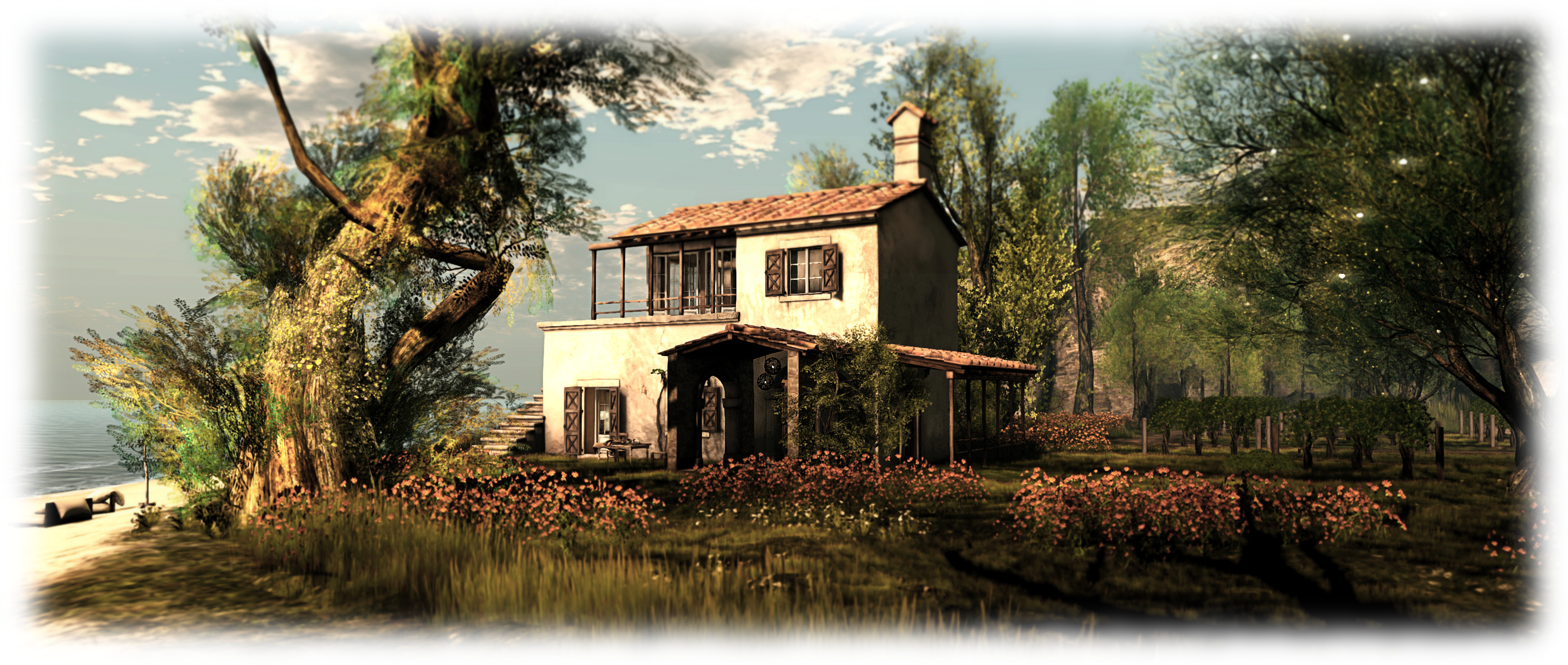
Checkmate is the homestead region designed by Amae Moriarty which is, without a shadow of a doubt, one of the most breathtaking places in Second Life I’ve yet visited. I first came across it as a result of seeing Goizane Latzo’s photos on Bitacora Vajera about a week ago, and they promoted me to hop over and have a look – only to bump into Ziki Questi, who had  the same idea!

The region description sums the place up perfectly, “a rambling vineyard enveloped by a hazy sky. Wander through the grapes as they soak up the sun, producing the best vintage of pixel wine on the grid” – or to put it another way, a beautifully crafted island that offers visitors a lot to see and enjoy, with rich scenery and plenty of opportunities for photographs, and for cuddles and chats.

The Vineyard, Checkmate; Inara Pey, May 2015, on Flickr The Vineyard, Checkmate (Flickr)

The arrival point sits above the vineyards atop a plateau to the south, on one of a number of rocky uprisings – which, in difference to the rest of the region, is partially awash in a very local shower of rain, making a pond of the landing point. Fortunately, it’s only a short walk to get out of the rain, although which direction you take is up to you;  I’d suggest heading a little northwards, and up to the edge of the cliff and a commanding view over the vineyards in the valley below.

For those who wish to climb a little higher, a set of stone steps leads the way to an old Edwardian folly and a view out to sea past the lighthouse. however, to get down to the vineyards, one must follow the switchback path down the side of the cliffs to the valley below.

The Vineyard, Checkmate; Inara Pey, May 2015, on Flickr The Vineyard, Checkmate (Flickr)

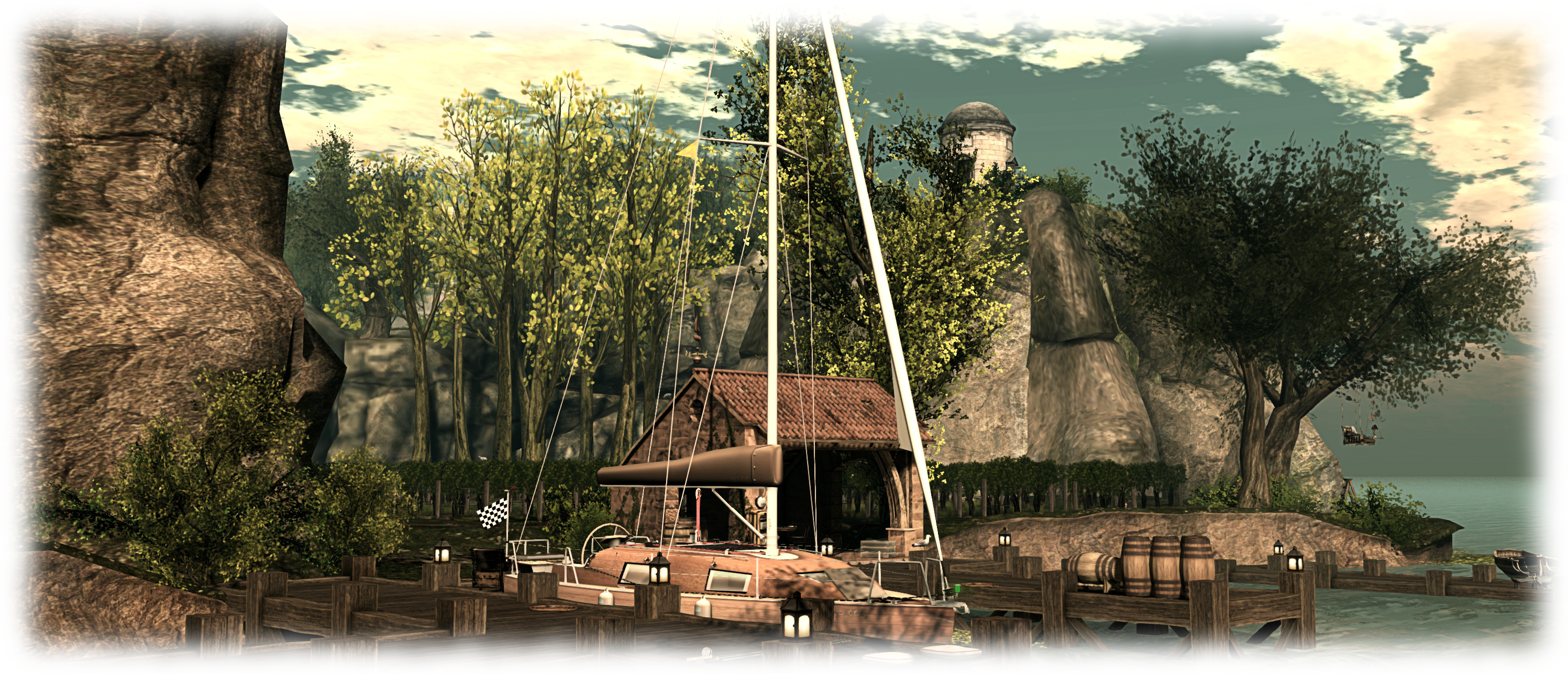
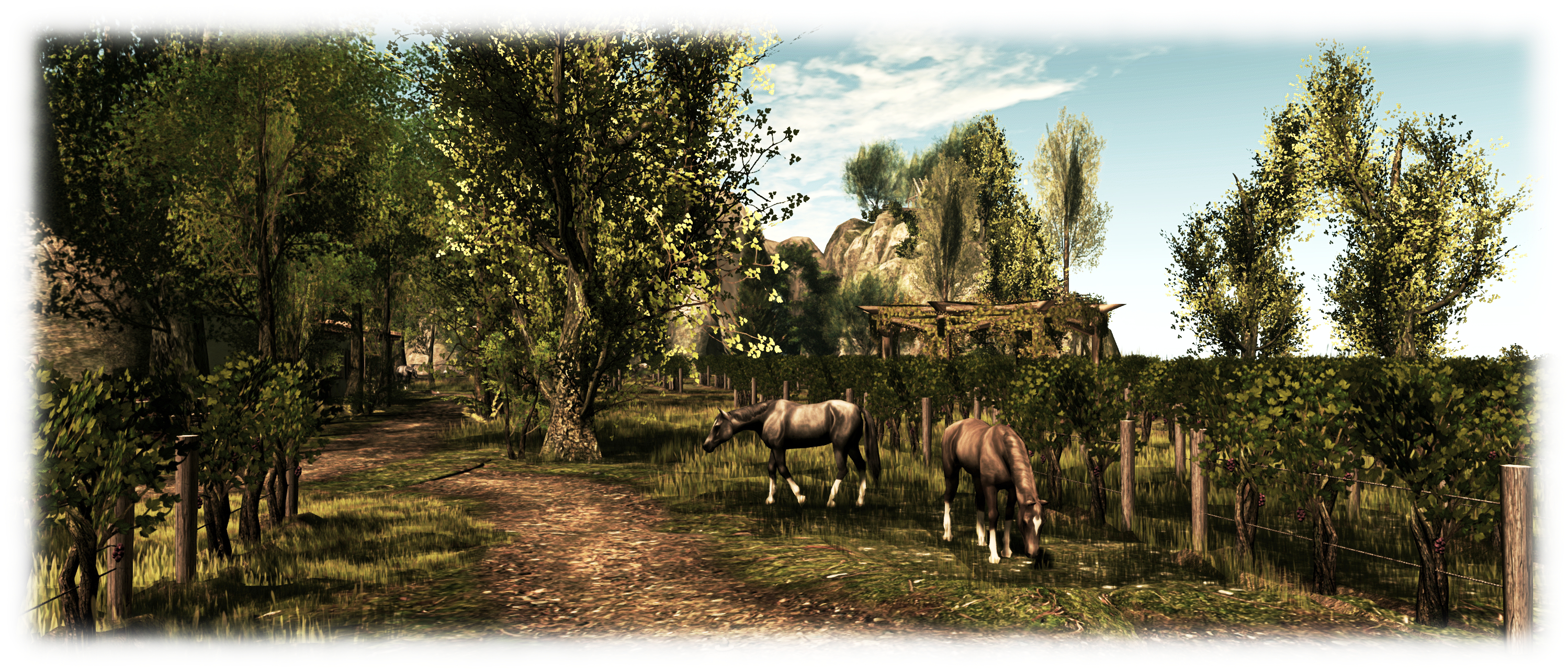
Here sit tidy rows of vines, heavy with lush red grapes ready for picking. Going on the scale of the operation, this looks to be a family operated business, specialising in reds. They clearly enjoy visitors – alongside the vines sits a square pergola where guests can sample the wine with cheese and meat slices while playing a memory game; further tastings can be had in the winery itself. A rounded pergola sitting amidst the vines suggests the folk here enjoy a good end-of-day dance and music, while in a small bay, protected by a beachy headland sits a dock and a Loonetta 31, ready for those days off and trips out into the opens waters.

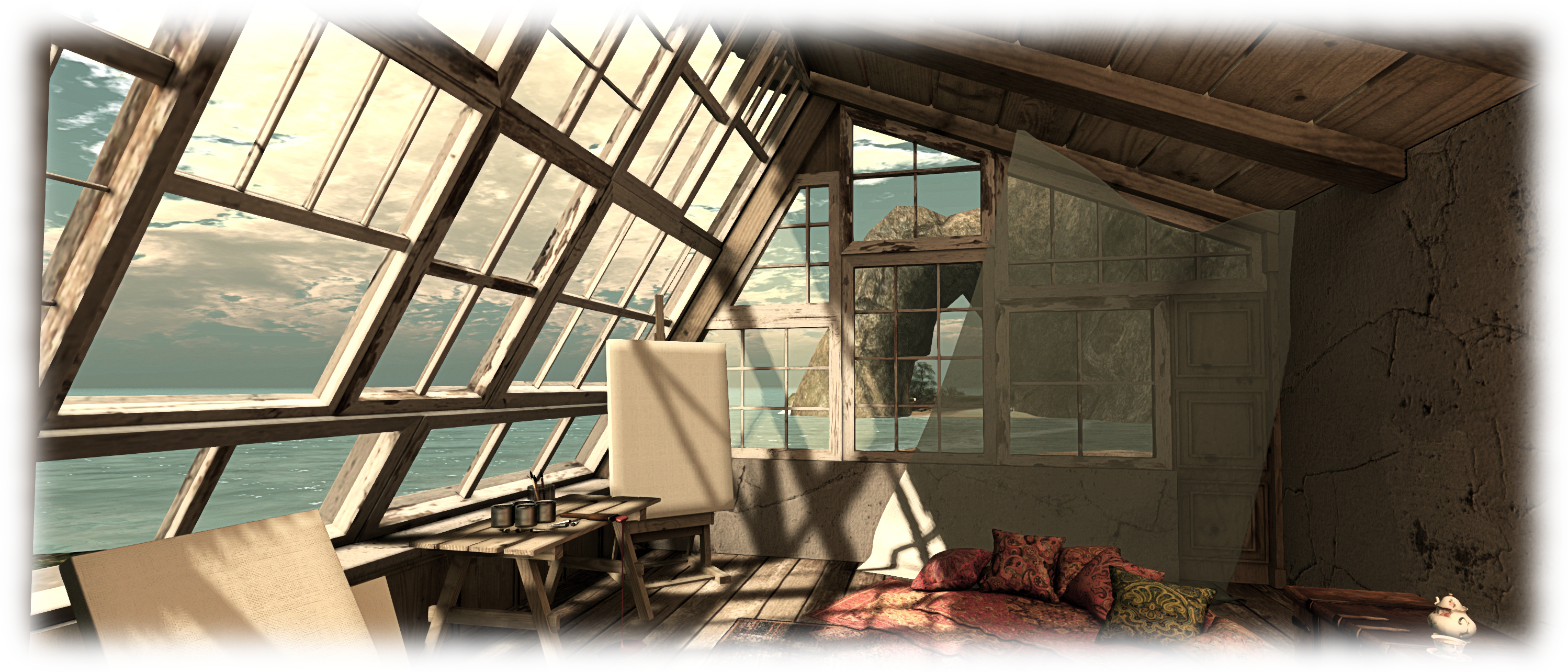
Footpaths pass around the island, providing an easy means to explore, encompassing as they do the local house with its own beach. In fact, beaches are aplenty here, each of them nicely situated to offer those using them a degree of privacy one from another as they sit and chat. My favourite sits at the end of a path turning between the tall rocky cliffs, where an old garden atelier sits on the rocky edge of a beach, and which has been converted for comfortable uses and pastimes, such as painting.

The Vineyard, Checkmate; Inara Pey, May 2015, on Flickr The Vineyard, Checkmate (Flickr)

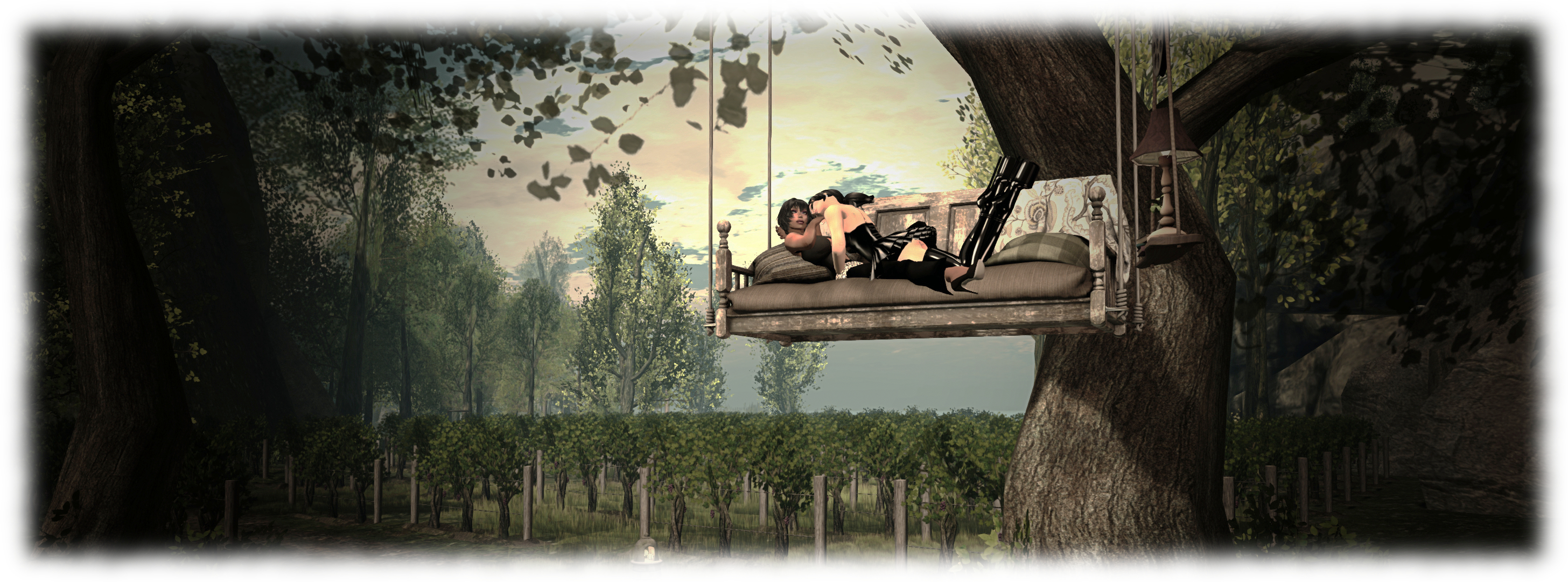
Throughout the region there are plenty of places to simply sit and relax, be it in a seafront cuddle space such as the atelier or the little cabin nestled under the cliffs, or sitting from a bough-hanging bench swing for two. For those who like to hike, the plateau to the  north-east offers a hot tub to make the wake even more worthwhile, the cosy fireplace in the old converted greenhouse nearby presenting a place for warm, after-tub chats in old, comforting armchairs, or the opportunity to catch-up on some reading.

Such is the delight and design of Checkmate, it seems that where ever you go whenever you visit, there is a new charm waiting to surprise you. For the romantics, for the explorers, for the photographers, the is a place that offers so much; so don’t be surprised if you find yourself tarrying a lot longer than you’d anticipated when paying a visit.

The Vineyard, Checkmate; Inara Pey, May 2015, on Flickr The Vineyard, Checkmate (Flickr)

And the wine? Most assuredly the best pixel vintage available on the grid!

SLurl Details

The independent author whose muse is Second Life

Maxwell Grantly is a non de plume for an anonymous school teacher, living in a small seaside town on the east coast of Great Britain. Although he has written many free short stories, he does not consider himself an author. He simply writes just because he enjoys doing so (and for no other reason.)

So reads the Profile summary of, well, Maxwell Grantly, a Second Life resident living in England, and who has a remarkable talent for creating illustrated short stories and graphic novels using Second Life as the environment to create his main character and the medium by which he creates the illustrations for his stories.

Timothy tortoise finds himself in an alternate universe when he unwittingly embarks on a Big Adventure

I confess that Maxwell’s work had actually slipped right past me, and quite possibly might have remained out-of-sight to me had it not been for Charlie Namiboo circulating information on his latest book, Timothy’s Big Adventure which is currently available free-of-charge for 5 days on Amazon for download on the Kindle reader or similar devices, and computers with the Kindle Reader app installed.

The book follows the adventures of Timothy tortoise, who lives with a little boy called George, who lives with his parents in a small house “many miles from anywhere” (photographed in Frisland) and is too young to go to school. Timothy is somewhat envious of George’s fast-paced and, to Timothy’s way of thinking, exciting life. However, all that changes when Timothy falls through a hole and finds himself in an intergalactic adventure in another universe.

Timothy’s Big Adventure is the kind of short story which harkens back to childhood memories of bedtime stories; indeed, the book itself makes excellent material for such a setting if you have small children of your own. The plot is uncomplicated, easy-to-follow and the illustrations, created using characters and settings from inside Second Life, are delightful.

As well as Timothy’s Big Adventure,  Maxwell has written longer, more complex pieces, such as his Fingers stories, set in New Babbage, which follow the adventures of a young pick-pocket, Edward “Fingers” Croydon, abandoned to the streets of that town whilst very young.

Maxwell admits that he doesn’t actually write first and foremost with children in mind; his stories take a form that he is prone to enjoy, and he views some of the concepts then can enfold as being perhaps more suitable to older children and perhaps adults, rather than being purely for bedside story enjoyment – although he does acknowledge that this is those with younger children might well enjoy reading them to their kids.

As well as telling stories of adventures and intrigue, Maxwell’s books also touch  – albeit perhaps in a very subtle manner – on what might be terms social issues from the periods in which they are set. The Fingers stories, for example, deal with matters of Victorian street urchins and how social care was more a matter for philanthropists (real or apparent) rather than the state.

Likewise, Jack and the Space Pirates touches on child labour: the story’s hero is Jack, is employed to “creep into the tiny gaps gape between the timbers” of space ships to apply the tar need to keep “space out” – a job which sounds akin to the Victorian use of children as chimney sweeps because of the ability to worm their way up flues, or in earlier times, to clean out the spaces behind tightly-packed spinning jennies at the start of the industrial era. Sprocket and the Sparrow carries a more obvious message on the importance of conservation, but it is one that is again imaginatively told.

Some of Maxwell's titles available through Amazon as e-books
Some of Maxwell’s titles available through Amazon as e-books

Again, this is not a deliberate approach on Maxwell’s part; but it does form a natural element in his creative process, as he explained in a recent interview with Writing.com.

“When I write, I just want to tell a good story,” he said. “I feel that it is a basic feature of every human being to be creative. Some people find their creativity in their hobbies, art, dance, music; other people find a release for their creative spirit by consuming the creativity of others. I find that the production of stories is a great release that allows me to be creative, simply for the joy of doing so. Sometimes a fable or lesson might arise naturally from the plot but, when it does, it is often unintentional. I would like to think that, when a reader browses through my work, they are able to enter a magical world of suspended belief and join me in my bizarre world of fantasy, if only for a brief moment.”

Lief's Quest
Leif’s Quest

Another aspect to the appeal with these books  is the care with which the illustrations have been composed; facial expressions have been deliberately selected, for example, to help give even passing characters their own personality – and I admit to smiling at both the astronaut’s expression and choice of words “Yikes!” on being confronted by the lizard aliens!

There’s also a richness to Maxwell’s use of genres; while the Fingers series and Jack are most assuredly Steampunk in setting, his stories involving the elven children Maxwell and Skippy are equally assuredly rooted in fantasy, as is Leif’s Quest, which also has more of a graphic novel look to it.

While the scenes depicted in the stories are located in Second Life, encompassing places as diverse as Frisland, Calas Galadhon, Escapades (and one of Loki Eliot’s magnificent steam-powered airships is Jack’s rewards in Jack And the Space Pirates), New Babbage and other locations, it would be a mistake to say the stories are about Second Life – and it shouldn’t be for a moment considered that they are. Again, that’s not Maxwell’s intent.

Instead, what we do have is another example of how rich and diverse a place Second Life can be when it comes to inspiring our imaginations and for acting as a springboard for our creativity. These are imaginative stories, and I found myself getting drawn into them as I read them in turn.

If you have young(ish) children of your own and are looking for a range of bedtime stories with which to entertain them, or if you want to read adventures of a different kind, I have no hesitation in recommending Maxwell Grantly’s books. They are available on Amazon worldwide – just search for “Maxwell Grantly”, and are offered as e-books on either the Kindle PC app or via the Kindle Cloud.

Additional Links

Ego as art in Second Life

Ego - Being Your Own Muse
Ego – Being Your Own Muse

Saturday, May 23rd, saw the opening of a new exhibition at the CBK Art Gallery, operated by Ceakay (CK) Ballyhoo. I was sadly unable to attend the event due to other commitments, so hopped over at the start of the week to have a look at the exhibition.

Ego – Being Your Own Muse features the work of a number of SL artists, who were all challenged to offer images featuring themselves as the models / subjects – hence the title of the exhibit. The participating artists are Whimsical Aristocrat, Seductive Dreamscape, AngelinaKnox, Coober Galicia, Daallee and Owl Dragonash of The Living Room fame, and CK herself.

Ego - Being Your Own Muse - Coober Gallicia
Ego – Being Your Own Muse – Coober Galicia

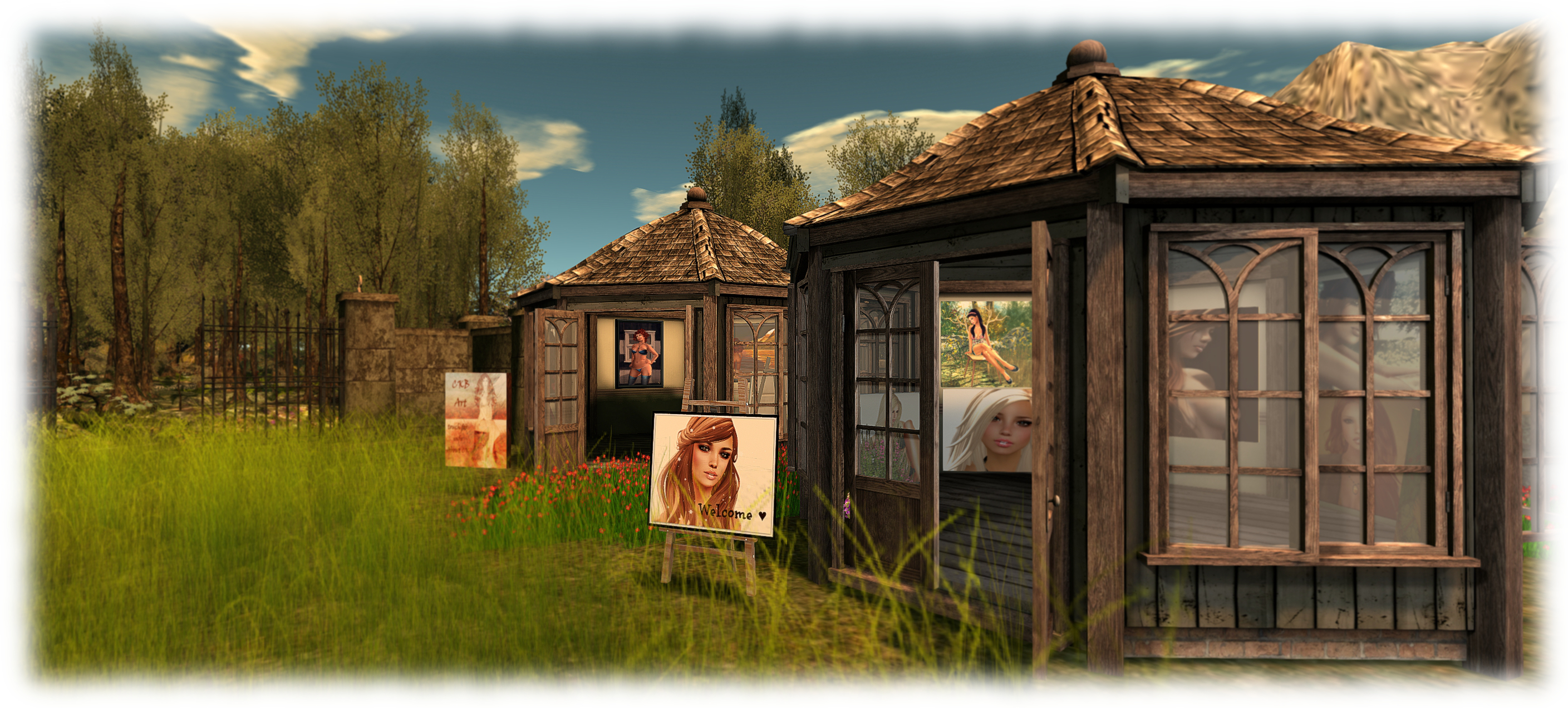
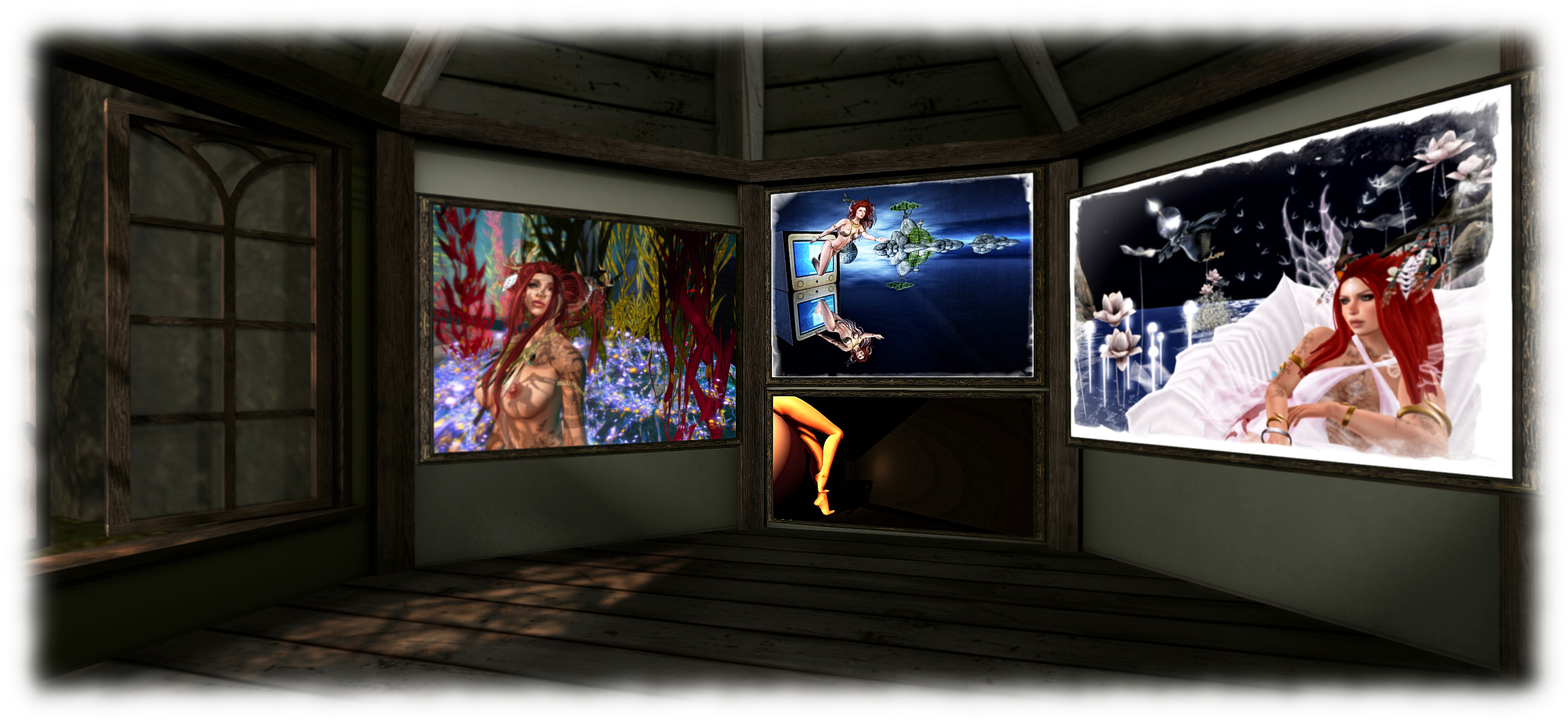
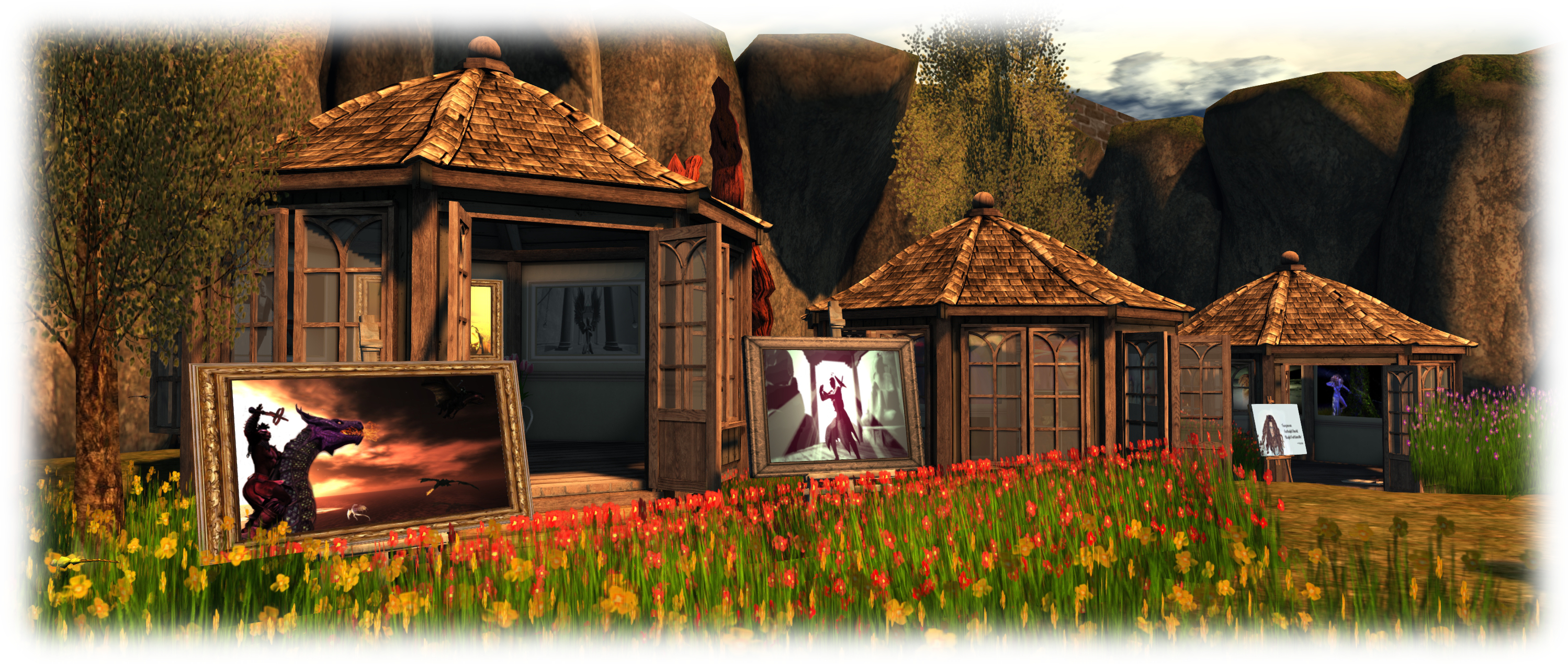
The resulting works are all offered for display in a garden-like environment, with each artist having his or her own summer house in which their pictures are displayed. This not only gives an inviting and relaxed environment for the exhibition as one wanders through the garden under a suitable windlight setting, it also means that each artist’s works can be studied without the temptation to directly compare one artist with another by checking back and forth and getting caught up in technique, approach, etc.

As a result of this, the visitor is free to focus on how each artists views their own avatar; and it is surprising as to just how much can be revealed through the images that are offered. While little in the way of criteria was offered, other than asking the artists to use themselves as their model / inspirations, it is interesting as to the number of nude / semi-nude pictures are are offered (which make this exhibit perhaps a little NSFW, although all the pieces are very artistic in nature).

Ego - Being Your Own Muse - Owl Dragonash
Ego – Being Your Own Muse – Owl Dragonash

I commented on this to CK, who replied, “Well, I think most people in here like the way they have shaped their own bodies, and they’re best to be viewed naked. I myself am very keen on how my ass looks for example!”

That is a fair and accurate assessment. In many respects our avatars can be a huge statement of self and self-image, and we often do invest considerable time, effort and money in how they look, so why not show them at nature’s best. There’s also something strongly emotional about nude and semi-nude images which can express far more than might be the case were the model to be fully clothed, and this is also captured within the images on display here.

Ego - Being Your Own Muse
Ego – Being Your Own Muse

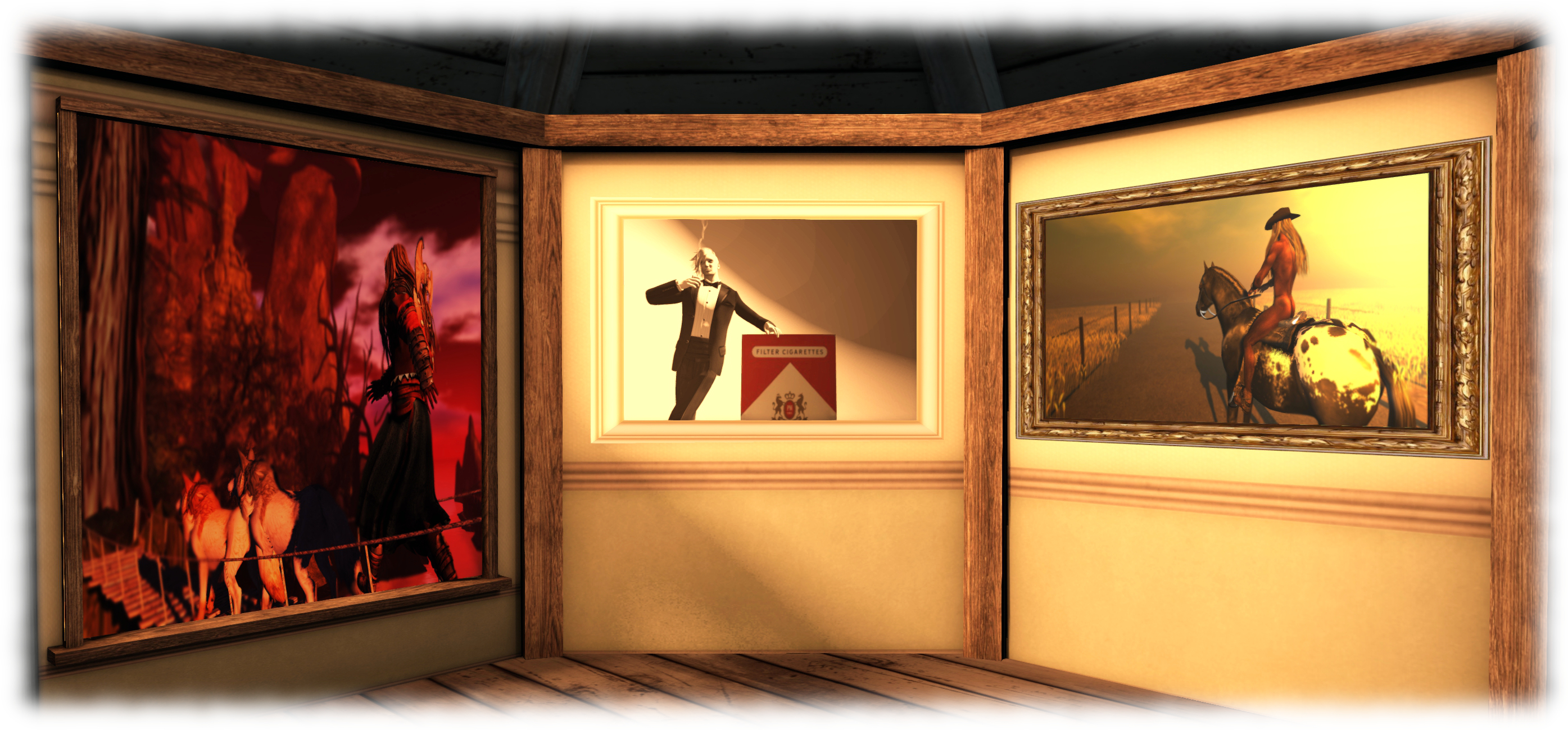
Which is not to say all the pictures figure nudes; far from it. Coober Galicia, the only male artist in the exhibition, for example, presents a series of powerful, character-driven images (even if one is admittedly sitting nude in the saddle 🙂 ), which I found myself especially drawn to; while Owl’s images display her delightful whimsy and outgoing nature.

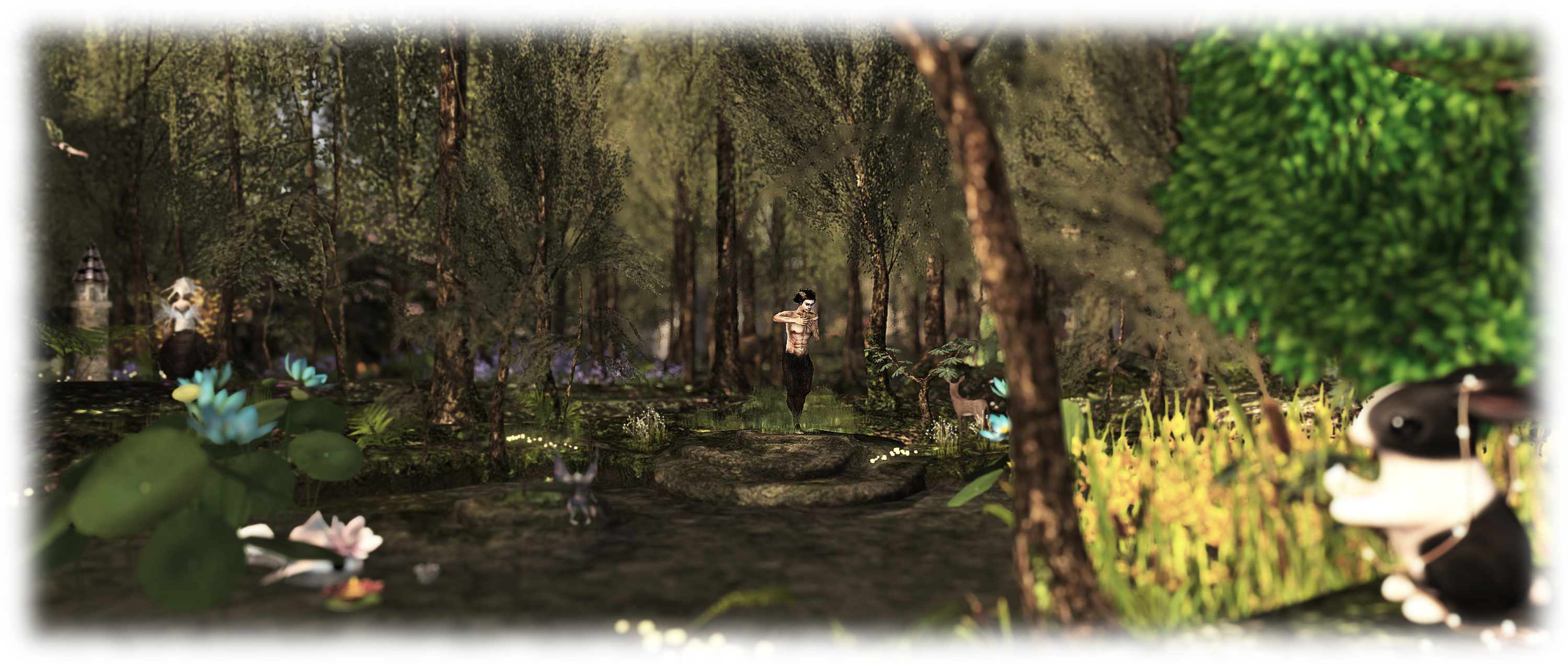
All told, a charming and worth seeing exhibition that will be open through until the end of June. When visiting, do remember to take a walk through the gates on one side of the gallery area and explore the wonderful Mistwood Isle woods CK has created, or take a ride on a floating dandelion seed!

Additional Links

Mistwood Isle woods
Mistwood Isle woods – through the gates from the gallery space

Into the Abyss and beyond: exploring our world

The Abyss Observatory

For the last several years, The Abyss Observatory has been a collaborative project formulated by the Japan Agency for Marine-Earth Science and Technology (JAMSTEC) and involving the support of a number of organisations including the National Oceanographic and Atmospheric Administration (NOAA), who host the core elements of Abyss Observatory, the Open University in the UK, and the Digital Hollywood University, Tokyo.

At the start of May, Vick Forcella nudged me about Abyss, and the fact that it will be going offline in early June. I actually hopped over to have a look around then, but it has taken me a while to get this article sorted and written. My apologies to Vick and to the organisers of the Abyss that this has been the case.

The Calypso at the Abyss Observatory

The Observatory grew out of work initially started as the Abyss Museum of Ocean Science, which closed in May 2009, and two follow-on projects. The first of these projects was Vi and Yan’s Undersea Lab, founded by the current co-creator of The Abyss Observatory (August 2009), Yan Lauria from JAMSTEC, and Vianka Scorfield, one of the creators of the exhibits at the Observatory; the second project was the Ocean Observation Museum (November 2009), which saw Rezago Kokorin, one of the creators of the original Abyss museum join the team as co-curator, and Comet Morigi join as Artistic Advisor.

The focus of the Observatory is presenting information on Earth sciences in an immersive, informative manner. As such, it covers multiple levels, extended both under the water and into the skies overhead and is also linked to a number of “external” regions, including a related Earth studies facility located at Farwell.

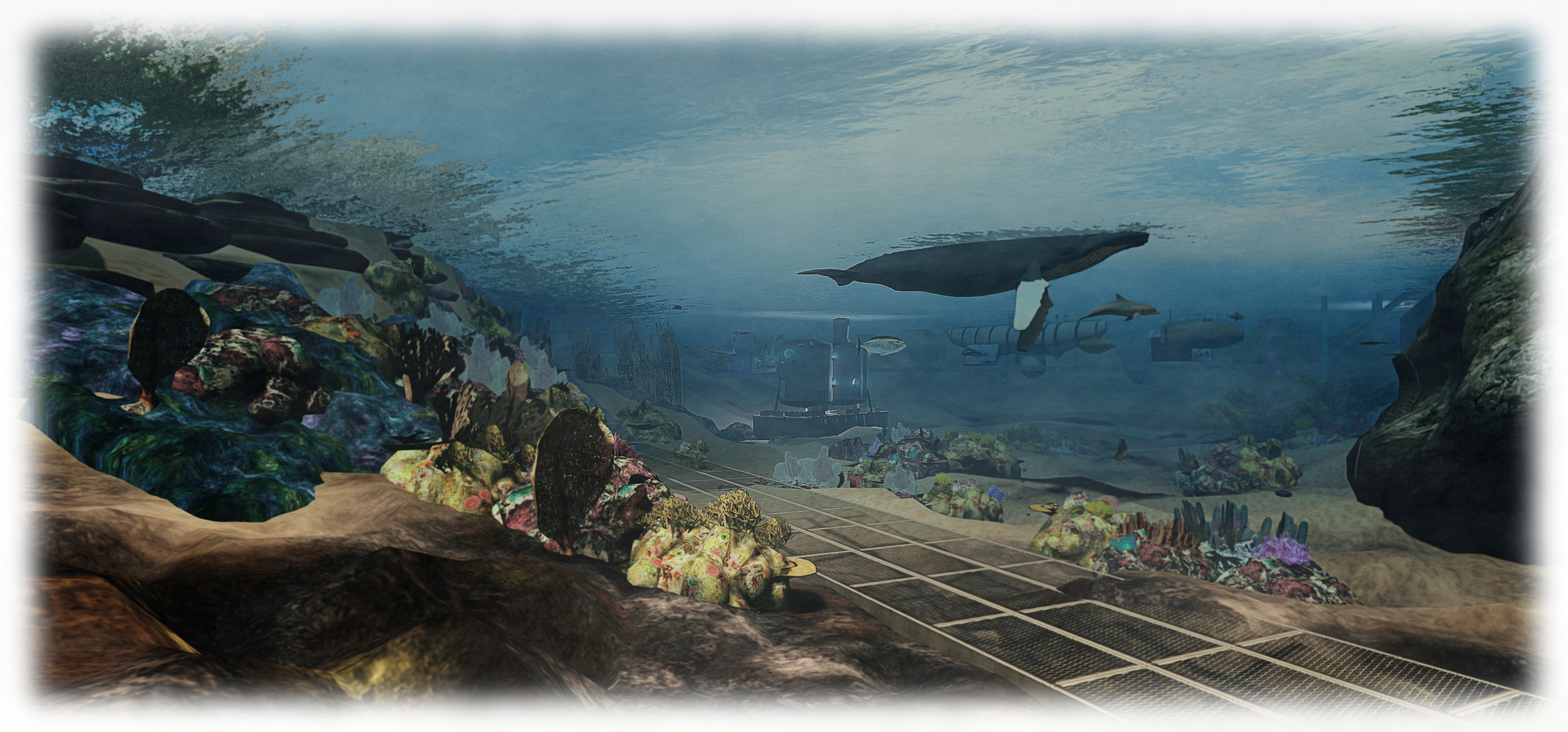
Finding your way around the facilities can take a little time; I personally recommend starting at the arrival hub, and taking the ground level / underwater walks which can be accessed via the beach, and which will take you under the waves, introducing you to marine life, marine monitoring, conservation and studies.

The Tektite underwater habitat at the Abyss Observatory

As well as meeting various members of our marine populace, the underwater walks take you through various information areas, with display models, infographics and information boards covering a wide range of subjects, including the unique Tektite Habitat, which in 1969 / 70 was the centre of research into reef ecosystems and human physiology studies related to both saturation diving and possible long-duration space missions.  The Abyss facilities provide an overview of the Tektite studies, together with a cutaway model of the habitat (shown above).

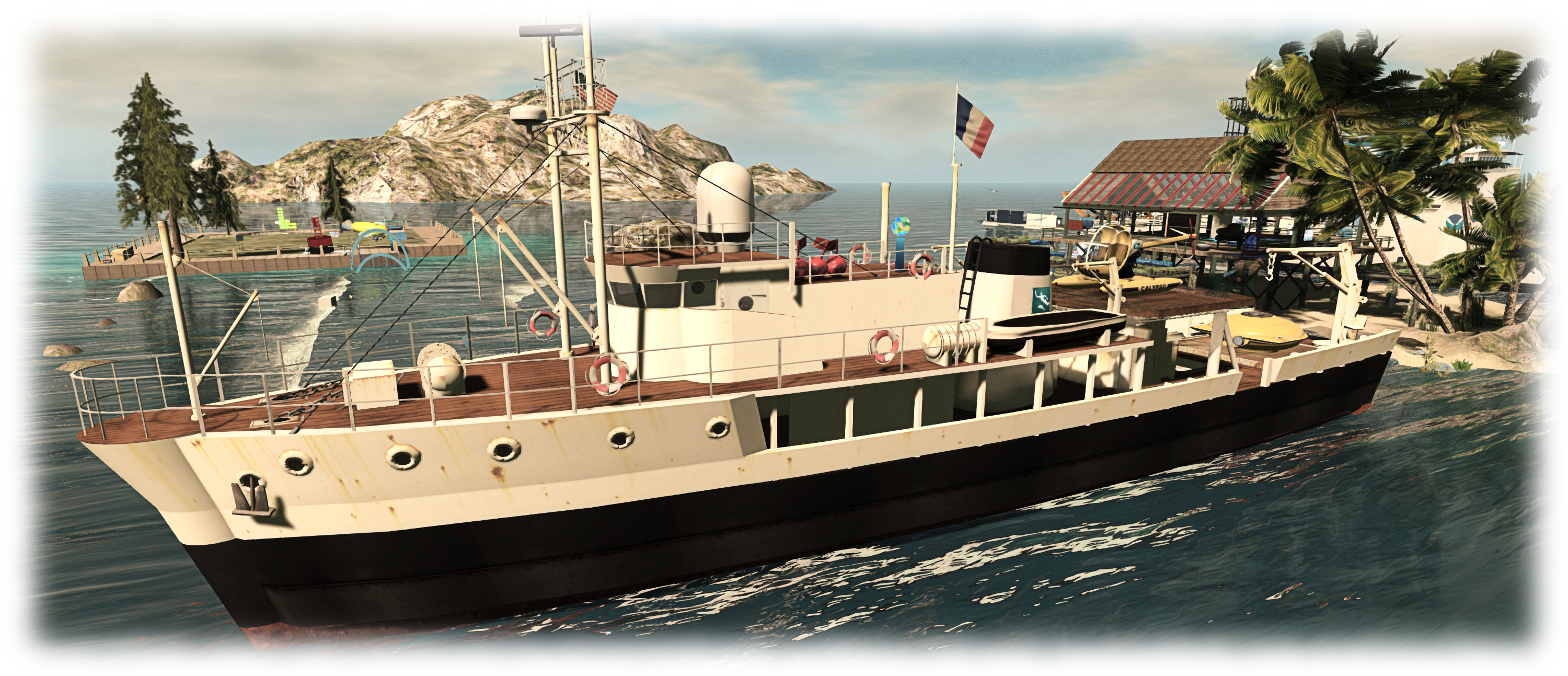
Close to the Tektite habitat, visitors can find models of the bathyscaphe Triseste, which reached a record maximum depth of some 10,911 metres (35,797 ft), in the deepest known part of the ocean,  the Challenger Deep, in the Mariana Trench in the Pacific in 1960. Alongside this sits Jacques Cousteau’s famous yellow underwater “flying saucer”, exploring the deeps while the Calypso is moored nearby. This part of the Observatory also includes a model of Ictineo I, a wooden hulled submarine dating from 1858.

However, the Observatory is not all about ships and submarines – as noted, there is plenty of information on marine life and on marine conservation, and there are skyborne exhibits which offer opportunities to experience very deep sea diving. There’s even the option of relaxing in an underwater bar!

Only One Earth
Only One Earth

The Abyss Earth studies exhibit at Farwell is entitled Only One Earth, and presents the visitor with a tour of the Earth, starting with a basic introduction to the planet on the lowest level, progressing onwards and upwards through a history of the planet measured by the geological ages, which traces the development of life on Earth. This is a fairly interactive exhibit, with information boards, info givers visitors are encouraged to click on (which display information in local chat), and buttons underneath graphics and images that reveal further information – and of course, links to assorted web pages, as with the main Abyss Observatory displays.

The former climate studies exhibit

Unfortunately, as I am getting to this write-up a little late, some of the exhibition spaces created for the Abyss Observatory appear to have already been dismantled. The very excellent climate studies are that was once at Farwell (see above) no longer seems to be available, for example; teleports to it simply return the visitor to ground level.

When visiting the Abyss Observatory, it would be easy to dismiss it as being “old school” – the builds are prim, there is little or no mesh in evidence, etc. It’s also true that some sections of the observatory never seem to have been entirely finished. However, this doesn’t mean that the information which is presented is lacking; there is much on offer here. With a final guided tour of the facilities coming up on Saturday, May 30th at 07:30 PDT, I do recommend that anyone with an interest in marine ecology and / or the history of Earth consider paying the Observatory a visit.

SLurl Links

Urban decay in Second Life

Xin; Inara Pey, May 2015, on Flickr Xin (Flickr)

Xin is the home region for the store of the same name, a place I was drawn to it after seeing images by Goizane Latzo. It is one of a number of regions which have taken a theme of disaster / apocalypse as a theme – perhaps the most notable (in terms of bloggers) being Sera Bellic’s The End of the World As We Know it, which I visited last month, although I’ve yet to blog about it.  

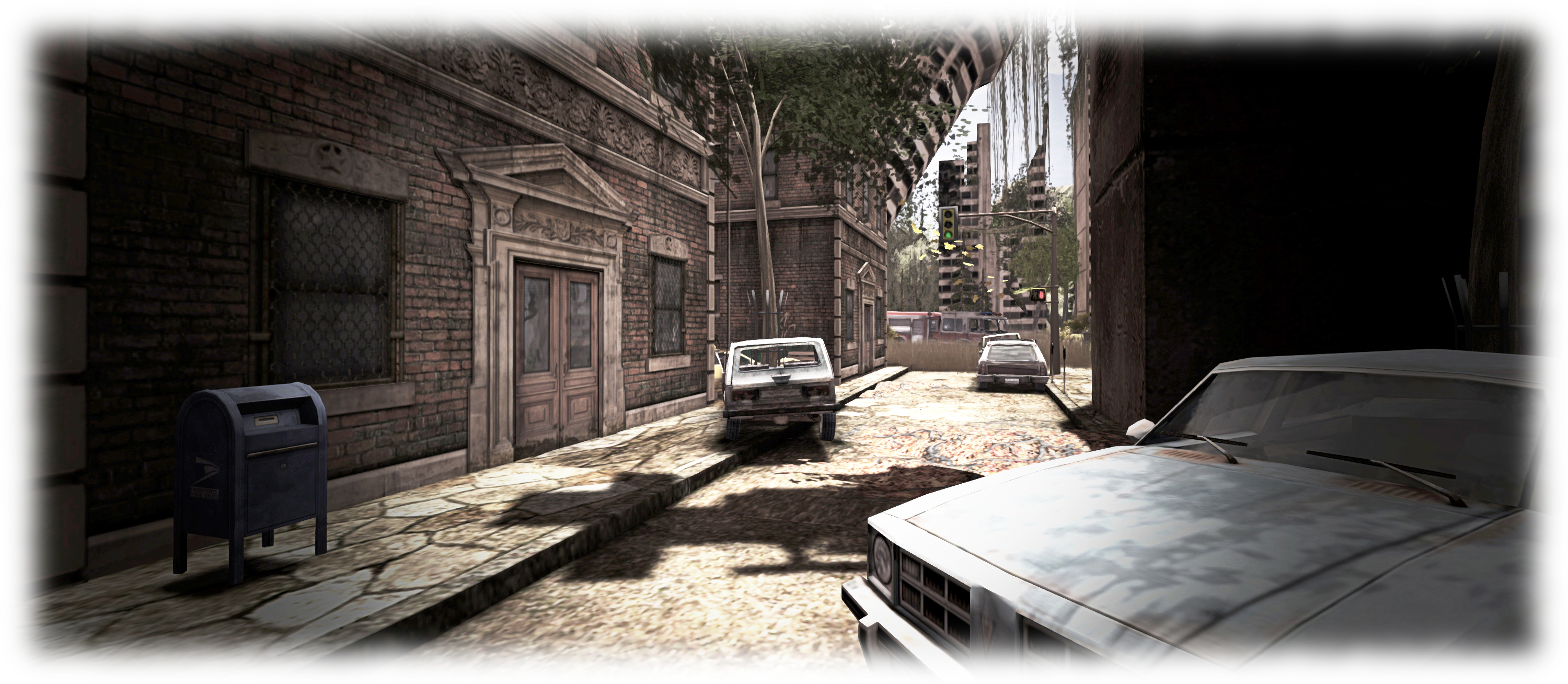
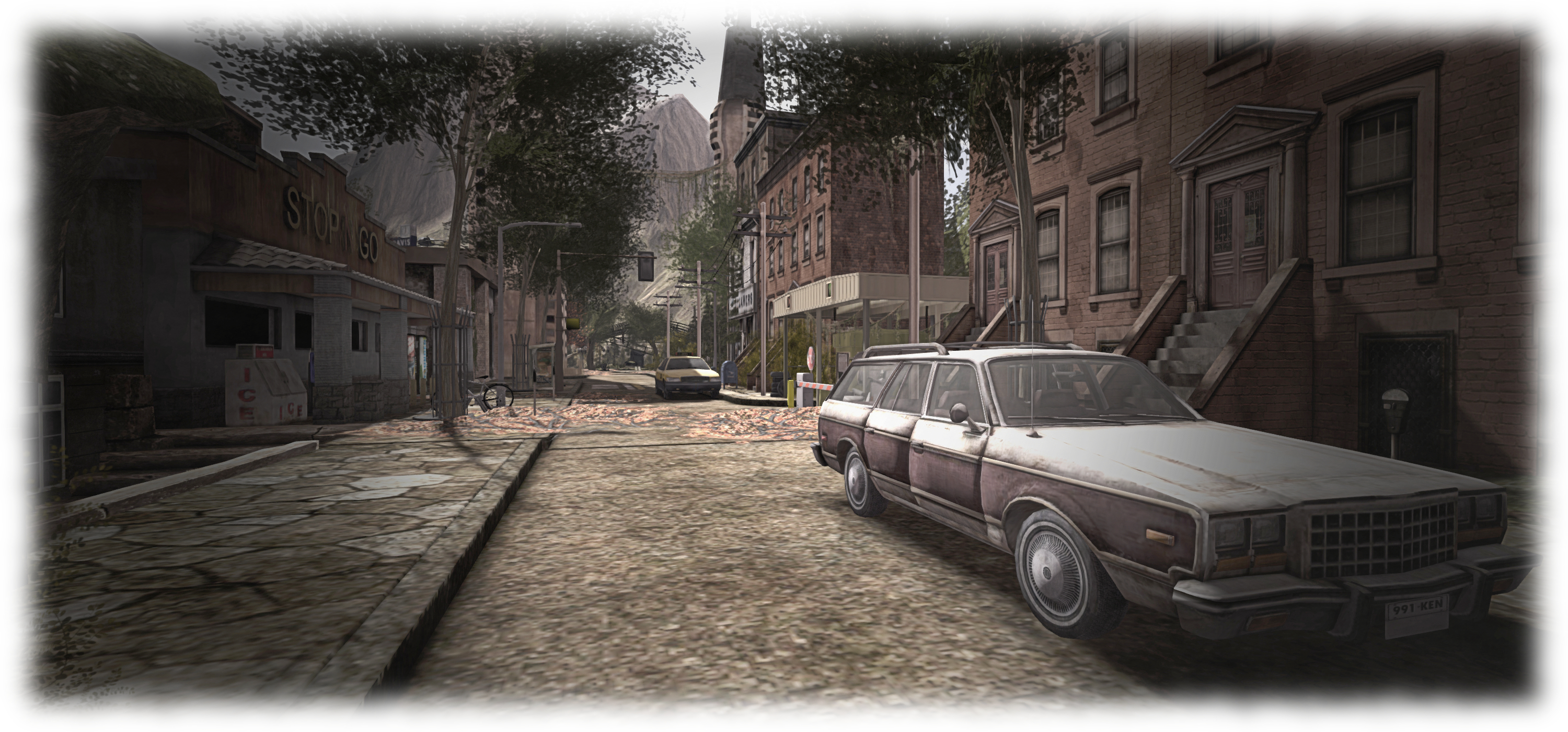
In the case of Xin, designed and built be Alice Pvke (although apparently, ” Jaix helped for like nine seconds”! 🙂 ) it’s unclear as to precisely what has happened; the arriving visitor is presented with a town surrounded by mountains, and which is in a state of ruin. High-rise building stand broken or have toppled over to crash into their neighbours, while down below, the streets are slowly decaying, and the local freeway overpass is in a state of collapse.

Xin; Inara Pey, May 2015, on Flickr Xin (Flickr)

Has there been an earthquake or some other natural disaster? Or is the destruction the result of a war or some other man-made catastrophe? Whatever the cause, it would appear it left the local citizens in a state of turmoil; while the streets are now deserted, there are signs of city-wide violence; vehicle sit riddled with bullets, and even one of the city’s fire trucks appears to have been the target of deliberate assault, its once pristine bodywork battered and dented, its windscreens and side windows smashed-in.

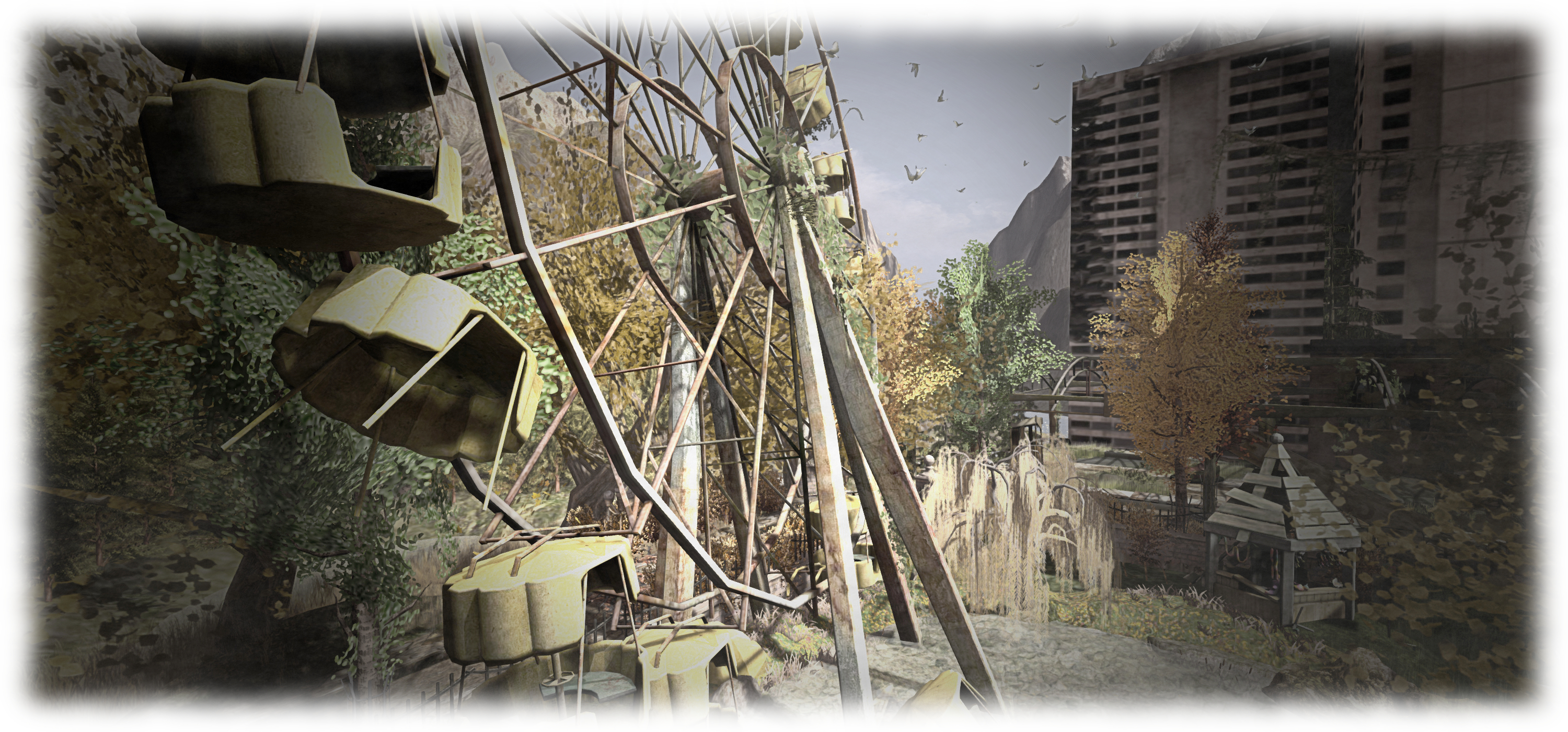
Across town sits an old amusement park, the bumper cars sitting pathetically amidst the ruin of their track, while a once proud Ferris wheel lies broken across the street, its cars sitting in a jumbled heap.

Xin; Inara Pey, May 2015, on Flickr Xin (Flickr)

Everything about this town speaks to a once thriving metropolis; now humanity appears to have fled, and slowly, but surely, nature is gradually reclaiming the neighbourhood. Grass, the seeds of which no doubt carried by the wind, has started to lay claim to the flat roofs of some of the smaller buildings, while vines and creepers climb the sides of others, and to spread themselves along the old power lines that connect some of the skyscrapers. The streets themselves are starting to crack and break-up as roots and grass force their way up through ever-widening gaps in the ageing tarmac.

For those seeking an atmospheric backdrop for photos, Xin might provide a useful option – although admittedly, rezzing is disabled. Those looking for the store should take a look underground near the landing point.

Xin; Inara Pey, May 2015, on Flickr Xin (Flickr)

Additional Links