The Vordun: a new art experience in Second Life

The Vordun Gallery
The Vordun Gallery

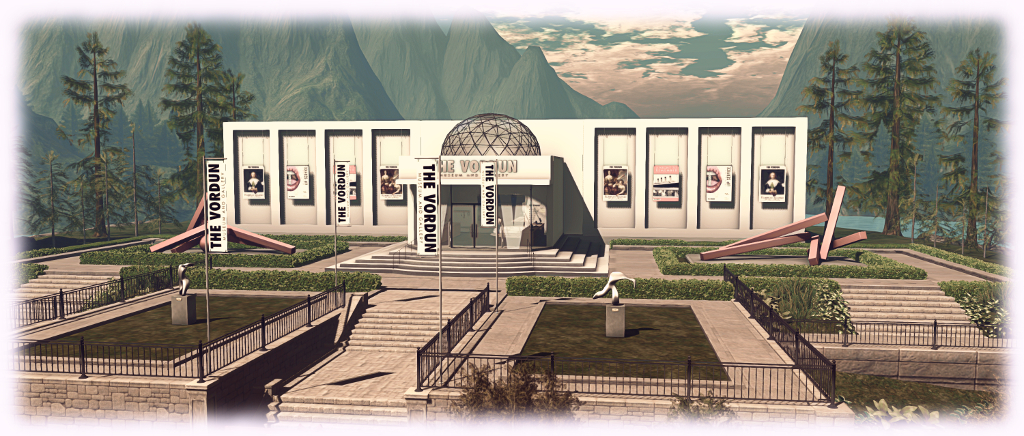
Saturday, July 12th witnessed the opening of The Vordun Museum and Gallery, created and curated by Jake Vordun, the owner of Fancy Decor.

Occupying a large, modern building on one side of the Fancy Decor region, the museum and gallery presents a venue capable of supporting multiple exhibitions, with two art exhibits and a museum exhibition being presented for the opening season. Together they make for a unique and immersive visit.
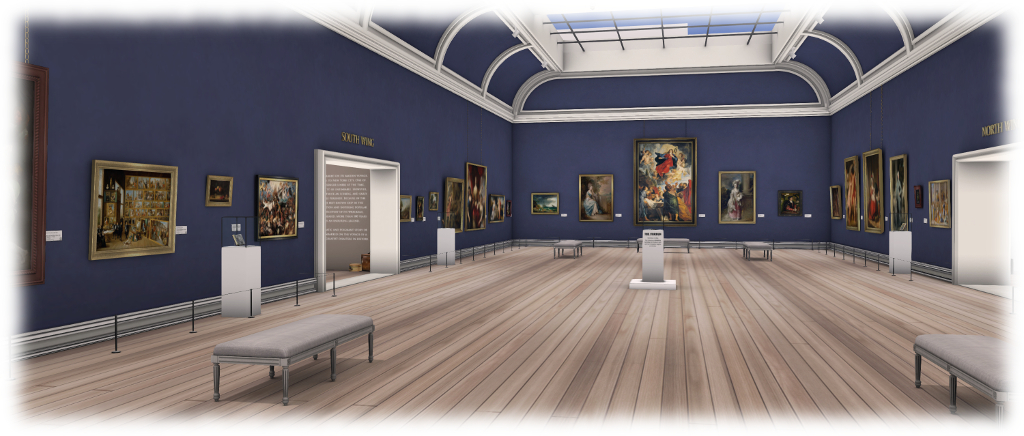
The Vordun: European Masters
The Vordun: European Masters: 300 Years of Painting

The first of the art exhibitions is European Masters, 300 Years of Painting, which occupies the main gallery hall. On displays are over 30 paintings from the period 1500 through 1799, all of which are presented in a scale consistent with one another and to their physical world originals.  These can be freely perused and admired, title cards alongside of each one offering information on its provenance:  artist, title, year of painting, medium and the physical world collection where it current resides.

However, what makes this exhibit unique is that it has an associated experience. On entering the gallery lobby, visitors should be asked to accept the gallery’s experience, smartly scripted by Tangle Giano of Madpea fame (if the dialogue is not displayed, click one of the racks of headsets on the lobby counters). Accepting it will attach a HUD and explanatory note card to your screen. The card can be clicked away once read (and the permissions requested by the experience are automatically revoked and the HUD removed & deleted on leaving the gallery area / teleporting away from the region).
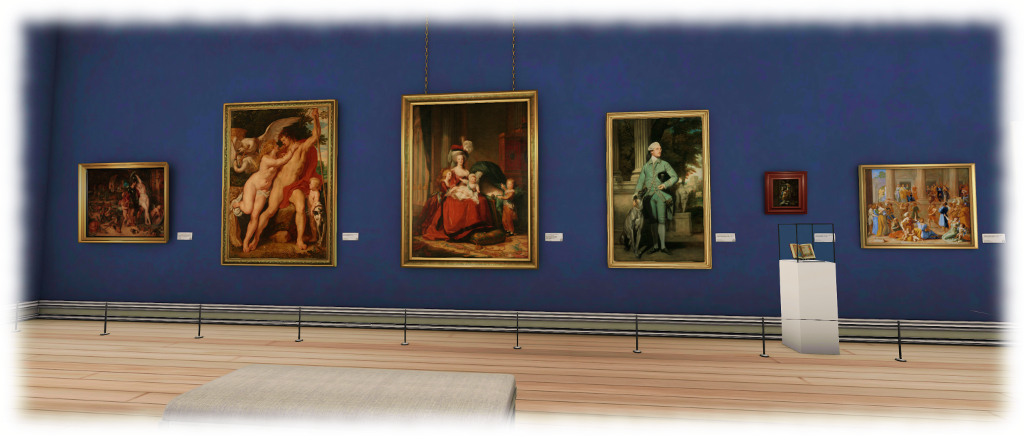
The Vordun: European Masters

The HUD comprises a numbered keypad and display screen, each of the numbers corresponding to a number displayed in the lower right corner of the title card for 28 of the displayed paintings. When standing in front of one such painting, clicking the corresponding number on the HUD will focus your camera directly on the picture and display additional information (courtesy of Google Culture and Art) in local chat. An audio reading of the same text is also given for those with local sounds enabled, while the provenance information for the painting is displayed in the screen area of the HUD. Once the audio track has finished, control of the camera is released, allowing individual paintings to be more freely admired.

This approach adds considerable immersive depth to the exhibition, offering something of an audio tour of the paintings on display, whilst allowing visitors to freely wander between them in an order of their own choosing.

The paintings themselves are superbly reproduced, and run from portraits of famous figures of the times, through still life scenes, landscapes, allegorical paintings and biblical scenes. All studiously avoid the use of Full Bright, and this coupled with the use of a neutral windlight settings for the region, allows them to be presented in as close to “real world” lighting conditions as possible, further enhancing the immersive feel of the exhibition.
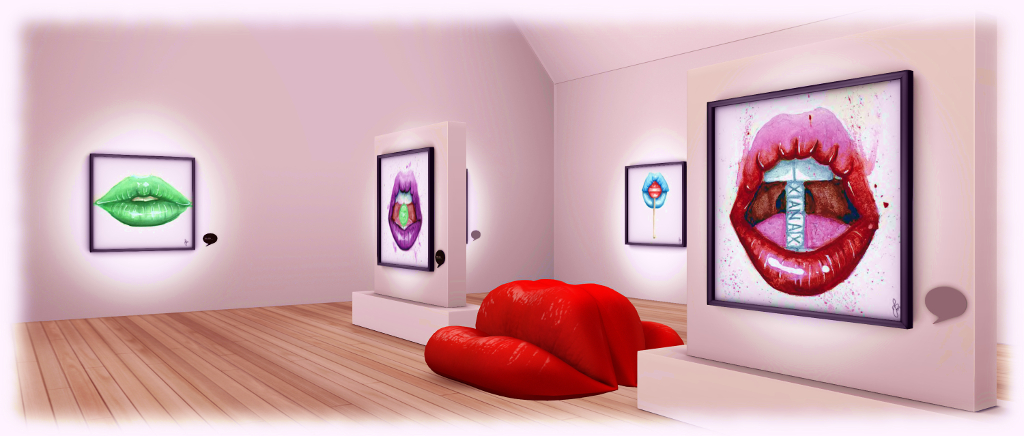
The Vordun:: Lip Service by Celeste Forwzy
The Vordun: Lip Service by Celeste Forwzy

The north wing of the gallery houses the second art exhibition, entitled Lip Service. Running through until September 19th, it features a set of watercolour drawings of female mouth – or specifically lips – by physical world and Second Life artist Celeste Forwzy.

Twelve framed images are presented in the exhibit, and again considerable care has been taken in their presentation. The gallery space is rendering in a neutral white, with a simple wooden floor, with each drawing softly lit through the use of a projected light. The result is and environment ideally suited to focusing one’s attention on the drawings, each of which is extraordinarily attractive.
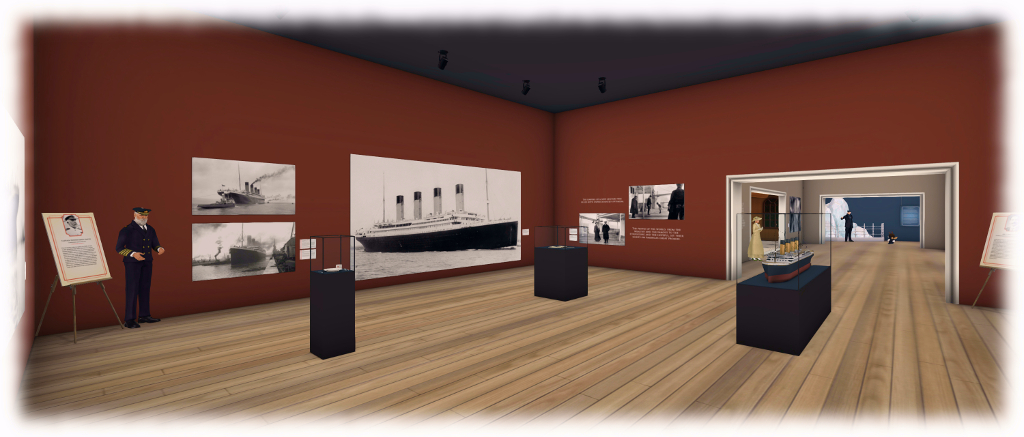
The Vordun: A Night to Remember

Across the hall, in the south wing, is A Night To Remember (from the 1958 film of the same name), curated by Emery Milneaux. An interactive exhibition commemorating the loss of RMS Titanic on the night of April 14th 1912, it runs through until October 9th, and is another extraordinary piece.

On entering the exhibition space, visitors are asked to attach a boarding pass to their screen. This bears the name of an actual passenger aboard the Titanic, with the promise that the fate of the passenger will be revealed further into the exhibition. From here, visitors move through a series of rooms which take us through Titanic’s brief history, from construction to loss.

The Vordun: A Night to Remember

This is told through a richly mixed medium of interactive photos and title cards (click the former to focus your camera on the photo, click the latter to receive further information in chat), together with principal figures from the liner’s story: Commodore Edward Smith, the Titanic’s Captain, socialite Madeleine Astor, first class passenger and survivor, Frederick Fleet, one of the vessel’s lookouts on the fateful night, and a young newspaper boy in London, Ned Parfett. Bump into any of them, and they will present a short “first hand” narrative. There are also reproductions of the ship’s Grand Staircase, together with a first and third class cabin – the latter two starkly outlining the massive class divide of Edwardian society.

However, it is the final gallery of this exhibit which is the most poignant, dealing with the liner’s sinking. In particular, in the final room, three large plaques list the names of every passenger who sailed with the Titanic, together with their fate on the night of April 14th. Through these, visitors can discover the fate of the person named on their boarding pass, adding something of a personal dimension to the exhibition. A fourth plaque commemorates the liner’s crew, 700 of whom (out of 916) lost their lives.
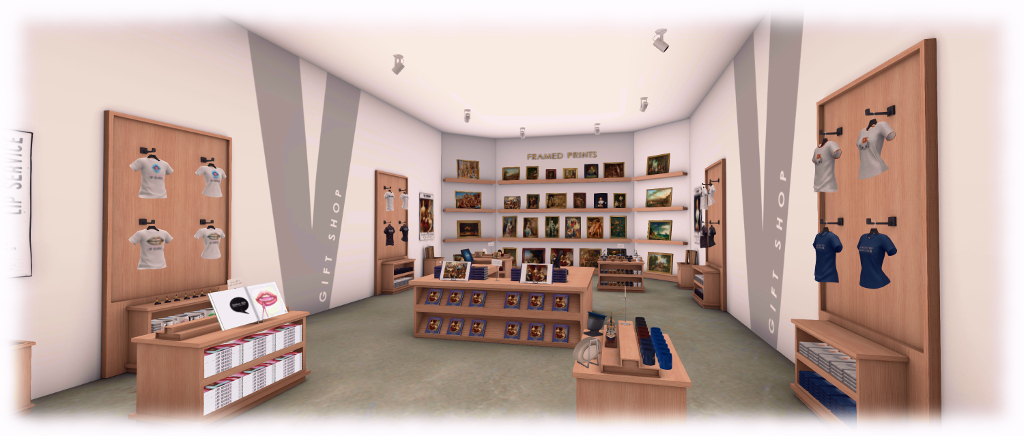
The Vordun: gift shop

Individually, any one of the exhibitions at The Vordun would be more than worth visiting. Taken together, and a visit becomes a singular experience of many facets, one I have no hesitation in recommending. And I’ve not even covered the gift shop, which offers copies of the drawings, paintings and memorabilia for sale, together with a range of other souvenir items.

My congratulation to Jake and all involved in the project for developing such an outstanding venue. I look forward to making many future visits to The Vordun, and seeing future exhibitions, and the use of capabilities like Experience Keys might be further leveraged.

SLurl Details

With thanks to Kess Crystal for introducing me to Jake.
Creative Inhalations in Second Life

reative Inhalation: Breaking Bad in Frenzyville
Creative Inhalation: Breaking Bad in Frenzyville

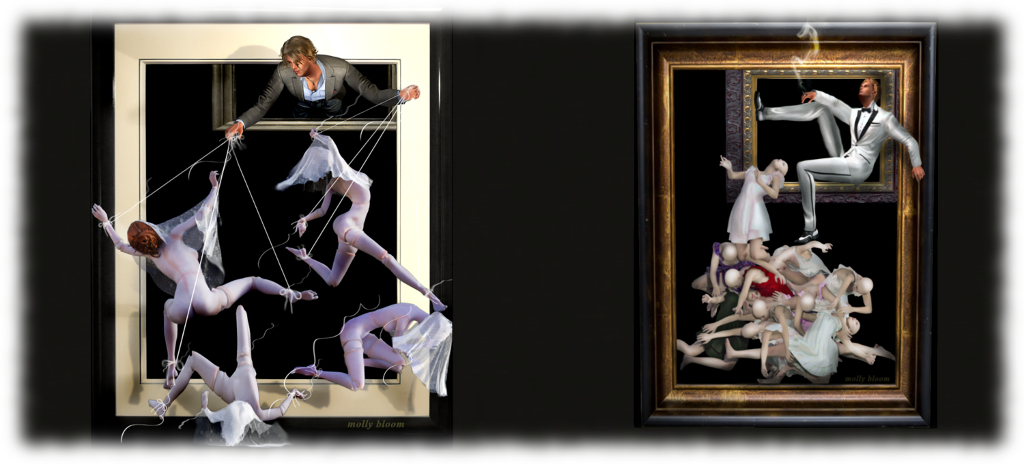
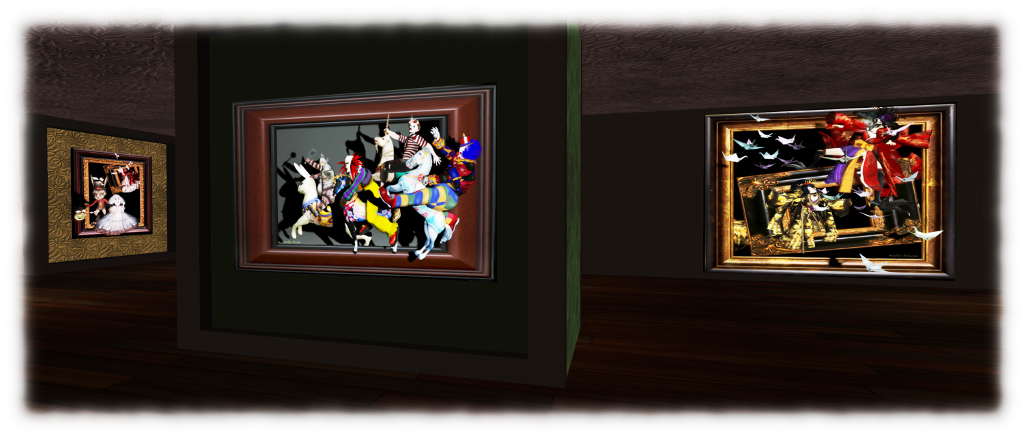
Open through until the end of August at the Paris Metro Art Gallery is Creative Inhalation: Breaking Bad in Frenzyville, featuring the wonderful, whimsical and intriguing art of Molly Bloom.

Noted for her ability to play with our perception of depth by having elements of her images reaching beyond the confines of their picture frame, even to the point of using props completely outside of the picture, Molly’s art is instantly recognisable when encountered in Second Life – and it is always a delight to visit exhibitions of her more recent work, as is the case here.

Creative Inhalation: Breaking Bad in Frenzyville

On display are 22 pictures (23 if you count the superb self-portrait on the upper floor, which makes clever use of one of the gallery’s arched windows), which are split between the two floors of the gallery. Collectively, the exhibition is presented in memory of Molly’s late father, who passed away in May 2016 at the age of 95, with four of the images in particular being dedicated to him.

Not that this is in any way a downbeat exhibition; quite the reverse. As Molly notes, she inherited her sense of humour from her father, and it is much in evidence in many of the pieces displayed here and in a variety of ways, from the subtle, smile-inducing, through to the right-in-you-face-laugh-out-loud. Between these extremes sit the whimsical, the thought-provoking   and – of course – the dedications.

Creative Inhalation: Breaking Bad in Frenzyville

As I noted at the top of this piece, it is always a delight to see Molly’s art in Second Life, and Creative Inhalations: Breaking Bad in Frenzyville is no exception. Do be sure to drop in before the end of August, especially if you’ve not encountered her work before.

SLurl Details

The Drax Files 39: of games and freedom in Second Life

Sergio Delacruz. Image courtesy of Draxtor Despres / Sergio Delacruz

There’s an argument about Second Life which is as old as the platform itself: is it or isn’t it a game? The majority of  active Second Life users most likely fall on the side of the line which says it is not a “game”, and I’d be among them for many and varied reasons. However, one thing that Second Life can be, is a platform for a wide range of games.

This is demonstrated in segment #39 of The Drax Files World Makers,  which explores the work of content creator and designer of in-world games, Sergio Delacruz. However, in typical Draxtor style, there’s a hidden depth to this piece which makes it yet another fascinating exploration of the potentials and opportunities which are open to anyone engaging in Second Life.

Sergio runs Delacruz Technologies, where he builds a range of items, such as his familiar Ferris wheel and bumper cars, and where he hosts Susan's Diary
Sergio runs Delacruz Technologies and Delacruz Park, where he builds a range of items, such as his familiar Ferris wheel and bumper cars, and where he hosts Susan’s Diary

When it comes to games, Sergio is the man behind Drone Wars (which I can remember playing back in 2009/10), a first-person shooter pitting players in combat against armed drones whilst attempting to locate and disarm a nuclear device. More recently, he has created Susan’s Diary, an immersive horror / mystery story players have to solve.

Like so many of us, he was drawn to Second Life out of curiosity, and was struck by the huge scope for creativity offered by the platform. “I was like a child with Lego,” he says of his early, sandbox-based days. However, and again like many of us, he quickly realised the potential of the platform for both creative expression and for learning new skills. Starting with a pair of primy sneakers, he progressed through teaching himself to script in LSL and onward into game design.

With the latter, he also recognised what is perhaps one of the more unique aspects in designing games within the platform: if the creator desires, they can be built so that people can play them using the avatar with which they are most comfortable with using, without the need to adopt a specific character and / or look, as is the way with console and computer games.

One of the darker aspects of Susan's Diary, an immersive horror / mystery game
One of the darker aspects of Susan’s Diary, an immersive horror / mystery game

This is actually an important point. Because we can engage in games within Second Life using our avatarian familial, rather than being forced into the identity of a pre-defined character, it is possible to have a far more personal connection with the game – it becomes far more our adventure.

Second life also allows for a more open approach to games design and game play; designers can present games which are not necessarily constrained by a linear narrative, but become more of an exploration and discovery by the players, whether playing individually, or with a group of friends (something which further makes games in SL far more of a genuine social experience than those of other mediums can allow, again due to the limitations imposed by pre-determined characters, etc.).

The concept of “freedom” is perhaps where a good portion of the heart of this piece lies. At its core, Second Life is about giving anyone who uses it personal freedom and in a huge number of ways, be it through the creativity of actually making things, or through using the things other make to create an environment others can appreciate and enjoy, or through which we can find new ways and means to express ourselves through art, or through learning new skills. And of course, there is the freedom it gives us to express our personalities through our avatars and to socialise with others from all of the world in a huge variety of ways.

Sergio designing his physical world home in SL - from the comfort of his physical world home, inset). Image courtesy of Draxtor Despres / Sergio Delacruz
Sergio designing his physical world home in SL – from the comfort of his physical world home, inset). Image courtesy of Draxtor Despres / Sergio Delacruz

Of course, there’s a wide range of opportunities sitting around and between these examples, both within and beyond the platform. Nor are any of them mutually exclusive; most of us embrace two or more through our time in-world.

In Sergio’s case, this freedom has given him the ability to develop skills and interests which have application beyond Second Life. From LSL he’s moved to more recognised programming languages such as JavaScript and C#, which in turn have encouraged him to experiment in other mediums, and also to get a potential leg-up into the world of “consumer VR”. Most recently it has offered him the opportunity to dip a toe into real-world design, reproducing his own home inside Second Life.

“In Second Life you are free,” Sergio says at the end of the piece. “Free without limits.”  And that is perhaps the platform’s greatest gift to each of us.

Bridgewood Barrow: a cosy corner of Second Life

Bridgewood Barrow; Inara Pey, July 2016, on Flickr Bridgewood Barrow – click any image for full size

I’ve said in the past that it is not always necessary to have an entire region in order to create something worthwhile, either as your home or as a place for others to visit. Such is the case with Bridgewood Barrow, a 8192 sq m parcel offered as a place to visit and spend time within by Aby (Abysinnia – also known as Harper Quinne), with a little help from Darthenian (DarthHill) and Marcus Keown.

Located in the south-east corner of its home region (Aurore), Bridgewood Barrow offers visitors a cosy corner of Second Life in which to relax or wander – without having to worry about breaking out the walking boots in the case of the latter!

Bridgewood Barrow; Inara Pey, July 2016, on Flickr Bridgewood Barrow

The landing point is a small pier located over a little beach. Here visitors can collect a note card about the parcel, and update themselves with the latest news.  Facing this and a very short walk away is a brick-built house offering a place to dance, a little café and, up on the roof (reached via the fire escape ladders at the side of the house), Greedy, Greedy and cuddle loungers are available.

A small lawned garden sits behind and to one side of the house, a tree-lined track pointing the way east from it. Following this will as it passes above a small lake will lead visitors to a dirt track switch-backing down to a second building sits partially nestled among trees, the bedroom looking out over the lake.  A footpath runs around the back of this, pointing the way to a short climb to a bridge crossing the entrance to the lake, and so back to the beach and the pier.

Bridgewood Barrow; Inara Pey, July 2016, on Flickr Bridgewood Barrow

Within this deceptively simple layout, there is a lot to enjoy, both indoors and out, with plenty of places to sit and cuddle, and views to be found. There is a Flickr group available for the latter, although it was looking a little forlorn when I visited; which is a shame, as couple with the right windlight settings, Bridgewood Barrow offers a picturesque setting for photography.

The parcel notes make it clear that Bridgewood Barrow will remain as it is through until the end of August, after which Aby will be working on a new project, which I gather will also be open to the public. So, if you fancy spending a little time in charming surroundings, either on your own or with a close friend, one without the need to explore an entire region, Bridgewood Barrow could be just the ticket.

Bridgewood Barrow; Inara Pey, July 2016, on Flickr Bridgewood Barrow

SLurl Details

Giovanna’s Last Harbour in Second Life

The Last Harbour: Self control and Eve

“I had been thinking for some time about having a place,” Giovanna Cerise said as we stood at the landing point of her new exhibition space, The Lost Harbour, which officially opens on Thursday, July 14th. “Some time ago I had a gallery, and many people have asked me if I would have a regular place where they could see my work and so I decided to make one.”

If I’m totally honest, Giovanna having a space in she can freely display her art once more is well overdue. Whether it takes one of her large-scale immersive pieces such as Tristan und Isolde or The Eternal Suspense (to name but two), or her smaller pieces, as seen in her recent Retrospective , her work is beautifully exquisite and quite marvellous to see. I was therefore excited to learn about The Lost Harbour, and delighted to spend time visiting with her ahead of the opening.

The Last Harbour
The Last Harbour

Occupying the north-east corner of a region, The Last Harbour is a fabulous setting for Giovanna’s work, beautifully laid out and presented to visitors. From the landing point, a series of platforms sit on the waters of the parcel, connected by transparent and translucent tiles from the aforementioned Tristan und Isolde. These form both a display space and a walkway passing across the parcel.

On the seaward side of the parcel sit four pieces which those familiar with Giovanna’s work may recognise as being from some of her past installations. On the landward side, against the boundary wall, are more pieces, notably her black pen line images and forms mindful of installations like Line, together 3D pieces, such as Breeze, a piece best appreciated by camming around and through it, rather than simply regarding it whilst stood still.

The Last Harbour
The Last Harbour

Between these two sides is a stepped platform on which are displayed four new studies, comprising single and paired figures. “I wanted to do some new work,” Giovanna told me as we studied them. “In recent times I have worked mostly for large installations. I wanted to focus my ideas and my inspiration on smaller works.”

She continued, “Each of them expresses an idea; a thought emotion. Pandora, Eve, Self Control, Stranger, The Unbearable Lightness of Being … symbolic names.” Symbolic they may be, but they are also deeply intimate; one doesn’t so much observe each of these figures; one becomes a part of each of their stories, a confidante in their expression, if you will.

The Last Harbour: the beach

This is a place where wandering, sitting and contemplation are welcomed. “I imagined a place to walk among the works of art and even then relax by the sea,” Giovanna said, indicating the arched wall along one side of the exhibition space. Passing through this will indeed bring you to a little beach, beautifully landscapes and with seats in which visitors can relax, as well as little beach house, while hovering over the sandy tide are the sirens from Il Folle Volo (The Mad Flight).

The Last Harbour formally opens at 13:00 SLT on Thursday, July 14th at 13.00 SLT. My congratulations to Giovanna in establishing the space, and my thanks to her as well, for allowing me to pop over and spend time with her discussing it.

SLurl Details

Garden walls in Second Life

Skye Tiered Garden Wall Building Set

Alex Bader is perhaps my favourite landscaping content creator in Second Life. His kits cover everything from creating a sandy beach right the way through to building cliffs and peaks, with trails, woodlands, hills, rivers, woodlands and more featuring in the mix. His kits and other items form one of the largest sections of my inventory devoted to building and landscaping, and for the last year, his forest cabin and his beach house have been our preferred choices for our in-world house designs – and I can’t actually see us swapping away from them.

In mid-June, Alex generously sent me his latest creation, the Skye Tiered Garden Wall Building Set, although it took me until the last week and a bit to actually have the time to really start playing with it. Even so, I can say up front that if you’re looking for the means to create a garden which features eye-catching and beautifully organic walls with sweeping curves, unique shapes, tiered or otherwise, this is simply a must-have set.

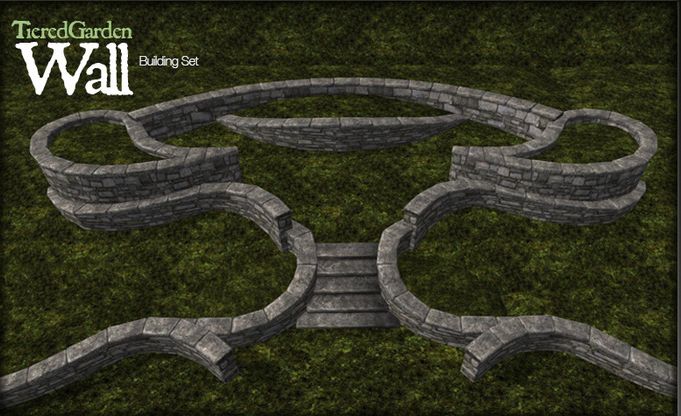
Skye Tiered Garden Wall Building Set
Skye Tiered Garden Wall Building Set (image: via Alex Bader)

The kit comprises 17 primary parts – straight walls, curved walls, S-shaped walls, sloping walls, butas, “eyes” steps, etc., most of which are mirrored or offered in “tall” or “short” versions, some of which include attached grass slopes, to present a complete set of 28 wall sections and steps. Add to this three matching terrain elements (flat, sloped and irregular), and you have a very comprehensive set with which to create walled elements in a garden or against a hill. Alex even includes three unlinked samples to get you started!

The pieces range between 1 LI (basic steps) through to 4 LI in their default sizes. They are supplied as copy / mod, so resizing is possible – although care is needed, as doing so can significantly increase the other LI on items when enlarged. The wall segments are scripted to provide 4 stone styles:  granite, light stone, dark stone, and grey stone, each of which can include a moss effect as well, giving a total of eight different finishes.

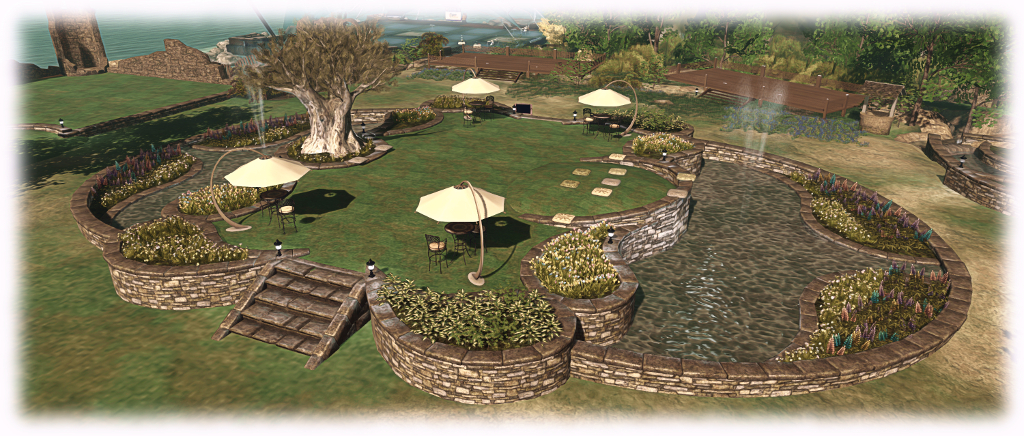
Skye Tiered Garden Wall Building Set in use at Holly Kai park, together with the Skye Water System and steps from the Stone Stairs kit
Skye Tiered Garden Wall Building Set in use at Holly Kai park, together with the Skye Water System and steps from the Stone Stairs kit (plants and seating, etc., not a part of the wall kit)

The various shapes fit together extremely well for the most part, although there are some slight differences in width in the capstones on various segments.  However, it is in the gentle slopes and sweeping curves in several of the pieces which make this set a treat to use; as I mentioned at the top of this piece, they allow the creation of very organic walls and tiers.

How artistic you might get with the set is down to you and the lie of your land; the two designs I’ve created so far are relatively simple, but the end results are still – if I say so myself – eye-catching. It also works exceptionally well with other kit Alex has produced, particularly those which are materials enabled, such as his Skye Stone Stairs and the Skye Water System.

The kit provides three sample builds (17, 24 and 29 LI respectively) to help with ideas for what might be achieved

I’ve already seen this kit in use at a couple of events, and I’ve little doubt it is destined to become a staple and distinctive part of many regions across SL. It can be purchased in-world via Alex’s store (which is well worth exploring in its own right) or via the Studio Skye marketplace store. The price, at the time of writing, is L$699.