Giovanna’s Monochrome in Second Life

Monochrome - Giovanna Cerise
Monochrome – Giovanna Cerise

Open now through until the end of the year is Monochrome, a full region installation on three levels, designed and built by Giovanna Cerise. It’s a hard piece to quantify – if indeed it requires quantifying. Spread over its three levels, it presents three different environments / structures, offered in black, white and red respectively.

The black element is located at ground level, facing the landing point, with a teleport door providing to the next level – white – which then connects to the upper, red level. There is no specific windlight for the installation; visitors are encouraged to experiment with different times of day / settings.
Monochrome - Giovanna Cerise
Monochrome – Giovanna Cerise

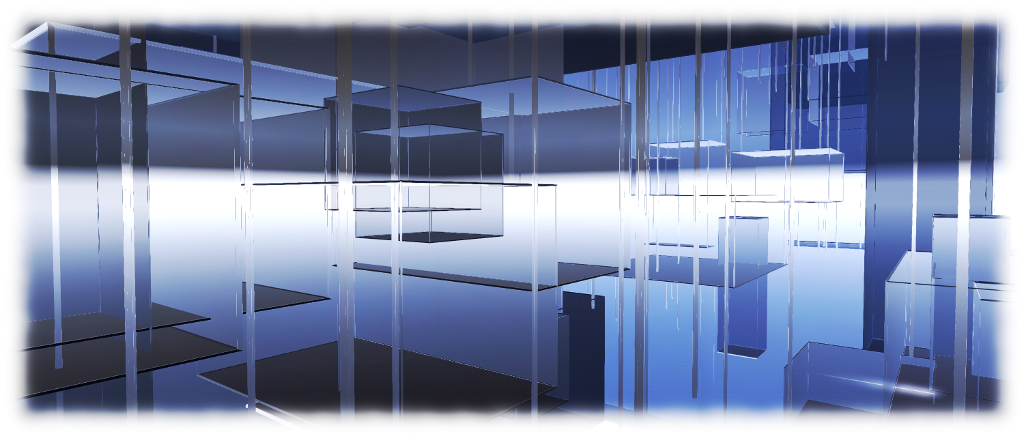
Sitting over the water, the Black level presents a series of cubic and rectangular boxes rising into the sky, some interlinked and stacked like great square hills. Their walls are phantom, allowing visitors to walk  or fly through them (watch out for transparent floors when flying up!). Slender metal spars rise up around them, while string like strands loop through the air, threaded with cubes of their own.

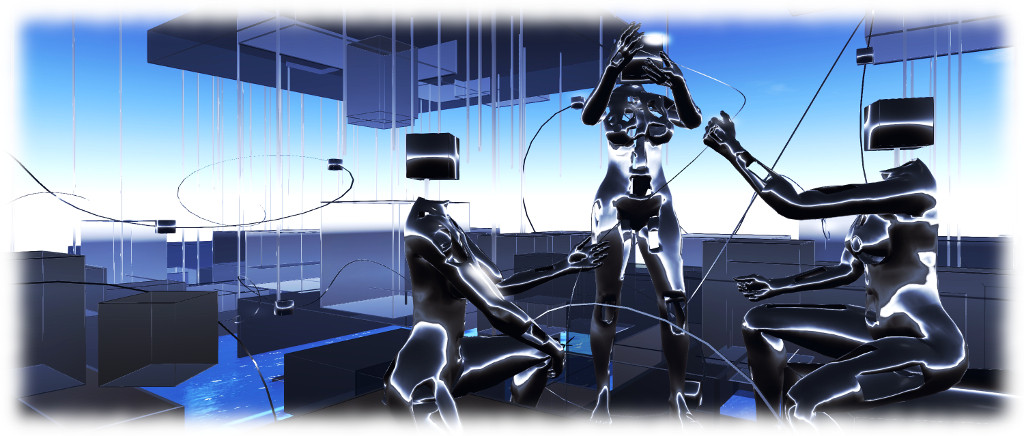
At the centre of all this are three tall, cube-headed female figures. One stands threading a cube onto another metal-like strand, which is being fed to her by the seated and kneeling figures. One of these holds a pair of scissors, ready to cut the strand, presumably so it can also be set floating in the air once a suitable number of cubes have been threaded.
Monochrome - Giovanna Cerise
Monochrome – Giovanna Cerise

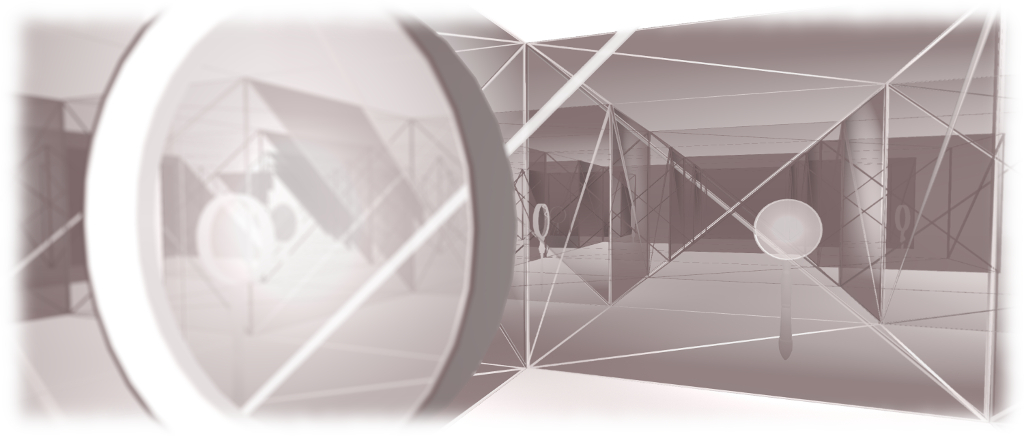
The pattern of cube-like rooms is repeated on the White level – only this time the cubes all occupy just one level, spread like a vast building across a white plain. Phantom in nature, they can again be walked through, only this time their walls can also be seen through from both sides. Once their bounds, this gives the feeling of being in some vast maze, one where many of the rooms have large magnifying glasses standing in their centres, while others are empty. Wandering through them, it is exceptionally easy to lose one’s sense of direction.

And on the upper Red level, lies a mass of red cubes, as if caught in a swirling wind lifting them into the air. At their centre is a red mass, like a congealed lump of spilled paint, on which four red figures appear caught in the same vortex, being pulled apart from the head down, their broken bodies rising and twirling together within the vortex, becoming a single strand rising into the sky, eventually to bind the spine of a huge red notebook.
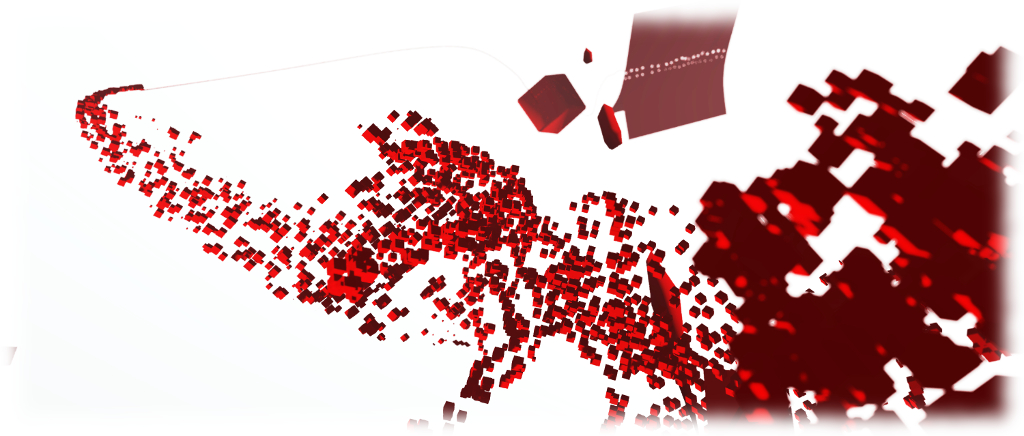
Monochrome - Giovanna Cerise
Monochrome – Giovanna Cerise

All three levels offer intriguing montages. They challenge us to quantify them according to our own perception, by challenging that very perception as we study them each in turn. Is the binding of the book on the Red level really being drawn from the figures below, for example, or is it slowly unravelling from the book to fall and become those figures? And if it is, does this not alter our thinking about what is being portrayed here?

You decide.

SLurl Details

A metaphorical Tumor in Second Life

MetaLES: Tumor
MetaLES: Tumor

“This work is my acknowledgement of greed for material things of human kind which is so powerful that it is going to cost us our own existence,” Igor Ballyhoo states of his new installation, Tumor, now open at MetaLES. “This is not [an] effort to fight it, it is not made in least hope to change anything, it is just a recording of my observation of human society at this point.”

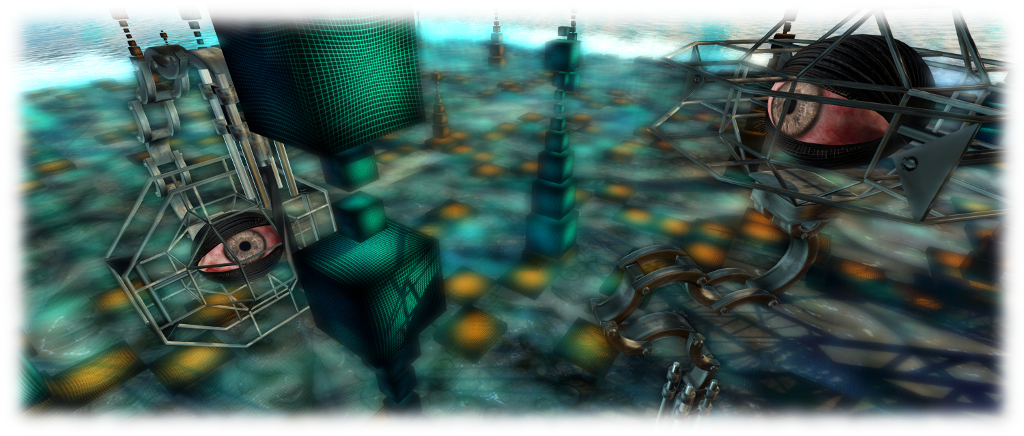
Across a flat, misted plain – reached via teleport of the region’s skyborne landing point – strange structures rise, strange cubic conifers, denuded of branches and leaves. Underfoot, square stepping-stones of brown earth vie with an oily, sludge-like morass pulsating around them, The glowing mist hovers above this, with closer examination revealing it to be sheets of a digital grid pattern which blurs this strange, almost alien landscape into a soft focus.

MetaLES: Tumor
MetaLES: Tumor

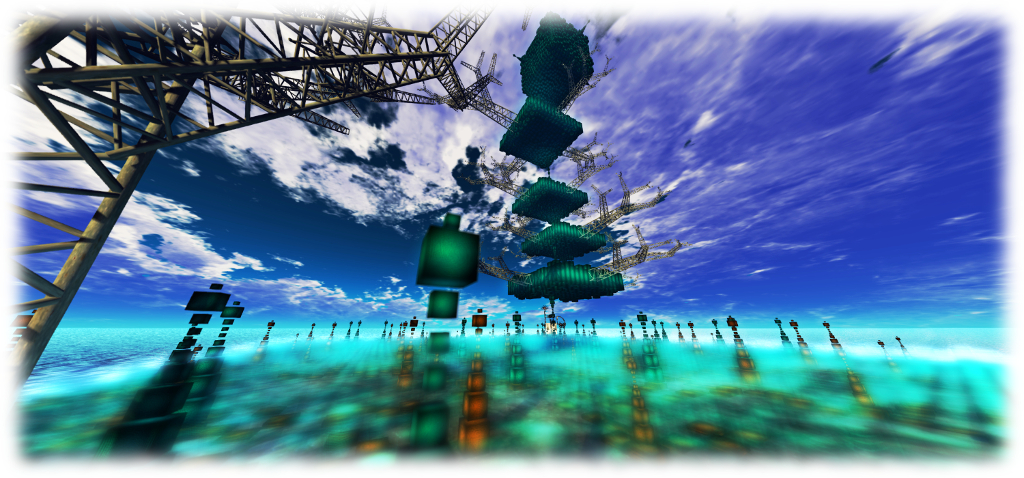
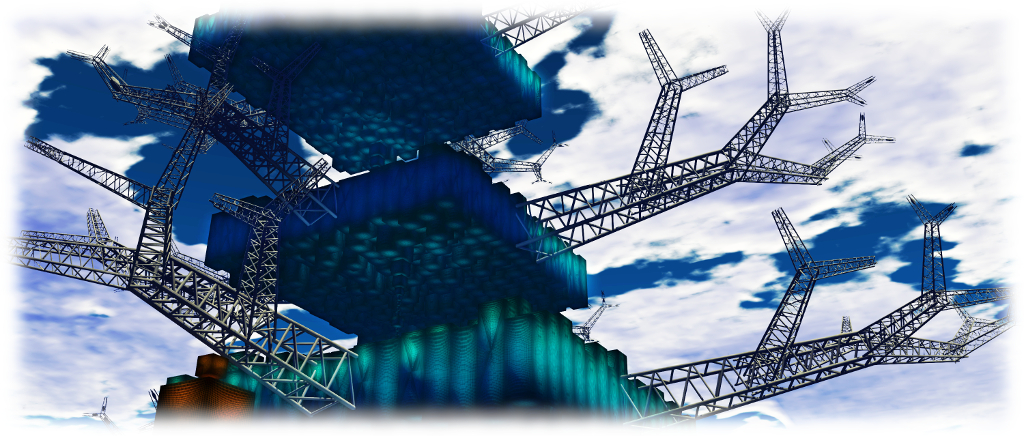
But none of this holds the attention for long. Across the region a massive steel pylon raises multiple arms splitting and branching over and again as they reach into the sky. It stands as the embodiment of a the great metal pylons which march across many countries of the world, feeding our insatiable need for energy. Even the metal arms, rising into pincer-like pairs which seem to pluck and pull at the ball of the Sun overhead, offer a further metaphor for our energy greed.

More of these grasping metal arms and fingers can be seen overhead, stretching out from the sides of huge structures rising into the sky. Their blocky forms shimmering in the sunlight and defying the eye to pick out details, they rise one atop the last like great drilling platforms, oblivious of the strange, denuded and oozing landscape below, topped by a strange gigantic cube of cubes.

MetaLES: Tumor
MetaLES: Tumor

As a statement and as an art installation, Tumor is a powerfully visual piece, underlined by its dedication to  Georgina Hope “Gina” Rinehart, climate change sceptic and CEO of Hancock Prospecting, a company which could be said to have questionable concerns over the environmental impact of its projects. It will remain open until the end of November. At the time of writing, it overlaps lanjran Choche’s photographic exhibition, 5Y Smoking, which can also be reached via teleport from the landing point.

SLurl Details

Tumor (MetaLES, rated Moderate)

Revisiting the Reshade injector with Second Life

Reshade is a real-time post-process injector allwoing you to overlay Second Life with various shader options, individually or collectively, to produce assorted effects and results
Reshade is a real-time post-process injector allowing you to overlay Second Life with various shader effects, individually or collectively, to produce assorted results, real-time, in both images and video

Back in August 2015, I blogged about Reshade, a post-processing injector for games and video software available for Windows. When installed and associated with a game or application like Second Life, it can be used to overlay the screen with a wide range of shader-based effects. These can them be used in screen captures or when recording machinima, to provide “real-time” visual effects.

Since that time, Reshade has been through a couple of iterations, with version 3.0.3 appearing on October 21st. As I’ve not revisited Reshade since that 2015 article, I thought I’d provide a short overview of installation and general use of this latest version.


A quick and dirty demo video I made with Reshade 1.0, showing how it can be used used in Second Life machinima filming

Installation

Please ensure you’re logged out of Second Life when setting-up ReShade.

  • Go to the Reshade website and download the installer, double-click to run it.
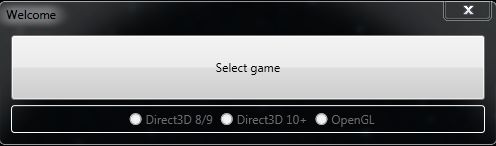
  • You will be prompted to select a programme for association with Reshade:

install-1

  • Click Select Game and navigate to the installed folder of the viewer with which you want to use Reshade and click on the viewer EXE file.
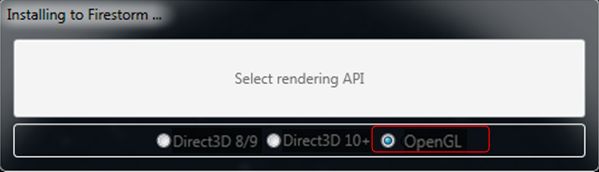
  • You will be prompted to Select Rendering API:

install-2

  • Click on OpenGL (note this may already appear to be selected – click on it anyway). You will be asked if you want to install the shaders- make sure you do.
  • The shaders will be downloaded and installed in a folder in your viewer’s installation location on your computer.
  • The Reshade installer will report Done, and can be closed.

To associate Reshade with any other viewer you have installed on your PC, you will have to follow these instructions again. You do not necessarily have to install the shaders again (although this is easiest) – you can set any additional versions of Reshade to point to shaders already installed.

Using Reshade

Note: the following is not intended to be an exhaustive guide to using Reshade. It is intended to get you started. The best way to gain familiarity with Reshade is to use it; should you need additional assistance, please refer to the Reshade forums. I don’t profess to be an expert in the applications, and will probably not be able to help with detailed technical support!

Reshade is available whenever you launch the viewer with which it has been associated. To access it, press SHIFT-F2. This will display the UI panel which may enter Tutorial mode, if you haven’t saved any presets.

  • Click the Continue button in the Reshade panel.
  • The preset selection bar will be highlighted. Click on the + button to the right of it to open the Name bar, and type in anything you like – this will become the name of a preset INI file, which yo can save and then select at a later date, loading all the sahder settings you have established in it.
  • The available shaders are loaded (and highlighted in red in the tutorial). Read the explanatory text and click continue.
  • The settings panel is highlighted and briefly explained. Read and click Finish.
  • The full Home tab will be displayed.
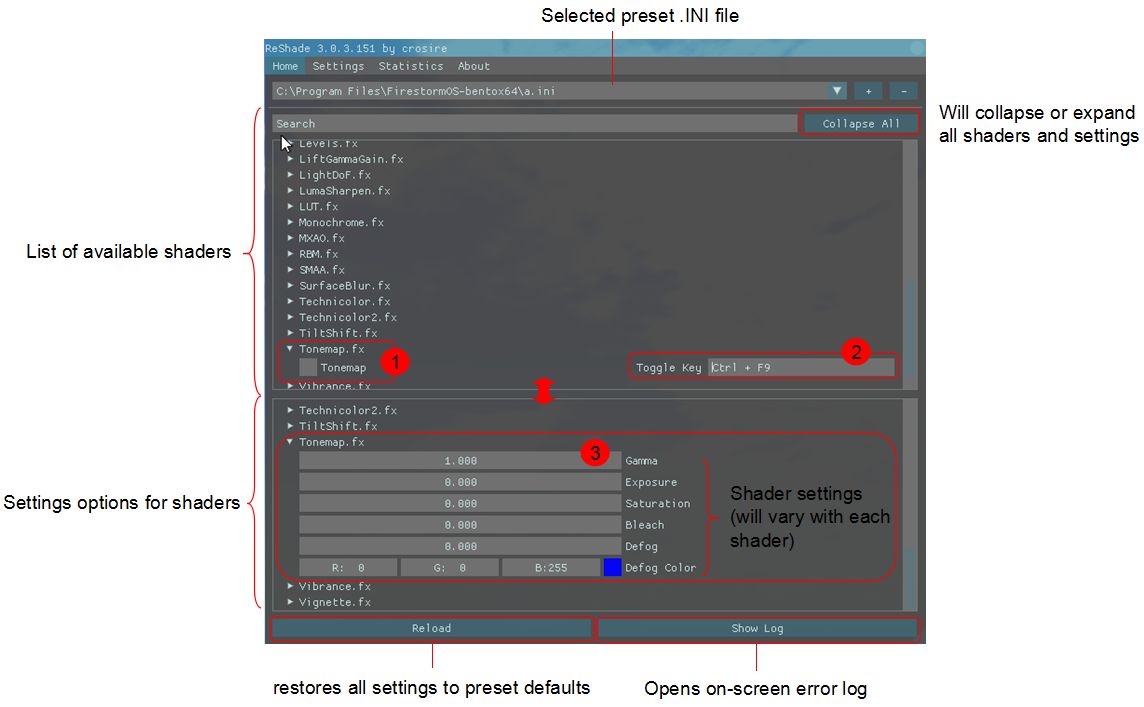
The Reshade Home tab
The Reshade Home tab – click for full size

This comprises 5 sections:

  • Preset selection area (top), with + (create a new preset INI) and – (delete selected preset INI)
  • The shader search bar  – type in all or part of a shader to display just that shader and its settings options. This also includes the Collapse / Expand toggle for opening / collapsing all shaders in the upper and lower panes of the tab
  • A scrollable list of available shaders. Clicking on any one of these will open it to display the activation button (1), above, and the hotkey toggle option (2), above – you can type-in any key combination you like here to automatically select the shader.
  • A scrollable list of settings, by shader (3), above).
  • The Reload button (reset everything to defaults) and Show error log buttons.

The two main panes in the tab – shader list and settings – can be adjusted by clicking on the divider between them and moving it up or down.

Continue reading “Revisiting the Reshade injector with Second Life” →

The Summer and Winter Winds of Second Life

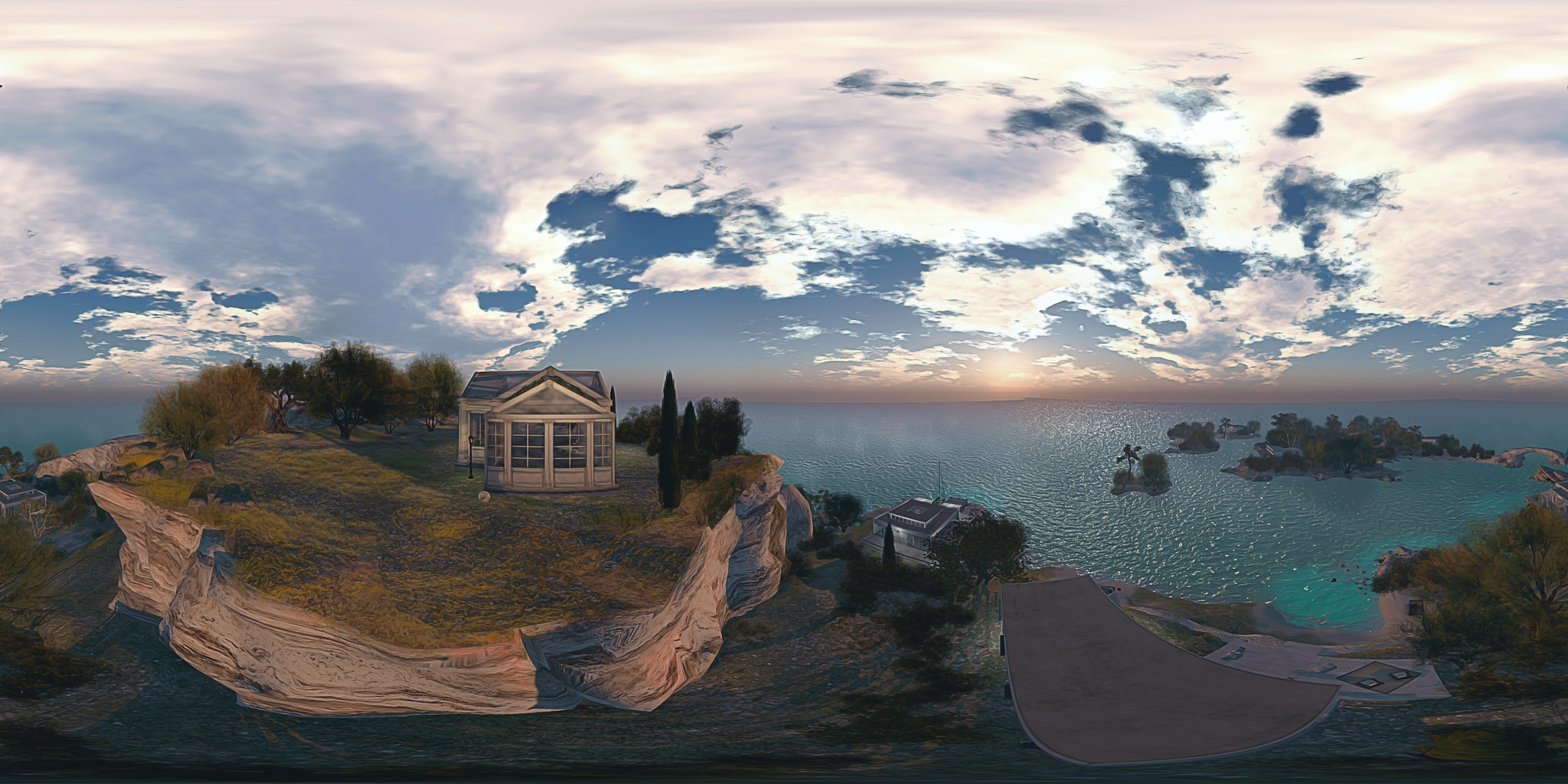
Summers Wind; Inara Pey, October 2016, on Flickr Summers Wind – 360 image, click to open and scroll

The summer wind, came blowin’ in from across the sea
It lingered there to touch your hair and walk with me
All summer long we sang a song and then we strolled that golden sand
Two sweethearts and the summer wind.

So open the lyrics to Summer Wind, Johnny Mercer’s 1965 re-working of the lyrics from German Der Sommerwind by Hans Bradtke (music by Heinz Meier). It’s a song perhaps most associated with Frank Sinatra, and I mention them because the song popped into my head as Caitlyn and I explored the sister regions of Summers Wind and Winters Wind – and the more I thought about it, the more appropriate the song seemed to fit the regions.

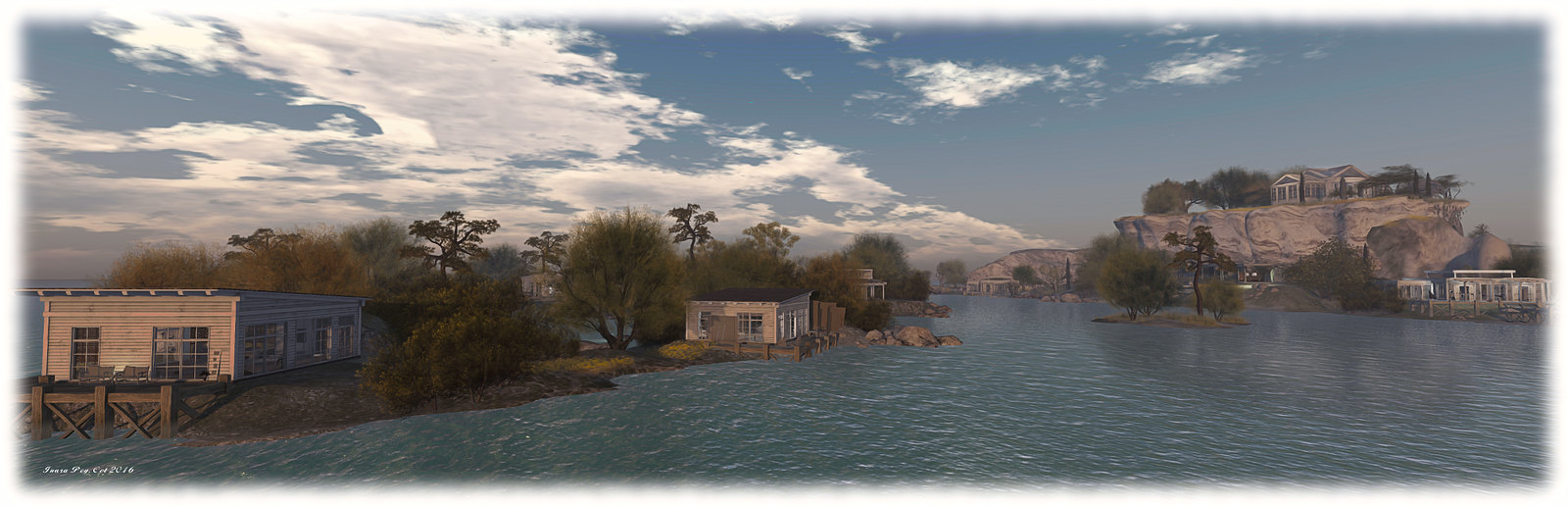
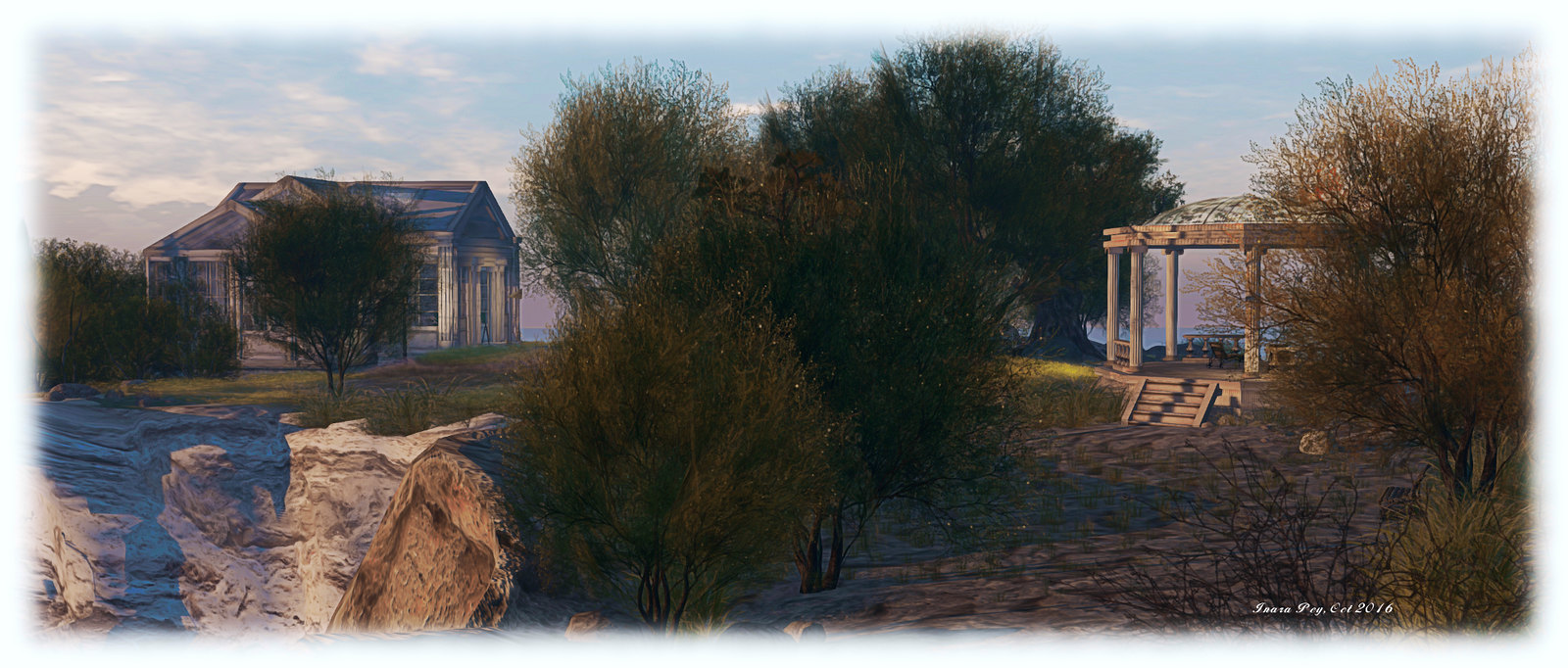
Both of these regions – a full sim and a homestead respectively – have been designed by Mexi Lane, of MIC- Imagin@rium art region fame, together with mesh specialists. MIC- Imagin@rium may have passed into history, but the influences of Mexi’s Greco-Roman design there are clearly evidenced in Summer Wind, which offers a mix of public, residential and commercial facilities in what can only be described as a stunning landscape, beautifully and imaginatively put together to present a location which is quite unique among Second Life regions.

Summers Wind; Inara Pey, October 2016, on Flickr Summers Wind – click any image for full size

The landing point is located towards the centre of the region, nestled between the vertical shoulders of huge, grass-topped mesas, the ground feeling like narrow canyons running between them. A well is close to hand, as is a bicycle rack for those who fancy riding through the region – although using your pedal extremities for walking is by far the best way to find your way around; bikes and stairs often don’t mix!

Those familiar with MIC- Imagin@rium will immediately feel a sense of familiarity here: the windlight offers a similar just-before-dusk setting Sun, the rocks and vegetation all have a faintly familiar feel, while a quick glance down along the canyons will reveal hints of Greco-Roman architecture marking the fronts of commercial premises hewn out of the huge bulk of the mesas. For a more direct homage, see the name of the conference centre sitting atop one of the mesas.

Summers Wind; Inara Pey, October 2016, on Flickr Summers Wind – click any image for full size

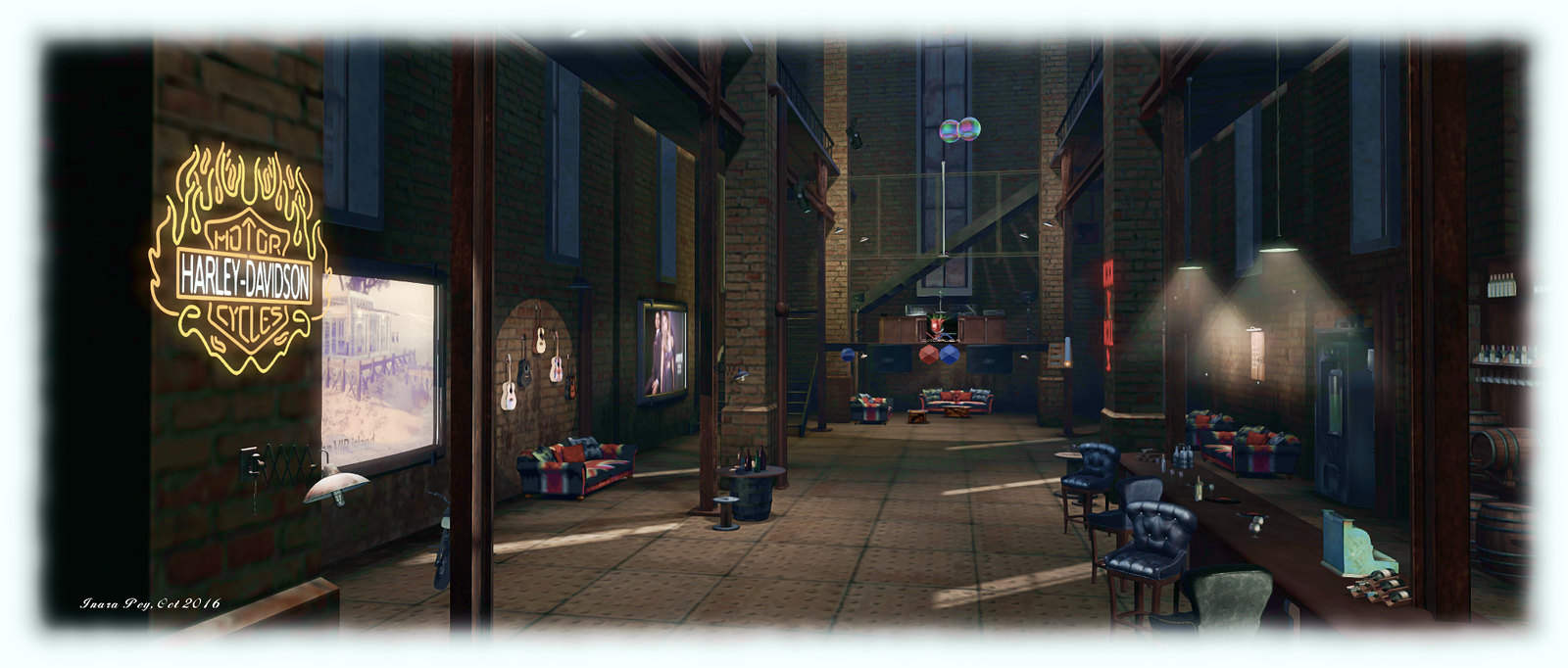
Close to the landing point is the entrance to the Peperonico Club: a narrow tunnel mouth which gives little away as to what lay within; the rocks of the mesa have been beautifully custom-made to surround the steampunk factory by Hattie Panacek (Hatris Panacek), its interior made into a very cosy club in which Caitlyn and I felt completely at home, thanks to the roaring fireplace on the upper mezzanine, and the ample use of the Union flag in the design :).

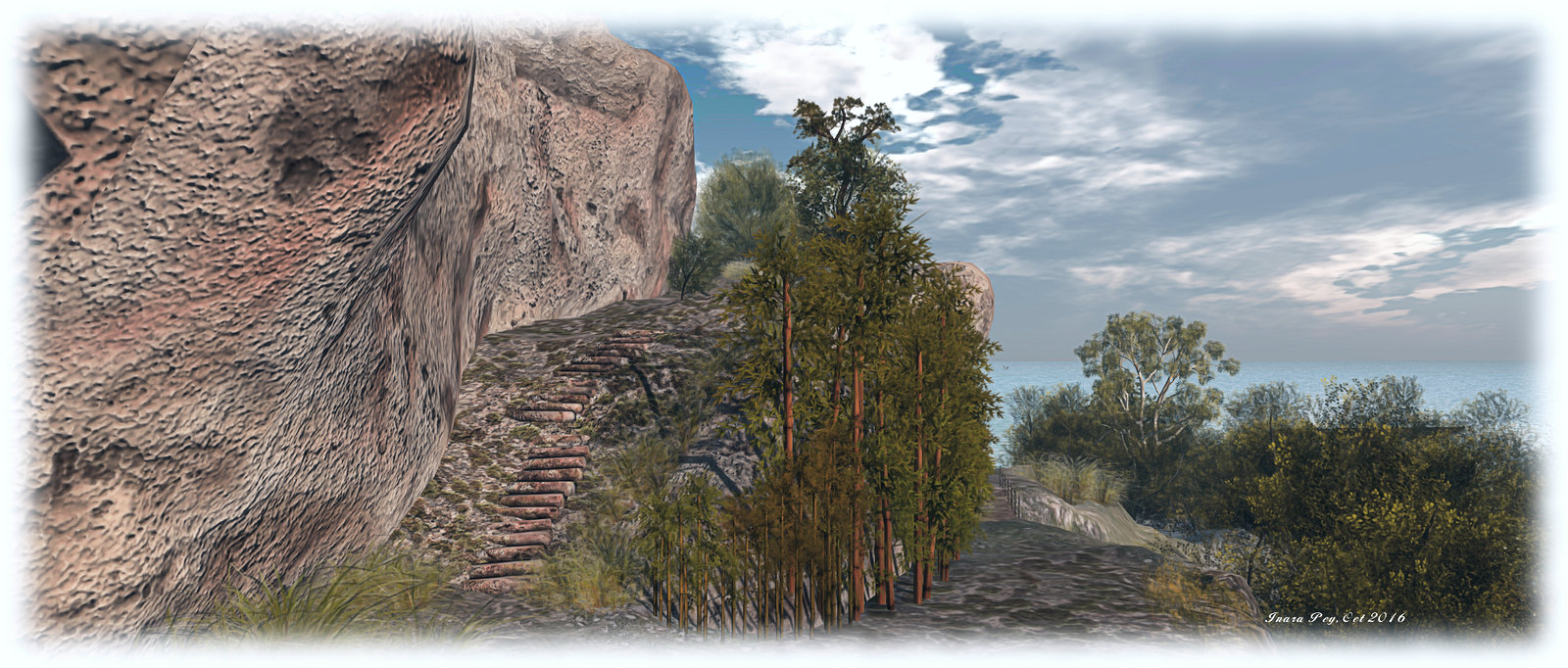
Tunnels, steps and paths are the secret to finding your way around Summers Wind. Ground level paths wind between the tall cliffs and eventually to the low-lying coastal areas with shingle beaches, grassy paths and rich foliage. Private residences occupy the western curve of the region, facing out to sea and screened from the public paths by trees and bushes. To the east, at the foot of the cliffs lie more caves and places to relax, including a waterfall-fed spa in a broad cavern.

Summers Wind; Inara Pey, October 2016, on Flickr Summers Wind – click any image for full size

More residences lie to the north – so take care to avoid encroaching on privacy there as well, where a stone bridge leading to Winters Wind can be found. This forms a spur of land curving northwards to cup the waters of a bay, with smaller islands sitting just off of it. Houses and cabins are scattered among the tress and on the sands, when a single footpath through the middle and the arc of a beach offering the only public areas here.

The beauty of Summer Wind lies in the almost entirely custom nature of the landscape: the cliffs and mesas, with their steps and arches, tunnels and grassy footpaths, have been specifically designed to fit the region. The result is a place that is both unique to Second Life, yet delightfully Mediterranean in look and feel; a place which might be found on a remote part of the Spanish or Italian coast, or equally somewhere on the Aegean coastal regions.  The design means there is plenty to see, so if you tire of walking, keep an eye out for the teleport network of urns lying half-buried in the ground to whisk you around.

Summers Wind; Inara Pey, October 2016, on Flickr Summers Wind – click any image for full size

And the link to Mercer’s song? Well, that comes not only from the strong Italian flavour in the design of Summers Wind and Winters Wind, but also because the original Der Sommerwind was a song about the changing seasons, using the Sirocco wind of the Mediterranean as a metaphor; so using the song as a metaphor for the beauty of these regions seems entirely appropriate.

 SLurl Details

Stories at the Park: a personal review

The authors and storytellers: Caledonia Skytower, Trolley Trollop and R. Crap Mariner

On Sunday, October 16th, Holly Kai Park hosted the third in our join series Stories at the Park, run in partnership with Seanchai Library. It features stories and poems written about the art on display at each Art in the Park exhibitions read live in voice by the authors or members of Seanchai library.

Attending these sessions has always been fascinating for me. Writing is a passion, but the concept of encapsulating a story in just 100 words is something I find impossible to achieve. So, witnessing others do so and produce pieces with such incredible depth, and emotive power and range, always astonishes me.

Folk gather to hear the October Stories at the Park, October 16th, 2016

Stories at the Park also offers a unique way in which the art on display at Holly Kai Park can be interpreted – through the words and eyes of others. For me, the stories and poems presented at each session never fail to open a whole new world of perception and narrative around a piece of art. And when there are two or three pieces written on the same piece, then the floodgates of thought and viewpoint are thrown wide.

The most recent event was no exception. In all, 32 stories and poems presented by the combined talents of three friends I admire very much: Caledonia Skytower, Trolley Trollop and R. Crap Mariner. The range of style and depth of interpretation of various pieces currently on display at the park was again captivating; laughter, tears and quite contemplation flowed through the session as stories were read and poems recited.  

Gates of Melancholy; Inara Pey, June 2016, on FlickrWyeth Remembered (Gates of Melancholy) beautifully brought to life in prose by Trolley Trollop

This event was also very personal for me, given I’m exhibiting at the park; I confess to being both curious and nervous about how (and even if) any of my photos might be expressed by others. But what I heard left me amazed and stunned by the richness of interpretation; I found myself smiling, nodding, laughing in delight, and  – in the case of one piece in particular, taking a tissue to watery eyes.

Thank you, Trolley, for your wonderful interpretation of  Wyeth Remembered, it beautifully reflects the narrative I had for the piece. so much so, that I now wish I’d given it the name which first came into my head: Absence. Thank you Cale and Crap for also bringing my images to life so evocatively; you have me by turns smiling, laughing and looking afresh at my own images as I read and listen to your words.

It’s fair to say that Stories at the Park started as something of an experiment cooked up by Caledonia and myself. Having now experienced the event from both sides of the isle, so to speak – audience member and exhibiting photographer – I’m more than ever convinced that the series offers a very unique way to appreciate art in-world, and also to gain familiarity with in-world storytelling. My thanks to all the artists participating in Art at the Park and to Seanchai Library for making these events possible.

Our next session, featuring a new line-up of artists, stories and verse will be on Sunday, November 20th, 2016 at 15:00 SLT; I hope you’ll mark it in your diaries and join us. In the meantime, please do hop over to the Holy Kai Blog, where you can read all of the stories and poems from October’s event, and please be sure to visit the exhibition in-world before it closes on Sunday, October 23rd, 2016.

Links Summary

A Shattered Masquerade in Second Life

Darkness Prevails - Shattered Masquerade; Inara Pey, October 2016, on Flickr Darkness Prevails – Shattered Masquerade – click any image for full size

Note: Darkness prevails has closed.

Darkness Prevails – Shattered Masqueradee is a new role-play environment by Lokhe Angel Verlack (Jackson Verlack) and Miza Cupcake Verlack (Mizaki), based on the Worlds of Darkness (WOD) universe. It has just moved to a new full region, and is open for business, although some work is still continuing in developing RP locations. Regular readers of this blog may remember that Lokhe and Miza previously operated another WOD inspired role-play realm, World of Darkness: Château Village, which I wrote about back in October 2015. So, are the two connected?

“This is entirely separate from Château Village,” Miza told me as we toured the region together. “We actually started Shattered Masquerade in September, with a half-region build we called The Oasis, that was a starting point for our story. We’re now moving things on from there, expanding things to offer more opportunities for free-form role-play. There are no meters, and we’re letting the story unfold in a gentler way for now; the first chapter in the 1/2 region had a lot of action.”

Darkness Prevails - Shattered Masquerade; Inara Pey, October 2016, on Flickr Darkness Prevails – Shattered Masquerade

The Oasis set the scene to the unfolding story: in the 23rd Century, Earth has been ravaged by a war caused by the shattering of the masquerade: the barrier which kept humans from seeing all the supernatural beings living among them: vampires, werewolves, demons, fae folk, who had previously gone about their lives out-of-sight of mortals.

The war ultimately ravaged Earth, with humanity fleeing to a terraformed Mars, returning only to end the war by turning Earth into a prison for the other races, who were used as sport and for experimentation. But when the orbital station providing protection for the humans on Earth is destroyed, those on Earth find themselves trapped on Earth, cut-off from Mars and forced to face survival in a hostile environment and among potentially hostile races.

Darkness Prevails - Shattered Masquerade; Inara Pey, October 2016, on Flickr Darkness Prevails – Shattered Masquerade

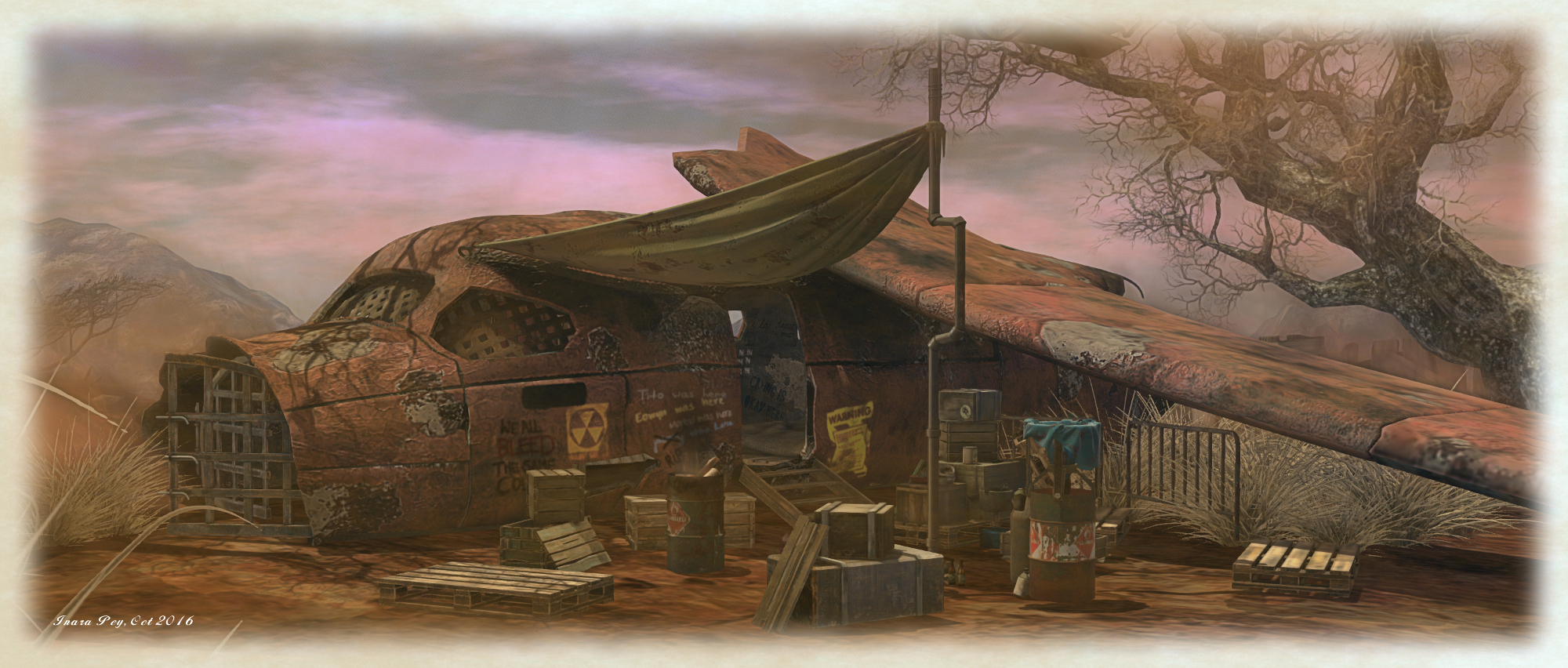
From the arrival point, where one can learn more about RP here, pick their preferred race and tribe / group (and casual visitors / those interested in joining the RP) can pick-up an Out Of Character tag, which should be worn at all times within the region. From here, a teleport delivers folk to The Wastelands – ravaged Earth – at ground level. This is a harsh, rugged place where little vegetation remains, and the land is cast under a dust-laden sky. It is home to the human settlement, commanding the highest point in the land, and the neutral marketplace  where the various races come together to banter and trade – the one place where fighting of any description is not tolerated, for the good of all. Also to be found here, tucked away under the lee of rocks and cliffs, is a small clinic.

Further afield, and awaiting discovery are the portals leading to Arcadia, realm of the changlings – fae folk, darklings, etc., and the Caves, realm of the werefolk. Both offer very different environments to the ramshackle human habitation, suggesting the non-human races have tighter, more settled social bonds and structure. A further realm, the Underworld, is under construction, and will be coming on-line soon.

Darkness Prevails - Shattered Masquerade; Inara Pey, October 2016, on Flickr Darkness Prevails – Shattered Masquerade

“We’re open for players now,” Miza told me of the region’s status. Those wishing to join the role-play are encouraged to visit, explore and then complete the on-line application form. The rules are fairly straight-forward, in keeping with the wish to generate free-form role-play with multiple threads, and rentals are available for players wishing to make Shattered Masquerade their home.

The free-form element offers plenty of opportunities for player to develop their own stories and plot lines, whilst also allowing the admins to gradually add story arcs as well – such as the potential for a mission from Mars arriving to learn why the space station fell silent. “So that’s good for story evolution,” Miza confirmed, “but the emphasis is really to keep things loose, and let people have fun.”

Darkness Prevails - Shattered Masquerade; Inara Pey, October 2016, on Flickr Darkness Prevails – Shattered Masquerade

You can find out more about Darkness Prevails – Shattered Masquerade by visiting the official website, where there is plenty of information on back story, races, the rules of play, together with the aforementioned application form.