Patankar’s peace in Second Life

Patankar – click on any image for full size

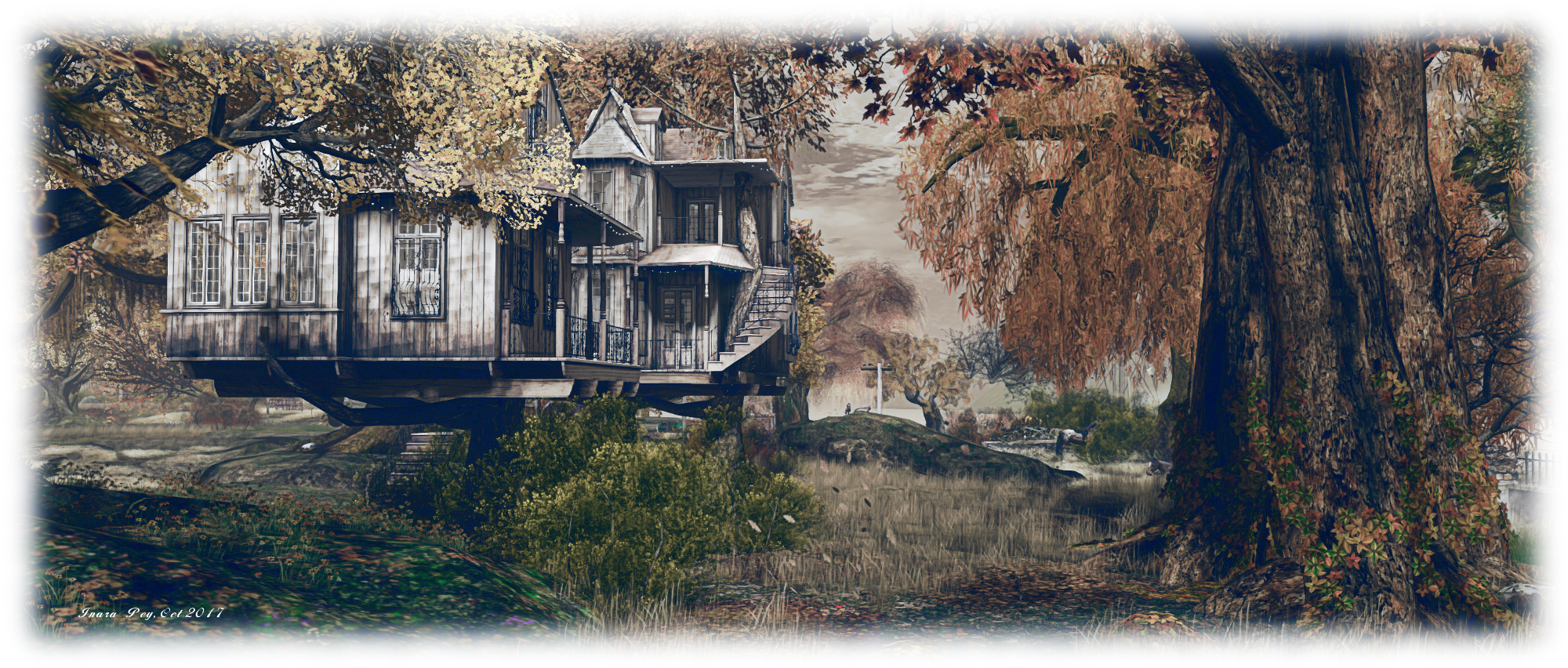
Patankar is one of those places to which we all want to escape every once in a while. A corner of the world where worries and needs can be forgotten, and you can lose yourself in the landscape, wandering where you will, or idle on a sandy beach, or sit and watch the local wildlife and livestock while your mind wanders wherever it likes.

Designed by  Dama (Damatjo Magic) and Alex Broxy (FullD2), Patankar is a beautifully conceived homestead region, the majority of which is open to the public to explore and appreciate. The only exception is a private home in then north-west corner of the region which is off-limits to causal visitors.

Patankar

There doesn’t appear to be a set landing point (although the pier has a welcome mat / group joiner), and the landmark I’d been passed dropped Caitlyn and I neatly towards the south-east corner of the region, where a board walk snakes its way from dusty track and along the edge of a beach to where a small stream tumbles over rocks the reach the open sea. Curving around the south-western sides of the island, the beach offers little places to sit, both out in the sun and under canvas shade, separated from the rest of the land by two scrawny hillocks.

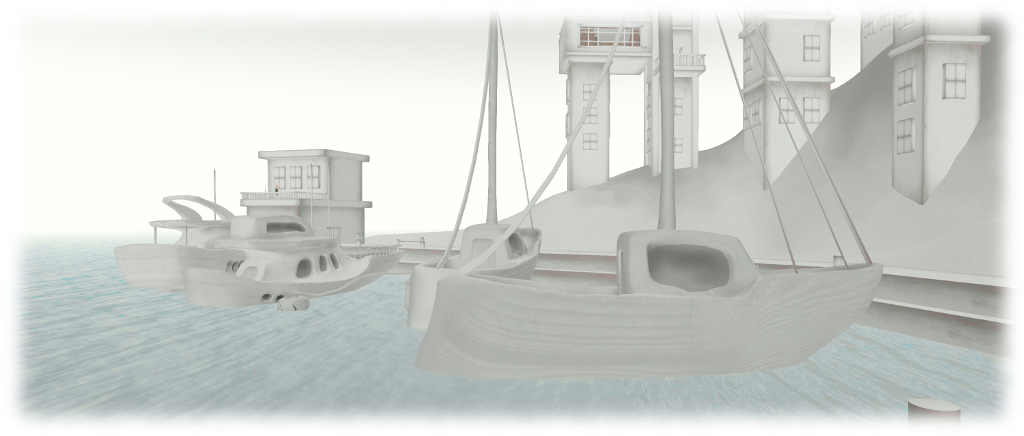
A little further northwards, between the beach and the private residence, there sits the long finger of the aforementioned pier, pointing out to sea and reached by a broad set of wooden steps. Not far away, the island’s dusty track meanders past before turning sharply inland. Follow it, and you’ll quickly reach a T-junction – one of several which split the track as it weaves across the island. The left fork of this particular junction points the way to a Tuscan-style farmhouse, while to the right, a wooden bridge spans the stream before the track forks again.

Patankar

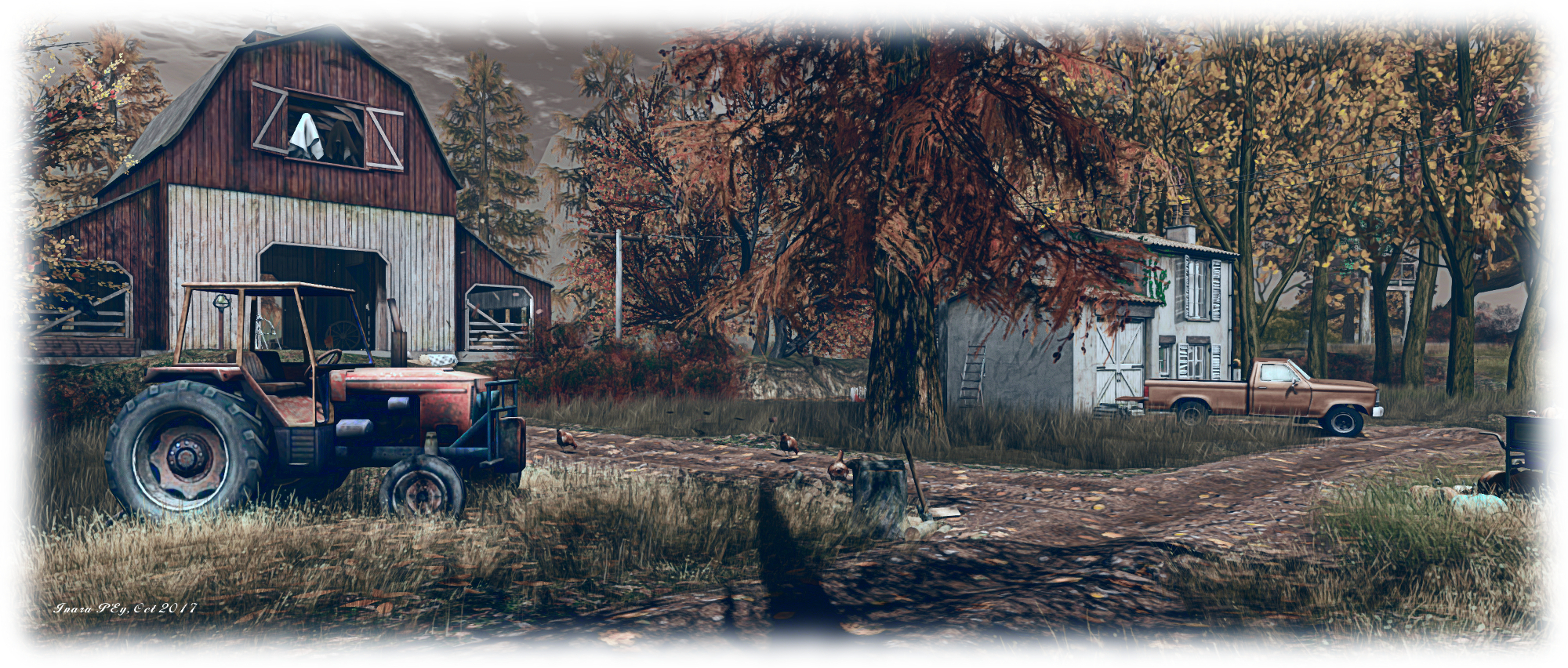
A second small farmstead sits near one arm of the track as it curls back to the stream and another bridge. Horses graze in a small paddock next to the tin-roofed farmhouse, a tractor parked and waiting close by. Behind the farmhouse the land rises sharply into a rugged hill, the abode of goats but with a path winding up through it. Those willing to take the hike along it can be rewarded with time in a hot air balloon; those less inclined to make their way to the peak will find several places to sit down and take in the scenery along the way – although the view from the peak really is worth the effort!

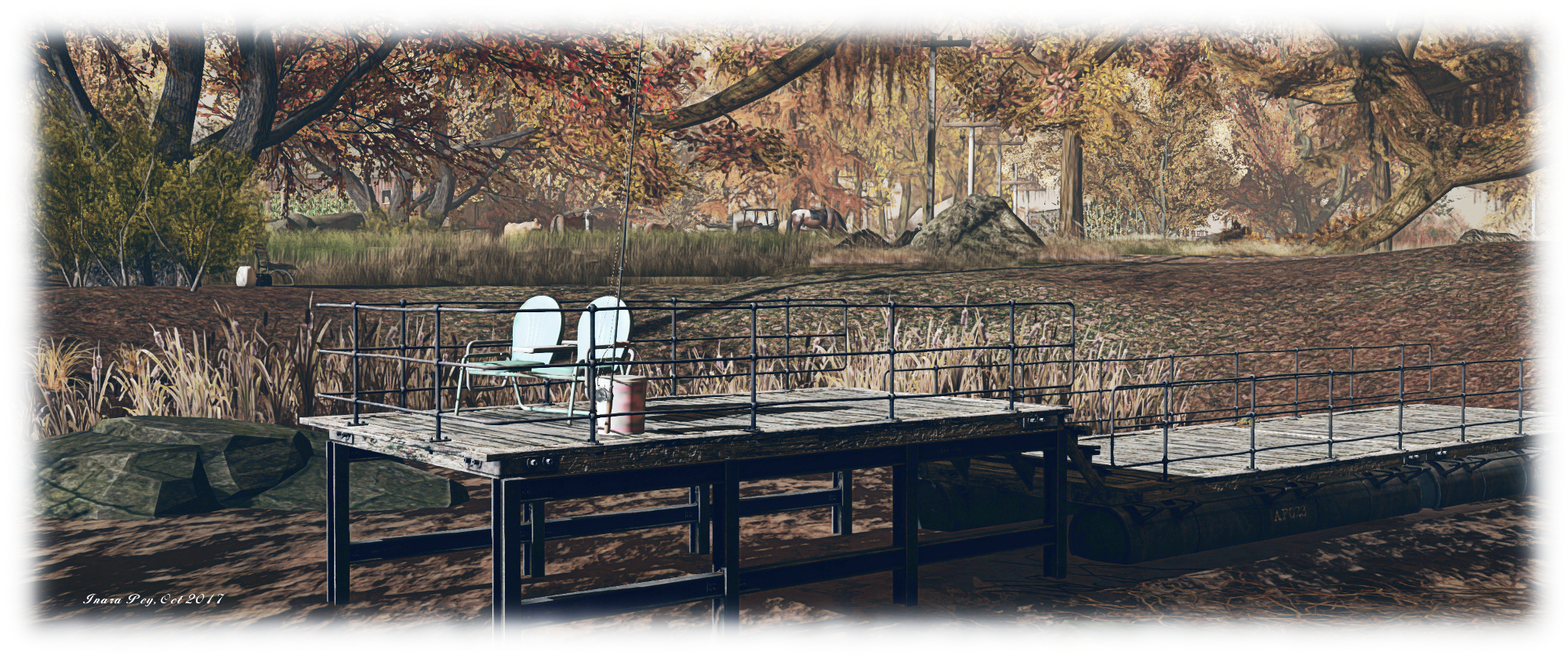
Sitting in the lee of the hill stands a wooded copse, blankets spread on the ground or on tree stump, awaiting those seeking rest. Not too far away, a little dock offers a view eastwards out over the sea, and more places to sit.

Patankar

And even with all this, the region still has more to offer – such as the little island to the north-east, or the stepping-stones criss-crossing the small lake to the south, where an upturned rowing boat leans on its prop to offer a secluded snuggle spot beside the water. In fact, wherever you roam, you’re bound to find places to sit and relax, and cuddle or chat, such is the welcome to be found throughout the region.

Complete with an appropriate sound scape, Patankar is a genuine delight – yes, there is the odd tree and bank levitating very slightly above the ground, but these don’t change the fact that the region has been put together with a considerable amount of love; nor do they make it any the less photogenic. This is very much a place to be visited, savoured, and enjoyed.

Patankar

SLurl Details

  • Patankar (Family Dreams, rated: Moderate)
2017 Raglan Shire Artwalk: call to artists

2016 Raglan Shire Art Walk

The Raglan Shire Artwalk is  one of the staples of the SL art calendar, and for 2017 will take place between Sunday, May 14th and Sunday, June 18th, inclusive, as a part of Raglan Shire’s 10th anniversary celebrations.

Every year over 100 artists and residents in Second Life display 2D and 3D art across a number of exhibition spaces across all the regions of the Raglan Shire cluster. 2D art is displayed on hedgerows in and around the regions, offering visitors the chance to view pieces as they explore the Shire, while sculptures and 3D art is displayed in a number of designated areas across the regions.

Those wishing to exhibit their work at the 2017 Artwalk are invited to complete the  Artist Registration Form, which should be submitted for inclusion no later than 21:00 SLT on Sunday May 7th, 2017.

2016 Raglan Shire Art Walk

There is a full set of guidelines and requirements for participation in the event, but in brief:

  • The event is a non-juried show
  • Artists can display more than one piece if they wish
      • 2D (“flat” art pieces will be awarded a maximum of 15 prims, and individual pictures should be 1 prim, including the frame
      • 3D art (sculptures, etc.), will be awarded a maximum of 500 prims for up to three pieces of work. Artists are requested to state the number of prims per piece in their application
      • Sales of art are allowed
  • Types of art supported by the show are: representations of RL photography, painting, drawing, printmaking, collage, and digital fine art that can be displayed on a prim;  and SL photography, manipulated SL photography and SL sculpture.
  • Pictures of RL crafts, such as beadwork, leatherwork, etc., are not part of the show’s  definition
  • All the above art forms are welcome, but should be rated PG / G – so no nudity, please!
  • Group membership will be required in order to display work
  • Questions and enquiries should be forwarded via note card to Artwalk Director Karmagirl Avro, or Artwalk Assistants Kayak Kuu & Trebek Raymaker.

Key Dates

  • Sunday May 7th: Applications close at 21:00 SLT
  • Tuesday, May 9th: Notification of exhibit space location issued to artists
  • Friday, May 12th / Saturday May 13th: Artist set-up days
  • Sunday, May 14th: ARTWALK OPENS
  • Sunday, May 25th: Artwalk closes
  • Sunday, May 25th (after 18:00 SLT) / Monday, May 26th: Takedown of works.

Related Links

Melusina’s American Icons in Second Life

American Icons

At the start of April 2017, I wrote about Melusina’s World of Details exhibition in Second Life. She’s now opened a second exhibition for the month, and it might be considered something of a companion to it, presenting something of a joint visit opportnuity. .

American Icons is a celebration of the great symbols of Americana in Second Life, all portrayed through Melusina’s signature close-up style of photography which is so distinctive and so creative.

American Icons

In writing about the exhibition, she notes, “Since SL is a world made by residents, the choice of things they reproduced in this world looks like a catalogue of that can be called ‘icons’. That includes typical landscapes, historical symbols, daily life objects and places, roadside architecture, vintage objects and much more.”

So it is that we’re presented with 29 images of items and locations which are so emblematic of America and American culture. Sky scrapers, roof-top water towers, tower cranes, plains or wheat, roller coasters, motels, hotels, the diner and perhaps the greatest symbol of America of all – the motor car – are all gloriously celebrated.

American Icons

But given this is Melusina, there are not simply postcard snaps of Americana in Scone Life; these are considered studies, where the beauty lies not in sweeping vistas or ranks of gleaming gas-guzzlers, but in the detail: and flash of sun reflected off of wheel rim and polished chrome; the gaudy brilliance of vinyl upholstery and steel-edged tables with their Formica tops; the blast of steam between an old rooftop water tank and the silhouette of a construction crane.

Each piece offered is evocative and eye-catching, and the exhibition itself is being held in one of the most iconic American-style regions in Second Life, the outstanding The Last Forever. Itself a work of art, the region encompasses so much about middle America, it has become a popular feature of SL photographers and blogs. As such, both the exhibition – which you can find  at the Marfa Contemporary gallery, just across the road from the main landing point – and the region make for an excellent visit.

American Icons

SLurl Details

American Icons (The Last Forever, rated:  Moderate)
The Anthropic Principle in Second Life

The Anthropic Principle – Gem Preiz

“I want to give the feeling that you’re an explorer, only having the tale of one man, written in a little book, to guide you,” Gem Preiz says of his latest installation The Anthropic Principle, which Caitlyn and I have the privilege of exploring ahead of the official opening on Thursday, April 20th. And truth be told, hat’s exactly the feeling he has created.

As one might expect given the focus of Gems work, fractal art plays a role within the installation,  and visitors do undertake a journey through various spaces to view them. But the familiar journey and the art itself are only a part of things. The Anthropic Principle is a piece which binds together many parts: storytelling, a contemplation on religions, extra-solar life, the nature of human origins and philosophy, in a world which has a highly effective, TRON-like feel to it.

The Anthropic Principle – Gem Preiz

In particular, and as the title suggests, it draws upon the anthropic principle, a philosophical consideration that observations of the Universe must be compatible with the conscious and sapient life that observes it. In particular, the installation draws upon the weak anthropic principle as Brandon Carter, an Australian theoretical physicist, first employed the term in its contemporary form.

If this sounds terribly dry – don’t be fooled. Gem utilises the anthropic principle as a foundation upon which to build a story, a story visitors use as a guide to their travels through a series of cityscapes. Broad in scope, the story encompasses the recent discovery of the TRAPPIST-1 planetary system (which you can read about in this blog here, here and here), and well as touching upon one of his previous exhibitions, Wrecks (which you can read about here), to present an installation which is both fascinating to explore and which gets the grey matter working!

The Anthropic Principle – Gem Preiz

A journey starts with some simple instructions: on arrival, set your viewer to midnight, make sure you have Preferences > Graphics > Advanced lighting Model checked and particles turned up (you don’t need to set draw distance to 400m, the spaces are all relative enclosed, and half that distance works fine). Then, grab the story from one of the cubes on the floor (English and French versions available), enable the audio stream, have a read (recommended) and – when you’re ready – head for the Stonehenge-like structure where a teleport awaits.

This will carry you to the first destination – a city on one of the distant worlds of TRAPPIST-1. You’ll learn about the first journey to this world through the worlds of an original explorer, whose tale is related through the words of the story’s protagonist. In doing so, you’ll also find clues to the route you should take through this maze of buildings and subterranean vaults, a place built be a civilisation remarkably similar to our own, and with similar broad religious beliefs, prompting questions on origins.

The Anthropic Principle – Gem Preiz

The story guides visitors through these places, each rendered in that TRON-like style, bright lines of colour – orange, yellow, white, blue, red – although the way is not always obvious. Within these realms are galleries (sometime one, sometimes more than one – look for the deep blue lines on floors and in entrances to rooms) where hang Gem’s magnificent fractal art pieces, all of them an integral part of the unfolding story.

From the city through to Hell and thence back to the city and onwards to Paradise, visitors are gently exposed to Gem’s take on the Weak Anthropic Principle (WAP), an interesting and thought-provoking idea that not only will a universe capable of supporting give rise to living beings capable of observing and reflecting upon it, but that those lifeforms, wherever they are spawned in our universe will pass along an almost identical evolutionary path, up to an including forms philosophies and religious ideals, architecture and more, which all stand as a reflection of our own civilisation through the centuries.

The Anthropic Principle – Gem Preiz

This really is a journey worth taking rather than describing. Not for the ideas that Gem gently puts forward, but because  whether or not you’re in the mood for philosophical conjuring, the various environments are really worth seeing, and the fractal art within them is, as ever, mind-blowing; each piece a story in and of itself.

And when you do visit, do make sure you have the accompanying sound stream playing.  The selections of Hans Zimmer’s music are remarkably apt, and Gem has clearly chosen the pieces with care: time and again both Caitlyn and I were struck by the perfect fit of music with our own rising expectations as we ascended ramps or descended stairs towards the waiting light of new rooms…

The Anthropic Principle – Gem Preiz

All told, a fascinating exhibition and another selection of stunning fractal art. When you have completed a visit and found your way back to the landing point, you can touch the poster there to visit No Frontiers, another of Gem’s installations (which you can also read about here), which is running concurrently with The Anthropic Principle through until the end of June.

SLurl Details

Niamh’s Journey of Dreams in Second Life

Niamh’s Journey of Dreams

Whilst it formally opens at 12:00 noon on Wednesday, April 19th, Niamh’s Journey of Dreams is already welcoming visitors and inviting them to explore and enjoy. The third in a series of watercolour like installations by Ceakay Ballyhoo, Niamh’s Journey of Dreams draws inspiration from further afield than her own writing, as was the case with A Watercolour Wander (reviewed here) and The Forest Beyond (reviewed here), calling upon Cybele Moon’s Tales of the Tuatha as its inspiration.

Cybele is better known in-world at Hana Hoobinoo. She is an extraordinarily gifted artist in the written word, spoken word, photography and art. Under her pen names of Cybele Moon and The Dune Mouse, she weaves marvellous stories, beautifully illustrated, while her art has been deservedly exhibited across Second Life.

Niamh’s Journey of Dreams

As such, a collaboration between Cybele and Ceakay was perhaps inevitable; both are joined by a love of art and storytelling, and Ceakay’s series of region-wide paintings-as-a-story approach to immersive art is an ideal vehicle by which Cybele’s stories and tales can be re-interpreted, presented and enjoyed.

Like her earlier installations in the series, Niamh’s Journey (if I might shorten it so), take the visitor on a journey through a landscape as a painting, the tale of Niamh’s attempts to retrieve her lost dreams gradually unfolding through the use of in-world story chapters, featuring Cybele’s own art as a background to the text (the chapters also present visitors with a note card of the text for easier reading, if required).

Niamh’s Journey of Dreams

Niamh’s Journey marks a more sophisticated approach to presenting a story than perhaps evidence previously; parcel windlights are used to change the environment (if you don’t have viewer support for parcel windlights but do have an extensive selection of windlight skies, you can use your viewer’s About Land floater to manuals change the environment with altitude), together with teleport portals to move through parts of the story, while Elwyn Lorefield provided assistance with scripting.

To say too much about the installation would be to spoil it – as with Ceakay’s earlier Wonder and Forest, this is an installation which should be experienced, rather than read about. Suffice it to say, an incredible amount of work has gone into it, and the creative spark between Cybele and Ceakay is clear throughout. At the end of the story you also have the opportunity to purchase art by Cybele and visit Ceakay’s store as well (a visit against recommended).

Niamh’s Journey of Dreams

The official opening on Wednesday, April 19th, will feature a tour of the installation, with Caledonia Skytower reading from Niamh’s tales.

Related Links

Of lepidopterans, owls, bugs and honey in Second Life

Butterfly Conservatory – click any image for full size

A little while ago now, I dropped in on the Butterfly Conservatory to grab a landmark with a view to a possible future blog post – and then promptly let it slip from my mind after filing it. Fortunately for me, there’s the weekly Destination Highlights, and the April 14th edition served as an aide-memoire, prompting me to suggested to Caitlyn we hop over and have a look around.

The work of Ry Heslop and Kacey Heslop (Kacey Delicioso), the Butterfly Conservatory occupies one half of a sky platform above their full region home, where it is located within a delightful garden suited to a range of viewer-side windlights.

Butterfly Conservatory

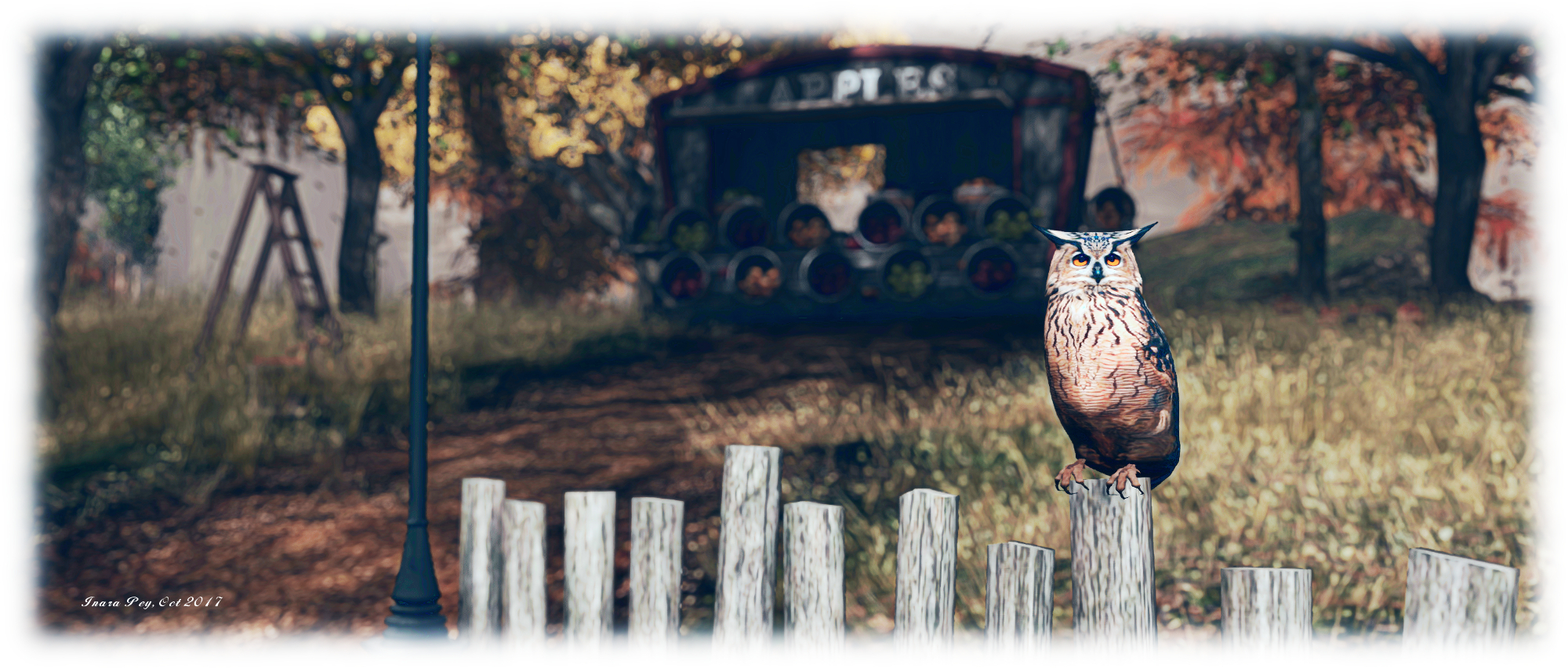
From the landing point visitors can follow the footpaths around the garden, either going directly to the conservatory, or taking a more extended walk among the trees and flowers. Along the way they can learn about owls, discover some of Ry Heslop’s photography (offered for sale), find places to sit and enjoy the setting, visit a behind glass collections of bugs and delve into the world of bees and honey.

The gardens are nicely laid out, the meandering path giving a feeling of size beyond that of the space it occupies, with the various points of interest well spaced out along it. The latter helps prevent any feeling of having a wall of information thrown at you every few metres.The display of creepy-crawlies is nicely presented, each of the bugs in its own case; the models are understandably oversized so thy can be studied more easily. The bee display is also nicely laid out, with hives and flowers and bees industriously buzzing around.

Butterfly Conservatory

Throughout all of this, little groups of butterflies can be found, circling plants and reminding us of the central theme of the gardens. The conservatory itself challenges visitors to find various families of butterfly among the plants within its walls. There are also information boards detailing the life cycle, anatomy and diet of the butterfly – although it would be nice to perhaps see a little more information on the individual families of butterfly represented.

A couple of other minor niggles also occurred. While having in-world display boards maintains a feeling of immersion, some might find them difficult to read. So providing an option for people to gain the info via note card might not go amiss. Also, while we’re warned that bees are endangered / critical to human life and challenged to help save them, we’re not told why (they are responsible for pollinating 70 of the 100 top crop species that feed 90% of the world) or how, thus the warning and challenge are diminished somewhat.

Butterfly Conservatory

Even so, the Butterfly Conservatory makes for an enjoyable and informative visit. It presents a nicely relaxed environment  with plenty to see and appreciate. So, if you’re looking for something just that little bit different to visit and explore, we can recommend a visit.

SLurl Details