The return of The Shire in Second Life

The Shire; Inara Pey, May 2018, on FlickrThe Shire – click any image for full size

We were delighted to receive an invitation from Ima Peccable to visit the newly re-opened The Shire, the enchanting Tolkien-themed region designed by Chocolate Aftermath, and which Ima is now helping to run. As it’s been over two-and-a-half years since our last visit, we grabbed the first eagle flight across the waters and dropped in for a visit.

For me, the great attraction with this region has always been the way it blends considered region design with a very Shire-like feel, where hobbits and Big Folk can mix.

The Shire; Inara Pey, May 2018, on FlickrThe Shire

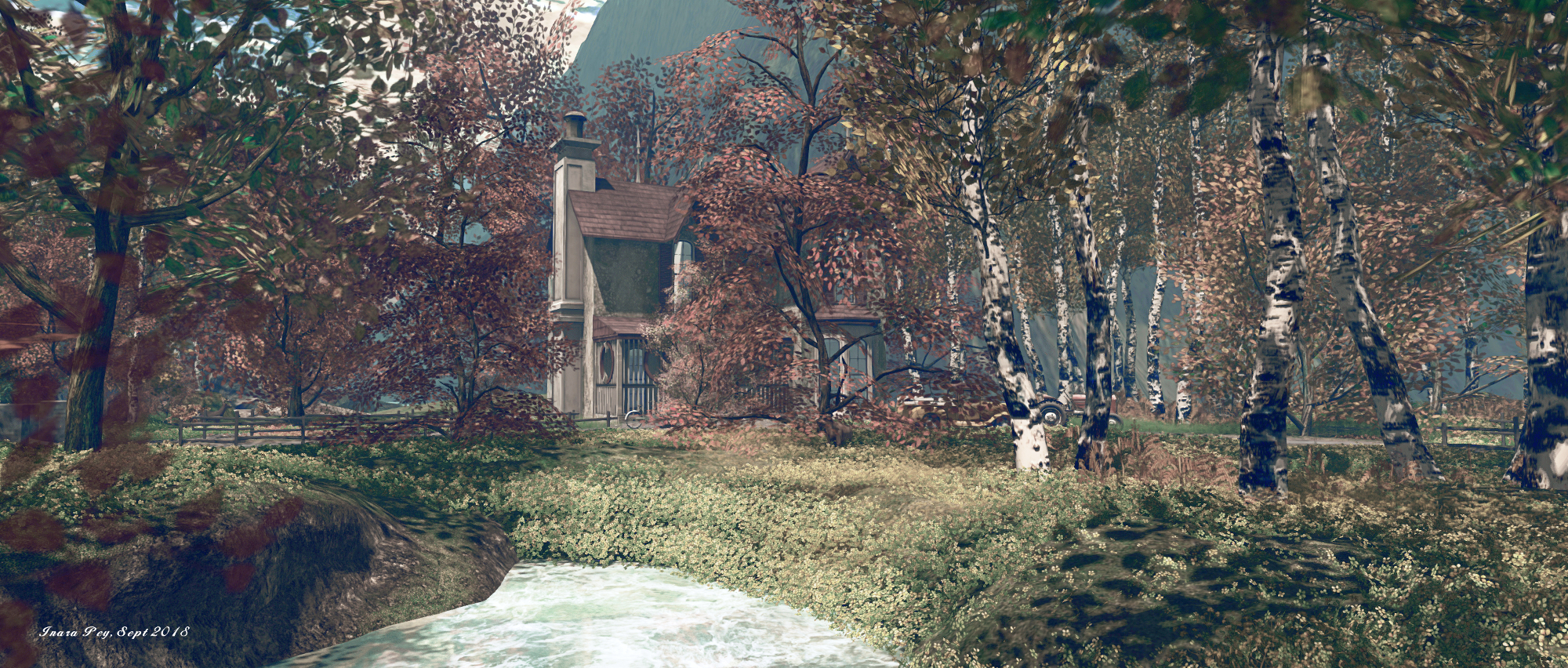
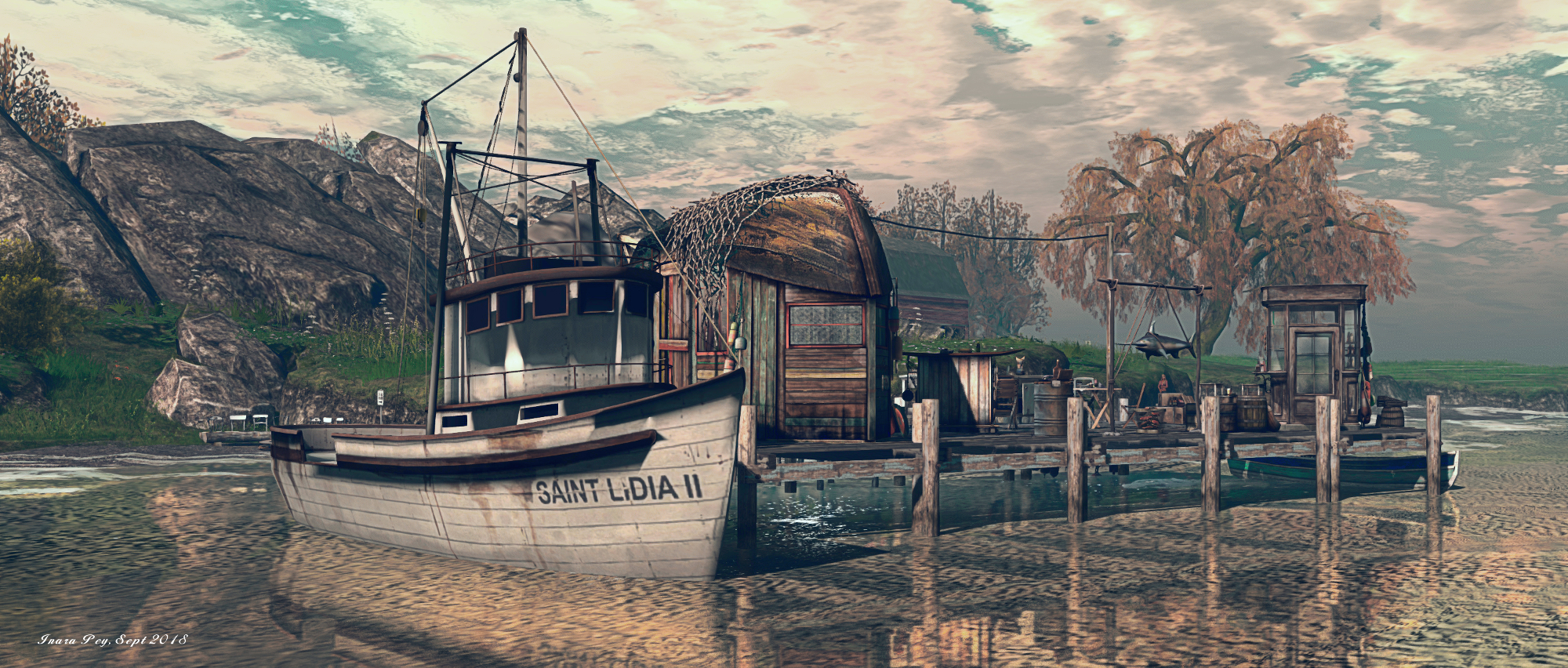
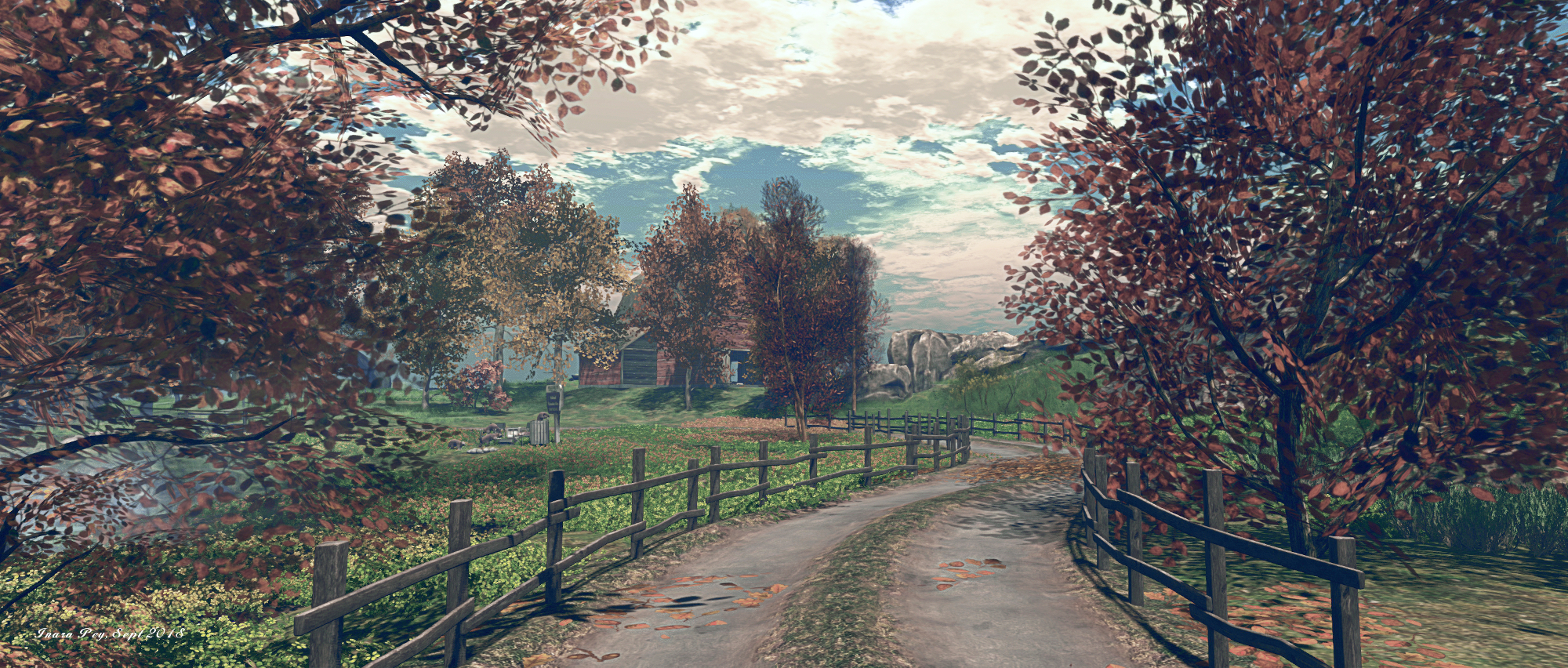
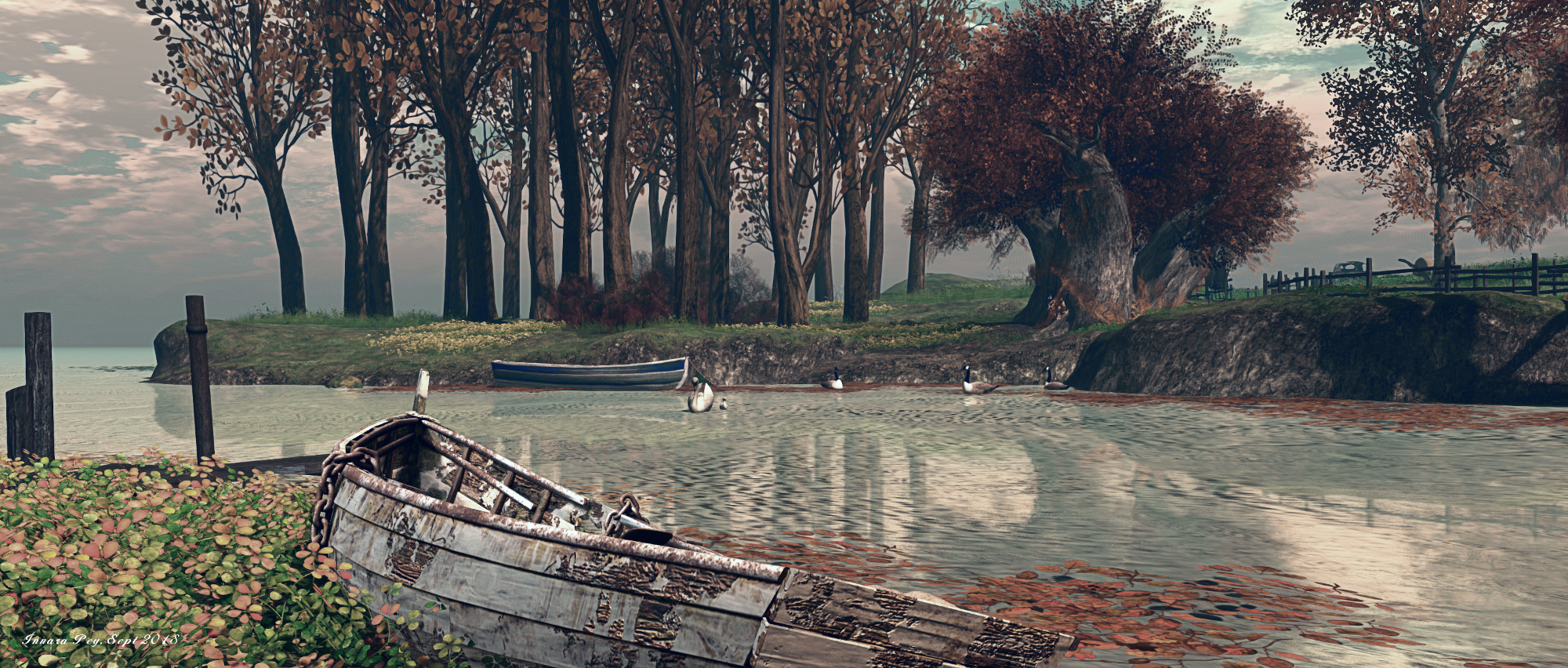
The new design for the region retains this feel, although the landscape is perhaps further removed from Tolkien’s Shire, being somewhat rugged and suggestive of a coastal region of Middle Earth, complete with multiple small islands lying off the main bulk of the land. There’s also more of an elven feel to the place than perhaps on our last visit, which harkens back to the time of my first visit in March 2015, when the region originally captivated my eye and heart.

I’m not sure whether it is merely a matter of the intervening years playing tricks on me or not, but this new iteration of The Shire seems to have more rental properties on offer than previous iterations. Nevertheless, it still has plenty for the casual visitor to see and appreciate, and the overall design means that it is hard to accidentally transgress into someone’s private space.

The Shire; Inara Pey, May 2018, on FlickrThe Shire

A good many of the rental parcels are located on the outlying islands or on small headlands extending from the main bulk of the land, with its public upland areas located atop the tall cliffs. It is here that the landing point sits within a pair of tree houses linked by a rope bridge and which is home to the rental map for the region. It shares the plateau with a garden area and a windmill, with different paths leading down from the plateau offer assorted ways to explore the region along its public paths.

The rental properties are a mix of hobbit holes and regular houses, while two towers suitable for wizards overlook the land. There aren’t intended for rent (as far as we could tell at least, but appear to offer high perches from which to look out over the land. Also to be found along the paths and trails leading around the region are elven-like gazebos offering places to sit under crystal domes – and in one case at least, a feast fit for a … hobbit; while out on a tongue of land stretching out into the water sits a larger structure, set for weddings or other celebratory events.

The Shire; Inara Pey, May 2018, on FlickrThe Shire

These seeking a place to live in Second Life that has its roots in fantasy but without overburdening rules might want to give The Shire a look; the mix of accommodation is rich and – for those wanting a little extra privacy – extends into the sky, where houses float serenely on little airborne islands of their own. Also scattered around the region are little reminders of Tolkien – such as the spider’s webs to be found here and there providing little echoes of a certain journey through Mirkwood, while mushrooms can also be found, offering another reminder of a path trod by a certain group of hobbits.

The public area of the region seems to be a little more limited that in previous iterations, and the outlying islands, while offering those renting them an added level of privacy, do tend to break up the land somewhat – there’s no direct route from them to the public places should residents wish to enjoy them. However, this doesn’t detract from the peaceful beauty of the region nor the opportunity to take photos or simply relax with a visit. Certainly, for those who wish to rent a parcel within The Shire,  the region has a lot to offer by way of finding a Homely House.

The Shire; Inara Pey, May 2018, on FlickrThe Shire

With thanks to Ima for the invitation.

SLurl Details

Cica at Paris Metro in Second Life

Paris Metro Gallery: Cica Ghost

Cica Ghost is widely known for her 3D art installations – which I always find a joy to blog about. Within many of her installations visitors will often find little two-dimensional stick figures, often animated. While perhaps less well-known to many more recent appreciators  of art in Second Life, is that these two-dimensional pieces are very much a part of Cica’s Art, and have formed central parts of past exhibitions she has displayed in-world.

A reminder of this can currently be found at the Paris Metro Art Gallery, which is hosting a modest but charming exhibition of Cica’s work, 2D and 3D. On display are five of Cica’s 2D art elements, four of them her wonderful stick figure characters: three framed, and the fourth to be seen riding his bicycle along one wall, appearing and disappearing at either end of the barn-like setting for the exhibition.

Paris Metro Gallery: Cica Ghost

Also on offer are several of the quirky (and fun) little vehicles Cica often provides within her 3D installations so that visitors can drive around in them.

The first of these – and one of my favourites – is the catomobile from 50 Cats (see here for more), just inside the gallery’s front entrance and sitting with the 2D art.beyond the dividing wall are six more of the vehicles, with the Catomobile, BirdCar and MouseCar offered as drivable models for pootling around the exhibition space. As well as these, the exhibition has elements visitors my recognised from installations such as the metals girders seen in the likes of Bird People (see here).

Paris Metro Gallery: Cica Ghost

This is small, uncomplicated exhibition, and a great introduction to Cica’s art for those unfamiliar with her larger exhibitions, and a great reminder of her past work for those who are.

SLurl Details

Seduction and Vettriano in Second Life

Seductions

Seductions is the title of a combined 2D and 3D installation by Alo Congrejo and Lorys Lane, with Alo providing the overall build and Lorys the photographs.

“[Seductions is] An urban pathway,” the artists state of the installation, “that guides the visitor through images representing the seduction in different fields and contexts.”

Seductions

It’s a curious piece; one suggestive of depth, but which can be can be slightly confusing in the manner, the images appearing to be at odds with the general geometry of the setting, in which cubes (including the rooms in which the images are displayed), squares, rectangles, cylinders, spheres, and so on, can draw the eye to them, and away from the photographs.

The images themselves, spread across a series of red rooms – the colour itself matching the core theme of the installation -, present multiple aspects of seduction, from couples becoming intimate through to the initiation of seduction – the use of undewear and nightgowns and slips; to the way casual or suggestive acts can lead to more intimate acts: the casual touch of hand on body, the more deliberate placement of a bare foot placed between spread thighs, the start of attraction in catching sight of someone across a room. It’s a fascinating range of images, each with a unique narrative – and some have something more – as the artists openly acknowledged.

Seductions

Jack Vettriano (born Jack Hoggan) is a self-taught Scottish painter, who images can encompass themes of seduction and acts of seduction (although his portfolio covers far more subjects). Several of the pieces within Seduction are offered as an homage to Vettriano’s work. Which they might be, I leave to you to decide; suffice it to say that they are presented in such a way to offer an homage without in any way being derivative – they are all of themselves unique in style and presentation.

And the setting? It exudes a certain amount of impersonality surrounding the photographs; this in itself fits the overall subject, as the act (or art) or seduction is a personal act, one that generally takes place in rooms and spaces away from the public eye, even as the world continues on around it: the ebb and flow of people in streets and places outside. Acts of seduction and intimacy can also cause embarrassment; hence, perhaps the reason for the 3D animated pieces: the offer the eye a “distraction” from the acts of – dare I say – foreplay depicted here.

Seductions

The setting also has another interpretation: acts of intimacy, of seduction, can be born out of the most unexpected encounters: a meeting on the street, at a café, in the midst of the bustle of daily life. Some of this is to be found within the photographs, and the setting itself offers a further echo of this.

Seductions is, as noted, a curious installation – but this is not meant negatively; the simple fact is, the more time spent within it, the more it engages the eye and mind, the 3D environment and the photographs working in unison to attract us and offer stories for our imaginations. From the landing point, take the teleport to the main platform.

SLurl Details

A Bay of Dreams in Second Life

Bay of Dreams; Inara Pey, April 2018, on FlickrBay of Dreams – click any image for full size

Solo Arte, the open-air gallery space for art and culture designed by Terrygold, is well-known for art displays and installations, as I’ve frequently covered in this blog. All of the art events at the venue have tended to be on platforms in the sky – Terry has designed a lovely outdoor urban setting, complete with small indoor galleries as well as the street-side areas for art displays, while additional installations can be set-up on their own platforms. This has tended to leave the ground level space of the quarter-region parcel unused where public access is concerned.

Or at least, it has until now. Bay of Dreams is a new ground-level setting Terry has created for people to enjoy – and it stands as another demonstration that you don’t have to have an entire region in order to create something special.

Bay of Dreams; Inara Pey, April 2018, on FlickrBay of Dreams – click any image for full size

“It’s inspired by the Canadian woodlands,” Terry told me as we explored the space. “We will also be hosting some parties and music events here, and people are welcome to explore the woodland paths and come here for a little peace.”

The setting has the feel of somewhere in the Rockies – the parcel is bounded on two sides by curtain walls of rock to separate it from its neighbours, the remaining two looking out over open Linden Water, which one might imagine to be the waters of a lake. Scotts pine vie with the rocky curtains for height, a grassy path winding its way eastwards through them from the landing point, while a raised wooden board walk curls back to the western edge of the parcel and a waterside venue space.

Bay of Dreams; Inara Pey, April 2018, on FlickrBay of Dreams – click any image for full size

A rectangular, lawned space bracketed to the north and south be a stage area and a pavilion-style bar respectively, and by water to the west and east, this events space is extremely attractive in design and layout. It’s fair to say – if an understatement – to say it embodies an artist’s eye, with simplicity of layout with a balance of design and placement of elements – notably pieces by fellow artists such as CioTToLiNa Xue – to create an elegant venue space. A wooden pier to one side offers a rezzing create where a canoe can be taken for a row out onto the southern waters – just be careful about paddling too far, as you might bounce off the region edge.

These southern waters are dominated by a near-nude rock that rises impressively from them. It is straddled by an equally impressive cabin crouching on study wooden legs rooted in the stone beneath. The cabin can be reached via two platforms at the base of the rock – against which a canoe can be moored – and ladder-like steps. For those who don’t like the idea of rowing to the rock, it can be reached via another wooden board walk.  This extends out from the eastern side of the woodland trail, winding its way over a small island between the shoreline and a the tall rock.

Bay of Dreams; Inara Pey, April 2018, on FlickrBay of Dreams – click any image for full size

Along the path to this board walk can be found a little camp site and a tiny waterfall tucked away under the cliffs bordering the parcel. The trail itself continues beyond the board walk to where a sign points the way to a little cove where people can sit or cuddle – or take a HUD from the sign at the water’s edge and go for a swim.

Bay of Dreams is a charming, extremely well designed environment put together with an eye for detail. It has a balanced elegance about it which gives life to the truism “less is more”. Should you enjoy a visit, please consider a donation towards the parcel’s upkeep, and if you want to keep abreast of events at Bay of Dreams and Solo Arte in general, consider joining the Solo Arte group.

Bay of Dreams; Inara Pey, April 2018, on FlickrBay of Dreams – click any image for full size

SLurl Details

Visiting the Apothecary in Second Life

The Apothecary; Inara Pey, April 2018, on FlickrThe Apothecary – click any image for full size

Update: The Apothecary has closed. Because of this, I’ve removed SLurls from this article.

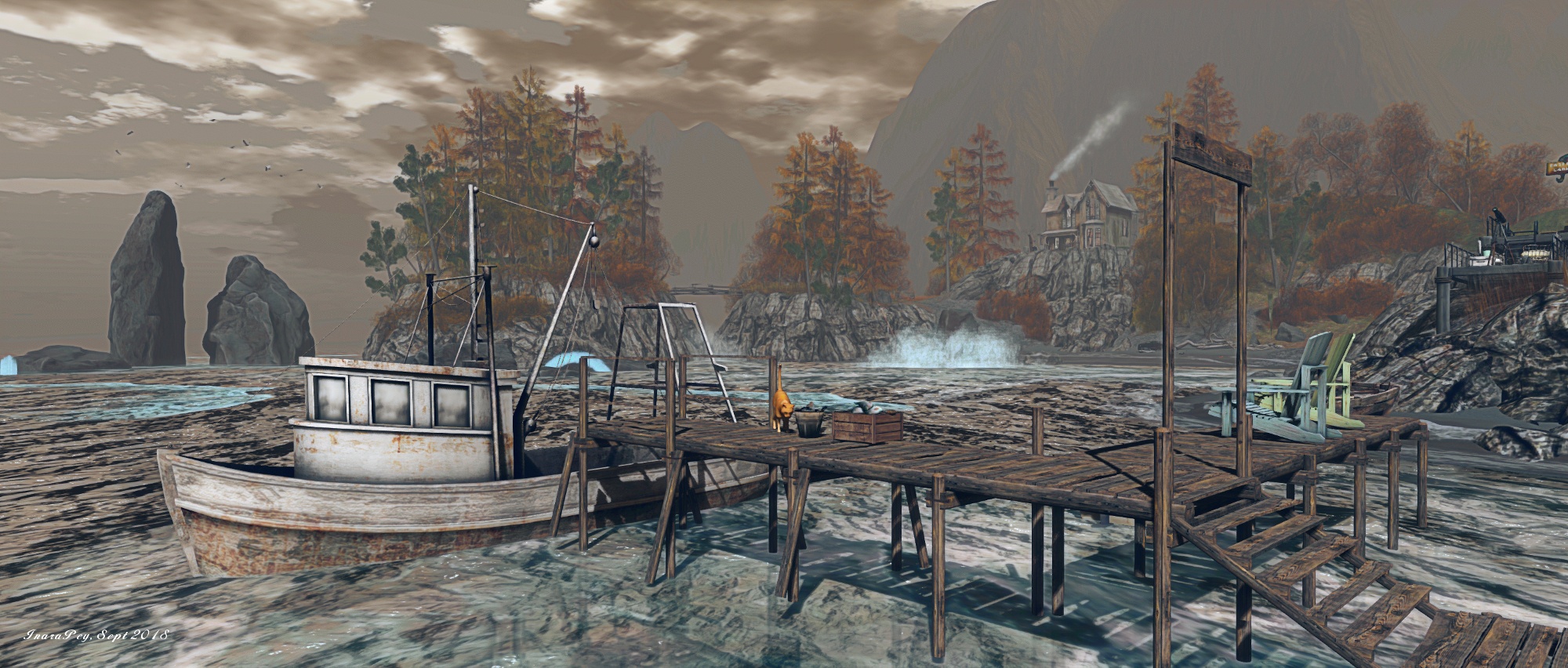
The Apothecary is a new Homestead region design by Harlow Heslop which opened in April 2018. It’s an impressive outdoor design, which immediately puts one in mind of the Great Outdoors of North America, or possibly the wilder reaches of northern Europe or Scandinavia. Buildings are few, the landscape richly wooded with tall redwoods (hence the North American feel to the place) and larch, surrounded by tall mountains.

There is no landing point set within the region, but there is a greeter and welcome sign offering information on the region located on a deck in the north-east. This extends out over the water from the rugged coast of one of the three islands making up the landscape. An old barn sits close by, converted into a cosy lounge space complete with stacks of books and drinks on offer.

The Apothecary; Inara Pey, April 2018, on FlickrThe Apothecary

The land rises sharply alongside this, with stone steps climbing the steep slope, passing between the tall trunks of trees to where a wooden bridge watched over by four lanterns floating in the breeze, spans the narrow gorge separating this island from its much larger neighbour, a  folly like building beckoning visitors to cross the bridge to the plateau on which it sits

The drum-like building, complete with a glass-domed roof was once an aquae spadanae, a water spa – although it has been converted from this use. The pool is now a water garden, a large sculpture occupying its centre while around it, old sofas and armchairs offer comfortable places to sit and an upright piano offer an opportunity for music. The building looks to be under repair, given the scaffolding around and over a couple of windows.

The Apothecary; Inara Pey, April 2018, on FlickrThe Apothecary

Two paths descend from this plateau, one to a broad step of rock, bounded out its outside by an old path and with another open-air bohemian seating area on its inside, warmed by a fireplace. The second path – marked by stone steps and cobbled paths, offers a route around the rest of the island. Branching at the foot of the hill, one arm of the path leads the way to the Apothecary itself – a grand  old conservatory building, its frame and high roof now without glass, its floors largely overgrown and the bent back of an ancient tree reaching grasping boughs out through its woodwork. A chaise lounge and mossy grand piano sit within, along with the tools of a gallipot’s trade.

The second path leads onward around the island’s curve to another waterfront warehouse and deck. The warehouse is this time sheltering a bar with bar on tap and spirits on the shelves behind it, while the dock appears to be the setting for the occasional DJ events that may be held within the region. It looks out over the water towards the third island in the group.

The Apothecary; Inara Pey, April 2018, on FlickrThe Apothecary

This third island, compact and crowned with trees, is given over to a cosy camp site where couples and groups can enjoy quiet and intimate times.  How it is reached other than by flying, is a mystery at present; while a rowing boat is moored alongside the deck on the main island with oars seemingly at the ready, it is for cuddles only rather than being a source of transportation.

While  I opted for daylight when taking my photos, the region lies under a darkening sky rich in horizon haze. This gives the impression of the land sitting in either post-sunset dusk, or a pre-sunrise morning. The introductory notes indicate that The Apothecary will evolve over time, so I suspect it could be a place we return to from time-to-time as it changes. Those wishing to rez props for their photographs, or who wish to keep abreast of changes make to the region or DJ events held there, can join the local group for a modest fee of L$175. Those taking photos are invited to share them through the region’s Flickr pool.

The Apothecary; Inara Pey, April 2018, on FlickrThe Apothecary

SLurl Details

  • The Apothecary (Havana, rated: Adult)

Three into on at DiXmiX for April and May

DiXmiX Gallery: Oyo

DiXmiX Gallery, curated by Dixmix Source, is currently hosting three exhibitions side-by-side by Second Life artists, all of which opened in April and run through (at least in part) to May. As is always the case with this gallery, the exhibitions are both intriguing and a little frustrating.

First up, and in the foyer area of the Grey Gallery, is I’m a Magic Marker (SquarePegRoundHole69), an artist to whom I was introduced – or her work at least – by Sorcha Tyles. “For me, Second Life is a way to escape into a novel that you write yourself, but with me, the story is generally without a plot,” Magic said at the time of her exhibition at Sorcha’s gallery. “Some images are cathartic, some are just because I like to look at pretty things.”

DiXmiX Gallery: Magic Marker

It’s a point of view that can be applied to the twelve images offered at DiXmiX. Quirky, eye-catching and often featuring bold colours which demand our attention, they present attention-grabbing avatar studies (with a little nudity in places). Some might appear to be straight-forward almost studio style photos (such as “#1” and “#7”); others offer that opening to a story mentioned in passing by Magic, while some evoke echoes of art and artistry from other sources – notably #5 and the wonderfully eye-catching #3 with its hint of a Jackson pollack influence.

Adjoining this in the ground floor Black Gallery is Blanc by Oyo, a series of fourteen quite striking studies, largely of avatars, but also featuring landscapes, in which white – and the title might suggest – plays something of a role almost throughout. Again untitled, given only a number, these are attention-holding studies which although free from narrative, instantly draw one into them each in turn. There is a vibrancy and life within each, beautifully encapsulated in their largely muted tones.

DiXmiX Gallery: Oyo

Most of the images stand as individual pieces, each to be appreciated in its own right. the exceptions to this are “IV”, “V” and “VI” which form an impressive triptych-like trio of images (above),  each on standing as an individual piece, but all three combine perfectly together to form a single and evocative whole; a glimpse of a vacation or favourite coastal place caught in the mind’s eye.

On the upper floor of the gallery, in the White Gallery space, is 12 Photographers and 1 Chair, by Mr. S. As the name implies, this is a set of twelve studies of Second Life photographers – all of them male, and welcome in an age where the camera is still often preoccupied with studies of the female form – seated in an armchair and presented with a glimpse of their own work as a backdrop.

DiXmiX Gallery: Mr. S

Caught in the same lighting, the 12 artists, Yann Whoa, Aran M., Skippy Beresford, Dixmix Source, Terry Fotherington, Gaus, Burk Bode, SL Senna, Moon Edenbaum, Oscar Sabra, Vrir Resident and Serene Footman, all make for intriguing studies; although I did find that in a couple of the images, the supporting “background” image tended to draw my eyes away from the main subject perhaps a little too much. Nevertheless, these are striking studies, and with several, I couldn’t help but feel Mr. S had caught not only the look, but the very essence of his subjects through both their portrait and the selected supporting image.

My frustration, such as it is, lies again with the lack of liner notes accompanying this three exhibitions. With 12 Photographers and 1 Chair in particular, it would have been interesting to get Mr. S’s perspective on his images, and perhaps those of some of his subjects. This (usual) quibble aside, all three exhibits are well worth a visit.

SLurl Details