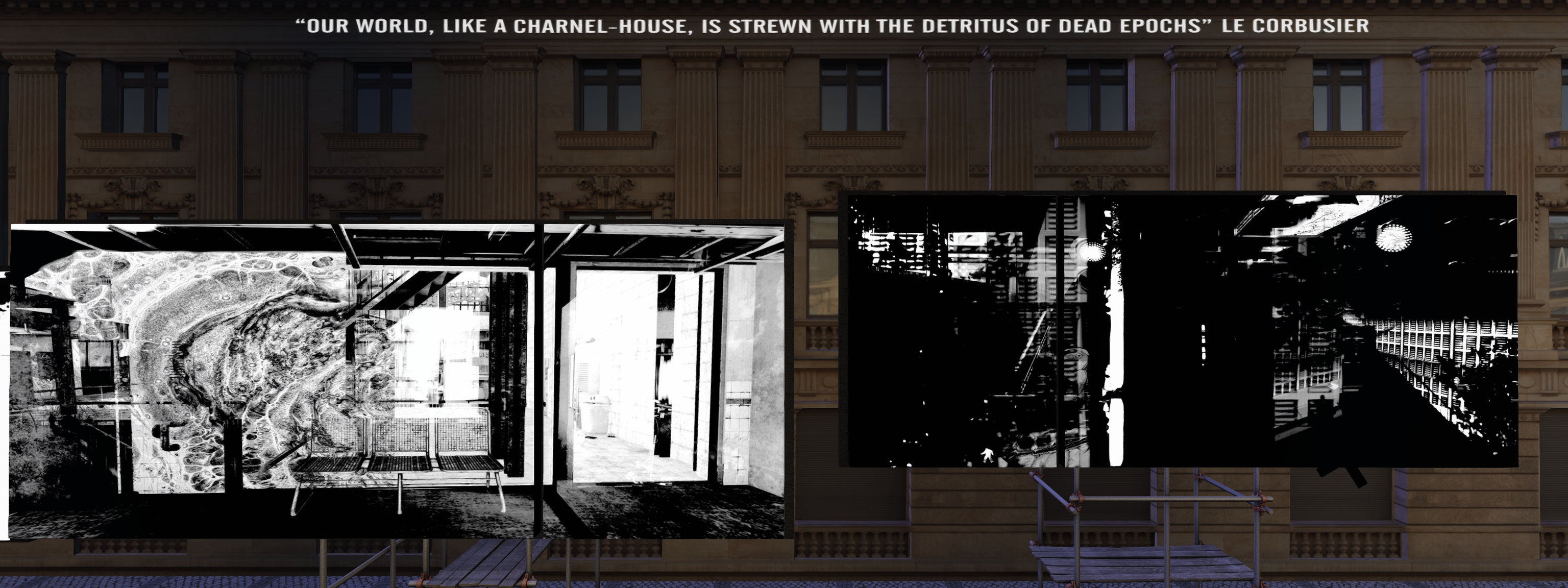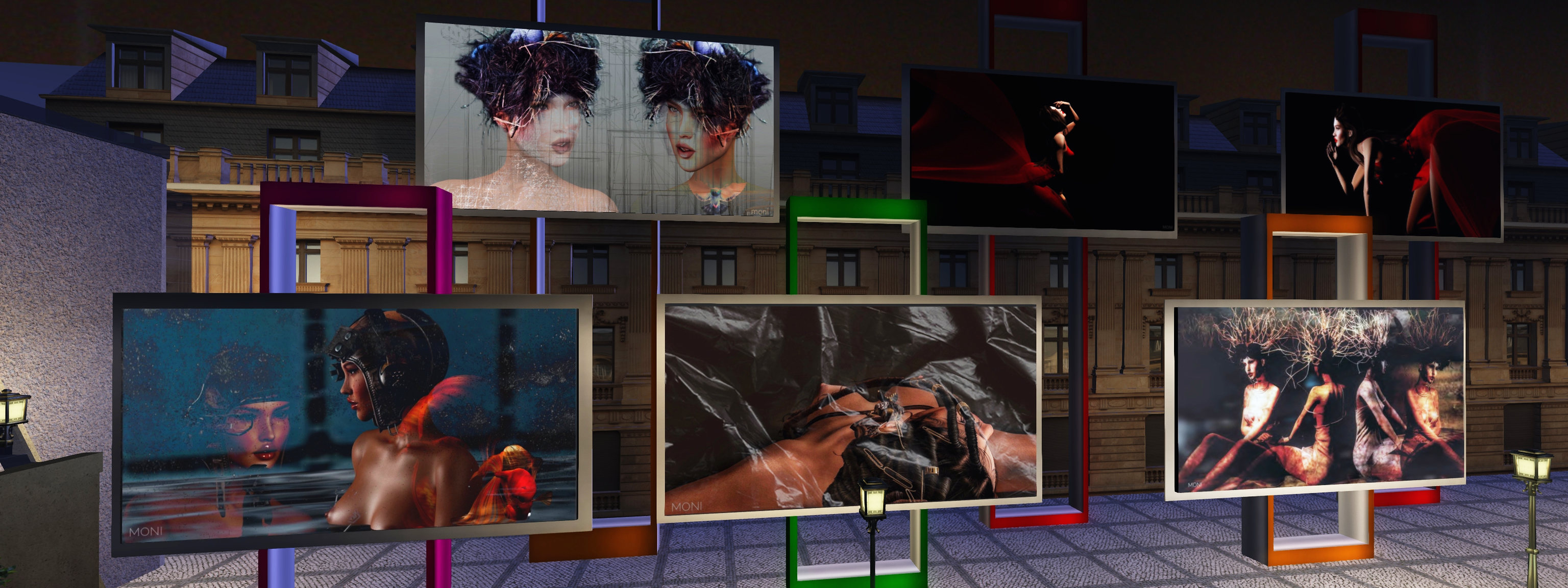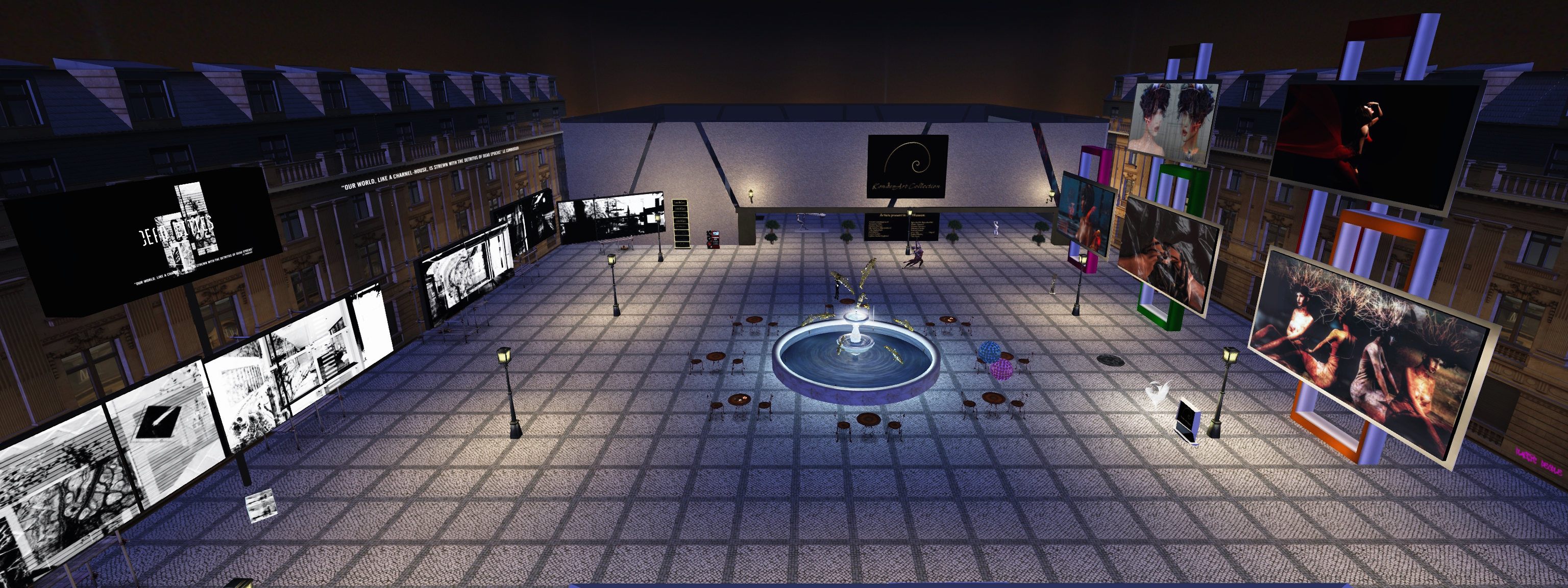
Photographer Nils Urqhart is organising the 2021 “RL Photo Festival” – you can see his work at his Art Gallery Rill’Arts
The Third “RL Photo Festival” (formerly the Annual International RL Photography Festival) will take place between Wednesday, March 31st, 2021 and Sunday, April 25th, 2021. organised by photographer Nils Urqhart, and hosted at the Helvellyn Gallery).
The festival is intended to be a celebration of artistic photographic expression for the physical world, and is open to anyone from across Second Life with an interest it, or passion for, photography. All submissions should meet the following guidelines:
Submissions must be original photographs recorded in the physical world (to images captured in Second Life or computer games).
Submissions may be in colour or black and white, and may be on any theme, and in accordance with the following criteria:
All content must be family friendly. Submissions can depict the human form in all of its forms, but any content with nudity must be presented tastefully.
No sexually explicit imagery will be tolerated (and will be returned).
All content must be in keeping the the requirements of the Second Life Terms of Service and Community Standards.
Images may be offered for sale (there is no fee or commission for any sales), and participants are free to promote their SL and RL presence as a part of their exhibition.
Submissions for participation should be made to Nils Urqhart in-world.
All submission must include:
Four sample photographs in the form of individual textures of at least 512×512 pixels resolution.
All textures must have the following permissions: Copy, No Modify / No Transfer.
The textures must have the photographer’s avatar name (NOT display name) in the Name field and image title in the Description field.
If desired, submissions can include a photographer’s biography note card.
Submissions can be made in the form of a single note card containing image textures and biography – please do not forward them as boxed items.
The deadline for submissions is 23:59:59 SLT on March 20, 2021.
Successful entrants will be contacted with details of their location within the exhibition space. Up to 20 LI may be used per display, and entrants are responsible for the layout of their images. The four images sent as a part of the submission process must form a part of the exhibit. It is requested by the organiser that scripted items are not used.
For further information, or should you have any questions concerning the festival, please contact Nils Urqhart.
Archetype11 Nova, currently using the name Lex Machine, recently opened his latest region design on his Full private region of Solveig. Entitled The House That love Built, it is once again a most eye-poppingly imaginative design that completely captures the visitor’s attention and holds it with a fascinating mix of art nature, the expected and the unexpected that is both marvellous witness and difficult to describe.
With his previous two builds, Archetype11 presented vistas that were incredibly visual, rooted deep in the imagination and with a recognition that in Second Life, expression can more-or-less free-form – but which also carried something of a massage to fit the times in which they were built (see Inside mR J’s HoUsE in Second Life and Isolation’s Passengers in Second Life). That House That love Built also carries something of a theme, but one that comes from an altogether different direction.
The House That Love Built
It’s not usual for me to do such a build … Ana [his SL partner, Anastasia Nova] challenged me to show love with a build; this is the result. it was outside my comfort zone.
– Archetype 11 describing The House That Love Built
The result of this is an incredibly diverse build in which can be found so much that, despite being so varied in content with new scenes seeming to open up at every turn, nevertheless clearly carries the themes of love and sharing throughout.
The House That Love Built
Spread across a rolling landscape rich in trees, flowers and grass, these scenes may at first appear to be chaotic, or at least random, in placement and tone. Gigantic figures here, a house on the water there, cars either wrecked or being repaired lie scattered about; an overgrown yard, a barn decorated in expectation of a wedding, an old school house, rivers of bright flowers winding through the the rich green of the grass, and blossom hugs the branches of trees to contrast with the greenery of others.
When first seen, the theme of love may be hard to discern; but it is there, perhaps most clearly in the barn that awaits a wedding, a clear sign of the joining of two lives into a union borne by love and affection. But so too can be it found elsewhere, such as within the house over the water. Lit from without, its lamps glowing in the evening light in greeting and warmth, the space within sits empty – a promise of the times to come when it will be jointly furnished to become a home for those living within,a personal place of love and sanctuary.
The House That Love Built
Similarly, the yard outside might speak to the passage of time and the acceptance of individual hobbies – such as a passion for rebuilding powerful cars; while up on the hill a short distance away sits a little schoolhouse. Tired and ageing it might be, but might it also not stand in reflection of childhood loves and the first innocent hints of romance?
Then there is the setting itself – the cast of the late evening Sun, the softening colours of the sky as they blend with the gentle tones of the blossom in the trees and the wash of colour in the winding trails of tall flowers. All give an air of love’s enchantment across the land, while the little spots to be found across it – a piano here, a swing there; a panic spread beneath a parasol, a boat sitting quietly out on the water, the artist’s retreat on its little island – all further speak to ideas of love, courtship, togetherness and sharing.
The House That Love Built
And then, of course, there are the statues; rising across the western side of the landscape, they are hard to miss. From great horses frozen in time as they thunder across the land to female figures caught mid-dance or pose to those wreathed in a fine net or shadow and completed by a couple in one another’s arms, these all stand magnificently within the landscape, adding to its ethereal mystery and yet very much a part of it in tone and style.
Even when apparently fragmenting or incomplete, these massive statues add a further depth to the setting. They present a magical scene through which to wander, a place where unicorn roam. Beneath and around their great forms lies a richness of fairytale and romance that extends even to the the ageing cars sitting amidst the tide of flowers surrounding them and under the shadow of old awning.
The House That Love Built
This is a place where even fears can be subdued: up on a hill sits a head with blank eyes staring wide and mouth open in a primal scream. Liquid Fear may well be its title, but the glass butterflies rising from it remind us that even our deepest fears can be be calmed through the presence of one we love.
I became enamoured with Archetype11’s build from the moment I first set foot in his original Hotel California build some two years ago now. Since then, everything he has produced and shared with us has allowed me to partake in the most incredible of creative journeys, each building on the last. So much so that I can say entirely without hyperbole, that his region designs are some of the most visually engaging, imaginative and photogenic to be found in Second Life. They are also, thanks to the subjects he cares to embrace, some of the most deeply personal to be found in SL, a fact that again draws the visitor into them to a point where they are places the open heart and mind does not so much visit, but participate in.
The House That Love Built
There is so much more that I could say about The House That love Built – such as the small, but evident nods to past builds -, but really, given it is a place to be experienced first hand, please do go and see it for yourself and take the time to allow it to reveal its stories to you.
It’s been a year since Caitlyn and I last visited Gnaaah Xeltentat’s Florence at Low Tide. As that time, the region offered an early spring setting with a lean towards the Mediterranean in some of its styling. As we’re heading back towards spring, and needing a break to compose thoughts on another blog post I’m working on, I hopped back for another look and see what early 2021 has brought to the region.
Most noticeably, it has brought the eyes of Iska (Sablina) to the work of landscaping the setting. Responsible for the likes of La Virevolte (see here for more), Ponto Cabana (read more here), and before them Field of Dreams / L’intangible (more here), Sablina has a proven track record of eye-catching region designs. Here, her work sits alongside interior designs by Tippah to present a new and attractive take on the region’s core elements as they were revealed a year ago.
Florence at Low Tide
As with its previous iteration, the current design has a distinct south-north orientation, complete with lowlands to the south and a truncated peak to the north-east. A fenced road still winds through the landscape, sitting above the southern waterfront to encircle the main part of the region, while the land remains split by the line of a narrow stream spanned by two bridges that between them carry the road over it.
However, within this, both Sablina and Tippah have added their own unique touches. For the former, this is seen in the gentle moving of the region’s architecture away from Tuscany and more into France – at last in terms of the names of the selected buildings. One of these is an eye-catching water mill by Silex (Silex Zapedzki) that has been converted into an almost ideal home. It sits above the southern estuary of the river, which retains its familiar scattering of rowing boats.
Florence at Low Tide
Across the river and more central to the island is an attractive cottage design by Hisa (Hisastore) that has become a popular choice among region holders and designers of late. It sits on the mid-level elevation of the land, bracketed on the one side by the river and on the other by the stream tumbling down from the north-east peak.
The peak and its uplands sit apart from the rest of the setting in that they give a reminder that winter has yet to fully pass: snow covers the land and frosts the trees. It’s not a solid cover – the warmth of the Sun is taking its toll the grass and rock is becoming visible under the greying blanket. An old windmill sits among the trees here, another new touch to the setting, I believe, although it has clearly seen better days.
Florence at Low Tide
As noted, the houses are all comfortably furnished, and as with the landscape as a whole offer numerous opportunities for photography. In terms of the latter, a Romany camp presents a further point of interest and sits as a new feature – at least since my last visit.
For those who want to get away from things, the cottage tucked into the north-west corner of the region could be just the place. While it appears to have once been the home of the local lighthouse keeper, the typewriter outside suggests it might now be a writer’s retreat. Or perhaps the lighthouse keeper has taken to writer their memoirs!
Florence at Low Tide
Retaining its richness of detail and familiar lines whilst offering new sights to appreciate courtesy of Sablina and Tippah, Florence at Low Tide remains a place in which to wander and spend time.
Khaos Part 1 is the title of a new 3D installation currently open at La Maison d’Aneli, operated and curated by Aneli Abeyant. It marks the latest collaboration by Cherry Manage and YadeYu Fhang, two artists noted for their distinctive style and for presenting art installations that tend to be layered and nuanced, and which require time to experience, rather than simply observe.
All three of the attributes mentioned above are very much in evidence with this latest work, particularly as there do not seem to be any liner notes supplied by either artist as to their intent with it, this requiring the grey matter to be cranked into action.
La Maison d’Aneli: Khaos Part 1
Reached via the teleport disk at the gallery’s main landing point, it is important that visitors take note of the basic requirements for visiting the installation. In short, these are:
Make sure your viewer’s Advanced Lighting Model (ALM) is enabled (Preferences Graphics make sure the Advanced Lighting Model option is checked).
Enable Used Shared Environment (World menu Environment make sure Use Shared Environment is check).
As you walk into the installation space, make sure you accept the local Experience when asked to join (this happens as you walk towards the installation from the teleport).
La Maison d’Aneli: Khaos Part 1
To these I would add a moderate Draw Distance of around 150-200 metres is ideal for viewing the installation, and that visitors should be prepared for some fairly visually violent interactions. Finally, if you’re in a position to freecam / flycam, you most definitely should do so, as this is a 3D installation with multiple perspectives and where the local verticals are not necessarily oriented to the plane on which you walk.
Situated in a sharply-defined sky – while below, a black, star-studded sky above across which square clouds pass, the installation might be described as an artificial, geometrical landscape made up of translucent blocks. Almost transparent around the teleport point, these become more opaque towards the far horizon, where they form a tumble of large cubes and blocks suspended in such a way as to suggest a wall frozen in the act of collapse.
La Maison d’Aneli: Khaos Part 1
Before this wall are humanoid figures, some of whom appear to be falling from the wall, tucked into tight balls, others appear frozen in a motion of action – some mid-fall, some apparently trying to run away, two caught mid-fight. Many appear to be coalescing out of smaller blocks – or perhaps breaking up into them, depending on your viewpoint. Lines of light spear they way through some, adding to the impression they are breaking up; elsewhere solid lines pass through others, slanted as if to present a visual indicator of their motion.
The overall sense of the setting is one of disordered randomness – which is added to by the fact that within this basic setting, nothing is constant. Light shifts and glimmers, other figures both large and small appear and vanish, some performing actions, some caught in whirlwinds of blocks swirling around or a maelstrom of wind. As time passes, a forest of rectangular beams many appear, some seeming to rise and fall as light plays over and through them, or avalanches of white cubes will suddenly rain down the “slope”, or masses of while lines will roll and twist in place, like streamers of snow caught in a storm.
La Maison d’Aneli: Khaos Part 1
Nor is this all – as you explore the scene on foot, and having accepted the local experience, you will suddenly find yourself part of it, being shaken violently, or pulled roughly into Mouselook as your body hang bent doubled only to be slammed several time into an invisible floor before being released to fall – and then returned to the platform.
Disconcerting, chaotic, ever-changing within the main backdrop, what is to be made of all of this? For my part, I was drawn to the idea that Khaos Part 1 is perhaps a reflection on the idea of chaos theory; the concept that while dynamic systems may well have apparently random states of disorder and irregularities, they are in fact governed by underlying patterns and deterministic laws that are highly sensitive to their initial conditions. And in a mirrored reflection of this, perhaps there is also the idea that whilst life can appear to be well-ordered and subject to patterns and laws as defined by society, it is at its core the product of a chaos that is never far from the surface, simply because of the unpredictable nature of basic human emotional response and outlook.
La Maison d’Aneli: Khaos Part 1
However, I’ll leave further interpretation to you; as noted, there are no liner notes provided with the installation, and I’d prefer not to to colour reactions with my own interpretations, and will leave things here, other than to speculate that given this is “part 1”, there may will be a follow-on installation at some point.
Currently on show at Raging Bellls’ Raging Graphix Gallery is a joint exhibition by Second Life partners, John (Johannes Huntsman) and Tempest Rosca-Huntsman (Tempest Rosca) entitled Yin and Yang.
It’s a title that reflects both the art on display and the artists themselves on a number of levels. At its most literal, the title reflects the fact that whilst opposites on several levels (e.g. male and female, the fact that they originate on opposite sides of the Atlantic, etc.), Tempest and John naturally combine to form a whole. There’s also the fact that all healthy relationships contain within them the ability to grow and change, for both sides to contribute to the whole – and through their art and other endeavours in Second Life this is very true of John and Tempest.
Raging Graphix Gallery: Yin and Yang – Tempest Rosca
The title might also apply to their respective art: Tempest’s work is primarily Second Life focused, with a strong – if far from exclusive – lean towards avatar photography; John’s palette tends now to be a strong mix of art produced in the physical world that is then brought into SL. Thus, like yin and yang, there is a strong mix of what may appear to be different or even contrary forces (physical vs. virtual), which ultimately comes to form a whole.
This is certainly the case within this exhibition. With images presented exclusively in monochrome – again, something that might be a reflection of the black / white symbol of yin / yang – the pieces displayed here form a contrast that comes together towards the centre, allowing both halves of the exhibition to be seen as individual displays by individual artists, and also as a unified whole presented by a couple.
Raging Graphix Gallery: Yin and Yang – Tempest Rosca
For her part and along the outer walls of the gallery, Tempest presents a series of images that have been taken in-world. Whilst they can be considered portraits, in difference to my statement above concerning her work, they are not of avatars but of objects – cars, a lifebuoy, a tram and a Hawker Hurricane.
Inanimate they might be, but thanks to their black-and-white nature, lines stand out clearly, giving each of her subjects a depth of life much as the lines and creases found on a face speak to the life within it and experienced by it.
Raging Graphix Gallery: Yin and Yang – Johannes Huntsman
Across the hall, John offers a collection of quite marvellous abstract and abstracted pieces, some of which appear drawn / painted and others produced with digital tools. All are striking in their form, with a sense of the dynamic presented through line and shape, and that sharply contrast with the more familiar subjects found within Tempest’s images.
Also to be found within several of these pieces is an organic element:, form the flow of a liquid substance complete with spheroid droplet, through the creation of a human face within the sweep of line and the patchwork of light and dark, to suggestions of crops and a desert seen from above, the former being brushed by the wind, the latter left as ripples formed by the winds of the past. Thus, these pieces also give a sense of life within them, and in doing so, they create a natural flow before the two halves of the exhibition, unifying them.
Raging Graphix Gallery: Yin and Yang – Johannes Huntsman
Having opened on February 6th, I believe Yin and Yang has a further week or so to run, and recommend a visit.
I’ll start out by saying I’m getting to Curiosity Lake, the homestead region designed by SadyCat Littlepaws somewhat late in the day – or rather days, given it will closing on February 28th. I’m not sure how it slipped through my net of landmarks of places to explore, but it did. So to fix matters, I suggested to Caitlyn we hop over and take a look this past weekend.
It is a place clearly put together with both a love of, and attention to, detail – which might actually be something of a mixed blessing. On the one hand, it means there is a lot to see and appreciate and photograph; on the other, it also means that in some places there is a lot of mesh and texture data the viewer has to grapple with, and this can be reflected in some hiccuping of performance.
Curiosity Lake, February 2021
This is a setting evocative of the changing of the seasons. The two islands that make up the region are cast with autumnal colours, with trees heavy in browns and golds and fading greens, while the hills and peaks of the off-sim surround have their peaks crowded with fir trees frosted white with snow that also lies in drifts and patches on the slopes running down to the water’s edge. It’s a combination that suggests that while the island has yet to feel the first bite of winter, it is eyeing them from across the water, just waiting for the opportunity to throw a white blanket over them.
The islands are fairly low-lying and rugged in places. Three houses sit upon them, two on the larger, which includes the landing point, and a cosy lodge on the smaller. All three homes are fully furnished, and it is clear considerable time and effort has gone into their décor to make each one photogenic and home to a wealth of ideas visitors might find useful when decorating their own places.
Curiosity Lake, February 2021
Both of the houses on the larger island sit reasonably equidistant from the landing point with its gazebo warmed by a wood fire – one of several outdoor sitting points waiting to be found. which house you visit first is up to you, although I’d be tempted to suggest heading north to the imposing bulk of the large stone-built house with its tall chimneys.
As well as allowing you to take in the house, this route will take you past a couple more places open for visitors to sit outdoors in the form of a blanket-strewn rowing boat and a wooden pergola, it will deliver you to stone steps that will take you up to the islands “highlands”.
Curiosity Lake, February 2021
Forming a flat-topped low hill, there are home to a trio of further outdoor spots that are all attractive in their own right, two of them fashioned as little camps set around a couple of old vehicles and the third a tree fort platform. These are all close enough to be within easy walking distance of one another but far enough apart to be nicely separated as individual spots to share times with someone close.
Southwards from the landing point, steps also lead up to a low thrust of land and a wood-and-stone cottage where the garage has imaginatively re-purposed into a lounge, giving far more space for an expansive kitchen in the house proper, and comfortable bedroom at the back, exiting onto the rear deck.
Curiosity Lake, February 2021
More steps run down from the eastward brow on which the house sits and point the way to the footbridge that connects to the circular dome of the smaller island and its chalet-style lodge, the verandah of which is set out ready to entertain with a filling meal warmed by the outdoor fireplace.
It is around the houses that we found performance issues came to the fore – as noted, there is a lot of mesh and texture use around them, and this did make itself known during initial loading. However, it’s worth bearing with such niggles if encountered as the region is extraordinarily photogenic and naturally invite exploration.
Curiosity Lake, February 2021
However, if you’re going to do pay a visit, make sure it is in the next few days, because the region is due to close on February 28th, again as noted earlier.