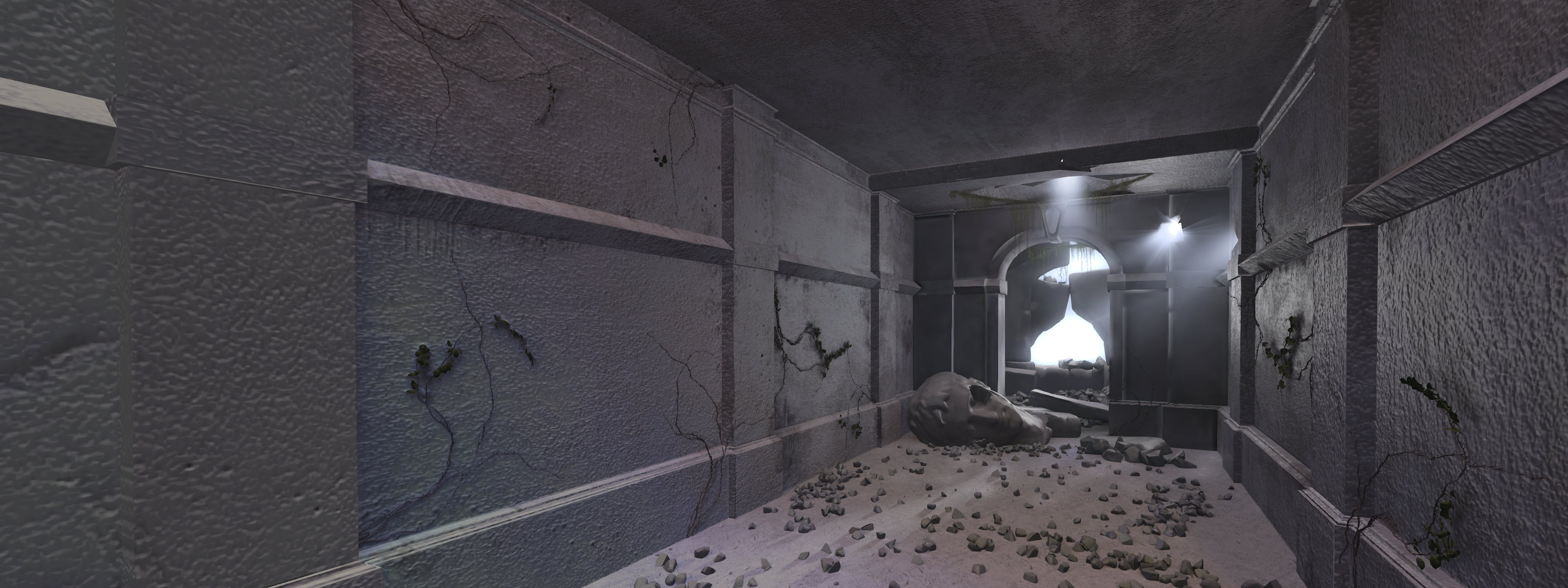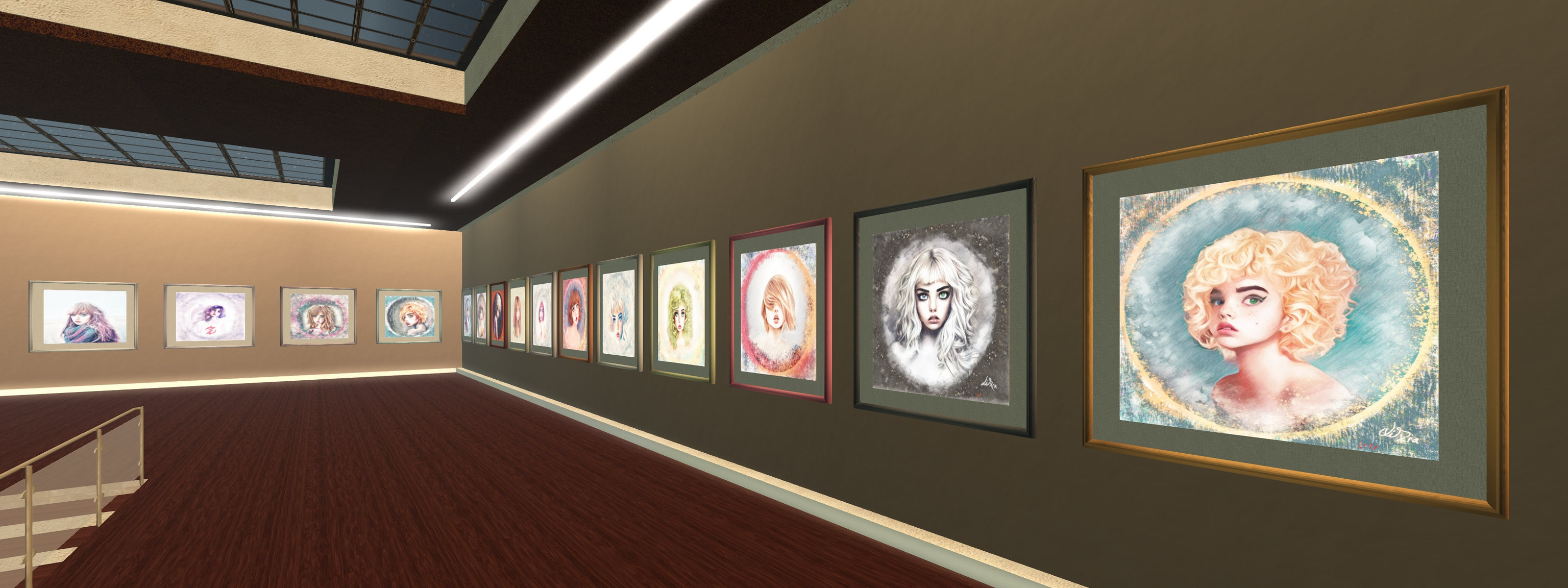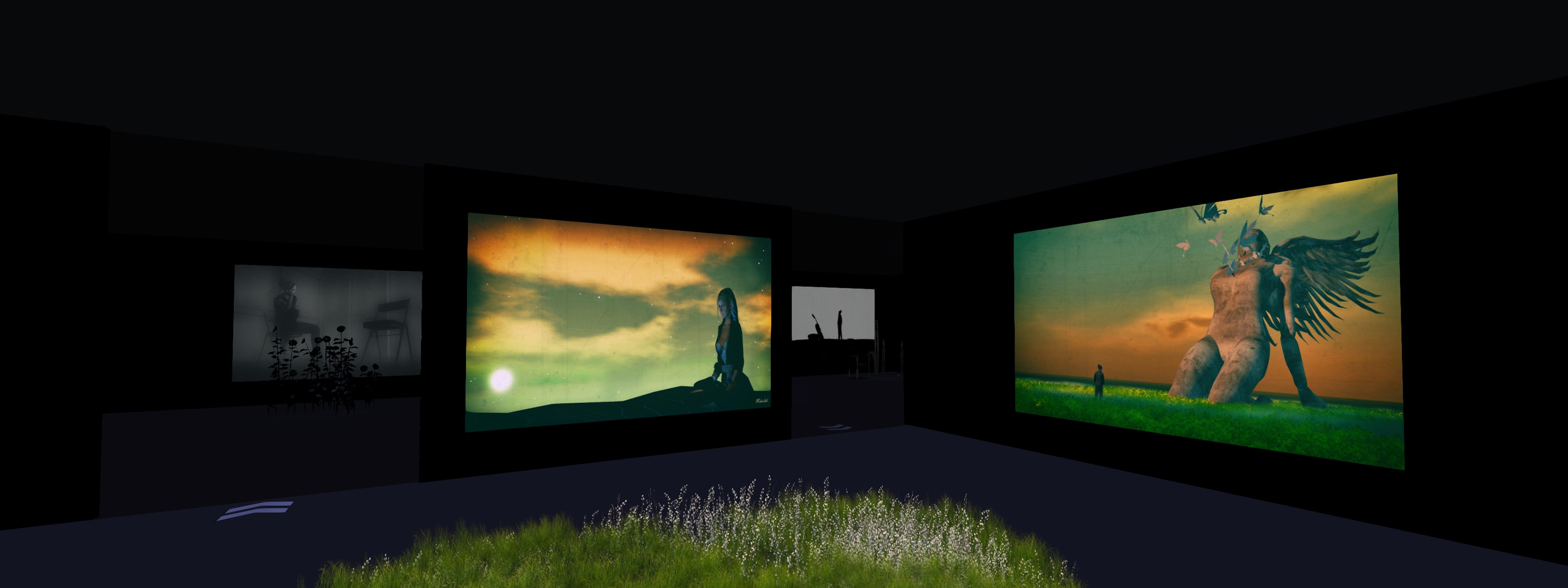
Cica Ghost has opened her August installation, and its is one that really doesn’t need a lot of words to describe, other than perhaps those she uses herself:
Happiness is enjoying the little things in your life.
Entitled Lollipop, the installation is pretty much a light-hearted frolic through Cica’s imagination and sense of fun. Many of her trademark elements are here, offering a veritable melting pot of creations we’ve come to know and enjoy, as well as introducing some new characters.
Cica Ghost – Lollipop, August 2021
Among the former are her tall, thin houses that point towards the sky like a collection of slender fingers, the majority of them forming a little town built on platforms over cool blue water; then there are her flowers, this time of a giant size, mostly growing free although here and there they set within pots, whilst also scattered around are her dinosaurs, frogs, ingenious flying machines and multiple sit points with animations and / or dances.
The newer characters take the form of happy mice, and a chap who combines two of Cica’s past creations – cats and fish – and who looks like he would appreciate company, should someone opt to occupy the high chair alongside him. Several sea worms are also to be found, apparently fascinated by Cica’s buildings.
While one of the latter might appear to look upon the occupant of a chair within the house it is curled around as a potential snack the goofy looks of its friends belie any ill intent. However, if you are unconvinced as to the motives of said worm, then perhaps you might want to grab a lollipop from the big machine close to the landing point before trying the seat. That way, if the worm does look hungry, you can always offer him the lollipop!
Cica Ghost – Lollipop, August 2021
Caught under a summer’s sky, the colours of the ground bright and jolly as well, Lollipop is a place for fun, where you can sit, dance, climb, ride and enjoy yourself, free from message and worry. So go on, why not take a lick? And if you like the mice, you can purchase them through Cica’s little shop in a corner of the region 🙂 .
Shangri-La, August 2021 – click any image for full size
In Second Life did Hera (Zee9)
A tropical paradise decree.
Where a hidden Gorgon statue sits
In a cavern that torches dimly lit
And a ship awaits upon the sea.
– with apologies to the estate of Samuel Taylor Coleridge!
Hera (Zee9) is a region creator whose imagination is in many ways unparalleled in Second Life; over the years she has consistently produced immersive environments built around themes that have richly and deservedly captured the hearts and minds of all who have visited them.
Perhaps best known for her ever-evolving Drune builds, many of which I’ve covered in these pages, she had also been the creator of places such as the medieval-like Golgothica and the captivating Venesha. Now, after what she describes as a “hectic and unpleasant four months”, she has opened another build for people to enjoy – and it is another marvel.
Shangri-La, August 2021
Shangri-La, modelled in part on an earlier Drune Raider design, was originally going to be a private place Hera could retreat to and spend time; however, she has generously opted to open it to the public as a place to be enjoyed and explored.
I actually first got to hear about it as she and I shared a brief conversation – as we have on occasion recently, the result of bumping into one another a couple of times quite by chance – just ahead of the weekend, and she kindly offered to provide me with a tour. Sadly, circumstances dictated that I was unable to take the offer then, so Hera dropped the LM to me, and as soon as my schedule allowed, I jumped over to pay a visit.
Quite how you might describe Shangri-La is a matter of personal choice. There is a marvellous fusion of Asian elements that reaches from India through to Thailand, Cambodia and Malaysia. At the same time, the very name of the setting – Shangri-La offers echoes of Shangdu, Kublai Khan’s “upper capital”, as well as echoing Hilton’s mystical place within the Kunlun Mountains, whilst climbing the steps and walking around the temple-like structures in places brings with it a faint sense of Mayan history out of South America.
It was the Shangri-La / Shangdu “connection” that brought to my mind Coleridge’s Kubla Khan – hence the opening lines to this piece, based as they are on his work – a poem about a fantastical palace, formed within the imagination; a place of dance, music, pleasure. But where Coleridge’s palace was the product of an opium-addled mind, Hera’s the result of her richness of creativity and imagination – although like Coleridge’s poem, there is a hidden edge to the setting, but where he writes of demon lovers and cries for war, the “shadow” here is much more classical, folding a touch of Grecian mythology into the build, as hinted at in my re-working of the poem’s lines.
Shangri-La, August 2021
From the moment of arrival, it is clear this is place welcoming to those wishing to escape: blankets and cushions are spread cardinal-like around the landing point, with more to be found on the various terraces, along with curtain-draped pergolas, whilst the tree tops and the surrounding beach offer yet more places to sit and relax.
For the explorers, there are halls large and small awaiting discovery – including the lower cavern / hall and its waiting statue, whilst the upper reaches of the main structure bring forth thoughts of Angkor Wat, thanks to the great carved faces mounted on the stone walls. These also highlight another unique aspect of Hera’s region builds: rather than relying purely on commercial kits and building obtain through the Marketplace or in-world, Hera is truly the architect of her settings, designing and creating many of the meshes she uses.
Shangri-La, August 2021
To the south, the temple stretches out over the sea to grasp a rocky outcrop. The back of this stone arm sits a simply gorgeous bar, its roof open to the sky, its narrow length split into three cosy areas whilst a canopied balcony at its far end offers a further retreat.
Whilst in places completely modern in design (the bar and the central lighting), it nevertheless sits perfectly within the “ancient” walls, a place crying out to become a gathering point for like minds and imaginations, masterfully completed by the Vallejo-like paintings Hera has created for the walls, paintings that for me again added a twist of South America to the setting, given their apparent inspiration.
Shangri-La, August 2021
A ship – one of Lia Woodget’s marvellous Blackpsot builds – anchored off the northern coast adds a different sense of era to the setting, its presence suggesting the island has just been the subject of discovery by 18th century explorers from the west. Thus, between bar and ship, Shangri-La encompasses a sense of existing outside the normal passage of time, much like its namesake.
When visiting, I do strongly recommend using the shared EEP settings for the region (admittedly, I’ve post-processed the images here to give a slightly different look to the setting, as I wanted to offer a sense of age to them that might be in keeping with that of the region, and without falling back on purely monochrome / sepia finishes).
Also, do make sure to have Advanced Lighting Model (Preferences Graphics make sure the ALM setting is enabled) as well as local sounds enabled. And as a final side notes, please be aware that while the building set upon its own in the south-west corner of the region might appear to a continuance of the main structures, it is actually a private residence and not part of the public spaces.
Captivating, photogenic and laden with tales awaiting telling, Shangri-La is exactly what its name and About Land description state: a tropical paradise and retreat.
Officially opening at 12:00 noon on Sunday, August 8th, 2021, is the latest Kultivate Select ensemble exhibition, which takes place in the garden space of the Select Gallery.
The theme for the exhibition is Landscapes, and it features a number of artists who will be familiar to many, especially those who enjoy exhibitions at Kultivate’s galleries, as they are very much part of the Kultivate “family”, and one or two names that may not be so well-known, but who are equally deserving of space in the exhibition.
Those taking part comprise: aquarius27, Cutewillow Carlberg, Eucalyptus Carroll, Freedom Voix, Harmony Evergarden, Jamee Sandalwood, Johannes Huntsman, Moora McMillan, TaraAers, Vanessa Jane, Via Theas and Zia Branner.
Kultivate Select Gallery: TaraAers and Zia Branner
Set around the gallery’s grassy event space, each of the artists has an open-sided hut in which to display their art, presenting a summertime garden environment that fits the theme for the exhibition perfectly. Given the title of the event is “landscapes”, then it should come as no surprise that the majority of the pieces offered feature in-world locations, many of which will likely be instantly identified by the seasoned Second Life travellers whilst offered under a new light through the lenses of the artists.
The notable exceptions to this are Zia Branner, who presents another collection of her paintings that has something of a focus on her captivating coastal views, whilst Harmony Evergarden offers a set of reproductions of her eye-catching original watercolours. I admit that one of the latter (whilst perhaps not the intent of the artist) instantly carried me to the windswept coast of Northumberland, and the curving bay of sand that is watched over by the imposing bulk of Bamburgh Castle. Alongside of Harmony, John Huntsman offers a set from his Garden Collection which, I have to confess, held my attention as I could not determine if they were wholly original, or images from SL post-processed as paintings – or a mix of the two, such is the artistry in their presentation.
Kultivate Select Gallery: Vita Theas and Eucalyptus Carroll
The two-hour opening event will feature the music of Mimi Carpenter and Sarita Twisted, and the dress code is casual.
Finian’s Foraois, August 2021 – click any image for full size
I received a special invitation from Nessa Nova and Natalie Starlight to pay a visit to the latest iterations of their Lost Unicorn estate, which officially open at 12:00 noon SLT on Saturday, August 7th. As a long-term admirer of their work, which I’ve blogged about numerous times in these pages, it was an invitation I was only too happy to accept.
As this is a preview piece, this article is going to be a little different to my usual travelogues, as rather than offer something of a walk through of the settings, I want to talk about the atmosphere that Ness and Natalie create within their region designs, and why I find their work so attractive and memorable. I’ll also note that that while both regions offer dedicated EEP settings, the images you see here have been taken with one of my personal EEP Fixed Sky settings, as I wanted to offer more of a personal take on the regions and their mysticism – so please make sure you have your viewer set to Use Shared Environment (World → Environment) when you visit.
Finian’s Foraois, August 2021
The Lost Unicorn estate has long been the home of the Lost Unicorn Gallery. Traditionally housed within a great castle watched over by the gigantic form of a dragon and seated upon its own island, the gallery has been home to some of the finest fantasy art, both mixed media and produced from images captured entirely in-world, that Second Life has to offer by some of the platform’s greatest talents.
With this iteration, the gallery retains its castle setting, but with a new building design that conjoins the main region thanks to a narrow stone causeway. The off-region surround that cups the the main Lost Unicorn region and which blends with it to the west and north, also extends south and west, giving the impression that the gallery and castle sit along the sweeping curve of a distant land’s mountainous stretch of coast.
The castle is a stunning structure, one of the most unique in terms of the blending of styles that I’ve seen in-world. Great elven arches combine with burnished minarets as water tumbles from high platforms to form curtains along straight and curved walls of stone within which galleried halls rise one another the other, and doorways unexpectedly open onto open-roofed courtyards and gardens or rooms where skylights allow sunlight to wash walls and floors.
Crowned by a building that combines the looks of a medieval cathedral with a distinctly elven tone as it sits on a saddle of rock, the entire gallery structure is utterly enchanting for its sheer beauty, the art it contains, and the unexpected little spaces that await discovery – such as the jazz venue and the Storybook Nook.
The Jazz venue is something I didn’t expect to come across. Presided over by Ol’ Blue Eyes himself, it is not a place one might readily associate with a fantasy realm – and yet it works, presents another unique tale to the gallery’s ever-growing story. Soimilarly, the Storybook Nook presents a cascade of memories for those who visited Nessa and Natalie’s former region of Storybook Forest.
Lost Unicorn Gallery, August 2021
Down the steps from the landing point, the causeway to the main region – now called Finian’s Foraois (Celtic for “forest”) – adds a touch of Tolkien to the mix, guarded as it is by the Argonath, the great carven statues of Isildur and Anárion. Here, rather than guard the passage of the Great River Anduin as it flows into Gondor, they bracket the entrance to the forest.
Passing through the arch – and crossing into the estate’s Full region – was for me akin to stepping into Middle Earth. Not just because of the presence of the Argonath, but because the forest beyond the rocky veil that sits between the two regions brought to mind thought so Greenwood the Great before darkness fell across it, and a time when the paths beneath its great canopy echoed to to happy laughter of Sindarin elves and men and dwarves could find safe passage through the wood. A time long before it became the brooding shadow known as Mirkwood – although look closely in places, an you will see possible portents of the darkness to come, as baleful eyes here and there appear from within the foliage, glare for a moment and then fade away.
Finian’s Foraois, August 2021
Here, under the shade of the giant trees, paths meander and streams bubble. Deer and rabbit, otter and bear are to be found roaming, and the very air seems heady and light as mist curls and sunlight filters across paths or fills glades with light.
But it is not only a sense of Second Age Middle Earth to be found here, and many influences await those who wander.
Finian’s Foraois, August 2021
There is the little market on the hilltop for example – might it be found in Middle Earth or Middle England at the time of the Knights of the Round Table or of Robin Hood? And then there is the brooding bulk of the second castle, cold stone and heavy walls a world away from those of the gallery castle, and within it more touches of Arthurian legend and the romanticism brought forth by the likes of Thomas Mallory and his Le Morte d’Arthur.
Then there are the garden spots and glades with their own settings. places watched by unicorns and set of afternoon tea. But who are to be the guests? Inhabitants of Lewis Carroll’s world, perhaps, so some others?
Lost Unicorn Gallery, August 2021
This is the magic of Lost Unicorn, a magic that filters through each and every design Natalie and Nessa present. It encourages the imagination to soar unfettered, nudged by all that we see, large and small – as with the eyes noted above. Within it, those who have visited past designs will find threads of their presence – from story books to Celtic tales and medieval myths, all of which cast the mind by to lost Unicorns of the past. At the same time, the settings offer something entirely new place with stories as yet unwritten, where the echoes of elves and knights comfortably rub shoulders with the spirit of the Great American Songbook whilst looking into the eyes of Marilyn Monroe without any hint of jarring juxtaposition or misplaced design.
Thus, the Lost Unicorn estate remains, as always, a place to be savoured as much as explored – and needless to say, rich with opportunities for photography as well as for creating stories abound throughout. Yes, there is a lot for the viewer to handle if you run with shadows enabled, but the effort is more than worthwhile, as you will be rewarded by an immersive trip into a realm of fantasy and legend that is genuinely unique.
At the start of the week, I visited Sybil, one of two new installations by Giovanna Cerise that opened at the end of July 2021. In my review of that installation (see: Giovanna’s Sybil in Second Life), I noted that I would also be visiting her other installation as well (which actually opened the same day) – although time and circumstance has meant I’m actually getting to it later than I’d anticipated when writing about Sybil!
Doll’s House is one of several exhibitions to have opened recently at Aneli Abeyante’s La Maison d’Aneli complex in Second Life, and it is once again a signature piece by Giovanna, being both layered and tonal, presenting the visitor with what at first seems to be merely a room of sculptures, but which actually encourages us to think about what we’re seeing on a number of levels.
The room is clearly the Doll’s House of the title, and the sculptures – 3D renderings on humans caught in various situations / poses – the “dolls” within it. However, they are not rendered as dolls; rather they appear an monofilament meshes, their vertices and triangles all visible as they sit, lie, stand, balance precariously, the majority juggling or playing balancing tricks with one or more mesh balls.
Monochrome in nature – black vertices and white mesh faces, set within a monochrome house, the black, grey and white here and there broken by lines, dots and dashes of red and a single 2D red silhouette – the installation may at first appear to be random and without expression. However, this is far from the case.
La Maison d’Aneli: Giovanna Cerise – Doll’s House
Set on the walls of the lobby area just outside the installation, is large red sign with the invitation Touch for a Notecard. Doing so will present you with Giovanna’s thoughts on Doll’s House, which reveal it is an exercise in consideration:
House doll game irony objective balance precariousness obsession multitasking ephemeral presence absence alienation homologation fashion perfection risk superficiality smoothness narcissism socialization expression angle omnipresence ego story truth lie form oppression annihilation distortion violence choice impossible possible freedom slavery….
These are some of the words that came to mind while I was building, looking, modifying Doll’s House . My invitation [to you] is to leave a word on a notecard that you could then put in the lens. The word can be chosen from those that I have listed or linked to it or the one that comes to mind, freely, after viewing the installation.
The words you will leave will be the starting point for the development of a multifaceted artistic project that will create chains, intersections, overlaps, emotions, suggestions, visions, reflections. Thanks everyone for participating.
– Giovanna Cerise
Thus, Doll’s House might be seen as a means of opening the door for ideas that might be employed in an upcoming installation Giovanna is planning; an exercise in word-play, the characters within the house intended to spark our thinking. But might there be something more?
To me, the answer is clearly “yes” – although in saying so, I don’t want to sway people into feeling their thoughts and words must be trammelled by what I have to say here; those who wish to share in Giovanna’s work might therefore be best served by going to La Maison d’Aneli to witness and respond to it without the excess baggage of my own cogitations, and perhaps come back to this piece after doing so.
La Maison d’Aneli: Giovanna Cerise – Doll’s House
So, with that said, and my warning hopefully heeded, I’ll state that I could not help but find Giovanna’s list of words to be a reflection of life – both in the physical sense and the virtual. Each one can easily be applied to our moods, situations, circumstances, relationships, real and virtual, singular and collective, so much so that the list, wrapped as it is within Doll’s House, becomes a prompt for considered introspection on Life The Universe and Everything (but mostly life), the “dolls” of the piece the cues for us to consider who we are what we do, how we face situations, respond to the physical and mental condition / situation of those around us.
In presenting the figures in a mesh-like form, Giovanna seems to be encouraging us to consider these thoughts not just as they affect us in the physical world, but how we carry them – whether we accept this or not – with us into the virtual. Because at the end of the day, aren’t virtual environments like Second Life the ultimate doll’s house? Places where we can play dress-up, and make-believe, become what we wish – yet always carry with us that central essence of who we are? Are the not also a microcosm of life itself, in that howsoever we opt to utilise that trait we call “free will” does carry consequences, personal and potentially collective.
La Maison d’Aneli: Giovanna Cerise – Doll’s House
If one accepts this viewpoint, then might it not be fair to say that as well as an invitation to participate, Doll’s House is also presenting us with a very subtle mirrored glass rather than a simple lens; one that allows us to peek into Giovanna’s creativity whilst also seeing into our our lives and actions?
I’ll say nothing more, having possibly belaboured the point; but I do urge you to witness and consider Doll’s House for yourself, and for you to leave a word for Giovanna. Just take the teleporter from the gallery’s main landing point.
Binemust: The Platform, August 2021 – Click and image for full size
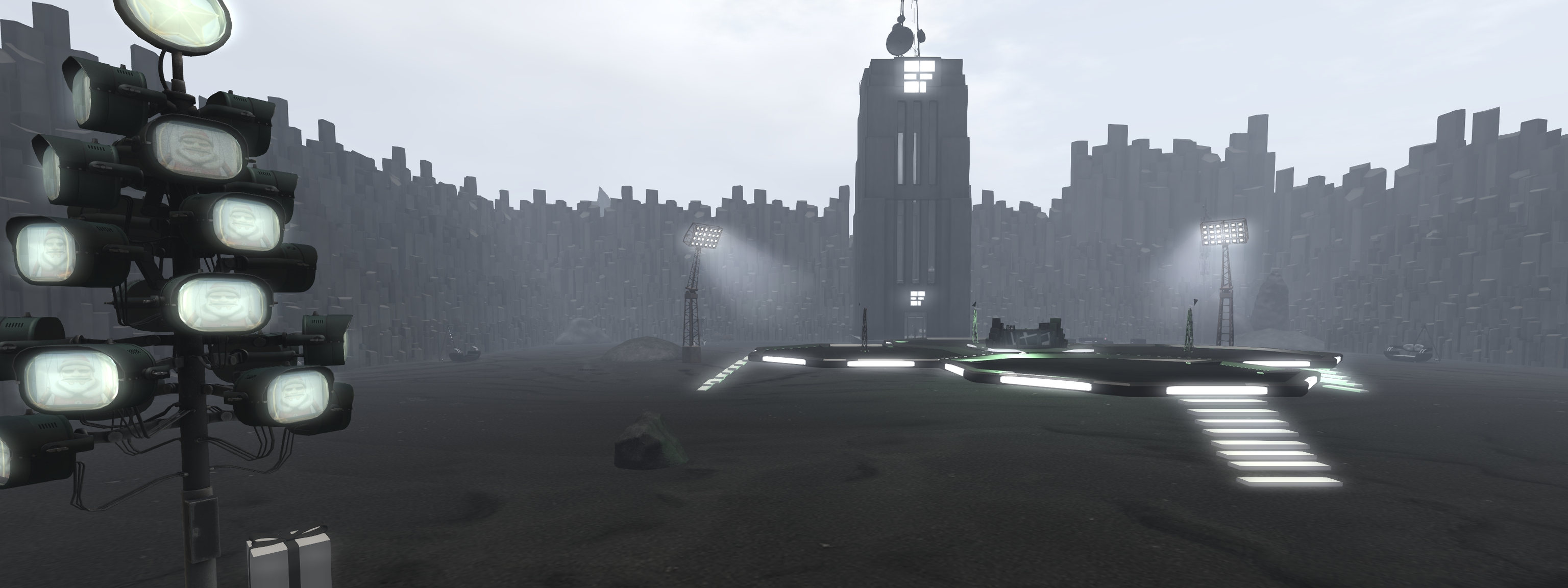
Biné Rodenberger has once again been busy with her home region of Binemust, building a new space for people to explore. Whilst the ground level retains the layout based on the Bungenäs region of Gotland, Sweden’s largest island – and which I visited last September – the winter sky platform that was present at the end of 2020 (see here for more) has been replaced by a setting that offers a mix of of dystopia, sci-fi and fantasy, all sitting with a landscape that has a touch of an alien feel to it.
A strange and barren place where no plant can grow, but where people of all shapes and sizes can enjoy art, culture and good take-away.
Biné Rodenberger, describing her new Binemust sky platform
Binemust: The Platform, August 2021
Enclosed within a mountainous surround that in places blends with the region to give an almost Grand Canyon-ish feel, the setting can be divided into a number of areas that are both separate to one another and flow together as a complete scene. The largest two of these is the ruins of a town perched on the edge of the canyon’s wall to the south of the setting. Beyond this to the north lies a raised table of rock encrusted with black crystal-like rocks that form an uneven blanket.
Casting a shadow over part of the latter is the strangest of structures: a large platform that appears to be resting on the plateau courtesy of a massive column-like foot. “Appears” because multiple motors arrayed along its underside turn four-bladed propellers look like they are giving the platform stability and actually supporting some of its mass. Perhaps they might be intended to even lift it up into the air…
Binemust: The Platform, August 2021
The landing point for the setting sits between the crystal field and the slope that drops down to the ruined township, a set of open gates set into the long wall that divides town from plateau inviting arrivals to descend the slope and explore what lays beyond the wall. Similarly, a narrow path free of crystals runs along the top of the slope to reach the foot of the strange platform.
Looking like it has been cobbled together over time, the platform offers a conglomeration of living space, commercial area, and what might be working spaces. A chain of floating crystals surround it in three sides, rising step-like around it. A bright arc of energy passes from one to the next to reach one floating directly over the platform’s highest roof, as if it is drawing power from the plain of dark crystals below. A buggy and wreck of a car sit on a deck to one side of the platform, with no discernible way of being removed, whilst on another deck sits a literal flying boat.
Binemust: The Platform, August 2021
Below the platform, the remnants of the city clearly point to it have suffered some kind of apocalypse, but whether this is natural or the result of something like a war is impossible to tell. The wall that divides it from the rest of the landscape looks to be somewhat more recent that parts of the town, suggesting it is a more recent and possibly defensive addition.
Similarly, the relationship between the platform and the city is unclear, although the commonality of languages (English and Japanese) visible in both suggests they might be related. Perhaps the platform has been built by the inhabitants of the town; but if so, what is its ultimate purpose? If not, is it a wandering visitor, here to replenish supplies and gather energy? The story behind both is left entirely up to visitors to write.
Binemust: The Platform, August 2021
Beyond both of these locations to the north of the crystal field is another modern structure in the form of what looks to be communications centre that like the town has weathered hard times, Also to the north is an ancient henge that gives a further fantasy twist to the setting. Oval in shape, the latter is dominated by the living skeleton of a great dragon. Possibly becalmed by a ghostly voice that sings quietly, the dragon sits within the stone arches like Viserion raised by the Night King, but with his flesh and sinews, organs and muscles, all long lost to the passage of time to leave only his great bones as he flexes his wings and periodically rises from his haunches to survey the landscape around him.
Pet, guardian or predator, the role of the dragon is also unclear, its story again left to visitors to tell for themselves. Perhaps it is simply part of the artistic element to the setting – more art (notably by Bryn Oh) can also be found at various points in the town. However, the presence of the henge in which it sits does nicely brackets the rest of the setting with a sense of history, being mirrored to the south and within the water of the canyon by another ancient element: the wreck of a Viking long ship, the familiar signature piece Biné always includes in her builds as a mark of her heritage.
Binemust: The Platform, August 2021
As always with Biné’s designs, the setting is rich in detail, the sound scape offer additional, at times almost haunting, depth, with numerous opportunities for photography waiting to be found.