The serenity of Sarawak

Sarawak; Inara Pey, August 2014, on FlickrSarawak (Flickr) – click any image for full size

I finally made it to Sarawak, the home region of outstanding SL photographer Ermandalee. I’d actually been intending to visit since around the end of July, but time and tide have been keeping me away; as did the fact that many of SL photographers and bloggers have visited; I scarcely feel any pictures I take do justice to the region compared to their work.

But, time smiled favourably upon me, and with an hour or so on my hands I jumped across for a visit, and I have to say I’m glad I did. Given Ermandalee’s eye for detail and expression, which can clearly been seen throughout her Flickr steam, it will come as no surprise that Sarawak is beautifully conceived and presented; the camera can scarcely be turned without a picture being framed.

Sarawak; Inara Pey, August 2014, on FlickrSarawak (Flickr)

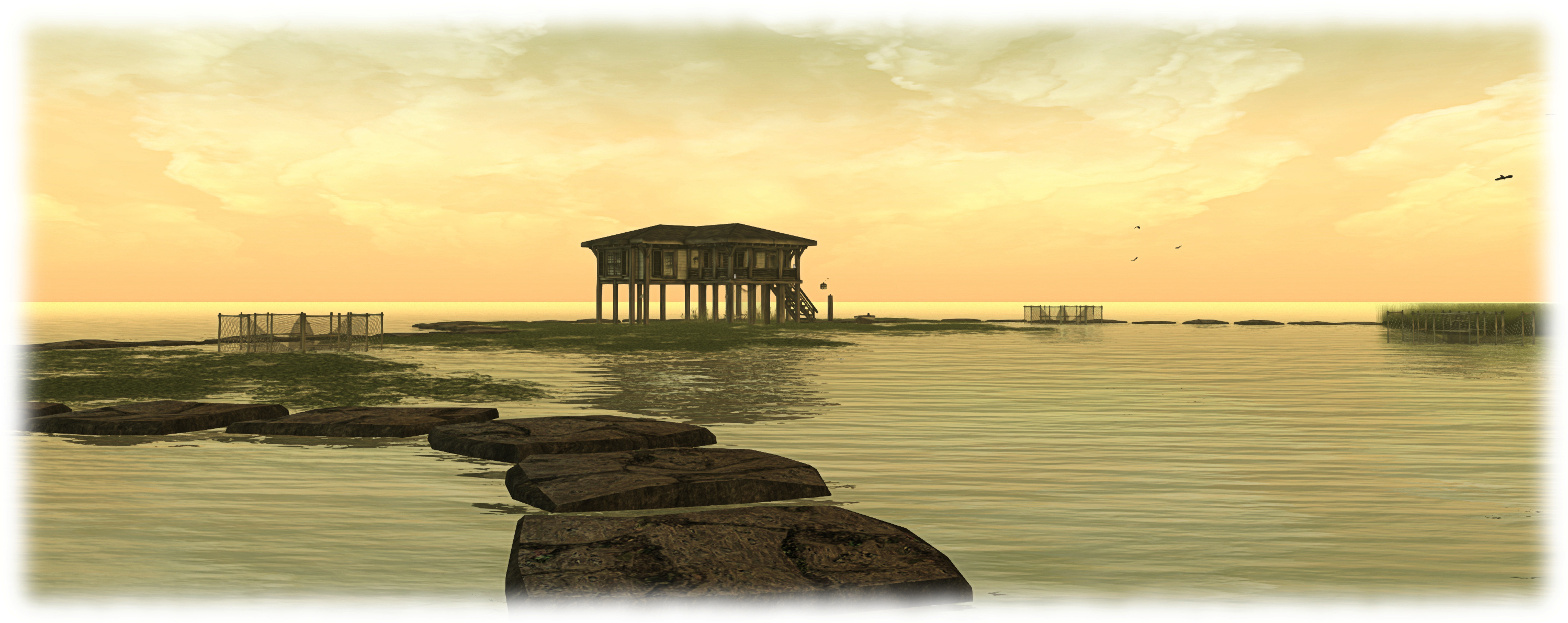
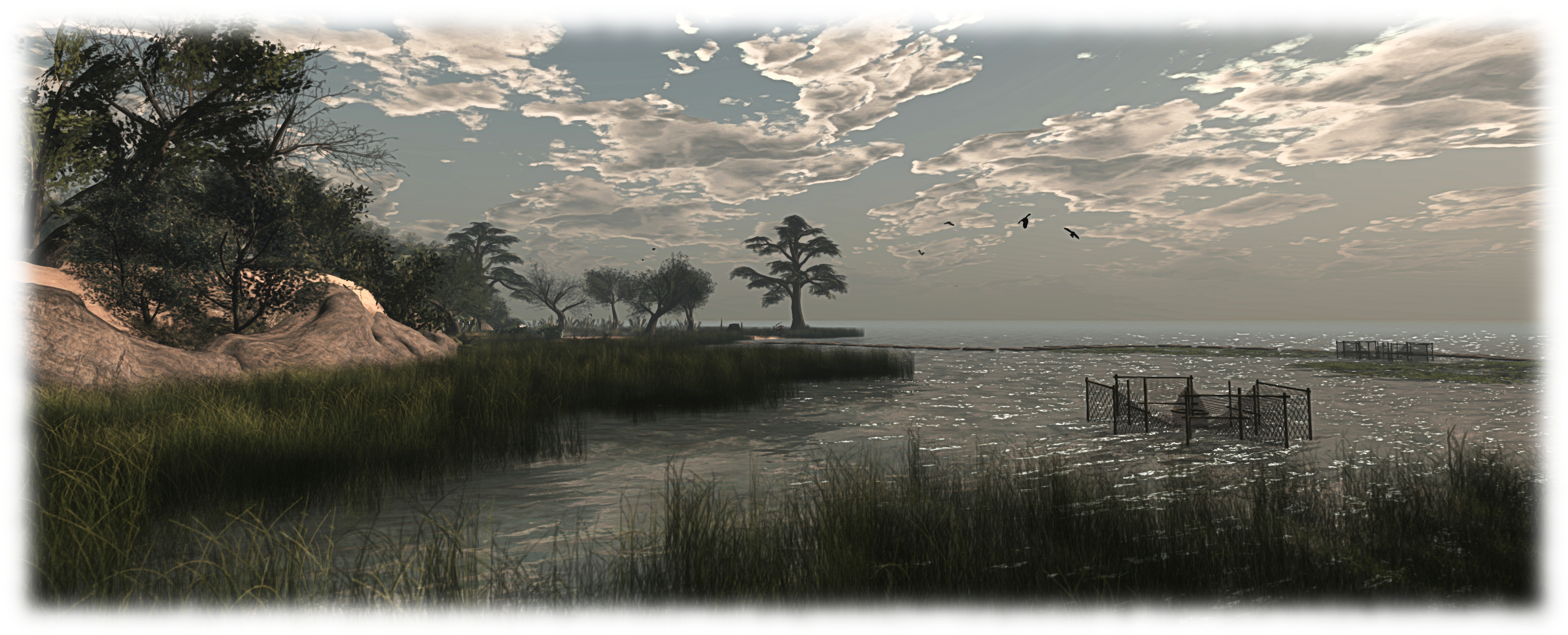
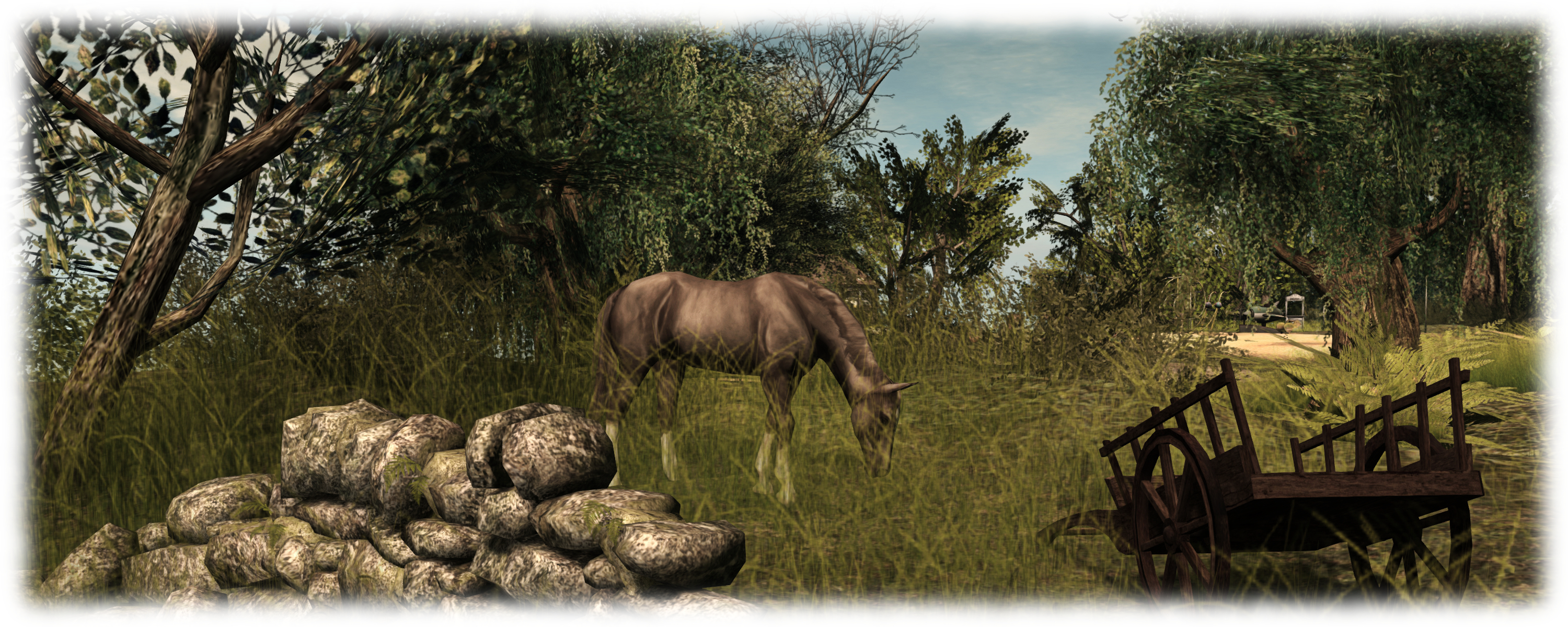
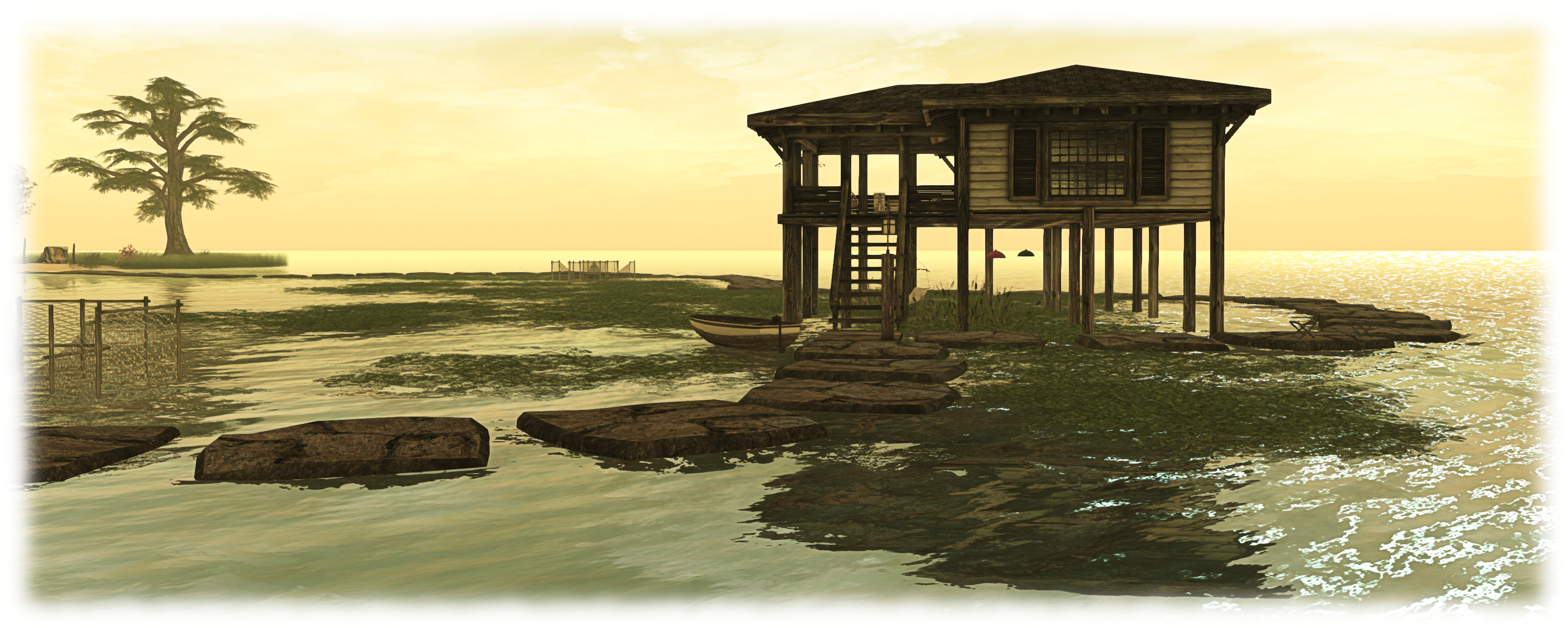
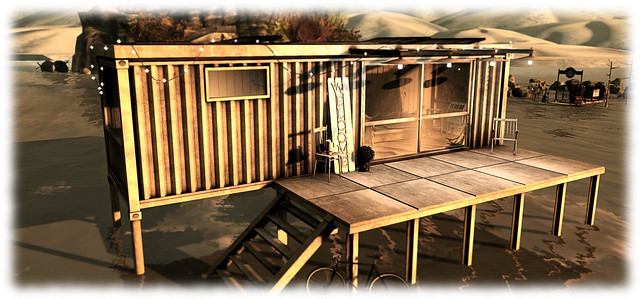
Predominantly rural in nature, Sarawak presents what might be a coastal scene, a flat headland with mountains rearing beyond and cut through by water to form a small series of islands linked by bridges, both stone and wooden.  A house is built out over the waters of one of the inlets, a sign welcoming visitors to Ermandalee’s home, which doubles as a small gallery presenting some of her photographs. Just across the water are signs of a farm or small holding: a barn where horses can be found, bales of hay and the rounded form of a stone windmill. The soil here is obviously rich, as a scarecrow stands guard over a field of yellow flowers.

The pastoral feel to Sarawak continues through the wildlife to be found across the region. Ducks swim in some of the inlets or waddle on the shorelines, geese rise from one of the smaller islands, gulls circle overhead while deer roam the grasslands, birds sing against the backdrop of flowing water and the gentle ringing of chimes caught in the breeze.

Sarawak; Inara Pey, August 2014, on FlickrSarawak (Flickr)

But there is more here than a simple country scene; I understand that Ermandalee originally had it in mind to build something more towards the fantasy side of things. Eechoes of this can be found as one wanders the region, mixed with a touch of ancient mysticism.  A tall tower stands to one side of the region; close to a set of falls stands a statue and pavilion of distinctly elven look and feel, while on the shoreline sits a circle of mossy standing stones.

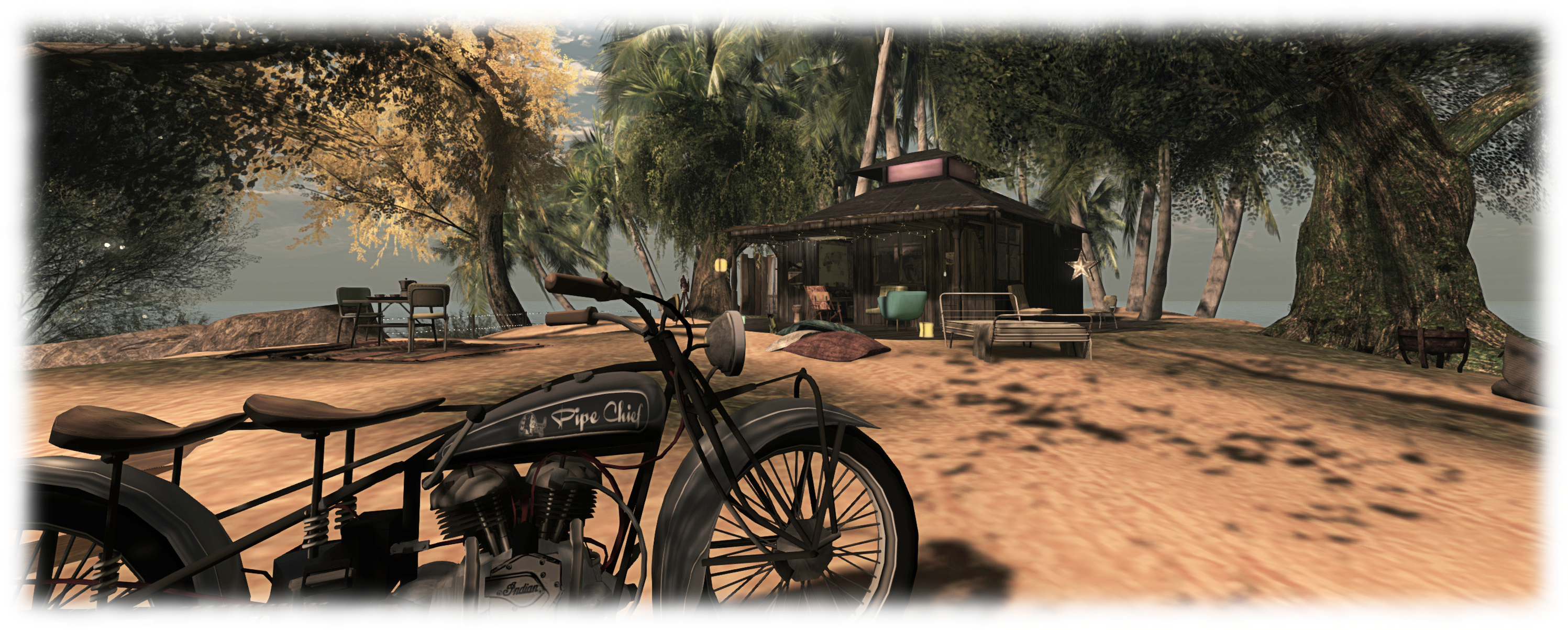
The combination of elements within Sarawak is enticing; inviting one to try to define where it the world it might reside. To me, parts of it suggest the great outdoors of Canada (or at least, how I imagine them to be): lakeshore cabins, rich forests, tall mountains. At the same time Sarawak speaks of being more European in nature, while the fjord-like channel to the north-east suggests something slightly Scandinavian.

Sarawak; Inara Pey, August 2014, on FlickrSarawak (Flickr)

However you see Sarawak, and whether you witness it in the default windlight setting, suggestive of a cool late summer evening (or perhaps early morning, depending on your mood), or whether you opt for one of your own (as I did), it is a beautiful place to visit and explore.  With its many offerings of places to sit, down on the ground and up in the trees, it offers an open invitation to visitors to stop and rest a while.

Given the serenity one feels when wandering through the region, it is an invitation easily accepted.

Sarawak; Inara Pey, August 2014, on FlickrSarawak (Flickr)

Related Links

Daydreams of lighthouses three

The Colder Water, Daydreams; Inara Pey, August 2014, on FlickrThe Colder Water, Daydreams, (Flickr)

The Colder Water, located on the homestead region of Daydreams, is without a doubt one of the most atmospheric and evocative regions I’ve visited.  Both minimalist in one direction, yet rich in content and imagery in another, Jordan Giant’s design has an immersive attractiveness that is quite breathtaking.

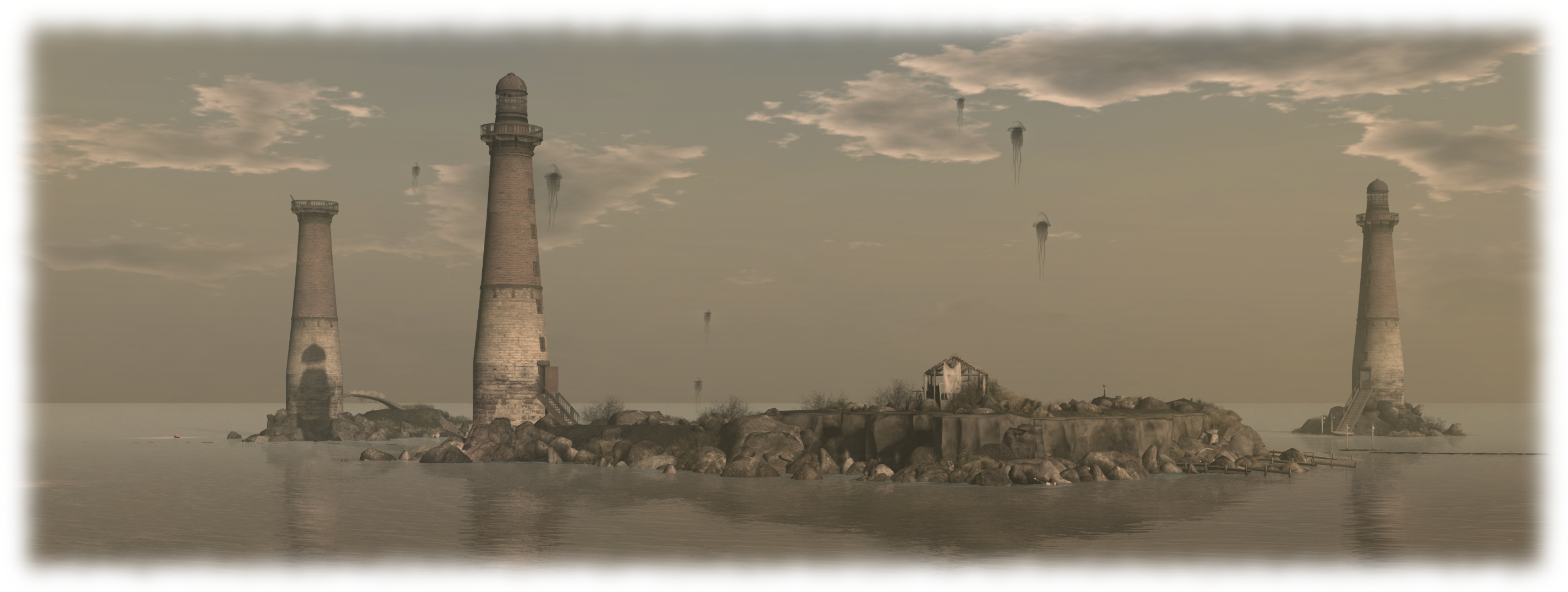
A curved island, what might be all that’s left of a long-extinct and drowned volcano, sits low in the sea, black gravel beach curving gently between two uprisings, each with its own lighthouse. The slender form of a third rises from rocks a little offshore, forming a triumvirate of silent watchers.

The Colder Water, Daydreams; Inara Pey, August 2014, on FlickrThe Colder Water, Daydreams, (Flickr)

The island, largely bare of foliage other than moss, tough grass and skeletal trees, shows odd signs of former habitation. A railway track cuts across the narrow neck beneath the western uplands, running out into the shallows on either side. A path from here leads up through lines of old fencing to an old shed or wood-framed house sitting in disrepair on a low rocky plateau, the rounded flank of a lighthouse nearby.

There is a feeling of quiet age here; the lighthouses all stand deserted, two with lights extinguished and the third rudely decapitated, iron dome almost lost amidst the rocks at its feet. In the grey waters, buoys flash a warning in place of the sweeping lights from the brick-built towers, and even these appear to be uncared for; one has broken from its anchor chain to be carried among the rocks by the flow of the tide.

The Colder Water, Daydreams; Inara Pey, August 2014, on FlickrThe Colder Water, Daydreams, (Flickr)

There is a haunting beauty to this island that seeps into the mind; a quiet voice encouraging the visitor to say, or those who have departed to return once more. There is an enigmatic feel to this place as well; the volcanic shores suggestive of an otherworldy place, a sensation enhanced by the jellyfish floating overhead.

But above all, this is a place which speaks of tranquility within its suggestion of age and distance. As it speaks to the mind, encouraging one to to stay, so to does it soothe the soul. The balance here is perfect, and further enhanced by the selected tracks of the audio stream, which is an absolute must listen for visitors. Also – make sure you view the region with the default windlight (I’ve used alternatives in some of the images on this page).

The Colder Water, Daydreams; Inara Pey, August 2014, on FlickrThe Colder Water, Daydreams, (Flickr)

Hard fingers rise
On crescent Moon’d shores.
Tides flow around rocky knuckles
While boats rest with idle oars.

Red lights blink warning
Where cyclopean eyes once roamed.
Whilst on bare rocks, pale candles
Keep a vigil of their own.

The Colder Water, Daydreams; Inara Pey, August 2014, on FlickrThe Colder Water, Daydreams, (Flickr)

The arrowed headland
Has long gales withstood,
And offers comfort
Under shuttered wood.

Curled stony tail
Sweeps from the arrow’s head.
To bridge-reached door
The traveller is led.

The Colder Water, Daydreams; Inara Pey, August 2014, on FlickrThe Colder Water, Daydreams, (Flickr)

Here points a finger
to cloud scudded skies;
Glass nail long broken,
Distal phalanx scythed.

Climb the twisting circle
To high wrought iron’d tip.
And find the telescope, upward turned
To watch the stars, not passing ships.

Rough hewn beauty
Spread with naked trees
Marks this isle of
The lighthouses three.

Related Links

with thanks to Caitlin Tobias for the pointer.

Return to a radiant dawn

Dawn of Radiance, Lost Forest; Inara Pey, August 2014, on FlickrDawn of Radiance, Lost Forest, August 2014 (Flickr)

My first visit to Dawn of Radiance, Silvermoon Fairey’s marvellous homestead region, was back in November 2013. Back then, the region was in the grip of winter. Roll forward eight months, and the region is not only basking in summer colours, it has once again been beautifully remodelled, and from the high rocky buffs to the riverside grasslands, it  offers a veritable smörgåsbord of visual delights for those who visit.

A rocky cove in the south-east corner of the region forms the arrival point, a narrow shingle beach between waves and cliffs; with a tall brick lighthouse casting its eye out to sea nearby as a fishing boat rides the breakers a short distance offshore. The little beach offers places to sit, but walk along it and you’ll come to a slope leading you up between the cliffs where eagles have nested, and on to a grassy meadow, which in one direction leads you down to a farm where horses graze.

Dawn of Radiance, Lost Forest; Inara Pey, August 2014, on FlickrDawn of Radiance, Lost Forest, August 2014 (Flickr)

If you go in the other direction from the first meadow, you can make your way up to a rocky plateau dominated by the angular form of a church amidst the ruins of what might be an old castle. A switch back path hugs the cliffs here, the single link between ruins and another sheltered beach below.

Wander through the farm and you have a choice: you can follow the track leading out to the big windmill standing sentinel-like on the headland; or you can take the bridge over the river and explore the grasslands on the far side and walk up to another meadow where more horses graze; or you can follow the track inland.

Dawn of Radiance, Lost Forest; Inara Pey, August 2014, on FlickrDawn of Radiance, Lost Forest, August 2014 (Flickr)

The latter route may take you through a rain shower and some undergrowth, but trust me when I say it’s very much worth taking, whether you turn right and cross the river over the little wooden bridge, or continue onwards, further in the heart of the island; both routes will lead you to places of whimsy and fantasy. Keep an eye out, as well, for another route up to the church and ruins …

Nor is that all; the north side of the island hides another beach, while up on the hills and down between their shoulders lie places to sit, either alone or with a close friend, and simply watch the world go by – or forget about it completely.

Dawn of Radiance, Lost Forest; Inara Pey, August 2014, on FlickrDawn of Radiance, Lost Forest, August 2014 (Flickr)

Such is the design of the region that exploring it feels like you’re on an island that is bigger than an individual region, and providing you don’t set-out to discover everything all at once, it presents a series of delights; just when you think that you’ve seen it all, you turn a corner or pass around a bush and trees, only to find something new and quite unexpected. Hence why I’ve not described some aspects of the island here (although admittedly, one photo is perhaps a bit of a giveaway to what you might come across!); I don’t want to spoil the pleasure of discovery too much.

There is a marvellous blending of elements here as well, which encourages you to feel as if you’re walking through a more expansive landscape; the use of elevation not only physically sets apart the farm from the church with its surrounding ruins; it gives an added sense of distance to your explorations as you find your way up to the heights, climbing above the tree-line and grasslands and into the rocky preserve of an ancient site.

Dawn of Radiance, Lost Forest; Inara Pey, August 2014, on FlickrDawn of Radiance, Lost Forest, August 2014 (Flickr)

The same can be said of the use of hills and woodland to enfold the heart of the island and separate it from farm and ruins; following path or river into the interior not only again heightens a sense of exploration and discovery, it encourages a feeling of stepping into another, hidden realm  – the digital equivalent of stepping through the wardrobe.

With its regional windlight set to the first light of dawn, much in keeping with the region’s name, it almost goes without saying that Dawn of Radiance is a photographer’s delight, and lends itself to a wide range of windlights and sky settings. If you do pop over to take photos, I believe I’m right in saying that joining the group via the board at the landing point will give you rezzing rights for props, and there is a 30-minutes auto-return limit.

Dawn of Radiance, Lost Forest; Inara Pey, August 2014, on FlickrDawn of Radiance, Lost Forest, August 2014 (Flickr)

Related Links

Catching a rainbow

L'Arc-en-Ciel, WinterFall; Inara Pey, July 2014, on FlickrL’Arc-en-Ciel, WinterFall (Flickr)

I’ve been an admirer of Asa Vordun’s work ever since I happened across her Caprice and Easy A, which I first wrote about in November 2013. As Caprice Village, I returned there in April 2014, again dawn by Asa’s creative eye. So when I saw some beautiful pictures taken by Hans Inshan of a new design by Asa, I had to hop over and take a peek.

When I initially arrived at L’Arc-en-Ciel, it was clearly a work-in-progress, although Asa wasn’t around at the time. So I grabbed a couple of quick shots before scampering off, promising myself I’d pop back for more. I did so a couple of more times, bumping into Ziki Questi on one occasion, and did catch a few changes and additions since my initial drop-in. Indeed, even with the visit which preceded this blog post, Asa was still adding some final touches!

L'Arc-en-Ciel, WinterFall; Inara Pey, July 2014, on FlickrL’Arc-en-Ciel, WinterFall (Flickr)

Just as the rainbow from which the region takes its name is defined by its bands of colours, so L’Arc-en-Ciel is defined by the multiple islands which make up its whole. There are five in all, bordered by  an off-sim surround of rolling hills and pine trees.

Each of the islands might be a chapter in a book, or possibly a standalone short story, as each has a little tale of its own to tell. walk along the wooden pier which forms the arrival point to the region and descend the steps, and you’ll find a discarded dress and shoes, as if their owner has decided to take a little skinny dip … but look closer, and the journal lying beside the dress, the nearby suitcases and the little Jack Russell staring out at the departing schooner might suggest another story … perhaps that of runaway lovers….

L'Arc-en-Ciel, WinterFall; Inara Pey, July 2014, on FlickrL’Arc-en-Ciel, WinterFall (Flickr)

Follow the pier in the other direction, and it’ll lead you to one of the islands, this one with a distinct agricultural feel, with wheat growing across the hilltop and horsed grazing on the far side. A bridge from here leads to the largest of the islands, which offers several points of exploration both at ground level and up on the rocky outcrops which rise from its grassy-sandy base.

Here are many stories awaiting their chance to suggest themselves to the observant visitor. Just who is the tin man, apparently camped on the shore and looking somewhat dejected before his painting? What of the house at the end of the track? Are the people there just back from vacation, packing to go on vacation, or are they holiday-makers, newly arrived…? And what of the white house on the rocky headland?

L'Arc-en-Ciel, WinterFall; Inara Pey, July 2014, on FlickrL’Arc-en-Ciel, WinterFall (Flickr)

Two more bridges provide links to two much smaller island. On one stands a lighthouse and on the other a small folly. The final island is reached by crossing a shallow band of water. On it, the rain of a summer shower beats on the roof is a run-down cafe which, despite its decrepit state, still appears to be offering someone a home – but who?

Perhaps the key to the stories here lies in the dedication for the region, borrowed from The Story of Life by Jim Hendrix:

The story of life is quicker than the blink of an eye, the story of love is hello, goodbye.

L'Arc-en-Ciel, WinterFall; Inara Pey, July 2014, on FlickrL’Arc-en-Ciel, WinterFall (Flickr)

I found the Hendrix connection somewhat appropriate; wandering the island put me in mind of Catch the Rainbow by Rainbow, a song in part inspired by Hendrix’s Little Wing. This being the case, it seems only right that I should leave you with a video featuring that song. Given some of the imagery within the region, maybe it’ll help you cast your own stories amidst the beauty of Asa’s delightful L’Arc-en-Ciel.

Related Links

Of Linden themed islands

The Baronial Castle - a Linden Lab themed region
The Baronial Castle and bits – a Linden Lab themed private island

Whenever SL private islands are mentioned, it is usually in terms of unthemed full, homestead and openspace regions. However, the Lab has, for some time, offered “themed private islands” for anyone who would care to lease one.

These offer pre-terraformed regions (full or homestead) available in one of four themes: “Baronial Castle”, “Conference Centre”, “Theatre” and “Moonbase”. Each of these themed island types comes at a slight premium in terms of set-up costs (an extra $29 applicable to full regions and $20 on homesteads – both ex VAT), although tier is the same as for “regular” full and homestead regions.

There are SLurls leading to in-world samples from the various website pages offering these regions. However, as it’s been a few years since I last looked at them (which was around the time of the whole openspace / homestead fiasco – which is about when they first appeared, if I recall correctly), I decided to pay them a refresher visit.

The first up was the Baronial Castle, which is described on the website as an “imposing mountaintop residence, complete with tavern, boat and dungeon. Host the royal ball or role-playing fantasy game you’ve been waiting for, or have your friends over for an intimate chat in the tavern.”

The Baronial Castle and hillside path

The tavern forms the landing point for visits to the sample castle. This is located at the base of the hills atop which the castle sits, alongside a small cove wherein a large ship (all 246 prims of her) sits with sails unfurled, a smaller sailing skip sitting close by.

From the tavern, one can follow the path, lit at night by Ye Olde Iron Lampposts (must be powered by magic…), up the hill to the bridge spanning the divide between hilltop and castle. The castle itself offers a great hall, complete with hidden passage down to the dungeons (why hidden? Wasn’t a dungeon pretty much expected with castles, a sort-of medieval equivalent of today’s games room found in many upmarket homes?). A ramp leads to the upper levels, where sit a couple of bedrooms and a very narrow tower. In difference to the lampposts lighting the way up to the castle, everything within it is lit by wall-mounted torches (which some people might recognise as Ryan Linden’s handiwork and available from the Library folder in inventory).

A short hop across the water from the castle lies the Conference Centre. This offers two main venues and a smaller offshore island with an open-air venue. The landing point for this region is between the two main buildings, and connected to both by a paved foot path.

The Conference Centre

The nearer of the two buildings to the landing point, which has its own built-in waterfall, offers a large ground floor conference area and a mezzanine area for informal meetings as well as rooftop access for those needing additional space.

Across from this, the second building offers a reception area, a couple of meeting rooms and an upstairs seating area. One of the meeting rooms has positionable tables. The small offshore venue area offers open-air seating, and the design is finished-off with simple landscaping, non-functional video screens and an offshore wind farm.

The Conference Centre and the Theatre beyond
The Conference Centre with the Theatre beyond

Another short hop from the Conference Centre is the Theatre. This is the only themed region which is solely available for full regions, there is no homestead option. The reason for this is that the theatre is designed to accommodate up to 100 avatars at a time.

The landing point drops visitors in the plaza directly in front of the theatre, which is perhaps the largest of the themed region structures in terms of volume, and the one demonstrating a degree of appreciated humour: the film posters can hardly fail to raise a smile, and include The Little Molemaid, Moletropolis, Dances With Moles, and such Moleywood stars as Mole Gibson and Worm Hanks.

The Theatre
The Theatre

The theatre interior is pretty much what you’d expect: a foyer area (with the aforementioned posters on display), a lot of banked seats facing a stage / screen area, and box seats on either side. At the back of the theatre, with a good view of the stage area is a control room, complete with a scripted panel for operating the stage lights and curtains, etc., and controller for displaying the various foyer movie posters. Backstage is the dressing room, reached via hidden doors in the stage wings.

Continue reading “Of Linden themed islands”

Le Botanique: a materially beautiful creation

Le Botanique, Mirriam Brown; Inara Pey, July 2014, on FlickrLe Botanique, Miriam Brown, July 2014 (Flickr)

I first met Liara Okiddo as a result of visiting her home on the Region of Golden Rose back in July 2013, Garden of Eden was a 8192 square metre parcel of land where she had built a compact tour de force of what can be achieved without necessarily needing an entire region of your own in which to create an eye-catching build. It was a truly amazing and verdant design, rich in colour, flora and fauna, creating a tropical island like feel in which she had located her in-world studio and gallery.

In November 2013, Liara extended an invitation for me to see her next project – then a work in progress, Isla Okiddo, her own homestead, which opened to the public in February 2014, forming another visually stunning build where she had again created a wonderful tropical paradise in which she located her gallery and her home.

Le Botanique, Mirriam Brown; Inara Pey, July 2014, on FlickrLe Botanique, Miriam Brown, July 2014 (Flickr)

Sadly, Garden of Eden and Isla Okiddo now only exist in memory and pictures, although they remain two of my top 10 all-time most beautiful locations in Second Life.

More recently, Liara has been working on a new project, which she pinged me about early on (and for which I still owe her an apology, and life, the universe and everything meant I never really supplied the feedback she’d requested). The project opened earlier in July (and which the physical world again conspired to keep me away from) and is another masterpiece.

Le Botanique is a 64 metre square slice of rain forest-like beauty floating in the air above Miriam Brown, and it is a marvel of design and the use of materials – around 75% of the build is materials enabled.

Le Botanique, Mirriam Brown; Inara Pey, July 2014, on FlickrLe Botanique, Miriam Brown, July 2014 (Flickr) – note the beautiful wet sheen to the stone wall in the rain as it reflects the light from the lamp-post above; the beauty of materials

You arrive inside a summer-house in one corner of the forest (do make sure you accept the local windlight, if offered, on your arrival). The staccato beat of rain falling on the glass panels of the roof is your greeting, together with the crackling pop of wood burning in the hearth its accompaniment. A piano from the other room in the house might also add a little harmony to your arrival. But all these serve as background to the lush, rain-soaked slice of tropical splendour which awaits you beyond the sliding doors.

Rain splashes over everything here, pattering across cobbled terrace and wooden walkways alike, leaving a wet sheen over mossy walls, grassy rocks and dripping from the lush vegetation. A wooden bridge passes over a narrow channel of water separating the summer-house from an old terrace where sits a wrought iron garden table and chairs, dripping in the shower alongside a tall green house in which grow where exotic lilies and other plants are growing in rich abundance, sheltered from the rain.

Follow a set of wooden steps from here, and they take you up to the high point of the build, a rocky grotto where sits a table an chairs under a canvas awning.  Elsewhere, stepping-stones guild the visitor across the expanse of rain-speckled water below the summer-house and up to another rocky ledge offering another little seating area under canvas, this one with a touch of romance added: candles on the table, complete with a bottle of wine, two glasses, and a red rose.

Le Botanique, Mirriam Brown; Inara Pey, July 2014, on FlickrLe Botanique, Miriam Brown, July 2014 (Flickr)

All of this exists an in rich spread of flowers and plants, tall trees through which sunlight slants, and over which the rain falls steadily. It’s an amazing sight for even the most causal visitor. However, if you want to experience Le Botanique to the fullest, then you should enable your viewer’s Advanced Lighting Model (Preferences > Graphics > check Advanced Lighting Model) option, if it is not already active.

This shouldn’t result in too big a performance hit on your system – you don’t have to enable Shadows as well (which are the performance killer). When you do so, Le Botanique will spring into even greater life as the wet sheen on the rocks and walls becomes visible, and the light from lamps and lanterns is reflected in the wet surfaces around you.

I’ve fiddled around with materials myself in SL and more noticeably on Kitely with Fallingwater, but I’ve done nothing to the depth of Liara’s project. As noted above, the built features the use of materials across about 75% of it, and this has involved Liara carefully selecting copy / mod items which she has then painstakingly retextured with custom diffuse (texture), normal (bumpiness) and specular (shininess) maps, and the results are truly stunning, and incredibly life-like; so much so in fact, that it’s possible to miss some of them without a degree of careful camming, therefore time is the order of the day when visiting.

Le Botanique, Mirriam Brown; Inara Pey, July 2014, on FlickrLe Botanique, Miriam Brown, July 2014 (Flickr) – note the relief on the stone work and on the wooden boards

For those interested in the technical aspects of the build, Liara has created a special Flickr album charting her work on Le Botanique, and to be honest, her photos far outweight my meagre efforts here should you need any visual persuading to make a visit.

I never cease to be amazed and awed by Liara’s work; each of her creations builds on the foundations laid by the last, and each is in turn an incredible and beautifully immersive environment. In this, Le Botanique is no exception. It is simply glorious; a stunning demonstration as to what can be achieved with time, patience and materials, and (again) without needing an entire region in order to do so.

Le Botanique, Mirriam Brown; Inara Pey, July 2014, on FlickrLe Botanique, Miriam Brown, July 2014 (Flickr) – the light of the lamps reflected off the wet surface of the wooden boards

It is, in a word, glorious.

Related Links