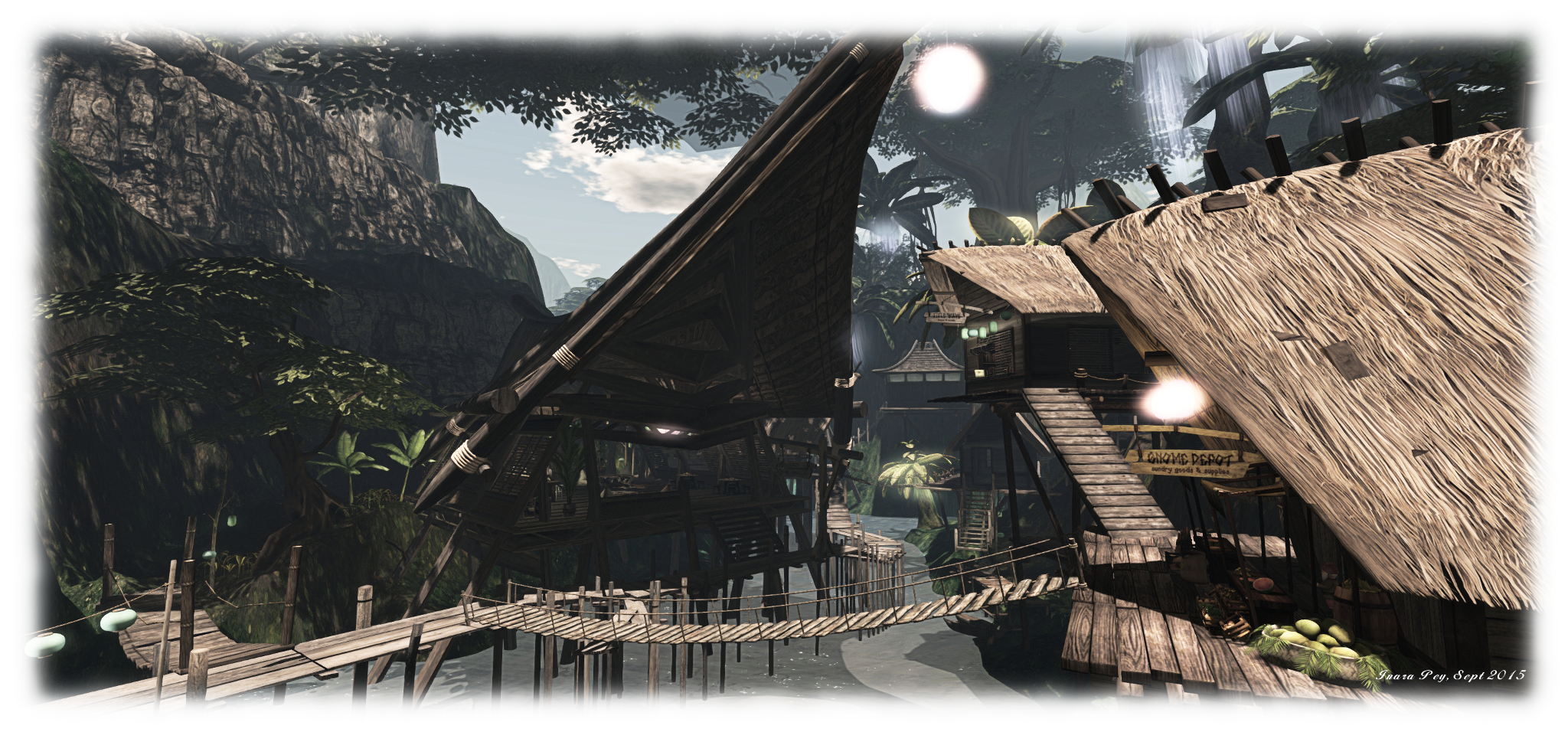
Finding fool’s gold in Second Life

Alpha.Tribe
Alpha.Tribe

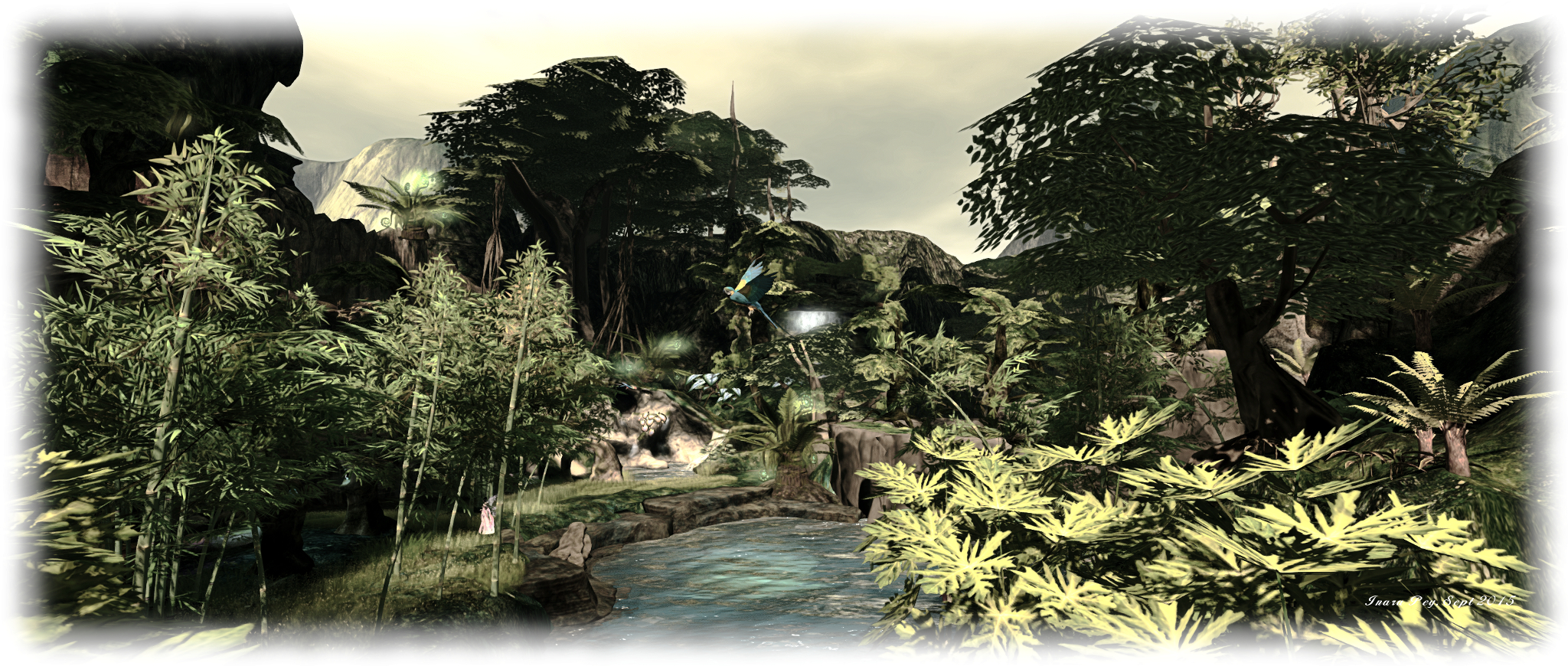
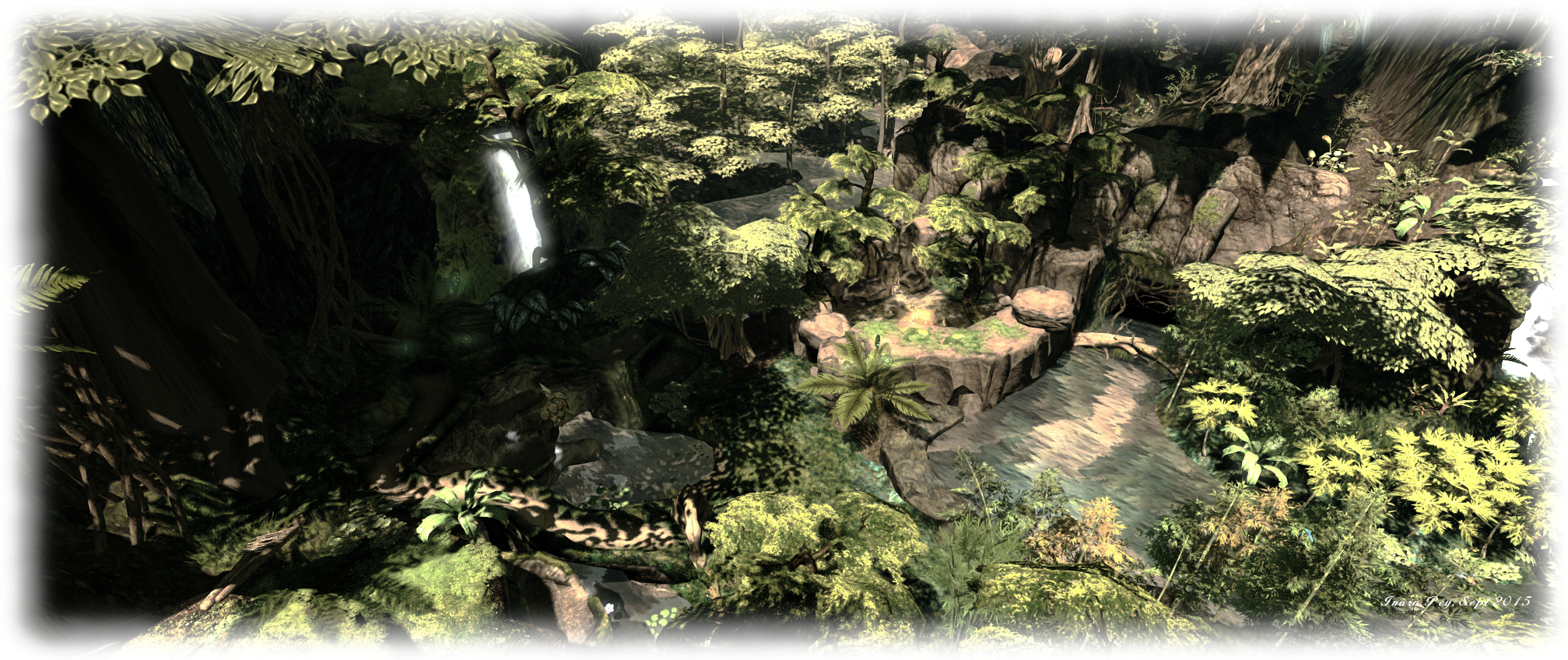
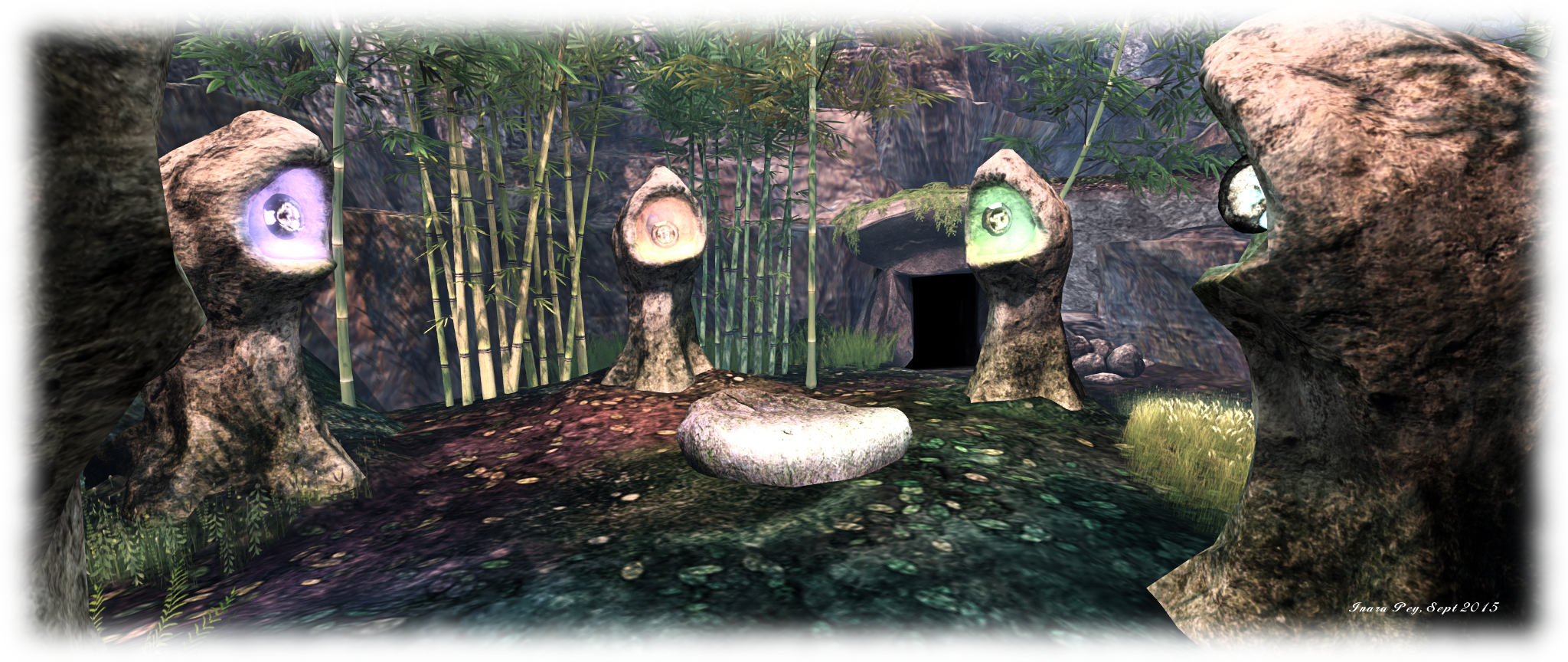
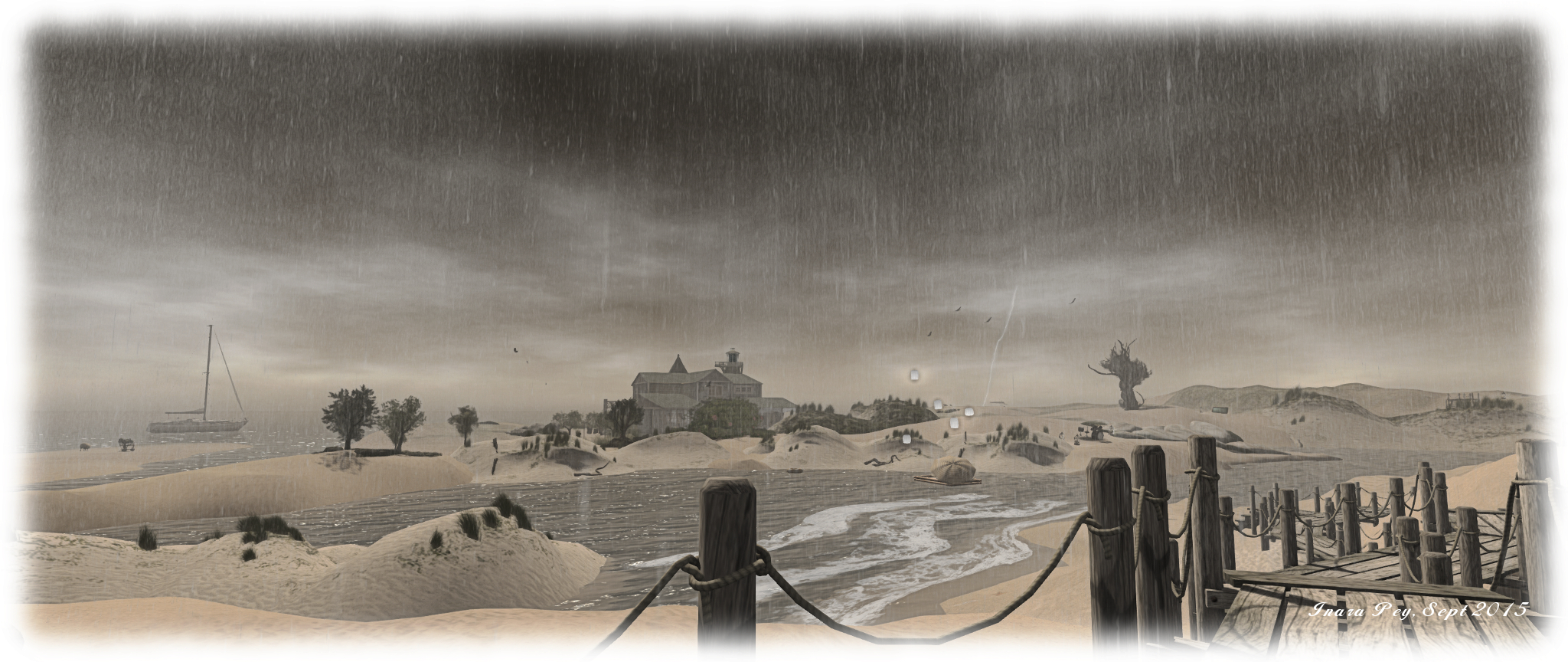
Artist and avatar creator Alpha Auer has re-opened her region, Alpha.Tribe, after a period of redesign. “This new build revolves around the theme of ‘fool’s gold’,” she says of the new design, which extends on, under and over the region.  In respect of this, the majority of the builds and objects in the region have been given a black and gold finish, with even the sandy seabed carrying the motif, graduated as it is into alternating lines of light and shadow.

The result is an environment which brings together a rich mix of influences and structures which, although very disparate in design and form, are nevertheless unified through the contrasting richness of the gold and ebony of the region’s look.

Alpha.Tribe
Alpha.Tribe

“I have tried to build a sim that is conceptually a bit like my old sim Syncretia,” Alpha continues. “a continuous ecology that tells a story of sorts, rather than a place in which discrete things are presented independently of one another, which is what I had tried to do with the previous build.”

Among the things on offer for explorers to discover lie an oriental pavilion offering an exotic environment in which to relax, or visit a shipyard where a golden ship is under construction. Elsewhere there are gardens, ruins, and high tech designs. Meanwhile, seahorses in rich black and gold, escort Nemo’s Nautilus under water and overhead a huge and ornate airship rises slowly into the sky.

Alpha.Tribe
Alpha.Tribe

Not all of the region is new; the Blueprint City and Pastoral sphere have been preserved, Alpha informs visitors. Careful exploration is encouraged on foot and / or by flying, and there are things to see within the builds as well as around them, and to help visitors reach key points, a teleport system has been provided. Do make sure you use the region windlight settings when visiting; they add considerable depth to the various locales.

Alpha also notes that the region pays homage to creator Arcadia Asylum, also known as Aley. “Many of the prims that you will see on the sim are Aley’s creations which I have modified, and re-textured,” alpha says. “Aley’s ingenuity as a builder has allowed me to create a sim that (although it is only a homestead with limited prims) will hopefully appear as densely built as a full sim and hopefully tell a secret tale that needs lots of prim-detail in order to be properly heard.”

Alpha.Tribe
Alpha.Tribe

To mark the reopening and redesign, Alpha has released two new avatar designs which are in keeping with the theme of “fool’s gold”. These together with the rest of her designs can be found in the region’s gift store, which can be reached via the teleport system.

Alpha.Tribe is well worth a visit, offering a unique and very intriguing environment and design. Recommended.

SLurl Details

Watery stories in Second Life

Mizu: A rainy story
Mizu: A Rainy Story

Open now through until July 7th is an interactive story book called Mizu: A Rainy Story, which takes place in the region of Papillon. I was led there after reading Honour’s post on the subject.

The story is a curious mix, the title of which actually gives little away, although I suspect that for “rainy” you could read “watery”, which would be more in keeping with the theme and matches the use of Mizu, one of the five godai of Japanese Buddhism, and associated with water.

Mizu: A Rainy Story
Mizu: A Rainy Story

Things don’t get up off to a good start – as you quickly discover that in your clumsiness, you’ve broken a family heirloom: a multi-hued stone. This sets you on a journey through time, witnessing events which – I’m guessing – form a secret history for your family. Water certainly plays a significant role in matters through the unfolding tale, make no mistake; but to follow the narrative, umbrellas are certainly not required!

To play, you’ll need the free HUD which can be obtained from the wall bordering the landing point – Japanese and English language versions are available – and wear it. It will request that you allow it permission to act on your avatar (predominantly teleports and camera control). It’s important that you both wear the HUD and give permission prior to actually going any further and entering the story, otherwise things may not work.

Once you are wearing the HUD, make sure you find your way to the little movie theatre and take a seat. The story commences every 5 minutes, so the wait shouldn’t be too long. If you’re sharing the experience with a friend or two, make sure you all sit in the same coloured seats so you can travel through the story together.

Mizu: A Rainy Story
Mizu: A Rainy Story

When the film starts, you’ll find yourself transported to a small room, the aforementioned broken stone lying on the table. Here, as in the rest of the story, touching things is the key – and having a little patience; not everything is quite as it seems, and sometimes things have to be touched in a specific order.

Click on the right things and the HUD will open and proceed to tell you a part of the story and / or give you directions on what to do next, and will also transport you to the next location in the unfolding tale as and when appropriate.

Mizu: A rainy story
Mizu: A rainy story

I’m not going to give any more of the plot away, as it is one best discovered through participation.

What I will say is that it is rather unusual in content and thrust, and possibly not what you might be expecting as it unfolds. In this, perhaps the use of “Mizu” is a reflection of the flow of the story: its changing nature and our need to adapt to it as it unfolds, just as the river and plant adapt to their environment and the changing of the Sun within the philosophy of the godai.

However you look at it Mizu: A Rainy Story is an interesting presentation, offering something just that little bit different to visitors. And if you feel in need of a little retail therapy after travelling through it, there’s a little street market (see in the topmost images of this article) to be found either through the tunnel next the the story landing point, or once you have completed your journey.

SLurl Details

The passing of places in Second Life

Venexia; Inara Pey, June 2015, on Flickr Venexia (Flickr) – click and image for full size

News is spreading that two long-running role-play regions in Second Life are to close later this month.

Goatswood (first opened in 2012) and Venexia (first opened in 2011), are the work of Baal Zobel and Kora Zenovka. Both are exquisitely beautiful builds with a stunning attention to detail; Gostswood presenting a small, Victorian-era rural town, and Venexia a Venice-like city of rich and inspiring architecture divided by narrow canals.

While highly photogenic, both regions were created, as noted, for role-play first and foremost, and a huge amount of effort was put into establishing them as such, with extensive back stories to both of them (Goatswood in particular has had a very immersive storyline running through it, in which the town itself is very much a character), scripting and combat focused on the SGS system.

Goatswood; Inara Pey, June 2015, on Flickr Goatswood (Flickr)

However, it would appear the more recently, activities within both have declined somewhat, as tends to be the way with role-play environments in SL as people’s interests ebb and flow. This has made meeting tier costs for both regions increasingly difficult; hence the decision to close them. News of this first came  via a group notice from Kora and Baal, which reads in part:

We would like to say a huge thank you to all those who have over the years contributed so much time and creativity towards the great success of these projects. They have provided us with  many lasting memories, and we have derived  immense enjoyment from seeing them brought to life by those who have spent time playing there.

Goatswood; Inara Pey, June 2015, on Flickr Goatswood (Flickr)

As a result of this decision, Venexia will cease operations on Saturday, June 13th and the last train from Goatswood station will depart on Friday, June 19th. The third SGS-based role-play region operated by Baal and Kora, Kingdom of Sand, will remain in operation for the foreseeable future, as it is still generating a good flow of traffic and interest.

The beauty of Goatswood (which I admit to being my favourite, having visited a number of times, but never with the confidence to do it justice with photographs) and Venexia cannot be overstated, nor can the care which has gone into their development and curation. This can be seen right from the moment you arrive in either, from the manner in which information is presented to you, through to the very means of teleporting from the arrival areas high over each region, down to ground level.

Venexia; Inara Pey, June 2015, on Flickr Venexia (Flickr)

What I’ve always particularly enjoyed about Goatswood, other the the manner in which it reminds me of the Cotswolds here in England, is the take-your-time approach presented to those who have considered joining the role-play there. Rather than presenting people with rules and a pile of notes relating to backstory and character development, the approach has always been, “come in! take your time and explore, discover the nature of the town and the role-play here, learn about what goes on by visiting and interacting!”

To encourage this, visitors are provided with a 3-day pass, and little red mushrooms scattered through the town and points of interest in the outlying areas, provide additional notes and information in a narrative style which does much to further set the tone of the place.

Venexia; Inara Pey, June 2015, on Flickr Venexia (Flickr)

Venexia, with a focus on lycan / vampire interplay is different in tone and setting, but the build is no less breathtaking in scope and design. Wandering allionf the streets, it is easy to imagine yourself transported to some dark and mysterious Venice of an age past; there is a beauty to the city which is laced with an edge of menace and danger that is quite atmospheric.

While both Venexia and Goatswood are closing, this is not actually the end of the road for Baal and Zora. They  are currently engaged in developing an OpenSim environment  called NeverworldX (being the name of the sim on which Goatsworld is located in SL).

Venexia; Inara Pey, June 2015, on Flickr Venexia (Flickr)

This new environment, currently available for pre-registration, will present “a free-form role play/story telling ‘game’ set in a series of themed virtual fantasy environments. These environments usually consist of one or more virtual islands depicting a fully functioning role play Scenario Players create Avatar characters and develop these characters and their stories over time by interaction with other player characters, and by participation in the various events and scenarios that occur within their chosen Fantasy Scenario.” It’ll be interesting to see how this develops.

In the meantime, should you wish to visit either Goatswood or Venexia prior to their respective closures in Second Life, you are free to do so. Just make sure you obtain an OOC tag and 3-day pass from the vendors in the respective arrivals areas and wear it prior to boarding the gondola  / train for the ground levels.

Goatswood; Inara Pey, June 2015, on Flickr Goatswood (Flickr) – click and image for full size

SLurl Details

With thanks to Miya and Thinkerer Melville for the pointers.

On days like these in Second Life

Flux Sur Mer; Inara Pey, June 2015, on Flickr Flux Sur Mer (Flickr) – click and image for full size

For those of us in the northern hemisphere, we’re approaching that time of year when the days are expected to be warm and bright, the skies blue and the fields and grass green. A time of year when thoughts turn naturally to holidays and vacations, of spending time away from the demands of everyday life, strolling hand-in-hand along a beach or perhaps under the shade of tall trees or along a little street in another corner of the world, be it near or far. Perhaps, on days like these, we recall memories of past holidays in places we have enjoyed; recapturing the joy they brought, even while planning our next vacation excursion.

It is from such memories that the theme for Flux Sur Mer first arose. A full region collaborative design led by Mya Richards and Nic Bour, which includes the talents of Posh Jones and Imoken Neox, Flux Sur Mer seeks to recapture the rich beauty of the south of France and encapsulate it within the arms of a rural river estuary setting, which the lazy flow of rivers converge to meet the ebb and flow of a warm sea’s tide.

And it is, quite simply, breathtaking.

Flux Sur Mer; Inara Pey, June 2015, on Flickr Flux Sur Mer (Flickr)

From the moment you arrive in the region – which is newly-opened, and may not remain accessible to the public, depending upon whatever use to which it is eventually put. But while it is, anyone interested in sight-seeing in Second Life should make a point of visiting. And be sure you allow plenty of time to do so – because just like a vacation in the physical world, there really is an incredible amount to see here; far more than may at first be apparent.

There is a distinct east / west feel to the overall design of the region in keeping with the theme of it being a coastal area. The east side of the island definitely has an “inland” feel to it, and wandering that side of the island, it is easy to imagine that the eastward sea is in fact rolling green countryside through which the rivers cutting through the region wind off into the haze.

Flux Sur Mer; Inara Pey, June 2015, on Flickr Flux Sur Mer (Flickr)

The west side of the region, however, which includes the landing point, has a distinctly coastal look and feel. It is here that the river, frequently crossed by bridges both wooden and stone, converge and meet the waiting sea. Here, as well, can be found a beach of golden sand, with motor cruisers and sailboats sitting at anchor just off the central tongue of land that sits between the rivers, which are themselves flanked by flat-topped plateaux to the north and south.

The feel of rural southern France is brought to life in so many ways here that anyone who has spent time in that part of the world is liable to find their memories being stirred and smiles crossing their faces, whether it is while seeing the houses and cottages, or spending time at one of the many little roadside, sea front  or hilltop cafes, or browsing through the little vide grenier in the tiny village centre, watched over by the silent sails of an old stone windmill.

Flux Sur Mer; Inara Pey, June 2015, on Flickr Flux Sur Mer (Flickr)

To describe everything that can be found here would really be a waste; Flux Sur Mer is a place that really has to be seen – no, more than that, it has to be experienced. Whether your interest is in coastal meandering, streetside wandering or hilltop strolling makes no difference, there is something here to suit every traveller’s taste in walks and explorations. This is a place where the little market places, the winding roads and even the down-and-heel opera house (which looks like it might also offer a little helping of night life), have so much to offer the eye and the camera; there are surprises that await you at almost every turn. In this respect, don’t forget to collect a list of landmarks from the little black signboards found across the region, should you need a guiding hand.

So on those days when the mind strays to thoughts of vacations and times away, only to be shadowed by the knowledge it may well be a while before we can do so within the physical world, it’s good to know there are places to which we can escape in Second Life. Places which allow us to both to recall times past and to share in the memories of others. Flux Sur Mer is just such a place. Be sure to book your stay.

Flux Sur Mer; Inara Pey, June 2015, on Flickr Flux Sur Mer (Flickr)

SLurl Details

Small town living in Second Life

Crestwick Island; Inara Pey, June 2015, on Flickr Crestwick Island (Flickr) – click and image for full size

Crestwick Island is a small town sited in a picturesque bay, and it’s not unreasonable to state that it has perhaps been better days; the streets are a little careworn, some of the houses equally so. And while there are attempts at colour and gaiety in the town centre, it’s hard not to escape the feeling that you’re visiting a little corner of the world that has passed its prime while seeking to hang on to it as best it can.

Which is not to say it is in any way a place that shouldn’t be seen – entirely the opposite, in fact. Designed by Isa Messioptra and Ciphertazi Wandin, Crestwick Island is actually a joy to see and wander through, and considerable care has been taken to offer a place that has a very genuine feel to it while enfolding the kind of quirks and whimsy that will bring a smile to the face of any visitor as they perambulate through the streets and along the footpaths and tracks. There’s even a few nods towards the the realm of Hollywood – although they may escape immediate recognition except to the film buffs among us.

Crestwick Island; Inara Pey, June 2015, on Flickr Crestwick Island (Flickr)

Take, for example, the town’s beauty salon; the sign over the windows proudly proclaims it to be The Best Little Hair House in Crestwick – a play on the title of a certain musical and 1982 film about a Chicken Ranch in Texas, and starring Dolly Parton and Burt Reynolds.

The beauty salon shares the town’s main street with the local medical centre, newspaper offices, bank, books shop and dance studio, with the town hall presiding sternly over all of them. Sitting kitty-corner to the beauty salon is the still chic Rosewater Cafe, offering refreshments, a place to while away the hours and dancing for those in the mood.

At the opposite end of the street to the town hall can be found the art gallery, featuring Isa’s stunning artwork (which can also be found on Flickr, as can Cipher’s) and which sits under a fading billboard which will take movie buffs Back To …. another  film from the 1980s starring Michael J. Fox…

Crestwick Island; Inara Pey, June 2015, on Flickr Crestwick Island (Flickr)

Nor is art limited to the gallery; there is some impressive graffiti to be found on the walls of certain buildings, and it can also be found in doors as well. In this respect, do make sure you pay a visit to the local place of worship; it has something quite novel to offer visitors, and a trip to Crestwick Island would be incomplete without stopping by!

Further out from the town the landscape is a little more rugged, and a tall plateau rises to the north west, topped by what looks like an old observatory dome and a smaller building. Stone steps with rusting iron handrails offer a way up to the dome, as does a winding sandy track – and anyone who has visited Griffiths Park and Observatory in Los Angeles might has a slight sense of deja-vu walking up the track; I know I did.

Crestwick Island; Inara Pey, June 2015, on Flickr Crestwick Island (Flickr)

Do take note, however, that like the town’s church, the observatory isn’t all it seems, and I wouldn’t be at all surprised if the name “Roswell” slips into your thoughts once you’ve climbed the ageing metal stairs up to the dome…

All told, Crestwick island is a visual treat, whether seen under the default windlight (to which I made only minor tweaks for most of the picture here) or under … well, probably just about any one you care to choose; it’s instantly picturesque, the slightly running-to-seed look actually adding to the look and feel of the town. If you’ve not visited already, it’s well worth the time in stopping by; you can even enjoy a little wine in the park or a snuggle at the cliff side camp…

Crestwick Island; Inara Pey, June 2015, on Flickr Crestwick Island (Flickr)

SLurl Details

Wine and Checkmate in Second Life

The Vineyard, Checkmate; Inara Pey, May 2015, on Flickr The Vineyard, Checkmate (Flickr)

Checkmate is the homestead region designed by Amae Moriarty which is, without a shadow of a doubt, one of the most breathtaking places in Second Life I’ve yet visited. I first came across it as a result of seeing Goizane Latzo’s photos on Bitacora Vajera about a week ago, and they promoted me to hop over and have a look – only to bump into Ziki Questi, who had  the same idea!

The region description sums the place up perfectly, “a rambling vineyard enveloped by a hazy sky. Wander through the grapes as they soak up the sun, producing the best vintage of pixel wine on the grid” – or to put it another way, a beautifully crafted island that offers visitors a lot to see and enjoy, with rich scenery and plenty of opportunities for photographs, and for cuddles and chats.

The Vineyard, Checkmate; Inara Pey, May 2015, on Flickr The Vineyard, Checkmate (Flickr)

The arrival point sits above the vineyards atop a plateau to the south, on one of a number of rocky uprisings – which, in difference to the rest of the region, is partially awash in a very local shower of rain, making a pond of the landing point. Fortunately, it’s only a short walk to get out of the rain, although which direction you take is up to you;  I’d suggest heading a little northwards, and up to the edge of the cliff and a commanding view over the vineyards in the valley below.

For those who wish to climb a little higher, a set of stone steps leads the way to an old Edwardian folly and a view out to sea past the lighthouse. however, to get down to the vineyards, one must follow the switchback path down the side of the cliffs to the valley below.

The Vineyard, Checkmate; Inara Pey, May 2015, on Flickr The Vineyard, Checkmate (Flickr)

Here sit tidy rows of vines, heavy with lush red grapes ready for picking. Going on the scale of the operation, this looks to be a family operated business, specialising in reds. They clearly enjoy visitors – alongside the vines sits a square pergola where guests can sample the wine with cheese and meat slices while playing a memory game; further tastings can be had in the winery itself. A rounded pergola sitting amidst the vines suggests the folk here enjoy a good end-of-day dance and music, while in a small bay, protected by a beachy headland sits a dock and a Loonetta 31, ready for those days off and trips out into the opens waters.

Footpaths pass around the island, providing an easy means to explore, encompassing as they do the local house with its own beach. In fact, beaches are aplenty here, each of them nicely situated to offer those using them a degree of privacy one from another as they sit and chat. My favourite sits at the end of a path turning between the tall rocky cliffs, where an old garden atelier sits on the rocky edge of a beach, and which has been converted for comfortable uses and pastimes, such as painting.

The Vineyard, Checkmate; Inara Pey, May 2015, on Flickr The Vineyard, Checkmate (Flickr)

Throughout the region there are plenty of places to simply sit and relax, be it in a seafront cuddle space such as the atelier or the little cabin nestled under the cliffs, or sitting from a bough-hanging bench swing for two. For those who like to hike, the plateau to the  north-east offers a hot tub to make the wake even more worthwhile, the cosy fireplace in the old converted greenhouse nearby presenting a place for warm, after-tub chats in old, comforting armchairs, or the opportunity to catch-up on some reading.

Such is the delight and design of Checkmate, it seems that where ever you go whenever you visit, there is a new charm waiting to surprise you. For the romantics, for the explorers, for the photographers, the is a place that offers so much; so don’t be surprised if you find yourself tarrying a lot longer than you’d anticipated when paying a visit.

The Vineyard, Checkmate; Inara Pey, May 2015, on Flickr The Vineyard, Checkmate (Flickr)

And the wine? Most assuredly the best pixel vintage available on the grid!

SLurl Details