[valium] – click any image for full sizeUpdated, January 2020: [Valium] has closed. SLurls have therefore been removed from this article.
[valium] is the name of the latest region design by Busta (BadboyHi) and held by Valium Lavender and to which I was pointed to by fellow SL traveller, Shakespeare. Busta’s designs are always been worthy of a visit (you can find out about Yasminia here and Meraki here), so I was keen to hop over and explore as the region officially opened its doors to the public on December 21st, 2018. And once again, both Busta and Valium are providing a region that is quite extraordinary in its eye-catching design.
A full region utilising the full region land capacity bonus, [Valium] is open to the public, although group membership is required. This is currently free, and will remain so through until January 7th, 2019, after which a L$250 fee will be applied. The latter is to both help with maintaining a certain sense of privacy for those renting properties on the region, and for a reason that will become clear later in this article. There are many places to be explored during a visit, but do be aware that there are the aforementioned private residences scattered around the region, so please do take care to avoid trespass when exploring.
[valium]
The Vision
To create a picturesque, rugged countryside setting with naturally beautiful nooks, twists, turns and hidden gems for public and private use. There are many public areas to explore and it will probably take several visits to see everything the sim has to offer.
– Valium Lavender, describing [Valium]
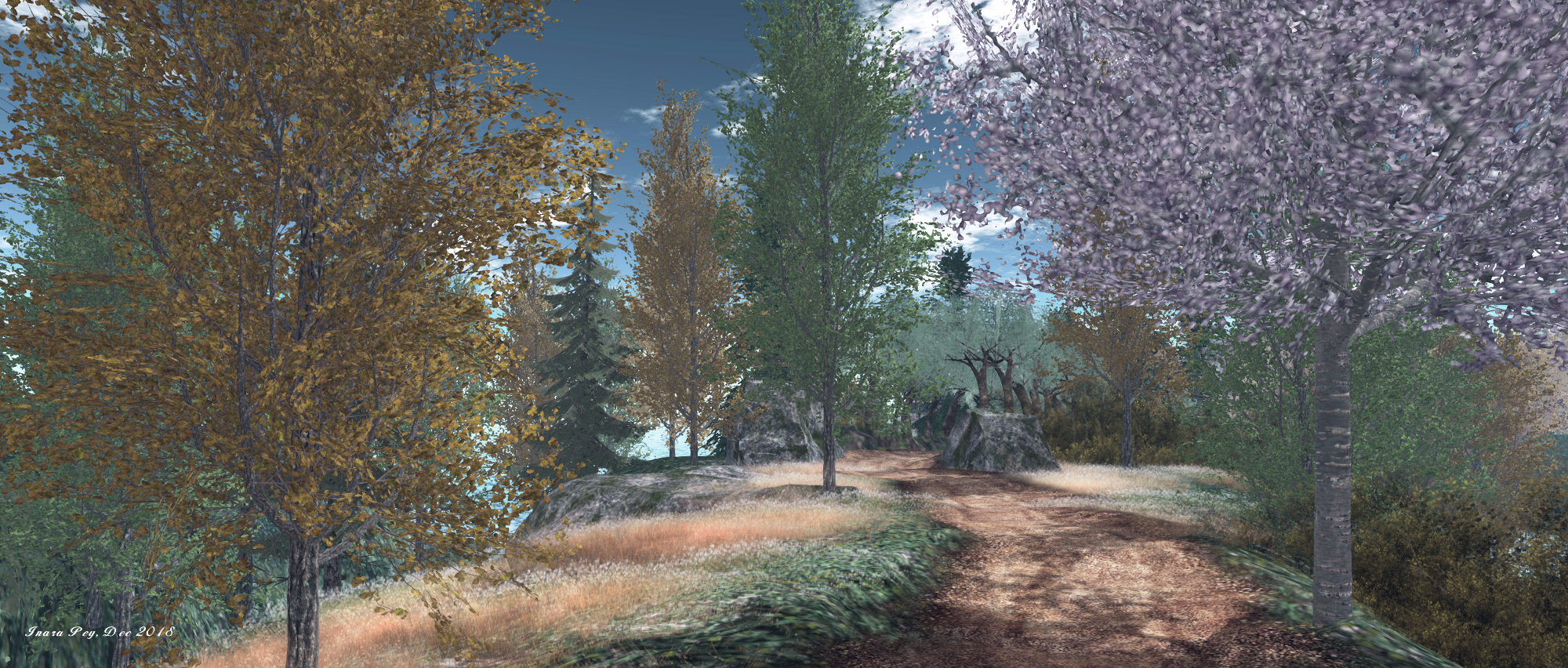
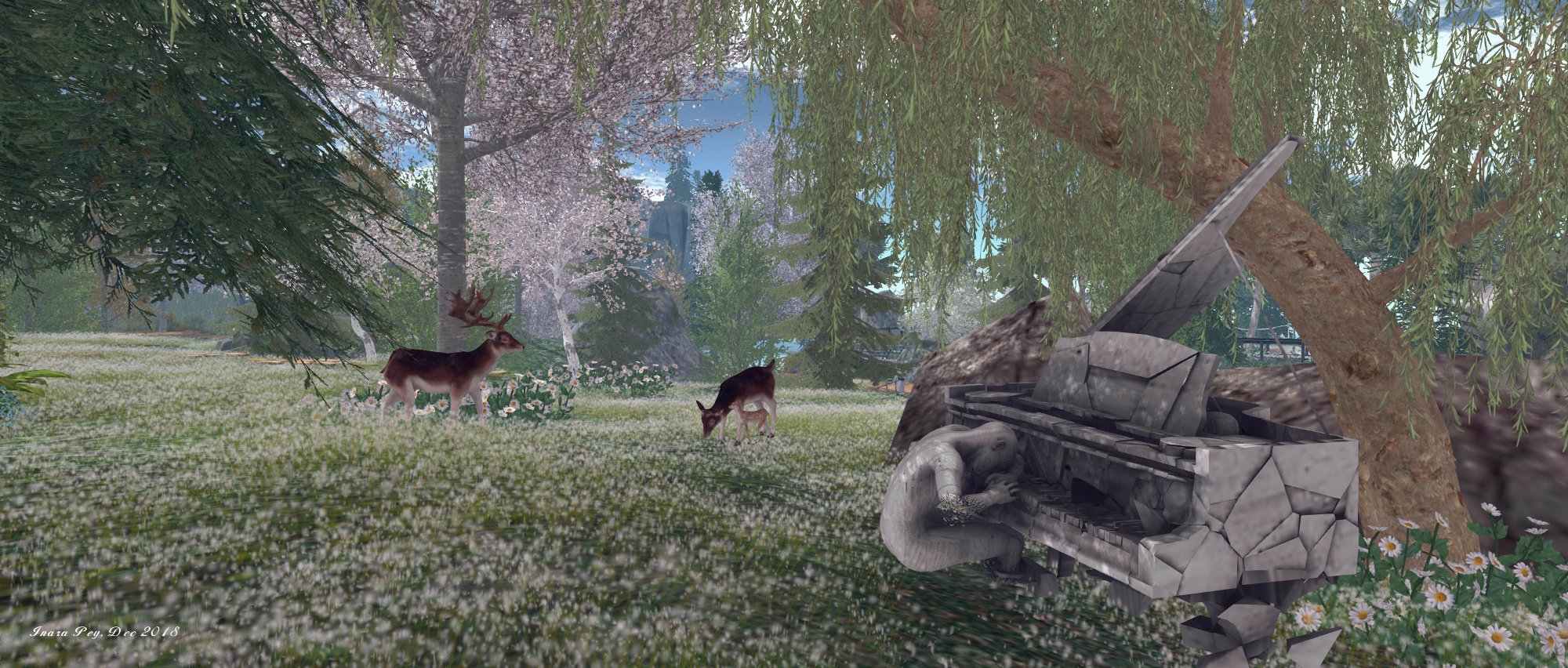
[valium]This is a marvellously diverse setting, ranging from high peaks to coastal areas, mixing little docks, headlands, remote dwellings, ruins, and islands (albeit one or two of them being off-sim).
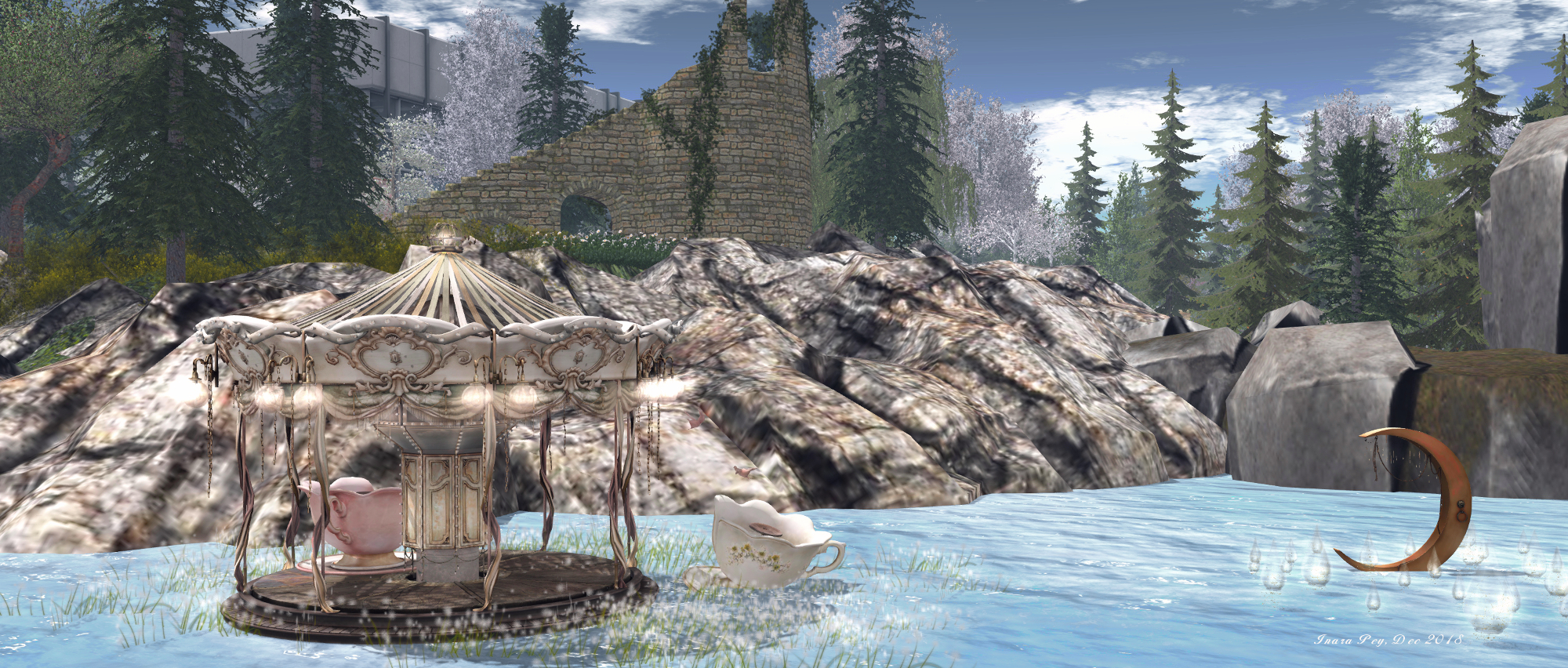
The landing point sits towards the centre of the region, meaning that no matter where you go, there is something to explore. A terraced area, it overlooks the low-lying western side of the region where the ruins of a church sits on the largest of the region’s islands, beckoning visits to it as it rises among the trees guarding it.
[valium]While this island is connected to the rest of the land by three bridges, getting down to them from the landing point is a little circuitous, ensuring visitors have the opportunity to start explorations, as the route carries them over semi-paved areas, past the ruins of an old farmhouse (with one of the private residences just behind it), and on to the waterfront or for those who prefer, past an old folly and then down to the water’s edge, and second of the three bridges.
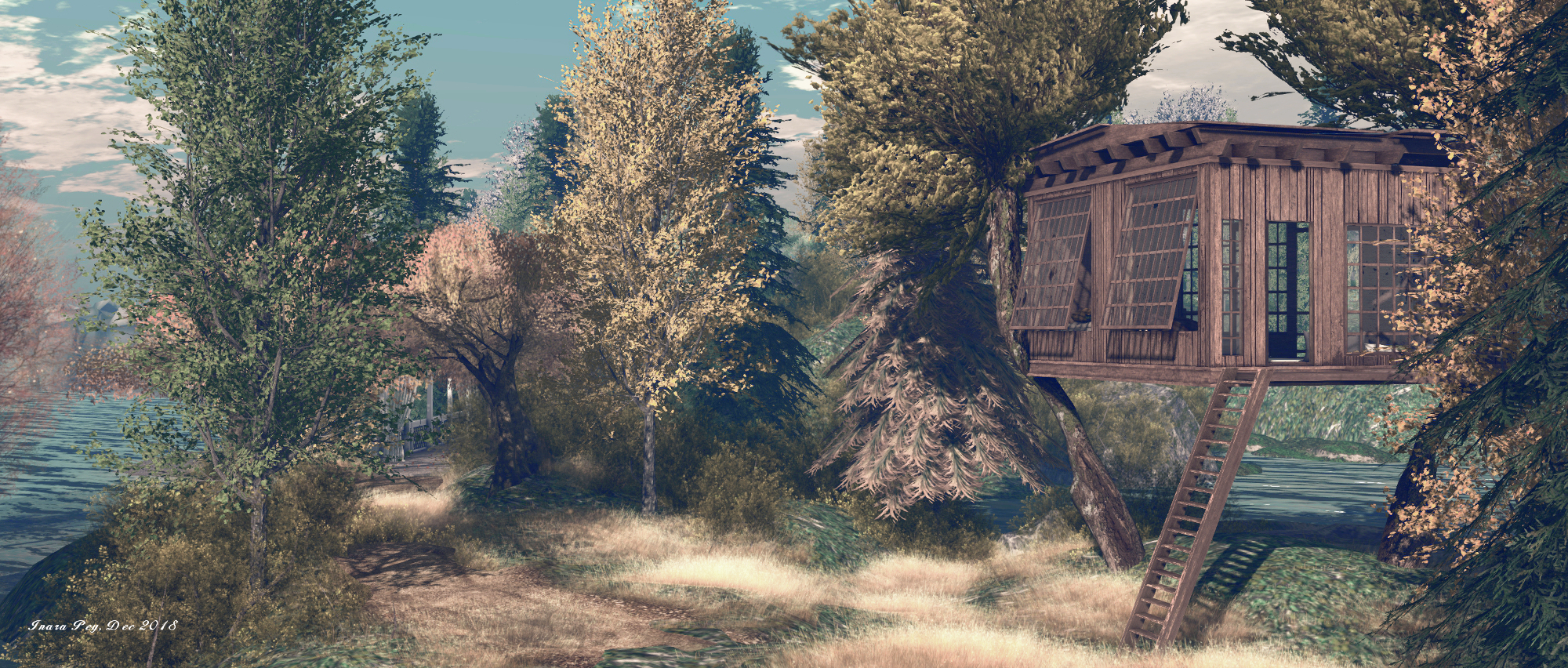
It is the multitude of footpaths that make exploring [Valium] a joy. Whether you go up or down, inland or directly (or as directly as you can!) to the coast, there is much to discover, appreciate and photograph. There’s the ruin of an old tower facing the church, for example, or the rickety cabin build out over the water to the north, caught in a local shower, or a further terrace sitting just above, and nestled below and clear of another of the private residences.
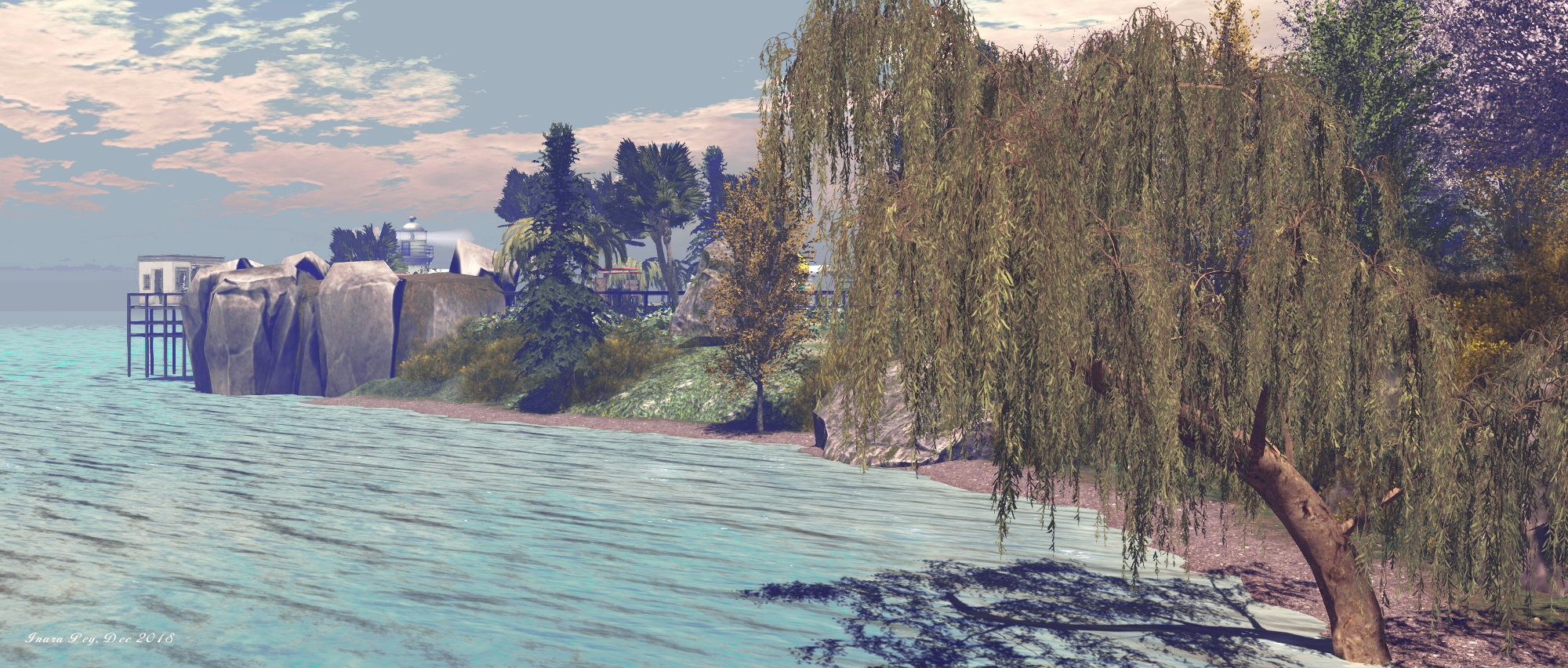
[valium]To the south-east sits a little commercial area, with a coffee-house sitting within a converted industrial building and offering outdoor seating with views of the local lighthouse. A further coffee-house, this one also providing music and dancing, sits on a wooden platform part-way up the island’s main peak, again offering marvellous views to the south and west.
There is so much about this region that is attention-taking that walking you through it with words is really a waste; [valium] truly is a place that deserves to be visited, and which can only be truly appreciated by doing so. There’s also another reason for visiting (and paying the group dues: Valium has decided a portion of the group membership fees, etc., will be forwarded to The Nature Conservancy, as she notes in the region’s website.
[valium]
[valium], a project from initial concept to the elaborate build, was created from visions of our naturally beautiful RL world. A place to explore and appreciate. With this in mind, I have decided to support a fantastic charity, The Nature Conservancy.
3400 lindens or more (out of group fees) per month [are donated] to The Nature Conservancy, a non-profit organization dedicated to land conservation and protection. Every acre they protect, every river mile restored, every species brought back from the brink, begins with us. Our support will help make a lasting difference around the world in 72 countries.
– Valium Lavender, describing [Valium]
[valium]I believe that until the group fee is introduced, there will be a donations kiosk available at the landing point, while if visitors would like to donate directly to the Nature Conservancy, there is a link on the information board and also in the [Valium] website. Should you take photos of the region during your visit, do consider sharing them with the region’s Flickr group.
Kudos to Busta and Valium on creating such an wonderful setting.
Zimminyville, created and maintained by Curfax Zimminy and Flo Zimminy (SweetFloXO), occupies a full region leveraging the full region land capacity bonus. It is one of the most remarkable regions we’ve yet visited, and is very much a place of two very different halves.
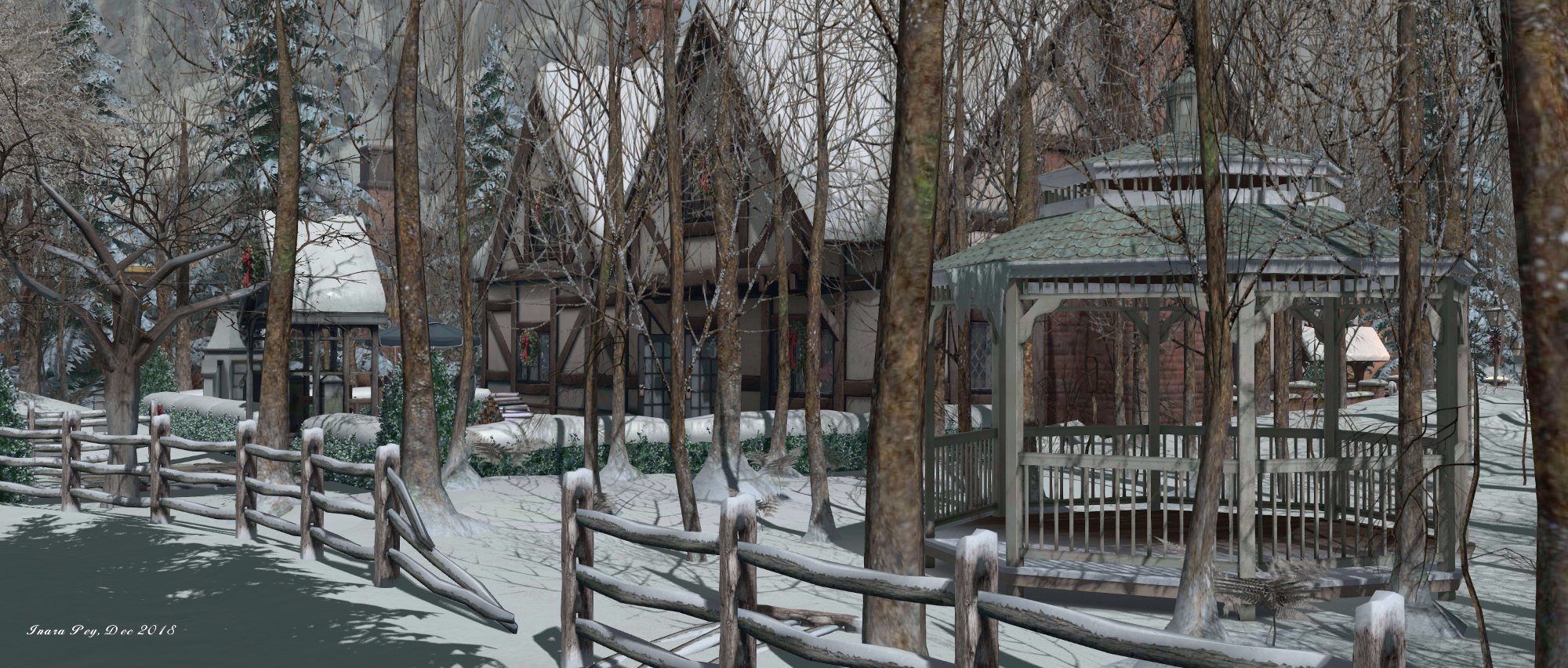
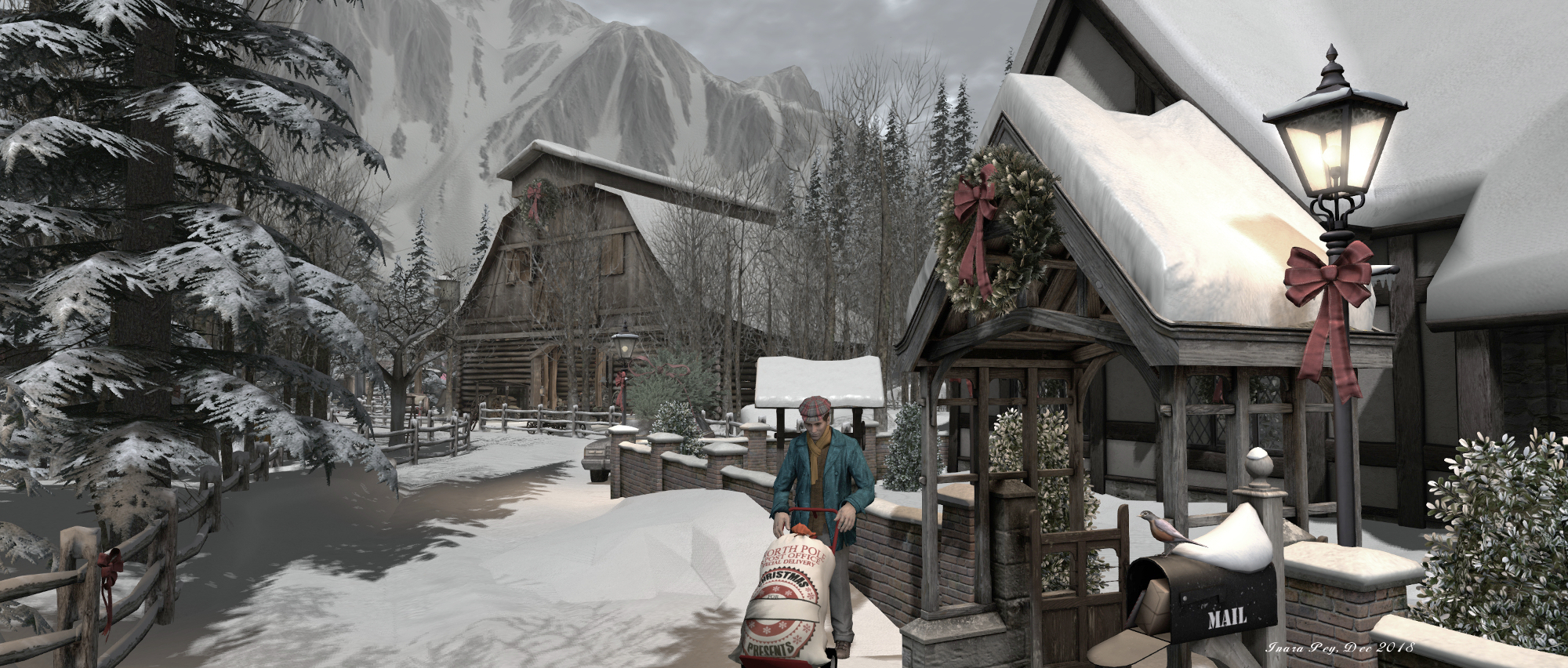
At the ground level is a town which, according to the About Land description, changes with the seasons, lies a small town. Right now it is caught in the midst of winter, snowbound and surrounded by high mountains. The landing point sits towards the centre of town, alongside a large mock-Tudor house that faces a large map showing the town’s layout, although specific points of interest aren’t labelled.
This lack of labelling (beyond the “you are here” pin) actually isn’t a disadvantage; snowy road wind their way through and around the landscape, and following them will lead you on a worthwhile tours of exploration. For the most part, the town has a feeling of being a small, but once industrious place; on the south side can be found large warehouse-like buildings that tower over the rest of the landscape.
However, and while fishing boat, crowded by ice floes, sits alongside a small wharf, it is clear that commerce has moved on for the most part. The brick-built warehouses have been converted for use as residences or bars, while the little harbour has the wreck of a trawler lying within it, preventing the use of a good portion of the wharf.
The water and piers continue along the west side of the town, marked by yet another sunken trawler. Again, while the might once have been a place of fishing commerce, the wharf here is now far more of a tourist attraction, a long, pleaant (if bracing, given the weather!), walk along the waterfront, complete with a launch point for balloon rides over the town. A second balloon can be found to the east, but lies separated from the town by a high spine of rock, home to fir trees and an old forest ranger’s station. A tunnel at the foot of this ridge offers a means from trains to reach the local terminus, complete with the bulk of vintage engine de-railed alongside and attesting the the age of the town.
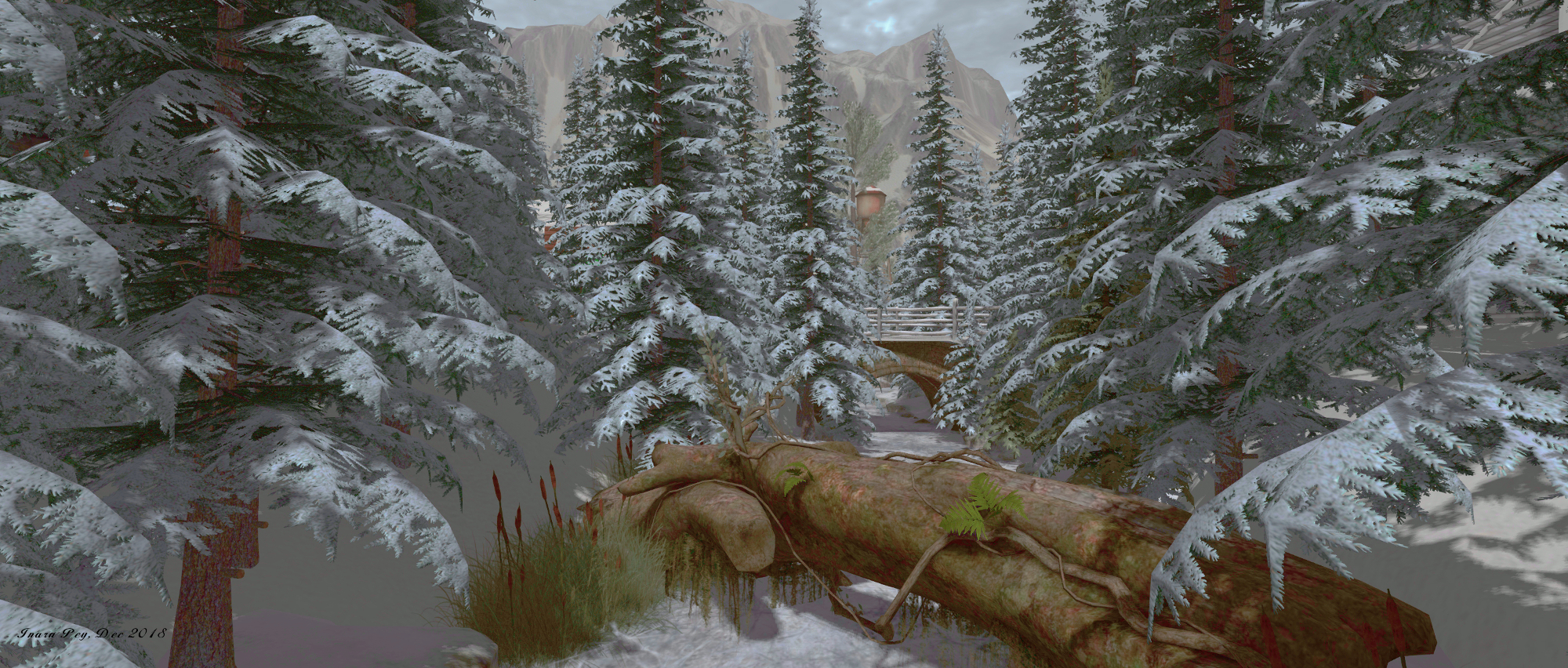
A screen of trees also separates the terminus from the rest of the town, together with a little stretch of wilderness cut by a stream sealed under a layer of ice and – rather surprisingly – the bulk of an old space freighter, also seemingly converted into a home.
With its houses, winding roads, buildings old and new, Zimminyville has the look and feel of a remote town somewhere in high latitudes, possibly in North America. There is a wonderfully eclectic look and feel to the setting, from the drive-in theatre and its mixture of vehicles, to the juxtaposition of the converted space freighter with the nearby old windmill. However, the most interesting oddity in the setting is the presence of a large glass-and-steel pyramid that points a laser-like beam up into the sky.
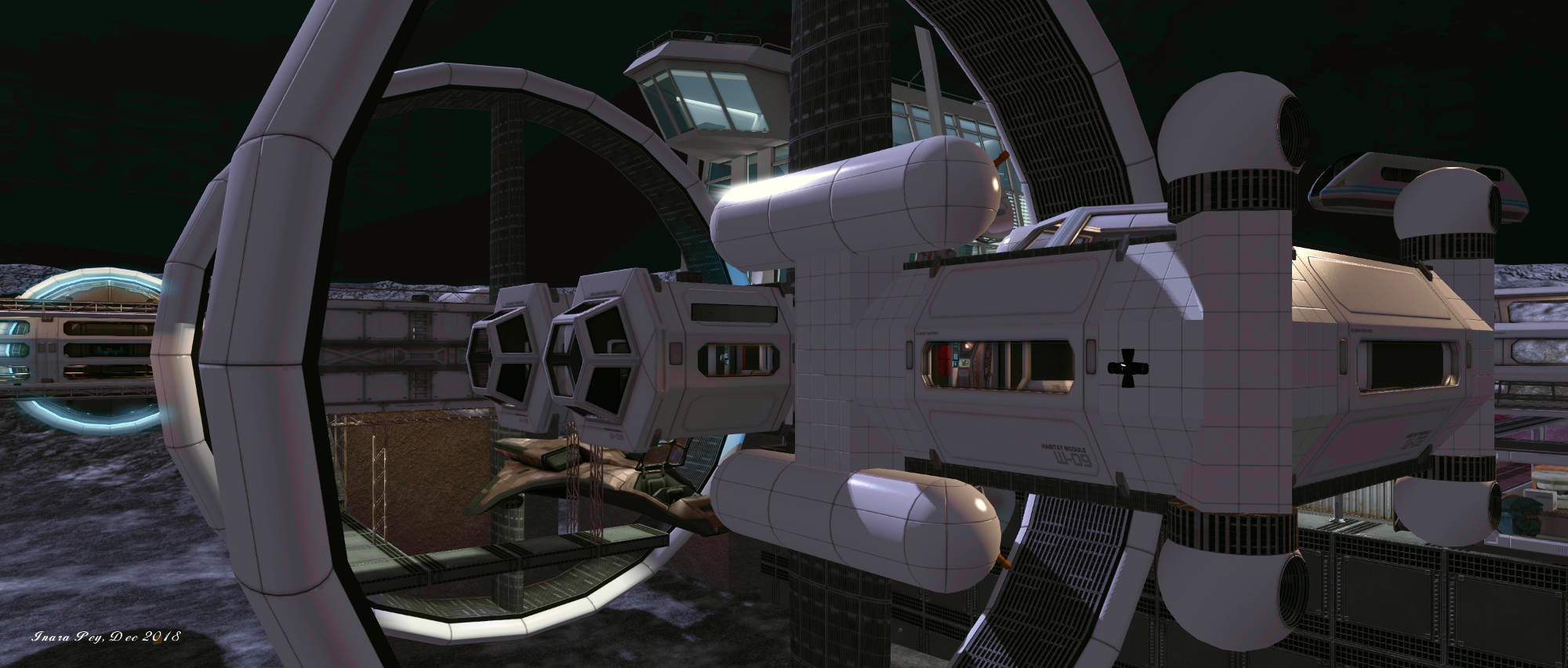
Futuristic in both look and content, this is the gateway to the second half of the region: a large, well-established space port sitting on the surface of the Moon. Four launchpads are presented inside the pyramid, three of them home to individual pods that can carry one passenger at a time up to the Moon. Which you take is entirely up to you, as all three will arrive at different points within the same station, before “return” after you’ve disembarked.
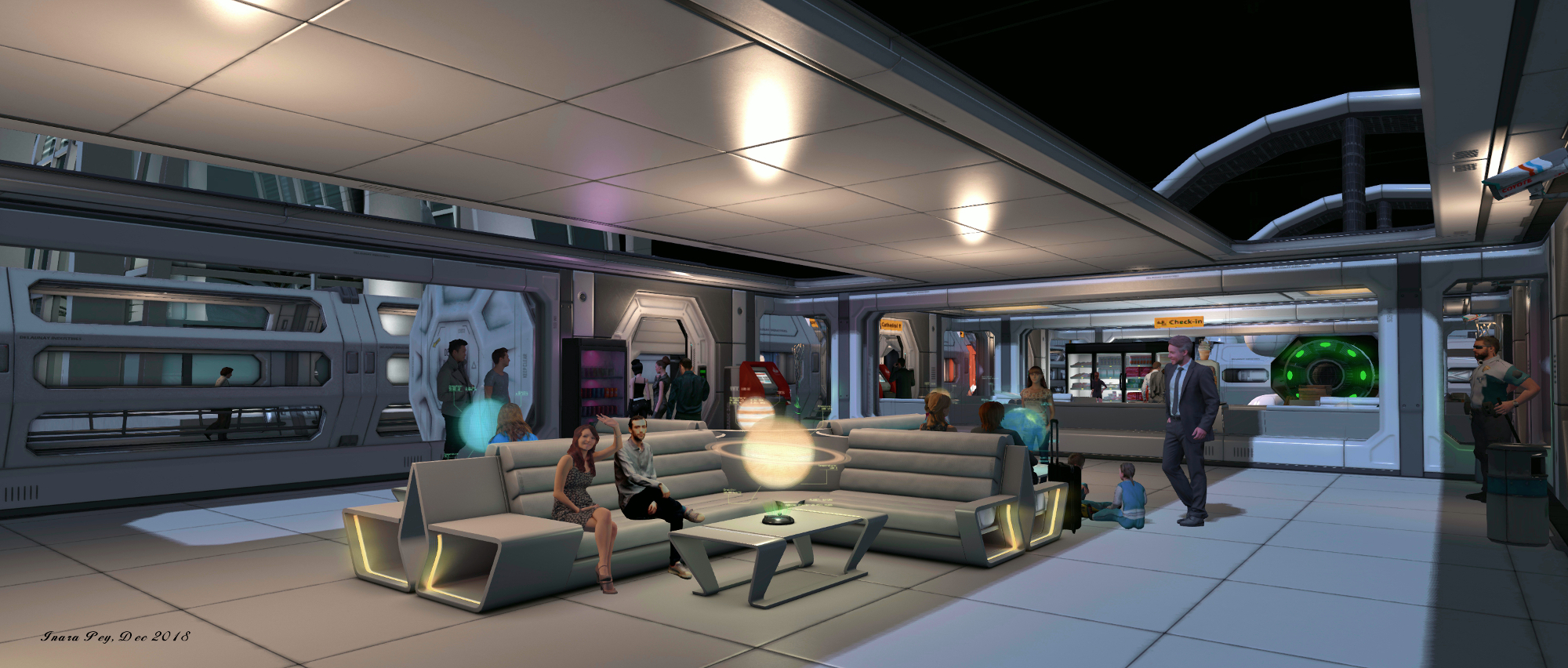
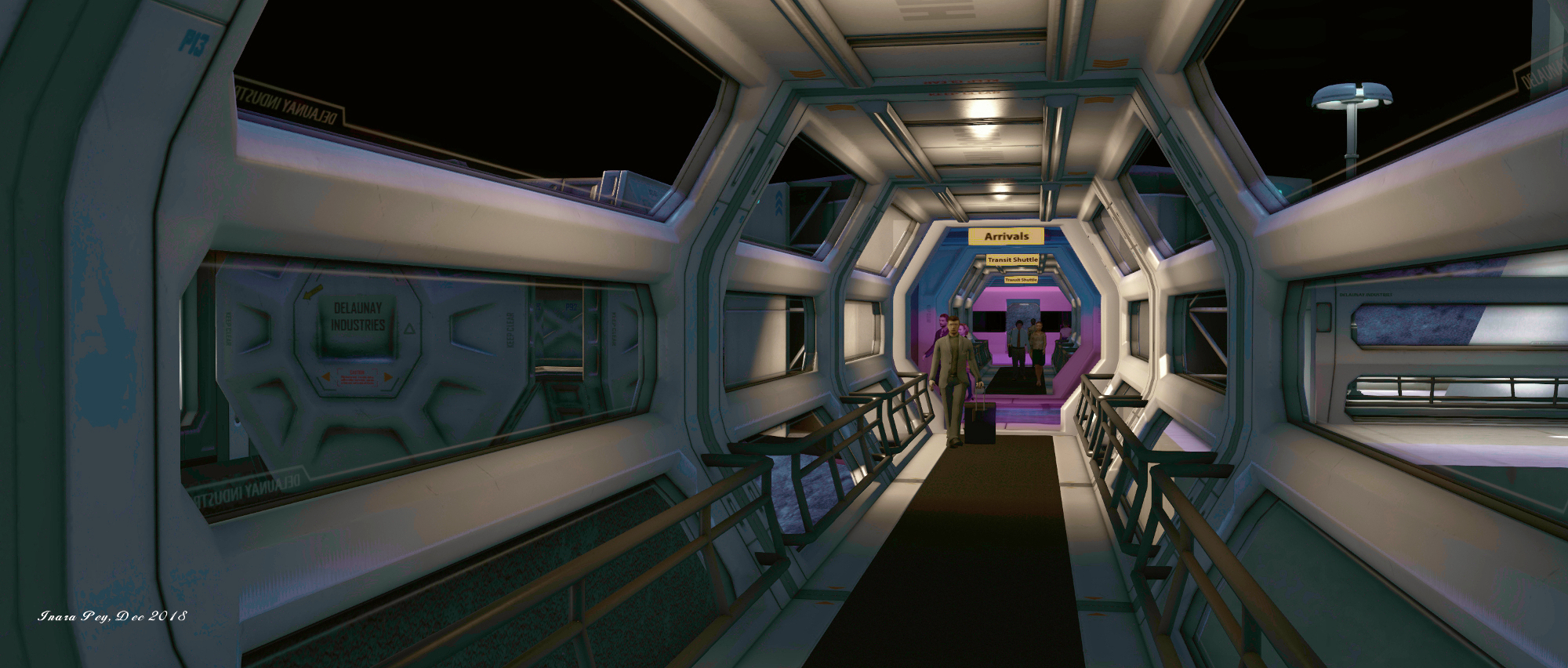
It is to this space port that commerce has clearly moved. In difference to the sleepy setting of the town, the base is a bustling hive of activity. Passengers can be found in the departure lounges doing the things people do before a flight: sitting and waiting, passing the time in conversation, getting food and snacks or anxiously checking-in. Others are to be found hurrying along the enclosed corridors hurrying to / from departure or arrival gates, or waiting for departure aboard their transports, all of them watched over by security guards or flight crew.
A small, two-seat military vessel is also docked in the lower portion of the station, although military uses for the station do not appear to be otherwise much in evidence. Fed Ex, however, do have a large presence, with freighters sit loaded and awaiting departure, ready to carry all measure of goods – and in one case, passengers – elsewhere.
Quite where everyone is going is hard to say, but it would appear the station is very much a gateway to the rest of the solar system. Beyond the passenger hub of the station sits the huge bulk of the Europa Sun, a massive spacer crammed with facilities, including two large hangers. Whether she is still operational or not, is hard to say. She sits on sturdy landing legs, massive engines rotated for lift-off, her flight deck still in place. But the conglomeration of habitation units on her back and research / industrial units under her belly suggests she is perhaps now a permanent part of the base, the hemisphere of her bio dome offering those staying on the base who need it, a reminder of the trees and greenery of Earth.
Facing Europa Sun from across the base is the impressive bulk of a huge structure. It looks a little incongruous in some ways, particularly given appears to the grass and topiary hedgerows found in was should be the airless near-vacuum of space, and alongside a landing pad marked for helicopters (or perhaps the “H” is for “hopper”, as in “Moon hopper”?). What looks to be some kind of control centre sits under this landing pad, but the bulk of the building forms a huge cathedral setting – albeit one with a further pod landing pad vying with the altar for attention. A closer look at the latter will reveal the building’s function: the opportunity to have a real get-away-from-it-all wedding…
A sense of life has been added throughout the station by the inclusion of static characters (I won’t call them NPCs, are they are entirely non-interactive). They are typical of the people you might find in any Earthly airport. All of them bring a certain depth to the setting, as do their compatriots down within the town, even if they are fewer in number.
Zimminyville is, when all is set and done, a quite remarkable location. The town and the lunar base are strikingly different to one another, and each has its own mystery to explore. Time is very much needed to appreciate everything on offer (and to find things like the table games available in both). The attention to detail and the level of care taken in such a complex build is impressive, and there are plenty of opportunities for photography throughout.
Given all that is on offer you might find more than one visit is required to capture all there is to be found, but whether you go once ot twice or any number of times, Zimminyville is not a destination to be missed. Once again, our thanks to Shakespeare for the pointer!
Occupying a quarter region, Nevgilde Forest is a cosy corner of Second Life co-owned by Neaira Rose Allegiere (Neaira Aszkenaze) and Sarge Red. It offers a very outdoors setting, complete with an element of shabby chic.
Although it contains “forest” in the name, this is not actually a densely wooded setting; outside of the landing point in the north-east corner of the parcel, which is hemmed in by trees and shrubs, the land is mostly open, affording good views out over the sea to the west and south.
The woodland hides not only the landing point, where the local group joiner can be found together with a donations box and information giver, but also a little camp site nestled under an old hut raised on wooden legs to resemble a ramshackle tree house, backed into the surrounding trees and shrubs, some of which have found their way through the loose boards of the walls to invade the interior.
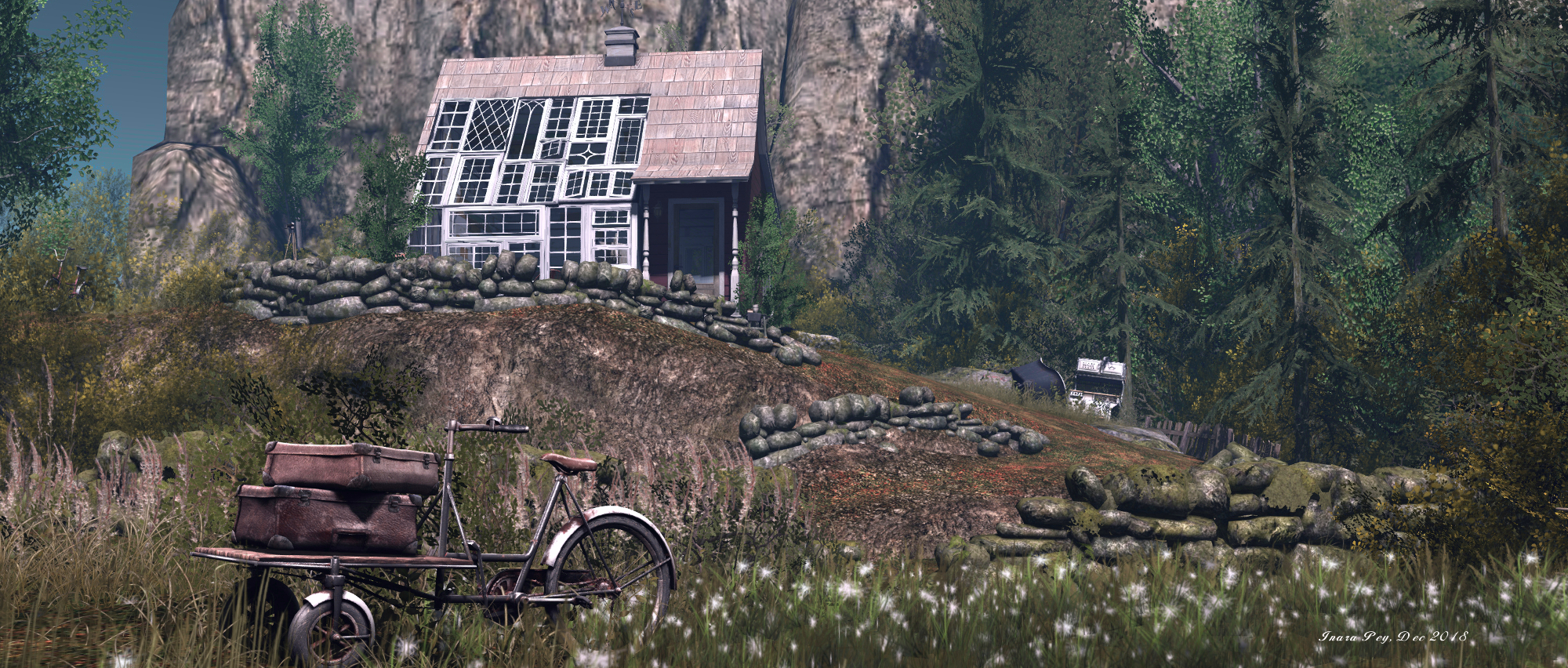
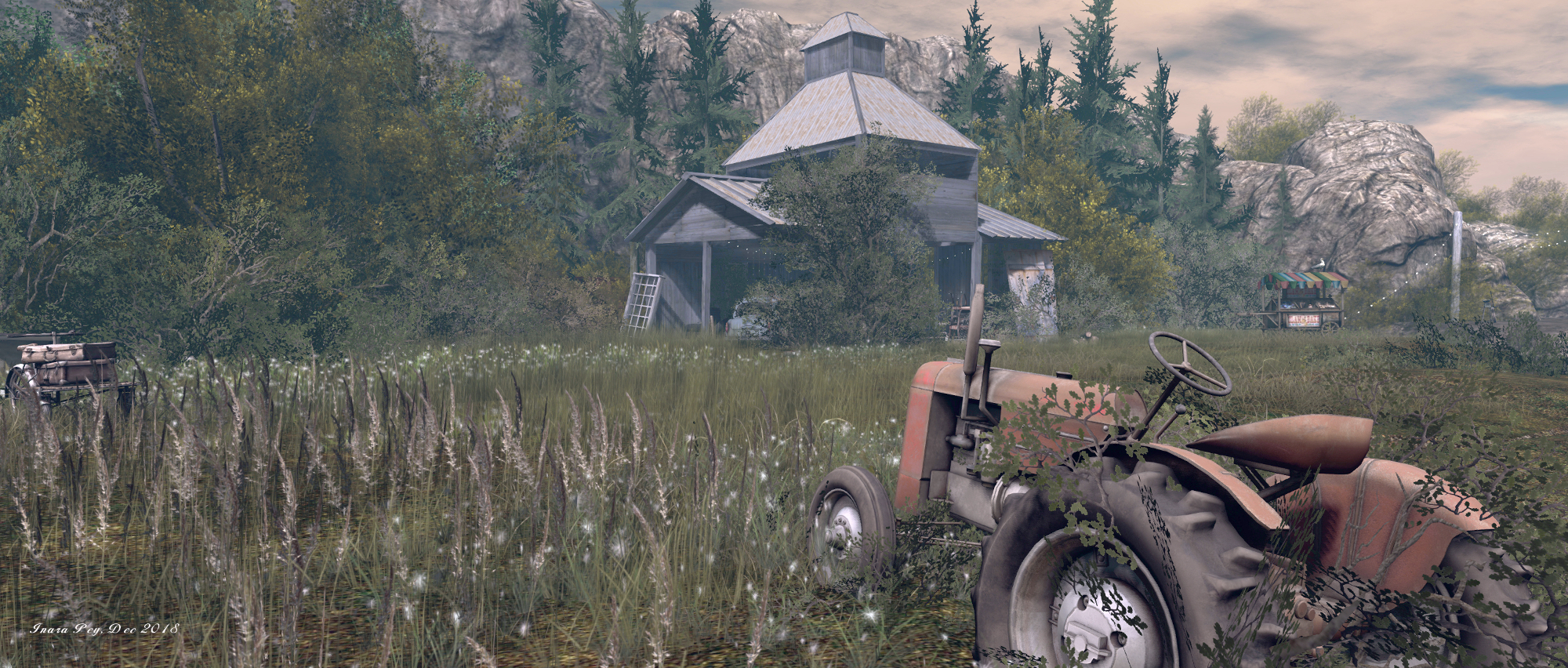
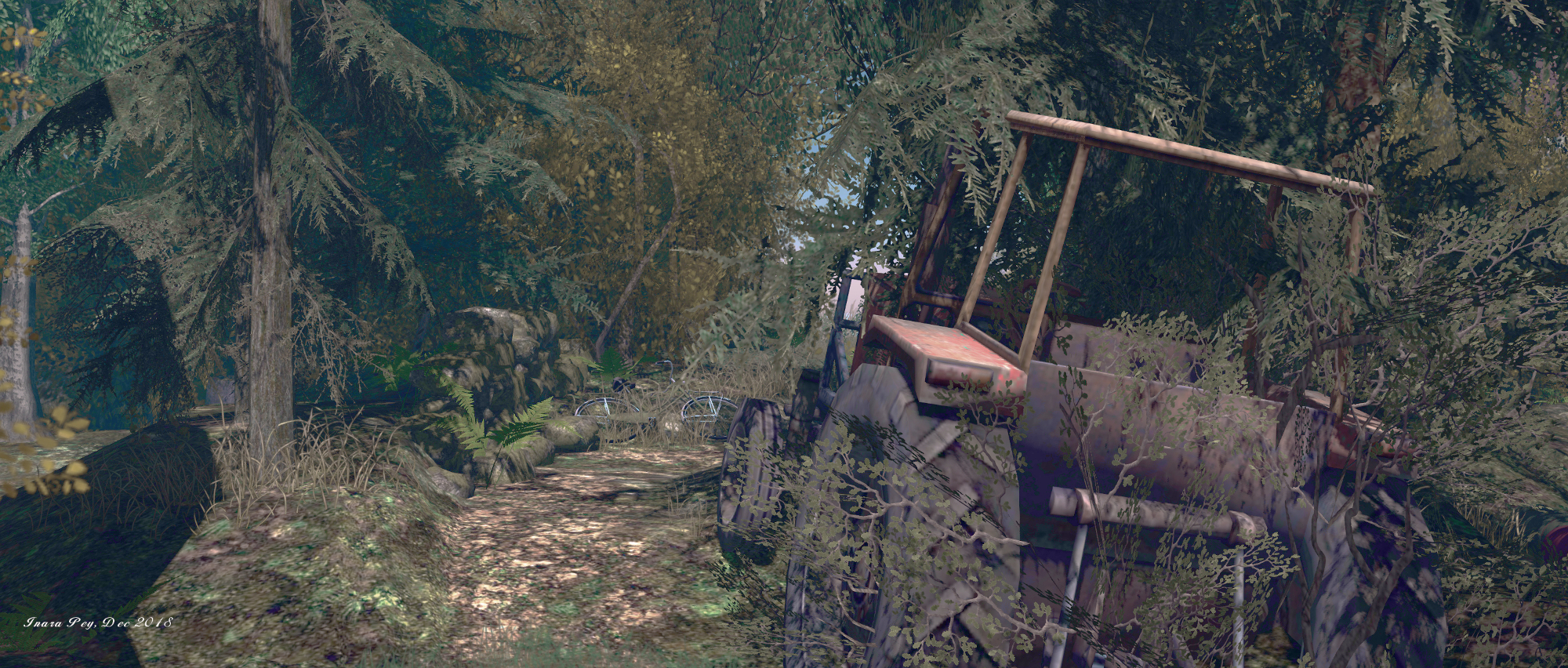
Between the camp site, with its circle on places to sit or sleep ringed around the fire setting, and the landing point sit an old tractor. It points its blunt snout along a track that winds between the trees to the more open landscape. Short in length, the trail exits the trees at the foot of a rocky, moss-and-grass coated hillock on which sits the most curious little cabin.
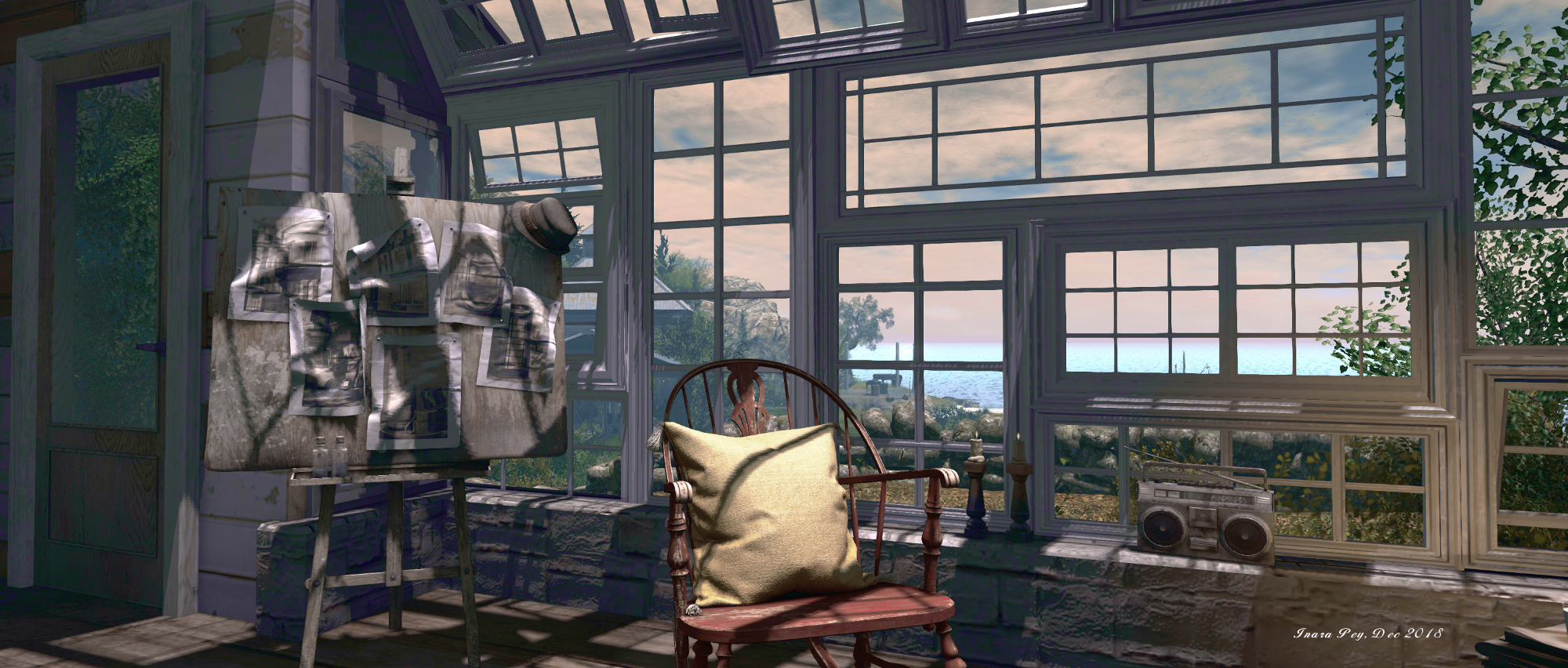
A single room in size and based on Cory Edo’s Garden Bard Abode), this presents a strange façade to the world: one side of it made up of a variety of wooden window frames, all glazed and joined together to form a wall and part of the roof. Single- and double-hung window frames sit with sash and casement, while picture and skylight join them in a mosaic of plan glass and wood; a strangely attractive hodgepodge design that just … works.
The cabin looks from north to south across the open landscape of grass and shrub, separated from it by both elevation and by two dry stone walls that seem to curve protectively around it. A large barn looks back towards the cabin from the eastern tree-line, whilst also keeping watch on the sea. It offers a further cosy setting for sitting and chatting (the cabin itself has wine on offer as well as music and chairs and stools).
Southwards, the parcel ends in a low, flat table of rock and a pocket of sandy beach. The rocky table offers music, both via a DJ’s deck and also via a careworn grand piano, with the beach presenting plenty of room for dancing, with baked clams available close by, together with multiple places to sit and / or cuddle. This area will apparently be the location for local events, due to start in January 2019, and those interested in attending are invited to join the local group to receive updates and news.
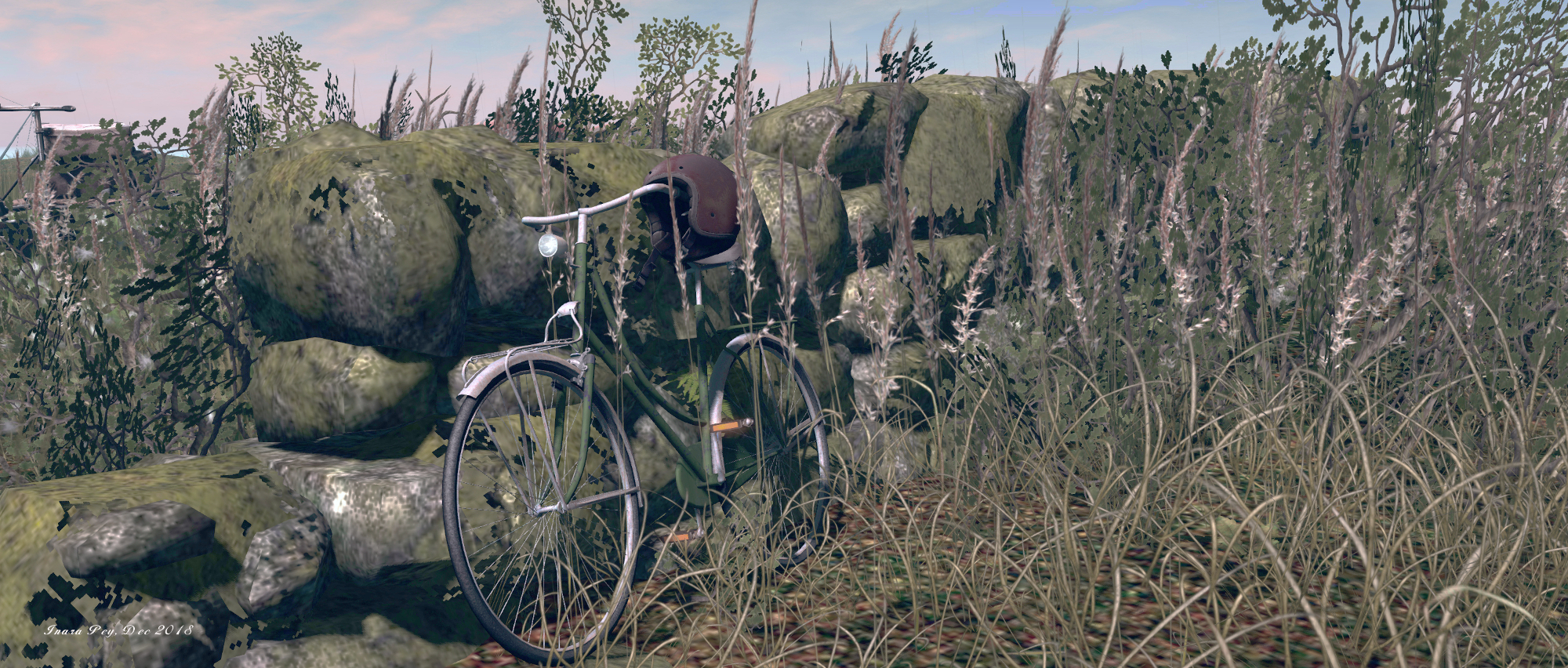
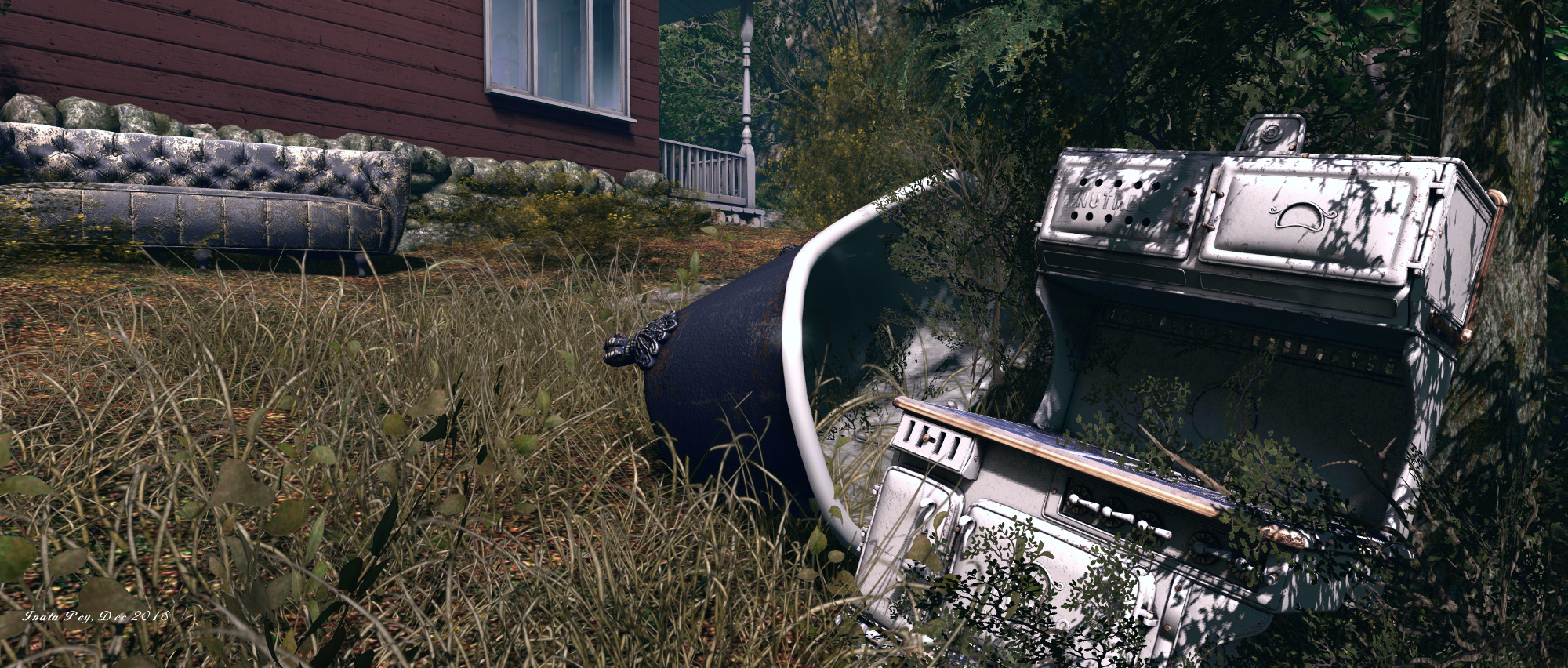
The shabby-chic element to the region comes in all the little “untidy” touches: the bicycles lying or propped around as if abandoned; the overturned cart; the carcass of the old tractor (a second tractor appears to have been almost reversed over a step of rock that might have put an end to its useful career); the bathtub and old cooking range seemingly tossed out of the cabin; and so on. While these might all at first appear to be the abandoned detritus of human habitation, they actually add a certain, well, charm to the setting; their presence adds an air of this place being lived in, rather than simply another little set piece.
This is a place where socialising and spending time is welcome, be it at the camp site, in the cabin (or alongside it) or in the barn or on the sand or grassland. The group description emphasises this, as does the introductory note card available via the giver at the landing point (click to receive; it won’t spam you). Photography is welcome, and picture can be shred via the Flickr group.
All told, a nice little retreat, well put together and photogenic. Just as a final note, while Nevgilde Forest is on an Adult rated region, the owners request that visitors kindly treat it as a Moderate setting. My thanks (as always) to Shakespeare for the pointer!
“Welcome to Wild Edge. A calm and relaxing wilderness for you to enjoy, explore and escape” – thus reads the About Land description for the latest Homestead region design by the (still) delightfully named Funky Banana (FunkyBananas), and to which Shakespeare directed my attention at the weekend.
Wild Edge is another largely rural setting, this one suggestive of a rugged, coastal region, perhaps in high latitudes where ice and snow sided mountains roll down to a cold blue sea. A rocky headland sits caught between the mountains and the sea, sitting just below a fir-tree buffer between it and the snowy slopes, cut by a deep finger of water.
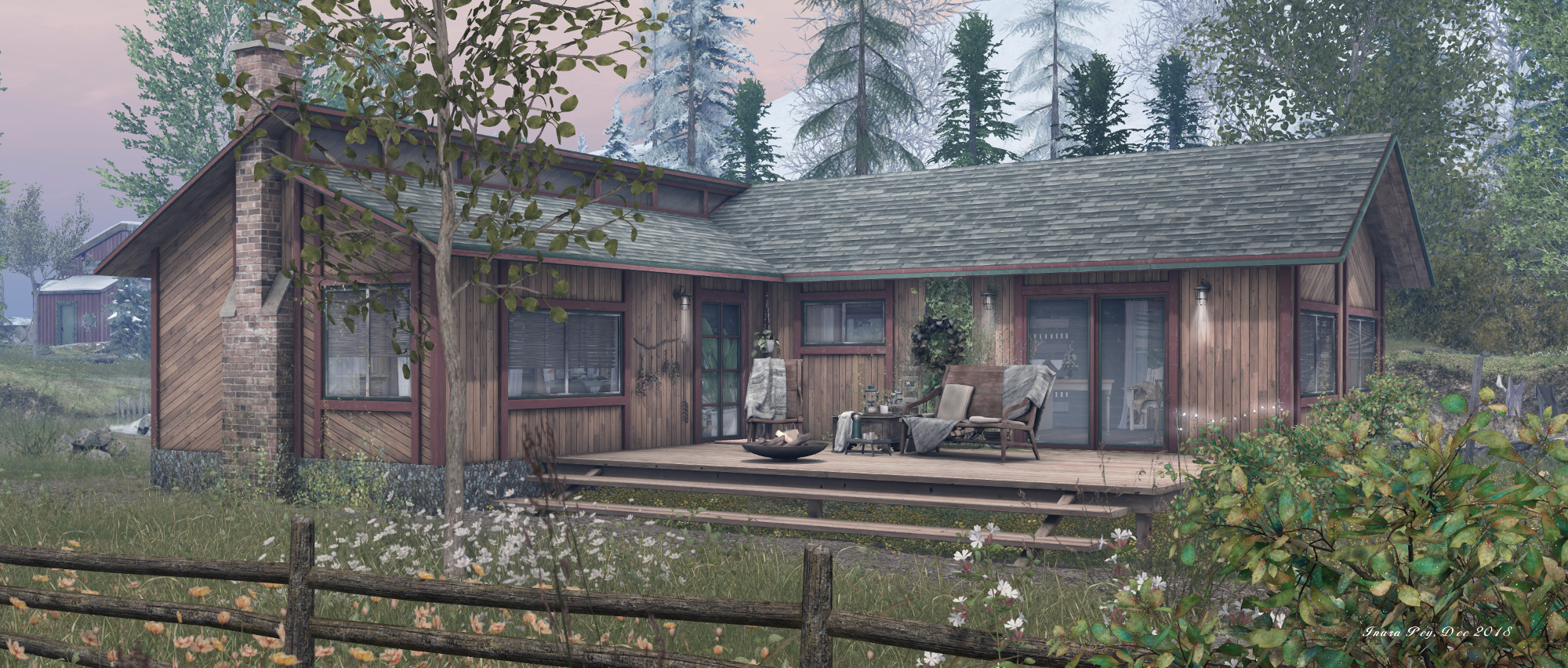
Two cabins sit on this curve of lowland. The first is low-slung and built around a wooden deck, it has a very “male” appearance to it, both outside and in, somewhat suggestive of single occupancy. With the deep bay sitting close by, it might be a fishing lodge / hunting lodge, a suggestion added to by the rods and other equipment set-out on a deck at the water’s edge and, across the water, by the presence of an old hut in which can be found the paraphernalia of the hunter.
However, a closer look around the cabin reveals a dining table is set for a meal for eight, while two Christmas stockings hang from the fireplace mantle. Thus it would seem the cabin is perhaps occupied by the couple, and that they are expecting company.
A single track runs west from the cabin, paralleling the channel to the left and a field of wild grass to the right. It leads the way to where an unsurfaced airstrip runs south-to-north. This is perhaps not the easiest strip to get in and out of, given the rocks, hills and tress that threaten to encroach on it. However, it is very much a working airstrip – as can be see by the presence of a small biplane and a mechanic’s shed, although the gasoline truck parked close by probably hasn’t been used in a good while.
Facing the airstrip from across the region is a Christmas tree farm shop, nestled at the foot of the eastward mountain slopes. It seems a little incongruous given the lack of potential customers. Perhaps they come by boat from further up / down the coast.
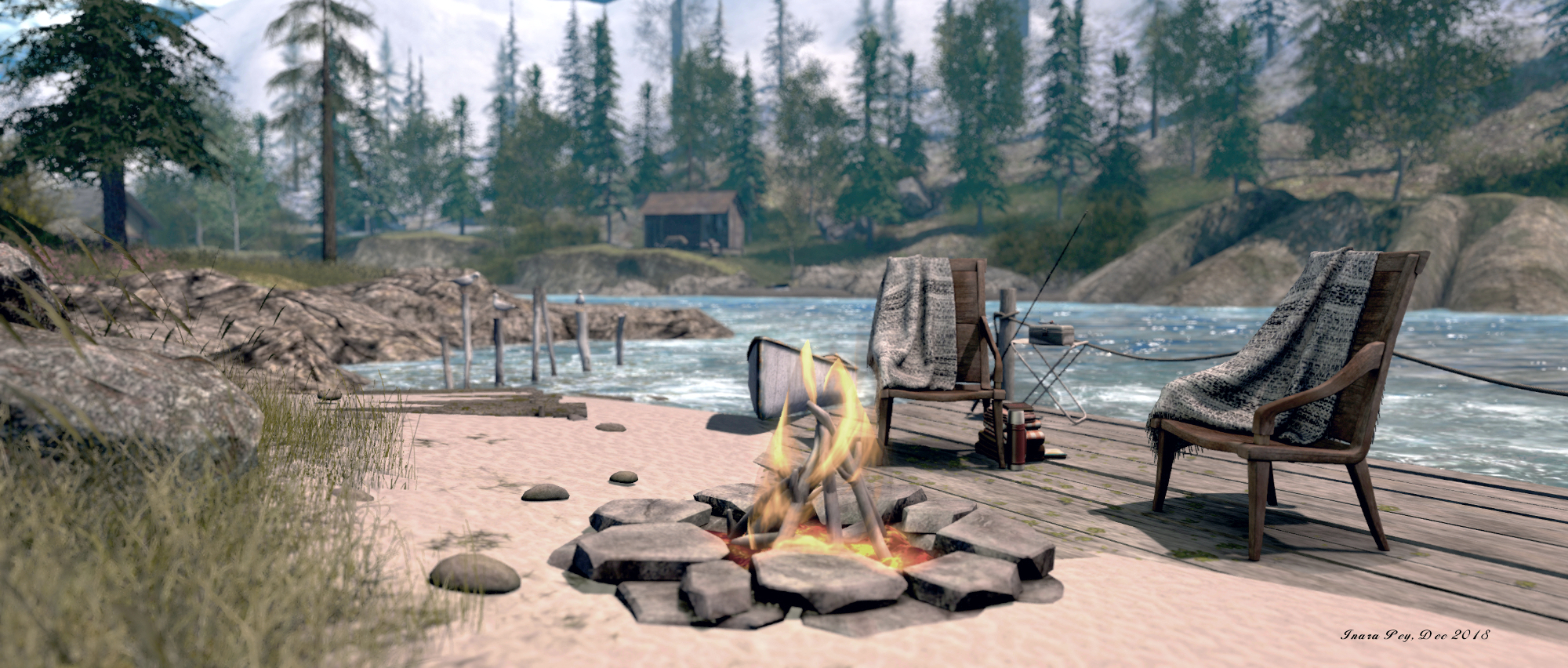
Three stretches of sand also sit within the region, two of them offering places to sit. One of them is the fishing deck mentioned above, which also has the advantaged of being warmed by an open fire blazing on the sand. I also mentioned that there were two cabins on the region. The second can be found above the northern coast, a ramshackle, single-room affair that seems to be a place of study rather than a place to live, the kitchenette within it notwithstanding.
A Wild, open setting, largely free from snow (outside of the mountains to the east and south), Wild Edge is another eye-catching region by Funky that offers a pleasing alternative to the more snowy themes that abound right now without being entirely divorced from winter. For those who take photos, the Funky Banana Flickr group is available as a means to share them.
Annie Oh (Annie Brightstar) dropped me an IM suggesting Caitlyn and I pay a visit to Junbug, home of *{Junbug}* Fantasy and Vintage fashion, as the region had been recently redesigned by Minnie Blanco (Minnie Atlass), whose region designs we’ve always enjoyed (see here, here, here and here for more). And I have to say that for anyone who loves artist – particularly the French Impressionist movement, this is a must-see location.
[It is] loosely inspired by Monet’s Giverny garden After discussions we agreed upon a garden across from water. All designing / artwork is a process and I take my inspiration from RL photos/art. I wanted to reflect Juno’s fantasy, vintage fashion designs with a romantic feeling water-scape in some way. Hence the romance of impressionism!
– Minnie Blanco on her design for Junbug, December 2018
Anyone who is reasonably familiar with Monet’s work will instantly feel they are inside one of his paintings on arriving in the region. Minnie has, through careful selection of plants (colour), design and windlight, fully captured the look and “feel” of one of Monet’s paintings, particularly, as Minnie notes, those that focus on his great life’s passion: the garden at his home in Giverny.
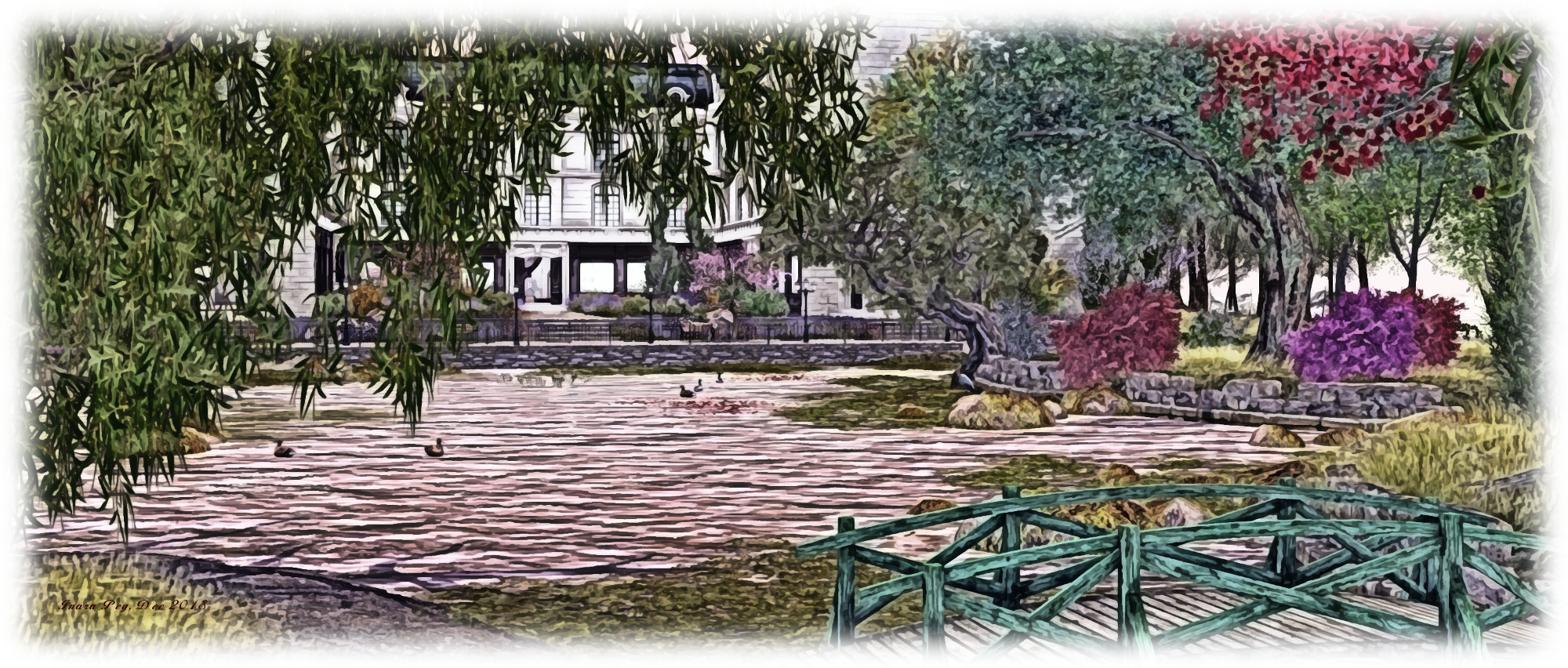
For example, the first impression (no pun intended) on arriving and looking over the water to the little bridge facing the store from afar was Monet’s 1899 painting, Bridge over a Pond of Water Lilies.
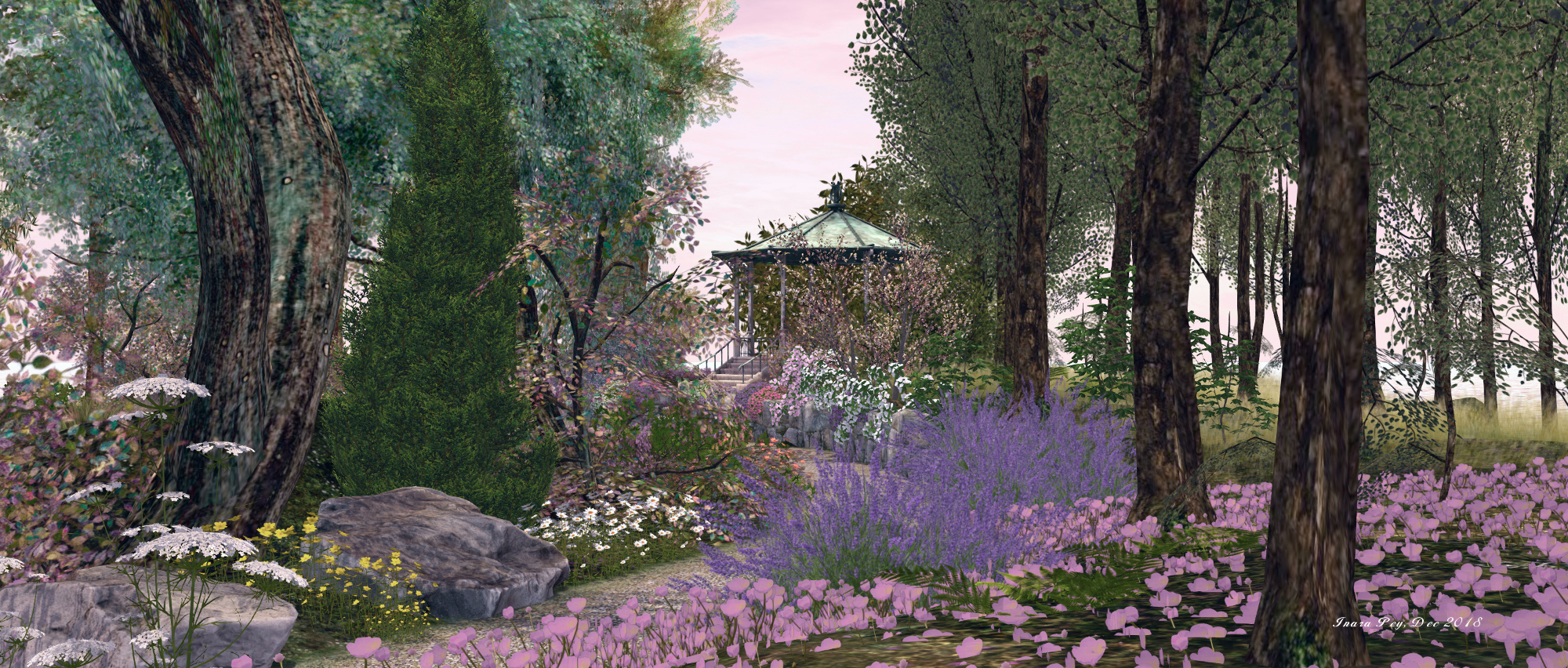
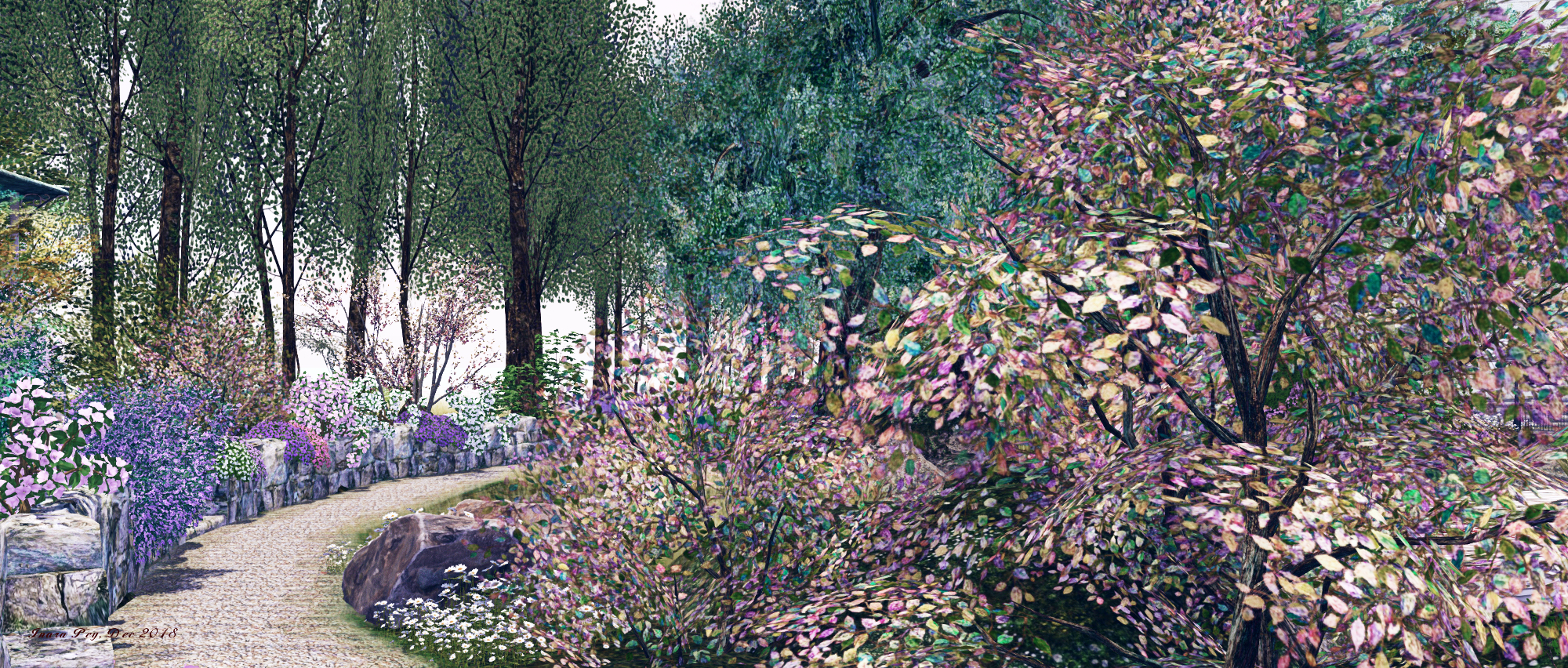
As we continued to look around and walk along the path circling the pond at Junbug, further influences – or perhaps reflections might be a better term – of Monet’s art came to mind. There’s the subtle mix of colour and blending in the blooming of flowers as seen in his 1900 oil on canvas Le Jardin de l’artiste à Giverny, and Garden Path at Giverny (1902), while the pond itself offers echoes of his extensive Water Lilies series.
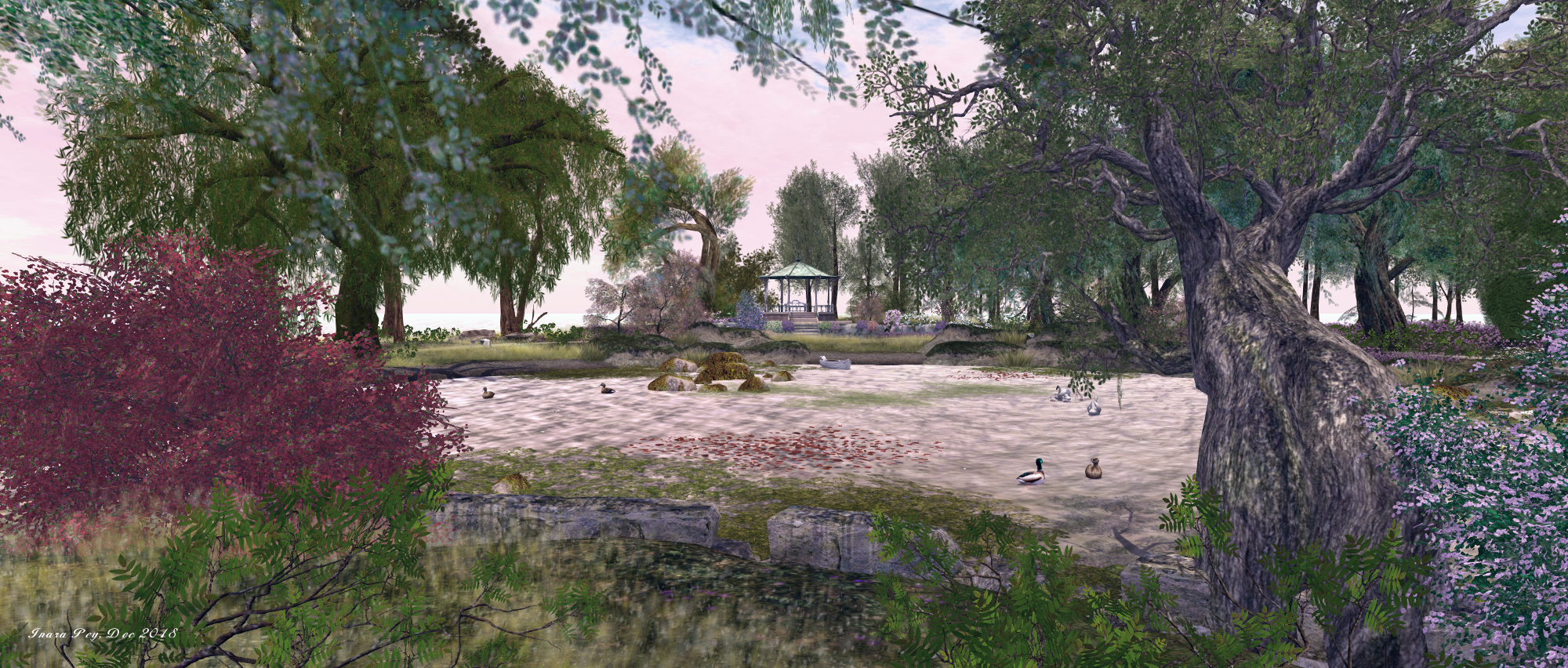
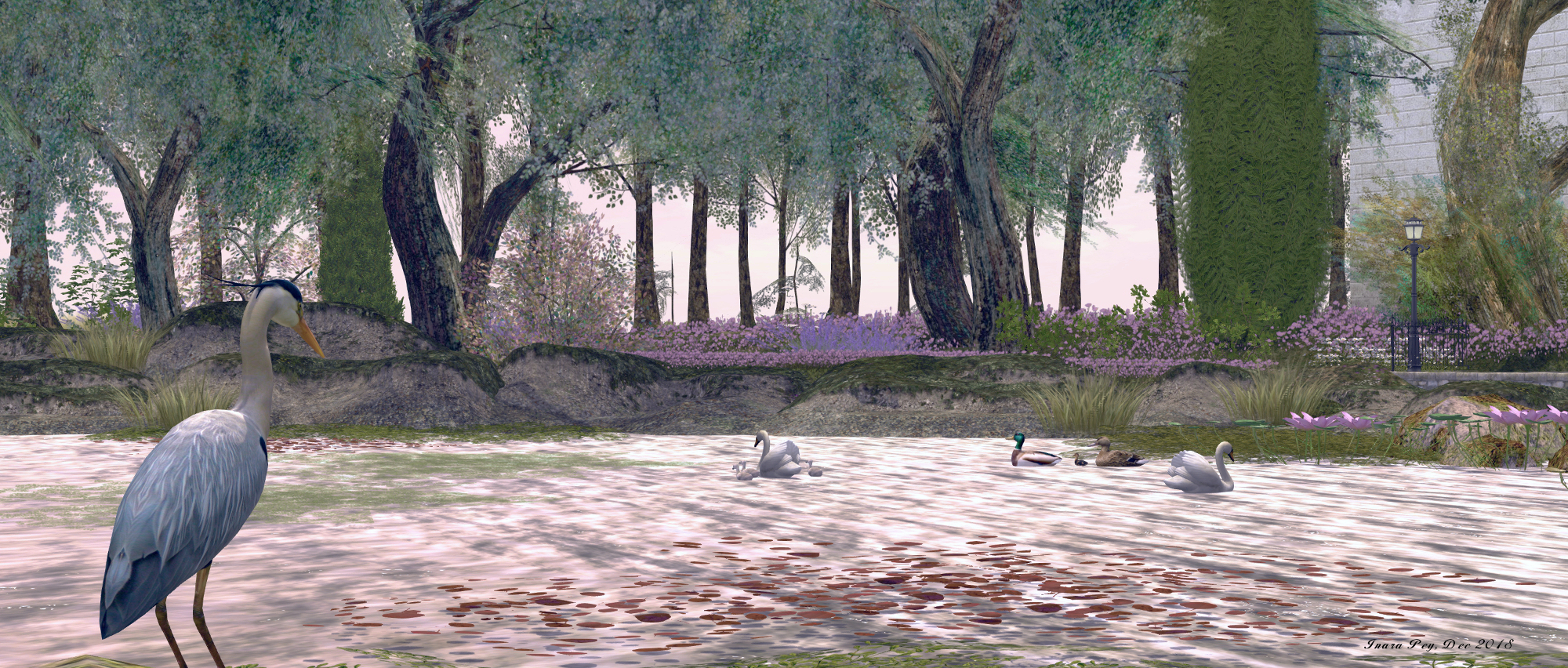
A small, simple setting, the garden is completed by the presence of waterfowl on or near the water, and birds singing from various points around the path (such as the stone bridge close to the store) or hopping and flitting around the paths or circling overhead. In adding their voices to the scene, they increase the spring / summer feel to the region.
There is also a touch of French flavouring to the garden and store – the latter has the presence of a grand maison, for example. Meanwhile, a number of the selected elements in the region, such as the pavilion and the little rowing boat, have French-leaning names / pose systems.
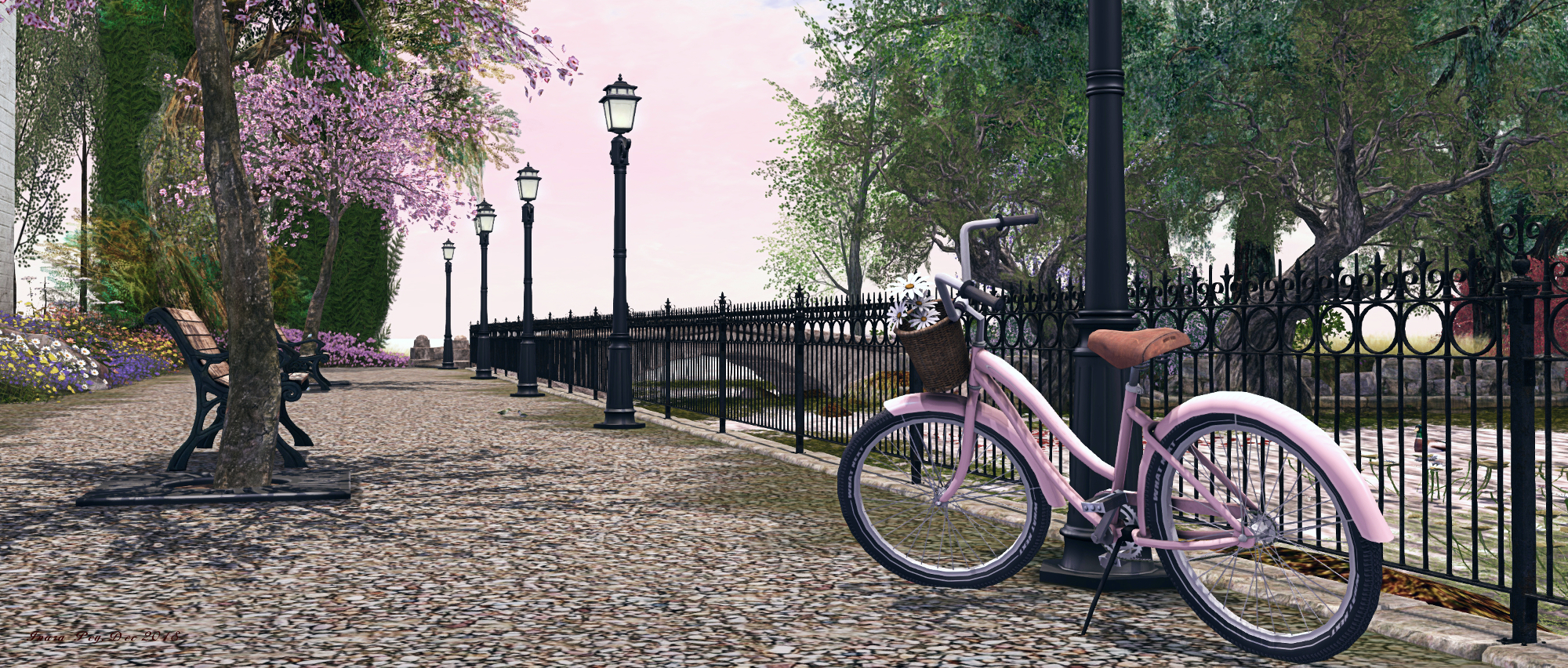
For those seeking a place to sit and enjoy the setting, the rowing boat offers a mix of individual female and male poses, while the benches along the waterfront near the store offer a mix of individual and couples sits, as does the bench in the pavilion. A further bench can be found close to the little wooden bridge, but using it will require getting past the grass growing around it, which interferes with direct clicking.
Set under a tranquil sky suggestive of a mild spring early evening, this is an utterly delightful setting, a painting made real, if you will, and well worth the time spent appreciating it. And given the inspiration behind it, I hope you’ll forgive my attempt to render it as a painting! Our thanks again to Annie for passing on the details.
Bay of Dreams is the Full region home of Valor Poses Mainstore and Photo Sim, operated by Keegan Kavenagh (AlexCassidy1). As the name implies, the region offers both a base for the Valor Poses store, and the opportunity to explore a changing environment beyond its doors.
In February 2018 Caitlyn and I visited the region whilst the region offered a summertime look and feel (you can read more about that visit here), so with the end of the year approaching, I thought I’d drop in again to see what had changed.
Now designed by Adalynne Romano (AdalynneReed) working with Keegan and Tessa Kavenagh (TessaGrace51), the region presents something of a mix of seasons, all within walking distance of one another. For the store, which forms the landing point, and its surroundings, there is a decidedly springtime look and feel.
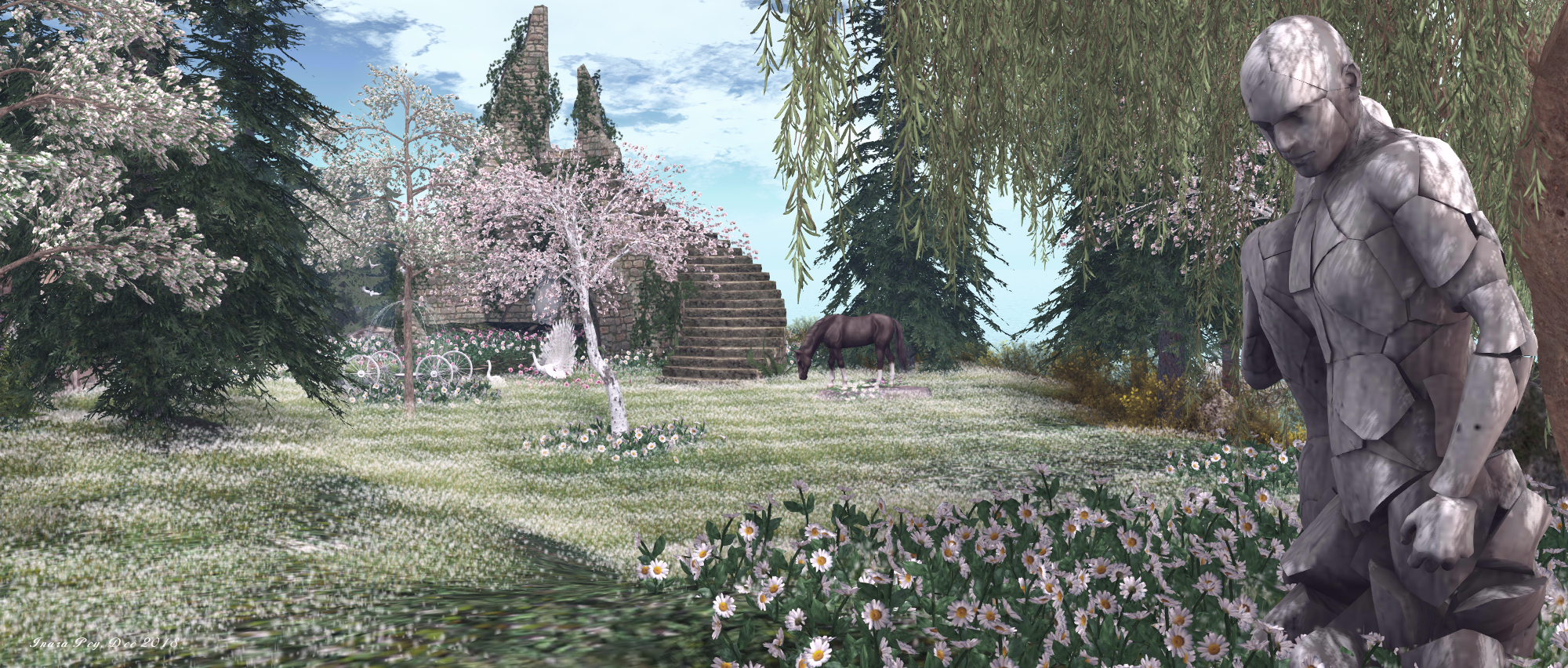
Occupying a table of land in the south-east of the region, the store is surrounded by a garden setting. The trees and flowers are all in bloom, the grass lush and green, visible through the windows of the store, inviting patrons to step outside. Those who do will find a richly mixed setting, one complete with ruins of different ages and pieces of art – notably by Mistero Hifeng – while horses and deer lay dotted across the lawns.
The store looks northwards over a low-lying headland dominated by a broad board walk and pier that stretches out over the water, a narrow ribbon of beach running around the north and east side of the headland adding to the feeling that this is the “summer quarter” of the region. Volleyball can be played on the grass, while the board walk and little pier include places to sit and enjoy refreshments.
Between the footbridge leading back to the store and the board walk, a track runs off to the west, following the bent finger of land, serpent-like in its narrowness. This ends in a bridge leading to a small island that in turns links to the south-western side of the region, a grassy quarter clearly caught in the gentle embrace of autumn. Here the trees are rich in golds, brown, oranges and reds. Pumpkins lie on the ground, while the single large barn offers a greeting of Happy Fall.
The final quarter of the region, reached via “autumn” hosts, appropriately enough, winter. Crowned by a rocky crenelation, this is another plateau within the ring of rock, the land is covered in snow, complete with a frozen pond and with a snow blanketed wooden house of impressive size. This offers plenty of seating inside and out.
Finding your way around the region is simply a matter of following the paths and using the bridges. All four aspects of the setting perfectly present each of the seasons, with a fairly neutral region-wide windlight used for all four. This also works well, but it did have me wondering about how a setting like this, with four different regional settings will look when EEP – the environmental Enhancement Project – has come into common use.
There are one or two little rough edges – path segments not meeting one another or the landscape here or there; some floating trees together with the odd plain prim or semi-floating rock. But, by-and-large, the design comes together to offer a visually interesting setting. Those wishing to rez props for photograph can join the local group.
For those who might be feeling they’ve seen a little too much snow in Second Life, or who wish to revisit their preferred season, or simply want to experience an entire year in a short walk, Bay of Dreams perhaps offers the perfect visit.
![[Valium]; Inara Pey, December 2018, on Flickr](https://farm5.staticflickr.com/4871/44593723490_6744c350ee_o.jpg)
![[Valium]; Inara Pey, December 2018, on Flickr](https://farm5.staticflickr.com/4818/44593723860_43bd0f5535_o.jpg)
![[Valium]; Inara Pey, December 2018, on Flickr](https://farm5.staticflickr.com/4828/44593724890_e287273cf2_o.jpg)
![[Valium]; Inara Pey, December 2018, on Flickr](https://farm5.staticflickr.com/4820/45498090215_6f05ffe001_o.jpg)
![[Valium]; Inara Pey, December 2018, on Flickr](https://farm5.staticflickr.com/4822/45498089495_045ecb8ecb_o.jpg)
![[Valium]; Inara Pey, December 2018, on Flickr](https://farm5.staticflickr.com/4882/44593724360_0f6cb1ccf0_o.jpg)
![[Valium]; Inara Pey, December 2018, on Flickr](https://farm5.staticflickr.com/4829/45498088645_c725630071_o.jpg)


 Inara Pey: Living in a Modemworld