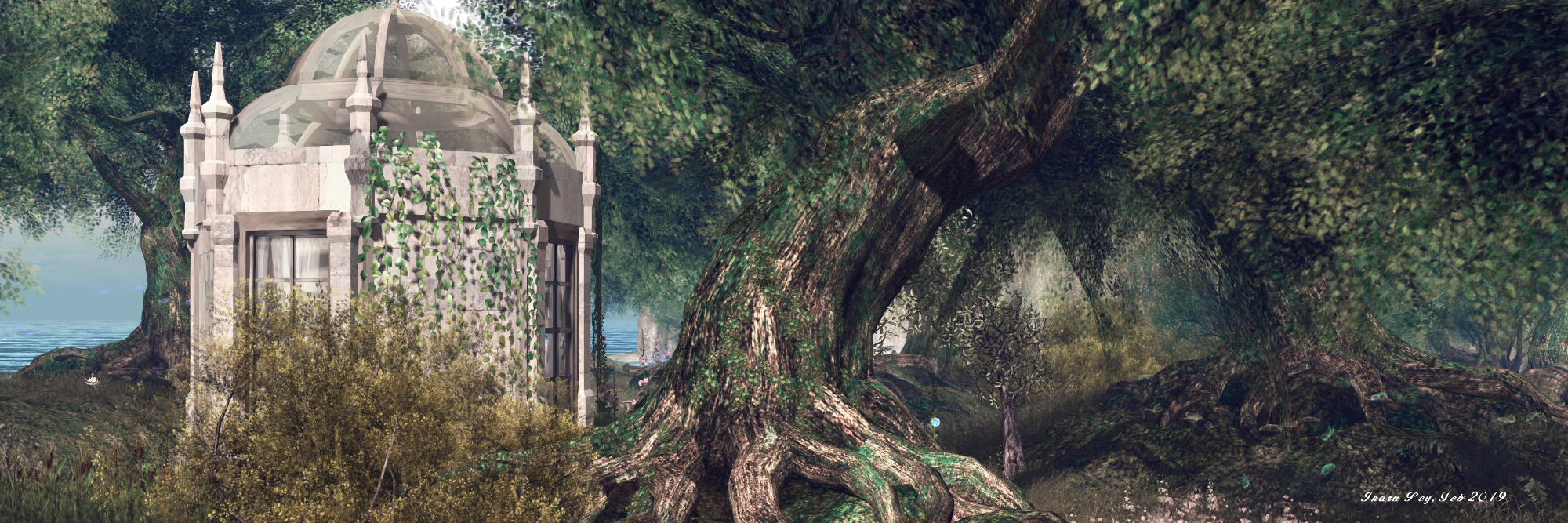
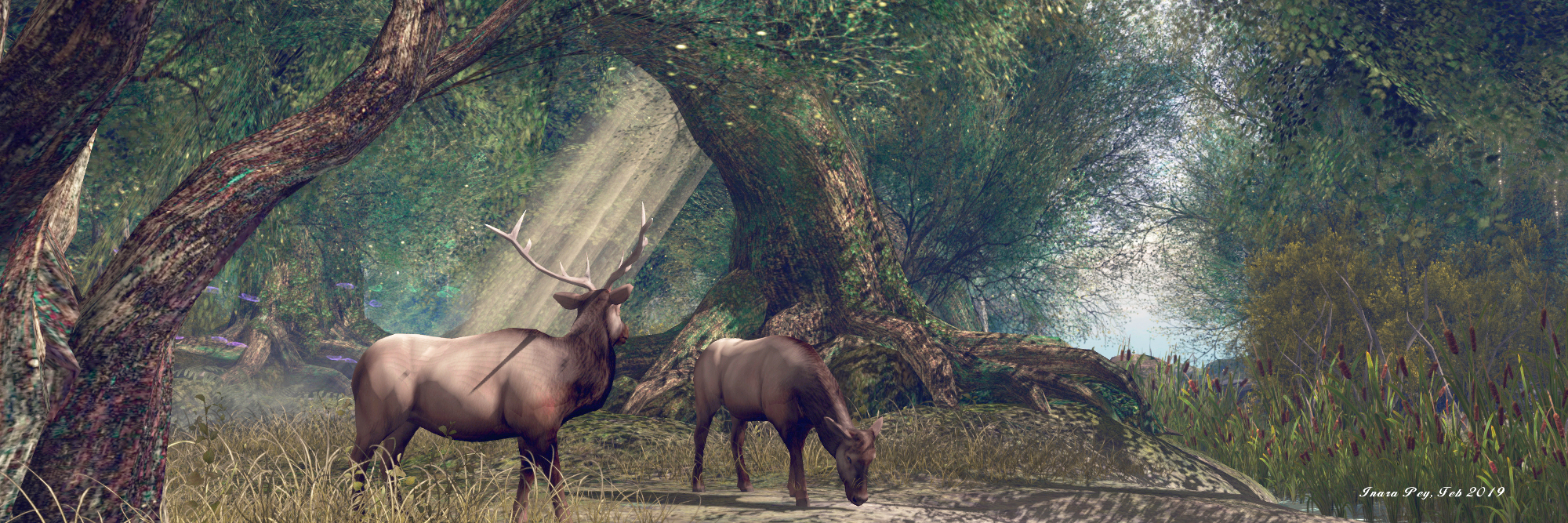
Maderia Springs in Second Life

Maderia Springs; Inara Pey, February 2019, on FlickrMaderia Springs

Update and warning: Maderia Springs is now an adult-rated nude beach / BDSM location.

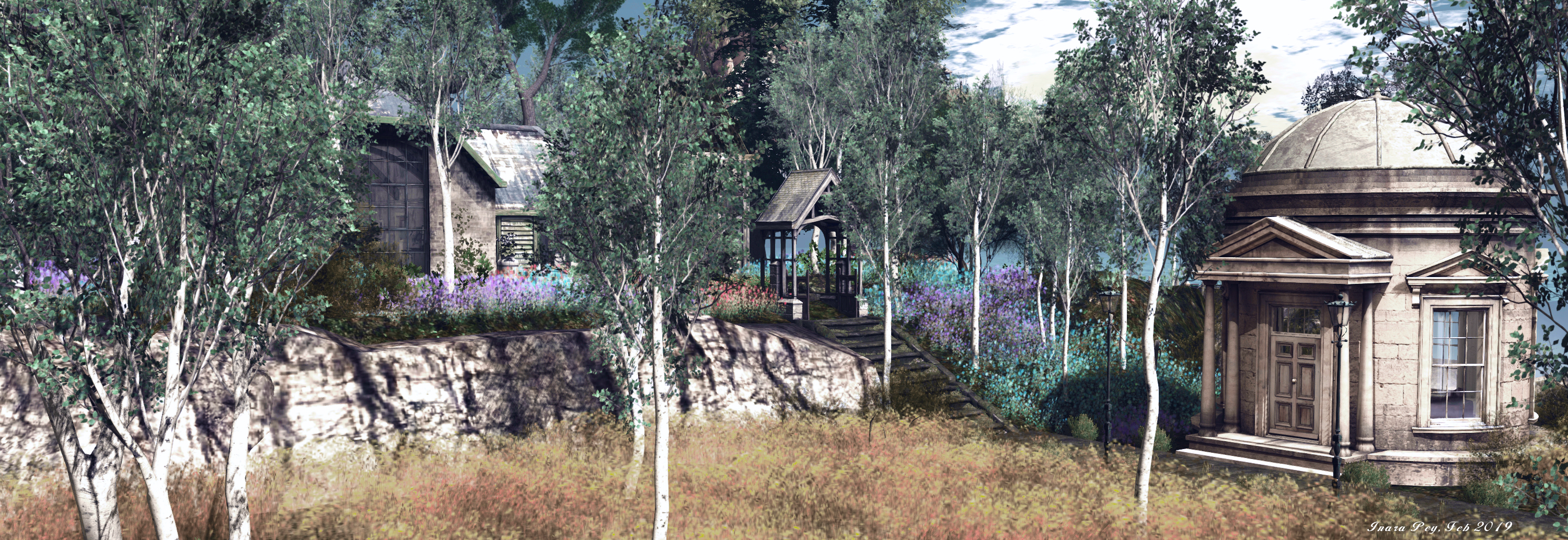
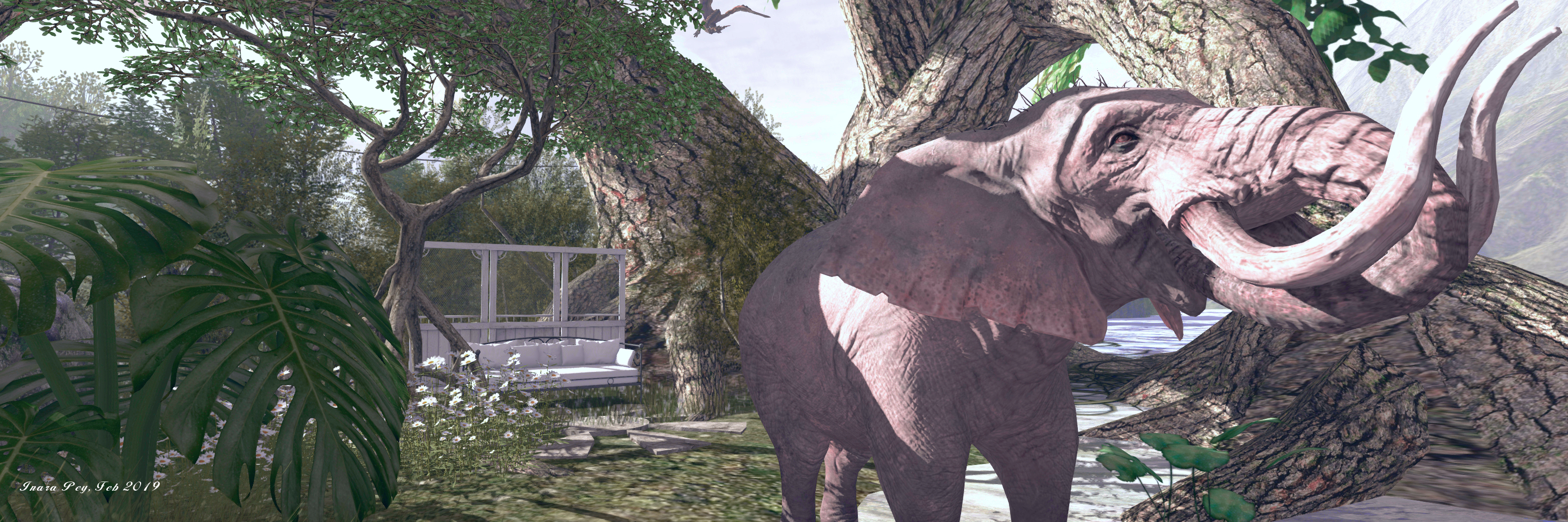
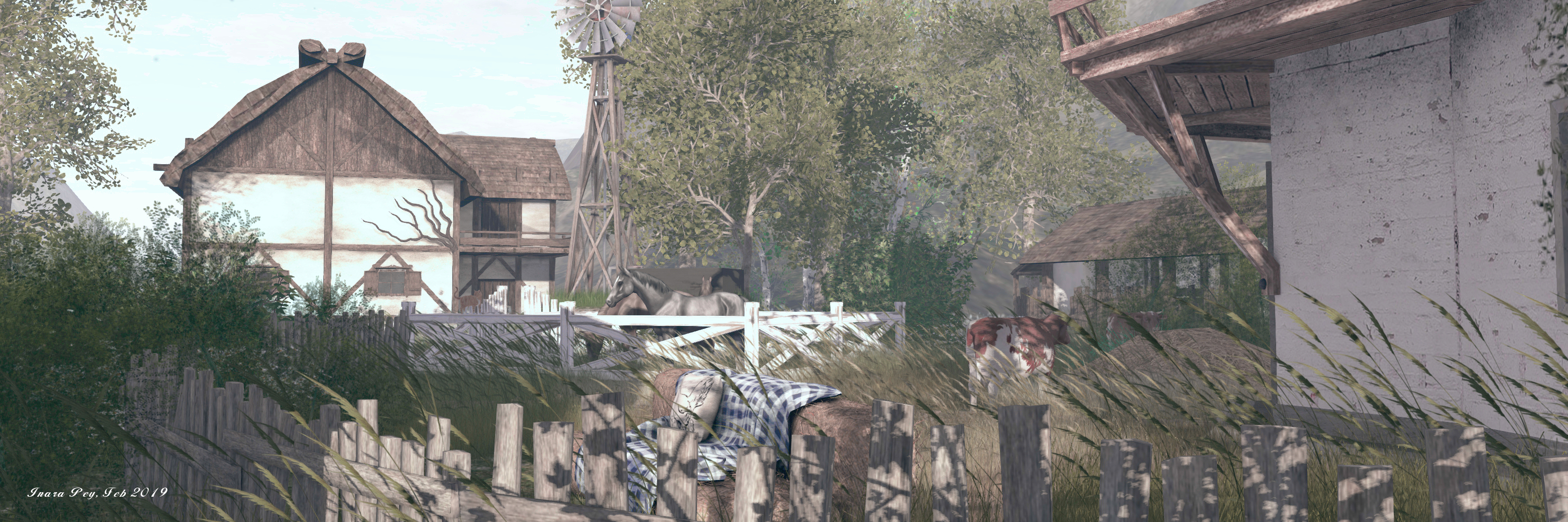
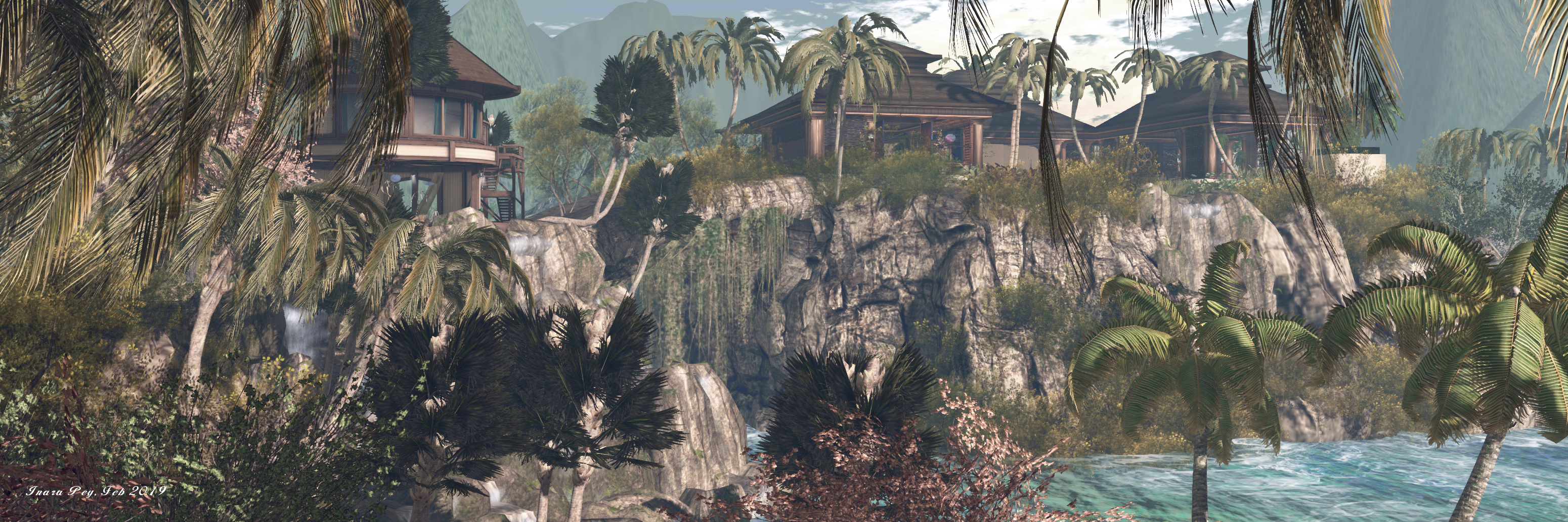
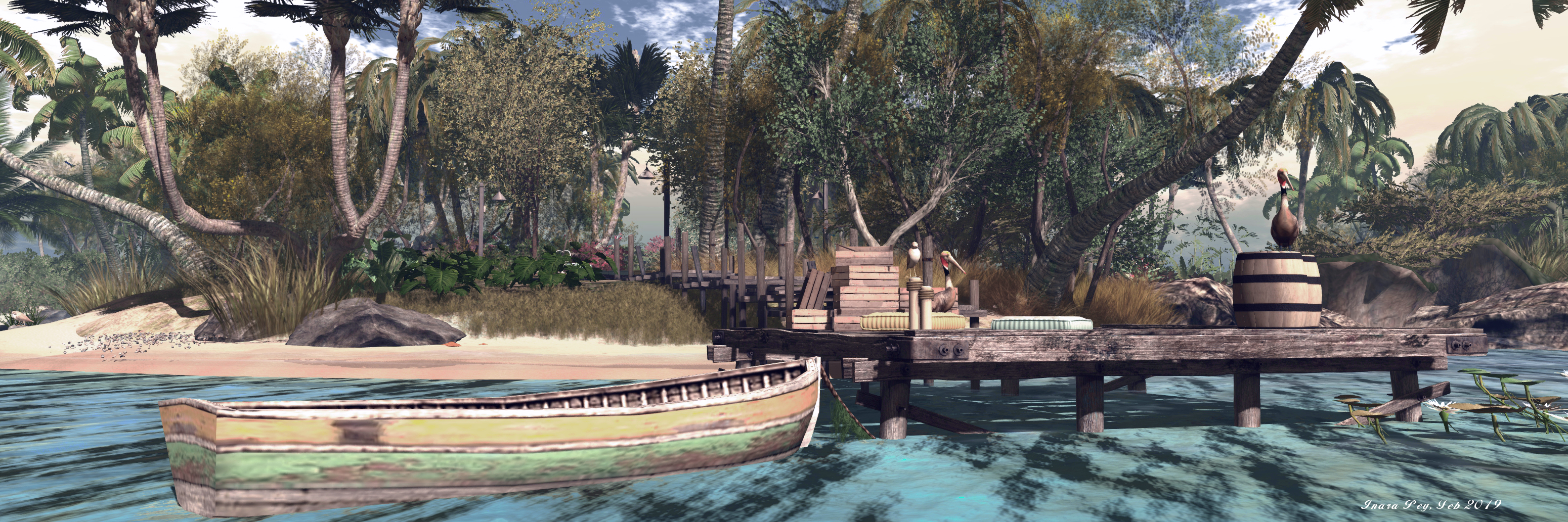
Maderia Springs, a Homestead region designed by Thaihiti Baroque, is a curious place; so much so that while we visited it over the weekend at the suggestion of Shakespeare and Max, it’s taken me a few days to settle my thoughts and write about it. Truth be told, I probably wouldn’t be writing about it now had it not been for the fact the region I had been in the middle of blogging was summarily closed to public access by its owner literally just as I was finalising my write-up!

The reason for my having to settle my thoughts is that while Maderia Springs has plenty of photogenic elements to it, it doesn’t, at the the first glance, exactly have a feel of a cohesive whole. Oh, certainly, elements are nicely linked in places: the landing point, the waterside shack and the large central house for example, while the house across the water feeds into this setting rather nicely, as do the cattle and horses. But the region also has a feeling of being more a set of discrete vignettes, rather than an individual whole, the roads and tracks more a convenient means of connecting them rather than being part of a landscape.
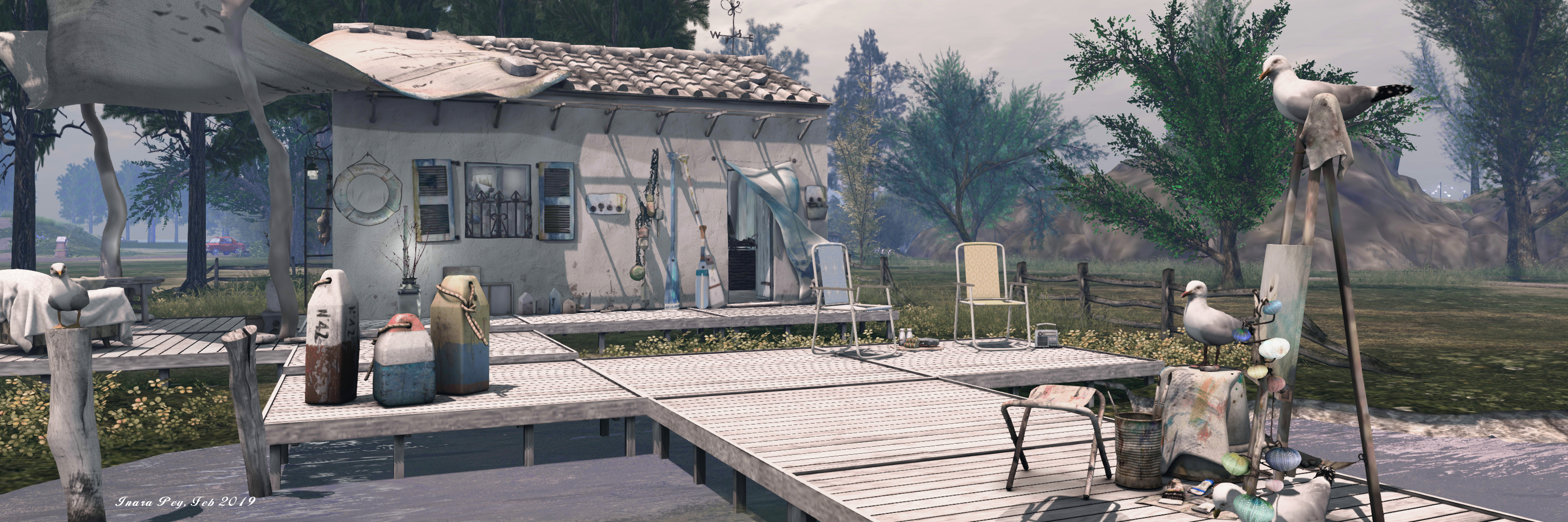
Maderia Springs; Inara Pey, February 2019, on FlickrMaderia Springs

Thus, I’ve found the region a little hard to quantify in trying to describe it. In the end I decided to treat it as it appears: a grouping of vignettes, each ideally suited to photography; sets, if you will, just awaiting their subjects. Which is not to say a wander through the region along its meandering roads is without reward. Rather the reverse, there is a lot of detail here to be enjoyed, whether it is around the aforementioned central house with its little gardens on either side and to the rear, or among the horses to the north or the wedding chapel up on one of the region’s two high points, or within the numerous little settings awaiting discovery.

Whether or not the chapel see any weddings is immaterial; its open sides and the tables and benches set with food and drink make for an ideal celebratory setting; the blossoms and doves  perfect accompaniments to the bunting and lanterns. All that is missing, perhaps, is a dance system.
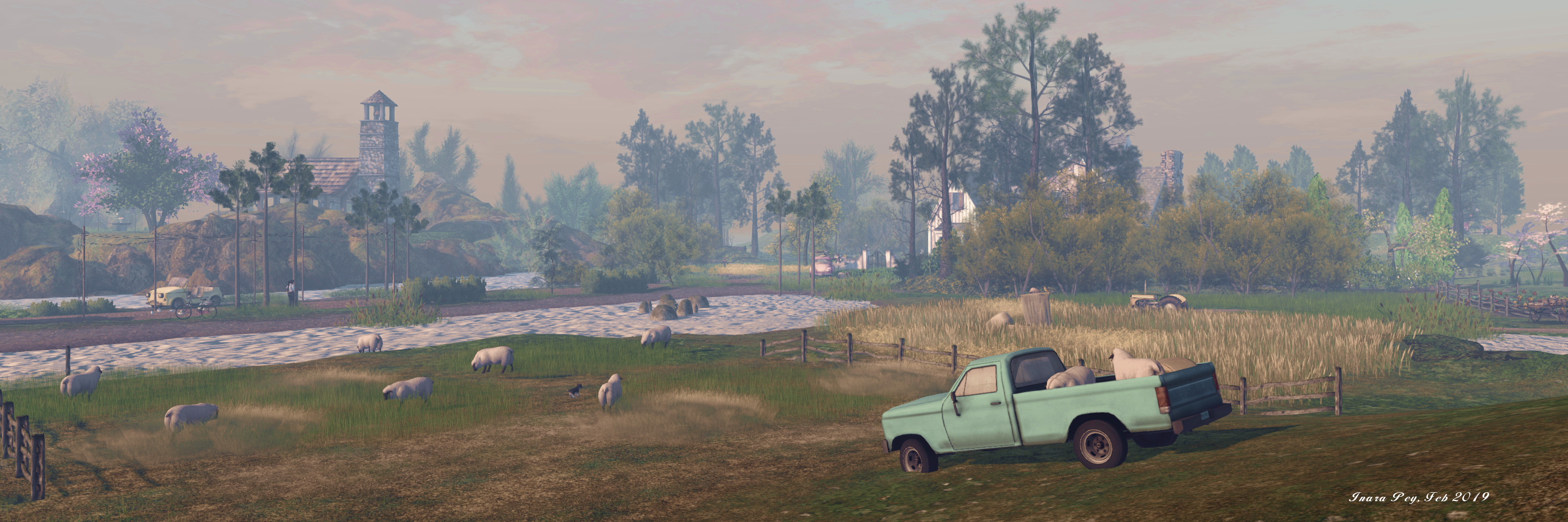
Maderia Springs; Inara Pey, February 2019, on FlickrMaderia Springs

Down from the chapel on the south side of the region are a couple of waterside settings. Both reflect a love of dogs that can be found throughout the region. One offers a simple picnic style setting with blankets and chairs and sun shades, the other is built around a small summer-house which, going by the easel and paints out on the deck stretching a finger over the water, would appear it be the getaway for an artist. This is in turn watched over from a little cottage sitting on a low hill to the west, a place where tea and refreshments can be partaken on the low-walled terrace, obtained via the van parked there.

The refreshments van reflects the fact that vehicles are very much another theme within the region. They are parked near houses, occupy some of the rutted tracks, and even provide a little lover’s nook among the bushes.
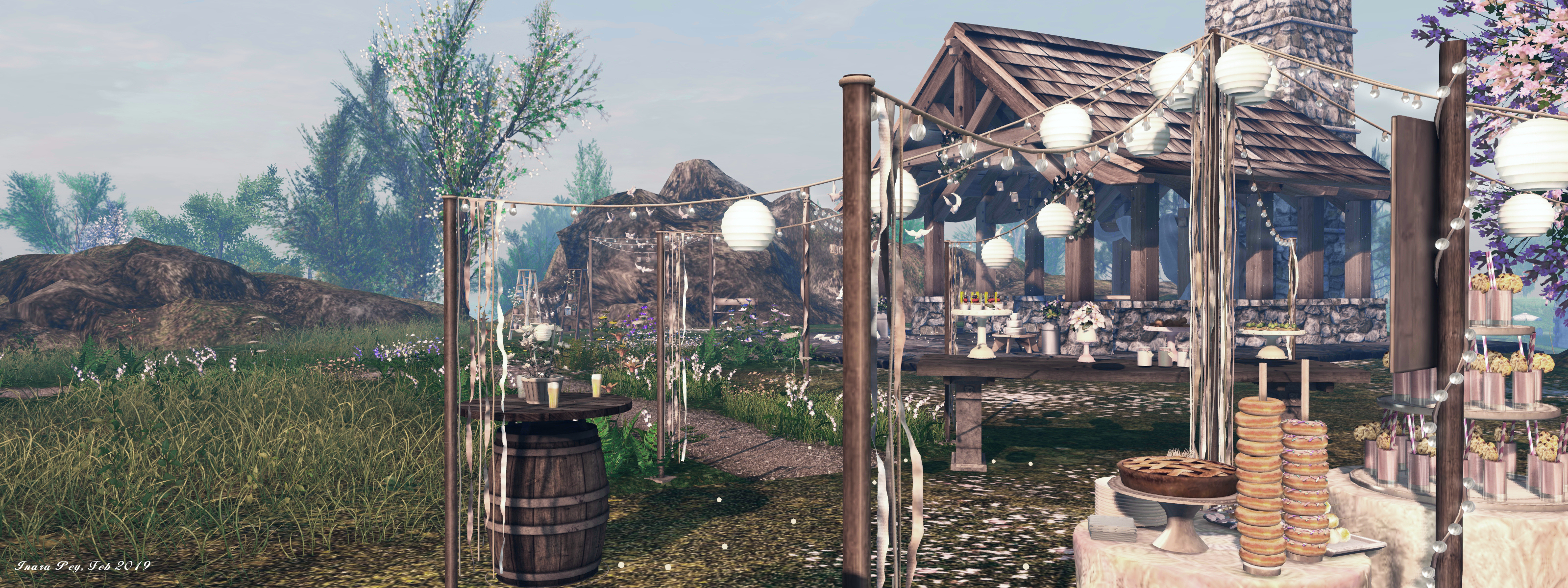
Maderia Springs; Inara Pey, February 2019, on FlickrMaderia Springs

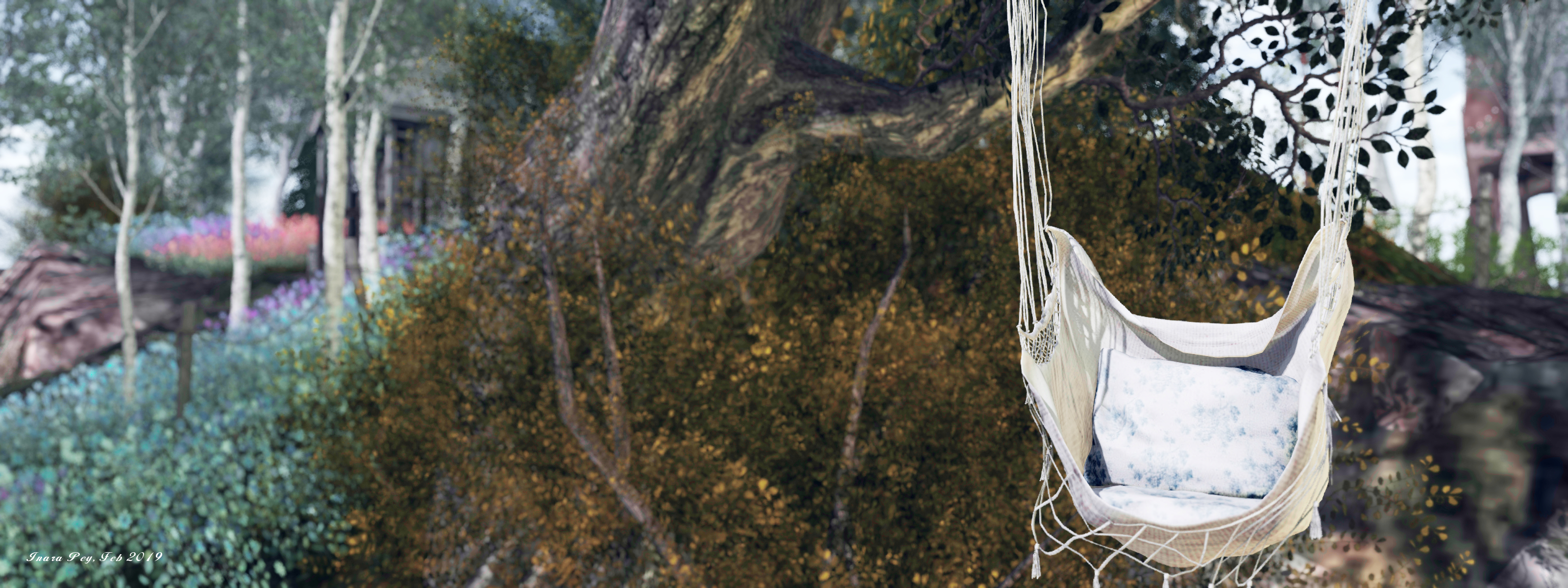
One of the aspects that adds to the attraction of Maderia Springs is the choice of windlight. It takes only some minor tweaks to frame images of the landscape pretty much perfectly. In this, the windlight environment is perhaps the thing that does brig the various elements within the region together as a cohesive whole; with those minor adjustments made, it is possible to see the region as a pastoral setting, a place of open countryside where cattle, sheep and horses roam, and farmers tend to them and the land; a place that is perhaps the location of holiday visits, with the large main house offering the perfect escape.

With a suitably rural sound scape, filled with the sound of birds, the occasional bleat of lamb or moo of cow, Maderia Springs does very much come to life as you explore it, while the scattered places where visitors can sit and relaxed offer a further incentive to tarry a while and enjoy the location.
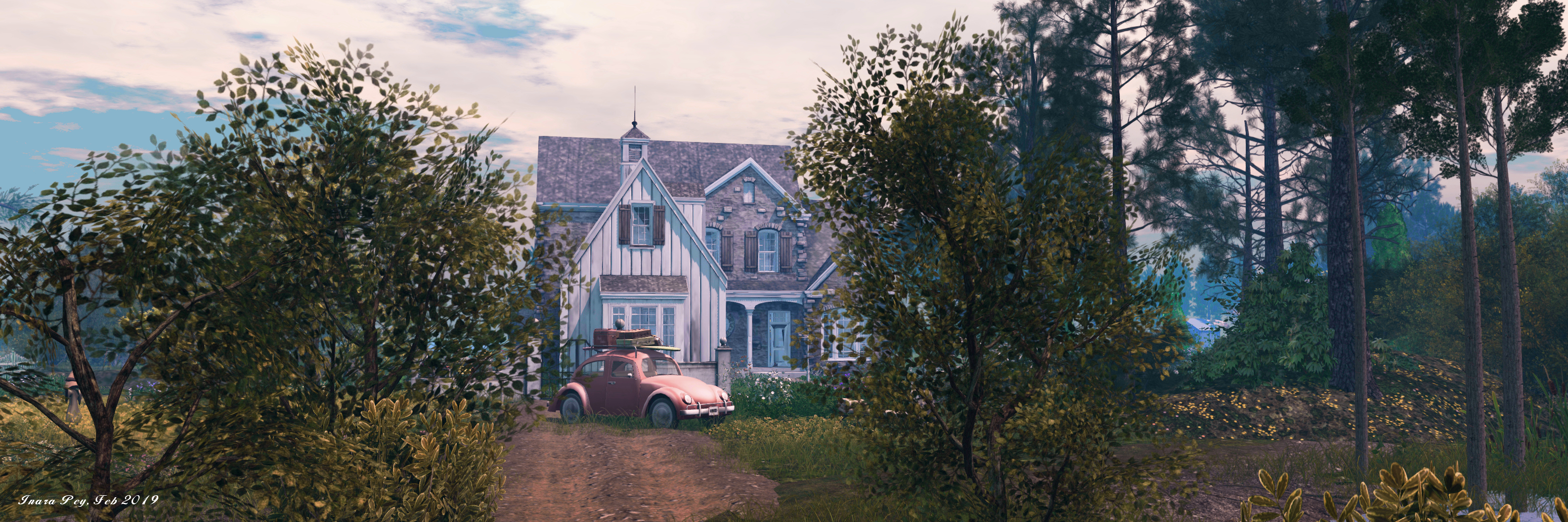
Maderia Springs; Inara Pey, February 2019, on FlickrMaderia Springs

For those who do take pictures, a Flickr group is available should you want to share your views of the region, and should you enjoy your visit, keep an eye out for the little windmill donation points, and consider offering assistance towards the region’s upkeep so that other might enjoy it as well.

SLurl Details

Maderia Springs (Maderia Springs, rated: Adult)
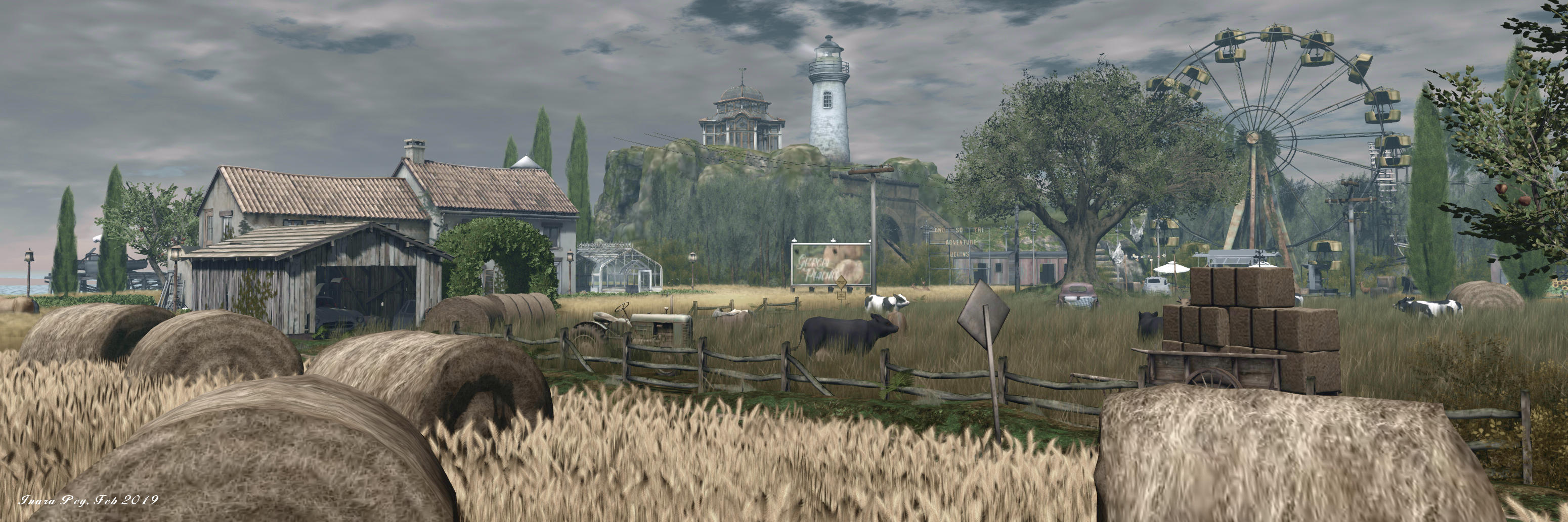
A further day at Sol Farm in Second Life

Sol Farm; Inara Pey, February 2019, on FlickrSol Farm – click any image for full size

In looking back through my notes on regions visited in these pages, I came across Sol Farm, a place we first visited just over two years ago (see A Day at Sol Farm in Second Life) but had failed to return to in the intervening time. So I suggested to Caitlyn we hop over and take a look at what may have changed over the past 25 months.

During our first visit to this Full region, designed by Show Masala that utilises the additional 10K Land Capacity option available to private regions, I noted it to be:

A largely rural setting, centred around Sol Farm, complete with thatched farmhouse, fields of crops and livestock, outbuildings, and many of the mechanical accoutrements of a working farm. However, there is much more here than may at first be apparent.

Sol Farm; Inara Pey, February 2019, on FlickrSol Farm

This is still very much the case. In fact, on first arrival, I wondered if anything had changed since our original visit or if the region had settled into one of those wonderful places that, rather than offering new looks to entice visits and exploration, instead preserve its original look and feel, making it an attractive and familiar place to re-visit,  where memories can be re-awoken be familiar sights.

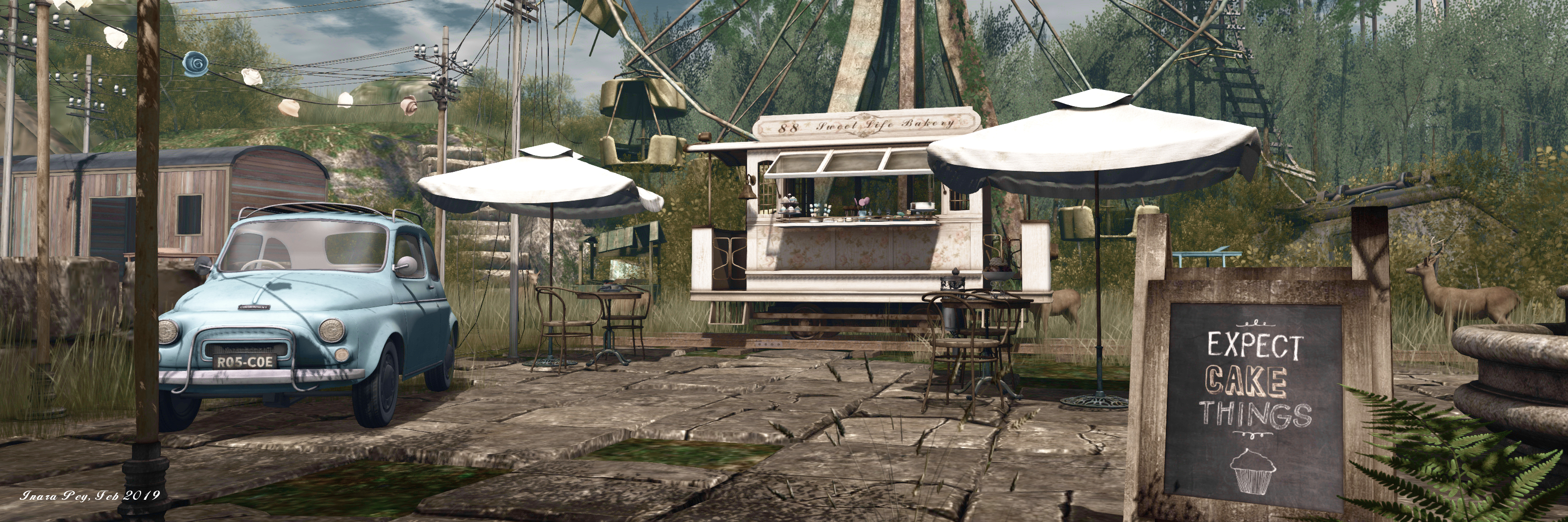
For example, the thatched farmhouse with its fields are still there, sun-ripened crops looking ready for harvesting. Also still in evidence is the Mediterranean villa to the south of the farm, complete with its suggestion that it is perhaps a holiday home; while off to the west from the landing point the familiar Ferris wheel of an old fun fair breaks the horizon, as does the rocky knob topped by a lighthouse and pavilion.

Sol Farm; Inara Pey, February 2019, on FlickrSol Farm

But first looks can be a little deceiving: Sol Farm has changed over the intervening time. Thus, for those both new to the region or those who have perhaps visited it in the past but have not returned of late, it makes for an engaging and in places a quirky visit, with much to occupy the eye and camera.

The quirkiness can immediately be evidenced when using the SLurl given in this article. When looking west from the landing point in provides, it is hard to miss the blue whale serenely and slowly circling through the air over the farm, a small wild garden apparently growing on its back (and on in which you can ride for an aerial view of the region). But it is not the only twist to this setting.

Sol Farm; Inara Pey, February 2019, on FlickrSol Farm

It is also to the west that I spotted another change from our last visit. What had once been a large house occupying its own island connected to the rest of the region via a wooden board walk, is now a headland where another crop is ripening and which ends in a rocky promontory, where sits the most eclectic little group of houses, both on the ground and up in the trees, a little wind turbine supplying them with power.

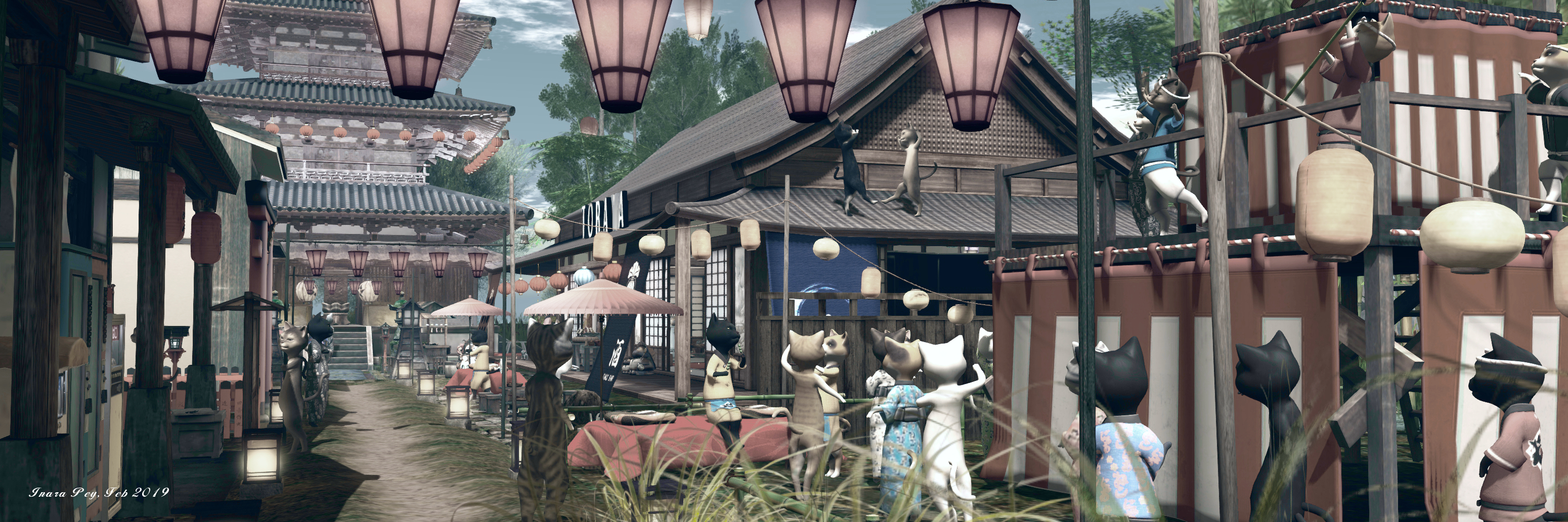
During our January 2017 visit, I noted in passing the presence of a little Japanese village occupying the west side of the region, but somewhat separated from it by a rocky curtain wall. This is still present and open to visitors (just follow the track around the island to the east and under the Torii gate sheltering beneath a rocky arch, or take the north side beach eastwards until you come to it). However, it now offers another odd little quirk, being the home to a host of cats. And not just any cats; these all stand upright as they go about their business, a large part of which appears to involve some kind of festival.

Sol Farm; Inara Pey, February 2019, on FlickrSol Farm

There are many elements that bring this setting together as a landscape painting made real. The first, perhaps are the rutted tracks that run through the region. These link the various points of interest – the farm, the villa, the broken old fun fair, the Mediterranean farm alongside it and the north-western headland – into a cohesive whole, giving the feeling you’re really travelling through a place. Another is the use of farm animals, sheep, horses, cattle, that neatly help stitch the central farm and the western lands together. Then there is the rich sound scape that perfectly enfolds everything.

Stay within the region long enough, and you’ll discover another somewhat unique element to it: the weather. Every so often a small tornado will pass through, bringing with it a squall of rain, the wind tossing bits and pieces of rubbish into the air which fall back to Earth in the storm’s wake before vanishing along with the storm itself.

Sol Farm; Inara Pey, February 2019, on FlickrSol Farm

Beautifully conceived from farm to beaches to houses and village, richly detailed and presented, Sol Farm remains a photogenic joy to visit.

SLurl Details

  • Sol Farm (Story of Infinite, rated: Moderate)

Back On The Other Side in Second Life

On The Other Side; Inara Pey, February 2019, on FlickrOn The Other Side – click any image for full size

We first visited On The Other Side in October 2018 (read here for more), and on the suggestion of Shakespeare and Max. At that time, we enjoyed our visit to this Homestead region designed by Michelle (xxMichelle20xx) and Indriel (Indrielx), so when Shakespeare nudged me with the news the region has been updated, we hopped back to have another look. What we found was very different to the settings presented in October 2018, but a place still with its own eye-catching design.

The Landing Point sits in what appears to be a shallow cavern – although one obviously with an opening to the outside world, given the volume of butterflies that have made the cave their home. I confess to being flattered in seeing one of my photos from our October 2018 visit used on the blogger link board before stepping across the water to the “outer” part of the cavern, where a Flickr link can be found together with teleport board up to the {JAS} main store.

On The Other Side; Inara Pey, February 2019, on FlickrOn The Other Side

A large slab of cut stone blocks further progress until touched, when it will slide side to reveal the region beyond. Stopping outside reveals the cavern is in fact beneath the ruins of a stone structure, its form suggestive of an ancient place of worship, the door itself faced by an ornate, teal-painted rune.

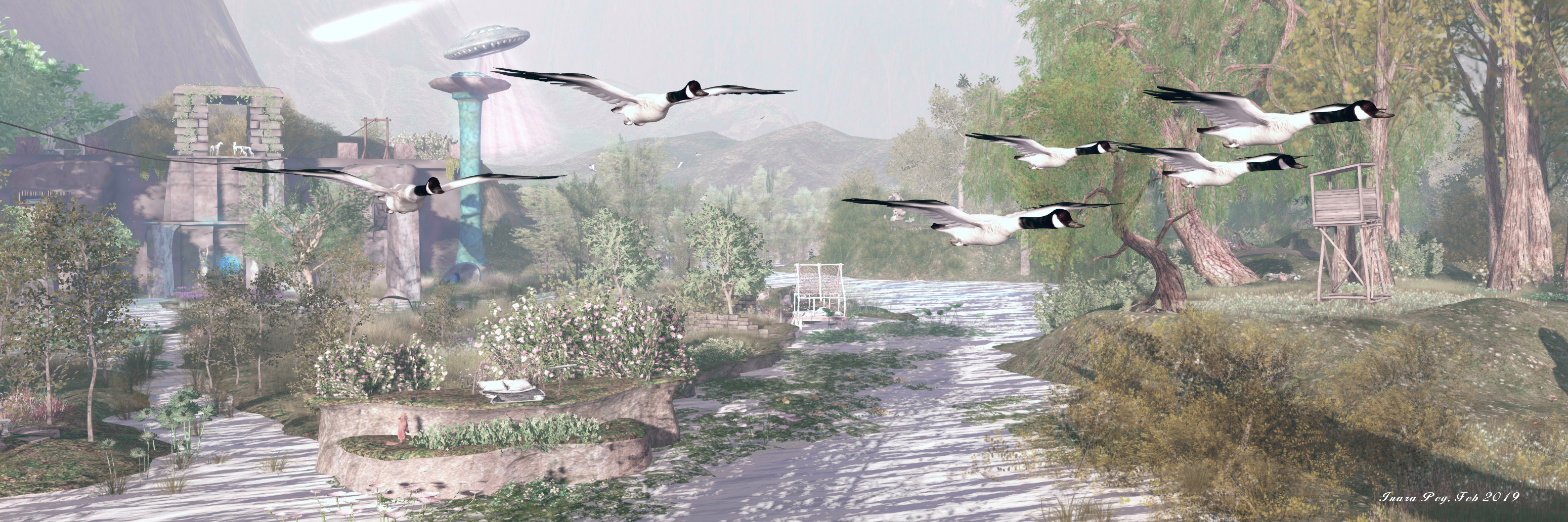
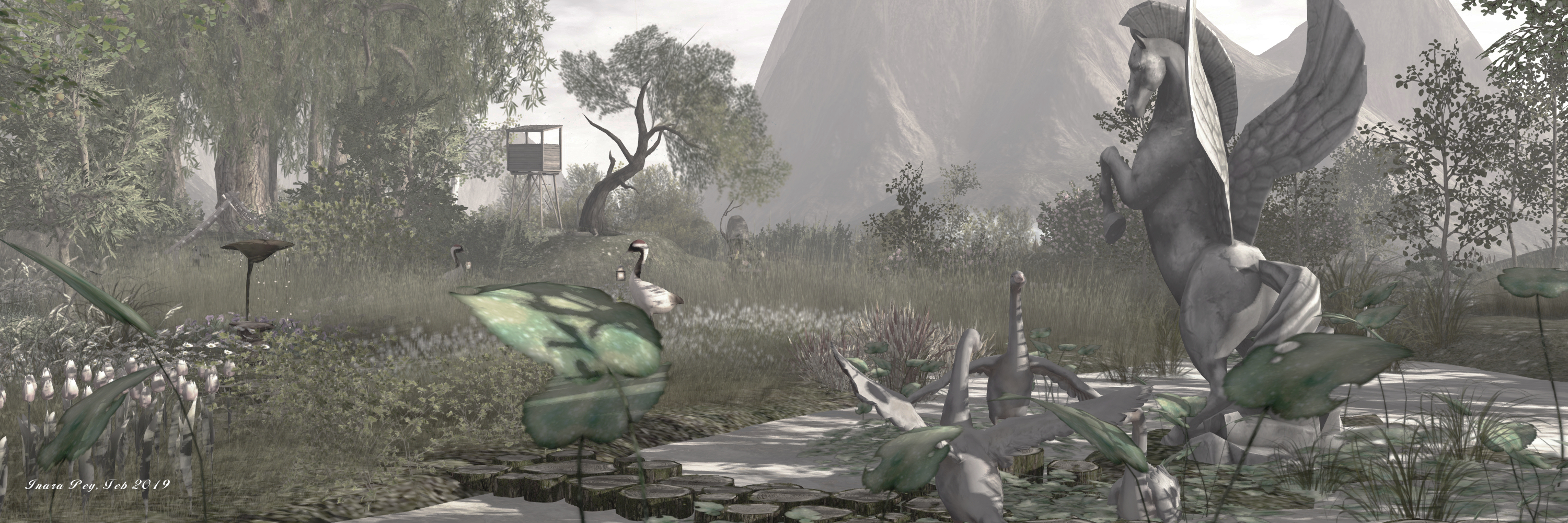
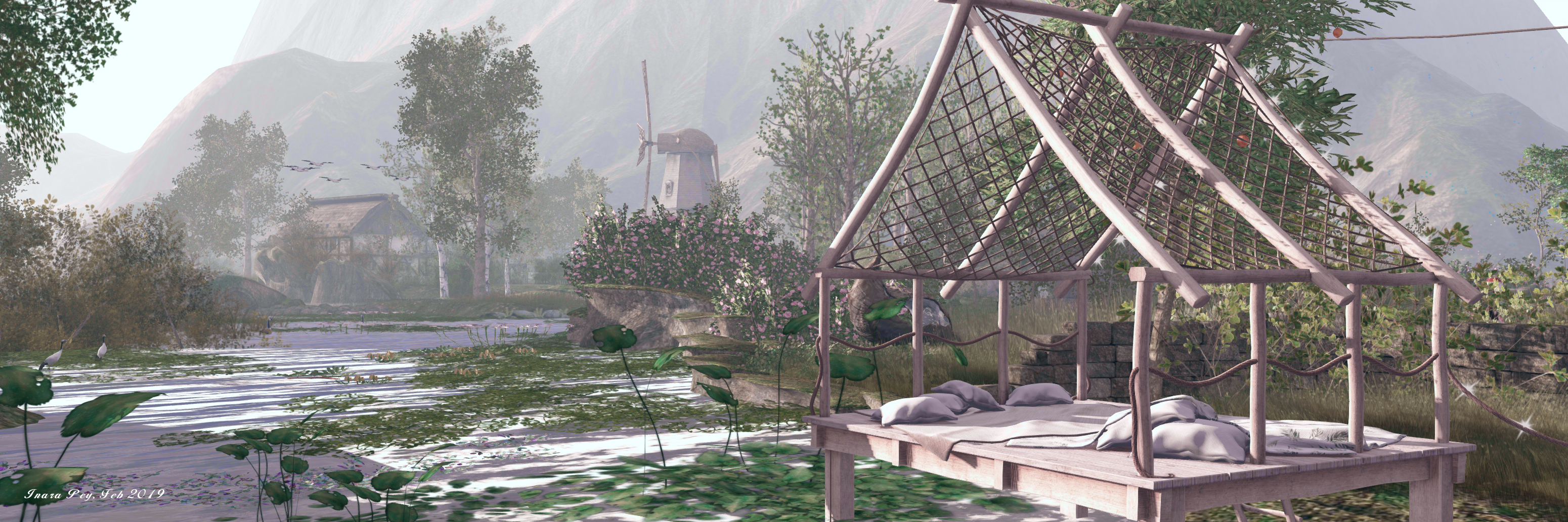
At first glance, the land beyond the door looks to be a simple rural scene: lavender grows on either side of a path that is itself is bordered by water. More water breaks the land – most of it low-lying  – into a series of islands. Birds can be seen, together with a tall wooden tower close by, a windmill further away.

On The Other Side; Inara Pey, February 2019, on FlickrOn The Other Side

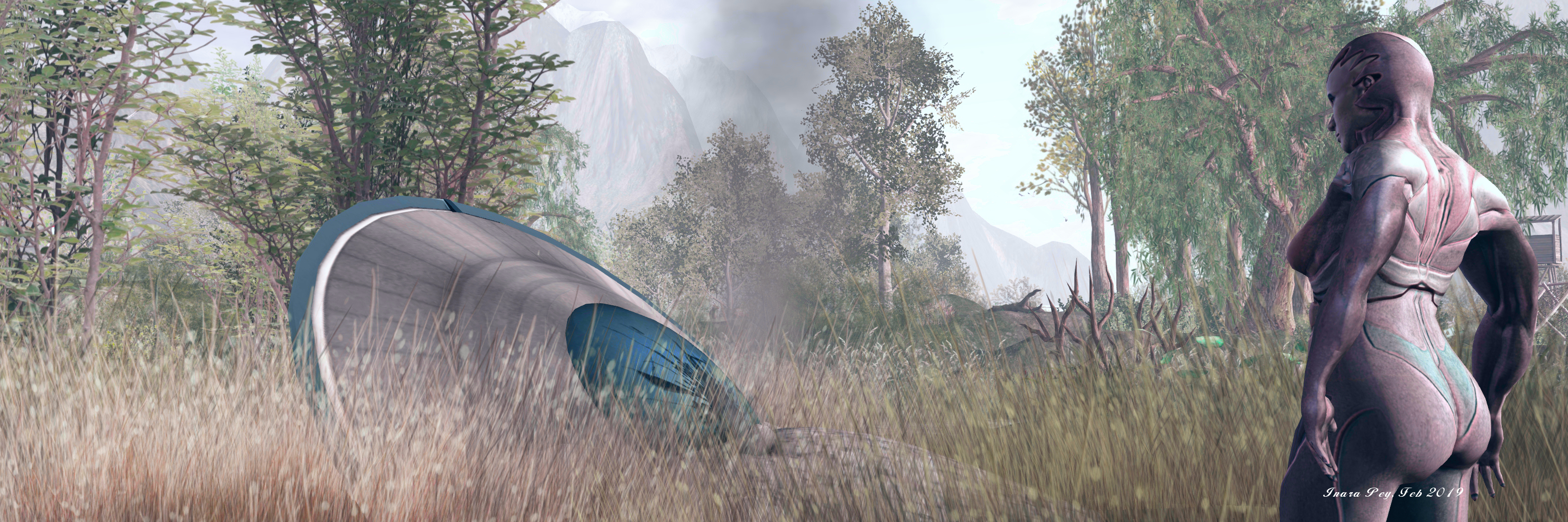
But look again. A dragon hovers close by the roof of the wooden tower, while on either side of the ruin behind you are two odd-looking structures: green pillars topped by disc-shaped objects. These have attracted the attention of … visitors. A flying saucer floats close by one of the pillars, a possible rescue mission for the one lying crashed in the long grass to the side of the ruins. The pilot of the latter prowls through the grass, possibly annoyed at losing his vehicle.

These touches mark the magic of the region: an eclectic mix of vignettes, one or two of which  offer echoes of previous builds. To the north side of the region, sitting on one of the islands is a little outdoor cafe, for example. This offers a link back to the region design we visited in October 2018. Should you drop in for a snack, do take care not to disturb the couple of mice who are enjoying their brunch at their own little table.

On The Other Side; Inara Pey, February 2019, on FlickrOn The Other Side

The north-east corner of the region is the only part that is off-limits. It is home to a private residence and access control is set. Diagonally across the region of this is a farm, home to the aforementioned windmill. This sits on another island and raises a slightly different warning; when crossing the water between islands, it’s probably best to keep to the paths, bridges and stepping-stones. While the water is shallow in places, in others it can be uncomfortably deep, so you might find yourself taking an unexpected bath!

All of this is just scratching the surface of things. The wealth of detail found within On The Other Side makes exploration a real joy; the mix of ideas means that you’re never sure what might lie beyond the next hedgerow or over the brow of low hill. Standing stones here, a little lovers hideaway there, an unexpected and sheltered beach (complete with an opportunity to surf), over there – and more.

On The Other Side; Inara Pey, February 2019, on FlickrOn The Other Side

There are also more of the contrasts to be found throughout. Wander in the right direction, as another example, and you might come across a touch of the Far East mixed with a hint of Africa. A further hint of the Far East sits up on the hills behind the temple ruins, while another reminder of Africa can be found in the waters. For the adventurous who may want to explore the upper levels of the ruins, there is a crawl rope offering a route to them from the nearby wooden watch tower. And talking of adventurers, keep an eye out for the aerial critter braving the air over the crocodile waters!

With numerous places for people to sit and couples to share their company with one another, On The Other Side retains its appeal as a place in which to spend time. Throughout entire region there are numerous opportunities for photography, and pictures can be shared on the Flickr group. Rezzing in the region is permitted, with an auto return time of 60 minutes – but if you do rez, please remember to pick your things up rather than letting auto return take care of it. And, as always, make sure local sounds are enabled so you can appreciate the region’s immersive sound scape.

On The Other Side; Inara Pey, February 2019, on FlickrOn The Other Side

SLurl Details

Originalia: a tropical paradise in Second Life

Originalia; Inara Pey, February 2019, on FlickrOriginalia – click any image for full size

Update: Originalia appears to have closed. SLurls have therefore been removed from this article.

Imagine you had a small personal fortune. Enough to, say, buy your own tropical island atoll. What might you look for in such an island prior to purchase? What might you do with it? What style of house would you opt to have built there? What facilities would you want to include to make it that special place where you can escape the pressures of life and simply be, enjoying sun and surf and the haven of tropical splendour with your family and / or friends?

Doubtless, many of us have fantasised having a life where we could “do a Branson” and have such an island – and I wouldn’t at all be surprised if in our individual mind’s eyes, it didn’t in some ways resemble Originalia.

Originalia; Inara Pey, February 2019, on FlickrOriginalia

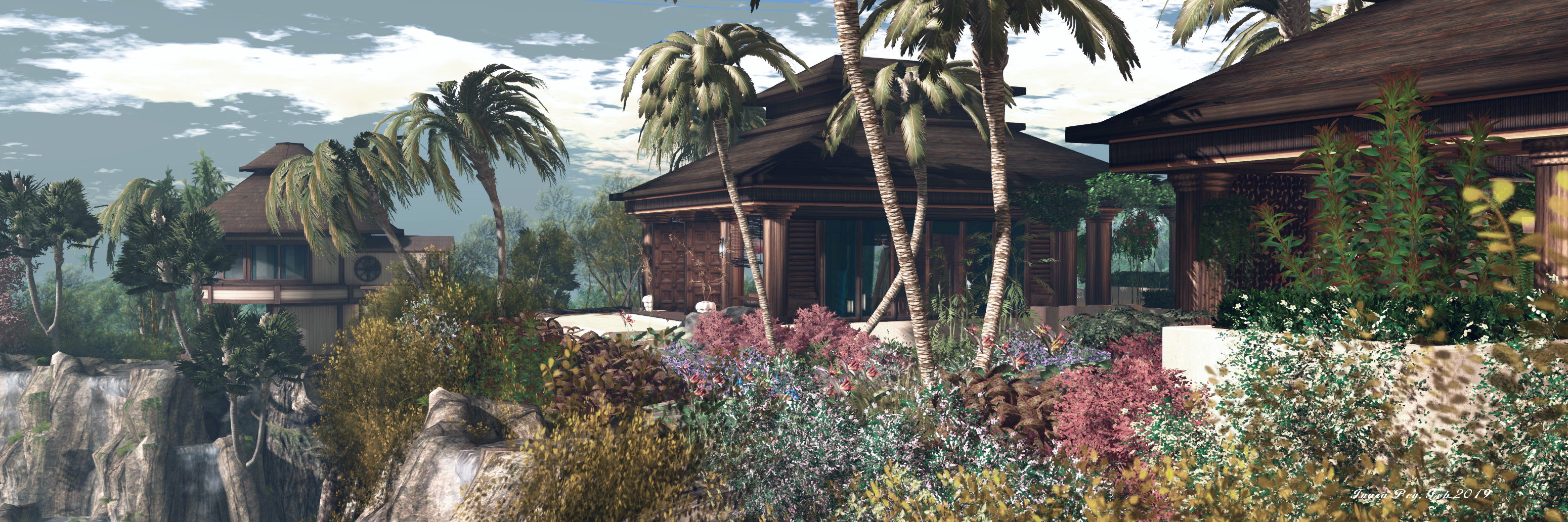
Designed by Minnie Blanco (Minnie Atlass) of Soul2Soul fame for region holder Amase Levasseur, Originalia is an utterly stunning Full region this fully embodies the idea of a tropical paradise home. And if you’ve never dreamed of having such a place to call your own, or in letting your mind wander the fantasy of owning a private island getaway you’ve not pictured anything quite like it, I’ve little doubt that after a visit, you’ll be unable to picture anything else.

Set within an archipelago of off-sim islands – some quite mountainous – Originalia offers what could easily be the atoll top of a drowned volcano: an oval of sand and rock rising above the surrounding sea, the wall broken to the east, allowing the waters to enter the crater’s bowl to form a lagoon. Beyond  the curve of the island lies an outer semi-circle of low-lying rock, home to scrub grass and palm trees. It suggest that perhaps at one time the cone forming Originalia sat within a larger caldera, perhaps the last gasp of the volcano that formed it, pushing itself above the waves before falling silent, and then allowing the millennia and the sea take over the work of giving the land its current form.

Originalia; Inara Pey, February 2019, on FlickrOriginalia

Whatever its origin, what remains is perfectly idyllic; a horseshoe-like island running from sandy lowlands to the north around to a high ridge-line to the south, the ring of rock open to the sea to the east and also linked to the waters of the old caldera to the west, where the crater wall has in part collapsed to leave a magnificent arch of basalt arching over the waters below, thus forming a broad bridge linking the high plateau with the lower reaches of the island and the beaches there.

It is on this high shoulder of rock, from which waterfalls tumble from numerous points, that Minnie has sited the ideal residence: The Patron Banyan House by Eliza Wierwright, itself a stunning build that has always impressed me. Offering a southward view out over the lagoon, the house grandly sits on the high plateau, the pool between its arms feeding one of the falls that tumble over the rocks and into the blue waters of the lagoon below. Across the rocky arch from it sits a rotunda like cottage by Cory Edo, perfectly complementing the house and offering a spa style setting in which to relax.

Originalia; Inara Pey, February 2019, on FlickrOriginalia

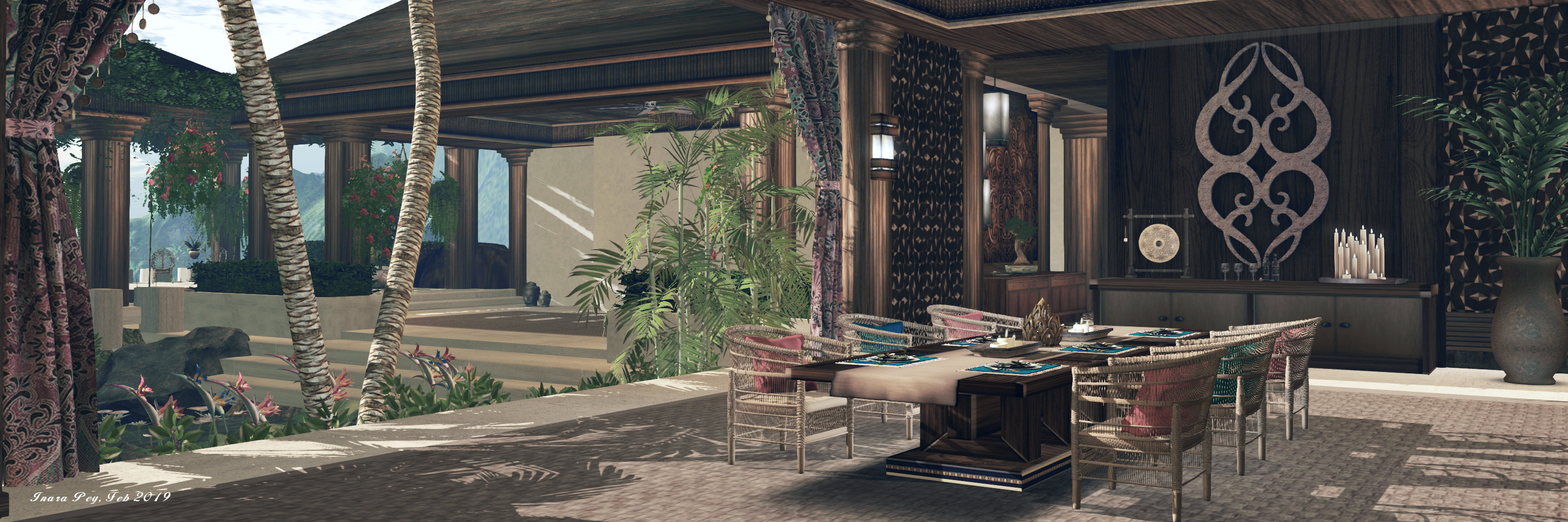
The overall suggestion of house and cottage perhaps leans toward Thai in intent; but as is often the way with me, the setting carried soft echoes of places I’ve visited in Sri Lanka, such as Saman Villas. While the latter is far, far more developed than Originalia, I Couldn’t help but think of their rocky perch and the open-air nature of the public buildings within the development as we explored the house, memories of meals in the open-sided restaurant drifting into my thoughts.

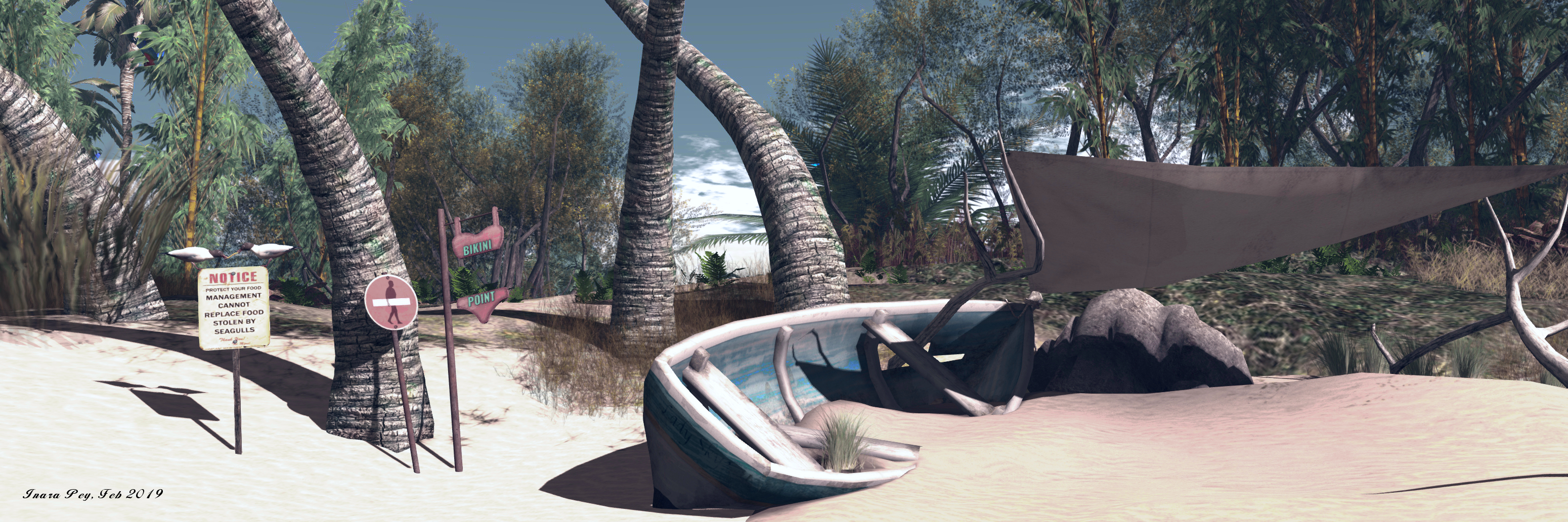
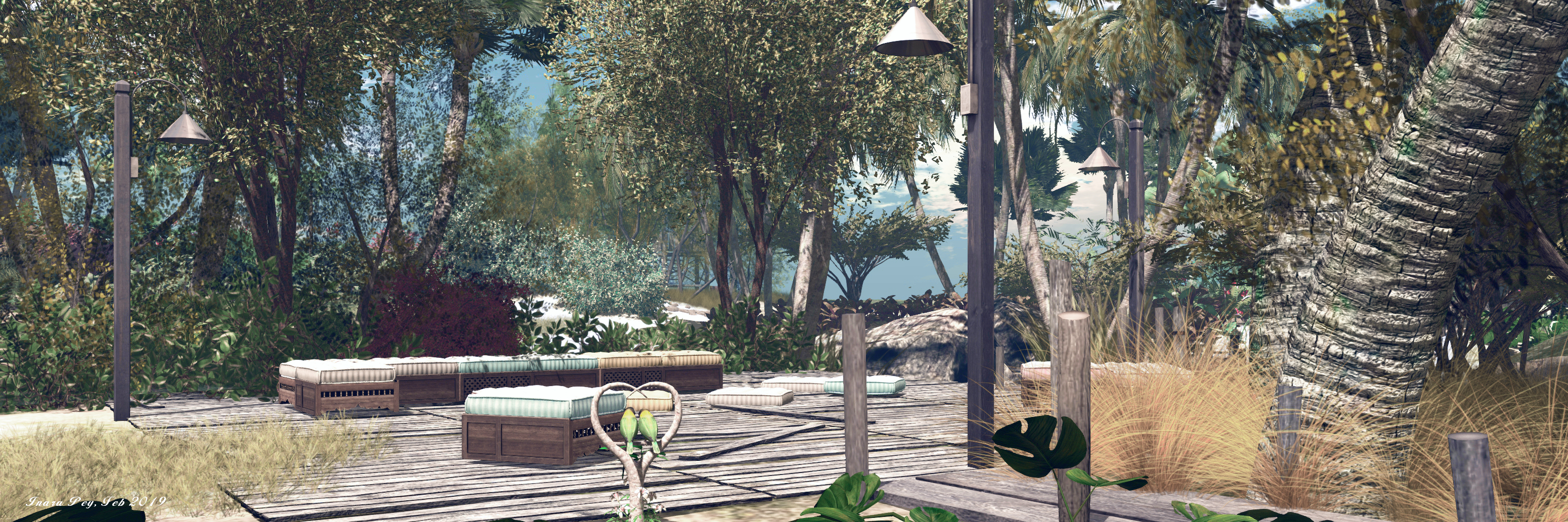
Finding your way around the island is easy: just take the wooden board walk and bridge from the little sand bar of the landing point, then follow the rocky paths laid across sand and scrub. These wind over island and up hill under palm trees and between shrubs and rocky shoulders. Here and there the paths branch, offering routes to the outlying beaches where little hideaways can be found and boats bob on the surf at their moorings.

Originalia; Inara Pey, February 2019, on FlickrOriginalia

I’m not sure if Originalia is permanently open to the public, or whether public access is for a limited time. However, I do know that it is a setting that not to be missed – but do allow time for a visit; there is much here to captivate the eye and the imagination. And do make sure to have local sounds enabled; as something of a sanctuary for birds of all kinds, Originalia has a rich accompanying sound scape.

Our thanks, once again, to Shakespeare and Max for pointing us to this island gem. As Minnie points out in the comments, those taking photos are welcome to submit their pictures to the region’s Flickr group.

Originalia; Inara Pey, February 2019, on FlickrOriginalia

A visit to historic Boardman in Second Life

Boardman – click any image for full size

There are many historic sites scattered around Second Life, some better known than others. Svarga (read here for more), for example, or The Man, Governor Linden’s mansion, the Ivory Tower of Primitives, to name just four. Then there are places to celebrate the history of Second Life, such as the SL Historic Museum (read here for more) and Maps of Second Life (read here for more).

One of the historical location that perhaps doesn’t get much of a mention outside of the Destination Guide is Boardman, one of the earliest experiments of a themed community established in Second Life that dates back at least a decade, and which is now overseen by the Boardman Preservation Society.

Boardman

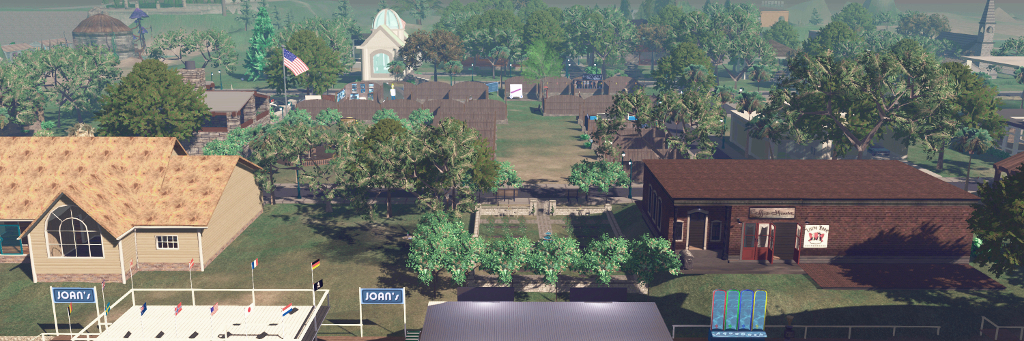
It’s a fascinating curio to visit; a living reminder of how Second Life once was. A prim build, formed around a network of little roads and sidewalks, in which sits a little suburb setting of houses and community buildings: a town hall (complete with a picture of Jack Linden, former head of the Land Team who departed LL at the end of 2010), a church, and ice cream parlour. The roads are shaded by Linden trees from the library, while the houses – although largely empty – sit within their own little lawned gardens.

Being an early example of community building in Second Life, Boardman is subject to some of the earliest zoning requirements in Second Life. These can be obtained from the information kiosks scattered around the town and in assorted signs, and date all the way back to January 2003, which itself makes them an interesting read.

Boardman

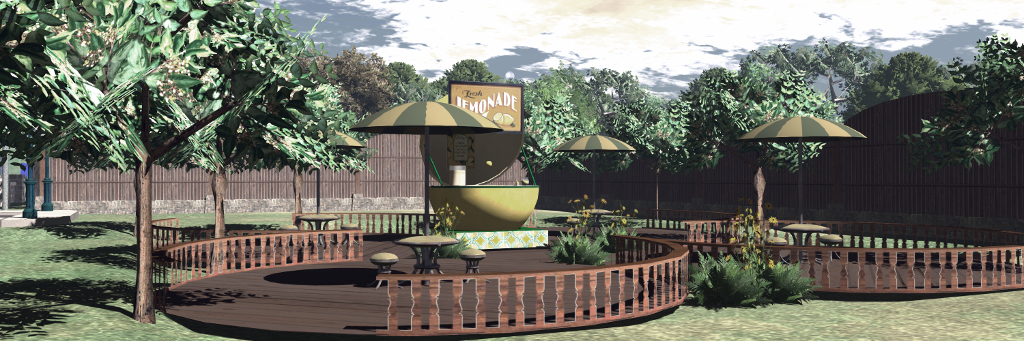
A central (literally as well as figuratively) feature is an open air market space. This was specifically established to allow Boardman residents to sell their goods – as long as they were within the required guidelines – via a 13×8 metre stall. It is at the market that some names and logos can be found that will have a certain resonance among long-term Second Life residents: Sion Chickens (although none of them are around!) and Adam Zaius for example. There are even some vendor boards still present and working! You can, however, pick up Mr. Greggan’s Whimsical Full Perm Freebies, for a look back at SL mechanics circa 2007/8.

As well as exploring, visitors can take a walk to the waterfront and try their hands a few games or simply enjoy the Sun. While you’re there, say hello to Captain Nomad as he builds his new boat.

Boardman

Boardman may look dated when compared to modern mesh builds, and the total ban on even limited terraforming to smooth out the land in places can result in some buildings looking oddly placed. However, as a site of historical reference, it makes for an interesting and diverting visit.

SLurl Details

Elvion: an elven sanctuary in Second Life

Elvion; Inara Pey, February 2019, on FlickrElvion – click any image for full size

Update, September 2021: Elvion has relocated and expanded – see Elvion expanded in Second Life.

The suggestion we visit Elvion, which recently opened its doors to the public, came to us via Miro Collas, another reader who always keeps can eye out for regions in Second Life we might find appealing, and to whom I again offer my thanks for doing so 🙂 .

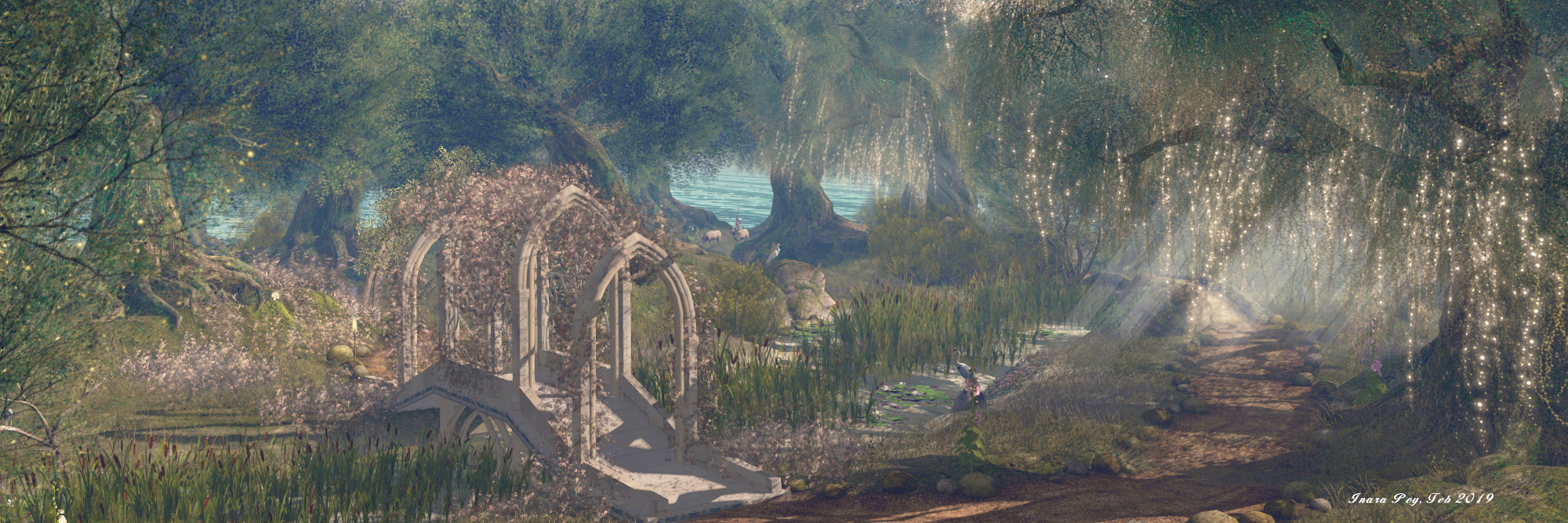
Occupying a quarter region parcel on a Homestead region, Elvion has been designed by Bo Zano (BoZanoNL) as an elven style sanctuary, rich in atmosphere and with a suggestion of mystic magic; and it is a quite breathtaking place to visit: simple but elegant in its presentation, rich in detail without feeling overcrowded.

Elvion; Inara Pey, February 2019, on FlickrElvion

Aside from a single tower towards the north-east of the parcel, not far from the landing point, the entire location is open to public exploration and enjoyment.

To help with this, a single track runs through the parcel from the south-east corner through to the north-west. A short distance, perhaps, but a good start to explorations. From its starting point was the edge of a small bay, it skirts around the water, passing the entrance to the glade where the private towers resides. Past this, it passes over a little bridge to pass along the edge of another glade to reach a  second bridge pointing back to the tower.

Elvion; Inara Pey, February 2019, on FlickrElvion

This second glade is bordered on its far side by high falls and is home to a large pavilion. It is here that a further sense of fantasy is presented to visitors: a dragon circling slowly over the grass of the glade, sharing the space with gossamer butterflies as rabbits hop around below. Sunlight filters through the trees at the edge of the glade, while lights dangle from branches in strings, adding a further ethereal look to the parcel.

This is far from all there is to Elvion, however, wander across the glade or follow grassy trails through the trees, and you’ll find elk grazing at the edge of the water and just beyond, a rocky arch offering a way to where a further mystical element can be found: a stone carved with glowing runes with unicorns just before it.

Elvion; Inara Pey, February 2019, on FlickrElvion

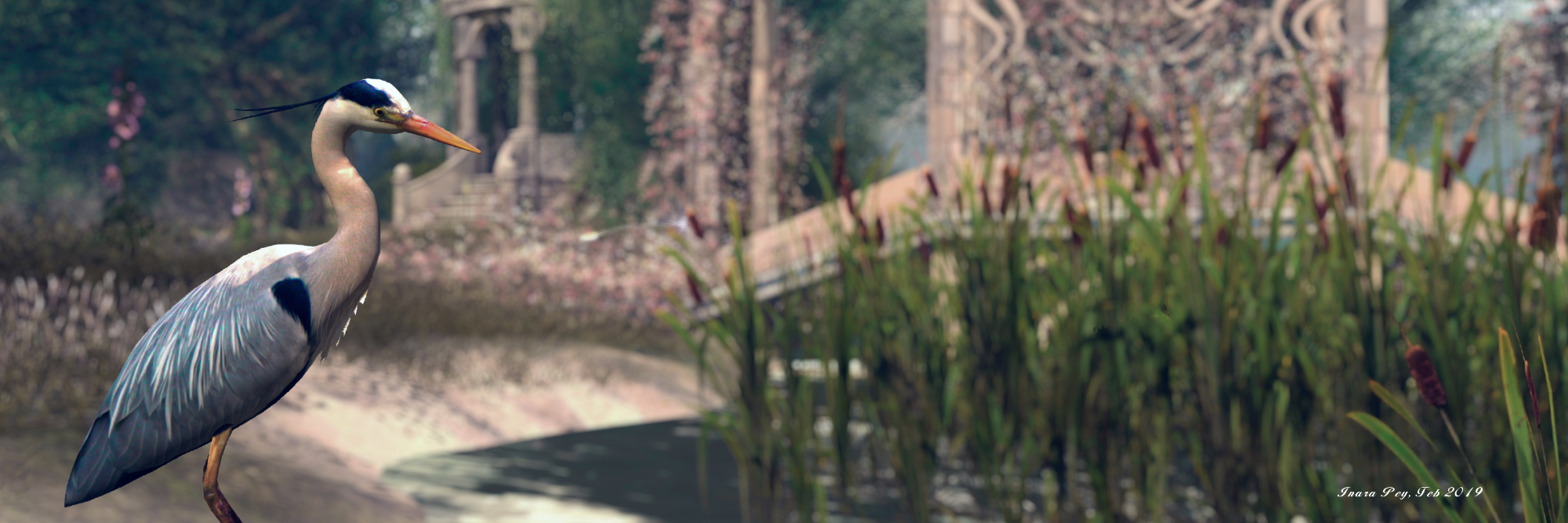
Another aspect to the parcel is the wildlife; elk graze, heron and egret watch over the waters, birds sing from trees and sit on rocks while swans patrol the waters and a woodpecker keeps himself busy on a tree trunk. These all bring the place to life, and a further depth and attracts the ear and eye.

I’ve often commented that when it comes to designing somewhere special, be it a private home or a place we can share with others, it is all too easy to focus on the space and land capacity offered by an entire region, be it full or Homestead. Elvion, however, is one of the wonderful gems in Second Life that demonstrate this is not the case, and that with care and attention to detail, it is possible to present a special, photogenic place worthy of sharing with others and which is an absolutely delight to visit and spend time within.

Elvion; Inara Pey, February 2019, on FlickrElvion