Ego: travels with an artist in Second Life

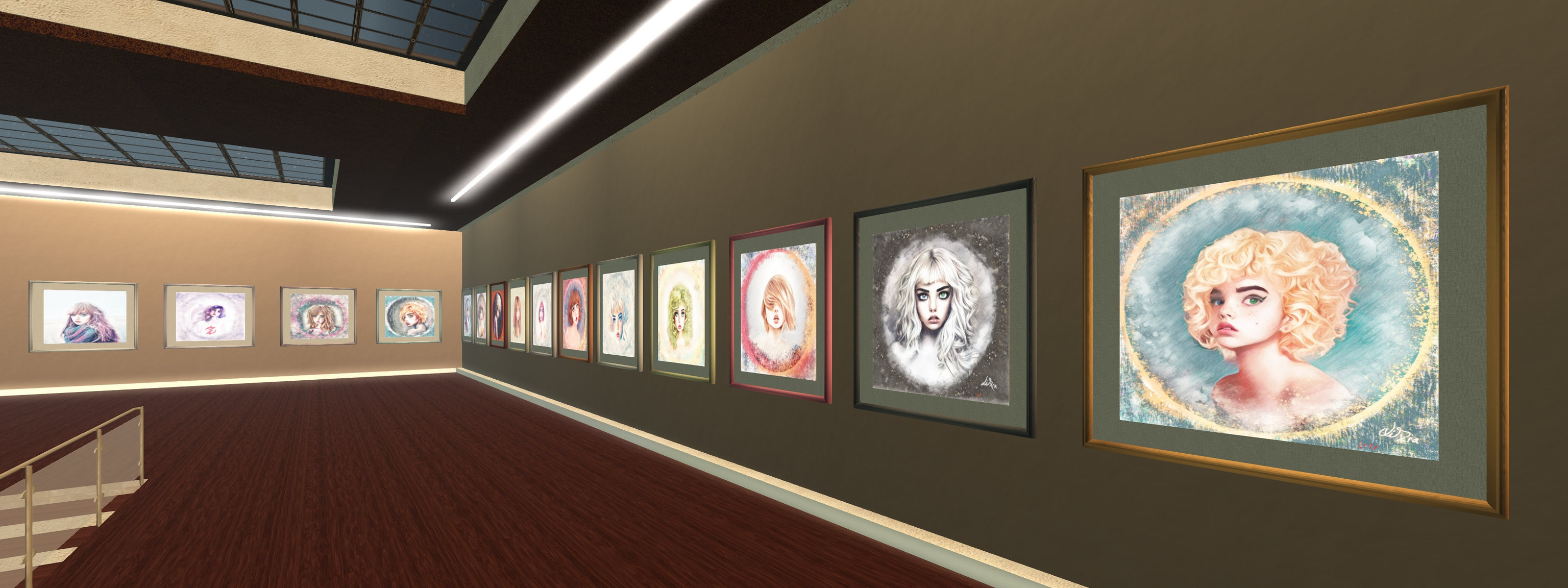
Art Korner Gallery II: Mihailsk – Ego

Update, June 27th, 2022: Art Korner has Closed.

Yes, this exhibition is me. Me, the explorer in SL, who travels from light to dark, from colour to monochrome, depending on the mood and moment.
Each of my works expresses a moment with a different mood. Sometimes visible and sometimes hidden. But do not try to look for hidden meanings and symbolism behind the images, because there is none.is none. All my images represent an aspect of me/show a part of who I am.

– Mihailsk in Ego, his latest exhibition

I first encountered the photography of Mihailsk in July 2021, at his very first public exhibition. Despite being active in SL for several years, he had only relatively recently entered the world of SL photography and artistic creation, and his first exhibition came as a result of encouragement on the part of Dido Haas, who hosted that exhibition – and indeed, Mihailsk’s second exhibition – at her Nitroglobus Roof Gallery(see: Mihailsk’s Baptism of Fire in Second Life and Mihailsk’s Red Sky at Nitroglobus in Second Life).

From the start, I was captivated by his approach to Second Life photography; whilst avatar-centric, his work is not precisely focused on his avatar as a subject for / of study in the manner of many SL photographers; rather he utilises his avatar as part of a larger canvas, one that brings together both avatar and location (as in region, rather than constructed studio setting) to offer an expression of a moment, a mood; something reflective of his own mood at the time the image was created. And I’m not alone in finding his work captivating.
Art Korner Gallery II: Mihailsk – Ego

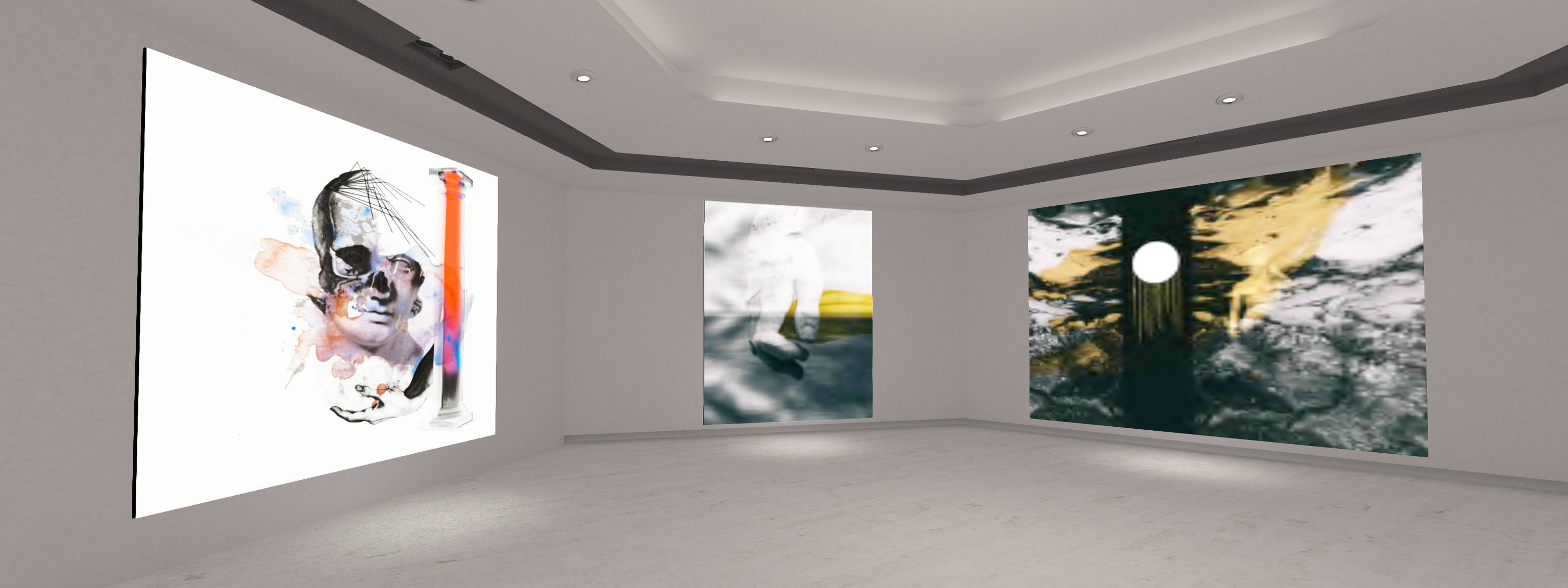
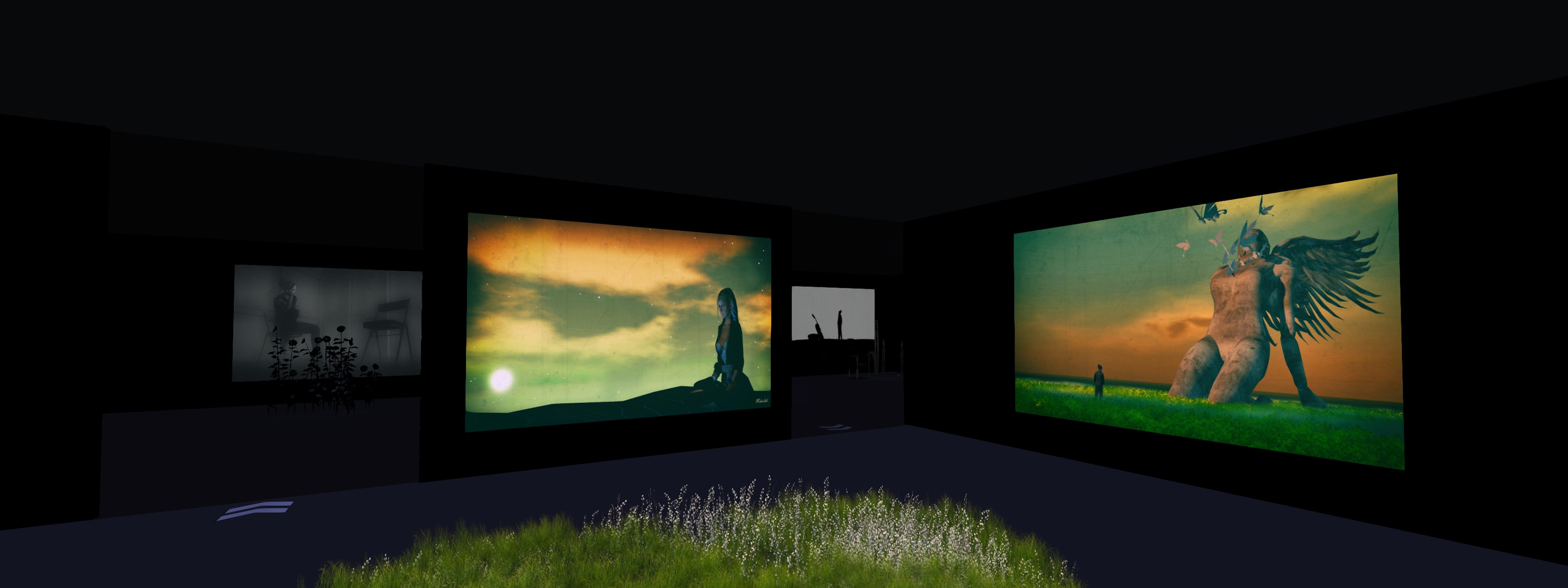
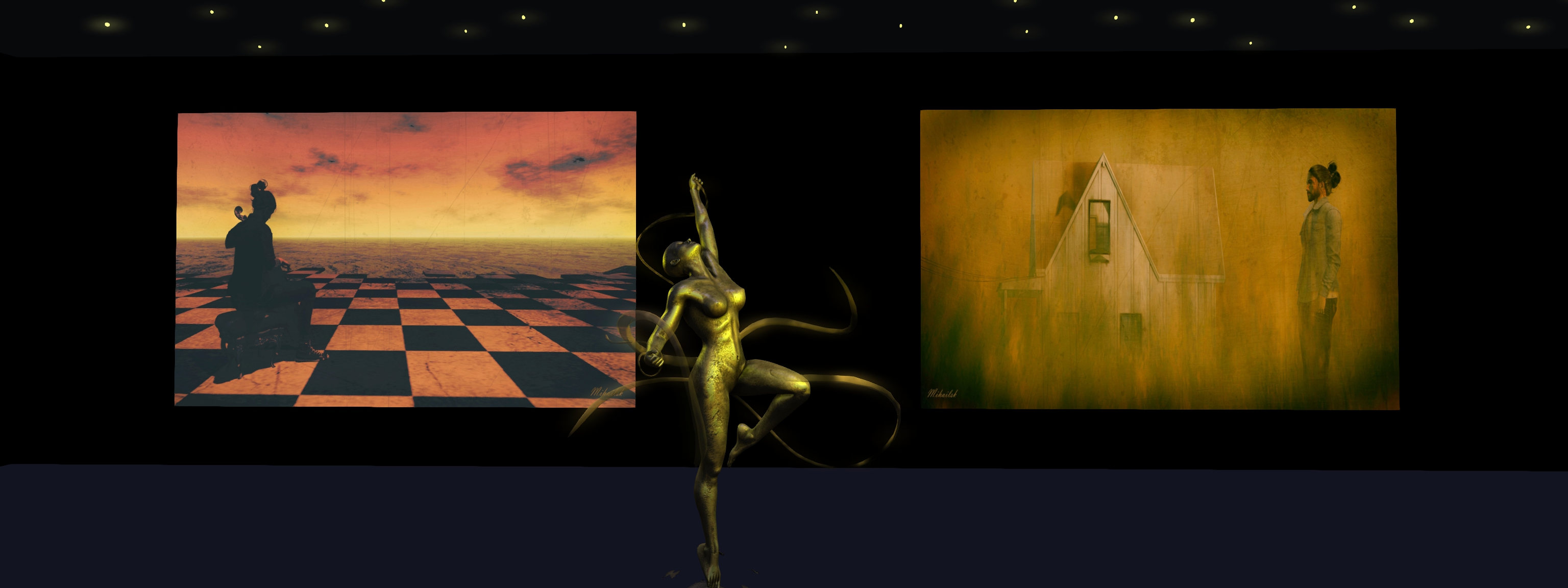
Further appreciation of his work can currently be gained at Art Korner Gallery II, curated by Frank Atisso., where Mihailsk presented his largest exhibition to date. Comprising more than 30 pieces specifically produced for it, Ego is a remarkable journey through the art and mind of the artist. And by “journey”, I am not just talking metaphorically; the pieces again represent the artist’s explorations of many popular places in Second Life, and have also been arranged in a manner that takes us on a journey through them, as we pass through seven rooms within the gallery space, each one offering at least 5 images.

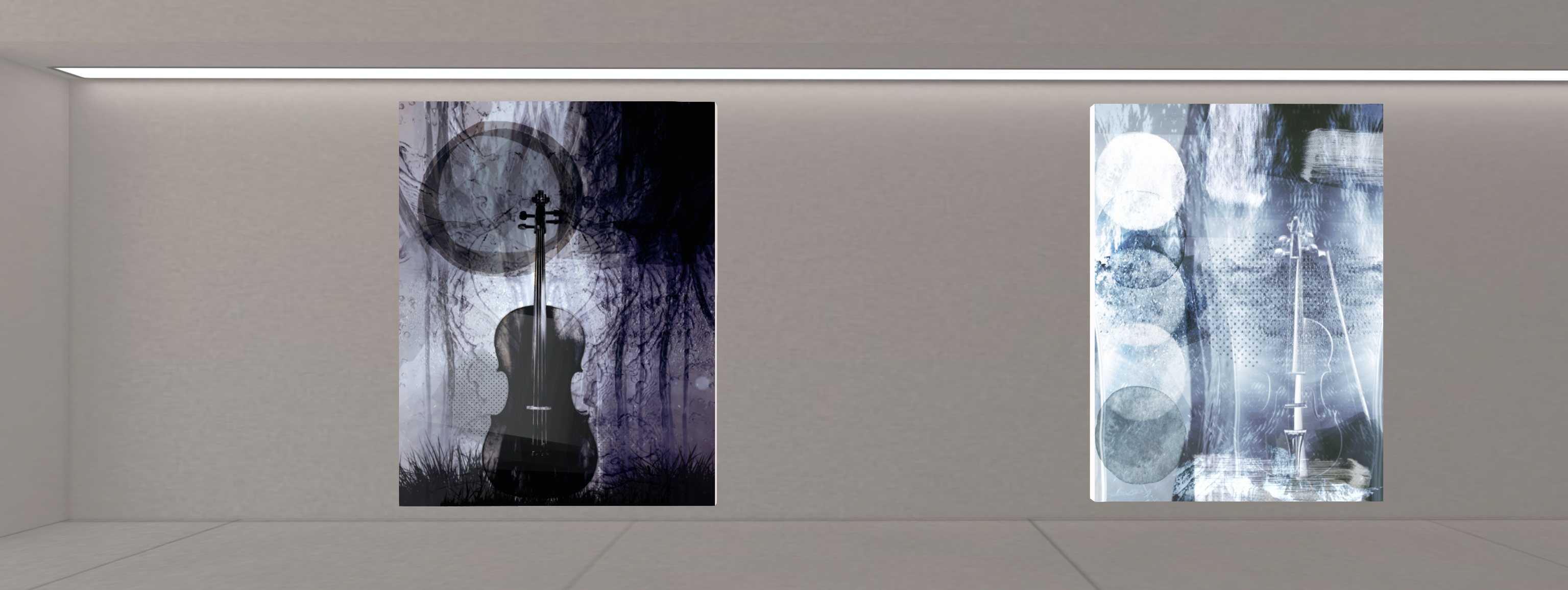
The images in each room carry a theme, defined by the use of a selected colour. The colours used include green (nature, and our relationship with the natural world), yellow (the Sun, life, warm (of feel, touch, etc.)), blue: tranquillity and coolness (of thought and emotions) and monochrome (purity/ clarity of thought and emotion – as in seeing everything in black and white). Each room also includes a quote or passage by a writer or poet, the majority of whom hail from Mihailsk’s native Greece, although in the first room is a piece by George Gordon Byron, better known as Lord Byron, that might be taken as an exhortation of how to live life, and which can also be seen as a code by which Mihailsk approaches his art.

Art Korner Gallery II: Mihailsk – Ego

The use of the quotes within each each is particularly interesting, because while Mihailsk states that his images are not intended to carry “hidden” meaning or symbolism, the words nevertheless encourage us to a certain outlook  that cannot help but add a further layer of possible meaning or interpretation to the pieces in each room. At the same time, thy offer us insight into the artist’s thoughts and moods whilst capturing and processing each piece.

Expressive, vital, and beautiful in the manner in which they frame avatar (either Mihailsk or Dido) together with setting / background with little more than a pose (remember, these are not images that us purpose-built sets, but have been captured during Mihailsk’s travels through Second Life), Ego (the word in this instance being used in its purest sense: to mean “I”, or “me”) is a compelling exhibition, and will be available for people’s appreciation through the Christmas period. When visiting, done make sure you have your viewer set to Use Shared Environment (World → Environment) and have Advanced Lighting Model enabled (Preferences → Graphics).

SLurl Details

Eskol: music, art and sound (& a photo contest) in Second Life

Eskol: Morlita Quan

Morlita Quan is a multi-faceted artist I’ve long admired, having written about her art and installations within Second Life on numerous occasions within this blog. So when I received a request from her recently – of which more further down in this article – I decided to take an opportunity to hop over to Eskol, her mixed-media art and events region, and spend a little time there.

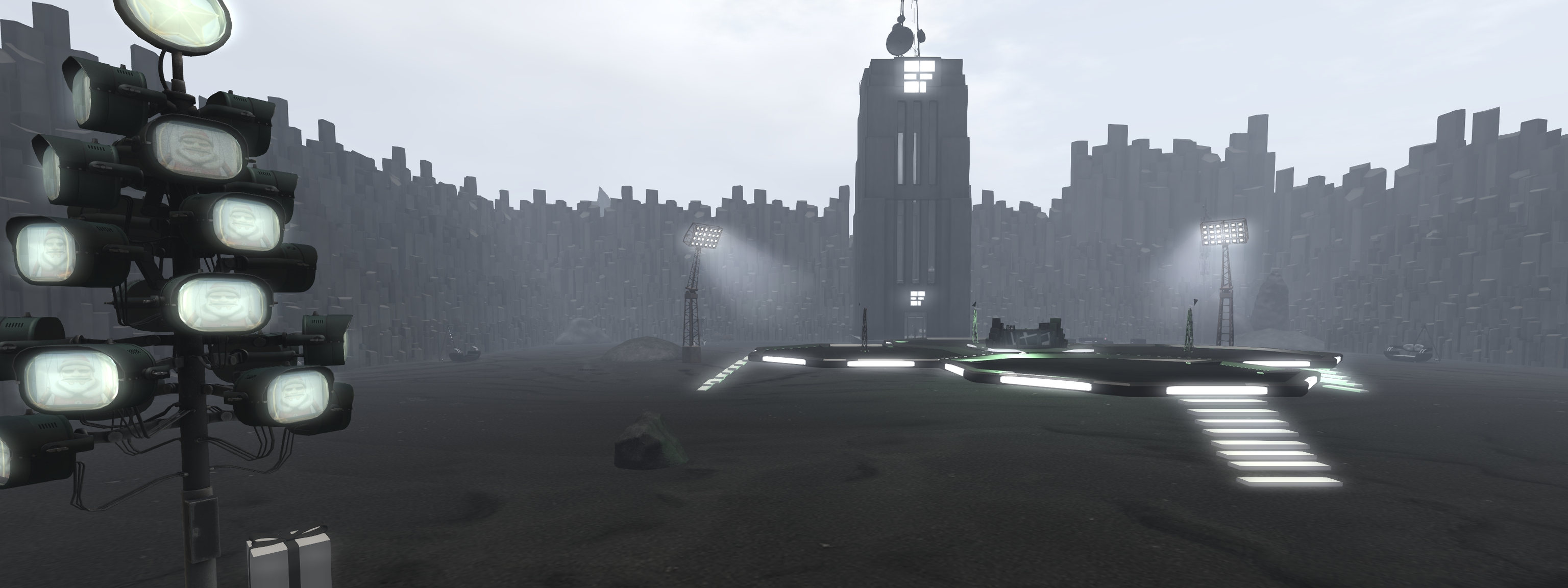
The first thing to note about Eskol is that it is far from your “normal” events-style region in Second Life. Nor, in bringing together music, art and sound, is it any kind of conventional “club”; rather, it is the embodiment of Morlita’s multi-faceted talents as an artist, designer and musician. Within the region are various locations, linked via a teleport HUD (look for the little robot HUD givers, click and accept, and then add the HUD), each of which is presented as a means of exploring those various facets.

As a musician, Morlita started playing the guitar at the age of eight, and by her mid-teens had discovered the magic of mixing decks and consoles, tools that allowed her to start experimenting with music as form of artistic expression, first as a DJ, then as a recording artists working independently and the via the Naïf record label. Within Second Life, Mori’s music has led her into numerous collaborations in the realms of music and film, working with the likes of Bsukmet Stormcrow in the former and providing compositional elements for machinima by the likes of Glaz Decuir, NicoleX Moonwall, Cherry Manga and Theda Tammas.

Eskol: Morlita Quan

Give this, the music spaces found within Eskol aren’t intended to be considered “clubs” or dance venues per se; traffic and avatar counts are not a driving metric. Rather, the Eskol Main Stage area and Sound Scape locations are offered as places where different, minority / lesser-known styles of music can be presented and appreciated, although the aesthetics of both locations are very music in keeping with Mori’s approach to digital art and design.

As an artist, Mori has collaborated with other Second Life artists and with various universities and galleries both in her native Spain and around the world. Like her music, her art is very much experimental / abstract , carrying within it a natural fluidity that gives it its own form of life. This is achieved by Mori mixing classical painting with post graphic design processing, while always retaining a core inspirations drawn from Nature, and most often utilising geometry as a further expressive value.

This can most clearly be see within the gallery level at Eskol, where two wings of art displays might be found. the larger, single-level wing presents a broad range of Mori’s 2D art, whilst the smaller, 2-level gallery present her more recent works.

Eskol: Morlita Quan

It is art – or photography – that formed the core of Morlita’s request I mentioned at the top of this article, and which prompted my visit.

Eskol is an evolving environment, offering facilities for fun and presentation, as duly noted in part in this piece. One of the current elements to be form within the region is that of the Eskol Photo Contest, of which Morlita graciously aske me to serve on the judging panel – a request I was delighted to accept.

Eskol: Main Stage

Eskol 2021/2022 Photo Contest

General notes:

  • Prize: L$5,000 single prize to the winner, as judged by the contest jury.
  • Closing date for entries: January 1st, 2022.
  • Maximum number of submissions per entrant: 2.
  • Method of entry: e-mail submission.

How to Enter:

  • Visit the Eskol Photo Contest area.
  • Use any of the 6 supplied photo booths to take up to two photographs featuring your avatar(s)
    • You may invite additional models.
    • If you are submitting 2 images, you may use a different booth for each.
  • You may post-process / crop / cut your image(s) as required.
  • When you are satisfied, e-mail your entries to eskolsecondlife@gmail.com, together with your avatar name.
    • Note that only images submitted to this address with be accepted; submissions to the Eskol Facebook group, or in-world to Morlita Quan or via any other medium will be rejected.
Eskol: one of the contest photo booths

Exhibition and Prize:

  • After the closing date for submissions, all entries will be exhibited at ESKOL for a period of  one month.
  • During this time, the entries will be subject to judging by the jury of Morlita Quan,  Lanjran Choche and Inara Pey.
    • Judging will be on the basis of aesthetics and originality.
    • The jury will select one image at the prize winner, and the artist will be awarded the L$5,000 prize.
  • The winner will be officially announced during January via the Eskol in-world group, and the Eskol Facebook group (I will also review the exhibition of entries during January, and include details of the winner).

SLurl Details

An Asperger’s Mood Diary in Second Life

Desideratum Art Gallery: Xia Chieng – Assburguer’s Mood Diary

Asperger Syndrome (AS or sometimes referred to just as Asperger’s (without the “syndrome” when used with the apostrophe)) is an autism spectrum disorder (ASD) characterised by significant difficulties in social interaction and nonverbal communication, along with restricted and repetitive patterns of behaviour and interests. As a pervasive developmental disorder, Asperger syndrome is distinguished by a pattern of symptoms rather than a single symptom, and can be demonstrated by sufferers in a variety of ways, and also presents them with numerous means of dealing with it in their daily lives.

Xia (Xia Chieng), for example, has found a means of addressing the condition through art, using oils and watercolours to express the feelings and emotions she experiences and to give a sense of the her personal situations, outlook and experiences.

This is something I’ve covered twice in the past with regards to her work – the first in 2019 with Life through Xia’s Diary in Second Life, and the second in 2021 with Art and Asperger’s in Second Life, back in September of the year. However, for those who missed those exhibitions, Xia now offers Assburguer’s [sic] Mood Diary, now open at Desideratum Art Gallery.

Desideratum Art Gallery: Xia Chieng – Assburguer’s Mood Diary

If anything, this is a more expressive exhibition that either of the previous two; not because there is more art on offer through this exhibition, but because Zia herself provides a commentary on her art and her life that takes us deeper into her art and her exploration of self.

I see artistic creation as a tool for self-transformation and healing, a way to dialogue with my internal demons and those of our culture, a means to create my own myths with which one moves through the world. 
I am on a personal journey; personal exploration into the essence of life, the relationship between the relationship between my senses, ideas and perceptions and the external world; my conception of space and substance. Only things that are personal can be truly real for me. 

– Xia Chieng

Desideratum Art Gallery: Xia Chieng – Assburguer’s Mood Diary

As a result, this is a powerful series of self-portraits that delve into Xia’s world, each telling a specific tale or mood whilst also being placed into groups defined by both style of the art itself and a collective narrative that flow through them. In this, there is an incredible amount of care and thought that has gone into this exhibition – up to and including Xia’s spelling of “Assburguer’s”, which she notes is a common mis-spelling of the syndrome used by those afflicted by it), all of which further deepens the power and personal nature of the art in display, making it an exhibition best explored through Xia’s words more than my own.

My art is narrative, but not literary, it tells stories but does not create their meaning. It may not mean anything more than we can individually feel. My work is a thing, an object, presented to you for your pleasure and for my relief. It just is what it is. It is not explained alone. I found in art and Second Life a way to escape from the ordinary world, creating my own worlds.

– Xia Chieng

Hence why these are images that should not just be taken physically or literally, there is a metaphorical / symbolic element to them as well – hence the use of the keyhole in Xia’s forehead in several of the images in the case of the latter, and with pieces like Memento Mori, Shadowman, The Keys and Lying Mirror.

But it was in art that I found away to express my feeling and thought. with this I do not pretend that others understand me, but that I find in it a way of knowing myself and transcending what torments me. 

– Xia Chieng

Desideratum Art Gallery: Xia Chieng – Assburguer’s Mood Diary

Thus, Assburguer’s Mood Diary is an exceptionally powerful, emotive selection of art, and one that I – again – highly recommend.

SLurl Details

Art in the snow in Second Life

Templeton Farm: UNITY art exhibition

Currently open through December 2021 within a winter themed sky platform at Templeton Farm, is the UNITY art exhibition, featuring the work of 21 artists and photographers from across Second Life, each of whom presents (on average) two pieces of art for us to appreciate.

Offering a mix of art from the physical world and Second Life photography, the exhibition leans towards scenes of winter – not surprising given the overall setting – but is not exclusively so. Matt Thompson, for example, presents two of his abstract paintings, Happy Campers, which suggests much warmer times that the depths of winter, and Magical Nature, a richly evocative piece that can speak to winter in its colours, but which also has more than a hint of the sea about it.

Templeton Farm: UNITY art exhibition
Similarly, Sheba Blitz presents two of her marvellous mandala paintings, each of which, whilst capturing the essence of beauty that might be found in the crystalline form of a single snow flake, also carry us away to the warm on comfort of more spiritual realms.

Among those taking part are names that will be instantly familiar, and perhaps those who might offer a first chance encounter with their work. This was certainly the case for me with Amaya Mavinelli, whose work is tucked into the corner for the skating rink around which the first part of the exhibition is arranged. Softly and lightly post-processed, her two works, Bunny and Back Then, sit between pieces by Sisi Biedermann and Michiel Bechir, two artists whose works span the digital and the physical.

Templeton Farm: UNITY art exhibition

Dante Helios (Dantelios) is another artists with whom I’ve been unfamiliar, and his two pieces captured from within SL guard the path that links the ice rink with a snow-covered field around which the second major part of the exhibition can be found, with art also lining one side of the short walk between the two.

The complete list of artists participating in UNITY are: Carelyna, Dante Helios (Dantelios), Dragon (DragonAngelvs), Matt Thomson (MTH63), Pepper (PepperQuinn), Sparkle (SparkleSherbert), Michiel Bechir, Sisi Biedermann, Sheba (Sheba Blitz), Zia Sophia (Zia Branner), Ule (Uleria Caramel), Jaelle Faerye, Mareea Farrasco, Amaya Mavinelli, Moora (Moora McMillan), Robbyn (Robbyn Poliak), Jamee Thomson (Jamee Sandalwood), Viktor Savior (ViktorSavior), AmandaT Tamatzui, Vita Theas and Holly (Hollywood Topaz).

Templeton Farm: UNITY art exhibition

As well the art, the platform also offers walks through the snowy landscape. some lead to what appears to be a dance floor, one to a open-air store, and another to a winter garden that makes for a charming visit as well. All of which makes UNITY an engaging visit.

SLurl Details

Clay and Seed in Second Life

Clay and Seed

It has been a fair while since I’ve had the pleasure of viewing Haveit Neox’s 2D artwork in SL outside of the entertainment regions he and Lilia Artis produce annually for Fantasy Faire. So when Akiko Kinoshi (Akiko Kiyori) informed me he and Lilia would be teaming with another artist I admire – Bamboo Barnes – to present a new installation at her Akimori art centre, I knew I’d have to pay it a visit.

Located within is own skybox, Clay and Seed takes as its core theme the erosion of the environment and human relationships, with the work of all three artists interwoven, each taking inspiration from the other two. But before getting into specifics, it is worth noting some key points: you should use the local EEP settings (World → Environment → Use Shared Environment); you’ll need to have ALM enabled (Preferences → Graphics → make sure Advanced Lighting Model is checked) and you should set your draw distance to 256m so that the entire skybox remains rendered during your visit, as it is a part of the overall installation.

Clay and Seed

This skybox offers a desert scene centred around a single body of water, the dunes rolling away into the distance under a sky rich in fields of clouds, the Sun low in the west. The predominant colour caught by the clouds is red, as if the light of the lowering sun is illuminating them from below. But the more one looks at it, the more the red, the more it speaks to rusting metal, its surface bubbled and marrred.

Together, the desert and sky speak to that theme of erosion of the environment, and each supports various elements making up the core of the installation. On the desert sits a number of structures. In particular, sitting close to the lake – possibly the last body of water in this realm? – is a combined 2D and 3D mini-installation by Bamboo Barnes that utilises lighting projectors within cube-like spaces visitors can wall through to experience her 2D art.

Clay and Seed

Around this are several structures placed by Akiko. Through the largest of these – a Japanese style house that partially extends out over the water – a train of horses prance before they snake their way up into the sky to where the second element of the installation, a pair of citadels, are floating.

Linked by curling paths that wind about both buildings and around a central set of net-covered rings over which fish-ships float, the two citadels are home to more of Bamboo’s art whilst their high windows offer poems by Lilia. Their combination of words and images further convey commentaries on destructiveness, growth, abuse, hope, gratefulness and loneliness. Follow the paths that roll and wrap themselves around the two citadels, and further vignettes by Haveit, each with its own symbolism.

Clay and Seed

And symbolism is very much the key here. Whilst offering something of a fantastical scene with centaurs and merfolk, Haveit’s city in the sky offer echoes of our own religious mythology. These range from painting on the outer walls of the citadels, and are also formed by the the likes of the the procession of horses that rise from the desert to climb the steps leaving up to the fish-ships in what might be seen as an echo of the story of Noah’s ark.

Further metaphor might be seen in the manner the the citadels and their surroundings float in the sky like a kind of New Jerusalem with all its promise of salvation. But the the desert below and sky above, together with the centaur vignettes speak the the reality of the matter, as do the images and words by Bamboo and Lilia: we, and we alone, are responsible for the fate that might befall us – just as we alone might yet be able to lift ourselves into a form of salvation (or at least, one of recovery), if we are prepared to work together.

Clay and Seed

Or that is my interpretation at least. Your might well be entirely different. And that is the marvel and beauty of Clay and Seed, in presenting the interwoven work of three superb artists, it has the power to speak with many voices.

SLurl Details

Scylla’s study of the Virtual Toxic in Second Life

Kondor Art Square: Scylla Rhiadra – Virtual Toxic
Elven Years ago, I opened a new exhibit that tackled the subject of representations of gender violence in Second Life entitled Is This Turning You On? About a month and a half ago, Hermes Kondor asked me if I’d be willing to return to the subject of toxicity and hypocrisy within Second Life.  This exhibit is the result.

– Scylla Rhiadra, introducing Virtual Toxic

Thus reads the introduction to Virtual Toxic, what will be for some, an uncomfortable exhibition at the Kondor Art Square.

Without a doubt, whilst Second Life offers a lot that is positive in life – physical or virtual; however, it also attracts the more negative aspects of human behaviour. And while other platforms also suffer from their own forms of toxicity, negativity and hypocrisy, the fact that Second Life does offer the means for positive immersion leads Scylla to frame this exhibition around a central question:

Why do we persist in replicating the flaws and toxicity of our sublunary physical existence in the virtual world as well? We can literally fly here. Why then do we fetter ourselves to the dark places on the ground?
Kondor Art Square: Scylla Rhiadra – Virtual Toxic

Thus we are presented with a baker’s dozen of images that deal with what can be seen as the more toxic – or at least darker – attitudes that can be expressed through words and activities in-world.

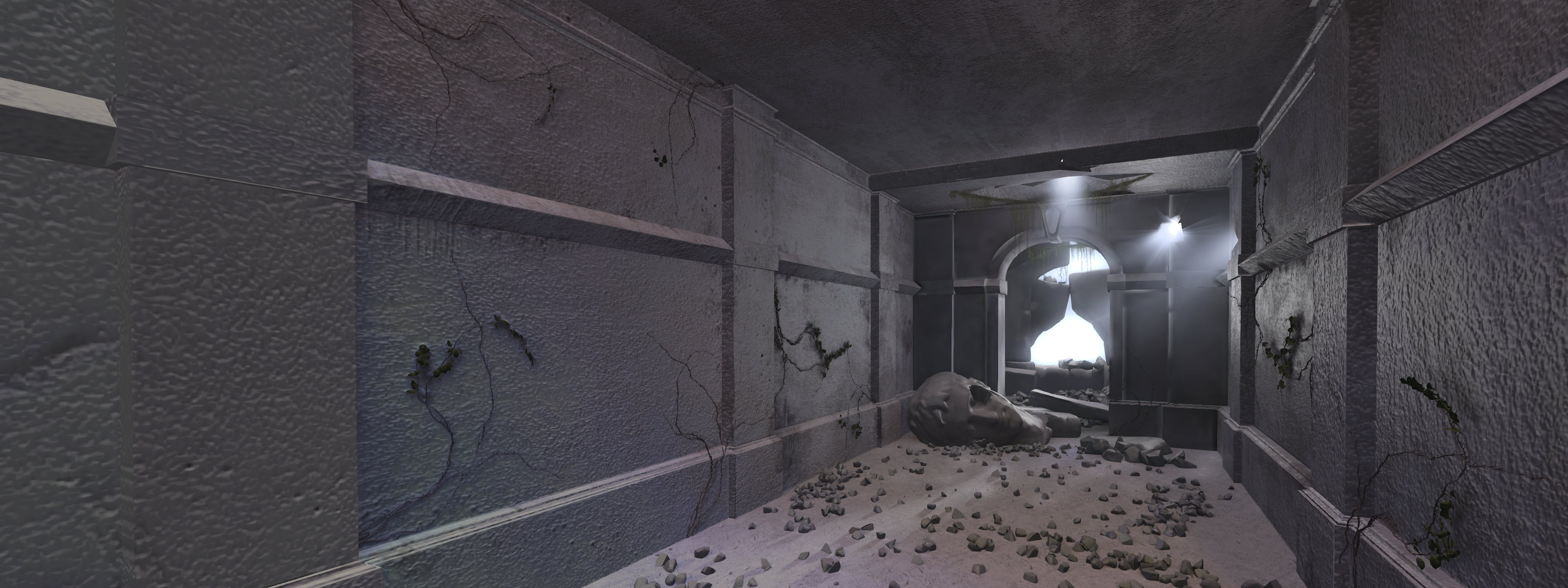
Virtual Toxic starts in the north-east corner of the square with Imagine Dark, a piece that offers a narrative on the fact that in entering Second Life, we are presented with multiple opportunities for discovery and expression, light and dark – and ask the question as to which we might chose. From here, the remaining images progress clockwise around the edge of the square with the last sitting in the centre. Each has a particular focus on behaviours and activities that all have an uncomfortable edge to them – sugar daddy / baby girl role-play, direct violence, rape “play”, the objectification of the female, and more. Each comes with its own text element offering  either direct or narrative context.

Each image and its associated text is provocative in the statement offered for us to consider; statements that – due to the fact they are based on physical world situations, attitudes, outlooks, activities – obviously extend beyond the virtual and challenge us to think more deeply and broadly about how we interact with one another and why we might chose to engage in actions that are in the physical world abhorrent to us and / or why we opt to display toxic / hurtful attitudes towards others.

Kondor Art Square: Scylla Rhiadra – Virtual Toxic

The former of these aspects is duly noted in one of the three information panels on the exhibit in the centre of the square (Some Important Disclaimers), which should be read when visiting the exhibit. The latter is perhaps most clearly defined in the south-east corner of the square, and the pieces My Name Is… and Gaslit.

Within the former we see reflected the fact that there are some who have an unwillingness to view others as equals / individuals with thoughts, feelings, emotions, etc; the avatar stands with face blotted out by the word Whatever. It’s a term that can have both positive and negative implications – and here is the usage is reflective of the negative / passive-aggressive form (as in, “I don’t care about you or what you have to say or feel”). Gaslit, meanwhile, references our use of words to manipulate others into self-doubt or (possibly) taking an action they’d normally avoid.

Kondor Art Square: Scylla Rhiadra – Virtual Toxic

Offered for public consumption to overlap with the UN Women’s 16 Days of Activism against Gender-Based Violence Campaign, which draws to a close on December 10th, 2021, a campaign specifically focuses on violence and abusive acts against women (1 in 3 of whom, globally, will be subjected to violent abuse at least once in her life, with that abuse extending well into digital environments, as seen through the likes of Gamergate), Virtual Toxic is an arresting exhibition. However, it is not polemic; in asking its questions – most clearly exemplified by the 13th image, Why? at the centre of the art square – it invites us to view, read and consider what is presented without undue sway on the part of the artist.

SLurl Details