Inside the Machine

The Machine
The Machine

The Machine is the latest in the LEA’s 2013 Full Sim Art series to open, and will run through until the end of November. Located on LEA 6, the installation is by Lilia Artis & Moeuhane Sandalwood, and represents their view on what might happen if humanity seeks technological perfection above everything else. It presents, at first look, a self-fulfilling world where technology exists for the betterment of the human mind, and the human mind exists to maintain the machine – but is it really so?

The creatures have created a perfectly functioning world. They live in the ever-present. As a sound community. With joined minds and spirits. Interconnected. Completely. They run the machine – and are run by the machine. They are the machine. The peak of innovation. The end of evolution. Their creation.

They are a society without memory. Their history a mere shadow. Because there is no need to remember. Why remember what is of no value. They are perfect.

The Machine
The Machine

So states the opening description of the installation; and when you arrive, you get to see this perfection first-hand; in a technologically pristine environment sits the Machine, surrounded by the minds  that both gave birth to it and give it purpose, and who are given life and purpose by the Machine, in a closed  and chilling cycle, apparently devoid of past or future.

At what cost has this come? In the pursuit of perfection without thought of the consequences, what has humanity, as seen in this great hall, actually lost? This is the question visitors to the installation are invited to explore through their “inner archaeologist and ethnologist”.

The Machine
The Machine

The machine and its “perfect minds” both literally and figuratively sit at the highest plateau  of human evolution; but explore the build and you’ll discover that the plateau itself is made up of many layers sitting one atop another, each harkening back to earlier times and hinting at what has been lost – and what may yet rise up once more to haunt those minds so earnest in their dedication to running the machine that runs them.

Each level is there to be explored in turn, although the passages between them may not always be obvious, so take your time exploring. The way down to the lowest level and the further point in the past – what we might consider the present – isn’t particularly obvious, keep your eyes peeled for a hole in the floor of a building.

The Machine
The Machine

This is a thought-provoking piece. As you descend through the various levels, you’ll doubtless form your own answer to that question as to the price of human evolution when only technology is seen as holding the key. In this, Lilia and Moe are to be congratulated in only providing the most subtle of pointers to direct any thinking on the matter, leaving it up to the observer to draw their own conclusions.

Related Links

The magic of numbers

"The number 3 is in nature, in our culture and in ourselves.Is the Trinity exposed in its multiple meanings present in religion, science and philosophy, in the division of time into Past, Present and Future, in the Three Powers, in You, Me and That which unites us or disjoint us and in the Id, Ego and Superego of Freud -
“The number 3 is in nature, in our culture and in ourselves. Is the Trinity exposed in its multiple meanings present in religion, science and philosophy, in the division of time into Past, Present and Future, in the Three Powers, in You, Me and that which unites us or disjoint us and in the Id, Ego and Superego of Freud? – Noke Yuitza

A new installation by Giovanna Cerise and featuring pieces by Alpha Auer, Ataro Asbrink, Betty Tureaud, Daco Monday, La Baroque, Noke Yuitza, Paola Milla, Pol Jarvinen and Taralyn Gravois opens on Sunday November 3rd at LEA17.

Give the numbers! is a collaborative exploration of numbers and their meaning, be it practical, philosophical, mystical, factual or fantastical, and their influences on us.

Paola Mills
Paola Mills

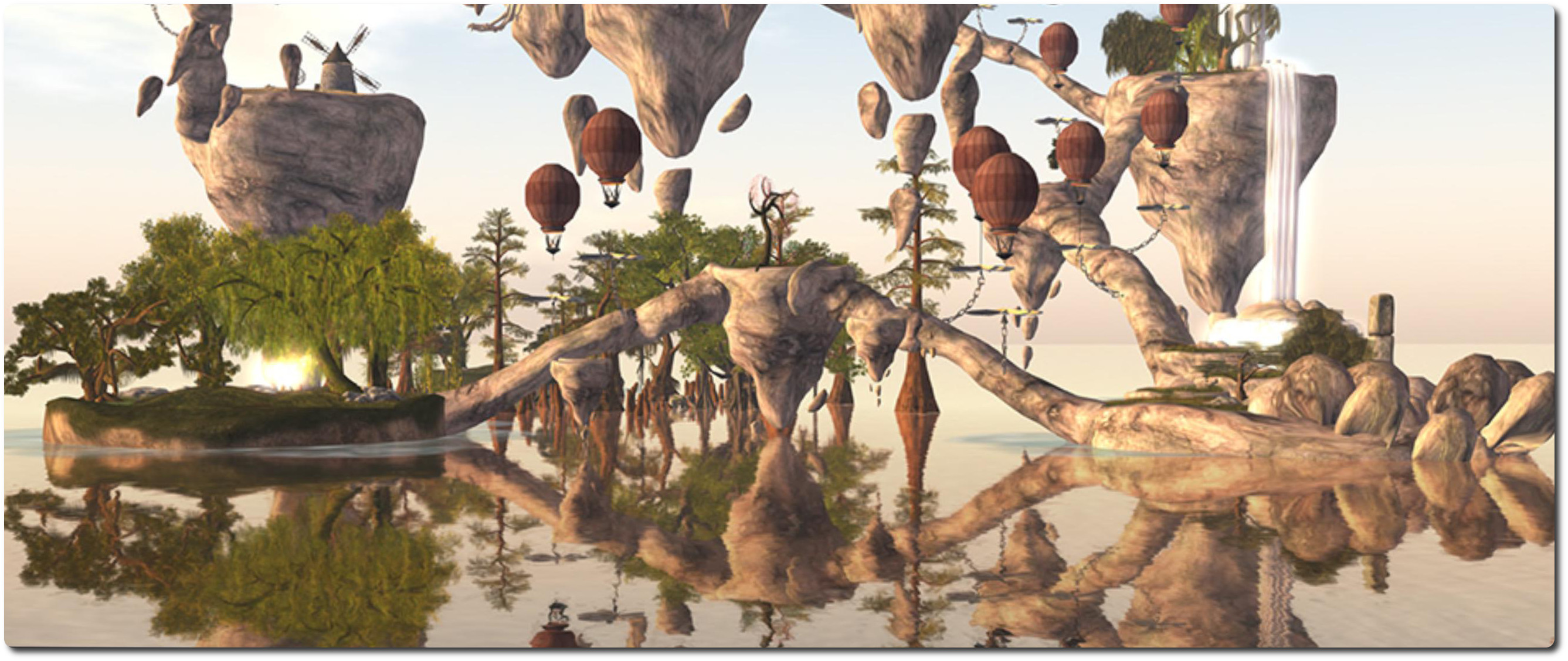
Given that numbers are central to our lives in so many different ways, the idea of representing them, their many and varied meanings, influences and uses is a fascinating concept, and in Give the numbers!  it is one which is intriguingly presented. The main part of the installation is floating in the air as series of platforms interlinked by a teleport system, and presented in a series of two-dimensional frames above which they sit.

The way the various numbers from 0 through 8 are presented and interpreted is highly individual, leading to an absorbing piece which deserved a reasonable amount of time and effort in exploring. Some of the pieces offer interactive elements as well, so keep an eye out for these. When I made my preview visit, elements were still under construction, so there are probably newer aspects to be explored and enjoyed and which I missed when looking around.

5555555 55555 555 - Alpha Auer
5555555 55555 555 – Alpha Auer

When you have finished exploring the sky platforms, do take a trip down to ground level, where you’ll find Giovanna’s Arthimos, a fascinating geometric build which, in the words of the artist, offers, “Fascination and illusion in  balance between rationality and irrationality.”

Here the numerical influences are again clear through the use of the various shapes and lines, but there is something else at work here; pan around the build and elements which might initially appear to work together seem to come into conflict; the rational becomes irrational. Even the nature of numbers changes, thanks to the placing of a series of dice around the build, reminding us of how numbers are often linked with chance, and chance, while irrational, often forms the basis of our supposedly rational ability to make decisions.

Arthimos
Arthimos – Giovanna Cerise

There is little guidance on preferred lighting settings, but I do recommend  something around Midnight is perhaps the best way to appreciate the pieces,  together with a relatively low draw distance to bring each element individually to the fore (with the exception of Arithmos, where a draw distance sufficient to let you see the entire region is recommended). The images here were captured using JAXBlackContrast from Jackson Redstar, with cloud cover set to zero and S/M and Ambient Sun / Moon settings tweaked a little via the colour picker sliders.

Give the numbers! will run through until the end of December 2013.

Related Links

Arithmos - Giovanna Cerise
Arithmos – Giovanna Cerise

Of collaboration, rafts and Gaia

PosterCollaboration in Second Life is not new, it goes on in many ways and in all corners of our virtual cosmos. Nevertheless, it’s always interesting to see what results when several minds come together in order to create something new.

With this in mind, I hopped over to the Linden Endowment for the Arts recently, where two new installations opened during the last week. Each involves multiple artists working to a common theme (albeit a very broad theme in the case of one!), and each of which has, in the eyes of this beholder at least,  produce very different reactions to one another.

Moving Islands [Rafts] sees Eupalinos Ugajin bringing together  no fewer than 24 of SL’s artists (click the poster, left to see the names) to create a piece that freely interprets the central theme of moving islands or rafts, with Derek Michelson providing assistance with scripting and Takio Ra with sounds. The result is a collection of remarkable pieces which are eclectic, quirky, fun, different, provocative, interactive, and more.

With twenty-four participating artists already involved, and the chance for more to be added (Eupalinos is still open to accepting ideas and submissions for artists – even you, as the exhibit’s poster indicates), this is a very busy installation – yet it is not by the same measure crowded. The space above and below water (not all of the islands  / rafts are floating) has been used to the fullest, and there’s a lot to see (be sure not to miss the world’s first deep-sea diving … cow!). Do make sure you have sounds on as you move from piece to piece, and you may also appreciate the streamed soundtrack compiled by Eupalinos – all four hours of it!

Rafts-3_001
Moving Islands [Rafts] – Maya Paris
This is very much an interactive installation as well; objects and pieces are always on the move (which makes taking snapshots interesting!) and there are places you can sit and be a part of things – giving another twist to the exhibit’s poster noting you can join the exhibition…

It’s not really fair to single out individual elements in a work like this – especially when some of my favourite artists are featured; but I confess to adoring Meilo Minotaur’s undersea “forest”, and Pallina60 Loon’s Nautilus and its accompanying Steamfish had me smiling, if over-exercised after riding on it!

Moving Islands [Rafts]
Moving Islands [Rafts] – Meilo Minotaur
This is an installation you’ll want to take time exploring; some of the artists have provided note cards describing their works, but I felt it more interesting to let each speak for itself. Eupalinos has also compiled a note card listing all of the artists’ websites / Flickr streams, all of which are worth visiting as well. He’s also provided a link to a Dropbox of images for those who wish to make use of it.

Another of the pieces in Moving Islands is Haveit Neox’s Mythic Rafts, which pictures the aftermath of the destruction of the Earth as a result of humankind’s history. “A raft survives the big flood after the polar ice caps had melted,” reads the note card for the piece, “No landmasses were high enough to poke through the new ocean. The Earth had been stretched beyond its limits – pulled apart at the seams.” Given the underlying theme of loss and destructions, It’s something of an interesting (if entirely unintentional on the part of the artist) link to the piece which forms the second part of this review.

Moving Islands [Rafts]
Moving Islands [Rafts] – Oberon Onmura
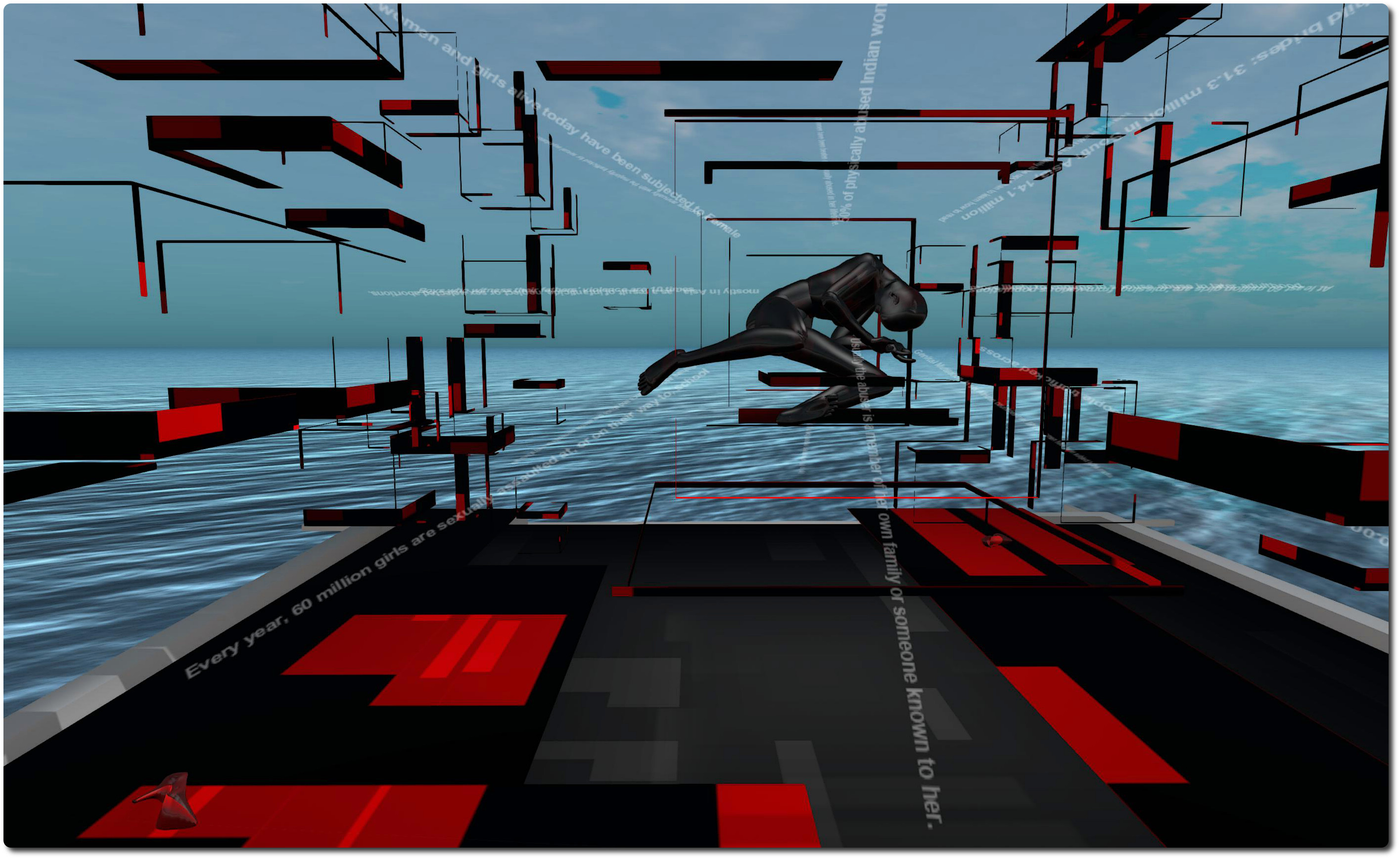
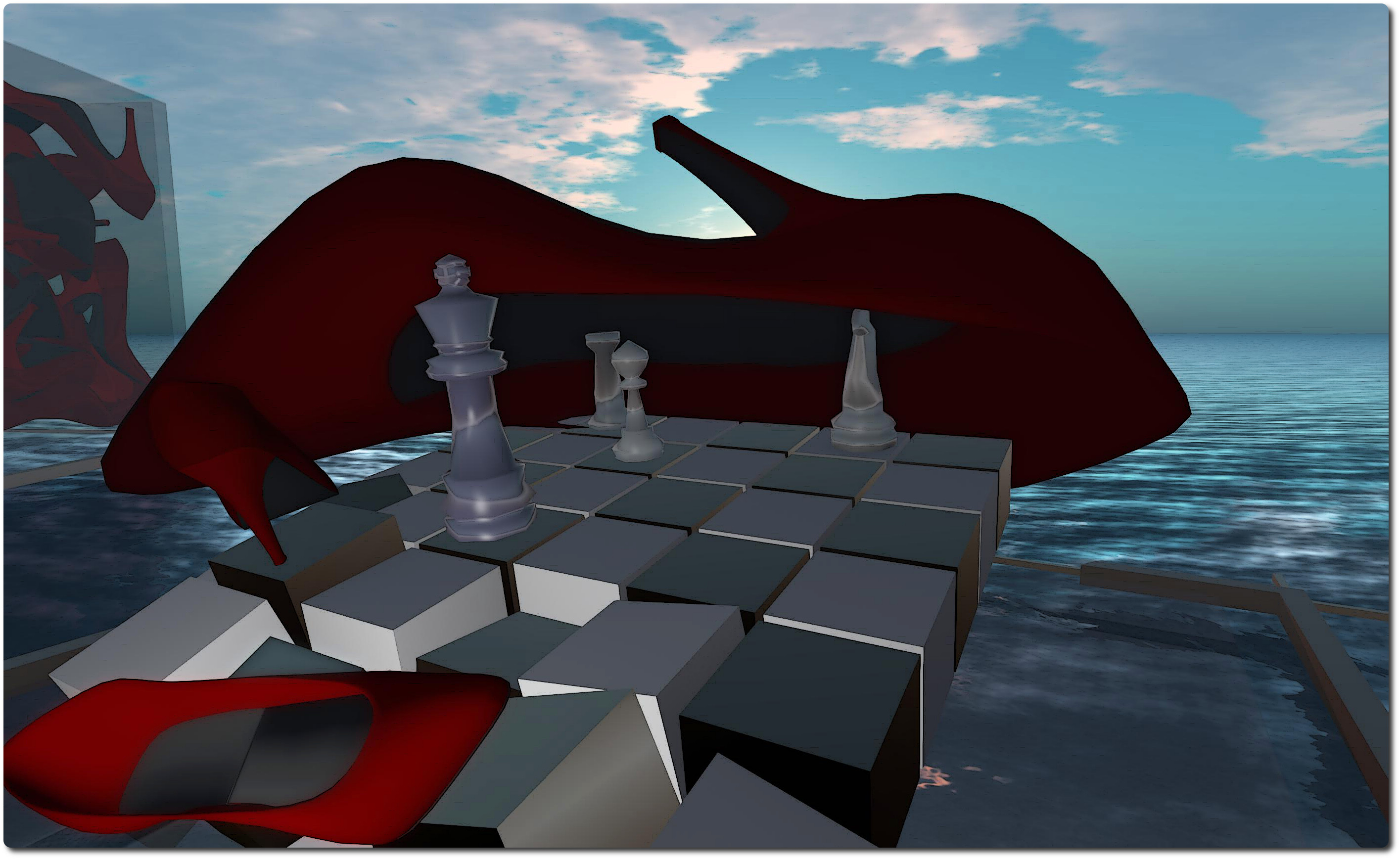
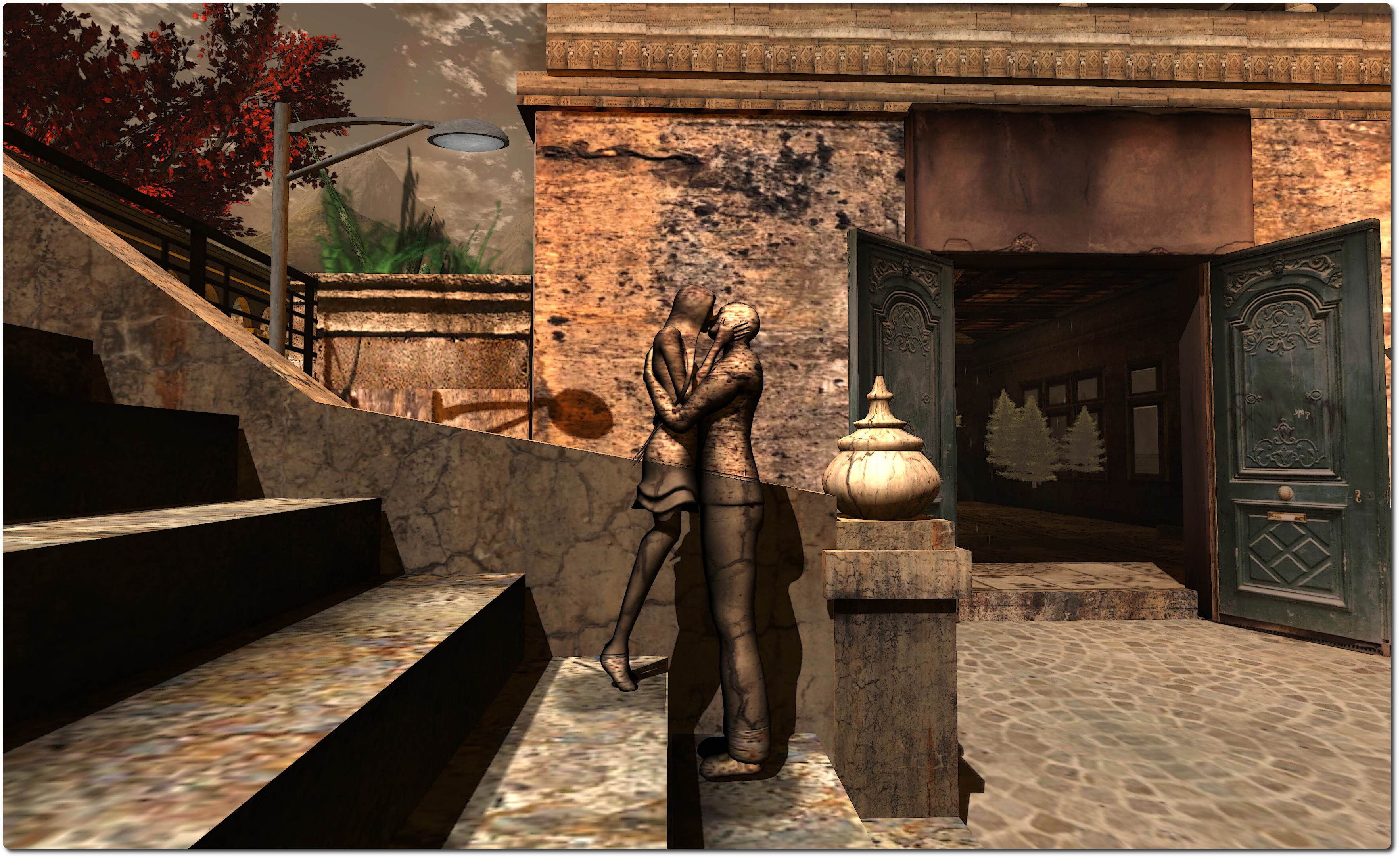
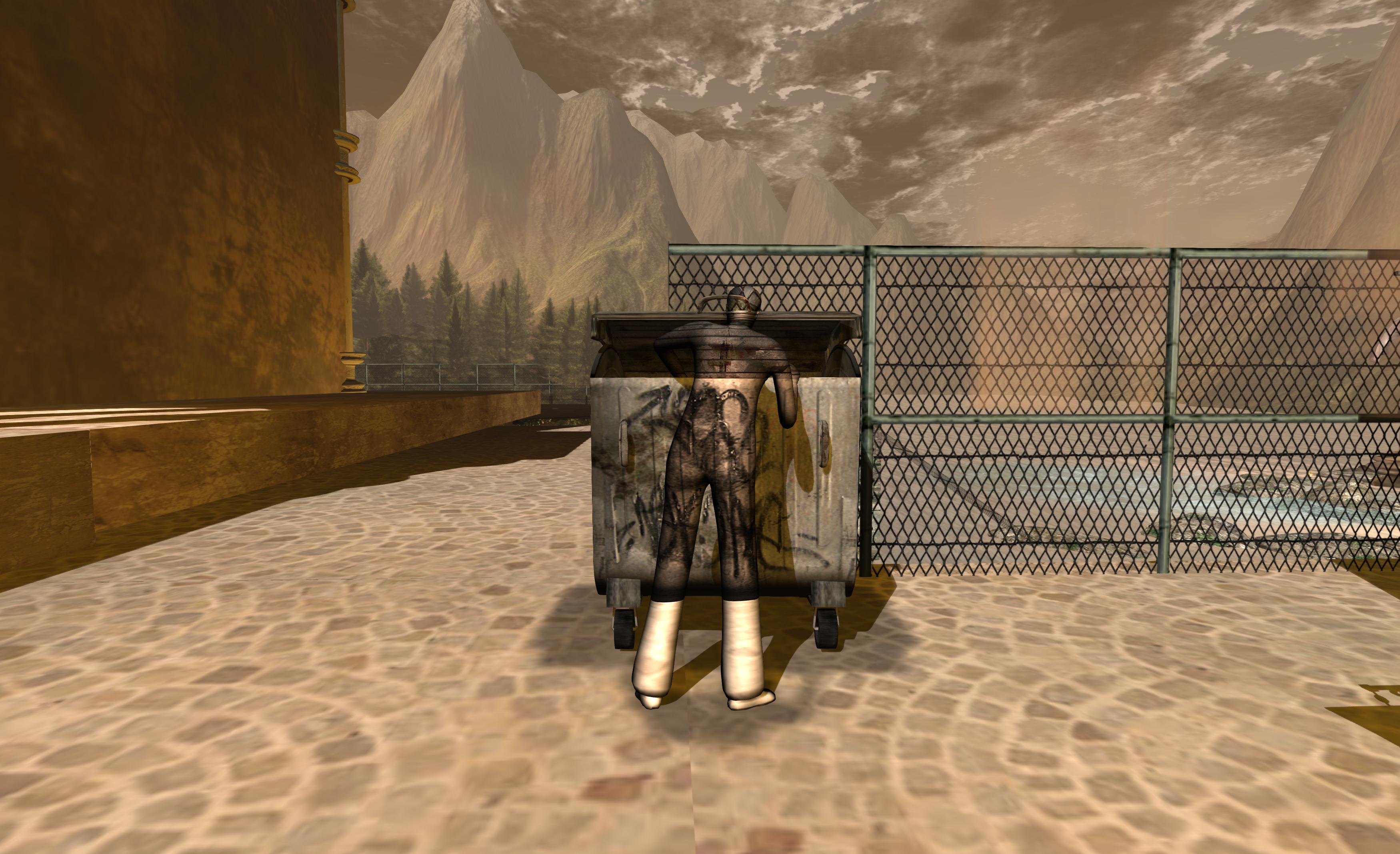
Destruction, decay and ending seem to be the focus of  The Gaia Theory Project, which also pened this month at the LEA. Presented by the Tanalois Group and the torno Kohime Foundation, and directed by Aloisio Congrejo, Tani Thor and Nino Vichan, this installation brings together a total of eleven artists in what is designed to be an interpretation of the Gaia Theory. And therein lies a problem.

As already noted, the installation is very much directed toward themes of destruction and decay, with extinction, loss and death also featuring. Yet the Gaia Theory is about the organic and the inorganic interacting in a complex system which helps maintain the conditions for life  to exist on the planet. So by focusing on just one side of the equation – desctruction and decay, etc., – the installation comes across as decidedly lopsided; where’s the re-birth, the growth, the renewal?

The Gaia Theory Project
The Gaia Theory Project – Tani Thor

There also appears to be something of a negative towards humanity’s role in things which is presented here, The contributions of man appear limited to toxic waste, the extinction of animals, urban decay, etc. Again, it’s not uncommon in discussions around the subject of Gaia for humankind to be referred to as a parasite responsible for upsetting the balances proposed by the hypothesis. However, it again lends a bias to the installation which some might say is at odds with Gaia Theory when taken as a whole – as Ziki Questi argues in her considered review of the installation.

All that said, there is nothing wrong with using art to raise awareness of the destructive forces – natural and man-made – at work in the world today is a valid activity (especially where humanity’s more destructive or environmentally damaging efforts are concerned. Were this the intent with this installation, I’d venture to say it succeeds. However, as an exploration of Gaia Theory, I can’t help feel that it largely (with one or two small exceptions) falls wide of the mark.

The Gaia Theory Project
The Gaia Theory Project – Kicca Igaly

Both Moving Islands [Rafts] and The Gaia Theory Project will remain open through to the end of December 2013.

Related Links

Postscript: following the publication of this review Melusina Parkin, one of the collaborators in The Gaia Theory Project contacted me as to her own approach to the piece, which she has presented on her own blog. If you’re planning to visit the installation, I recommend you give her piece a read first.

Mixed Pixels while in a Dream of India

Mixed pixelsQuan Lavender sent me an invitation to preview a new exhibition at Art India Galley. Mixed Pixels, which opens on Thursday October 17th, 2013 at 14:00 SLT, will run through until November 30th, 2013.

The exhibition brings together a number of SL artists from differing backgrounds, all of whom have two things in common: they’re actively engaged in Second Life, and they all hail from Germany.

There are also two reasons for the exhibition, as Quan (who is herself German and is the exhibit’s curator) explains in her invite to bloggers.

Burk Bode - Mixed Pixels
Burk Bode – Mixed Pixels 1

Firstly, the exhibition is a virtual contribution to the Festival der Liebe (Festival of Love), a cultural event run by the German Community in Second Life, and which this year takes place between October 17th and October 21st. Secondly, Quan feels that the German Community’s contribution to art in SL has perhaps been a little overshadowed by other nationalities, with German artists preferring, as she puts it, to assimilate with others rather than present on their own.

This exhibition, covering two display areas at Art India linked by a teleport system, brings together the work of Ataro Asbrink, Burk Bode, Cutea Benelli, Draxtor Despres, Kayle Matzerath, Nelson Lorvannagan), Ole Etzel. orlando di strada (gnupf Gufler), Quika Basevi, Sina Souza and WuWai Chun, each of whom has been provided with space in which to exhibit works of their choosing. Together they demonstrate just how broad and deep art is within Second Life.

Nelson - Mixed Pixels
Nelson – Mixed Pixels 2

Each of the individual exhibit spaces has its own appeal; the subject matter encompasses everything from delightful creativity through inspiring photography, the power of media to political statements on the shape and state of our society.

Several of the pieces on display are interactive in one way or another; there’s a puzzle to solve, buttons to press, levers to pull. Nelson Lorvannagan offers a number of his photos which demonstrate why, since arriving in Second Life in July 2013, he has become one of the most highly regarded photographers on the grid – as his Flickr stream more than demonstrates. His creativity and composition are to be admired and aspired to.

WuWai Chun - Mixed Pixels
WuWai Chun – Mixed Pixels 1

As well as presenting his Coded Movie at the exhibit, Ataro Asbrink will also be hosting a workshop on Sunday October 27th. Cutea Benelli, meanwhile, offers up two fun pieces which add a dash of humour and demonstrate beautiful creativity.

Her Shakespeare 2.0 Apparatus shows us that the infinite monkey theorem is actually incorrect. Rather than needing a monkey a typewriter and an infinite amount of time in order to reproduce something like Shakespeare’s works (in whole or in part), all you need is a chimpanzee, a banana and a time machine. The banana actually appears to upset the apple cart somewhat (if I might mix my fruits) given some of the results, but the Apparatus isl only a beta unit, so allowances must be made :). It does, however, show that the late Douglas Adams may have been somewhat closer to the mark in his interpretation of the theorem!

Cutea Benelli - Mixed Pixels
Cutea Benelli – Mixed Pixels 2

Alongside the Apparatus sits the Evil Haiku Automaton, an exquisite piece of work (also available to buy), which will offer-up a personal Haiku with more than the usual twist. For example:

Well, bon appetit /  I am so hungry / Dark murmur of my chainsaw

This is small, but fascinating exhibit, well-worth the visit. The 14:00 SLT opening will be accompanied by music from DJ Dixie Jefferson, and as noted above, the exhibit runs through until the end of November.

Dream of India

When visiting Mixed Pixels, do take time to wander around the Art India region. There are more exhibits to see, both in-door and out. In the grounds, you’ll find works by Tyrehl Byk, Trill Zapatero, Claudia222 Jewell and elros Tuomimen , as well as Robin Moore’s Relation Tower.

These all sit amidst a reworking of the land around the gallery, entitled Dream of India and which features places to sit, paths to wander and additional builds, including a magnificent palace built by Nepherses Amat, and on loan to the gallery.

Dream of India
Dream of India – the Palace by Nepherses Amat

Elsewhere is a temple (please remove footwear before entering!), a new bazaar with Indian-themed and inspired goods, a meditation centre, dance floor, and more, all of which is also officially opening on Thursday October 17th.

Teleport boards scattered through the region make getting around easier if you don’t fancy walking. If you prefer, you can take to horseback or you can even take a guided tour, courtesy of – what else? – a magic carpet!

Dream of India
Dream of India

Related Links

Colour Key: an enigmatic journey

Colour Key
Colour Key

I’m an unabashed Rebeca Bashly fan. I have been for a goodly while, and still think her 2011 interpretation of Dante’s Inferno was an inspired installation (you can still visit it at UTSA Artspace and see for yourself). Similarly, The Tower from December 2012 was an equally fascinating study.

This month she is back at the LEA with another towering (literally – Rebeca does like the vertical medium in SL!) full sim installation entitled Colour Key, which opened on Monday October 7th. Quite how to describe this piece (other than “big”) isn’t easy. The artist herself has very little to say on possible interpretations and meanings, stating only that Colour Key is “all about human nature, breaking your spine to find answers that are under your nose. Explore and discuss, this is a joy to me”

Colour Key
Colour Key

Like The Tower before it, one travels through a tower-like structure passing scenes and images along the way. However, rather than travelling bottom-to-top as with The Tower, this installation takes you from the top down; and whereas  The Tower was deeply evocative in the images and scenes presented, Colour Key is more enigmatic. There is a common motif running through the build – that of the key (hence the title) – but the key to what? That’s for the observer to decide; and one’s ideas and views tend to be challenged as one passes through each scene.

This is also a dark build; not in the sense that it is sad or macabre or suggestive of suffering or evil or anything like that. It is literally dark, so much so that if you run with shadows enabled, you may actually want to set them to None (no need to disable ALM, though, unless you’re finding the scenes particularly dark). There are passageways and stairways to walk and climb as you travel down from the top of the tower, and if you’re not careful you’ll risk disorientation trying to make your way through the build with shadows active (particularly after you’ve sat on the box as instructed).

Colour Key
Colour Key

Scale is another feature of the piece. Parts of it are simply huge – such as the gigantic meat grinder poised menacingly over the first part of your journey and through which you must apparently drop. Keep an eye out for a key at each stage of your journey, it provides your only means of moving through the various scenes until you reach the ground.

This is an installation which needs to be explored and experienced rather than simply blogged about. It’ll be available through until the end of October, and a visit is recommended.

Colour Key
Colour Key

Related Links

Overto Omorto: a hauntingly beautiful installation

Overto Omorto
Overto Omonto

I was lead to Overto Omonto by Honour. The latest work by artist and creator Romy Nayar, this is – to grab a word from Honour as well – an exquisite full region installation which is being hosted by the folks at Per4mance MetaLES for the next two months, having replaced Chica Ghost’s evocative Ghostville.

Romy’s installation is an inspired piece which fits the run-up to Halloween perfectly, and presents visitors with a puzzle to solve. What’s more, one might even be tempted to say that there’s something of a metaphor here, with a finger perhaps pointed in a certain direction …

Overto Omonto
Overto Omonto

You see, Overto Omonto was once a prosperous place, bright and happy and full of life. But then, as Caballero, the greeter, tells us:

Little by little each one of us was isolating himself, and did not care what happened to others and  finally we could not talk to anyone. Our heart  becomes like stone and we were no longer able to communicate.   

Hmm. Isolation. Not caring. Failing to communicate; there’s something of a bell ringing here – but I risk a digression …

Overto Omonto
Overto Omonto

Now, those within Overto Omonto who could, would escape their lonely existence – but they cannot do so without our help. Each of them holds a secret, and we must obtain that secret – a password – so that we may help them achieve freedom from the darkness of their current lives.

The residents here are beautifully modelled, each one the focal-point of a haunting vignette which the imagination cannot help but create stories around. Take little Nina, as she watches a balloon rise up into the sky. Did she free it from the box on the ground beneath it, top thrown open? Is she wishing it well in its bid for airborne freedom? Or is she envying its flight, knowing she must remain Earthbound and trapped? And what of the box from whence it appears to have come – is it coincidence that its interior comprises strips of wood, the darker ones looking for all the world like the bars of a cage…?

Overto Omonto
Overto Omonto

Each character herein invites you to linger, study, observe  – and imagine. Their looks, poses and very demeanour projects so much without ever moving or changing. None of them remain quite what they seem on first inspection. Simply rotating one’s camera around them and viewing them from different angles invites the mind to consider each of them differently; their moods seeming to change as the camera and lighting shifts. Frozen they may be, but each is very much alive, if trapped within the scene in which they each appear, the scenes themselves inviting more than one interpretation.

This is a wonderfully immersive installation, one I’m not sure my photos really do any justice; to see it at its best, a personal visit is required. You can explore on foot or, if you prefer, grab a copy of the funky car which is available near the landing point and Caballero.

Overto Omonto
Overto Omonto

Related Links

[gigya src=”http://www.flickr.com/apps/slideshow/show.swf?v=71649″ width=”625″ flashvars=”offsite=true&lang=en-us&page_show_url=/photos/inara-pey/sets/72157636291054746/show/&page_show_back_url=/photos/inara-pey/sets/72157636291054746/show/show/&set_id=72157636291054746&jump_to=” allowFullScreen=”true” ]